15 min. reading

Yulii Cherevko
CEO paintit.ai
Published:
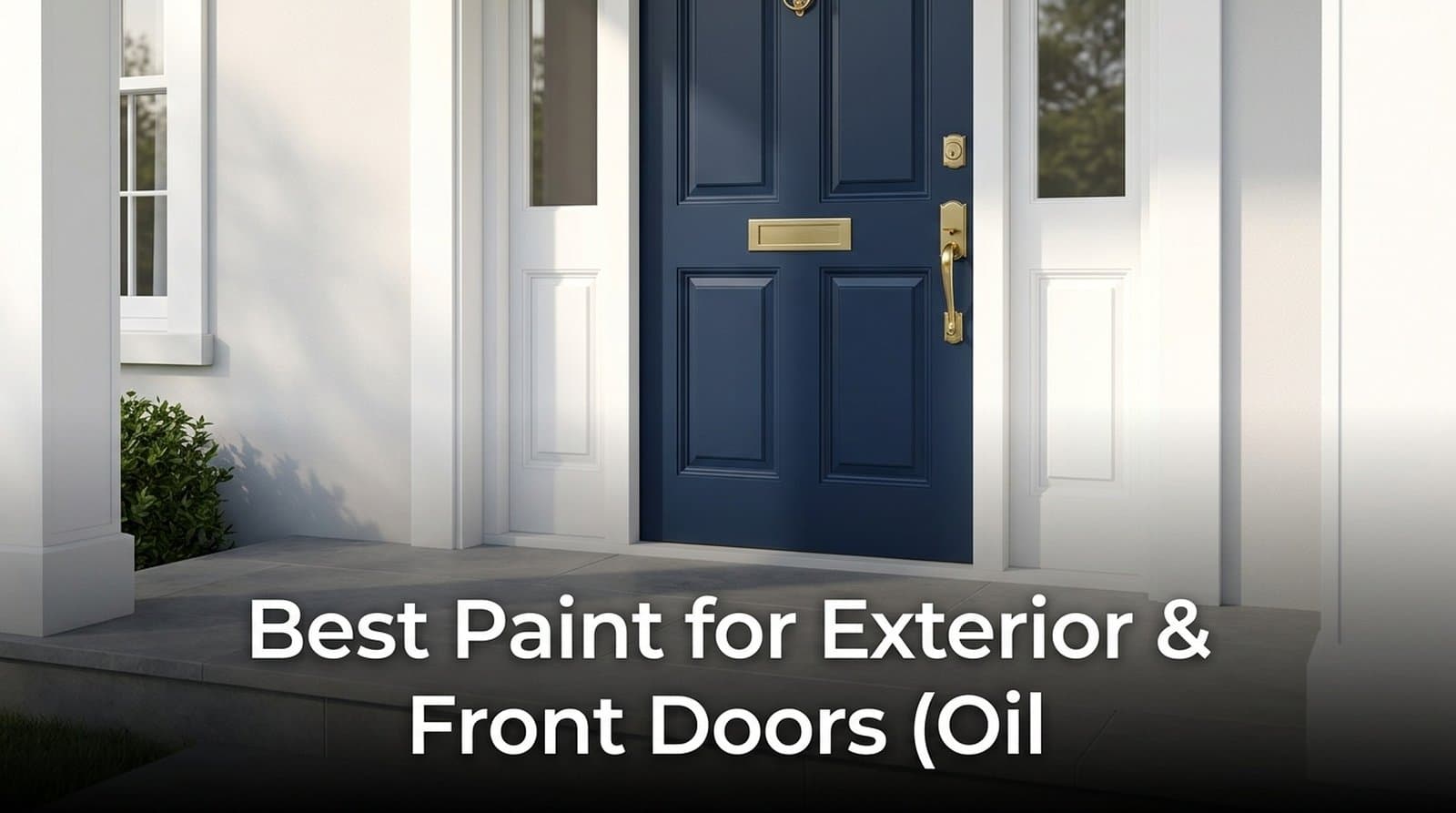
The best paint for front door projects in 2026 is usually a high-quality 100% acrylic latex exterior paint in satin or semi-gloss, paired with the right primer for wood, metal, or fiberglass. Oil-based paint still has its uses, but it is less forgiving for DIY work and can fail on some newer door materials.
A front door works harder than interior trim or siding. It gets touched every day, sits in sun and rain, presses against weatherstripping, and is often made from a surface that will reject the wrong coating without much drama. The right choice comes down to 4 things: paint chemistry, door material, primer, and sheen.
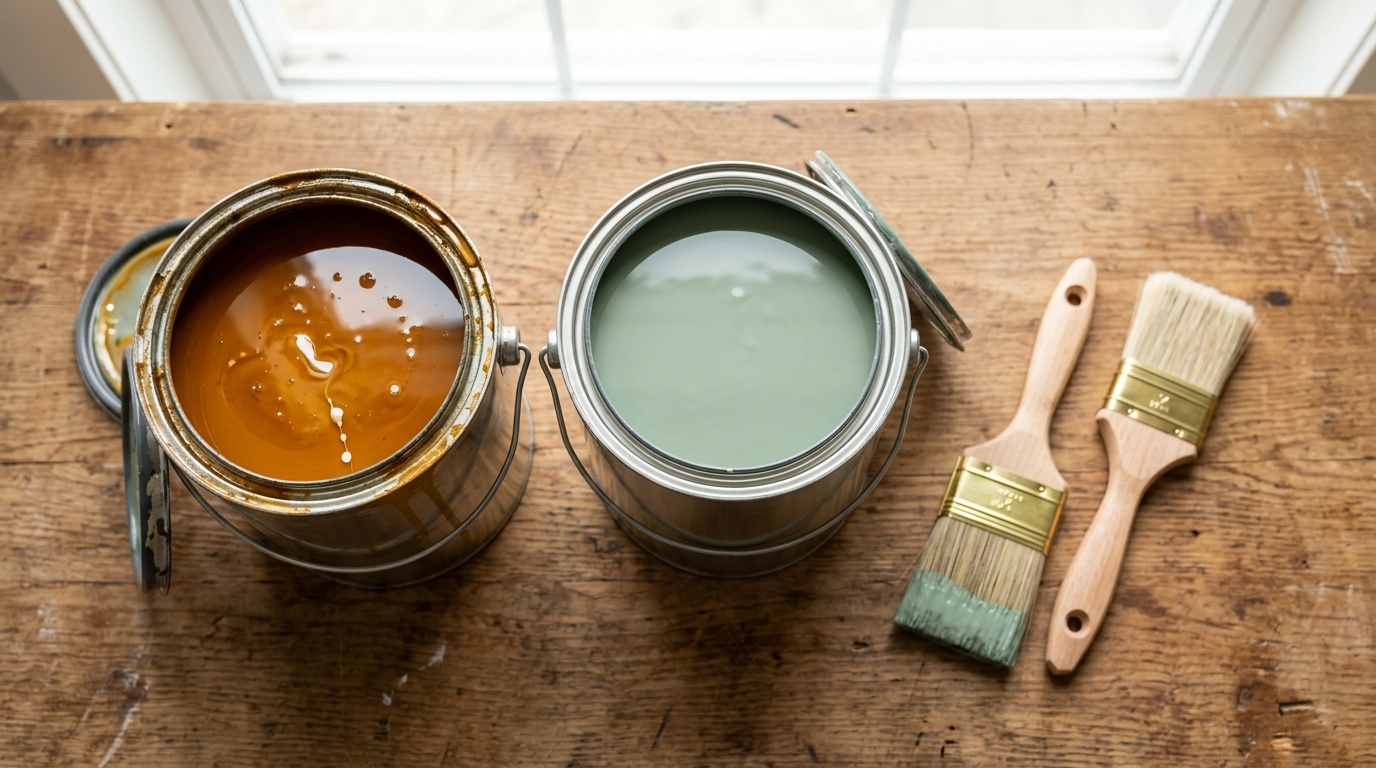
For most homes, acrylic latex is the best paint for front door work because it flexes with temperature changes, resists UV fading, dries in 1 to 2 hours, and cleans up with water. Oil-based paint can give you a harder finish, but it takes longer to dry and does not handle movement as kindly.
Latex is a big category. For exterior door paint, look for 100% acrylic latex rather than cheap interior latex. The acrylic binder is what helps the coating stretch as the door expands in heat, contracts in cold, and deals with hands, keys, bags, pets, and weather.
Oil-based paint, often called alkyd paint, levels beautifully. You usually see fewer brush marks, and the cured surface can feel smooth and tough. On a traditional steel door or a well-prepped wood door, it can look very polished. But it can take up to 24 hours between coats, usually needs mineral spirits for cleanup, and may yellow in shaded conditions.
Here is the practical decision:
| Paint type | Best use | Main risk | Typical DIY difficulty |
|---|---|---|---|
| 100% acrylic latex | Wood, fiberglass, most steel doors | Blocking if closed too soon | Low to medium |
| Oil-based alkyd | Smooth metal or traditional wood | Long dry time, cracking on moving wood | Medium to high |
| Direct-to-metal coating | Steel doors with exposed metal | Wrong primer can cause rust | Medium |
| Specialty bonding system | Fiberglass and composite doors | Poor adhesion without bonding primer | Medium |
If you are asking what type of paint for front door use is safest across common materials, start with 100% acrylic latex rated for exterior doors and trim. Then adjust only if your door material, old coating, or manufacturer guidance points you somewhere more specific.
For broader outdoor coating choices beyond the entry door, our practical notes on exterior paint choices explain how siding, trim, masonry, and doors differ.
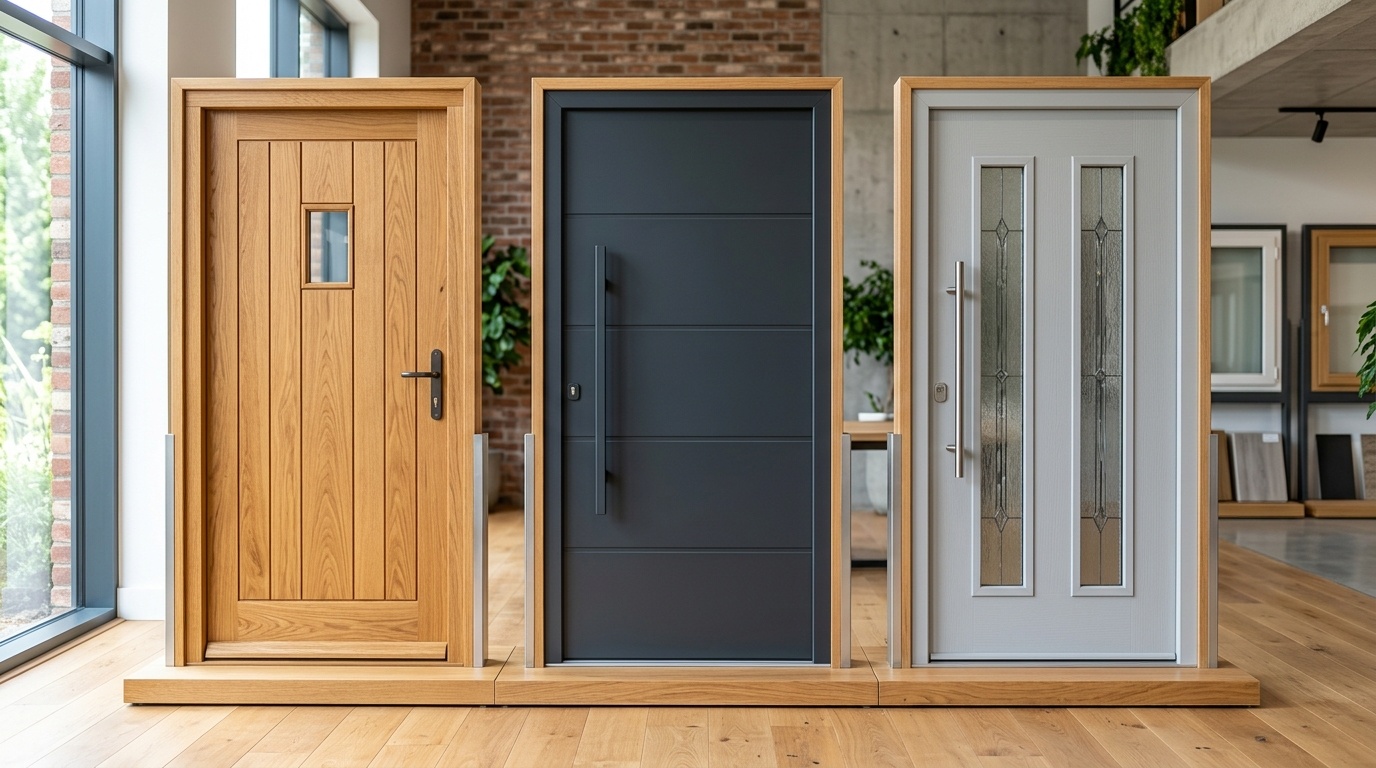
Door material should decide your paint system before color does. Wood needs flexibility. Metal needs rust control. Fiberglass needs adhesion. A 2-coat paint job can fail quickly if the primer is wrong, even when the paint itself is expensive and rated for exterior use.
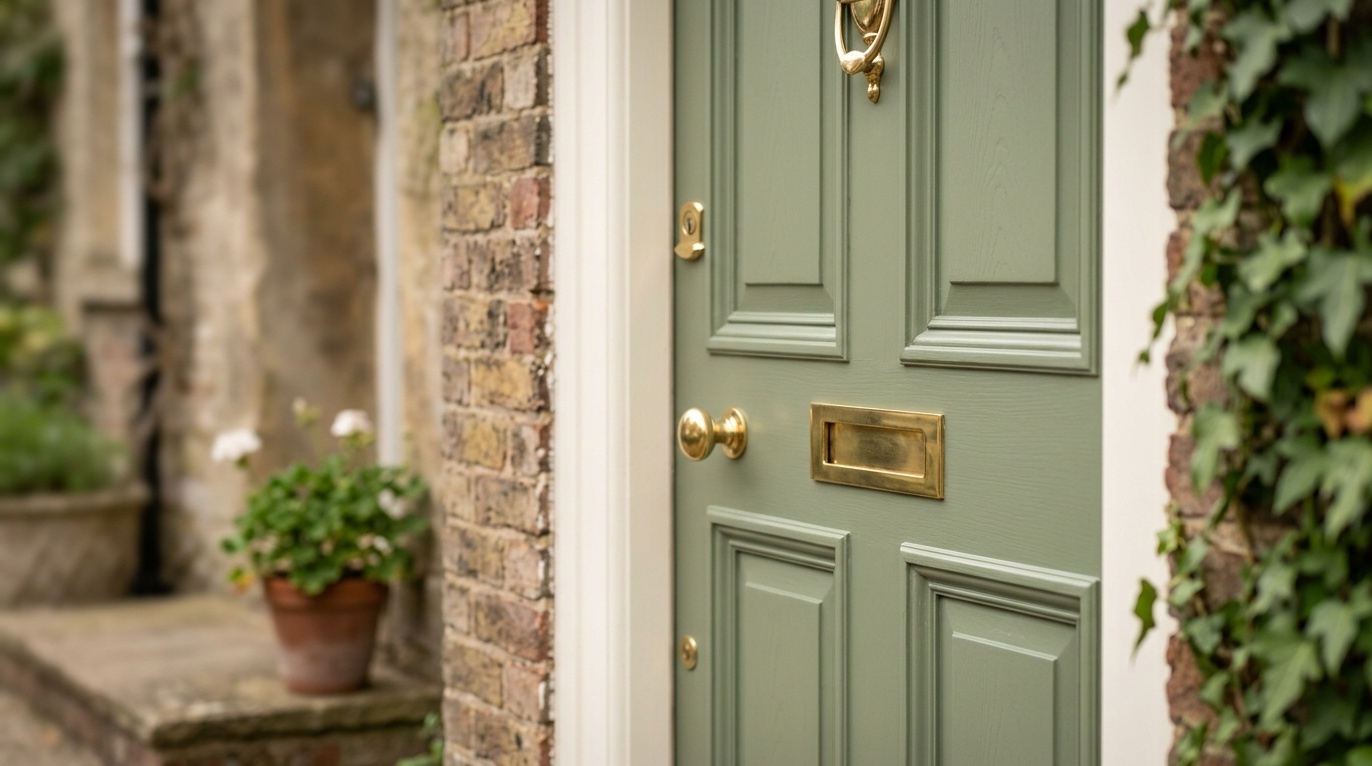
Wood moves. It absorbs moisture, swells at the edges, dries out, and changes size with the seasons. That is why front door paint for wood should usually be 100% acrylic latex exterior paint over a quality exterior wood primer.
If the door is cedar, redwood, or another tannin-rich wood, use a stain-blocking primer before the topcoat. Tannin bleed can show up as yellow-brown discoloration, especially under lighter colors like cream, pale green, or soft blue.
Use 2 finish coats, not 1 heavy coat. Thin, even coats reduce brush marks and help the coating cure into a stronger film.
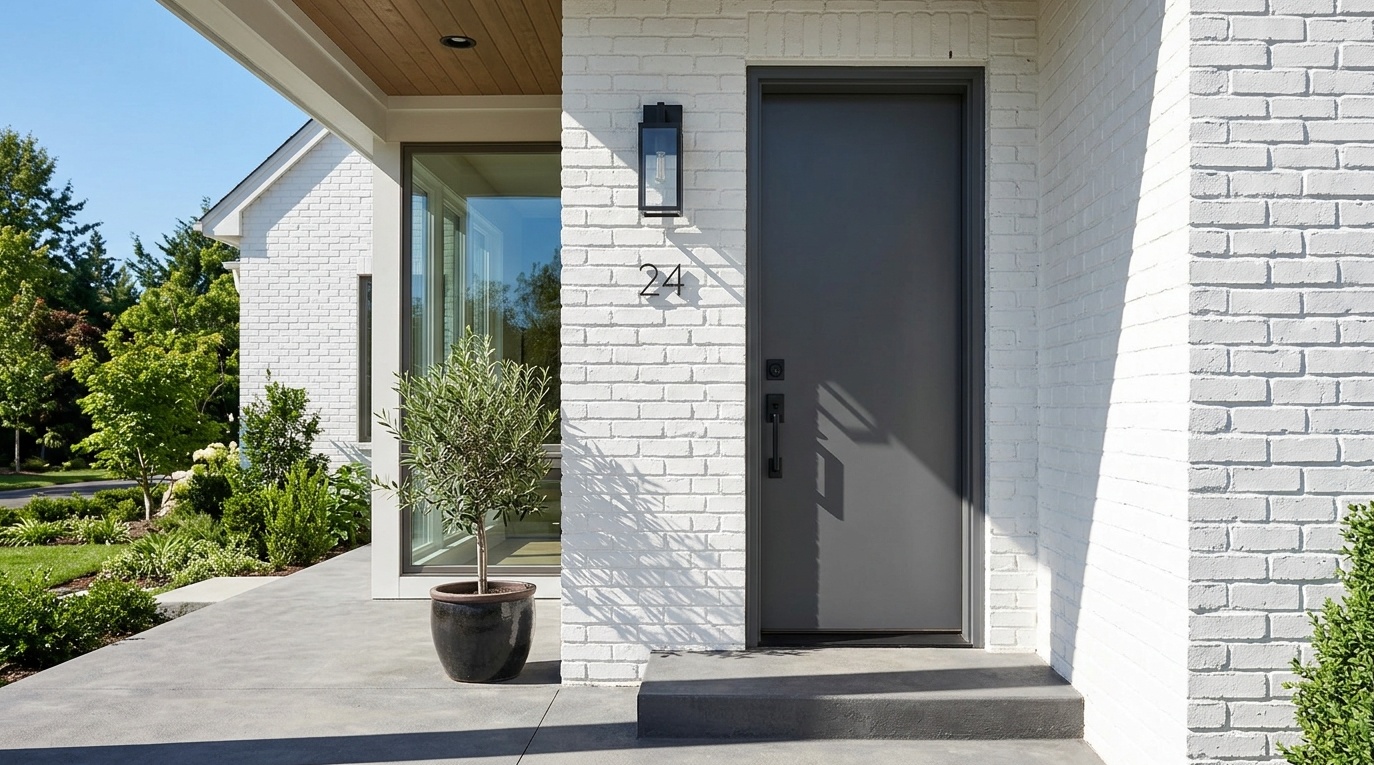
The main problem with metal is rust, not just adhesion. For paint for metal doors, use either a high-quality exterior acrylic latex over a rust-inhibitive primer or a direct-to-metal system designed for steel.
If you sand through to bare steel, do not leave it exposed overnight. Moisture in the air can start flash rust quickly. Prime bare areas the same day with a rust-inhibitive primer before applying the topcoat.
Oil-based alkyd paint can work well on steel because it forms a hard surface, but it is slower and less forgiving. Acrylic latex is often the better DIY choice because it dries faster, holds color more reliably under UV exposure, and is easier to clean up.
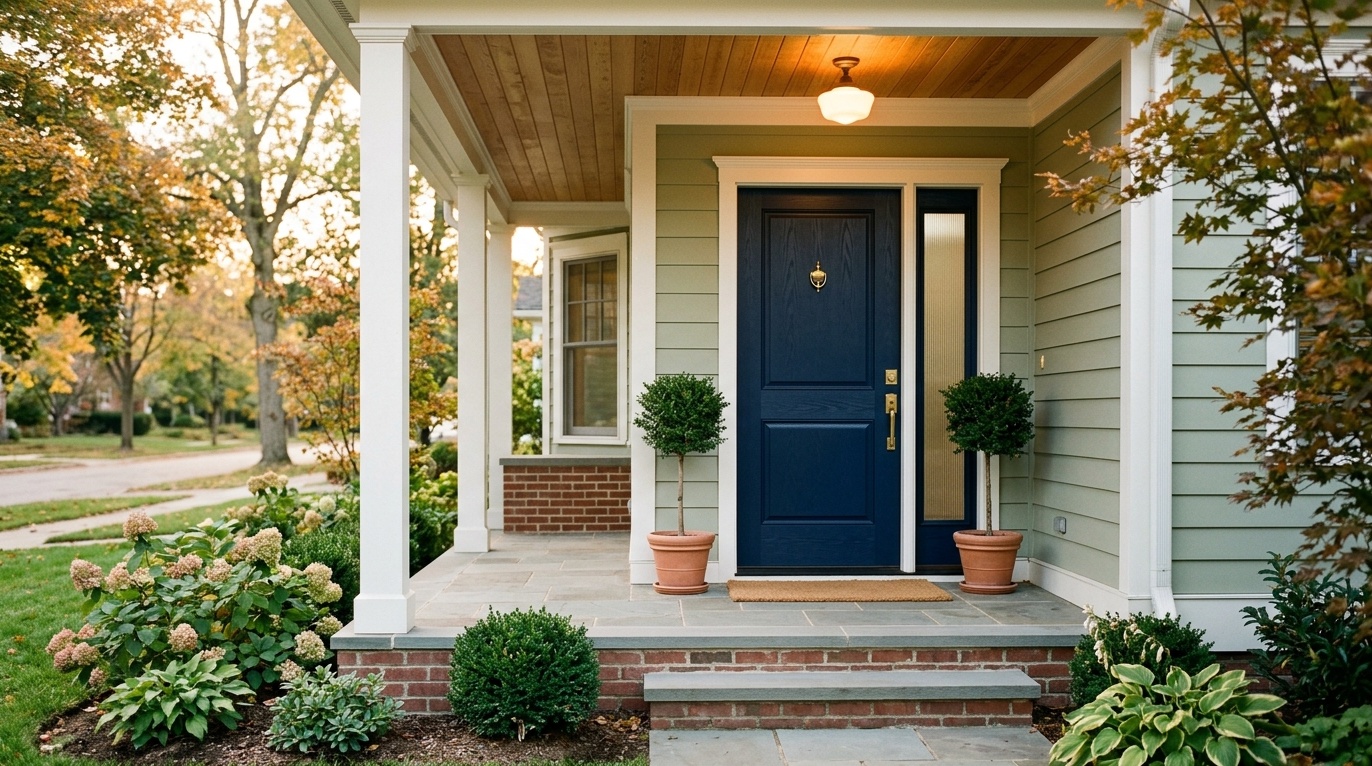
Fiberglass is where many generic paint guides skip the awkward bit. Some fiberglass door skins are smooth, non-porous, and sensitive to strong solvents. Avoid oil-based paints with aggressive mineral solvents unless the door manufacturer specifically approves them.
The safer system is usually 100% acrylic latex over a high-adhesion bonding primer rated for fiberglass or plastics. That primer is not optional. Without it, the topcoat can scratch off around the handle or peel from the edges after 1 season.
If your door has a faux-wood grain texture, satin often looks more natural than high-gloss because it does not exaggerate every molded ridge.
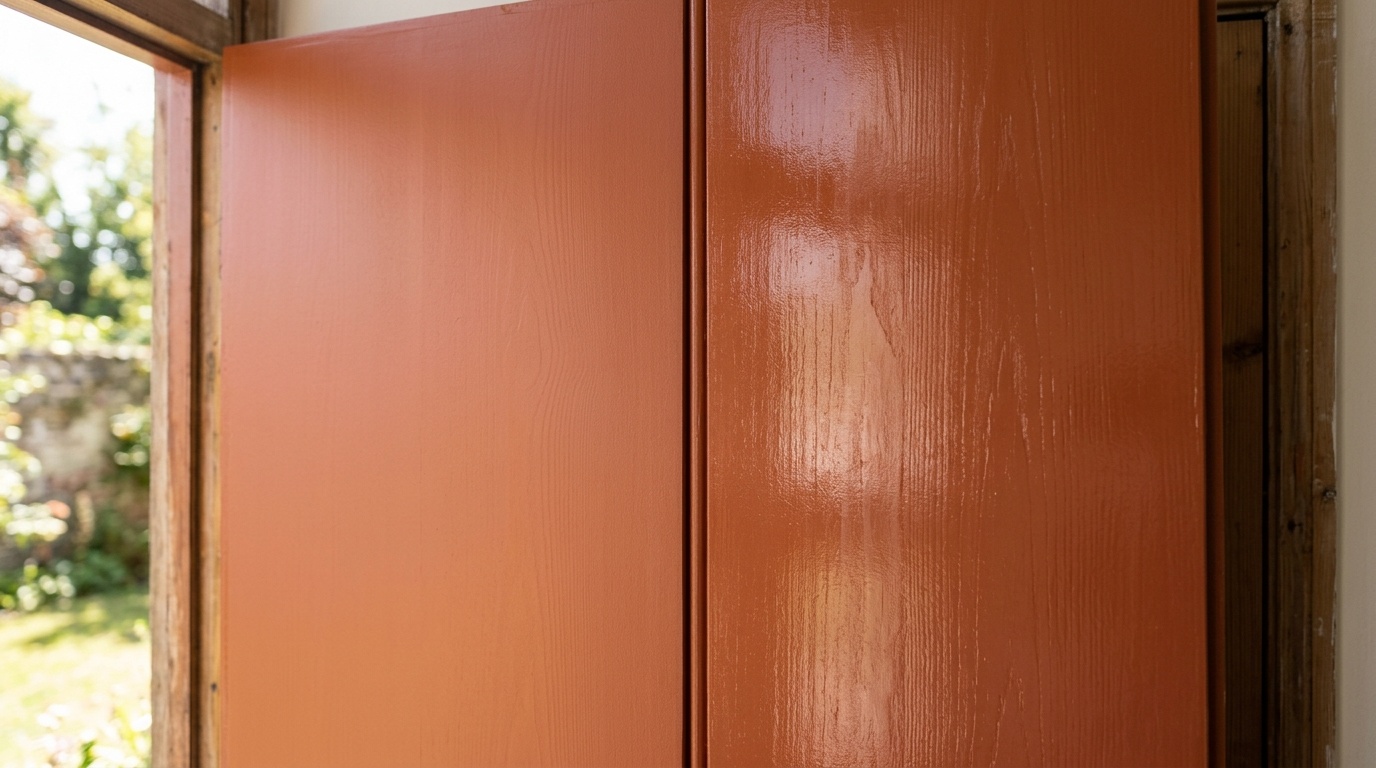
Satin and semi-gloss are the 2 most reliable sheens for exterior doors because they balance durability, cleanability, and surface appearance. Satin hides dents and texture better. Semi-gloss sheds dirt more easily and gives the entry a sharper architectural edge.
Semi-gloss is the usual answer when someone asks for the best paint for exterior door durability. It resists moisture, wipes clean, and gives a crisp contrast against flatter siding or brick. It also reflects more light, which can make color feel brighter than expected on sunny facades.
Satin is more forgiving. If your door has sanding scratches, old dents, visible brush marks, or fiberglass grain, satin reduces glare and softens the surface. It still has enough sheen for outdoor use, unlike flat or matte paint, which tends to collect grime quickly on a high-touch entry.
High-gloss can look beautiful on a formal townhouse door, but it demands near-perfect prep. Every patch, ridge, caulk line, and dust speck becomes more visible. For most DIY projects, high-gloss adds 1 extra level of difficulty with little practical benefit.
Before buying physical paint cans, you can test colors on your current exterior photo and compare satin-like softness against a glossier, higher-contrast look.
The best paint for front door projects is not only a durability decision. Because the door sits at eye level and frames the entry, its color can influence how buyers read the whole facade: cared for, dated, bold, quiet, formal, or approachable.
According to Zillow’s 2018 Paint Color Analysis, homes with black or charcoal gray front doors sold for $6,271 more than expected. The useful takeaway is not that every home should get a black door. It is that front door color is visible enough to affect buyer perception, so it deserves the same planning as siding, roof, and trim.
For resale prep, choose a color that makes the entry feel intentional without fighting the home’s architecture. A charcoal door can look polished on white brick or light siding, but it may feel heavy on a shaded north-facing facade. A muted green or red can add personality, but it should still coordinate with metal hardware, shutters, porch flooring, and landscaping.
For color-specific resale thinking, our guide to choosing a buyer-friendly door color covers how to balance personal taste with the home’s existing architecture.
The next check is exposure. A color can look right and still have to survive heat, shade, rain, and material movement.
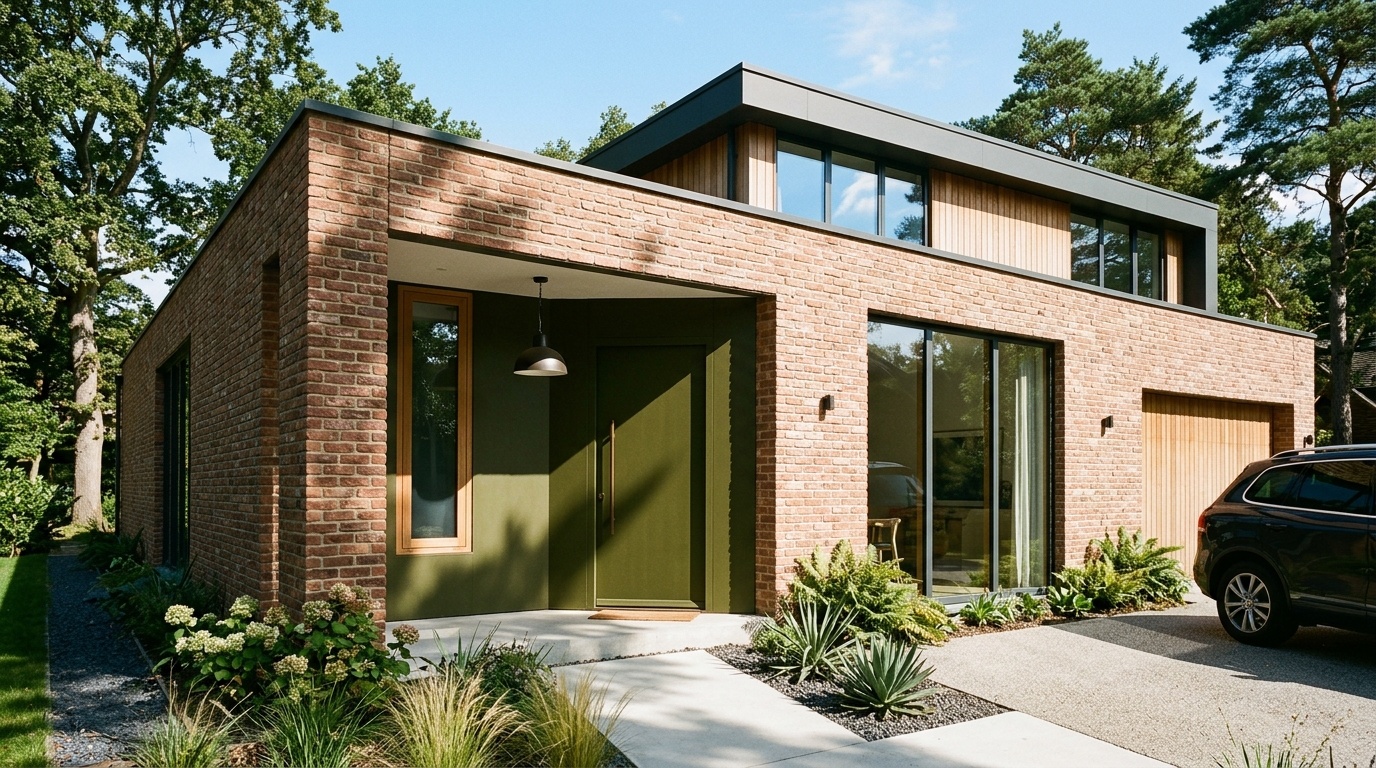
Sun direction changes both the look and performance of front door color. A south-facing door can heat up dramatically, while a north-facing door can make colors read cooler and darker. In 2026, the safest choices account for light, heat, and the door’s expansion behavior.
Dark colors absorb more heat. On wood and fiberglass, that heat can increase movement, stress the coating, and, in some cases, affect the door skin itself. Deep navy, black, oxblood, and forest green can look rich, but they should be tested against the exact facade and exposure before purchase.
North-facing entries tend to flatten color. A muted sage may read gray. A warm beige can feel dull. A blue-black may lose its blue undertone. West-facing doors get late-day intensity, so reds and oranges can look stronger in the afternoon than they do on a small sample card.
In our renders, we often see the same front door color behave like 3 different shades depending on siding, trim, and time of day. It is not the paint being difficult for sport, although it can feel that way. The color simply needs to work with the trim, roof, brick, plants, and hardware around it.
To coordinate the door with shutters, siding, and roof color in one view, run the photo through a full facade preview before you commit to a gallon.
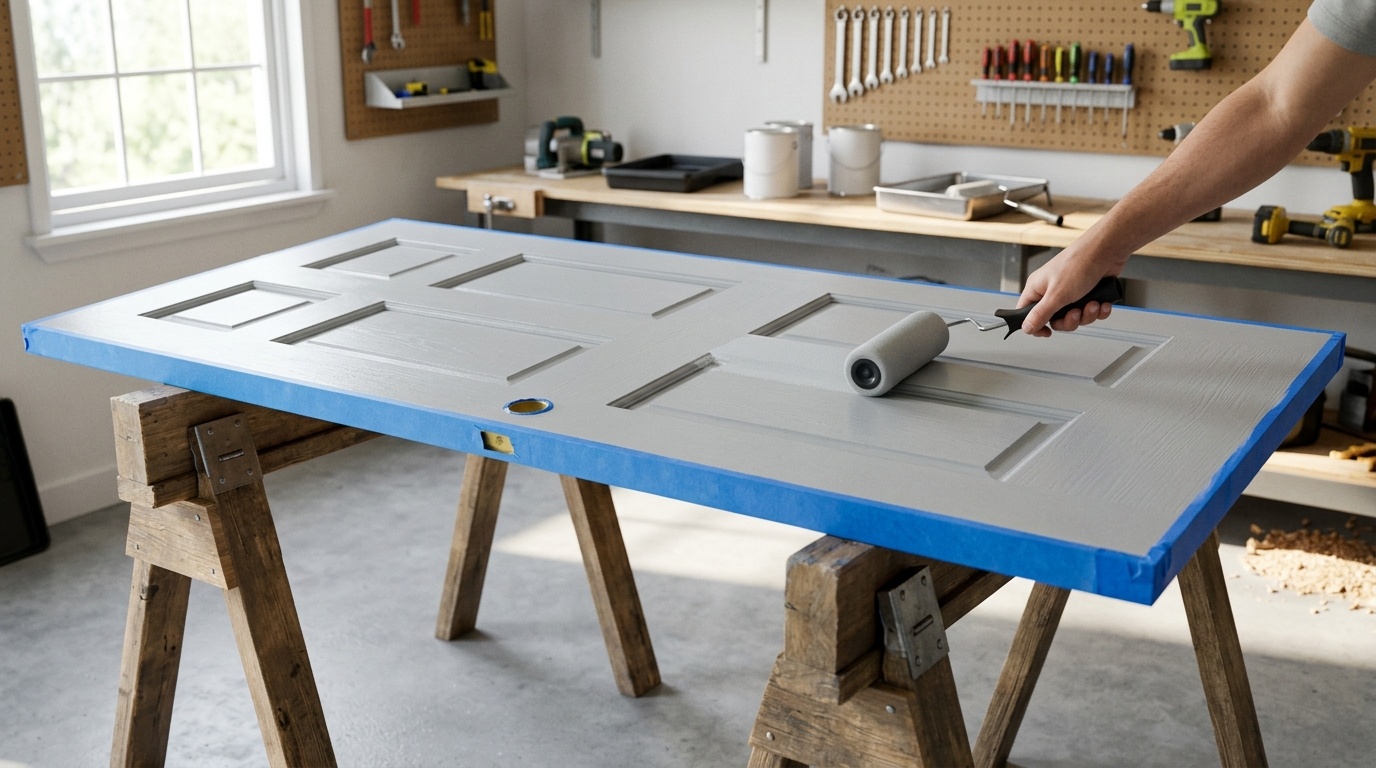
A durable door paint job depends on 7 steps: identify the old coating, remove hardware, clean, sand, prime, apply 2 thin coats, and allow curing time before normal use. Skipping surface testing or closing the door too soon causes many peeling and sticking failures.
First, test the old paint. Rub a small hidden area with a cotton ball soaked in rubbing alcohol. If paint softens or transfers onto the cotton, it is likely latex. If it does not, it may be oil-based.
That test matters. Latex paint should not go directly over old oil paint. It may look acceptable for a few days, then peel in sheets. Sand the surface, clean it well, and apply a suitable bonding or transition primer before using acrylic latex.
Here is the clean workflow for how to paint a door:
The trap is confusing dry time with cure time. A paint may be dry to the touch in 1 or 2 hours, but it can take days or longer to become hard enough to resist pressure from weatherstripping. That pressure can cause blocking, where fresh paint sticks to the rubber seal and tears when the door opens.
During the first few days, reduce contact. You can temporarily remove weatherstripping if it is easy to reinstall, place wax paper or painter’s tape over contact points, or use a light silicone-based lubricant on rubber seals. Do not overload the paint film; 2 thin coats cure more reliably than 1 thick coat.
Visual testing reduces the biggest design risk: buying paint that looks good on a chip but wrong on your real house. Based on Paintit.ai user data, homeowners who visualize their front door color before purchasing paint report significantly higher satisfaction with their final choice.
Paint samples are useful, but they are small, flat, and isolated. A real door sits inside a larger rhythm: siding, trim, porch flooring, roof color, landscaping elements, metal hardware, and shadow. A color that looks elegant on a sample can feel too bright when scaled to a 36-inch-wide entry.
At Paintit.ai, we consistently observe that homeowners make better decisions when they compare at least 3 color families: one safe neutral, one architectural dark, and one expressive accent. That gives enough contrast to see the direction without making the process feel endless.
A practical pre-paint workflow looks like this:
Our experience with virtual design tools shows that the ability to instantly swap out paint colors on a photo of your actual home removes much of the anxiety associated with a long-term design decision. It also keeps the process personal: your home, your light, your proportions.
If you are unsure whether a semi-gloss navy, satin black, or muted green fits the entry, use an instant exterior paint mockup to preview the result before opening a can. Your space. Your rhythm.
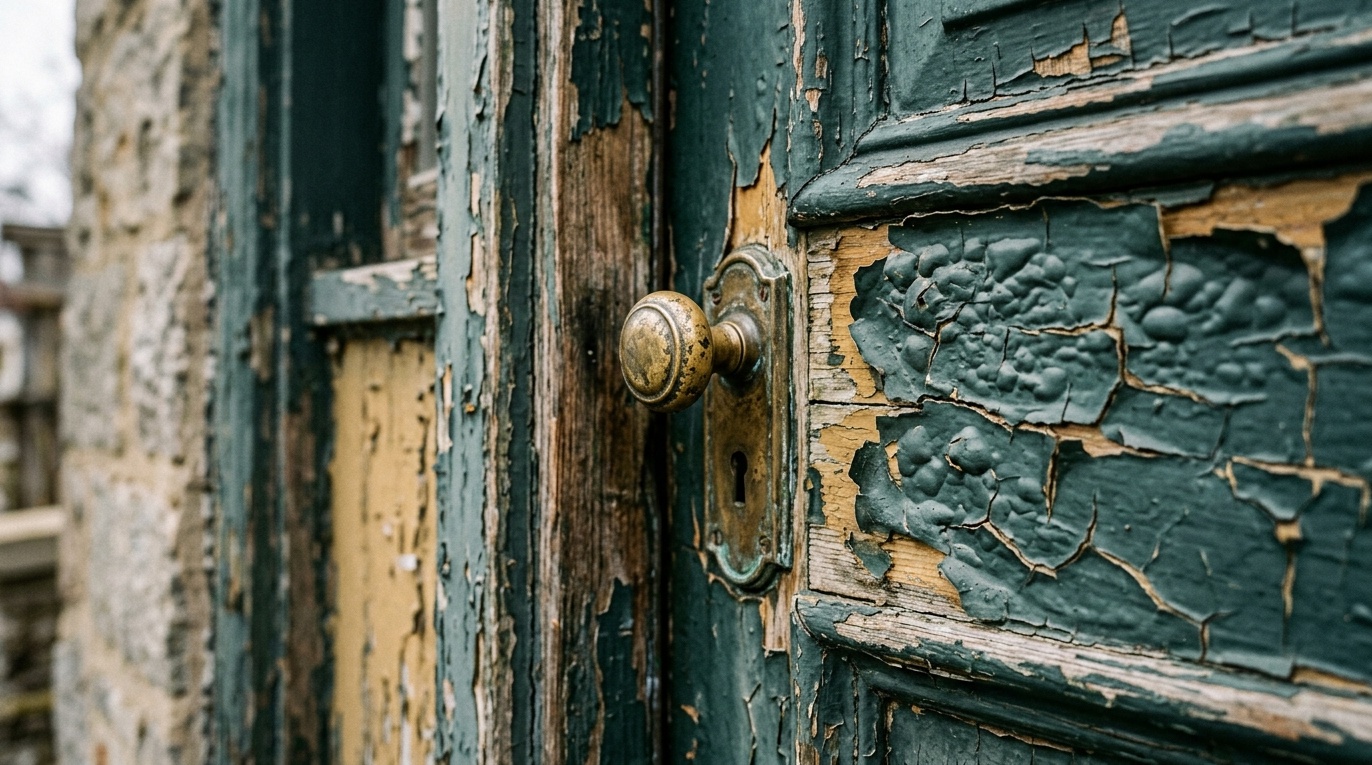
Most front door paint failures come from 5 causes: poor cleaning, wrong primer, incompatible old paint, painting in harsh weather, or closing the door before the coating cures. The fix is usually not more paint. It is better diagnosis before the next coat.
The first mistake is painting over dirt, wax, skin oils, or old polish. The area around the handle is often the worst spot. If paint peels there first, adhesion was probably compromised before the first coat went on.
The second mistake is ignoring the old coating. If an oil-painted door gets acrylic latex without sanding and primer, the new layer may not bond. Use the rubbing alcohol test, then choose the correct transition primer.
The third mistake is using the wrong primer for the material. Raw steel needs rust-inhibitive primer. Fiberglass needs bonding primer. Raw or stained wood needs exterior wood primer, and tannin-rich species may need stain blocking.
The fourth mistake is painting in direct hot sun. Paint can skin over too quickly, trapping moisture or solvents underneath. Aim for mild weather, shade, and a dry forecast. Many exterior paints prefer temperatures roughly between 50°F and 85°F, though the product label should always govern.
The fifth mistake is closing the door too early. Blocking can ruin an otherwise good job. Dry to touch is not fully cured. If the weatherstripping presses into soft paint overnight, it can leave ridges or pull paint away the next morning.
These 5 answers cover the questions homeowners usually ask right before buying paint, primer, rollers, and tape. The short version is simple: match the coating to the material, use primer when conditions change, and treat curing as part of the job, not an afterthought.
No, latex should not go directly over oil-based paint because it may not adhere. Sand the surface, clean it thoroughly, apply a bonding or transition primer, and then apply your exterior acrylic latex topcoat.
Semi-gloss is usually the most durable and washable choice, while satin is better for older doors with dents, grain, or visible imperfections. Avoid flat paint because it collects dirt too easily on a high-touch exterior surface.
Many latex paints are dry to the touch in 1 to 2 hours, but the door should ideally stay open for 4 to 6 hours. If possible, avoid firm contact with weatherstripping for 24 hours or longer.
Yes, primer is strongly recommended if the surface is raw, glossy, stained, metal, fiberglass, or previously painted with oil-based paint. Primer improves adhesion, blocks stains, and creates a more even base for 2 finish coats.
Oil-based paint can create a hard, smooth finish on steel, but acrylic latex is usually easier for DIY work. If bare metal is exposed, the primer matters most: use a rust-inhibitive primer before the finish coat.
The best front door paint choice starts with the door material, not the color card. In 2026, most projects should use 100% acrylic latex exterior paint, the correct primer, satin or semi-gloss sheen, and at least 2 thin coats with proper curing time.
Use acrylic latex for most wood and fiberglass doors. Use rust-inhibitive primer on steel. Be cautious with oil-based coatings on fiberglass. Treat blocking as a real risk, especially during the first few days after painting.
Then test the color in context. Through countless user visualization workflows, we found that seeing a door color against real siding, trim, and daylight helps homeowners move from idea to buy with more confidence and fewer repainting regrets.