17 min. reading

Yulii Cherevko
CEO paintit.ai
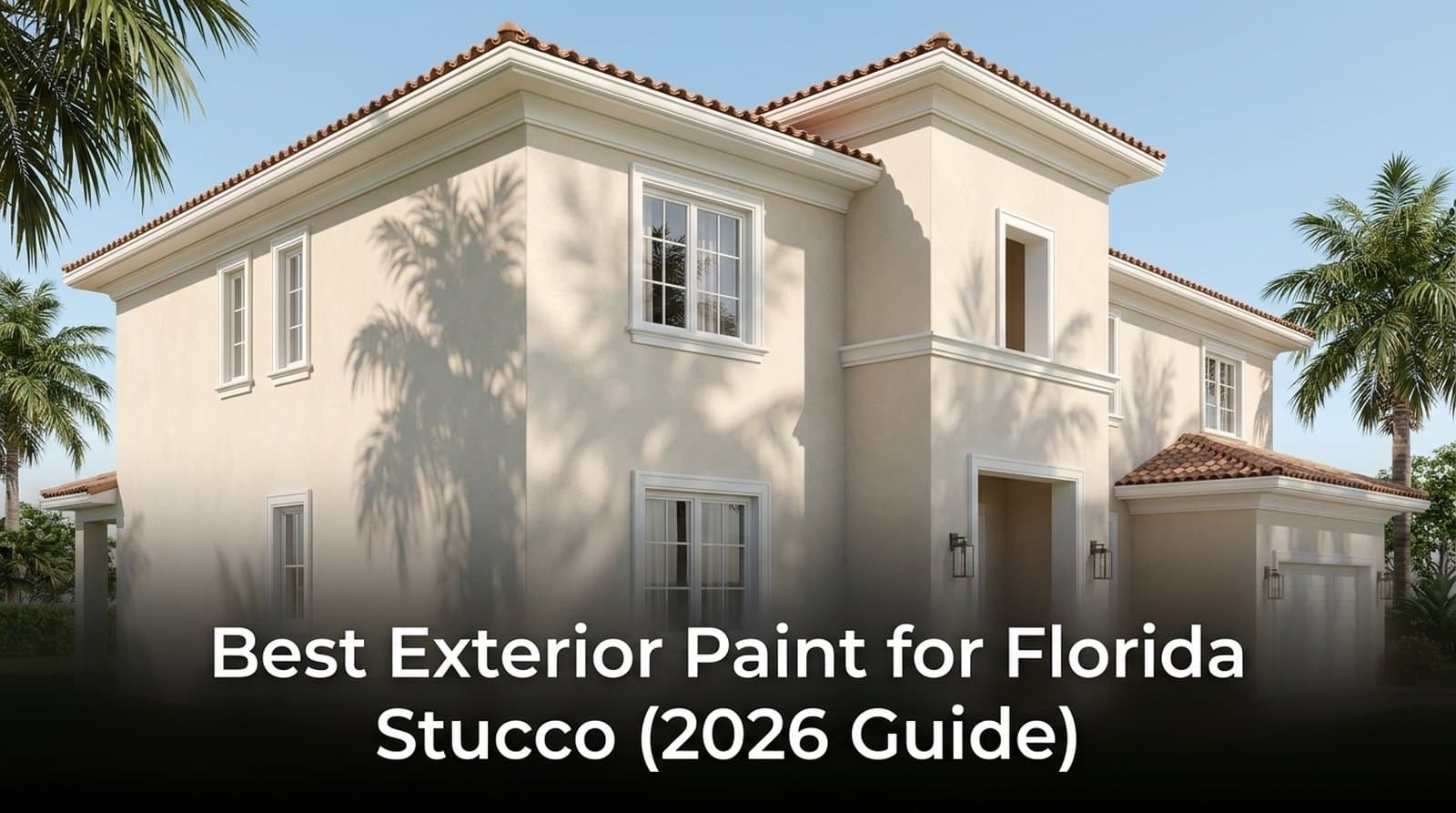
The best exterior paint for Florida stucco homes is usually a premium 100% acrylic masonry paint in a flat or low-sheen finish, backed by proper cleaning, crack repair, and alkali-resistant primer where the wall needs it. Elastomeric coatings can work, but only when the stucco is dry, stable, and professionally evaluated.
Florida stucco does not get an easy life. It is porous, often alkaline, heavily textured, and exposed to humidity, coastal salt, direct UV, and heavy rain. So the right choice is not just “which brand looks nice.” It is a 3-part decision: formulation, sheen, and color behavior in real sunlight.
At Paintit.ai, we often see homeowners begin their exterior design journey by focusing intensely on color and overall visual appeal, long before they consider specific paint brands or budgets. Based on Paintit.ai data, 27.6% of prompts include color modifiers, 13.2% involve paint/repaint actions, only 2.5% mention brands, and 3.4% mention budget. That tells us something practical: people want to see the result first.
Before buying 15 or 20 gallons of paint, many homeowners now preview the whole exterior flow — stucco body, trim, fascia, shutters, front door, and roof contrast — with a realistic exterior planning pass. It is a seamless way to move from idea to purchase without gambling on a 2-inch swatch.
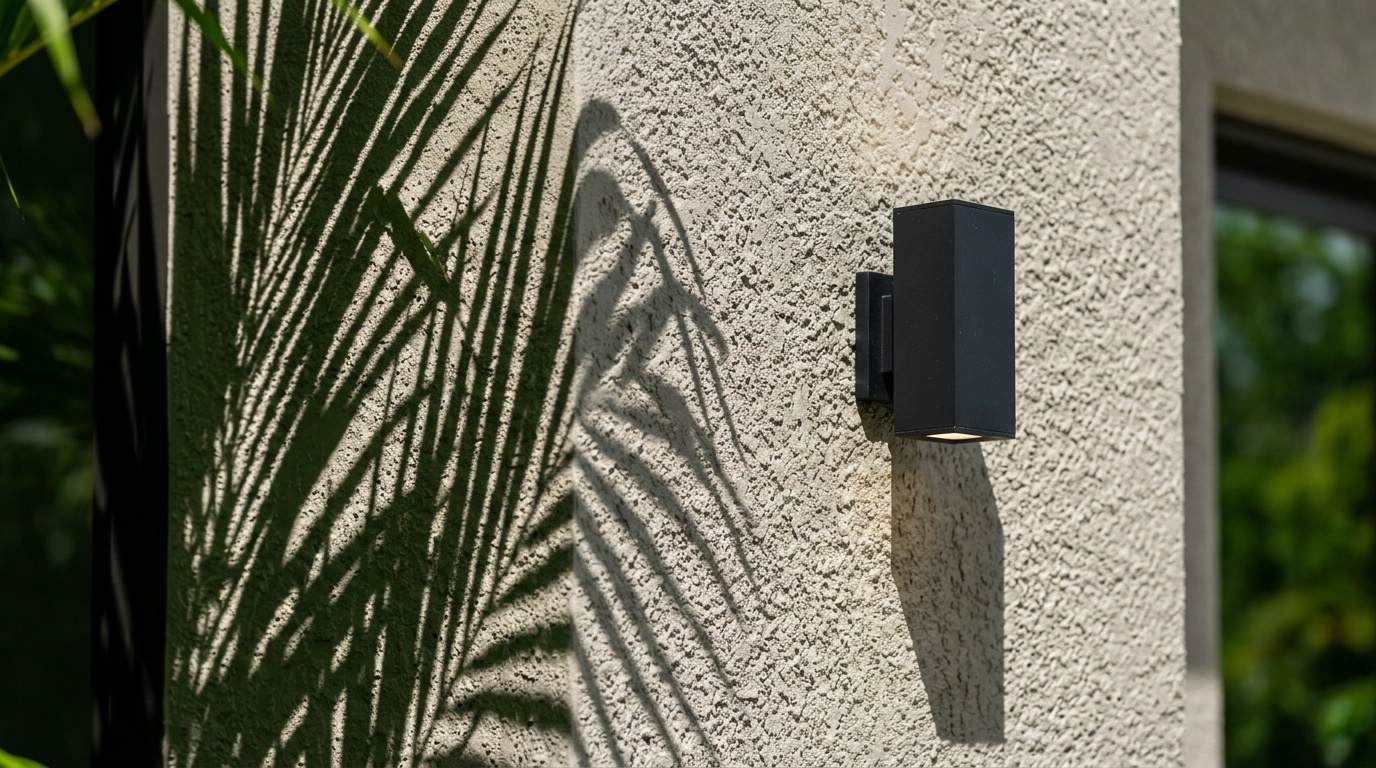
Florida stucco needs specialized exterior paint because it faces 3 linked pressures at once: water absorption, high UV exposure, and heat-driven expansion. Standard exterior paint may fade, peel, or bubble because stucco is porous and can hold vapor behind the coating if the paint film is not breathable.
Stucco is not a flat board. It is a mineral wall system with pits, ridges, trowel marks, patch zones, and micro-cracks. That texture gives Florida homes their familiar rhythm, but it also creates plenty of small places where moisture, salt, and mildew can settle in.
The paint has to do several jobs at the same time:
Fresh stucco can have a pH above 10. That matters because high alkalinity can discolor or break down standard coatings. On new stucco, repaired patches, or chalky older walls, a masonry primer or alkali-resistant primer is not a cosmetic extra. It is part of the system.
Florida also punishes color choices. A warm greige that looks calm indoors may read as pale white on a south-facing stucco wall at 2 p.m. A mid-tone blue may look crisp on a screen but too bright against a terracotta roof. The best technical paint can still disappoint if the color was selected in the wrong light.
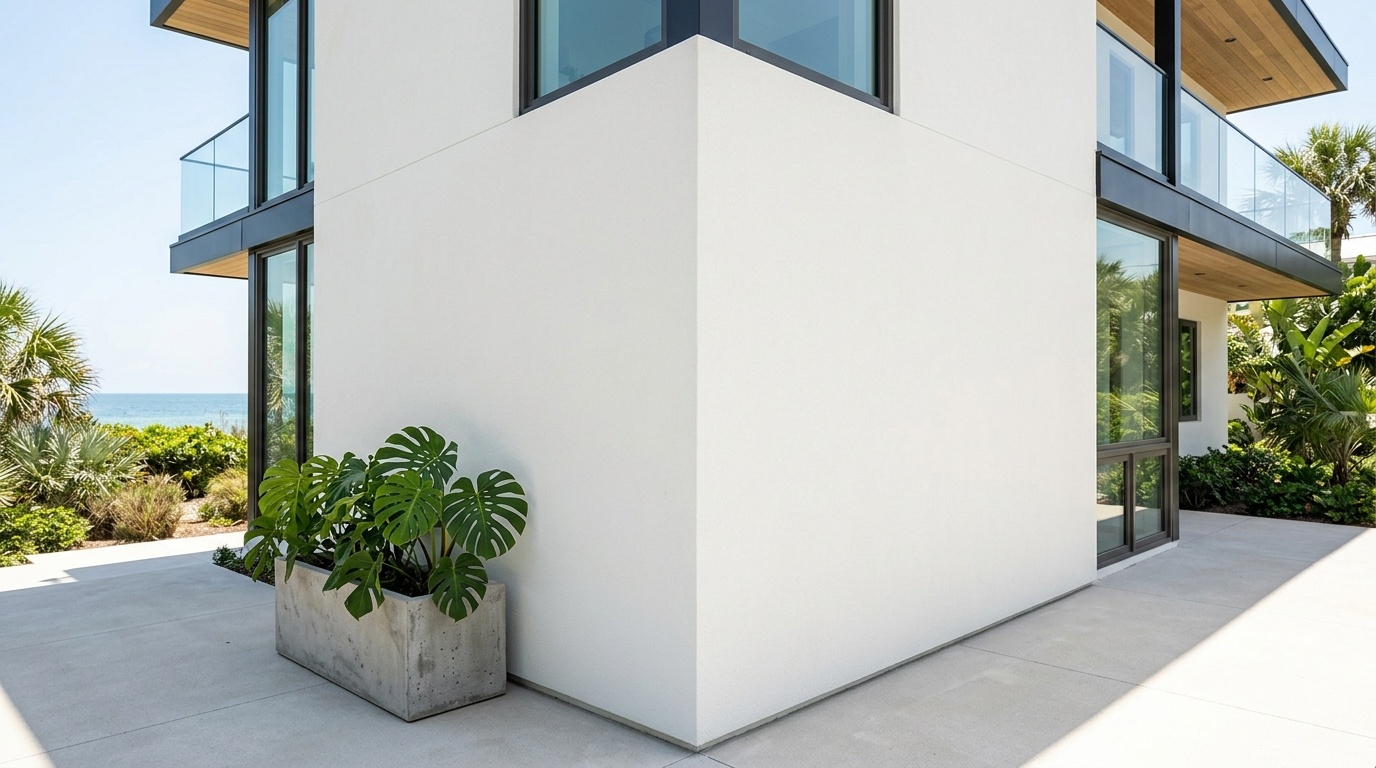
The 3 main choices for Florida stucco are 100% acrylic latex, elastomeric coating, and masonry paint or sealer. Acrylic is the safest default for breathability, elastomeric is for specific crack-bridging needs, and masonry coatings are useful when alkalinity, porosity, or new stucco conditions are the main concern.
Here is the practical difference.
| Paint type | Best use | Main strength | Main risk |
|---|---|---|---|
| 100% acrylic latex | Most painted Florida stucco homes | Breathability, UV resistance, flexibility | May not bridge repeated cracks well |
| Elastomeric coating | Older stucco with many hairline cracks | High build, waterproofing, 100–300% stretch | Can trap moisture if applied incorrectly |
| Masonry paint or sealer | New, chalky, porous, or high-pH stucco | Alkali resistance and surface sealing | Needs the right topcoat pairing |
A premium 100% acrylic latex or acrylic masonry paint is usually the best first answer. It lets moisture vapor move outward instead of building hydrostatic pressure behind the paint film. That breathability is why acrylic remains the steady workhorse for stucco in humid climates.
Elastomeric paint is thicker. It forms a more waterproof membrane and can bridge hairline cracks up to 1/32 inch. That sounds ideal, and sometimes it is. But here’s the thing: elastomeric coatings should only be applied over clean, dry, stable stucco with a sound water barrier behind it.
If damp stucco is sealed under elastomeric paint, the coating can trap moisture. The visible symptoms are bubbling, peeling, blistering, and soft patches. The hidden risk is more serious: moisture can stay behind the wall finish and contribute to wood-frame rot behind the stucco. If you are considering elastomeric paint, have a qualified contractor inspect moisture conditions first.
Masonry coatings and acrylic sealers sit in a slightly different category. They are built for mineral surfaces, especially porous or alkaline ones. A product like a masonry sealer can help stabilize chalky stucco before a finish coat. On new stucco, the alkali-resistance question matters as much as color.
A simple decision rule works well:
The best exterior paint for Florida stucco homes in 2026 should be chosen by performance category first, then matched to a brand line. Strong options include Sherwin-Williams Loxon, Sherwin-Williams SuperPaint Exterior Acrylic, Benjamin Moore Aura Exterior, Benjamin Moore Ultra Spec Masonry Sealer, and Dunn-Edwards Evershield.
Brand matters, of course. It just should not be the first note in the playlist. Start with the visual target and the surface condition. Then pick the product that fits.
In our analysis of Paintit.ai user prompts, homeowners rarely start by naming a manufacturer. They begin with personal language: “make it warmer,” “change the wall color,” “a bit darker,” or “cement color.” That visual-first mindset is useful. It keeps the decision anchored in how the house actually feels from the street.
Once you know the look, use a quick shade-testing workflow to compare equivalent colors before choosing between product lines. A sandy beige in one brand and a warm limestone in another may behave differently on textured stucco, especially in strong Florida sun.
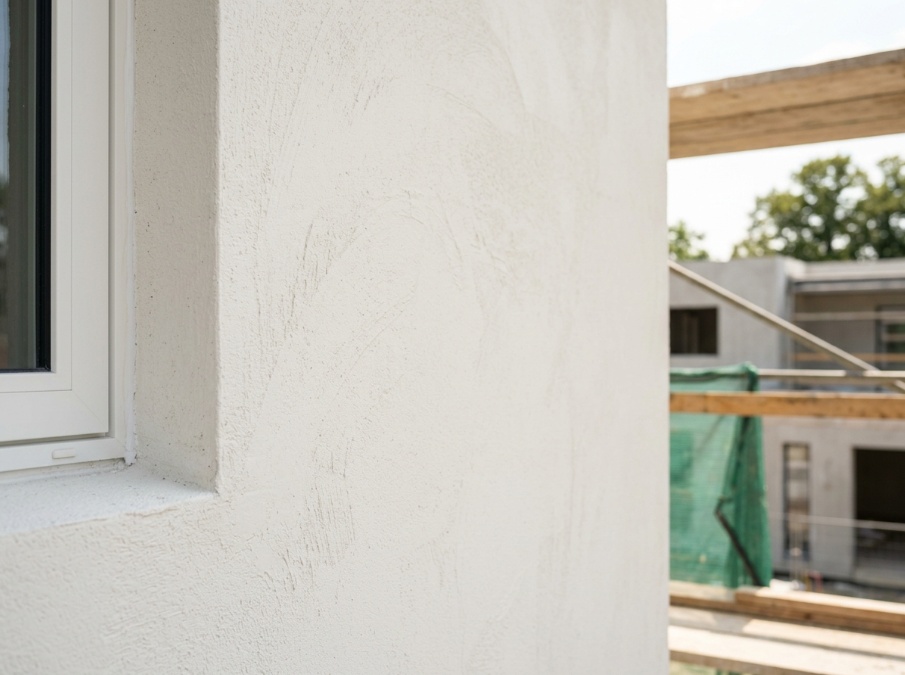
Loxon is one of the most practical lines for stucco because it is designed for masonry conditions. Its key advantage is alkali and efflorescence resistance. It can be used on fresh stucco as young as 7 days old, which makes it useful for new construction or repairs where standard coatings may struggle.
Best fit: newer stucco, repaired stucco, high-pH surfaces, and homeowners who want a masonry-specific coating rather than a general exterior paint.
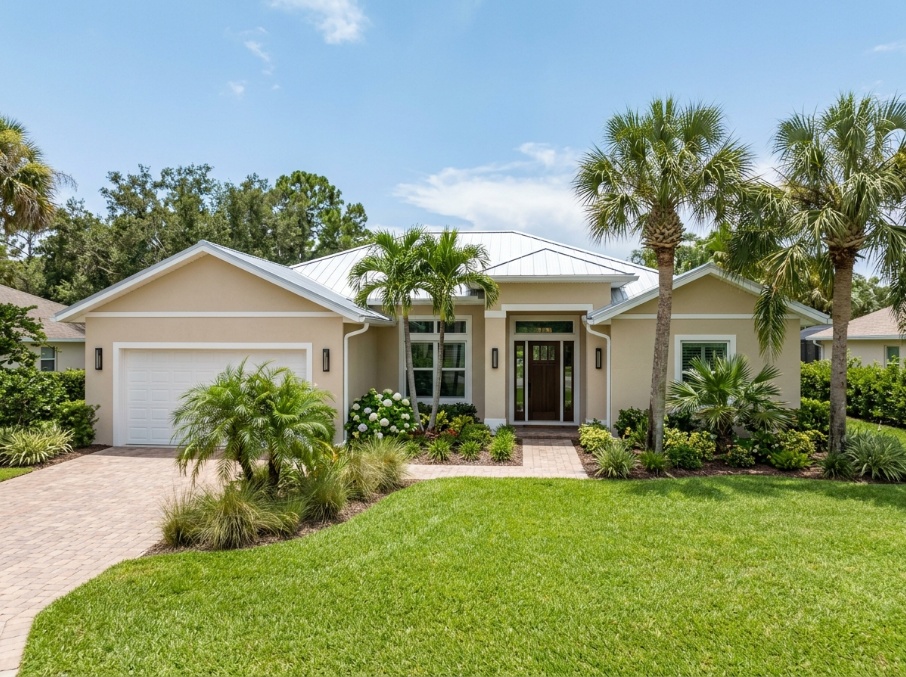
SuperPaint Exterior Acrylic is a dependable 100% acrylic option for repainting stucco that is already stable and properly prepared. It is known for adhesion, color retention, and reliable performance in bright sun.
Best fit: repaints where the stucco is sound, previously painted, and does not require heavy crack bridging.
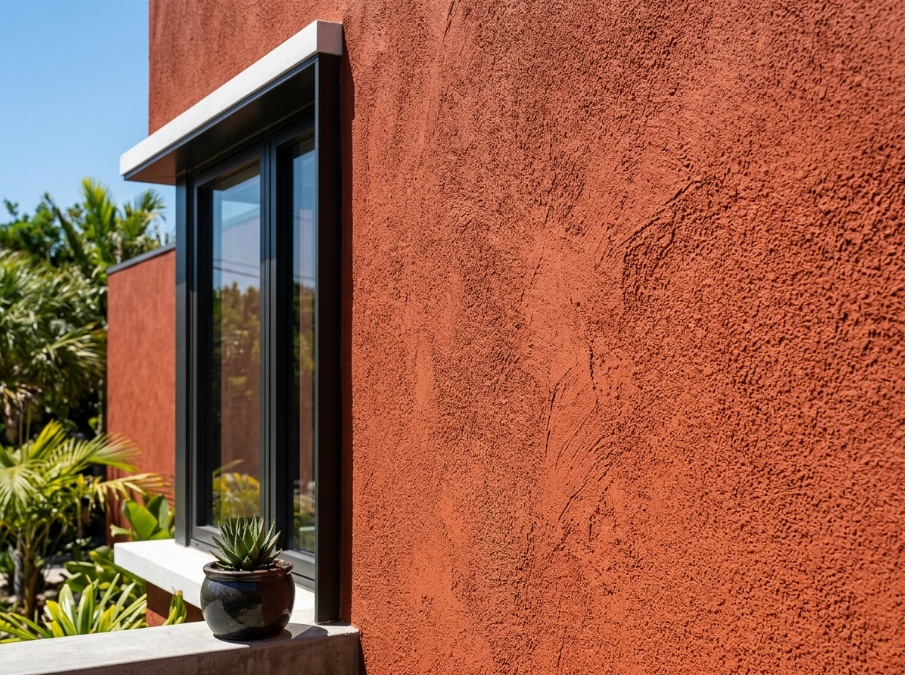
Aura Exterior is a premium 100% acrylic paint with strong fade resistance. It is especially useful if you are using deeper or richer colors, where UV exposure can make fading more noticeable.
Best fit: color-sensitive projects, deep body colors, accent-heavy exteriors, and homeowners who want strong visual consistency over time.
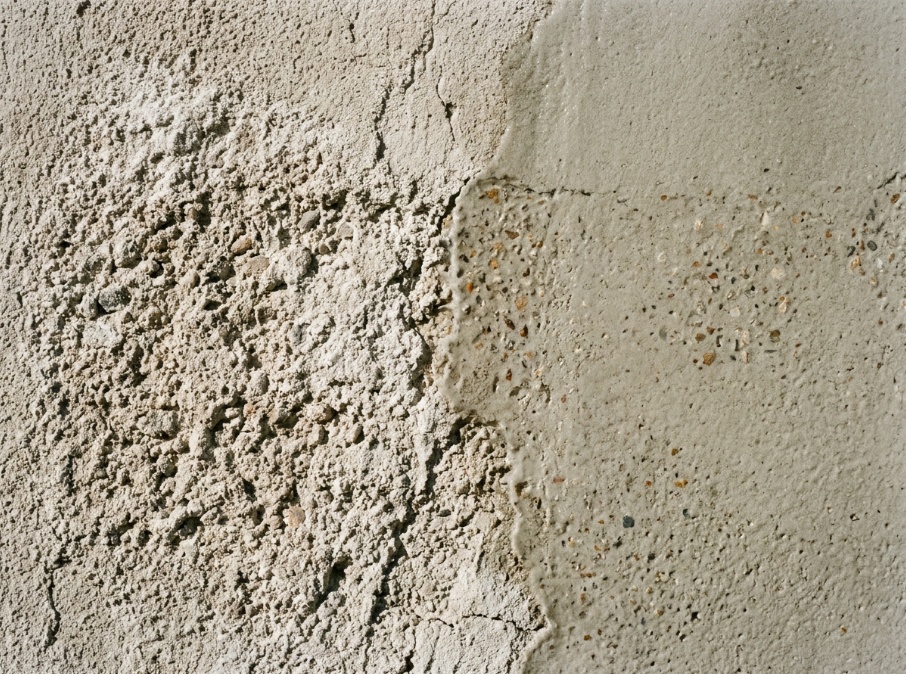
Ultra Spec Masonry Sealer is a base-coat tool rather than a final color answer. It helps seal porous or chalky stucco so the topcoat has a more consistent foundation.
Best fit: older stucco that feels powdery, patchy, or uneven in porosity.
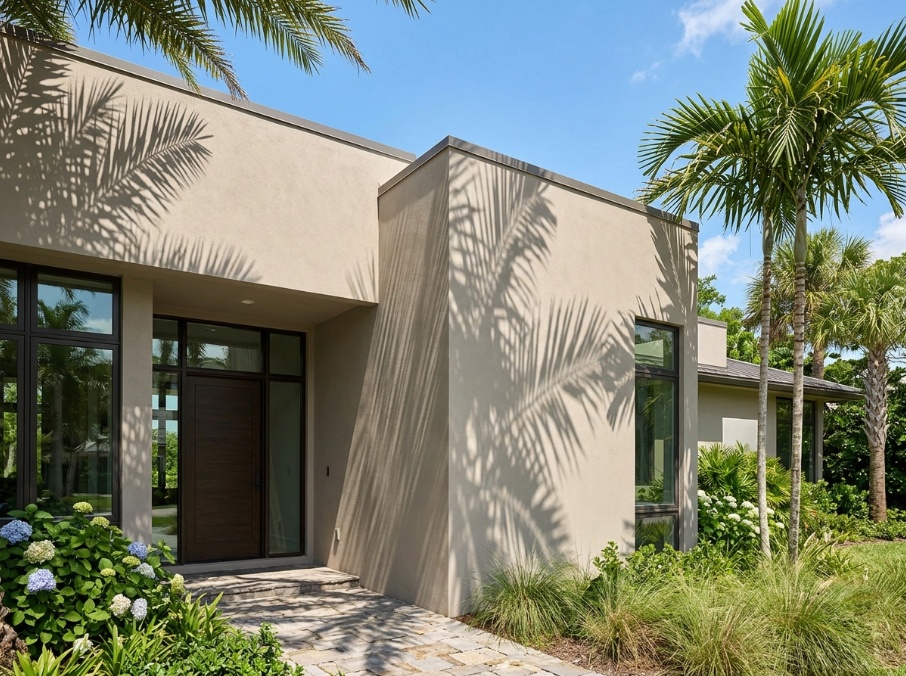
Dunn-Edwards Evershield is a high-performance exterior paint with flexibility and elongation. It can feel close to a lighter elastomeric approach while maintaining better breathability than a heavy waterproof membrane.
Best fit: sun-exposed stucco where flexibility, color retention, and vapor movement all matter.

Flat or low-sheen paint is usually best for the body of a Florida stucco home because it reduces glare and hides texture flaws. Satin can work on trim, fascia, doors, and shutters, but on broad stucco walls it often highlights trowel marks, patch repairs, and hairline cracks.
Sheen is not just a style preference. In Florida light, it behaves like a reveal tool.
Textured stucco reflects light unevenly. Every ridge and hollow catches the sun at a slightly different angle. Add a satin or semi-gloss finish, and those differences become more visible. A repaired patch that looked subtle in shade can suddenly look like a square outline in afternoon sun.
For the main stucco body, follow this 3-zone rule:
Modern premium flat paints are more washable than older flat coatings, so you do not need to choose shine just to get basic cleanability. Low-sheen is often the sweet spot: enough surface resilience for rain and rinsing, not so much reflection that the wall looks busy.
If you are unsure, preview the color and sheen effect on your own photo before buying samples. With a direct photo-based paint preview, you can compare a warm white body against charcoal trim, then test whether a low-sheen look feels calmer than a satin finish on the same stucco texture.
A small but useful rule: if your stucco has visible patching from 10 feet away, do not put satin on the body. The sun will make the patch more obvious, not less.

Digital try-on helps Florida homeowners avoid the most common color mistake: choosing from a swatch that looks calm indoors but appears washed out outdoors. A good workflow uses 3 to 5 real exterior photos, then refines color in short steps until the stucco, trim, roof, and light feel balanced.
Based on real visualization workflows within Paintit.ai, users frequently engage in an intuitive refinement process, adjusting shades like “a bit darker” or “now make it warmer” to achieve the right look under varying light conditions. Based on Paintit.ai data, 15.0% of all prompts contain refinement language.
That matters in Florida because sunlight can bleach the personality out of pale colors. A beige may need to become one step darker. A gray may need a warmer undertone. A white may need cream, sand, or limestone softness to avoid glare.
Use this 5-step visual test-drive:
In our renders, the best results come from preserving the real home layout and changing only the surfaces that matter. The goal is not a fantasy image. It is a practical preview of your actual stucco, your roof color, your shadow patterns, and your architectural rhythm.
For a more detailed photo setup process, you can follow this practical rendering checklist before uploading images. Clean photos make color evaluation more reliable.
Paintit.ai supports common file types including JPG, PNG, PDF, and DWG, which is useful if you are working from a photo, contractor document, or design plan. Features such as Repaint, Full Redesign, Style Transfer, and object-level edits help separate paint color from trim, shutters, doors, and other exterior details.
The most reliable sequence is simple: type, see, tweak, buy. Your space. Your rhythm.
A Florida stucco paint job succeeds or fails before the first finish coat goes on. The essential prep sequence has 6 checks: clean the surface, remove mildew, repair cracks, inspect chalking, manage alkalinity, and prime where needed. Skipping one can shorten the life of even a premium coating.
Start with water management. If the stucco is dirty, chalky, or mildewed, paint adhesion will be uneven. Pressure washing can help, but it should not force water behind the stucco system. Soft washing may be safer for fragile or older surfaces.
Then inspect cracks. Hairline cracks up to 1/32 inch can often be handled with elastomeric patching compound, but repeated or wider cracks deserve a contractor’s attention before paint. Do not ask paint to solve movement that the wall itself has not resolved.
Use this checklist before coating:
If you want a broader preparation reference beyond stucco-specific decisions, our exterior coating planning notes explain how prep, paint quality, and application timing work together across different surfaces.
Acrylic paints need a clean bond. Elastomeric coatings need an even stricter foundation because they form a thicker film. Masonry sealers need enough porosity to penetrate correctly. Each product has a role, but none can compensate for trapped moisture or unstable substrate.
The best application method for textured stucco is usually spray and back-roll because it combines coverage with mechanical pressure. Spraying moves paint across the surface quickly, while back-rolling pushes coating into pits, grooves, and trowel texture so the finish bonds more evenly.
Work in a steady flow. Stucco texture creates shadow pockets, so a wall can look coated from one angle while small crevices remain thin. Back-rolling helps solve that by pressing paint into the surface instead of simply laying film over the peaks.
A practical sequence looks like this:
Avoid painting in harsh direct sun if the coating is flashing too quickly. Flash drying can create lap marks and uneven sheen, especially on textured stucco. The goal is a controlled rhythm: apply, back-roll, inspect, continue.
Trim, doors, and shutters can be handled separately. This is where satin may make sense because these surfaces are smaller, smoother, and easier to clean. The stucco body should remain visually calm, especially if the texture is heavy.
Do not mix systems casually. For example, do not apply a heavy elastomeric coating over damp stucco because you like the idea of extra waterproofing. Formulation, surface condition, and application method need to work together.

Painted Florida stucco should be checked at least once a year, especially in coastal or shaded areas. A high-quality 100% acrylic paint job on properly prepared stucco typically lasts 7 to 10 years, but mildew, salt residue, cracks, and UV exposure can shorten that cycle.
Annual maintenance is not complicated. It is mostly observation and gentle cleaning. The earlier you catch a small crack or mildew patch, the less likely it is to spread across a wall plane.
Use this annual 5-point review:
Coastal homes need extra empathy in the maintenance plan. Salt air can leave residue that makes surfaces look dull and can stress coatings over time. Regular rinsing helps maintain the paint film and keeps the color closer to the original design intent.
If you see bubbles under an elastomeric coating, do not simply repaint over them. Bubbling can indicate moisture trying to escape. The coating must be opened, dried, and evaluated before any new layer is added.
For most homeowners, the quiet winning formula is steady care: clean once a year, patch small cracks early, and repaint before the coating fully fails.
The practical buying rule is simple: choose the best exterior paint for Florida stucco homes by matching surface condition first, visual goal second, and brand third. For most homes, that means premium 100% acrylic masonry paint, flat or low-sheen body finish, satin accents, and careful prep.
If your stucco is newer, alkaline, or patched, prioritize masonry compatibility and primer. If it is older but dry and stable with many hairline cracks, discuss elastomeric options with a qualified contractor. If it is simply faded but sound, a premium acrylic paint is usually the most balanced choice.
Use this 4-part decision filter before purchase:
The best paint is not only the can with the strongest label. It is the system that respects stucco chemistry, Florida light, and the personal way your home should feel from the street.
These are the 5 questions Florida homeowners usually need answered before buying exterior stucco paint. The short version: choose breathable acrylic for most homes, be careful with elastomeric coatings, use flat or low-sheen on the body, prime problem surfaces, and plan for maintenance every year.
The most reliable option is a premium 100% acrylic masonry paint. It provides UV resistance, flexibility, and breathability, which helps moisture vapor escape from porous stucco. Elastomeric paint can be useful on older dry stucco with many hairline cracks, but it should not be applied over damp or compromised walls.
Use flat, matte, or low-sheen paint on the main stucco body. These finishes reduce glare and hide trowel marks, patch repairs, and hairline cracks. Satin should be saved for trim, doors, shutters, fascia, and other smaller details where a bit of shine adds definition.
Acrylic paint is thinner, breathable, flexible, and well suited to most Florida stucco homes. Elastomeric paint is thicker and can stretch 100–300%, helping bridge hairline cracks up to 1/32 inch. The trade-off is moisture risk: if trapped water sits behind elastomeric paint, bubbling and hidden damage can follow.
A high-quality 100% acrylic paint job on properly prepared Florida stucco typically lasts 7 to 10 years. Lifespan depends on sun exposure, coastal salt, moisture, surface prep, and maintenance. Annual soft washing and early crack repair can help the finish stay healthy longer.
Yes, primer is strongly recommended on unpainted, repaired, chalky, or high-pH stucco. Fresh stucco can have a pH above 10, which may discolor or weaken standard paint. An alkali-resistant masonry primer or sealer helps create a stable base for the finish coat.