8 min. reading

Yulii Cherevko
CEO paintit.ai
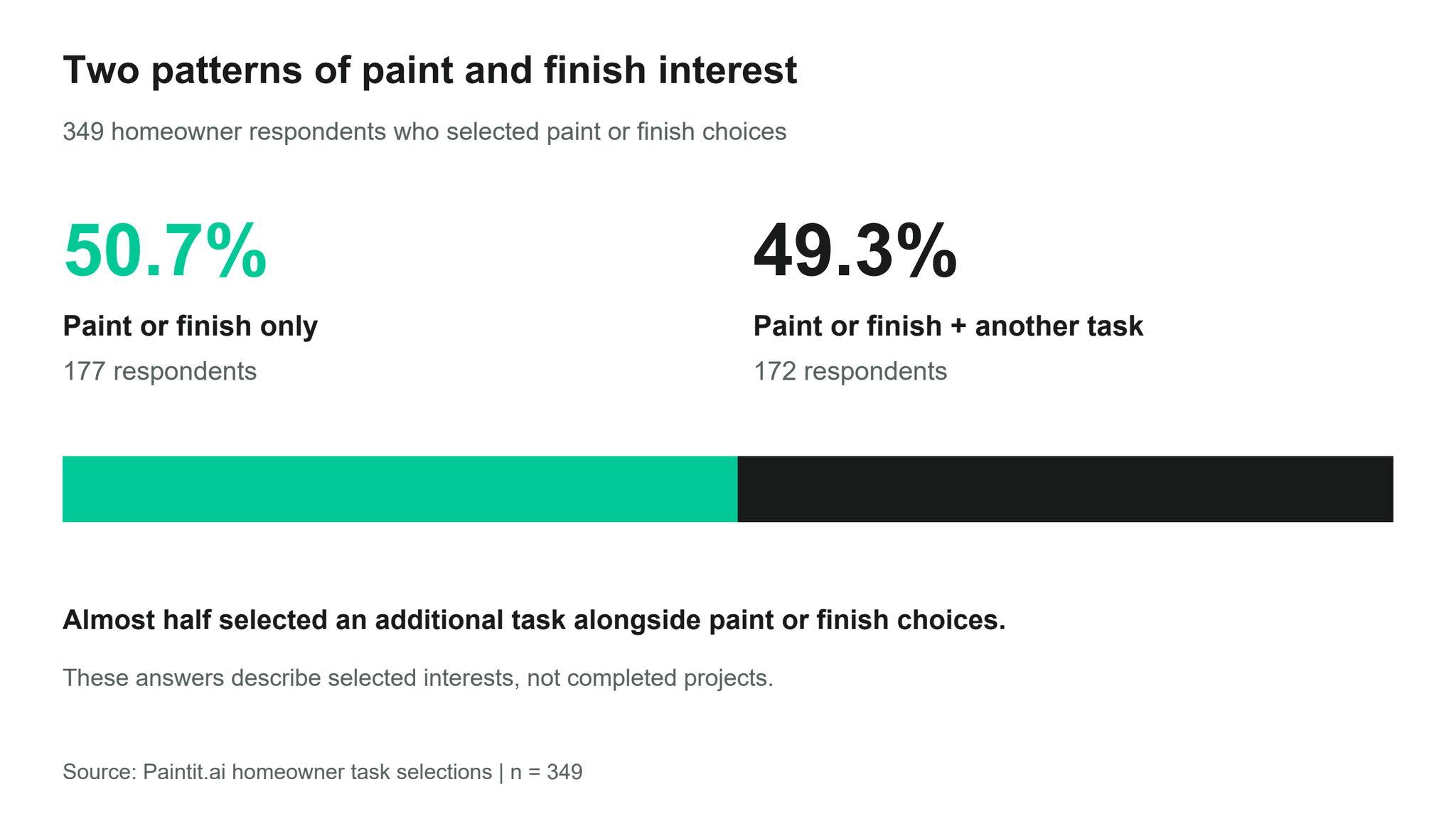
Among 349 Paintit.ai homeowner respondents who selected paint or finish choices, 177 selected that task alone and 172 also selected another design task. The split was almost even: 50.7% versus 49.3%. Furniture or decor placement was the most common companion task, selected by 88 respondents, or 25.2% of this group.
That distinction gives an AI paint color comparison a useful starting question: are you testing a surface change in an existing room, or choosing color as part of a wider update? A wall-color brief and a furniture-and-color brief need different constraints. The results below describe those interests, followed by practical examples for planning a comparison.
This follow-up examines the paint-and-finish group within our research on 1,788 Paintit.ai accounts. Paint or finish choices was selected by 349 of 724 homeowner task respondents, or 48.2%. Here, we look more closely at what those 349 respondents selected alongside it.
Homeowners could select more than one task when getting started. Within the 349 accounts that selected paint or finish choices, 177 listed no other task option. The remaining 172 selected an additional option.
| Selection pattern | Accounts | Share of 349 respondents |
|---|---|---|
| Paint or finish choices as the only selected task | 177 | 50.7% |
| Paint or finish choices plus another task | 172 | 49.3% |
| Total | 349 | 100.0% |
The paint-only selection is a reason to offer a narrow comparison: show the same room with a different wall color or surface finish. A useful brief identifies the surface to change and the features to keep, such as flooring, furniture and trim. That makes the color itself easier to assess.
The combined selections call for a second question: which other decision belongs in the brief? If a new sofa or a renovation concept is part of the plan, decide whether to explore it first or compare it alongside the color.
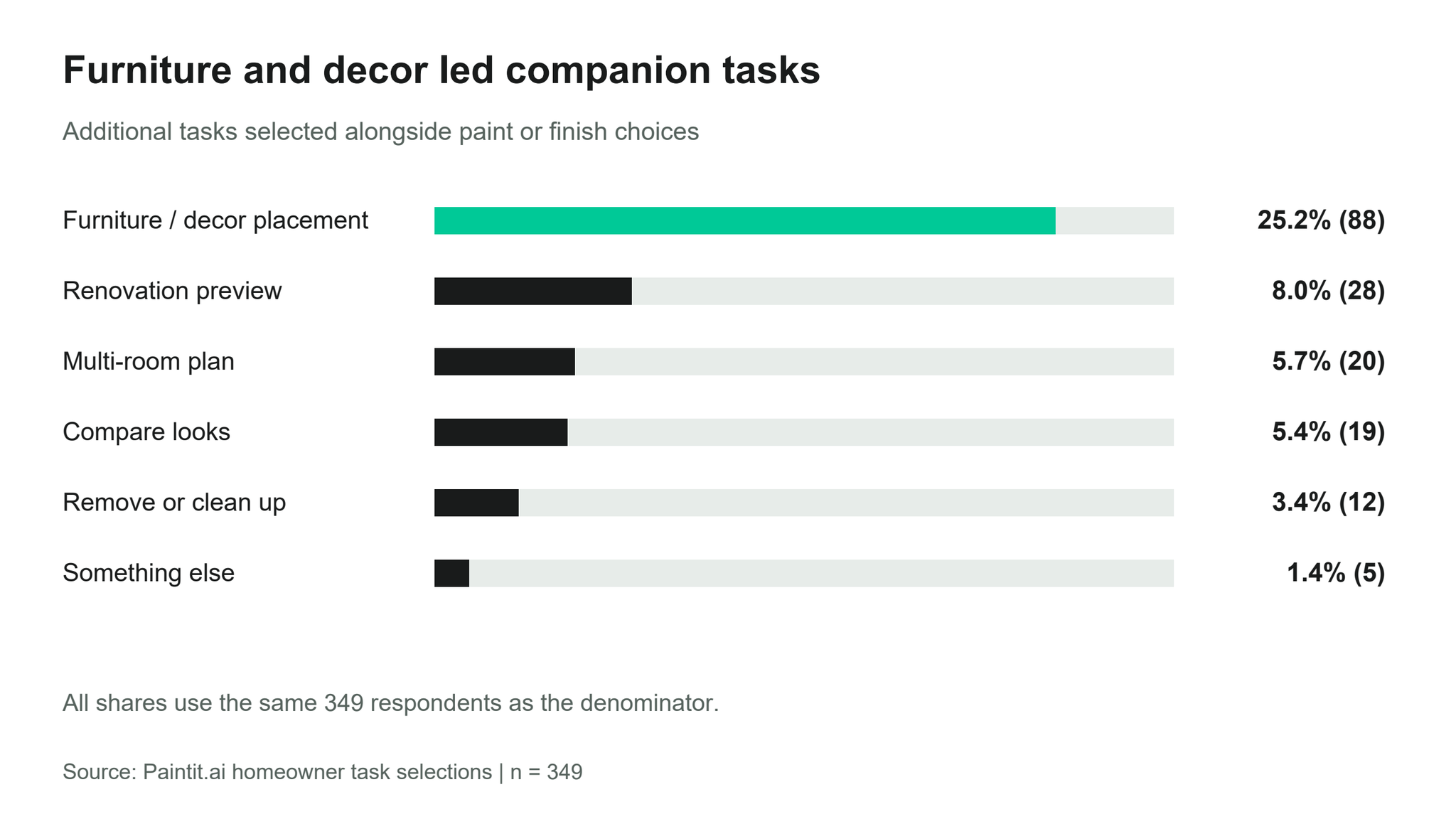
Of the 349 paint-and-finish respondents, 88 also selected furniture or decor placement. That represents 25.2% of the group. It was the most frequent companion option, ahead of renovation previews at 8.0% and multi-room plans at 5.7%.
| Additional selected task | Accounts | Share of 349 respondents |
|---|---|---|
| Furniture / decor placement | 88 | 25.2% |
| Renovation preview | 28 | 8.0% |
| Multi-room plan | 20 | 5.7% |
| Compare looks | 19 | 5.4% |
| Remove or clean up | 12 | 3.4% |
| Something else | 5 | 1.4% |
The furniture-and-decor overlap connects two design decisions. For your own room, decide whether the furniture will be moved, retained or replaced before comparing palettes. A sofa that stays provides a fixed reference; a sofa you intend to replace is another design variable.
Sherwin-Williams' color-selection guidance starts with existing furnishings and permanent finishes, including cabinets, tile and fireplaces. That is a useful physical-room counterpart to the task overlap: include the colors of the things that will remain when assessing a wall-color direction.
28 respondents combined paint or finish choices with a renovation preview, and 20 combined them with a multi-room plan. Their shares were smaller than furniture and decor, but they identify two distinct planning questions.
A renovation comparison needs a clear scope: are the floor, cabinets or other surfaces changing too? If they are, a wall-color preview against the current room may only be an interim comparison. Choose which materials you intend to keep, and state which new ones belong in the concept.
A multi-room brief needs a way to judge the transition between spaces. Keep the shared features, such as continuous flooring or common trim, visible in your references. Then compare whether one wall-color direction works across the connected rooms or whether you want different colors within a shared palette.
For broader changes, a room concept that includes furniture and finishes can address more of the brief. Keep a separate paint-only comparison if you still need to isolate the effect of the wall color.
The findings suggest separating the scope of the change from the choice of shade. When thinking about how to choose paint colors with AI, first define the surfaces and objects that belong in the comparison. Then change one part of that brief at a time.
| Your decision | Keep consistent | Compare |
|---|---|---|
| Refresh the wall color | Room photo, furniture, floor and trim | Alternative wall-color directions |
| Choose color alongside furnishings | Room layout and the pieces you plan to keep | A defined furnishing concept with alternative wall colors |
| Explore a renovation palette | Features outside the renovation scope | The proposed materials and colors as one defined concept |
| Coordinate connected rooms | Shared flooring, trim and the intended room sequence | A common palette versus different related wall colors |
For illustration, an oatmeal sofa and light oak floor provide the same context for three wall-color directions: warm off-white, muted sage and soft clay. These are example palettes selected for the comparison, not colors ranked by the research.
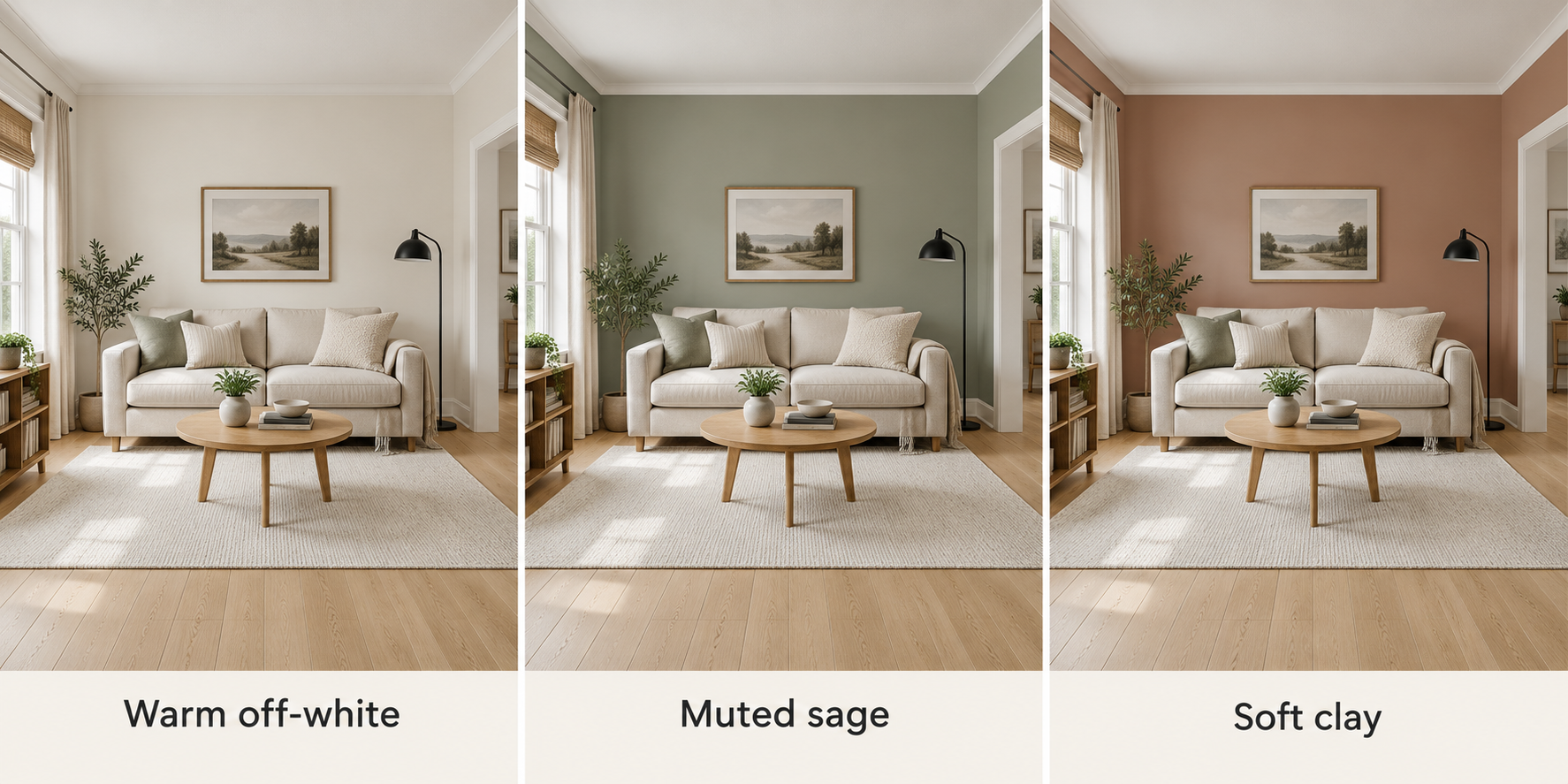
Look at the wall next to the sofa, where the paint meets the floor and around the white trim. Which option creates the relationship you want between those surfaces? If a proposed concept changes the furniture or architecture as well, separate that change from the color question before making your shortlist.
A focused starting prompt is: “Explore a muted sage wall color in this living room. Keep the oatmeal sofa, light oak floor, white trim, furniture positions and room proportions unchanged.” Swap the color direction for each comparison and review whether the important features stayed consistent. Paintit's guide to comparing wall colors in Repaint explains the product workflow.
Once you have a color direction, record the actual paint candidates you want to sample. Paintit's color picker includes catalogs from Behr, Benjamin Moore, Dulux, Nippon Paint and Sherwin-Williams. You can filter by brand and search by color name, code or HEX. The “Find similar color” action provides another way to explore candidates.
Use the paint-color comparison tool to explore the direction in your room, then save the brand and color identifiers for your shortlist. A named catalog color is more useful for the next shopping step than an unlabeled green or beige in an image.
Test physical samples in the room before buying the final paint. Natural and artificial light can change how a color appears. Benjamin Moore's sampling advice recommends viewing samples at different times and under different lighting conditions. Check your shortlist beside the flooring, fabrics and trim that will remain.
We analyzed task selections from 349 self-identified homeowner accounts within Paintit's August and early September 2026 research sample. Each selected paint or finish choices when getting started. Each account counts once in each task it selected; companion-task percentages use these 349 accounts as the denominator. We publish aggregate results describing the sample's stated interests.
It means 177 of the 349 paint-and-finish respondents selected no other task option when answering the task question. It describes their selected interests in that question. For a practical comparison, it supports offering a brief focused on a wall color or surface finish while retaining the room features the homeowner wants to keep.
Both percentages refer to the same 88 accounts. This article uses the 349 respondents who selected paint or finish choices: 88 divided by 349 is 25.2%. The earlier report used all 724 homeowner task respondents: 88 divided by 724 is 12.2%. The difference comes from the group being described, not a change in the count.
Start with the same room reference and keep the furniture, flooring and trim consistent. Compare a small set of distinct directions, such as a warm neutral, a muted green and an earthy clay. These are illustrative options, rather than colors ranked by our research. Build a named paint shortlist from the direction you prefer, then test physical samples in your room.
Use a wall-color brief when the main decision is the paint and you want the furniture, floor and layout retained. Use a broader brief when those elements are also part of the change. The research shows both kinds of selected interests, so start by defining your own scope before asking for alternative concepts.
The new finding is the nearly even split within the paint-and-finish group: 50.7% selected that task alone, while 49.3% paired it with another task. Furniture and decor was the most common companion interest, at 25.2% of the 349 respondents.
For homeowners, the useful next step is to distinguish the pieces that stay from the decisions still open. A paint-only comparison can keep the room consistent. A wider update needs a brief that identifies the furnishing or renovation choices too. Once that scope is clear, compare color directions, build a named paint shortlist and test the samples in your room.