20 min. reading

Yulii Cherevko
CEO paintit.ai
Published:
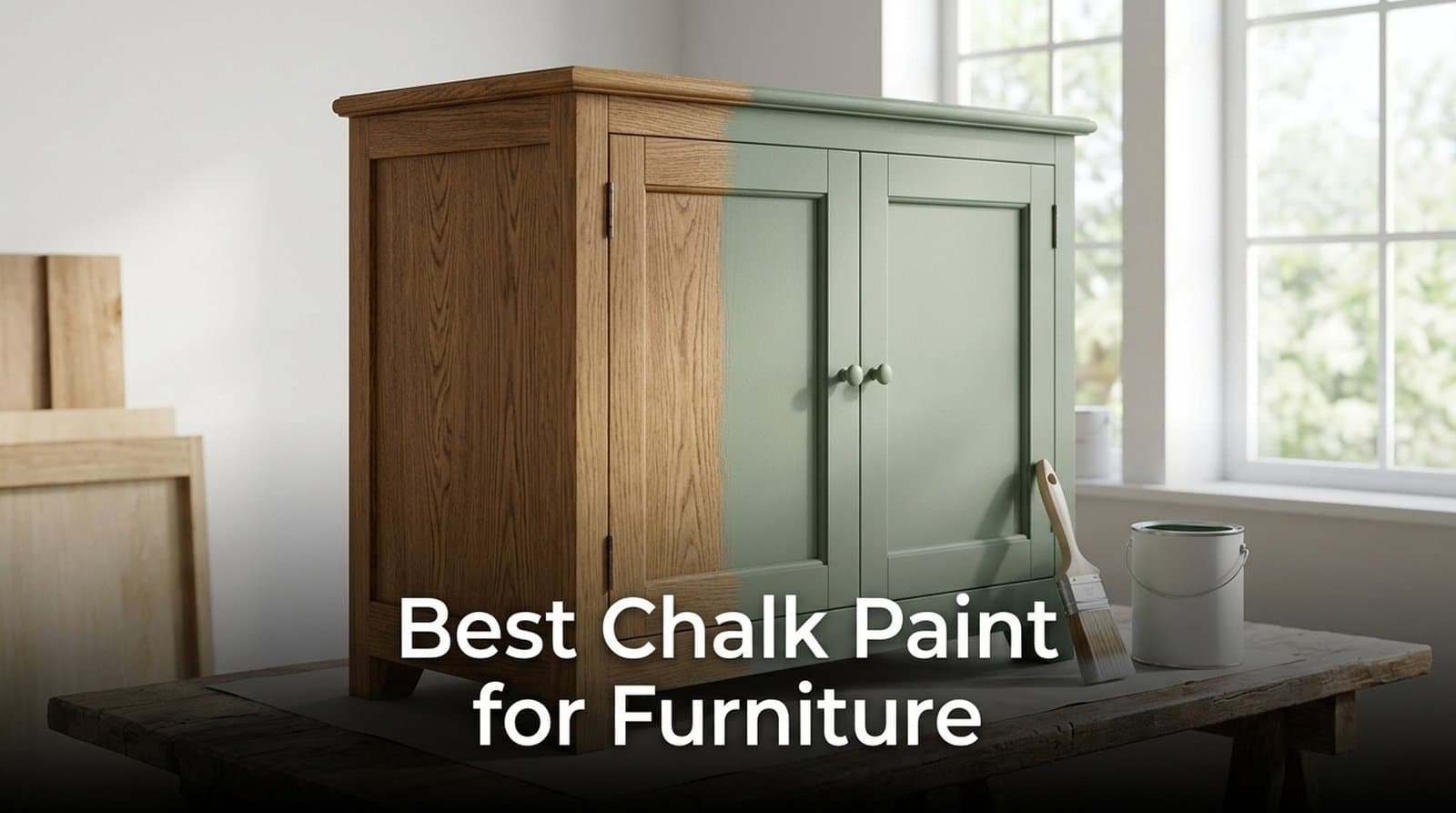
The best chalk paint for furniture is the one that suits your surface, the finish you want, and how much daily wear the piece will take. Not the tin with the nicest label. If you are asking what is the best chalk paint for furniture, start here: paint creates the look, but prep and topcoat decide whether it survives real life.
Chalk paint is popular because it gives old furniture an instant matte, personal finish with fewer steps than traditional latex or enamel. The “no sanding, no primer” promise, though, is only partly true. A clean vintage nightstand may be forgiving. Glossy laminate cabinets, cherry wood, knotty pine, and dining tables are not.
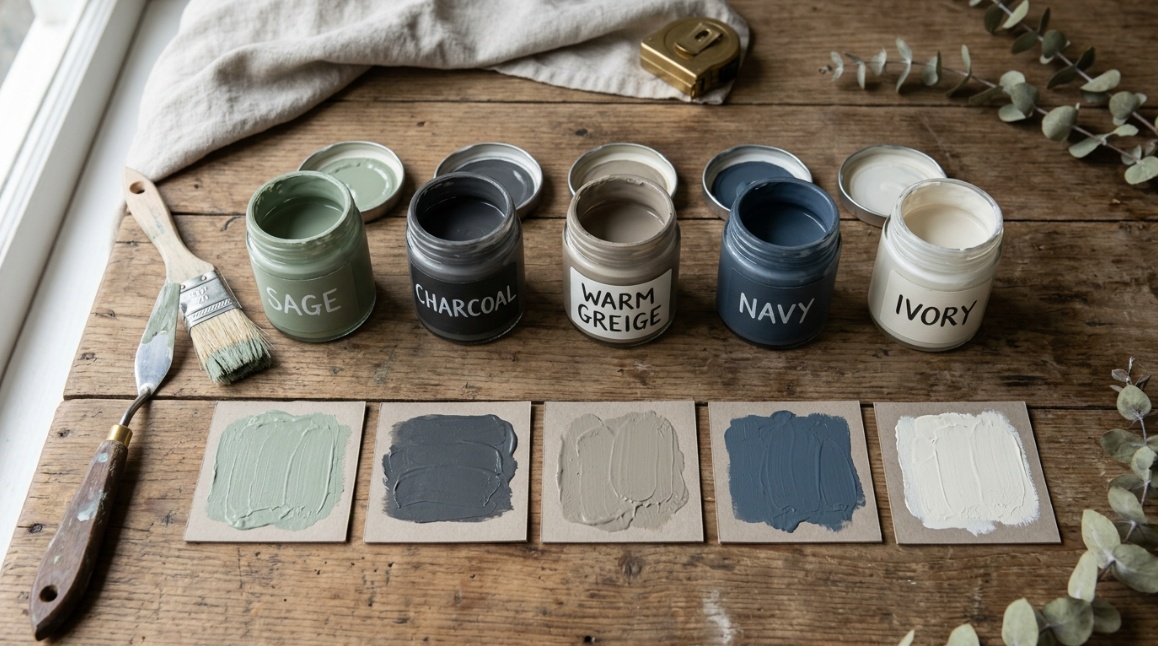
Before opening a can, it helps to see the look in context: muted sage, charcoal, warm greige, navy, ivory, or a distressed two-tone finish. Browsing practical ways to repaint a piece you already own can help you choose a style like a track in a playlist, then keep the room’s rhythm seamless.
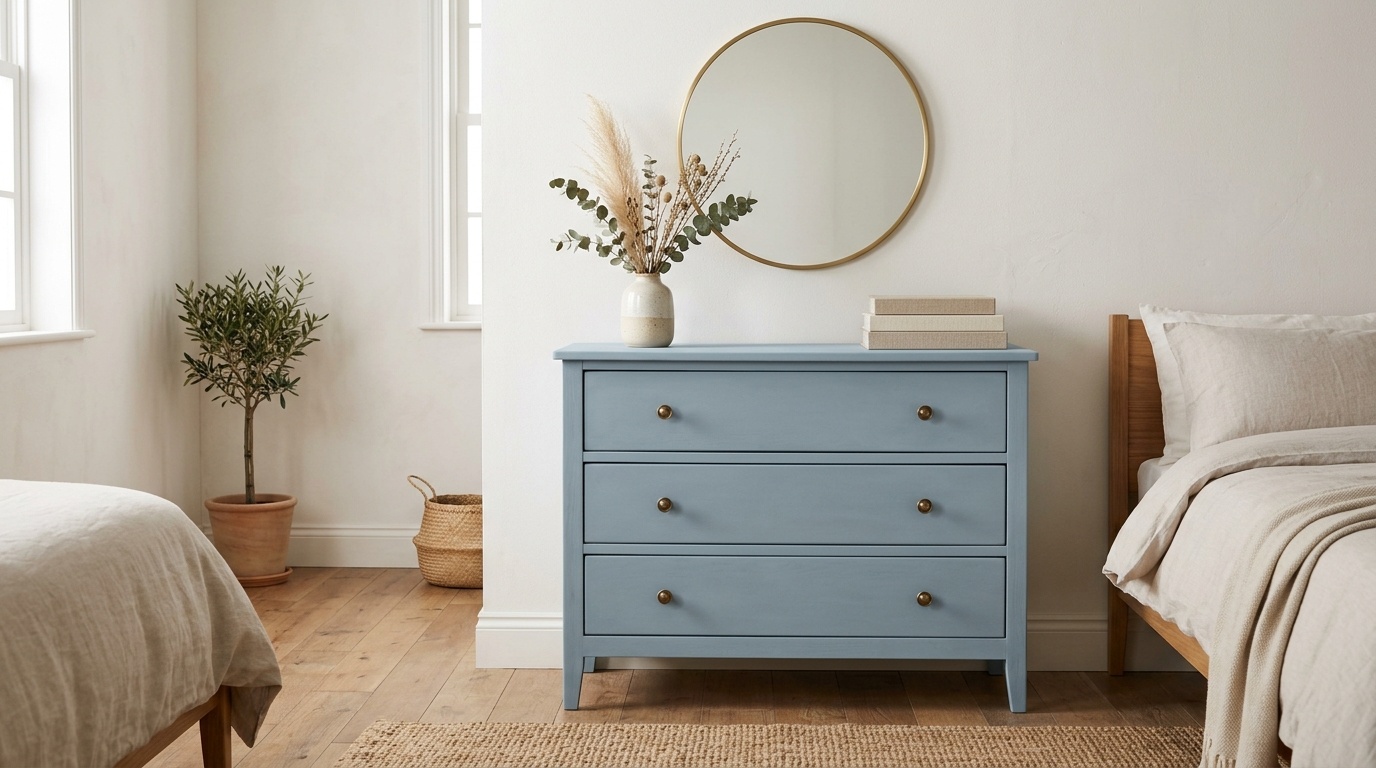
Chalk paint is a porous, ultra-matte decorative paint that grips clean furniture with less heavy sanding than many traditional paints. It works best on dressers, side tables, headboards, frames, and low-to-medium touch pieces, especially when sealed with the right topcoat after 2 thin coats of paint.
Most chalk paint uses a water-based formula with mineral fillers such as calcium carbonate, talc, or clay. That mineral content gives the paint its high-tooth feel: slightly powdery, grippy, and easy to distress with sandpaper once dry.
That texture is why chalk paint for furniture became so popular. It can soften dated orange wood, make thrifted pieces feel personal, and create an aged matte finish without spraying or complicated equipment.
The broader market context backs up that demand. The global furniture paint market is valued at USD 11.26 billion in 2026 and is projected to reach USD 13.49 billion by 2030, growing at a 4.6% CAGR. Chalk paint is a meaningful part of that category, not just a niche craft trend: it represented 22.8% of the global furniture paint market in 2025, generating USD 1.55 billion in revenue.
It is not magic, though. The same porosity that helps chalk paint adhere also makes it vulnerable before sealing. Unsealed chalk paint absorbs fingerprints, grease, water, and dark wax quickly. A coffee table painted beautifully on Friday can show rings by Monday if it is not sealed properly.
Chalk paint works especially well on:
It needs more caution on:
In practical design workflows, especially when a furniture piece becomes the focal point, seeing the final look before committing to paint is genuinely useful. If the piece needs to work with walls, flooring, and rugs, you can preview the room around the furniture before buying a quart.
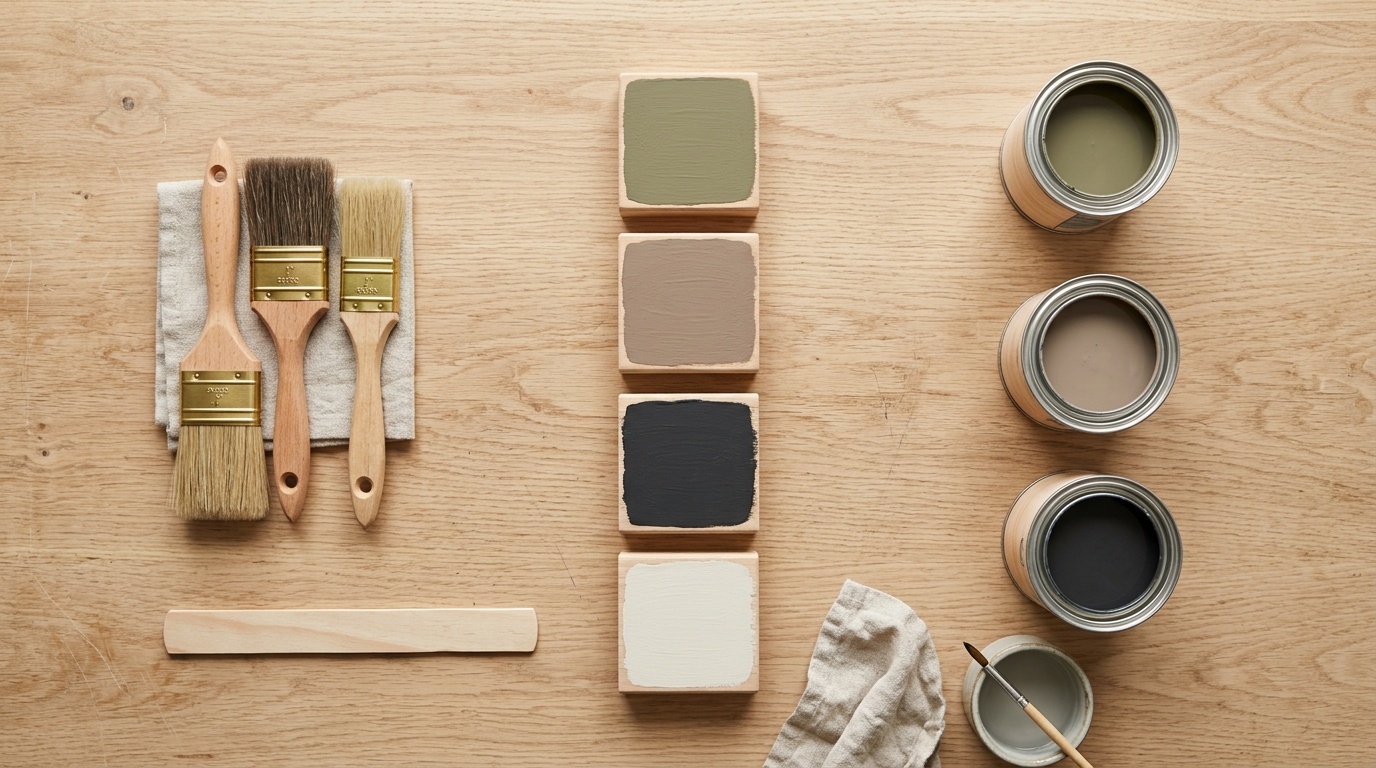
The best chalk paint for furniture in 2026 depends on how you buy and how you work: Annie Sloan is the premium original, Rust-Oleum is the accessible budget pick, Behr wins on color range, Dixie Belle suits furniture flippers, and Waverly works for small 8 oz craft-scale projects rather than large cabinets.
Here is the short version before we get into the trade-offs: the best chalk paint is rarely one universal winner. A beginner painting one dresser needs something different from a seller refinishing 10 pieces a month or a homeowner tackling kitchen cabinets.
| Brand | Best for | What it does well | Watch-outs |
|---|---|---|---|
| Annie Sloan Chalk Paint | Traditional matte finishes and distressing | Thick body, rich pigment, classic waxed finish | Premium price and boutique availability |
| Rust-Oleum Chalked Ultra Matte | Budget-friendly first projects | Smooth application, easy to find, good value | Smaller standard color range |
| Behr Decorative Chalk Paint | Custom color matching | Tintable to thousands of colors, good matte film | Can feel gummy if applied too thickly |
| Dixie Belle Chalk Finish Paint | Furniture flipping and blended finishes | Strong coverage, self-leveling feel, good for layered looks | Higher cost and best with compatible topcoats |
| Waverly Inspirations Chalk Paint | Small accents and crafts | Good small-jar coverage, easy for frames and trays | Not efficient for dressers or cabinets |
Annie Sloan remains the reference point because it defined the category. Its heavy body and pigment load make it excellent for layered, aged finishes. It also distresses in a controlled way with 220-grit sandpaper. The downside is cost and access: you usually buy it through authorized stockists, not every hardware aisle.
Rust-Oleum Chalked Ultra Matte is the practical beginner choice. It is usually smoother and thinner than Annie Sloan, which can mean fewer visible brush marks. The trade-off is color: you may find 6 to 12 core shades easily, but not the nuanced custom palette some rooms need.
Behr Decorative Chalk Paint is the color specialist. Its biggest advantage is tinting. If you want a very specific muddy olive, warm mushroom, softened black, or blue-grey, Behr’s custom color access solves a real problem. The caution is application thickness. Thin coats flow better than one heavy coat.
Dixie Belle is popular with furniture flippers because it handles blending, ombré work, and layered finishes with a satisfying flow. It suits users who already know how to manage topcoats, glaze, wax, and distressing. For a first single nightstand, it may be more system than you need.
Waverly Inspirations is useful for trays, frames, stools, and small decorative objects. Its 8 oz format is convenient, but it becomes expensive and inefficient for a six-drawer dresser or cabinet set.
At Paintit.ai, we often see users grappling with color choices, especially when the unique matte finish of chalk paint can look different in various lighting conditions. Before mixing a custom Behr shade or ordering a boutique color, you can test the shade on your current photo and compare it against the real floor, wall color, and daylight in your room.
For most users, our brand decision rule is simple:
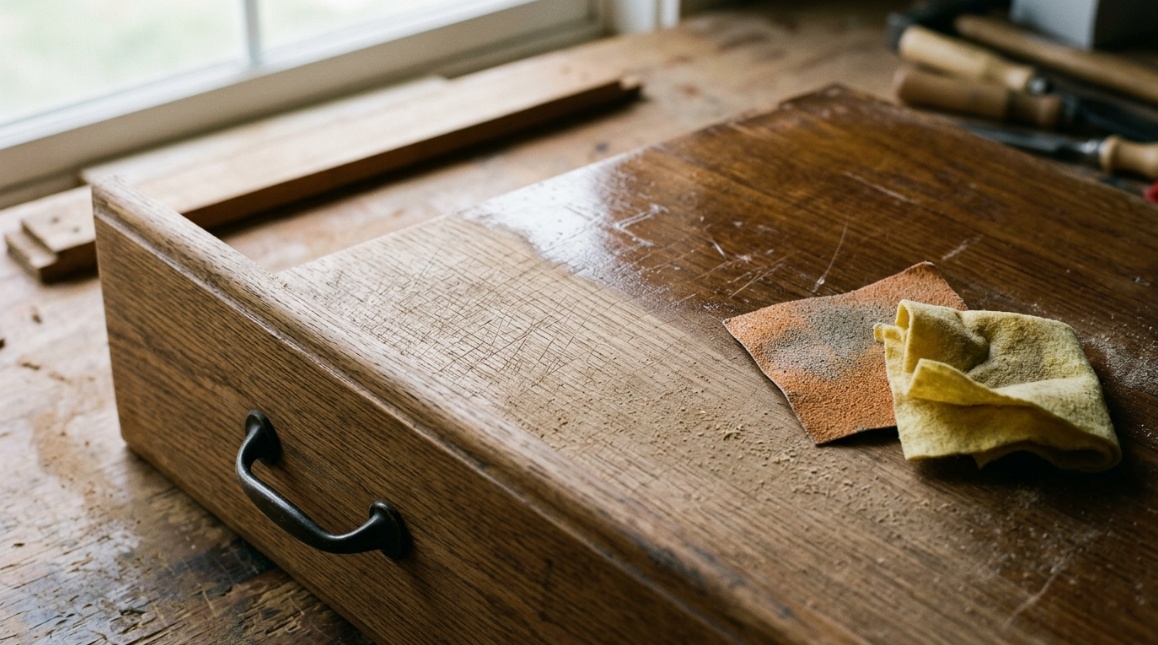
You can skip heavy sanding on many clean, dull wood pieces. You should not skip cleaning, adhesion checks, or primer when the surface is glossy, oily, stained, or tannin-rich. A 10-minute scuff sand with 220-grit paper can prevent months of chipping and peeling.
The biggest mistake in chalk paint advice is treating “minimal prep” as “no prep.” Chalk paint has strong adhesion because of its mineral-heavy texture, but adhesion still needs something clean and stable to grip.
Start with a degreasing clean. Furniture collects hand oils, furniture polish, candle soot, kitchen grease, and silicone residue. Paint does not bond well to any of that. Use a grease-stripping cleaner, rinse if required, and let the piece dry fully.
Then inspect the finish. If it is satin, aged, and slightly dull, you may only need cleaning. If it is glossy, slick, laminate, factory-coated, or varnished, scuff sand it lightly with 220-grit sandpaper. You are not trying to remove the whole finish; you are creating tiny scratches so the paint has a mechanical grip.
Primer becomes non-negotiable in 3 situations:
Tannin bleed-through is the failure competitors often under-explain. Chalk paint contains water. That water can dissolve natural wood tannins and pull them upward through the porous paint film. The result is yellow, orange, pink, or brown staining that appears after the first or second coat.
The fix is specific: apply 1 to 2 thin coats of a shellac-based primer before painting. Zinsser B-I-N is a common example. Let the primer dry fully, then paint over it. Water-based primers may not block tannins reliably because they can re-wet the stain.
Use this prep decision rule:
| Surface type | Sanding | Primer | Risk if skipped |
|---|---|---|---|
| Clean dull wood dresser | Optional light scuff | Usually no | Low |
| Glossy varnished table | Yes, 220-grit | Often helpful | Chipping |
| Cherry or mahogany piece | Light scuff | Yes, shellac-based | Brown or pink bleed-through |
| Knotty pine | Light scuff | Yes, shellac-based | Knot staining |
| Laminate cabinet door | Yes | Yes, adhesion primer | Peeling |
| Kitchen cabinet near sink | Yes | Yes | Peeling, grease failure, water damage |
This is the less glamorous part of the project. It is also where durability is won. Paint is the visible layer; surface preparation is the quiet structure underneath it.
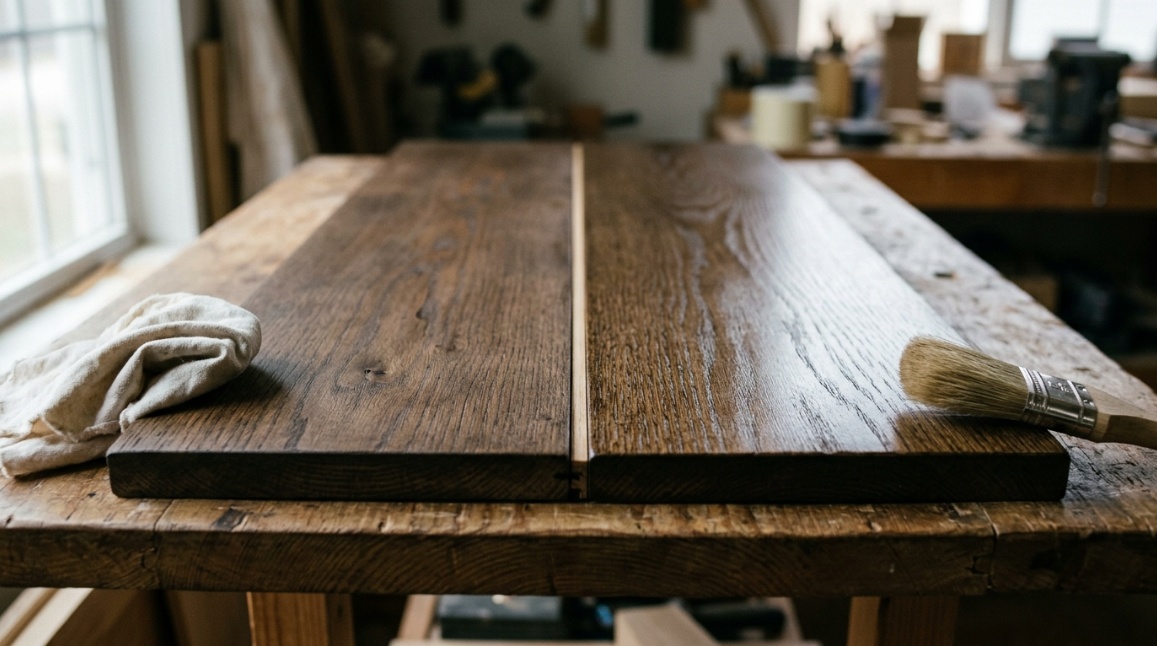
Wax gives chalk paint a soft, traditional, hand-rubbed finish, while water-based polycrylic gives it a harder, wipeable barrier. Choose wax for low-touch decorative pieces and polycrylic for surfaces touched daily, exposed to water, or cleaned often, especially tables, desks, kids’ furniture, and cabinets.
A finished chalk-painted piece has 2 separate systems: the paint layer and the protective layer. Many failures blamed on “bad paint” are actually topcoat failures. Wax and polycrylic feel different, protect differently, and age differently.
Clear wax is beautiful on a low-traffic accent piece. It deepens the color slightly, adds a soft sheen, and keeps the finish feeling velvety rather than plastic. It is also forgiving: you can buff it, reapply it, and use it to control dark wax in crevices.
But wax is not the strongest choice for wet or greasy furniture. Water rings, hand oils, heat, and kitchen cleaning products can soften or mark wax. It can also need periodic reapplication, especially on surfaces that are touched often.
Water-based polycrylic or water-based polyurethane creates a harder film. It is more practical for dining tables, coffee tables, desks, kitchen cabinets, bathroom vanities, and children’s furniture. It is easier to wipe and more resistant to spills.
The trade-off is feel. Polycrylic can reduce the raw velvet quality people love about chalk paint. It can also yellow or streak if applied too thickly, especially over bright white or pale cream. Thin coats matter. For high-use furniture, 2 to 3 thin coats are usually more reliable than 1 heavy coat.
Here is the durability matrix we use when advising real projects:
| Furniture use | Recommended topcoat | Why |
|---|---|---|
| Mirror frame or wall shelf | Clear wax | Low handling, soft matte finish |
| Bedside table | Clear wax or matte polycrylic | Light use, occasional cleaning |
| Coffee table | Water-based polycrylic | Cups, remotes, fingerprints |
| Dining tabletop | Water-based polyurethane or polycrylic | Heat, plates, repeated wiping |
| Desk | Water-based polycrylic | Skin oils, laptops, daily contact |
| Kids’ dresser | Water-based polycrylic | Scuffs and frequent cleaning |
| Kitchen cabinets | Water-based polycrylic or stronger cabinet-grade clear coat | Grease, water, repeated touch |
The best chalk paint for cabinets is not only about the paint brand. It is about the full system: degreasing, scuff sanding, adhesion primer if needed, 2 thin paint coats, and a hard water-based protective finish. Wax is usually the wrong finish for active kitchen doors because handles, steam, and grease break it down.
There is one wax rule worth remembering: never apply dark wax directly onto raw chalk paint. The porous paint grabs it immediately and can stain unevenly. Apply a thin clear wax layer first, then use dark wax over that base. The clear wax creates a workable buffer so you can move, soften, and wipe away the darker color.
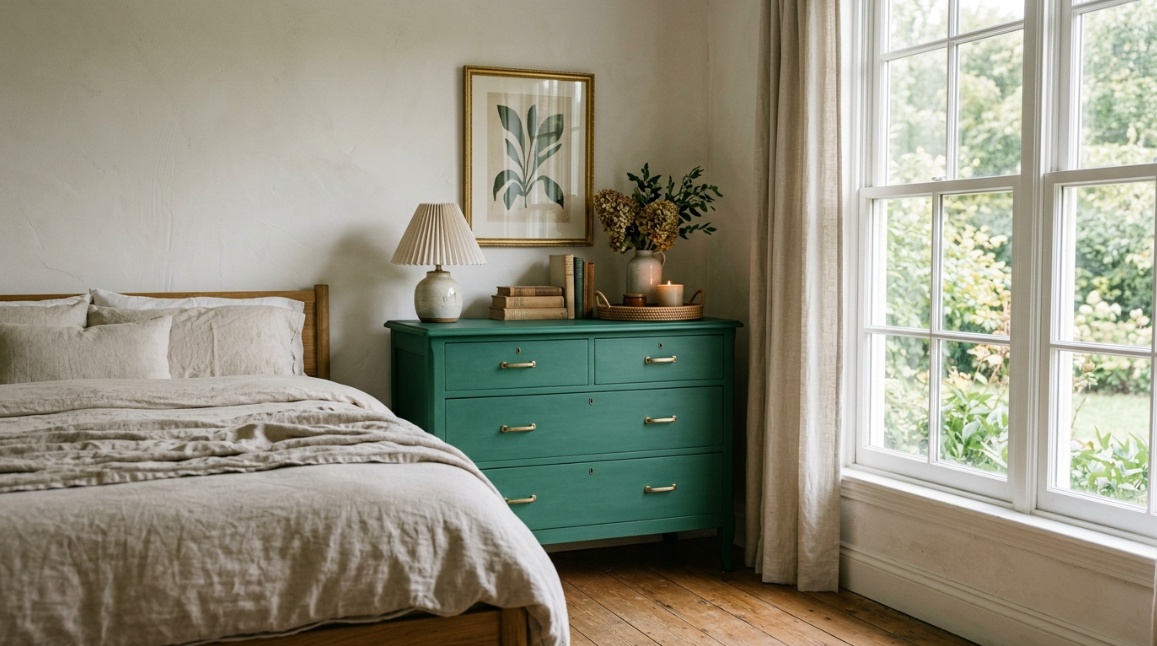
Digital color testing helps you avoid color regret by showing how a chalk-painted piece will read beside your actual flooring, wall color, daylight, and furniture. One uploaded room photo can reveal whether sage looks calm, grey looks cold, or navy feels balanced before you buy 1 quart.
Color is where chalk paint gets personal. A muted green dresser may look soft in a product photo and muddy in a north-facing bedroom. A warm white can look creamy beside oak floors and yellow beside cool grey walls. Matte finishes also absorb light differently from satin or gloss.
Based on Paintit.ai user data from real visualization workflows, we’ve observed that users tend to revise chalk-painted statement pieces after seeing undertones against flooring and natural light. The most common shift is not from bold to safe; it is from “nice color” to “right color for this room.”
A good digital workflow has 4 steps:
In Paintit.ai, users can upload JPG, PNG, PDF, or DWG files depending on the project context. For a furniture repaint, a clean JPG photo is usually enough. The practical value is simple: you see the idea on your real furniture before spending on paint, brushes, primer, and topcoat.
This is also where Pinterest references can help, if used carefully. A useful prompt structure is: Anchor reference for the main style, material reference for the painted texture, and mood reference for the room feeling. The key constraint is: Use this reference for style, palette, materials, and mood. Do not copy exact composition. Keep my room layout unchanged.
If you want to compare digital methods before committing, our guide to tools that help narrow paint choices explains how different visualizers handle light, surface boundaries, and room context in 2026.
We found this especially useful for statement pieces: emerald sideboards, mustard nightstands, black hutches, and dusty blue dressers. These are not background colors. They set the rhythm of the room, so testing them in context is more reliable than judging a tiny paint card under store lighting.
The best way to learn how to chalk paint furniture is to follow a controlled 6-step process: clean, scuff, prime when needed, paint thinly, refine the second coat, and seal according to use. The finish should feel intentional, not thick, gummy, or fragile.
If you are unsure whether a different furniture silhouette would work better than repainting the existing piece, you can use a quick style mockup for the furniture itself before committing to sanding and sealing.
Chalk paint can work on cabinets, but only with cabinet-level preparation and a hard protective finish. Kitchen doors face dozens of touches per day, plus grease, steam, water, and cleaning products, so a casual waxed finish is unlikely to hold up well for long.
Cabinets are the project where optimism causes the most trouble. A dresser drawer might be opened twice a day. A kitchen cabinet near the sink may be touched 20 times, splashed, wiped, and exposed to cooking oils before dinner is over.
If you want chalk paint on cabinets, follow a stricter process:
The phrase best chalk paint for cabinets should really mean “best cabinet painting system using chalk paint.” Paint alone cannot carry the whole job. For a low-use bathroom linen cabinet, chalk paint plus polycrylic can be very satisfying. For a busy family kitchen, the margin for shortcuts is much smaller.
Our honest guidance: if you want a perfectly smooth factory-style cabinet finish, use a cabinet enamel system instead. If you want a softer matte, handmade, slightly characterful finish and you are willing to prep properly, chalk paint can work.
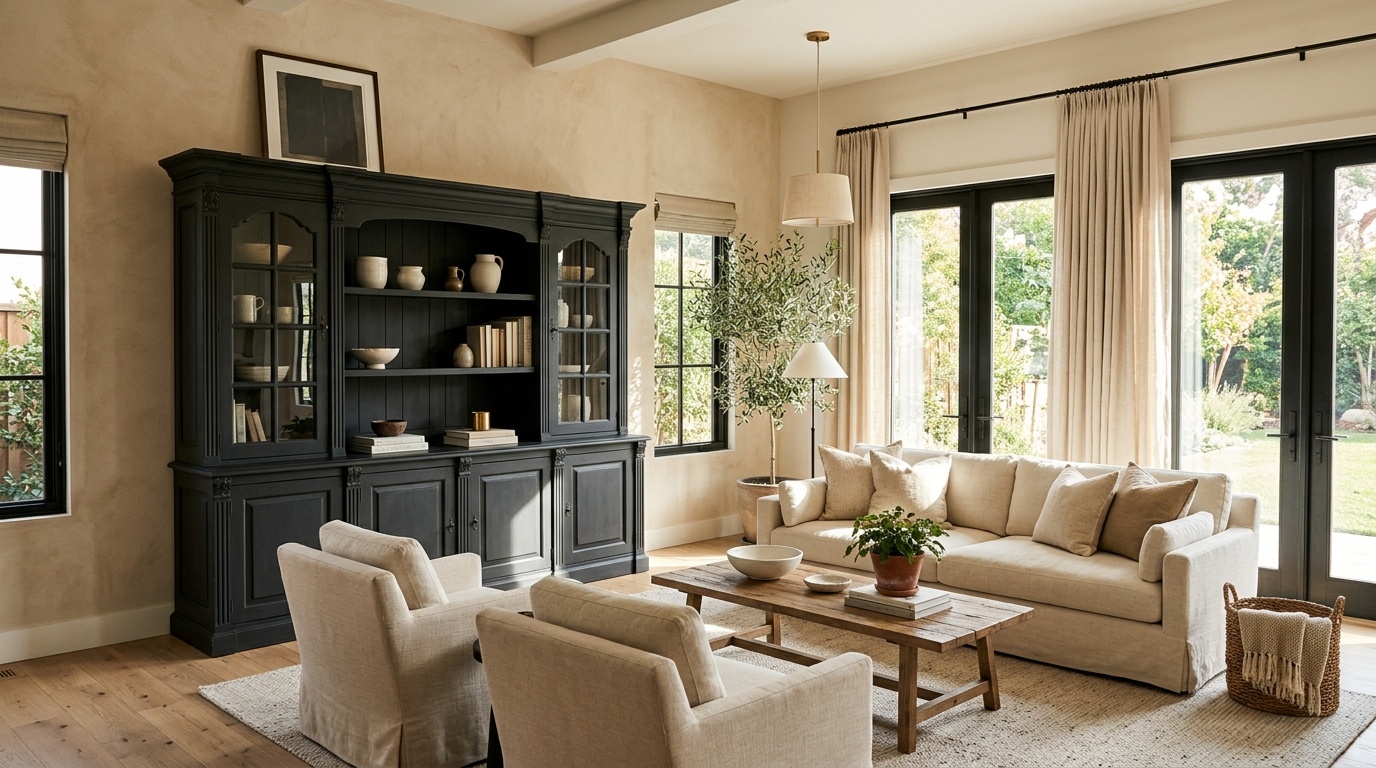
A reliable chalk paint choice comes from matching 3 things: the room palette, the furniture’s function, and your tolerance for maintenance. A navy dresser, waxed ivory hutch, and poly-sealed black cabinet door may all be correct choices in different rooms with different daily use.
Start with the room. Look at the permanent finishes: floor, wall color, tile, countertop, large sofa, and metal hardware. A chalk-painted piece should either sit quietly in that rhythm or intentionally become the lead note.
Then choose finish character:
Finally, choose the brand by constraints:
In our renders, we see one repeated pattern: the safest-looking color in isolation is not always the most seamless in the room. A charcoal dresser may feel softer than pure black. A dusty olive may feel more real than bright sage. A greige with green undertones may work where pink undertones clash with oak floors.
For whole-room planning, Paintit.ai can also suggest real furniture options from retailers such as Amazon, IKEA, Jysk, and Ashley, helping the path from idea to buy feel more connected. Type. See. Tweak. Buy.
These are the questions DIY painters usually ask right before buying supplies or starting the first coat. The short answers are practical: prep more than the label suggests, seal according to traffic, and test color in the room before committing to 1 full can.
Not always. Chalk paint can grip many clean, dull wood surfaces with minimal sanding, but glossy finishes, laminate, oily wood, and high-touch furniture need more prep. A light 220-grit scuff sand improves adhesion, and shellac-based primer prevents tannin bleed-through on cherry, mahogany, red oak, cedar, and knotty pine.
Water-based polycrylic or water-based polyurethane lasts longer than wax on high-traffic furniture. Use it for dining tables, desks, coffee tables, cabinets, and kids’ furniture. Clear wax is lovely for low-touch accent pieces, but it is more vulnerable to water rings, heat, grease, and repeated cleaning.
Yes, but treat cabinets as a high-wear project. Degrease thoroughly, scuff sand, prime slick or tannin-rich surfaces, apply thin coats, and seal with water-based polycrylic rather than wax. Chalk paint can look beautiful on cabinets, but shortcuts usually show quickly around handles, sink areas, and cooking zones.
Annie Sloan is worth it if you want rich pigment, a traditional matte finish, and excellent distressing with wax. Rust-Oleum is better if you want an affordable, easy-to-find paint for a first project. Both can hold up when the surface is prepared correctly and sealed for the furniture’s use.
Those stains are usually tannin bleed-through. The water in chalk paint can pull natural tannins from wood through the paint layer. Stop it by applying 1 to 2 thin coats of shellac-based primer before painting, especially on cherry, mahogany, red oak, cedar, and knotty pine.