16 min. reading

Yulii Cherevko
CEO paintit.ai
Published:
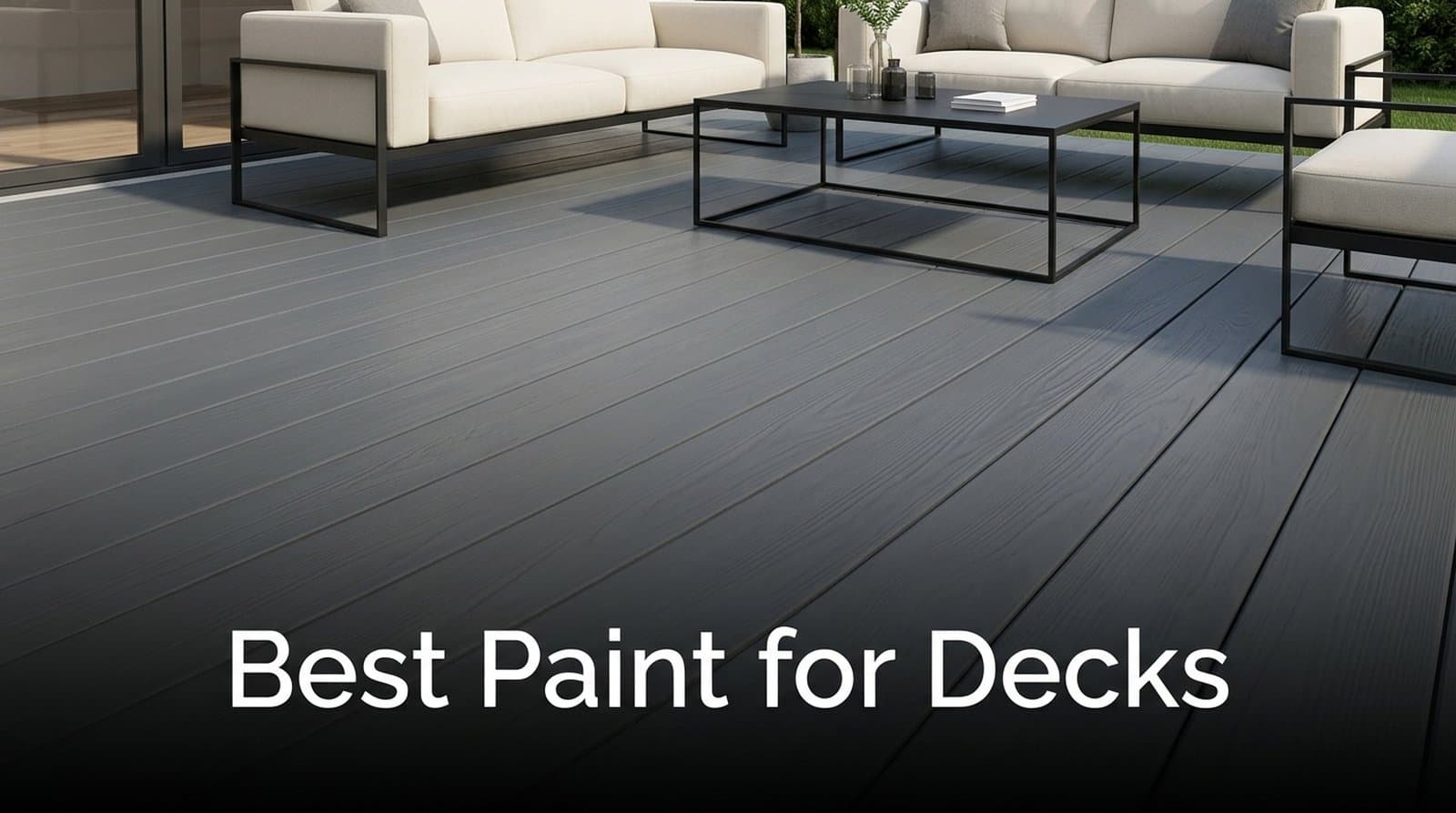
The best paint for decks in 2026 is usually a 100% acrylic water-based deck coating over a high-bonding primer. The exception is bare, tannin-rich wood, where oil-based penetration can still earn its keep. The right choice depends on weather, foot traffic, deck age, underside ventilation, and the bit nobody enjoys talking about: prep.
A deck gives paint a rough life. Rain, sun, snow, furniture legs, pet claws, wet leaves, and daily abrasion all land on a flat surface. A vertical wall sheds water quickly. A deck board can hold moisture at the end grain, around screws, and between boards for hours.
That is why the best-looking deck paint job is usually decided before the first coat goes on. Chemistry matters. Moisture matters. Color matters too. And with old decks, thicker is not always safer.
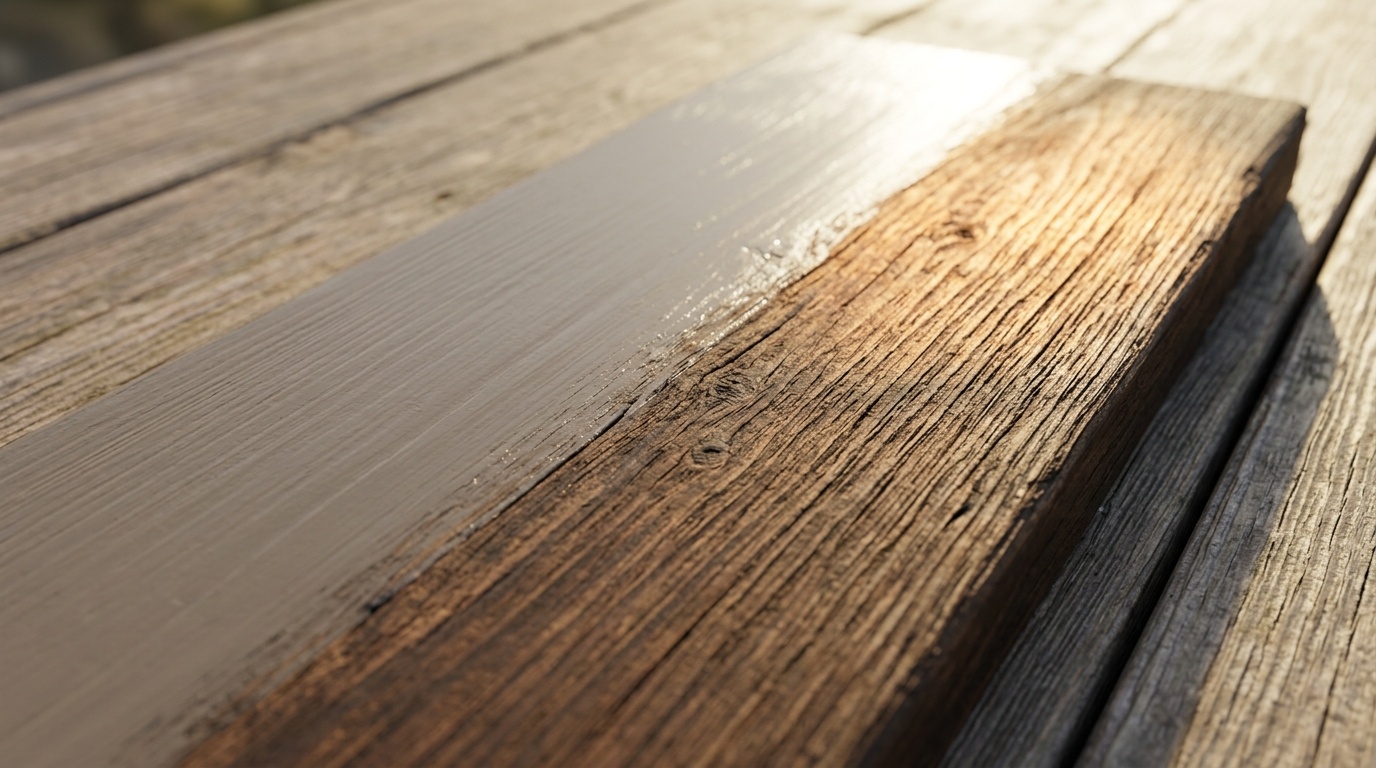
Oil-based deck paint penetrates and cures into a tough shell, while water-based acrylic deck paint stays more flexible as boards expand and contract. Wood deck paint fails when the coating cannot move with the timber, or when trapped moisture breaks the bond from underneath.
Oil-based coatings use alkyd resins or modified oils that cure through chemical cross-linking. They can seal bare wood fibers well and help block tannins, especially on cedar, pine knots, and older pressure-treated lumber. The trade-off is stiffness. After 2 or 3 hard winters, that hard film may crack as boards swell and shrink.
Water-based acrylic coatings cure as water evaporates and acrylic particles fuse into a film. Good 100% acrylic formulas resist UV fade, dry in 2 to 6 hours, clean up with soap and water, and flex better through seasonal movement. Their weak point is adhesion on damp, glossy, dirty, or dense wood.
The practical sweet spot is often a hybrid system: use a high-bonding primer where the surface needs help, then apply a durable acrylic topcoat made for horizontal walking surfaces. For a broader look at binders, primers, and exterior durability ratings, we’ve written a deeper guide to compare exterior formulations in more detail.
A simple rule helps:
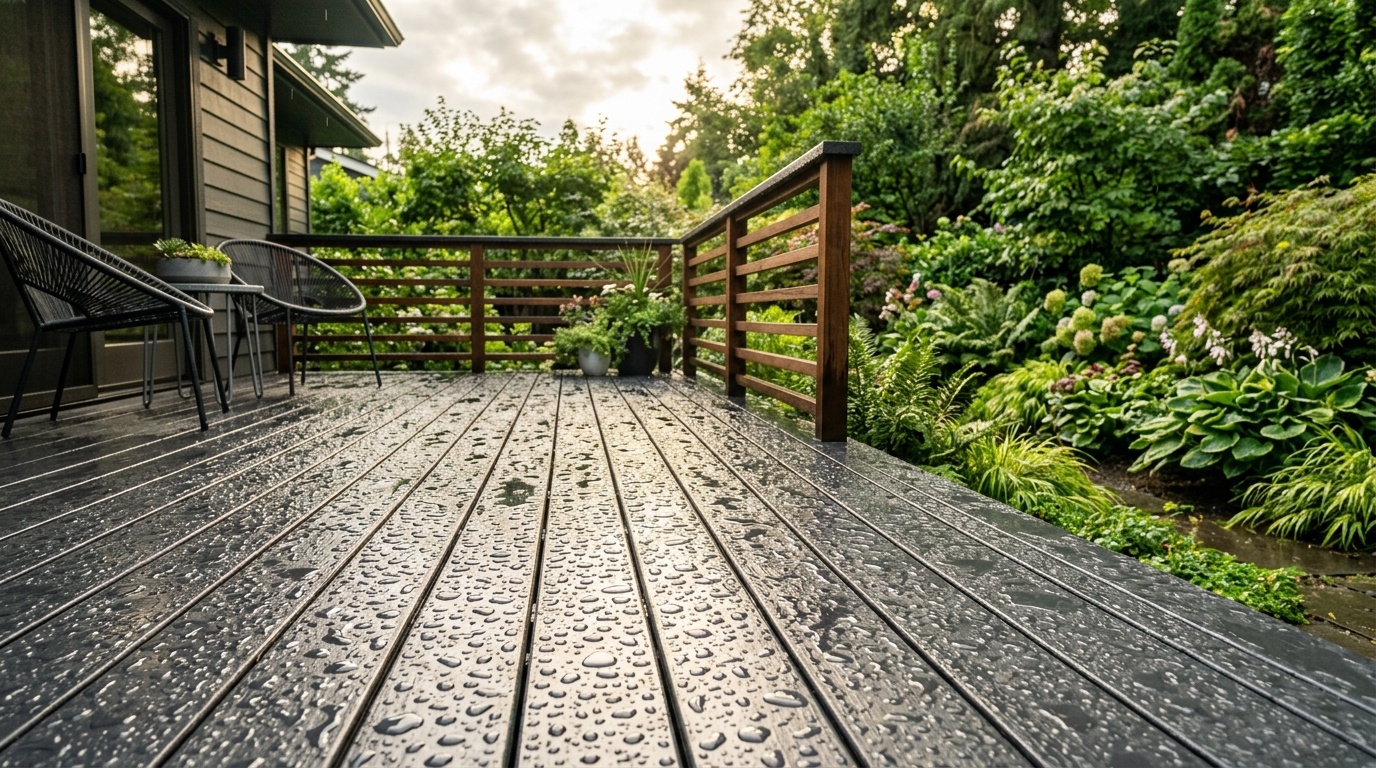
The best paint for decks changes by climate because sun, rain, and freezing weather attack coatings in different ways. UV breaks down pigment. Water pushes from below. Freeze-thaw cycles expand trapped moisture until paint lifts in sheets or cracks around fasteners.
In hot, exposed yards, color becomes part of the durability equation. Black deck paint and deep charcoal absorb more heat than taupe, warm gray, or medium brown. That heat makes boards expand harder during the day and contract faster at night, which puts extra stress on the paint film.
Dark decks can look calm, architectural, and modern in renders. In real life, they may also become uncomfortable under bare feet and show pollen, dust, scratches, and dried water marks more clearly. If the deck gets 6 or more hours of direct summer sun, treat very dark colors as a design choice with maintenance consequences.
In wet climates, the real risk is moisture vapor. Wood absorbs water through end grain, screw holes, cracks, and the unpainted underside. If the top film is too thick or non-breathable, trapped moisture has only one place to go: upward through the coating.
In cold climates, that same moisture freezes, expands, and breaks adhesion. This is the classic large-sheet peeling pattern. The paint does not just flake; it tears away in rubbery sections, sometimes pulling wood fibers with it.
Foot traffic adds another layer. A deck used twice a week for grilling has a very different wear pattern from one used daily by 4 people, 2 dogs, and metal patio chairs. For heavy use, prioritize abrasion-rated porch-and-floor formulas, low-luster finishes, and a mild non-slip additive.
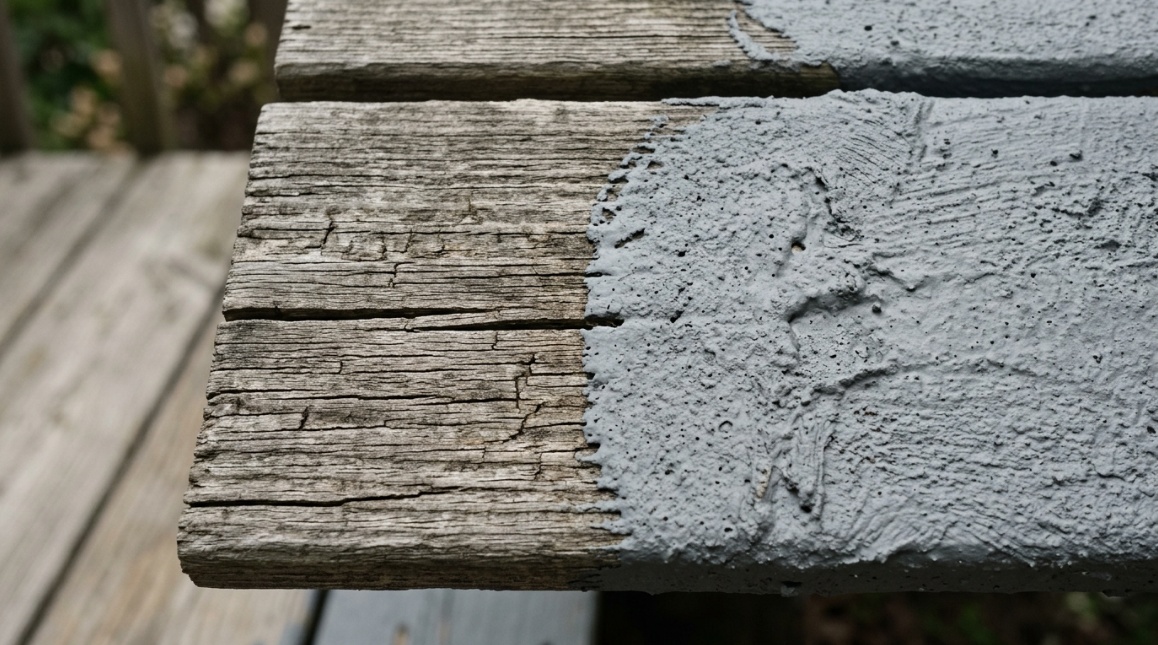
The best deck paint for old decks is not automatically the thickest resurfacer. Heavy elastomeric coatings can bridge cracks, but they can also trap moisture inside weathered boards, especially in freeze-thaw climates or on low decks with poor underside airflow.
This is the part many product roundups glide past. Thick “restore” coatings are tempting because they promise to hide splinters, fill checks up to about 1/4 inch, and make old boards look uniform in 1 weekend. The problem is simple: old deck boards are rarely dry, sealed, and ventilated on all sides.
Wood is hygroscopic, meaning it absorbs and releases water. If water enters from the bottom of the board, from a cut end, or through a fastener hole, a thick top coating can act like a lid. In winter, trapped water expands. In summer, heat drives vapor pressure upward. Both forces can break the bond.
That does not make every resurfacer a bad idea. Lighter high-build acrylic products such as Cabot DeckCorrect can be useful on weathered boards with shallow checking when the deck is structurally sound, clean, dry, and well ventilated. Marine-style non-skid coatings such as TotalBoat TotalTread can also make sense on stairs, ramps, and high-grip zones.
But there are limits. If boards feel soft under a screwdriver, show black rot near fasteners, or cup badly across the width, paint is cosmetic cover for a physical problem. Replace the boards first. When replacing boards, follow the six-side rule: prime or paint the top, bottom, both edges, and both cut ends before installation. That gives moisture fewer paths into the timber.
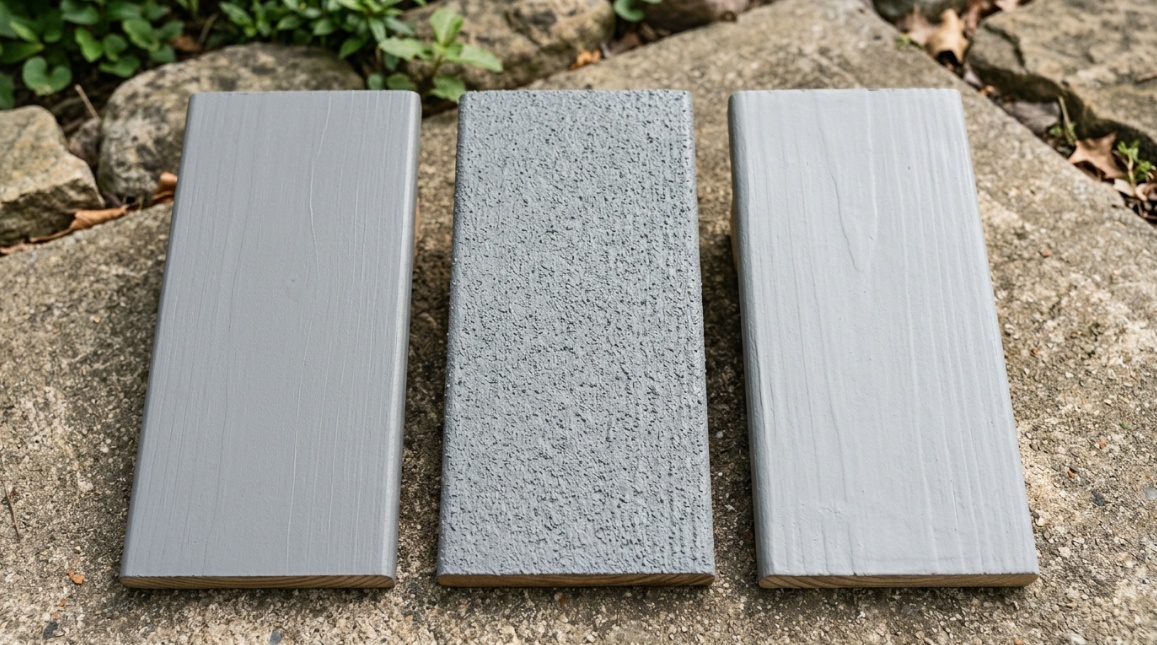
The best paint for decks is usually selected by job type: acrylic porch-and-floor paint for stable painted decks, marine non-skid paint for traction, lighter resurfacers for checked old boards, and solid stain where breathability matters more than film thickness.
For a stable painted deck, Benjamin Moore INSL-X Floor and Patio is a common professional choice because it is made for floors, patios, and horizontal wear rather than vertical siding. It is not a shortcut around prep, but it fits the use case better than standard exterior house paint.
For traction, TotalBoat TotalTread is often used where a safer walking surface matters: steps, docks, ramps, and wet deck entries. It gives grip without relying on large, sharp aggregate.
For old boards with shallow cracks, Cabot DeckCorrect sits in the safer part of the resurfacer category when used correctly. It is still a coating, not a repair system. It should not be applied over damp wood, failing paint, or boards with poor underside ventilation.
For fast, accessible DIY work, Behr Premium Porch and Patio Floor Paint or similar acrylic floor-rated products can work well on properly primed surfaces. Be careful not to confuse porch-and-floor paint with thick “deck restore” products; they behave differently.
The best paint for wood deck projects is the one matched to the board condition, not just the one with the loudest promise on the can. If 30% of the old coating is already loose, no topcoat will rescue it. Strip first, then rebuild the system.
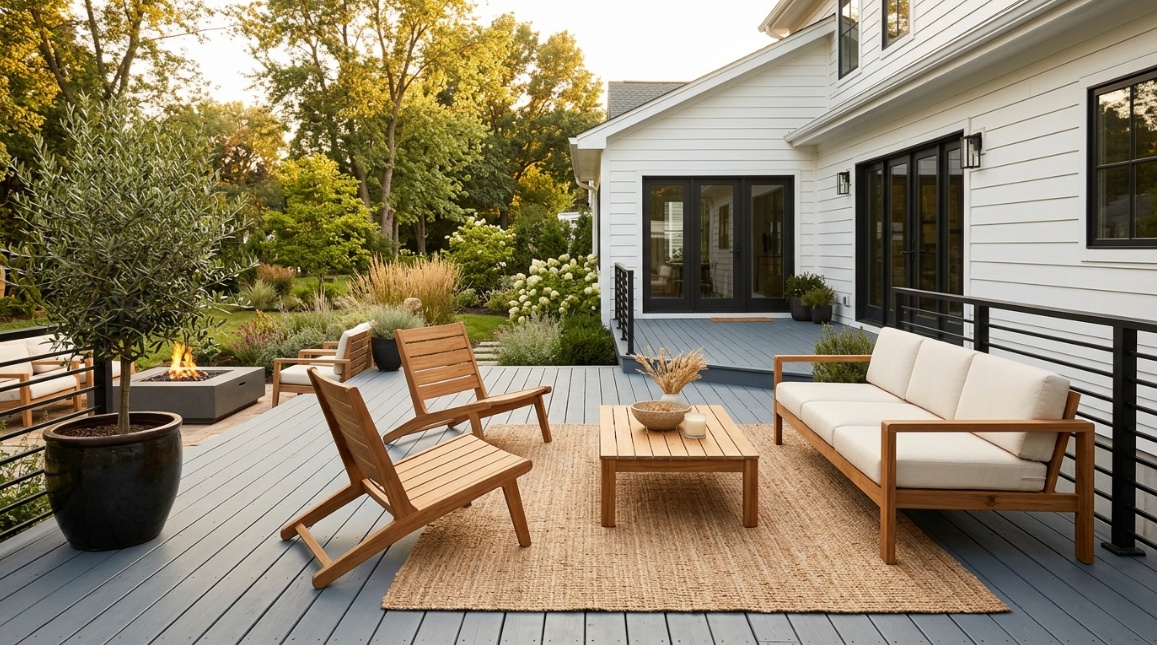
Modern deck paint colors work best when they balance style with heat, dirt visibility, and surrounding materials. Slate gray, warm taupe, muted navy, soft charcoal, and brown-black can all look current, but darker pigments raise surface temperature and maintenance demand.
At Paintit.ai, we often see homeowners pause over bold deck colors like black or deep charcoal. Fair enough. It is one thing to admire the shade on a screen and another to live with it every summer afternoon. Our visualization tools give you a risk-free way to test those bigger design choices against your actual home exterior.
Based on Paintit.ai user data, homeowners tend to test dark deck concepts more carefully when the house has brick, cream siding, white trim, or dense planting nearby. The reason is intuitive: a deck is not an isolated swatch. It sits in rhythm with siding, railings, outdoor furniture, paths, fencing, and trees.
In our renders, slate gray is the most forgiving modern neutral because it pairs with white, beige, blue, black, and many brick tones. Warm brown-gray hides dust and pollen better than black. Navy can look personal and refined against white trim, but it may clash with red brick. Black deck paint can look sharp, but it shows debris quickly and absorbs heat.
Sheen matters too. Use low-luster or satin on walking surfaces because it hides scuffs and small imperfections. Reserve semi-gloss or gloss for railings, trim, and vertical features where cleanability matters more than slip resistance.
Before buying 3 or 4 gallons, try different shades on your actual exterior wood features with a color preview from your own photo. It keeps the process from idea to buy more personal and less dependent on tiny store cards.
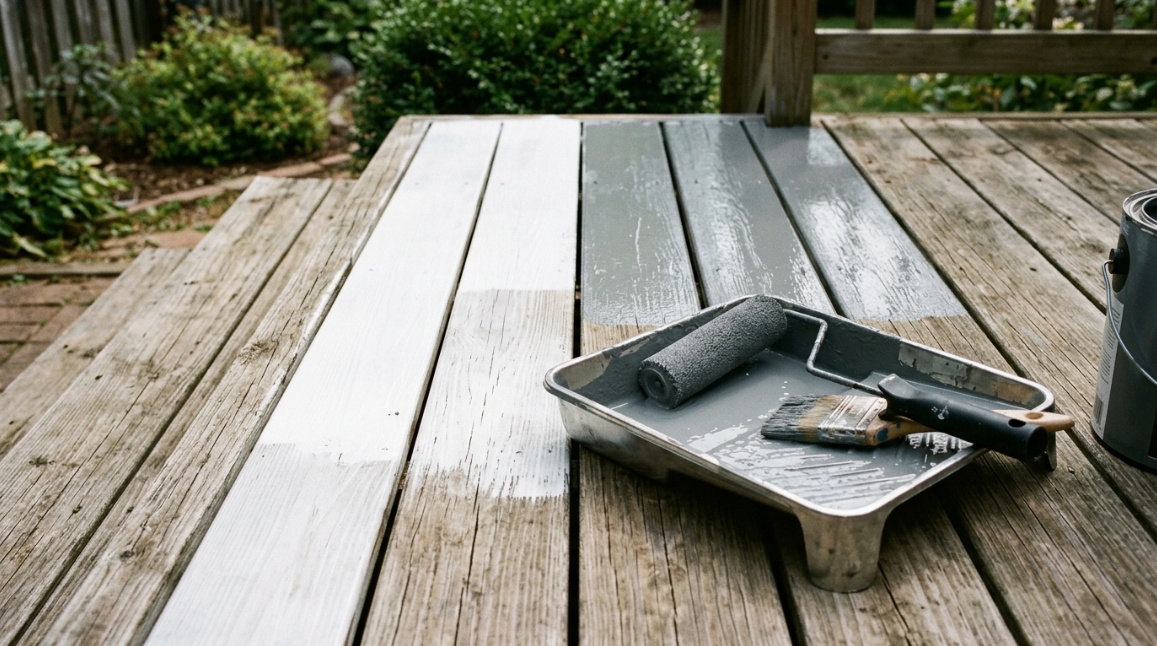
Deck painting succeeds when the surface is clean, dry, dull, sound, and primed for adhesion before the finish coat goes down. The workflow is not complicated. Still, skipping 1 step can turn a 5-year coating system into a 1-season failure.
Start with inspection. Probe suspect boards with a screwdriver. Check stair treads, rail posts, joist edges, and the shaded side of the deck. Paint cannot stabilize rot, loose fasteners, or moving boards.
Next, test the old coating. Use the fingernail adhesion test:
Wash the deck with a suitable deck cleaner, rinse thoroughly, and let it dry. Do not trust surface dryness alone. For a film-forming paint, the wood moisture content should be below 15%. If you paint damp timber, water vapor can bubble the coating from beneath.
Scrape loose paint, sand feathered edges, and dull any glossy patches. Vacuum or blow off dust. Dust is bond failure in powder form.
Prime intelligently. An oil-based high-bonding primer such as Zinsser Cover Stain can anchor well to bare or weathered wood because it wets the fibers and seals uneven porosity. Even if your topcoat is acrylic, this primer layer can help the system grip.
Spot-prime knots separately with shellac-based primer such as Zinsser BIN. Knots contain resins and tannins that migrate through ordinary latex primers, leaving yellow-brown stains. Shellac blocks them more reliably.
For traction, textured deck paint is useful, but avoid beach sand. Beach sand is uneven, coarse, and may contain salts that degrade acrylic binders. Use refined ultra-fine silica sand or a manufactured non-slip additive. Broadcast it into the wet first coat, let it set, then roll a second coat over it for a more even feel underfoot.
Finish with 2 thin coats, not 1 heavy coat. Respect the recoat window on the label. A coat that skins over before the layer beneath cures can stay soft, especially in humid weather.
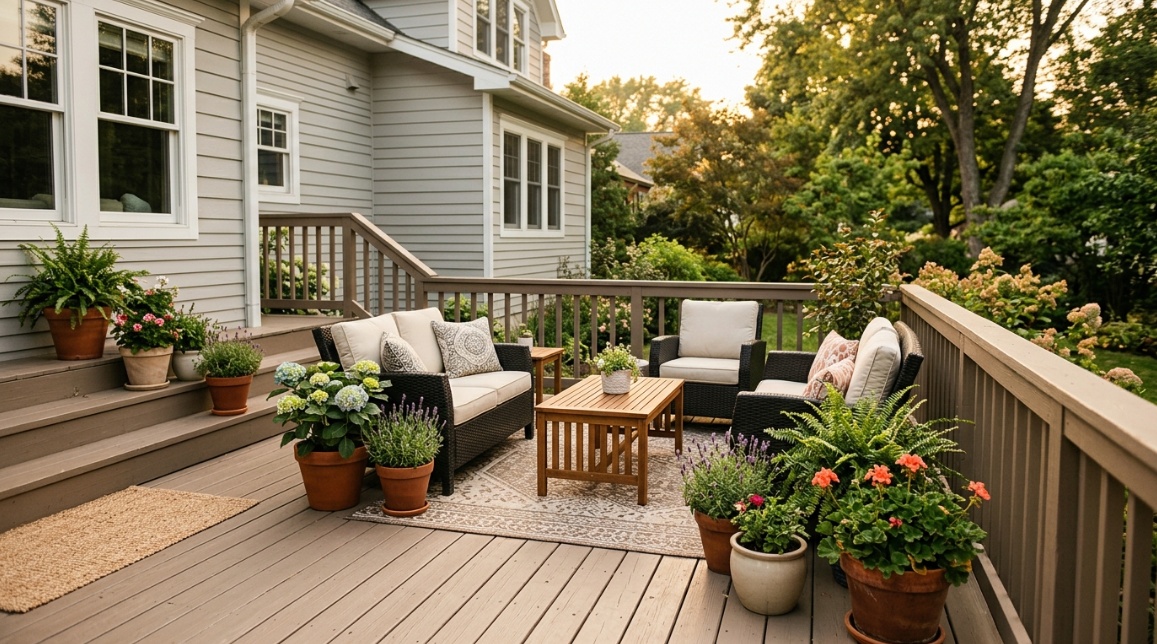
AI visualization helps you test deck color, railing contrast, outdoor furniture, and siding coordination before committing to a coating that may take days to remove. It is design planning, not a moisture meter or structural inspection, so use it alongside physical deck checks.
In practical design workflows, using a tool like Paintit.ai lets you separate your aesthetic wishes from the physical limits of your climate. For instance, you can visualize a dark painted deck first, then decide if a highly breathable solid stain equivalent is more durable for your weather conditions.
A good test flow takes about 10 minutes:
Based on real visualization workflows, we understand that a deck is not an isolated element. Paintit.ai helps users ensure their chosen deck paint color harmonizes with their home’s siding, trim, and surrounding planting before any paint is purchased.
If you are planning more than color, use Paintit.ai to map the full backyard composition, including railings, seating zones, planters, and exterior materials. The result is a more seamless design flow: choose a style like a track, test the transition, then move from idea to buy with fewer surprises.
Paintit.ai has limits, and they matter. It cannot detect rot, read timber moisture, confirm structural safety, or tell you whether joists are sound. It can show color, rhythm, contrast, and material direction. For soft boards, framing concerns, or moisture uncertainty, inspect physically or call a qualified contractor.
Deck maintenance matters because decks are a major exterior asset, not just a weekend surface project. The North America decks market was valued at USD 4.8 billion in 2025 and is projected to grow from USD 5.1 billion in 2026 to USD 7.4 billion by 2033, according to Grand View Research.
That scale shows how central outdoor living has become to home planning. A painted deck that peels after 1 winter does not only waste materials; it creates more scraping, sanding, disposal, and possible board replacement.
Choosing the best wood deck paint is also about asset preservation. The global wooden decking market is estimated at USD 25.71 billion in 2026 and projected to reach USD 33.24 billion by 2031, growing at a CAGR of 5.27%, according to Mordor Intelligence.
That does not mean every deck should be painted. If you have new cedar, ipe, or clean pressure-treated lumber, a penetrating stain may be easier to maintain over 10 years because it wears gradually instead of peeling. Paint makes the most sense when the deck was previously painted, when repairs created mismatched boards, or when a solid color is essential to the exterior design.
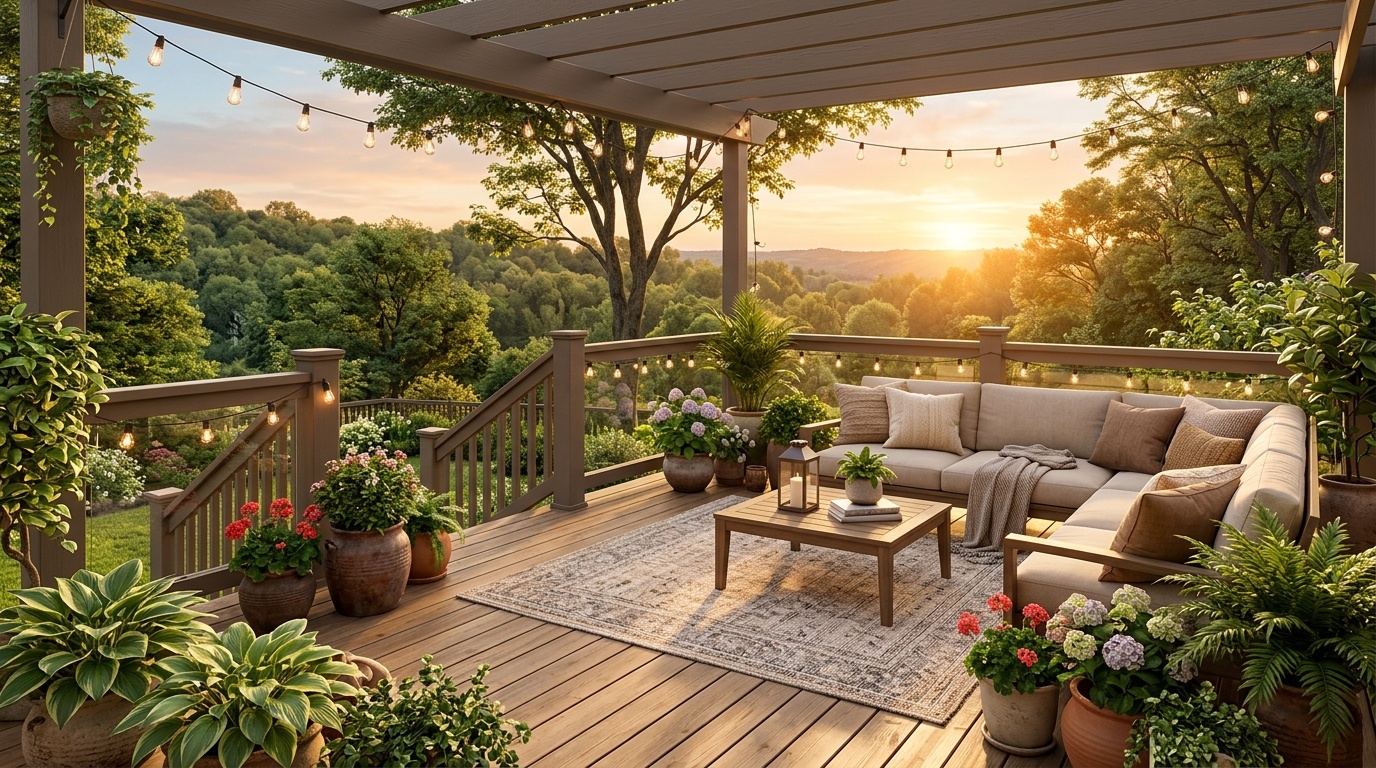
Choose acrylic deck paint over a correct primer for most painted decks, use oil-based primer strategically for adhesion and tannin control, avoid heavy resurfacers in wet freeze-thaw conditions, and visualize color before buying. The best result comes from matching chemistry, climate, prep, and design.
If your deck is old but sound, use the least aggressive coating that solves the problem. For hairline cracks and cosmetic wear, a floor-rated acrylic may be enough. For shallow checking, consider a lighter resurfacer. For rot, cupping, and widespread coating failure, repair first.
If you want a simple decision rule, use this:
Design has its own rhythm. Choose the track carefully: house color, deck tone, rail contrast, outdoor furniture, and planting should move together. Paint is real material on real wood, not just a swatch.
Deck paint questions usually come down to 5 practical worries: paint versus stain, lifespan, using regular exterior paint, early peeling, and dirt-hiding color. The right answer depends on surface history, moisture, prep quality, and how much maintenance you are willing to do each year.
If the deck has been painted before, repainting is usually more realistic because stain cannot penetrate wood sealed by old paint. For new or fully stripped bare wood, stain is often easier to maintain because it wears down gradually, while paint forms a film that can crack and peel.
A high-quality painted deck typically lasts 4 to 7 years, depending on weather exposure, foot traffic, and prep. Annual maintenance helps: scrape tiny failures early, spot-prime bare wood, and touch up worn stair treads before water gets underneath the coating.
No. Standard exterior house paint is made for vertical siding, not horizontal walking surfaces. Deck paint and porch-and-floor paint use tougher resins designed for abrasion, standing moisture, furniture movement, and repeated foot traffic.
Peeling after 1 year is usually caused by trapped moisture, poor surface prep, or missing primer. Common causes include painting wood above 15% moisture content, coating over loose old paint, applying paint in direct hot sun, or using a thick coating on a poorly ventilated deck.
Medium tones hide dirt best. Slate gray, taupe, warm brown, and muted greige usually disguise dust, pollen, and footprints better than black or bright white. Very dark colors look crisp at first but tend to show debris, scratches, and dried water marks quickly.