11 min. reading

Yulii Cherevko
CEO paintit.ai
Published:
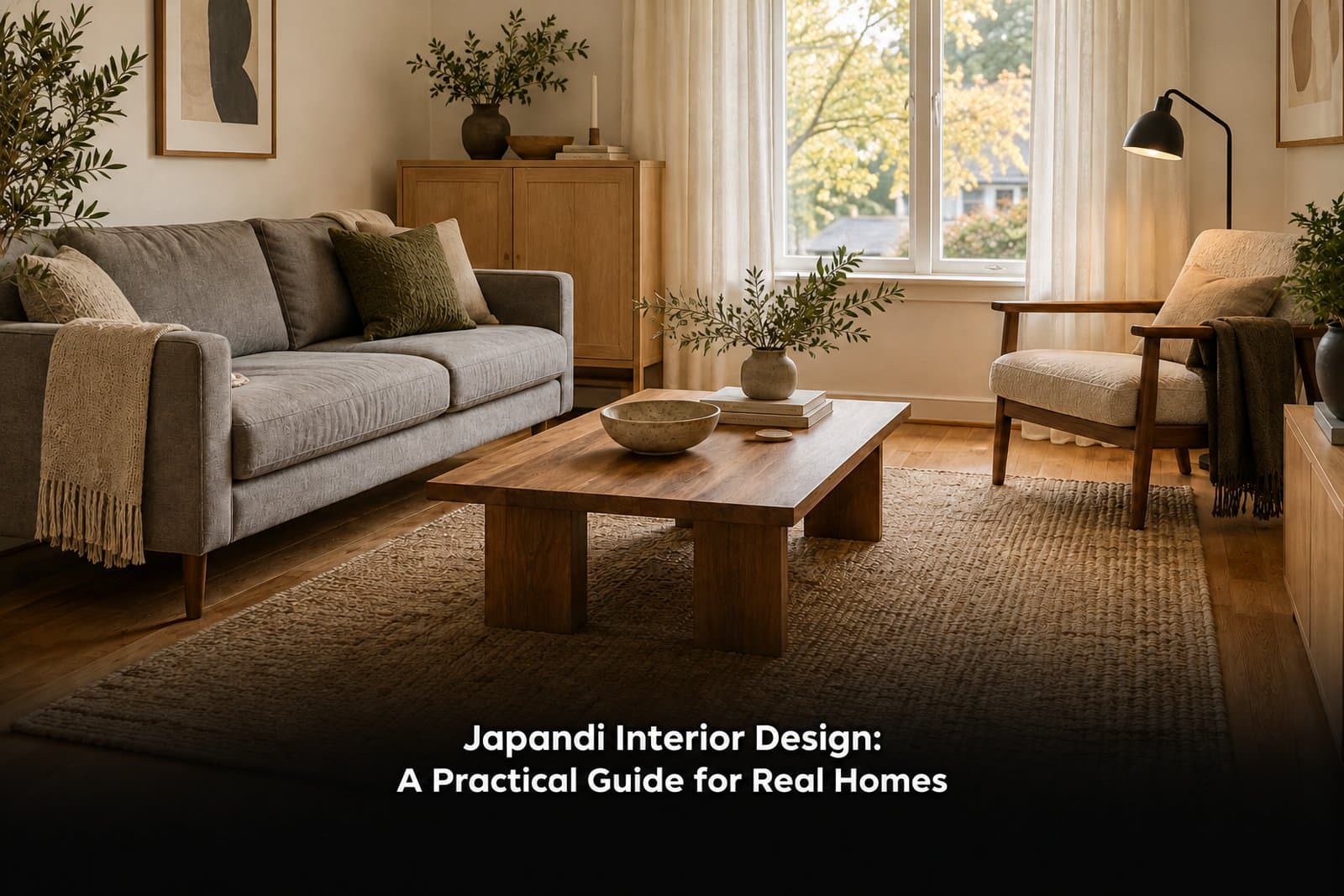
Japandi interior design combines Japanese and Scandinavian influences through simple furniture, tactile materials, restrained color and useful open space. The goal is a home that feels considered without becoming difficult to live in. You can keep a comfortable sofa, a television and the storage your household needs.
Start with what cannot change: the floor, windows, room size and furniture worth keeping. Then choose a few changes that make those pieces work together. Buying a matching set of pale wood furniture is optional. Knowing where the laundry basket goes is not.
Japandi is a contemporary style label for interiors that combine Japanese and Scandinavian design influences. Common features include uncluttered compositions, wood, woven textiles, simple forms and attention to the things people touch and use. Those features allow plenty of variation: a bright apartment and a darker, wood-lined house can both take this direction.
The connection between Japanese and Danish design predates the name. Designmuseum Danmark's Learning from Japan exhibition documents Japanese influences on Danish crafts and design around 1900 and through the twentieth century. That history is more substantial than a recent decorating trend.
Still, Japandi style is not a complete account of either culture. Japanese interiors are not all dark, Scandinavian homes are not all white, and adding a paper lamp does not turn a room into a traditional Japanese interior. Treat the label as a useful starting point for design decisions, not a list of cultural rules.
These terms overlap, and individual rooms rarely fit only one category. The distinctions below are practical ways to choose a direction rather than formal definitions every designer follows.
| Direction | Useful Emphasis | A Decision It Helps You Make |
|---|---|---|
| Japandi | Japanese and Scandinavian influences, simple forms and tactile materials | Pair a plain upholstered sofa with a carefully chosen wood table and fewer visible accessories. |
| Scandinavian | Everyday comfort, functional furniture and an often light-looking interior | Keep soft textiles and practical seating without needing a darker Japanese-inspired accent. |
| Zen-inspired | Visual quiet, usable space and an uncluttered setting | Reduce competing focal points before buying a new style-specific piece. |
| Organic Minimalism | A restrained room softened by texture and natural-looking forms | Choose a curved chair or rounded table when softness matters more than a Japanese-Scandinavian reference. |
If your main problem is visual noise, our guide to creating a functional Zen-inspired home focuses on that task without requiring a particular furniture mix.
For a room led by curved shapes and textured finishes, the organic minimalist approach to furniture and materials may be the closer fit.
Walk through the room before saving more inspiration images. Note the largest permanent surfaces and the objects that genuinely work. A piece that looks wrong in isolation may become useful once its surroundings change.
| What You Have | First Decision | What to Try Before Replacing It |
|---|---|---|
| A gray sofa that fits everyone | Keep | Use warm wood and a textured rug; remove a mix of unrelated cushions. |
| Orange-toned oak flooring | Keep unless replacement has another purpose | Compare quieter wall colors beside the actual floor instead of trying to disguise it with more orange wood. |
| Open shelves full of household items | Adjust | Group necessities into closed boxes or move paperwork behind doors; retain a few useful objects on display. |
| A table that blocks the route to the door | Reposition or replace | Test a smaller footprint with tape and walk the route while someone is seated. |
Photograph the room from its entrance and from the seat you use most. These views reveal different problems. The first might show a blocked path; the second might show that every shelf, lamp and picture competes with the television.
A Japandi color palette often uses off-white, stone, brown, muted green and charcoal. Start with the undertone of the floor or largest cabinet, not with a paint chip on a white screen. A creamy wall can look pleasant beside a honey-colored floor but yellow beside a cool gray sofa.
Try one of these starting points, then adjust it in your own light:
Dark Japandi interior design can use deeper walls or substantial dark wood, but inspect it in evening light as well as daylight. If the room already has a dark floor and little daylight, begin with one dark piece rather than covering every surface.
For the differences between creamy and more neutral whites, compare our warm white choices for walls and trim. Test physical samples next to your fixed finishes before buying the full quantity.

Wood, linen, cotton, wool, paper and ceramics are common in Japandi decor. Use differences in texture deliberately: a smooth cabinet can sit beside a woven chair, while a plain sofa provides a backdrop for a rug with visible texture. You do not need every material in the same room.
Keep one wood tone dominant and choose a second that looks intentionally different. A dark walnut table on a pale oak floor is easier to read than several almost-matching orange finishes. Repeat the darker tone once in a frame or lamp base if the table looks isolated.
Veneer is not automatically a poor choice; it is a construction method, and quality varies. Check edges, joints, surface finish and repair options. Likewise, a washable performance fabric may make more sense than delicate linen in a busy household. Choose for the room's actual use.
Look for straightforward shapes, comfortable proportions and a manageable footprint. Japandi furniture can have clean-lined wood frames, woven seats or visible joinery, but a piece does not have to be handmade or unusually low to belong.
Sit in the sofa before deciding. Check that you can stand up comfortably, reach the side table and place your feet on the floor. A low coffee table can supply a horizontal line without requiring a low sofa. Leave enough access to operate drawers and walk around occupied chairs.
Combine general light with a reading light and a softer lamp where you sit. Paper or fabric shades can soften the appearance of a fixture, but choose a fitting appropriate for its location and follow its lamp and installation instructions. A sculptural shade is no substitute for enough light to read.
A travertine lamp can fit the palette if its scale and weight suit the table. It is one option, not a requirement. Stone, wood and a shaded light already introduce several textures; keep the nearby accessories simple.
Begin with the seating group, a clear route through the room and somewhere for ordinary possessions. A closed cabinet can hide chargers, paperwork and games while the coffee table remains usable. Keep the television if you use it; give it a simple cabinet rather than surrounding it with competing decorative objects.
Choose one clear point of interest, such as the grain of a wood table or an artwork you already own. A room with books, a reading lamp and a blanket can still feel restrained. It needs an arrangement, not an absence of belongings.
Use bedding with a quiet surface, bedside lighting you can reach and storage that matches your habits. A conventional-height bed with a simple headboard works well; a platform bed is unnecessary if it makes getting up awkward or removes storage you rely on.
If a large wardrobe dominates the room, reduce contrast around it with compatible wall and curtain colors. Avoid adding slatted panels purely to signal the style. They introduce another finish and another surface to clean.
Plain white doors, a wood-look cabinet or existing stone can become the starting point. Remove countertop items that have a convenient storage alternative, then keep frequently used tools close to where you use them. A timber tray can group tea-making supplies without pretending the kettle does not exist.
Before replacing cabinet fronts, try simpler handles, better task lighting or a wall color that works with the countertop. Repeating one existing finish elsewhere often makes more sense than installing another decorative material.
Use closed storage for toiletries, a restrained towel palette and finishes designed for their exposure to water. Wood-like porcelain or a properly specified vanity can provide warmth without putting untreated wood in a wet area. Stone appearance alone tells you nothing about slip resistance or maintenance.
Keep the mirror and task light useful for daily routines. If electrical work, waterproofing or ventilation needs changing, have the relevant professional assess it; a style concept cannot establish installation suitability.

Consider an illustrative room with a comfortable gray sofa, honey-oak flooring, white walls and three small tables in unrelated finishes. The household needs a TV and storage for games. This is a planning example, not a photographed customer project.
The result should feel more coherent because each change solves a specific problem. The existing sofa has not become more Japanese or Scandinavian; its surroundings simply give it a clearer place in the composition.

Begin with changes you can reverse: remove redundant objects, move furniture and group small necessities. Live with the arrangement before buying anything. If a room still looks busy, check whether the problem is actually too many finishes or poorly placed storage.
Spend next on the issue that remains. That could be a better reading light, a rug that connects the seating group or a cabinet that replaces several makeshift storage pieces. Japandi on a budget works best when the purchase has a job beyond looking appropriate in a photo.
In a small apartment, avoid scattering several miniature pieces around the perimeter. One suitably sized cabinet may store more and create fewer visual interruptions. Measure door swings, drawer access and the route through the room before ordering.
Use a living-room concept based on your own photo to compare an idea with your existing windows, floor and furniture. In Paintit.ai, make the room photo the main image; use an inspiration image as a reference for selected materials, colors or forms.
Keep the first request narrow: "Explore a Japandi living room around this gray sofa and oak floor. Keep the existing windows, TV position and room layout. Try one darker wood table, closed storage and plain ivory curtains." Treat those instructions as constraints to check in the output, not as guaranteed preservation.
Compare one change at a time. AI images can alter proportions, remove important details or invent materials, so measure furniture separately and verify products and paint samples before purchasing. A useful concept helps you choose a direction; it does not replace a measured plan.
Yes. Muted green, blue, clay or a darker accent can work with wood and quieter surfaces. Keep the color you enjoy and simplify nearby finishes if the room feels fragmented. There is no required percentage of beige or mandatory ban on a family artwork.
No. Japandi names a Japanese-Scandinavian design blend; wabi-sabi is a broader Japanese aesthetic idea associated with impermanence and imperfection. They can influence the same room, but buying distressed accessories is not a substitute for understanding either. Keep wear that is safe and useful; repair damage that affects function.
Keep it if it is comfortable and fits the room. Give a substantial piece more breathing space, simplify the surrounding tables and choose a quieter rug or curtain. If it blocks the only route through the room, solve that functional problem before worrying about whether its shape looks Japandi.