9 min. reading

Yulii Cherevko
CEO paintit.ai

Zen interior design is a modern design label for rooms that use restraint, natural materials, open space, and deliberate placement. It draws on Japanese aesthetics associated with Zen, but it is not a formal decorating rulebook from Zen Buddhism. In practice, the goal is a room with fewer visual distractions, clear circulation, useful storage, and materials that feel comfortable to live with.
Key takeaways
In contemporary interiors, the Zen look usually combines simple forms, visible natural texture, controlled color, soft light, and uncluttered layouts. Furniture is often low or visually light, but it still needs to support the people using it. The style can work in a compact apartment, family home, bedroom, or meditation corner.
The term needs some care. Zen is a Buddhist tradition, while “Zen interior design” is largely a modern commercial shorthand. Research from the Smithsonian Associates and Corcoran College of Art + Design examines how selected Zen concepts influenced contemporary decorative arts and interiors. That influence does not make every minimalist Japanese-looking room an expression of Zen practice.

Simplicity means removing what competes with the room's purpose. In a living room, that may be unused side tables, exposed cables, or decor spread across every surface. Keep the objects you use or care about, then give them enough space to be seen. An empty shelf is not a failure.

Wood, stone, clay, linen, cotton, paper, and woven fibers add texture without relying on busy pattern. Do not force a natural material into the wrong condition: untreated wood beside a wet shower is impractical, and a delicate paper shade may not suit a busy family room. Durable porcelain, laminate, or composite surfaces can preserve the visual direction where maintenance matters more.

Build the palette around two or three dominant tones and one restrained accent. Warm white, clay, muted green, gray, charcoal, and wood tones are common because they are easy to combine. Deep blue, rust, or black can also work when repeated in small amounts. The test is whether the palette supports the room rather than demanding constant attention.

Negative space is the unoccupied area around furniture and objects. Leave a section of wall bare, keep a clear route through the room, and resist filling every corner. The layout does not need mirror symmetry. One large chair can balance a smaller stool and lamp when their visual weight feels comparable.
For a closer look at that layout principle, see our guide to asymmetrical balance in interior design.

Use daylight where possible, then add task and ambient lighting for evening. A shaded floor lamp, wall light, or pendant can soften contrast better than one bright ceiling fixture. Keep enough focused light for reading, cooking, grooming, and stairs. A dim room may look atmospheric in a photo but work poorly in daily life.
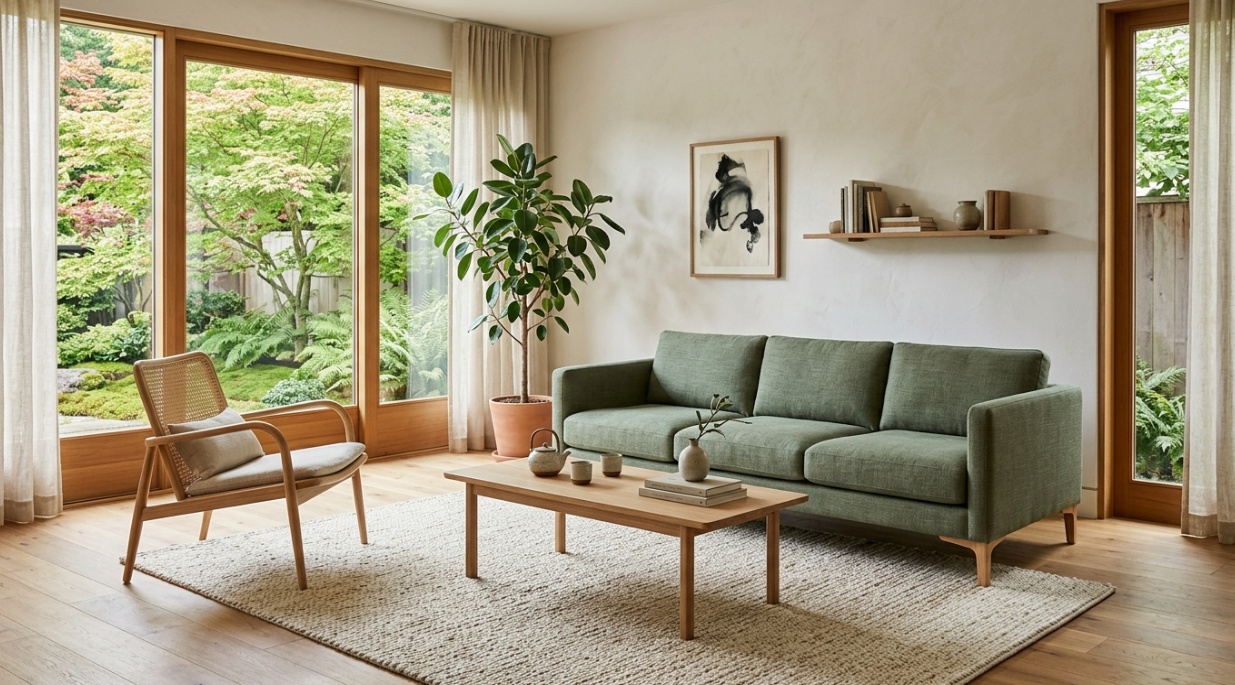
Low furniture can make a room feel more open, but it is not suitable for everyone. A sofa with slim arms and visible legs can look light while offering a normal seat height. Choose comfort and accessibility first, then create the Zen look through proportion, materials, and the amount of open space.
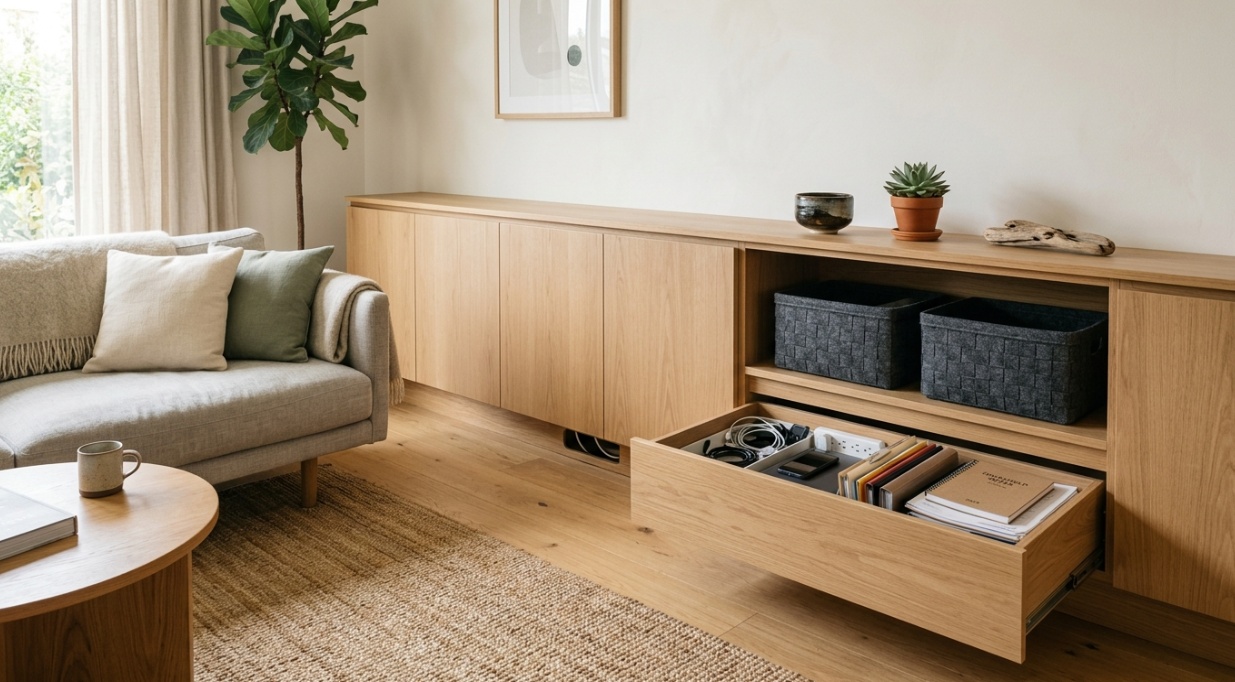
A calm-looking room still needs somewhere for chargers, paperwork, toys, toiletries, and appliances. Closed cabinets, drawers, boxes within shelving, and cable management reduce visual noise without requiring an unrealistic lifestyle. Open shelves work best for a small edited group, not every household item.
Designing a Zen room is about choosing an atmosphere that encourages calm. Here is how to apply these principles to specific areas of your home.

Start with the seating route. Position the sofa and chairs for conversation without blocking the doorway, then use a rug large enough to connect the group. Keep the coffee table proportional to the sofa and leave one clear surface. One plant or artwork can provide a focal point; a row of small unrelated accessories usually weakens the composition.
You can test furniture, materials, and palette variations with AI Living Room Design. Treat the result as a visual concept, then confirm real dimensions before buying furniture.

Give the bed a clear position and keep both access and storage practical. Use plain bedding with one textured layer rather than many decorative cushions. A bedside light, book, and water glass are not clutter if they are used. Blackout curtains can support sleep, while a sheer layer provides privacy and softer daylight during the day.

Use moisture-resistant materials and closed storage before adding spa-like decor. A wood-look vanity, stone or stone-look tile, warm light, and plain towels are enough to establish the direction. Keep plants only where the species, humidity, and available daylight are suitable. Loose pebbles on the shower floor can complicate cleaning and drainage.

Prioritize a clear worktop, easy-to-clean finishes, and storage near the point of use. Flat-front cabinets and simple hardware reduce visual interruption, but open shelves are not mandatory. Keep frequently used appliances accessible; hiding everything only to retrieve it several times a day creates friction rather than calm.
For a wider whole-room preview, use AI Room Design to compare controlled variations. Change one variable at a time, such as wall color, furniture style, or material direction, so you can tell which decision improved the room.
The lowest-cost changes are usually editing, rearranging, and improving storage. Remove unused decor, relocate a chair that blocks circulation, group visible cables, and consolidate small items into one drawer or box. These changes affect the room more than adding bamboo accessories or a tabletop fountain.
Next, change textiles and light. Plain curtains, one larger rug, consistent cushion covers, and a shaded lamp can connect mismatched furniture. Paint only after checking samples in daylight and evening light. Replace major pieces when their size, comfort, or function is genuinely wrong.
Modern Zen combines restrained Japanese-inspired cues with contemporary furniture, integrated lighting, and practical storage. It is usually cleaner and more architectural than rustic, with simple planes, controlled contrast, and a limited number of objects.
Japandi blends Japanese-influenced restraint with Scandinavian warmth and everyday comfort. Pale or medium wood, soft textiles, handmade ceramics, and functional furniture are common. The term is a contemporary style category, not a synonym for Japanese interiors or Zen Buddhism.
Industrial Zen keeps concrete, black steel, or exposed structure but reduces visual noise with warm wood, softer light, clear layouts, and fewer objects. Avoid stacking every industrial cue into one room. One raw wall or metal shelving system can provide enough contrast.
A Zen room is a contemporary term for a space designed with fewer distractions, clear circulation, useful storage, restrained color, natural texture, and deliberate lighting. It may support meditation or quiet activity, but it does not need religious decor or a specific Japanese appearance.
Start by clearing blocked routes and crowded surfaces. Keep a compact palette, group furniture by function, add concealed storage, and use layered light. Introduce one or two natural textures, then leave some wall and floor area open instead of filling every gap.
Warm white, stone, clay, gray, muted green, charcoal, and natural wood are easy starting points. A Zen-inspired palette can also include deep blue, rust, or black. Limit the dominant tones and repeat accents in small amounts so the room reads as one composition.
No. Japanese interior design covers many periods, regional traditions, building types, and contemporary approaches. Zen-inspired decor borrows selected ideas associated with restraint, nature, and negative space. Treating the two labels as identical oversimplifies both Japanese design and Zen Buddhism.
Yes. Place the television where viewing is comfortable, manage the cables, and avoid surrounding it with many small objects. A low media cabinet or doors that conceal equipment can reduce visual noise, but the room does not need to pretend modern technology is absent.
No. Plants can add color and texture, but they are optional. Choose them only when the room has suitable light and someone can maintain them. Wood, stone, clay, woven fibers, and a view outdoors can provide a natural connection without indoor plants.