4 min. reading

Yulii Cherevko
CEO paintit.ai
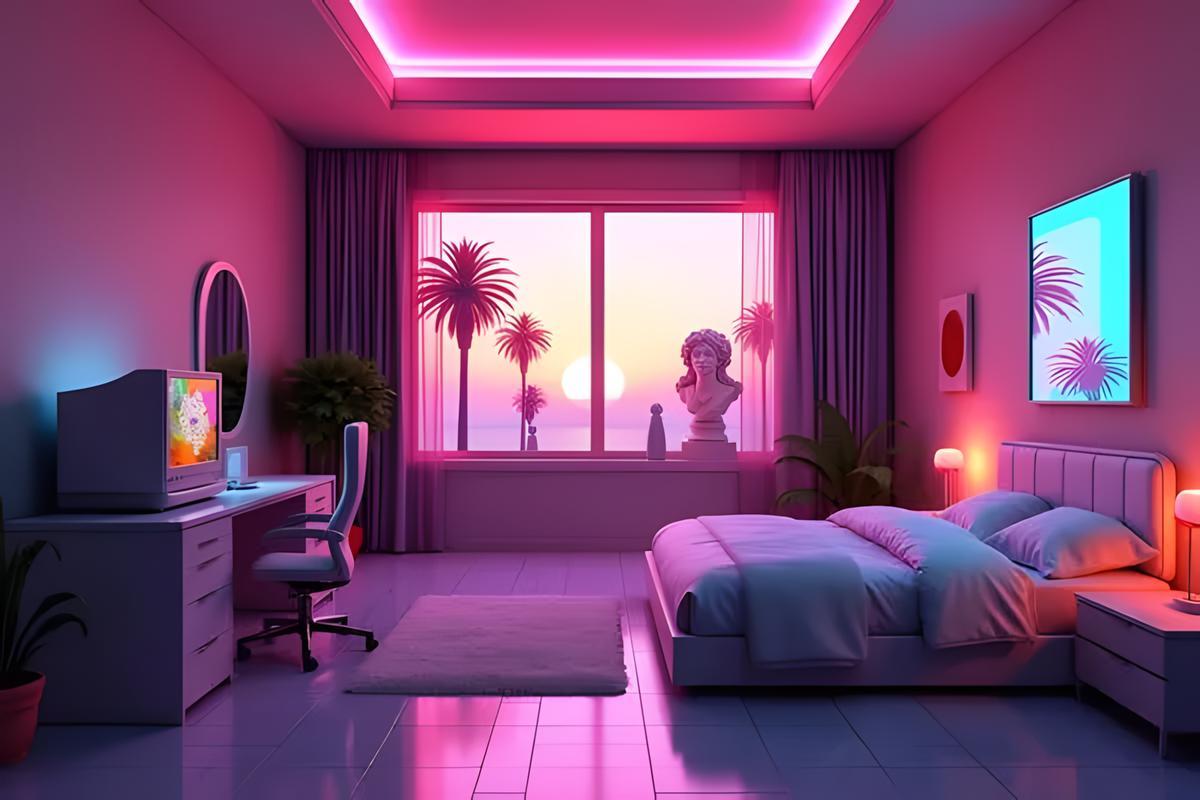
A good vaporwave room combines a calm pastel base with a few surreal digital references: pink or lavender light, translucent furniture, chrome accents, checkerboard patterns, early-computer graphics and one or two classical forms. The room should still work in daylight and support its real purpose. Start with color and lighting, then add furniture and graphic decor instead of buying every themed object at once.
Key takeaways
Vaporwave began as an internet-born music genre and visual culture in the early 2010s. Its imagery reworks 1980s and 1990s consumer culture, obsolete technology, shopping malls, early web graphics, Japanese text, classical sculpture and tropical scenes. Research archived by the University of York describes the same mix of media technology, advertising, office imagery and nostalgia.
In an interior, those references become color, light, material and objects. A vaporwave aesthetic room might pair a pale lavender wall with a translucent side table, a chrome lamp, a pixel-art print and a controlled wash of pink light. It does not need to resemble a nightclub or a computer-generated fantasy scene.
Some vaporwave furniture also borrows the bright colors, geometric forms and deliberate irony associated with 1980s Memphis Design. The Victoria and Albert Museum explains that Ettore Sottsass formed the Memphis group in 1981 as a reaction to Milan's traditional design culture.
| Style | Typical palette | Visual references | Best interior approach |
|---|---|---|---|
| Vaporwave | Pastel pink, lavender, cyan, mint, white | Early web, malls, busts, palms, glitch graphics | Soft base with surreal or nostalgic accents |
| Synthwave | Black, deep purple, magenta, orange | Sunsets, grids, sports cars, 1980s sci-fi | Darker room with high-contrast colored light |
| Cyberpunk | Black, steel, electric blue, acid green | Dense cities, exposed tech, signage, industrial surfaces | Layered, gritty and intentionally high-tech |
These styles can overlap, but the emotional tone is different. Vaporwave is usually hazier, softer and more nostalgic. Synthwave favors speed and cinematic contrast. Cyberpunk feels denser, darker and more industrial. Deciding which mood you want prevents a pastel bedroom from drifting into an unrelated gaming-room look.
Designing a vaporwave space is all about layering aesthetic choices-from color and light to retro furnishings. If you are starting from scratch or redecorating a room, these tips will help you build an immersive, stylish, and distinctly yours vaporwave interior.

Choose three roles rather than four equally loud colors. Let warm white, pale gray or very light lavender cover the largest surfaces. Use dusty pink, mint or cyan on textiles and one furniture piece. Reserve saturated magenta or electric blue for light, art or a small accessory. This hierarchy keeps the room recognizable in both daylight and colored evening light.
Test painted walls under the room's real daylight and lamps before committing. A photo-based AI paint color visualizer can help compare broad directions, but a physical sample is still necessary because screens and generated images cannot reproduce exact undertones or sheen.

A vaporwave room does not need colored light all day. Use a normal ceiling fixture, reading lamp or desk light for tasks. Add RGB strips behind a headboard, shelf, television or curtain pelmet so the diodes are hidden and the wall reflects a softer glow. A portable color-changing lamp is easier to move and repair than a permanent installation.
Avoid running exposed strips across every ceiling edge. The dotted line can make a finished room look temporary, and intense blue or magenta light can distort paint and fabric colors. Use dimmers, secure cables properly and keep heat-producing fixtures away from curtains and bedding.
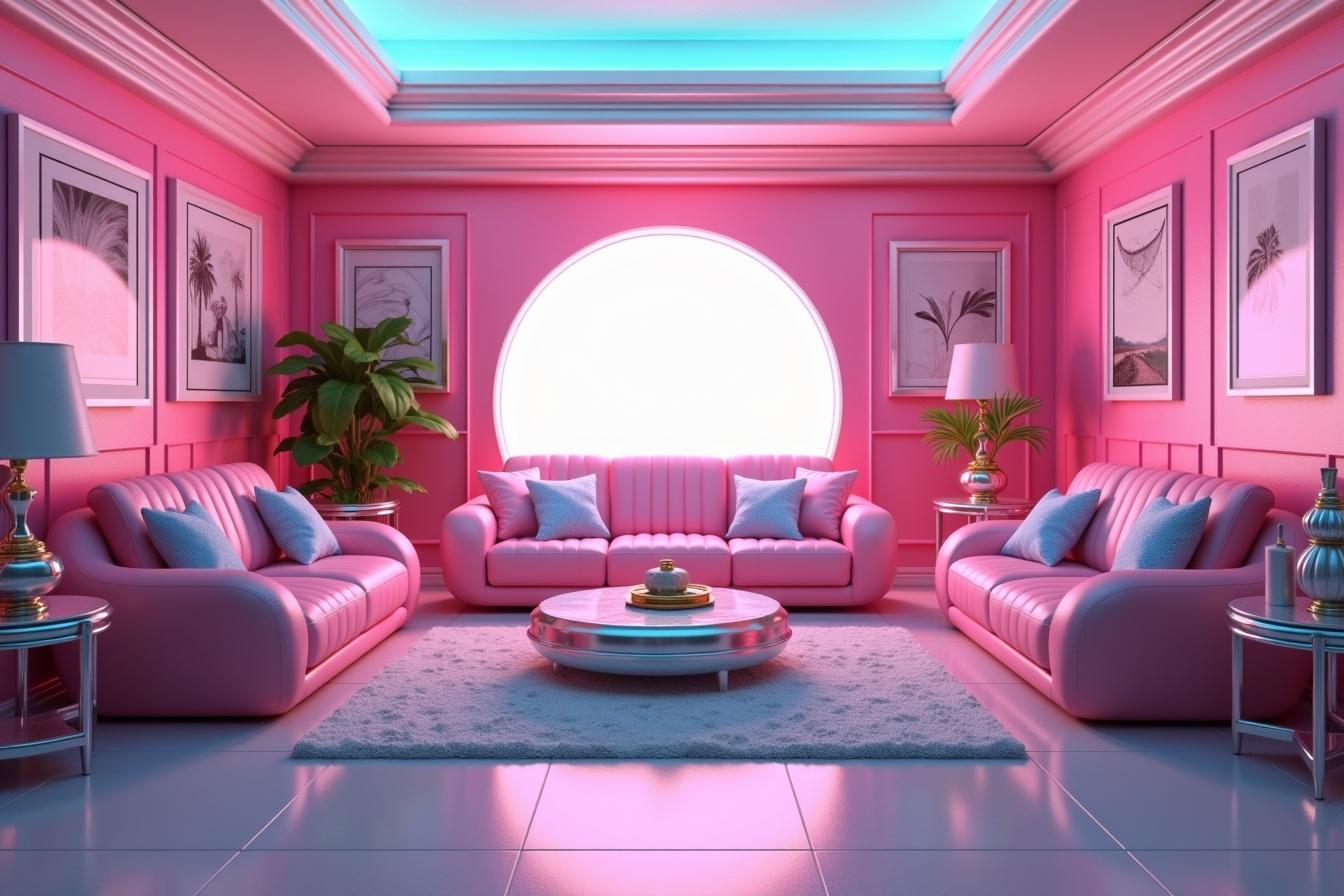
Vaporwave furniture works best when the silhouette is simple but one feature feels unusual. Look for a curved sofa, low modular chair, glass coffee table, acrylic stool, chrome side table or lacquered cabinet. Inflatable seating can suit a temporary lounge or studio, but it rarely provides the support needed for a main living-room chair.
You do not need authentic collectible Memphis pieces. A secondhand 1980s or 1990s table can be refinished, while a plain modern sofa can carry the style through a lavender throw and graphic cushions. Spend first on comfort and scale; add the aesthetic through pieces that are easier to replace.

A gallery wall can combine pixel art, mall photography, retro advertisements, 3D-rendered landscapes and classical sculpture. Keep the frames related by color or finish so the references feel collected rather than random. For a cleaner result, use one large print or textile panel and leave the surrounding wall open.
Japanese characters should not be treated as meaningless decoration. Use text only when you know what it says and the context is appropriate. Abstract grids, interface windows, gradients and landscape imagery can communicate the aesthetic without borrowing language as a visual prop.
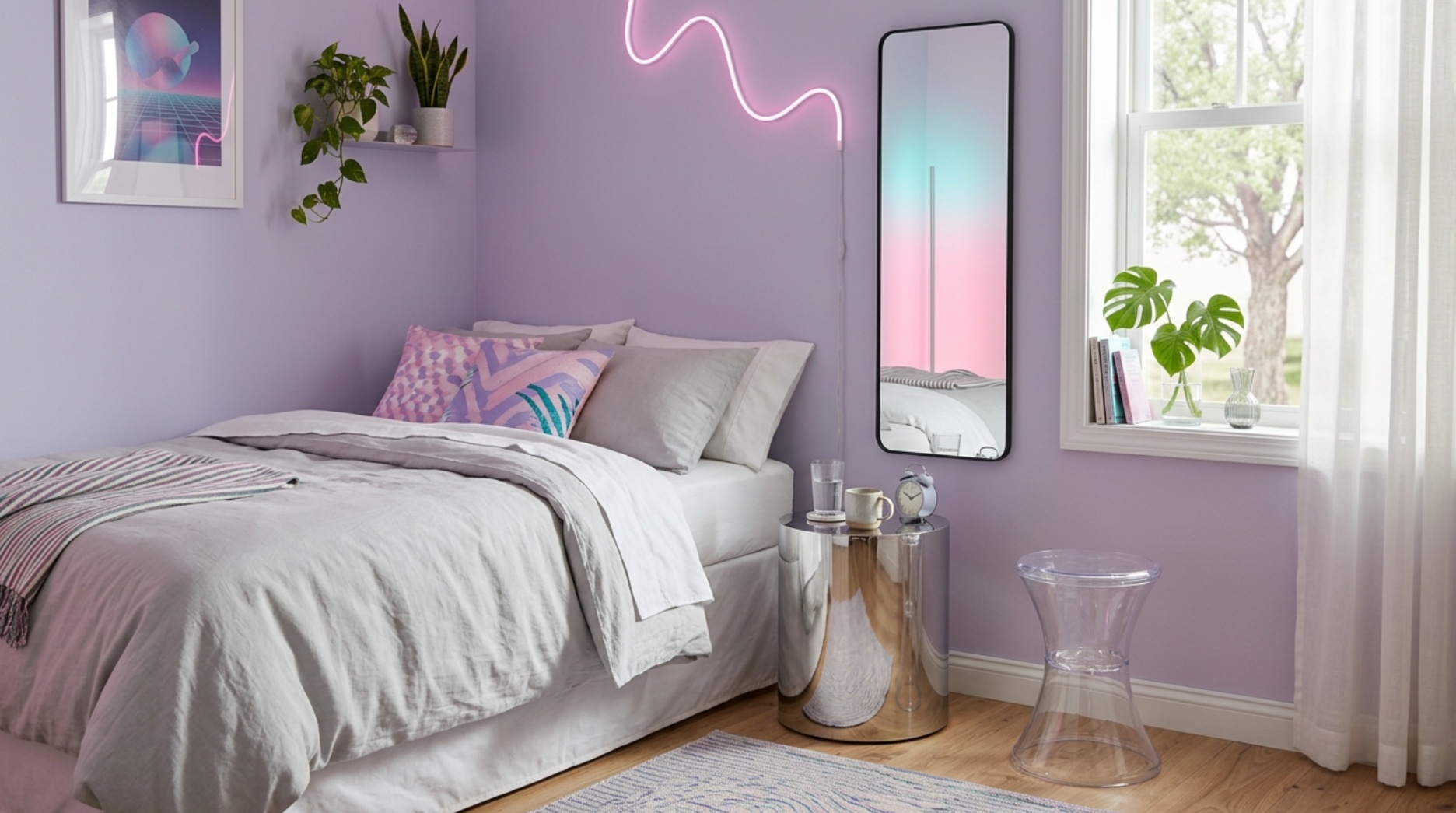
Chrome, mirror, iridescent film, smoked glass and clear acrylic catch colored light and create the digital haze associated with vaporwave interiors. One reflective side table or mirror is usually enough. Too many glossy surfaces produce glare, fingerprints and visual noise, especially in a small bedroom.

A checkerboard rug is the simplest way to add a grid without replacing the floor. Black and white creates sharper contrast; lavender and cream feels softer in a bedroom. If the walls already contain a busy collage or gradient, choose a plain rug so the two surfaces do not compete.
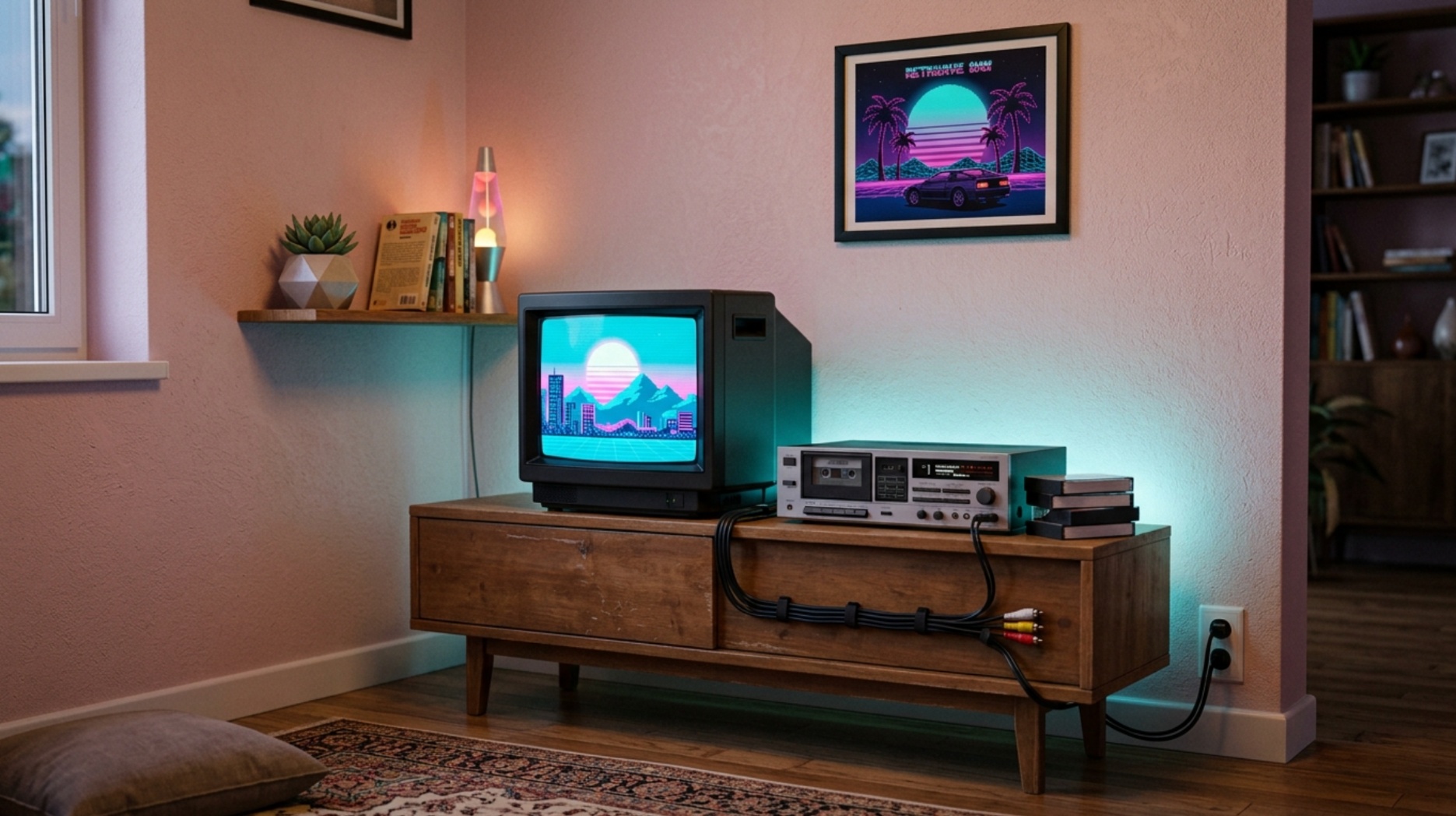
A CRT television, translucent telephone, cassette deck, compact stereo or old computer can provide a strong period reference. Group one or two working objects on a stable media unit instead of scattering obsolete electronics around the room. Check the condition of old cables and never block ventilation openings.
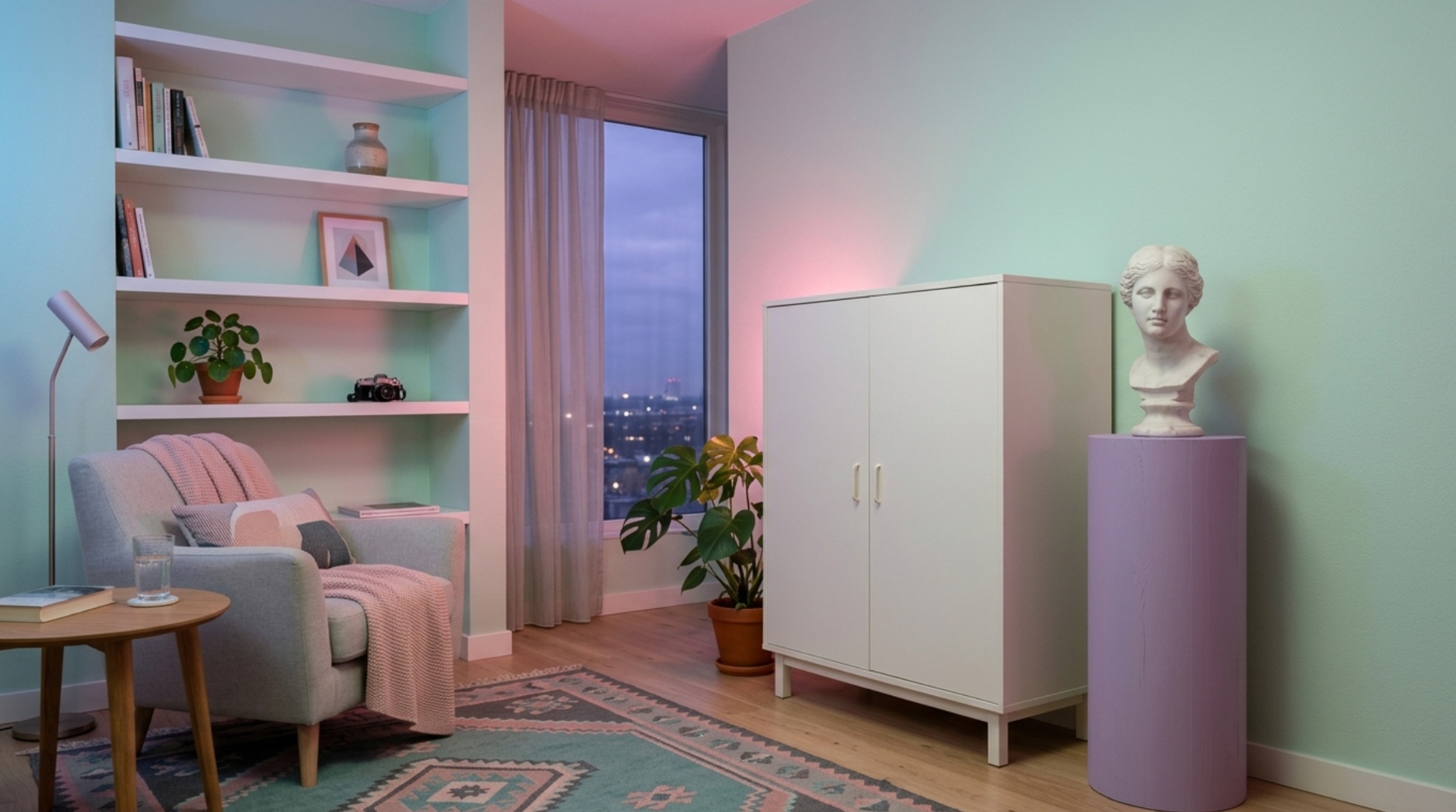
A small plaster bust, fluted pedestal or arch-shaped mirror introduces the classical imagery seen in vaporwave artwork. Pair it with closed cabinets or simple shelving so everyday objects have somewhere to go. The contrast between one theatrical object and a calm background is more effective than filling every shelf with statues.
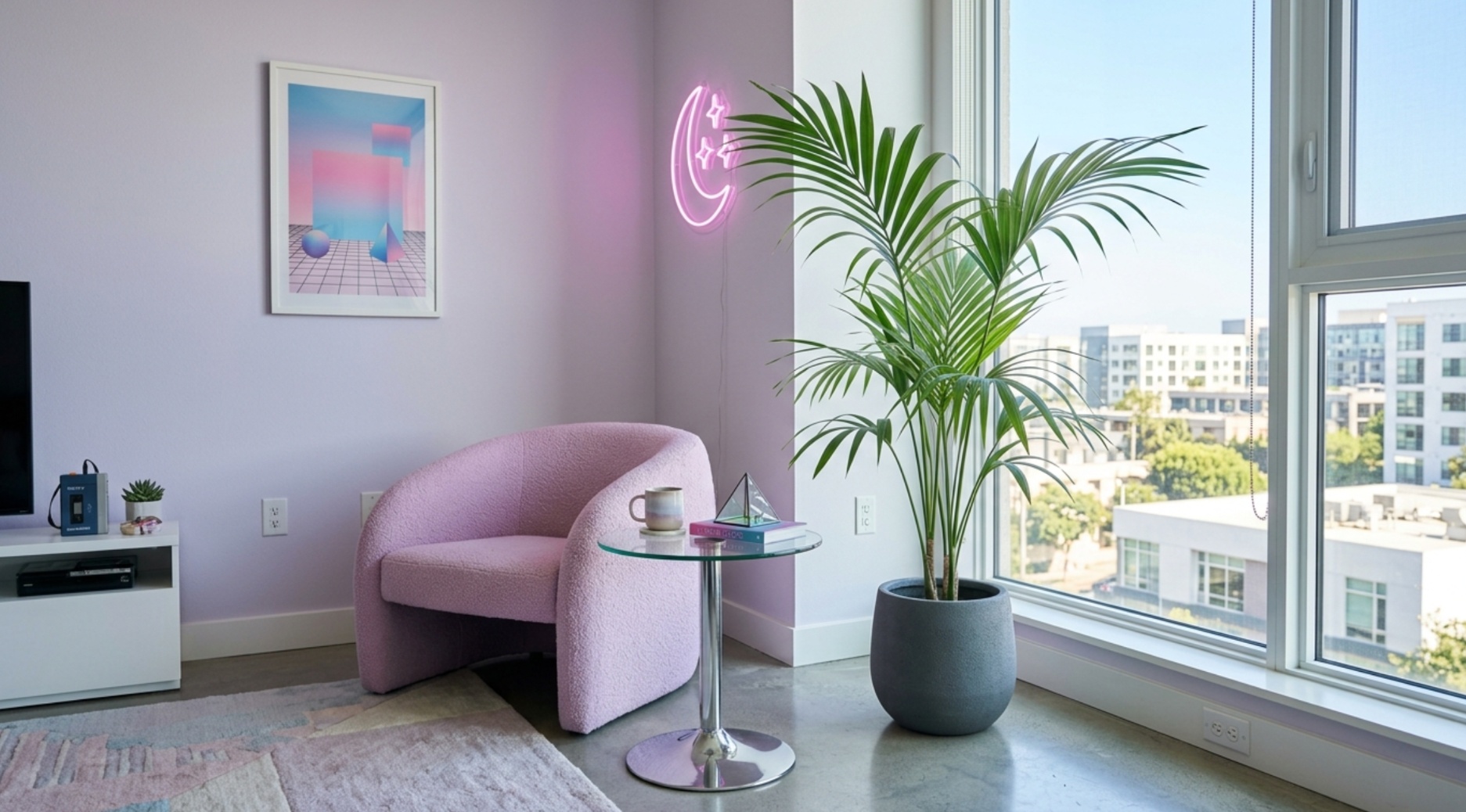
One palm or sculptural houseplant creates the familiar hotel-lobby reference and softens hard acrylic or metal surfaces. Choose a species that suits the room's actual light and care conditions. A graphic palm print is a better option in a dark space than a living plant that will struggle.
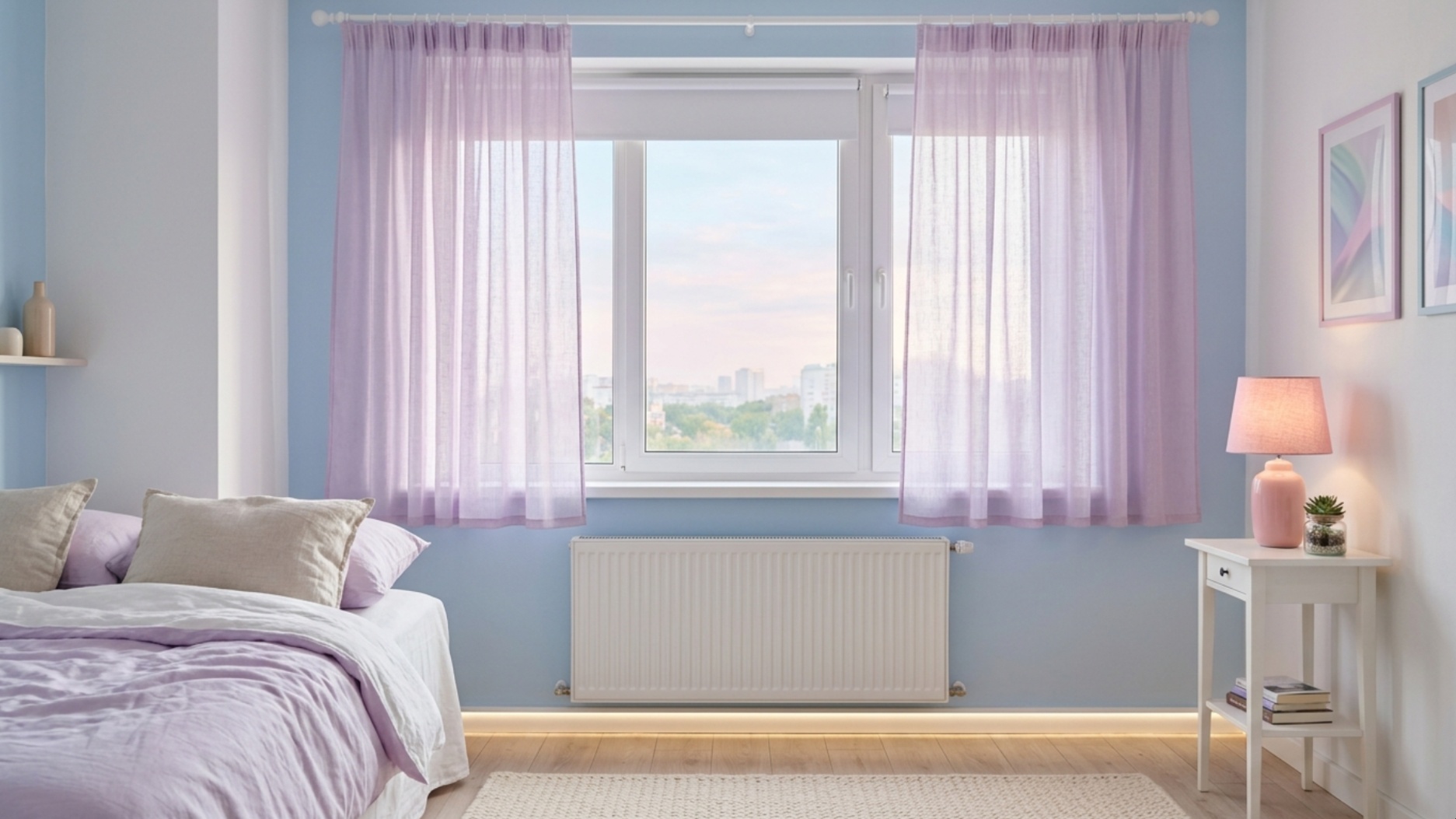
Sheer white or pale-lavender curtains diffuse daylight and make pastel walls feel hazier. In a bedroom, combine the sheer layer with a separate blackout blind or lined curtain instead of relying on the decorative layer for sleep privacy. Keep fabric clear of heaters and floor-level light fittings.
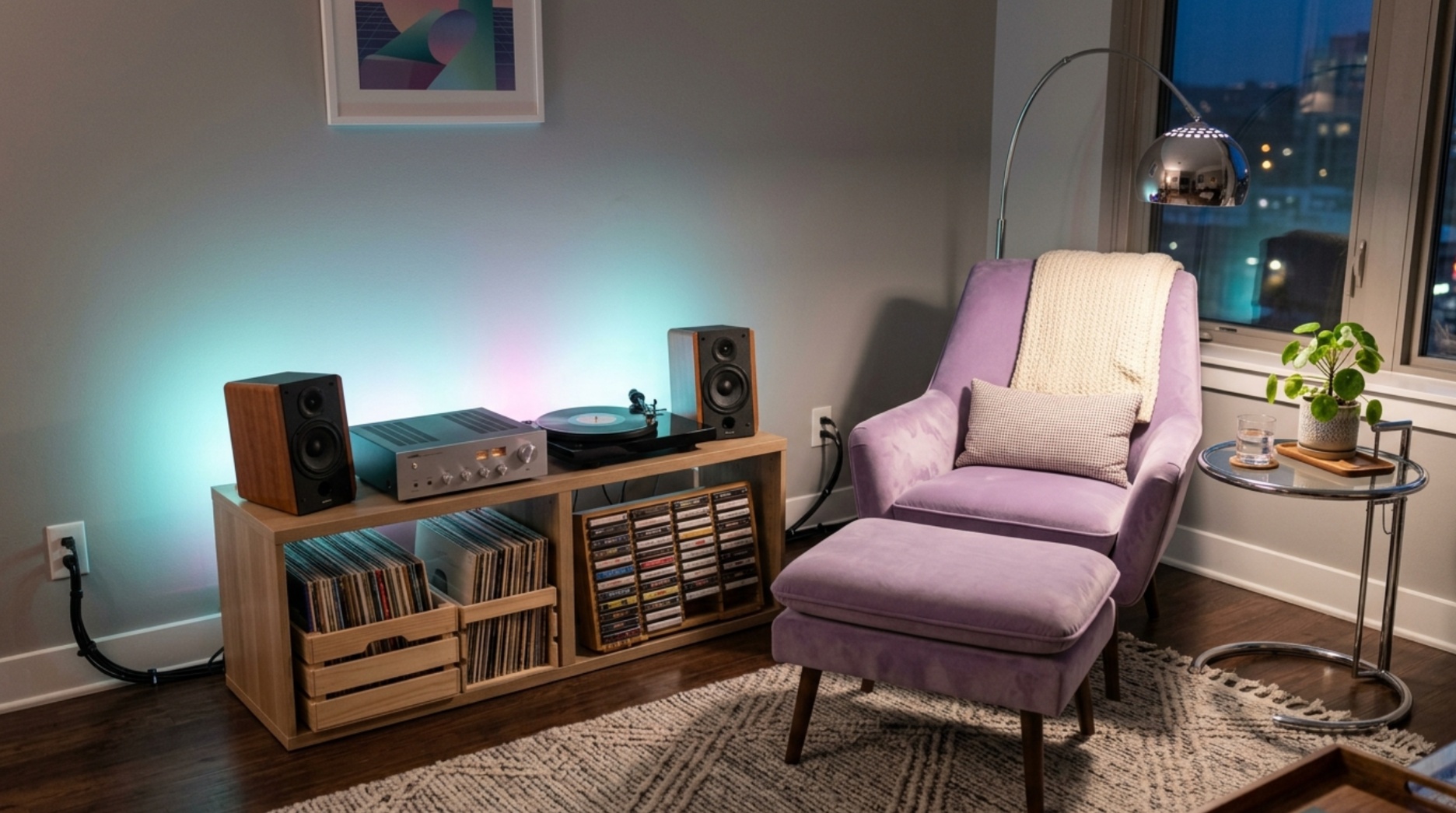
Vaporwave began with music, so a listening corner can feel more authentic than a collection of generic neon signs. Use a comfortable chair, headphones or compact speakers, record or cassette storage and a small lamp. The equipment should remain usable, with cables routed away from circulation.
Renters can build the look with plug-in lamps, framed prints, removable film, a rug, textiles and freestanding shelves. Avoid adhesive light strips on delicate paint and test removable products in a hidden area. A reversible scheme is also useful if the room must switch between an atmospheric evening setup and a neutral background for work or video calls.
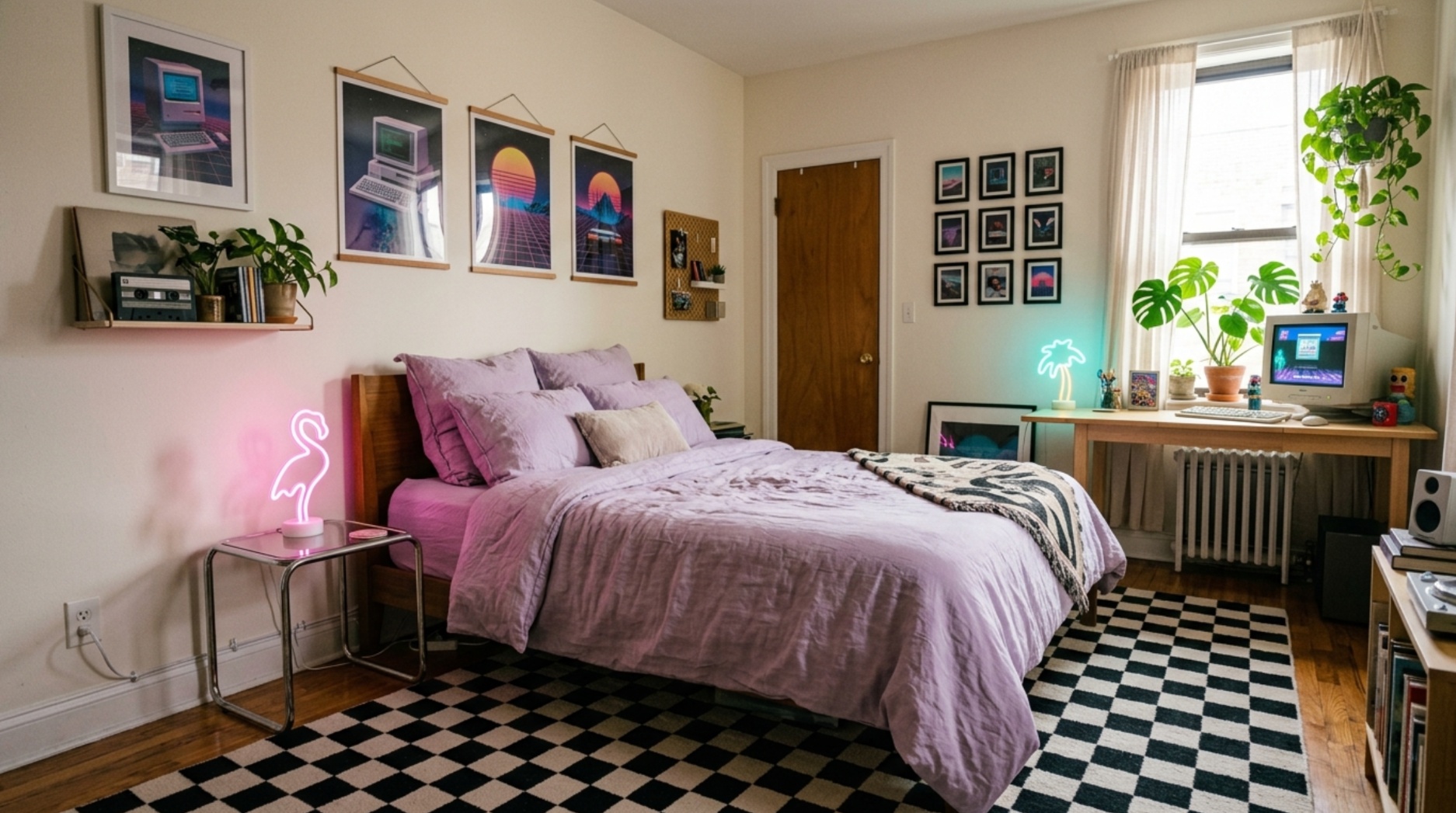
For a vaporwave bedroom, make the bed the largest quiet surface. Use a solid lavender, blush, pale-blue or white duvet, then add a checkerboard cushion or one graphic throw. Place colored light behind the headboard or on a wall opposite the bed so the source is not directly in your eyes.
A small bedside table, reading lamp, accessible charging point and closed storage keep the room functional. Hang the main artwork over a dresser or desk if the wall above the bed is not suitable for safely mounted frames. Mirrors and clear furniture can make the composition feel lighter, but they do not physically enlarge the room.
For a real-life vaporwave bedroom rather than a render-only scene, limit the setup to one main effect: a glowing headboard wall, a graphic gallery, or a retro media corner. The remaining walls can stay pale and mostly open.
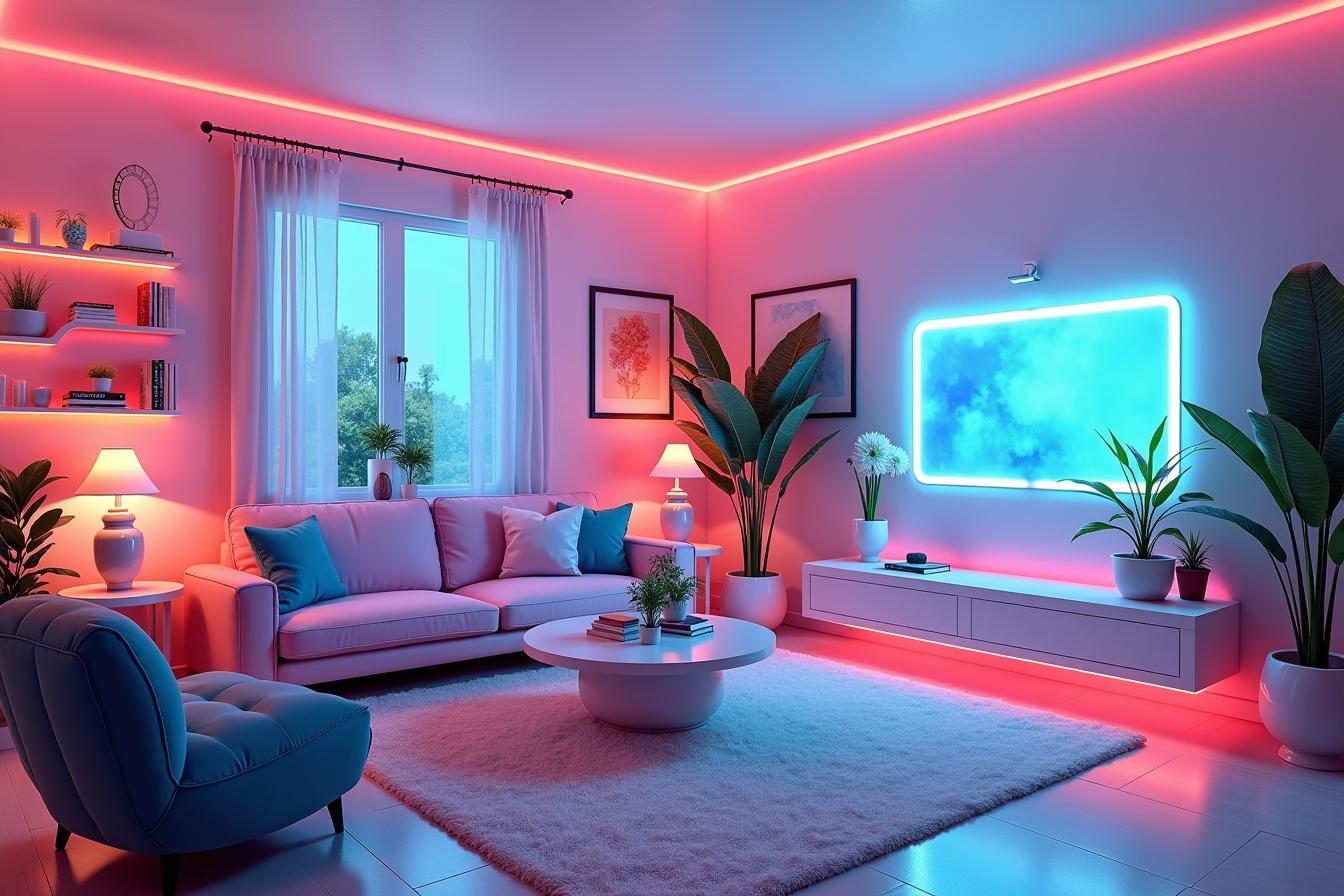
A vaporwave living room still needs comfortable conversation seating and clear routes through the space. Start with the sofa and rug, then use a glass or chrome table and one curved accent chair to change the character. Keep at least one lamp in a normal white setting for reading, cleaning and daytime use.
Use the television wall or a low media unit as the digital focal point. A framed screen, concealed backlight and a few pieces of retro technology can create the effect without spreading small accessories across every surface. Closed media storage helps the colored light read as intentional rather than chaotic.
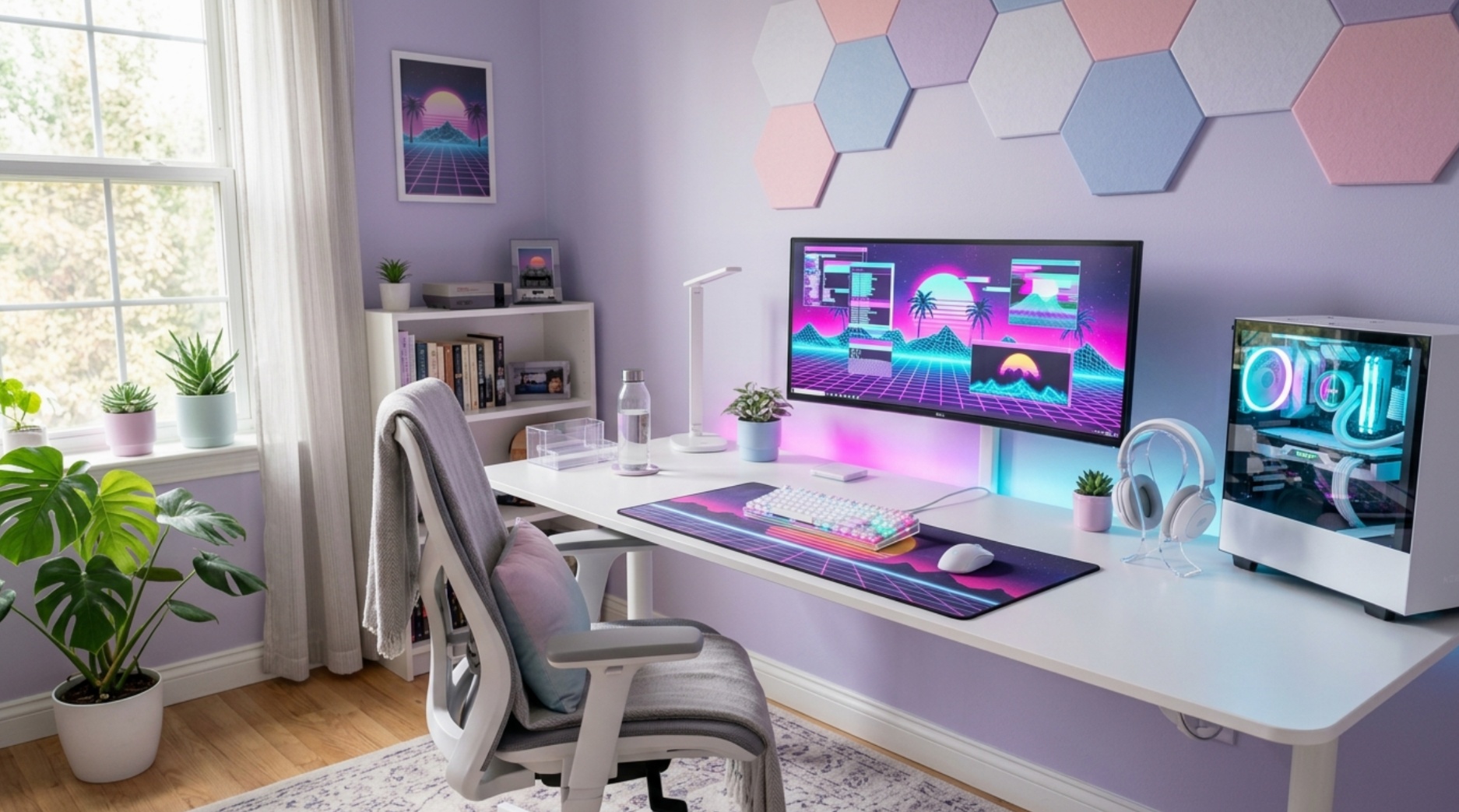
Gaming rooms often drift toward synthwave because black furniture and saturated RGB light dominate the setup. To keep the room vaporwave, use a lighter desk, pale walls, a translucent accessory and nostalgic interface art. Hide the strips behind the monitor or desk so the light reflects onto a surface rather than exposing individual diodes.
Keep the monitor at a comfortable height, provide neutral task lighting and route power cables below the desk. Acoustic panels can become part of the design through pale pink, lavender and cyan blocks, but their placement should follow the room's actual sound problem rather than a decorative pattern alone.
| Priority | Low-cost change | Why it works |
|---|---|---|
| 1 | One plug-in color-changing lamp | Changes the evening atmosphere without installation |
| 2 | Two or three coordinated art prints | Adds the digital and nostalgic references |
| 3 | Lavender, pink or cyan textiles | Introduces color across a large surface |
| 4 | Secondhand chrome, glass or lacquered table | Adds a period material without replacing the main seating |
| 5 | Checkerboard rug or small runner | Creates a strong graphic anchor that remains removable |
Set the budget before shopping and measure every furniture location. A cheap object that blocks a door or makes the room harder to use is not a saving. Thrift stores, local resale platforms and ordinary home retailers often provide better building blocks than products marketed specifically as "vaporwave decor."
Print a small group of legally usable graphics at the same paper size. Arrange them in a grid inside one large frame with a generous border. This keeps the collage visually controlled and makes it easier to move than many individually attached prints.
Apply translucent pink and blue film to a removable acrylic overlay rather than directly to an expensive mirror. Leave the central reflection clear. Test the material first and follow its installation instructions so bubbles and adhesive residue do not become the main feature.
Clean and prepare a secondhand table according to its material, then use one suitable paint system in lavender, pale pink or high-gloss white. Do not paint electrical parts, upholstered surfaces or unidentified vintage coatings without checking the correct preparation and safety requirements.
Upload a bright photo taken from a straight angle and ask for one controlled direction. Name what must remain unchanged, such as doors, windows, flooring and major furniture. The AI room design tool can then show how a pastel palette, lighting direction and selected materials might work in the existing space.
A useful prompt is: "Redesign this bedroom as a livable vaporwave interior. Keep the room dimensions, window, door, floor and bed position unchanged. Use pale lavender walls, white bedding, one translucent side table, a small checkerboard rug and concealed pink-cyan accent lighting. Keep normal daylight and avoid extra furniture."
Check every generated image against the source before treating it as a plan. AI can alter dimensions, invent outlets, move openings or show furniture that does not exist at a practical size. Verify colors with samples and verify furniture with published dimensions.
Common colors include pastel pink, lavender, cyan, mint, pale blue and white, with stronger magenta or electric-blue accents. A livable room usually works better when one or two pastels dominate and the brightest color is limited to lighting or small decor.
Look for curved or modular seating, glass coffee tables, translucent acrylic pieces, chrome lamps, lacquered storage and occasional geometric forms. Comfortable scale and function should determine the main furniture; the style can come from one statement piece and smaller accents.
Start with plain pastel bedding, one retro or digital artwork, a soft checkerboard accent and concealed colored lighting. Keep a normal bedside or reading light, provide closed storage and avoid placing exposed LED strips where they create glare.
Yes. Use a pale base, one reflective piece, compact furniture and a single focal wall. Avoid filling the floor with novelty objects. Clear circulation and visible empty wall space make the aesthetic easier to read.
No. Vaporwave usually uses softer pastels and references early internet culture, consumer spaces and surreal nostalgia. Synthwave tends to use darker backgrounds, sunset colors, grids and 1980s action or driving imagery.
No. A color-changing table lamp, tinted shade or soft projector can provide atmosphere without permanent strips. Vaporwave can also be expressed through art, furniture, materials and color while the main lighting remains neutral.