7 min. reading

Yulii Cherevko
CEO paintit.ai
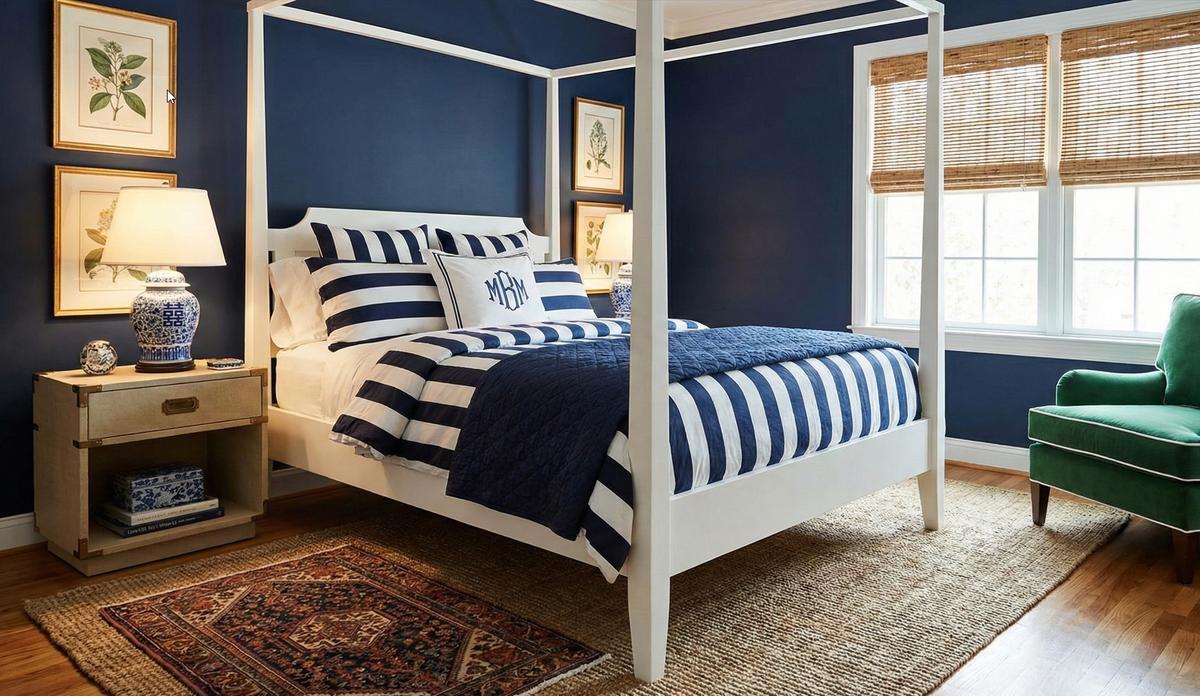
A preppy bedroom usually starts with the bed. Pick one strong color, add a stripe, plaid, or floral pattern, then bring in one or two classic details such as a brass lamp, bamboo nightstand, or framed print. The result should feel collected and cheerful, not like a dorm room dressed up for a photo.
The easiest way to test a direction is to start with a photo of your room in the AI Bedroom Design tool. Keep the walls and layout visible in the photo, then try several color and bedding combinations before buying paint or textiles.
Key Takeaways
Preppy style mixes polished, traditional details with brighter color than a standard classic bedroom. Think navy and white stripes, pink and green, plaid, rattan, tailored bedding, books, framed art, and a few pieces that look inherited even when they are not.
There is no single preppy palette. The room works when the colors, patterns, and furniture follow one clear idea. A navy bed with a red plaid throw is one idea. A pink headboard with green piping and bamboo furniture is another. Combining every pattern at once is where it usually goes wrong.
Preppy style does not need a trend report to be useful, but its traditional details are not out of place in a current room. Houzz's 2026 U.S. Emerging Summer Trends Report found that U.S. searches for wainscoting grew 32% year over year from January through March. Use that kind of wall detail as a background for a striped bed or tailored headboard, not as decoration on every wall.
Color is the primary signaling mechanism of this style. Unlike minimalist designs that rely on texture, a preppy aesthetic bedroom uses a high-contrast spectrum to establish mood. When selecting preppy wall colors, you are generally choosing between two lineages: the "Old Guard" deep tones or the "New Guard" pastels.
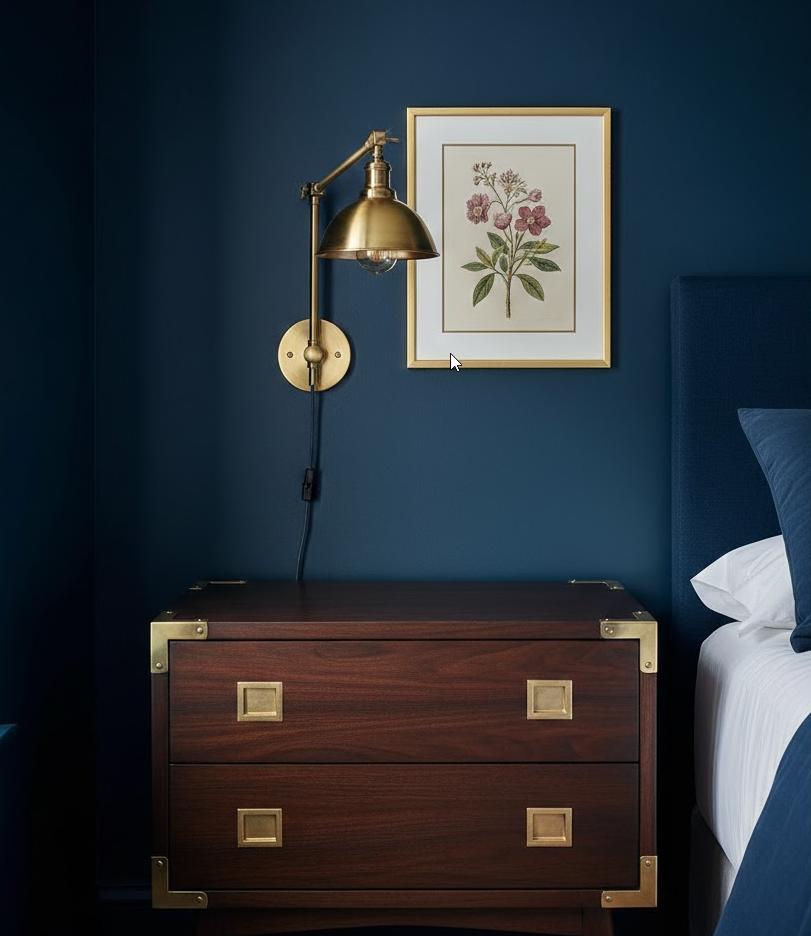
Navy gives a preppy bedroom structure. Use it on the wall behind the bed, a painted headboard, or the duvet, then add white bedding and one warmer accent such as brass or red plaid. For a painted-wall preview, use the AI paint color visualizer with a daylight photo of the room. In a small bedroom, keep the other walls and bedding light.
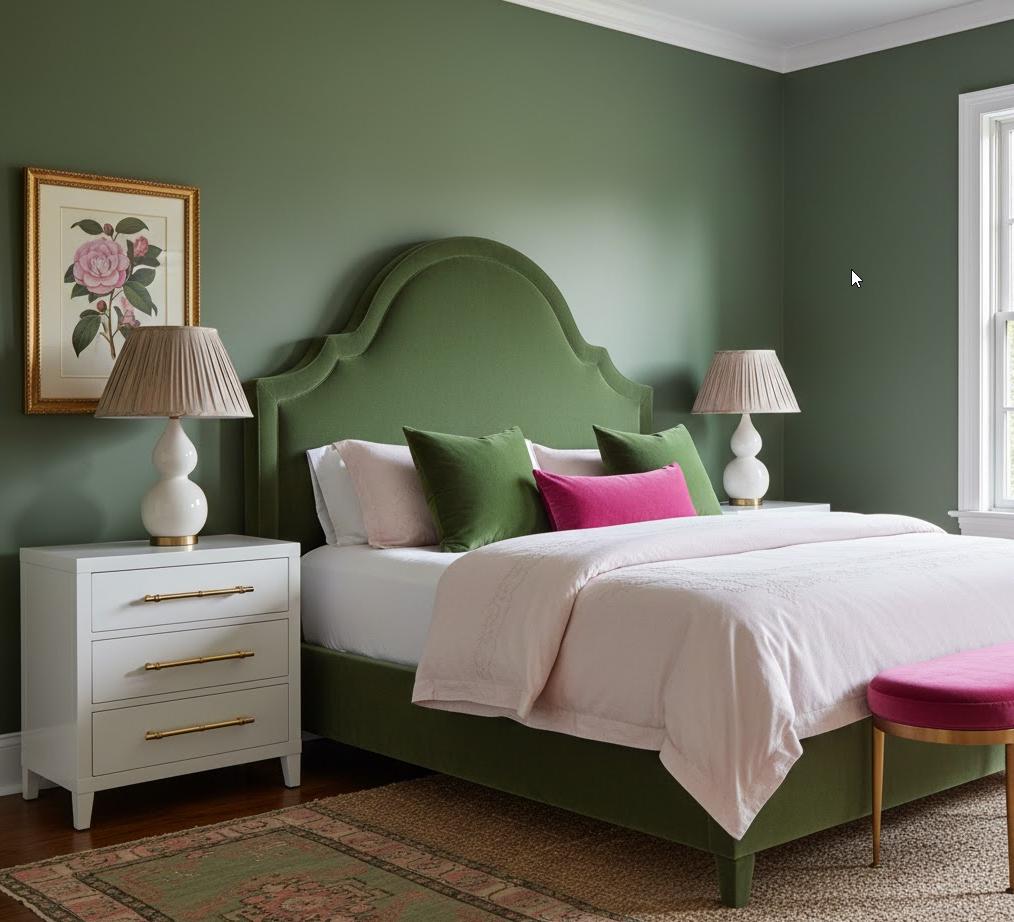
Pair pale pink with a deeper green rather than two pastel shades. Pink can cover the walls or upholstered headboard; green works well on trim, a bench, curtains, or lacquered furniture. This contrast keeps the room tailored instead of overly sweet.
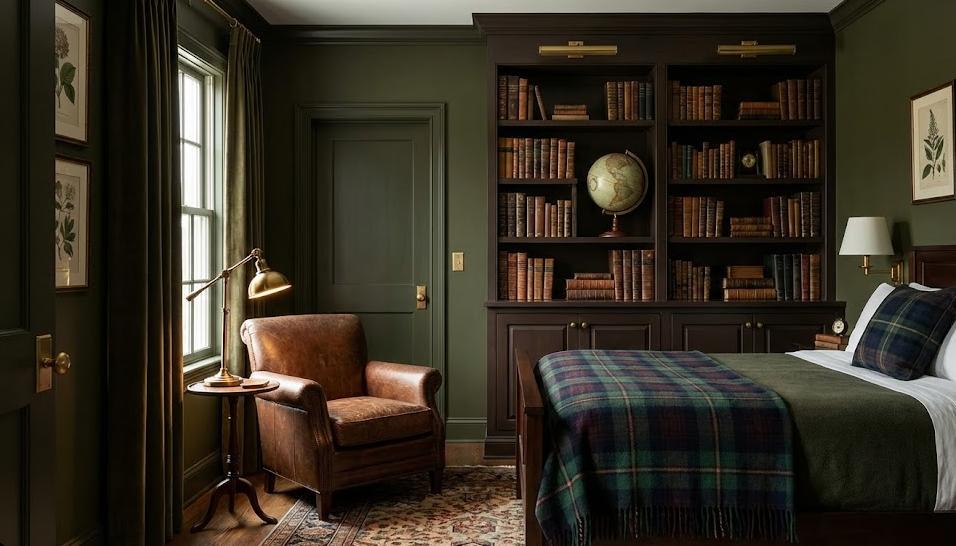
For a darker take, use forest green, burgundy, or deep navy with dark wood and brass. Keep the pattern on bedding or a throw and leave one large surface plain. This version needs enough daylight or layered lighting so the room does not feel heavy.
Use a navy quilt or duvet with crisp white sheets and a striped lumbar pillow. Add one brass reading lamp and a simple framed print above the headboard. This is the easiest version of a preppy bed because the palette already has enough contrast.
Try in Paintit: "Keep the room layout unchanged. Add a navy upholstered bed, white bedding, navy-and-white striped lumbar pillow, brass reading lamps, classic preppy bedroom style."
Start with pale pink walls or bedding, then use green on a headboard, bench, or curtain trim. The green should be deep enough to ground the room. A pale green accent often disappears next to pink.
A red or tartan throw gives a neutral room a preppy direction without committing to painted walls. Pair it with white bedding and one navy pillow. Keep the rest of the room quiet so the plaid does not fight with other prints.
Use a floral duvet or bed skirt with a plain blue quilt. Blue-and-white florals work especially well with dark wood, bamboo, and antique brass. This is a softer alternative to stripes.
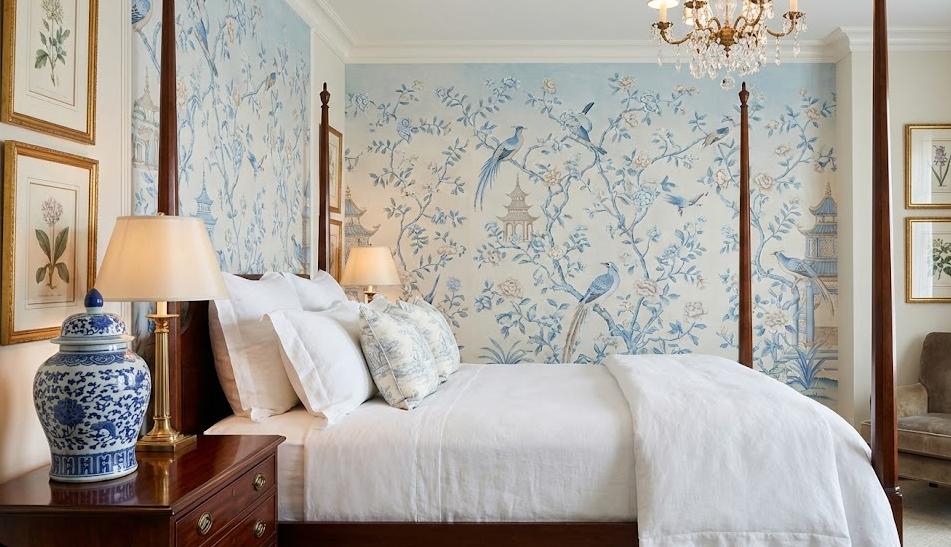
One glossy green bedside table can do more for the room than a full green wall. Use it with a simple upholstered headboard and white bedding. Add a woven shade or a small lamp with a pleated fabric shade.
Brass beds are useful when the room needs detail but not more color. Add a navy, green, or pink quilt and let the frame stay visible. Avoid hiding it behind oversized pillows.
Bamboo nightstands, a desk, or a mirror bring in the Palm Beach side of preppy style. They work best with a clean wall color and one patterned textile. Too much rattan can make the room feel beachy instead of tailored.
Use a monogram on one pillow, a throw, or a small tray. Repeating it on every surface turns a personal detail into a theme. One clear monogram is enough.
Use deep green, burgundy, navy, or brown with plaid bedding and dark wood. Add a library-style lamp and framed art. This version suits older bedrooms and rooms with good natural light.
A pink upholstered headboard can look polished when it has contrast piping. Pair it with white bedding, a patterned throw, and a darker nightstand. The trim keeps the bed from looking too sweet.
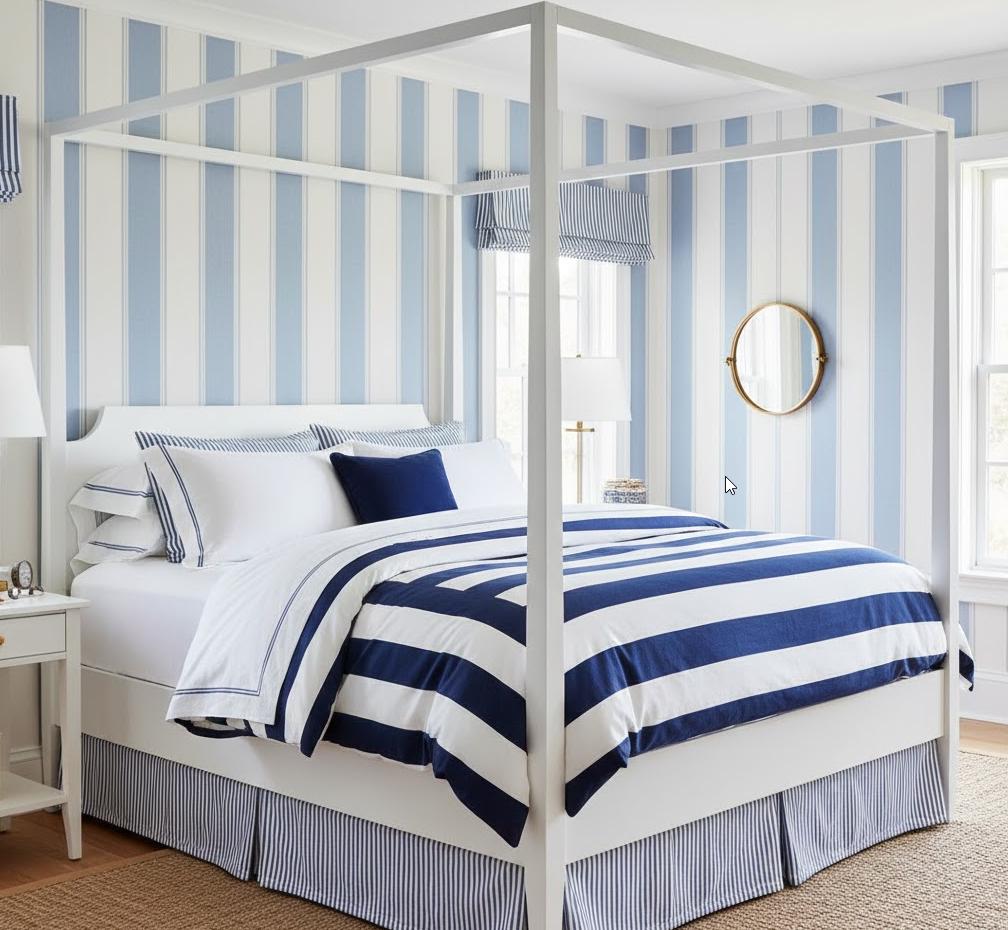
Mix botanical prints, a small landscape, a school or sports reference, and one simple mirror. Use matching frame colors even when the art is different. The wall should look collected over time, not perfectly symmetrical.
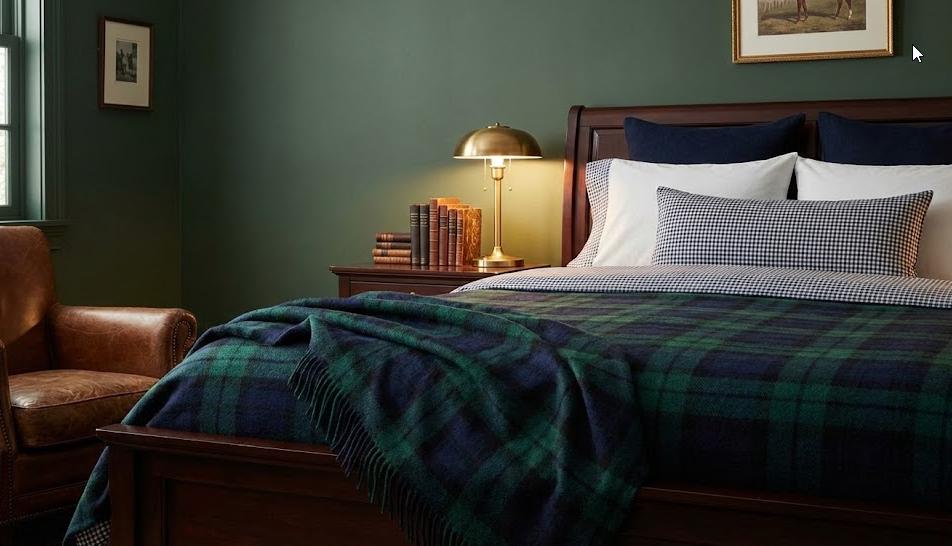
Choose one strong textile, such as striped bedding, and keep the walls light. Use a headboard with visible legs, wall lamps instead of table lamps, and a narrow nightstand. Dark walls can still work, but limit them to the wall behind the bed.
For twin beds, repeat the same headboard shape and use matching quilts, then vary the accent pillows. A shared rug and one centered table between beds make the arrangement feel intentional.
Use removable wallpaper behind the bed, a fitted valance, patterned pillows, and a better-looking lamp. These changes add character without repainting or replacing furniture you do not own.
Start with a low-profile upholstered bed, then layer in one traditional pattern, one antique-looking piece, and a saturated color. A clean-lined room can still feel preppy when the materials have personality.
Preppy bedroom furniture is defined by specific historic styles. We often call this "brown furniture," but in modern designs, these pieces are frequently updated with high-gloss lacquer.
A brass, spindle, bamboo, or upholstered bed with contrast piping gives the room a clear focal point. Choose one that leaves some of its frame visible. An oversized pile of pillows can hide the detail that makes it feel preppy in the first place.
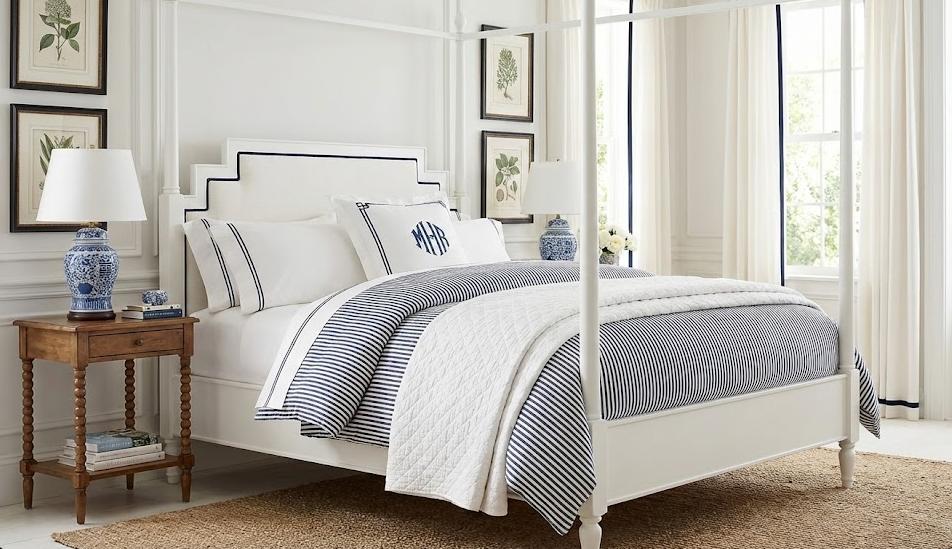
Use a campaign chest, bamboo nightstand, dark wood dresser, or a small skirted table beside the bed. One piece with character is usually enough; a matching furniture set can make the room feel flat. A green lacquered nightstand is an easy option when the walls and bedding are mostly neutral.
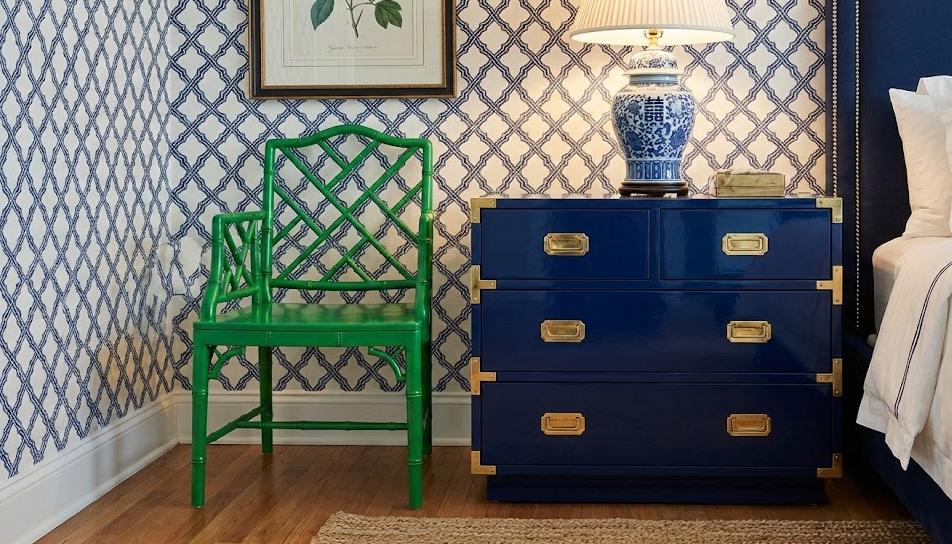
Choose a brass reading lamp, ceramic lamp with a pleated shade, or a simple wall sconce. Above the dresser, a bamboo or gilt mirror adds detail without introducing another busy pattern. Keep the metals consistent within the bed area.
Pick one large-scale pattern and one smaller supporting pattern. For example, use wide stripes on bedding and a small floral on a pillow. Or use a plaid throw with a plain quilt and a narrow striped shade. Keep at least one large surface, usually the wall or duvet, mostly solid.
The same rule applies to color. Navy, green, and red can work together, but give each one a job. Navy might be the bed, green the curtains, and red the small accent. Do not spread all three equally across every surface.
Layer a fitted sheet, flat sheet, quilt or duvet, two sleeping pillows, two decorative pillows, and one lumbar pillow or throw. This is enough for most beds. Add a bed skirt only when the frame or under-bed storage needs to be hidden.
For a more traditional look, use contrast piping on the duvet or shams. For a younger look, use a brighter pattern and keep the furniture simple.
Take a straight, well-lit photo that shows the bed wall, window, and floor. Then use the AI room design tool to test one direction at a time. Changing the palette, bed, furniture, and lighting in the same prompt makes it hard to judge what actually works.
Start with these prompts:
Navy, forest green, pink, red, light blue, white, and warm ivory are reliable starting points. Use one darker anchor color and one brighter accent rather than trying to fit every preppy color into one room.
Use tailored bedding, one stripe, plaid, or floral pattern, and a clear color contrast. A navy quilt with white sheets and a striped lumbar pillow is a simple starting point. Add one structured detail such as piping, a monogrammed pillow, or a brass lamp.
Yes. Keep the walls light, use the pattern on bedding instead of every surface, and choose slim furniture. A dark accent wall behind the bed can add depth without shrinking the whole room.
They overlap, but they are not identical. Preppy style usually feels cleaner and more tailored, with stripes, navy, green, and classic furniture. Grandmillennial style often uses more florals, skirts, antiques, and layered patterns.
Avoid using every pattern and every bright color at once. Choose one main pattern, one supporting pattern, and leave some surfaces plain. The room should feel deliberate, not themed.
The best preppy bedrooms have one clear point of view. Begin with the bed, test the palette in your actual room, then add details slowly. A single striped quilt or green nightstand can set the direction without forcing the whole room into costume.