16 min. reading

Yulii Cherevko
CEO paintit.ai
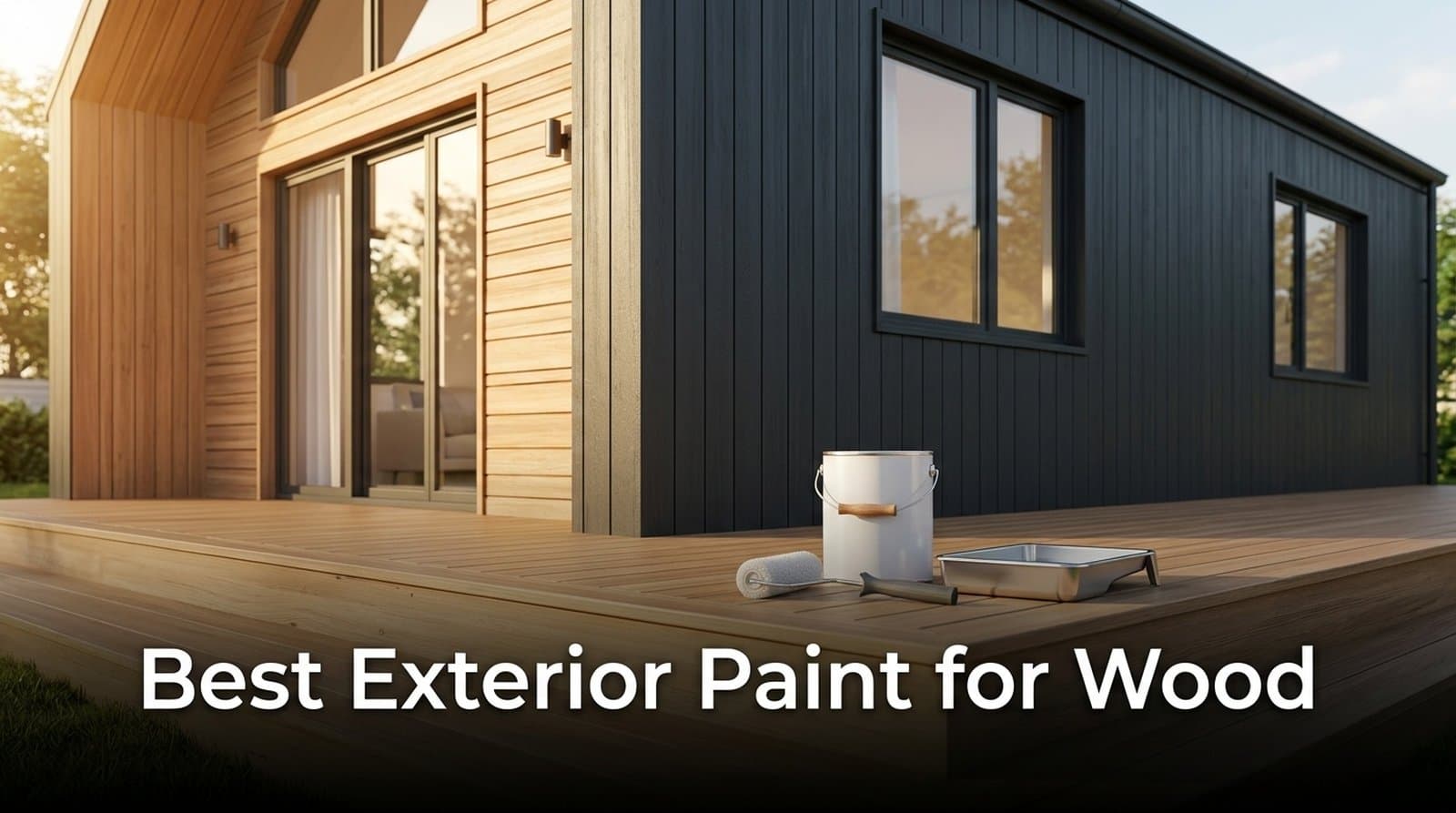
The best exterior paint for wood in 2026 is usually a good 100% acrylic latex exterior paint. That is especially true for siding, fences, trim, shutters, and most vertical outdoor wood. It stays flexible while the wood expands and contracts, resists UV fading, and lets trapped moisture escape better than a rigid oil-based coating.
The real choice is not just brand. It is the fit between your climate, the wood surface, sheen, prep method, and color. Even a premium paint can fail in 18 months if the end grain is left open, the old coating is already peeling, or a dark color turns a south-facing board into a little heat panel.
Most guides stop at the obvious question: acrylic or oil? Fair question. But it is only the first step. A better workflow is more personal and more practical: choose the paint chemistry, match it to the surface, preview the color on your real exterior, then prep the wood so the coating has a fair chance to last.
Exterior wood coatings are a serious category in 2026 because they sit between design, weather protection, and maintenance cost. According to Fortune Business Insights, the global wood coating market is projected to grow from USD 13.81 billion in 2026 to USD 19.04 billion by 2034.
That scale says something simple: people are spending real money to protect wood outdoors. The problem is that paint for wood exterior projects is often chosen from a tiny paper chip under store lighting, not from how the color, sheen, and coating type will behave on a wet fence, sun-facing cedar siding, or shaded porch rail.
A good exterior paint for wood needs to do 4 jobs at once:
That last point is where many failures start. Wood moves. It expands and contracts with humidity and heat. Dark colors can make that movement more intense because they absorb more heat, which can speed up thermal cycling. So color is not only a style decision. It is part of the durability plan.
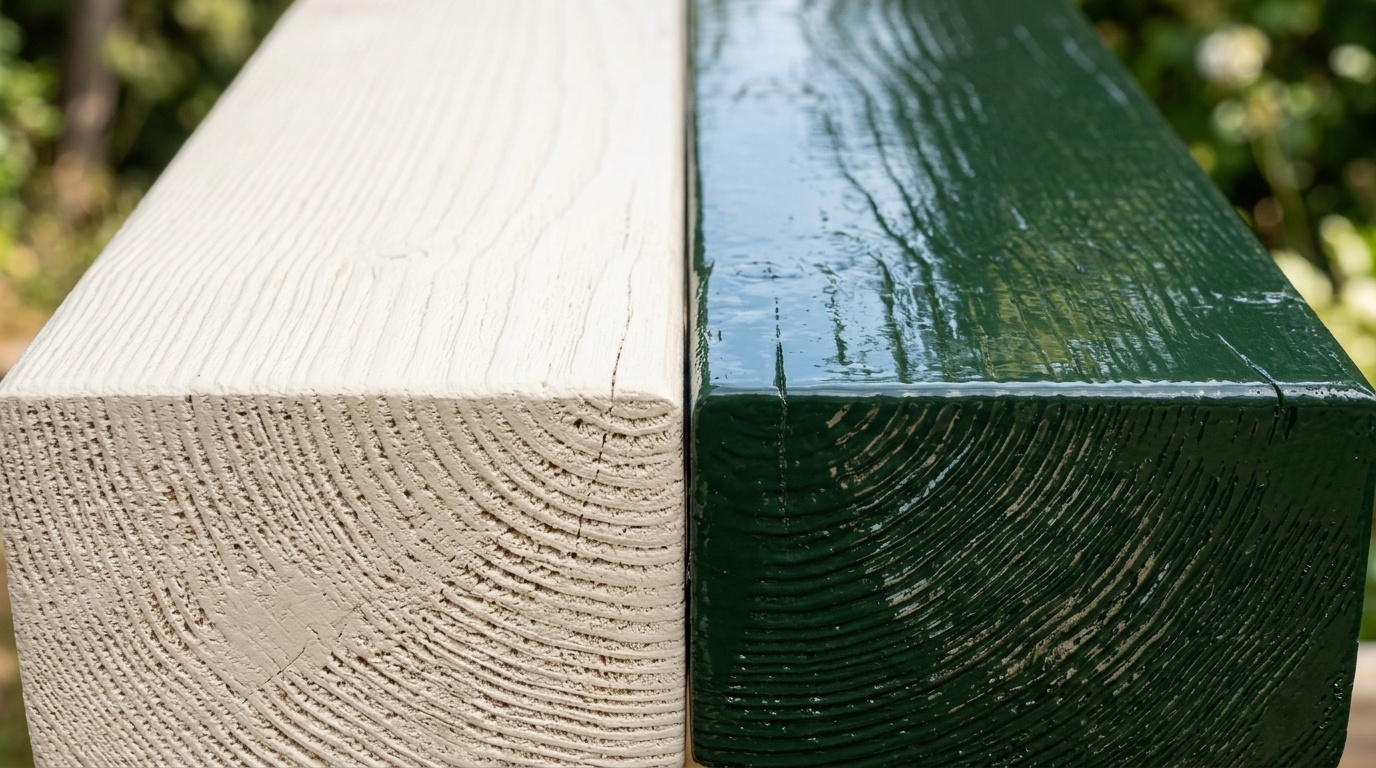
Acrylic latex is the best default paint for exterior wood because it stays flexible, handles UV exposure well, and allows some moisture movement through the coating. Oil-based paint still has a place on certain high-touch details, but its harder film can turn brittle after repeated freeze-thaw cycles.
For most homeowners choosing paint for exterior wood, 100% acrylic latex is the safest first answer. It bonds well when the surface is prepared correctly, cleans up with water, and is less likely to crack as boards move. On vertical surfaces like siding and fences, that flexibility matters more than a rock-hard finish.
Oil-based alkyd paint creates a dense, tough film. That can help on handrails, older trim, and selected exterior details where abrasion is the main concern. The trade-off is rigidity. In cold climates, a rigid film over moving wood can crack; then water finds those tiny openings and the peel cycle begins.
Here is the practical rule:
| Paint type | Best use | Main strength | Watch-out |
|---|---|---|---|
| 100% acrylic latex | Siding, fences, shutters, most trim | Flexible, UV-resistant, breathable | Needs proper primer on raw wood |
| Oil-based alkyd | Handrails, detail trim, older coated areas | Hard film, strong initial adhesion | Can yellow, crack, and become brittle |
| Acrylic enamel | Doors, railings, trim | Smooth finish with better hardness | Surface prep must be precise |
| Solid stain | Decks, steps, rough outdoor wood | Soaks in more than paint | Less color-blocking than opaque paint |
If you are painting new pine siding, acrylic latex over a dedicated primer is usually the right rhythm. If you are repainting an old porch handrail with a sound oil coating already in place, an alkyd or compatible enamel may make more sense. Paint choice should follow the existing coating and exposure, not just the label.
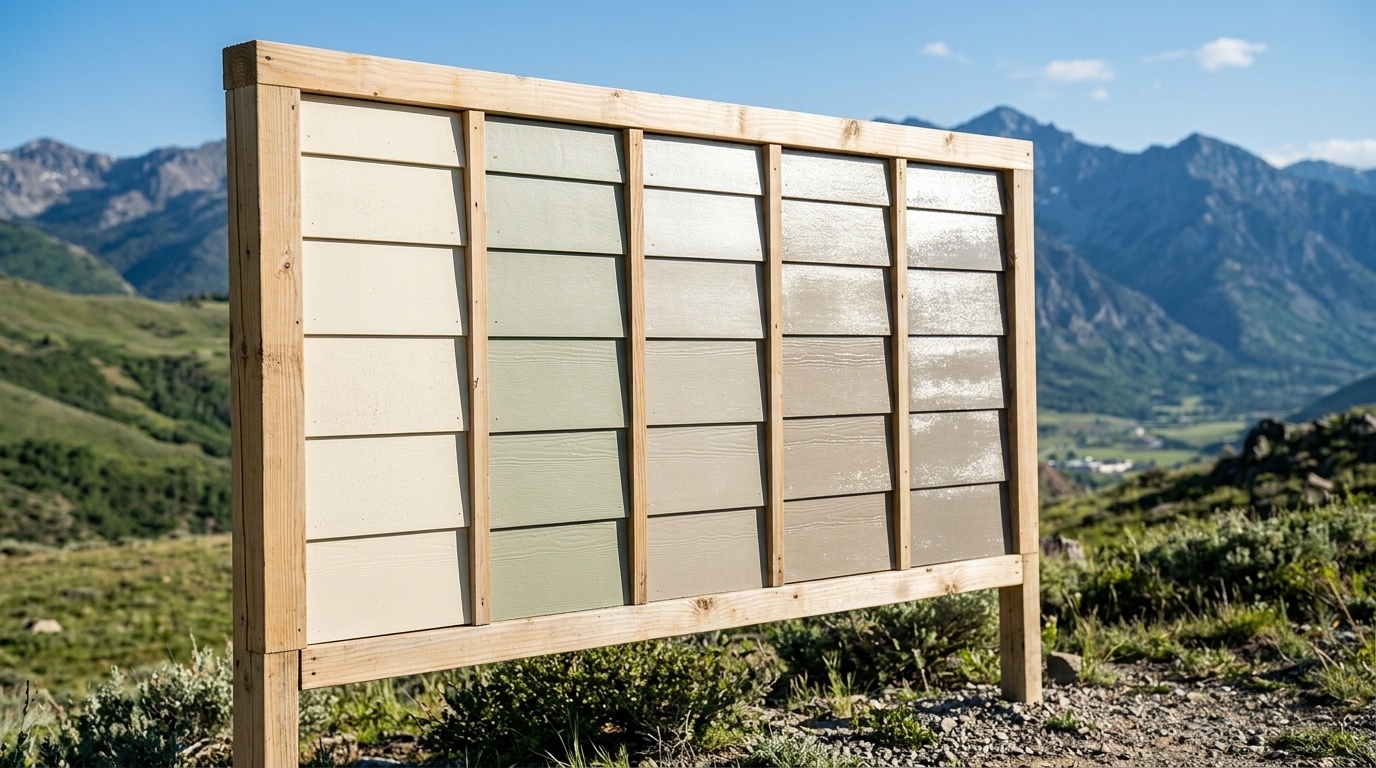
The most useful exterior paint tests expose products to real sun, snow, rain, and dirt for years, not only controlled lab conditions. In a 3-year Colorado weathering experiment, PPG Permanizer ranked first, while Behr Pro E600 surprisingly finished second ahead of several pricier consumer lines.
That result matters because many buyers assume the most expensive shelf product will automatically last the longest. The Behr Pro E600 result complicates that idea. A contractor-grade coating at roughly the mid-budget tier performed better than some premium retail paints in harsh exposure.
For paint for wood outside, climate is not a side note. Colorado sun and dryness punish UV stability. Michigan or Indiana freeze-thaw conditions punish coatings that trap moisture. Coastal air adds salt and mildew pressure. A paint that looks excellent after 36 months in one region may age differently in another.
A practical shortlist from the available testing and product behavior looks like this:
| Product line | Best fit | Why it stands out | Limitation |
|---|---|---|---|
| PPG Permanizer | High-exposure siding and fences | Strong sheen retention, fade resistance, dirt resistance | Availability varies by region |
| Behr Pro E600 | Large fences, sheds, rental properties | Strong cost-to-performance result in 3-year exposure | Bare wood still needs careful priming |
| Sherwin-Williams Emerald | Doors, trim, shutters | Smooth leveling and rich color depth | Higher price point |
| Benjamin Moore Aura | High-end siding, trim, signs | Strong color depth and UV resistance | Thick formula needs confident application |
| Sherwin-Williams Duration | General siding and trim | Flexible acrylic film, good coverage | Not a budget option |
| Behr DeckOver | Weathered decks in suitable climates | Thick texture fills small cracks | Risky in wet freeze-thaw climates |
In our renders, homeowners often lean toward deeper charcoal, black-green, or navy palettes because they look calm and architectural. They can be beautiful. They also absorb more heat than pale neutrals, especially on south- and west-facing boards. If you are considering a dark color, preview it first, then ask whether your climate and wood species can support that choice.
If you are unsure how a deep tone will work across siding, trim, and shadowed areas, test the palette before buying through a quick color mockup on your actual exterior photo. It will not predict chemical lifespan, but it can save you from buying 5 gallons of the wrong visual decision.
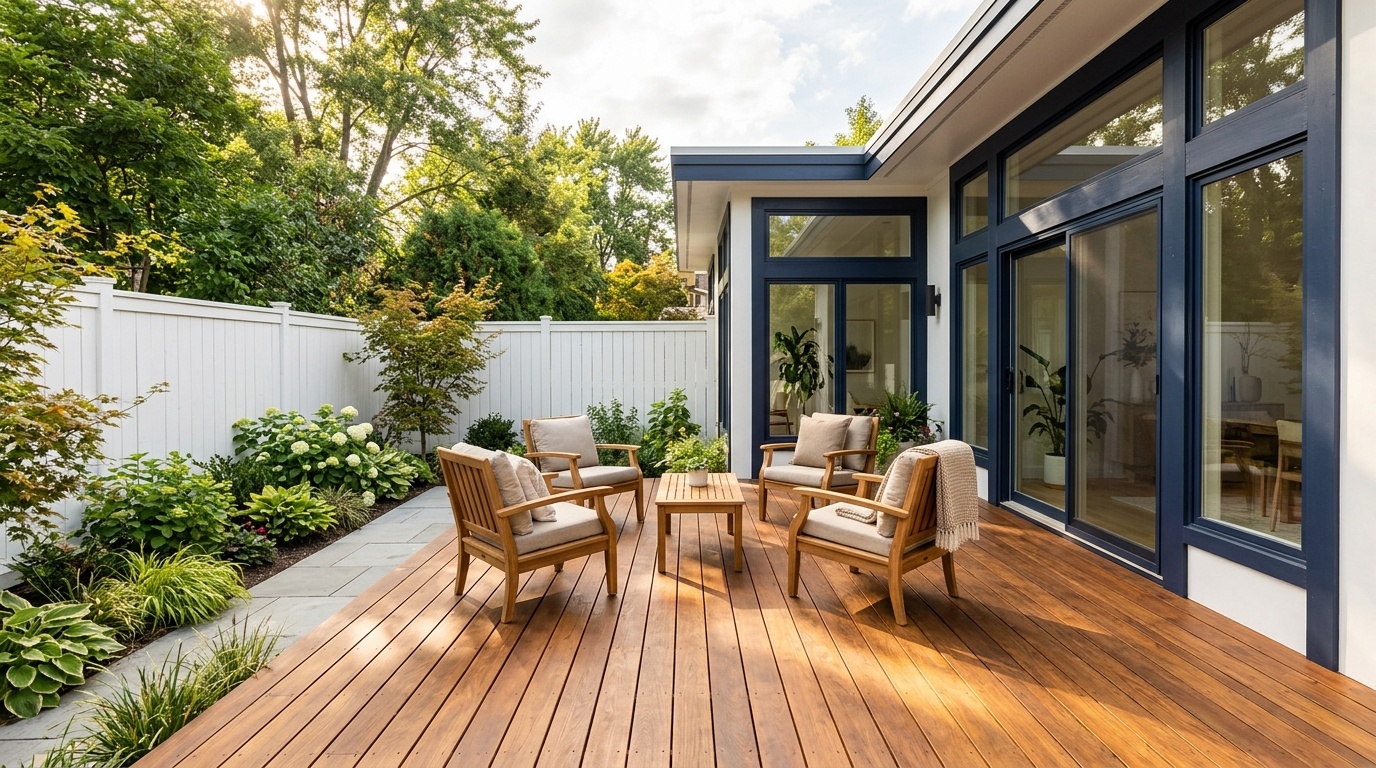
Different wood features need different coatings because vertical boards, horizontal decks, and touch-heavy railings age in different ways. The best outdoor paint for wood siding is usually not the best coating for deck steps, and porch enamel paint can be right for trim while wrong for broad siding.
For siding and fences, choose a flexible acrylic latex with satin or low-luster sheen. These areas usually cover a lot of square footage, so cost matters. PPG Permanizer, Behr Pro E600, Sherwin-Williams Duration, and similar acrylic lines fit this use well. On fences, the wood often has more knots, open grain, and weathering, so primer discipline matters.
For trim, doors, shutters, and railings, use a tougher acrylic enamel, semi-gloss acrylic, or porch enamel paint where the manufacturer approves exterior wood use. These surfaces get touched, washed, and noticed. Semi-gloss also creates a tighter, more resin-rich surface than flat paint, so it usually sheds dirt and rain more effectively.
The sheen rule is more technical than it sounds. Flat paint usually has a higher pigment-to-binder ratio, which makes it more porous. Satin and semi-gloss finishes contain more binder relative to pigment, creating a smoother film that resists moisture absorption, chalking, mildew, and grime. On exterior trim, you can often see that difference after 2 or 3 seasons.
For decks and steps, be careful with thick restorative coatings. Products like Behr DeckOver can fill cracks and add grip, which is useful on dry, weathered boards. But in freeze-thaw climates, thick elastomeric films may trap moisture inside wood fibers. When that moisture freezes and expands, the coating can peel in large sheets that are miserable to sand off. Sanding that off later is not a weekend anyone enjoys.
For decks with regular foot traffic, a dedicated solid stain or semi-transparent stain is often more forgiving than wall-style paint. Stain wears gradually; thick paint can fail suddenly. If the surface is horizontal and stays wet for hours after rain, think twice before applying anything that forms a heavy rubber-like layer.
For outdoor furniture and signs, the answer depends on the detail. Spray acrylics can work well on spindle chairs, small benches, and decorative pieces because they reach tight curves. For large wooden signs, premium acrylic latex or acrylic enamel gives stronger UV resistance. This is where wood paint outdoor choices become part of both design and maintenance planning.
A helpful design pass is to divide the home into 3 paint zones: siding, trim, and accents. Before committing, you can compare siding and trim options on the same photo so the color flow feels seamless rather than patched together.
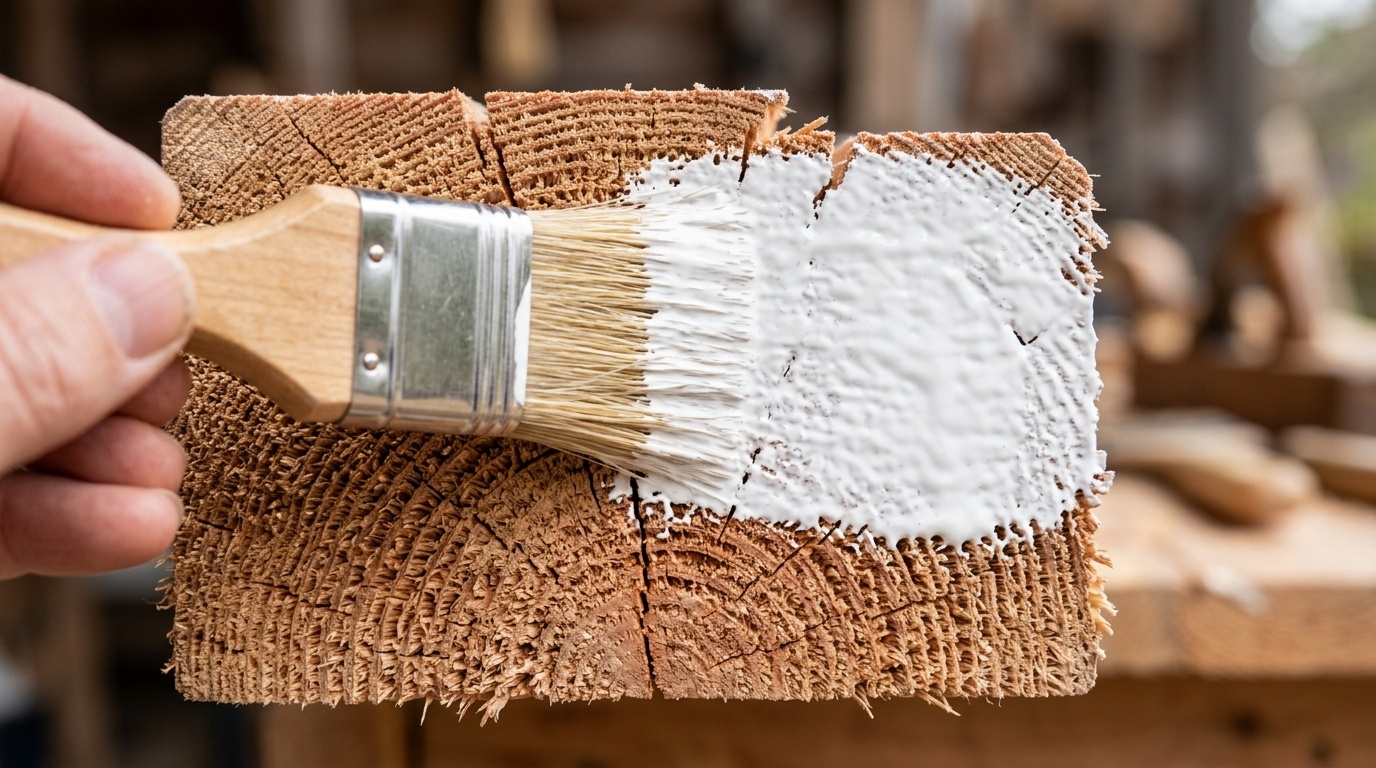
The most vulnerable part of exterior wood is often the end grain, where cut fibers absorb water much faster than face grain. The USDA Forest Service notes that compatible water-repellent preservatives and paint should be applied to end grain, because compatibility can improve or harm performance.
End grain shows up at board ends, trim cuts, fence picket bottoms, rail joints, stair stringers, and any exposed saw cut. It behaves like a bundle of straws. If that area is left unsealed, water enters, the wood swells, and the paint film starts losing adhesion from behind.
That is why 2 houses painted with the same product can age very differently. One crew primes and seals every cut edge. Another paints only the visible faces. After a few rainy seasons, the unsealed ends start the failure cycle.
Water-repellent preservatives, often called WRPs, can help reduce water uptake, but only if they are compatible with the primer and topcoat. Some formulations interfere with adhesion if they are oily, over-applied, or not allowed to dry. The intuitive workflow is simple: read the coating system as a set, not as 3 unrelated cans.
Use this sequence on raw exterior wood:
That extra 5 minutes per board can be the difference between a paint film that ages evenly and one that starts peeling at corners, joints, and lower edges.
Digital previewing helps you test color, sheen, and contrast on your real home before spending money on paint. It cannot verify adhesion or replace physical samples, but it can make the planning stage more personal, instant, and less dependent on tiny paper chips.
Based on Paintit.ai user data, homeowners tend to underestimate the impact of color choice on paint longevity. Our AI tools help users visualize how darker shades, which absorb more heat, might accelerate thermal expansion and contraction on specific wood surfaces, guiding them toward more durable choices.
This is especially useful for exterior wood because the same color behaves differently on cedar shingles, painted pine trim, porch boards, or a fence beside greenery. A warm greige may look balanced on siding but muddy on a shaded fence. A black railing may feel crisp in a render but too heat-heavy on a full-sun porch.
A practical Paintit.ai workflow looks like this:
At Paintit.ai, we have observed that the best decisions usually come from contrast testing, not one-color testing. Put the trim and siding into a rhythm, like choosing tracks for a playlist. The siding is the anchor. Trim is the transition. The door or railing is the accent.
For a broader exterior design pass, the Paintit.ai exterior planning workspace can help you test siding, trim, porch, and deck tones together before you move from idea to buy.
The important limitation is honesty: AI previewing estimates the look, not the chemistry. It will not tell you whether your old oil paint is compatible with a new acrylic topcoat. It will not detect hidden rot, moisture content, or failing primer. Use it to make the visual decision, then follow the physical prep process with care.
A lasting exterior finish comes from surface preparation more than the label on the can. For paint for outside wood, the professional sequence is clean, scrape, sand, prime, coat twice, and respect cure time; skipping 1 step often shortens the life of even premium coatings.
Start with washing. Use a pressure washer carefully or scrub with exterior cleaner to remove dirt, mildew, chalking, pollen, and pollutants. Let the wood dry completely. Painting over damp wood is one of the fastest ways to trap moisture below the film.
Scrape every loose edge. Paint cannot stabilize a failing layer underneath it. If old paint lifts under a scraper, it will lift under the new coating too. Feather-sand edges with 100–120 grit paper so the transition between bare wood and existing paint is smooth.
Scuff glossy areas with 150–180 grit paper. This creates mechanical bite for the next coat. Glossy old paint is too slick for reliable adhesion unless it is cleaned and dulled.
Prime bare wood with a dedicated exterior primer. Paint-and-primer-in-one products can work on previously painted, sound surfaces, but raw wood deserves a separate primer. Cedar and redwood often need an oil-based or stain-blocking primer to prevent tannin bleed.
Apply 2 finish coats for most vertical exterior wood. For highly exposed edges, stair risers, lower rails, or sun-facing details, a third coat on vulnerable areas may be sensible if the manufacturer allows it. Work with the grain and avoid heavy buildup at joints.
Curing is not the same as drying. Paint may feel dry in a few hours, but it can take days to develop its final hardness and adhesion. Keep furniture, planters, hoses, and heavy use away from fresh coatings until the cure window is complete.
If your goal is the longest-lasting exterior paint for wood, do not make the paint do all the work. The coating, primer, end-grain treatment, sheen, color, and weather window need to move in the same rhythm.
These are the questions homeowners usually ask right before buying paint, primer, or samples. The short version: 100% acrylic latex fits most exterior wood, decks need different thinking, and raw wood should almost always get a separate primer before 2 finish coats.
100% acrylic latex paint is generally best for exterior wood siding, fences, shutters, and trim. It stays flexible as wood moves, resists UV fading, and handles moisture better than many rigid oil-based coatings. For high-touch details, acrylic enamel or an approved exterior porch enamel may be a better fit.
Acrylic latex is better for most outdoor wood because it remains flexible and resists cracking through seasonal movement. Oil-based paint can be useful on certain older trim or handrails, but it may become brittle over time, especially in climates with strong freeze-thaw cycles.
No, standard exterior wall paint is not ideal for wood decks. Decks are horizontal, wet, sun-exposed, and walked on, so wall paint can peel quickly. Use a deck-specific coating, solid stain, or semi-transparent stain designed for foot traffic and standing moisture.
Yes, raw or weathered exterior wood should receive a dedicated exterior primer before finish paint. Primer improves adhesion, seals porous fibers, and helps block tannin bleed in woods such as cedar and redwood. Previously painted sound surfaces may not need full priming, but bare spots always should.
Stop peeling by removing all loose paint, sanding rough edges, priming bare wood, sealing end grain, and applying 2 compatible topcoats in the right weather window. Peeling usually begins when water gets behind the coating or when new paint is applied over a failing old layer.
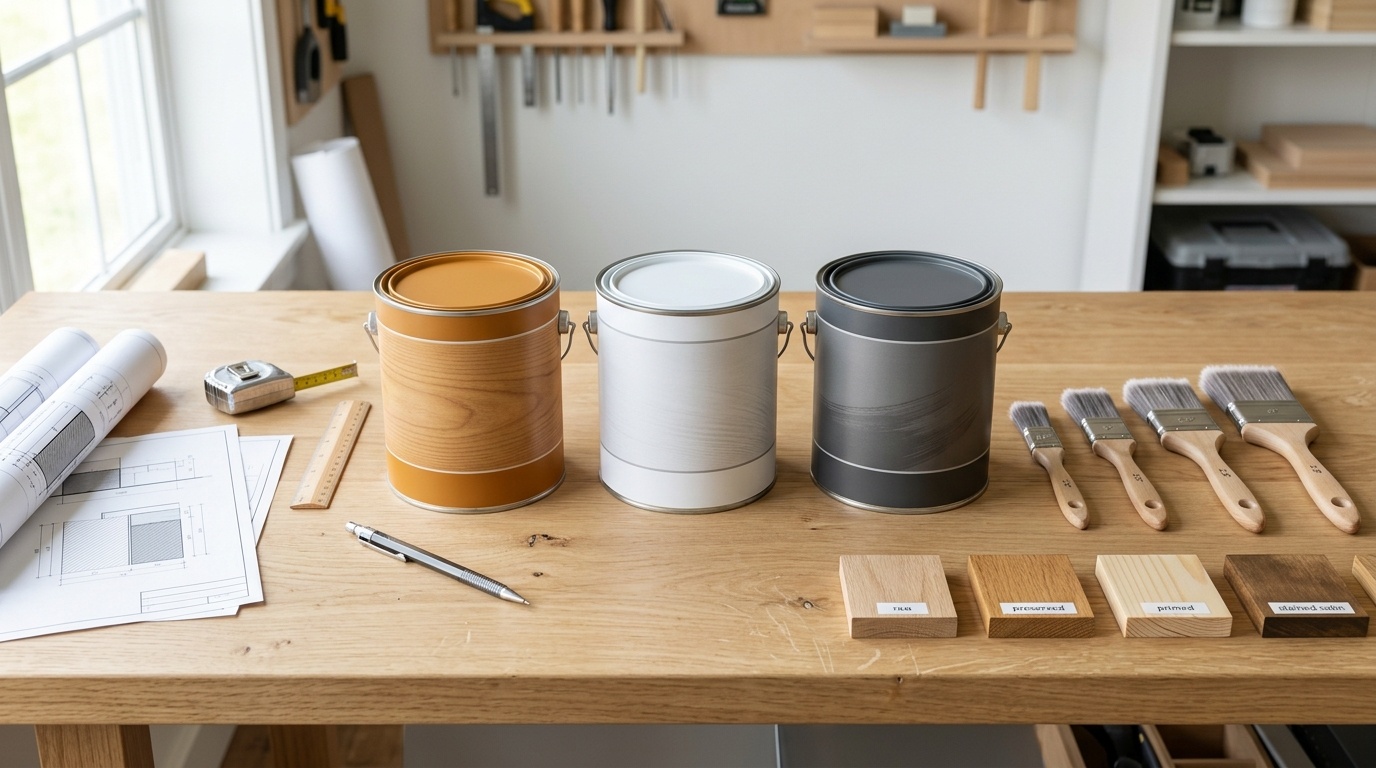
The best exterior paint for wood is not one universal product; it is the right system for your climate, surface, prep, sheen, and color. In 2026, 100% acrylic latex is the safest default for most vertical wood, while decks and high-touch trim need more specific formulas.
If you want maximum durability, start with PPG Permanizer, Behr Pro E600, Sherwin-Williams Emerald, Benjamin Moore Aura, or Sherwin-Williams Duration as serious candidates. Then match the product to the surface. Use satin or semi-gloss where dirt and moisture resistance matter. Be cautious with thick restorative deck coatings in freeze-thaw regions.
The most empathetic advice is also the most practical: preview the look, then respect the wood. AI can help you see the color story instantly and make the design decision feel seamless. Careful prep is what helps that decision survive rain, sun, and winter. Your space. Your rhythm.