9 min. reading

Yulii Cherevko
CEO paintit.ai
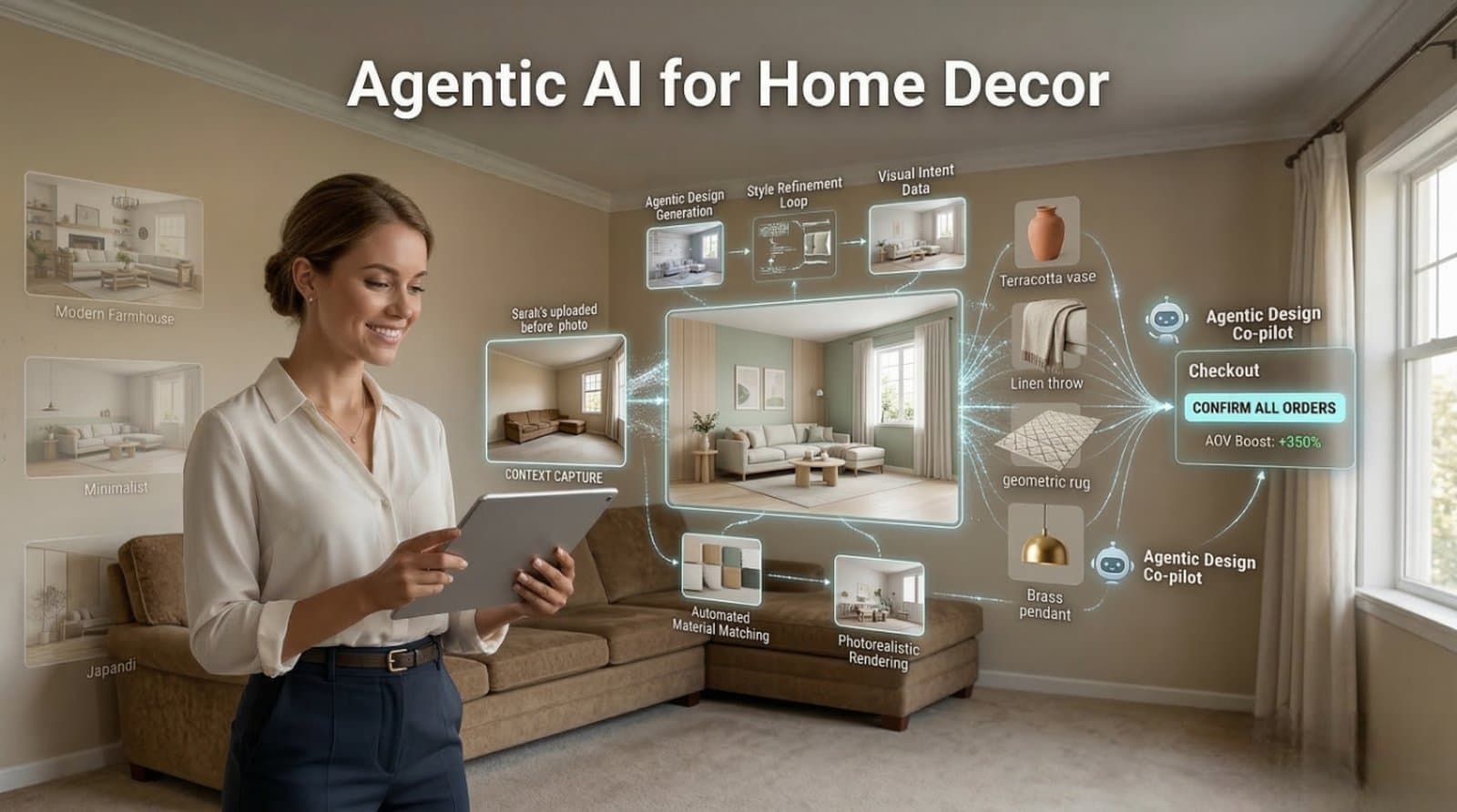
The home decor retail landscape is often a battleground against customer indecision. When faced with endless choices at the selection stage, potential buyers can become overwhelmed, leading to frustration and ultimately, lost sales and a lower Average Order Value (AOV). Empowering customers to make confident, self-directed decisions through autonomous purchases is key. Tools like those offered by Paintit.ai transform the shopping experience, allowing customers to visualize products in their own space, test styles, and select items with certainty, directly impacting retailer success and helping to increase AOV in home decor e-commerce.
Agentic AI for home decor refers to intelligent software systems that can act independently to achieve a specific goal, often with minimal human intervention. In the context of home decor retail, this means an AI system can analyze customer input (like an uploaded room photo or style preference), understand the desired aesthetic, and then autonomously generate product recommendations, complete room designs, or even entire decor kits. The "agentic" part implies a level of proactive problem-solving by the AI, moving beyond simple recommendations to an active role in design generation and product matching.
This is distinct from basic product filters or simple "customers also bought" suggestions. Agentic AI doesn't just present options; it interprets visual intent data, understands design constraints, and then creates a cohesive vision that incorporates available products. It's about automated product selection in e-commerce that feels bespoke.
What it is not:
A common misconception is that agentic AI makes all decisions for the customer. Instead, it empowers autonomous purchases by providing highly refined, context-aware options that build customer confidence and reduce the cognitive load of decision-making, thereby increasing conversion rate for decorative accessories and larger items.
The imperative for agentic AI in home decor stems from several critical industry challenges. First, customer choice paralysis is a significant barrier. Modern e-commerce platforms offer millions of SKUs, making it incredibly difficult for customers to visualize how a single decorative accessory, let alone an entire room's worth of items, will look in their space. This often leads to high cart abandonment rates in home decor stores.
Second, the time and cost associated with traditional interior design consultation or even in-store sales assistance for complex decor projects can be prohibitive. Retailers need scalable solutions that can offer personalized guidance without significant human overhead. Agentic AI helps solve this by providing on-demand, visual guidance that mimics an expert opinion.
Third, customer expectations for personalized shopping experiences have risen. Generic product recommendations no longer suffice. Customers want to see products in context-their context. This pressure to deliver highly relevant, visualized solutions drives the adoption of AI interior design as a sales driver. By reducing friction and building confidence earlier in the home decor customer journey optimization, retailers can accelerate approval cycles and push customers towards a more seamless, autonomous checkout process, driving higher AOV.
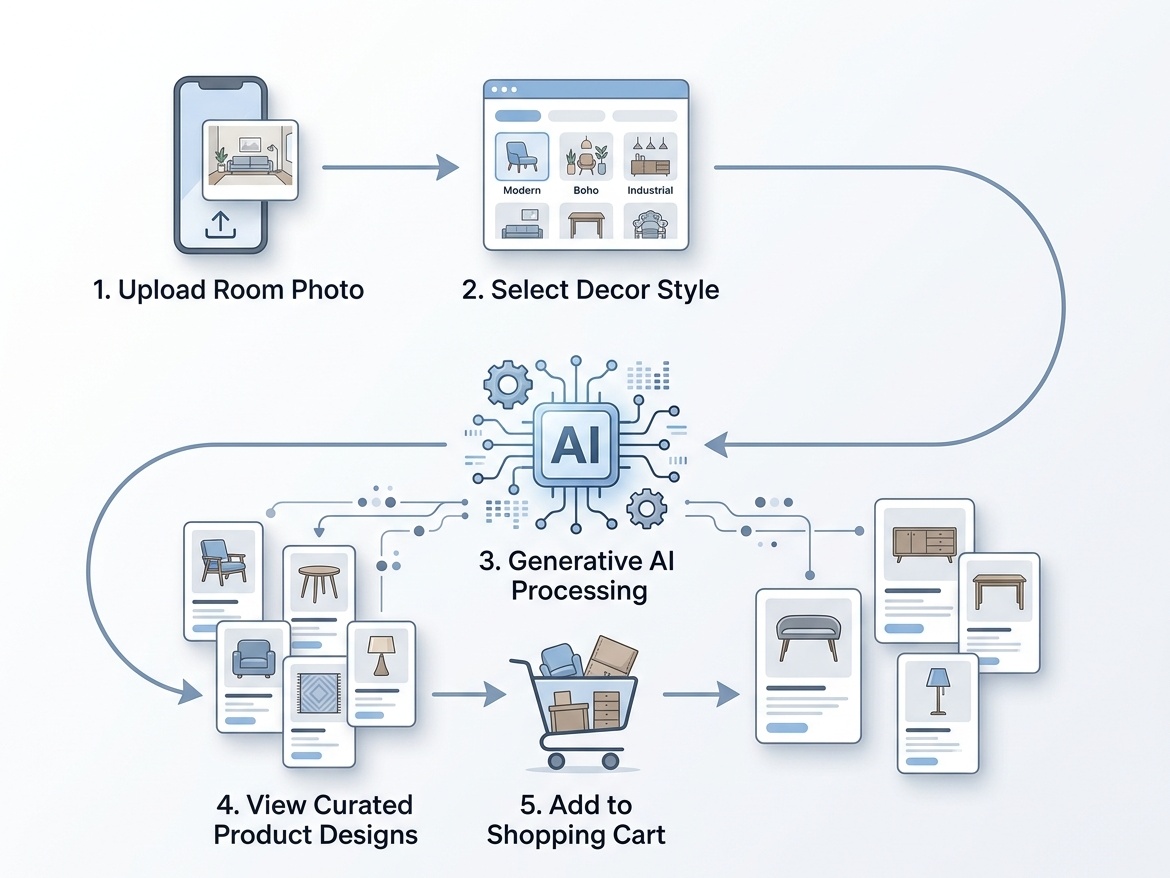
At its core, agentic AI for home decor operates through a pipeline of analysis, generation, and refinement.
The key data involved includes high-resolution 3D models of products, extensive metadata on materials and finishes, and large datasets of interior design images labeled with styles, elements, and moods. Visual intent data from user interactions (what they click, what they refine, what they ultimately save or purchase) constantly trains and improves the system.
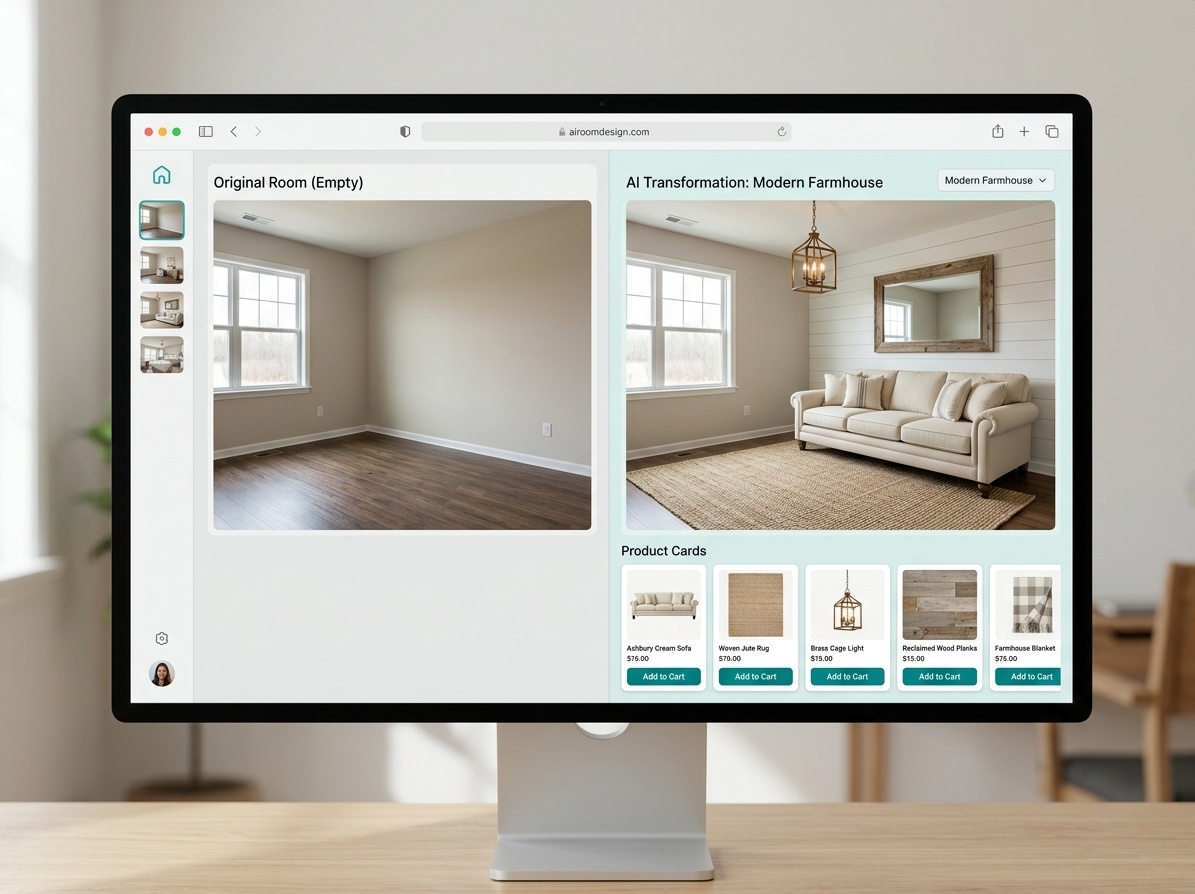
Implementing agentic AI for a customer's autonomous decor journey requires a structured approach to maximize impact and reduce decision fatigue. This workflow empowers customers to be their own designers, accelerating the path to purchase for decorative accessories and larger items.
Change wall color to "warm greige."
Apply light oak flooring.
Add a subtle textured wallpaper behind the bed.Replace existing sofa with a mid-century modern sectional in forest green.
Add two Scandinavian armchairs.
Orient the sofa towards the fireplace.Add a large jute rug.
Install sheer linen curtains.
Replace ceiling light with a brass pendant fixture.Add a gallery wall with abstract art.
Place velvet cushions in rust tones on the sofa.
Introduce three large potted plants.This "one variable per iteration" logic prevents overwhelm and guides the customer through a confident design process.
| Step | Input | What to Control | Output | Pitfall | Paintit.ai Shortcut |
|---|---|---|---|---|---|
| 1. Foundation | Room Photo + Text | Wall Color, Flooring, Wallpaper | Base Room Render | Clashing core colors | Use AI Room Design for instant wall/floor changes |
| 2. Layout | Render + Text | Furniture Type, Placement, Style | Room with Furniture | Incorrect scale, cluttered layout | Refine furniture arrangement within AI Room Design |
| 3. Ambiance | Render + Text | Rugs, Curtains, Main Lighting | Styled Room | Lighting temperature mismatch, sparse feel | AI Room Design to test light fixtures and textiles |
| 4. Details | Render + Text | Wall Art, Decor, Pillows, Plants | Fully Decorated Room | Disconnected accessories, over-clutter | Leverage AI-driven bundle creation suggestions |
| 5. Finalize | Fully Decorated Room | Subtle adjustments, material swap | Ready-to-Shop Design | Second-guessing, missing items | Use "Shop the Look" feature to auto-generate cart |
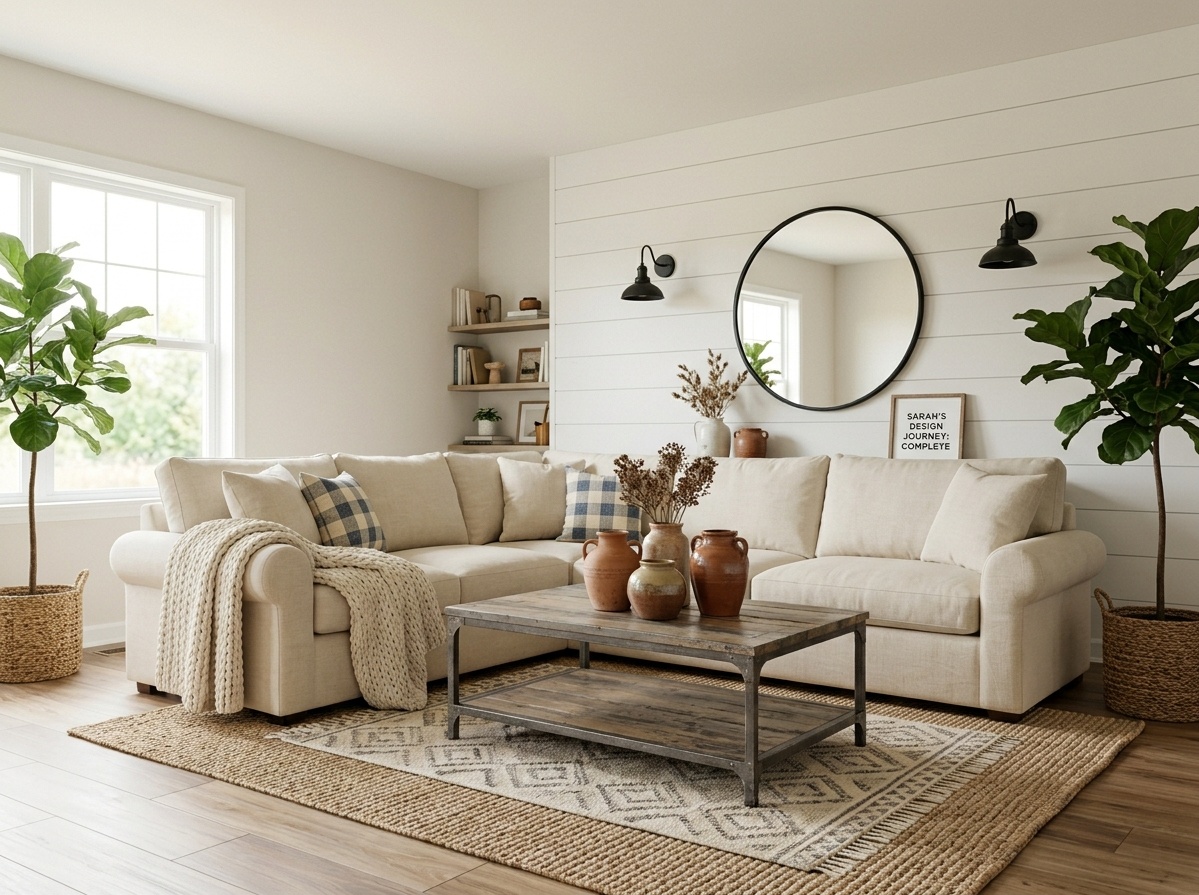
A small home decor retailer, "Urban Haven," specializes in Modern Farmhouse and Scandinavian styles but struggled with customers abandoning carts when trying to piece together a full room. They integrated an agentic AI visualization tool.
Brief: A customer, Sarah, wants to redecorate her living room, which currently has neutral beige walls and a standard brown sofa. She likes Modern Farmhouse but fears it might look too rustic. She wants a cohesive, comfortable space.
Constraints:
Steps using Agentic AI:
This process, driven by visual intent data, transformed Sarah's decision-making from overwhelming to empowering, directly increasing conversion rate for decorative accessories and larger furniture.
Paintit.ai's suite of tools is designed to facilitate these autonomous purchasing journeys for home decor retailers. Our AI Room Design, AI Rendering, and AI Concept Generator tools empower customers to visualize products within their specific context, significantly reducing indecision.
For instance, when a customer has a clear photo of their existing room and wants to experiment with different furniture layouts, paint colors, or decorative accents, AI Room Design is exceptionally fast and intuitive. It allows for rapid iteration, enabling customers to swap out styles, materials, and entire furniture sets in moments. This is invaluable for automating personalized decor kits and AI-powered "shop the look" automation.
Similarly, our AI Rendering tool excels at taking a proposed design and transforming it into a photorealistic image, showcasing textures, lighting, and material interactions with high fidelity. This helps customers confirm their selections before committing to purchase.
However, certain aspects still require manual work or professional input:
Paintit.ai bridges the gap, handling the iterative visual design heavy lifting so that customers are confident in their aesthetic choices, freeing up human experts for the technical execution. This enhances the overall home decor customer journey optimization.
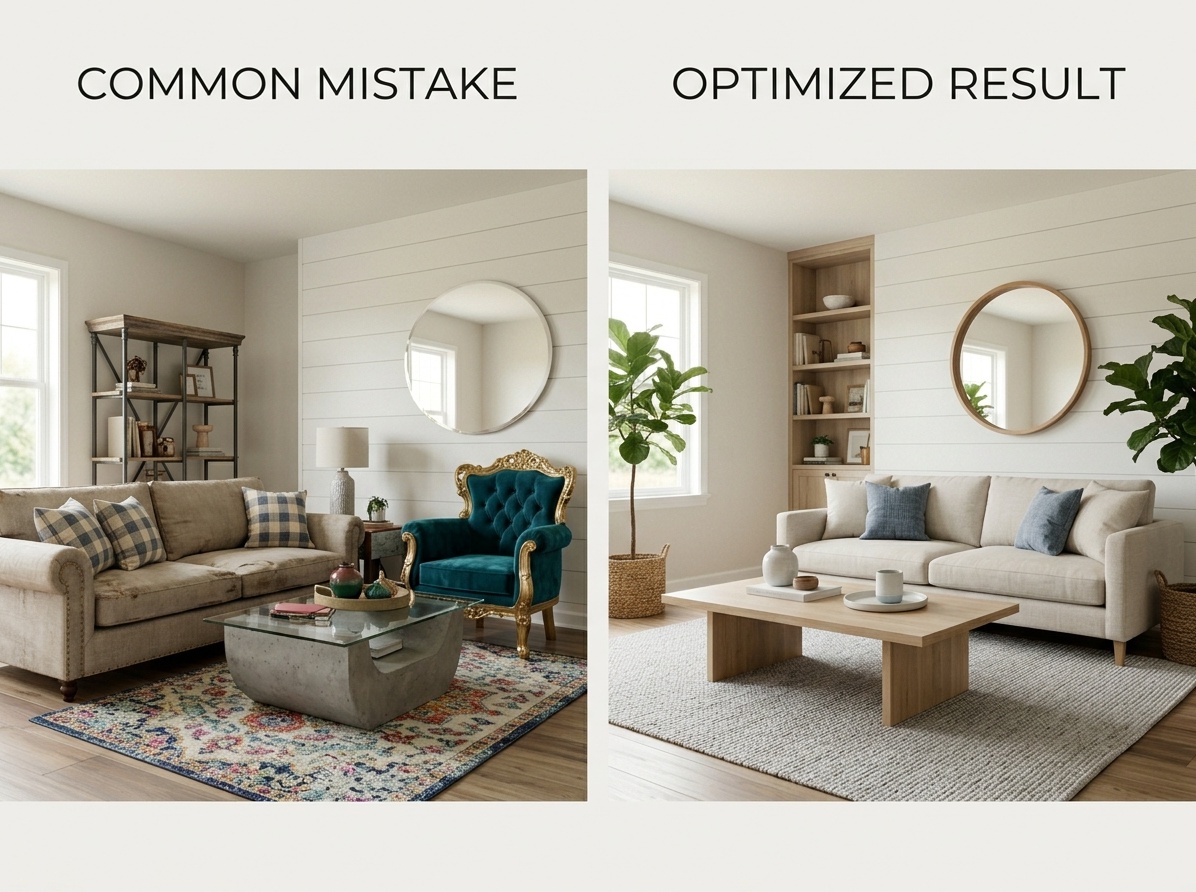
A: Small stores can leverage agentic AI to offer hyper-personalized experiences that large retailers often struggle to scale. By curating unique collections and enabling customers to visualize these distinct offerings in their own homes, small businesses can build stronger brand identity and foster loyalty. Tools like AI Concept Generator allow rapid prototyping of unique styles.
A: While initial investment varies, many platforms offer tiered pricing or subscription models, making advanced visualization accessible. The ROI comes from increased Average Order Value, reduced returns (due to better visualization), and lower customer service costs as autonomous purchases become more common.
A: Make the tools highly visible and intuitive on product pages with clear calls-to-action like "See this in your room." Integrate them into marketing campaigns and provide simple tutorials. Actively promote how these tools solve choice paralysis in interior design shopping.
A: Modern AI tools offer high fidelity. However, screen calibration and real-world lighting will always introduce slight variations. It's best practice to allow users to simulate different lighting conditions within the tool and to also offer physical samples for critical color or material decisions. Visual intent data captured during use helps refine accuracy over time.
A: Contextual commerce means integrating the purchasing experience directly into the discovery and design process. For home accessories, this implies that once a customer visualizes an accessory within a room design using AI, they can immediately purchase it or a curated bundle, without leaving the design interface. This creates a seamless "from 3D design to autonomous checkout" flow.
A: By letting customers visualize exactly how products will look and fit in their space, agentic AI eliminates much of the uncertainty that leads to abandonment. Customers are more confident in their selections, less likely to second-guess, and therefore more inclined to complete the purchase, thereby increasing conversion rate for decorative accessories.