11 min. reading

Yulii Cherevko
CEO paintit.ai
Published:
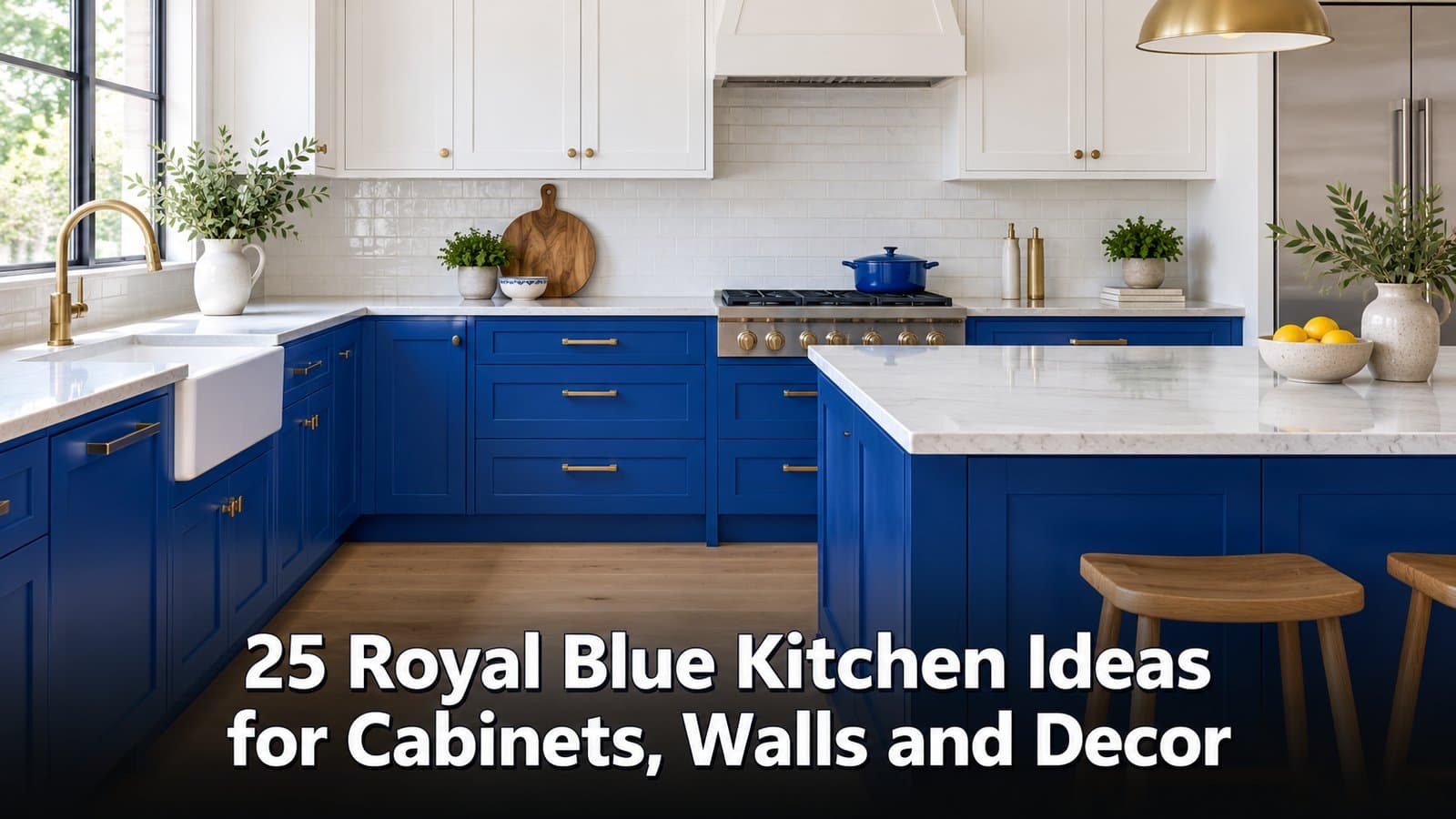
A royal blue kitchen works well when the color has a clear job: lower cabinets beneath white uppers, an island against wood cabinetry, or a painted wall behind a neutral kitchen. Start with the surfaces you plan to keep. A warm stone countertop, gray backsplash or reddish wood floor can change which blue looks right.
Royal blue kitchen cabinets are the main thread of this collection, but you can also use the color through walls, shelving and smaller accessories. The examples below show different ways to distribute it, with practical details to check before buying paint or ordering cabinetry.
Choose the location of the blue before its precise shade. An all-blue cabinet run puts more color at eye level than a single island. A wall behind white cabinets gives a different result again. If you are keeping the kitchen, work around the existing finishes rather than choosing each new surface in isolation.
| Where to Use Blue | Useful Pairing | Check Before Committing |
|---|---|---|
| Lower cabinets | White uppers and a light backsplash | The junction between the blue doors and existing floor |
| Island only | Wood or neutral perimeter cabinets | Whether the island is visible from adjoining rooms |
| All cabinets | Pale counters and restrained hardware | The amount of daylight and the scale of tall cabinets |
| Painted wall | White, cream or wood cabinets | Washability and protection around cooking and sink areas |
| Accessories | The kitchen's existing neutral palette | How many separate accent colors are already present |

Keep one blue as the main cabinet color, then use a lighter or deeper version on a smaller surface. A saturated lower run and a quieter upper run can work, but compare their undertones together. Navy and royal blue are not interchangeable: a navy door beside a bright blue one may read as a separate color rather than a matching shade.

A gloss finish gives royal blue cabinets a reflective surface and a sharper look. It suits flat doors and simple hardware, especially when the backsplash stays quiet. Check a full door sample rather than a tiny chip: reflections, fingerprints and uneven surfaces are easier to judge at that scale. Gloss does not automatically make a dim kitchen bright.

Matte blue reduces strong reflections and lets the cabinet shape stand out. Pair it with wood or a lightly textured backsplash if glossy surfaces already dominate the room. Ask the cabinet supplier how the particular finish handles cleaning and marks. Sheen alone does not tell you whether a coating will withstand daily wiping.

Royal blue and white kitchen cabinets give you a straightforward way to divide the color. Keep the lower cabinets blue and choose white uppers that work with the backsplash, rather than adding a third competing white. Carry the same handles across both cabinet runs so the two colors still feel like one kitchen.

A royal blue and gold kitchen needs only a few warm metal details. Brushed brass handles and a faucet may be enough when royal blue kitchen cabinets already cover most of the room. Compare the actual metal finishes together; products described as gold can be very different. Leave larger surfaces quieter when the pendants already make a statement.

A royal blue kitchen island concentrates the color in one freestanding block. It works with white perimeter cabinets, but wood can be just as useful when you want a warmer scheme. Check the view from the dining or living area, since the island may be the first surface you see. Keep the countertop connection to the rest of the kitchen clear.

Royal blue kitchen cabinets do not need an unusual door profile. A Shaker frame already gives the color some structure. White subway tile and simple pulls keep the emphasis on the doors. If you are repainting existing cabinets, inspect their condition first; changing the color will not repair loose joints or a failing finish.

Stainless steel works in a modern royal blue kitchen without needing to match the cabinet color. Keep the handle shapes consistent and avoid adding several unrelated metallic finishes. A plain backsplash helps when the range, hood and refrigerator occupy a large part of the view. Plan the blue around the appliances you will actually keep.

A painted back panel or a few blue objects on open shelves introduces the color without another solid cabinet run. Leave space around those objects so they remain visible. Near a cooking area, think about grease and frequent cleaning before removing closed storage. Everyday dishes can belong on shelves; not every kitchen item needs to be on display.

Royal blue kitchen cabinets can sit beside veined marble or a similar-looking engineered surface, but compare a large slab sample with the cabinet door. Strong veining and saturated blue both attract attention. Use a quieter backsplash if the counter already has plenty of movement, and confirm the chosen material's maintenance requirements before ordering.

Blue cabinetry gives a concrete-and-metal kitchen a distinct color without covering every unfinished texture. Decide whether the exposed brick, countertop or cabinet run should dominate. Raw-looking materials still need appropriate finishes for kitchen use. Keep shelves, lighting and plumbing deliberate so the room looks finished rather than halfway through a renovation.

In a small room, royal blue kitchen cabinets can carry the color while the ceiling, backsplash and counters stay light. Look at the complete view, not just the square footage. A dark cabinet wall next to a dark floor may feel heavier than the same blue beside pale tile. Good task lighting matters even when the room receives plenty of daylight.

Black stools, a slim light fitting or a dark countertop edge can sharpen blue cabinets. Several large black surfaces will make a very different kitchen, so preview them separately. If you already have black appliances, let those provide the dark accent before adding a black backsplash or another tall block of dark cabinetry.

A softer blue cabinet finish and a white backsplash are useful alternatives if a saturated cobalt blue kitchen feels too strong. This example belongs to the wider blue palette rather than an exact royal blue match. Check the tile's white against the counter: a creamy tile beside a very cool white surface can look unintended.

A French-inspired kitchen can pair blue doors with glass fronts, traditional molding and antique-looking hardware. Keep the number of competing details manageable. If the doors have an elaborate profile, a simple counter and backsplash let that joinery remain visible. You do not need ornate lighting, carved doors and a busy tiled floor all at once.

Wood shelves, a butcher-block section or an oak floor can temper a saturated cabinet color. Match the blue to the wood you own, not a generic photograph. Orange-toned wood creates a stronger contrast than pale oak. For existing flooring, compare cabinet palettes that work with brown floors before choosing a new blue.

A statement pendant can connect blue cabinetry to brass or black hardware. Check its scale against the island and leave working areas well lit. A decorative fitting cannot replace the light you need at a counter. View a cabinet sample with the lamps you plan to use before deciding that the blue is too dark or too cool.

A royal blue and white kitchen can keep farmhouse details without turning into a collection of themed accessories. An apron-front sink, simple cabinet frames and a wood accent may establish the direction. Check that the sink and existing countertop support the layout before committing to a replacement. Blue paint alone is the smaller change.

Rattan stools and light wood can make blue cabinetry feel less formal. Use materials you find comfortable and easy to maintain rather than filling the room with coastal motifs. A washable runner may be more practical than loose natural-fiber flooring near food preparation. Keep the blue as a clear accent against the lighter surfaces.

A vintage-looking handle or a checkered floor gives blue doors another context. Decide which detail leads the room, then limit the others. If an older appliance is part of the plan, check its installation and servicing requirements before designing around it. Decorative character should not make the everyday kitchen harder to use.

Flat cabinet fronts, a pale countertop and restrained handles make a blue-and-white scheme easier to read. Handleless doors need a usable opening system, so try a sample rather than choosing from a photo alone. Keep the backsplash plain when the cabinetry already forms a strong color block across the room.

A tall blue cabinet wall gives you color and storage in the same place. It also puts much more blue at eye level than a base run. Test the whole elevation against the windows and adjoining walls. A pale countertop elsewhere in the kitchen can help balance the view, but it cannot add missing daylight.

A red kettle, stool or a small group of objects can sit beside royal blue cabinets when the remaining surfaces stay quiet. Start with pieces you can move. A red backsplash is a much larger commitment than a red bowl on the counter. Look at the combined colors from the doorway before adding another accent.

Royal blue kitchen cabinets and gray counters can work, but some gray finishes have green, violet or brown undertones. Compare the actual samples together in your kitchen. A gray backsplash does not have to match the countertop exactly; it should make their differences look intentional. Wood or a warm metal detail can soften a very cool scheme.
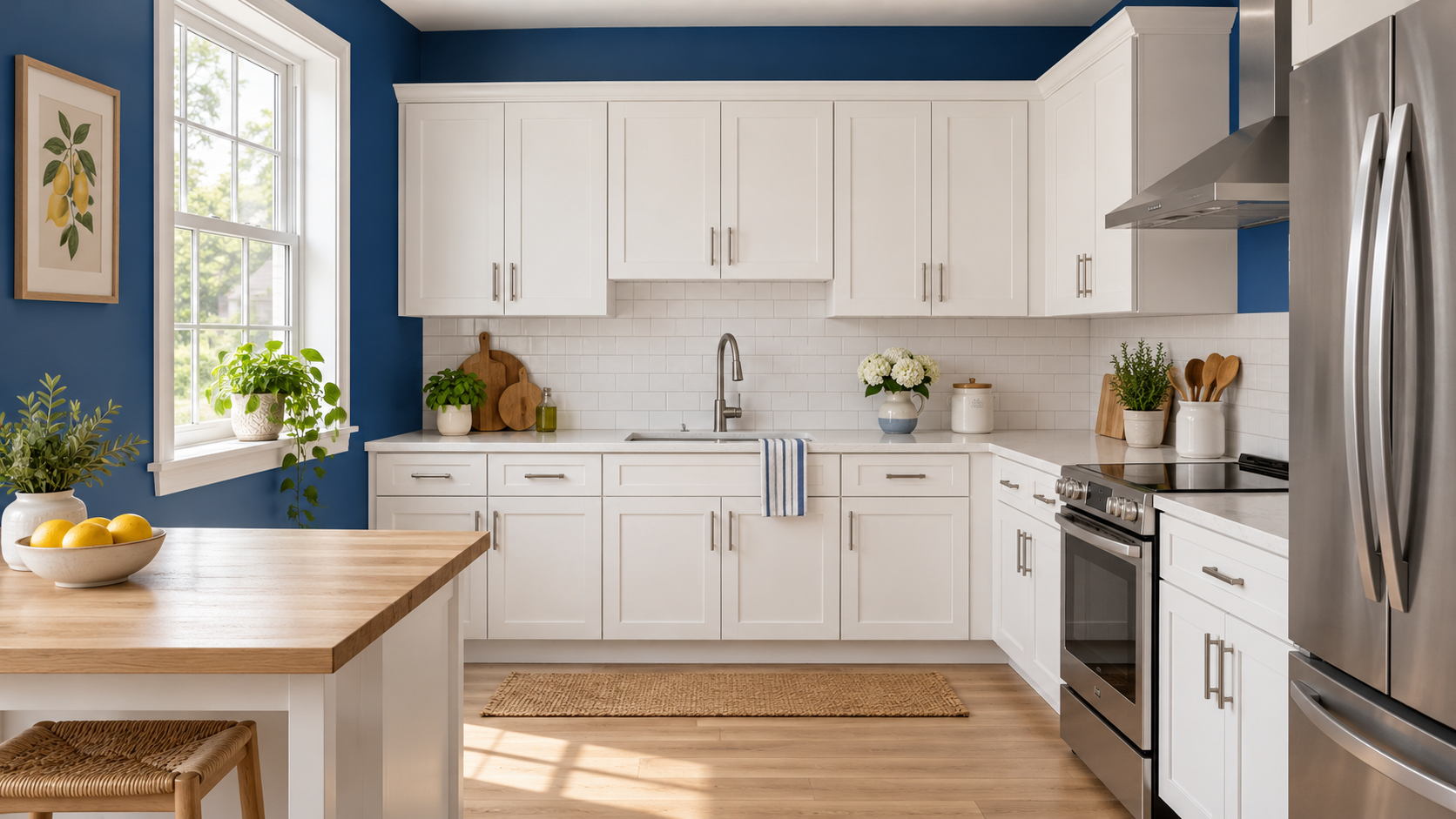
Royal blue kitchen walls are an alternative when your cabinets are in good condition and you want to leave them alone. Choose a visible wall rather than a strip hidden behind appliances. Around the stove and sink, keep the protection the surface needs; a decorative paint choice does not replace a suitable backsplash. Repeat the blue in one or two small objects if the wall feels disconnected.
Royal blue kitchen accessories are the least disruptive way to test the color. Start with useful items such as dish towels, a ceramic utensil holder or a kettle you need anyway. If several objects already sit on the counter, replace a few rather than adding another layer. Keep the shade reasonably consistent so a small group looks deliberate.
Royal blue kitchen decor can also come from a print, a washable runner or upholstered stools. Check the material near food preparation and choose pieces you can clean. You do not need to repeat blue on every visible surface for the scheme to hold together.
Royal blue kitchen appliances make a stronger commitment. Before ordering a colored range or refrigerator, confirm the actual finish, dimensions, ventilation, service access and lead time with the supplier. A rendered blue appliance is not evidence that a specific model is available. For a reversible step, use a small appliance rather than replacing an otherwise working major one.
Put the cabinet or paint sample beside the countertop, backsplash and floor. Check the combination during daylight and under the kitchen's evening lighting. Hold a cabinet sample vertically, where the door will sit, instead of judging it flat on a table. Look at it from the doorway as well as up close.
There is no universal paint formula called royal blue. Benjamin Moore's blue cabinet color collection lists named options such as Blue 2066-10 and Symphony Blue 2060-10. Use names and codes to order identifiable samples, then check them in person; the manufacturer also warns that screen colors can differ from actual paint.
A wall paint and a cabinet coating serve different jobs. Tell the paint retailer whether the doors are bare wood, previously painted, laminate or another material, and follow the chosen product's preparation and curing instructions. Ask how the finish handles cleaning. Do not assume matte hides every mark or gloss is always more durable.
Price the work you actually plan to do: preparation, coating, labor and any new hardware. Blue does not automatically cost more than a neutral; the product, finish and job determine the quote. If you are keeping the doors, check whether hinge holes, handles and adjacent panels will also need attention. A new color should not hide unfinished repairs.
A room photo helps you compare cabinet styles without separating the blue from your existing finishes. Paintit's cabinet style preview tool is useful for that early choice. Treat the result as a concept, then confirm the real doors, hardware and finish with your supplier.
For example: "Change only the lower cabinet color to a saturated royal blue. Keep the white upper cabinets, countertop, backsplash, flooring, windows and appliances unchanged. Preserve the existing door style." This gives you a more useful comparison than asking for an entirely new kitchen when you only intend to repaint.
White, natural wood and many pale stone finishes are useful starting points. Brass can add warmth; stainless steel or brushed nickel can keep the palette cooler. Choose around your existing counter and floor first. A cream countertop may need a different white than a cool gray one.
Royal blue usually describes a saturated, brighter blue, while navy is darker. Cobalt is another strong blue and can overlap with what a supplier calls royal blue. These names are not standardized paint matches. Check a named color sample instead of expecting identical shades across brands.
Yes. Blue lowers, an island or a single cabinet run let you use the color while keeping other surfaces lighter. Review the actual light and the amount of cabinetry at eye level. A small kitchen with a large window may handle a strong color differently from a narrow room without daylight.
They do not have to. White or a compatible neutral wall is often simpler when the cabinetry already supplies plenty of blue. Matching walls and cabinets is a larger color commitment. Test the complete view, including the ceiling and floor, before extending the cabinet color to the walls.
An AI preview can help you choose a color direction, but it is not a calibrated paint sample. The display, source photo and generated lighting affect what you see. Use the preview to narrow the choices, then verify the actual manufacturer color and coating with physical samples.