
1920 Interior Design Style
1920 interior design style is closely connected to Art Deco glamour: geometric pattern, polished wood, brass, mirrors, jewel tones, and strong silhouettes. These rooms show the period mood in a visual, gallery-first way.
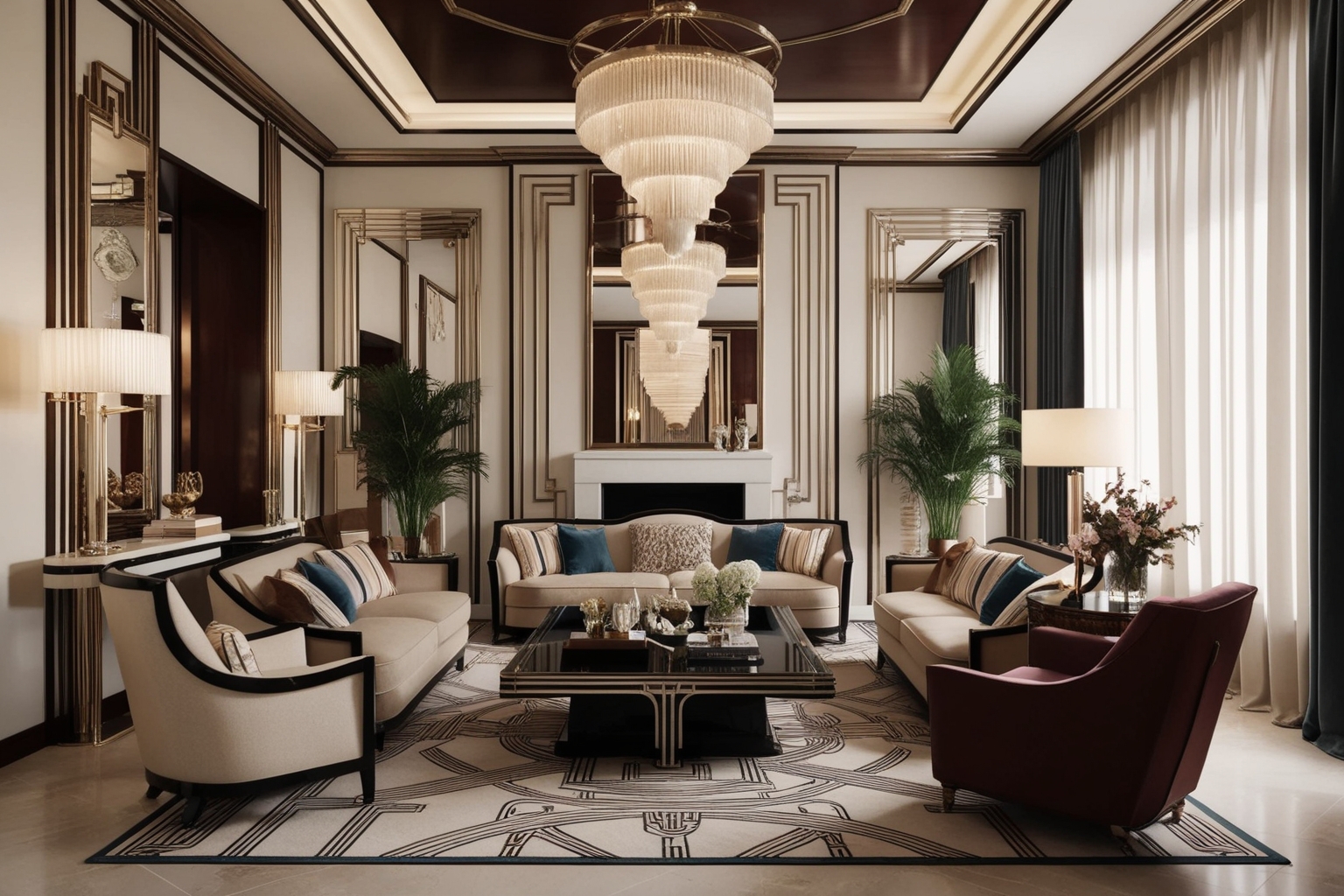
Where the 1920s Look Actually Comes From
The "1920s interior design style" most people picture is Art Deco specifically, and it has a documented birthdate and two clear sources of influence.
-
The 1925 Paris Exhibition
The term "Art Deco" comes directly from the 1925 Exposition Internationale des Arts Décoratifs et Industriels Modernes in Paris - the exhibition that defined and named the style. Bold geometric forms, clean lines, and luxurious materials like ebony, ivory, and lacquer were the exhibition's core vocabulary, and they remain the fastest way to signal "1920s" in a room today.
-
Egyptomania After Tutankhamun
Howard Carter's 1922 discovery of Tutankhamun's tomb triggered a worldwide fascination with ancient Egypt that fed directly into Art Deco's geometric vocabulary - scarabs, lotus motifs, sunburst and stepped-pyramid patterns all trace back to this moment. A room that leans on these specific motifs, rather than generic gold-and-black, reads as more historically grounded.
-
Materials That Signal the Era
Polished brass and chrome, mirrored surfaces, exotic veneers, and high-gloss lacquer finishes were chosen deliberately for their machine-age shine - a reaction against the handcrafted, organic look of the preceding Art Nouveau period. Choosing reflective, precisely finished surfaces over rustic or matte ones is what separates a real 1920s reference from a generic "vintage glam" look.
50 1920 Interior Design Style Ideas
-
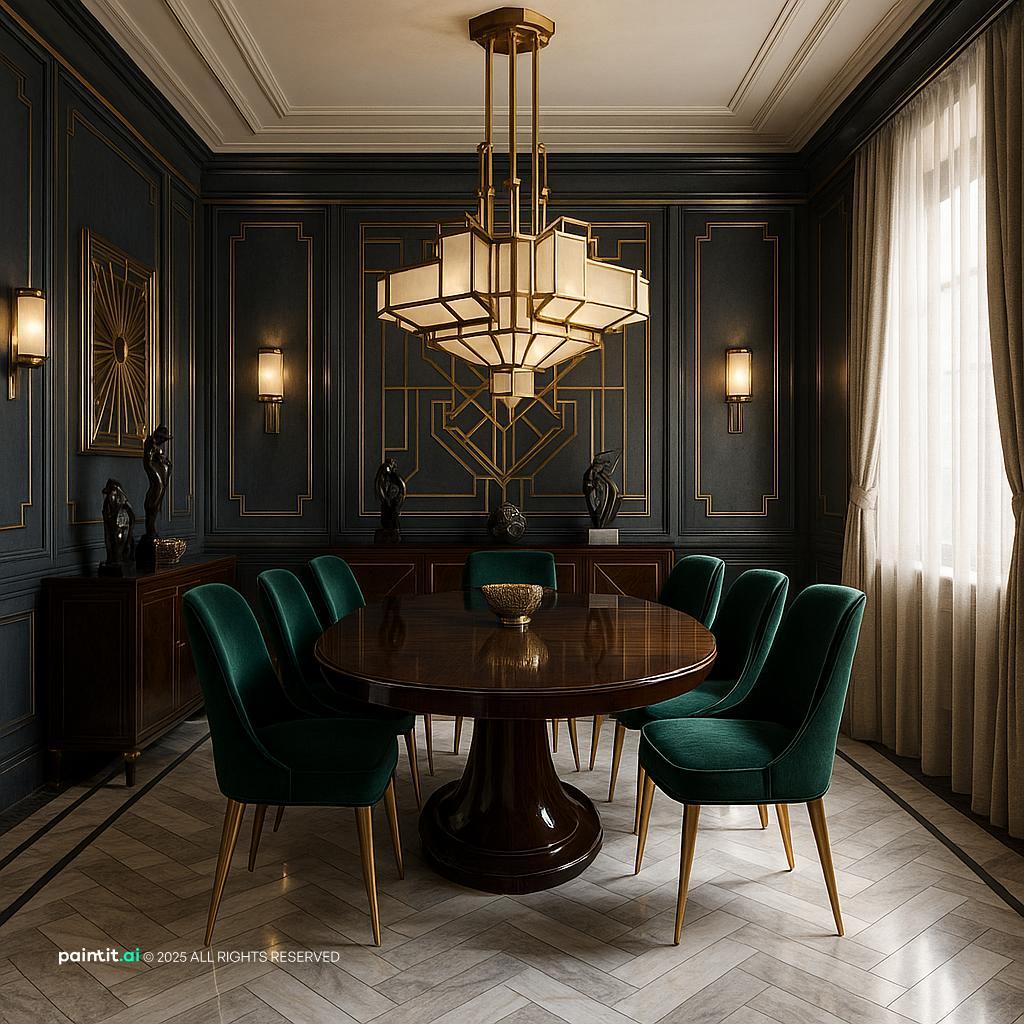
Art Deco Dining Room with Period Details
Geometric leaded or stained glass in a window or door panel is a period feature worth preserving if a room already has it.
-
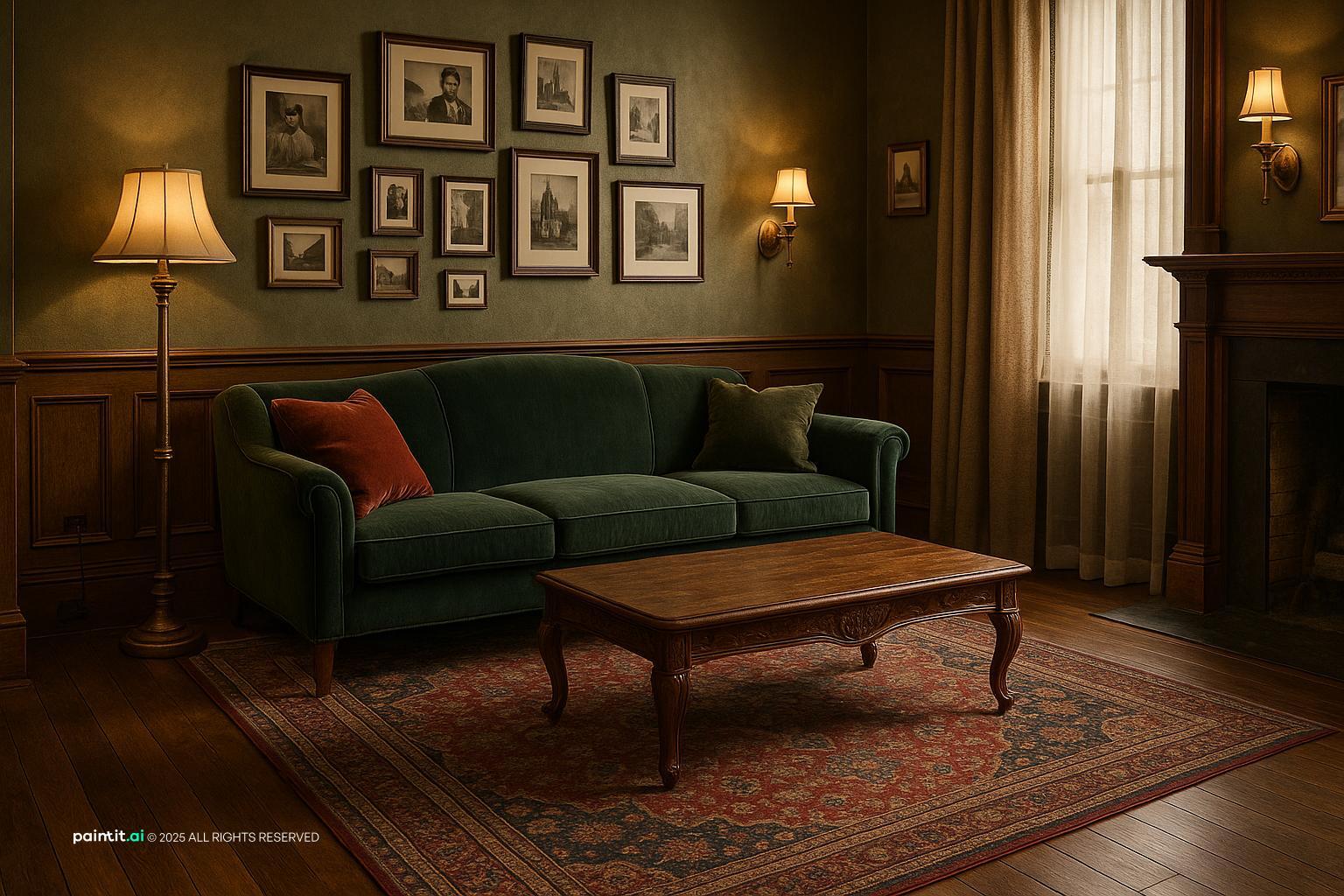
1920s parlor with a picture wall
Not every 1920s room was Art Deco: a velvet sofa, a picture wall and warm lamps show the everyday parlor of the decade.
-
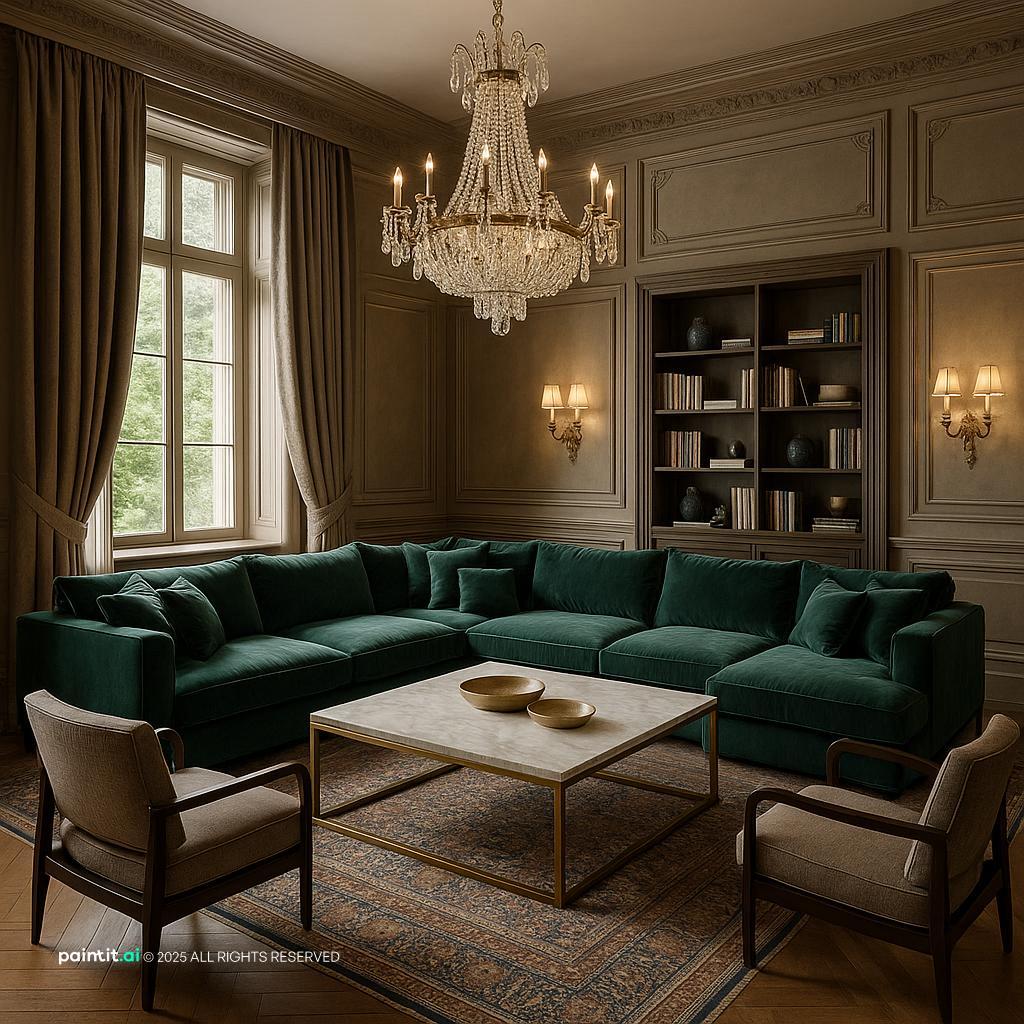
Luxury Art Deco Drawing Room
A drawing room calls for more formal symmetry than a living room does, mirrored seating arrangements around a central rug.
-
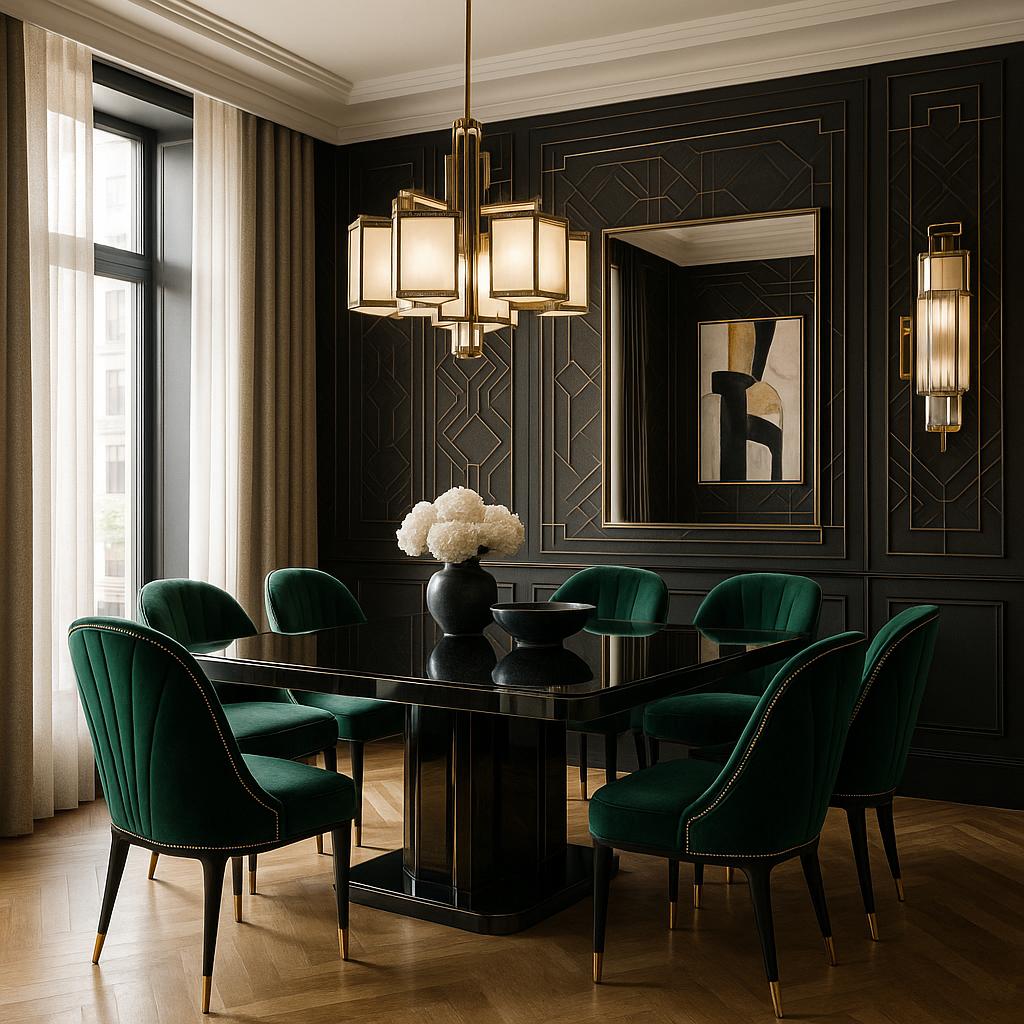
Art Deco Dining Room
A round or oval table breaks the room's geometric lines just enough to keep the space from feeling rigid.
-
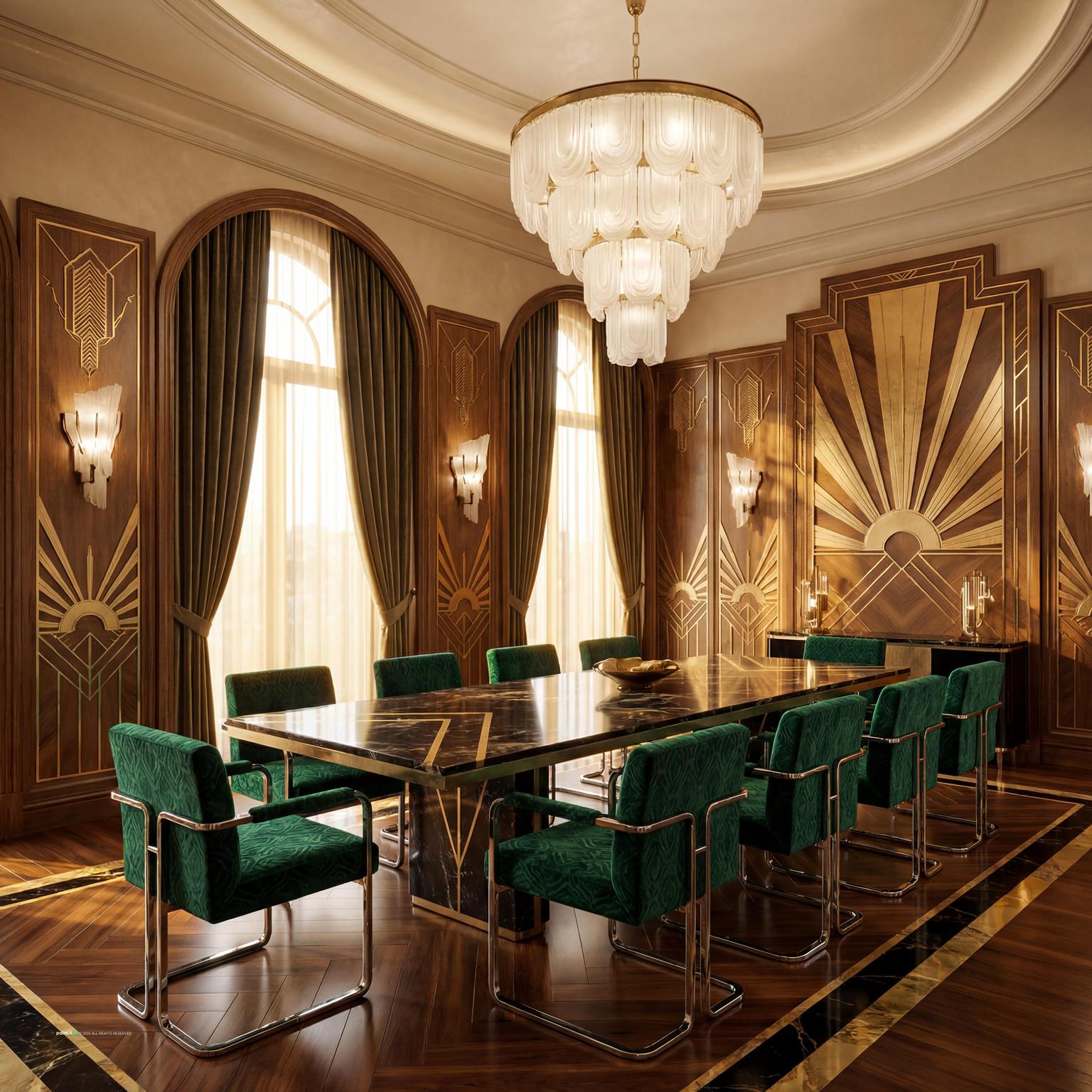
Luxurious Art Deco Dining Room
A lacquered dark wood table reflects the room's lighting the way a plain matte finish never could.
-
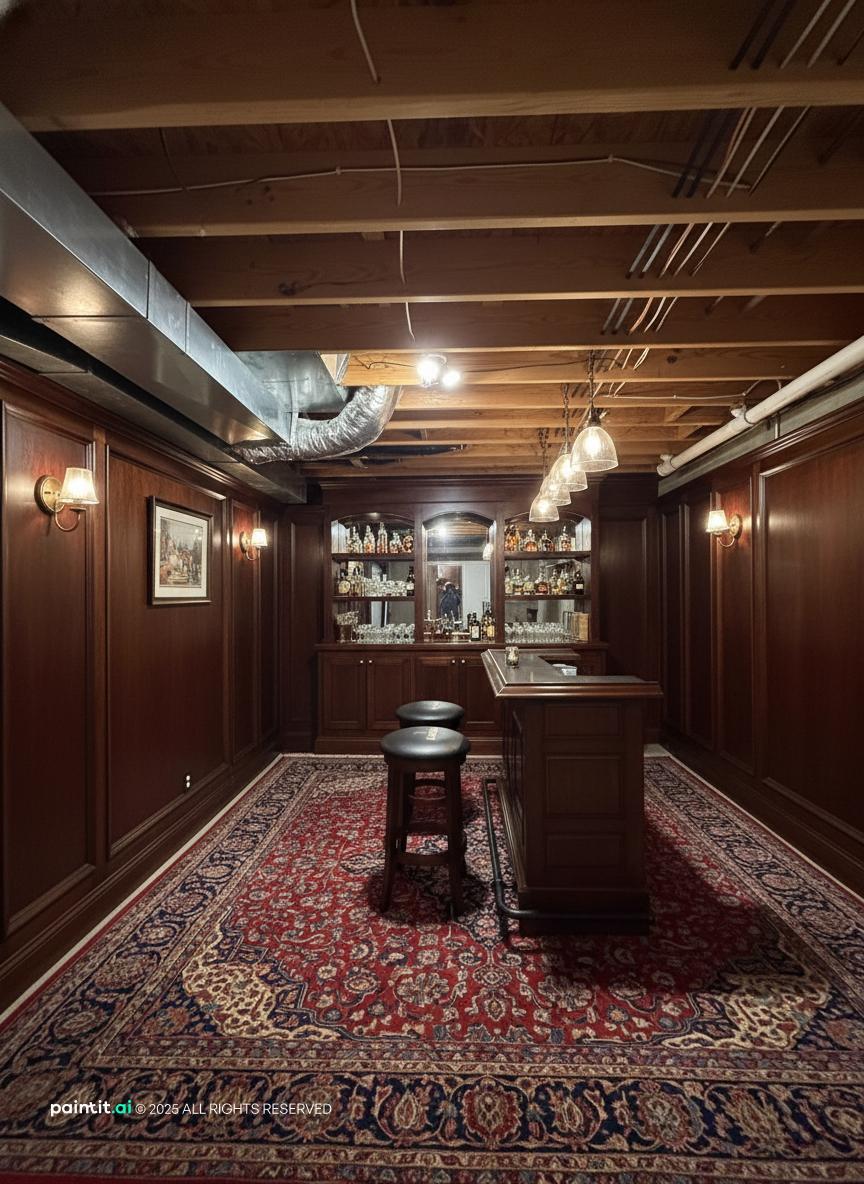
Dark wood speakeasy bar
Dark wood paneling from floor to ceiling gives a basement bar the closed-in feel of a speakeasy.
-
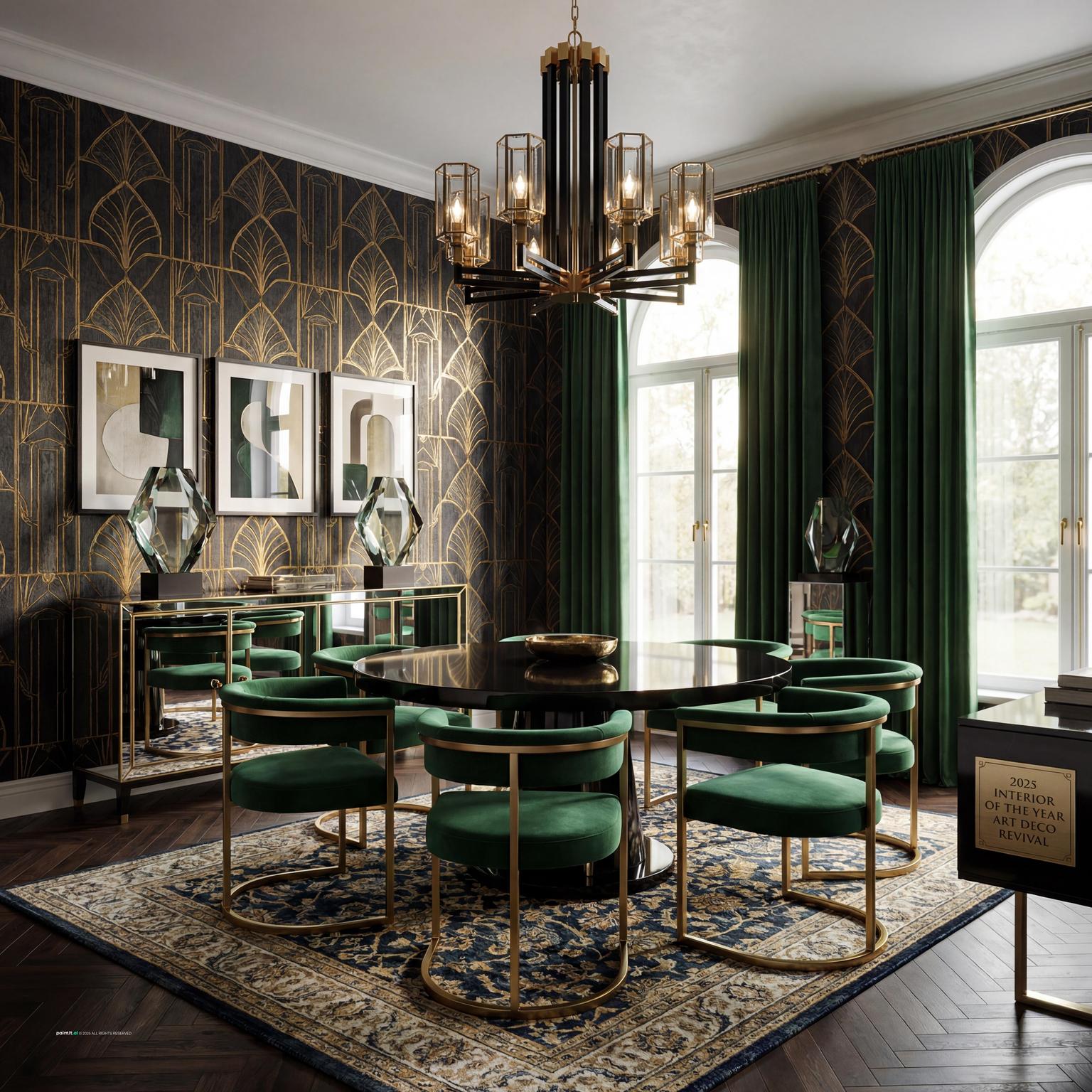
Glamorous Art Deco Dining Room
A multi-tiered chandelier scaled to the ceiling height, not oversized, is the fastest way to signal glamour in a dining room.
-
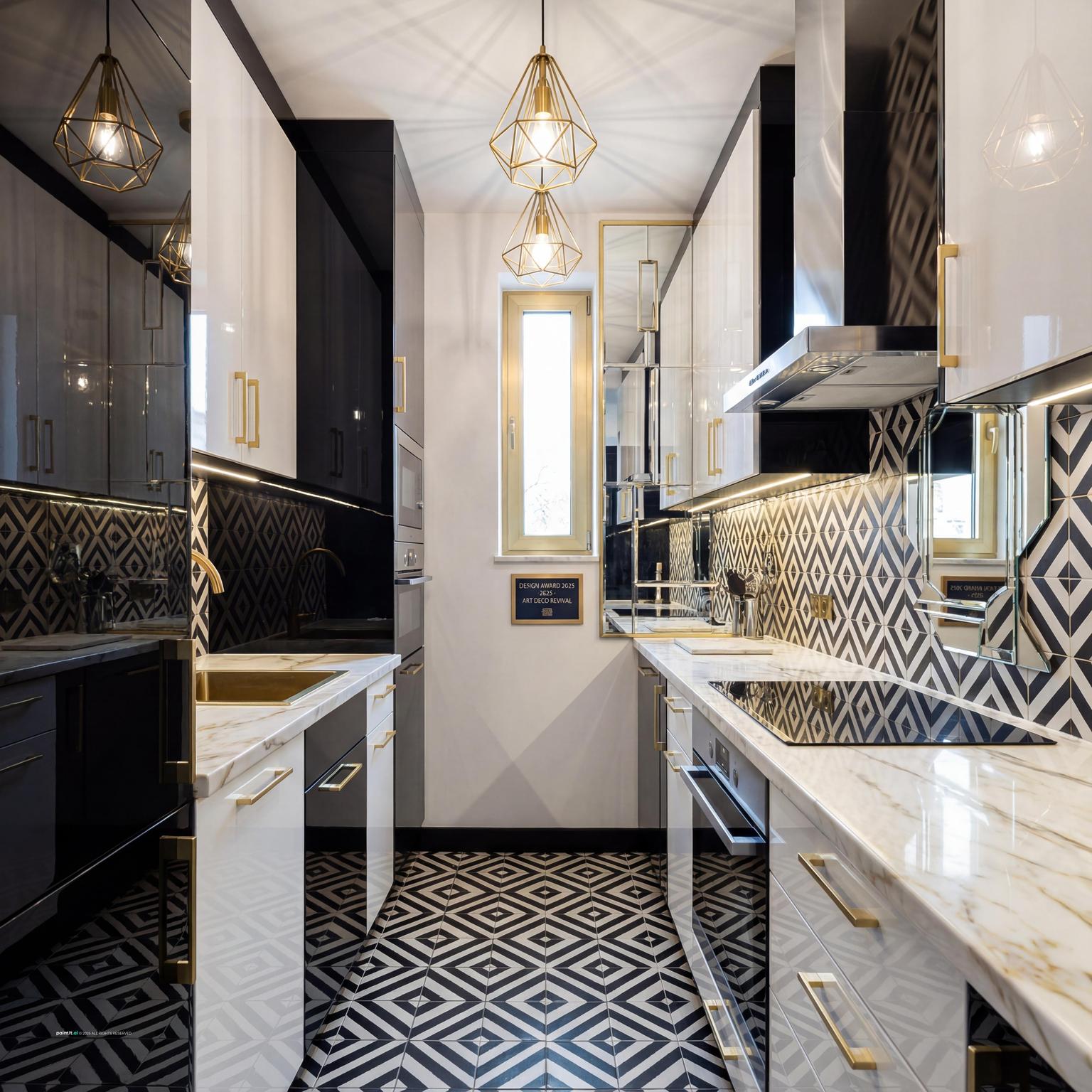
Art Deco Kitchen
Chrome hardware on flat-front cabinetry brings the era's metalwork into a kitchen without needing period-style cabinet doors.
-
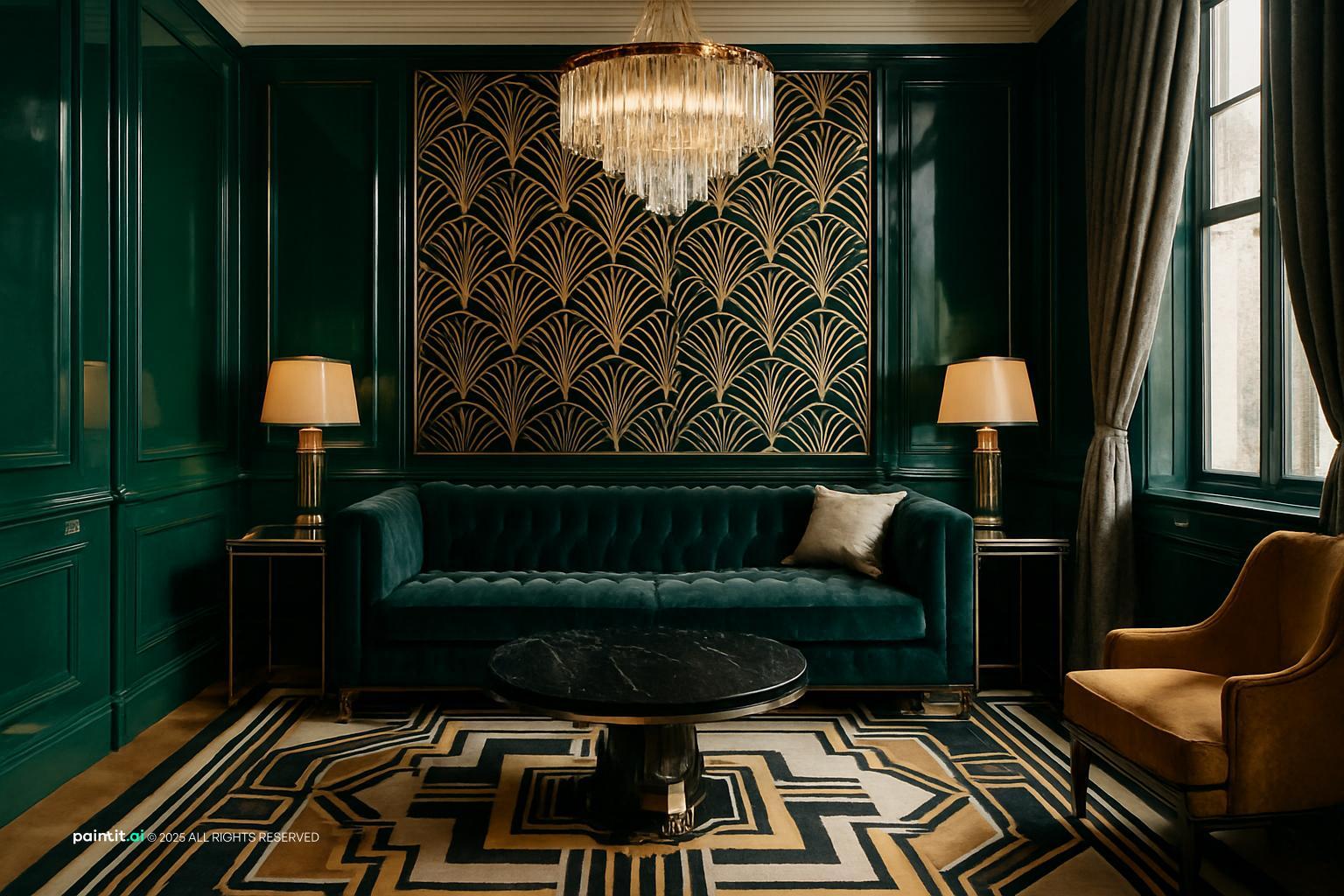
Fan-pattern wallpaper on emerald walls
Fan and sunburst motifs are the 1920s signature; one wallpaper panel behind the sofa is enough.
-
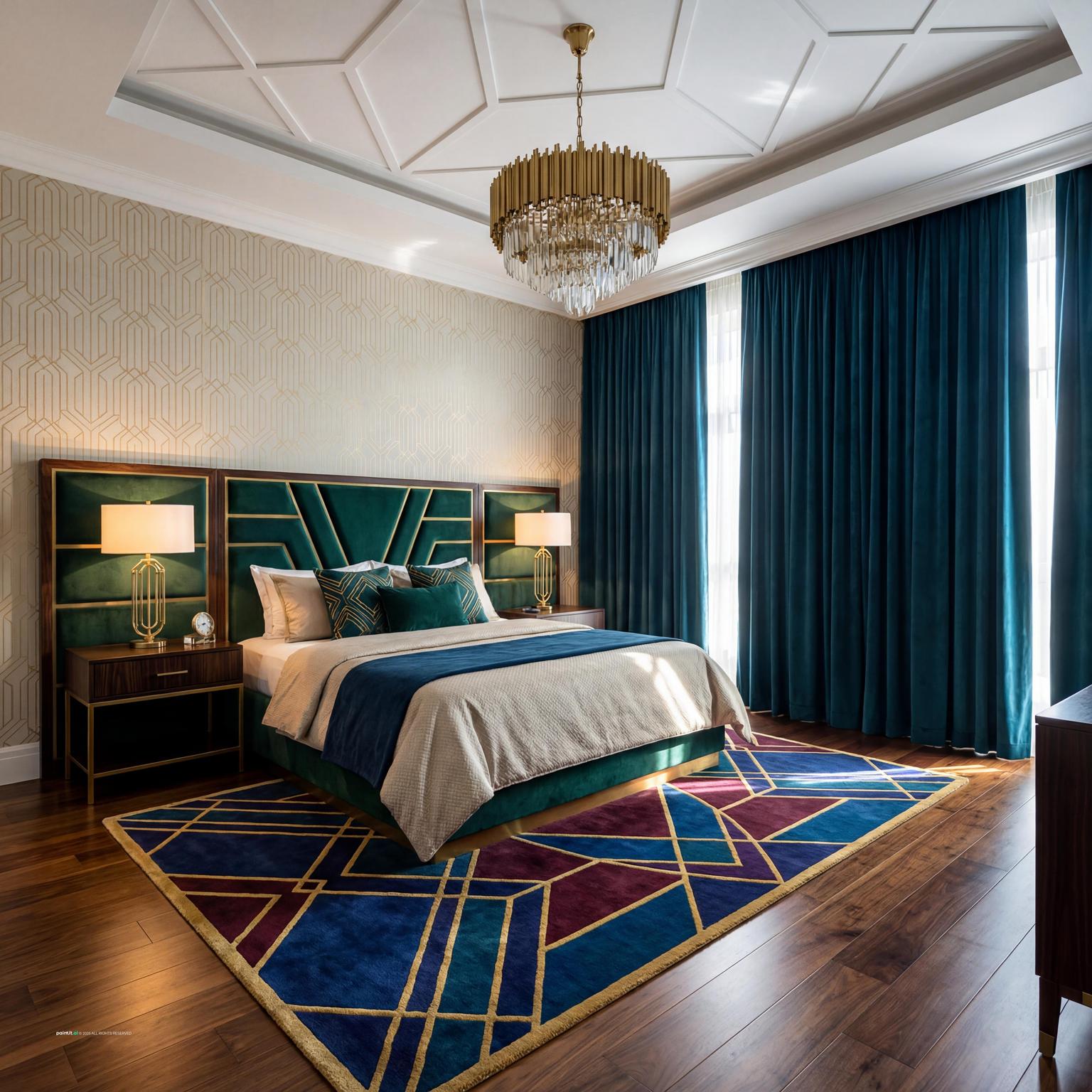
Luxury Art Deco Bedroom
Silk or satin bedding catches light the way matte cotton can't, which is part of why it was the era's material of choice.
-
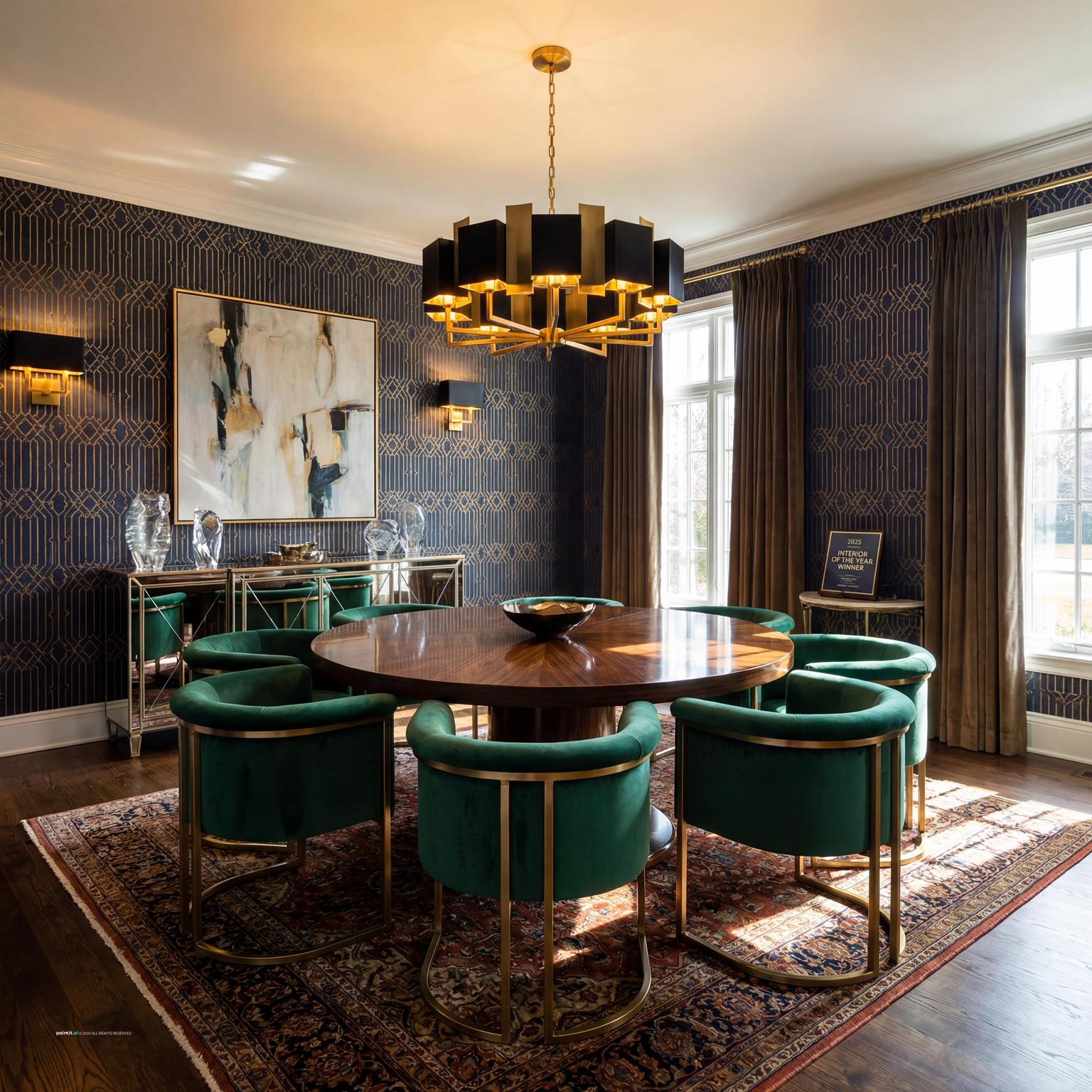
Glamorous Art Deco Dining Room with Gold Accents
A gold-leafed ceiling medallion above the table is a period detail that survives well in a modern renovation.
-
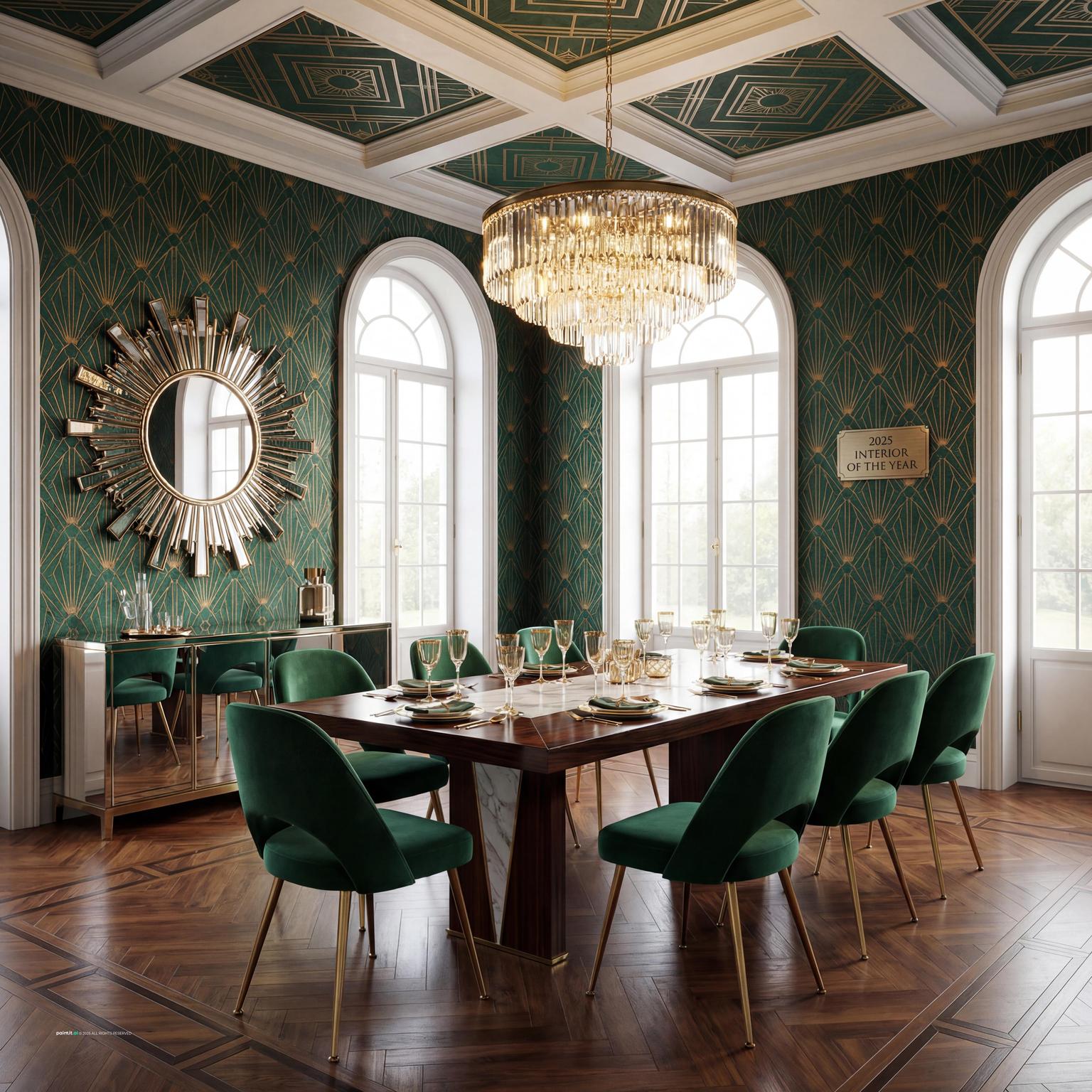
Art Deco Dining Room with Gold Accents
Gold-rimmed dinnerware left visible in a glass-front cabinet does double duty as tableware and permanent decor.
-
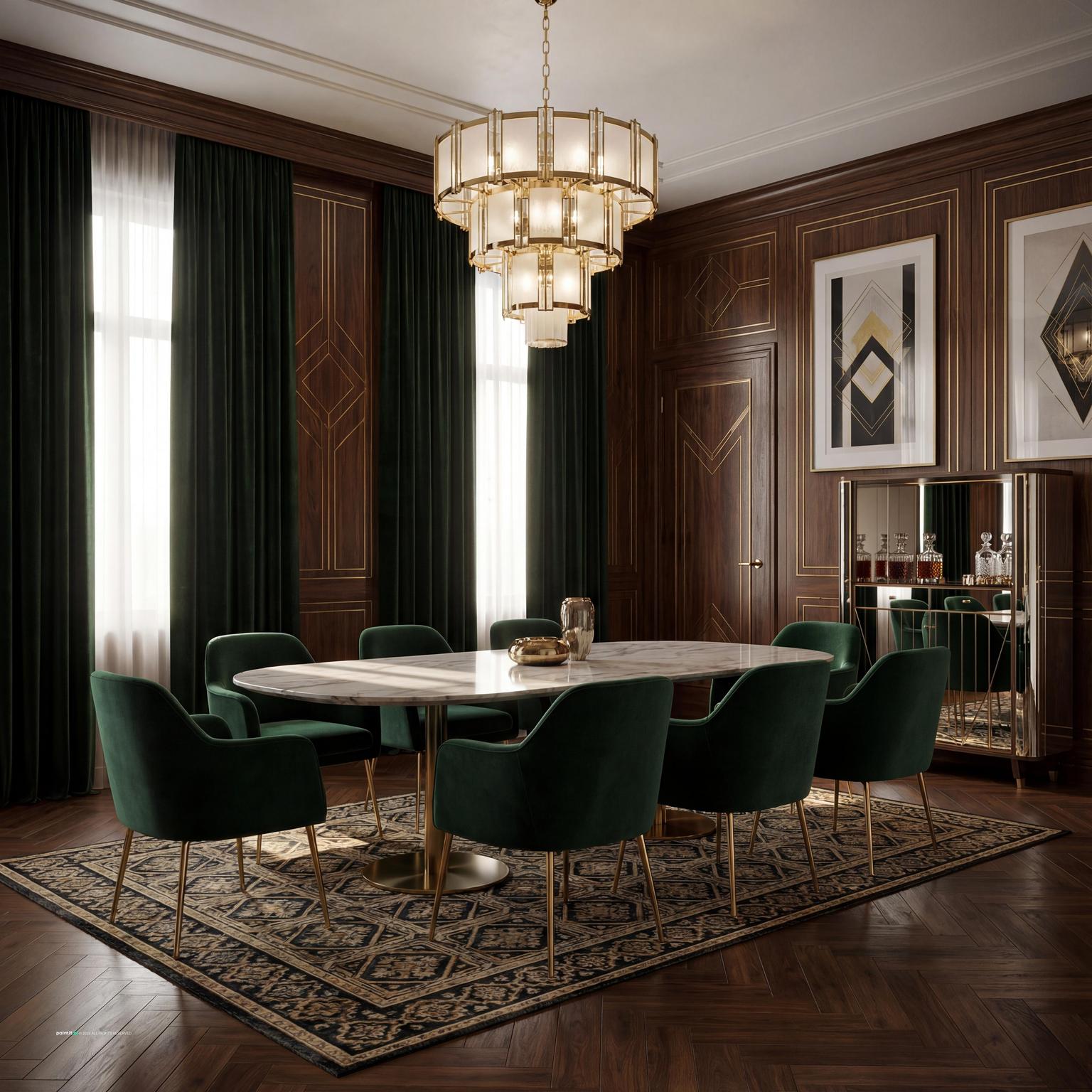
Luxurious Art Deco Dining Room with Gold Accents
Gold picture rail moulding running the perimeter of the room adds a period line without touching the furniture.
-
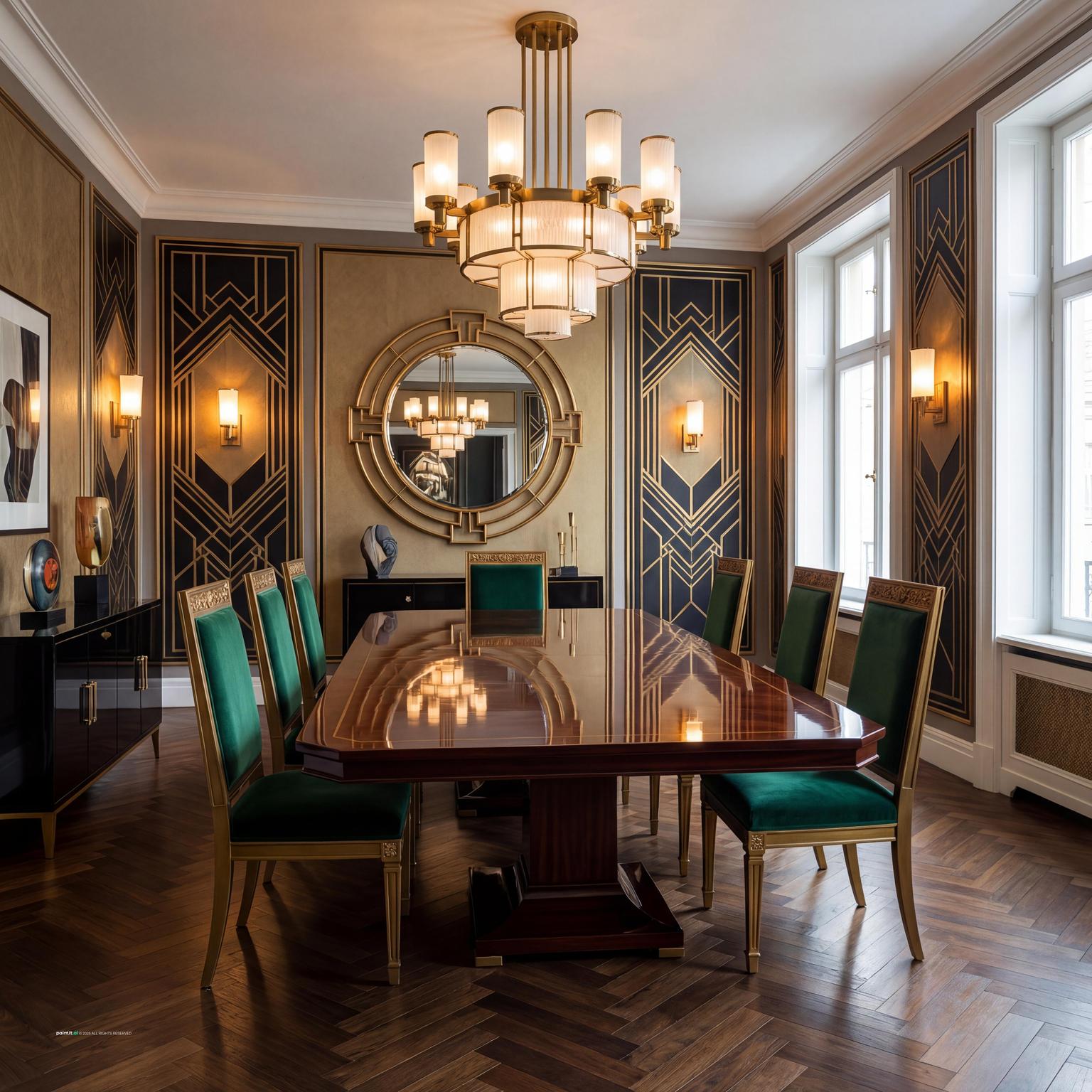
Luxurious Art Deco Dining Room with Brass Details
Brass inlay along table edges or door frames adds detail at eye level, where it's actually noticed.
-
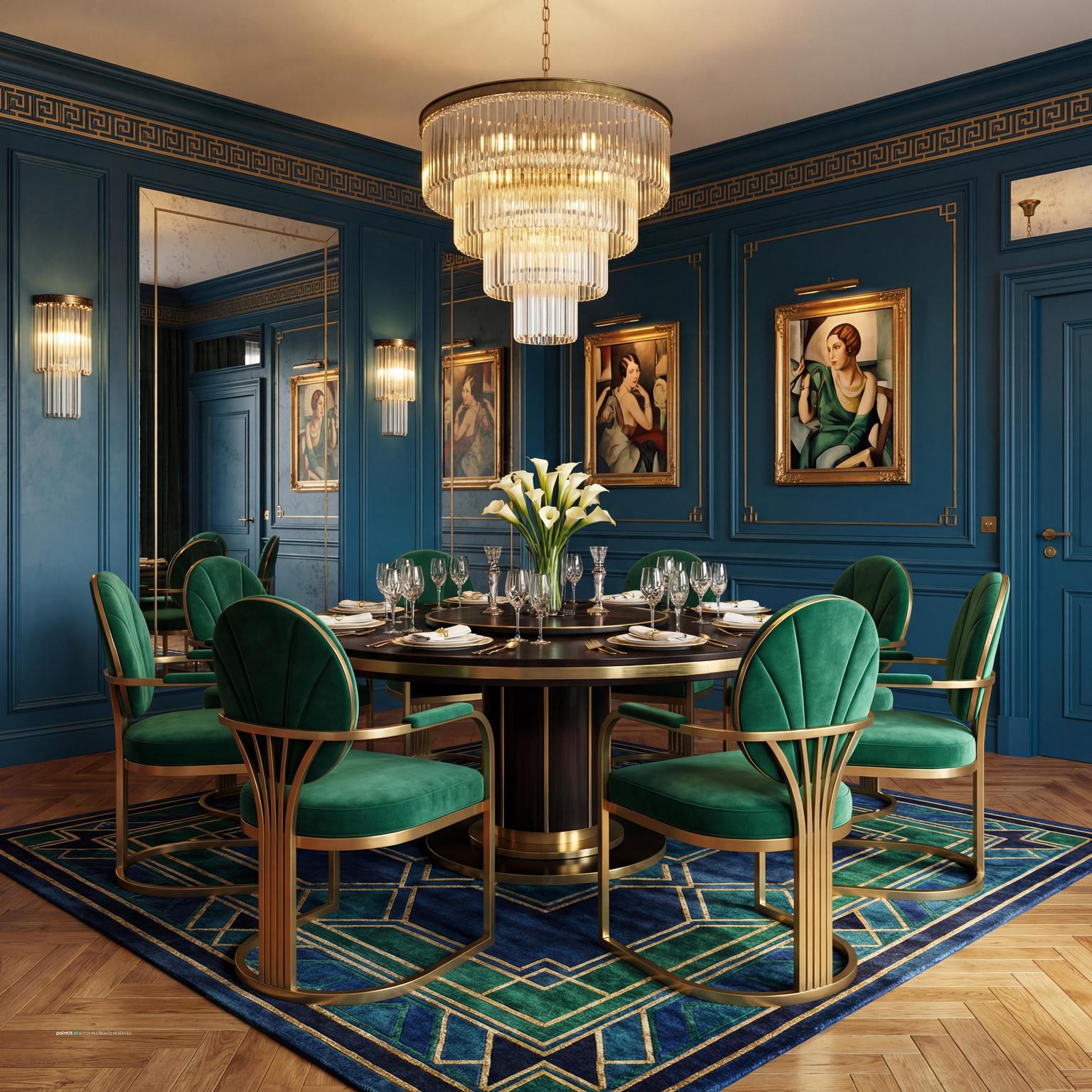
Luxurious Art Deco Dining Room with Velvet Seating
High-backed velvet chairs at the head of the table read as more formal than matching seating all around.
-
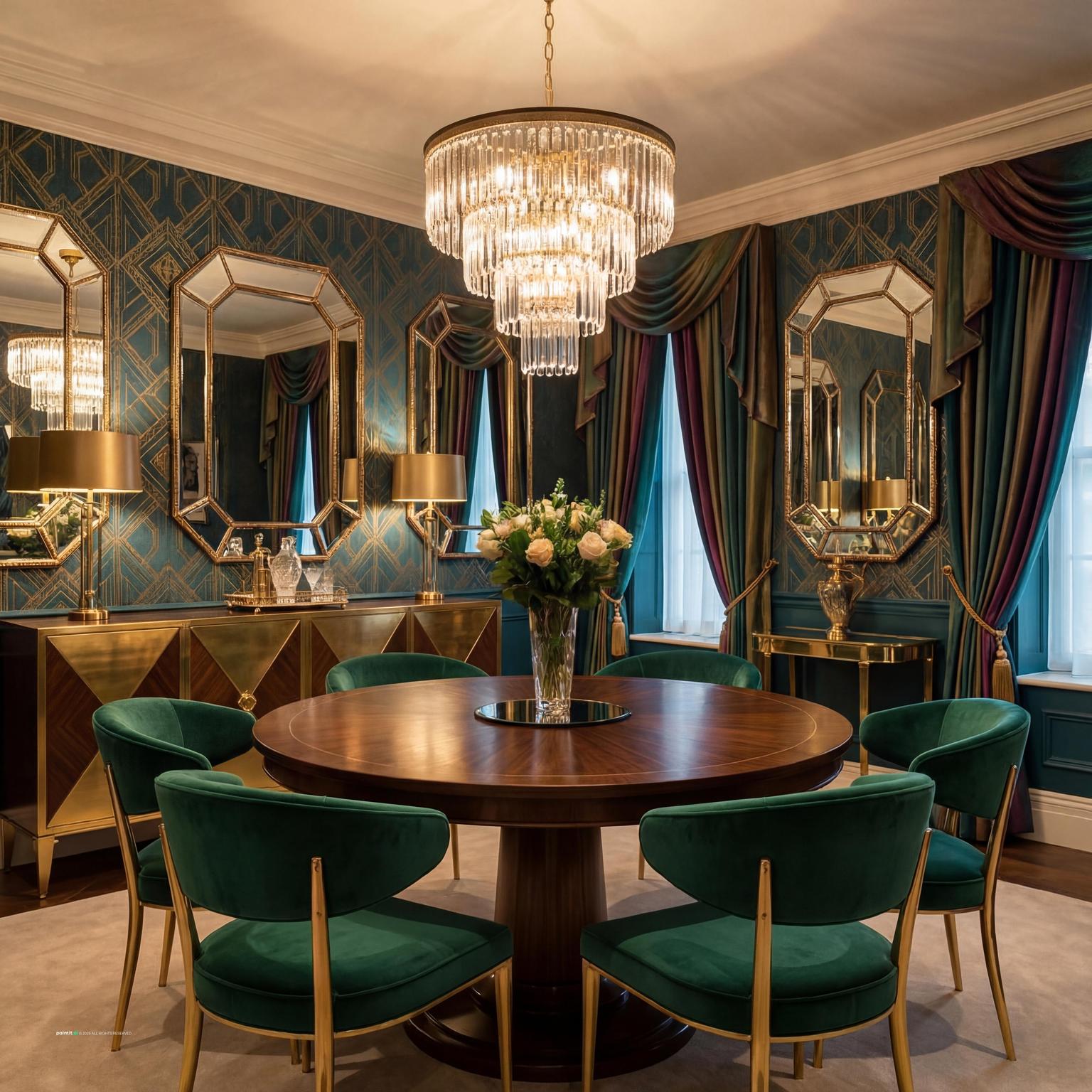
Elegant Art Deco Dining Room with Period Details
Fluted wall panelling around the dining area is a genuine period detail that modern millwork can reproduce convincingly.
-
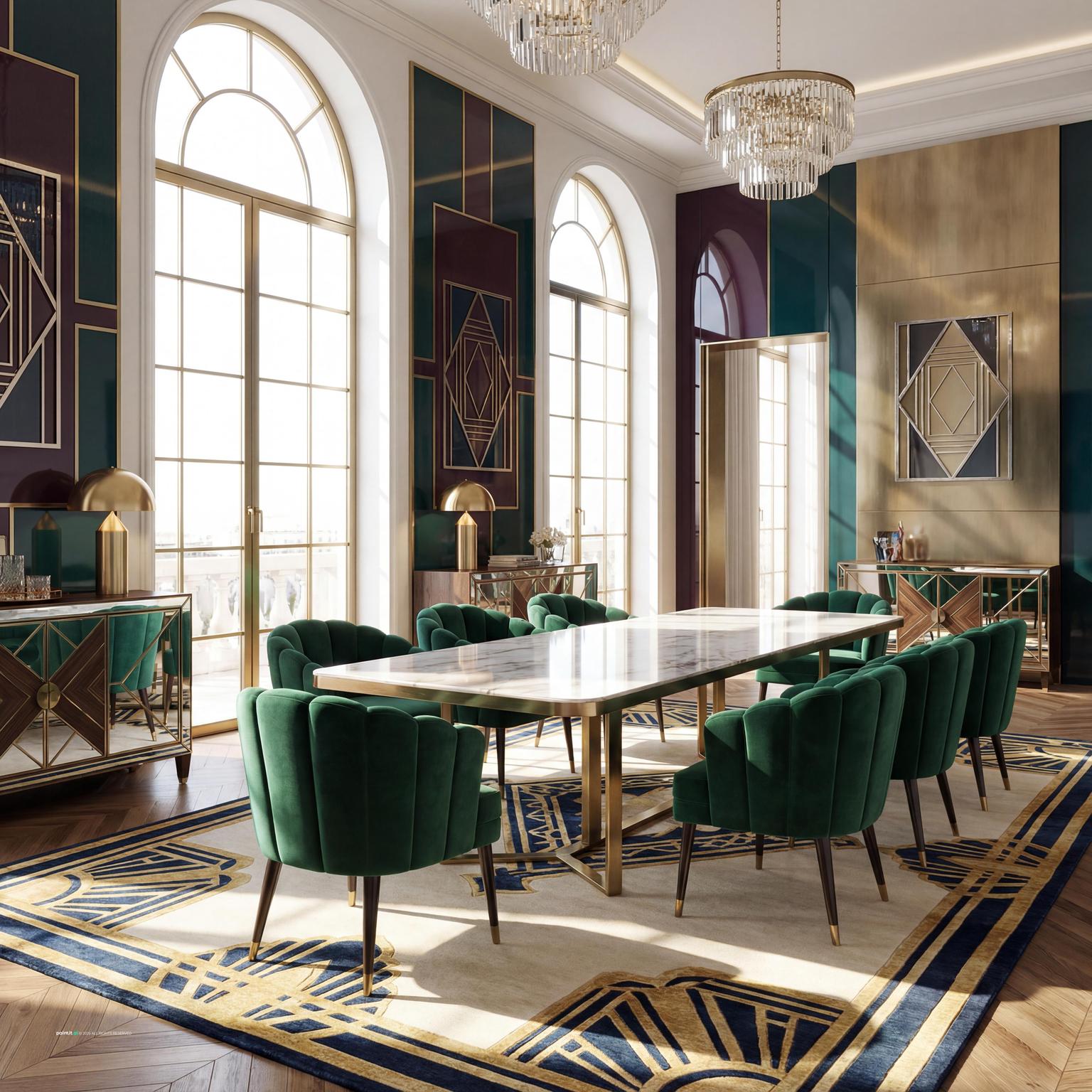
Luxurious Art Deco Dining Room with Marble Detail
A marble-inlay floor medallion under the table centers the room the way a rug would in a different style.
-
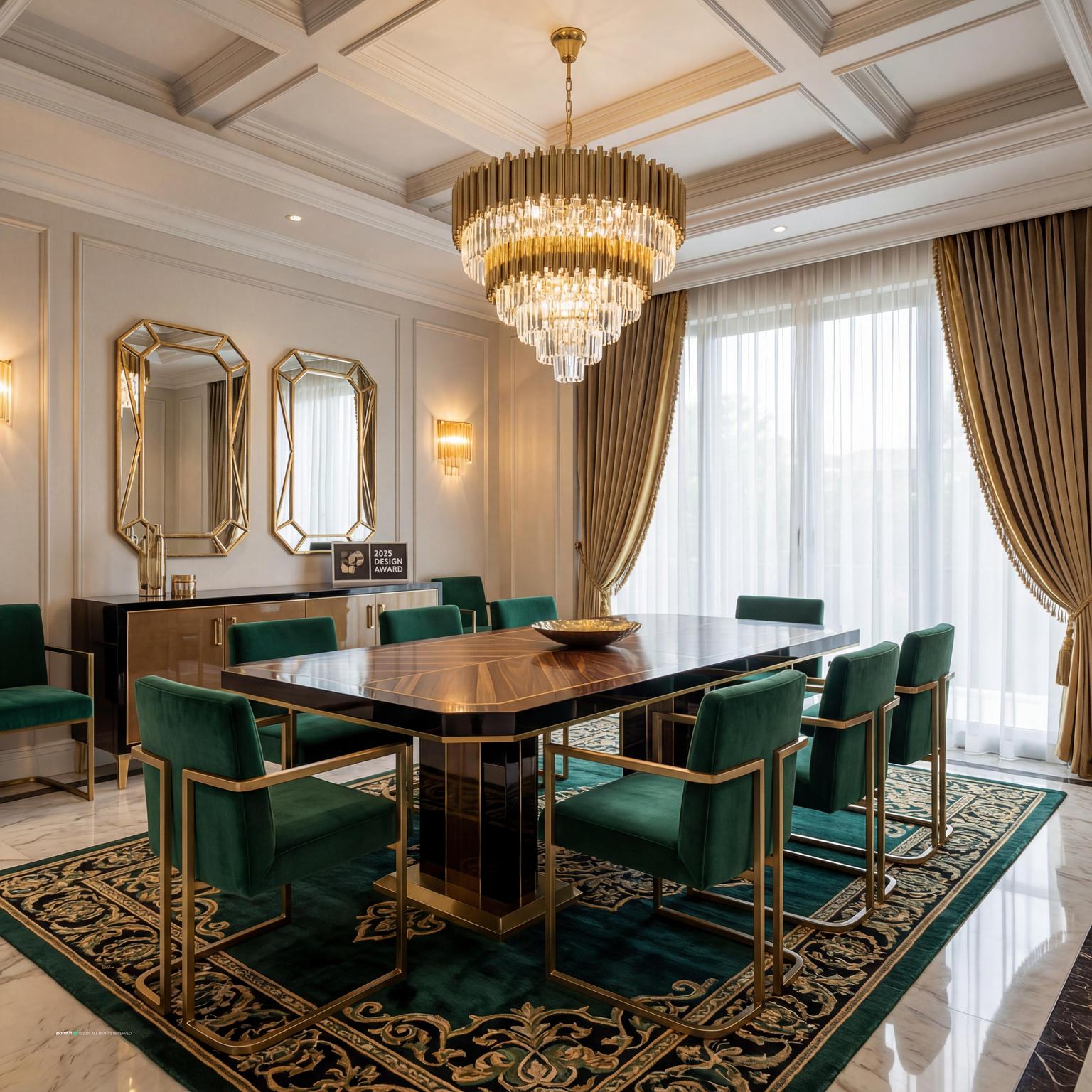
Elegant Art Deco Dining Room with Gold Accents
Gold-rimmed glassware displayed in a cabinet ties tableware into the room's palette even when the table is bare.
-
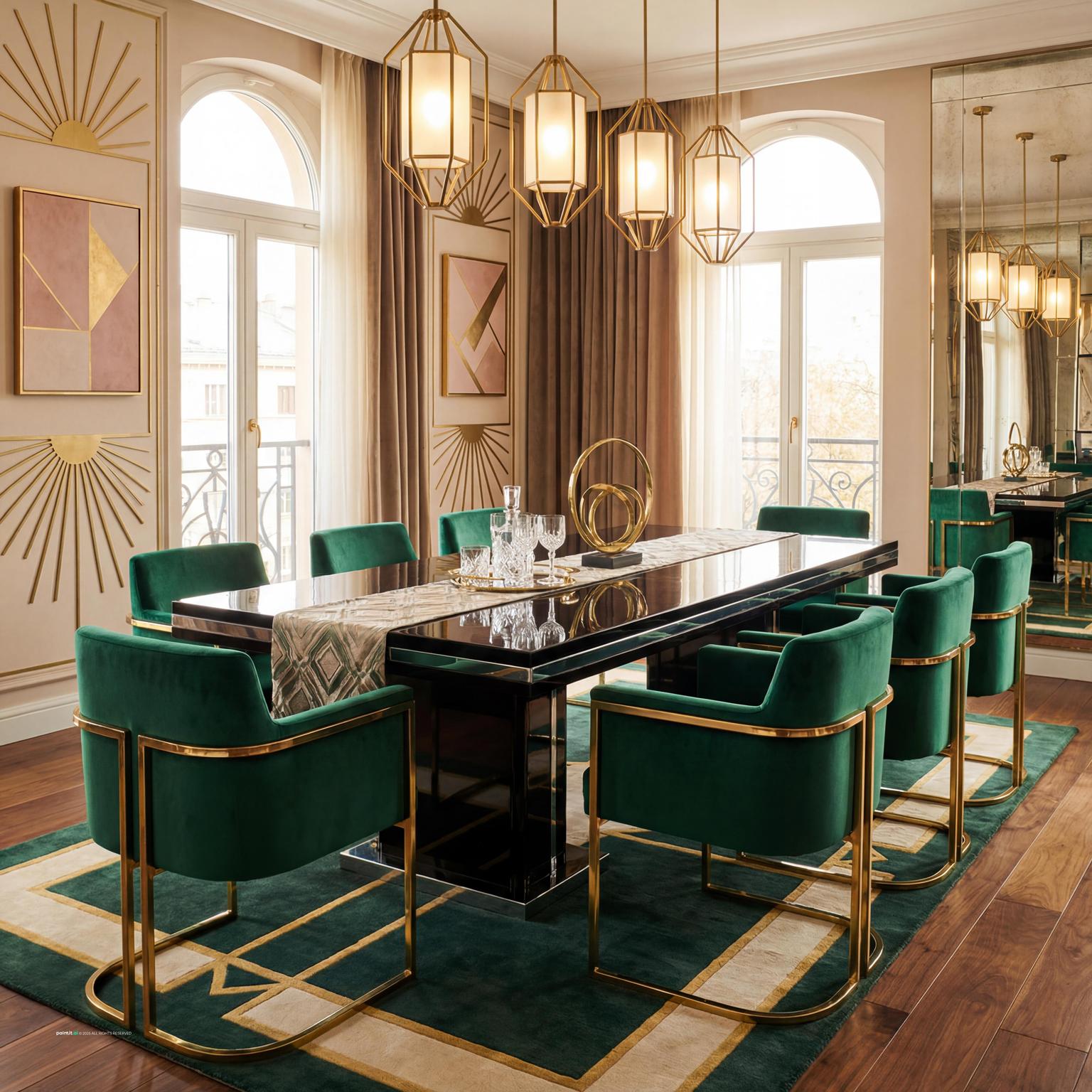
Elegant Art Deco Dining Room with Brass Details
A brass-edged sideboard catches light from the chandelier and doubles as the room's main storage.
-
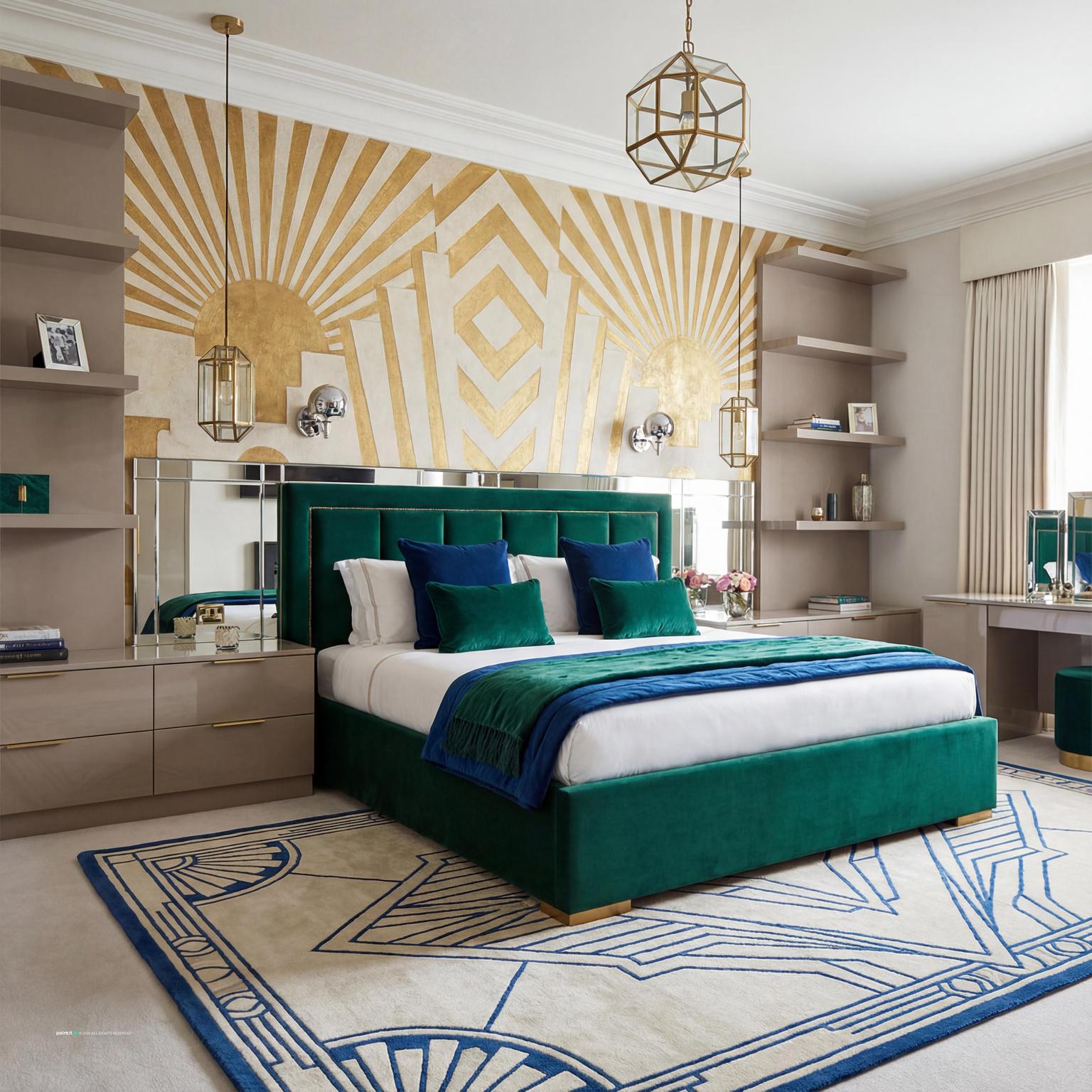
Elegant Art Deco Modern Bedroom
Pairing a period-style headboard with plain modern bedding keeps the room from tipping into full costume drama.
-
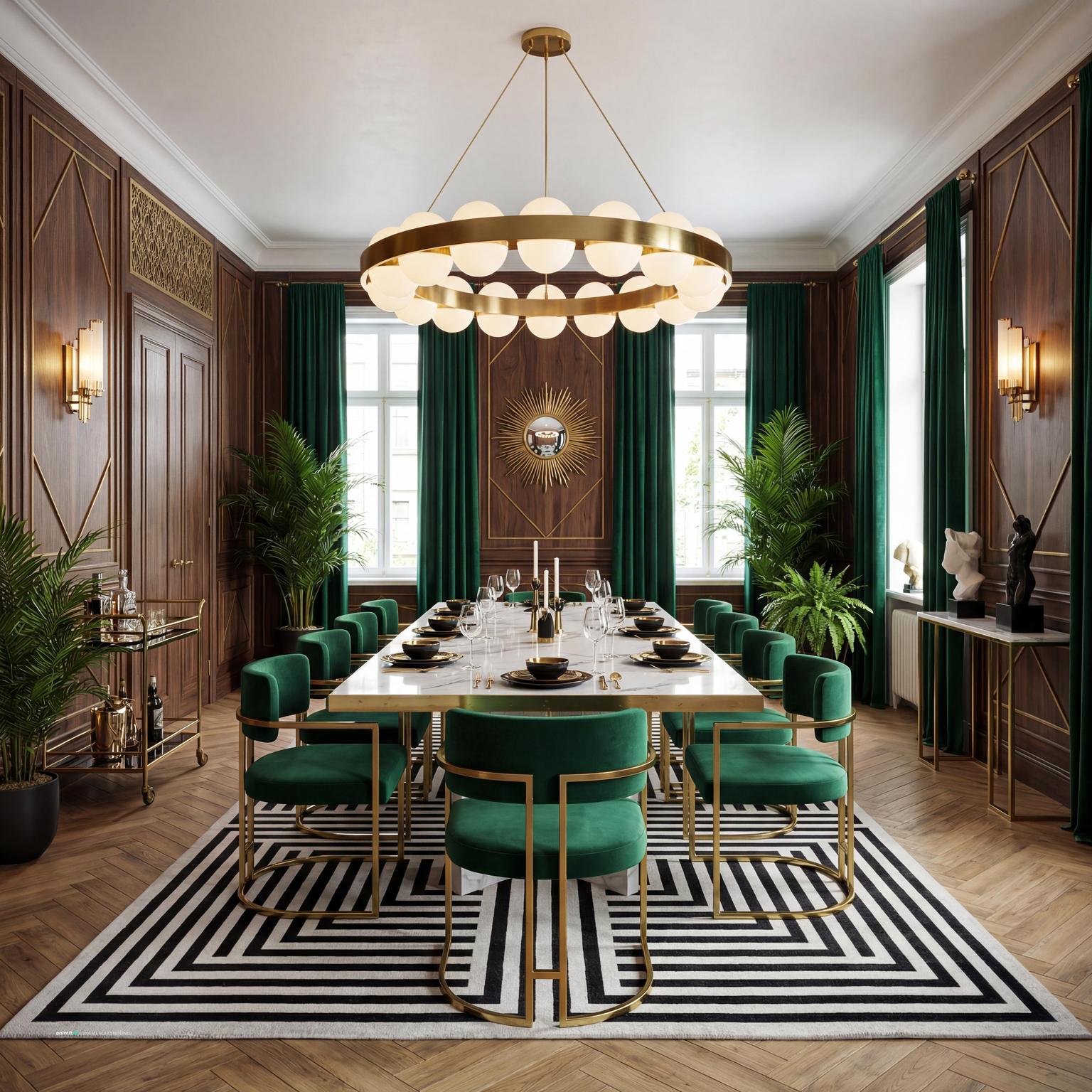
Luxurious Art Deco Dining Room with Statement Lighting
A frosted glass and chrome pendant fixture gives diffused light without losing the era's material language.
-
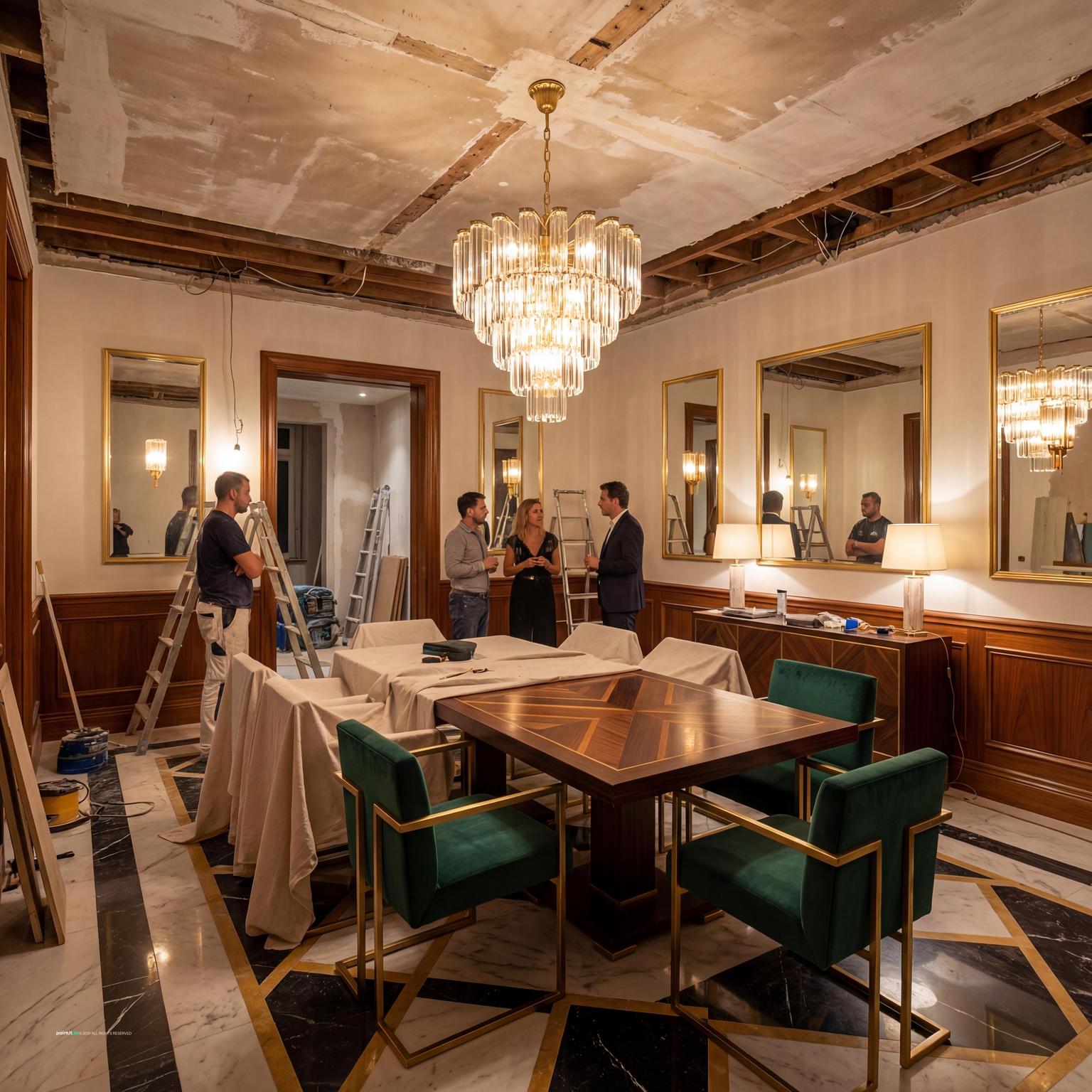
Art Deco Dining Room with Refined Contrast
Cream walls against black-lacquered furniture is the era's classic pairing, and it still reads as sharp rather than dated.
-
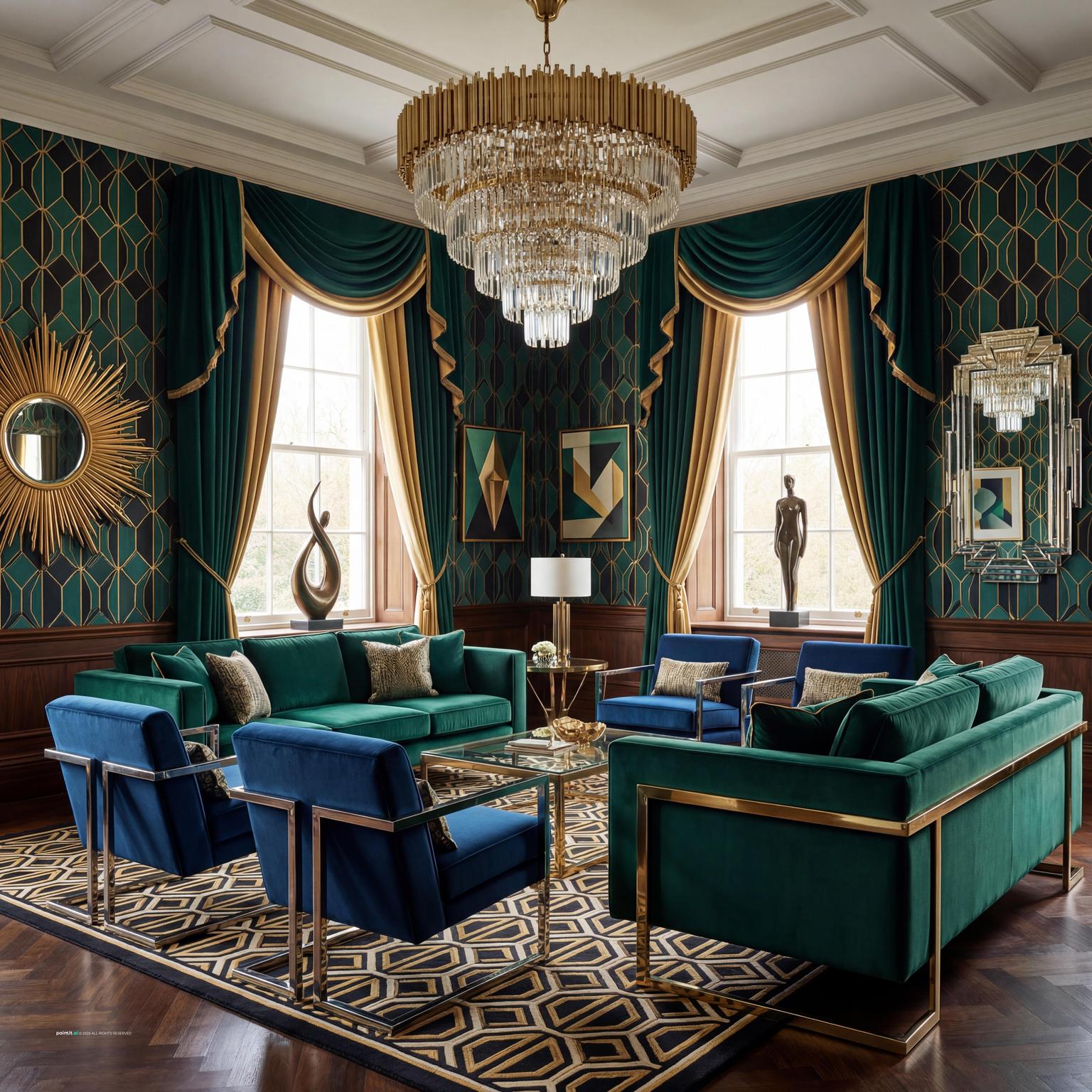
Art Deco Room
Repeating a single geometric shape, the fan, the chevron, or the stepped form, across two or three surfaces ties a room together without matching furniture sets.
-
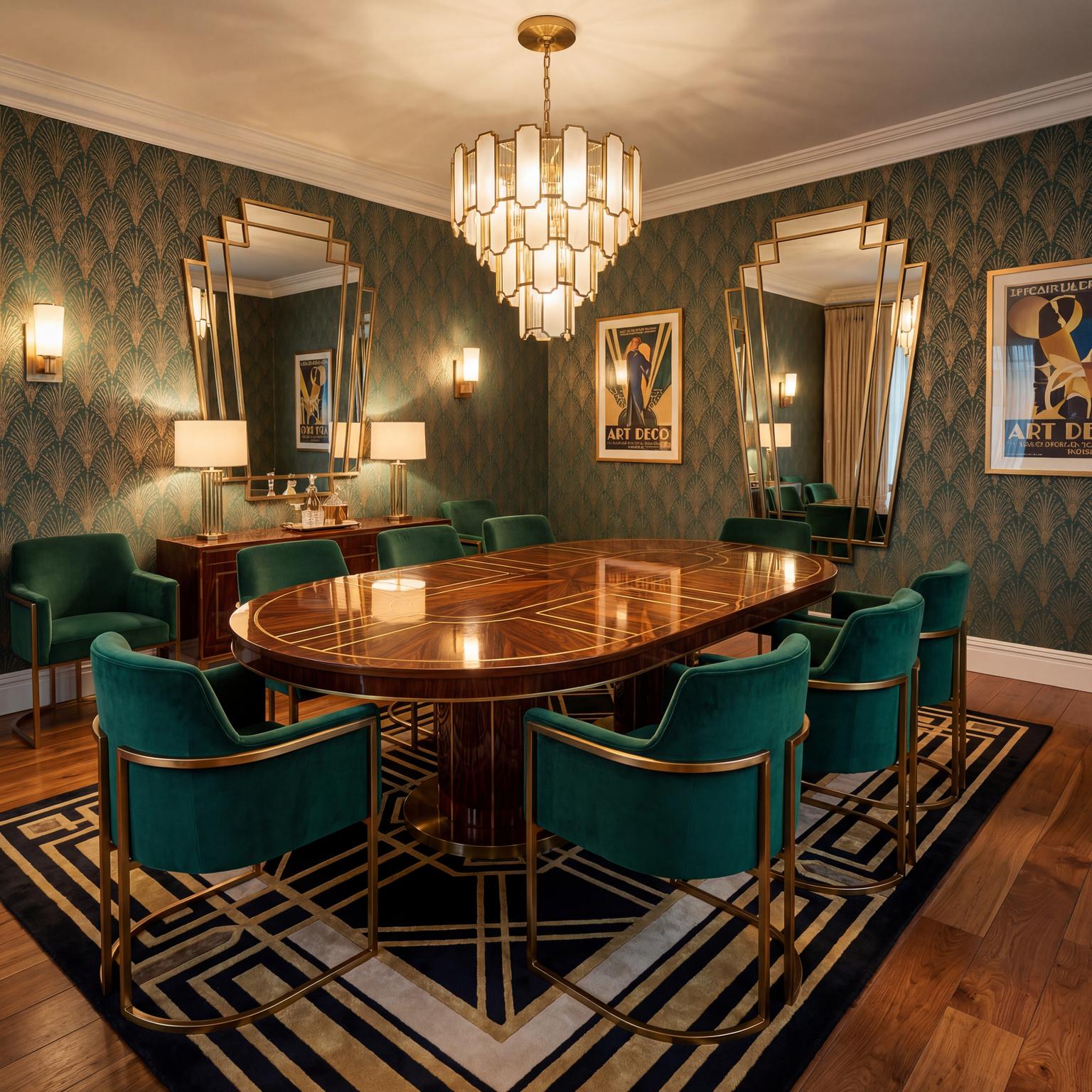
Elegant Art Deco Dining Room with Marble Detail
A marble-topped sideboard or fireplace surround is worth the cost here; laminate substitutes read as flat under this style's other reflective surfaces.
-
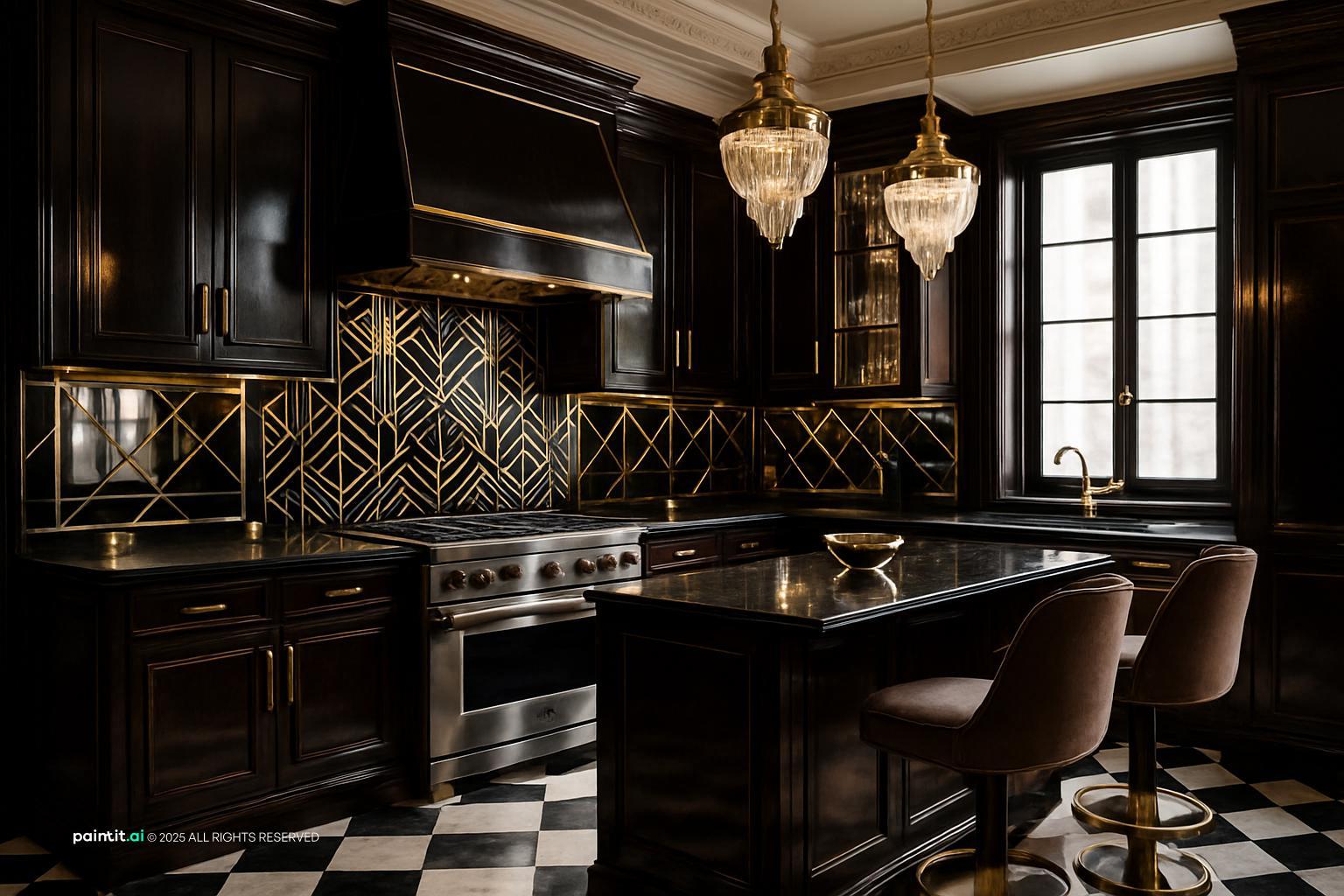
Black and gold Deco kitchen
A checkerboard floor and black-and-gold cabinetry turn a working kitchen into a 1920s set piece.
-
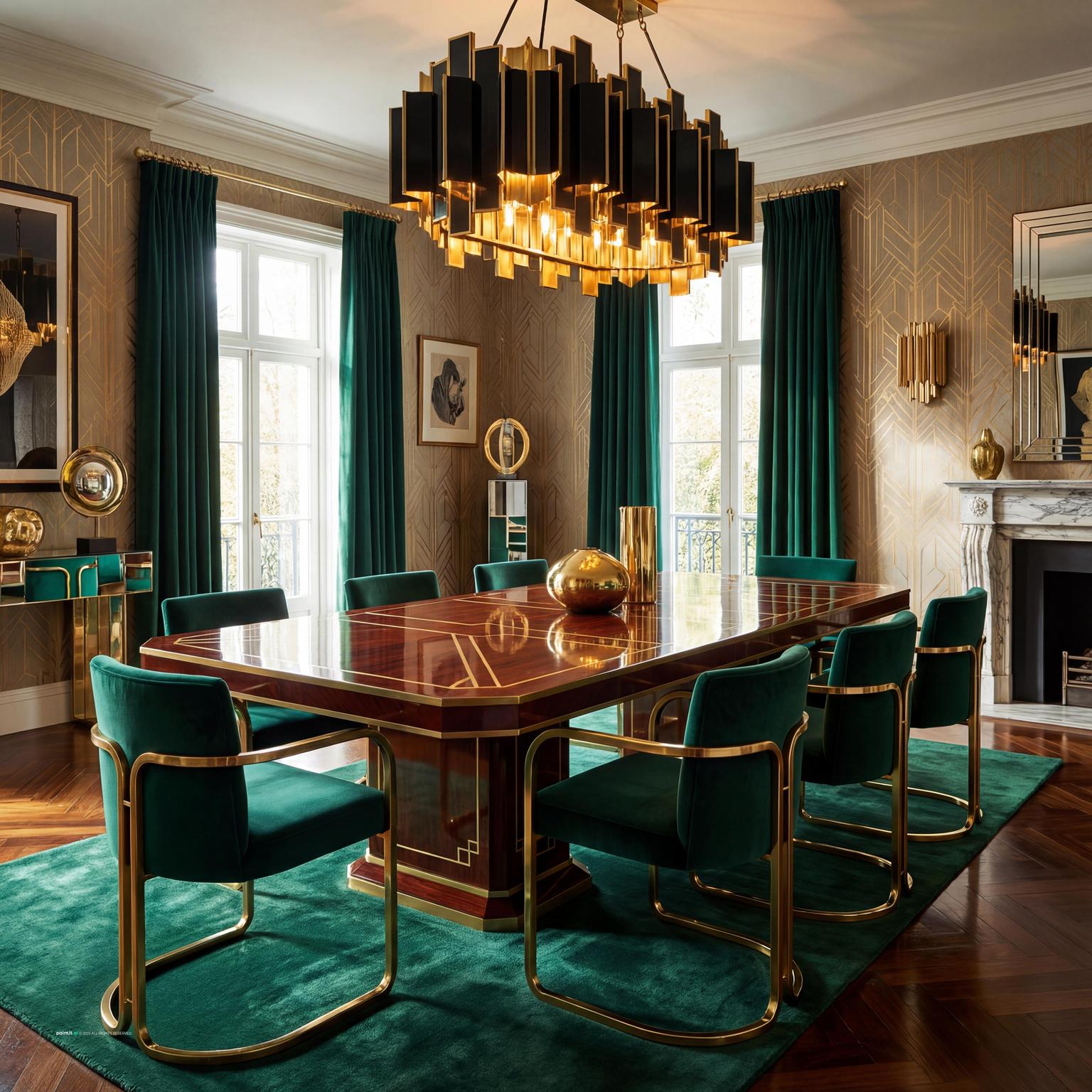
Luxurious Art Deco Dining Room with Warm Wood
Macassar ebony or walnut veneer, rather than solid dark wood, is how period Art Deco actually achieved that rich finish affordably.
-
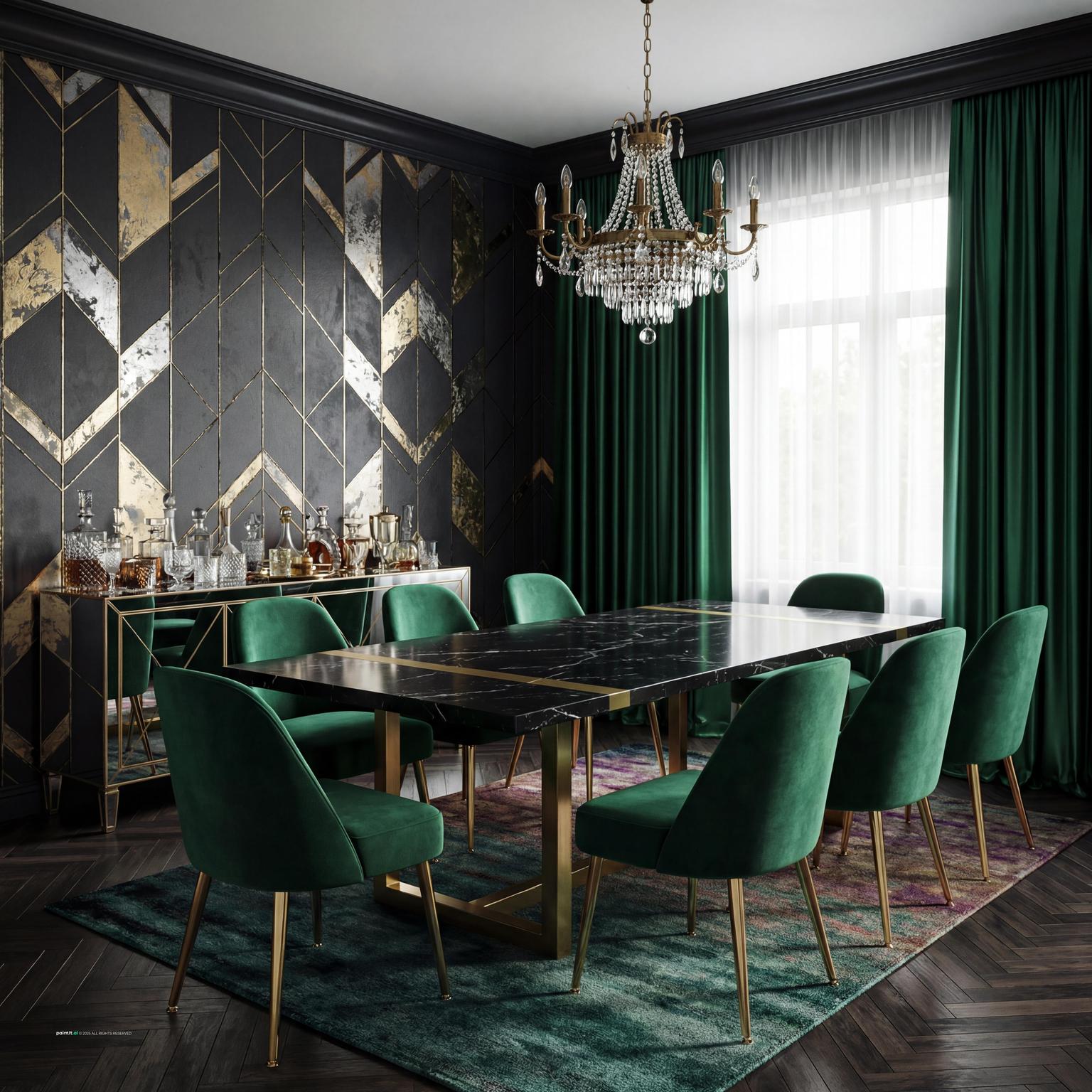
Art Deco Dining Room with Brass Details
Brass candlestick pairs on the table are a small, inexpensive way to add the era's metalwork without renovating anything.
-
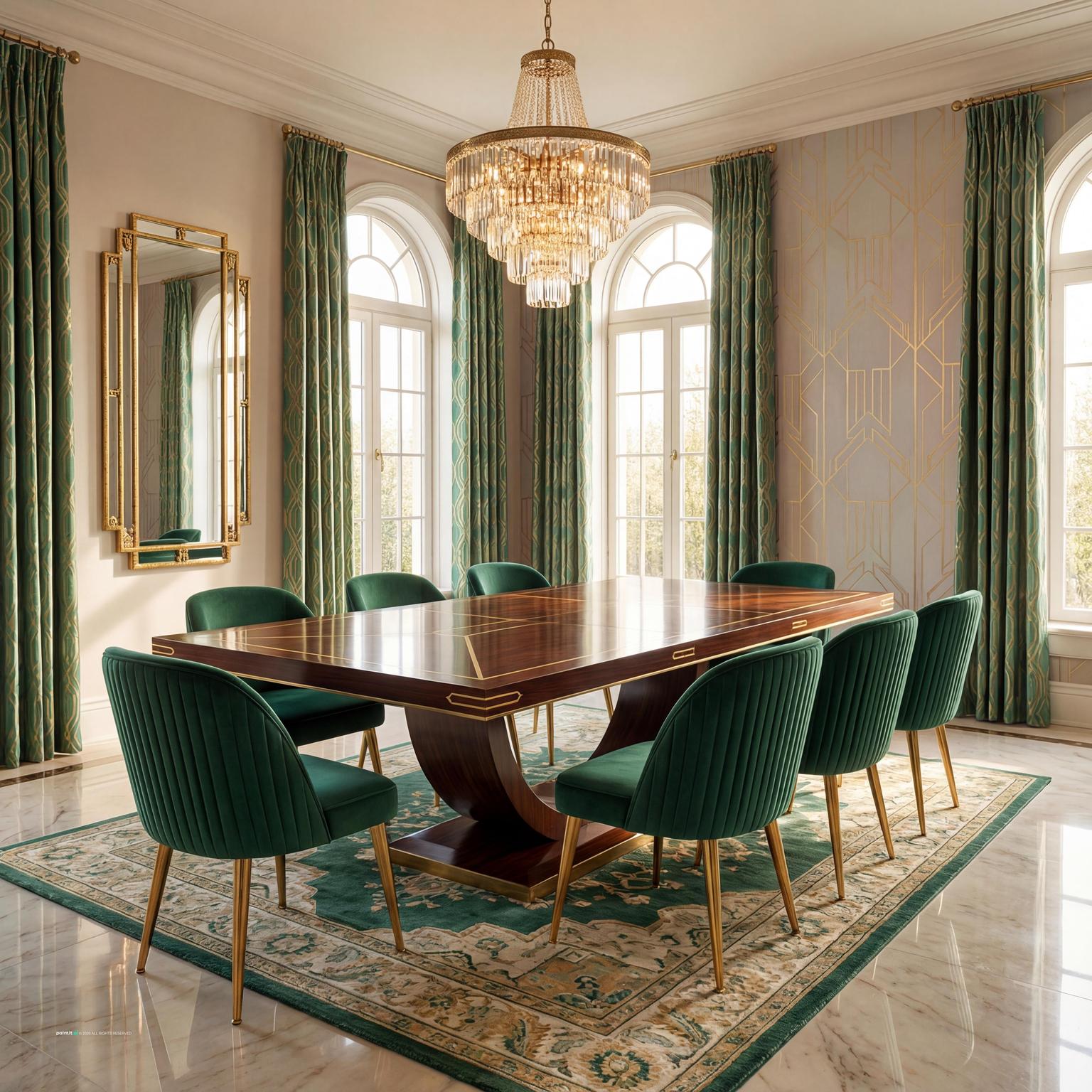
Elegant Art Deco Dining Room with Polished Finishes
High-gloss lacquer on just the table, not every surface, keeps the shine from becoming overwhelming under dining-room lighting.
-
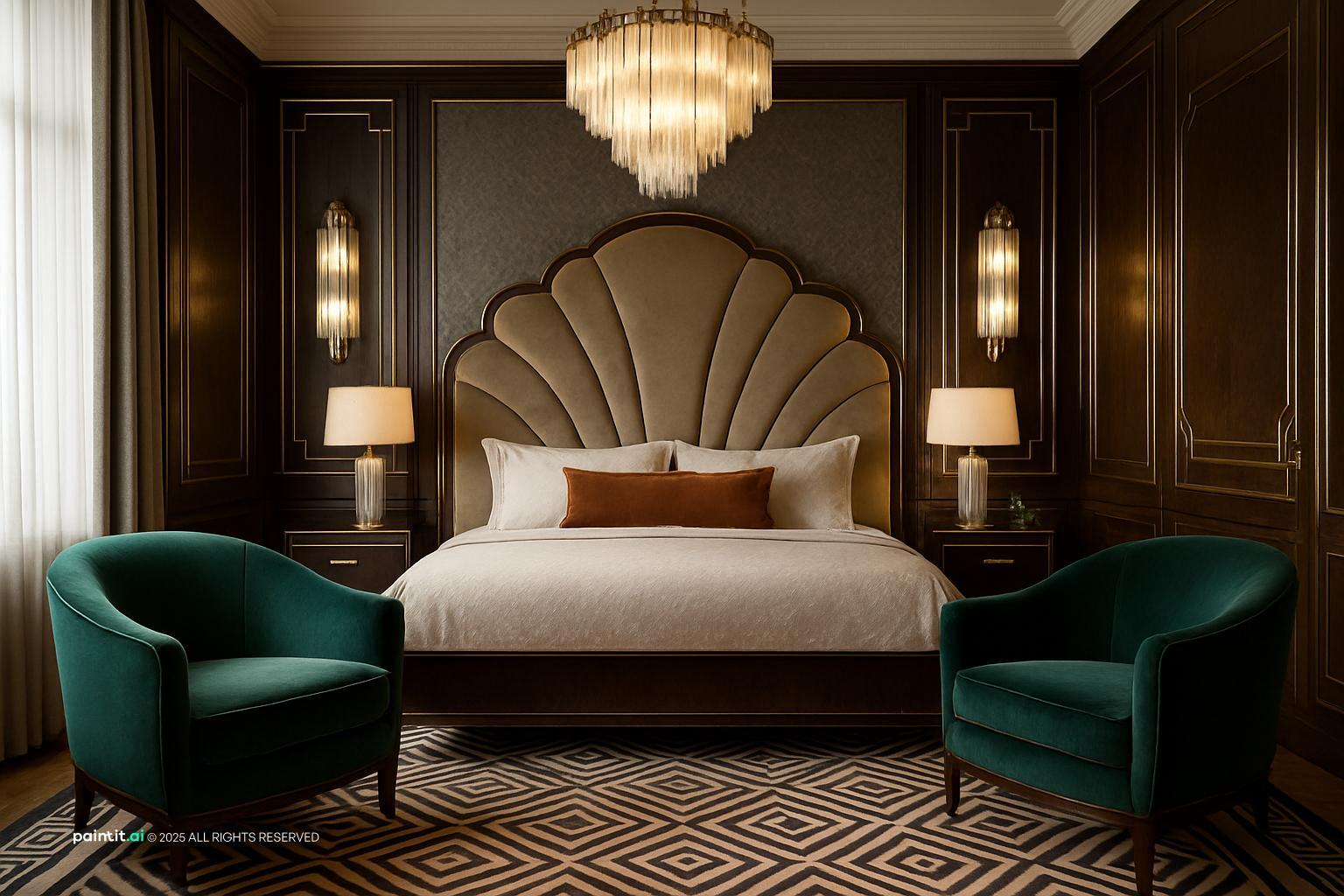
Scalloped headboard bedroom
A shell-shaped headboard and velvet chairs bring 1920s glamour into the bedroom.
-
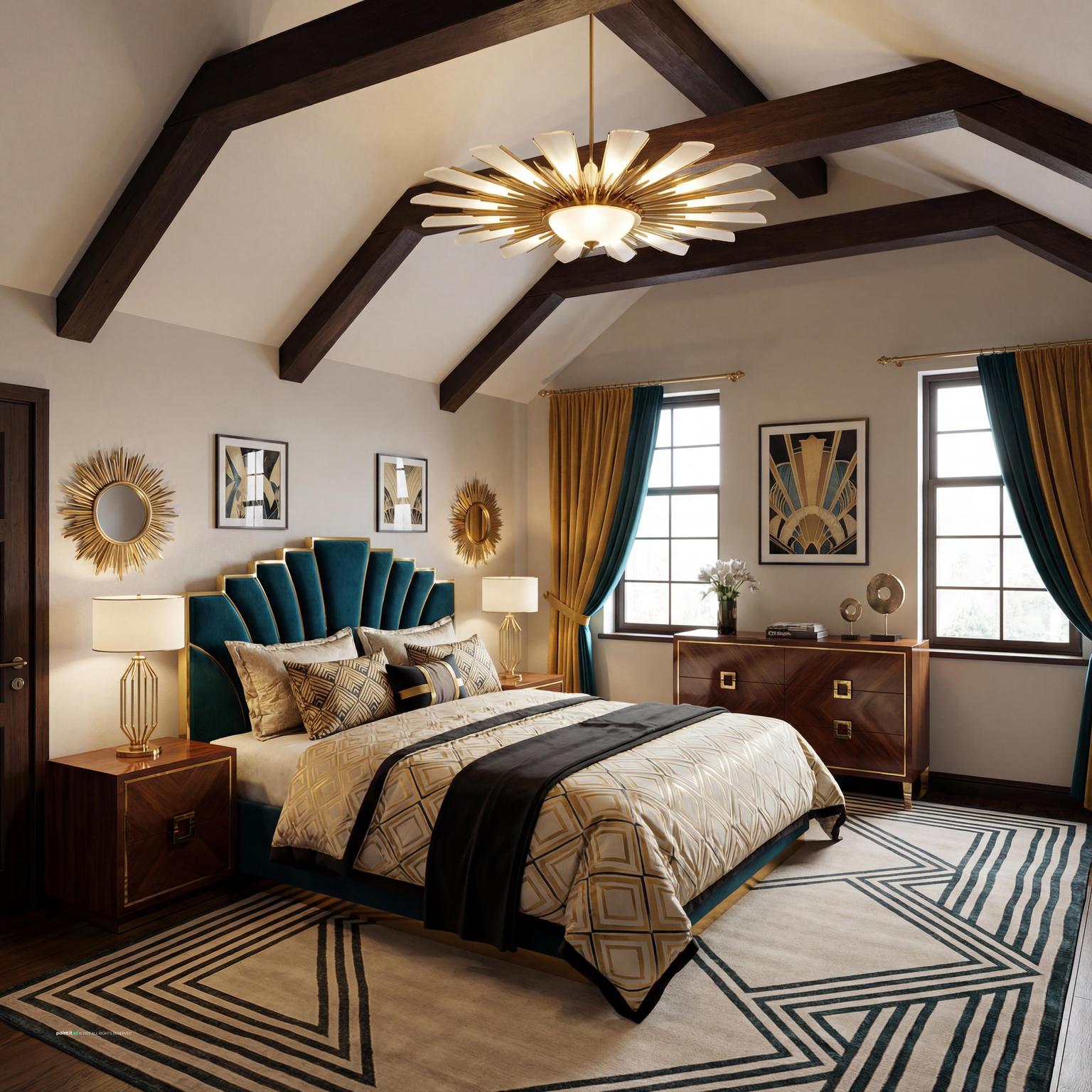
Elegant Art Deco Bedroom
Symmetrical nightstands and matching lamps do more to set an Art Deco mood than any single decorative object.
-
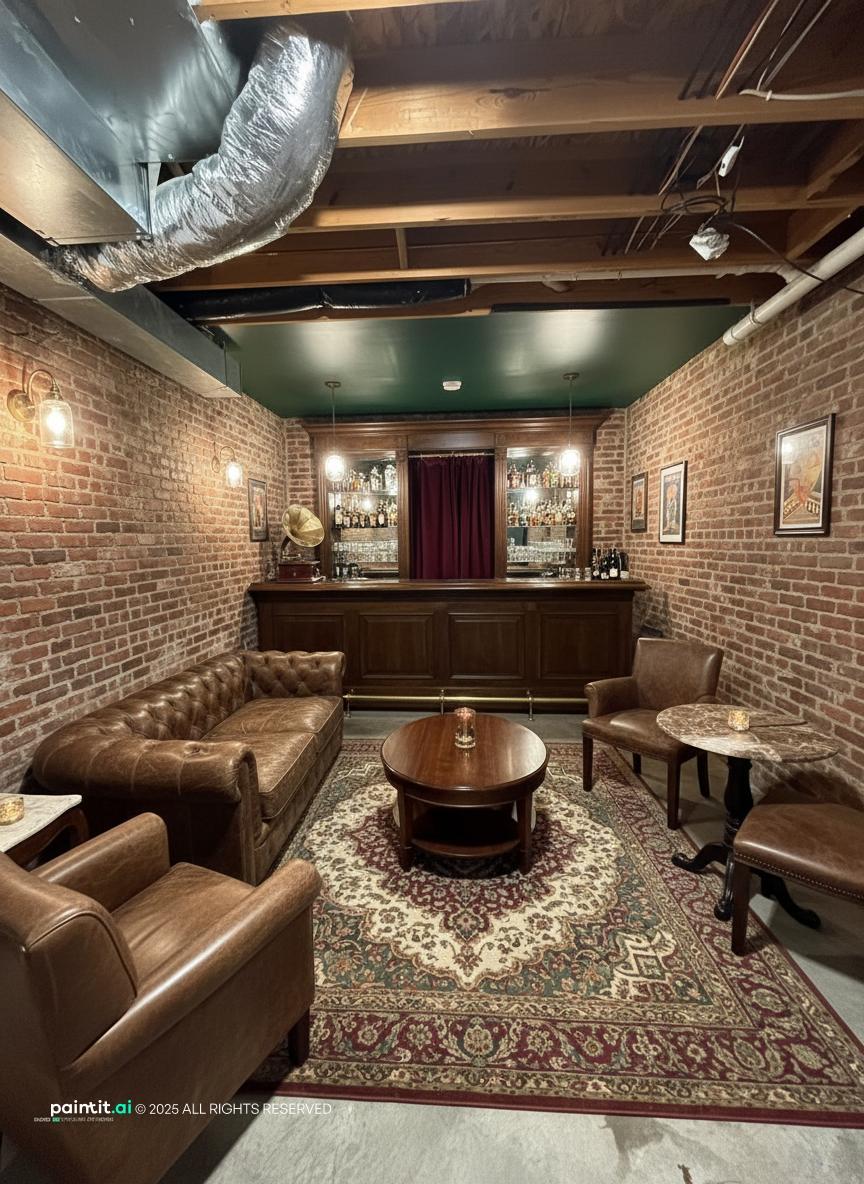
Speakeasy lounge in the basement
Prohibition-era speakeasies inspire basement bars: brick, leather, a Persian rug and low light.
-
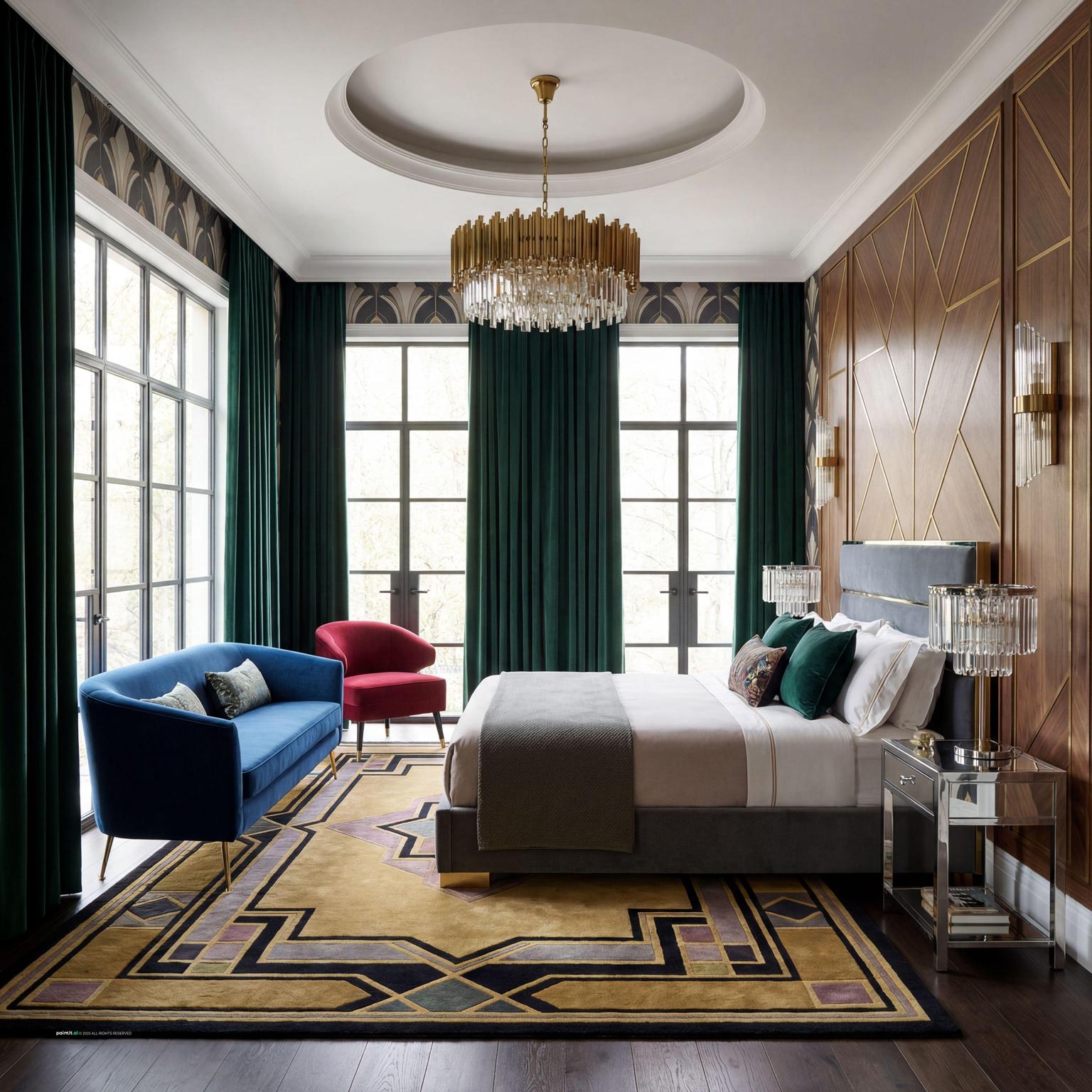
Elegant Art Deco Bedroom with Brass Details
Brass drawer pulls on an otherwise plain dresser are a low-cost way to bring period detail into a bedroom.
-
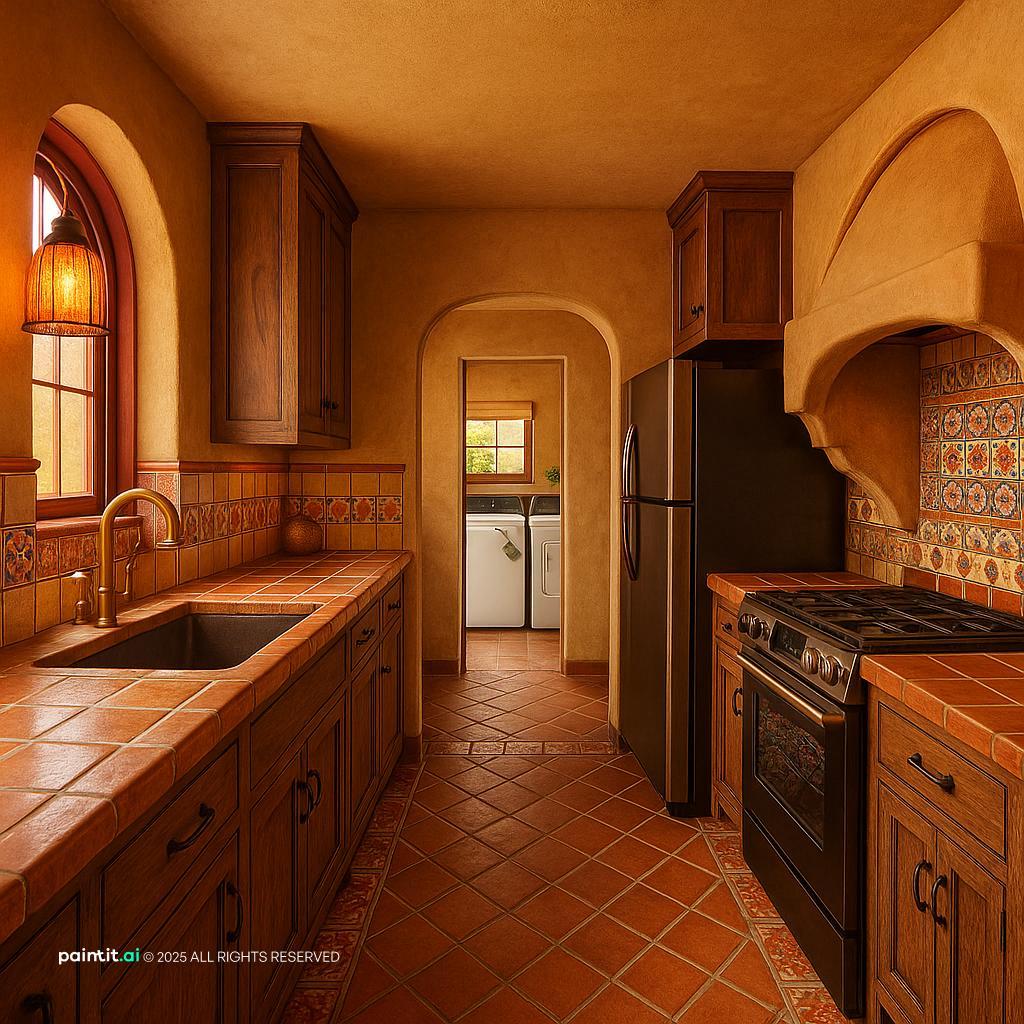
Spanish Revival kitchen
Spanish Colonial Revival homes of the 1920s used terracotta, arches and hand-painted tile throughout.
-
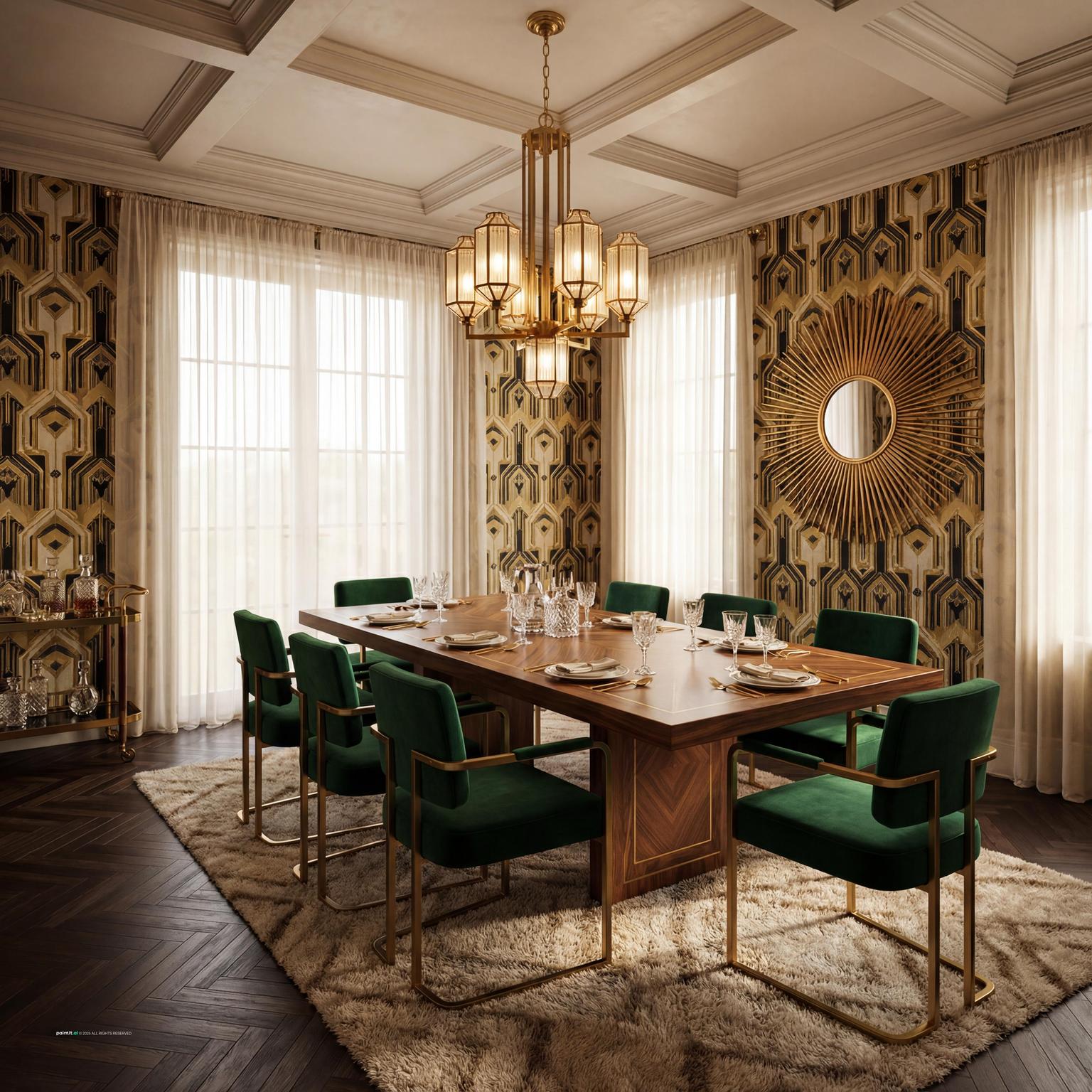
Elegant Art Deco Dining Room with Refined Contrast
Black and white checkerboard flooring is a strong enough statement that the rest of the room can stay quiet.
-
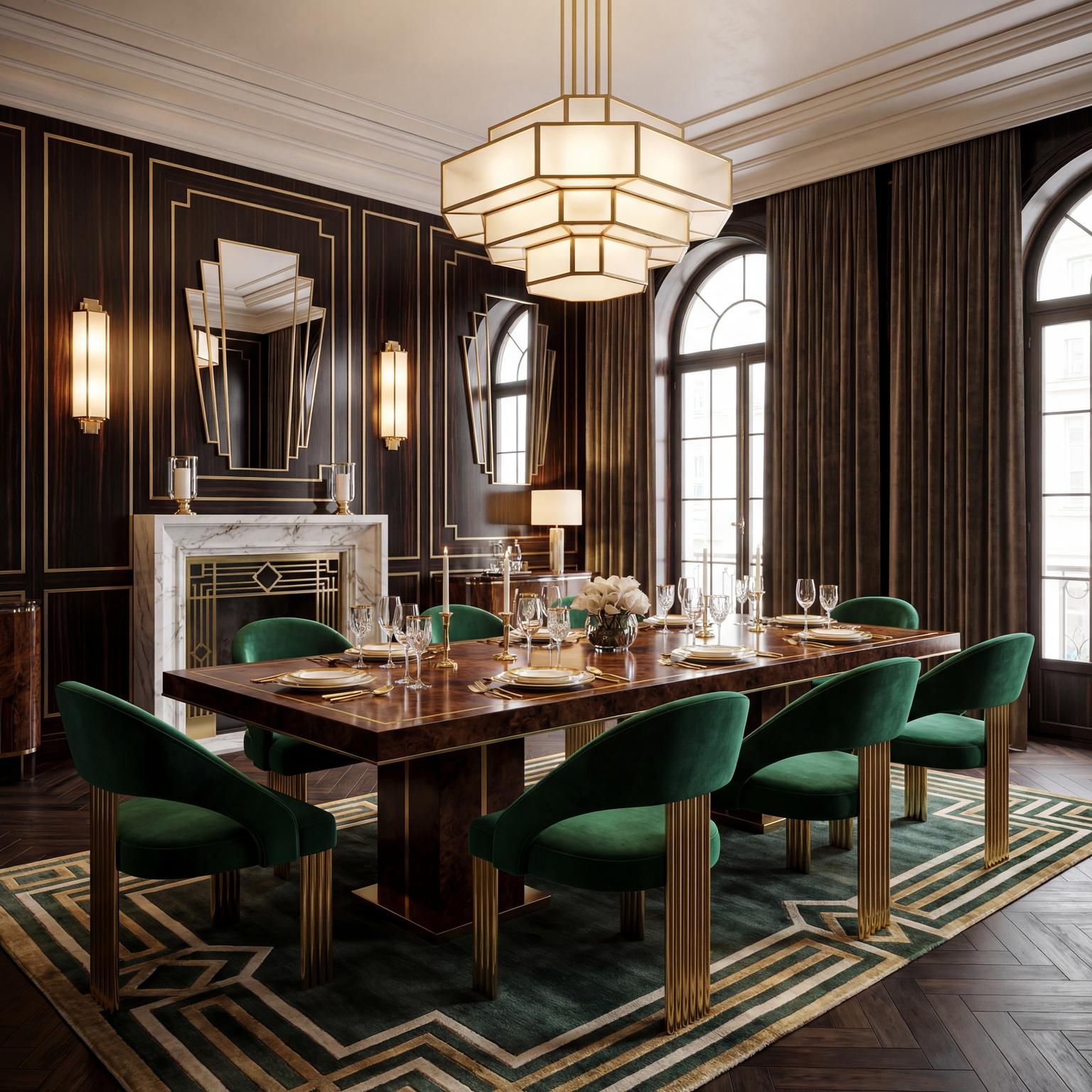
Luxurious Art Deco Dining Room with Period Details
Stepped, ziggurat-inspired mouldings around doorways are one of the few architectural details specific enough to read as genuinely period.
-
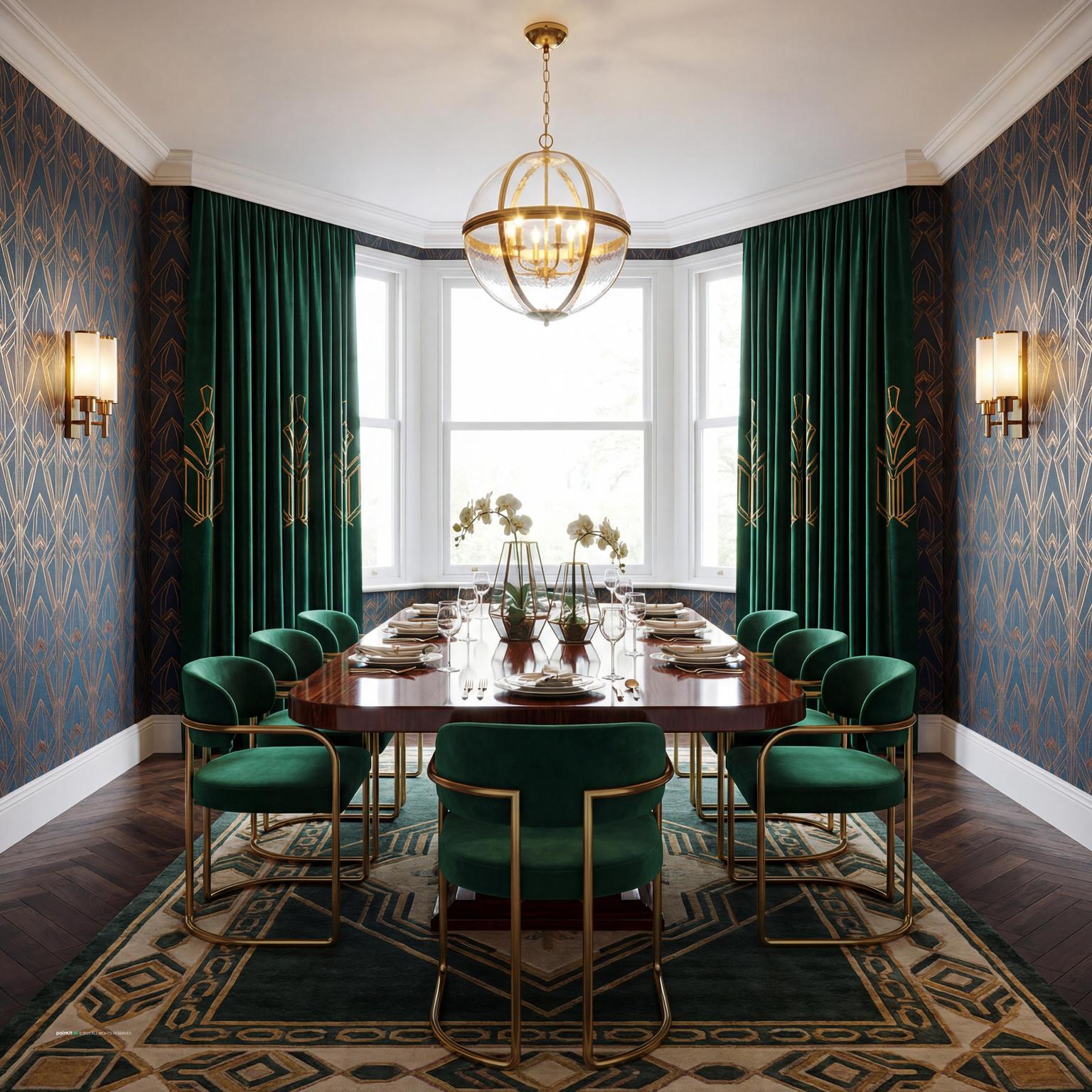
Elegant Art Deco Dining Room with Velvet Seating
Velvet dining chairs in a jewel tone are worth reupholstering over buying new; the fabric's depth is hard to replicate cheaply.
-
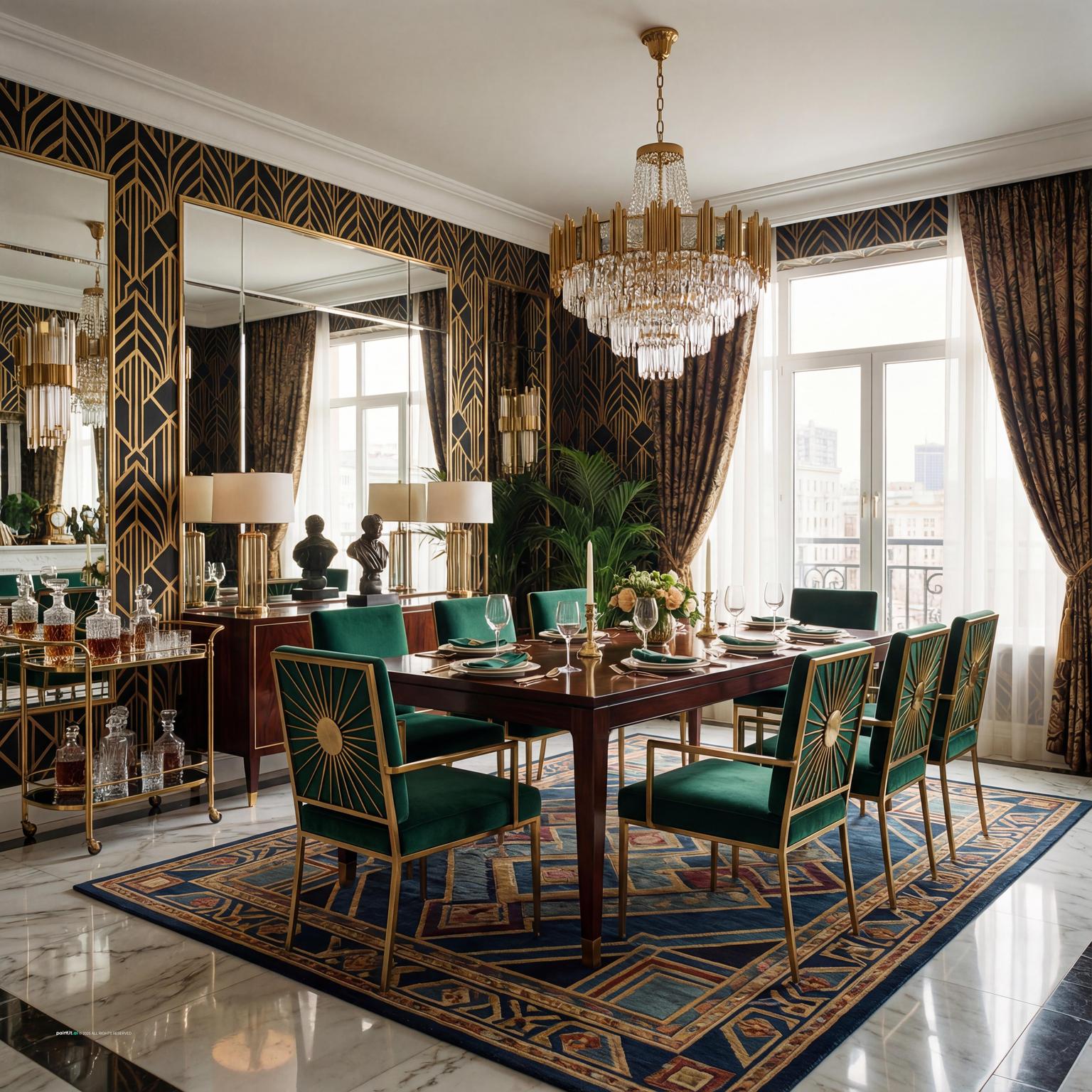
Glamorous Art Deco Dining Room with Brass Details
Brass chair frames paired with dark upholstery read as more considered than an all-metal or all-fabric approach.
-
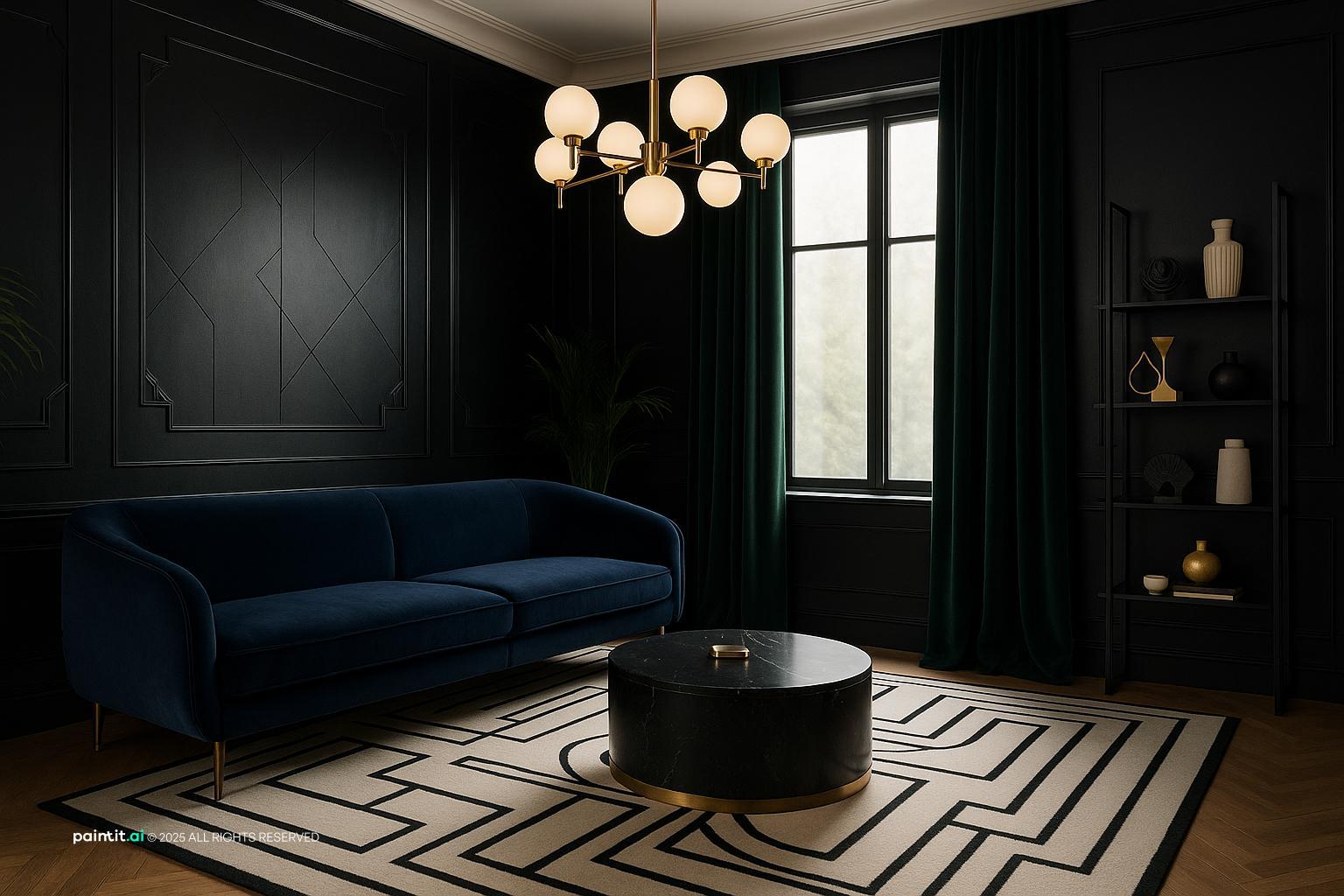
Maze-pattern rug and globe chandelier
A strongly patterned rug under plain dark furniture gives the room its Deco character without busy walls.
-
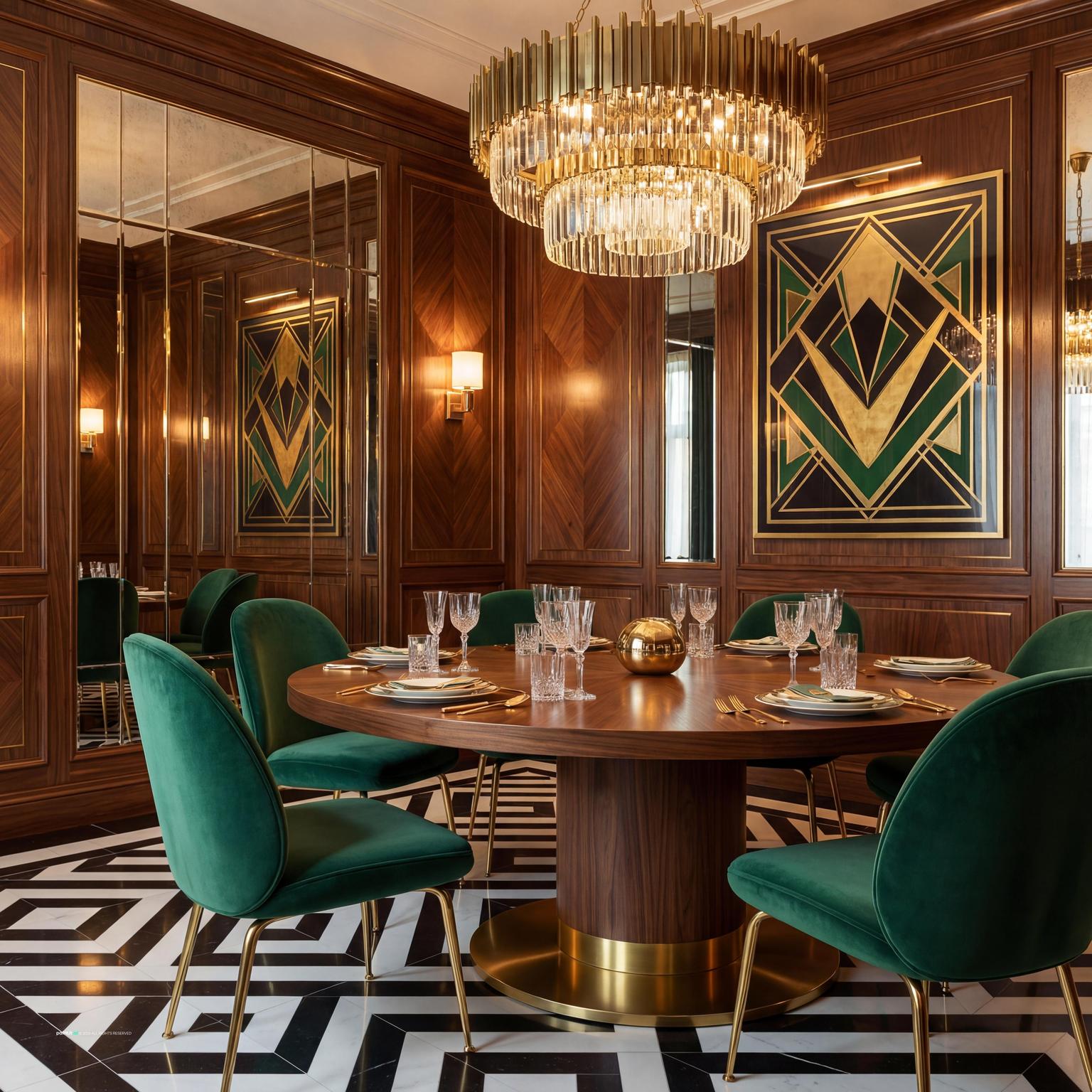
Glamorous Art Deco Dining Room with Velvet Seating
Emerald or sapphire velvet chairs against a neutral table setting let the seating carry the room's color statement.
-
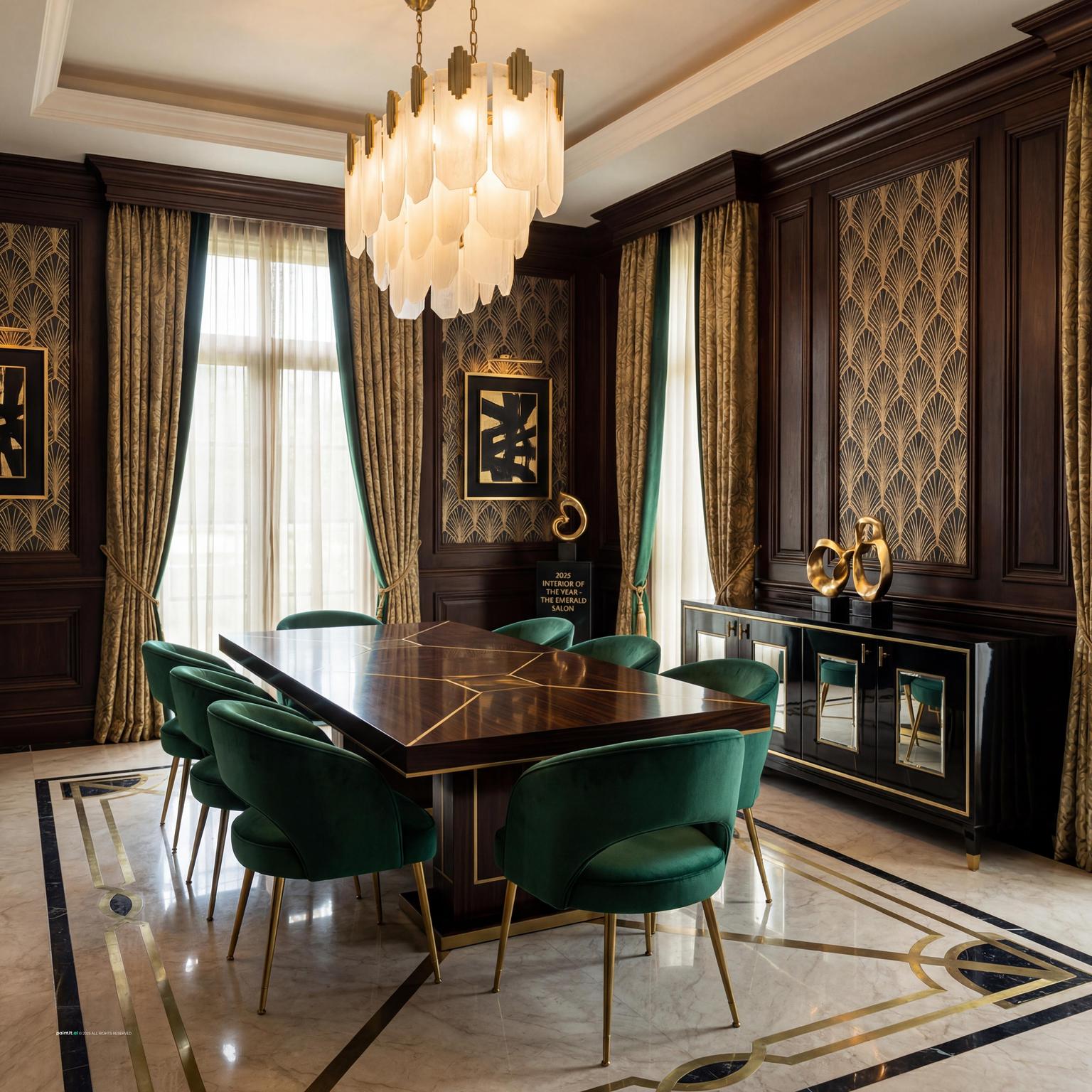
Luxurious Art Deco Dining Room with Patterned Detail
A chevron or fan-patterned rug under the table is period-accurate and hides wear better than a plain one.
-
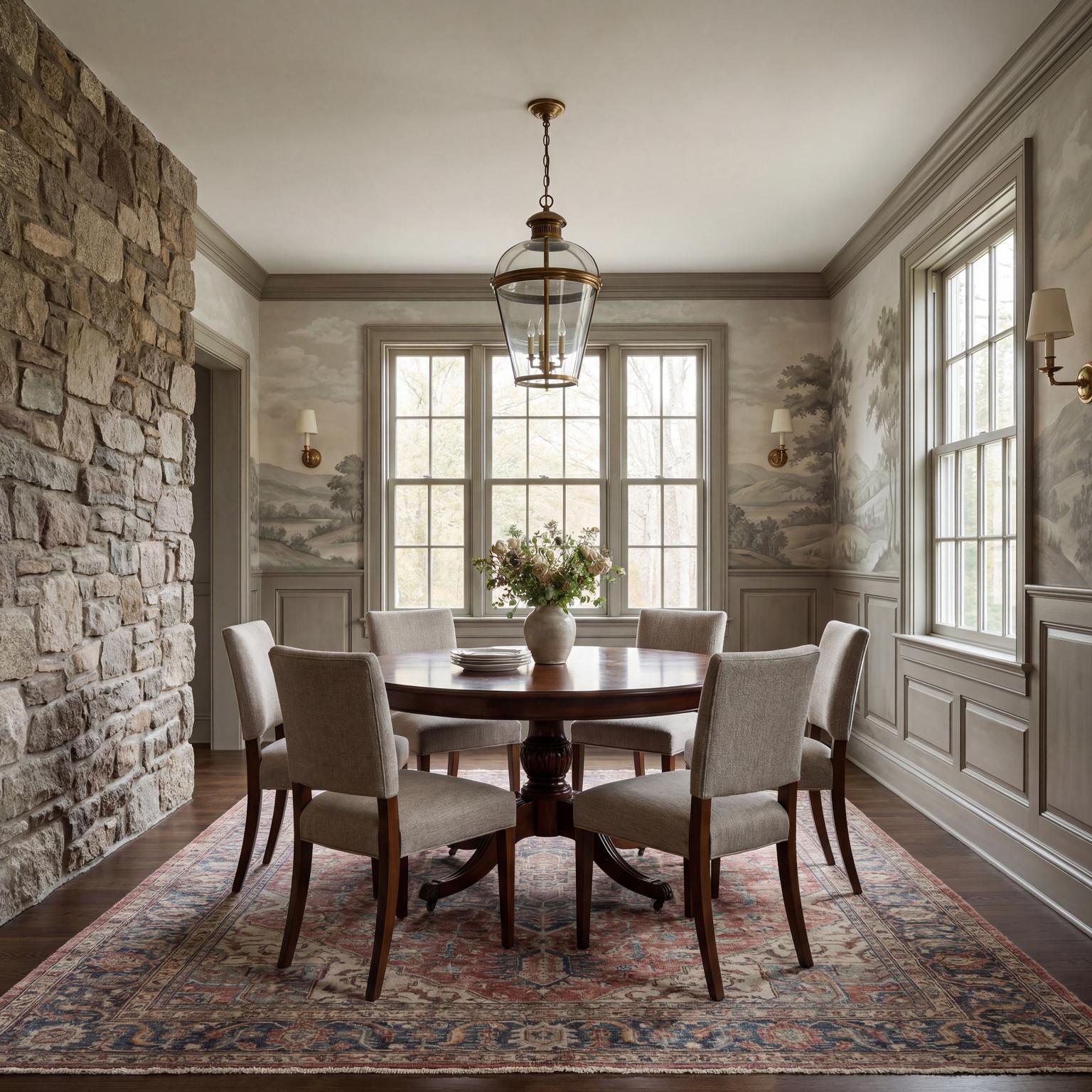
Elegant 1920s Traditional American Dining Room
American Art Deco leaned less ornate than the French version; simpler mouldings and fewer inlays keep this look from feeling costume-y.
-
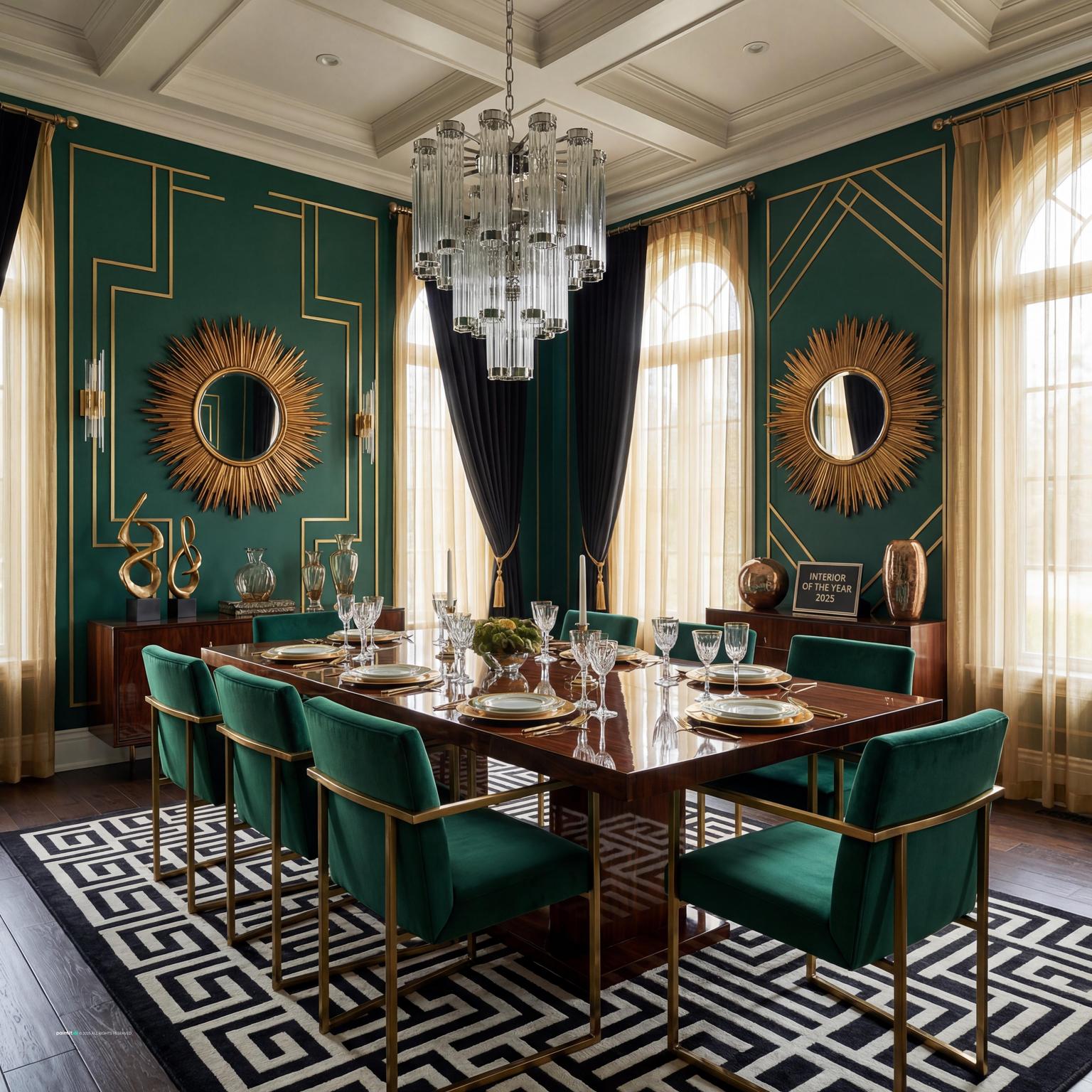
Luxurious Art Deco Dining Room with Dark Contrast
Dark walls with a single bright metallic accent create the high-contrast look this era is known for without needing multiple colors.
-
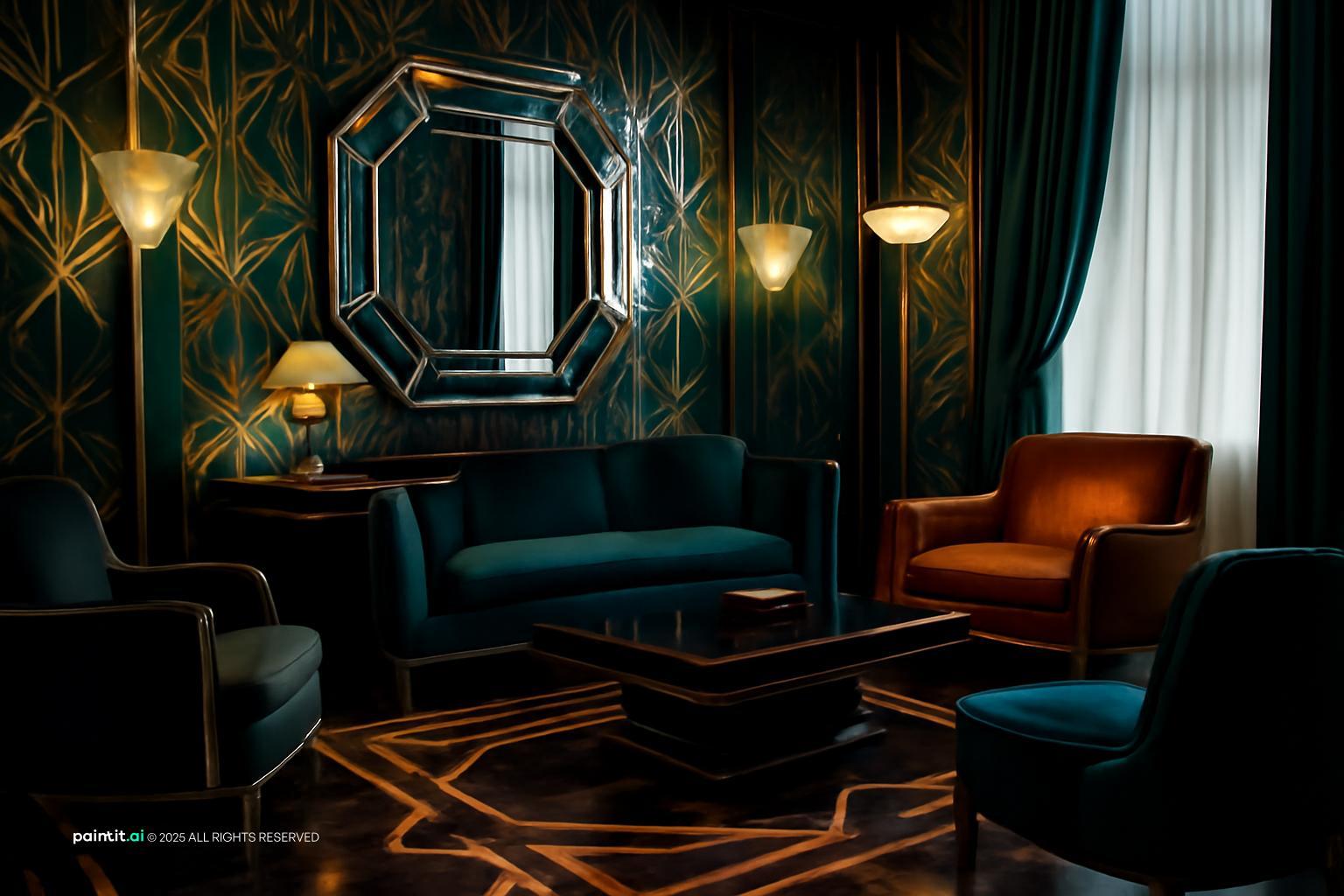
Black and gold with an octagonal mirror
Black walls with thin gold lines and an octagonal mirror are pure 1920s geometry; the teal velvet sofa adds the color.
-
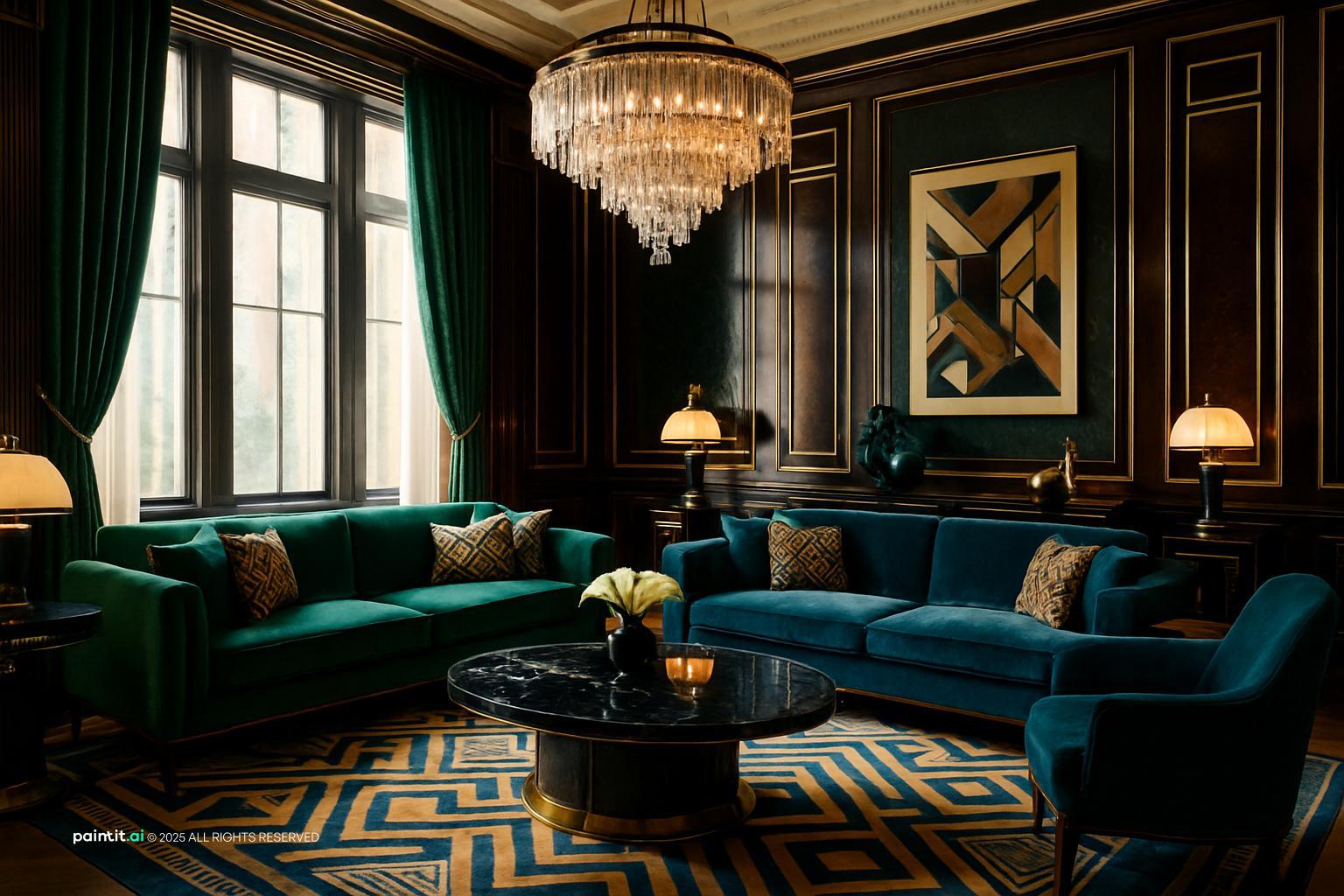
Teal velvet and Deco art
Matching velvet sofas facing each other and a geometric painting make a symmetrical Jazz Age sitting room.
-
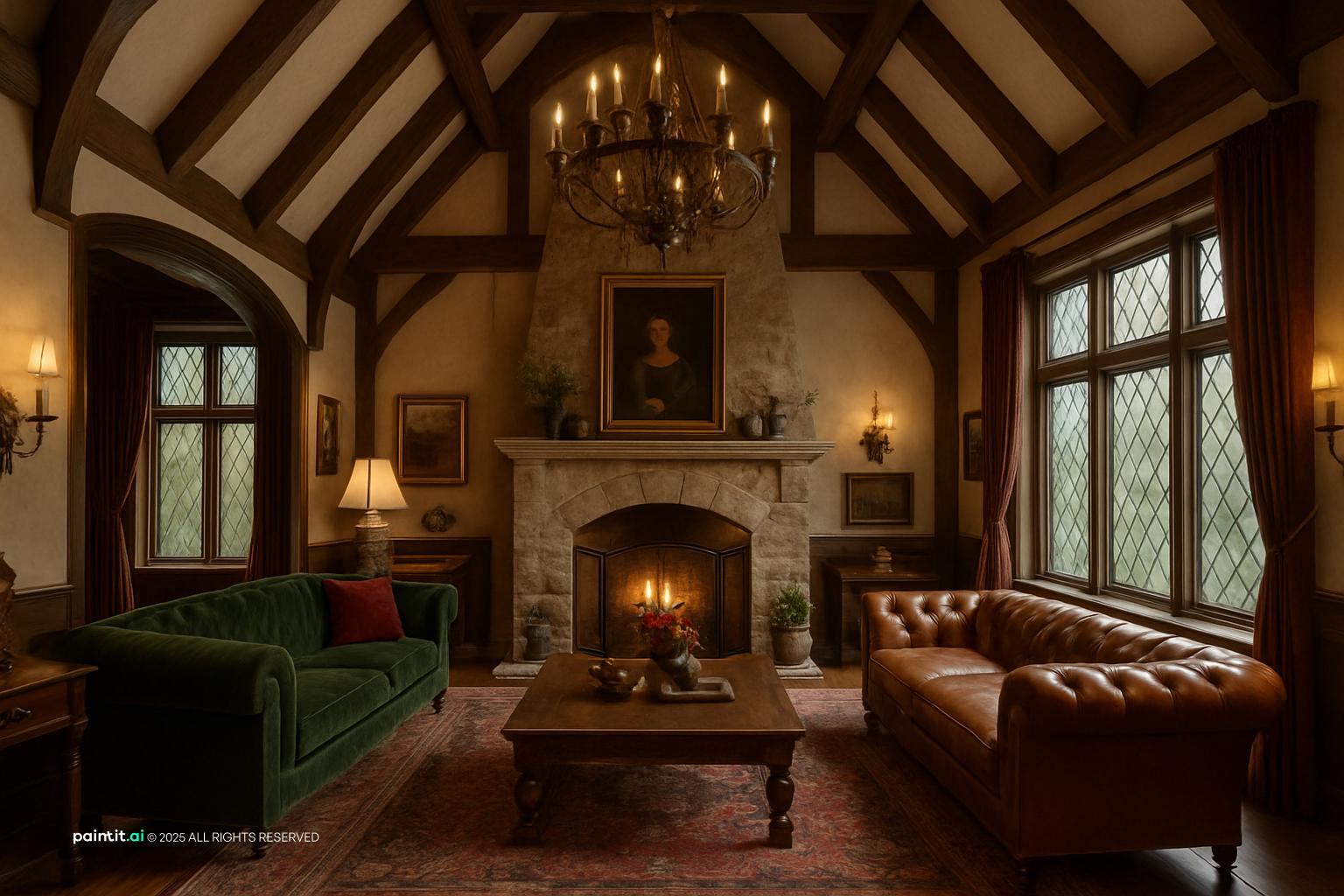
Tudor Revival great room
Tudor Revival was one of the most popular 1920s house styles: dark beams, leaded windows and a big stone fireplace.
-
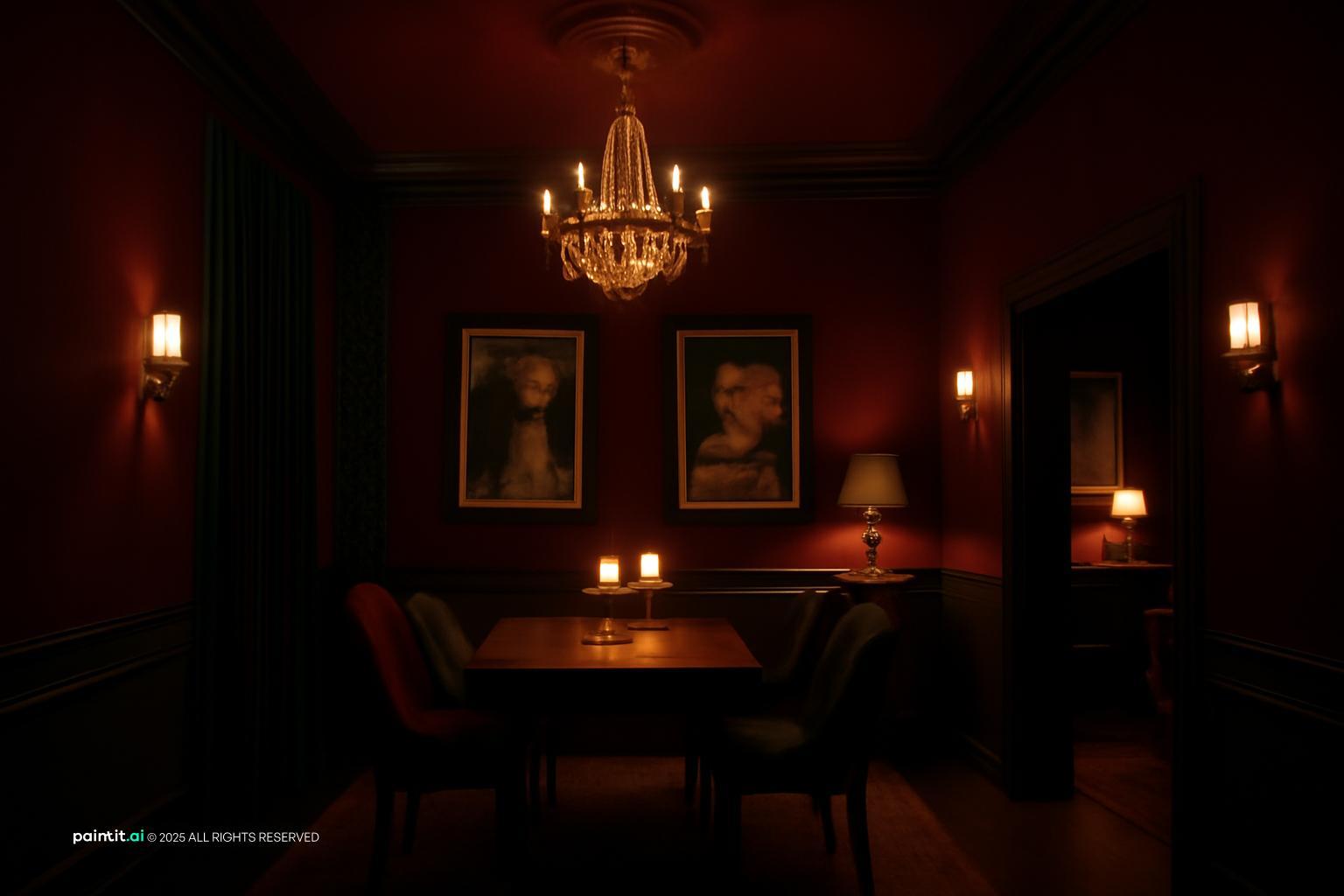
Candlelit speakeasy dining room
Deep red walls and candlelight make a small dining room feel like a hidden 1920s supper club.
-
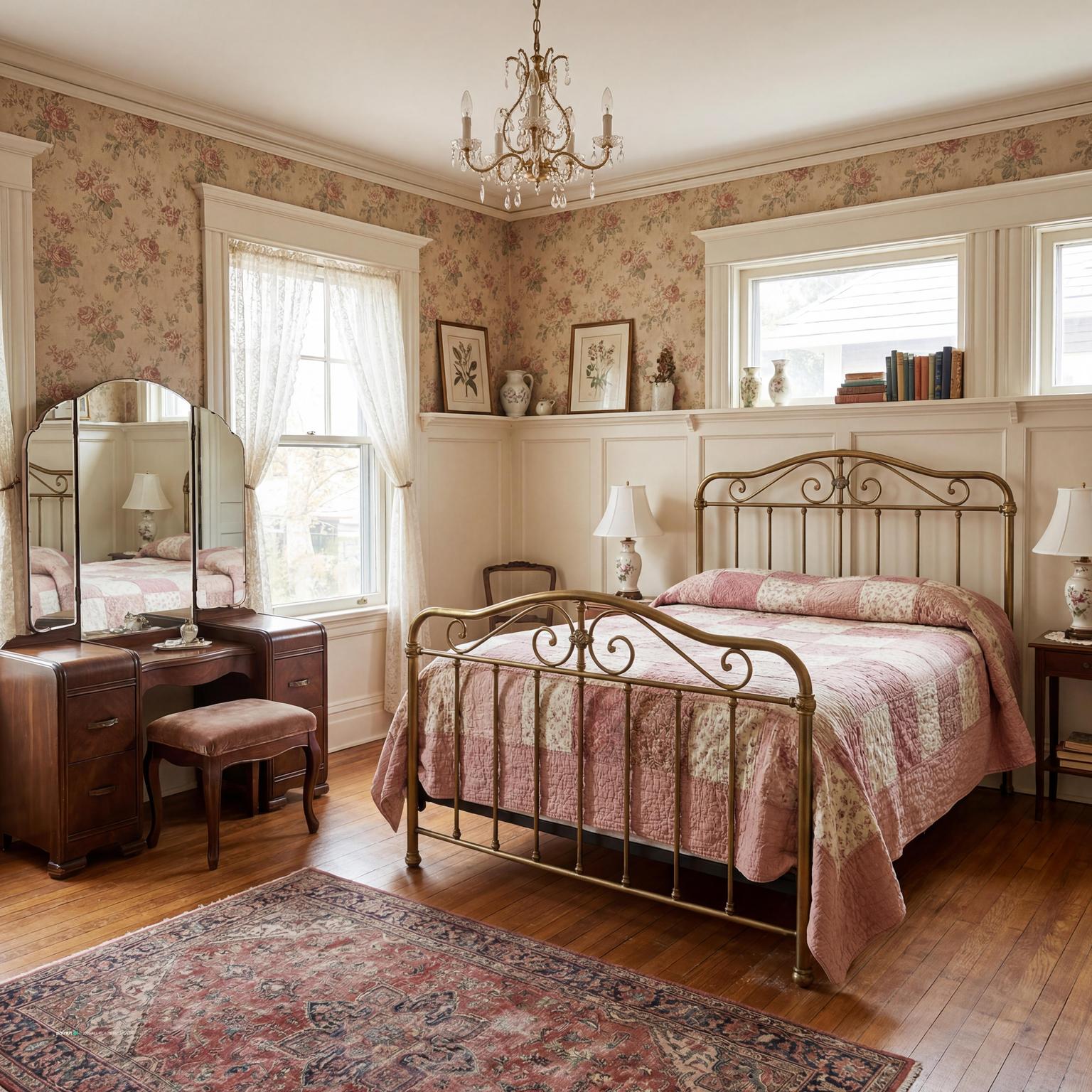
Art Deco Bedroom
A stepped headboard silhouette is the single furniture shape that reads as Art Deco fastest, even in an otherwise plain bedroom.
-
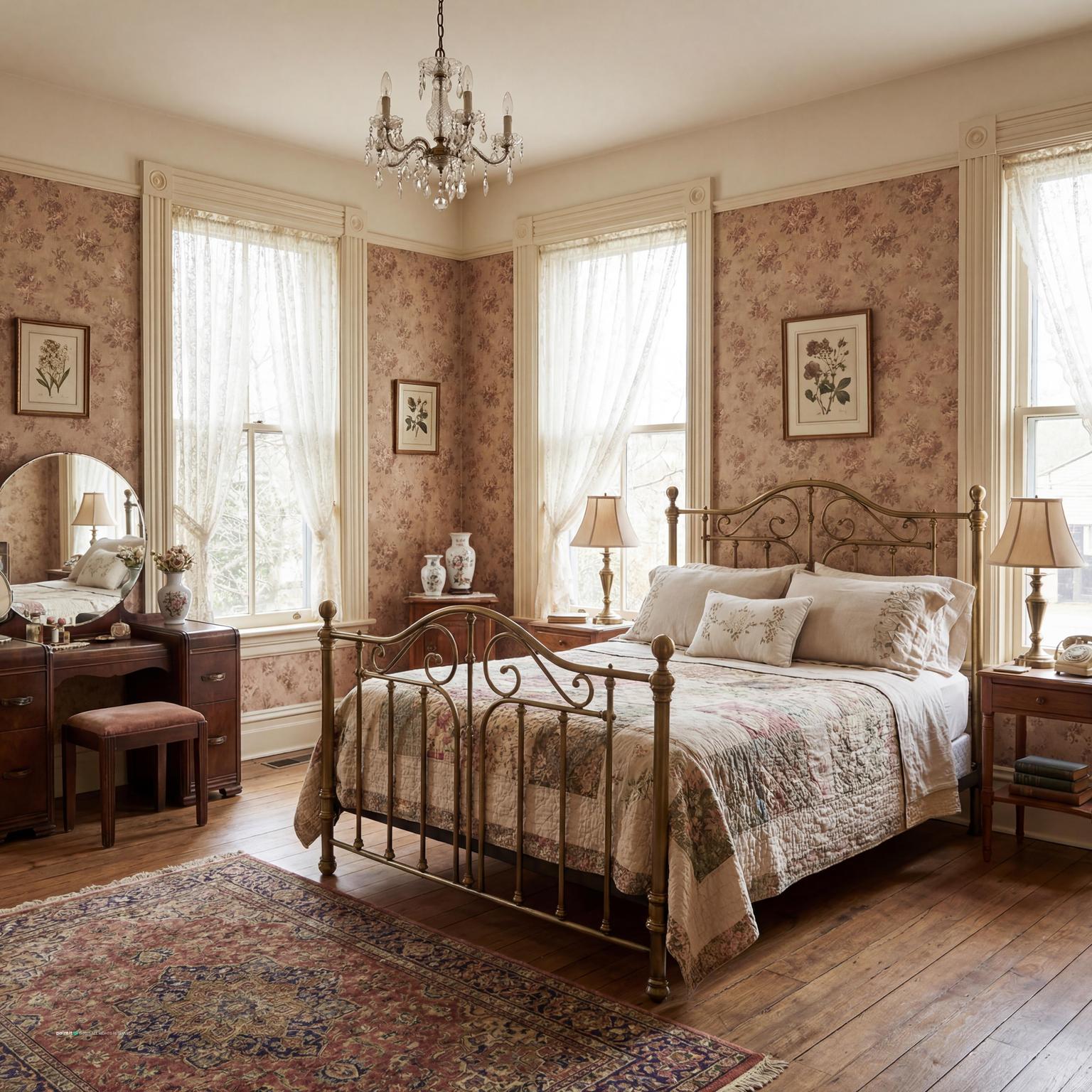
Art Deco Bedroom with Brass Details
Brass reads warmer than chrome and suits a bedroom better; save chrome's colder gleam for more public rooms.
-
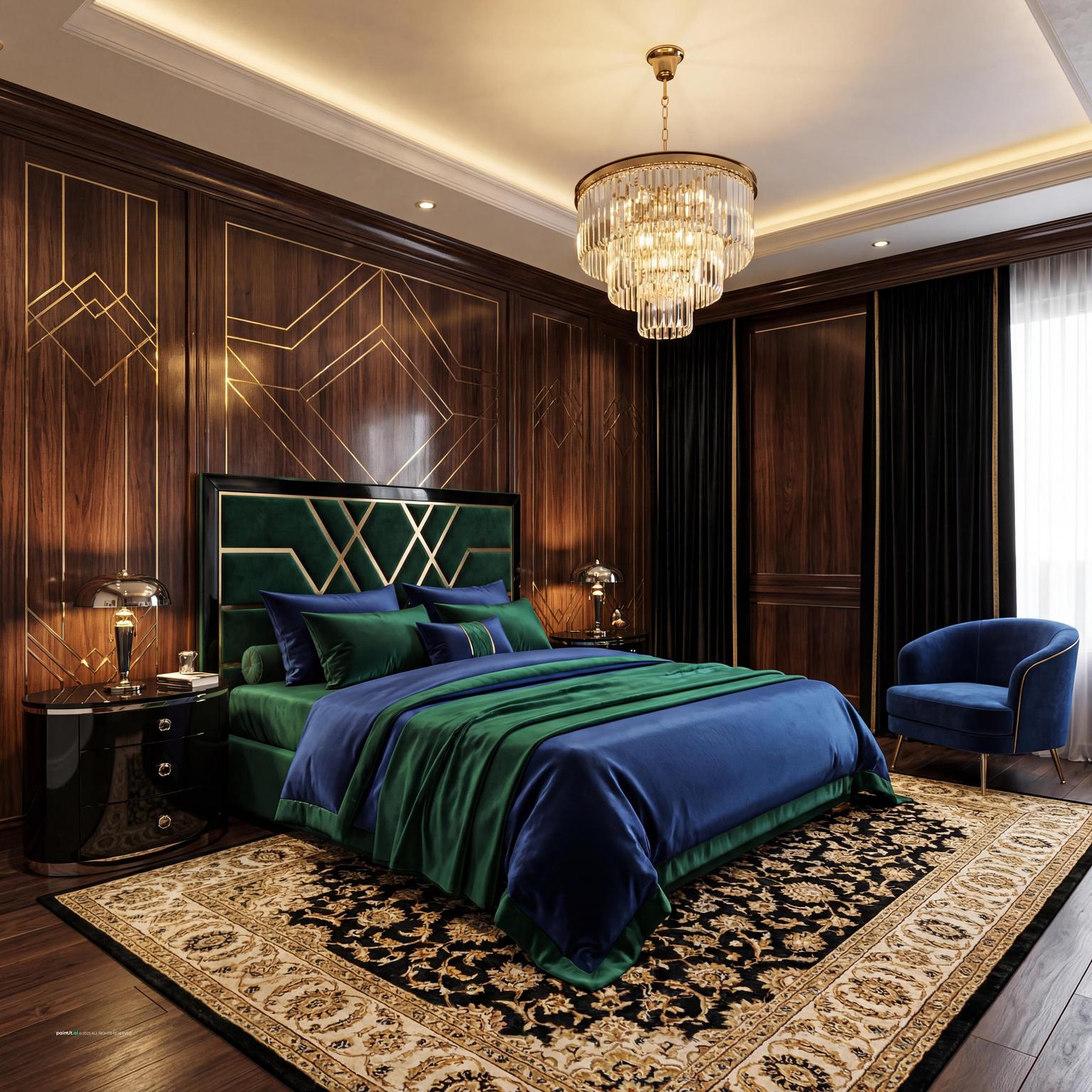
Elegant Art Deco Bedroom with Gold Accents
Gold works in small doses here, a mirror frame or lamp base, since a bedroom needs to stay calm enough to sleep in.
-
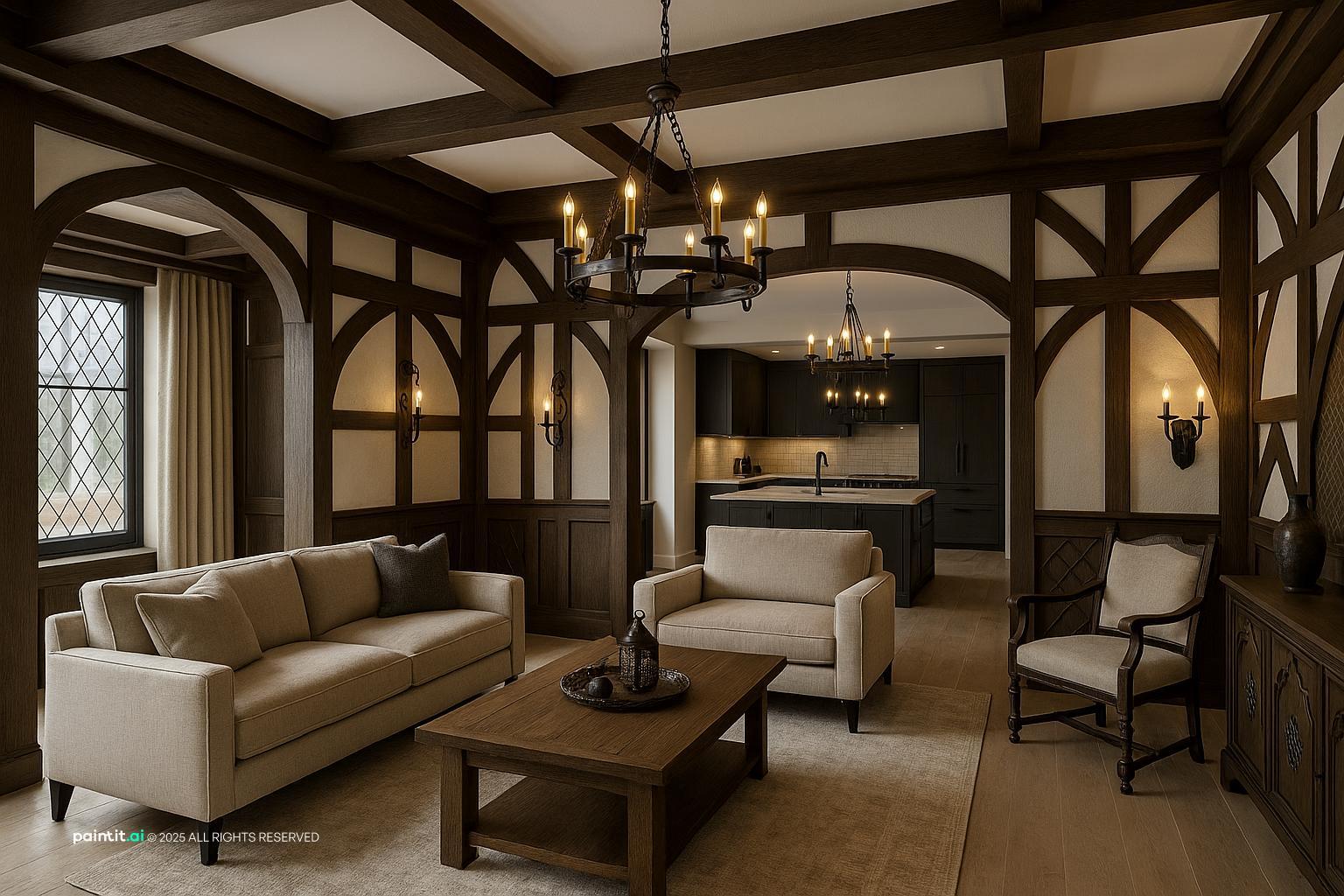
Half-timbered walls, modern furniture
A lighter take on Tudor Revival keeps the half-timber framing and pairs it with simple cream sofas.
Explore Captivating Examples of 1920 Interior Design Style Design Ideas
Discover the elegance and sophistication of the 1920 interior design style. From opulent Art Deco elements to luxurious finishes, immerse yourself in this timeless era.
FAQ
-
Art Deco aesthetics define 1920s interior design through intricate geometric patterns and the use of opulent materials such as chrome and lacquer combined with striking color schemes. Sleek furniture pieces combine with opulent textiles to create an atmosphere of sophisticated modernity.
-
Refrain from filling spaces with an excess of intricate or discordant elements. Avoid using muted colors because they reduce the bold elegance that defines this style. The preservation of Art Deco essence demands adherence to genuine materials.
-
The 1920 interior design style fits commercial spaces effectively because of its luxurious appeal and timeless elegance. The striking design elements of this style transform hotels, restaurants, and boutiques into spaces that exude both warmth and elegance.
-
The interior design style of 1920 continues to captivate audiences with its enduring elegance and its powerful ability to communicate opulence and sophisticated charm. Modern designers and homeowners remain entranced by the timeless appeal of its geometric patterns and luxurious materials.
-
Current reinterpretations of 1920s fashion frequently use eco-friendly and adaptable materials to merge vintage looks with modern elements. The application of advanced technology has sparked a revival in the utilization of bold patterns alongside contrasting textures.
-
Paintit.ai assists in visualizing the 1920 interior design style by offering virtual renderings and design simulations. This tool allows you to experiment with color schemes, furniture layouts, and lighting, ensuring your space captures the era's elegance.