
Danish Interior Design Style 22 rooms and what defines the look
Danish interior design is built on minimalism paired with function, not minimalism for its own sake. The core elements are neutral colors, natural materials, and simple geometric forms, kept livable rather than austere.
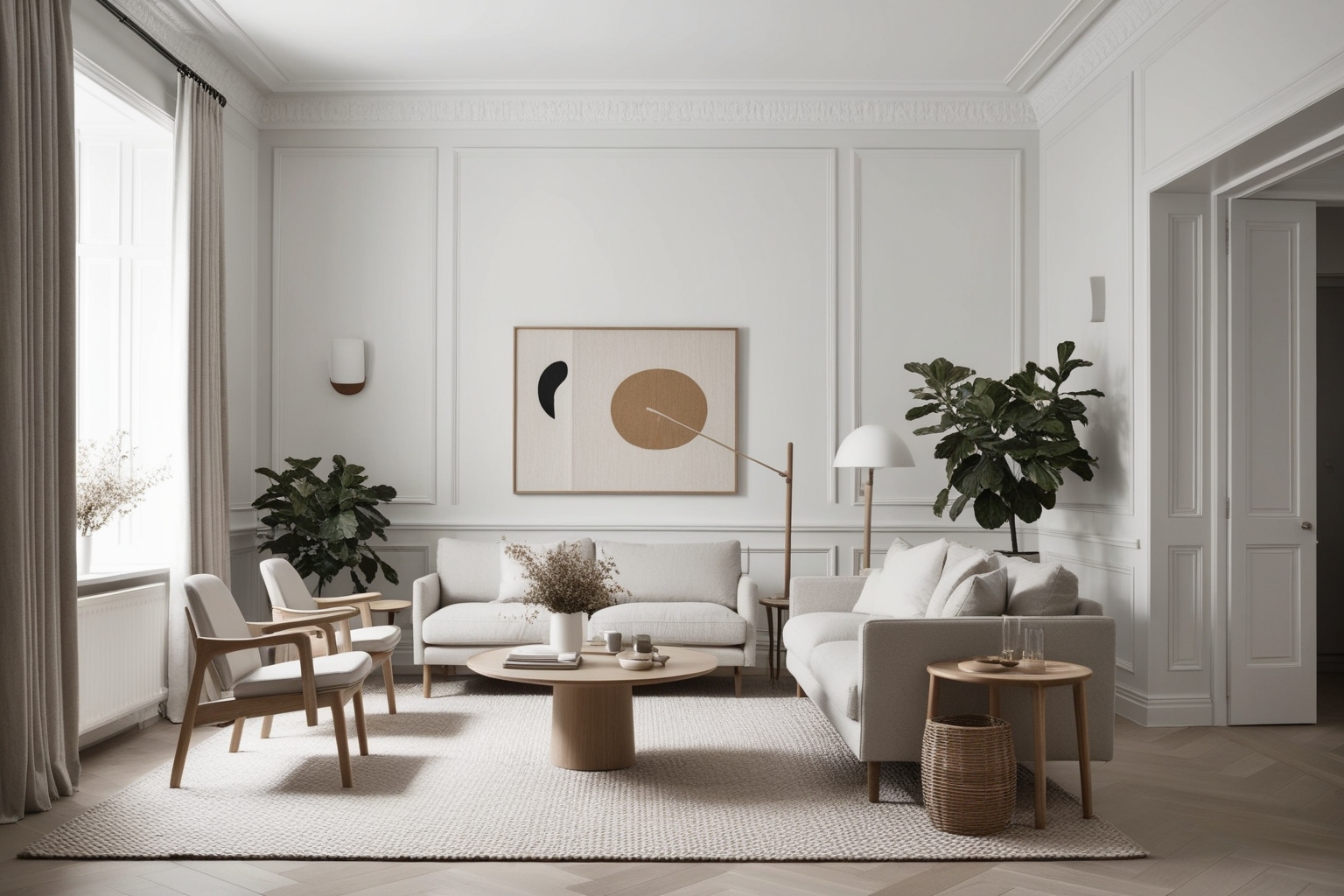
What Actually Defines Danish Interior Design
Danish design is a specific design movement with a founding date and named designers, not just a loose aesthetic label - which is why the details below matter for getting the look right rather than approximating it.
-
It Started as a Teaching Method, Not a Trend
Kaare Klint, often called the father of modern Danish furniture, founded the furniture school at the Royal Danish Academy of Fine Arts in Copenhagen in 1923. His method combined Bauhaus-style clean lines with careful measurement of the human body and classical furniture proportions - design as applied research, not decoration.
-
Function Comes Before Form, Literally
Klint's students - Hans Wegner, Arne Jacobsen, Finn Juhl among them - worked from anthropometrics: how a chair actually supports a seated body, how a table height suits real use. A piece earns its shape from function first; decoration, if any, follows. That's why authentic Danish furniture rarely has ornamentation that doesn't serve a structural purpose.
-
The Golden Era Has a Timeframe
The movement's peak ran roughly from the 1940s through the 1960s. Hans Wegner alone designed around 500 chairs in his career, using steam-bending techniques to shape solid wood into the curved forms that became a signature of the style. Reproductions and originals from this window are what most "Danish modern" furniture references actually point to.
-
Material Honesty Over Material Abundance
Oak, teak, and beech are used in ways that show the wood's grain and joinery rather than hiding it under paint or heavy finish. A room built on this principle uses fewer, better pieces - the opposite of maximalism, and part of why Danish rooms photograph as calm rather than sparse.
22 Danish interior design style ideas
-
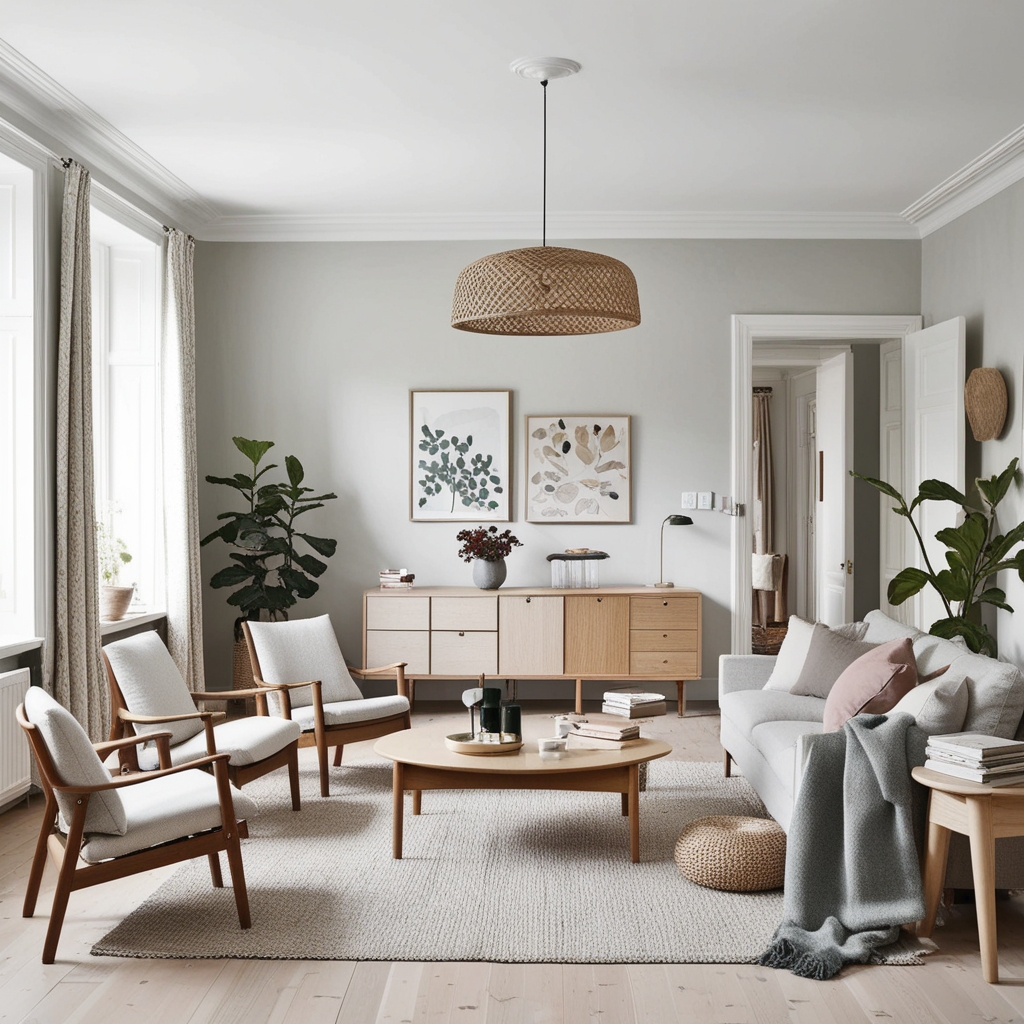
Light oak and a rattan pendant
One piece of art earns a blank wall; wool throws and a sheepskin add the texture that keeps the room from feeling cold.
-
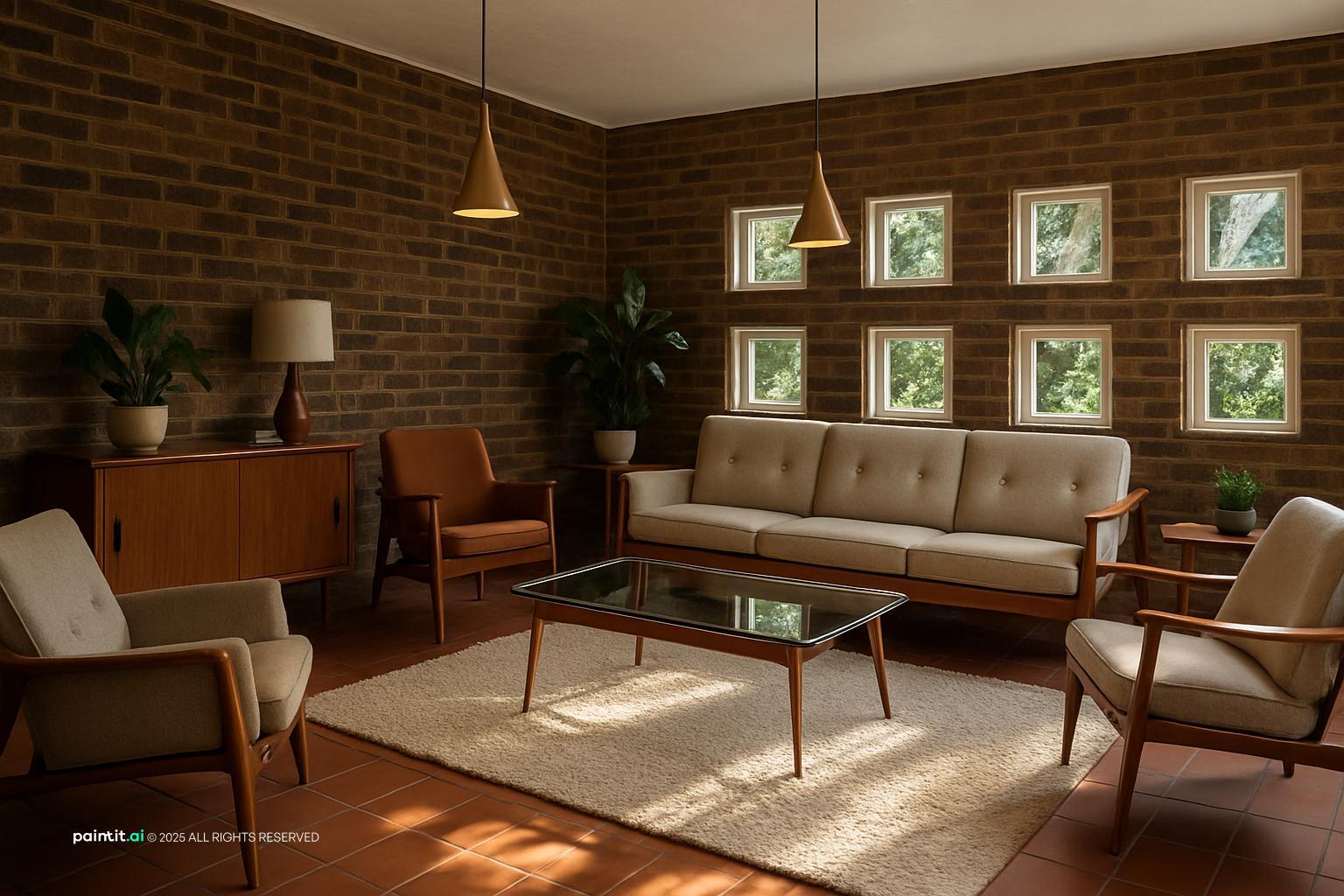
Mid-century room with a brick wall
Walnut furniture against an old brick wall shows how Danish mid-century pieces sit comfortably in an older building.
-
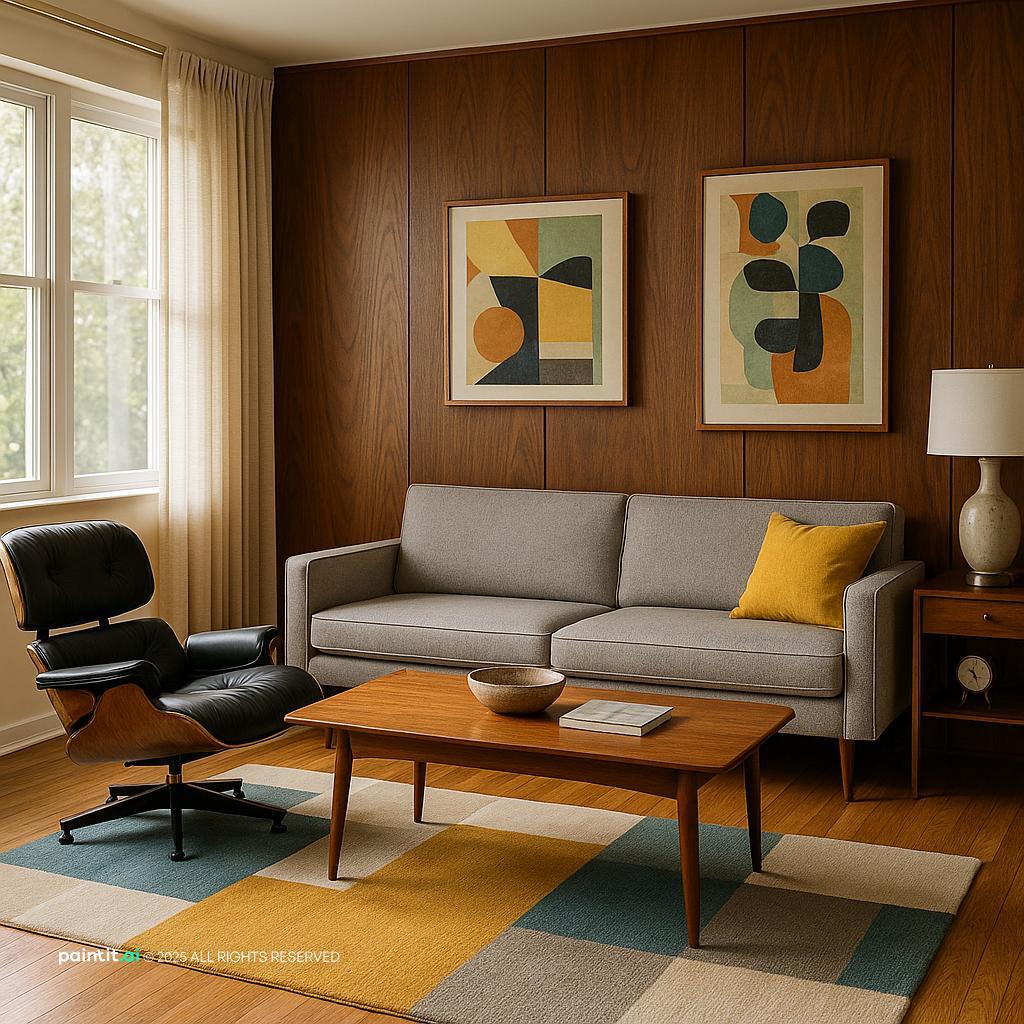
Walnut paneling and a lounge chair
A teak or walnut backdrop and one classic lounge chair carry the mid-century reference without a full period set.
-
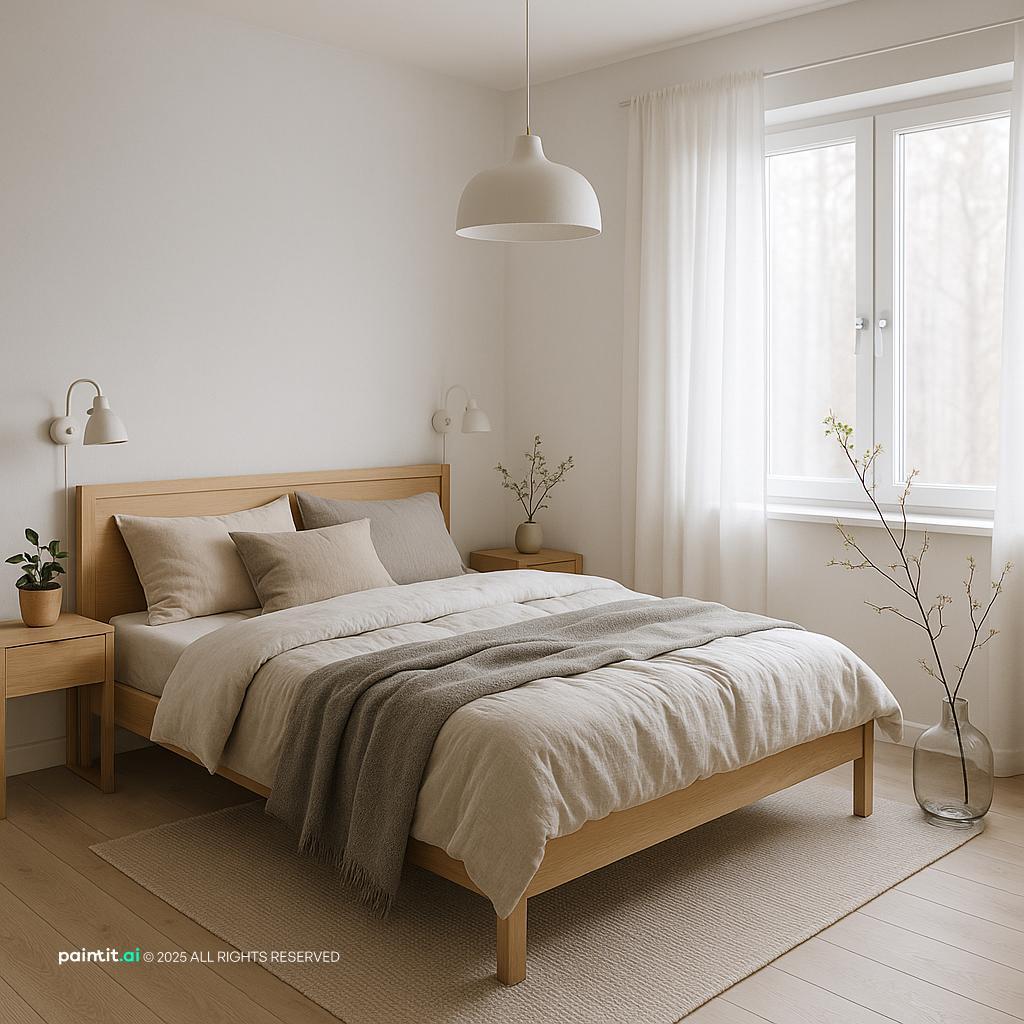
Calm linen bedroom
Linen bedding in undyed or soft gray tones and a low, plain bed frame keep the bedroom from feeling styled.
-
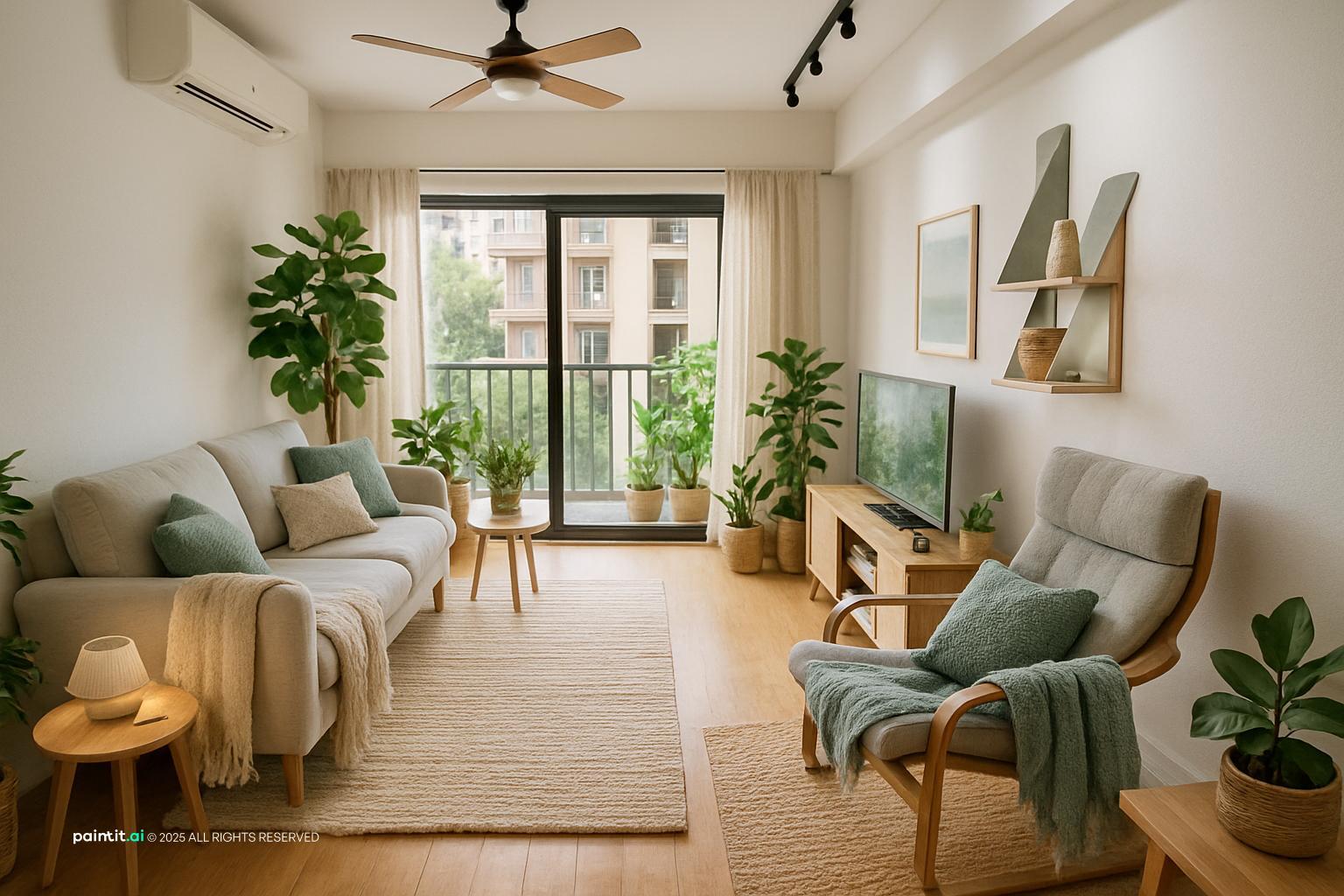
Hygge living room with plants
Wood, wool, plants and daylight are most of what hygge needs; the room stays uncluttered.
-
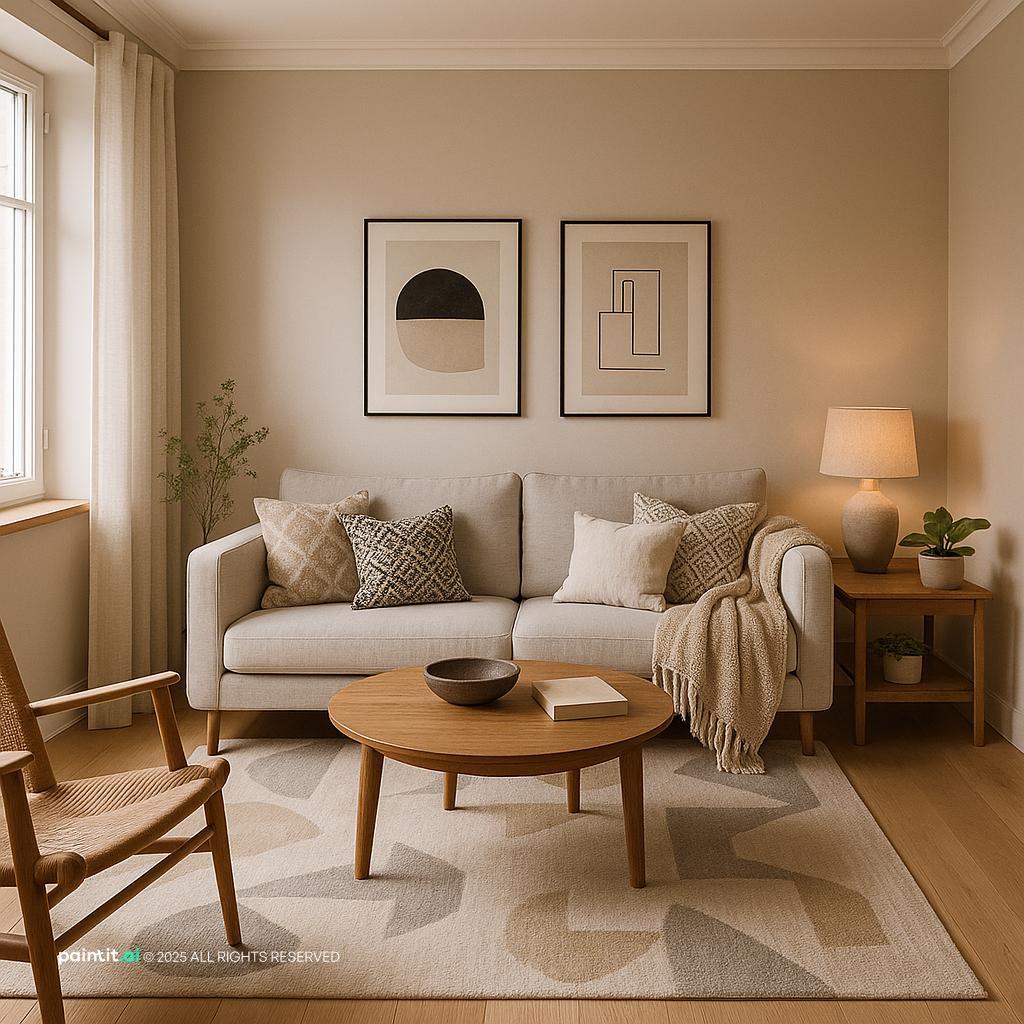
Low lamps and warm neutrals
Hygge here means layered lighting at low table height: a couple of table lamps beat one overhead fixture.
-
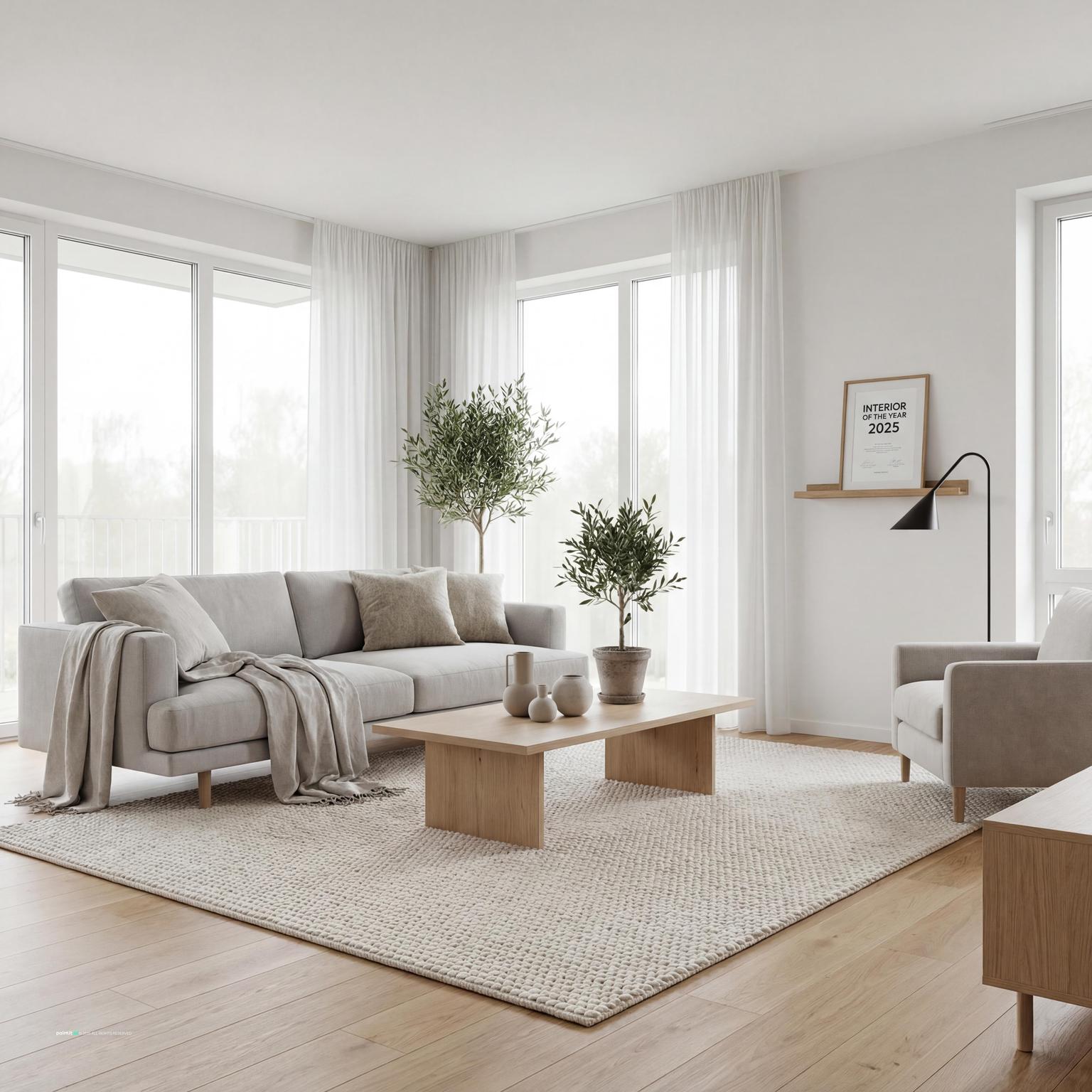
Wide oak floorboards
Wide oak floorboards with a matte oil finish set the warm undertone the rest of the room is built around.
-
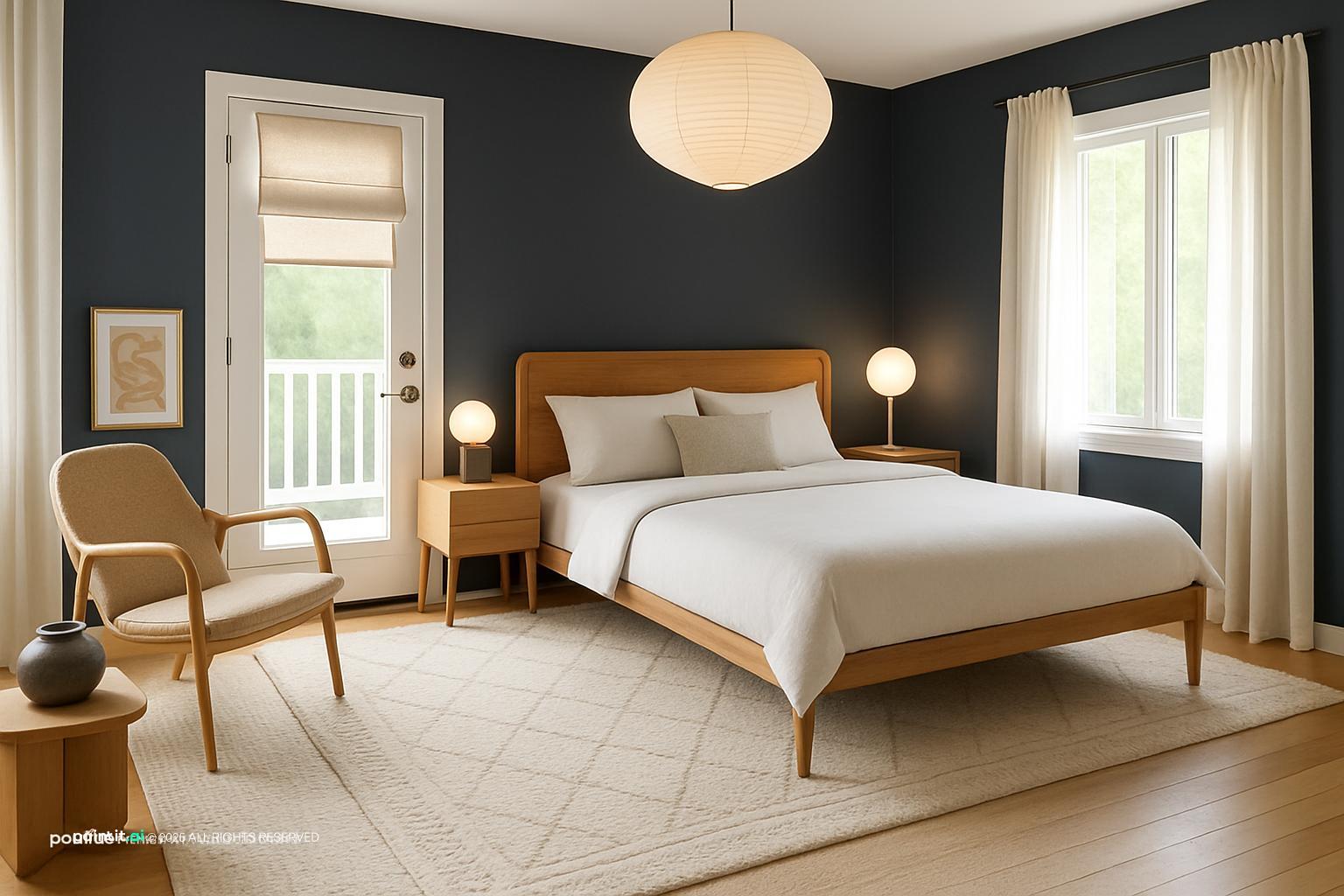
Navy wall and a paper pendant
One deep wall color behind an oak bed keeps a Danish bedroom calm but less predictable than all-white.
-
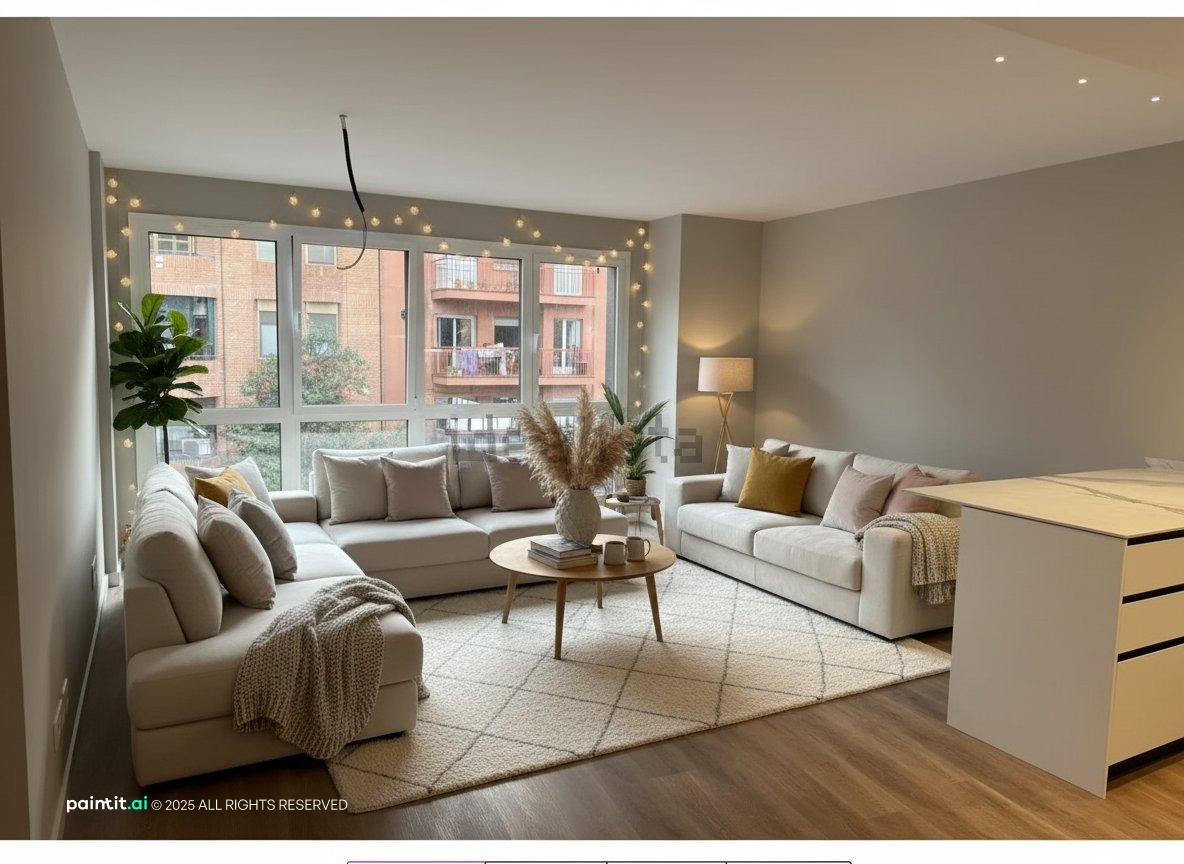
Hygge with string lights
String lights and a low table lamp are cheap ways to bring hygge warmth to a plain modern room.
-
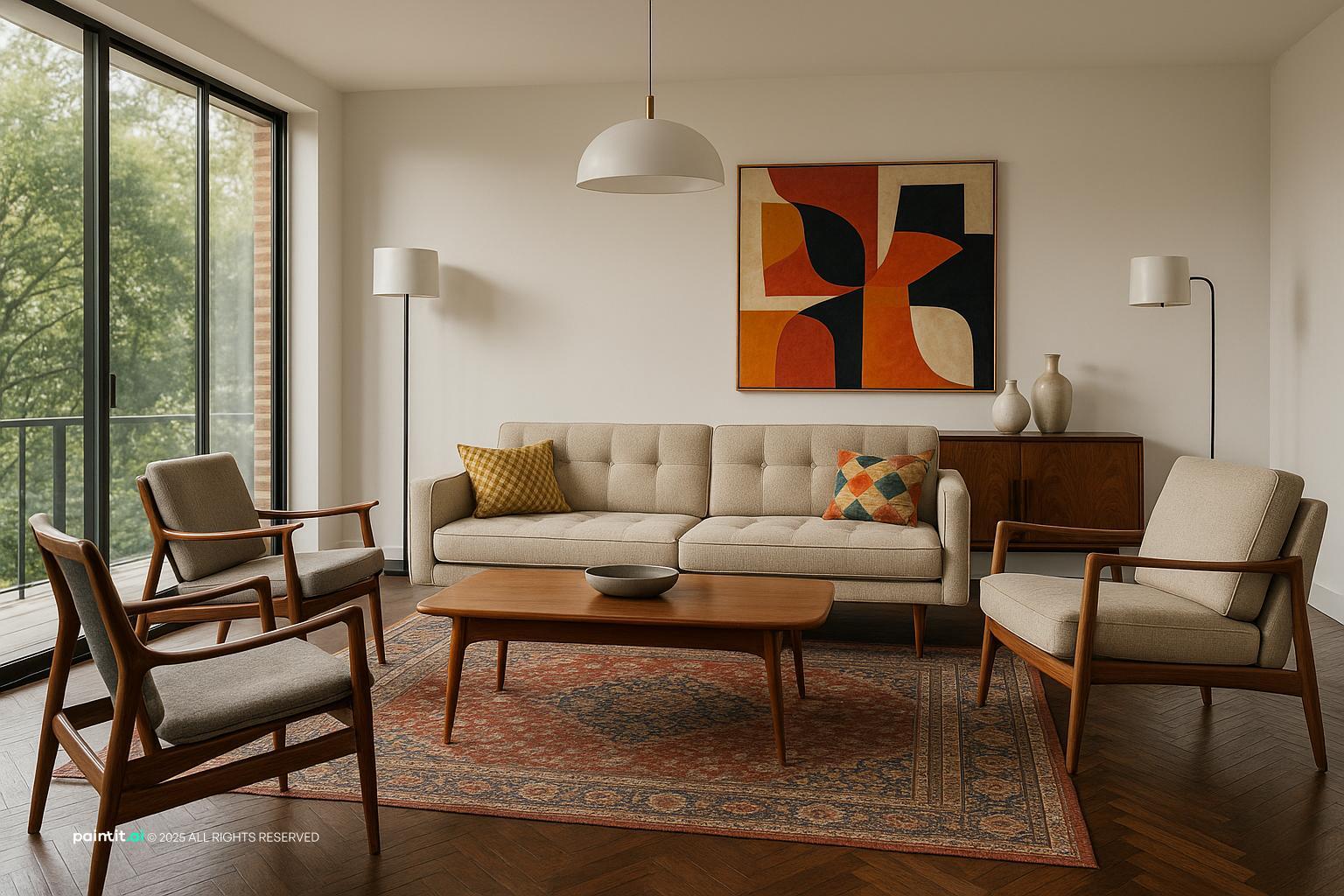
Teak chairs and bold art
Teak chairs with tapered legs read as mid-century; one bold print and rug add color without clutter.
-
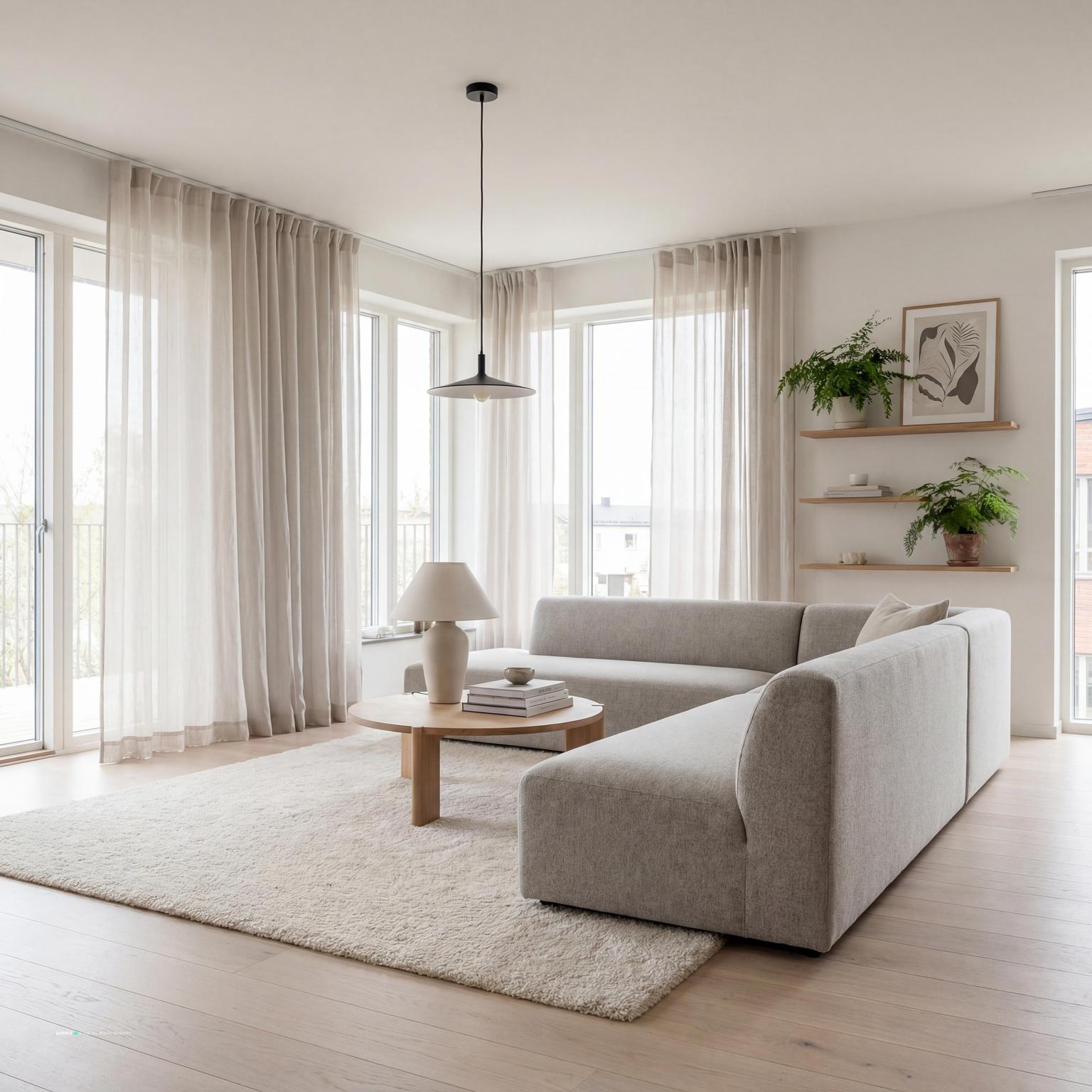
Sculptural pendant as the focal point
A sculptural pendant is the one deliberately decorative object in an otherwise quiet room.
-
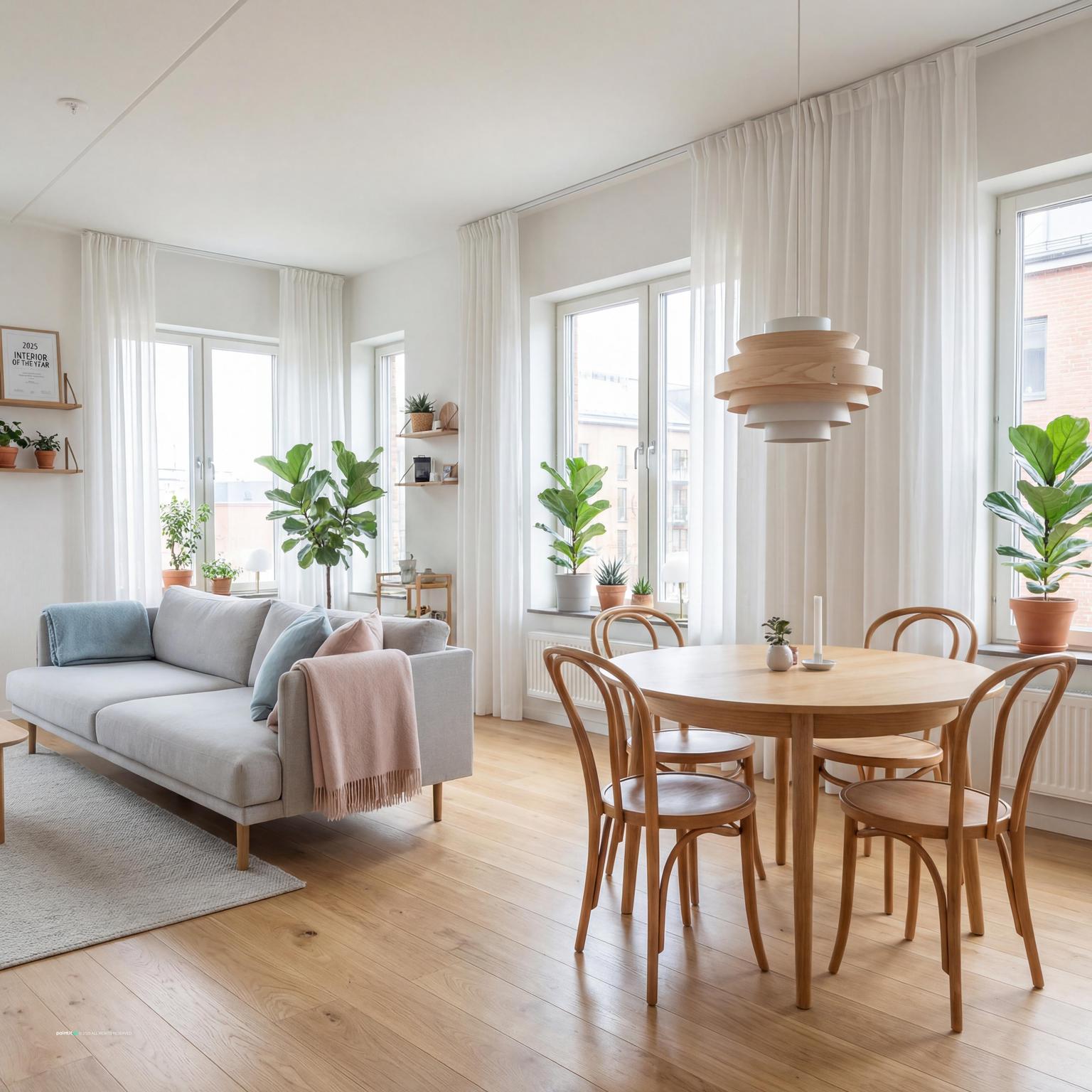
Open shelves with stoneware
A small grouping of stoneware and plants on open shelving works as the room's only real decoration.
-
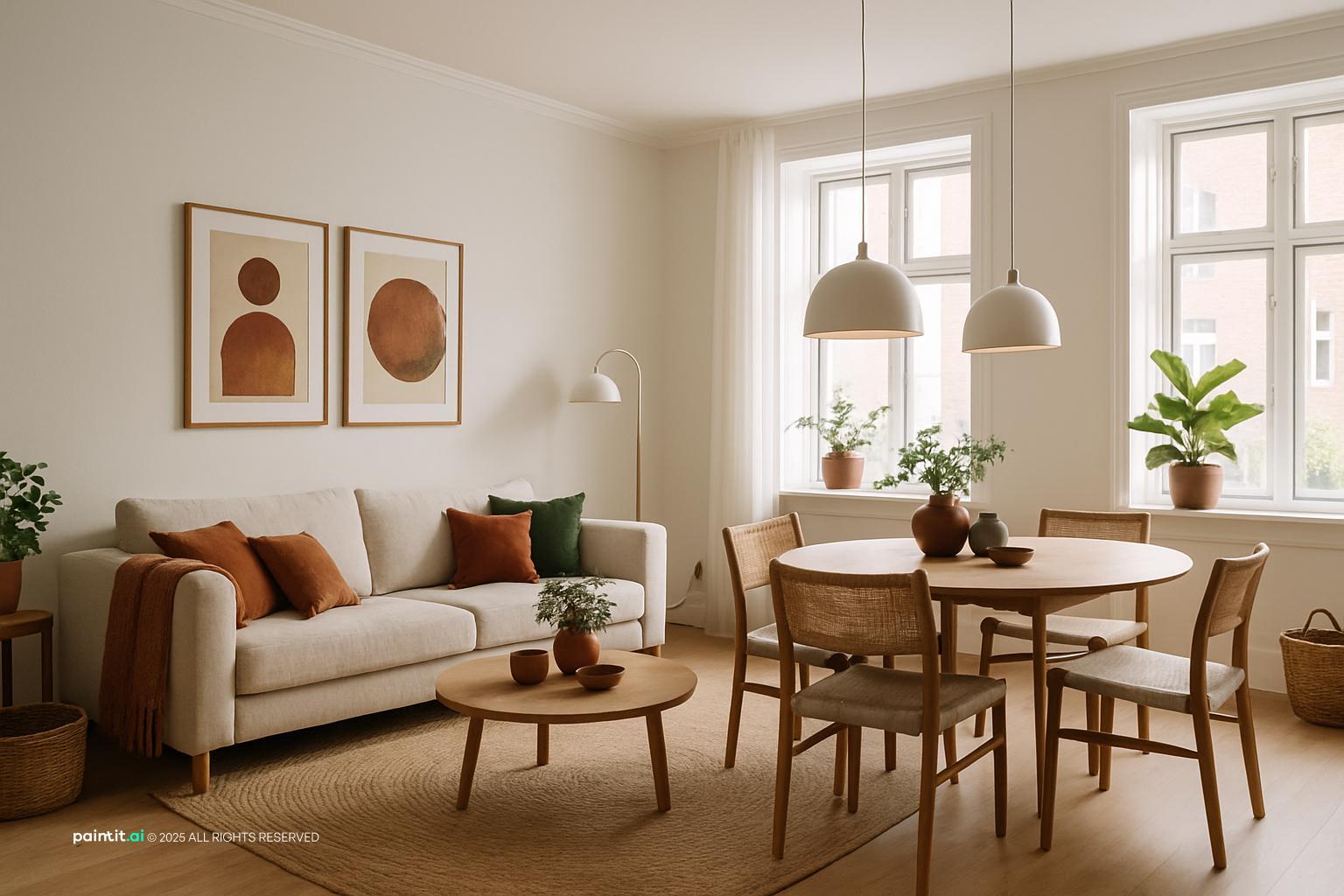
Copenhagen-style open plan
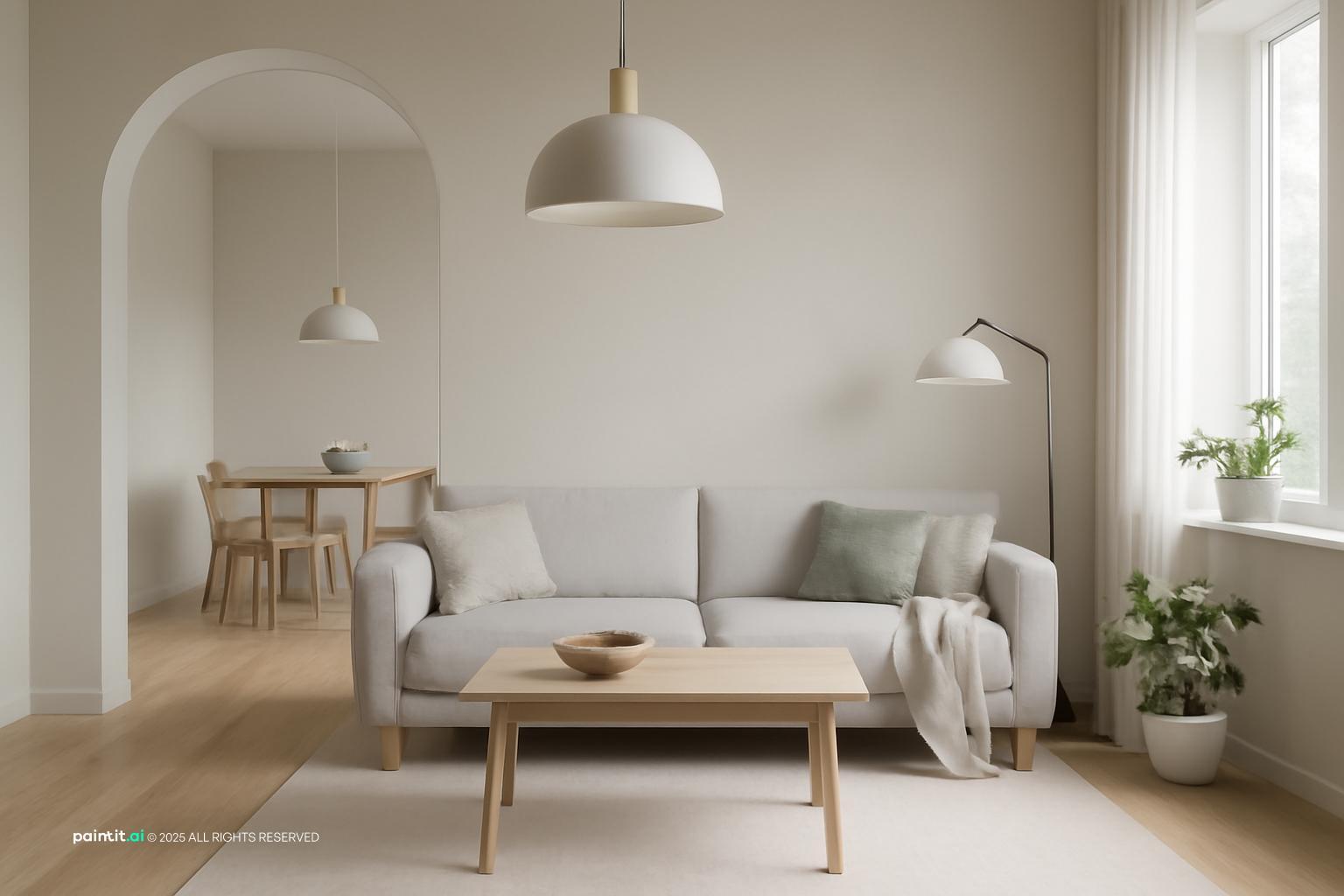
Paper pendants over the table and a white sofa in one open room: the everyday Copenhagen apartment look.
-
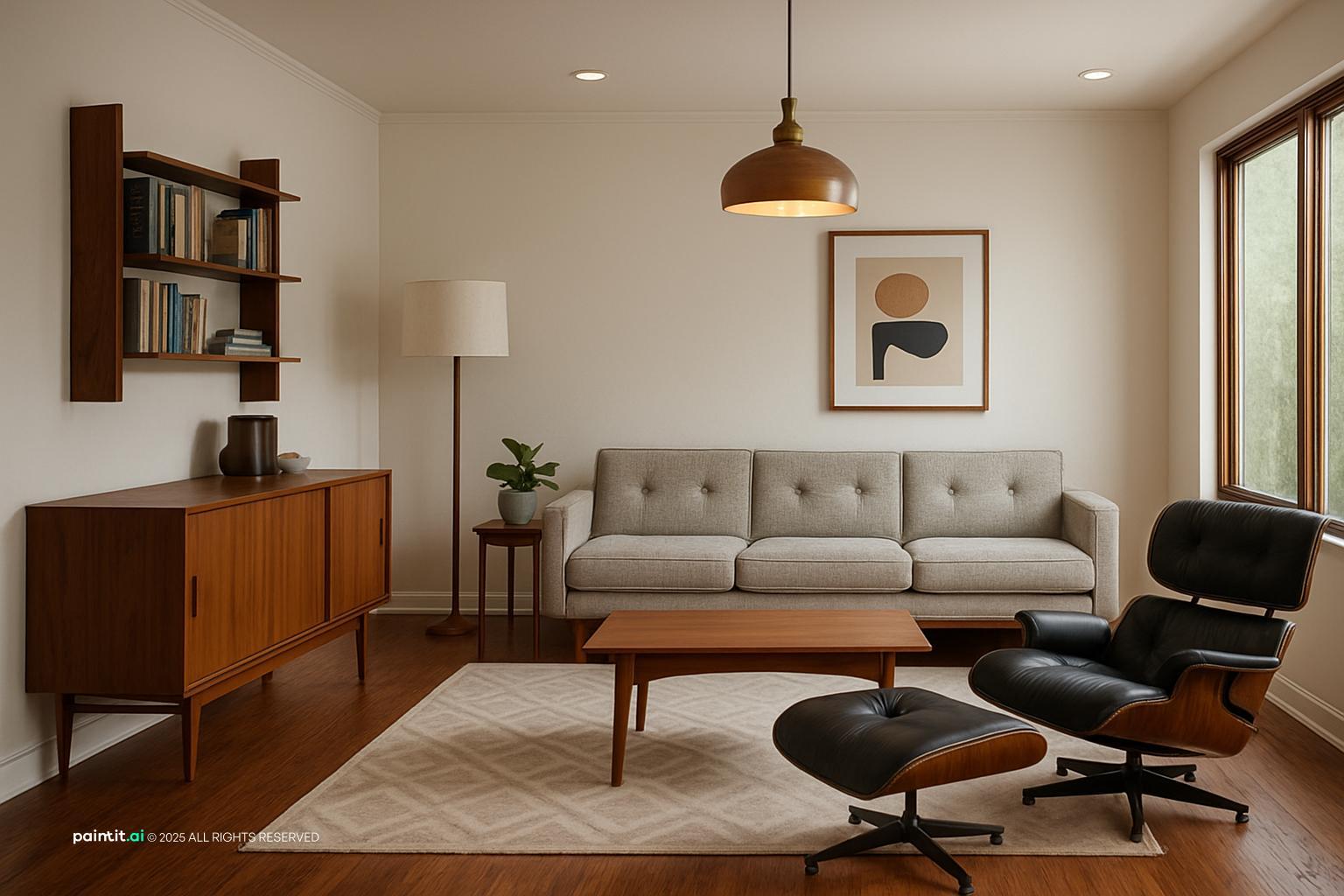
Teak sideboard and a lounge chair
A long teak sideboard and wall shelves hold everything, so the rest of the room can stay clear.
-
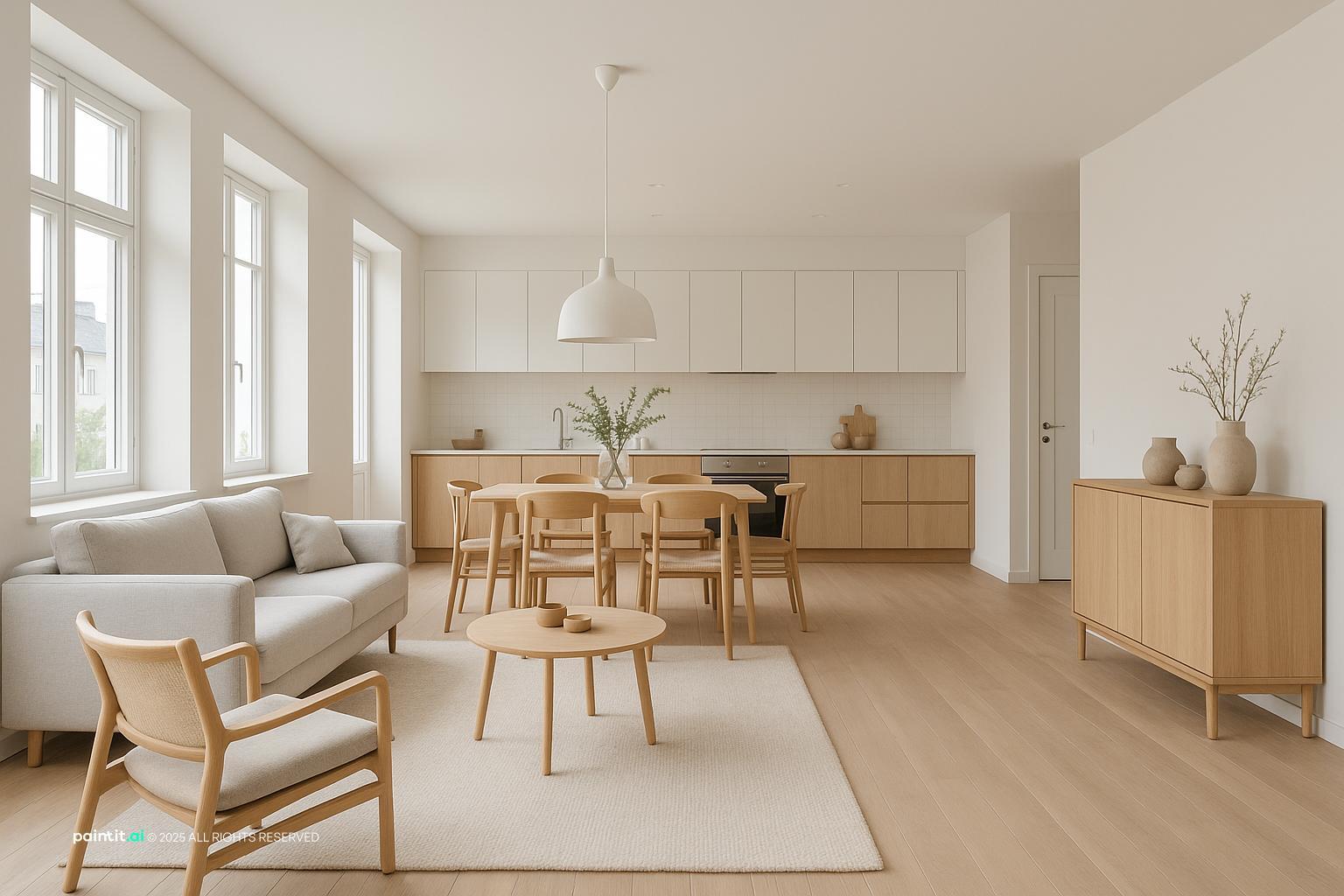
Kitchen-dining room in oak
Oak table and chairs against white cabinets keep a kitchen-dining room light and practical.
-
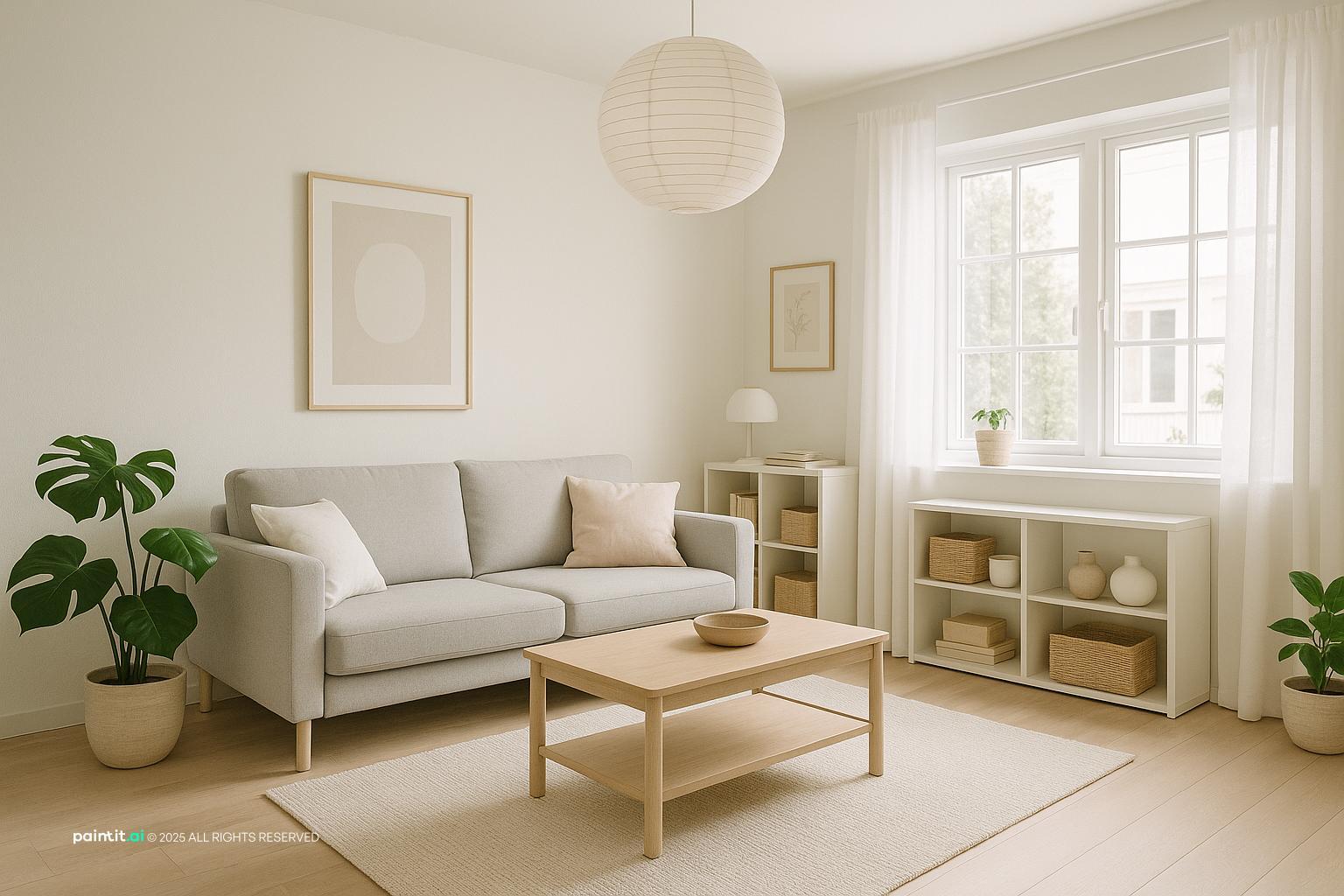
Paper lantern and open shelving
A paper lantern gives soft, even light over the seating, and open shelving keeps books and objects in one place.
-
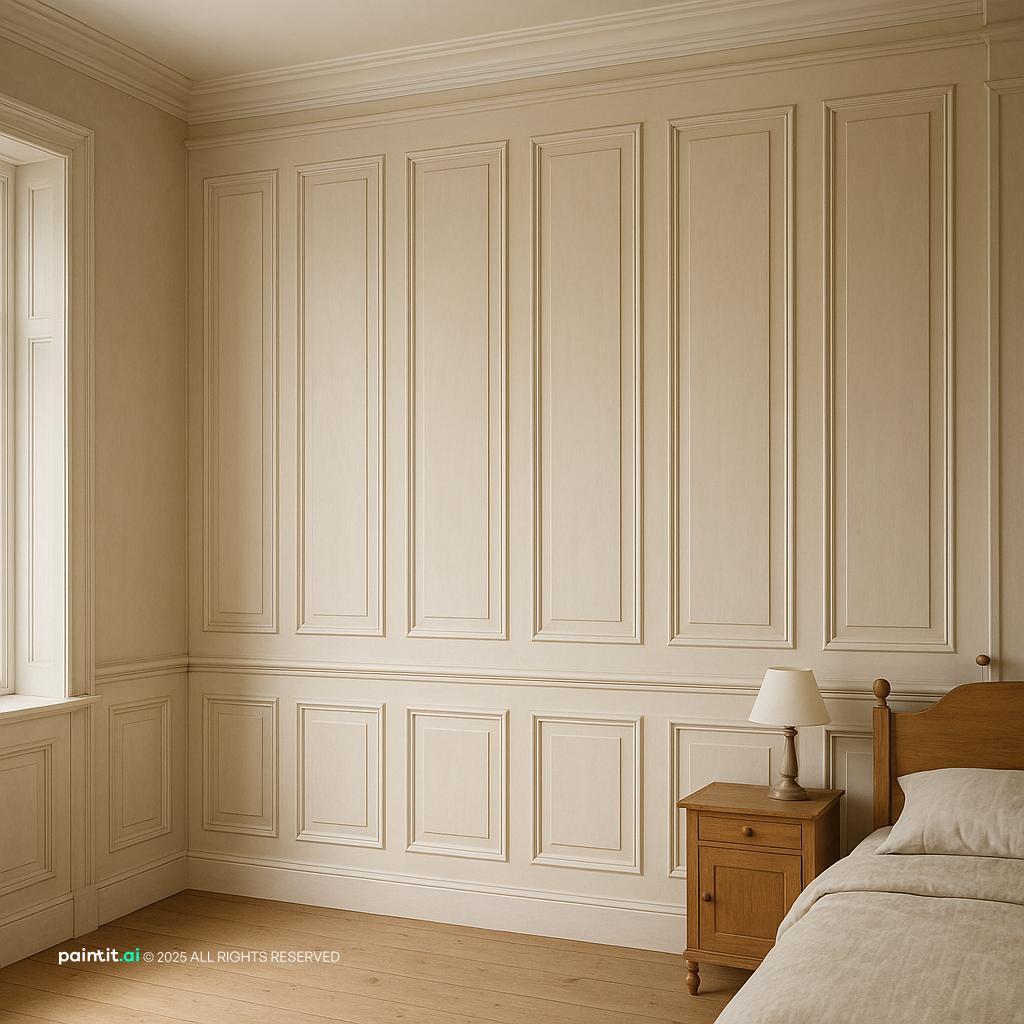
Paneled bedroom wall
Painted wall paneling adds texture to a bedroom without adding any decoration.
-
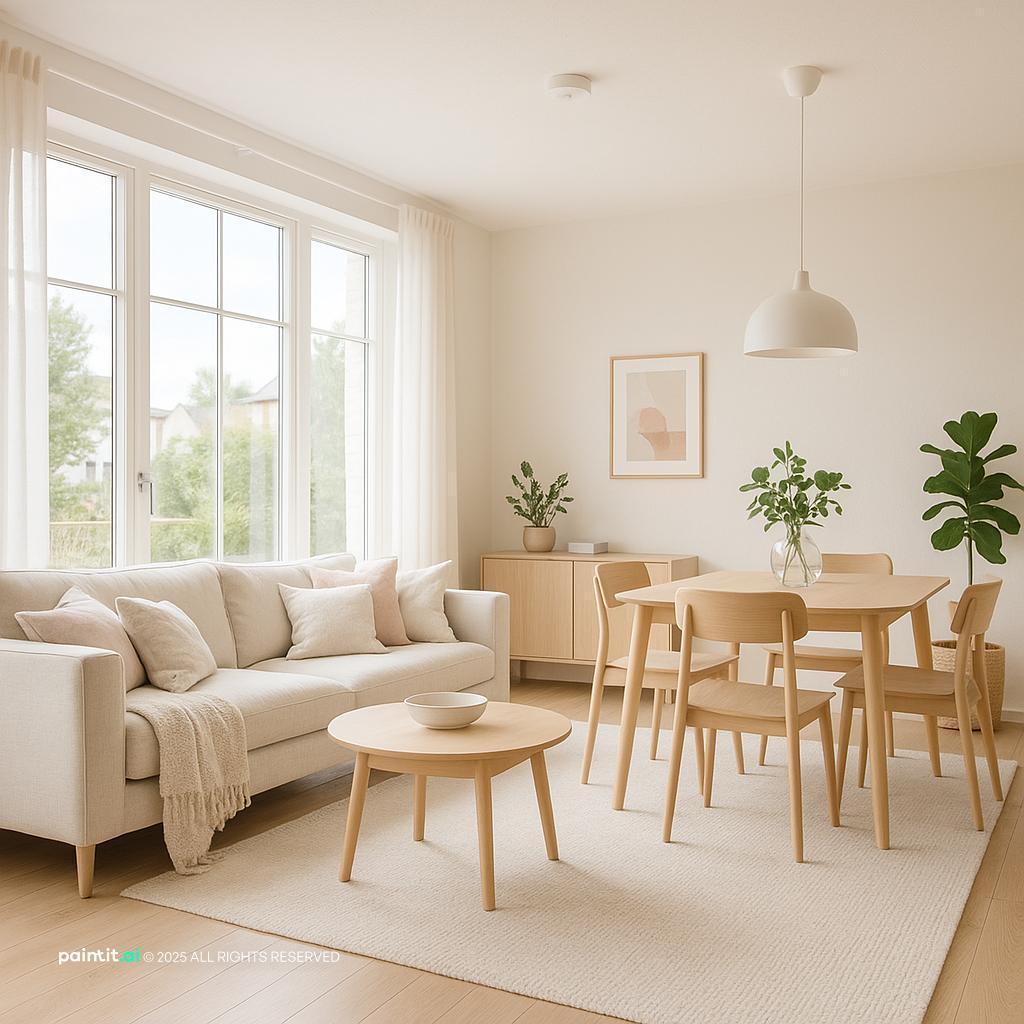
Living and dining in one room
Mixing an inherited or vintage piece with new furniture keeps a modern room from feeling showroom-new.
-
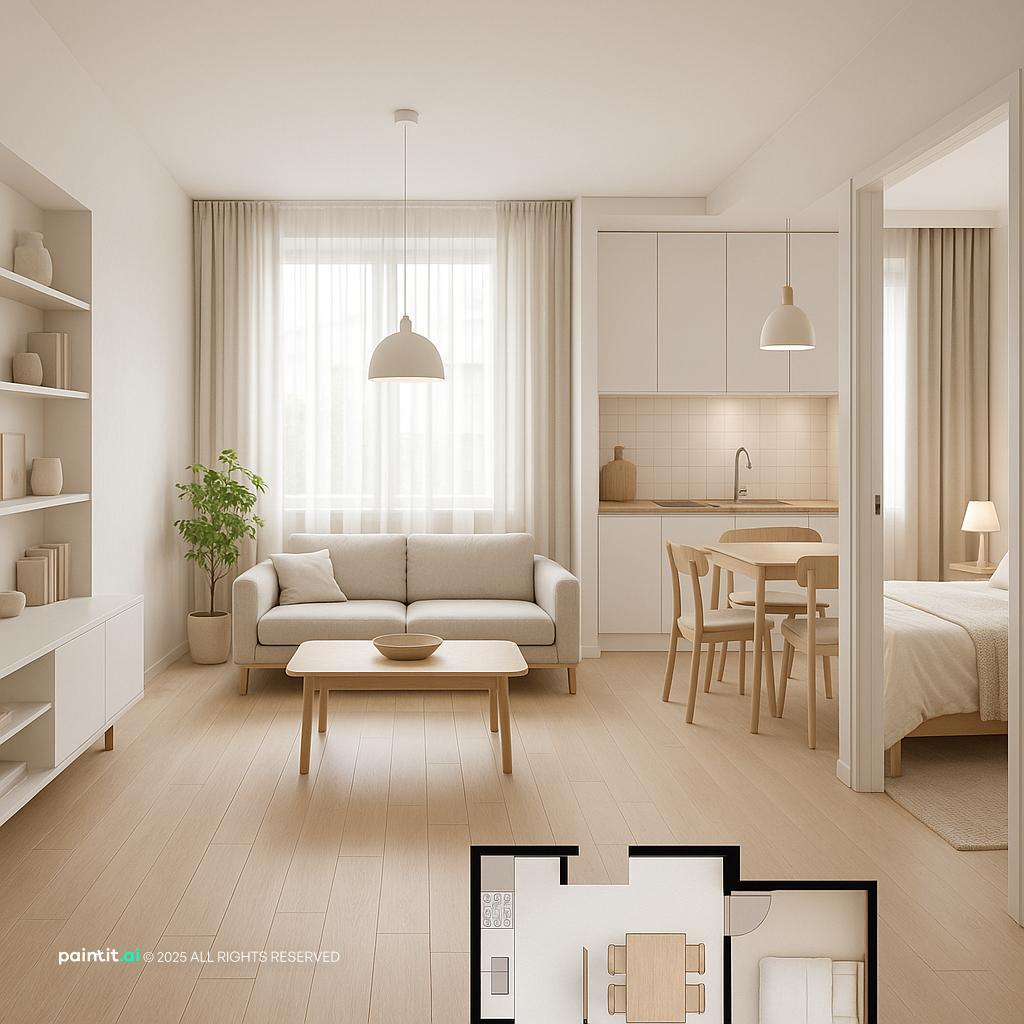
Exposed wood beams
Exposed beams left unpainted anchor the room and reduce how much other decoration it needs.
-
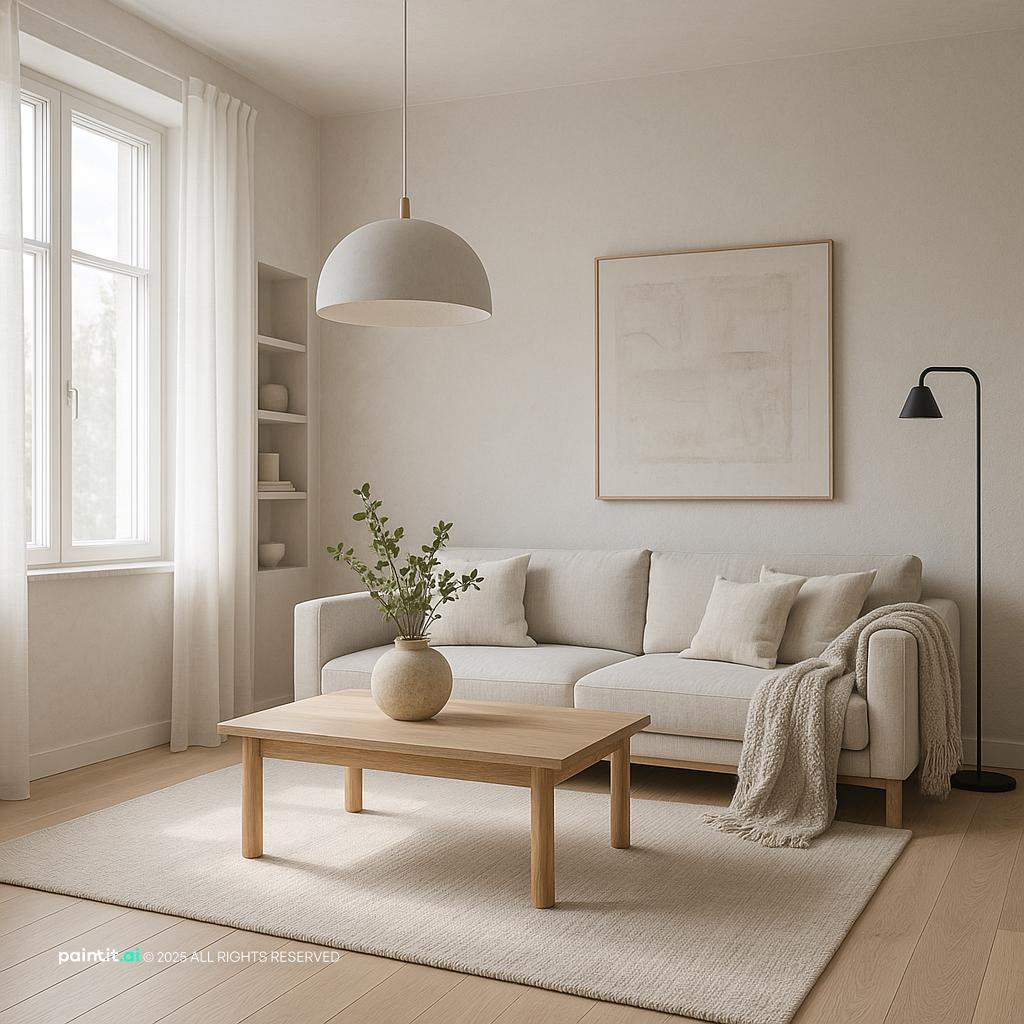
Soft neutrals and one print
Warm, soft neutrals and one framed print make a room that feels calm rather than empty.
-
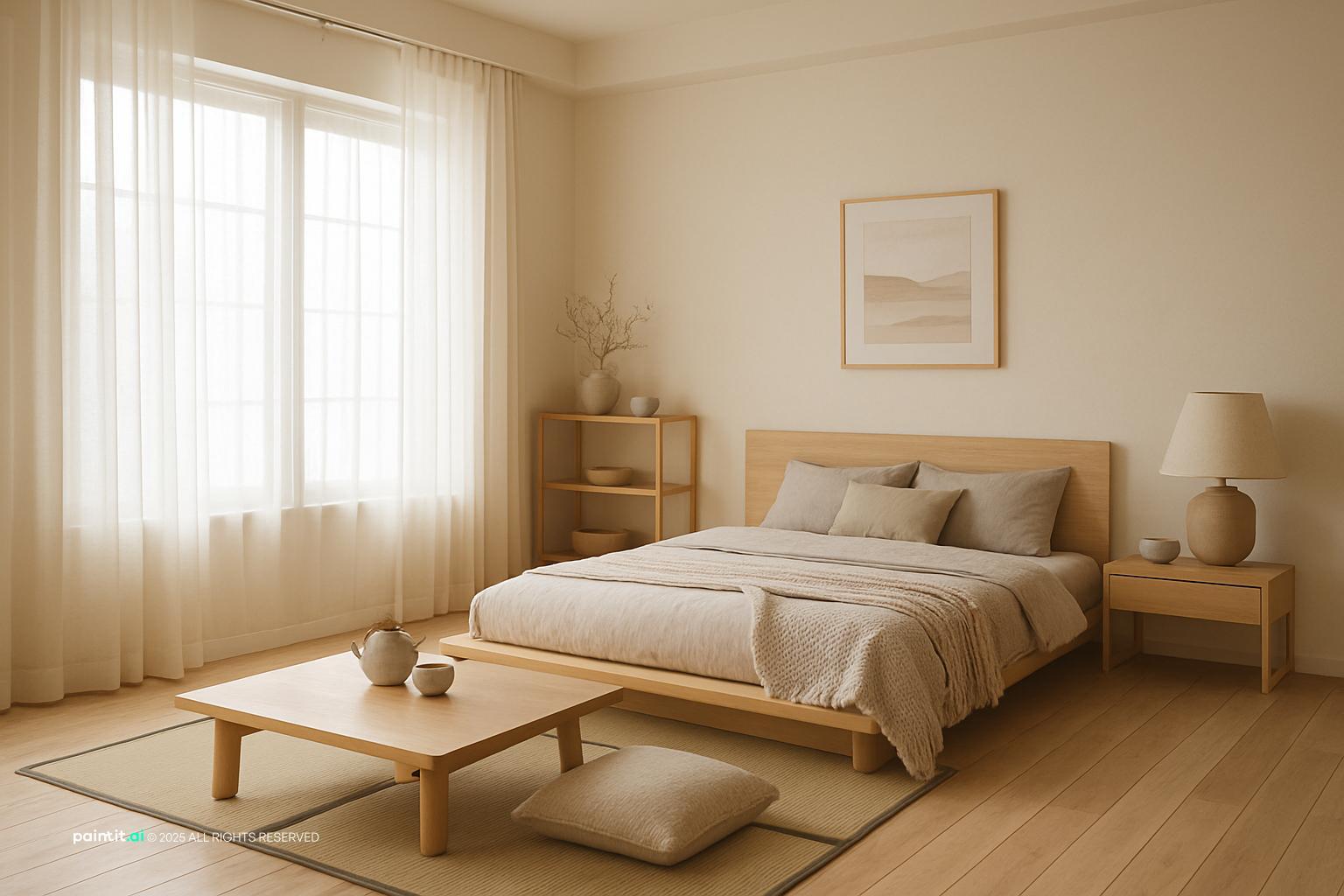
Japanese-Danish bedroom
A low bed, paper lamps and floor cushions show where Danish and Japanese ideas overlap: less furniture, natural materials.
-
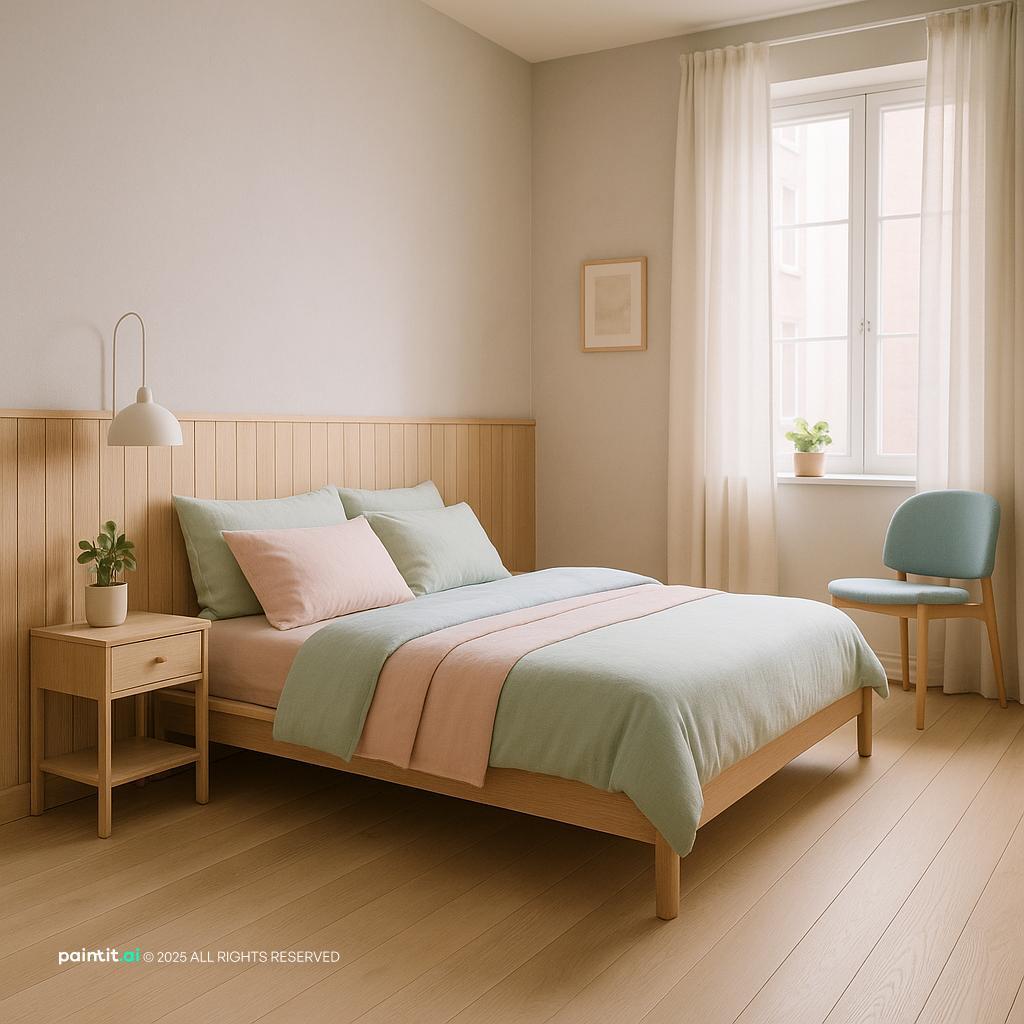
Soft pastel bedroom
A single soft pastel reads as considered rather than themed when the rest of the room stays neutral.
Real-Life Examples of Danish Interior Design Style Design Ideas
Related Scandinavian and mid-century styles, plus a tool to try a Danish look on a photo of your own room.
FAQ
-
Danish design principles focus on minimalism and functionality while incorporating simplicity through natural materials and neutral colors to establish a cozy atmosphere.
-
Danish design perfectly suits small spaces because its minimalist principles create a sense of light and openness.
-
Focus on clean lines, natural wood, and simple, functional furniture. Add cozy textiles to enhance hygge.
-
AI tools possess the capability to produce realistic design simulations which assist you in making well-informed decor choices.
-
Paintit.ai delivers fundamental services without cost while offering advanced toolsets and design support through premium options.