
80s Miami style interior design inspiration and ideas
80s Miami style interior design, also written as 1980s Miami style, is having a genuine revival, and not just as nostalgia. The core elements of the aesthetic (pastel palettes, geometric forms, neon accents, rattan and wicker, lacquered surfaces) have re-entered mainstream interior design with a more considered, selective application than the original maximalist era. Much of the same 1980s house decor language shows up outside Florida too, applied to ordinary homes rather than beachfront condos.
This guide covers the defining elements of authentic 80s Miami design, rooted in Art Deco revival, Miami Vice's visual language, and South Florida's tropical coastal context, with practical guidance on applying them today without the result feeling like a time capsule.
Upload a photo of any room to app.paintit.ai and test how 80s Miami colours and material combinations read in your actual space. Free to start.
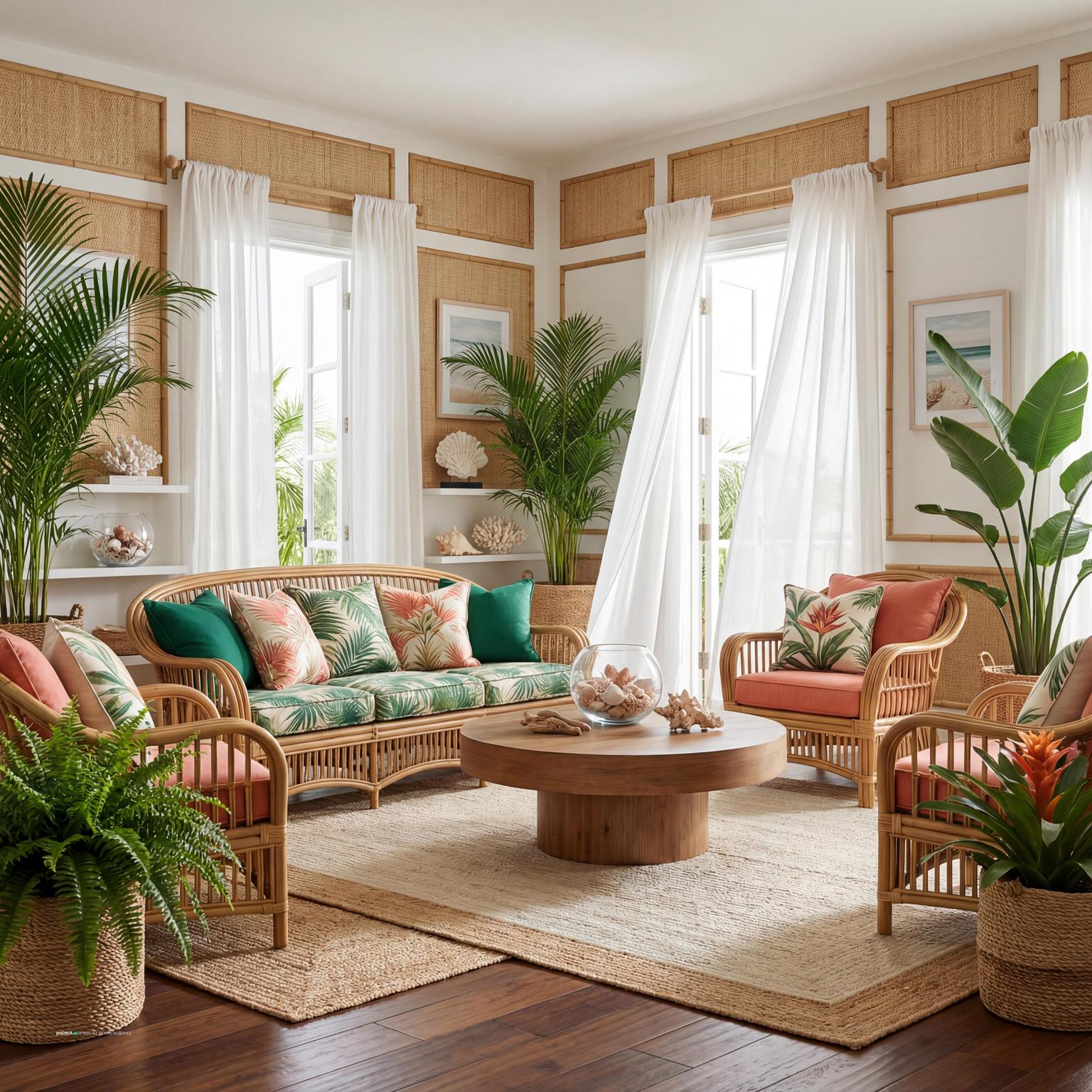
The key elements of 80s Miami style interior design
The style draws from three overlapping sources: Art Deco architecture (geometric shapes, bold symmetry, metallic finishes), Miami Vice's specific visual language (pastel palette, glass block, chrome and white), and the broader tropical Floridian aesthetic (rattan, palms, outdoor-indoor connection). Understanding which source each element comes from helps apply them with more precision.
-
Key Colors and Palettes
80’s Miami style interior design relies heavily on pastel colors like seafoam green, dusty pink, and lemon yellow which take inspiration from the area’s natural elements including its skies and ocean. The bold primary colors fuchsia, aqua, and teal are used to create dynamic splashes that add depth to these shades. Designers often employ gold and chrome metallics as accent finishes to reflect the lavish aesthetic of the early Miami Vice period. In fact, these pastel and bold accent combinations are a hallmark of authentic 80s Miami interiors, frequently seen in both residential and commercial spaces from the era.
-
Typical Materials and Textures
The essence of Miami 80’s style emerges through its foundational reliance on materials that mix natural and synthetic elements. Furniture constructed from wicker and rattan materials dominates the scene, creating an airy informal atmosphere that defines Floridian style. Lacquered surfaces, sleek laminates, and mirrored finishes create high-gloss reflective surfaces that define the style's glamorous side. When exploring original 80s Miami homes, you often find features like mirrored finishes, lacquered surfaces, and plush textures that highlight the era's distinctive approach to comfort and glamour. Shag carpets and soft leather upholstery add textural richness while reinforcing the comfort-focused approach of the era. -
Signature Furniture and Decorative Elements
Furniture in the 80’s Miami style is often characterized by its bold geometric shapes and soft, rounded edges. Think sectional sofas with plush fabrics and sculptural coffee tables. Oversized furniture pieces that anchor the room are complemented by standout decorative elements such as neon lights, large indoor plants like palms and ferns, and art deco-inspired artworks. Unique lighting fixtures, including halogen and pendant lighting, are frequently used to enhance ambiance and add visual interest. Many homeowners wanted to create a luxurious yet relaxed atmosphere, which influenced their choices of furniture, lighting, and decorative accents throughout their spaces.
Art Deco influence in 80s Miami style
Art Deco gave 80s Miami design its visual logic. The defining Art Deco elements that translated into 80s interiors:
Geometric patterns, chevron, sunburst, stepped forms, and bold symmetry in everything from floor tiles to mirror frames to wall art. Geometric wallpaper as a single accent wall is the lowest-commitment application; geometric tile on a bathroom floor is the most durable.
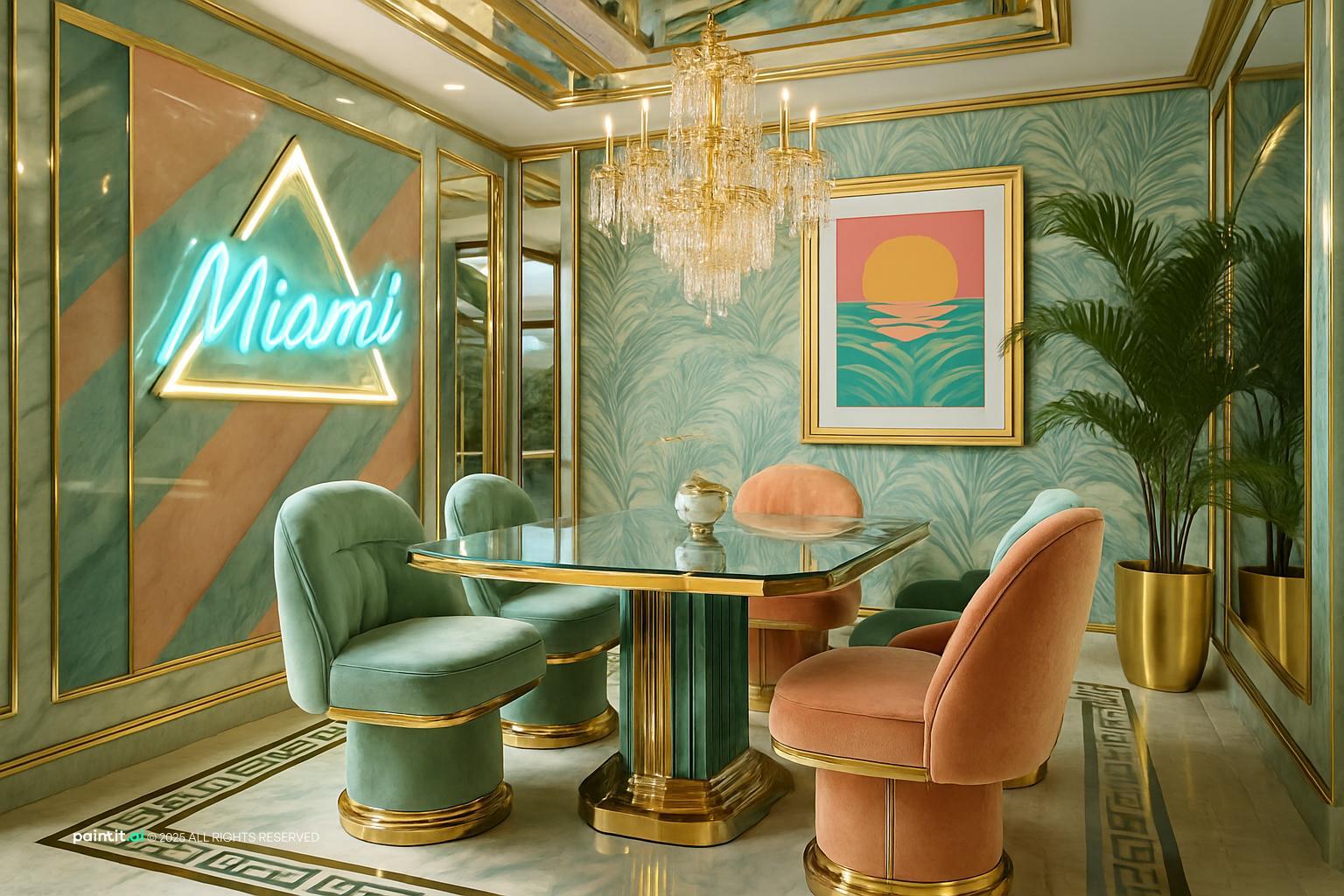
Metallic finishes, gold, chrome, and brass as hardware, fixture, and accent material. The 80s Miami version tends toward chrome and gold together rather than the single-metal approach of minimalist design.
Bold symmetry, furniture arranged in mirrored pairs, architectural features balanced on a central axis. The formality of Art Deco composition is what separates authentic 80s Miami design from generic bold-colour decor.
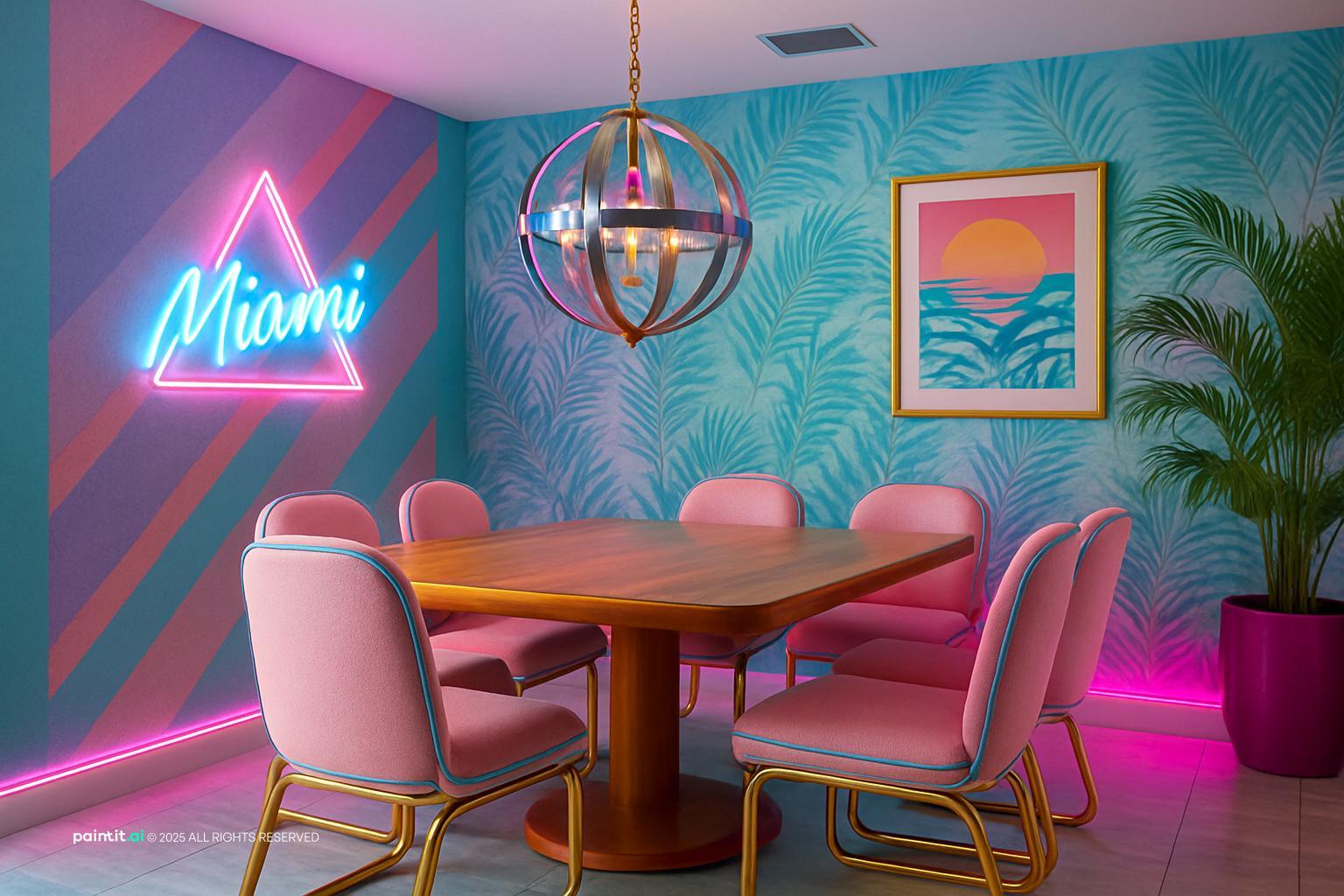
Lighting as architecture, Art Deco pendant fixtures, chandeliers with geometric silhouettes, and wall sconces as deliberate focal points rather than functional afterthoughts. Neon signs in 80s Miami interiors reference the Art Deco tradition of light as ornament.
The Miami Vice specific palette:
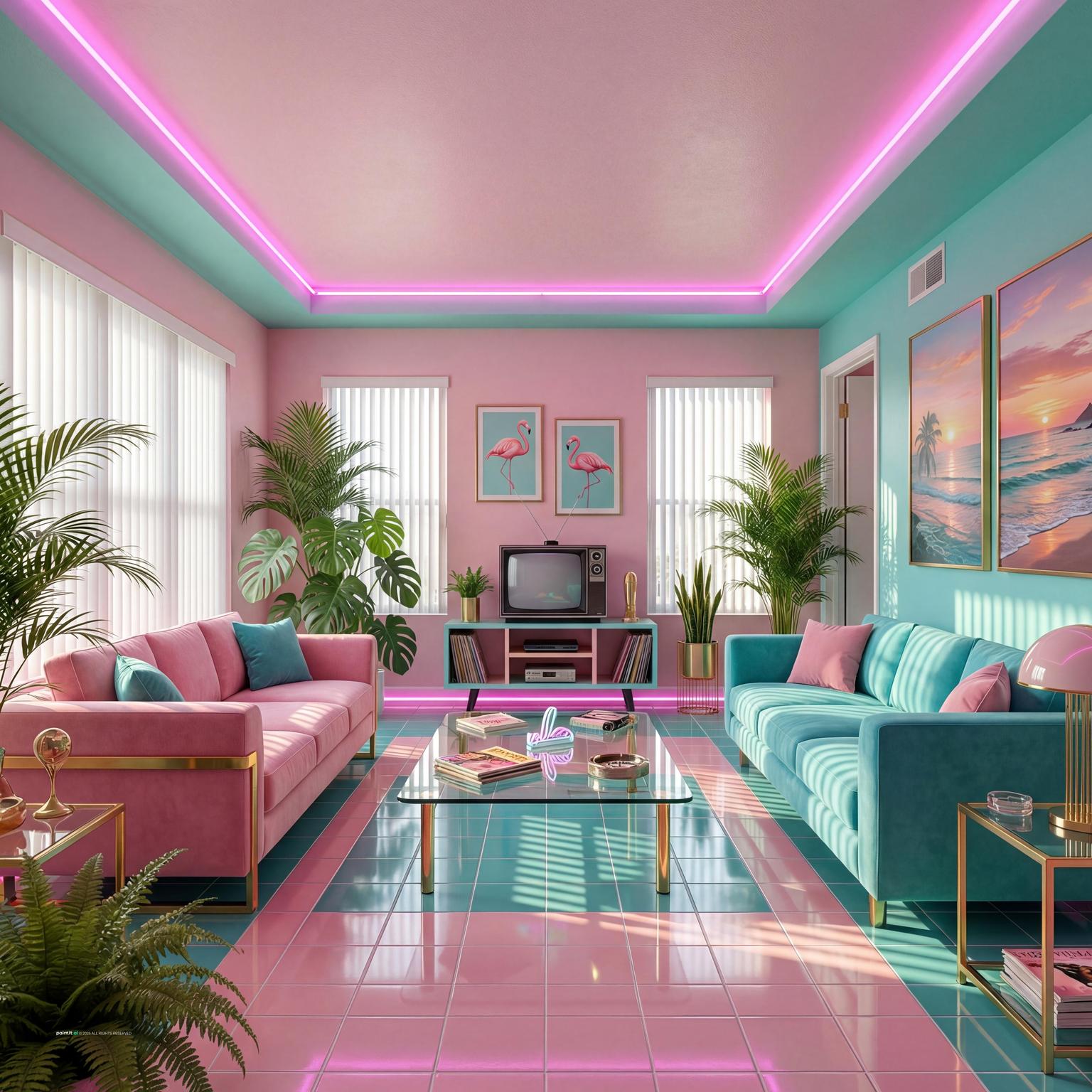
The TV show's visual language (1984–1989, shot in Miami) defined a specific colour combination that is distinct from generic pastels: powder pink, aqua, white, and black, with chrome accents and no warm browns. This palette read as both tropical and modern simultaneously. Applied to interiors: white walls, pastel upholstery in seafoam or coral, chrome hardware, and a single bold black accent surface.
Advantages of Incorporating 80's Miami Style Interior Design into Your Space
-
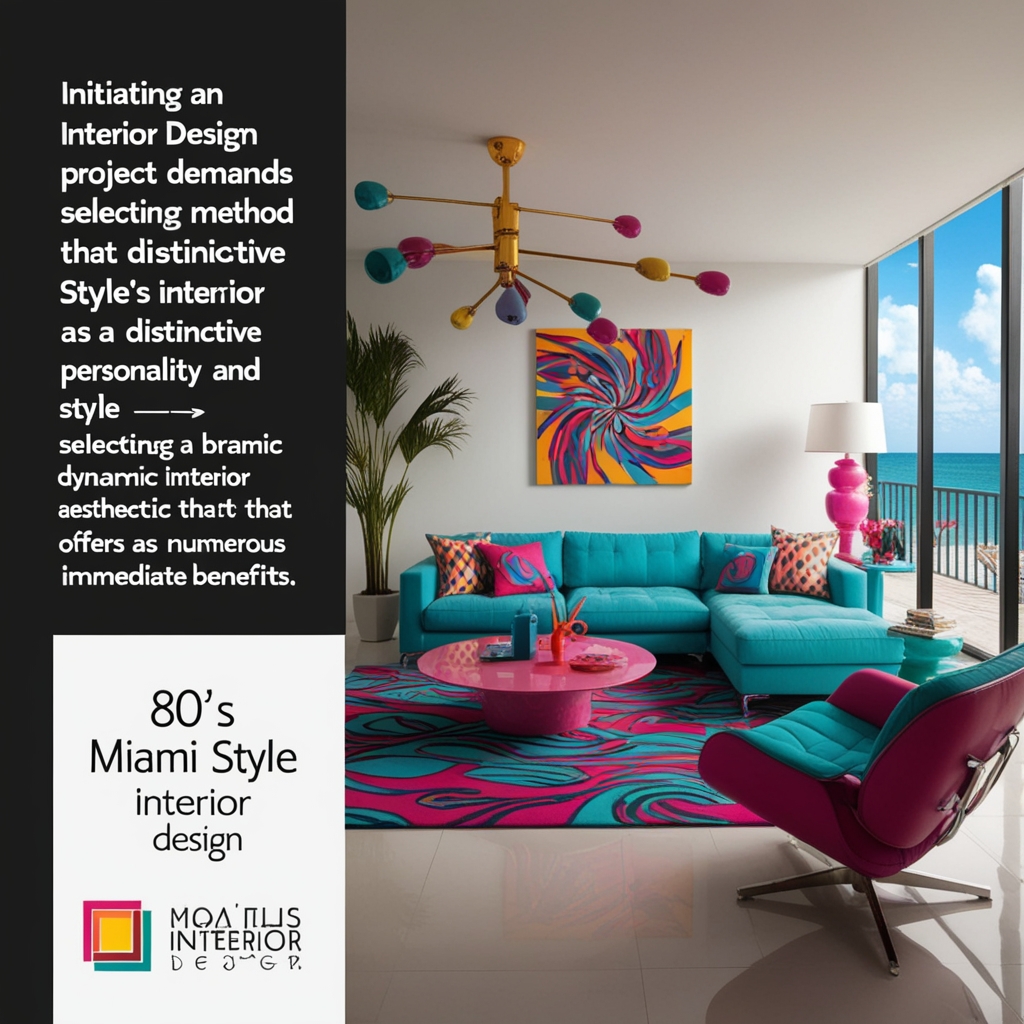
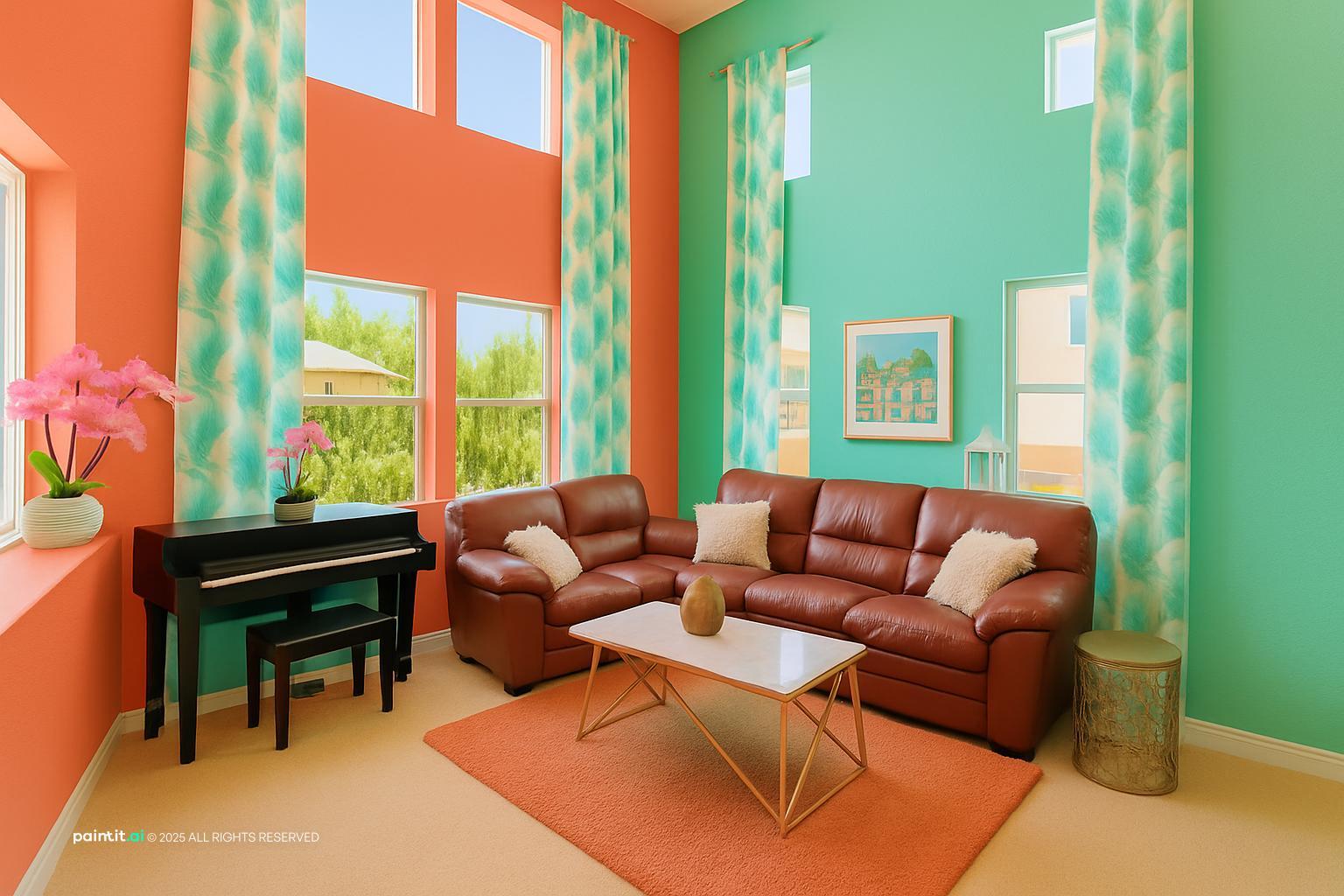
80s Miami style works best when it's applied selectively rather than throughout an entire space. One strong element, a pastel sectional sofa, a neon wall sign, a geometric tile floor, reads as a deliberate style choice. Multiple competing maximalist elements can overwhelm any room size. These examples show both the full-commitment approach and the more curated single-element application.
-
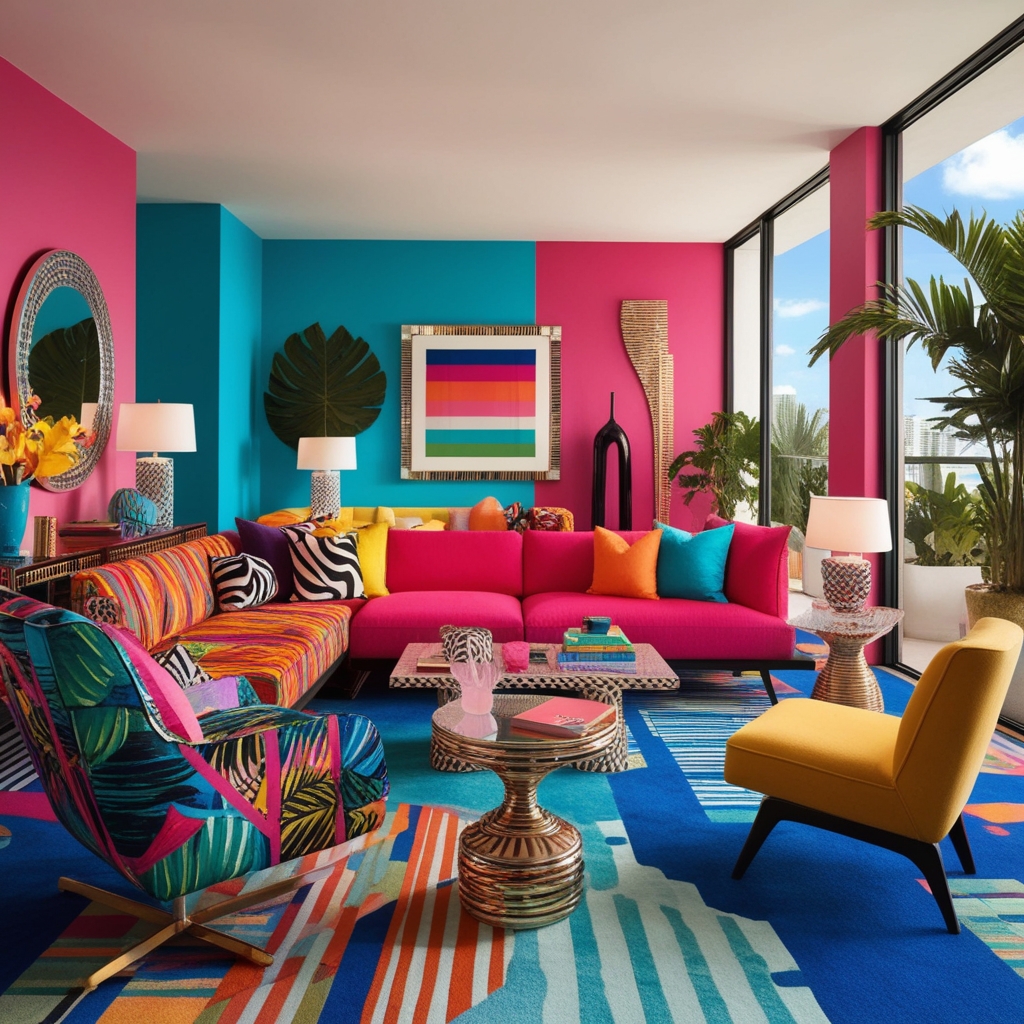
The 80's Miami style is synonymous with vivid colors, bold patterns, and an eclectic mix of textures that redefine what it means to have a personalized aesthetic. This design approach allows you to craft a space that speaks to your personality, utilizing distinctive elements that capture the essence of art deco influences married with tropical vibrancy and iconic Miami Vice colours.
-
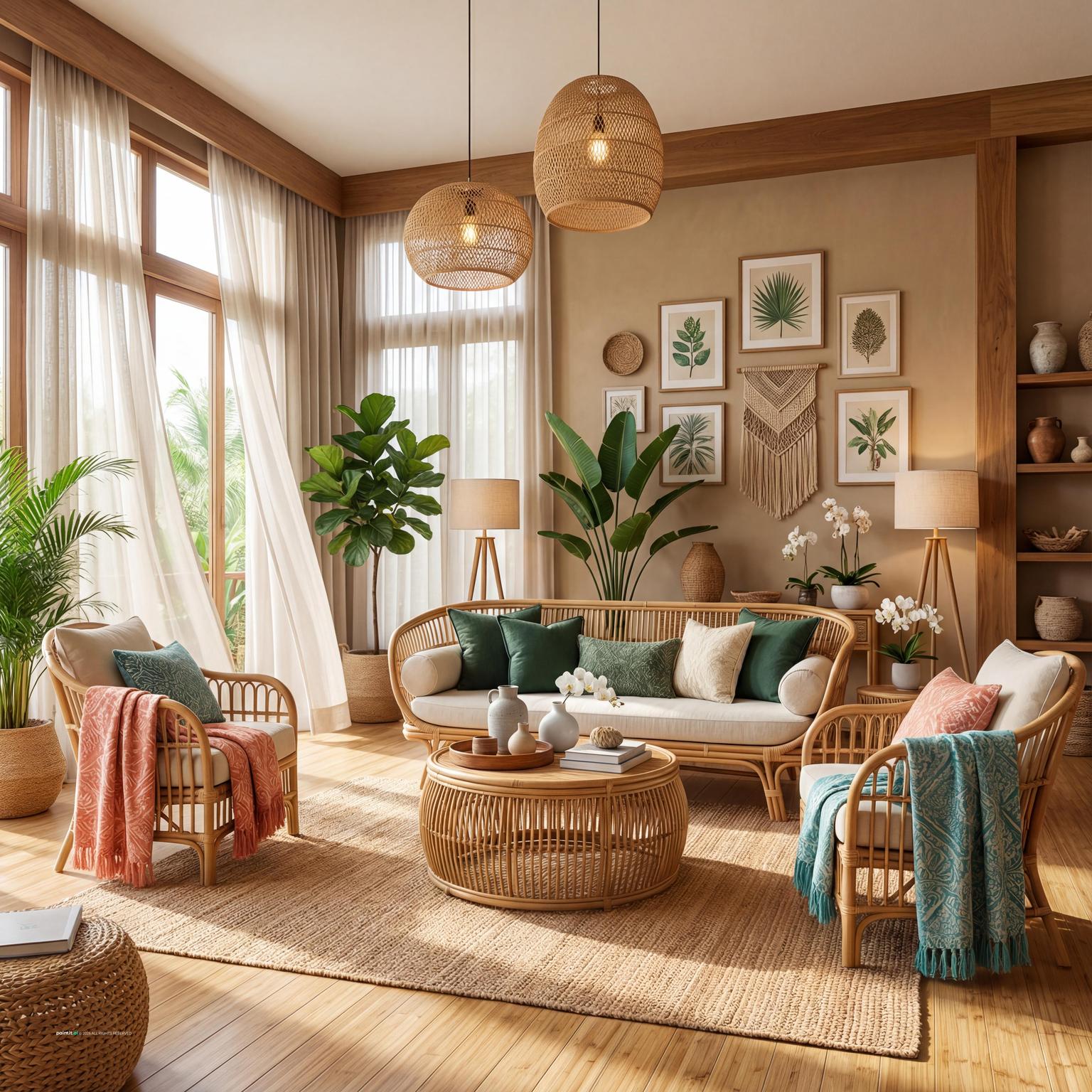
Comfort and Practicality
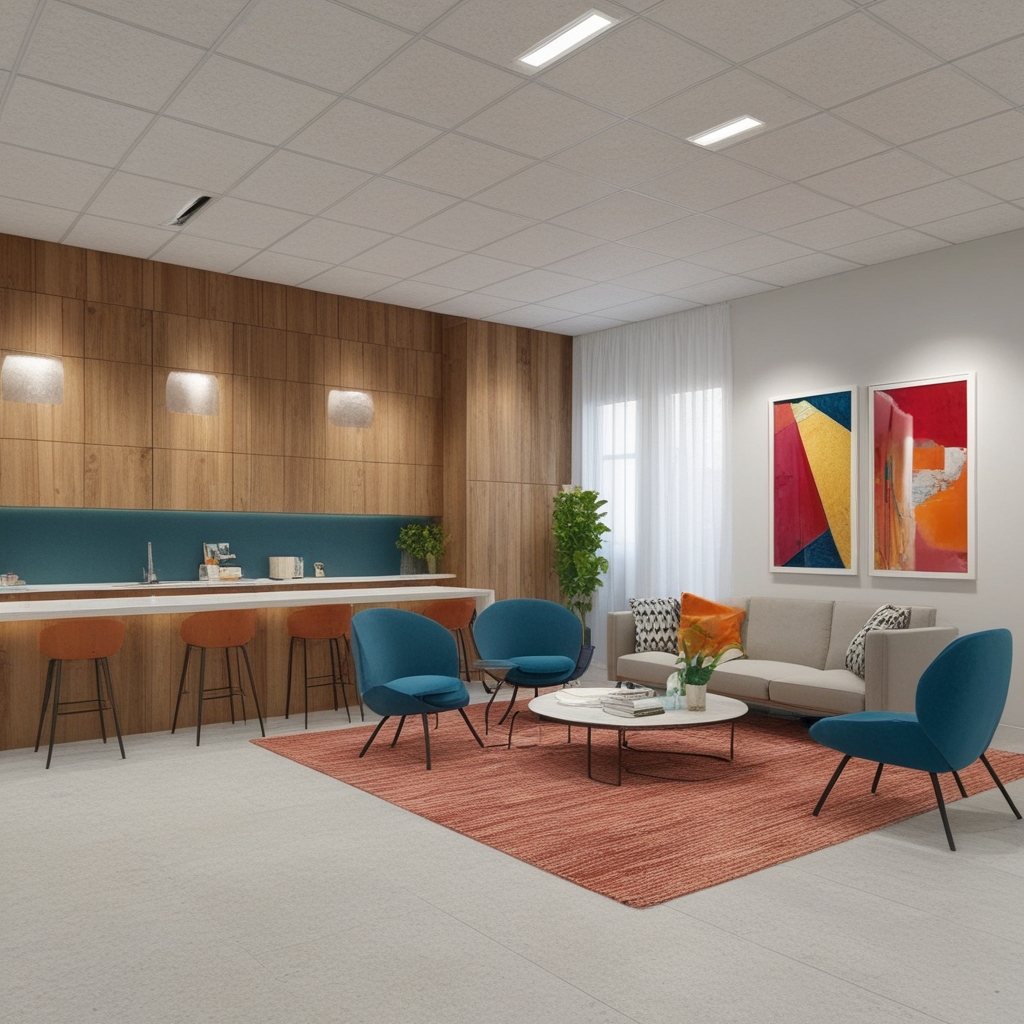
80's Miami style projects glamorous elements while maintaining a focus on comfort and practical design. The design merges functional elements with aesthetic forms to produce interiors that offer relaxation spaces while sustaining sophisticated allure. Rattan and wicker introduce natural texture alongside the glossy lacquered surfaces, a contrast that prevents the style from reading as purely artificial. -
Versatility for Various Types of Spaces
-
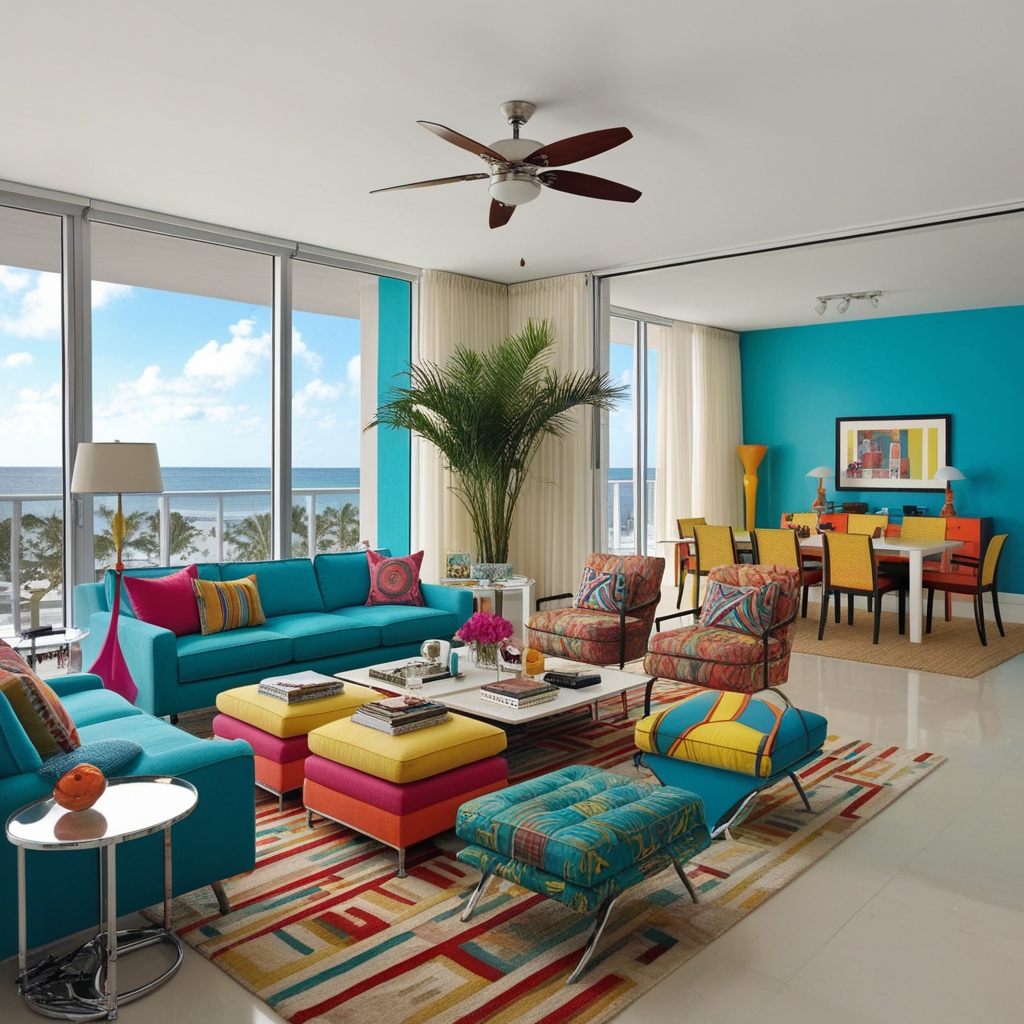
The beauty of the 80's Miami style lies in its versatility. Whether you're working with a compact urban apartment or a sprawling family home, this design can be adapted to suit a myriad of spatial layouts. The eclectic mix of colors and textures, including iconic Miami Vice colors, allows for greater flexibility, making it easy to integrate into existing settings or to serve as a foundation for a complete makeover.
-
Easy Implementation through DIY Projects
-
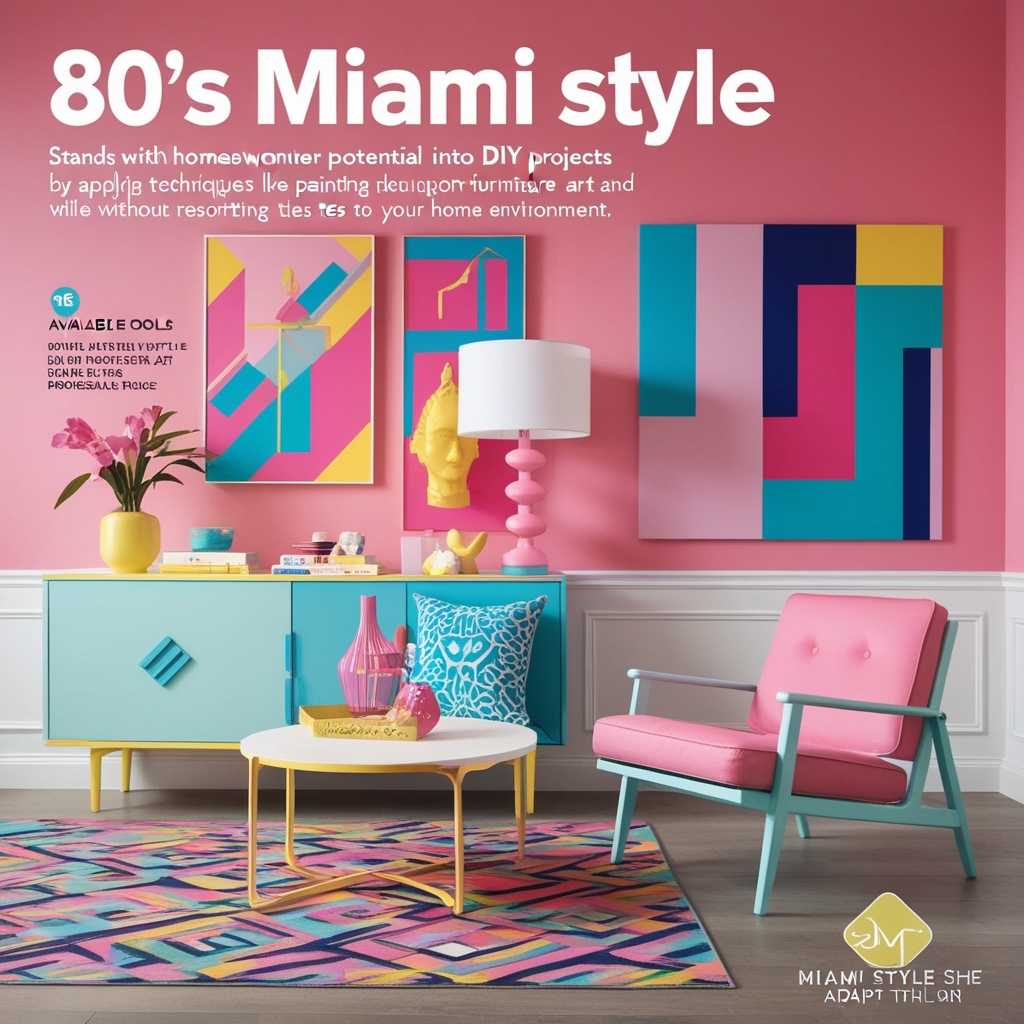
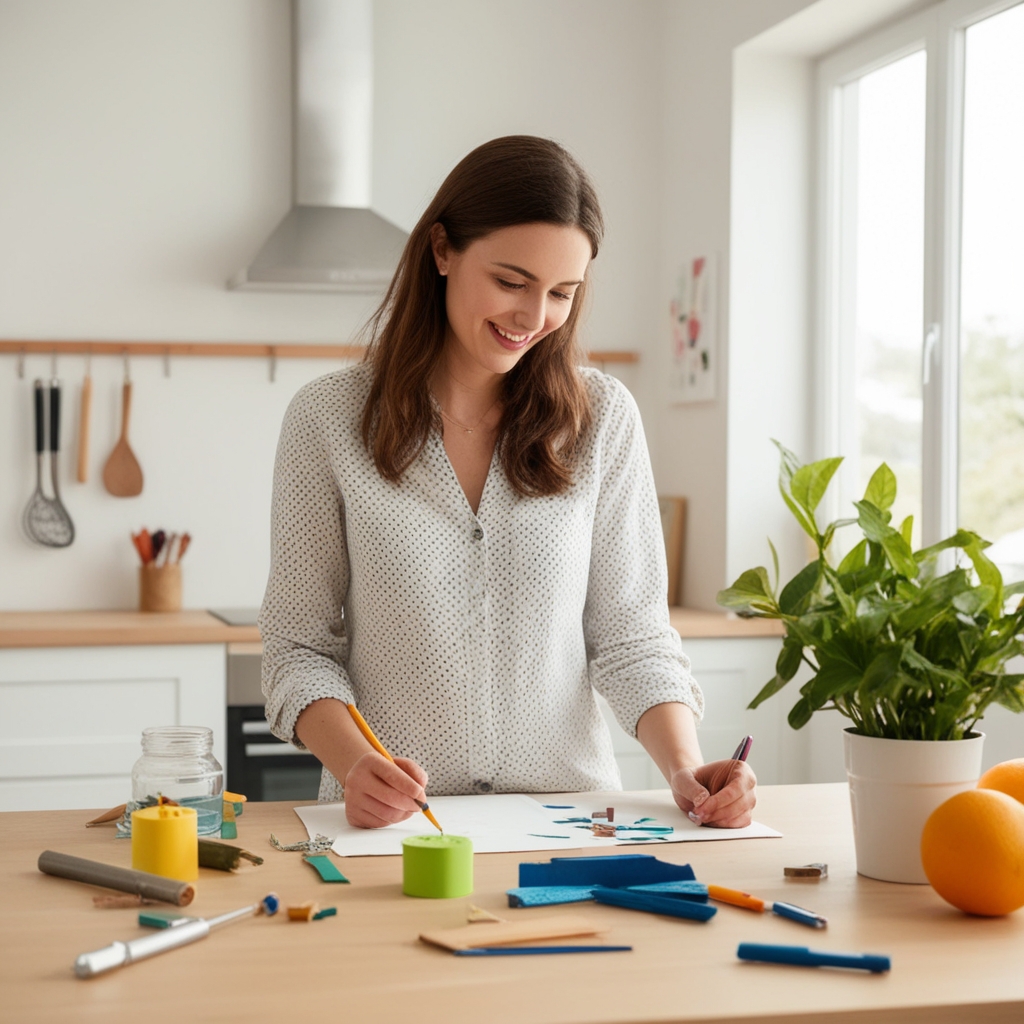
The 80's Miami style works well for DIY projects because many elements can be applied one at a time. Homeowners can use techniques like furniture upcycling with pastel paints and bold graphic wall art, all without professional help. This accessibility lets you engage directly in the design process while building a personal connection with your living environment.
-
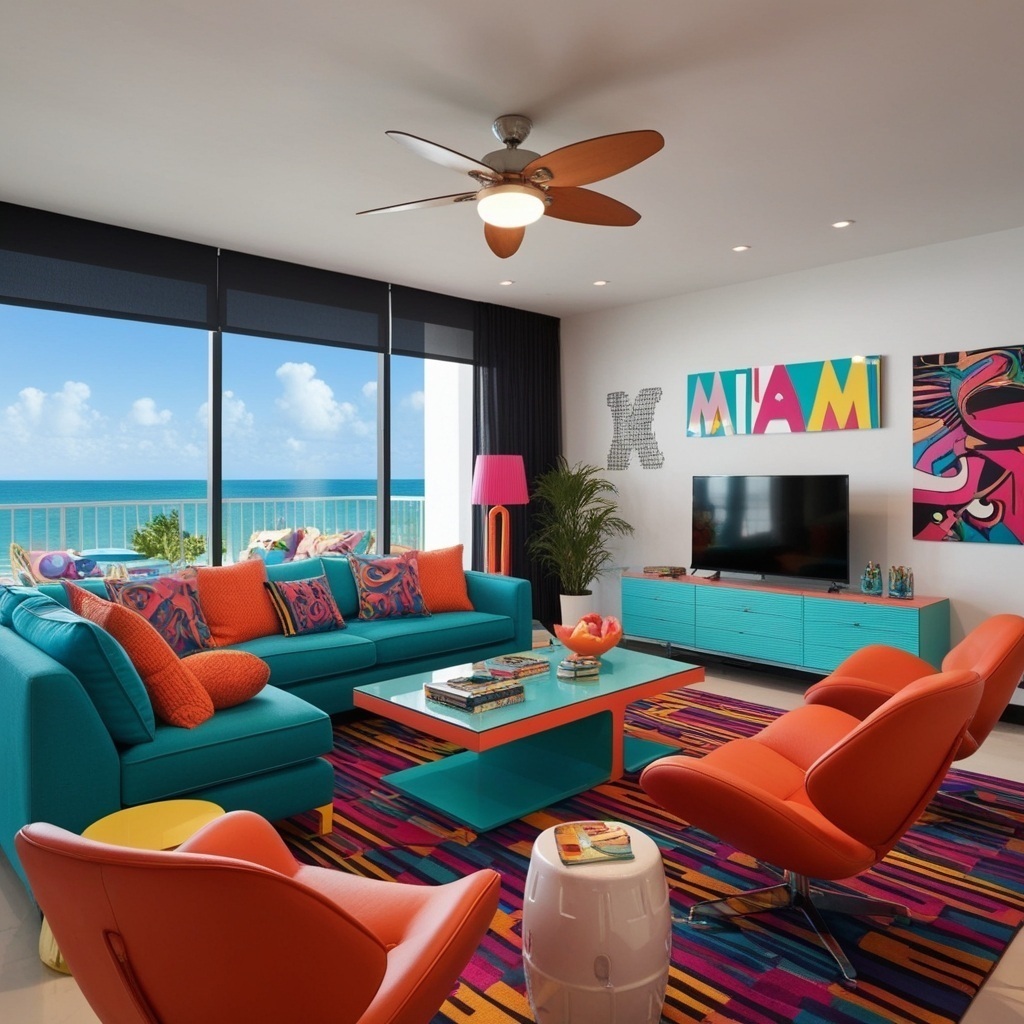
Selecting 80's Miami style interior design for your project gives the room a bold aesthetic while keeping the comfort and function required for daily life. This adaptable style fits various settings, and its DIY appeal lets homeowners create Miami-inspired spaces with clear, manageable choices.
80s Miami colour palette: practical application
The style has two distinct colour registers that need to be understood separately:
Pastel-dominant (the Miami Vice palette)
Base: crisp white walls and white or light grey floors.
Primary accents: seafoam green, coral pink, powder blue, one at a time as the dominant upholstery or a feature wall.
Secondary accents: chrome, brass, or black as hardware and fixture metal.
Neon: used selectively, one neon sign, one backlit element, not throughout.
This palette works in any room size; the white base keeps the pastel accents from overwhelming.
Bold tropical (Miami Deco)
Base: warm white or off-white walls with geometric tile or patterned flooring.
Accent walls: deep teal, fuchsia, or cobalt as a single accent wall.
Materials: rattan, bamboo, tropical print fabrics, palm plants.
Metallics: gold and brass rather than chrome.
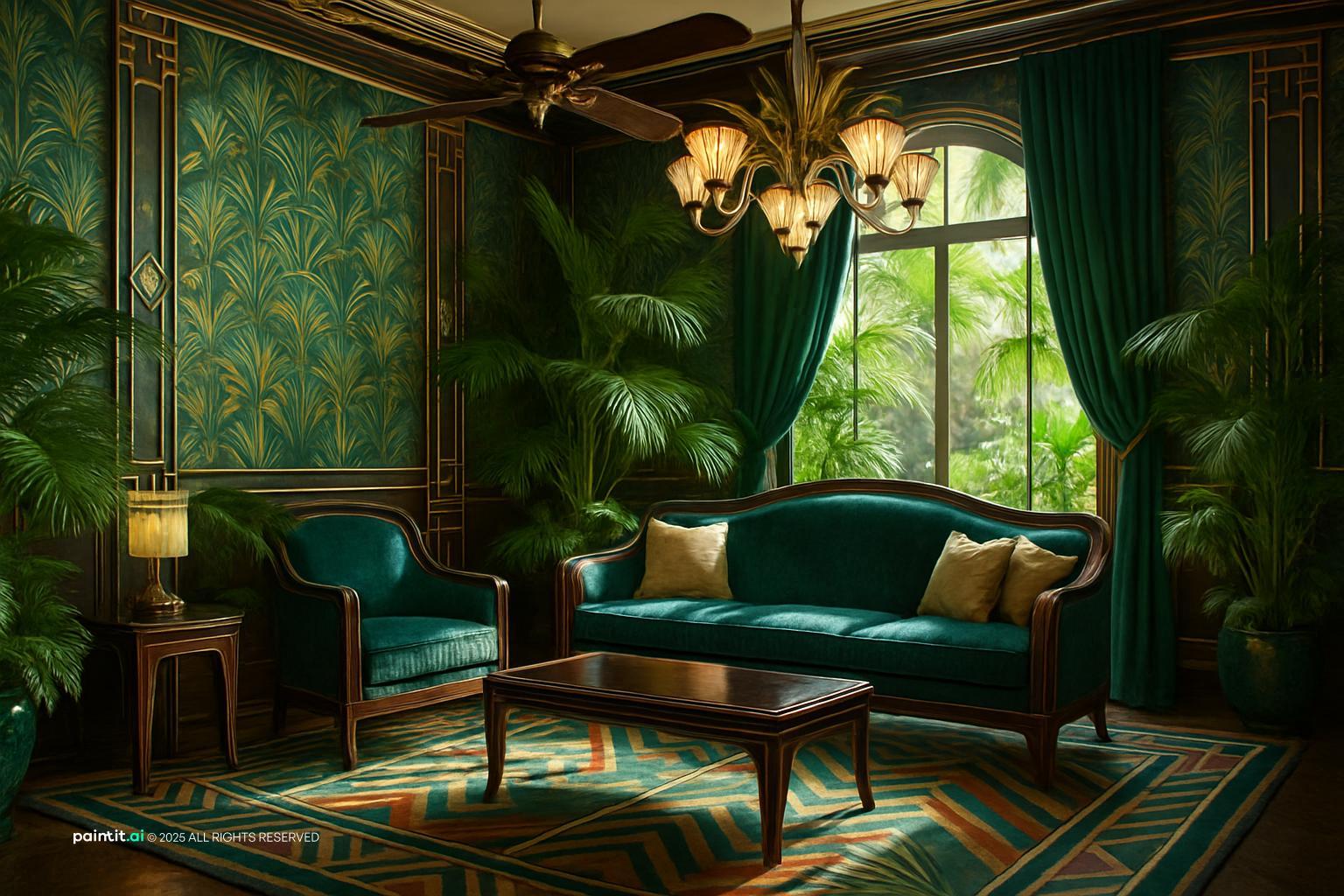
This direction is warmer and more eclectic than the Miami Vice palette, it references the tropical hotel aesthetic rather than the cool geometric TV show look.
The Memphis connection
Memphis design (Milan, 1981) influenced 80s Miami interiors through its geometric patterns and contrasting colour blocks. Memphis-influenced elements: postmodern shapes in furniture (squiggly lines, stepped forms, abstract geometric bases), high-contrast colour block patterns, and the deliberate mixing of pattern scales. Memphis is more playful and less glamorous than pure Miami Vice, it's the pop-art wing of the 80s aesthetic.
How Paintit.ai helps with 80s Miami design
Upload a photo of any room to app.paintit.ai and test how pastel palettes, geometric accents, and tropical material combinations read in your actual space, in 1–2 minutes. Useful for deciding between a Miami Vice direction (pastels, chrome, white) and a warmer tropical Deco approach before committing to any paint or furniture purchase. Free to start.
More 80s Miami interior references
These references keep the page focused on interiors: pastel lounge palettes, chrome and glass, neon accents, tropical plants, and Art Deco-inspired geometry.
Related design styles
More tools for testing retro, tropical, and Art Deco style directions.
FAQ
-
This style features pastel palettes, geometric forms, neon accents, rattan and wicker, lacquered surfaces, chrome, glass block, and tropical plant references.
-
Yes. Use a white or light grey base, choose one pastel accent, and limit neon to a single sign or backlit feature so the room stays open.
-
Start with the Miami Vice palette: white, powder pink, aqua, black, and chrome. Add one geometric pattern and one tropical material such as rattan or wicker.
-
Yes. Upload a photo of your room to app.paintit.ai and test pastel palettes, geometric accents, and tropical material combinations in 1–2 minutes. Free to start.