
Rustic Interior Design characteristics, types and room ideas
Rustic interior design is rooted in rural building traditions, from European farmhouses to 19th-century American cabins, where people built their homes from local materials, timber, stone, and construction methods that prioritized function over ornament. The result was spaces defined by raw material beauty: visible grain and imperfections in wood, rough-hewn surfaces, fireplaces built from local stone, and the warmth of natural materials in their most honest states. This guide covers the defining characteristics, the different types of rustic design, and how to apply rustic principles in contemporary homes.
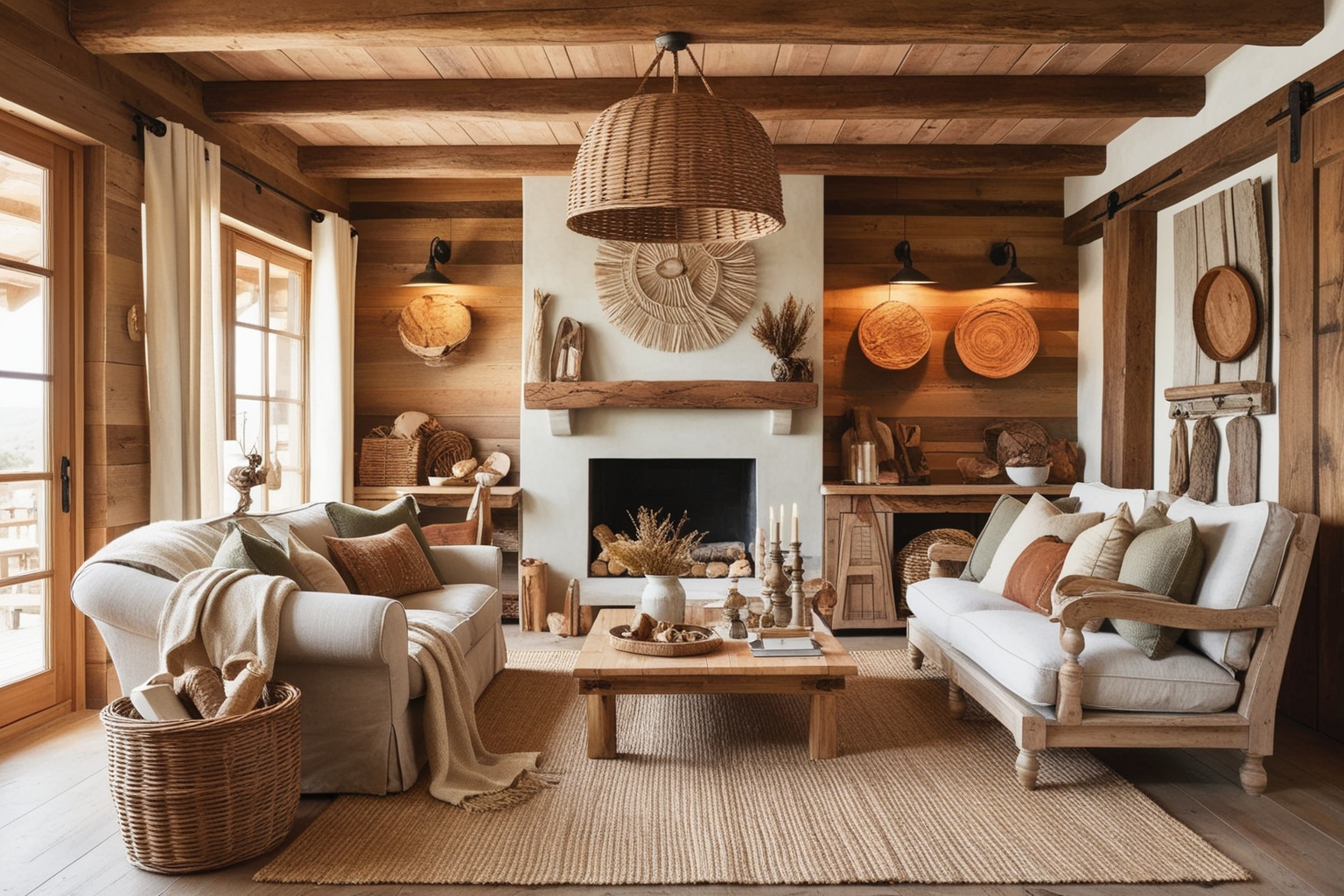
16 rustic interior design ideas from lodge to farmhouse
-
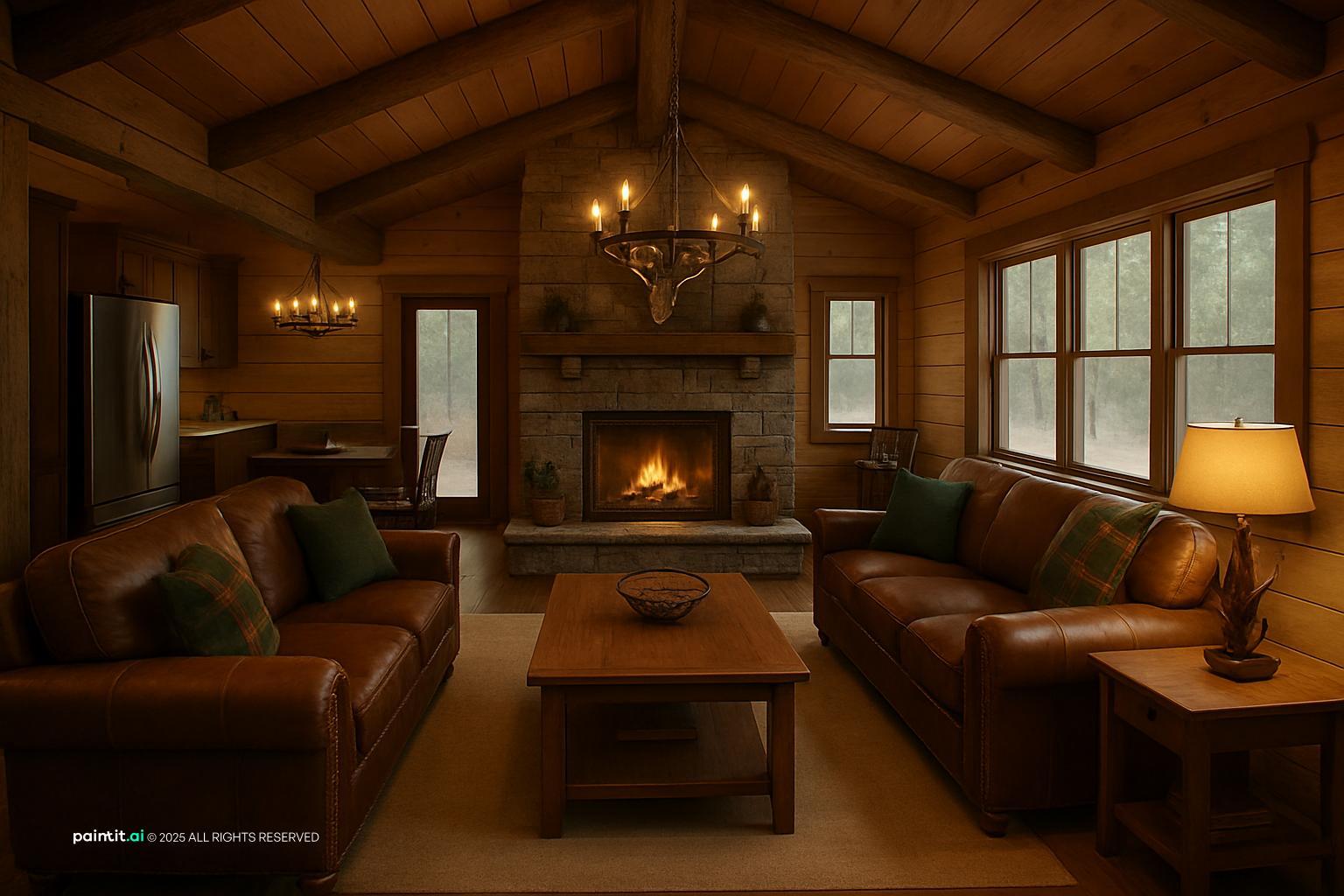
Mountain lodge great room
Log walls, a stone fireplace and leather sofas are the core of mountain lodge rustic; the room is built around the fire.
-
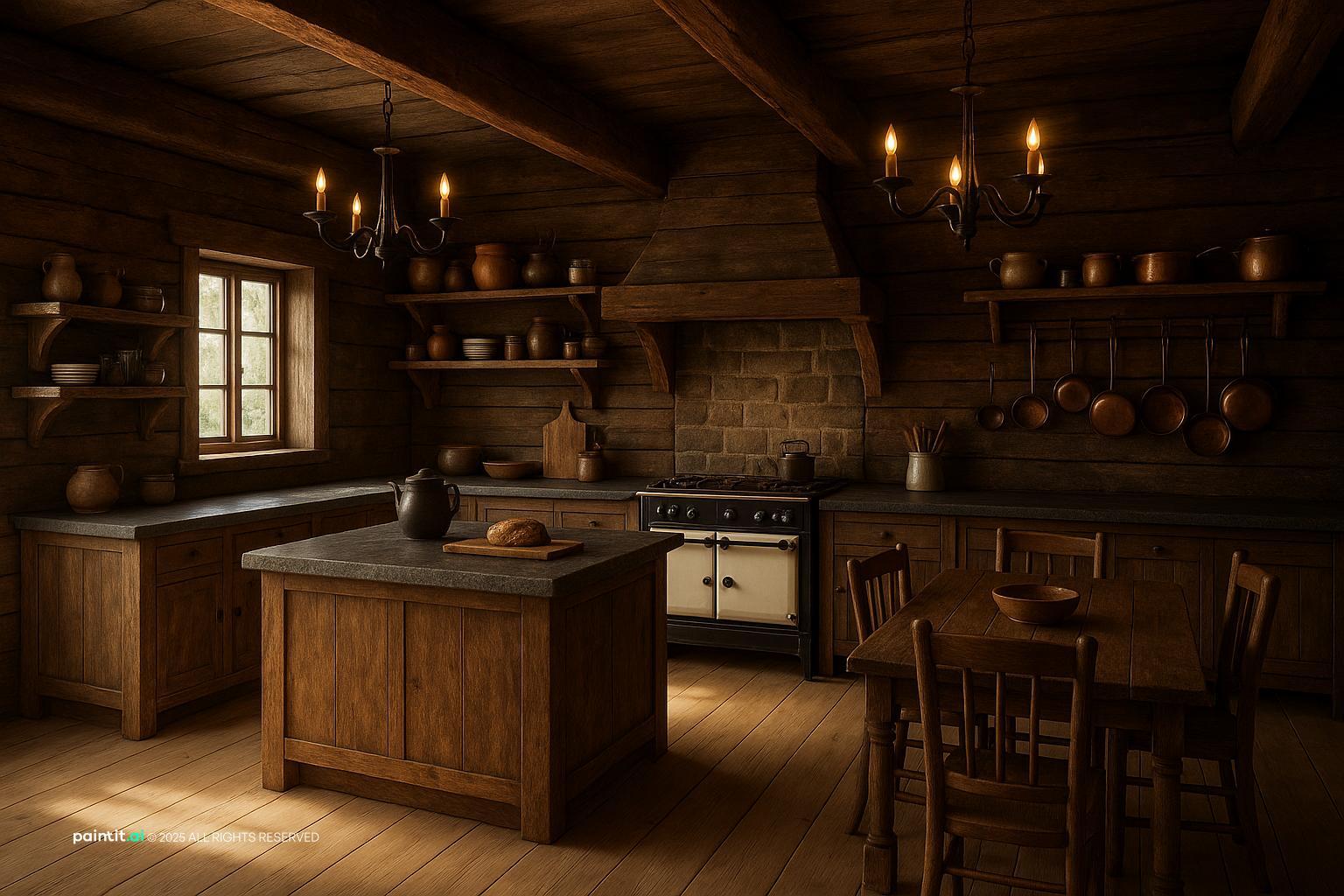
Log cabin kitchen
Weathered timber walls stay visible in the kitchen too, with a solid wood island instead of fitted units.
-
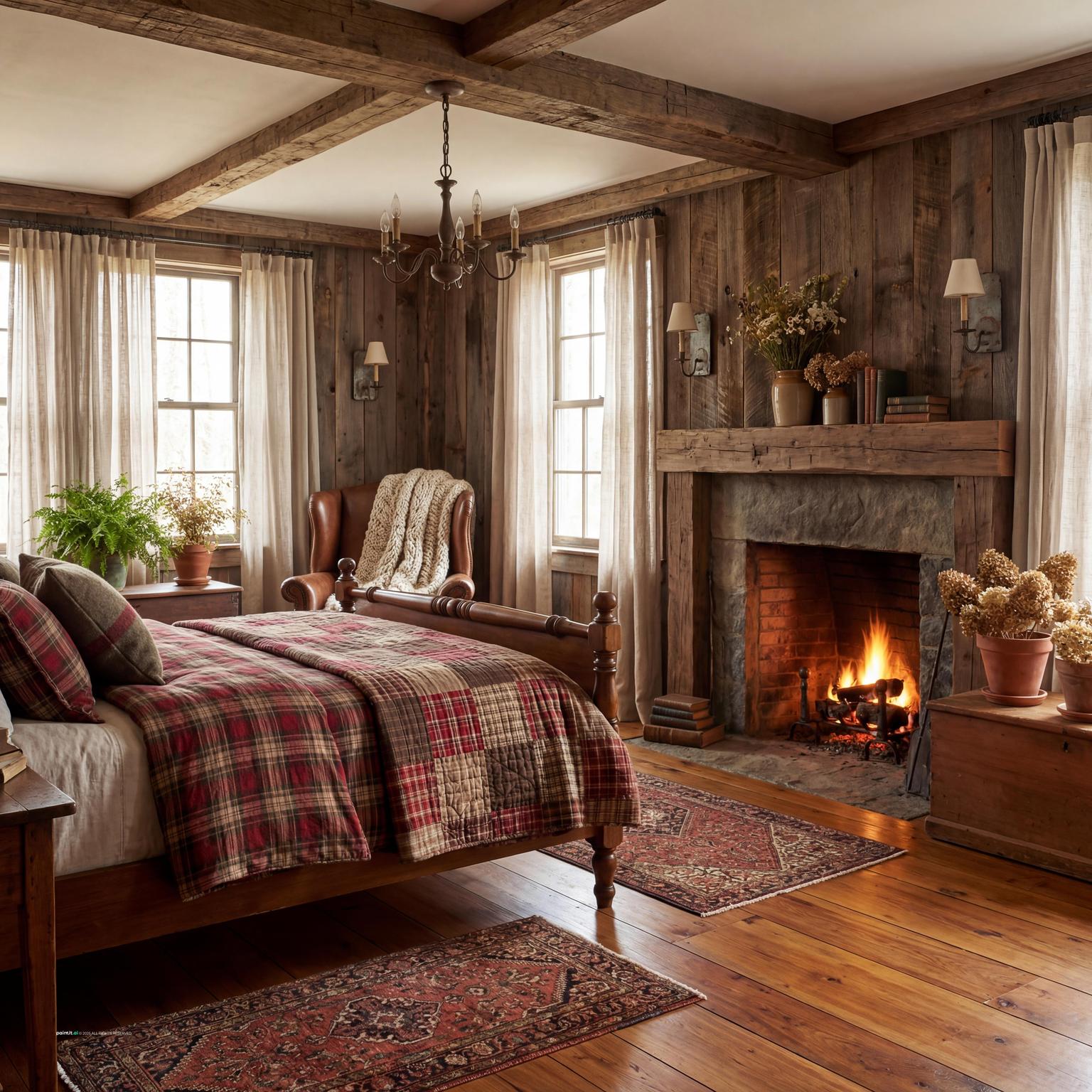
Cabin bedroom with a plaid quilt
Reclaimed wood paneling, a plaid quilt and a fireplace make a cabin bedroom feel warm without extra decoration.
-
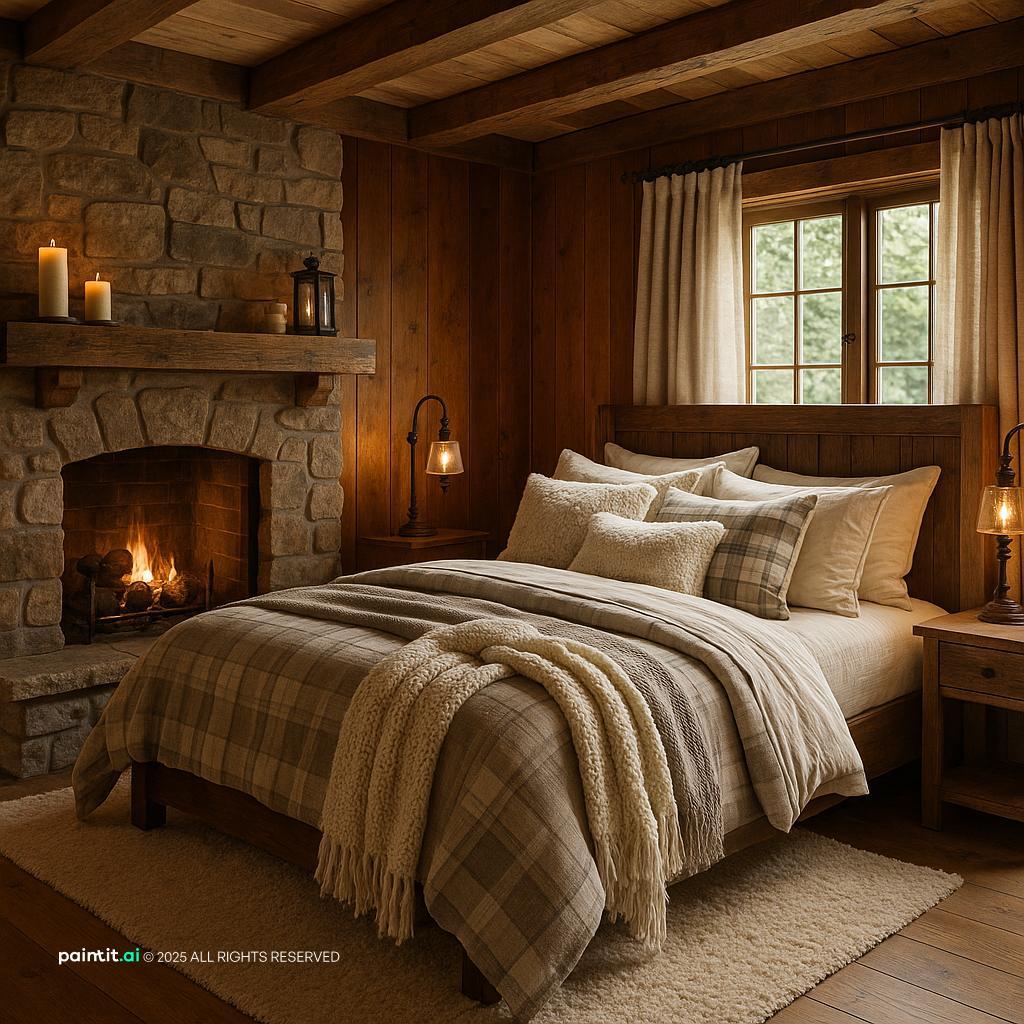
Stone fireplace wall in a bedroom
A stone fireplace wall behind the bed doubles as the headboard and the room's focal point.
-
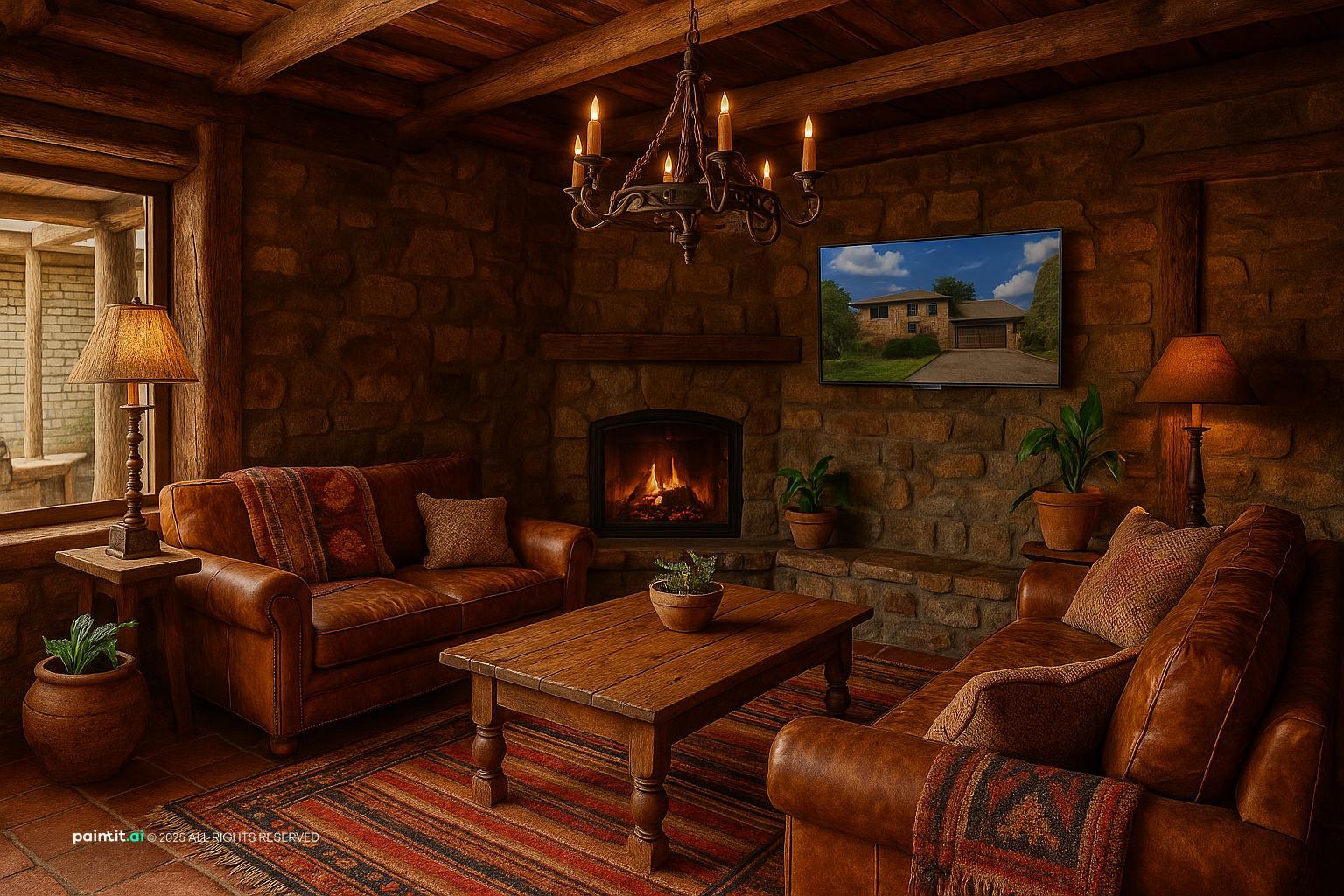
Brick and leather living room
Brick, leather and a red rug give a warmer, darker version of rustic that suits a den or family room.
-
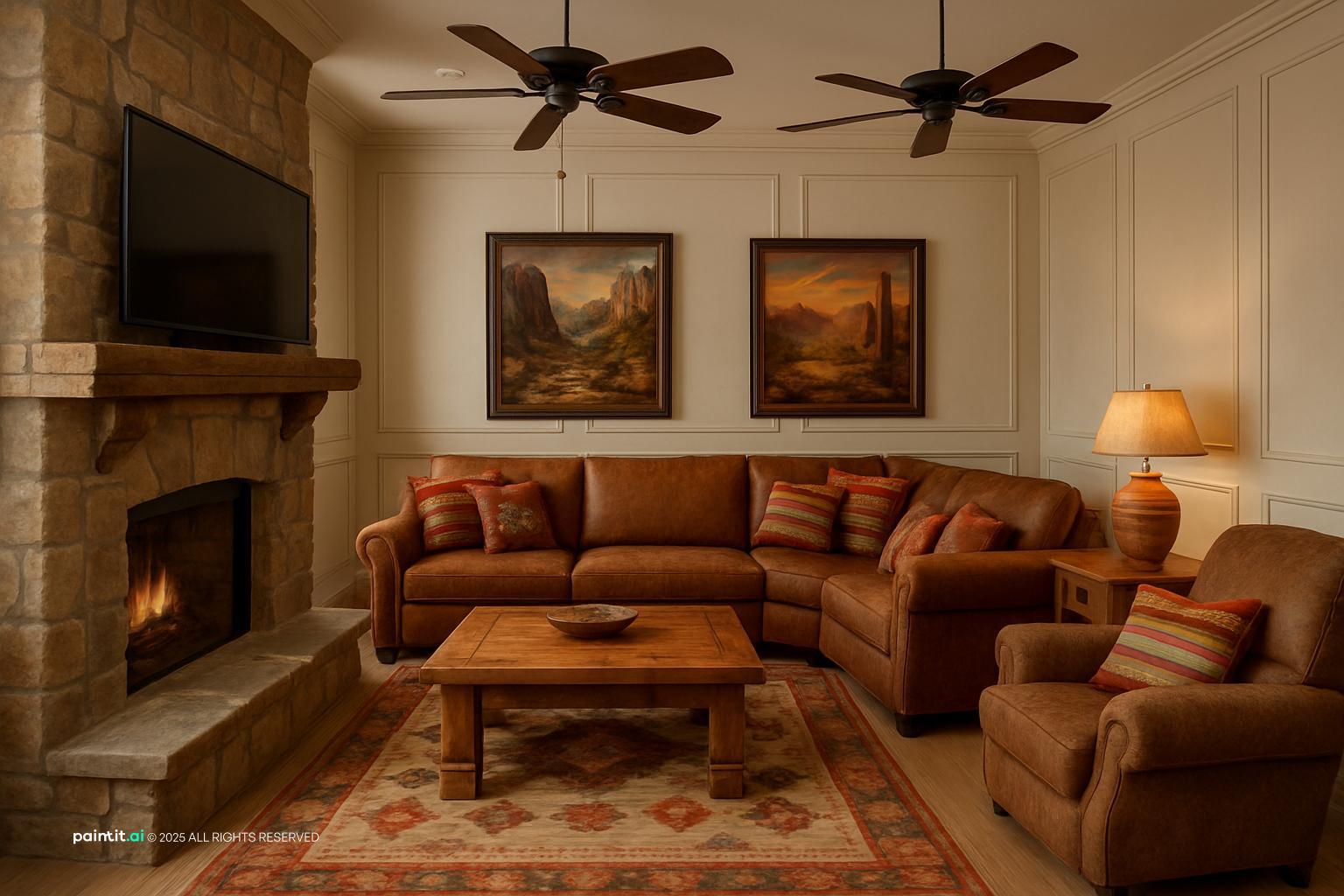
Southwestern rustic living room
Southwestern rustic swaps pine and plaid for stone, leather and geometric rugs in reds and ochres.
-
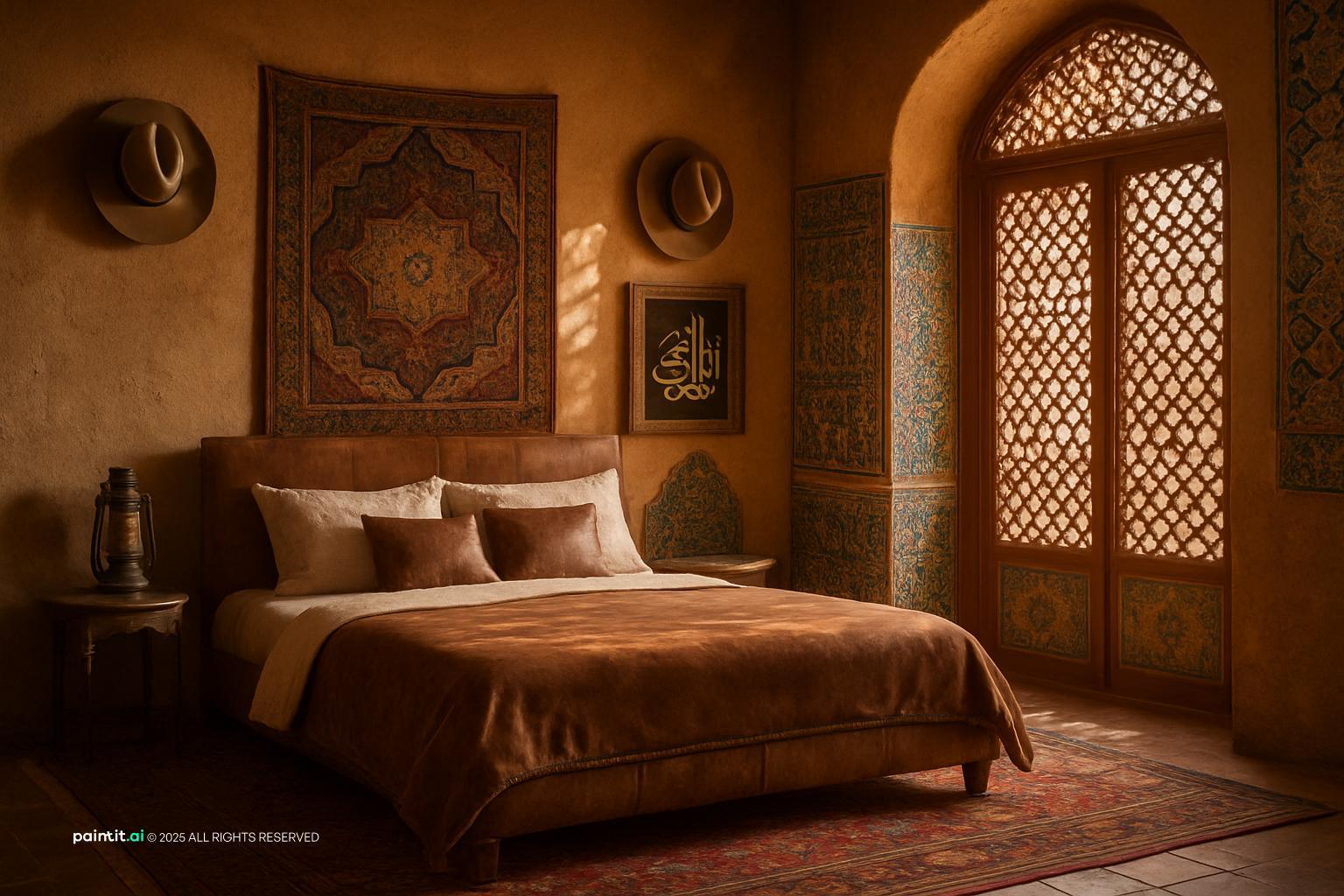
Southwestern bedroom with carved doors
Terracotta plaster walls and carved wooden doors show the adobe side of rustic.
-
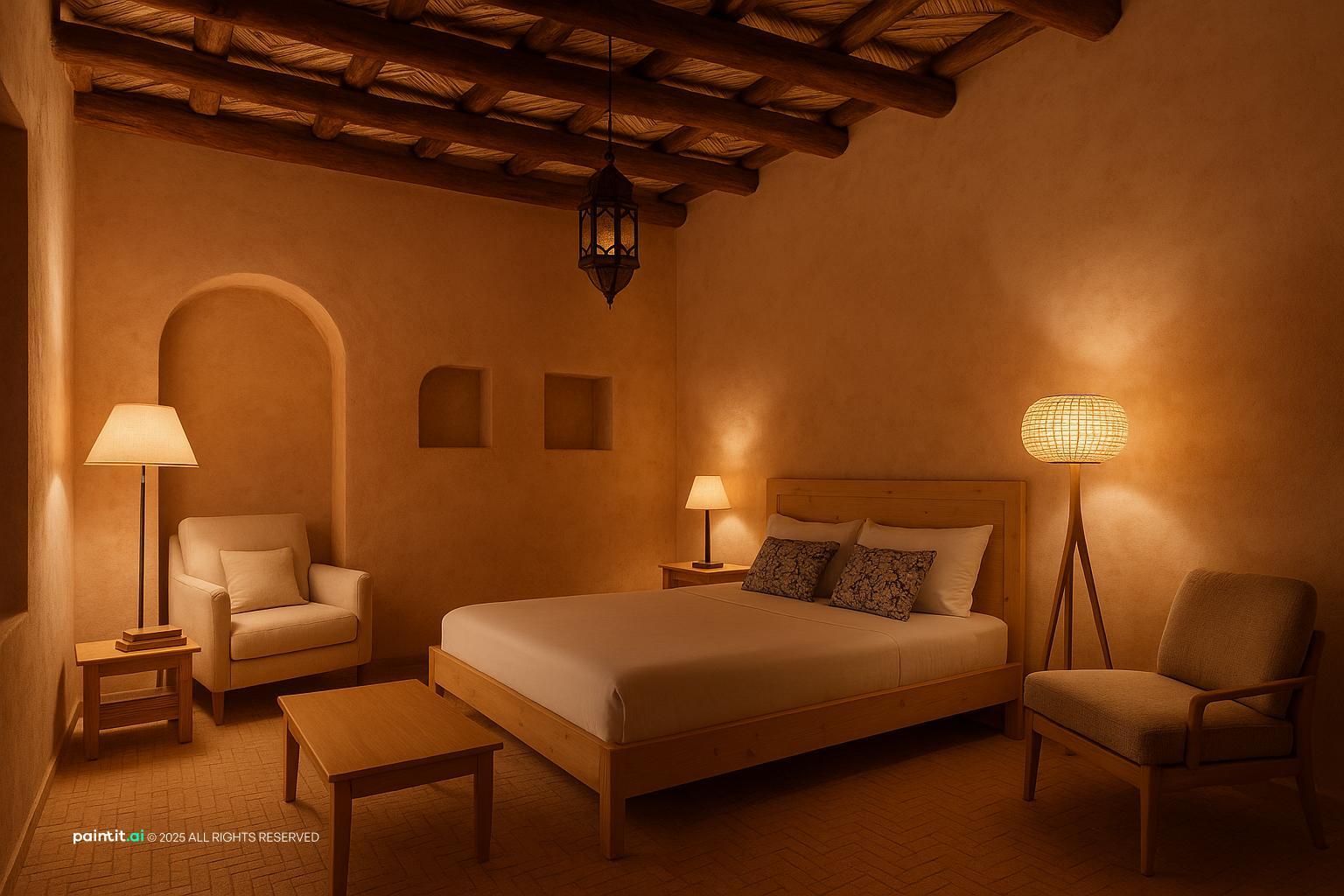
Adobe-style bedroom with niches
Rounded plaster niches and warm lamp light keep a Southwestern bedroom simple and calm.
-
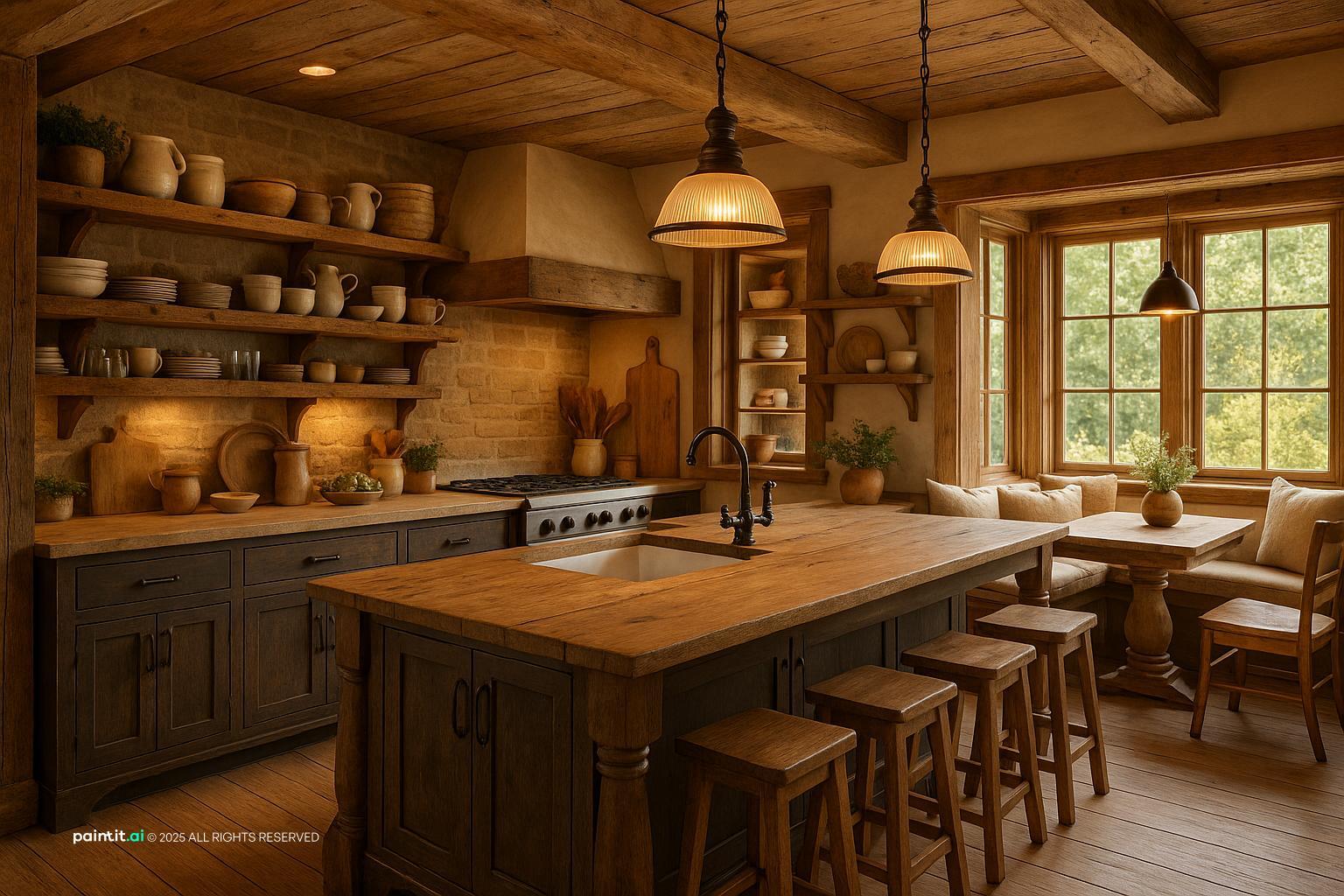
Farmhouse kitchen with a long island
Open shelves, beams and a long wooden island are the farmhouse version of rustic: lighter, busier and more lived-in.
-
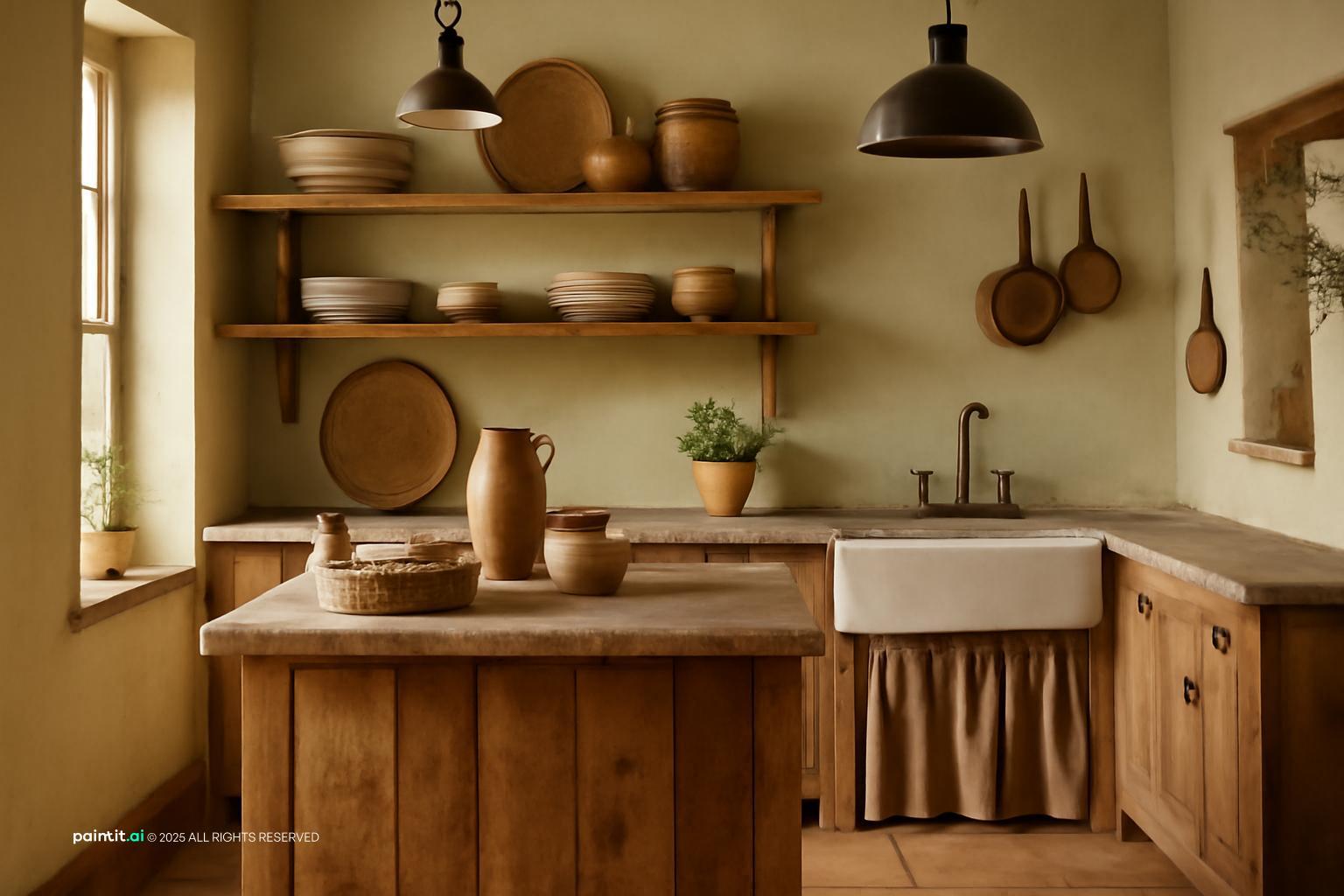
Reclaimed island and skirted sink
A fabric skirt under the sink and pottery on open shelves bring softness to a kitchen full of wood.
-
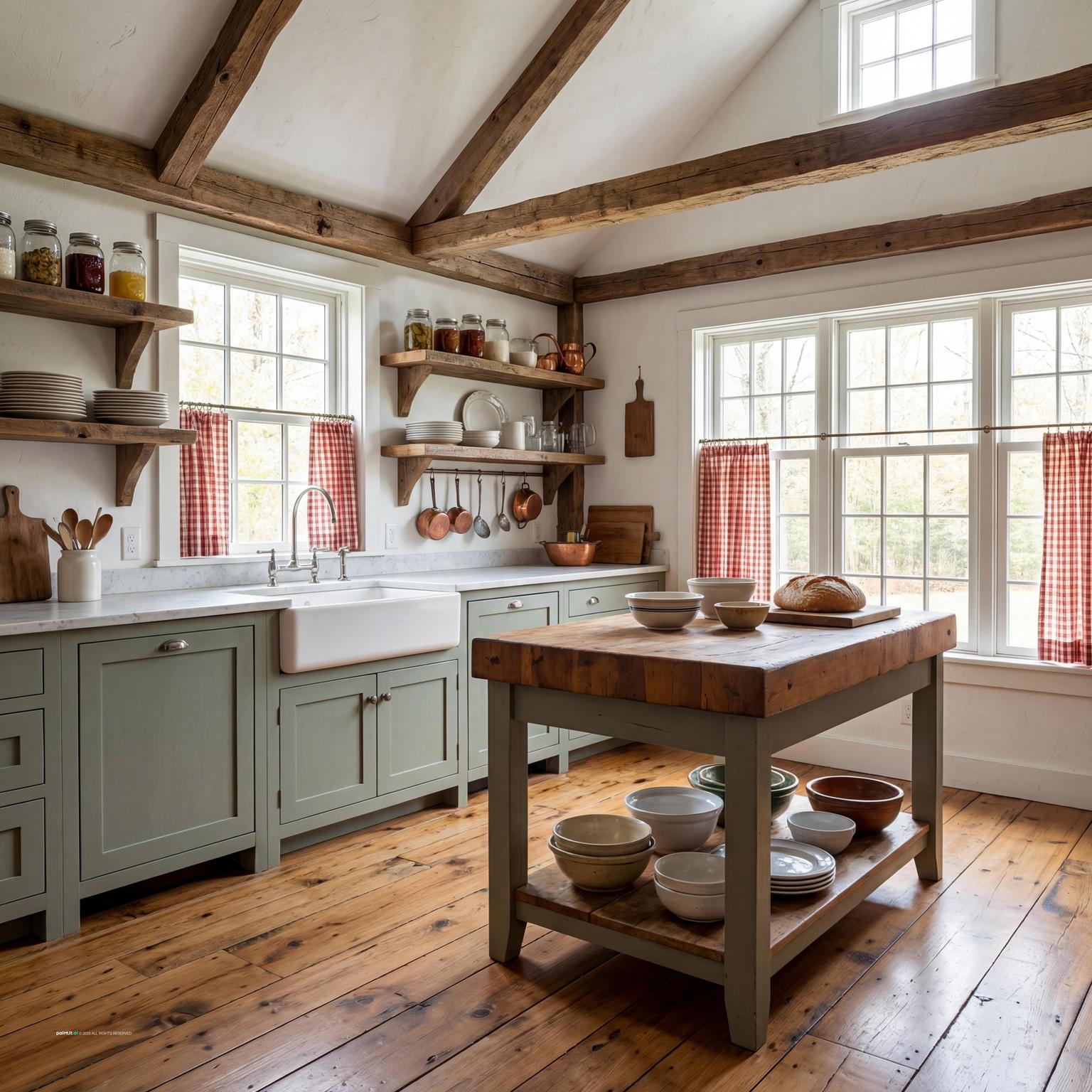
Whitewashed farmhouse kitchen
Whitewashed walls under dark beams give a lighter rustic kitchen that still reads as old.
-
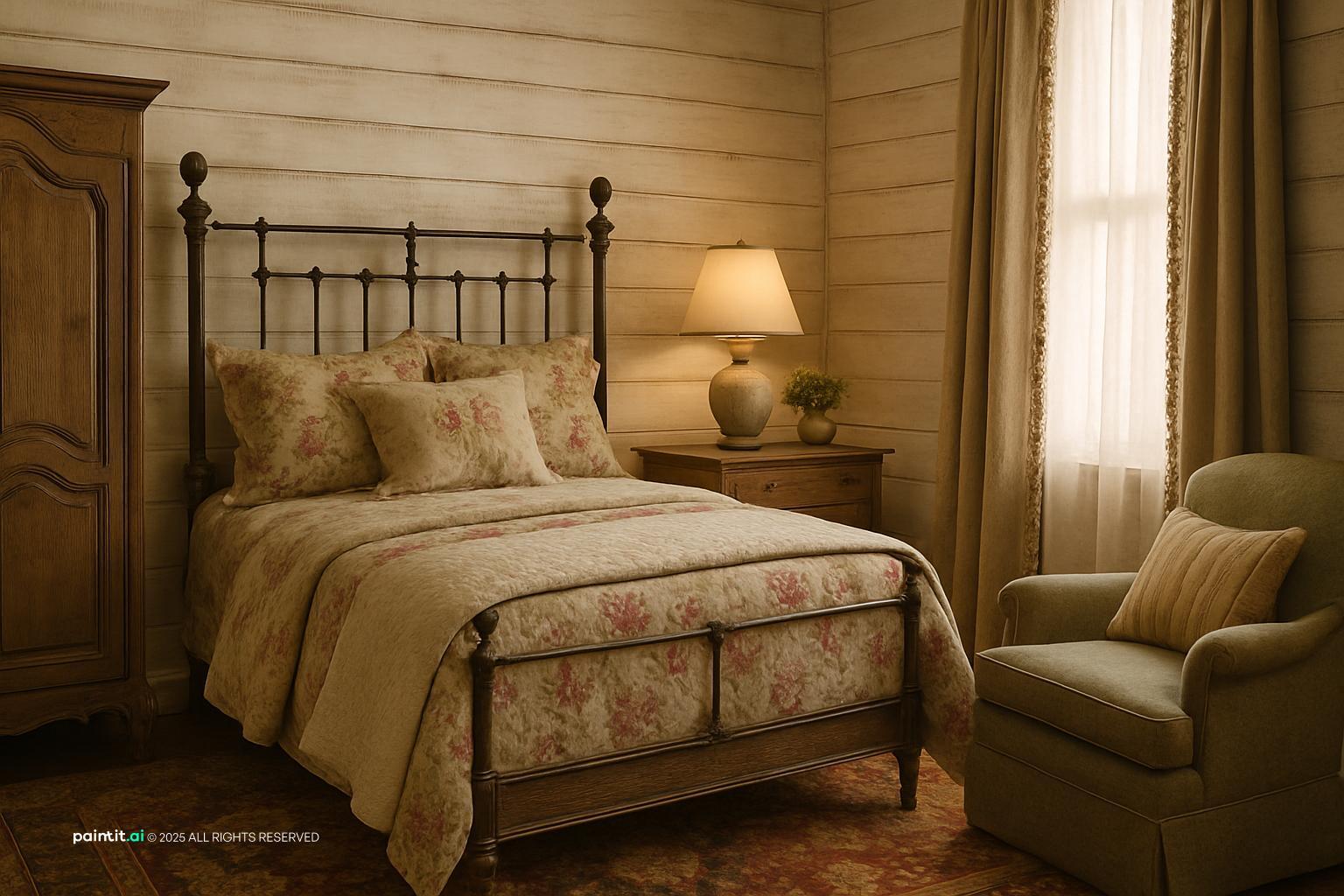
Farmhouse bedroom with an iron bed
An iron bed, a floral quilt and plank walls are a softer farmhouse take on the rustic bedroom.
-
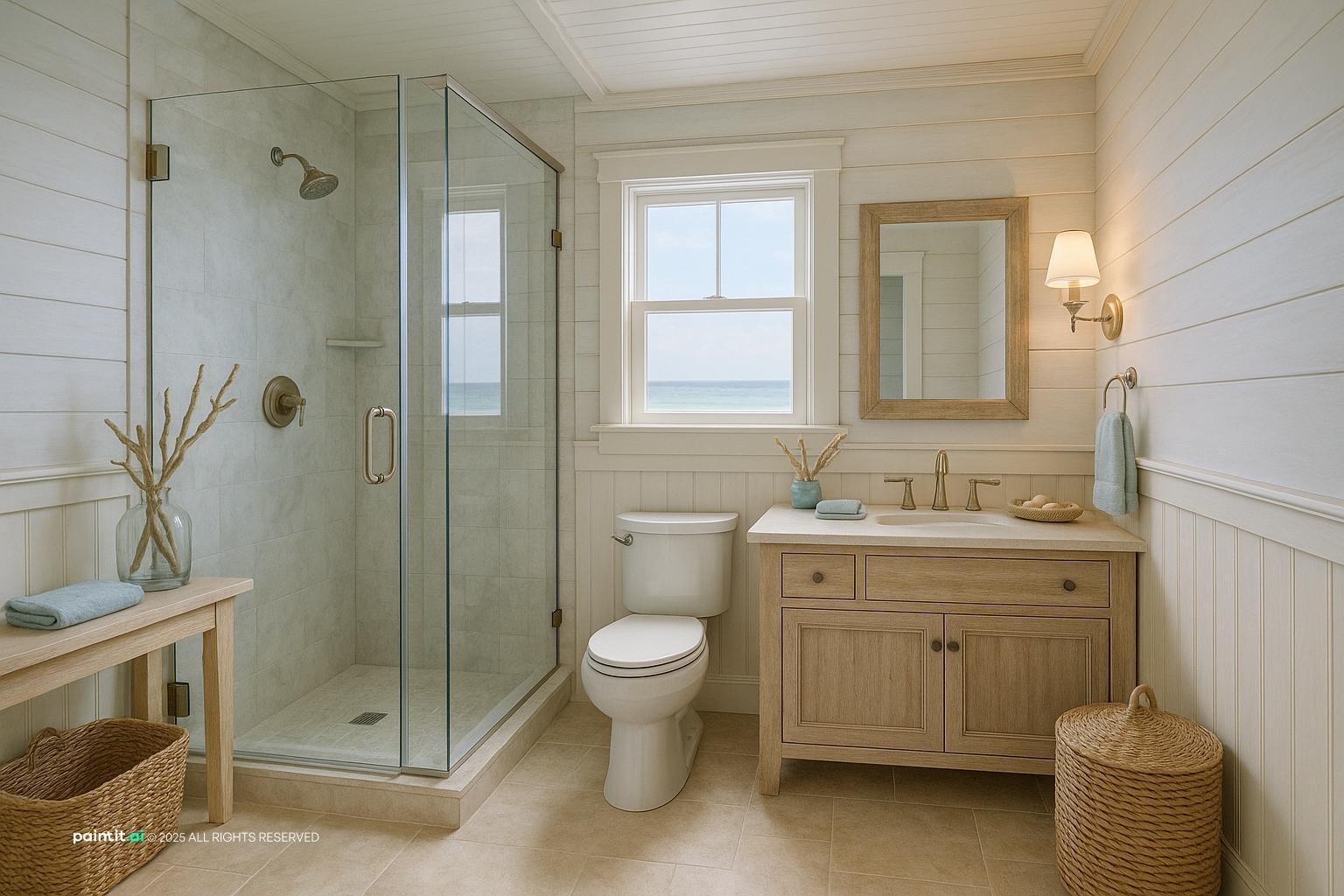
Coastal rustic bathroom
Coastal rustic keeps the wood but paints it white and adds woven textures instead of stone and leather.
-
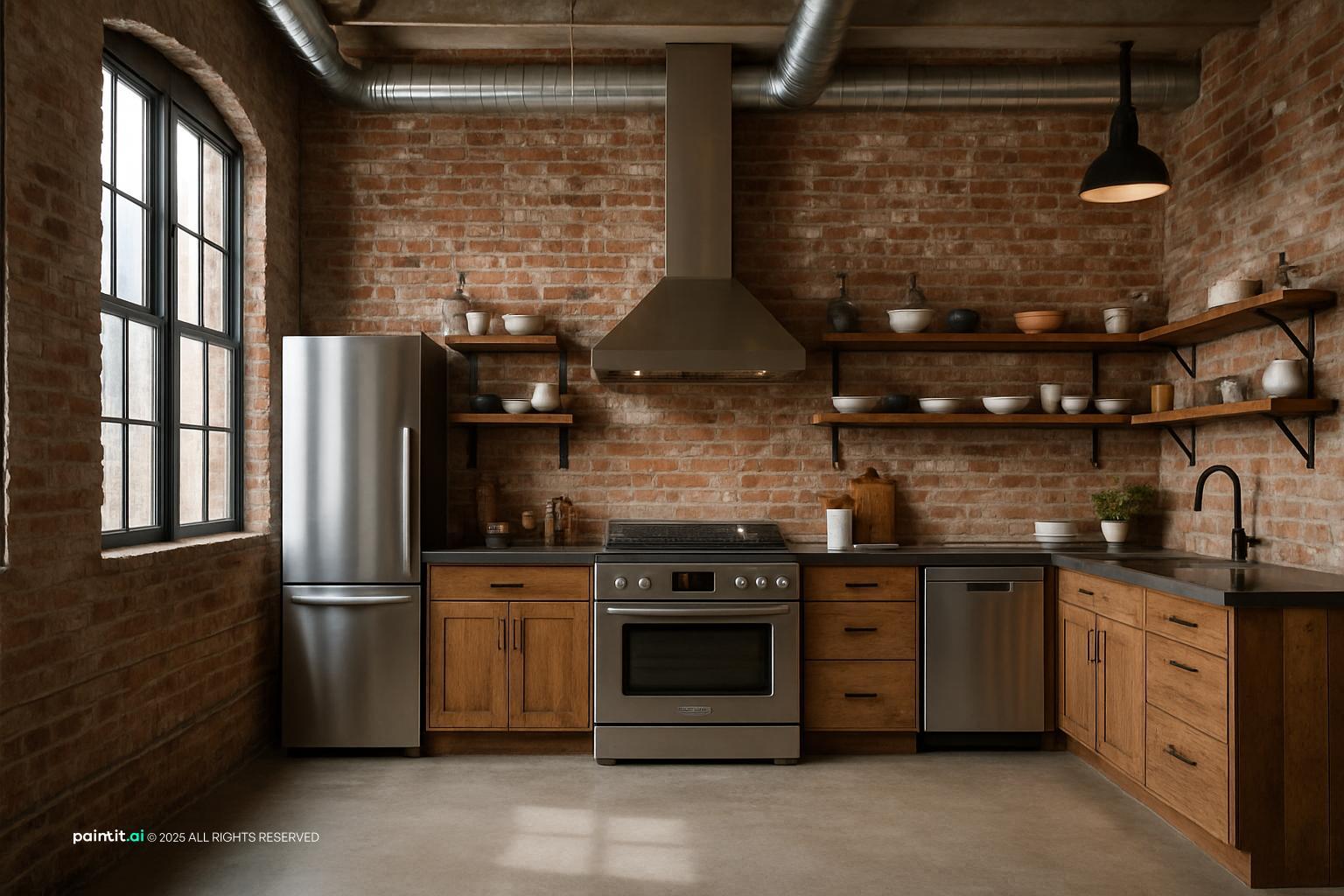
Industrial rustic kitchen
Exposed brick and concrete meet warm wood cabinets in industrial rustic.
-
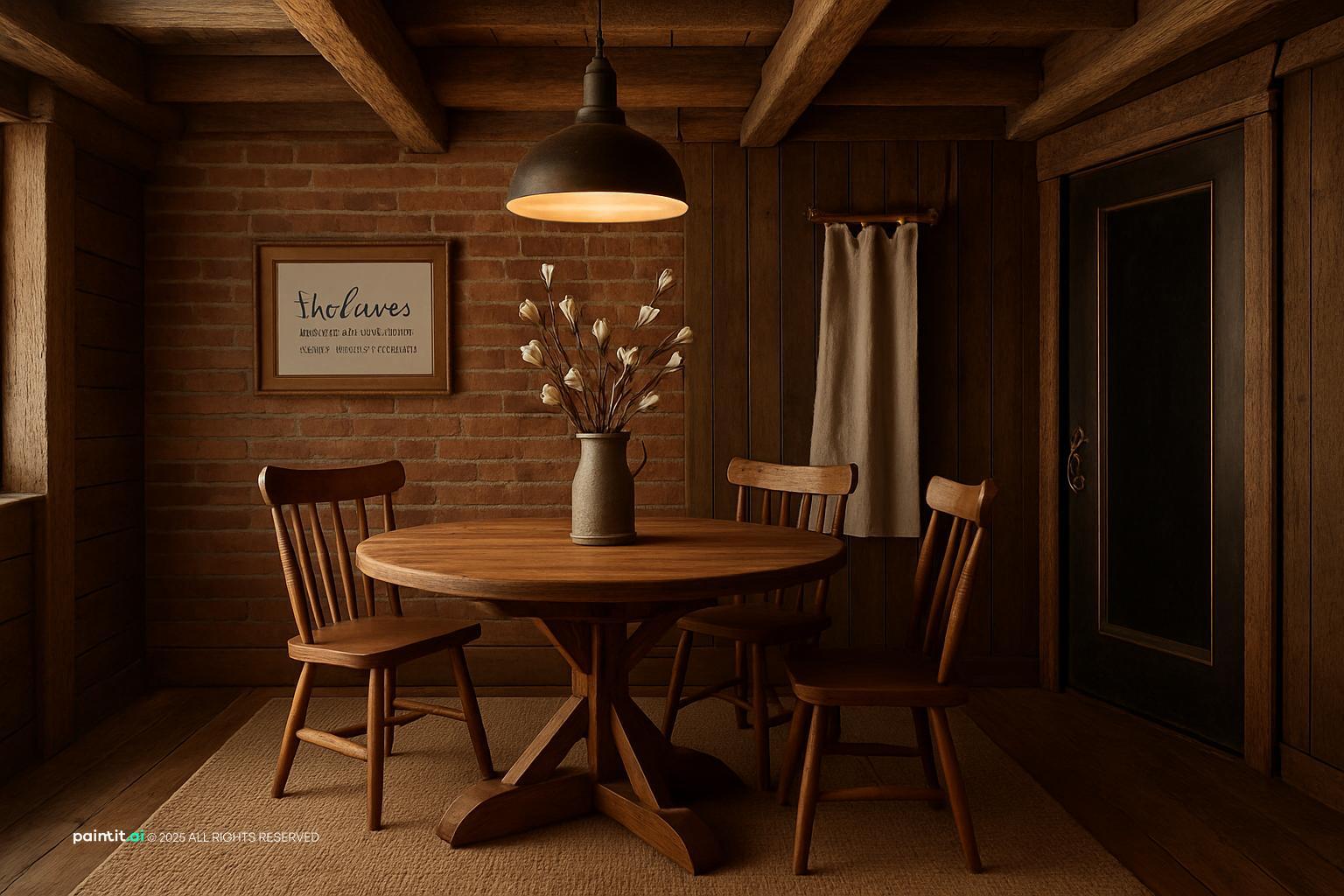
Rustic dining nook
A round wooden table under one pendant against brick is an easy rustic corner to copy.
-
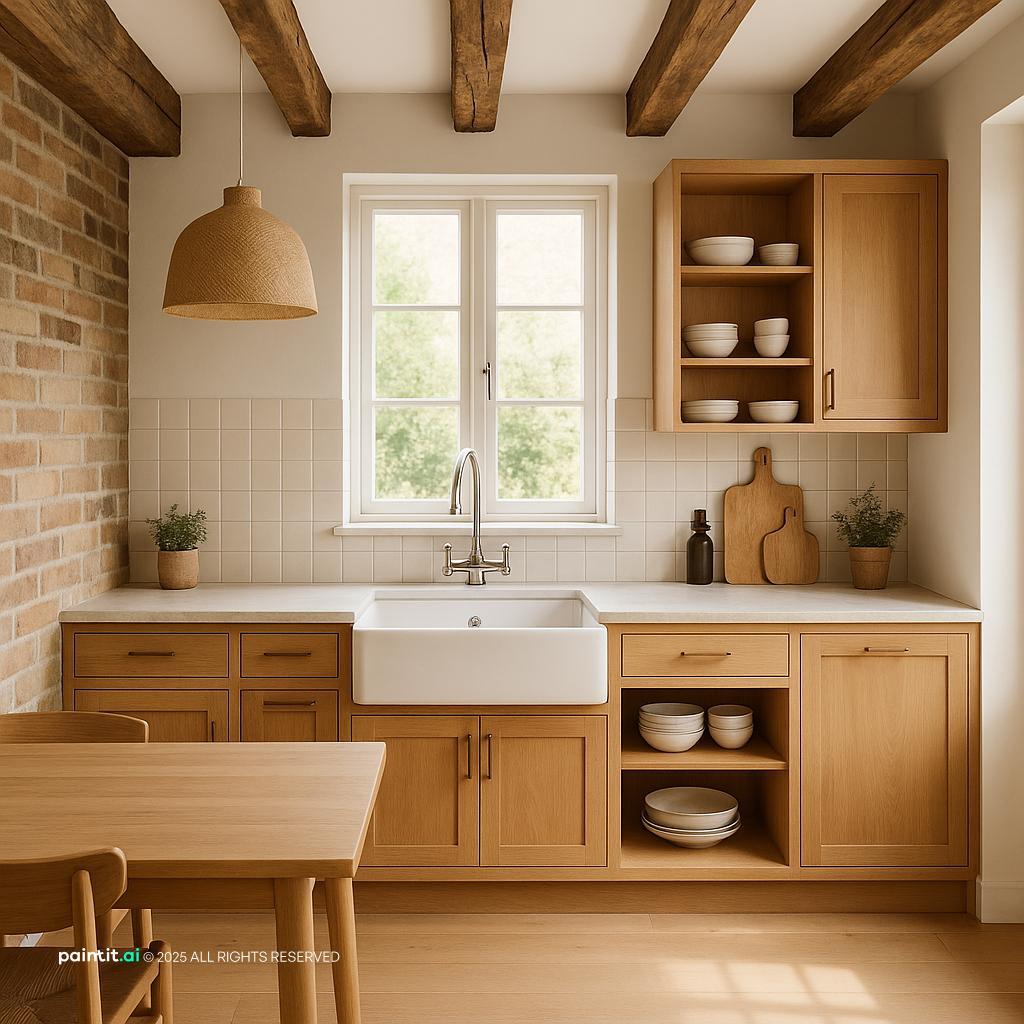
Rustic modern kitchen in light oak
Rustic modern keeps beams and brick but uses light oak and simple lines for a brighter room.
Rustic style interior design characteristics at a glance
-
Colors
Earthy browns, greens, rust, cream and warm grays taken from wood, stone and leather. Walls usually stay light or show the material itself, and color comes from textiles.
-
Materials
Wood with visible grain and knots, fieldstone or brick, wrought iron and leather. Finishes are matte or oiled rather than glossy, and a bit of wear is welcome.
-
Furniture
Solid, simple pieces: a big wooden dining table, leather or linen sofas, benches and vintage cupboards. Pick a few sturdy pieces rather than many small ones.
-
Lighting and textiles
Warm, low light from a fireplace, table lamps and iron or woven pendants, plus layered wool, linen and jute. These do more for the mood than any single piece of furniture.
Types of rustic interior design
Rustic is a broad category with distinct regional and contextual sub-types, and search intent for "rustic" splits cleanly along these lines. Understanding them helps apply the style more specifically.
Mountain rustic / lodge rustic
The most recognizable type: heavy log or timber frame construction, stone fireplace as the room's dominant element, antler and wildlife motifs, plaid and tartan textiles, furs (real or faux), and the visual language of a Rocky Mountain or Pacific Northwest cabin. Scale is large; materials are heavy.
Farmhouse rustic
The more refined version: whitewashed or painted wood, vintage farm equipment as decorative elements, shaker-style cabinetry, worn linens, and the atmosphere of a working 19th-century farmhouse. Softer palette than mountain rustic (more cream and off-white). This is what "modern farmhouse" style references.
Cabin rustic
The most raw and unfinished form, chinked log walls, small-paned windows, cast iron woodstove, simple wooden furniture with minimal finishing. This is the aesthetic of a genuinely functional wilderness shelter adapted for decorative purposes.
Coastal rustic
The intersection of rustic and coastal: weathered and whitewashed wood, driftwood, natural rope and hemp, linen in sun-faded tones, and the particular worn quality of materials exposed to salt air. Less fireplace-focused (warmer climate); more about weathered texture.
Southwestern rustic
The American Southwest variant: adobe walls or stucco in terracotta and cream, vigas (exposed ceiling beams), Navajo and Rio Grande textiles in geometric patterns, turquoise as signature accent color, wrought iron. Directly overlaps with New Mexico style.
Industrial rustic / rustic modern
The contemporary hybrid: reclaimed wood, exposed brick, concrete, and steel combined with contemporary clean lines and furniture forms. The rustic element provides warmth and texture; the contemporary element provides structure.
The essential rustic characteristics
Regardless of type, these elements define rustic style:
- Exposed wood in natural, minimally finished states, grain, knots, and imperfections are the point
- Stone fireplace from local fieldstone or limestone, low and wide proportioned
- Natural textiles, wool, linen, cotton, jute, sisal; animal hide as accent
- Earthen palette, browns, greens, burnt oranges, deep reds, cream and beige; no cool tones
- Handcrafted or found objects, vintage pieces, handmade ceramics, cast iron, natural objects
- Warm localized lighting, fireplace, candles, table lamps; not overhead fluorescent
Visualize rustic style with Paintit.ai
Upload a photo of any room to app.paintit.ai and test rustic palettes, warm wood tones, stone grey, earthy terracotta, in 1-2 minutes. Compare mountain lodge rustic against farmhouse or coastal rustic. Free to start.
Related styles and tools
FAQ
Rustic interior design places natural materials in their honest, minimally finished states at the center of every design decision: raw-edge wood, fieldstone, wrought iron, natural textiles. The materials are used because they carry visible history, grain, knots, age marks, rather than despite these qualities. The style grows out of rural building traditions in Europe and North America and has evolved into several regional sub-types: mountain rustic, farmhouse rustic, cabin rustic, coastal rustic, southwestern rustic, and industrial rustic.
Mountain rustic: heavy timber, stone fireplace, antler motifs, dark wood, dramatic scale. Farmhouse rustic: more refined, whitewashed, vintage farm elements, shaker cabinetry, softer palette. Cabin rustic: most raw, chinked logs, cast iron stove, simple unfinished furniture. Coastal rustic: whitewashed and weathered, driftwood, rope and hemp, sun-faded linen. Southwestern rustic: adobe, vigas, Navajo textiles, turquoise. Industrial rustic: reclaimed wood and exposed brick with contemporary lines.
Farmhouse style is a subset of rustic that is more refined and domesticated. Rustic (particularly mountain or cabin rustic) uses heavier, rougher materials with more visible imperfections; farmhouse uses similar materials but with more whitewash, painted surfaces, and vintage-find decoration. Rustic rooms typically have lower light levels and more dramatic fireplace presence; farmhouse rooms are brighter and more orderly.
Yes. Upload a photo of any room to app.paintit.ai and test rustic design directions in 1-2 minutes. Free to start.