
Mountain house interior design ideas: materials, warmth, and view connection
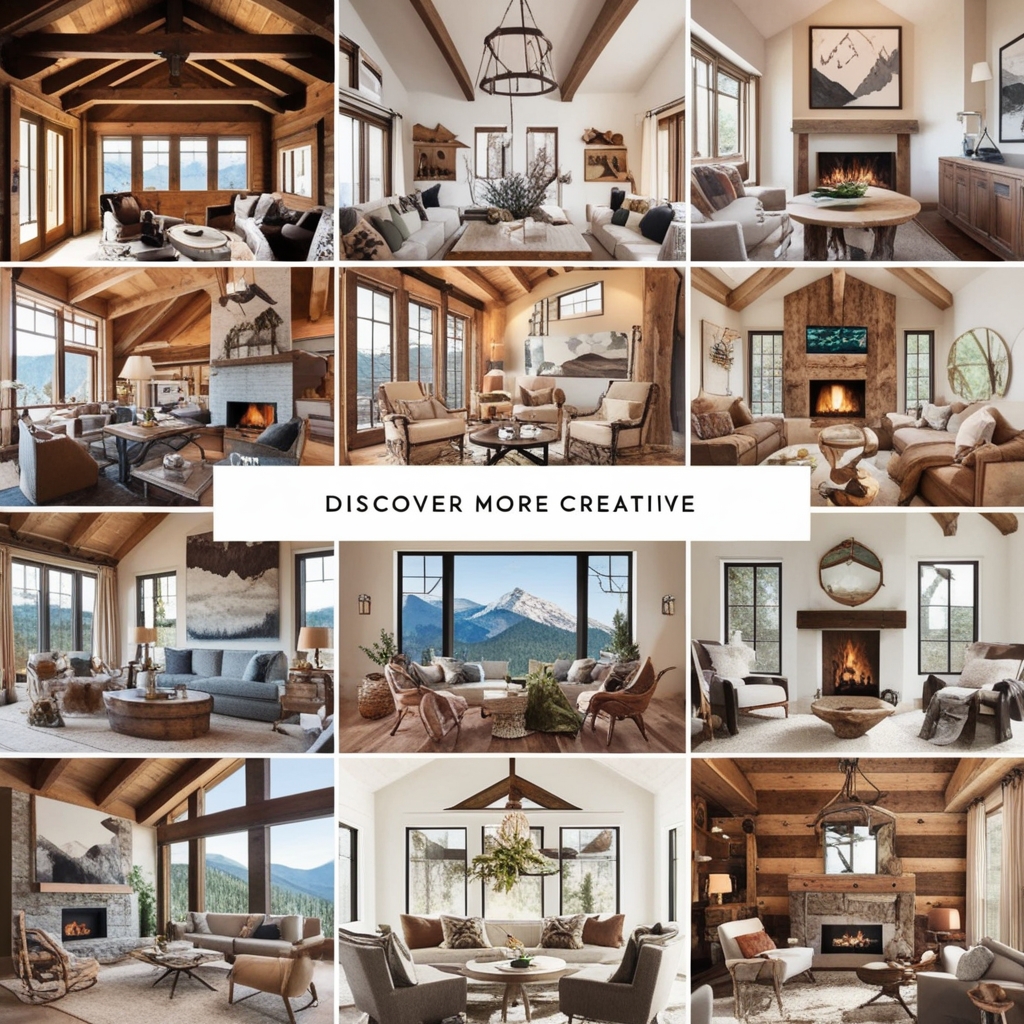
Mountain house interior design has one primary goal: make the inside feel as connected to the landscape as the outside. That means materials that belong in the natural environment, a palette drawn from the specific mountain landscape, and windows and sightlines positioned to draw the view in.
The secondary goal is warmth - literal warmth, but also the physical and atmospheric sense that a mountain house is a refuge from the elements outside.
Upload a photo of your space to app.paintit.ai and see how different mountain style directions read in your actual room - in 1-2 minutes. Free to start.
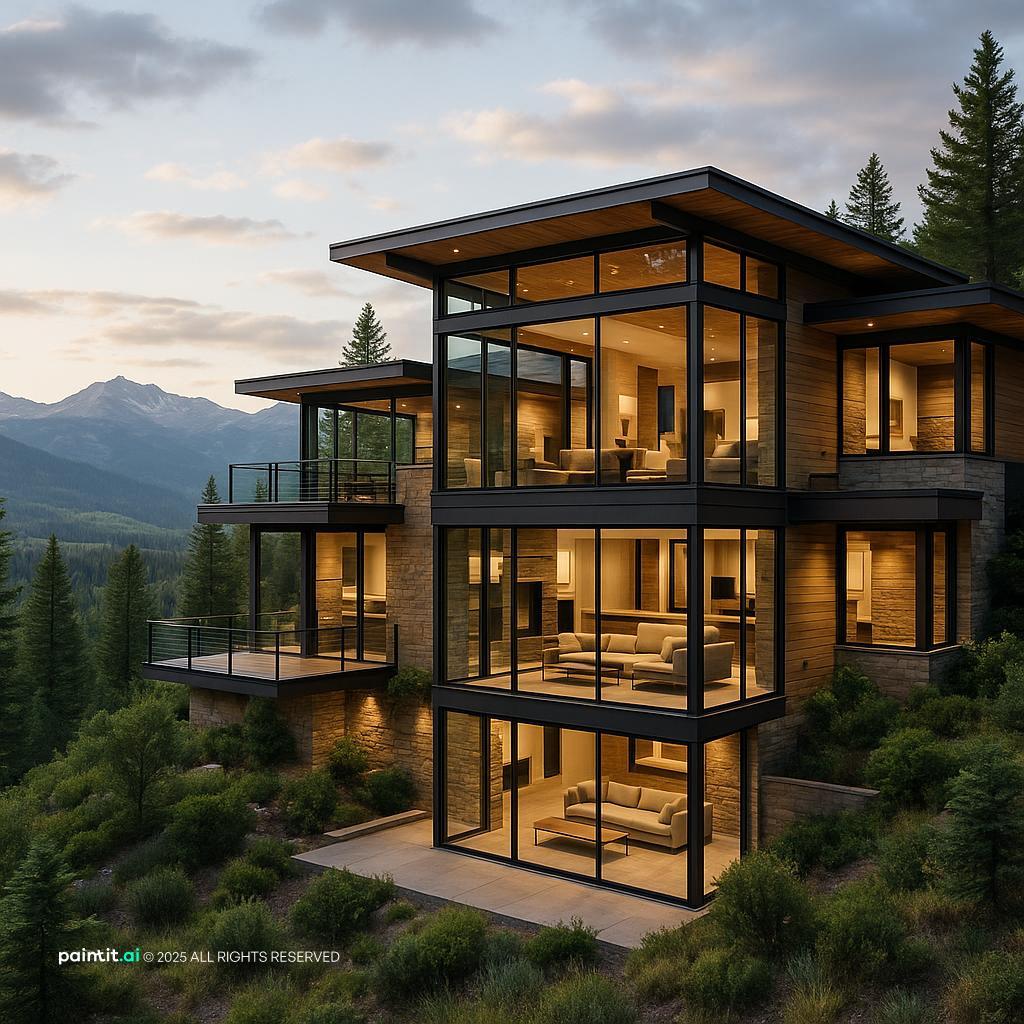
8 mountain house interior design principles
The trap with mountain-house design is decorating around a theme instead of building from the actual site: the view, the local materials, the climate. These eight principles work in that order.
-
1. Embrace Natural Materials
Wood, stone, and wool are non-negotiable in a mountain home - anything synthetic reads as out of place next to a real view. Exposed timber beams, a stone fireplace surround, and rough-hewn furniture do the heavy lifting; the goal is a room that looks like it grew out of the same hillside as the view outside the window.
-
2. Choose an earthy, landscape-specific palette
Mountain palettes draw from the specific environment: pine green, slate grey, bark brown, stone beige, and the warm amber of a fireside. These are the actual colors outside the window, brought inside.
Deep red and gold accents reference warm light at altitude: sunset colors, firelight, autumn foliage. Used as accent colors in textiles and accessories, they add warmth without overwhelming the neutral base.
-
3. Prioritize Comfort
After a full day outdoors, a mountain living room needs to sink you into it. Oversized upholstered sofas and deep armchairs earn their footprint here in a way they wouldn't in a city apartment. Flannel, wool, and heavy cotton throws layered over the seating do more for the room than any single decorative piece.
-
4. Maximize Viewpoints
The view is usually the reason the house exists, so don't let furniture block it. Position seating to face windows rather than a TV wall where possible, and keep sightlines from the kitchen and dining table open to the outdoors. A deck or balcony extends the room itself, not just the floor plan.
-
5. Incorporate regional and crafted accessories
Accessories should feel found, not purchased. Handmade pottery from local artisans, vintage maps of the mountain range, textiles from regional makers, framed botanical or geological prints - these objects connect the home to its specific place.
Antler chandeliers and vintage ski equipment work when they are genuine; they read as themed when they are mass-produced replicas.
-
6. Integrate Sustainable Practices
Reclaimed timber and locally quarried stone are usually both more sustainable and more authentically "mountain" than shipped-in materials - a genuine win-win rather than a compromise. Energy-efficient appliances and good window seals matter more at altitude, where heating costs run higher than in most other climates.
-
7. Create Functional Spaces
A mudroom earns its place at a mountain house harder than almost anywhere else - wet boots, ski gear, and hiking equipment need somewhere to land that isn't the living room floor. Beyond that, build the layout around what the household actually does outdoors: a bike-heavy family needs different storage than a ski-heavy one.
-
8. Personalize Your Space
Family photos, souvenirs from actual trips, and art that means something to you keep a mountain house from reading as a rental cabin catalogue. This is the one category where "mass-produced rustic" fails hardest - a generic antler sculpture reads as decor, but a photo from the actual mountain outside the window reads as home.
Mountain Home Interior Design Ideas in Action
-
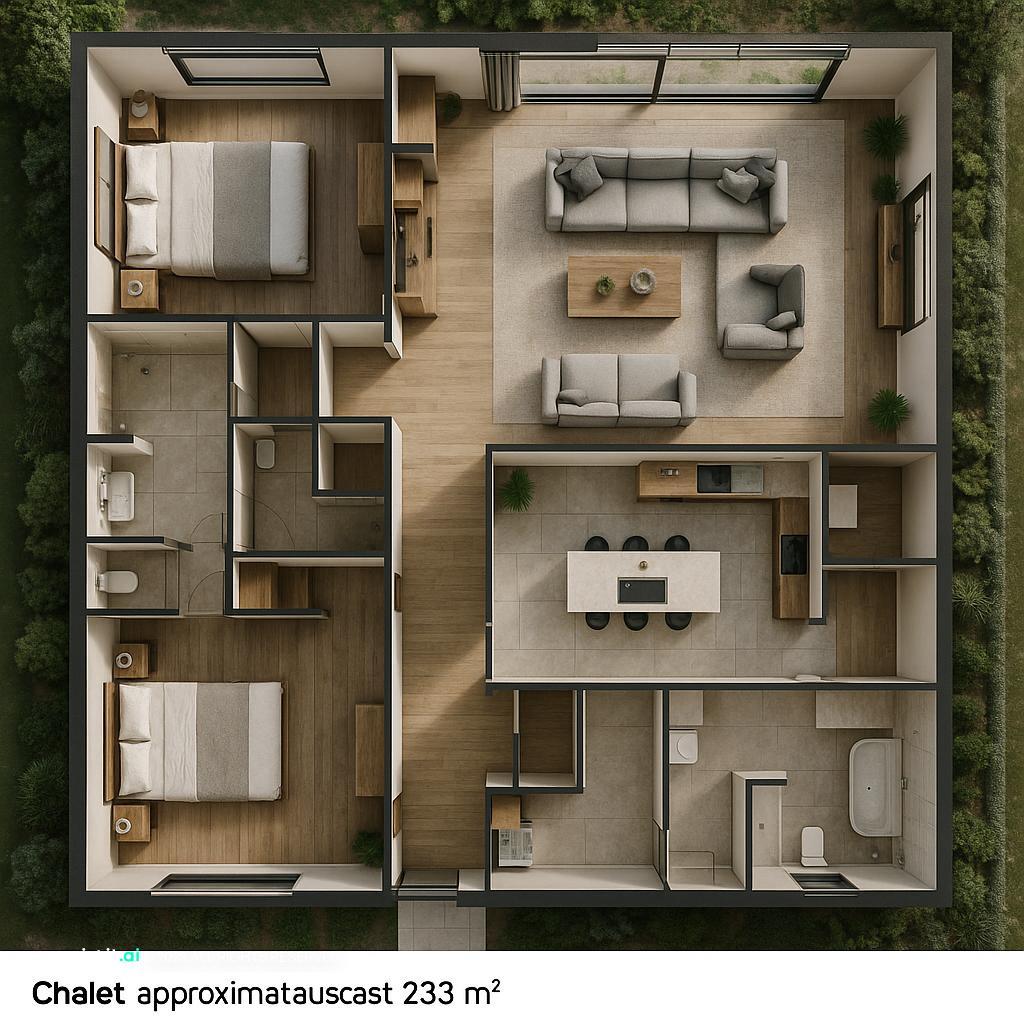
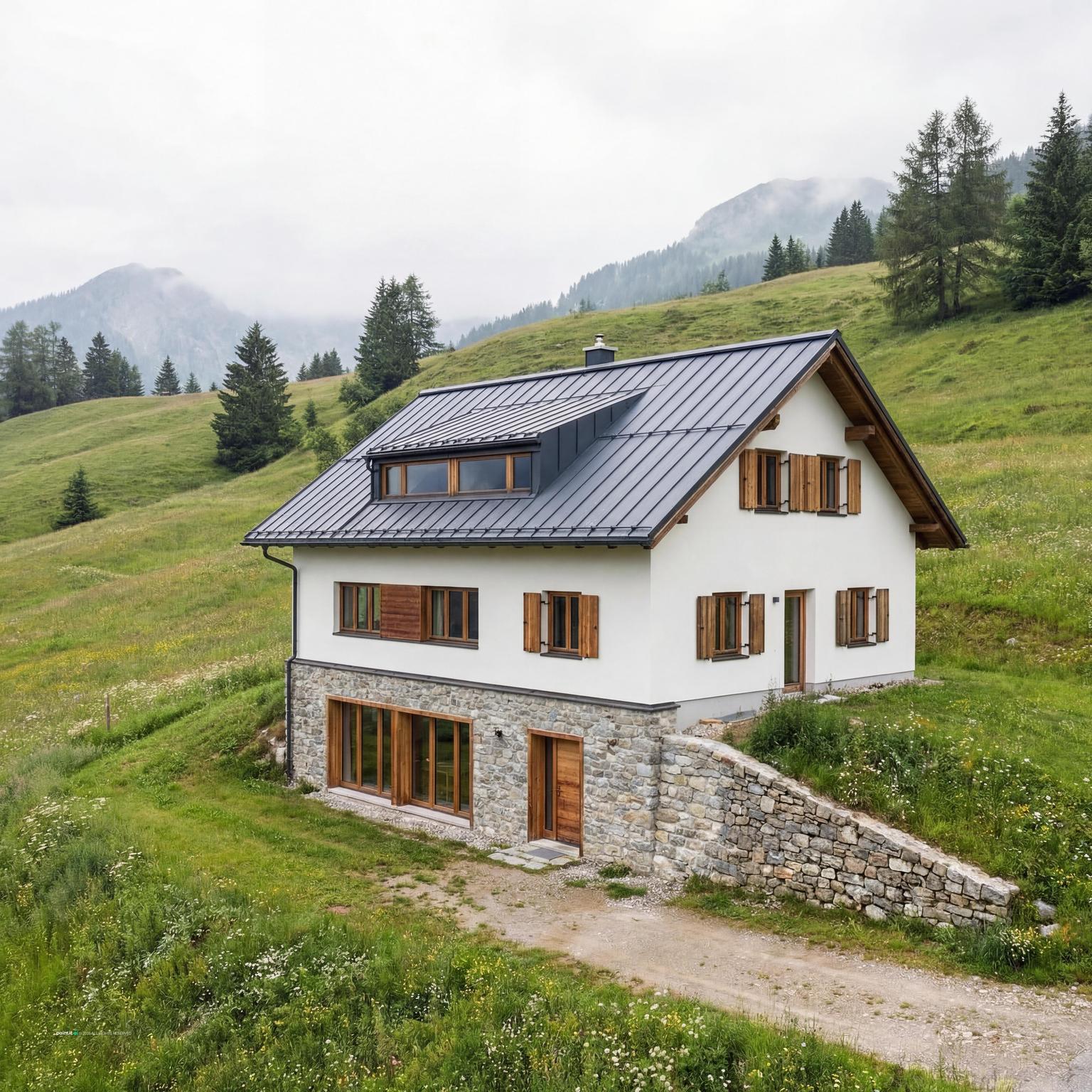
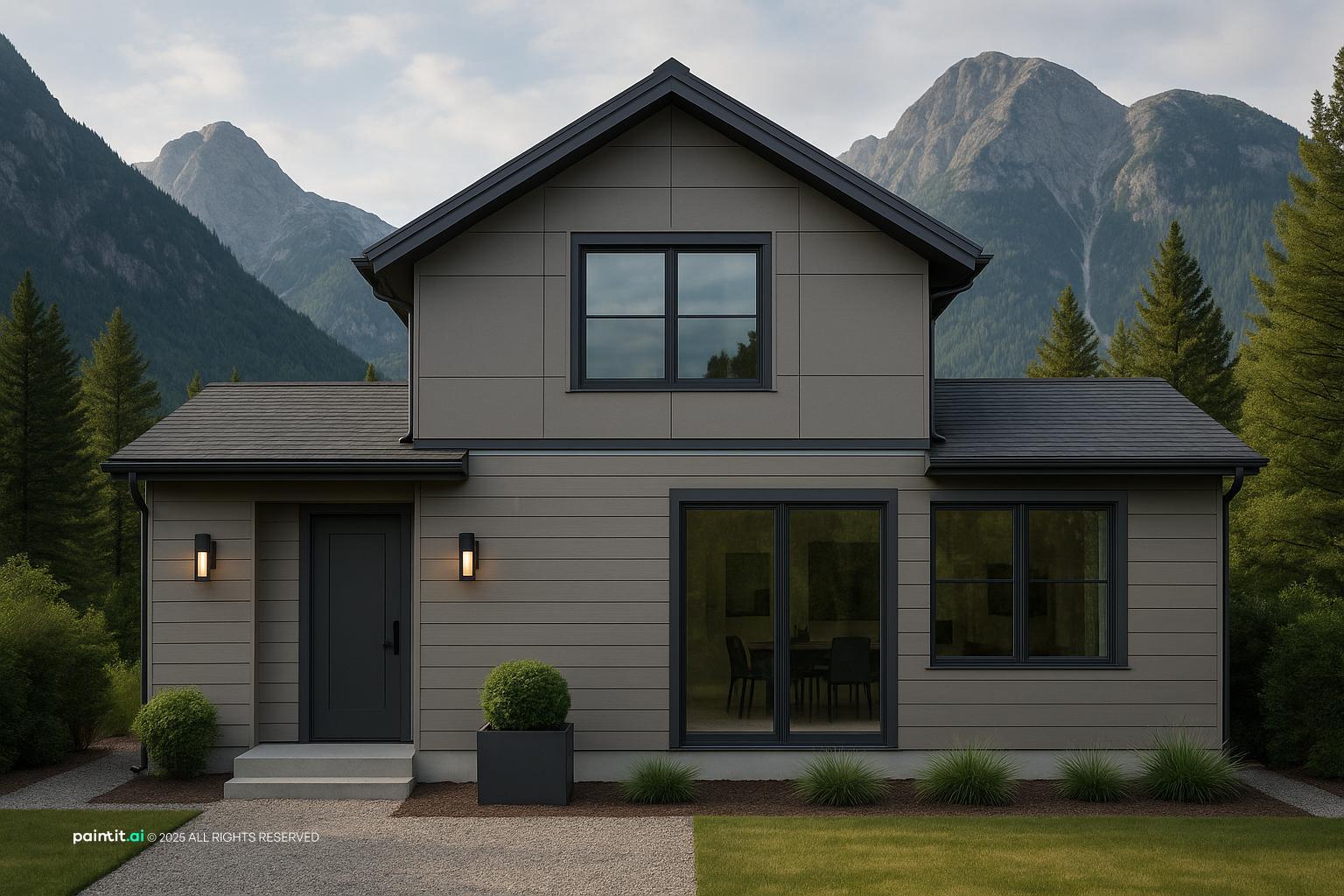
The most successful mountain house interiors feel like they were grown from the landscape rather than imported to it. Materials feel found - stone, timber, wool - sightlines connect to the view, and the space achieves warmth through layering rather than decoration. These examples show three different mountain design registers: traditional alpine, contemporary mountain modern, and small cabin scale.
-
Floor-to-ceiling windows carry this living room - the furniture stays deliberately low-key so nothing competes with the view. A neutral palette in wool and leather, with throw blankets and cushions clustered near the fireplace, gives the room a resting point that isn't the glass wall.
-
This kitchen pairs a farmhouse-style table with mismatched artisan chairs rather than a matching set - the slight imperfection reads as more mountain-authentic than a showroom-perfect suite. Pendant lighting in raw materials (rope, iron, unfinished wood) keeps the fixture from looking like it was ordered from a catalogue.
-
Layered bedding does more here than any single piece of furniture - a wool blanket over linen, over a heavier throw at the foot of the bed. Earthy tones on the walls with one piece of bold local artwork keeps the room from feeling flat, and a locally made headboard or nightstand ties the room back to the region.
-
A deck with real seating and a fire pit functions as another room, not an afterthought - it's often where a mountain house actually gets used most in the warmer months. Matching the deck's material palette to the interior (same timber tone, same stone) keeps the transition from feeling like stepping into a different building.
Mountain house design subtypes - rustic, modern, and cabin scale
Traditional alpine / lodge style: dark timber, exposed structural beams, stone fireplace as the room anchor, deep wool and leather upholstery, plaid or tartan textiles. Best for larger properties and wooded settings.
Contemporary mountain modern: the same material values executed with cleaner lines and lighter tones. White oak instead of dark walnut, smooth stone veneer, simple pendant lighting, and large windows as a primary design element.
Small cabin scale: light palette, built-in storage that disappears into the architecture, loft sleeping areas, and multi-function furniture. Every storage decision matters at cabin scale.
Upload a photo of any room in your mountain property to app.paintit.ai. Test stone fireplace surrounds, timber accent walls, and wool textile palettes in your actual space in 1-2 minutes.
Related design tools
Tools for mountain interiors, bedrooms, living rooms, and outdoor areas.
FAQ
-
Start with the landscape. Use stone, timber, wool, leather, and colors pulled from the view outside. Then layer warmth through rugs, upholstery, firelight, and wood tone rather than relying on decorative rustic items.
-
Mountain modern uses the same natural materials as lodge design but with cleaner lines, lighter wood, simpler lighting, and larger windows. The warmth comes from material texture rather than heavy color or mass.
-
Pine green, slate grey, bark brown, stone beige, and warm amber are reliable foundations. Use deep red, gold, or rust only as small textile and accessory accents.
-
Yes. Upload a room photo to app.paintit.ai and test mountain material palettes, fireplace directions, timber walls, and cozy bedroom concepts in 1-2 minutes. Free to start.