
Exploring the World of Maximalist Style Interior Design
Maximalist style rejects the "less is more" rule entirely - it layers pattern, color, and texture deliberately rather than editing them down. Done well, it reads as curated abundance; done without discipline, it reads as clutter. The difference is in the details below.
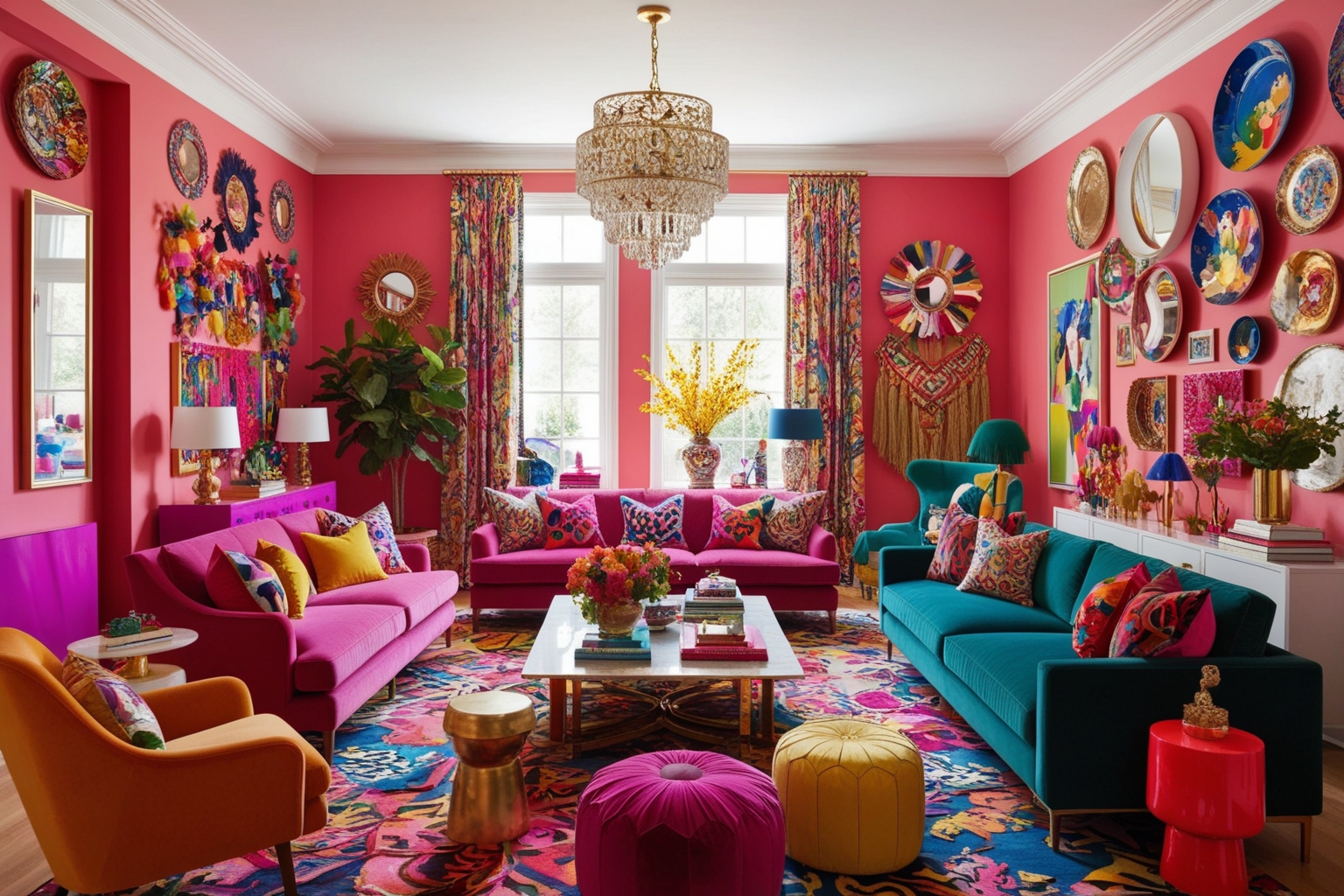
Understanding Maximalist Style Interior Design
-
Mixing Patterns Without Chaos
Combining multiple patterns works best when they share a common color thread or scale contrast - a large floral next to a fine stripe reads as intentional, while two similarly-scaled prints can compete for attention. Anchor the mix with one dominant pattern and let the rest play a supporting role.
-
Establishing Focal Points
A maximalist room still needs a hierarchy, even with dozens of elements competing for attention. A gallery wall, an oversized light fixture, or a boldly upholstered piece can serve as the anchor that keeps the eye oriented before it wanders to everything else.
-
Balancing Scale and Density
Dense collections of objects benefit from occasional breathing room - a single blank wall or an uncluttered surface between busy zones keeps the eye from tiring. Varying the size of furniture and decor pieces also prevents the room from reading as flat or repetitive.
-
Lighting for Layered Spaces
With so much visual information in a maximalist room, layered lighting - ambient, task, and accent - helps different zones read clearly instead of blurring together. Warm-toned bulbs also keep saturated colors from feeling harsh after dark.
Distinctive Features of Maximalist Style Interior Design
-
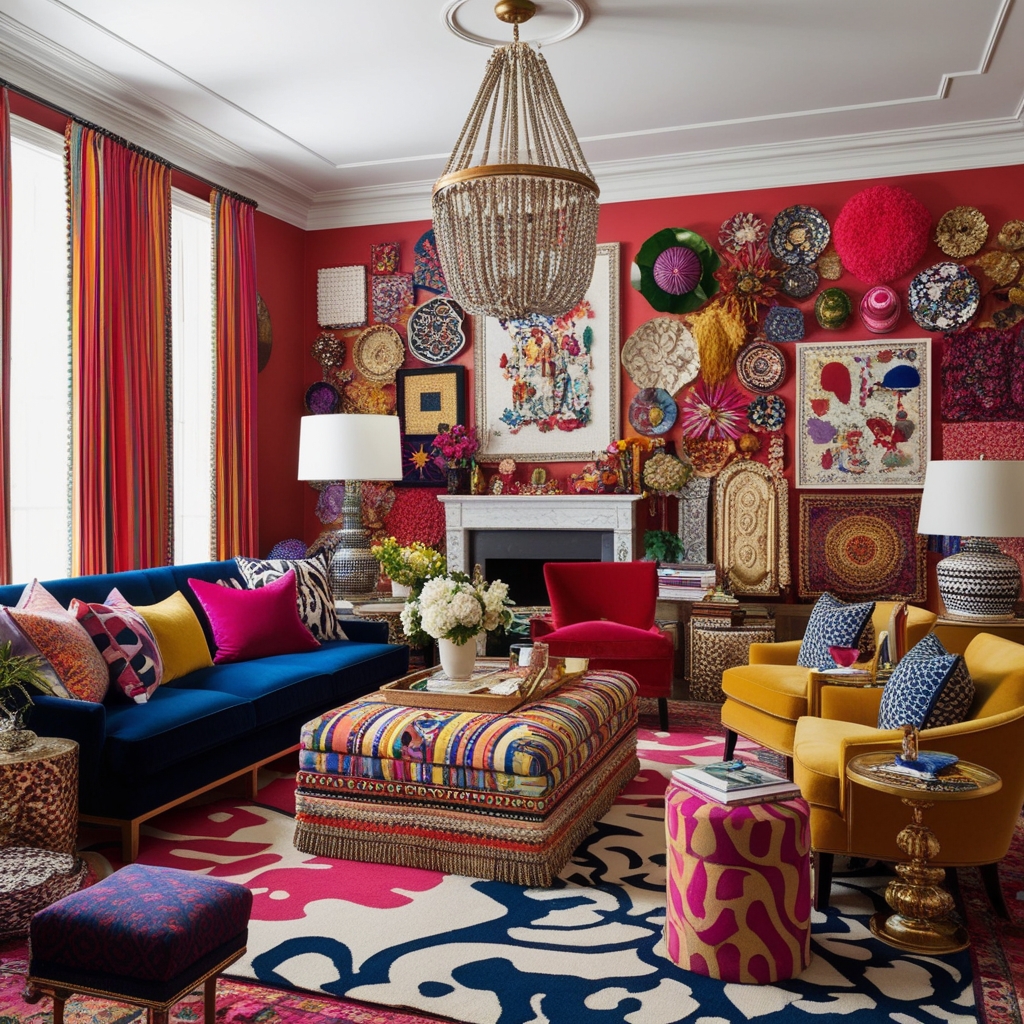
Six elements below cover the "more is more" ideology in practice: materials, color, furniture, decor density, and the discipline that keeps all of it from reading as clutter instead of curation.
-
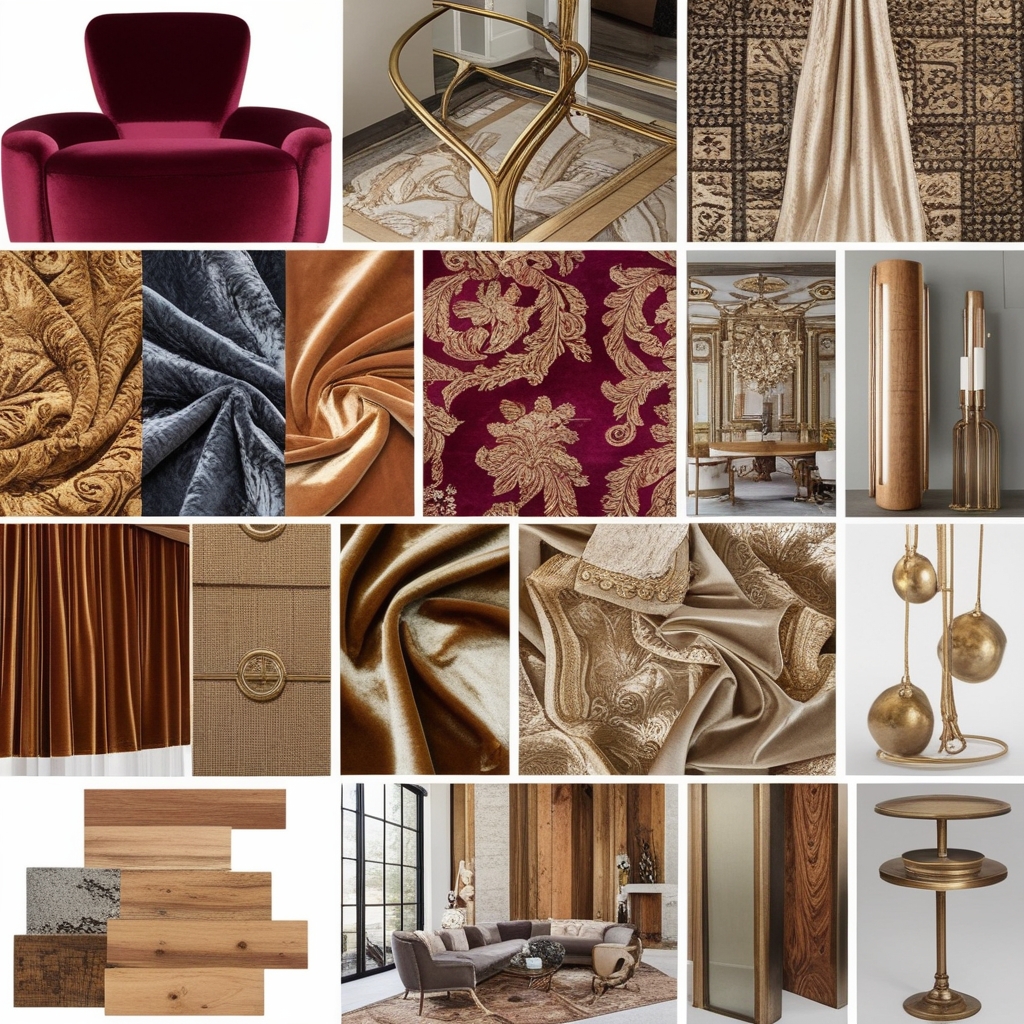
Velvet, silk, wood, metal, and glass side by side is what gives a maximalist room its textural depth. Pair at least one heavy, tactile material (velvet, brocade) with something grounded and natural (wood, stone) - the contrast is what reads as intentional rather than random.
-
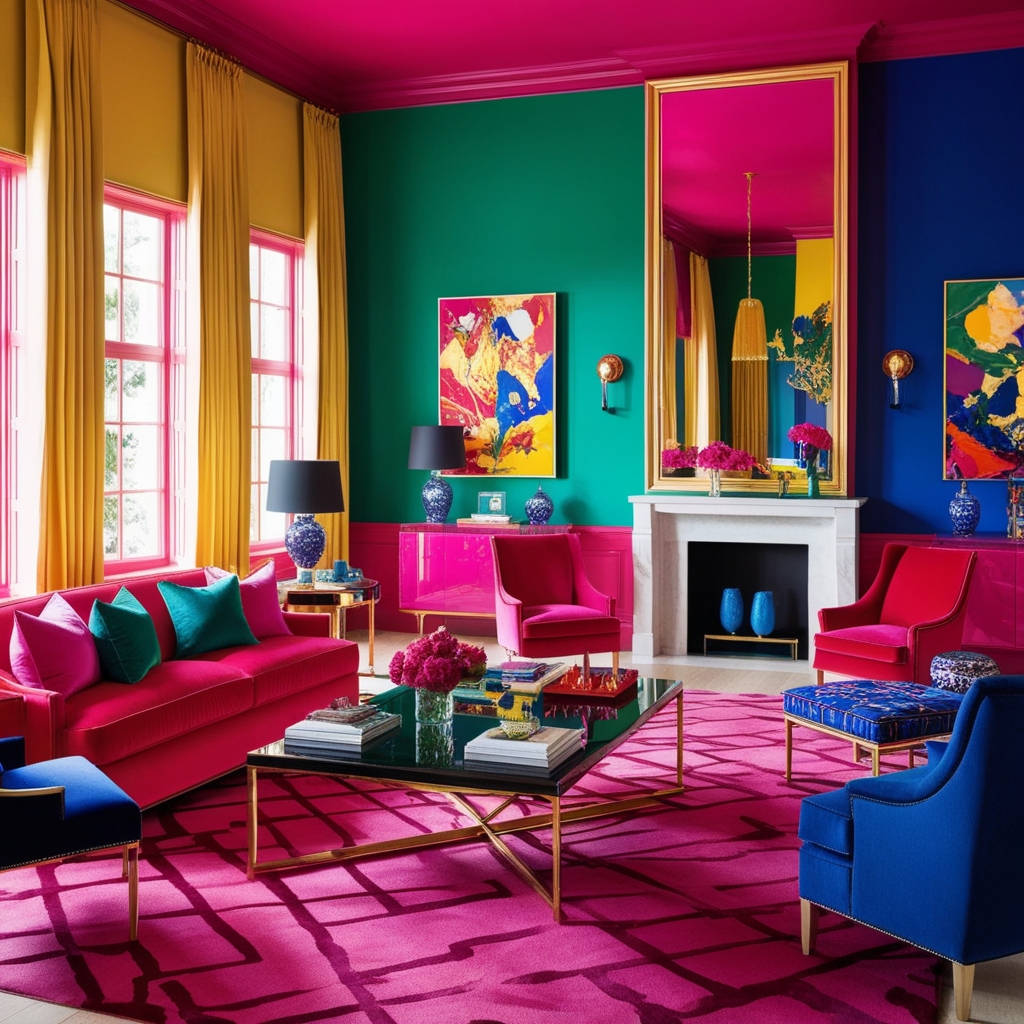
Jewel tones (emerald, sapphire, ruby) read as luxurious rather than jarring because they're deeply saturated rather than flat-bright. Pair complementary colors (blue/orange, red/green) for genuine visual tension, or stick to a jewel-tone family for a mix that still feels cohesive.
-
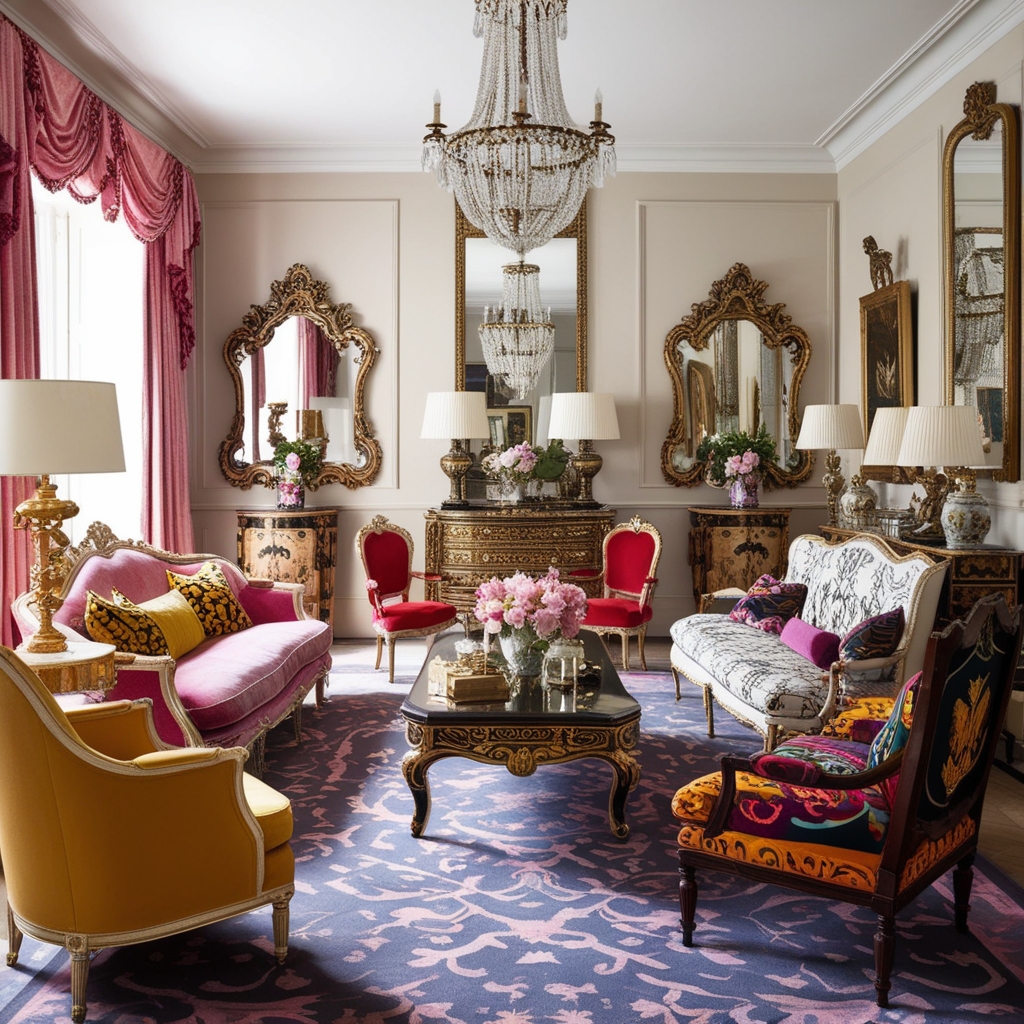
In maximalist interiors, furniture is not just functional but is also used as a form of expression. Pieces often feature intricate detailing, unique silhouettes, and are sometimes vintage finds that add character to the room. The combination of different styles and eras in furniture selection reflects a curated, personalized collection rather than a matching set. Upholstered items with bold prints or luxurious textures can act as focal points and offer comfort while maintaining the style's overall opulence.
-
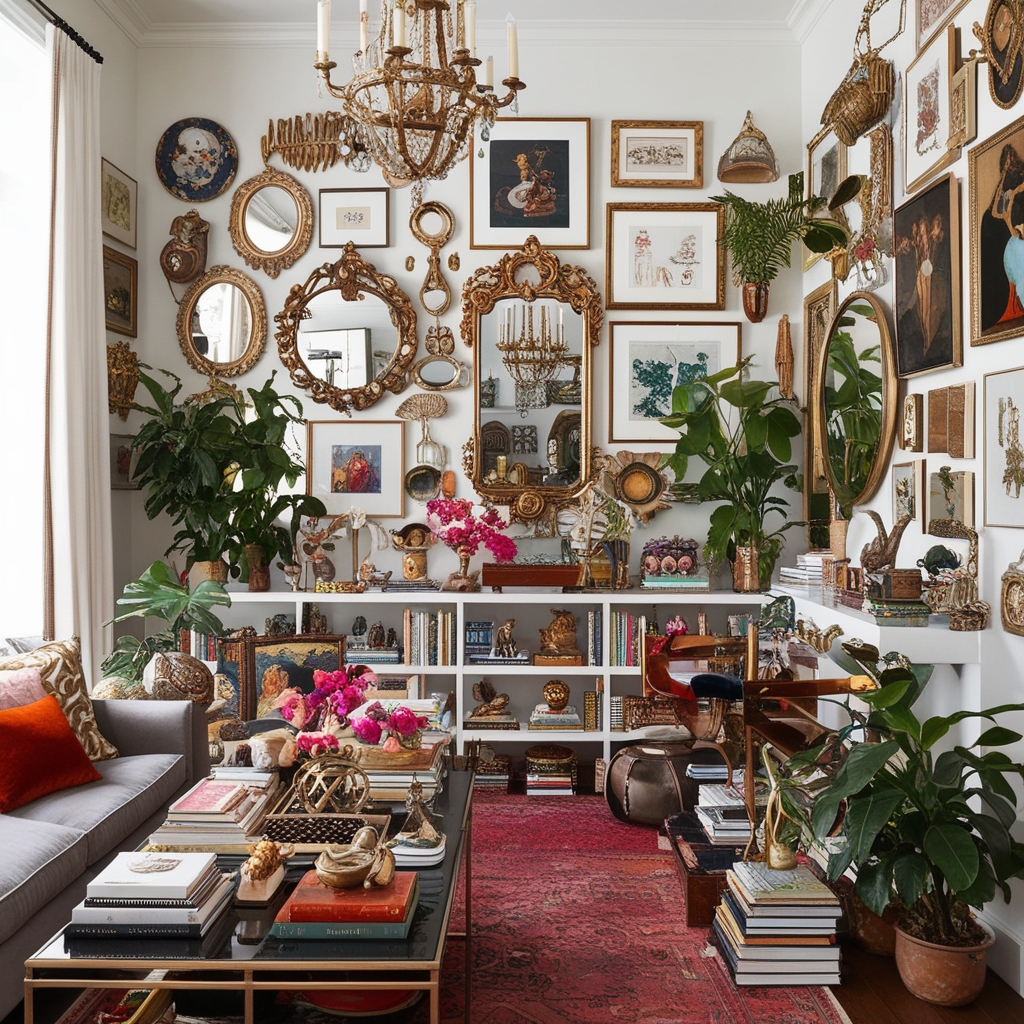
Group objects rather than scattering them - a shelf of books, ceramics, and a small sculpture reads as a curated vignette; the same three items spread across the room read as clutter. Mixing an heirloom with a modern art piece works better than an all-matching collection.
-
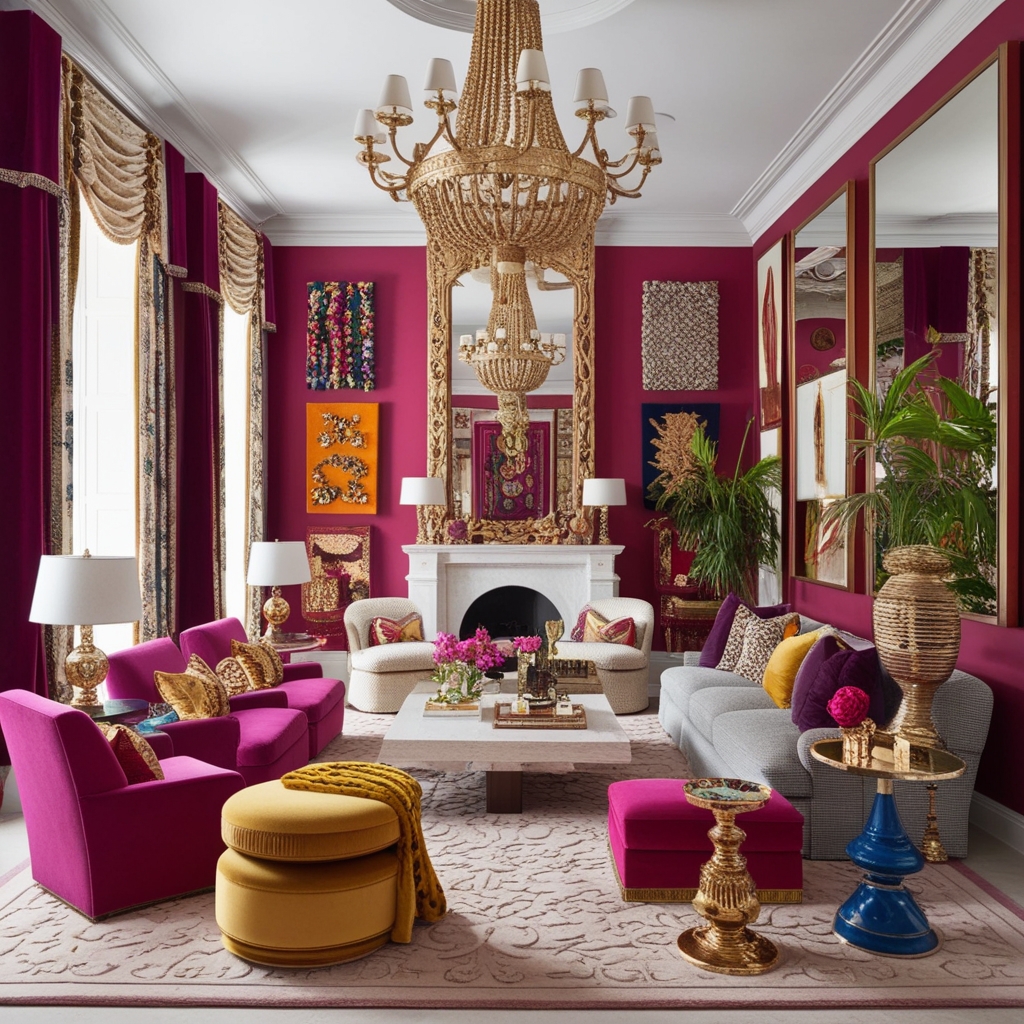
What separates a well-executed maximalist room from a cluttered one usually isn't the number of objects - it's whether there's a discipline underneath (a shared color thread, a hierarchy of focal points) holding the abundance together.
Maximalist ideas room by room
-
The maximalist style is all about bold choices and embracing an eclectic mix of patterns, colors, and textures. Unlike minimalist décor, maximalism encourages you to fill spaces with personality and flair, creating expressive interiors that tell a story about their inhabitants. Below, find expert tips on how to incorporate this vibrant aesthetic into every room of your home.
-
The living room presents an ideal foundation for maximalist design exploration. Initiate your design process by choosing a standout element like a vividly upholstered sofa or an eye-catching artwork. Integrate a variety of vibrant components including patterned rugs, eclectic throw pillows, and bold drapes. Avoid hesitating to blend different styles by merging vintage elements with modern pieces and global treasures with local discoveries. The essential goal involves crafting a unified mixture where every element supports the collective visual appeal yet maintains its distinct identity. Integrate collected travel curios alongside books and plants to create a unique personal space.
-
A maximalist bedroom should evoke comfort and personal expression. Begin with rich, luxurious textiles for your bedding—think velvet, brocade, or embroidered details. Add layers with quilts and throws in contrasting colors and patterns. Wallpaper can make a dramatic impact; opt for florals, geometric designs, or something abstract. Use statement lighting as both a functional and decorative addition. Bedside tables can be adorned with unique lamps and curated collectibles, making your bedroom a cozy and inspiring retreat.
-
In the kitchen and dining area, maximalism can make meal preparation and dining an experience to remember. Choose bold cabinetry in striking colors or incorporate intricate tile backsplashes. Open shelving can display a collection of colorful dishware or antique glassware. For dining, mix and match chairs, or use a statement chandelier to draw the eye. Table settings can embody maximalism through colorful linens, eclectic dinnerware, and a mix of material finishes such as brass, wood, and ceramic.
-
Extend the maximalist style to your outdoor spaces to create a vibrant oasis. Use bold outdoor textiles in the form of cushions and blankets to add comfort and visual interest to seating areas. Add statement planters with lush greenery and colorful blooms. Mix materials like wicker, metal, and stone to add depth and character to your outdoor furniture. String lights or lanterns can enhance the ambiance for evening gatherings, and a mix of potted plants can create a lush, inviting atmosphere.
-
The through-line across every room is the same: abundance works when it's curated, and turns into clutter the moment it stops being intentional. Upload a photo of your space to app.paintit.ai to test a jewel-tone palette or a pattern mix before committing to paint or fabric. Free to start.
Related styles and tools
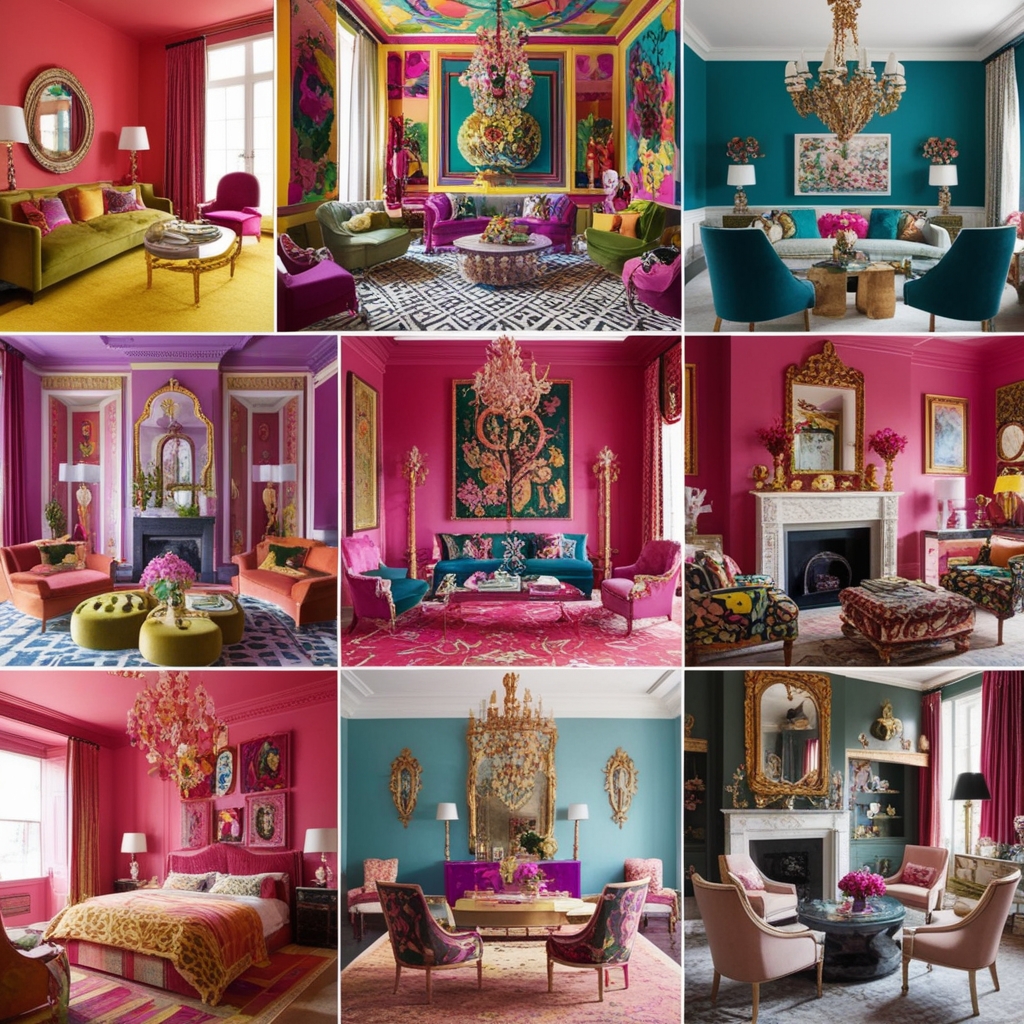
A few related styles if maximalism feels close but not quite right for your space.
FAQ
-
The most common failure mode is mixing pattern and color with no shared thread - two similarly-scaled prints in unrelated colors compete for attention instead of layering. Anchor the room with one dominant pattern or a consistent color family, and let everything else play a supporting role.
-
Start with one anchor piece - a boldly upholstered sofa, a statement rug, or a gallery wall - rather than trying to layer everything at once. Build outward from there, adding one material or color family at a time and checking it against the anchor before moving on.
-
Yes, and it's often the easier entry point - a small maximalist powder room or reading nook lets you test the density and color intensity before committing a whole living room. Layered lighting matters even more at small scale, since there's less natural light to soften saturated colour.
-
Group objects rather than scattering them across the room - a shelf of books, ceramics, and one sculpture reads as a curated vignette, while the same three items spread across different surfaces reads as clutter. Mixing an heirloom with a modern piece also signals intentional curation over random accumulation.
-
Yes. Upload a photo of your room to app.paintit.ai and test jewel-tone palettes, pattern combinations, or a gallery-wall layout in 1-2 minutes before committing to paint, wallpaper, or furniture. Free to start.