
California Mission Style Interior Design Inspiration and Ideas for Your Home
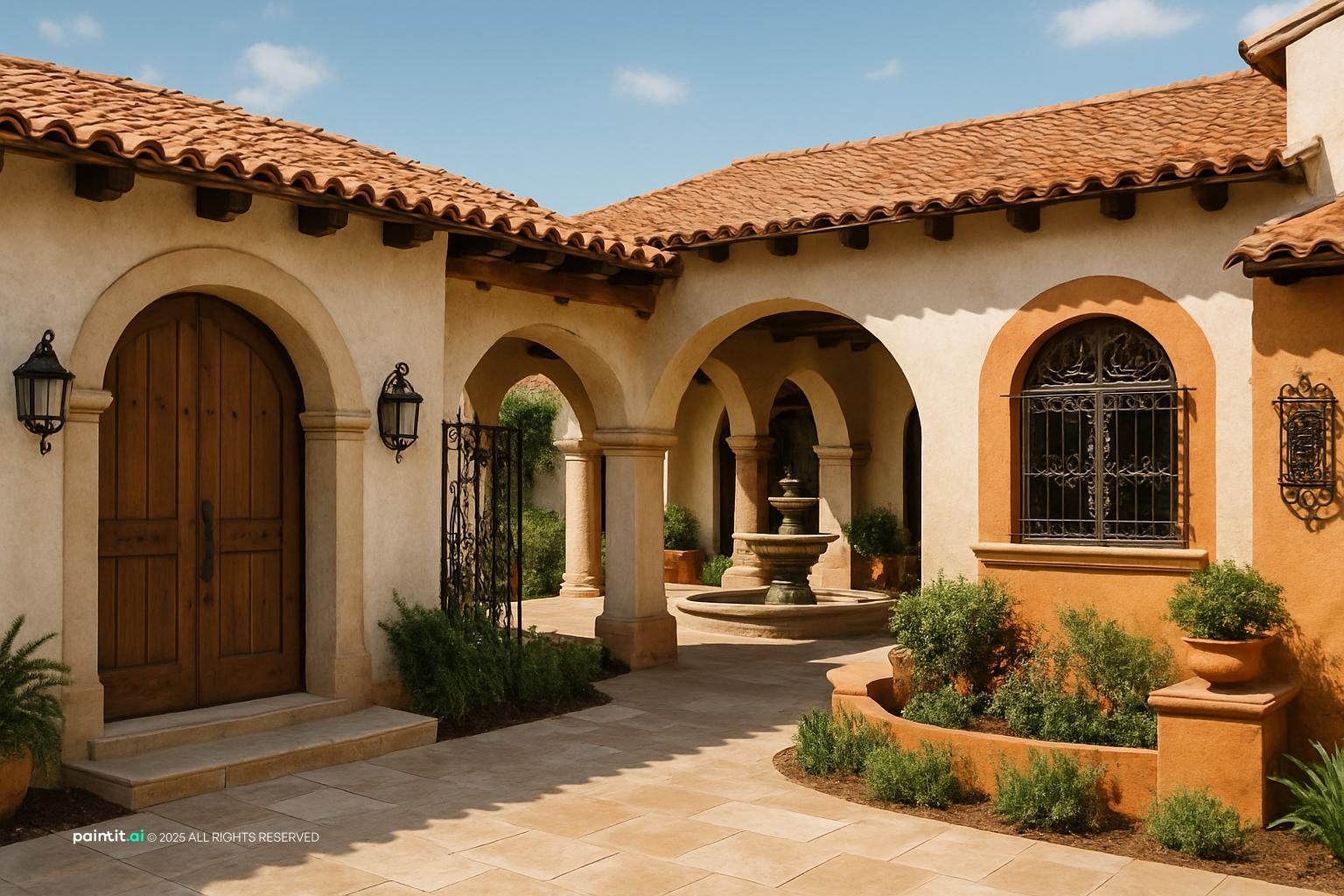
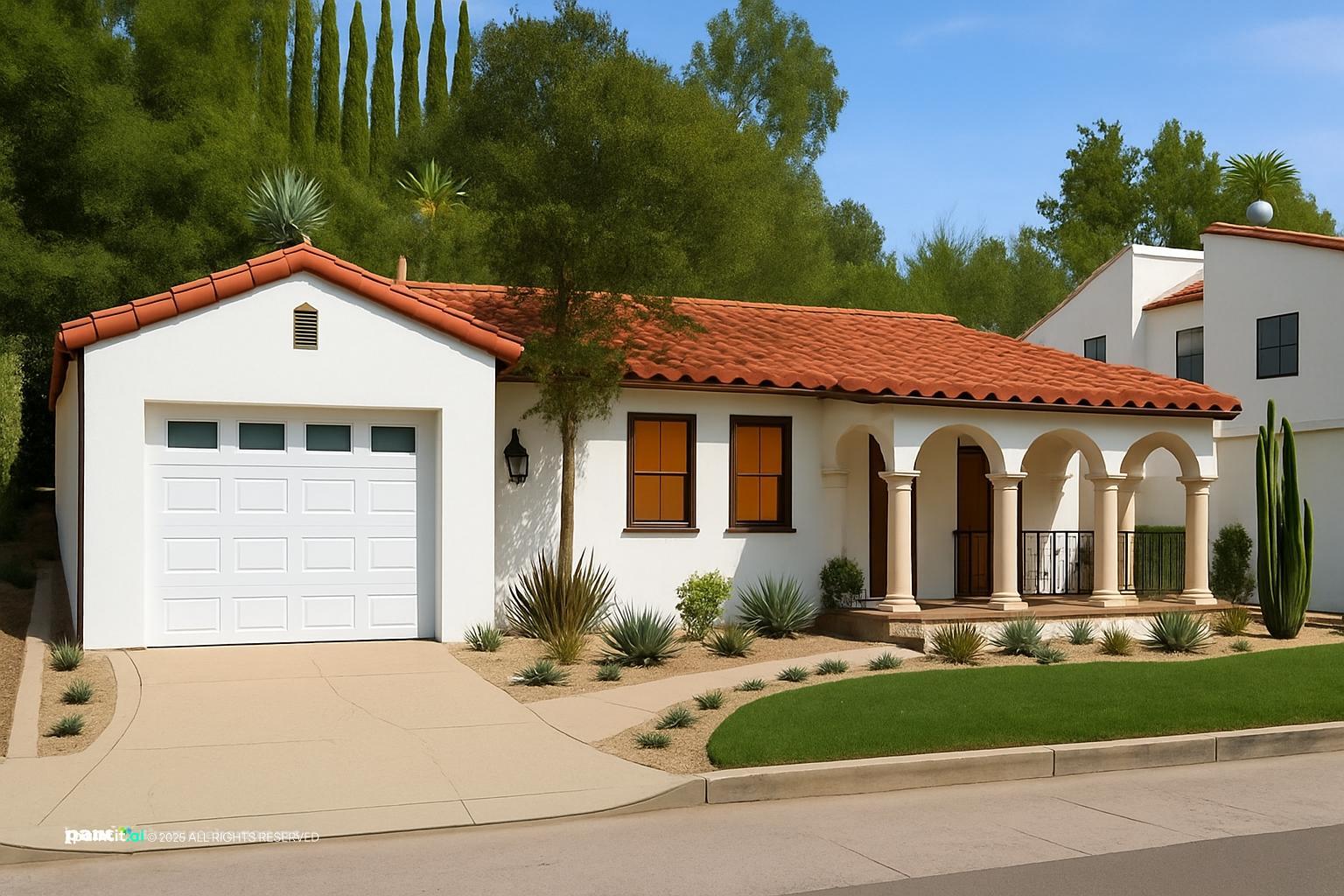
California Mission style draws directly from the Spanish missions built across California between 1769 and 1833, structures defined by thick stucco walls, red terracotta tile roofs, arched doorways, wooden beam ceilings, and handcrafted ironwork. The interior design tradition that grew from this architecture emphasizes the same materials: terracotta floors, whitewashed walls, oak and mahogany furniture with simple hand-carved details, wrought iron fixtures and hardware, and hand-painted tile as accent.
The style sits close to Mediterranean and Santa Fe design but has a specific California context, the missions' practical, functional aesthetic adapted to a warm, dry climate with abundant local materials.
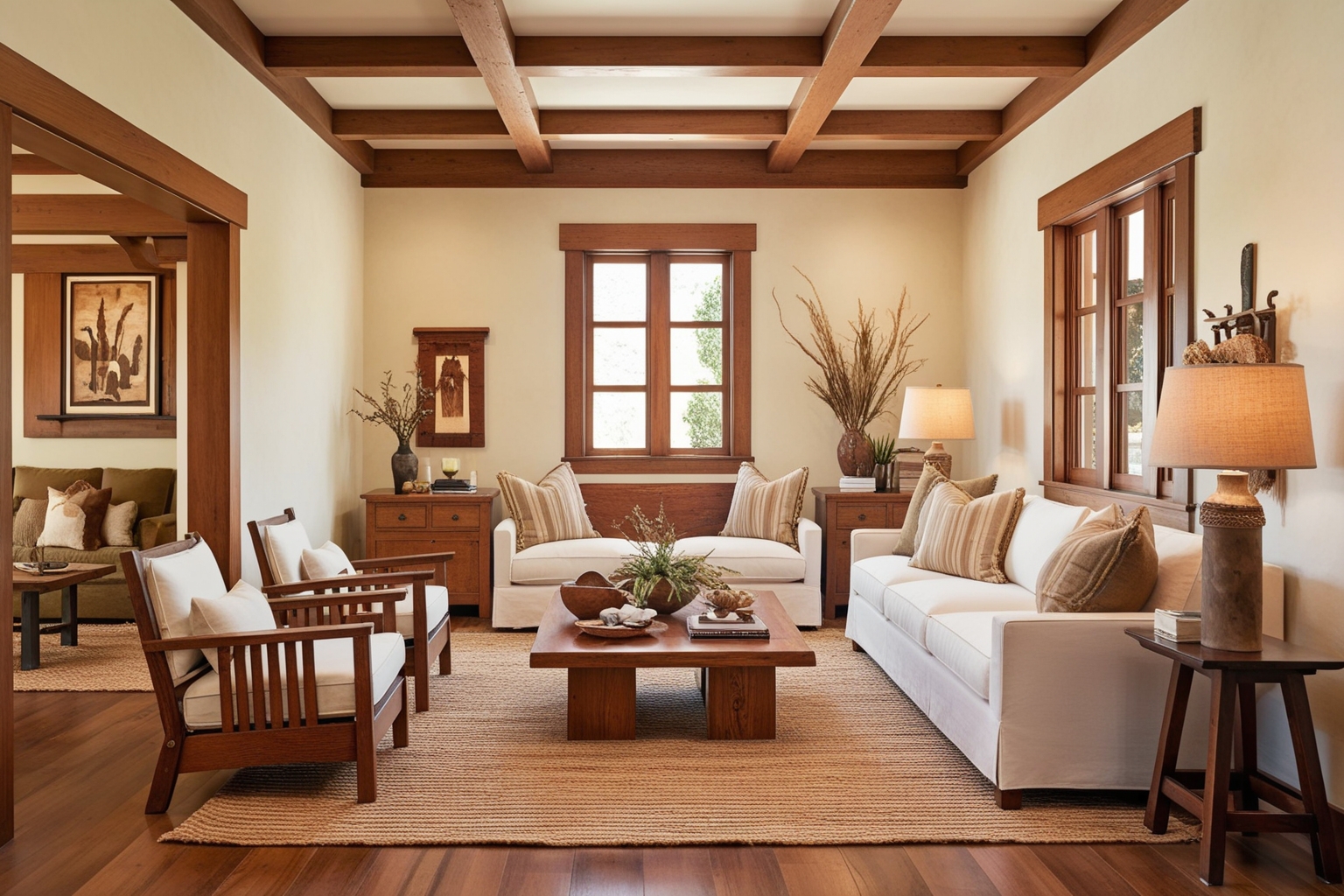
What defines California Mission style interior design?
The California Mission style of interior design takes its cues from California's historic Spanish missions to create a distinctive fusion of rustic elegance with Mediterranean elements. This design style introduces eternal allure to contemporary residences by creating a warm atmosphere through simple elements set against a rich historical context. This guide examines the essential elements that characterize California Mission style including its unique color schemes and signature materials along with furniture pieces and the distinctive atmosphere they produce.
-
Key Colors and Palettes
The California Mission style utilizes an earthy color palette featuring soft beiges, warm terracottas, and muted whites that mirror California's natural landscapes. Designers frequently employ deep reds alongside rich greens and ocean blues to create visual depth and interest by mimicking the natural tones found along California's coastlines and rural areas. The interplay of these colors establishes a space that feels both welcoming and stable while highlighting natural light and warmth.
-
Typical Materials and Textures
The essence of California Mission style design revolves around genuine craftsmanship through its emphasis on sturdy natural materials. Textured stucco walls combined with rustic wooden beams and careful wrought iron detailing represent essential design components. Terracotta tiles dominate flooring choices, emphasizing the Mediterranean origins of the style. Hand-crafted wooden furniture in oak or mahogany has a deliberately robust, unpretentious quality, well-made but not ornate. The addition of natural stone and leather elements builds textured layers that develop a space abundant in historical resonance and tactile complexity.
-
Signature Furniture and Decorative Elements
California Mission furniture pieces showing handcrafted robustness with their straightforward lines which emphasize functional design. Artisans frequently construct pieces using luxurious woods like oak and mahogany to ensure lasting strength while maintaining timeless design elements. The choice of upholstery materials remains subtle with selections like leather and basic textiles which guarantee both comfort and functional use. Hand-painted tiles alongside earthenware and handcrafted pottery serve as decorative elements that impart an artisanal touch. The presence of wrought iron chandeliers and candleholders stands out as a defining feature that amplifies the historical aesthetic.
How to apply California Mission style in your home
Start with the floor
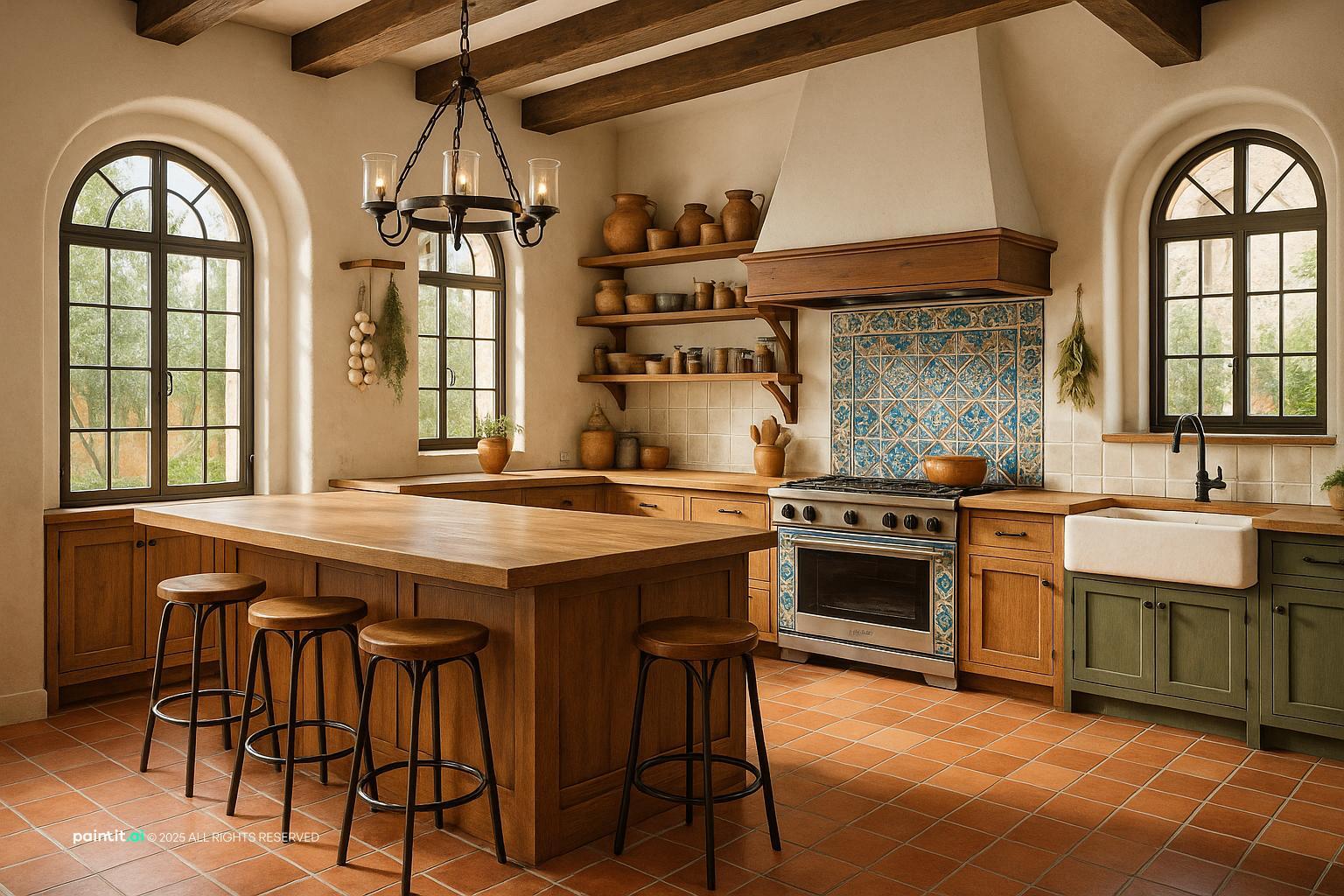
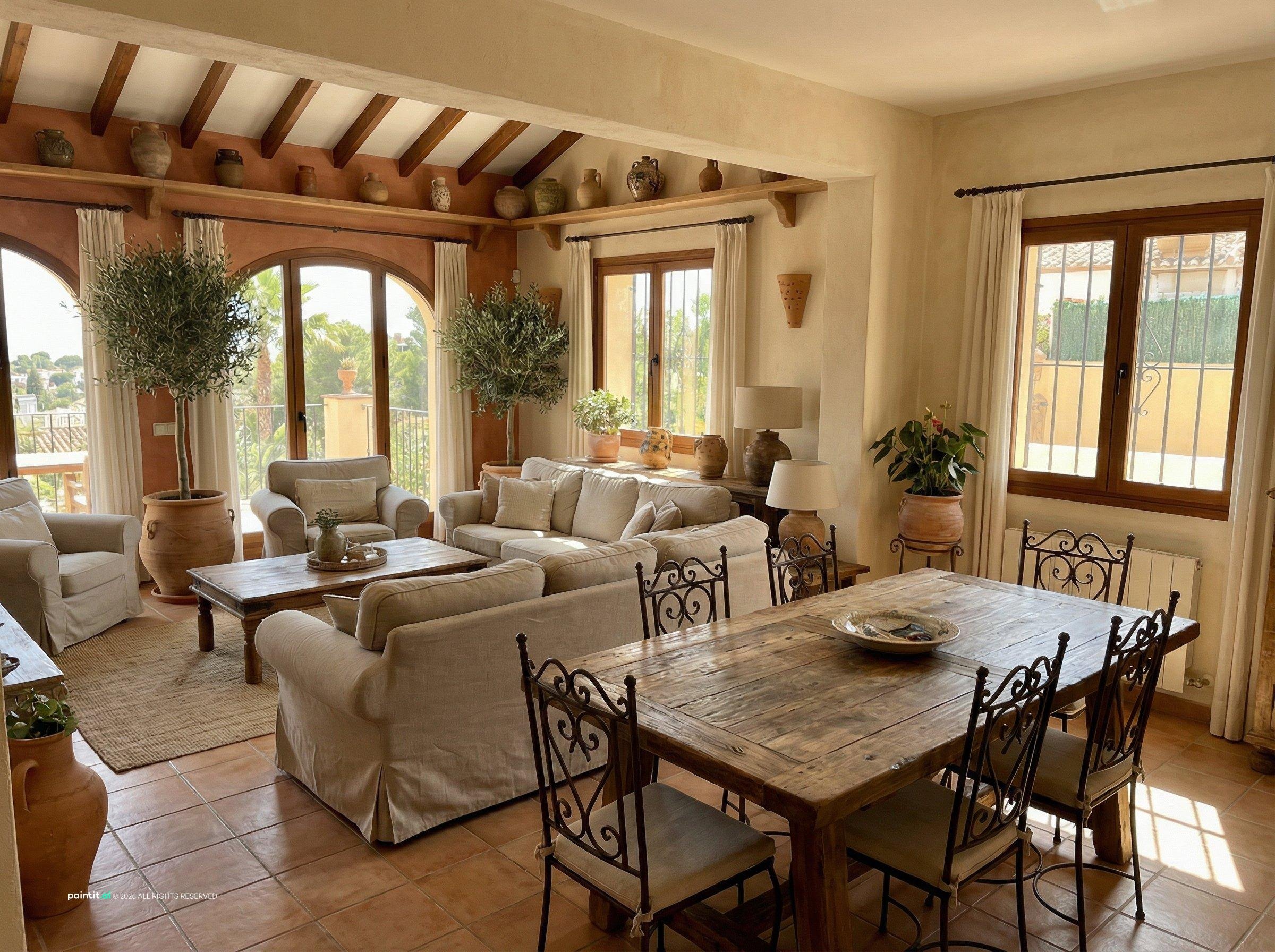
Terracotta tile is the foundation. Saltillo tile (handmade Mexican terracotta, slightly irregular in size and colour) or Spanish-style terracotta in warm orange-red tones immediately establishes the Mission aesthetic. In rooms where tile isn't practical, warm-stained oak or mahogany flooring with a simple woven rug references the same earthy palette.
Walls: stucco or whitewash
Smooth white stucco walls are the signature Mission interior backdrop. In homes without original plaster or stucco, limewash paint achieves a similar slightly textured, matte quality. Avoid smooth satin paint, it reads as too contemporary. The wall colour should be warm white or cream, not cool white.
Furniture: solid wood with simple lines
Oak and mahogany in straightforward, rectilinear forms, Mission style furniture (a related Arts and Crafts subgenre) is literally named after this architectural tradition. Look for pieces with visible mortise-and-tenon joinery, flat panels, and leather or fabric upholstery in natural tones. No carvings, no turned legs, no ornate hardware.
Wrought iron details
Iron chandeliers, sconces, door hardware, fireplace grates, and window grilles. The ironwork in Mission-style interiors is handmade and slightly irregular, visually distinct from machined metal. Bronze or aged brass hardware complements iron fittings.
Handmade tile accents
Hand-painted Talavera tile (Spanish-influenced, colourful geometric patterns) on kitchen backsplashes, fireplace surrounds, bathroom floors, or stair risers. This is the colour element in an otherwise earthy, neutral room. Blue, green, yellow, and terracotta patterns are traditional.
The courtyard connection
Mission architecture organizes rooms around a central courtyard. In contemporary interiors, this principle translates to maximizing connection with outdoor spaces: large arched windows or doors that open to a patio, potted citrus trees inside and outside, terracotta pots with herbs on windowsills.
Visualize California Mission style with Paintit.ai
Upload a photo of your room to app.paintit.ai. See how earthy Mission palettes, terracotta, warm white, oak tones, read in your actual space in 1–2 minutes. Free to start.
California Mission style visual references
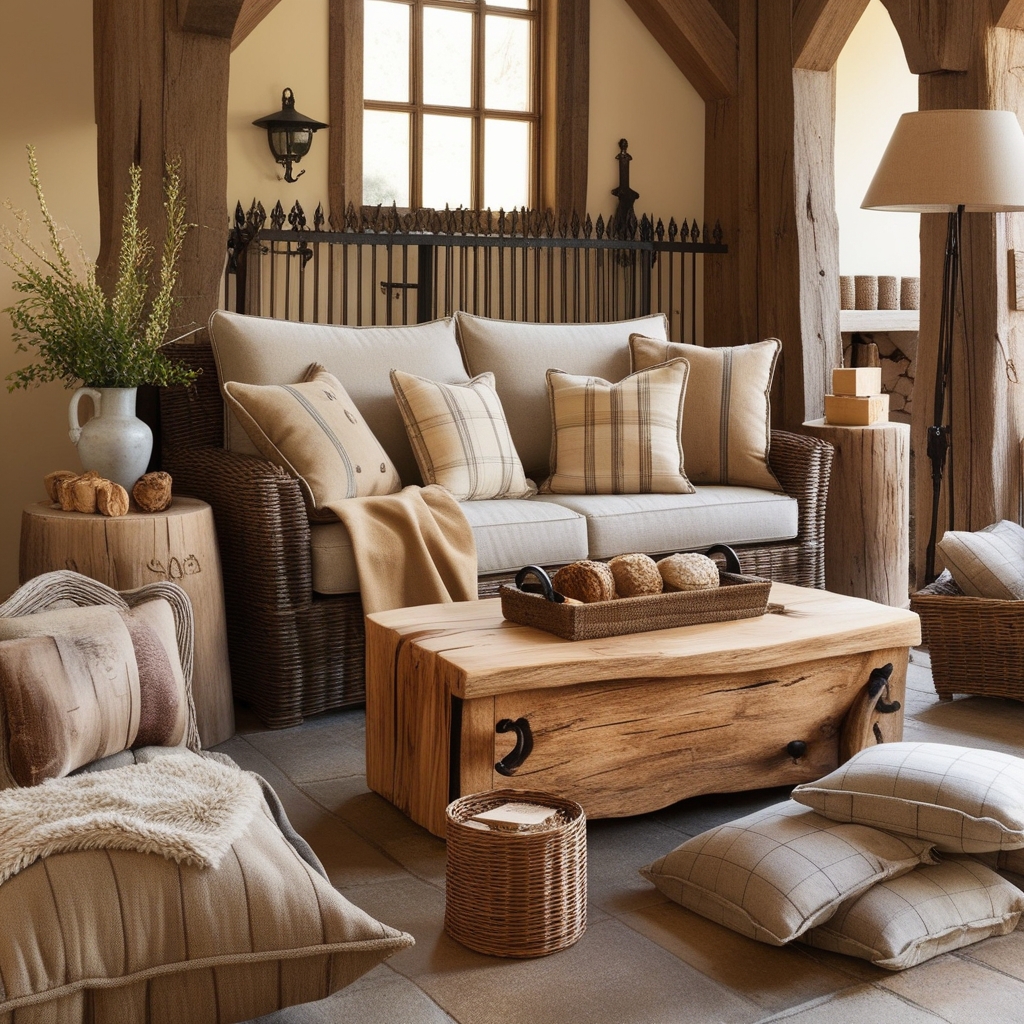
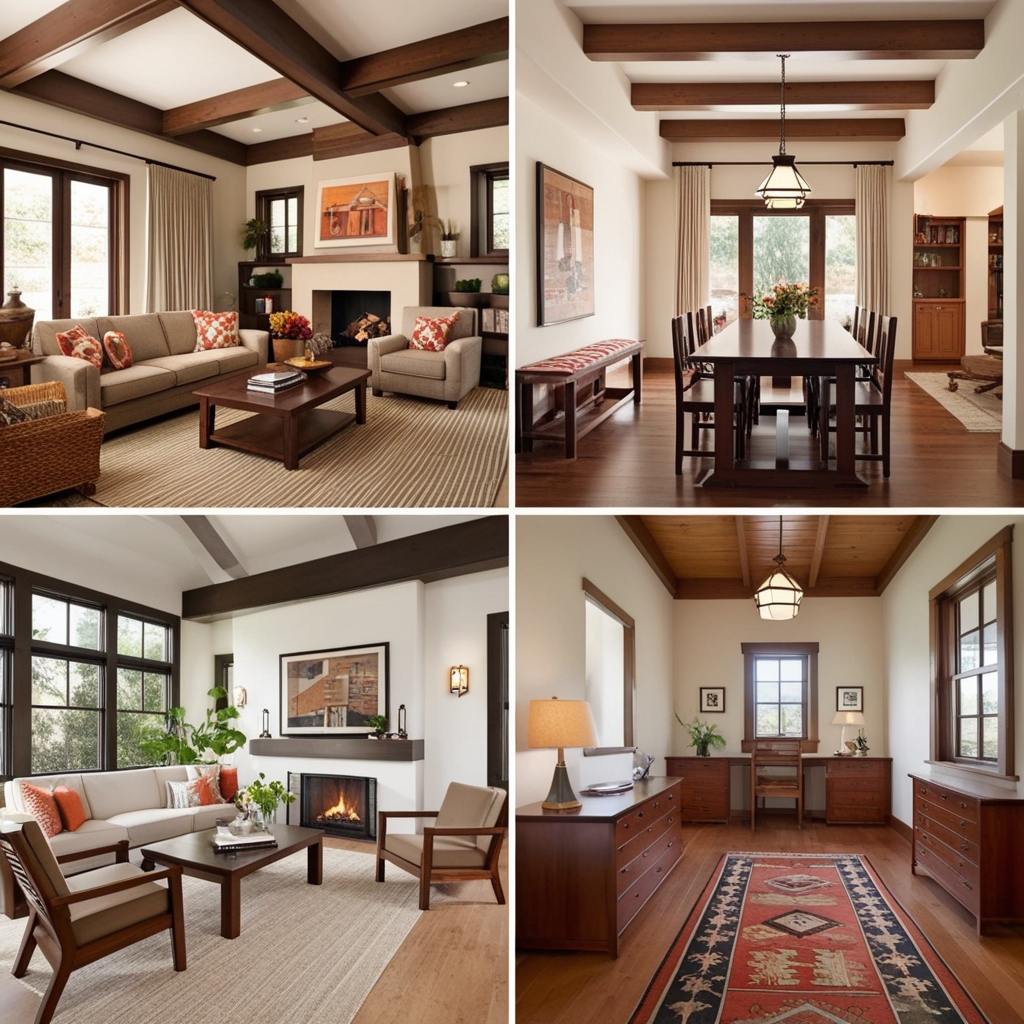
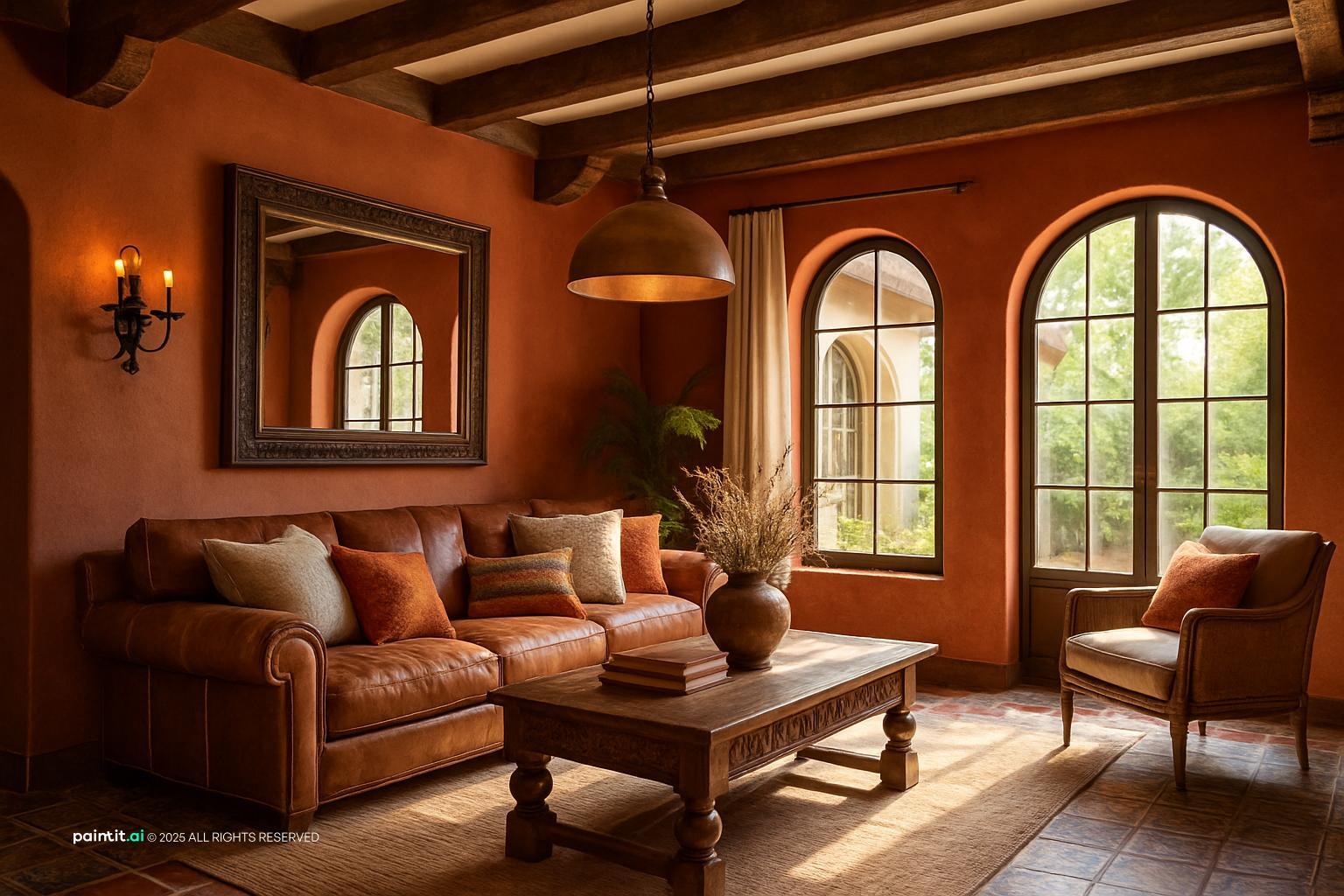
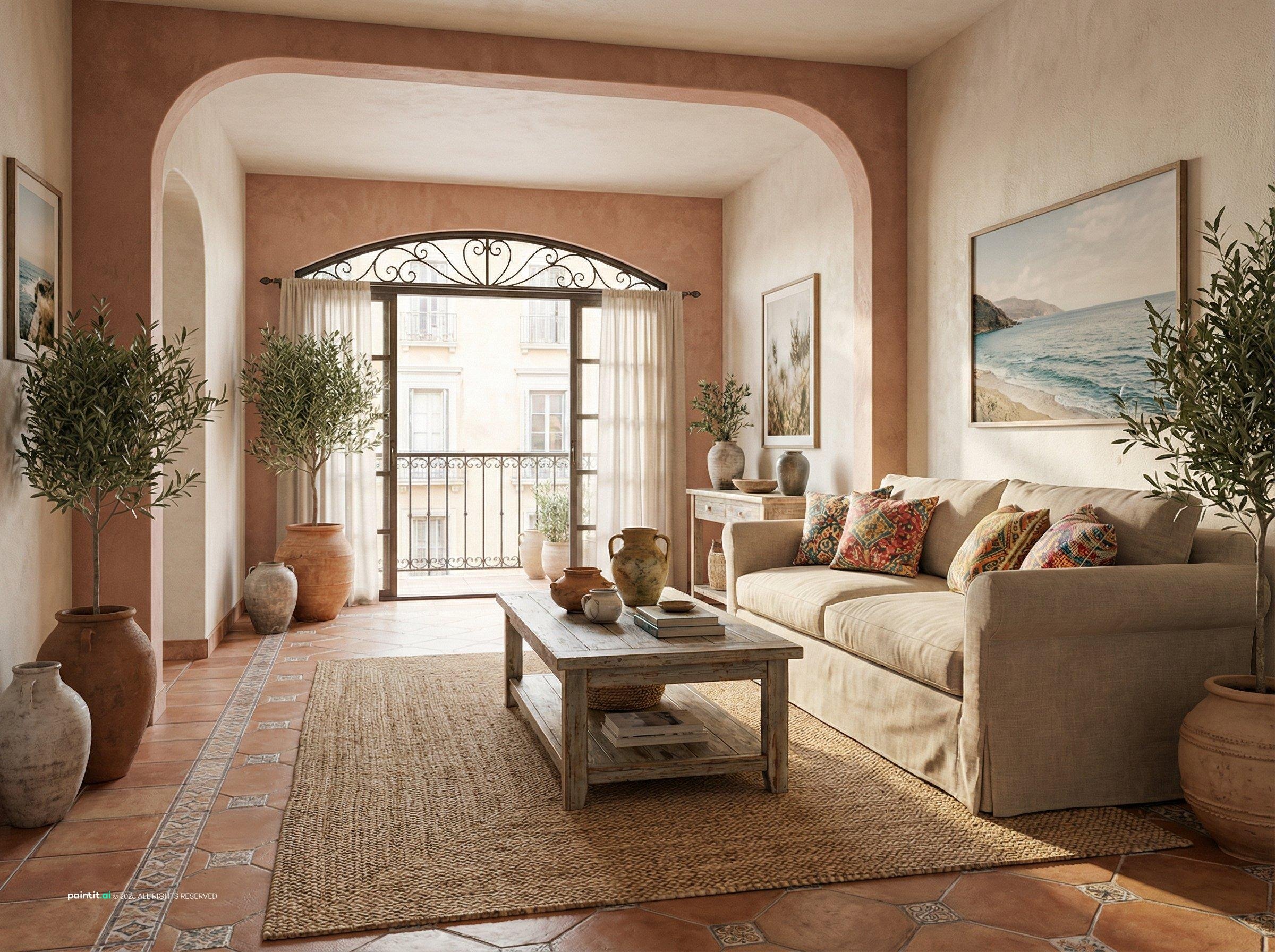
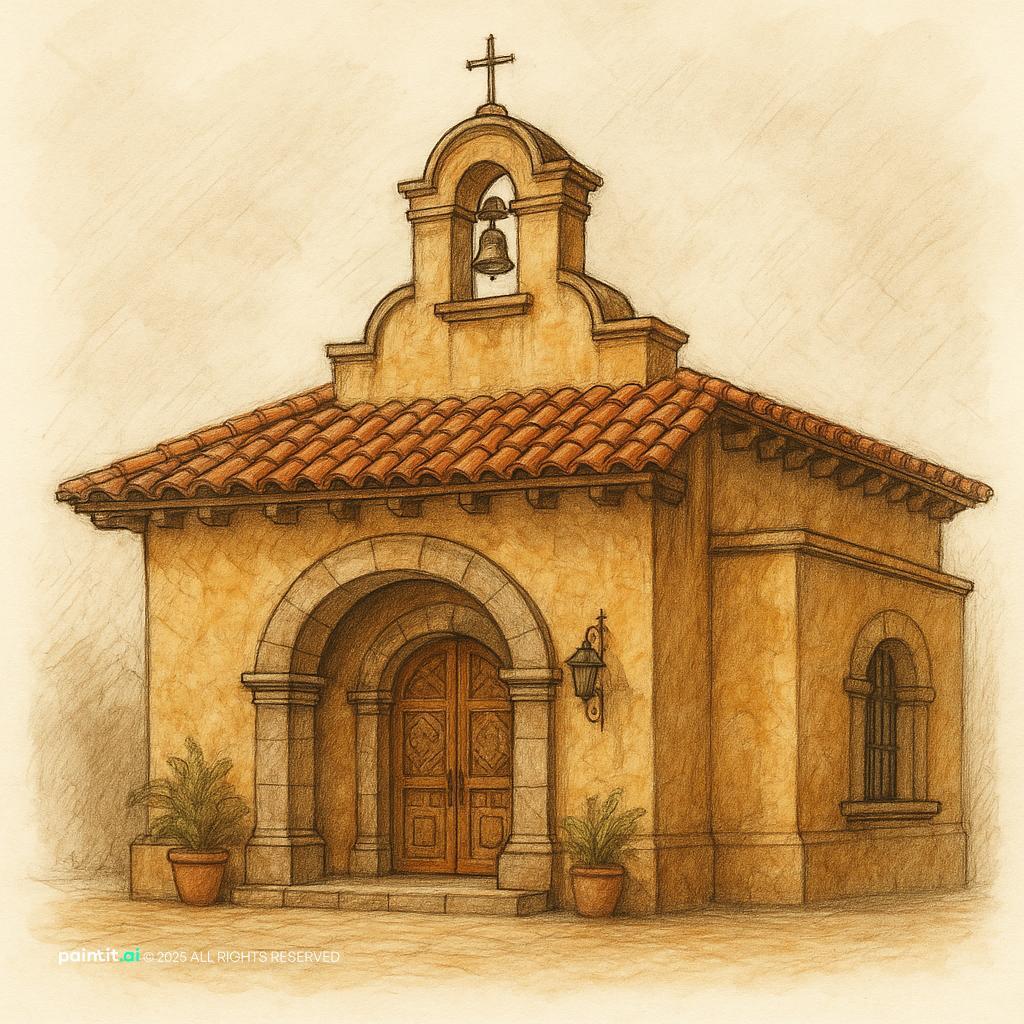
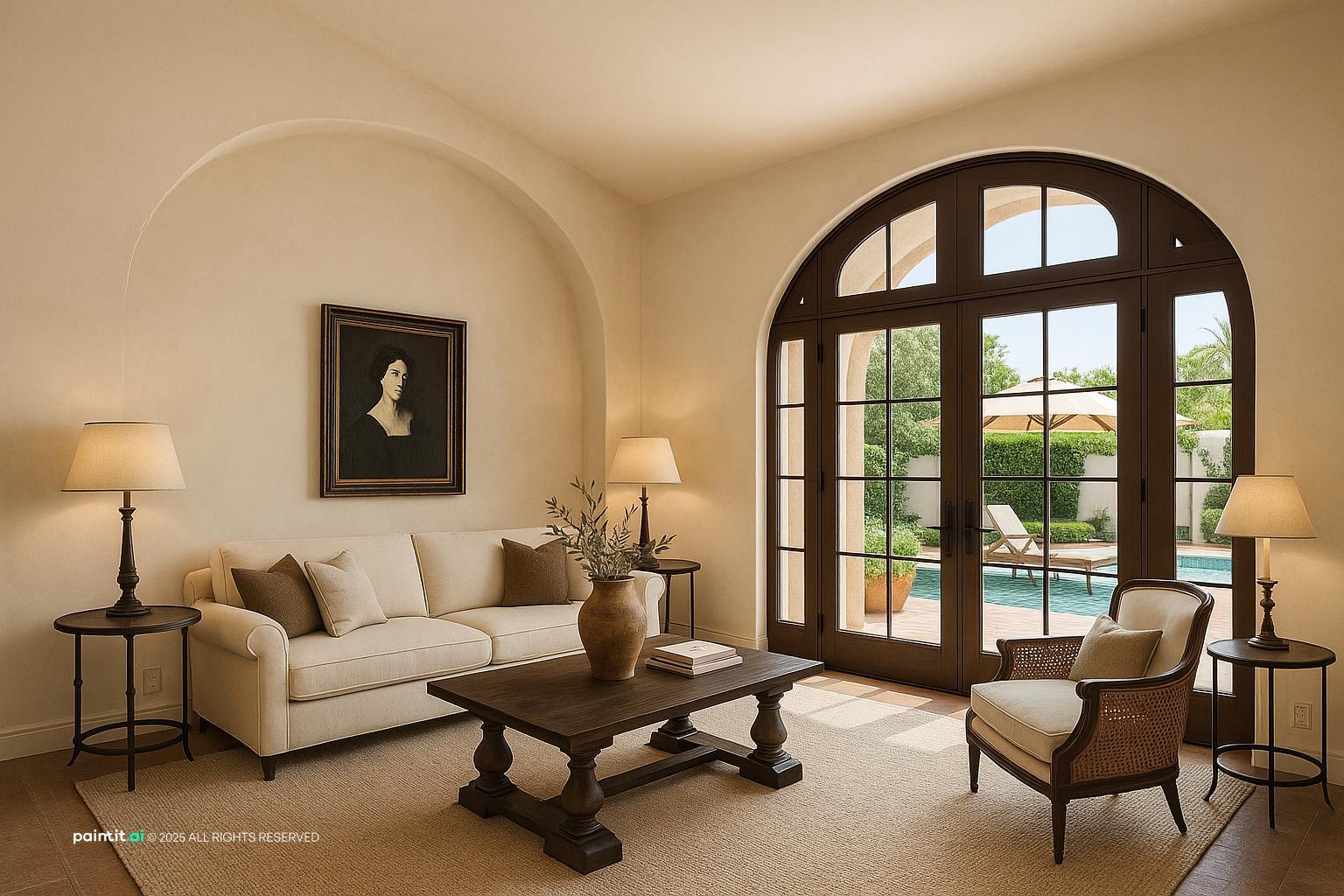
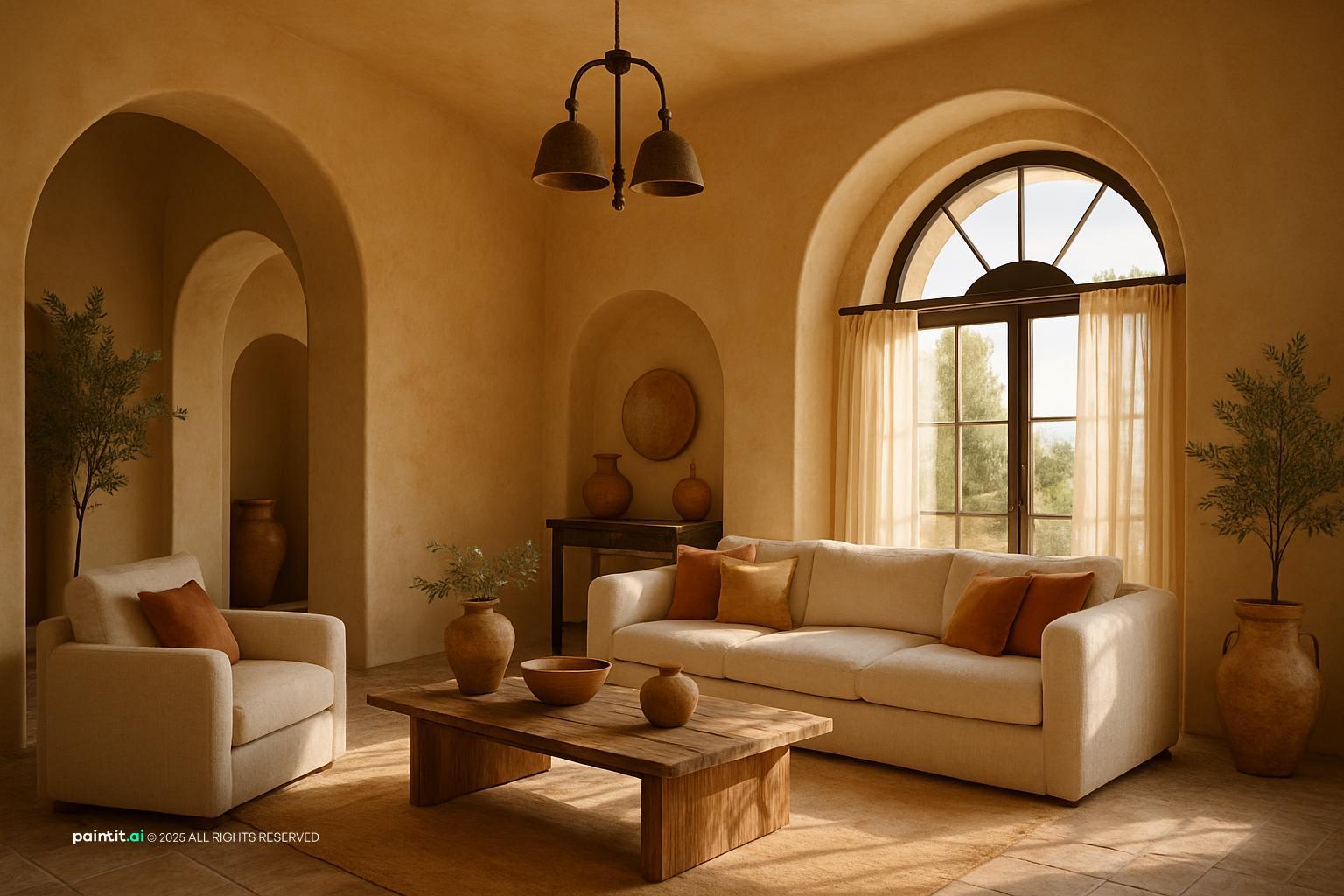
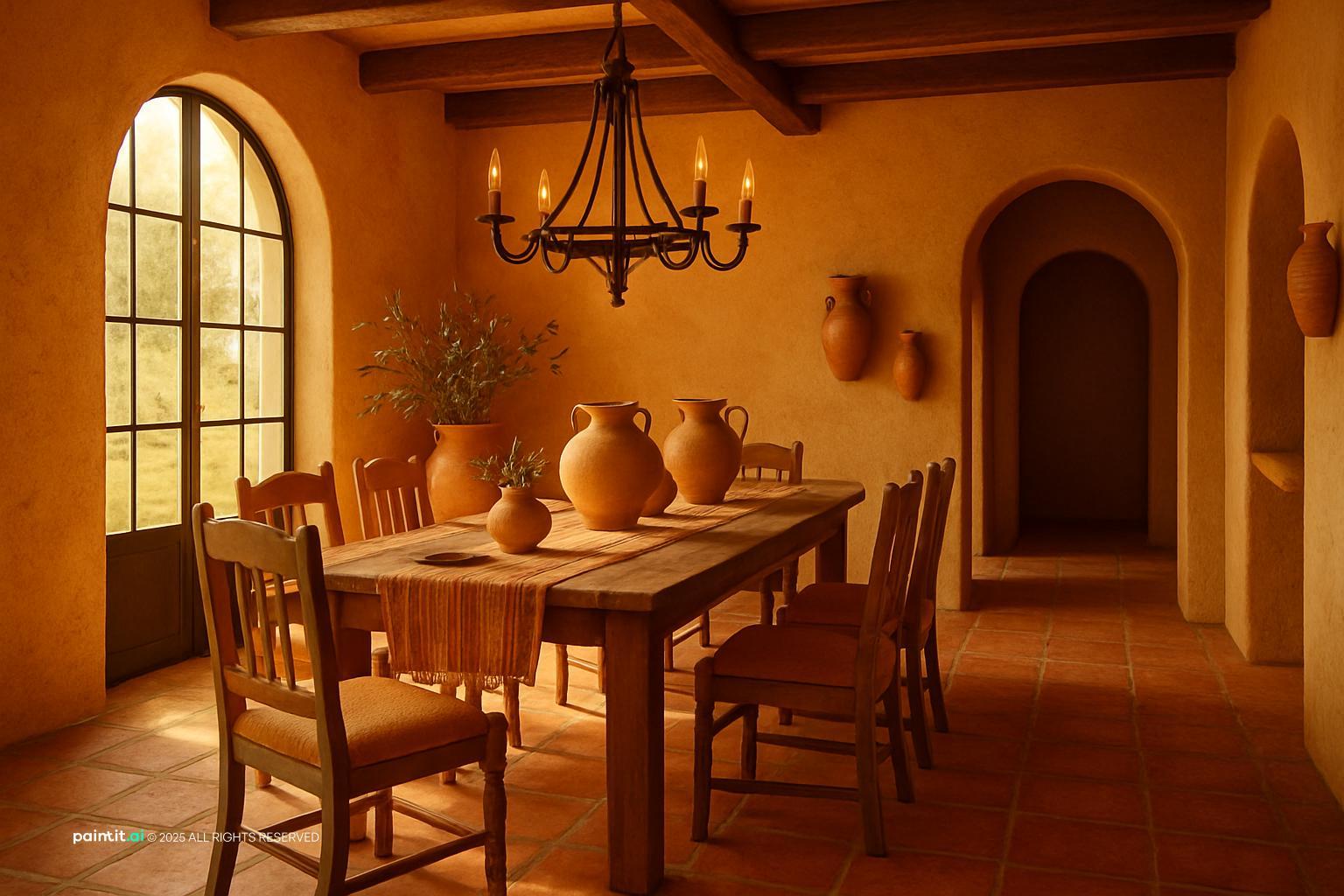
Related design styles
FAQ
-
California Mission style draws from the Spanish colonial missions built across California between 1769 and 1833. It's characterized by thick stucco or whitewashed walls, terracotta tile floors, arched doorways, exposed wooden beam ceilings, wrought iron hardware and fixtures, and hand-painted tile accents. The furniture is solid wood (oak or mahogany) with simple, handcrafted lines, functional and robust rather than ornate. The overall aesthetic is warm, earthen, and historically grounded.
-
All three share earthy palettes, natural materials, and Spanish architectural heritage. Mission style is specifically tied to California's Franciscan missions and their Arts and Crafts-adjacent furniture tradition. Spanish colonial is broader, encompassing Mediterranean influences across Latin America. Santa Fe style comes from New Mexico, incorporating Pueblo and Native American elements (adobe, vigas, kiva fireplaces, geometric textiles) alongside Spanish colonial elements. Mission style is more furniture-focused; Santa Fe is more adobe-architecture focused.
-
The base palette: warm white or cream stucco walls, terracotta orange-red tile floors, dark oak or mahogany wood tones. Accent colours come from the hand-painted tile work: cobalt blue, sage green, saffron yellow, and deeper terracotta in geometric patterns. The overall palette is warm and earthy, no cool tones, no bright saturated colours in large quantities.
-
Yes. Upload a photo of your room to app.paintit.ai and see how Mission-style palettes and material combinations read in your space in 1–2 minutes. Free to start.