
Gothic Style Interior Design: Everything You Need to Know
Do the enigmatic beauty of dark elegance combined with historical charm captivate your senses? Your living space transformation needs Gothic style interior design elements to achieve its potential. Originating from medieval cathedrals and castles, this design style fuses dramatic elements with mysterious undertones and romantic allure. This article delves into the fundamental aspects of gothic style interior design to guide you in integrating this eternal aesthetic into your living space with ease.
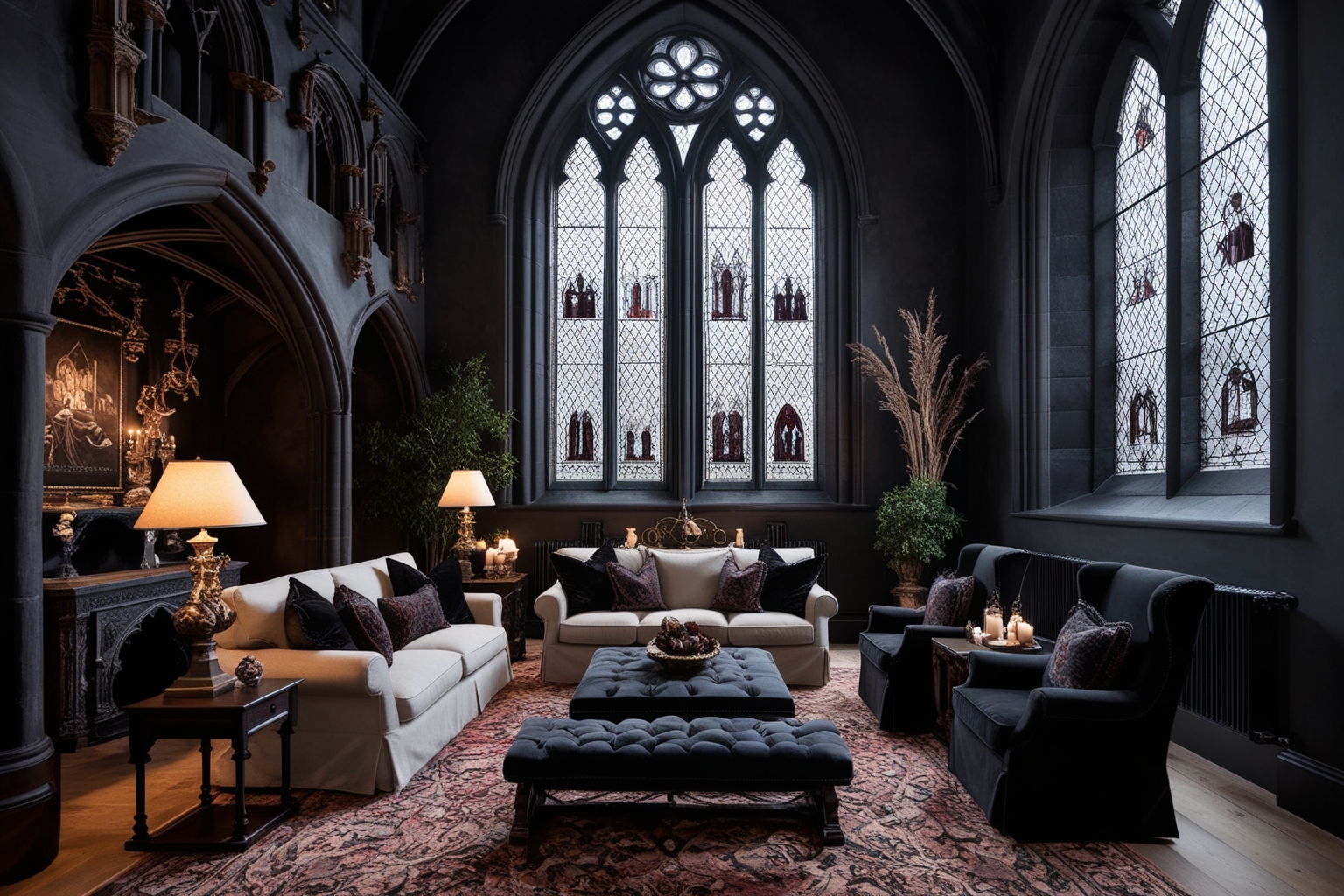
Understanding Gothic Style Interior Design
-
1. Use Dark, Dramatic Colour
Deep charcoal, burgundy, and forest green walls set the moody backdrop Gothic style is built on - lighter accents then stand out with far more impact.
-
2. Choose Furniture with Pointed or Arched Details
Arched headboards, pointed cabinet tops, and carved wood echo the pointed-arch architecture Gothic style takes its name from.
-
3. Add Wrought Iron Accents
Iron light fixtures, candelabras, or a bed frame bring the medieval, hand-forged texture central to the style without needing a full architectural renovation.
-
4. Layer in Rich, Heavy Textiles
Velvet drapery, tapestries, and deep-pile rugs add the weight and texture that make a Gothic room feel enveloping rather than merely dark.
-
5. Use Candlelight-Style Lighting
Warm, low, flickering-style lighting - real candles or candle-effect fixtures - suits the atmosphere far better than bright, even overhead light.
-
6. Add One Striking Stained Glass or Mirror Piece
A stained glass panel, an ornate mirror, or a piece of dark religious-inspired art gives the room a clear focal point true to the style's origins.
Distinctive Features of Gothic Style Interior Design
-
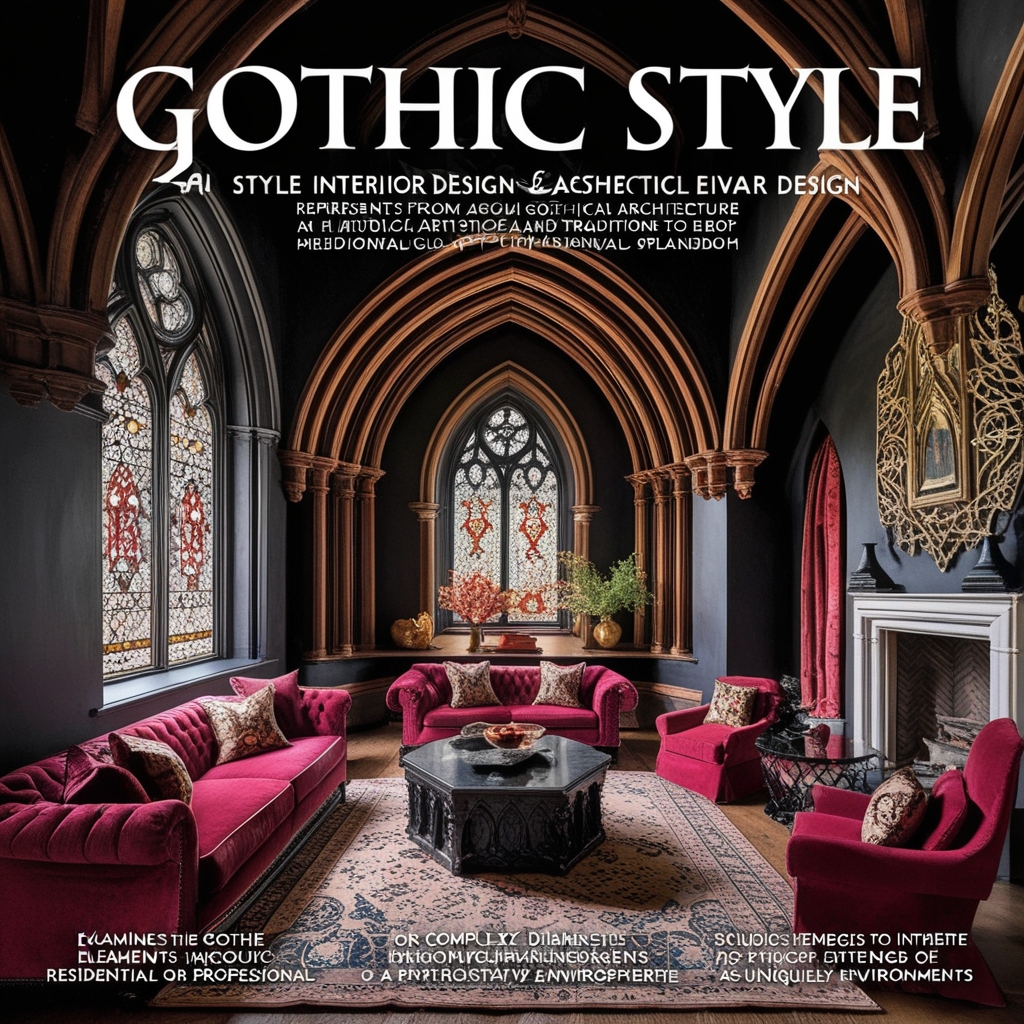
The Gothic style interior design is an extraordinary fusion of historical allure and aesthetic sophistication. Drawing from the rich architectural and artistic heritage of the Gothic era, this style encapsulates the essence of medieval magnificence. It integrates intricate patterns, dramatic dimensions, and an evocative atmosphere to create a truly unique and captivating environment. In this guide, we will explore the fundamental components that define the Gothic style and offer insights into how you can incorporate its distinctive features into your home or workspace.
-
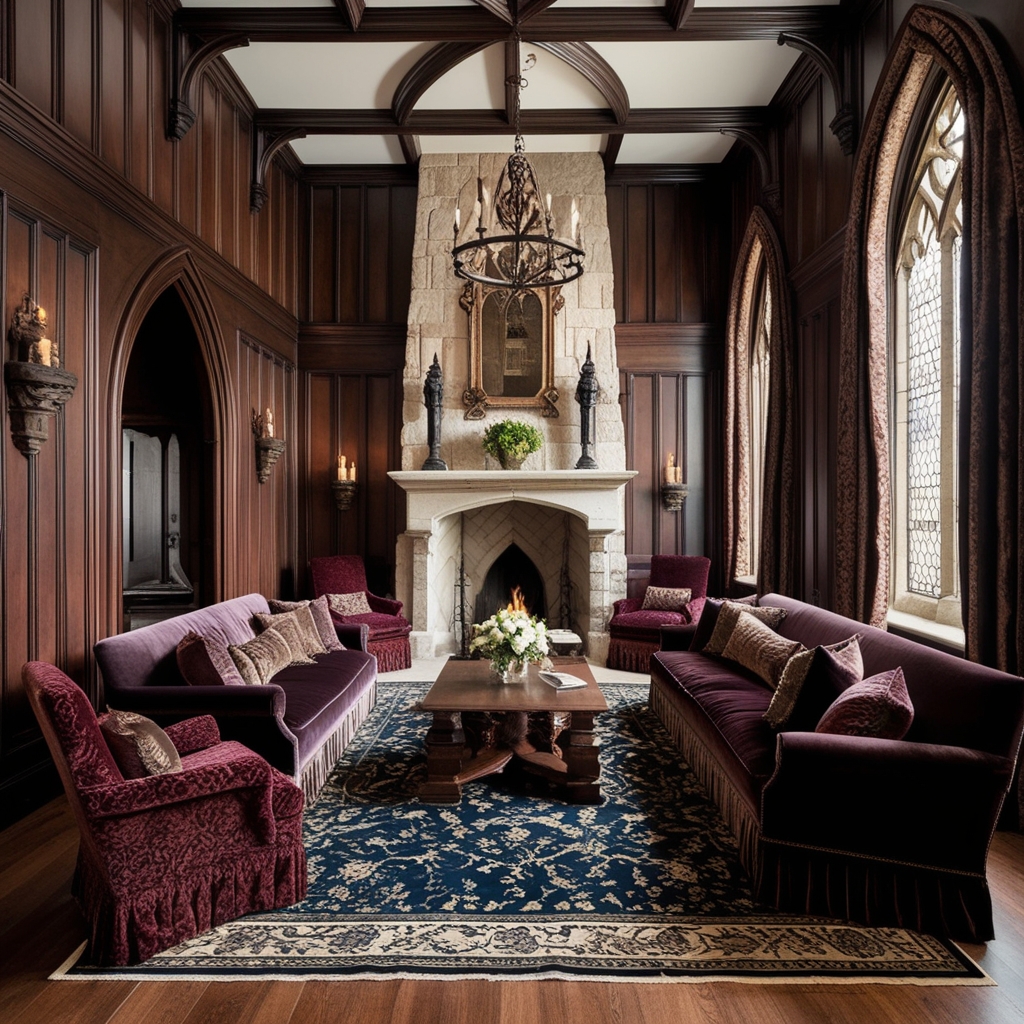
Authenticity and depth in Gothic style interior design depend heavily on meticulous material selection. Furniture and paneling production frequently utilizes dark woods like mahogany, oak, and walnut which deliver an impression of majestic strength. Stone represents an essential building component which appears frequently in flooring designs as well as fireplace constructions and accent wall features. The intricate interplay of textures emerges as a defining element where velvet, brocade, and damask dominate upholstery and drapery selections to deliver an emblematic lush opulence.
-
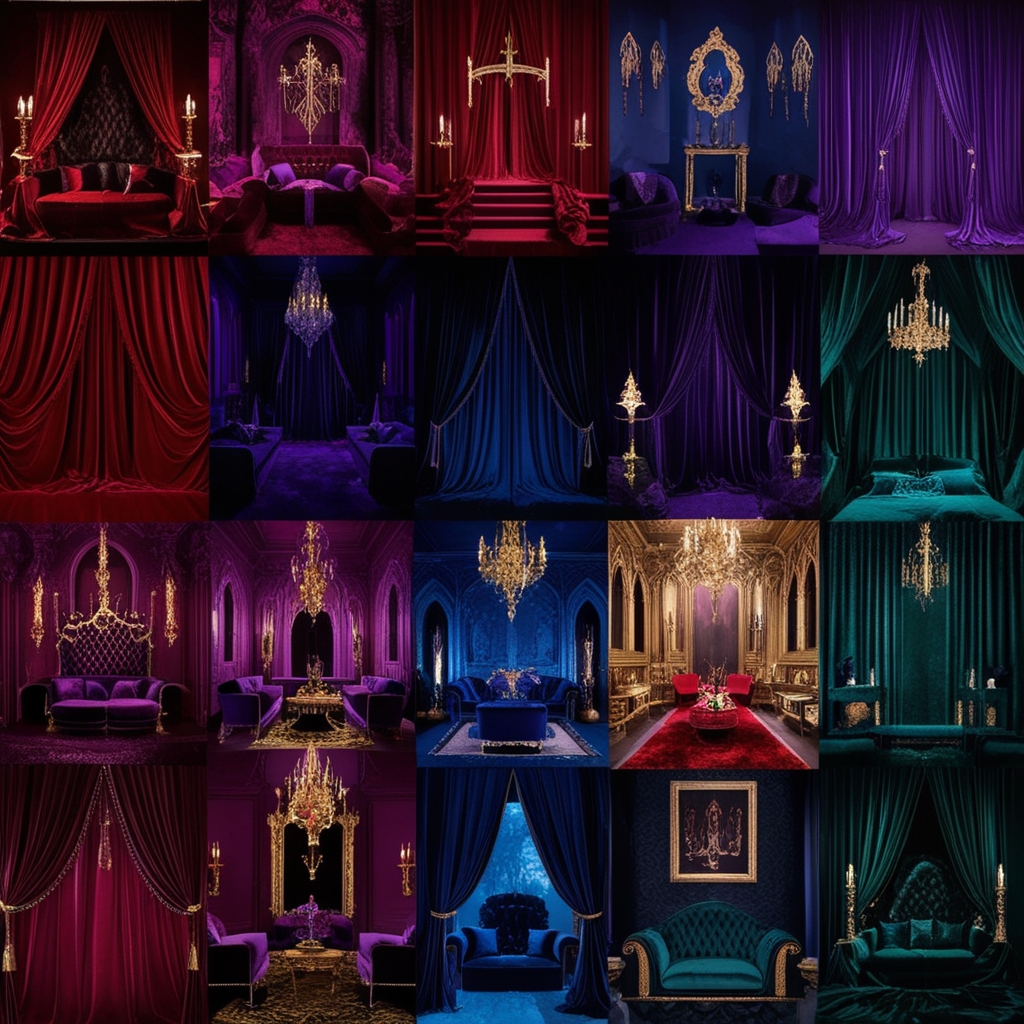
Gothic style interior design showcases a color palette filled with deep, rich hues that create an atmosphere of mystery and drama. The opulent palette of deep reds, royal purples, midnight blues, and forest greens finds frequent use alongside black and gold accents to manifest luxury. An intricate blend of these colors crafts an immersive ambiance that paradoxically achieves both intensity and warmth, transforming spaces into elegant sanctuaries filled with intriguing allure.
-
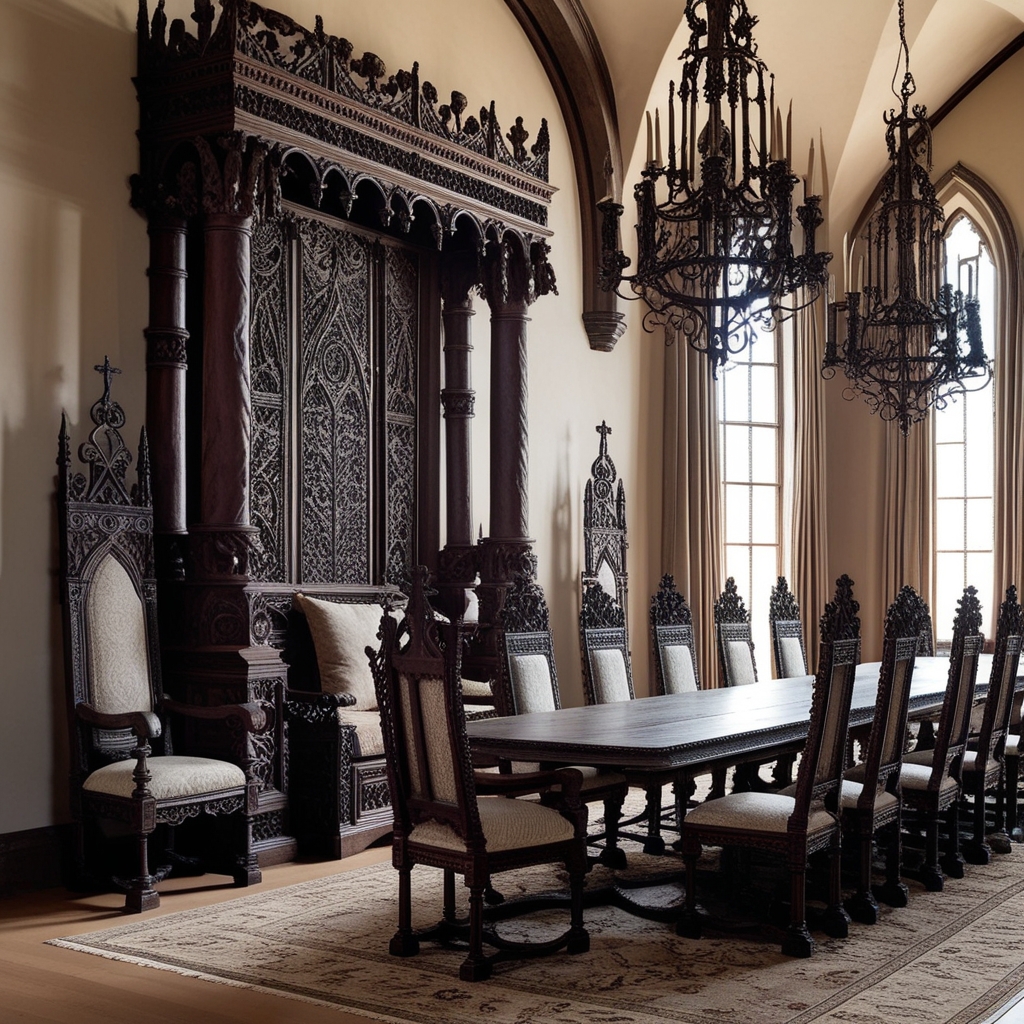
Gothic interior furniture manifests as massive structures with commanding presence coupled with elaborate intricacies. The era's craftsmanship emerges through pieces that display intricate carved woodwork alongside elaborate patterns and wrought iron accents. Elements of Gothic furniture design encompass high-backed chairs alongside canopy beds and elongated dining tables adorned with intricate details. These elements perform functional roles while simultaneously establishing the extravagant atmosphere fundamental to Gothic style.
-
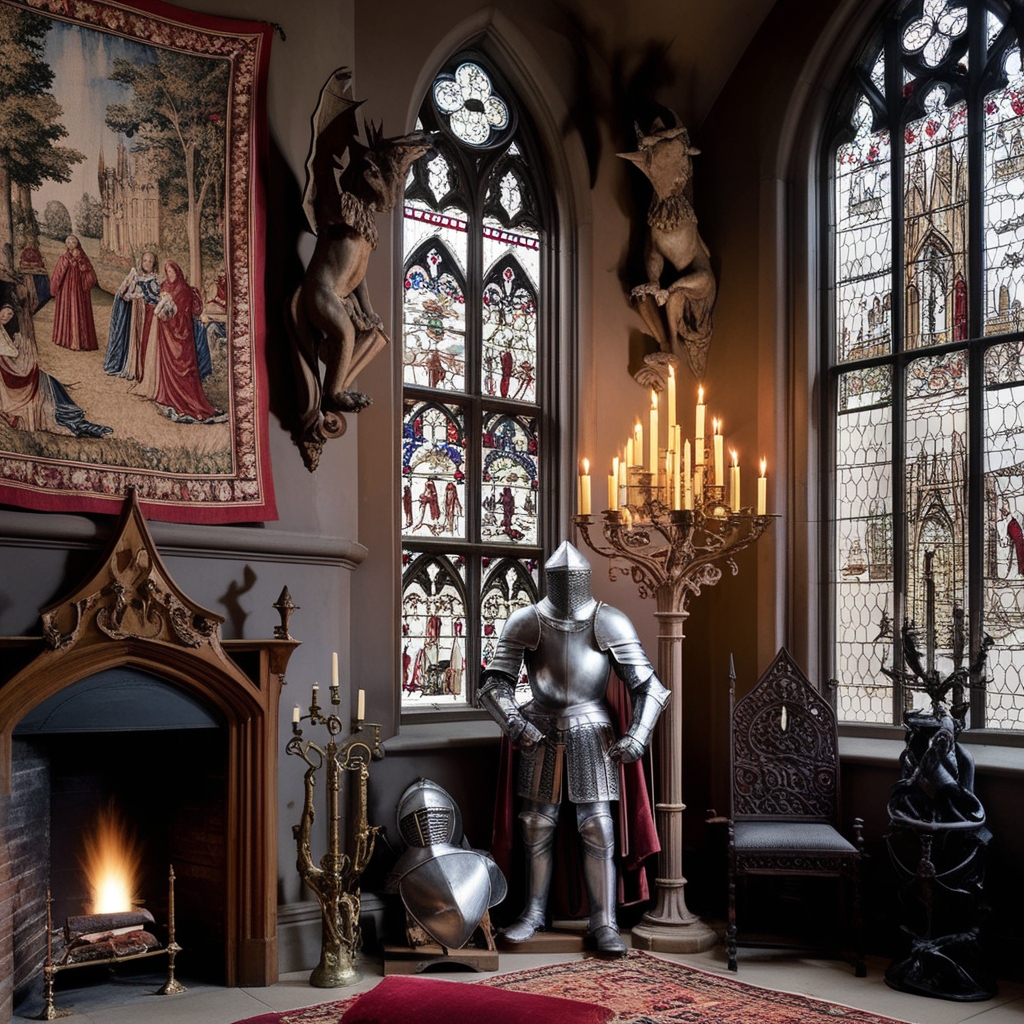
The incorporation of Gothic decor elements serves as a fundamental component in achieving the authentic essence of its historical period. Stained glass windows combined with medieval scene tapestries and antique candelabras create an authentic grand interior atmosphere. Gargoyle sculptures and knight armors become focal elements while intricately carved mirror frames introduce dramatic flair and spatial illusion. The atmosphere can be enriched by integrating gothic-inspired artwork and metalwork into the decor scheme.
-
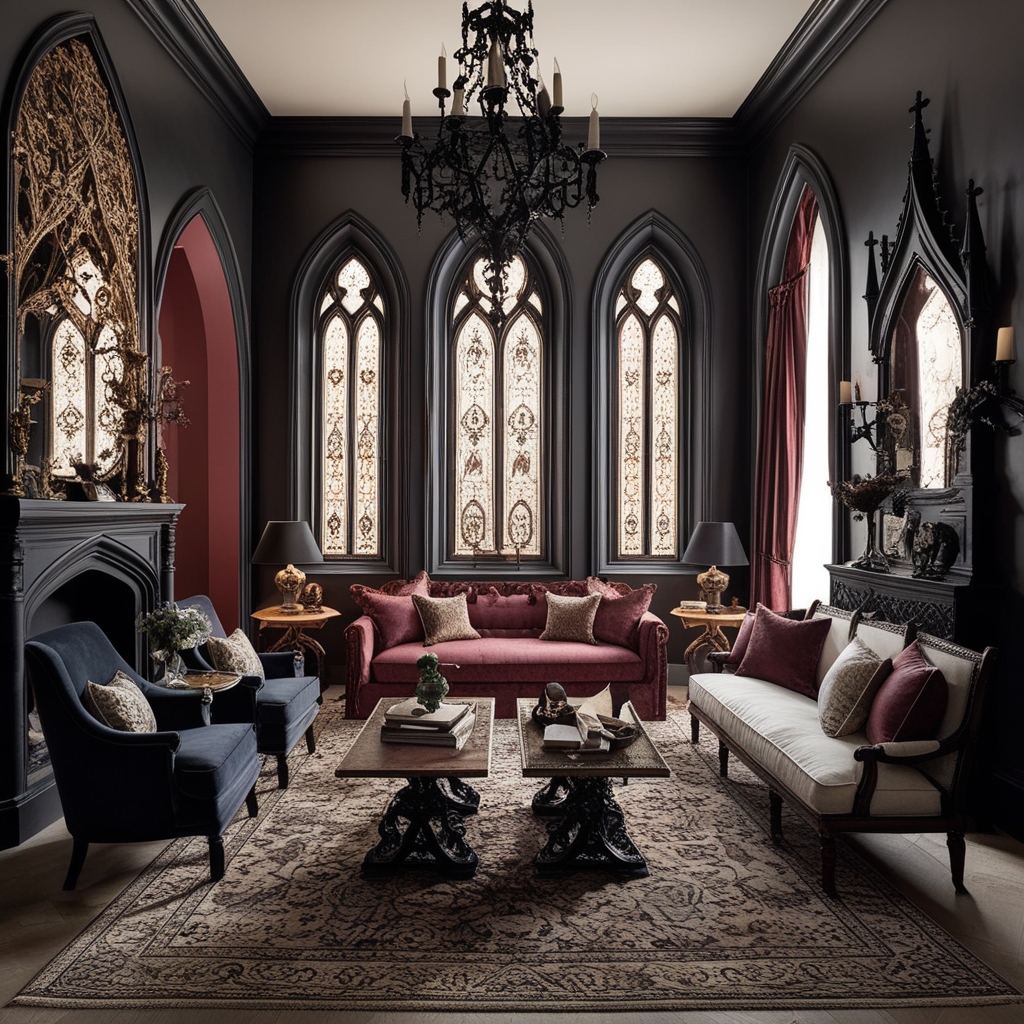
The selection of Gothic style interior design represents a daring and refined option that transforms spaces through its unique amalgamation of elegance and enigma. Through meticulous selection of materials, colors, furniture, and decor elements you can craft an interior space that captures the intricate detail associated with Gothic design, grounded in its historical references rather than treated as a costume.
How to Apply Gothic Style Interior Design in Your Home
-
Gothic style interior design creates a dramatic ambiance built on rich textures, dark color palettes, and bold architectural elements. Applied well, it reads as historically grounded rather than a costume. In this guide, we'll explore the many facets of incorporating gothic style elements into different areas of your home.
-
The living room is a central space in any home and an ideal place to introduce the opulent features of Gothic design. Consider using deep, rich colors like burgundy, dark green, or charcoal for your walls, complemented by ornate wallpapers with damask patterns. Add heavy curtains with velvet or brocade fabrics and intricate lace details to enhance the room’s dramatic effect. Furnishing the space with carved wooden furniture pieces, such as an intricately detailed coffee table or a high-backed armchair, can further accentuate the theme. The incorporation of antique lighting fixtures, such as wrought iron chandeliers or candelabras, can cast a warm, ambient glow that captures the essence of Gothic design.
-
Designing a Gothic-inspired bedroom requires the creation of a comfortable space that simultaneously preserves an aura of mysticism. Select a massive bed frame constructed from intricately carved wood that includes a striking canopy. Bedding crafted from luxurious materials such as silk, velvet, and satin introduces a sophisticated plushness to any bedroom decor. Ceilings adorned with celestial patterns or gently worn finishes introduce additional spatial complexity. Gothic mirrors and wall sconces featuring wrought iron elements deliver functional elegance while adding dramatic flair. A color palette featuring predominant blacks, purples, and deep blues combined with metallic accents creates a moody atmosphere.
-
The kitchen and dining areas are often overlooked when adapting a gothic style, yet they present unique opportunities for design exploration. Introduce stone tiles or dark wood flooring to establish a firm base. Install custom cabinetry with rich dark stains or painted finishes, and add wrought iron hardware for an authentic touch. In the dining area, a large, rustic dining table paired with high-backed, upholstered chairs can make the room feel regal. Gothic architecture can be reflected in intricate wall brackets or carved centerpiece bowls, while stained glass or leaded windows add authenticity and color intensity.
-
By incorporating gothic design elements into outdoor areas homeowners can achieve a unified visual theme that connects their home's exterior and interior spaces. Consider incorporating wrought iron railings along with garden furniture and statues to extend the gothic theme into your outdoor spaces. Gardens and patios can feature Gothic arches, trellises, or gazebos as central elements. Integrate stone pathways alongside water features including small fountains to create an enigmatic and tranquil atmosphere. The importance of lighting after dusk becomes paramount; by using lanterns with stained glass inserts or period-inspired lamp posts you can achieve an unnaturally beautiful glow in your gothic outdoor haven.
Related styles and tools
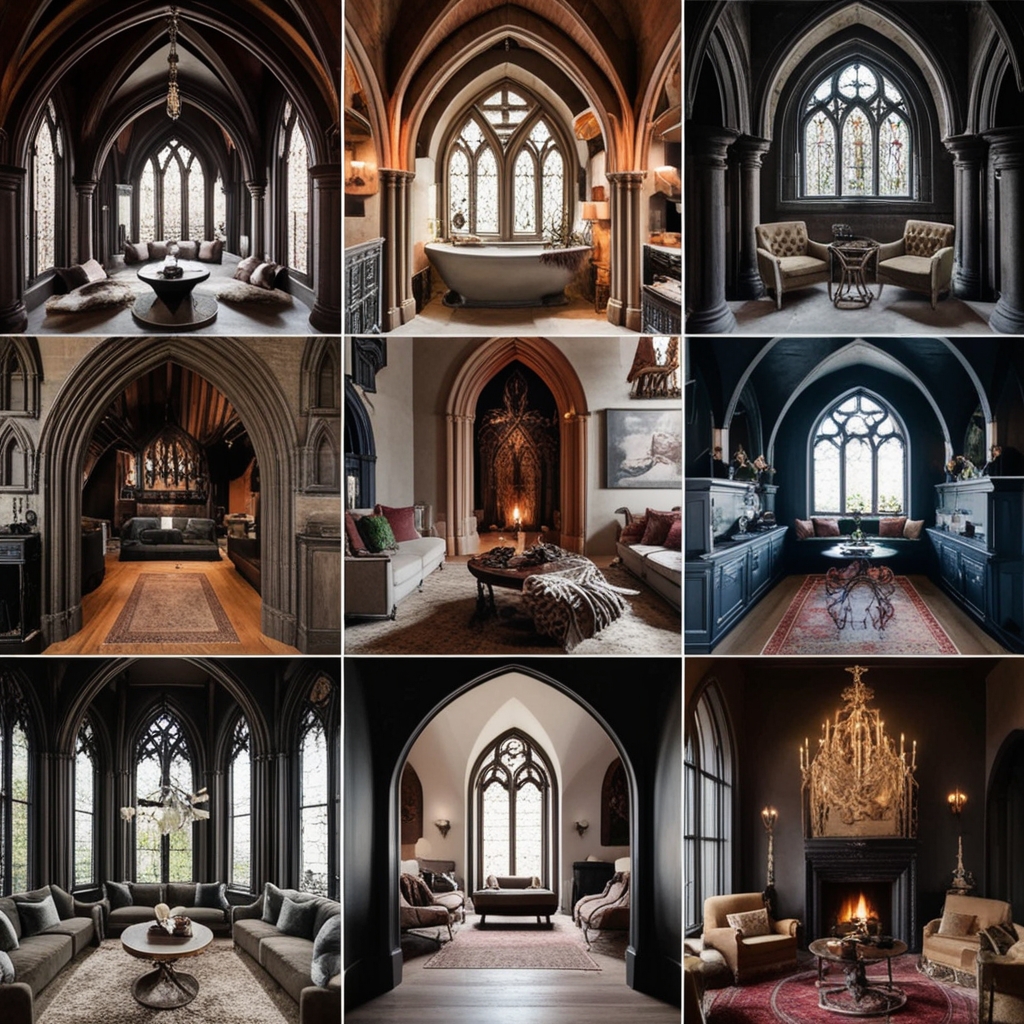
Discover the enchanting allure of Gothic style interior design through our curated examples. Experience the dramatic arches, intricate details, and rich textures that transform any space into a timeless masterpiece. Explore Images Now
FAQ
-
Gothic interior design features pointed arches alongside complex woodwork and elaborate ornamentation. Stained glass elements combined with dark color schemes and antique furnishings create a medieval cathedral ambiance.
-
The use of bulky furniture combined with dark color schemes leads to space over-cluttering which results in rooms feeling oppressively small. The integration of gothic features with sleek modern minimalism results in a balanced design.
-
Commercial spaces have the potential to adopt Gothic interior design by incorporating gothic-themed decor elements like gargoyle sculptures and ornate lighting fixtures yet still preserving customer functionality and movement.
-
Its timeless allure stems from its dramatic, romantic aesthetic that offers a unique, expressive ambiance. The style allows for personalization with antique pieces and intricate details, often appealing to those with a love for history and artistry.
-
The latest design movements merge Gothic elements with modern features like sleek lighting and contemporary furniture to produce an old-new contrast that adds spatial depth and intrigue.
-
Paintit.ai provides tools for rendering gothic style concepts by allowing users to experiment with color schemes, layout modifications, and decor items, ensuring a cohesive vision before the actual implementation.