
Modern Victorian Interior Design: Contemporary Victorian interiors, room by room
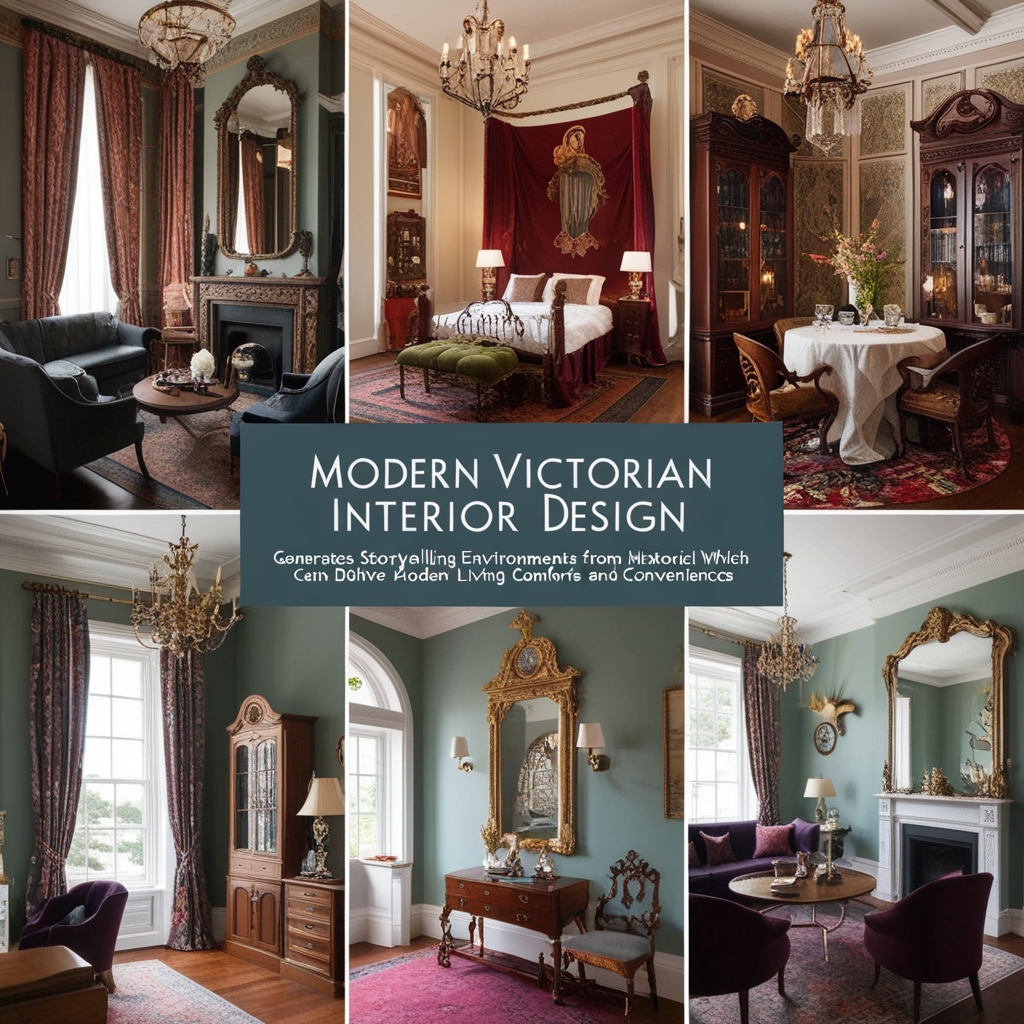
Modern Victorian interior design combines the ornamental richness of the Victorian era (1837-1901) with the restraint and spatial clarity of contemporary living. The style goes by two names that mean roughly the same thing: modern Victorian and contemporary Victorian. Both describe the same problem, which is applying Victorian decorative vocabulary (jewel tones, velvet, carved furniture, patterned wallpaper, ornate lighting) in rooms that still function like somewhere people live rather than a museum set.
This guide covers what defines the look, how it differs from straight historical reproduction, and how to decorate a Victorian house room by room when you are working with the original cornices, sash windows and fireplaces rather than a blank box.
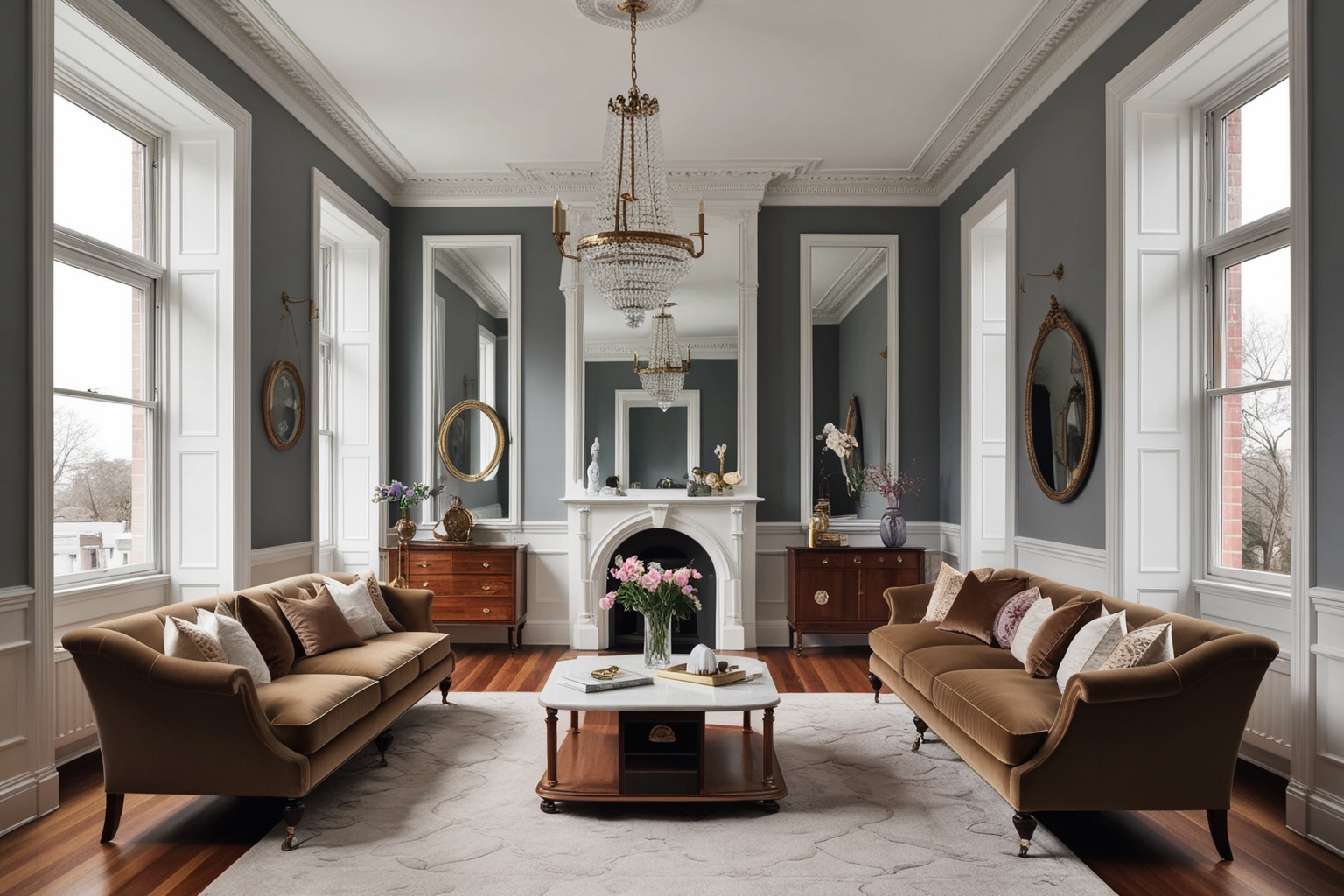
What defines modern Victorian interior design
Modern Victorian interior design combines Victorian decorative vocabulary with contemporary restraint. These are the core elements that make the style specific rather than generically vintage.
Color palette
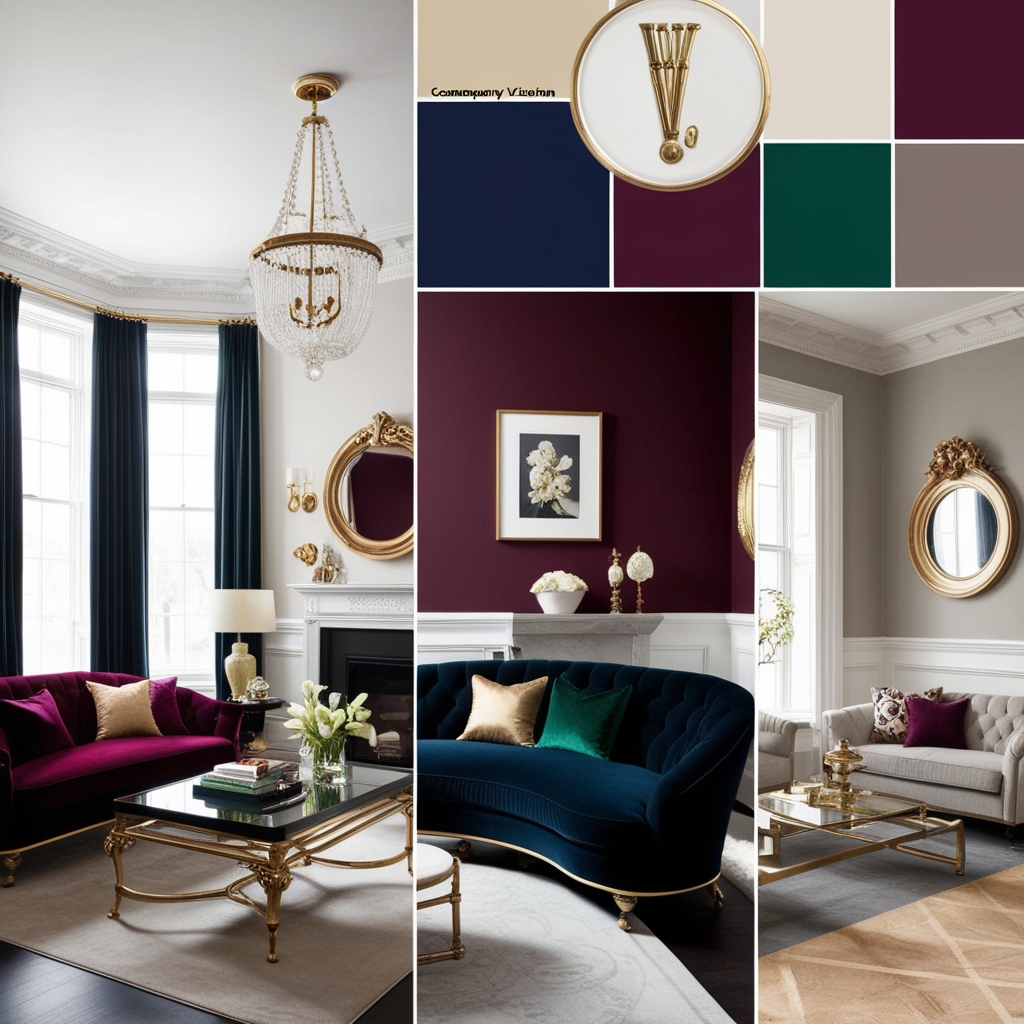
The modern Victorian palette uses rich jewel tones (burgundy, deep emerald, navy, midnight blue, plum) but applies them with more restraint than a historical Victorian interior. Select one jewel tone as the dominant accent and ground it with warm white, soft grey, or cream.
The dark academia direction goes further, using deep tones on walls with lighter architectural details. Gold, brass, and warm bronze appear in light fixtures, cabinet hardware, picture frames, and mirrors.
Materials and textures
Velvet is the signature Victorian upholstery material, used in jewel tones for statement pieces or softer muted colours for quieter rooms. Brocade, damask, and silk patterns work well in cushions and drapery.
Dark wood anchors the furniture: mahogany, walnut, ebony. Contemporary materials such as glass, steel, exposed brick, and simple white walls create the useful tension between periods.
Furniture and silhouettes
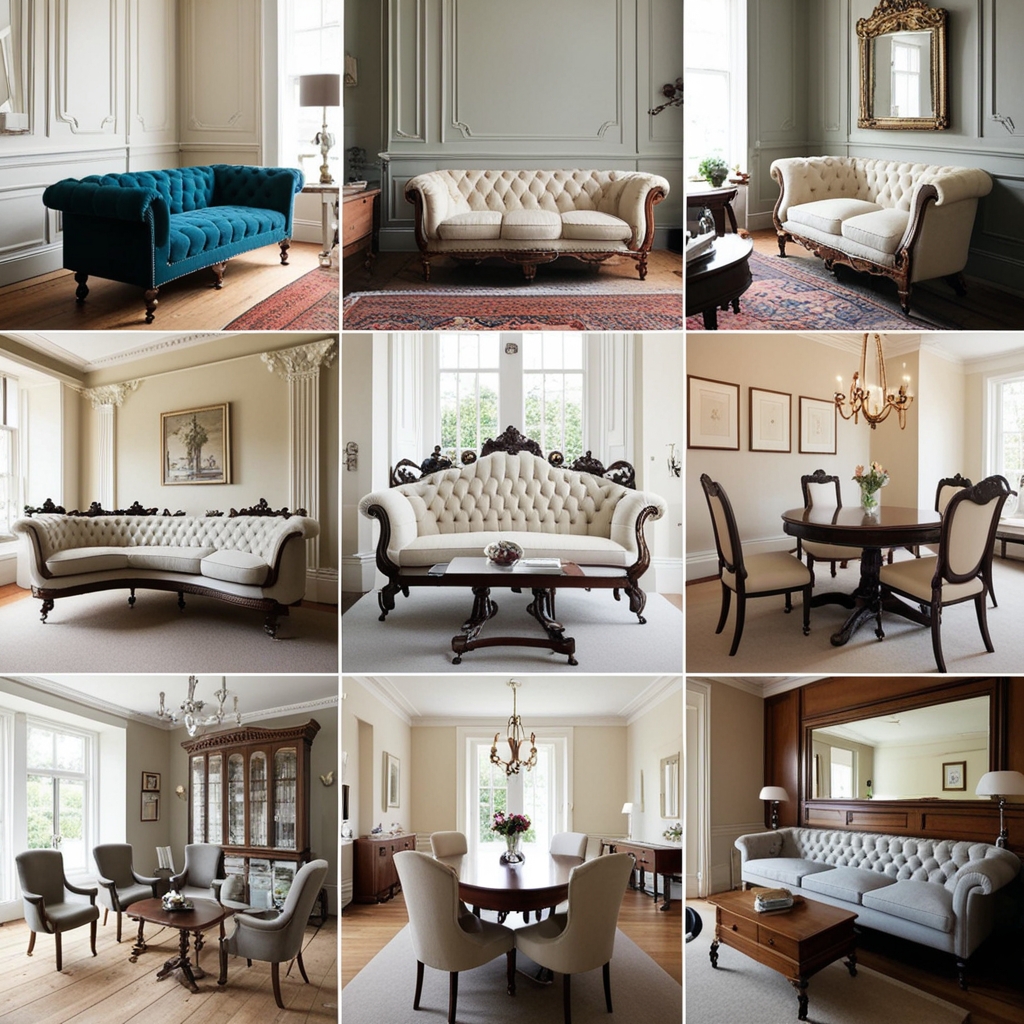
The Chesterfield sofa is the defining modern Victorian furniture piece. Button-tufted club chairs, carved wooden occasional tables, ornate upholstered headboards, four-poster beds, and Victorian sideboards are characteristic.
The modern edit: choose one or two period pieces as focal points and pair them with simpler contemporary pieces.
Decor and accessories
Pattern is essential. Use one large-scale pattern per room, usually the rug or wallpaper, supported by smaller patterns in textiles and accessories. Gallery walls with mismatched gilt and dark wood frames, botanical prints, books, and collected objects fit the style.
Architectural features
Crown mouldings, ceiling roses, skirting boards, picture rails, dado rails, fireplaces, and bay windows are the Victorian architectural details that most clearly signal the style. In contemporary construction, mouldings and a decorative fireplace surround can recreate the architectural base.
Modern Victorian rooms: six examples and what makes each one work
-
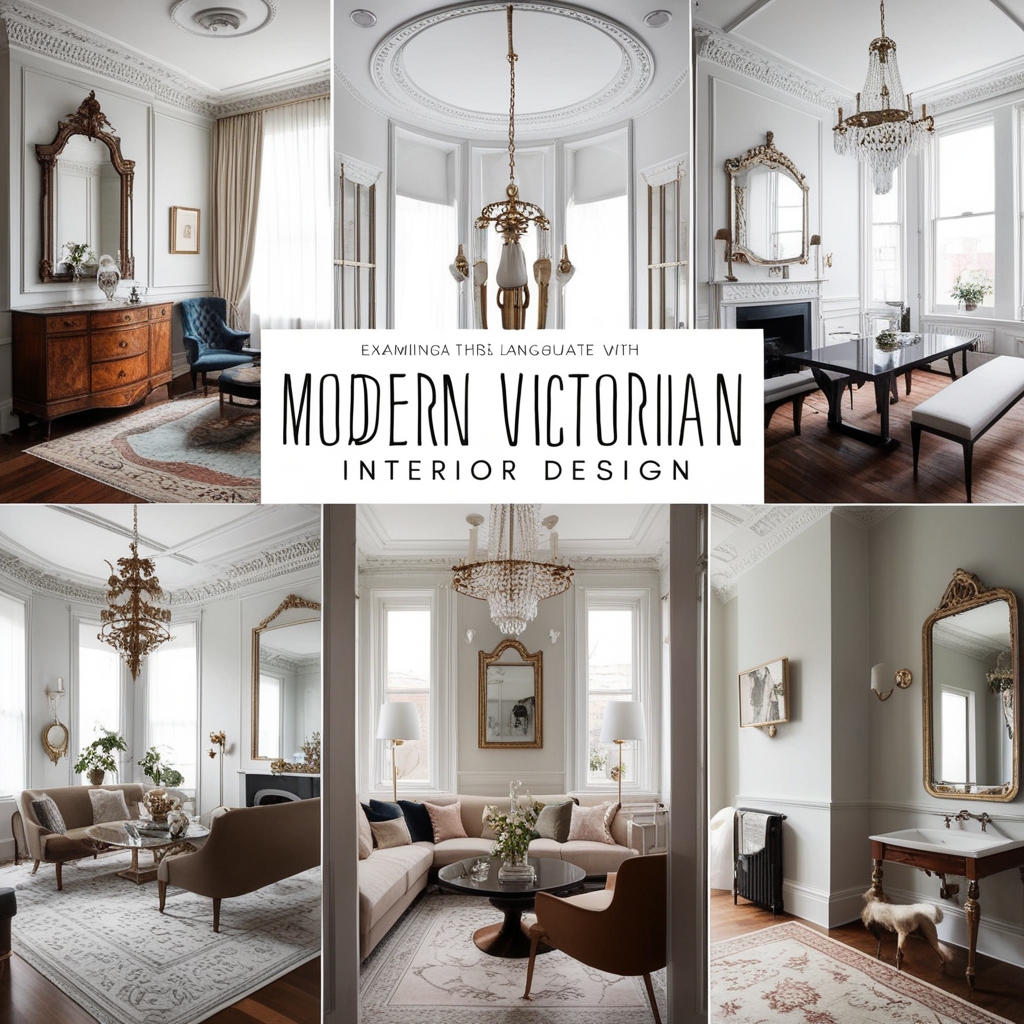
Wallpaper above the dado, plain panelling below. Splitting the wall at picture-rail or dado height is the single most useful trick in a Victorian room, because it lets you use a strong damask without the pattern closing the space in. The blue velvet seating picks one jewel tone and stops there. Note the chairs are period shapes in a plain fabric, which is easier to live with than period shapes in period brocade.
-
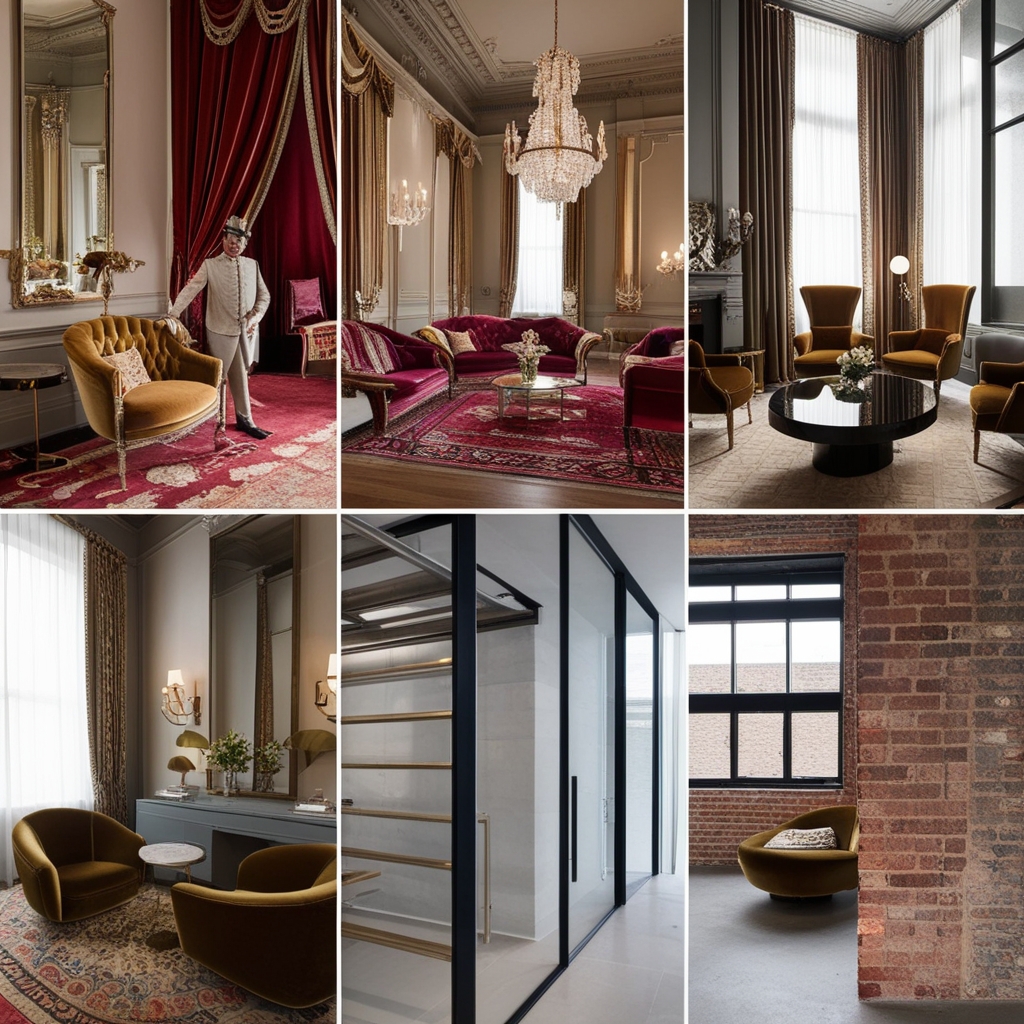
This is the clearest example of what separates modern Victorian from a period reconstruction. The bed is unmistakably Victorian, ornate cast brass with scrollwork, and everything around it is quiet: plain walls, plain bedding, a simple metal side table. One ornate object in a calm room reads as deliberate. The same bed with damask wallpaper, heavy drapes and a patterned rug would read as a museum set.
-
Victorian kitchens are mostly invention, since the original rooms were service spaces nobody wants to reproduce. The period references here are narrow and specific: arched glazing bars on the upper cabinets, unlacquered brass taps, and a plain stone worktop. The mint tile is not historically accurate and does not need to be. It keeps the room light, which the deep cabinet colour on its own would not.
-
Bathrooms are where period detail is easiest to get right, because the Victorian originals are still manufactured. A clawfoot bath, white metro tile with a moulded dado rail, hexagonal floor tile and brass fittings do the whole job. The sage walls above the tile keep it from reading as clinical white. This is the room where reproduction fittings are worth the money, since the shapes have not changed.
-
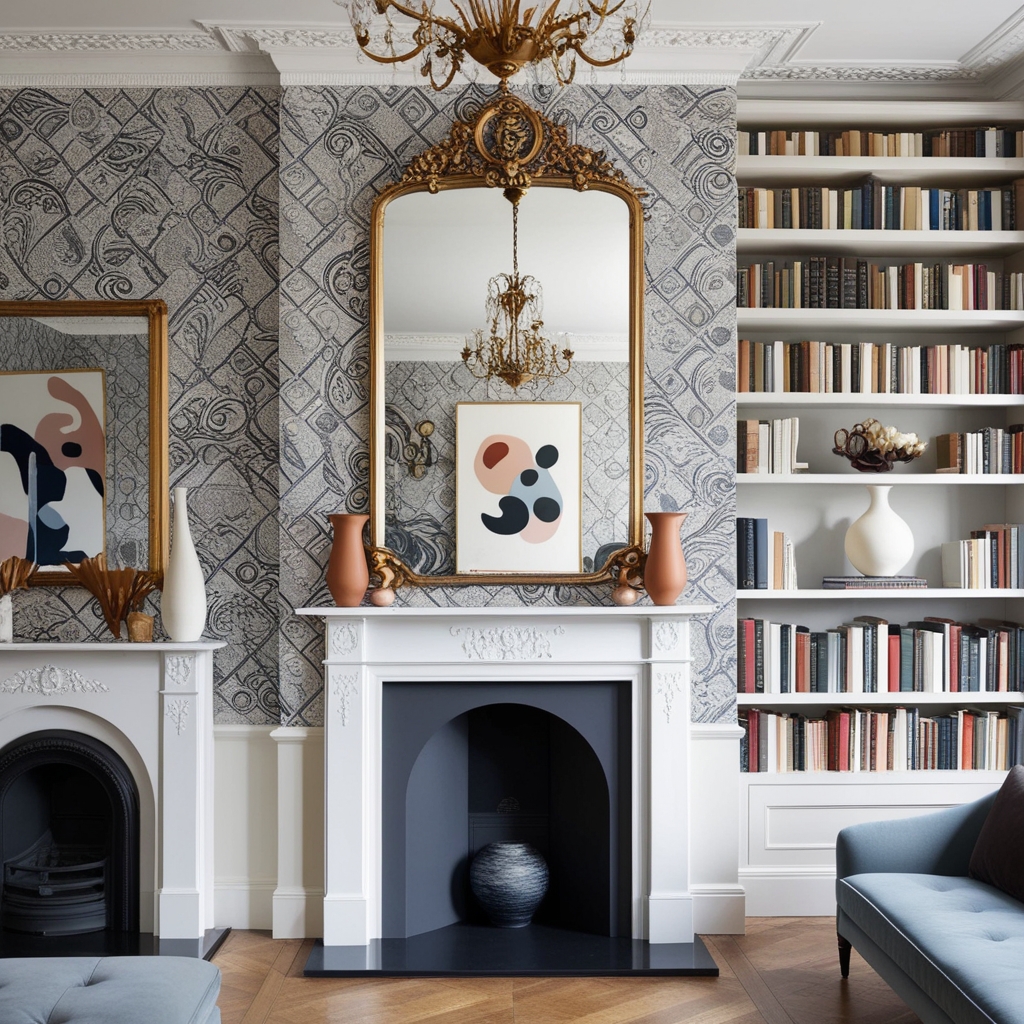
The chimney breast is the anchor and everything is arranged around it. A gilt overmantel mirror, patterned wallpaper on the chimney wall only, and built-in shelving in the alcoves either side. Those alcoves are standard in Victorian houses and are the cheapest square metres of storage you will ever add, because the recess is already there.
-
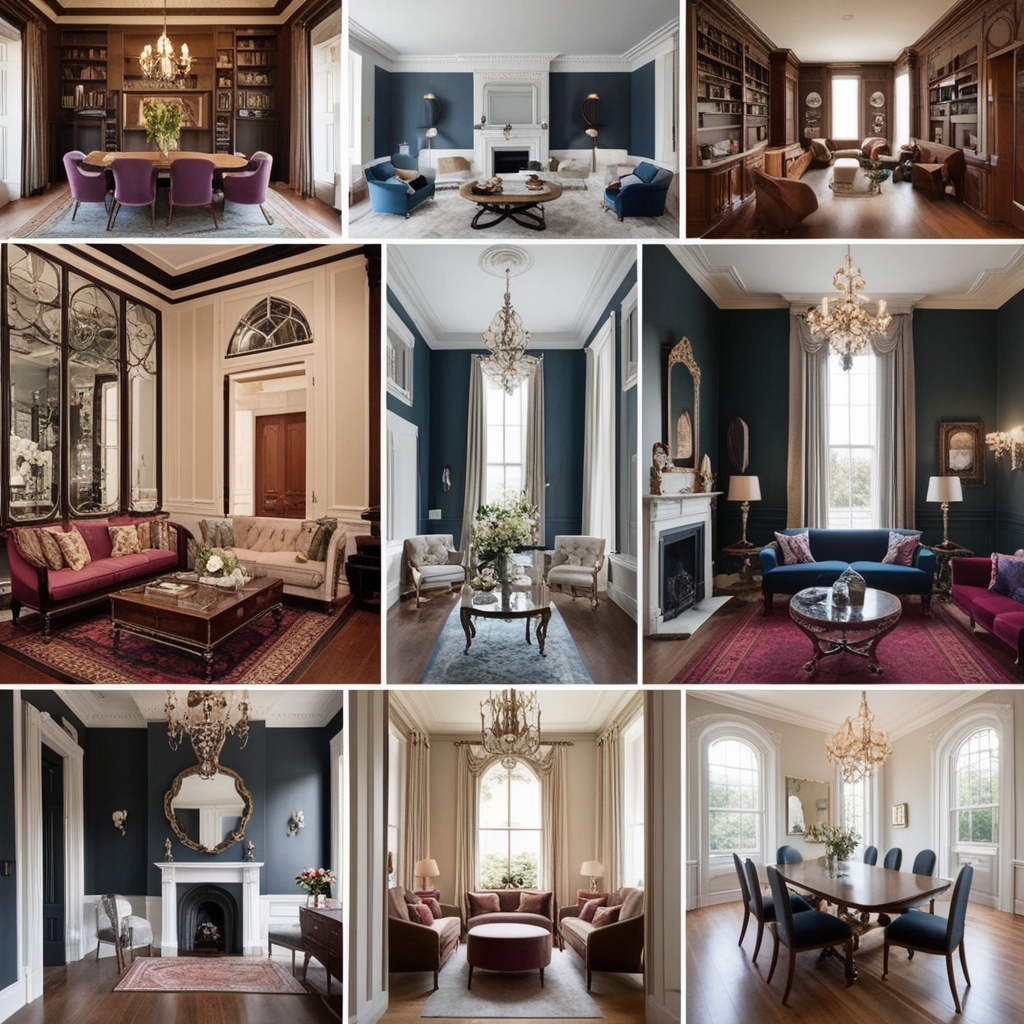
The dark academia direction takes the same components and turns the lighting down: deep walls, a working fireplace, a leather Chesterfield, and enough books that the shelves read as used rather than styled. It needs multiple warm light sources at low level to work. A single ceiling pendant in a room this dark makes it feel like a waiting room after sunset.
How to decorate a Victorian house room by room
-
Start with what the house already has
Most people arriving at this style are decorating an actual Victorian house rather than building the look from scratch, and that changes the order of the work. Original cornices, ceiling roses, picture rails, sash windows and cast iron fireplaces are the expensive part, and they are already there. Strip paint off the cornice before choosing a wall colour, not after. Where original features are missing, leaving the wall plain reads better than adding reproduction mouldings, which rarely match the profile depth of the originals and tend to look flat under raking light.
-
Living room
The chimney breast decides the layout, so place seating to face it rather than the television. One dark wood piece is usually enough: a mahogany or walnut console, or a Chesterfield in a jewel tone. Keep the rest of the upholstery plain so the carved detail has somewhere quiet to sit against. High ceilings in Victorian rooms take a heavier pendant than a modern room can, and hanging it lower than feels natural is usually right.
-
Bedroom
Contemporary Victorian bedrooms work best with one period reference rather than a full set. An upholstered or carved headboard against plain walls does more than a four-poster with damask wallpaper behind it. If you want pattern, put it on the curtains or a single papered wall behind the bed, where you do not look at it while lying down. Modern bedding stops the room reading as a period reconstruction.
-
Kitchen and dining
Victorian houses rarely had the kitchen anyone wants now, so this is the room to treat loosely. Shaker or in-frame cabinetry in a deep colour, brass or unlacquered copper fixtures, and a plain worktop carry the period reference far enough. In the dining room, a large wooden table with chairs that do not match is the practical version of the Victorian collected look, and it survives daily use better than a matched set.
-
Hallway and stairs
The hall is where Victorian houses give the most back for the least money. Encaustic or geometric floor tiles, a dark dado with lighter walls above, and a runner on the stairs set the tone before anyone reaches a room. Because halls are narrow and usually short on daylight, this is the one space where going darker rather than lighter tends to work.
-
Outdoor areas
Wrought iron furniture, climbing roses on a pergola, and stone or brick paths match the period without much effort. Keep the planting loose rather than clipped: Victorian gardens were dense and layered, so a slightly overgrown border is closer to the reference than tidy topiary.
Visualize modern Victorian style with Paintit.ai
Upload a photo of any room to app.paintit.ai and test how modern Victorian palettes (deep jewel tones, dark wood, velvet accents against light walls) read in your actual space in 1-2 minutes. Useful for understanding whether your room can carry a dark-walls dark academia direction or whether a single jewel-tone accent against neutral walls works better. Free to start.
Related styles and tools
Explore related styles and AI tools for modern Victorian interiors.
FAQ
-
Modern Victorian interior design combines the decorative richness of the Victorian era (1837-1901) with contemporary spatial clarity and functional simplicity. The Victorian elements: jewel-tone colour palettes, rich textiles, ornate furniture, architectural detail, and pattern layering. The modern edit is restraint: selecting one or two period pieces as focal points and pairing them with cleaner contemporary pieces.
-
Dark academia is a contemporary aesthetic built around scholarly, historical, and literary references: dark wood, floor-to-ceiling bookshelves, moody warm lighting, gallery walls of framed prints, and deep greens, burgundies, and warm neutrals. It overlaps strongly with the moody, bookish end of modern Victorian style.
-
The Chesterfield sofa is the most iconic modern Victorian furniture piece. Four-poster beds, carved mahogany or walnut furniture, button-tufted club chairs, and Victorian-era sideboards are also characteristic. The modern approach uses one or two period focal points with simpler contemporary pieces.
-
In practice, yes. Both names describe Victorian decorative language applied with contemporary restraint, and designers use them interchangeably. If there is any shade of difference, contemporary Victorian tends to be used for the lighter, greyer end of the look, while modern Victorian is used more often for the darker, jewel-toned and dark academia end. Neither means historical reproduction.
-
Keep the parts that cannot be replaced and change the parts that can. Cornices, ceiling roses, sash windows, cast iron fireplaces and original floorboards are the character, so repair rather than remove them. Everything else is fair game: lighting, kitchen, bathroom, and layout at the back of the house. The common mistake is the reverse, which is stripping out original features and then adding reproduction ornament somewhere else.
-
Yes. Upload a photo of any room to app.paintit.ai and test modern Victorian palettes and furniture directions in 1-2 minutes. Free to start.