
Territorial Style Interior Design – Inspiration and Ideas for Your Home
Territorial style interior design draws from a specific period and place: New Mexico between 1848 and 1912, when the region was a US territory and when Spanish colonial adobe construction met the Greek Revival and Italianate decorative influences arriving with Anglo-American settlers. The result is a distinctive hybrid, seen in both historic adobe homes and the newer territorial house designs built to reference them: flat-roofed adobe buildings with brick parapet coping and Classical-detail woodwork, earthy Pueblo materials dressed with formal architectural details. This guide covers what makes a territorial home recognizable and how to apply them in contemporary interiors.
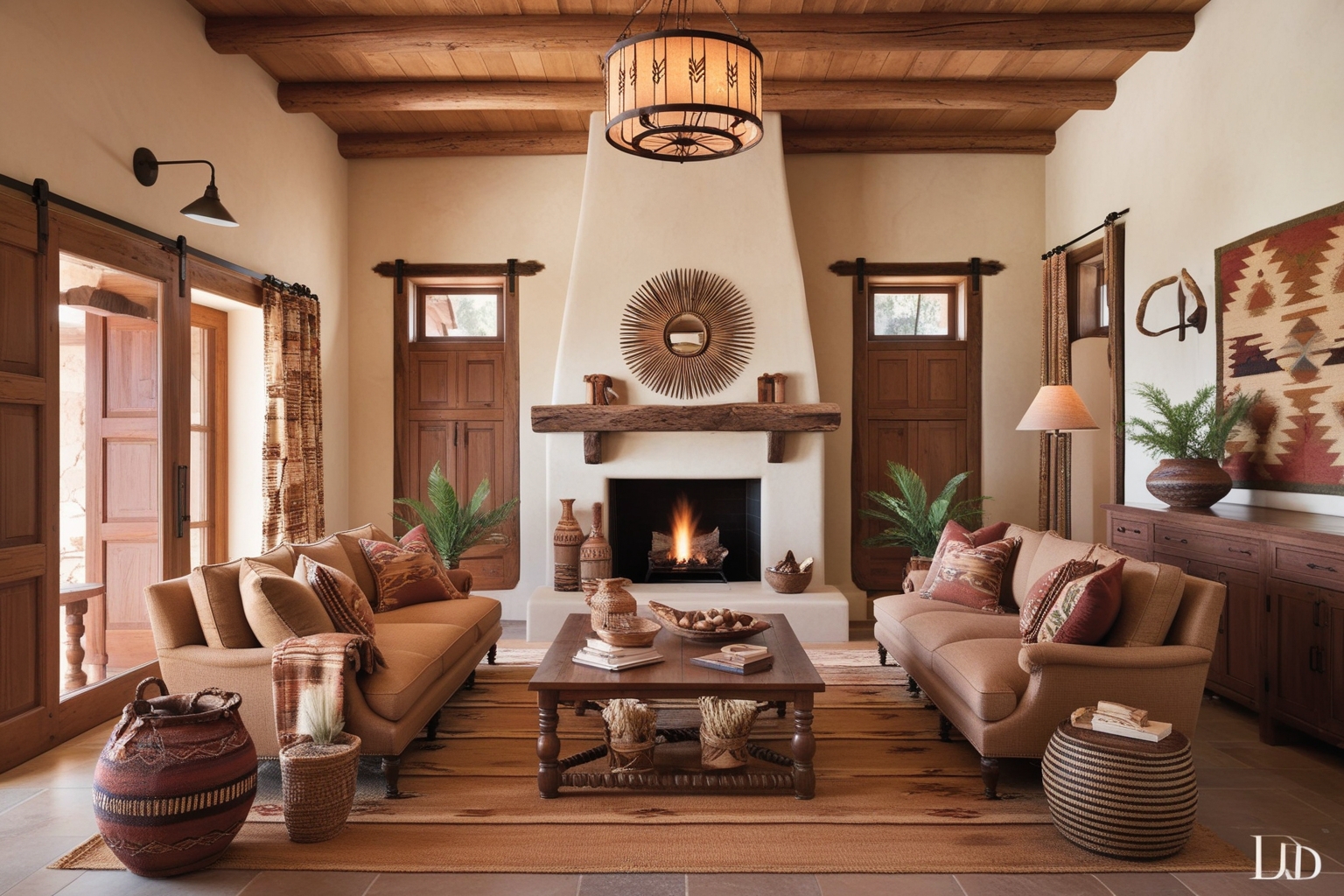
What Defines Territorial Style Interior Design?
Territorial style interior design represents a specific New Mexico tradition: the fusion of Spanish colonial adobe construction with Greek Revival and Italianate architectural details that emerged during the US Territorial period (1848–1912). It produces a balanced atmosphere that is simultaneously earthy and formally dressed, rustic in material and classical in architectural detail.
-
Key Colors and Palettes
Territorial style interior design frequently derives its color schemes from both the natural surroundings and the area's cultural traditions. Terracotta, stone gray, and desert sand tones dominate the palette to create a welcoming warm environment. One can also encounter accents in vivid shades such as turquoise, rich red, and deep blue which frequently represent local artistic traditions and motifs. The selected colors serve as tributes to the regional scenery while simultaneously boosting the space's genuine feel. -
Typical Materials and Textures
Territorial style interiors utilize materials that emerge from deep connections to their local environments. Elements of stone, wood, and clay create a dominating presence that establishes an earthy rustic atmosphere which transcends time. Stucco walls and adobe bricks create multi-dimensional surfaces that captivate attention through their textured finishes. Textiles, upholstery, and decorative items incorporate natural fibers such as wool, cotton, and leather to maintain a bond with nature and traditional craftsmanship.
-
Signature Furniture and Decorative Elements
Territorial design furniture items frequently reflect expert craftsmanship while focusing on straightforward functionality. Massive wooden tables, leather armchairs, and bespoke cabinetry represent typical designs built to endure both temporal shifts and fashion changes. The inclusion of woven rugs, pottery and regional artwork establishes the interior's geographical identity. Wrought iron accents and hand-carved wooden decor elements serve as mediums to introduce regional artistic touches. -
The overall atmosphere and mood
Territorial style interiors achieve a warmth that comes specifically from the combination of heavy, thermally massive adobe walls with the human-scaled Classical detail of Greek Revival millwork. The walls are substantial (18 to 24 inches thick in authentic Territorial construction) and they moderate temperature, creating cool interiors in summer heat and radiant warmth in winter. This thermal quality gives Territorial rooms a specific physical atmosphere that contemporary construction approximates through thick plaster walls and deep-set windows.
The mood combines the earthiness of Pueblo tradition with the formal aspiration of the Anglo-American Classical revival: humble materials used with architectural confidence. The kiva fireplace anchors every significant room; the vigas (ceiling beams) reference the Pueblo tradition; the millwork around windows and doors references the Classical.
In contemporary applications: deep-set windows with Classical surround (even in drywall construction), vigas or exposed-beam ceilings, kiva fireplace in a corner, smooth-plastered walls in warm clay tones, and Saltillo tile or polished concrete floors approximate the essential Territorial quality without requiring authentic adobe construction.
How to apply Territorial style in your home
Understand what makes Territorial distinct from generic Southwest
Territorial style is not the same as Southwest style or New Mexico style in general. The distinction is architectural: Territorial means specifically the hybrid of adobe/Pueblo construction with Greek Revival or Italianate Classical detail, characteristic of New Mexico 1848–1912. The key identifiers are:
- Brick parapet coping (a row of fired brick along the top of the adobe flat roof parapet)
- Milled lumber window and door surrounds with Classical pediments or pilasters
- Double-hung windows (replacing the smaller Pueblo-era openings)
- Adobe or adobe-block construction (thermal mass walls, flat or low-slope roofs)
The architectural priorities
Deep-set windows: Territorial and Pueblo architecture both feature windows set deep into thick walls, creating the characteristic shadow-line and light quality of adobe interiors. In contemporary construction, window reveal depth can be increased with drywall returns.
Vigas (ceiling beams): The exposed pine or spruce ceiling beams of Pueblo tradition appear in Territorial construction alongside the Classical detail. In contemporary applications, exposed beam ceilings in warm stained pine or Douglas fir are the most accessible single intervention.
The kiva fireplace: a rounded corner fireplace specific to the Pueblo/Territorial tradition, not found in this form anywhere else. Even in contemporary homes, a kiva fireplace immediately signals the Territorial aesthetic.
Colour and material
Adobe clay in its natural form ranges from warm cream to rich terracotta; the specific colour depends on local clay sources in New Mexico. Contemporary Territorial interiors use warm white, cream, sand, or light terracotta plaster on walls. Saltillo tile or polished concrete for floors. Dark stained pine or oak for millwork, cabinetry, and exposed structural elements.
Turquoise is the signature accent colour, appearing in tilework, pottery, and ironwork accents. Deep cobalt, burnt orange, and the warm reds of Rio Grande weavings provide secondary colour depth.
Furniture: Spanish Colonial and Arts & Crafts
Territorial furniture references two traditions: Spanish Colonial (hand-carved pine with simple geometric ornament, trastero cupboards, leather-upholstered chairs) and early American (sturdy Colonial-period forms in dark wood). Mission-style Arts & Crafts furniture translates well into Territorial contexts, since its flat panel construction and natural wood finishes are compatible with the adobe material tradition.
Visualize Territorial style with Paintit.ai
Upload a photo of any room to app.paintit.ai and test how Territorial palettes (warm adobe clay, turquoise accents, dark wood millwork) read in your actual space in 1–2 minutes. Free to start.
Related styles and tools
Explore related styles and AI tools for this design direction.
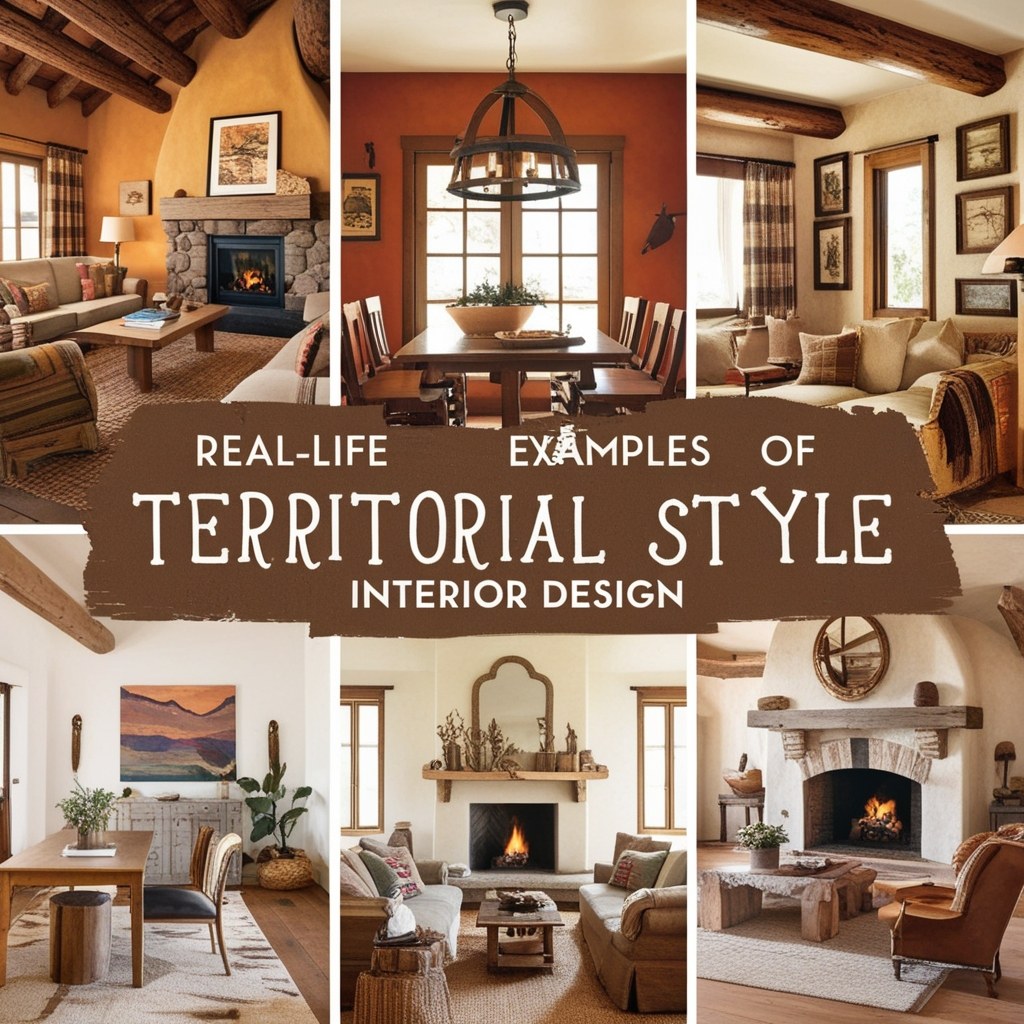
FAQ
Territorial style is a specific architectural and interior design tradition from New Mexico, dating to the US Territorial period (1848–1912). It fuses the adobe and Pueblo construction tradition of Spanish colonial New Mexico with the Greek Revival and Italianate decorative elements that Anglo-American settlers brought from the Eastern United States. The most distinctive features: flat-roofed adobe buildings with brick parapet coping (a row of fired brick at the top of the adobe parapet), milled lumber window and door surrounds with Classical pediments, double-hung windows, and the resulting interior language of deep-set windows, vigas (ceiling beams), kiva fireplaces, and Classical millwork in adobe construction.
Territorial is a more specific category within the broader Southwestern or New Mexico style. Southwest style encompasses all the design traditions of the American Southwest: Pueblo/adobe, Spanish Colonial, Navajo-influenced, Anglo-American frontier, and Territorial. Territorial specifically means the hybrid of Pueblo/adobe construction with Greek Revival or Italianate Classical architectural detail, characteristic of the 1848–1912 territorial period. The definitive identifier is the combination of adobe walls with Classical millwork around windows and doors, and the brick parapet coping along the roofline.
Parapet coping is the material along the top edge of a parapet wall (the wall that rises above the roofline on a flat-roofed building). In New Mexico Territorial architecture, the coping was fired brick rather than the adobe of the rest of the wall, a practical choice (brick is more weather-resistant at the exposed top edge) that also marked the transition from adobe to Classical building culture. The horizontal brick line at the top of the Territorial building became a distinctive visual signature that immediately identifies the style.
Yes. Upload a photo of any room to app.paintit.ai and test Territorial palettes and material combinations in 1–2 minutes. Free to start.