
New Mexico Style Interior Design
New Mexico decor and interior design draw from three overlapping cultural traditions: Spanish Colonial, Native American (primarily Pueblo and Navajo), and Anglo-American. These traditions have coexisted and influenced each other in the region for centuries, and the resulting New Mexico decorating style is distinct from generic "Southwestern" decor.
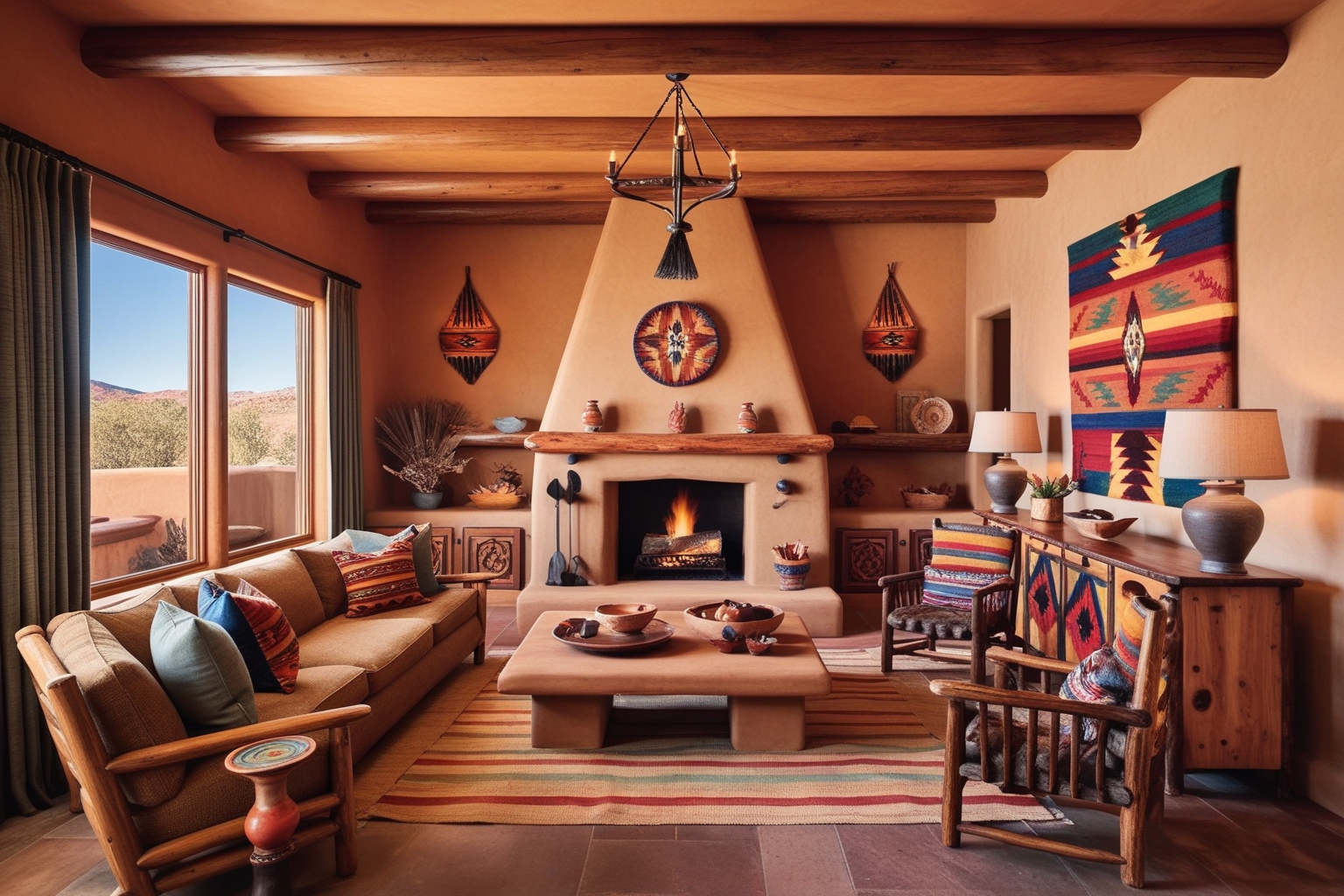
Materials and decorative elements in New Mexico style
Materials and textures
Textures play a central role: hand-woven wool textiles (particularly Navajo and Rio Grande weavings with geometric patterns), ceramic tile in Spanish Colonial traditions, and the rough plaster of adobe walls.
Signature decorative elements
Pottery pieces (Santo Domingo and Acoma Pueblo ceramics), kiva ladders, and wrought iron light fixtures combine with Native American art and crafts to create spaces layered with historical and cultural significance.
How to apply New Mexico style in your home
Bringing New Mexico style into a space means working with its three distinct traditions simultaneously. Here's how to approach the key decisions:
New Mexico architectural traditions: three to know
Adobe Pueblo style
The oldest tradition: thick adobe or rammed earth walls, flat or slightly pitched roofs with wooden parapets, exposed vigas (ceiling beams that project through the wall), latilla (peeled branch ceiling laid between vigas), portals (covered outdoor areas), and the kiva fireplace (a rounded corner fireplace). This is the direct continuation of Ancestral Puebloan architecture. In interiors: smooth plastered walls in warm clay colours, Saltillo tile or polished concrete floors, sparse furniture with emphasis on built-in architectural elements (banco seating, built-in shelving, adobe banco around the kiva).
Territorial style
The transition period (1848–1912, when New Mexico was a US territory): Adobe or adobe-brick construction, but with Greek Revival or Italianate details added under American influence. Most recognizable feature: the brick coping — a row of fired brick at the top of the parapet wall, creating a horizontal cornice line that distinguishes Territorial from pure Pueblo. Milled lumber replaces hand-hewn timbers. Windows and doors gain Classical proportions and pediments. Interior: a more formal version of Pueblo with Classical trim details and wider doorways.
Spanish Colonial style
Earlier than Territorial, influenced by Spanish and Mexican architectural traditions: thick walls, enclosed courtyards (zaguan), tile floors, carved and painted wooden furniture (trastero cupboards, colchón chests), religious folk art (retablos and santos), iron hardware, and the particular earthy palette of the Rio Grande valley.
The key New Mexico design elements
The kiva fireplace
A rounded corner fireplace — one of the most distinctive elements of New Mexico interior design and not found in this form anywhere else in the American Southwest. It occupies a corner of the room, rises from floor to ceiling, and typically has a stepped or curved opening. Often built in adobe plaster with a cedar or vigas mantel. The banco (built-in bench) often curves from the base of the kiva.
Vigas and latillas
Vigas are the large structural ceiling beams — traditionally pine or juniper — that project through exterior walls and define the characteristic New Mexico roofline. Latillas (peeled aspen or willow branches) are laid between vigas in a herringbone or zigzag pattern. Both are visible from inside, creating the characteristic ceiling texture of Pueblo architecture.
Saltillo tile
Handmade Mexican terracotta tile in characteristic orange-red — the standard floor material of New Mexico and Southwestern spaces. Variations from darker terracotta to lighter sandy tones depending on firing temperature and clay composition.
Turquoise accents
The signature accent colour of the Southwest, derived from turquoise stone mined in the region for centuries. Used in traditional Pueblo and Navajo jewelry, it translates into interior design as accent colour in tile, painted details, cushions, and ceramics.
Visualize New Mexico style with Paintit.ai
Upload a photo of any room to app.paintit.ai and test how New Mexico palettes — adobe earth tones, turquoise accents, warm terracotta — read in your actual space in 1–2 minutes. Free to start.
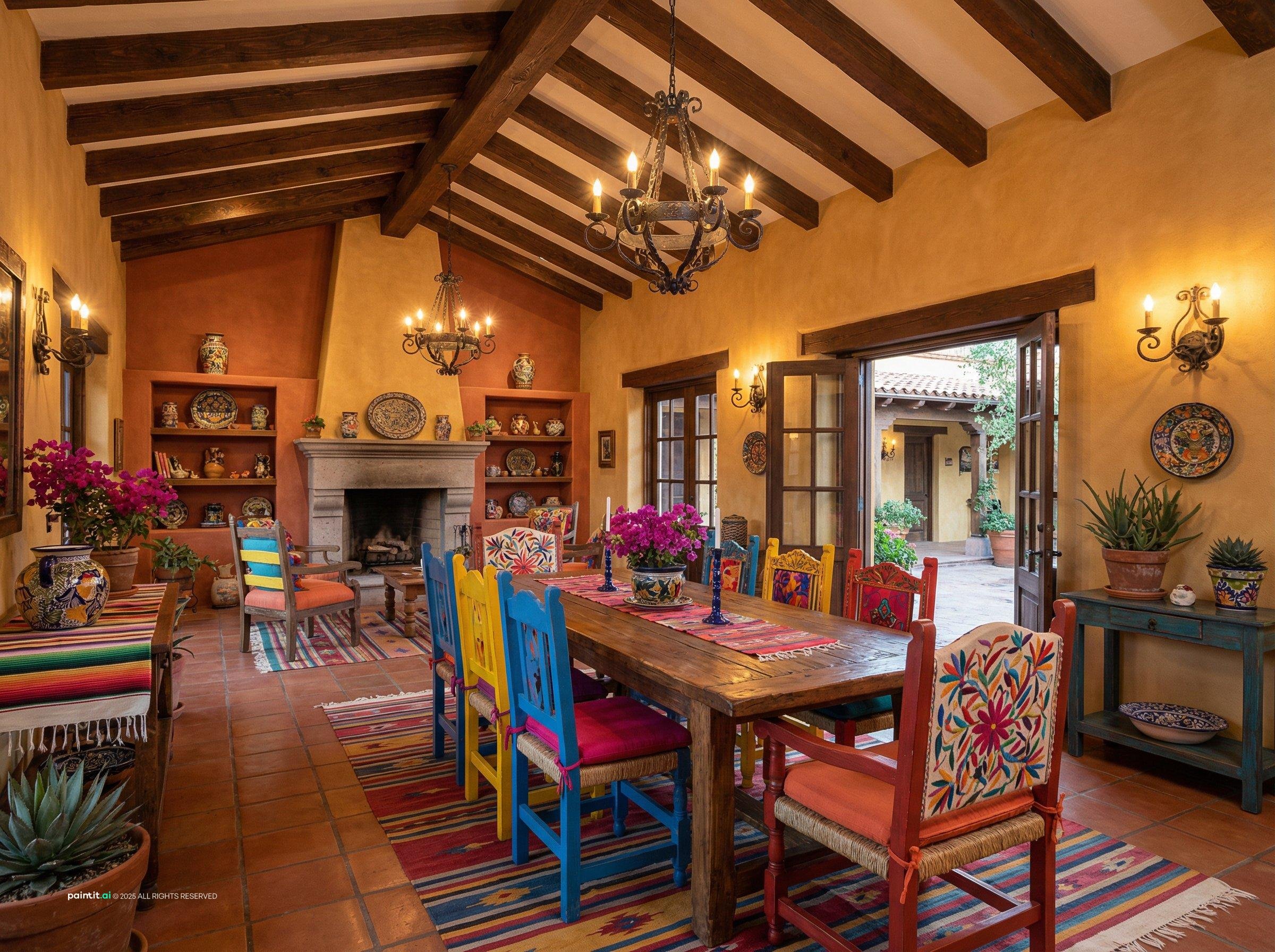
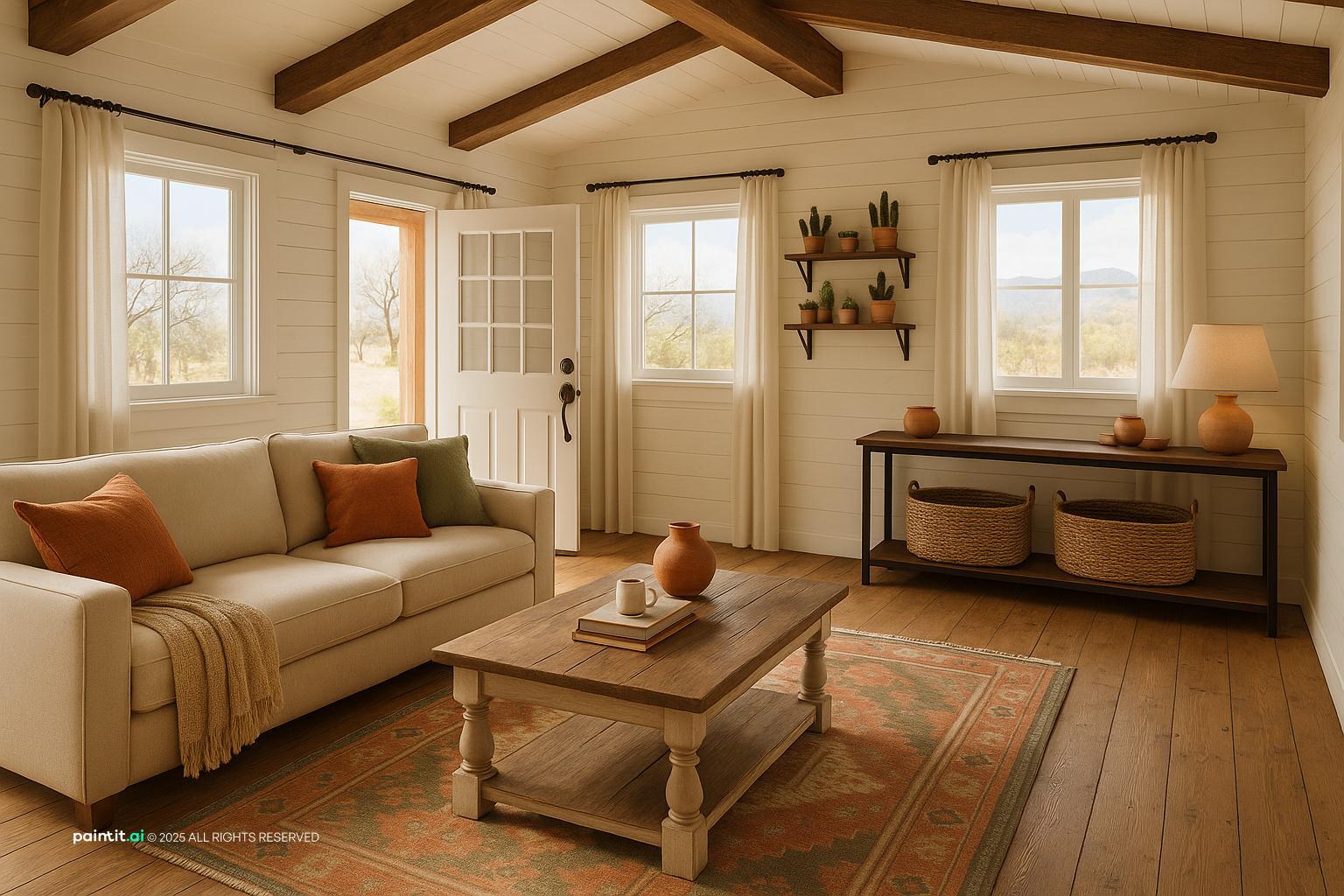
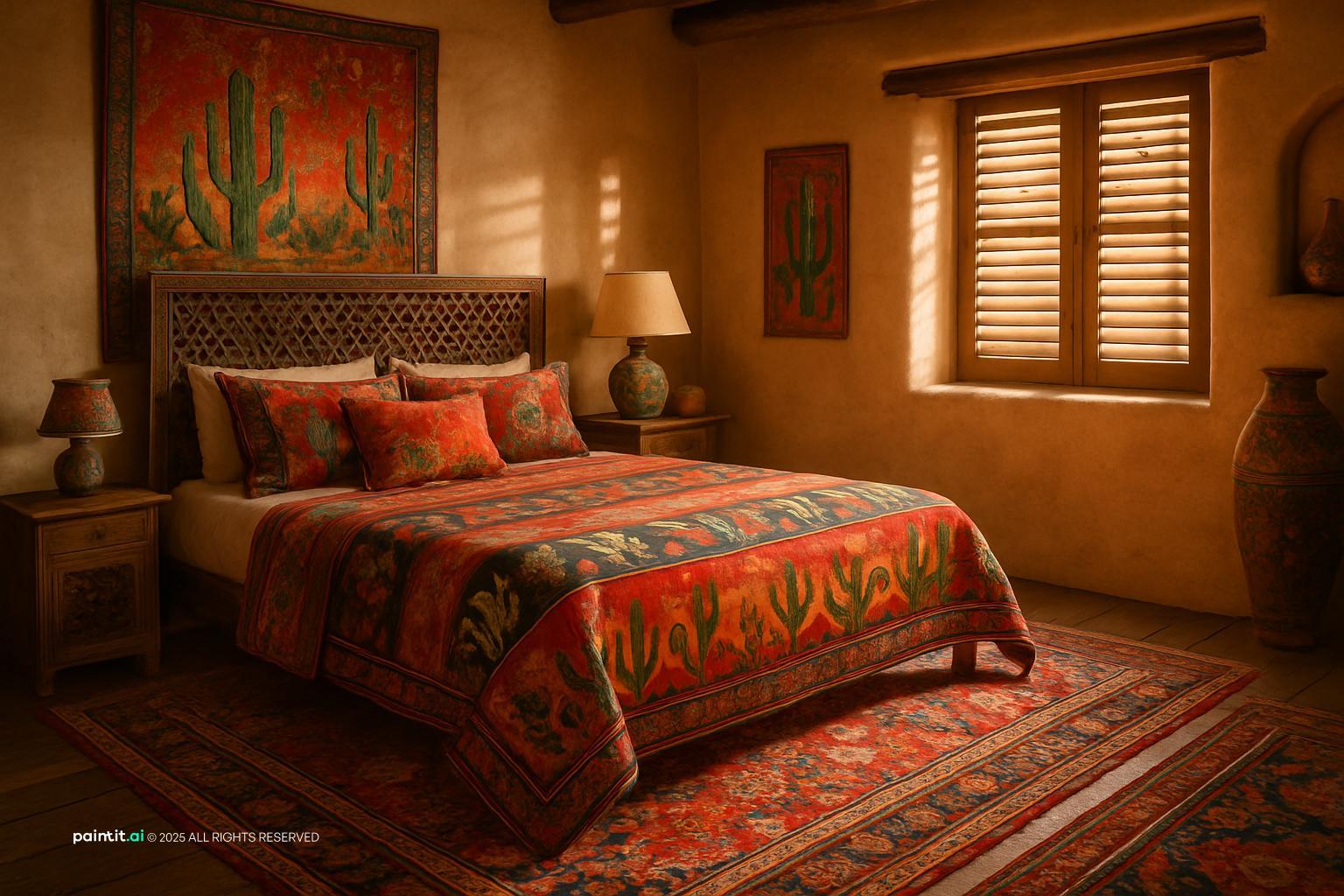
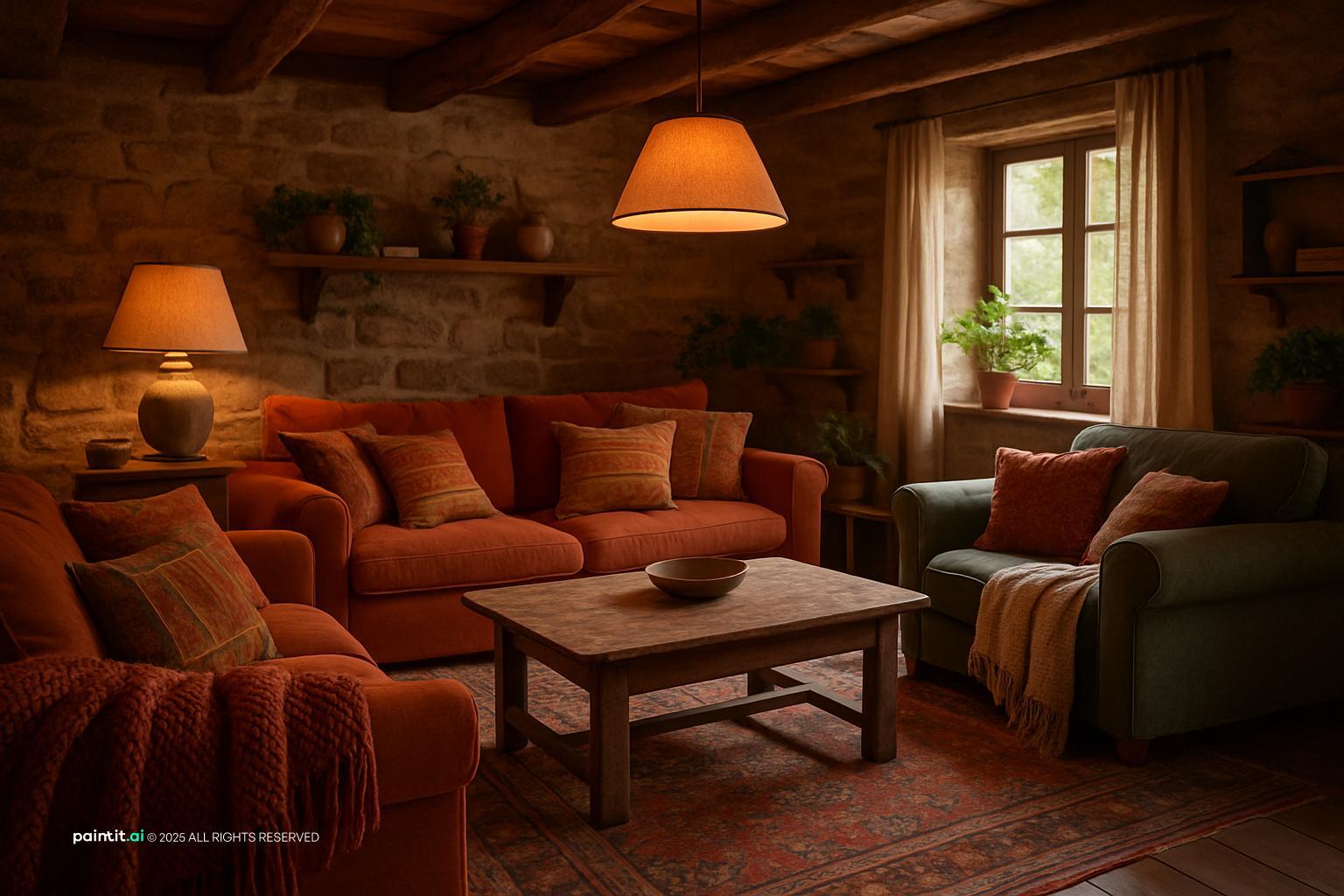
New Mexico style interior image references
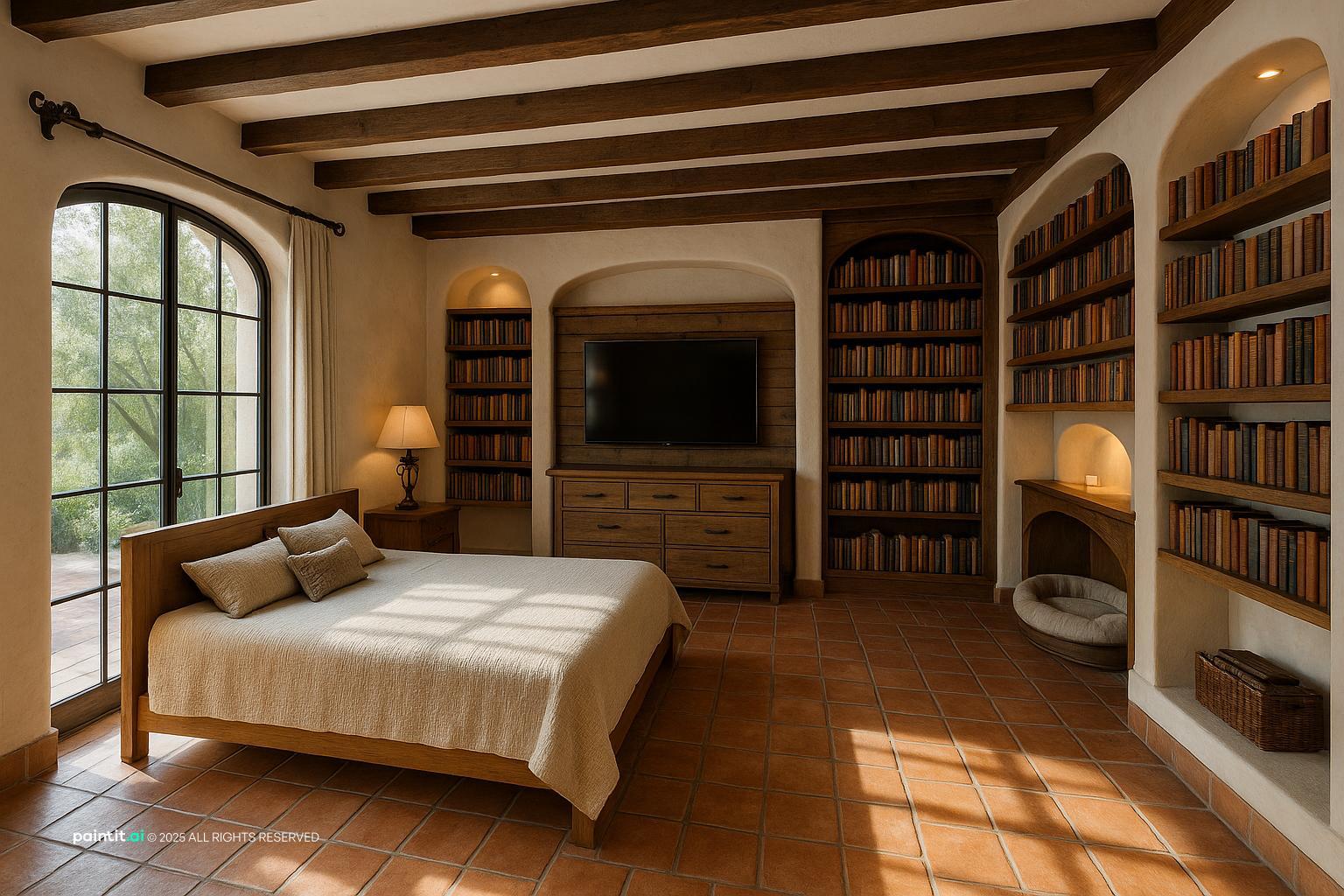
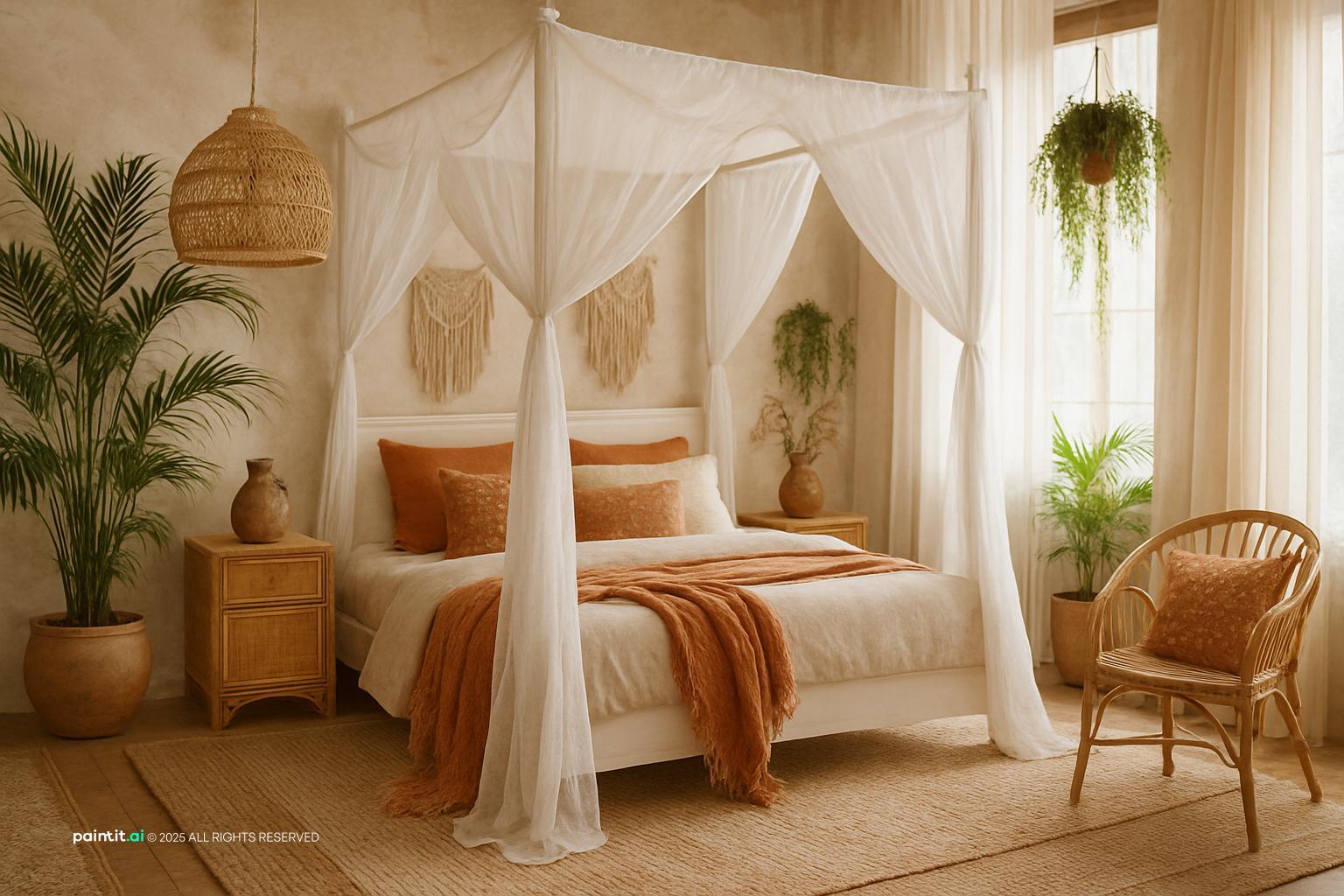
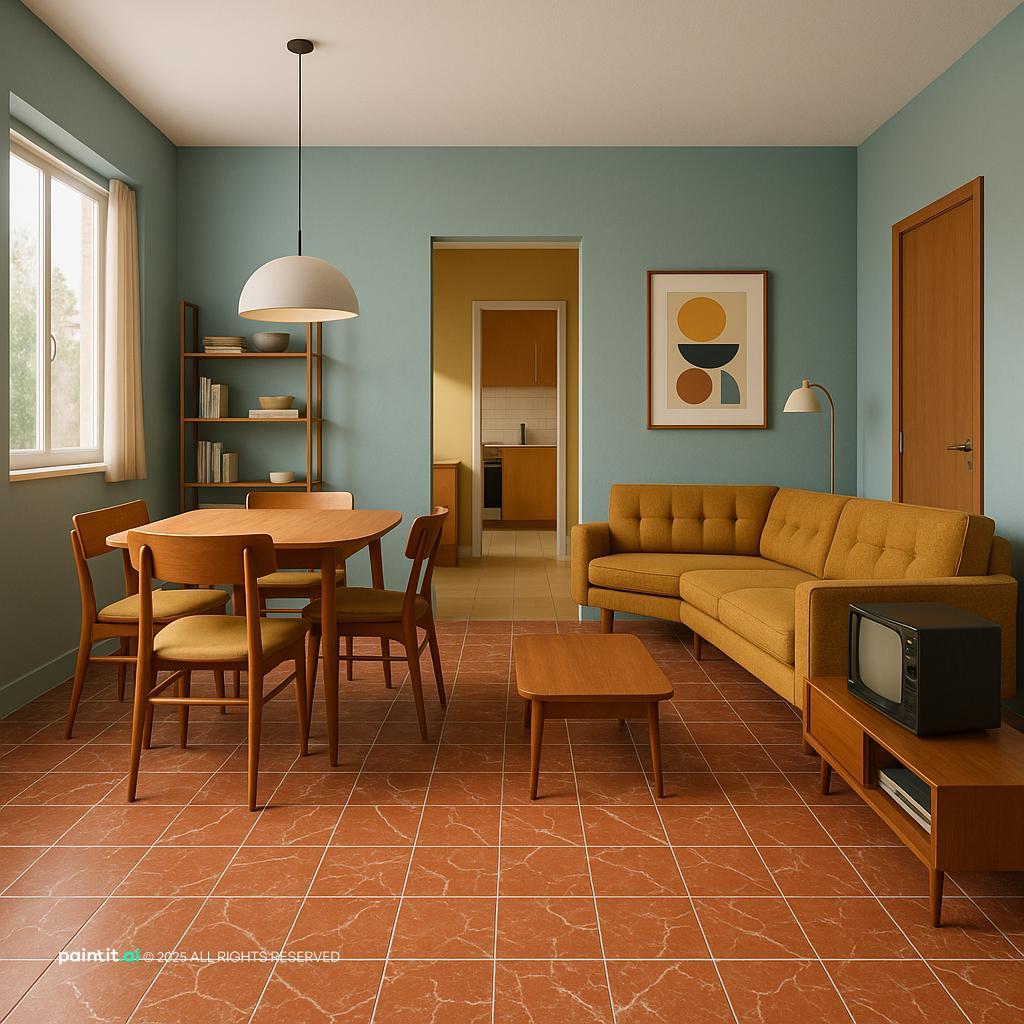
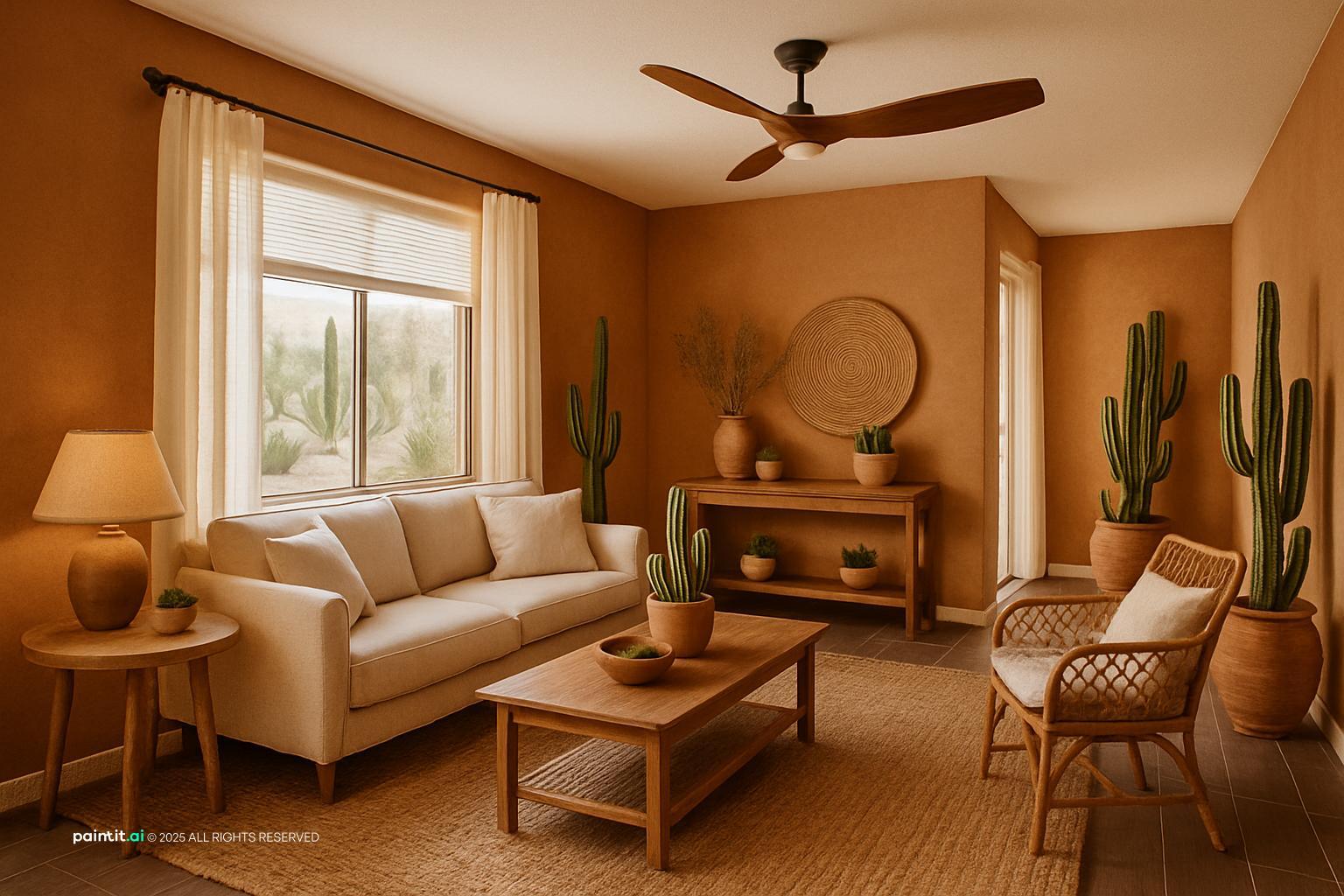
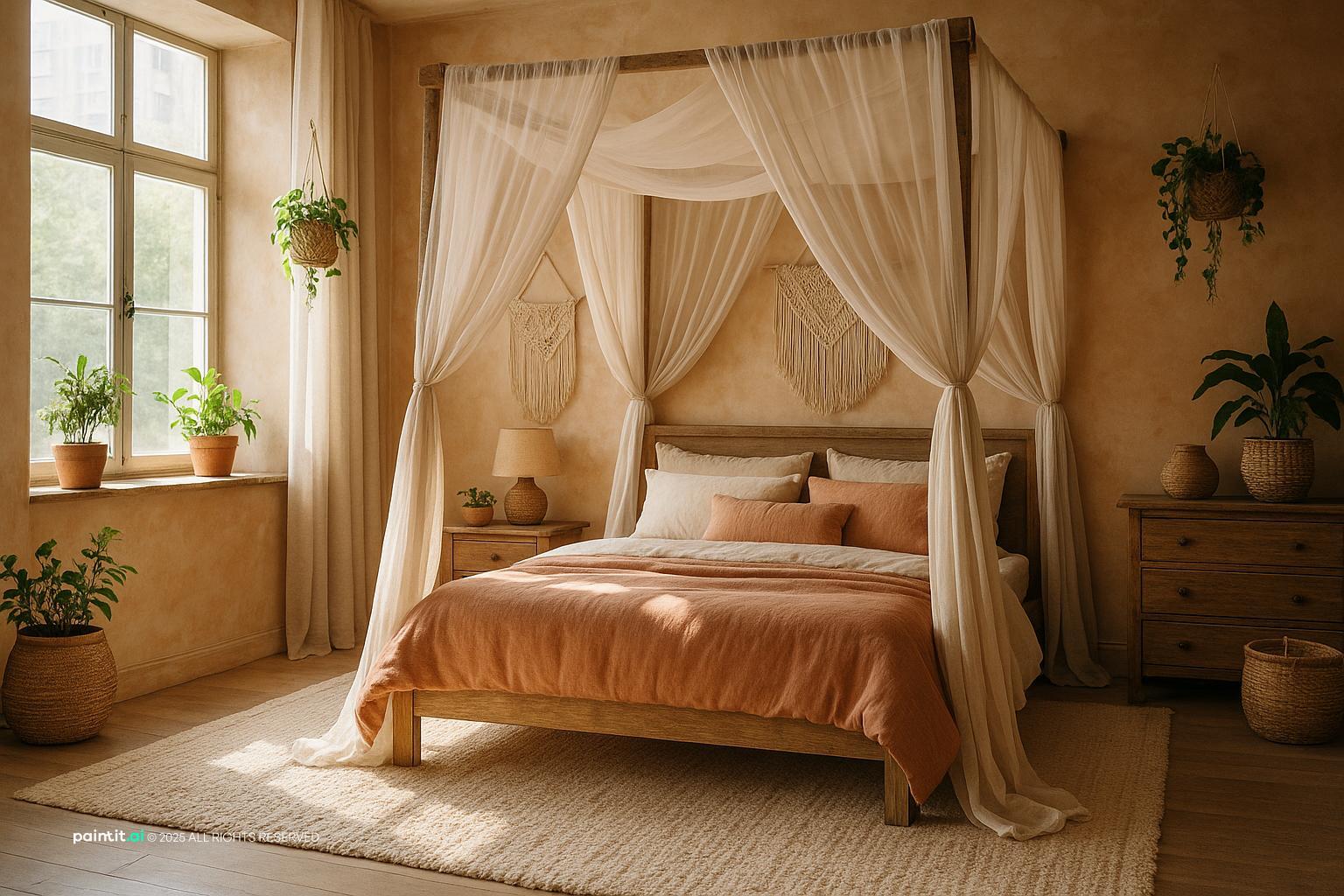
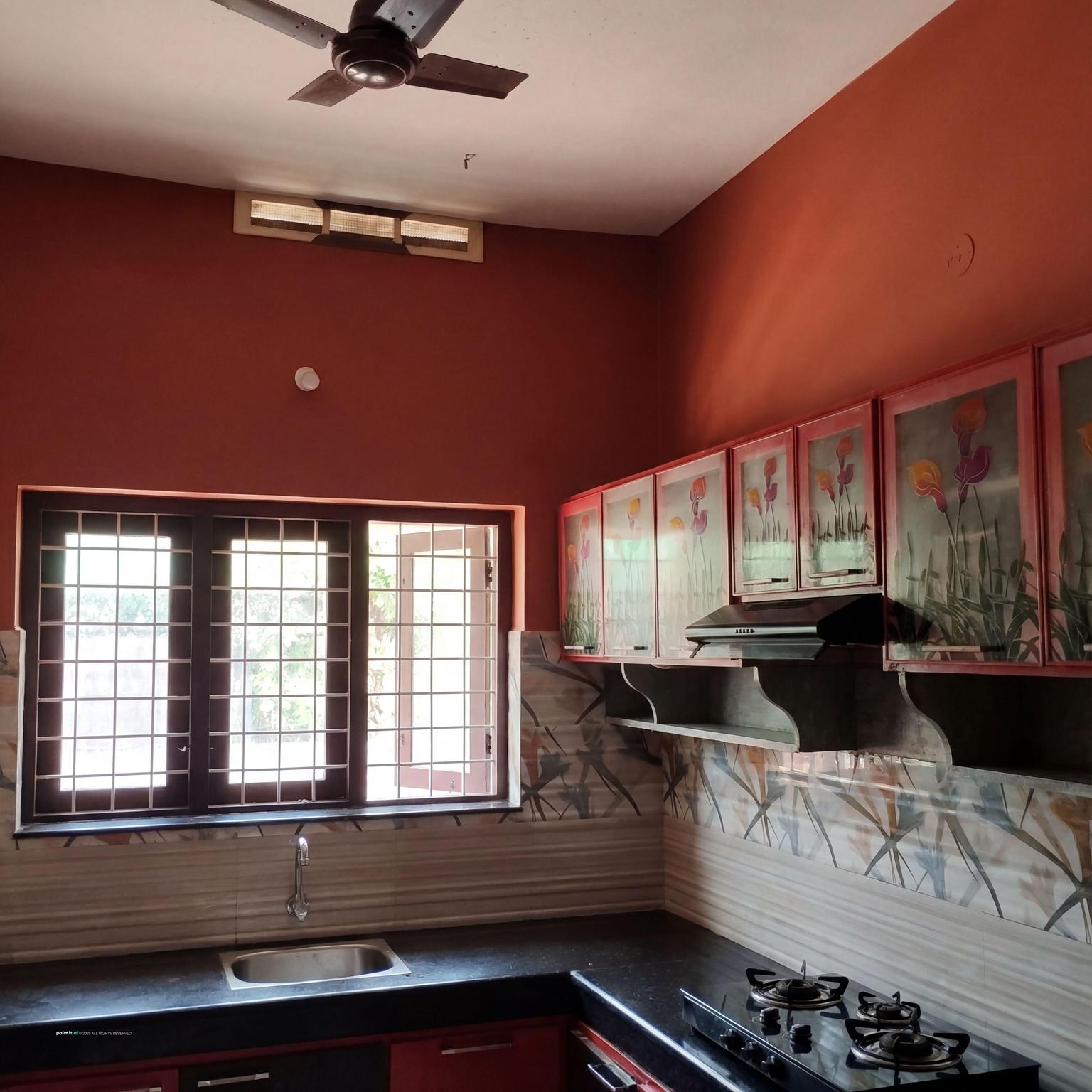
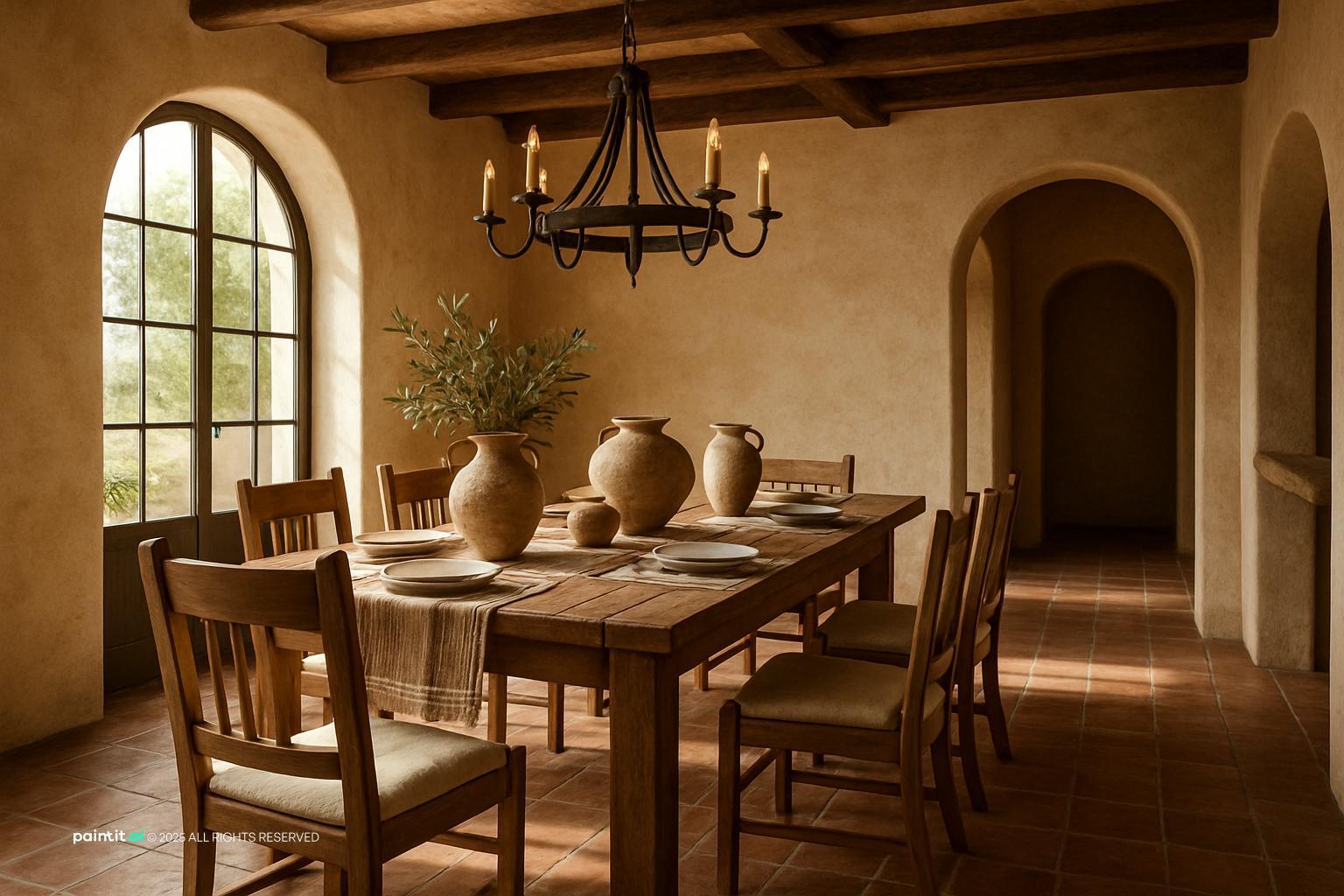
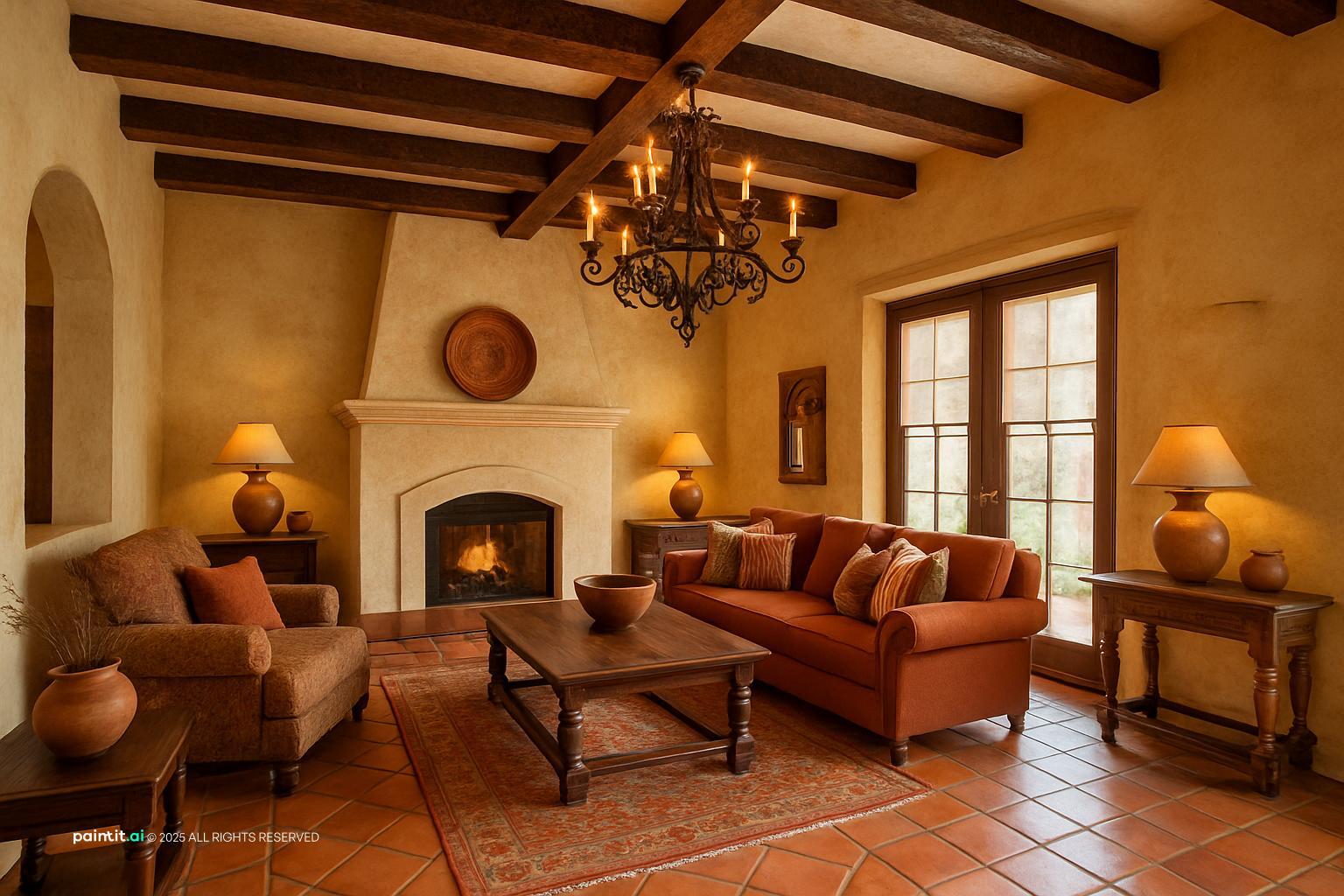
FAQ
New Mexico style draws from three cultural traditions that have coexisted and influenced each other in the region for centuries: Spanish Colonial (thick walls, enclosed courtyards, carved wooden furniture, religious folk art), Native American Pueblo (adobe construction, kiva fireplaces, vigas, Saltillo tile, geometric textiles), and Anglo-American Territorial (Greek Revival and Italianate details applied to adobe structures). The defining characteristics across all three: adobe or stucco walls, earthen palette (terracotta, ochre, adobe, clay), natural materials (pine, juniper, adobe, tile), and the kiva fireplace as the central room element.
A kiva fireplace is a rounded or beehive-shaped corner fireplace — one of the most recognizable elements of New Mexico interior design and unique to Pueblo and Southwestern architecture. It occupies a corner of the room and rises from floor to ceiling, typically built from adobe plaster. A banco (built-in bench) often curves from its base. The kiva references the ceremonial chamber of Ancestral Puebloan architecture and remains central to New Mexico residential design in both traditional and contemporary contexts.
The palette comes from the landscape and materials: terracotta, adobe clay, ochre, sand beige, and the warm reds and pinks of New Mexico's sandstone and volcanic geology. Turquoise is the signature accent — the blue-green of locally mined stone used in Pueblo and Navajo jewelry traditions for centuries. Deep sage green, dried chili red, and cobalt blue appear as secondary accents. Cool tones are absent; everything references the warm, arid Southwest environment.
Yes. Upload a photo of your room to app.paintit.ai and test Southwestern and New Mexico palette directions in 1–2 minutes. Free to start.