
Modern Italian interior design: Milanese style, materials and brands
Modern Italian interior design is the Milanese branch of Italian style. It uses clean architectural lines, a calm palette of stone, plaster and walnut, and furniture from the companies that defined Italy's post-war design boom, such as Cassina, B&B Italia and Flos. It is quieter than the Tuscan and Venetian rooms in our Italian interior design guide: the effect comes from material quality and proportion rather than ornament. Italians call the underlying idea bella figura, making a good impression, and here it applies to ordinary rooms rather than special occasions.
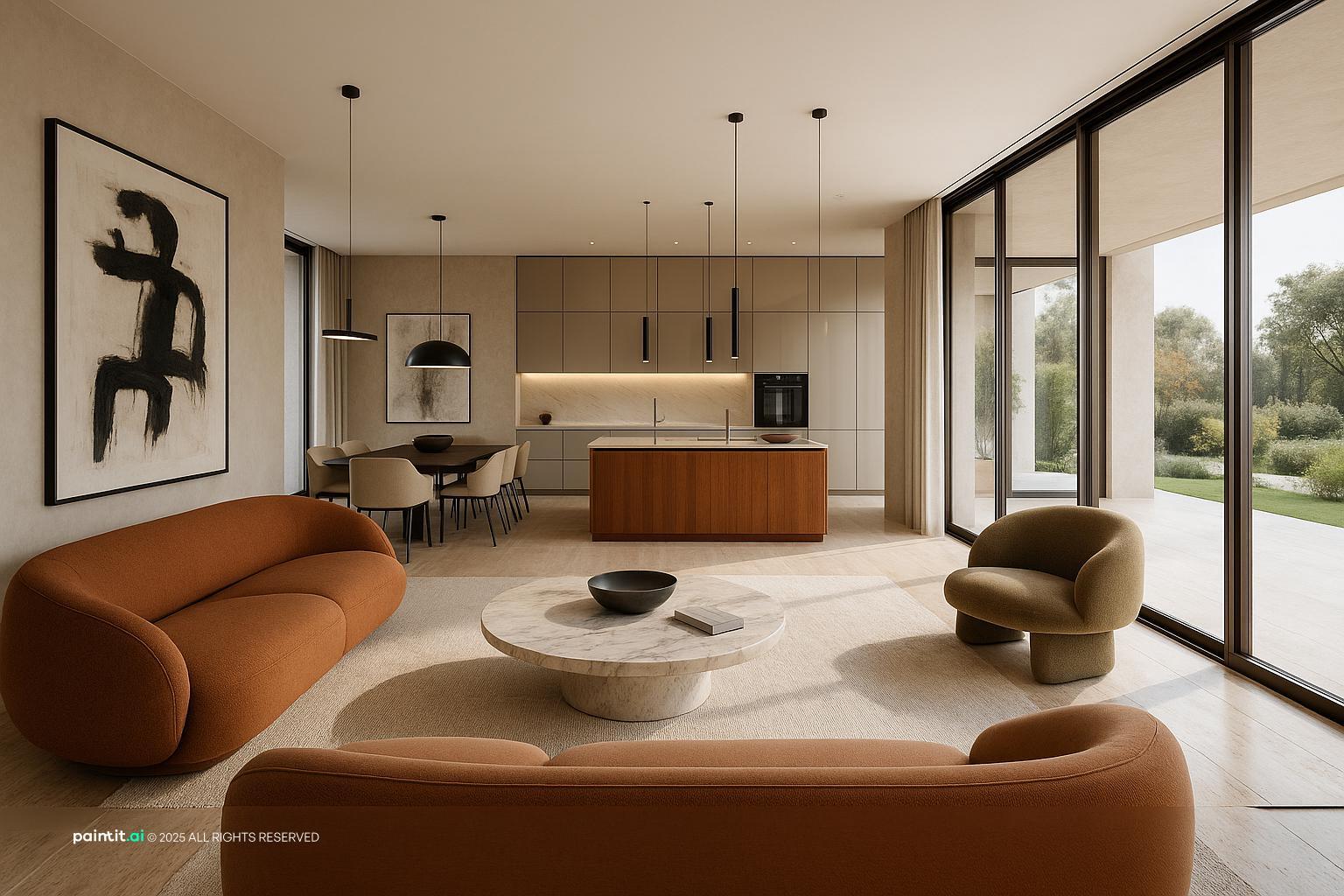
What defines modern Italian interior design
-
Materials and textures
Two materials define the modern Italian aesthetic: marble and walnut. Marble — particularly Carrara (white with grey veining) and Calacatta (white with dramatic gold-grey veining) — for floors, countertops, bathroom surfaces, and occasional furniture. Walnut for cabinetry, furniture, and architectural details: its dark, richly grained character provides warmth alongside marble's cool formality.
Travertine, the warm limestone used extensively in Roman architecture, appears in contemporary Italian interiors for floors and wall cladding — warmer and more textured than marble, with the natural voids in the stone now typically left unfilled for a more artisanal quality.
Steel and glass introduce the modern element: structural glass partitions, steel-framed windows, glass stairs. These are used as technical solutions that remain visually minimal rather than as industrial-style features.
-
Furniture and silhouettes
Italian furniture design is one of the most significant design industries in the world. The brands that define modern Italian interiors internationally: Poliform (kitchens, wardrobes, sofas — the most widely recognized Italian furniture brand globally), B&B Italia (upholstered pieces, particularly the Tufty-Time and Charles sofas), Cassina (the Maralunga sofa, the LC series), Minotti (refined upholstery), Flexform (sofas with particular attention to proportion).
These brands share a commitment to: quality of upholstery fabric and leather over long wear; structural precision in form; proportions that look as good standing as they do occupied; and the avoidance of trend — pieces designed to remain valid for decades.
-
Decor and accessories
Modern Italian decor is curated rather than accumulated. Murano glass — in contemporary rather than traditional ornate forms — as a vessel, vase, or lighting element. Artisan ceramics in neutral or single-accent tones. Large-format photography or abstract art with a connection to Italian artistic tradition. A single sculptural piece per room.
The kitchen as statement: Italian design culture raises the kitchen to the status of a design centerpiece rather than a utility room. Bulthaup, Poliform, Boffi, and Valcucine are the Italian kitchen brands where the design intention is architectural — handle-less cabinet doors flush with walls, integrated appliances, continuous worktop surfaces.
-
Architectural features
Open floor plans with clear sight lines between spaces. Floor-to-ceiling windows or large-format glass doors that connect to terraces or gardens. Ceiling height preserved and emphasized — Italian modernist tradition values spatial volume. Built-in furniture integrated into the architecture: wardrobes, bookcases, and kitchen systems that read as part of the wall rather than objects in a room.
Lighting as architecture: recessed LED perimeter lighting that highlights ceiling planes, concealed strip lighting that grazes textured wall surfaces, and one or two considered statement fixtures (a Murano glass pendant, a sculptural floor lamp by Flos or Artemide) as punctuation.
How to get the modern Italian look at home
-
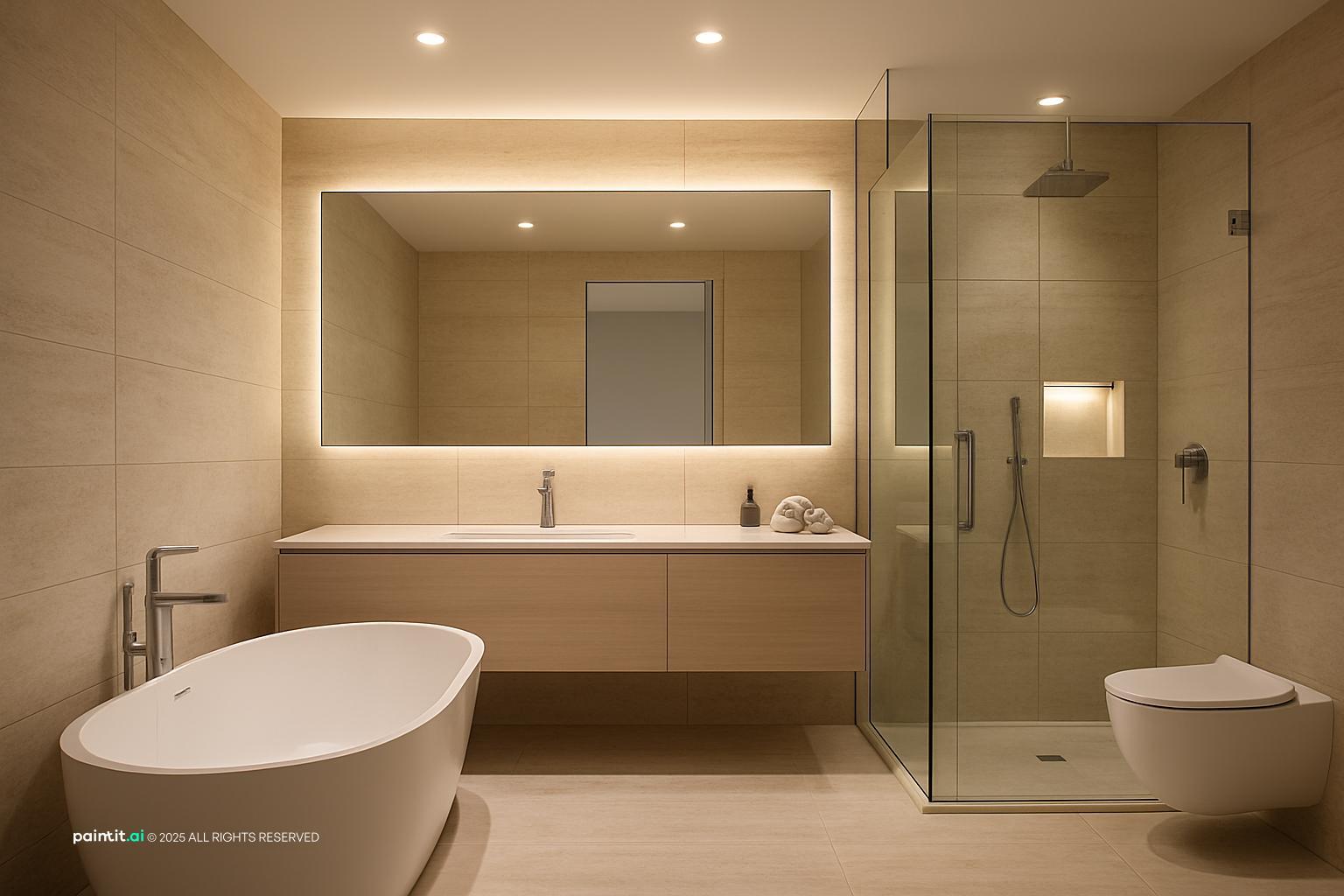
Pick one stone and repeat it. Use the same marble or travertine on the kitchen island, the bathroom vanity and a coffee table top. Two or three repeats of one stone look intentional; four different stones look like a showroom.
-
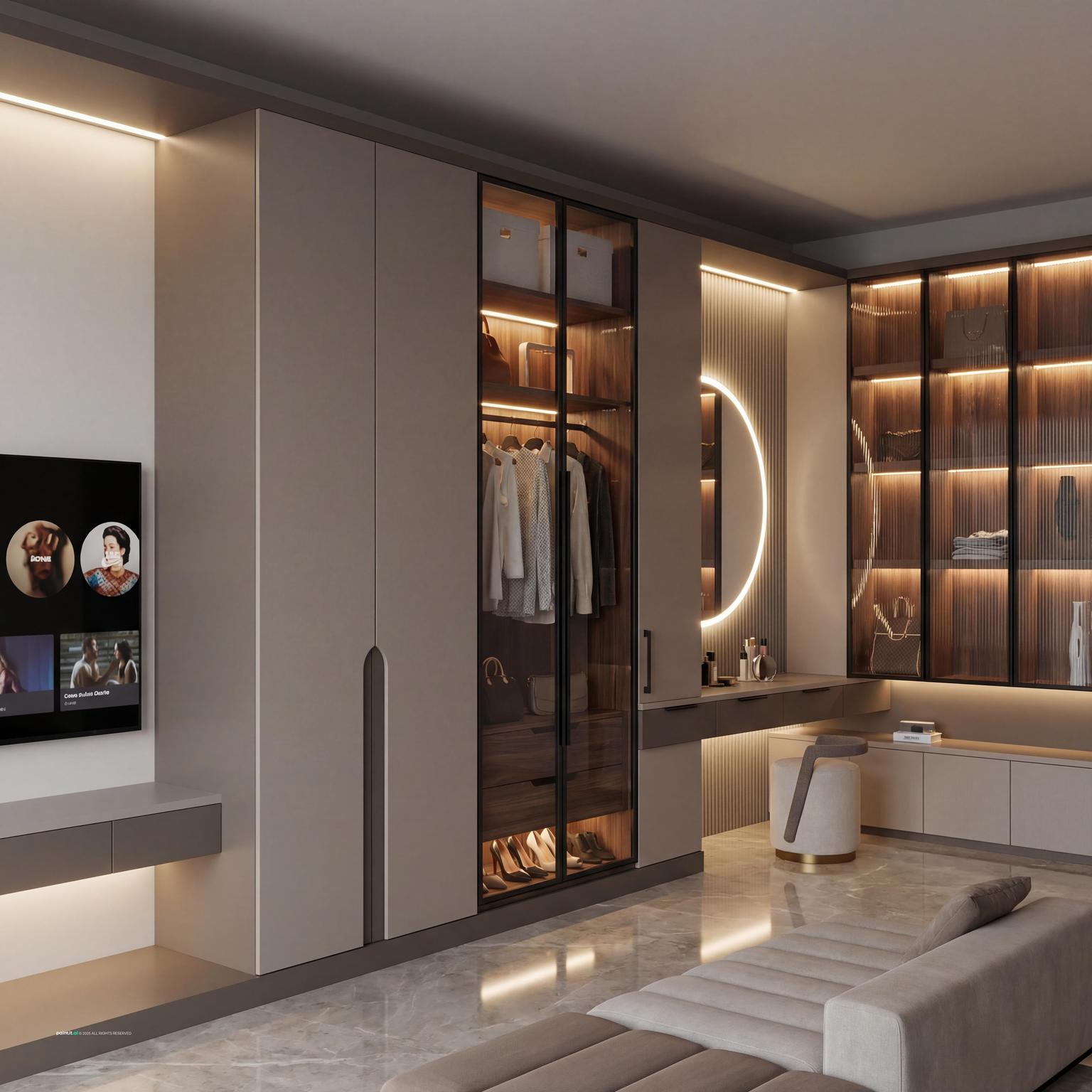
Pair cold surfaces with warm wood. Marble, glass and steel need walnut or smoked oak next to them, usually as cabinetry, wall panelling or a dining table, or the room turns clinical.
-
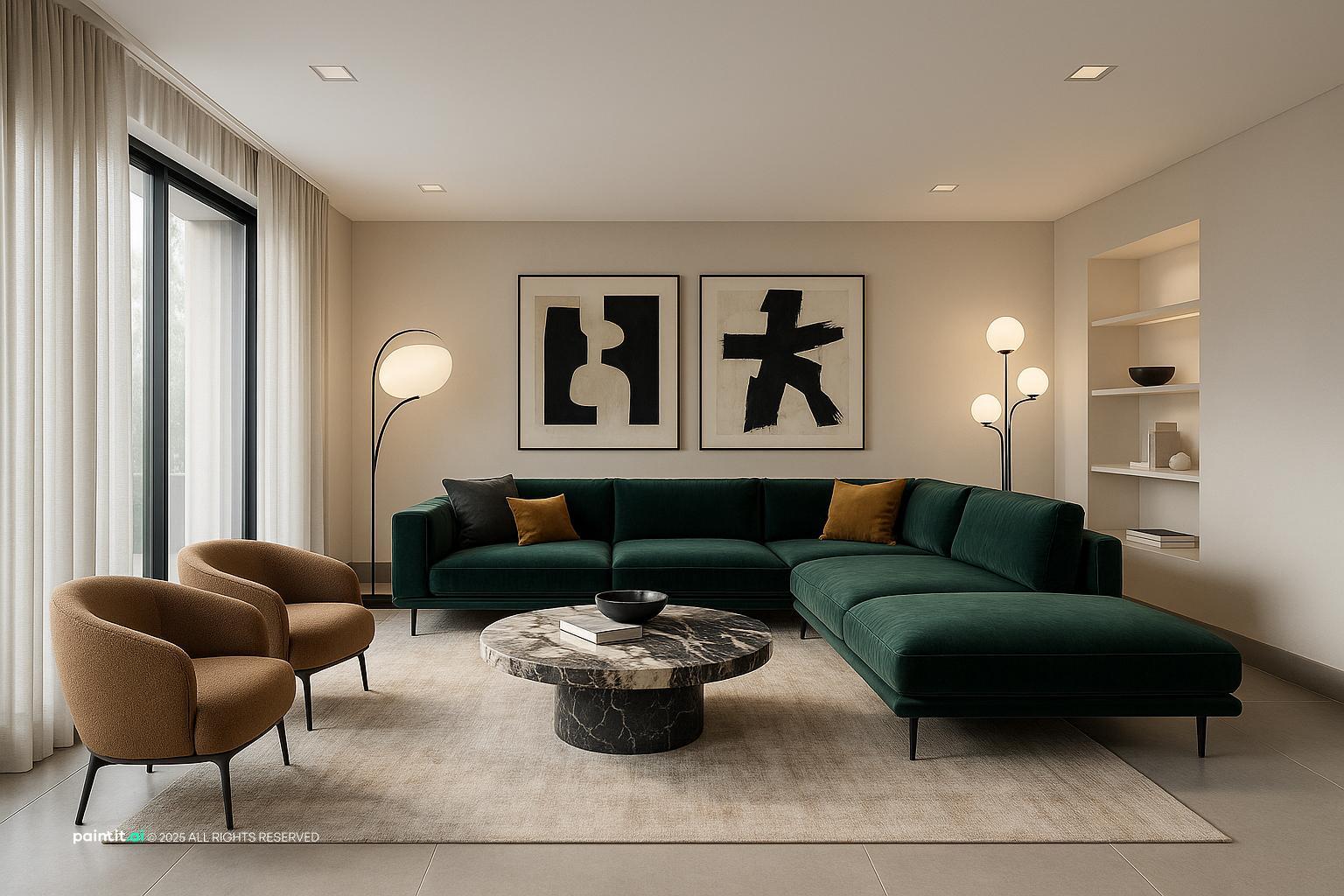
Keep the palette to warm neutrals and allow one accent. Warm white, greige, sand and stone make up most of the room; a single deeper tone such as bottle green, rust or cognac leather gives it a point of focus.
-
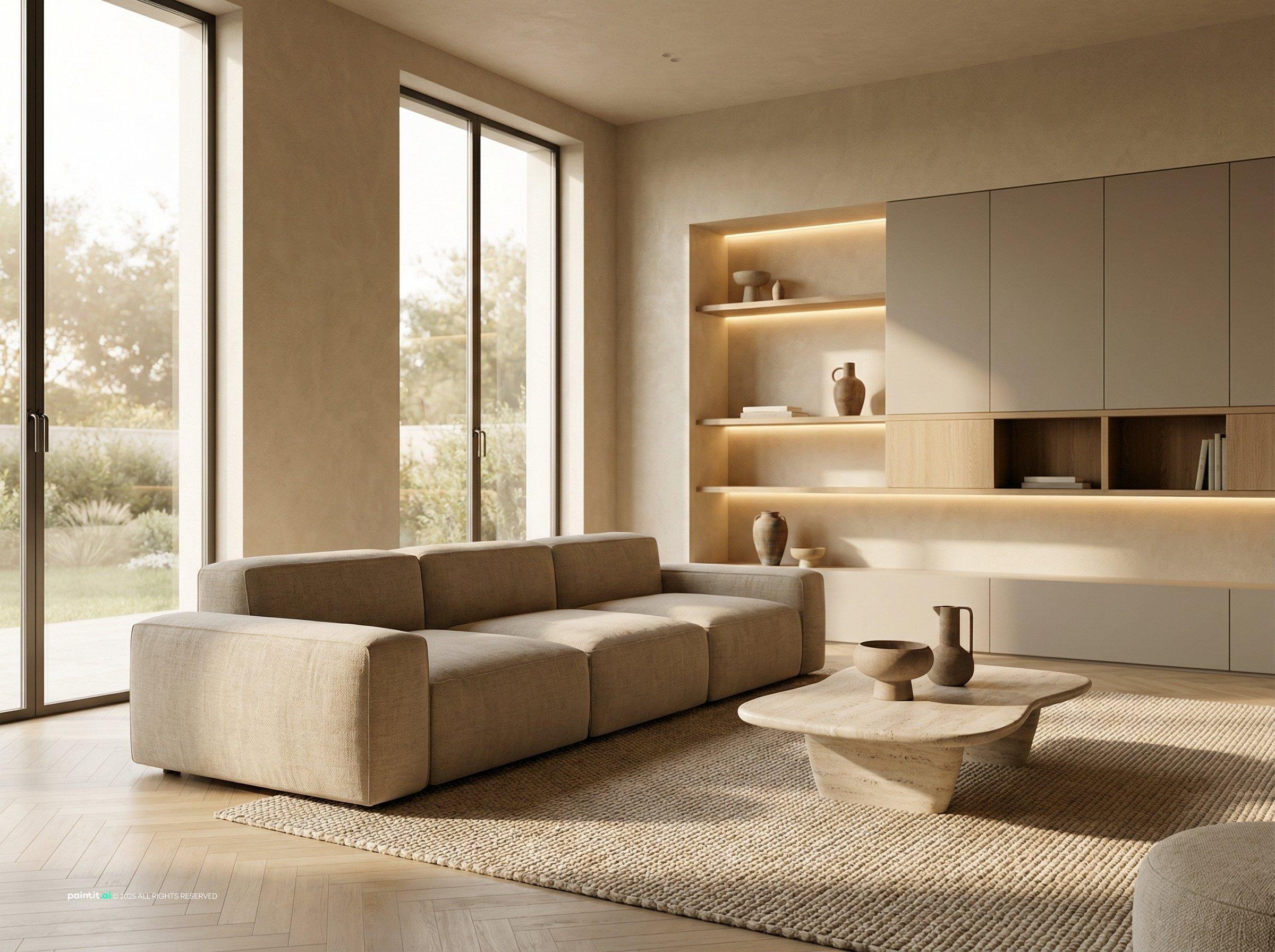
Choose low, deep seating. Modern Italian sofas sit low with generous depth, and they are often placed away from the wall so the room works from both sides. Leather, boucle and heavy linen suit the look.
-
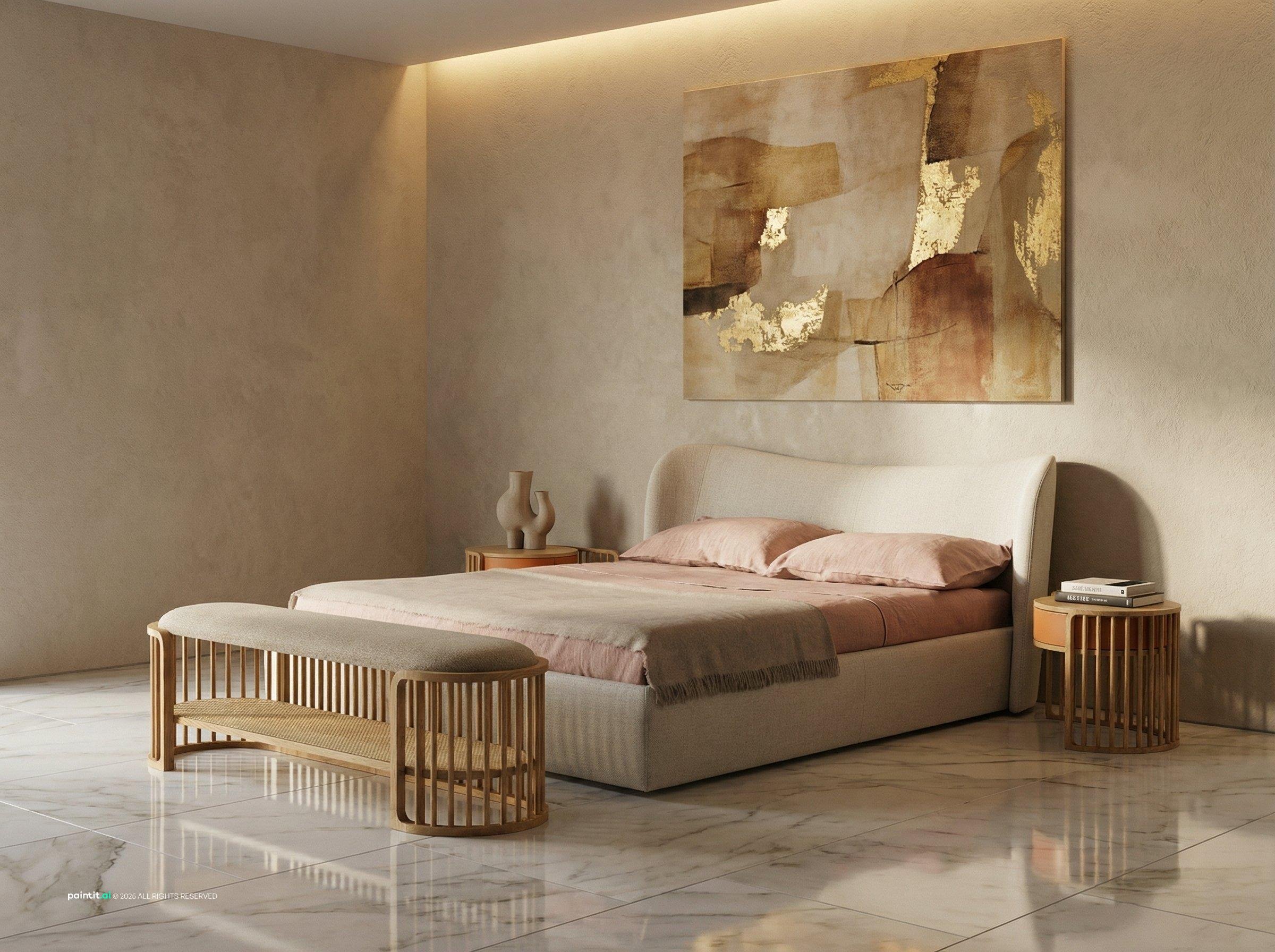
Light in two layers. Concealed LED strips wash the ceiling and walls, then one sculptural fixture, a floor lamp or a glass pendant, becomes the object people notice. Skip rows of identical downlights.
-
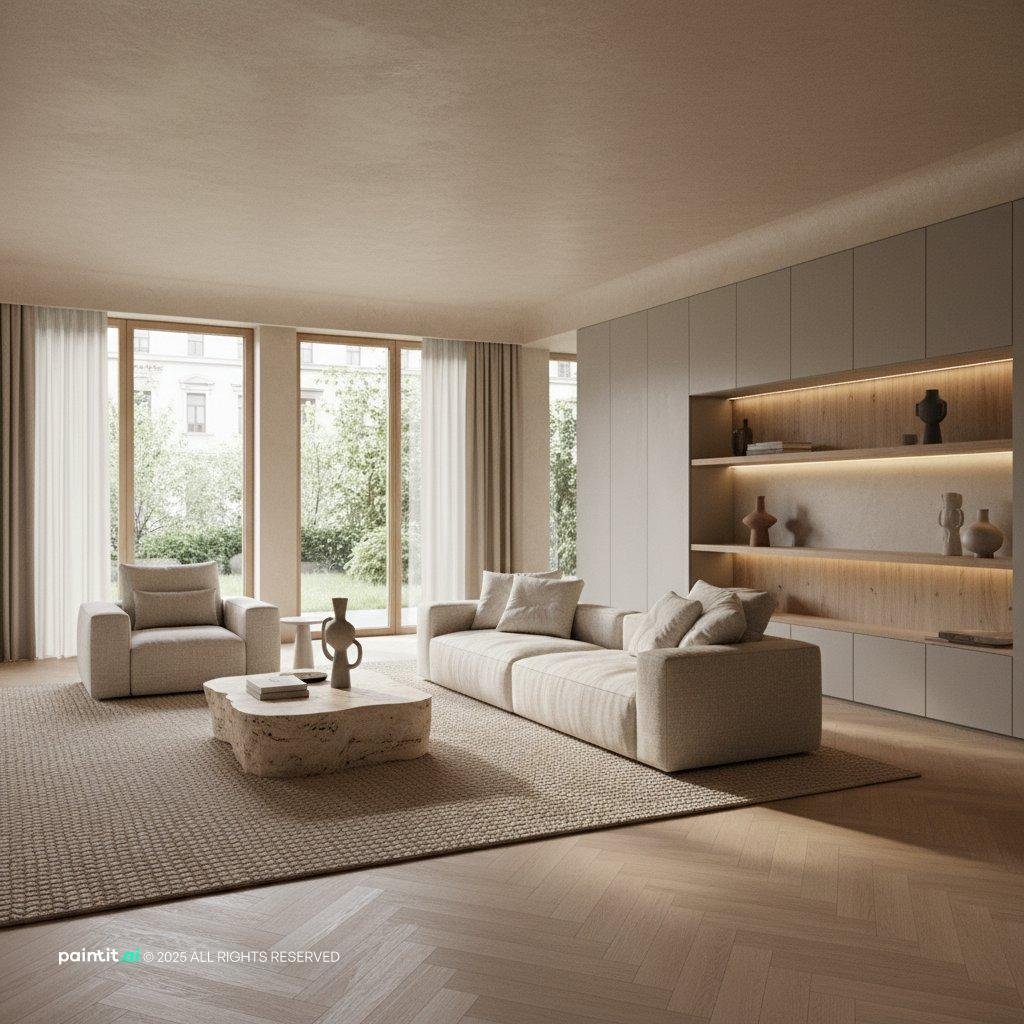
Edit hard. Built-in storage keeps surfaces clear, and each wall gets one piece of art or one sculptural object at most. If a shelf needs styling to look finished, it probably has too much on it.
Modern Italian visual references
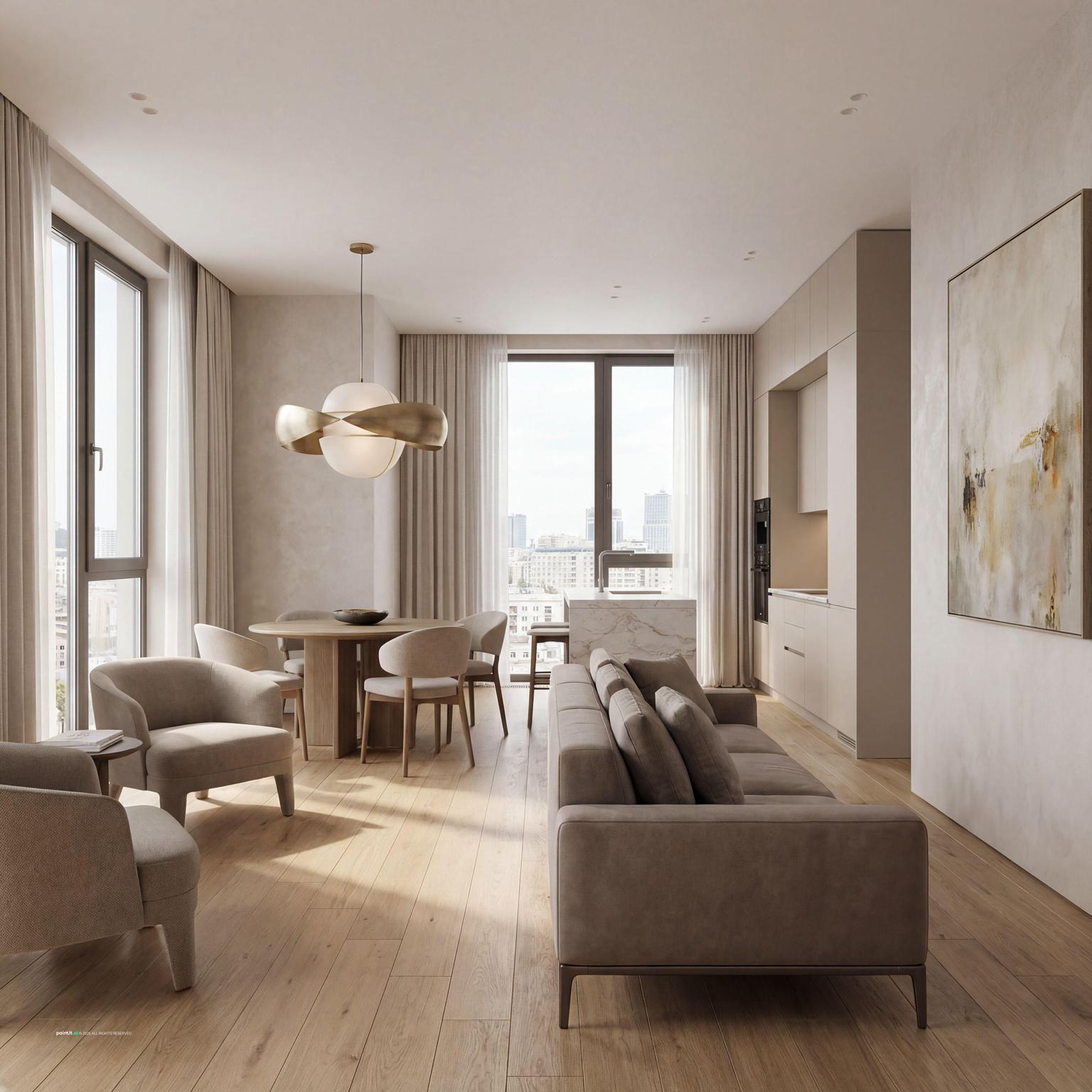
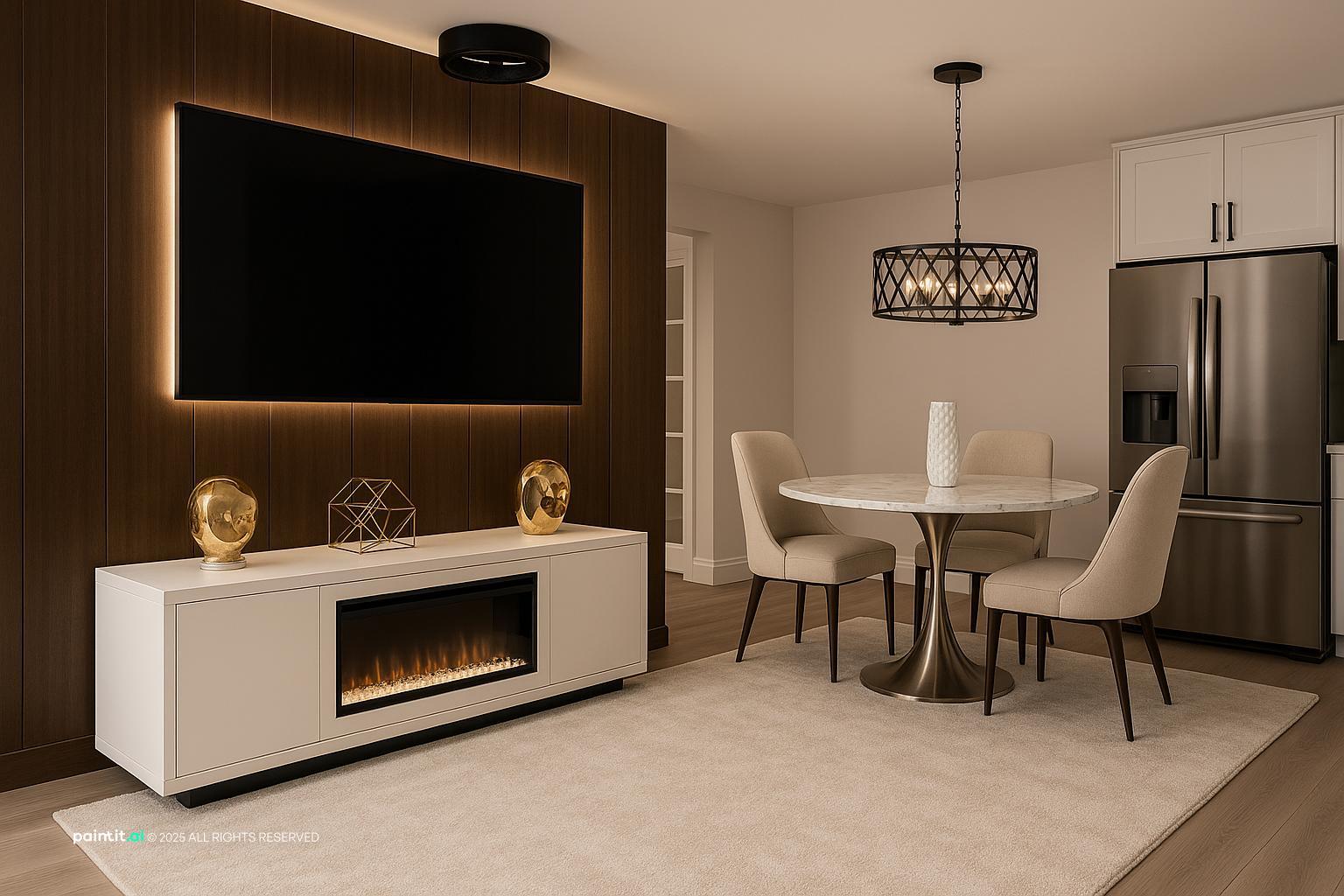
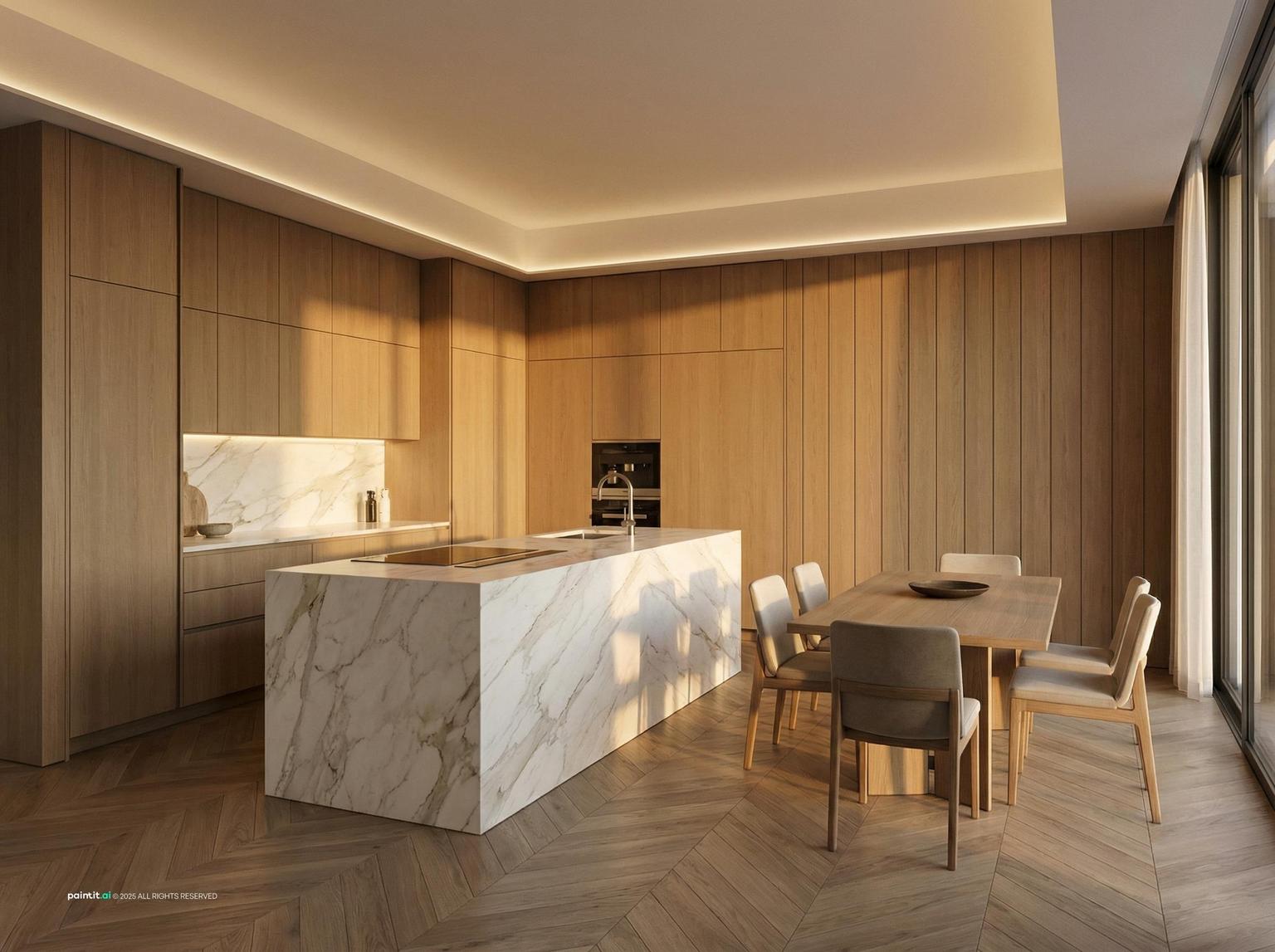
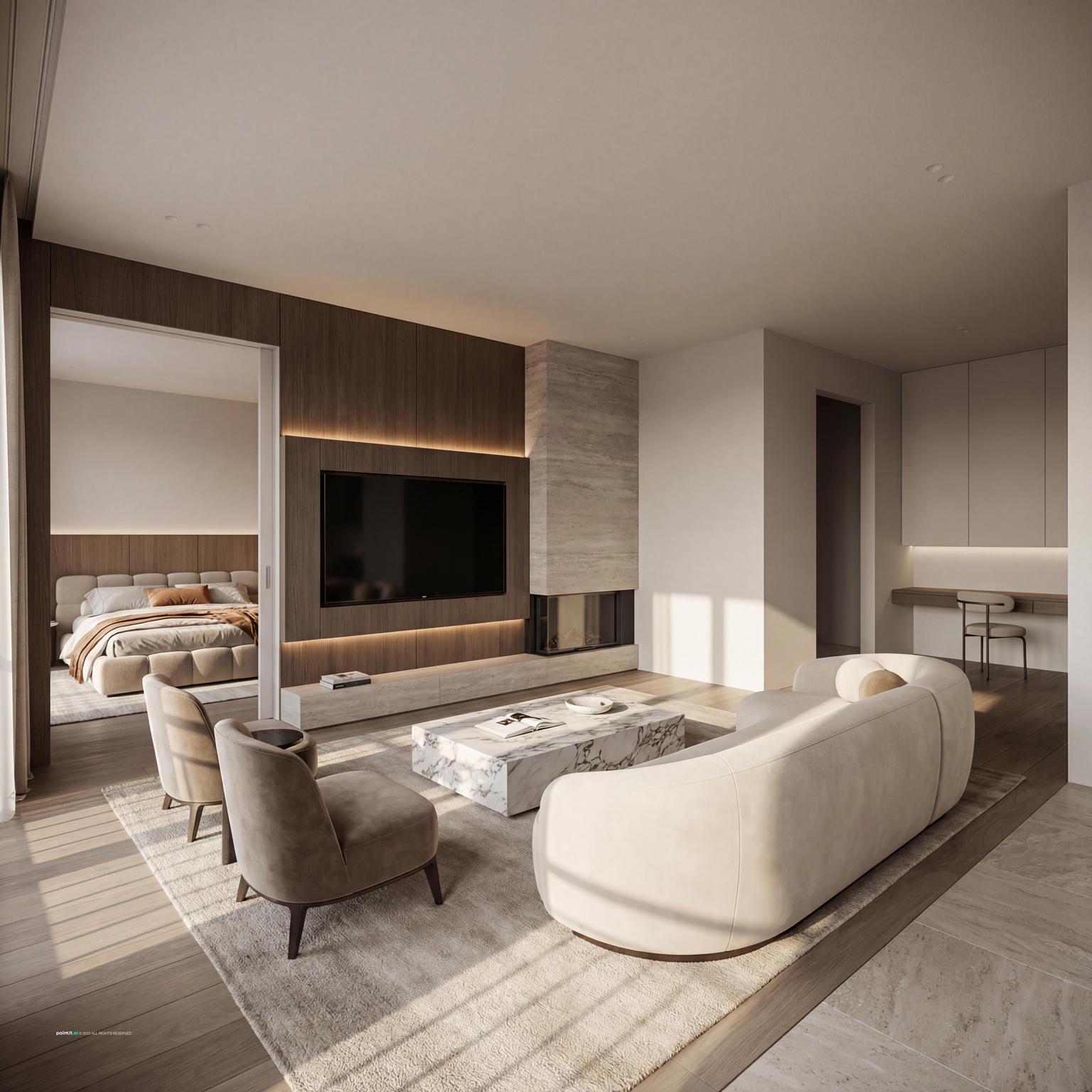
Modern Italian vs classic Italian: the distinction
Classic Italian means the regional traditions: Tuscan farmhouse, Venetian palazzo and the Southern Mediterranean, with terracotta, frescoes, ornate chandeliers and antique furniture. Our Italian interior design guide covers each of them.
Modern Italian is the Milanese direction that took shape between the 1950s and 1970s and continues through Italy's furniture brands today. It swaps ornament for clean architectural forms, regional heritage colours for warm neutrals, and craft pieces for designer furniture. Marble and travertine move from historic floors to kitchen islands and bathroom walls.
What connects them is bella figura: the idea that everyday objects and rooms should be beautiful, and that material and craft quality matter more than decoration.
Italian design brands behind the modern look
Understanding the furniture and object brands gives the modern Italian style its cultural specificity:
Furniture: Poliform (kitchens, wardrobes, upholstery), B&B Italia (the Tufty-Time, Charles, and Mart sofas), Cassina (Le Corbusier series, Maralunga), Minotti (refined upholstered seating), Flexform (Groundpiece sofa)
Lighting: Flos (Arco floor lamp, 2097 chandelier, 265 wall lamp), Artemide (Tolomeo, Melampo), Fontana Arte (historical glass pieces)
Kitchen: Bulthaup, Poliform Varenna, Boffi, Valcucine
Accessories: Alessi (kitchen and table objects by Mendini, Graves, Starck), Venini (Murano glass), Guzzini (contemporary Italian plastics)
These brands don't need to appear throughout - even one piece from this tradition signals the design intention.
Visualize modern Italian design with Paintit.ai
Upload a photo of any room to app.paintit.ai and test how modern Italian palettes (warm neutrals, marble tones, walnut accents) read in your actual space in 1–2 minutes. Free to start.
Related styles and tools
More relevant Paintit.ai style and design tools.
FAQ
-
Modern Italian interior design is the contemporary Milanese take on Italian style: open plans, clean lines, a neutral palette of stone, plaster and walnut, and a few well-made pieces of Italian furniture or lighting. It leaves out the terracotta, frescoes and ornate chandeliers of classic Tuscan or Venetian rooms.
-
Tuscan rooms are rustic and warm: exposed stone, terracotta floors, ceiling beams and heavy walnut furniture. Modern Italian rooms keep the natural materials but use them as flat, precise surfaces, such as a Calacatta marble island or walnut wall panelling, with low upholstered seating and almost no ornament.
-
Marble (usually Carrara or Calacatta), travertine, walnut, smoked oak, plaster or limewash walls, leather, and steel or glass for partitions and stairs. The palette stays neutral, so the grain and veining of the materials do most of the decorating.
-
Spend on one surface and one object. Repeat a single stone, or a good porcelain stone-look slab, in two or three places, bring in walnut through one piece such as a sideboard, and choose one design-led lamp. Keep the rest plain: warm white walls, simple linen and very few accessories.
-
Yes. Upload a photo of your room to app.paintit.ai and try a modern Italian direction, with warm neutrals, marble tones and walnut accents, in 1-2 minutes. It is free to start.