
Living room
Begin with warm white or cream walls, then add reclaimed wood through a coffee table, mantel, shelves, or exposed beams. Keep sofas comfortable and simple, and use linen, cotton, or vintage-style rugs for texture.
Joanna Gaines's interior design approach, known through the HGTV series Fixer Upper and her Magnolia brand, helped define what became known as modern farmhouse style in the 2010s. That direction popularized shiplap walls, reclaimed wood beams, neutral palettes with warm textures, and the mix of vintage and contemporary pieces.
This guide covers the specific parts of her approach: materials, colour, furniture character, window treatments, and the compositional rules that create the warmth. It also answers the question that comes up most often about her process, which is what design software the work is actually done in.
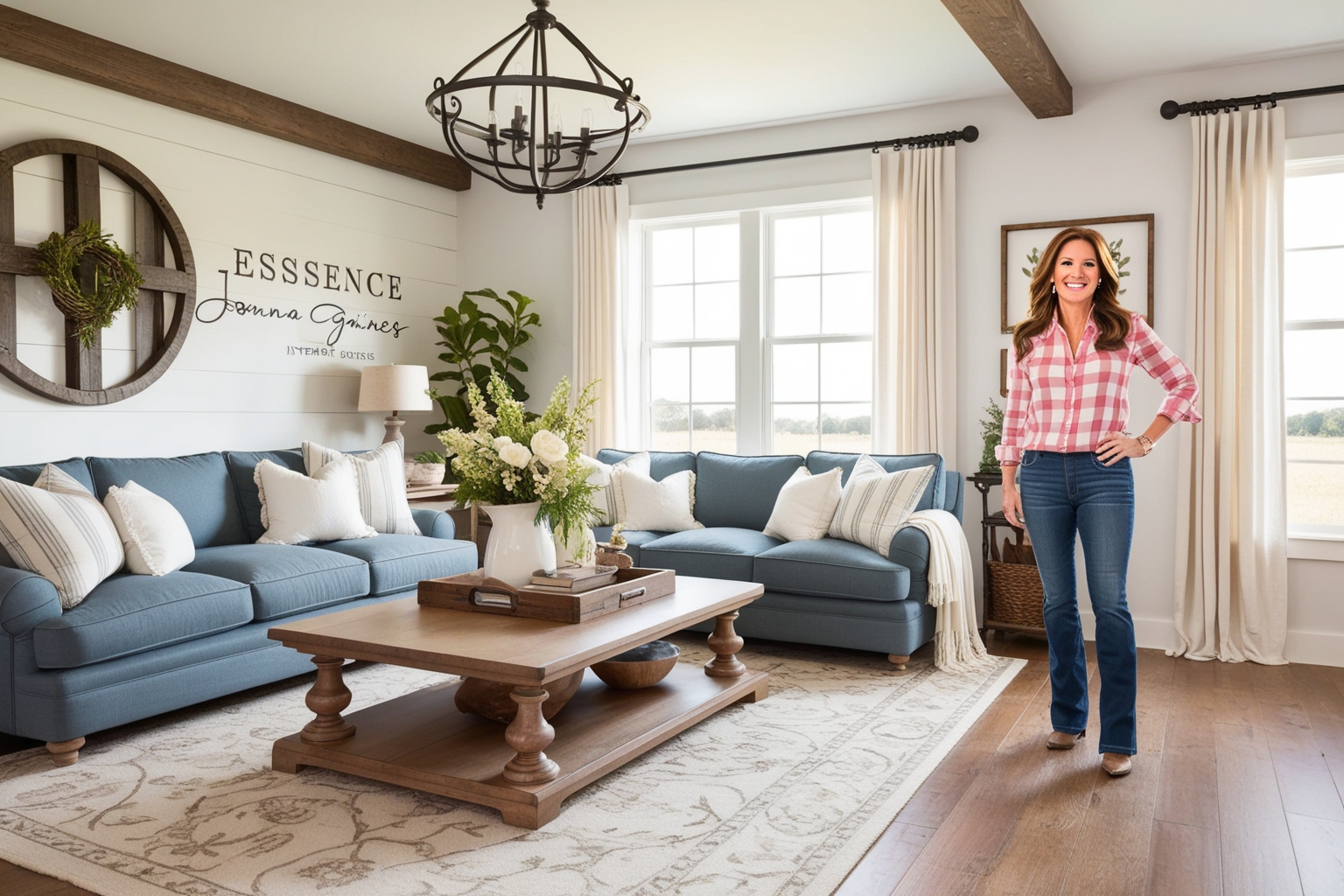
Shiplap walls, reclaimed wood beams, brick, stone, shaker cabinetry, open shelving, linen, cotton, and vintage metal create the recognizable modern farmhouse base. The materials feel familiar and useful rather than polished for display only.
Warm white tones, creamy shades, and gentle greys create the calm background from which all other elements read clearly. Muted greens, dusty blues, black metal, and natural wood add contrast without making the room feel crowded.
Furniture tends to be comfortable, sturdy, and simple: slipcovered sofas, rustic tables, vintage storage, open shelving, oversized clocks, ceramic vessels, woven baskets, and greenery. Vintage elements work best when paired with cleaner contemporary lines.
The rooms feel collected, warm, and practical. Visual weight usually comes from one or two major anchors (a fireplace, dining table, kitchen island, or reclaimed beam) while the surrounding details stay calm.
Too much shiplap, too many signs, or too many vintage accessories can turn the style into a theme. The strongest rooms keep the farmhouse references selective and let texture, proportion, and light do the quiet work.
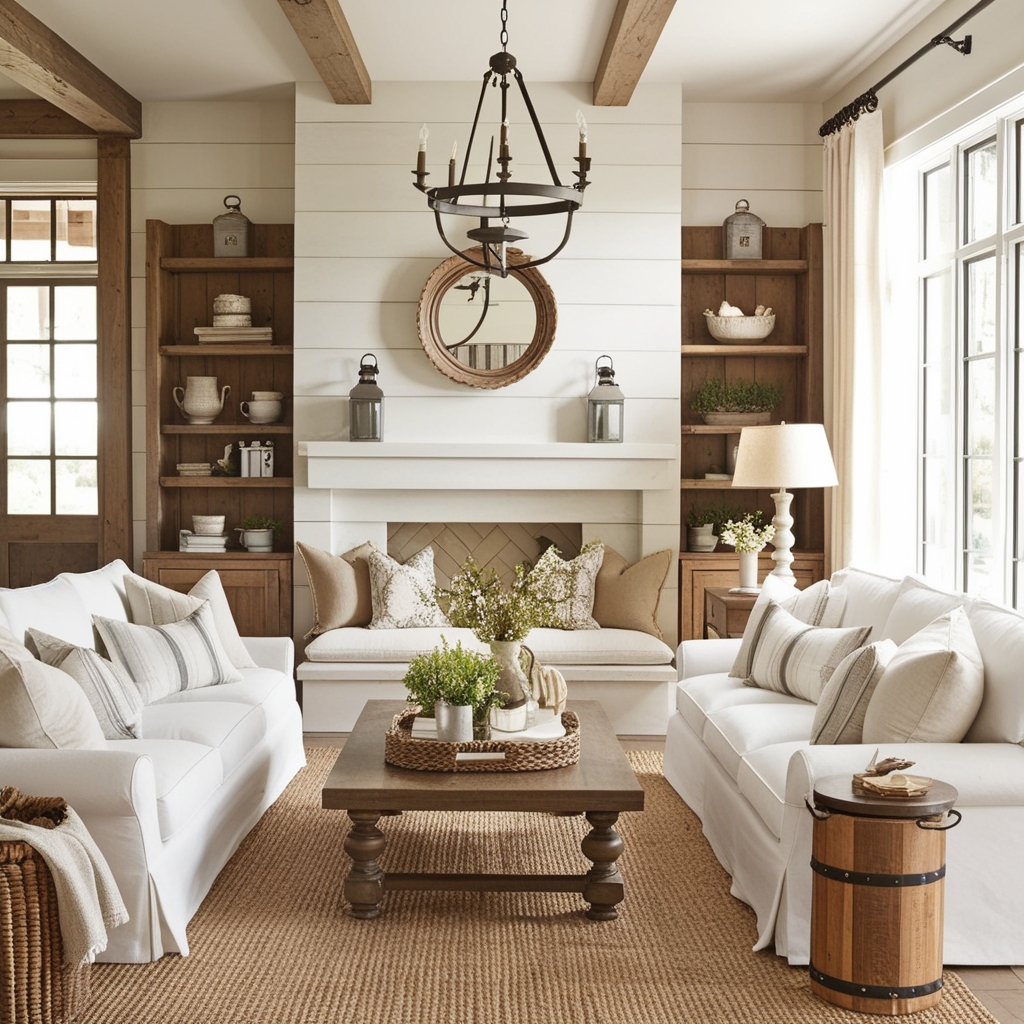
The style reads as rustic, but the decisions underneath it are disciplined. Materials are limited to a short list and then repeated, the palette rarely runs past five tones, and each room is built around one or two heavy anchors with everything else kept quiet. That restraint is why the look survived being copied so widely: it works as a set of rules rather than a collection of props.
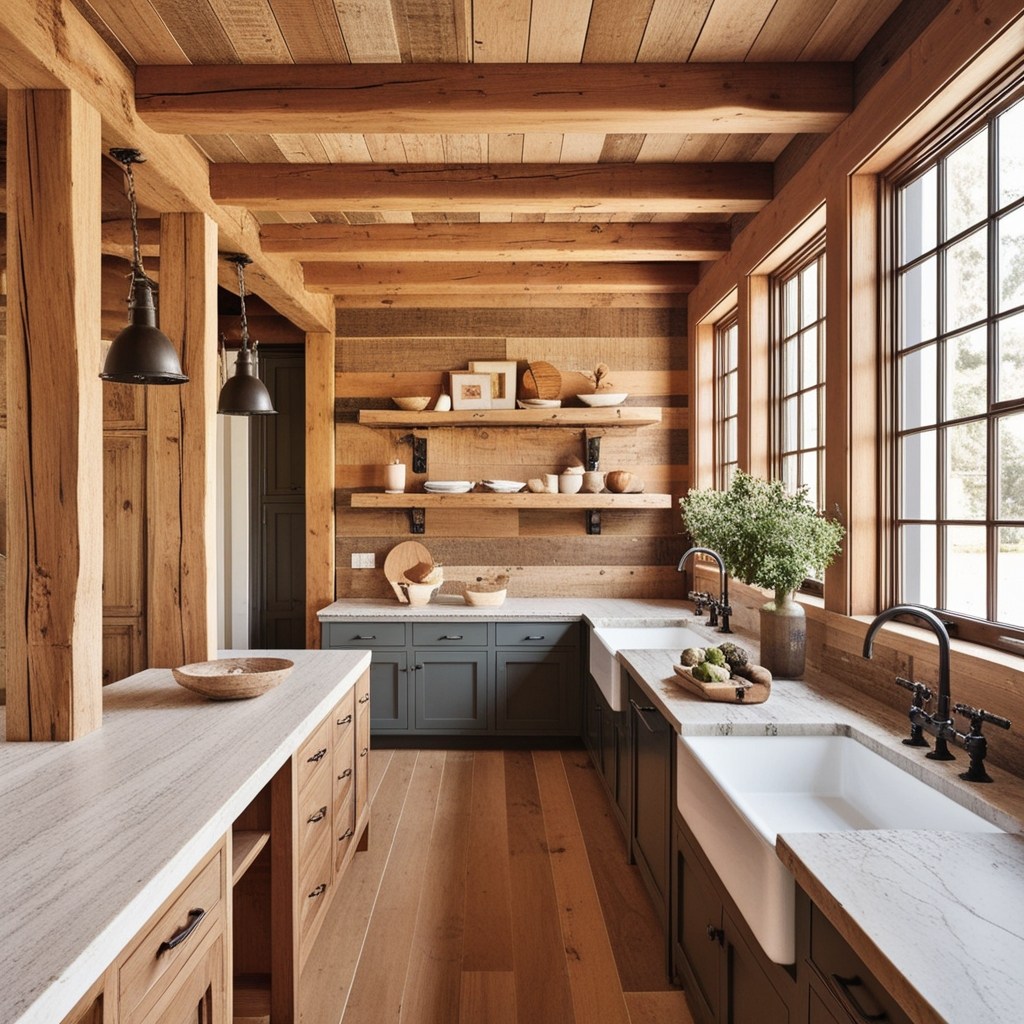
Materials do most of the work here, and the list is short: exposed beams, reclaimed wood, shiplap, limestone or marble on counters. The wood is usually left visible rather than painted, so the grain carries the texture. Where stone appears it tends to be honed rather than polished, which keeps it matte against the wood. Repetition matters more than variety. Two or three materials used consistently across a house read as considered, while six read as a showroom.
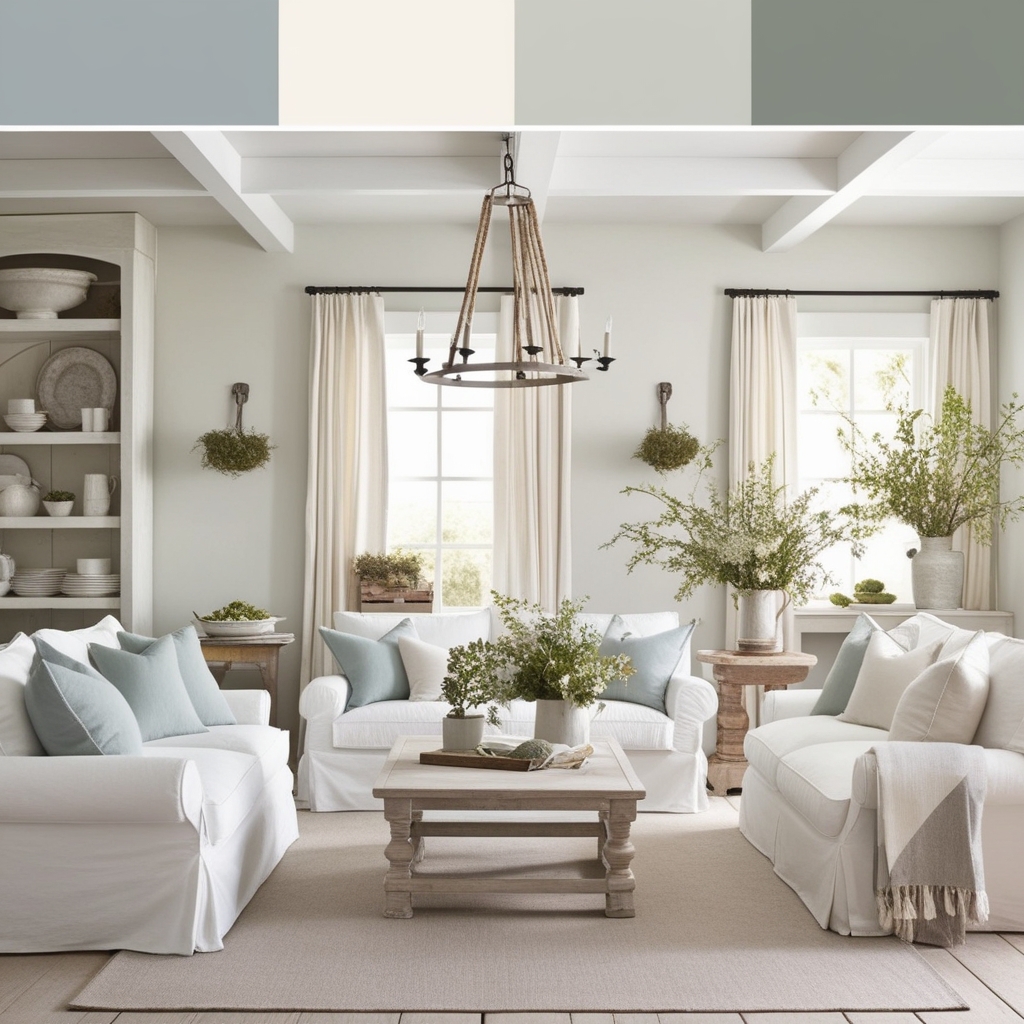
Joanna Gaines' color palette tends to revolve around soft, neutral tones. Think whites, creams, soft greys, and muted earth tones, which create a calming and airy atmosphere. This base is often accented with pops of subdued colors such as muted blues or greens, delivering subtle contrasts that complement the rustic elements and highlight architectural details without overpowering the space. This strategic use of color magnifies natural light, creating a cozy yet open-feeling environment.
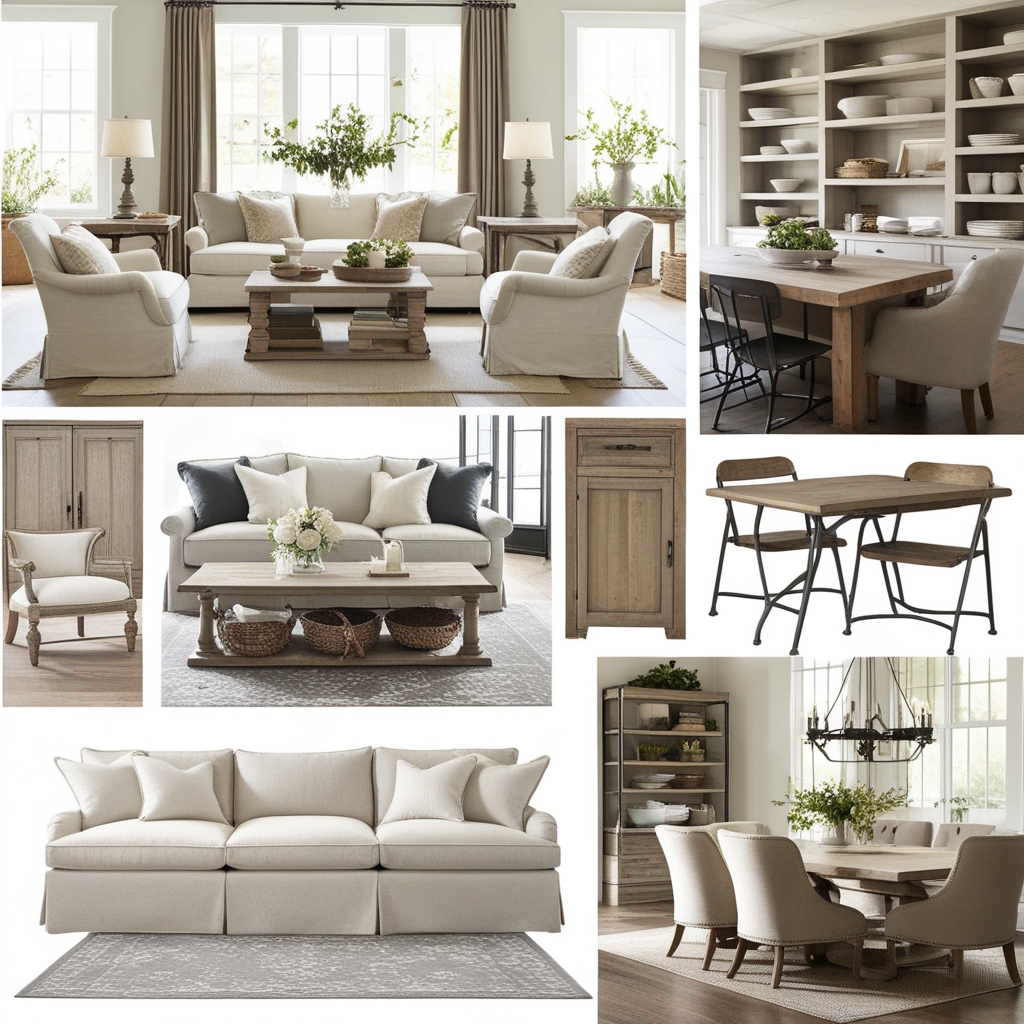
Joanna Gaines style furniture merges practical comfort with functional design elements to create pieces that uphold an elegant and timeless look. Light-toned upholstered sofas and armchairs establish welcoming seating zones while rustic wooden tables combined with metal-framed chairs introduce an industrial sharpness to the decor. Custom-built cabinetry and shelving systems are engineered to optimize spatial utilization while providing plentiful storage solutions, demonstrating the balance between functionality and aesthetic appeal. Gaines demonstrates her furniture selection prowess by blending vintage elements with modern design lines.
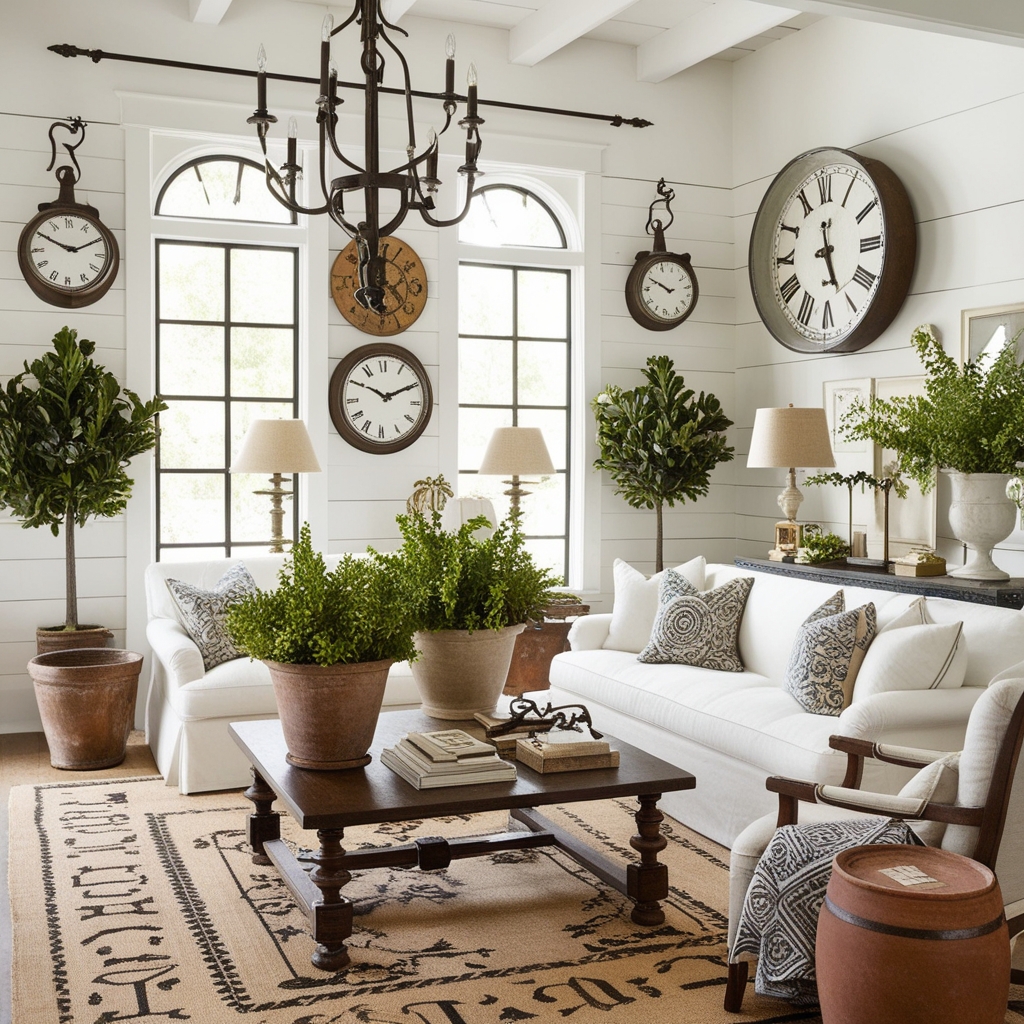
Decor stays deliberately sparse: wrought iron fixtures, an oversized clock, vintage-style lighting, greenery in aged pots. The pieces tend to be large and few rather than small and many, which is what keeps the rooms from tipping into clutter. Textiles carry the pattern load, in linen and cotton throw pillows, rugs, and curtains, because pattern on soft goods can be swapped out later while pattern on a wall or a tile cannot.
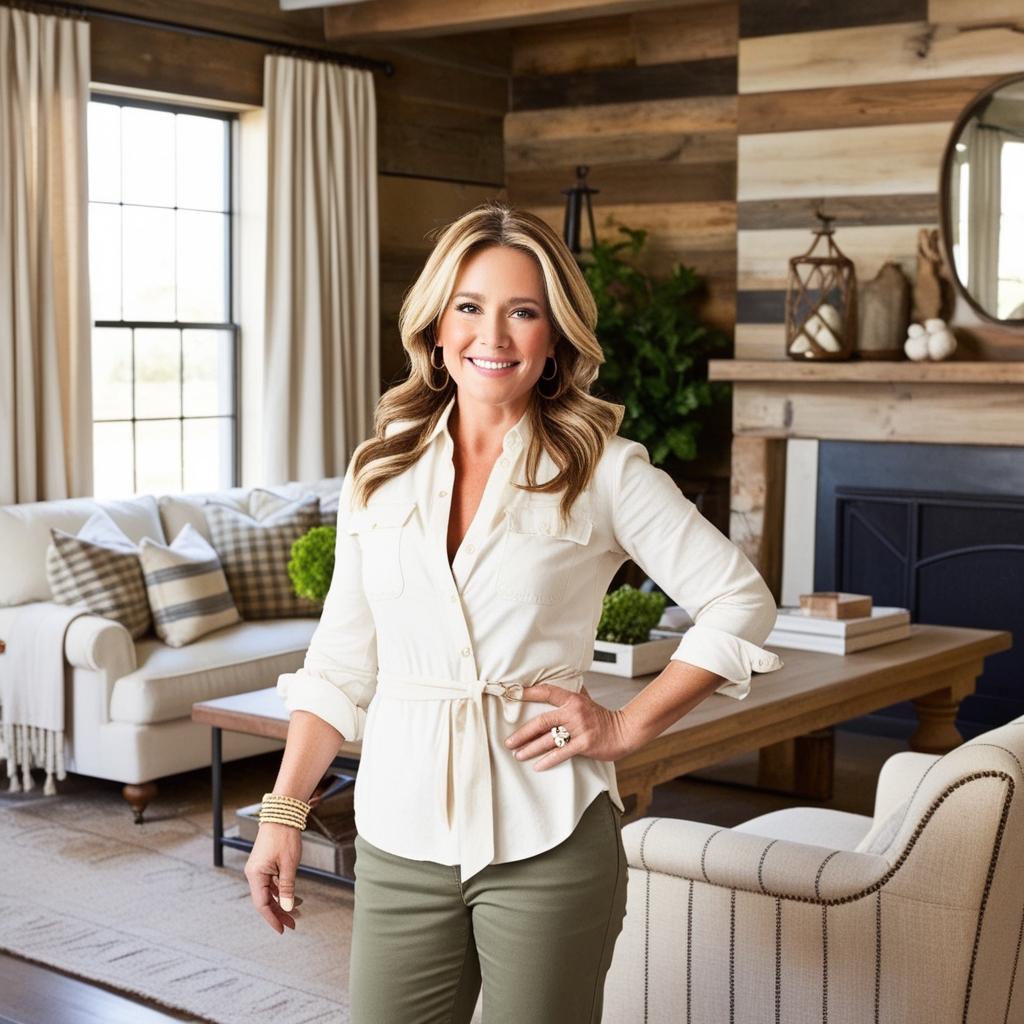
Joanna Gaines' interior design style balances rustic character with contemporary structure. The shiplap and reclaimed wood provide warmth and history; the clean-lined furniture and neutral palette provide calm and openness.
Additional images selected for shiplap, reclaimed wood, warm neutral palettes, and the modern farmhouse balance associated with this page.
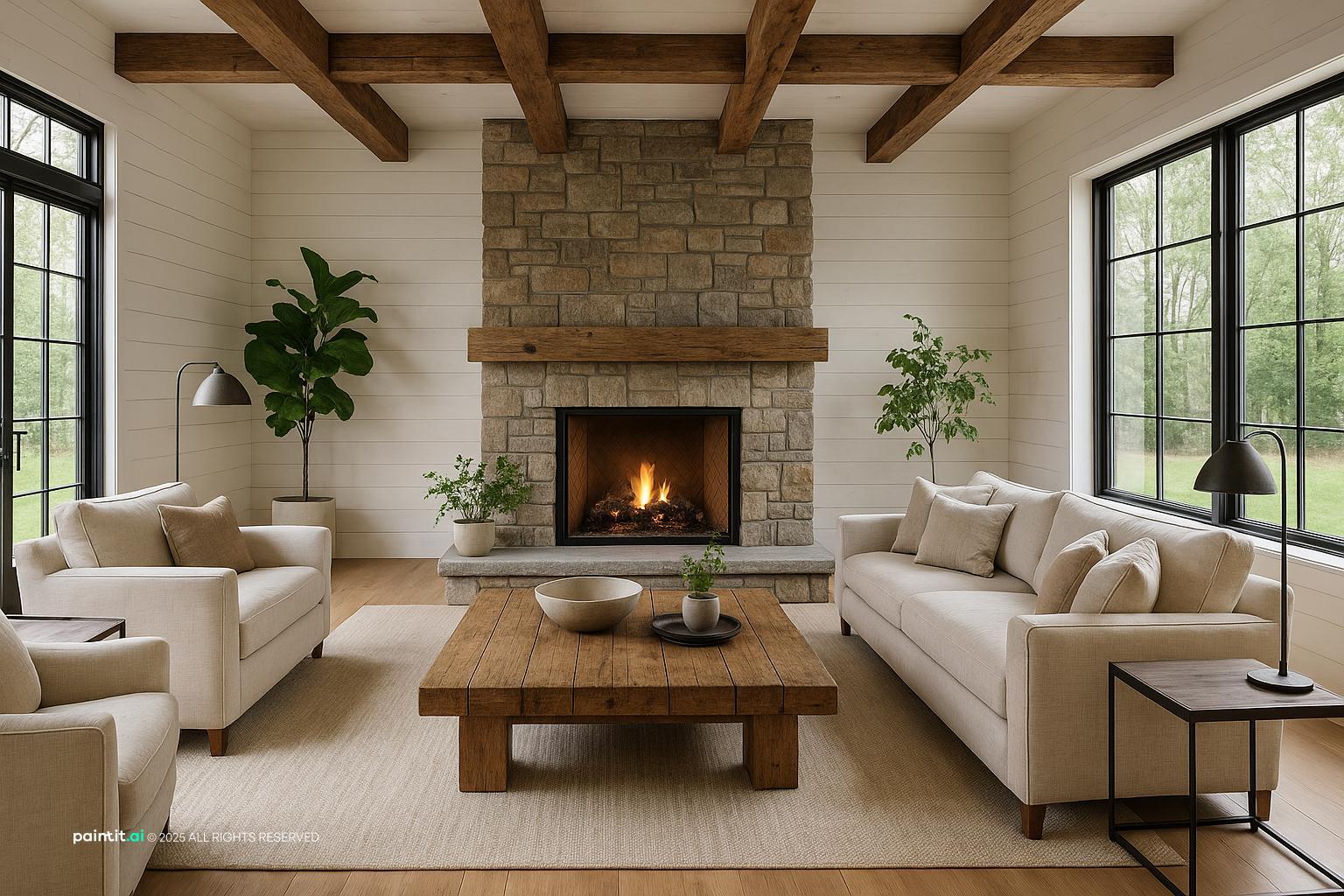
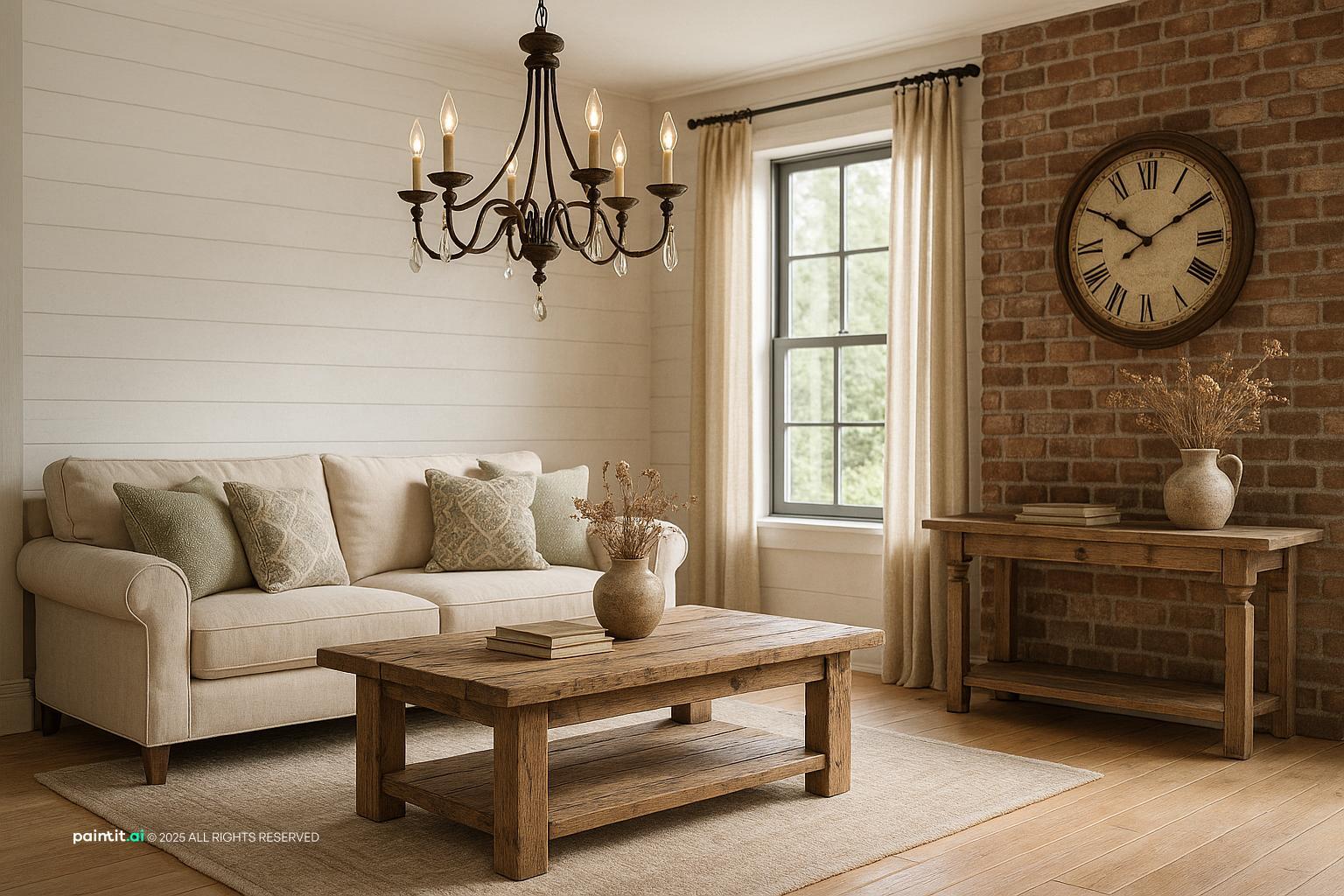
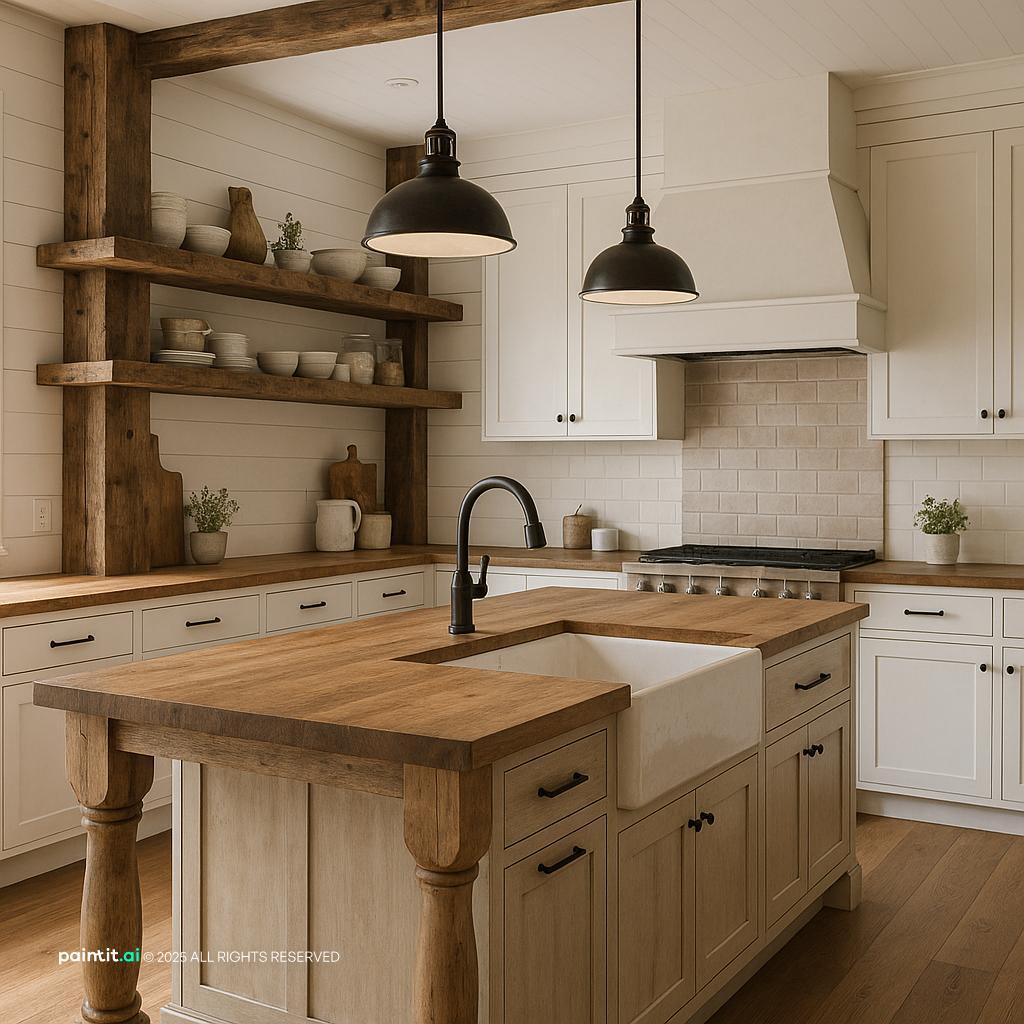
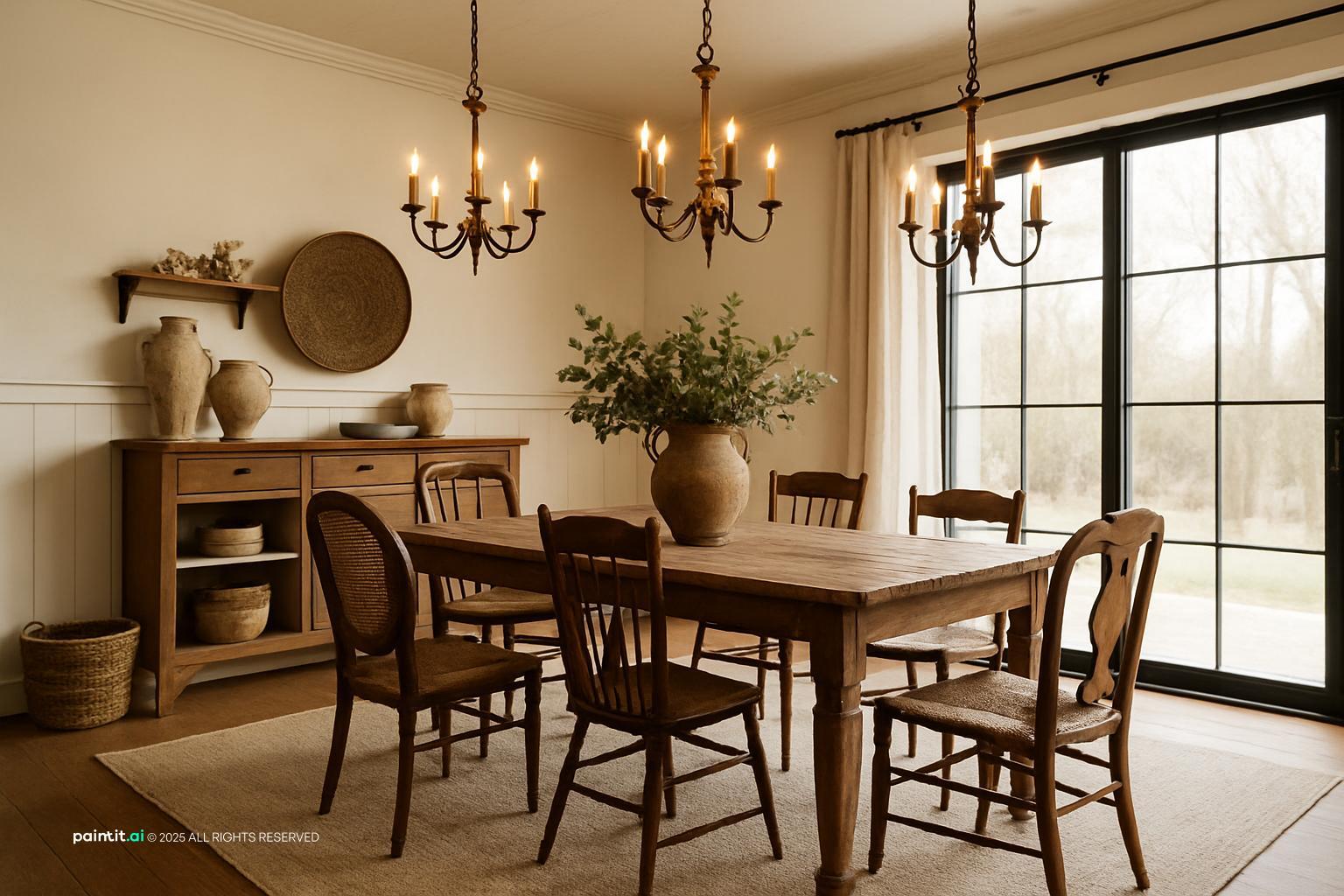
Joanna Gaines' design approach, which combines natural materials and neutral palettes with vintage character, has become one of the most widely influential residential design directions of the past decade.
Begin with warm white or cream walls, then add reclaimed wood through a coffee table, mantel, shelves, or exposed beams. Keep sofas comfortable and simple, and use linen, cotton, or vintage-style rugs for texture.
Use a restrained base: soft bedding, light walls, a wood headboard, simple lamps, and a few personal framed objects. The room should feel restful rather than decorated corner to corner.
Shaker cabinetry, open shelving, a farmhouse sink, wood dining table, black metal lighting, and ceramic storage all fit the direction. Balance rustic materials with clean lines so the space still feels current.
Use wood, stone, greenery, layered lighting, and weather-friendly textiles to make patios and porches feel connected to the home rather than treated as a separate theme.
Windows in this style stay deliberately understated, because the trim and the light are doing the work. The usual choices are linen or cotton panels hung wide and high, roman shades in a natural weave, plain wood shutters, or nothing at all where privacy allows. Panels are normally hung close to the ceiling and left long enough to touch the floor, which makes the window read taller than it is. What you will not see much of: heavy swags, valances, patterned prints, or shiny fabrics. If a room needs both softness and blackout, the common solution is a woven shade underneath with plain panels either side, rather than one heavy lined curtain.
Upload a photo of your room to app.paintit.ai and test modern farmhouse directions (warm neutrals, shiplap walls, reclaimed wood, black metal accents, vintage decor) in your actual space in 1-2 minutes. Free to start.
Tools and nearby style pages for testing modern farmhouse ideas.
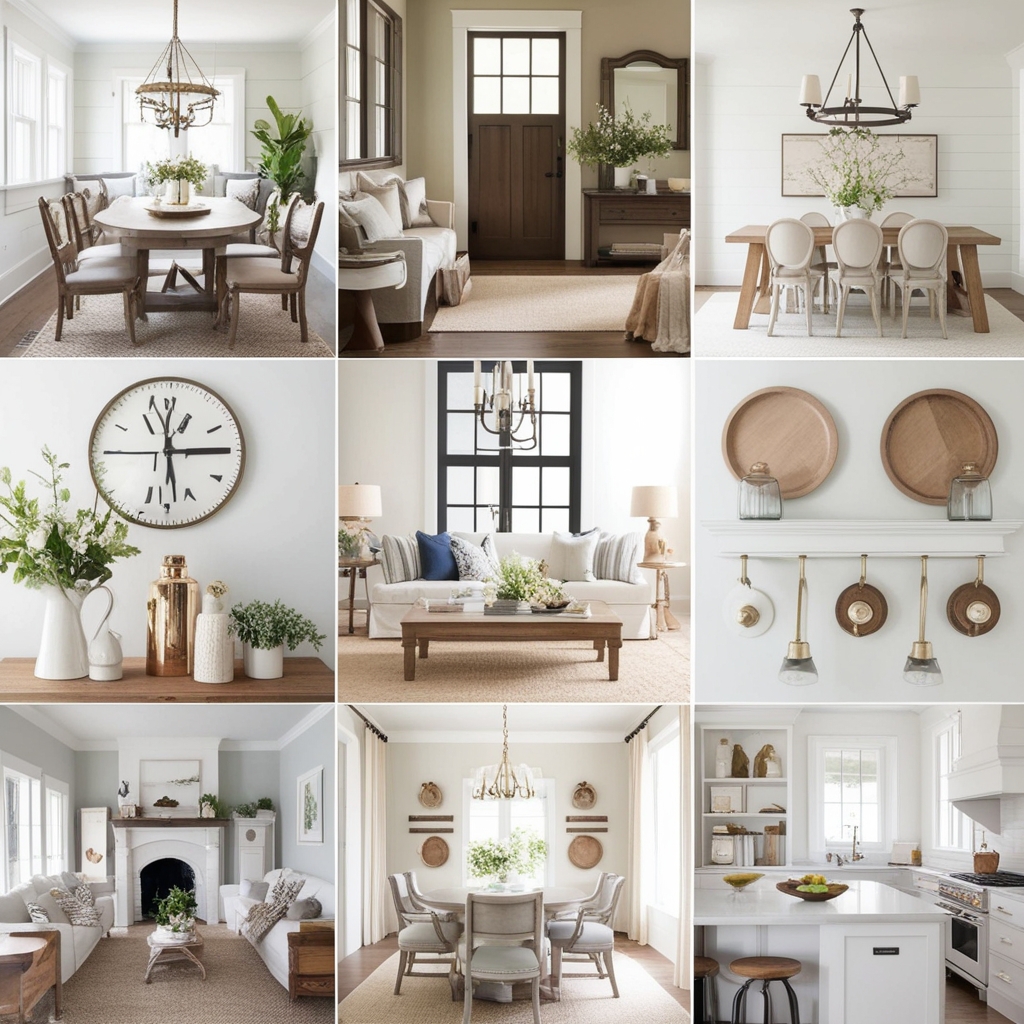
The public design style associated with Joanna Gaines is commonly described as modern farmhouse: warm neutral palettes, shiplap walls, reclaimed wood beams, vintage finds, simple furniture silhouettes, black metal accents, and a balance between rustic character and clean contemporary structure.
Warm whites, creams, soft greys, muted taupes, and gentle earth tones create the base. Subdued greens, dusty blues, black accents, and natural wood tones add contrast without making the room feel busy.
Shiplap, reclaimed wood, exposed beams, stone, linen, cotton, vintage metal, open shelving, shaker cabinetry, and simple ceramic pieces are common. The look works best when those materials are balanced rather than stacked everywhere at once.
Magnolia has never published which software its design team works in, so any specific list you find online is guesswork. A studio working at that scale would normally split the job across several tools: CAD or SketchUp for layouts and elevations, a rendering package for client presentations, and physical sample boards for materials, since fabric and stone are hard to judge on a screen. If you want the look rather than the professional workflow, none of that is necessary. Upload a photo of your own room to Paintit.ai and apply a modern farmhouse direction to it in 1-2 minutes. It will show palette and materials in your real space, but it does not produce construction drawings or measured plans.
Plain linen or cotton panels, roman shades in a natural weave, and simple wood shutters. Panels are hung high and wide so the window looks taller, and they run long enough to reach the floor. Patterned prints, valances, swags, and shiny fabrics sit outside the style. Where a room needs blackout as well as softness, the usual answer is a woven shade behind plain side panels rather than one heavy lined curtain.
Her most documented and reused shade is Sherwin-Williams Alabaster (SW 7008), a warm white with a soft grey undertone that she has painted through her own farmhouse's main living areas and used repeatedly on Fixer Upper. Sherwin-Williams Pure White shows up as a trim colour in some of the same rooms. Her own paint line, Magnolia Home, sold through KILZ, runs to creamy whites, warm greiges, and muted earth tones in the same family. If you're matching the look with a different brand, look for a warm white or greige with a soft grey (not blue or pink) undertone rather than a stark, cool white.
Yes. Upload a photo of your space to app.paintit.ai and compare modern farmhouse colour, furniture, and material directions in 1-2 minutes. Free to start.