
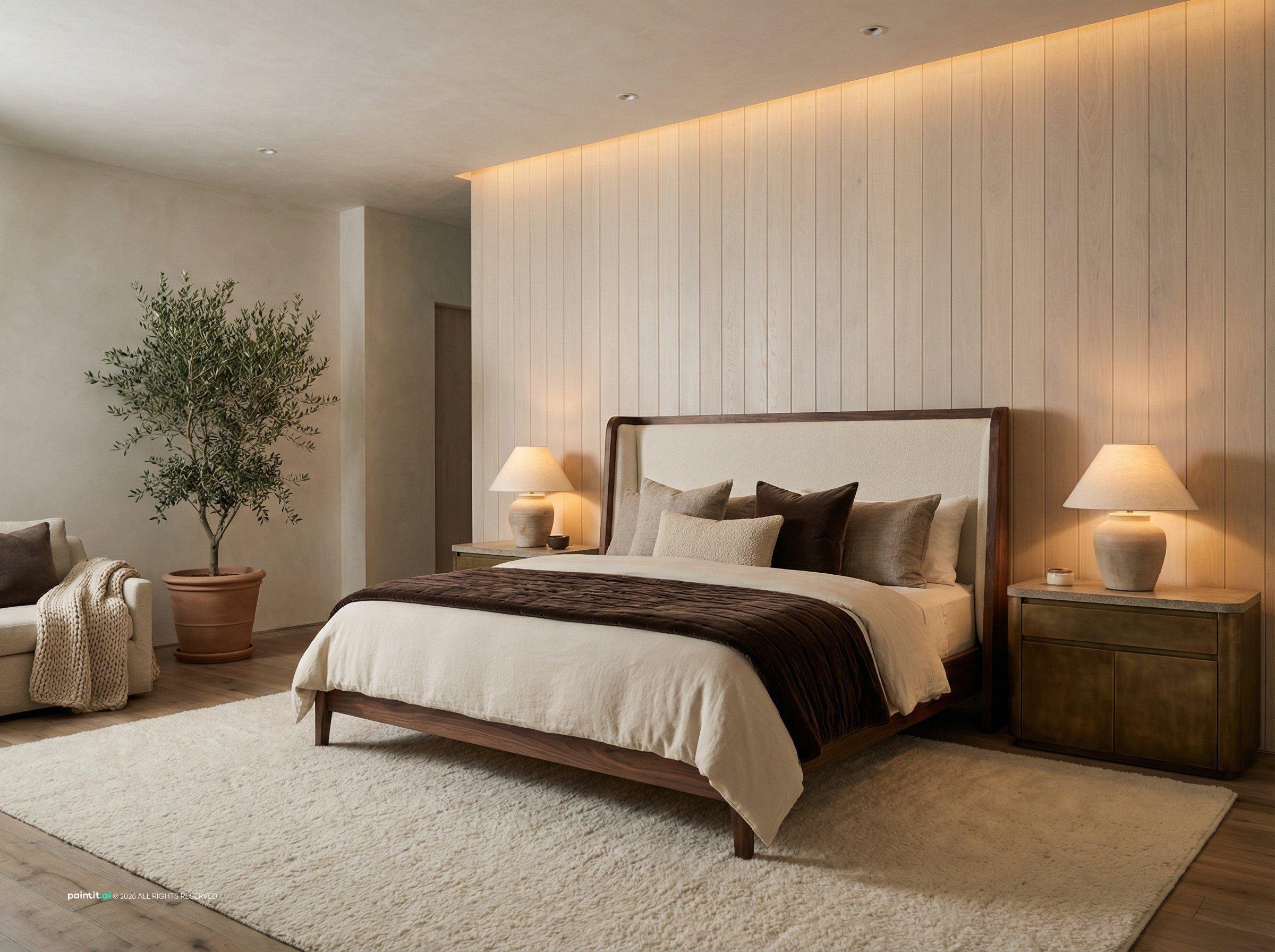
Oak-panelled headboard wall
Vertical oak panelling behind the bed gives the room its one statement and hides the wiring for bedside lights.
Good hotel room interior design is mostly about a few fixed decisions: where the bed wall goes, how the guest switches the lights, where the luggage and desk sit, and how the room reads the moment the door opens. The examples below range from compact twin rooms to boutique suites and themed rooms. Use them to pick a direction for a renovation or a new property, then upload a photo of your own room to Paintit.ai to see that direction in your actual space before you order furniture.
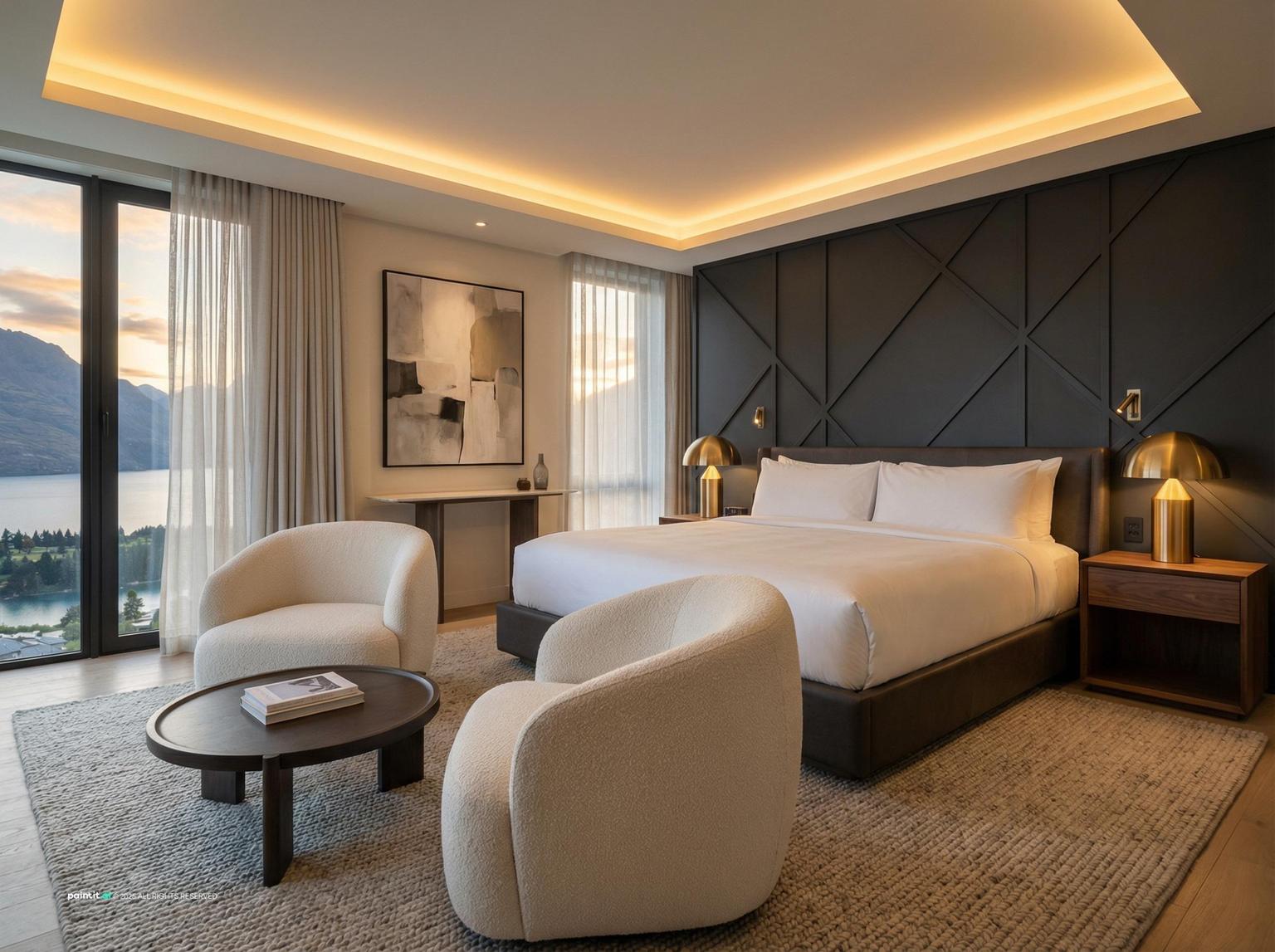
Look at the headboard wall, the bedside lighting and what fills the space between the bed and the window. Those three choices set the style of most rooms here.
Vertical oak panelling behind the bed gives the room its one statement and hides the wiring for bedside lights.
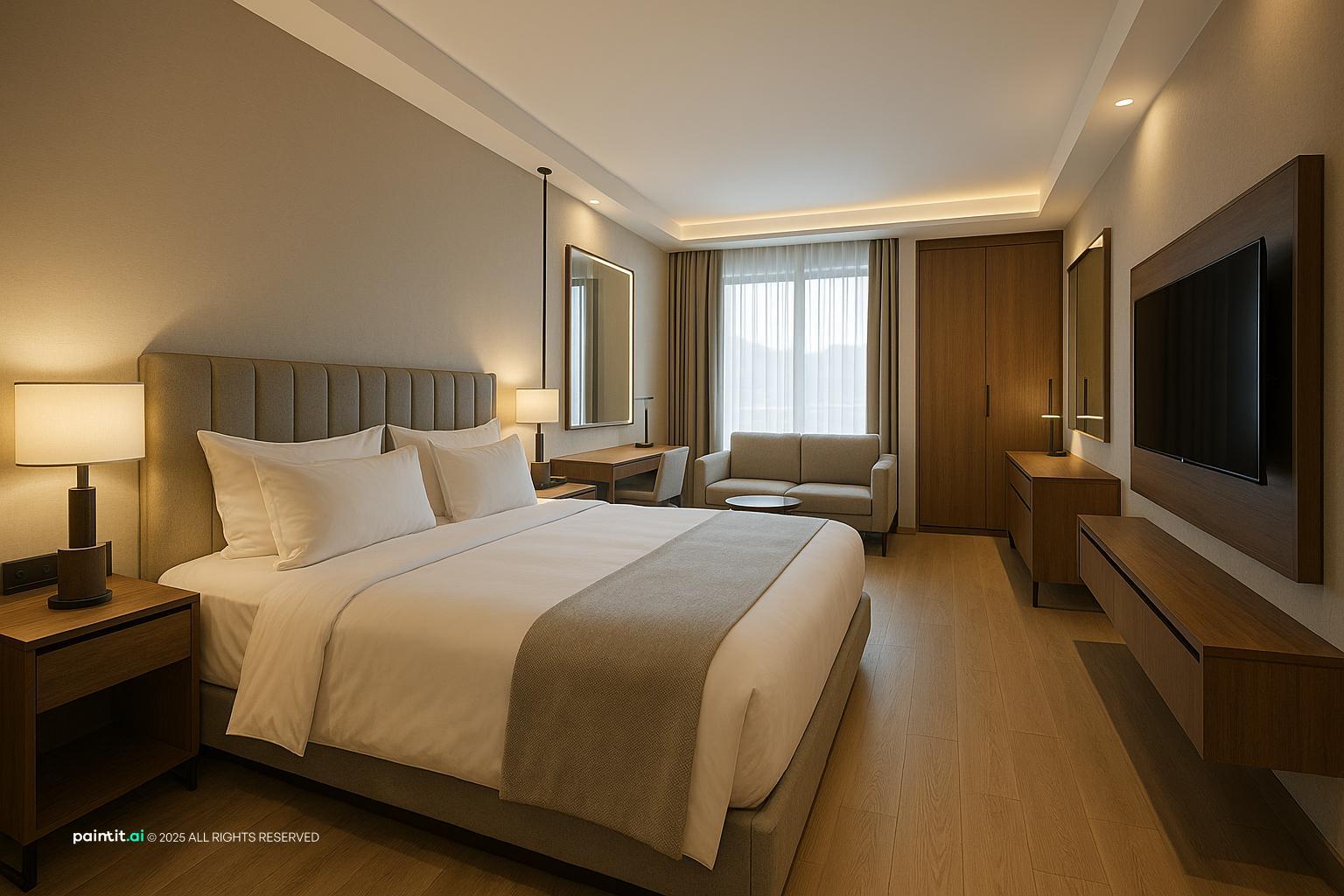
Mounting the TV on the wall facing the bed frees floor space for a sofa near the window.
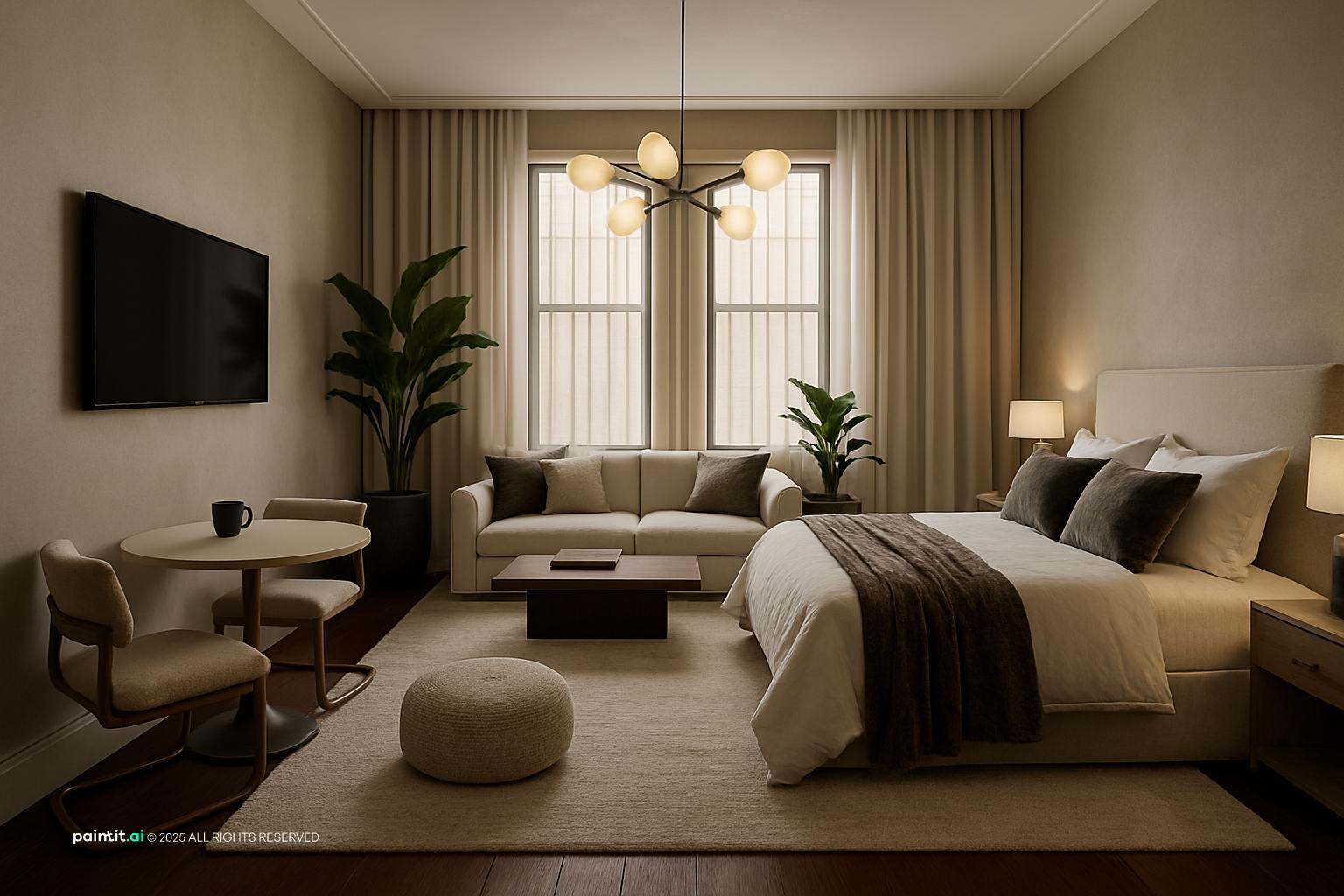
In a larger room a rug and a sofa group mark the lounge zone, so the bed area stays calm.
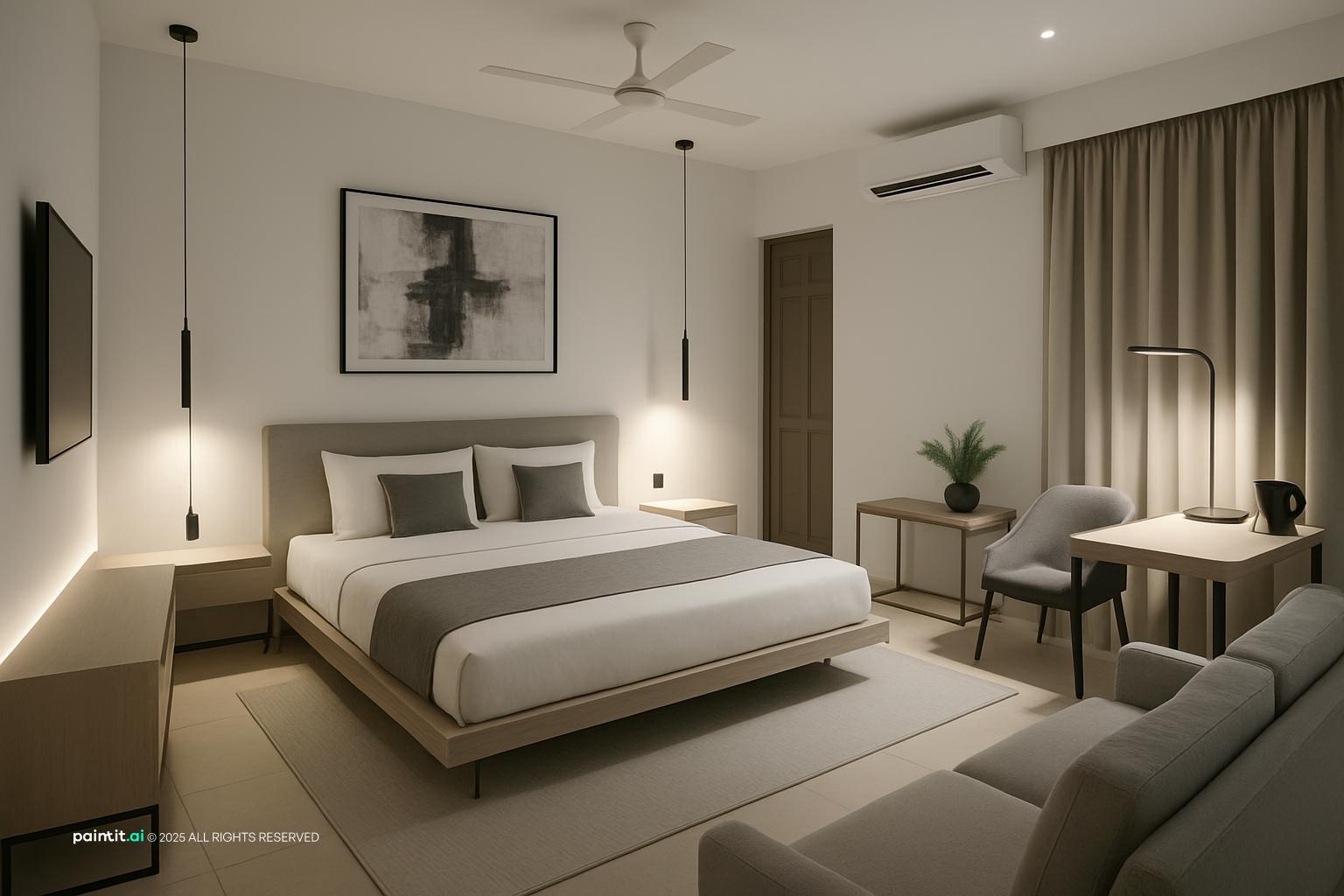
Pendant lights over the bedside tables keep the tabletops clear and make a small room look less cluttered.
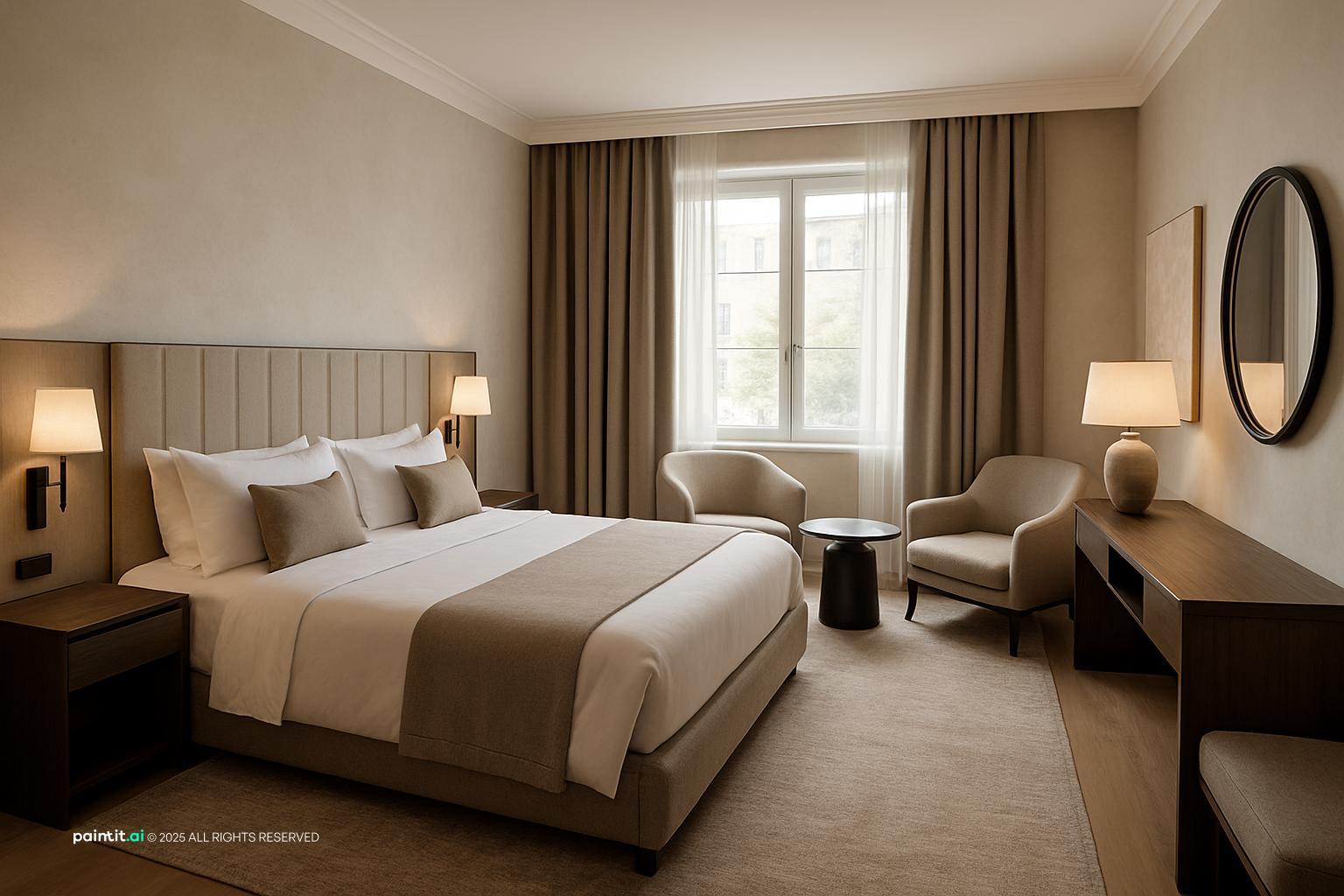
Matching curtains and headboard in one taupe tone keep a classic double room easy to maintain and restyle.
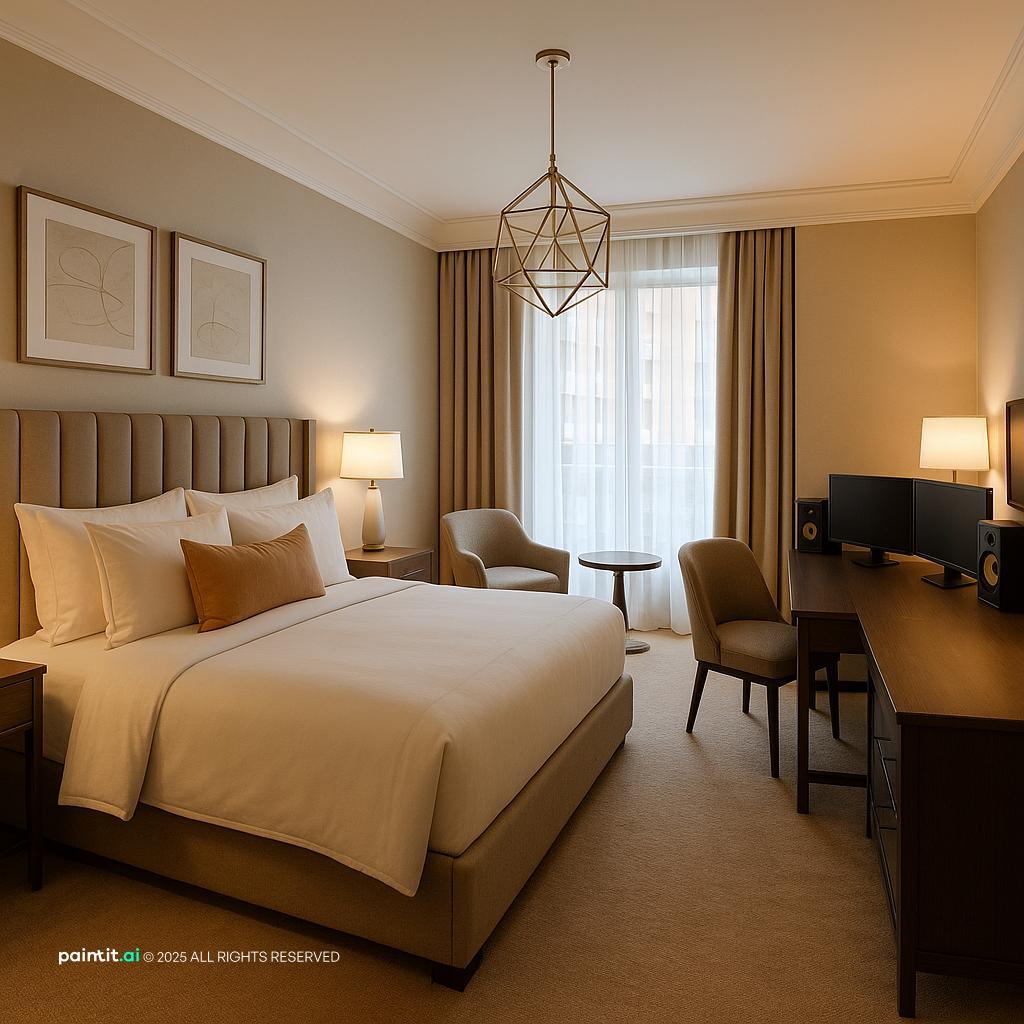
For business travellers, a real desk with a good chair matters more than extra decoration.
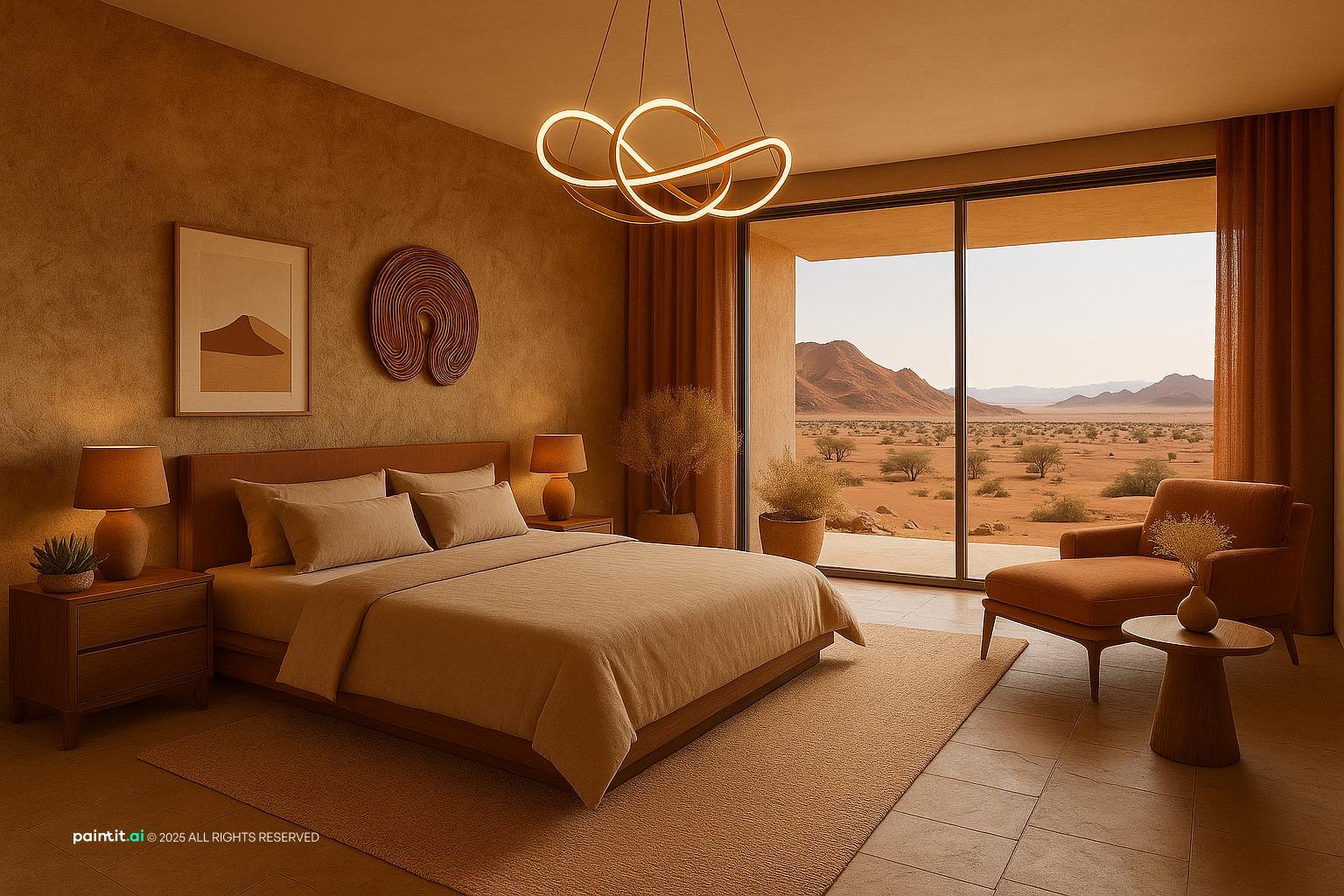
A theme taken from the location works best when it stays in the palette and textures, not in props.
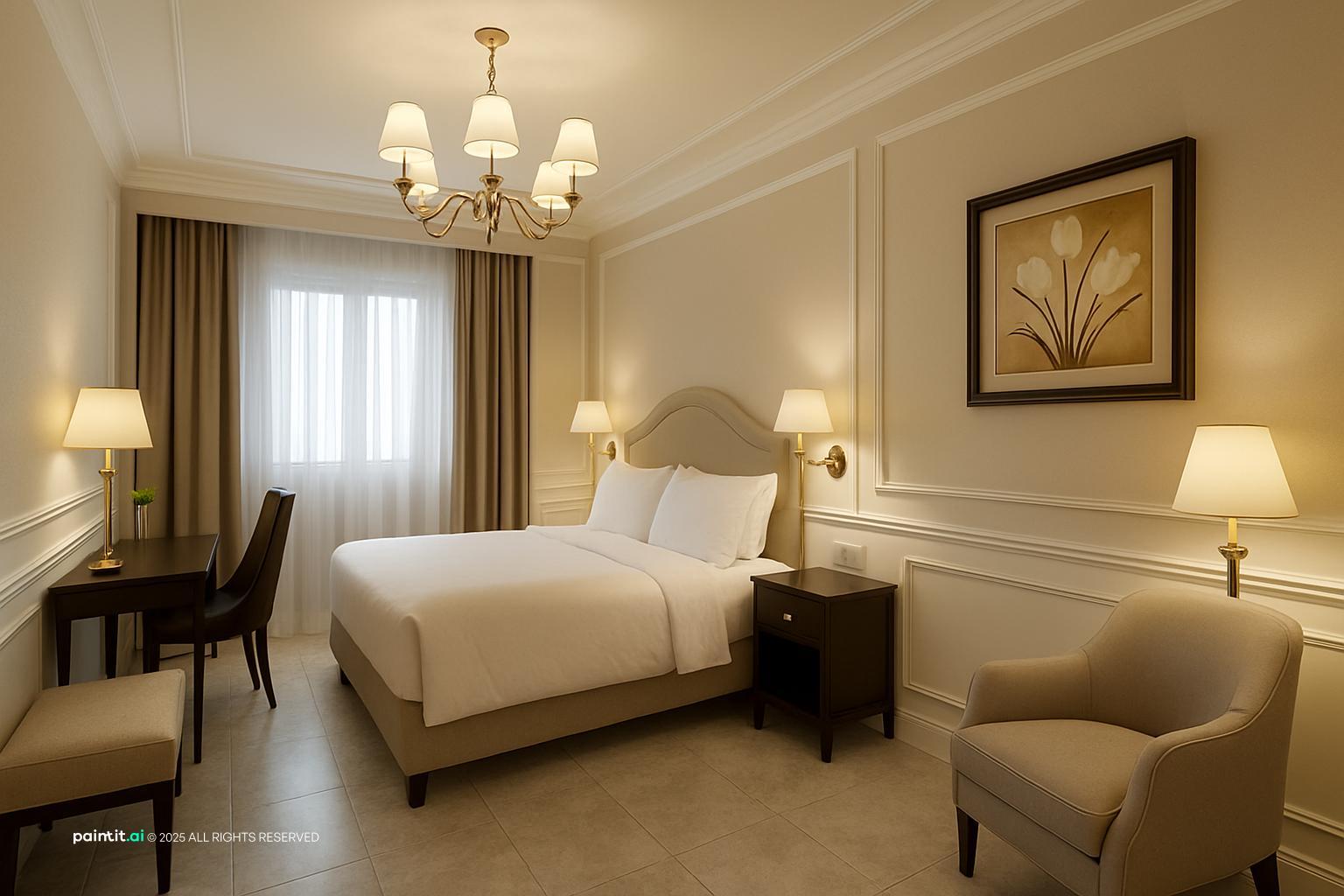
Two-tone walls with wainscoting give a traditional look without heavy furniture.
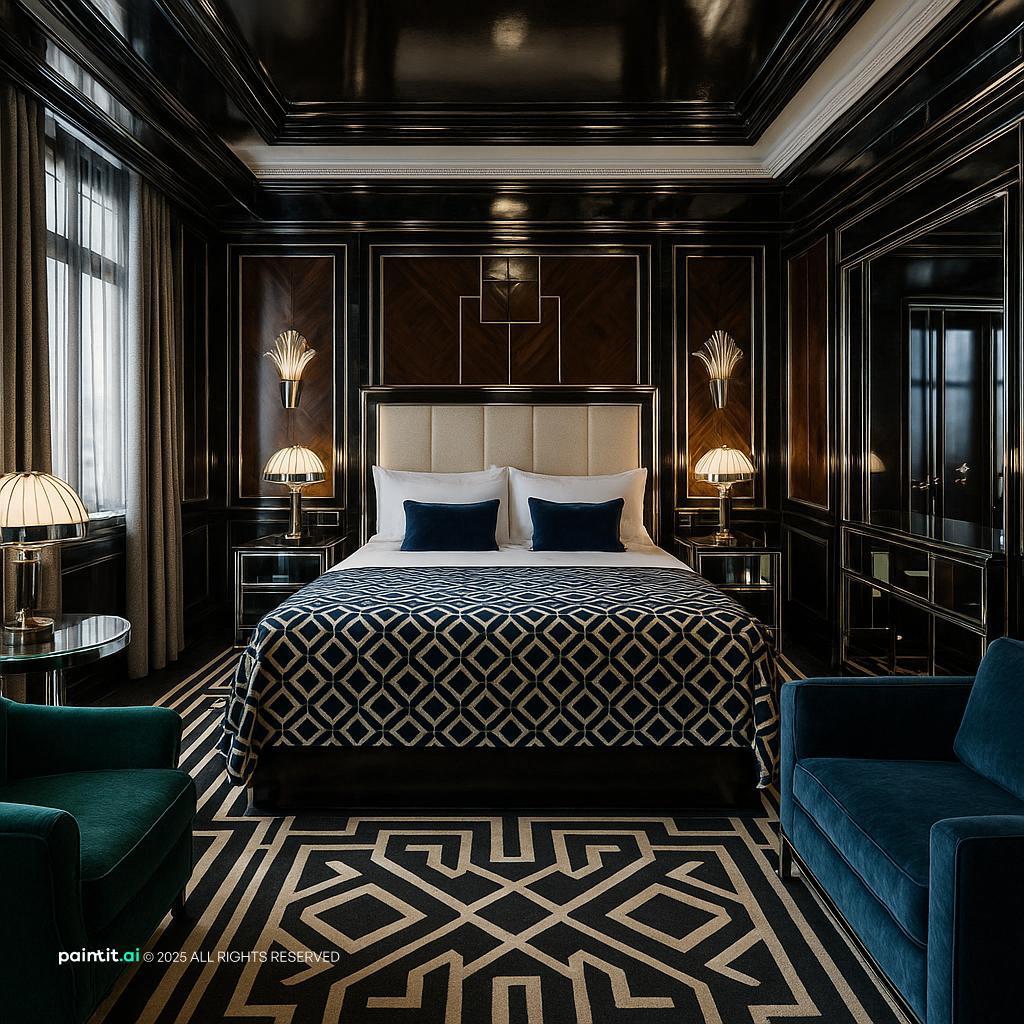
Dark gloss walls need strong bedside lights; here two wall lamps and a lit ceiling keep the room from feeling closed in.
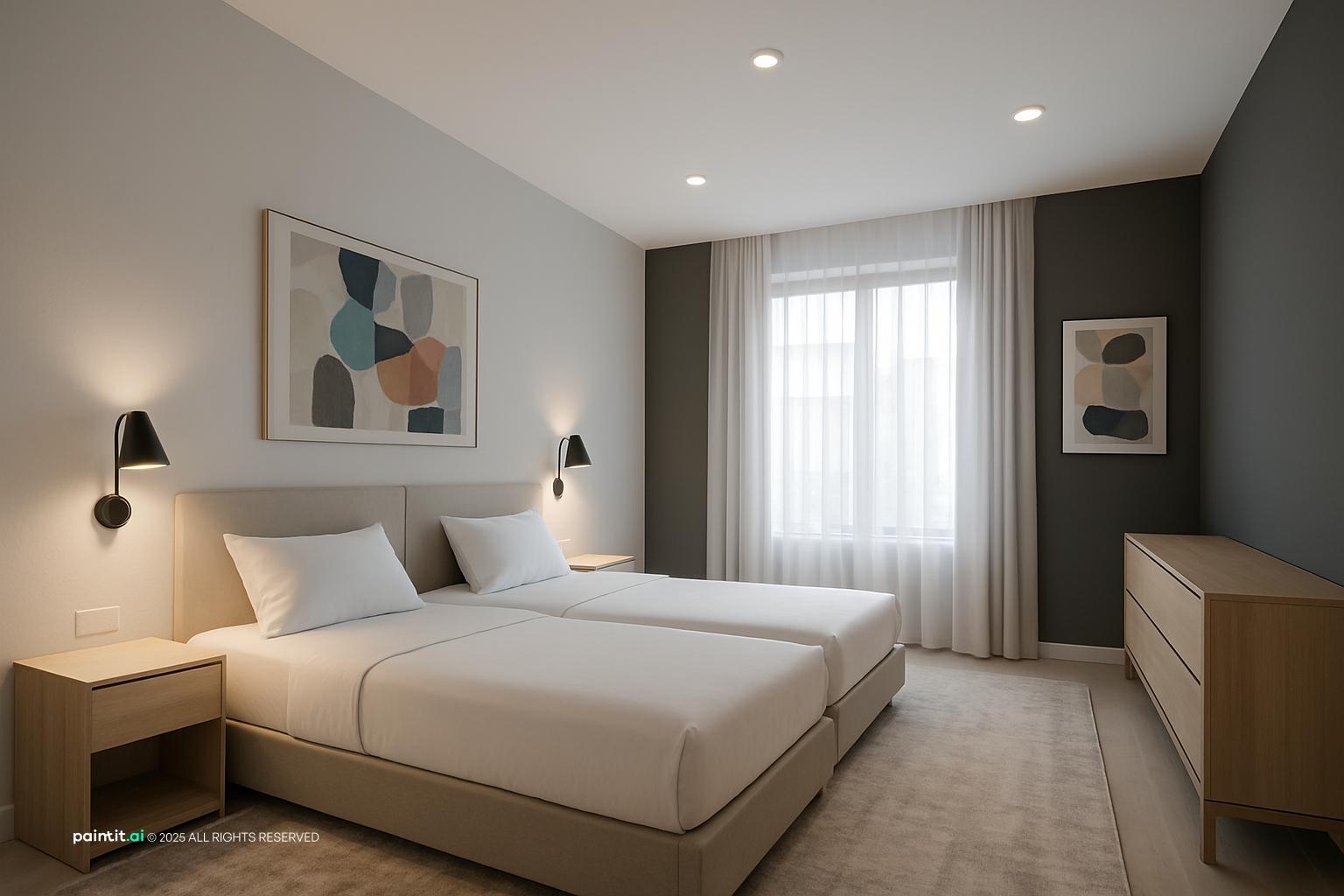
In a twin room, a sconce above each bed lets one guest read while the other sleeps.
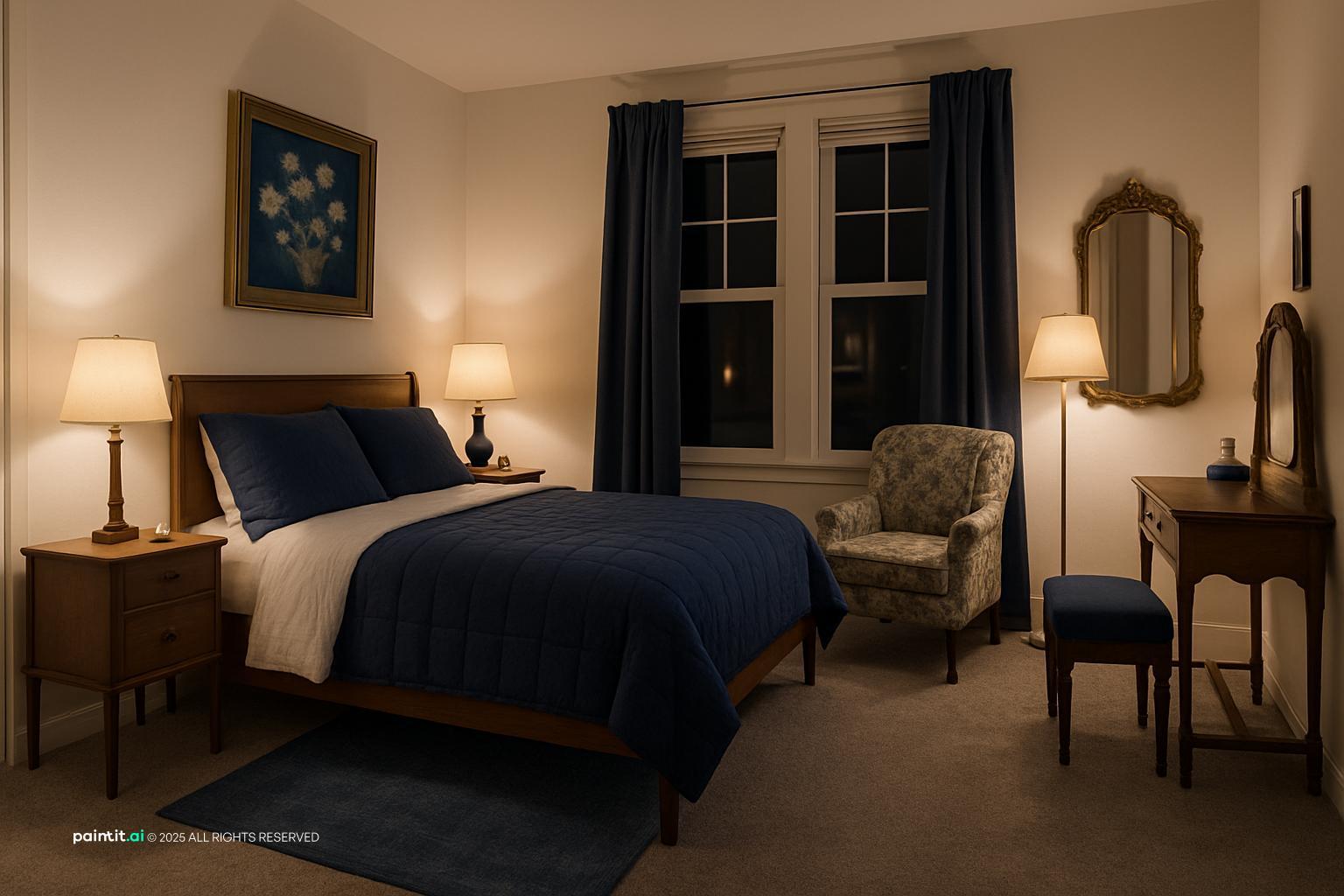
One colour, navy, ties together a mix of modern and vintage furniture.
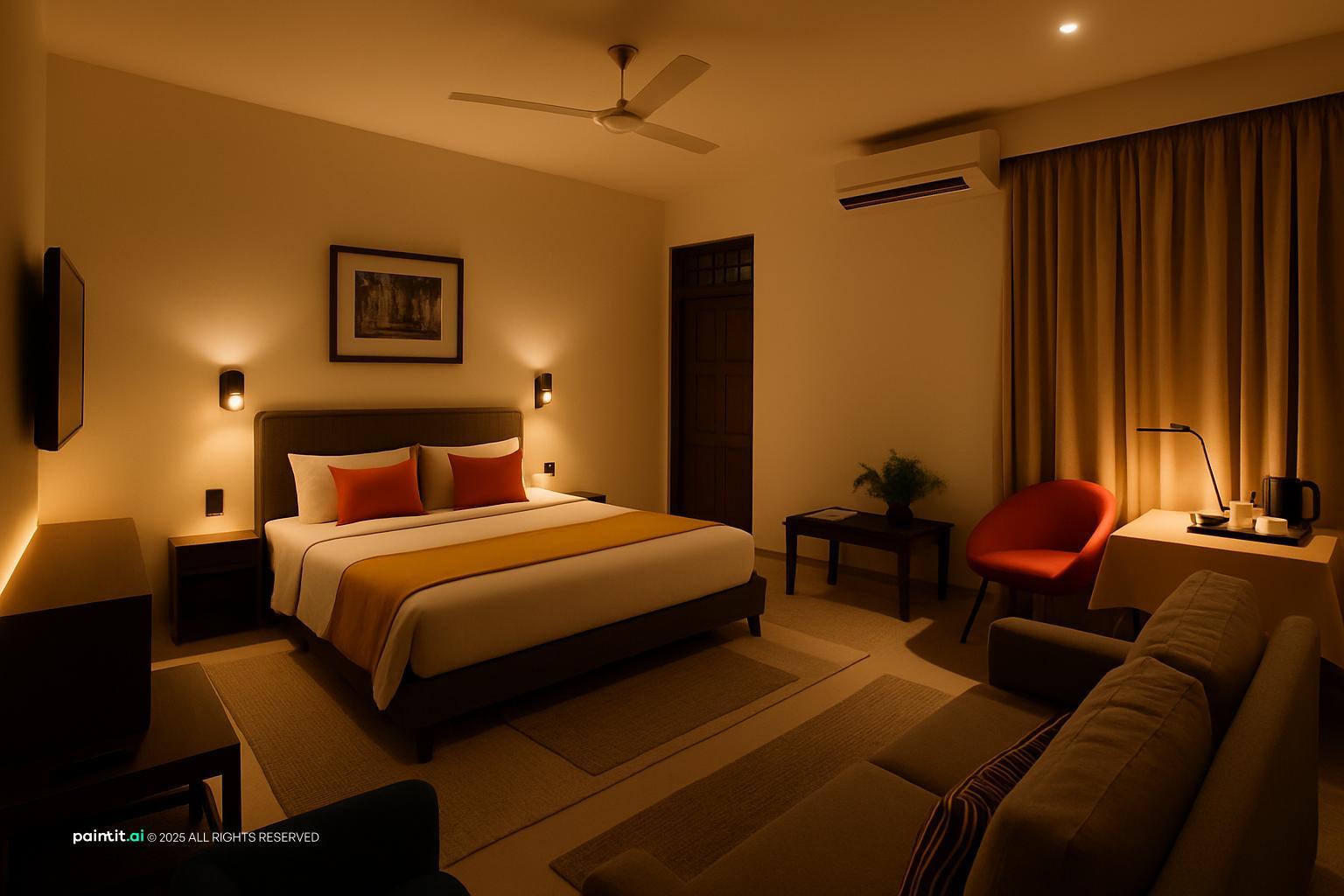
Dimmable sconces at the bed and soft light behind the headboard let guests set the room without the ceiling light.
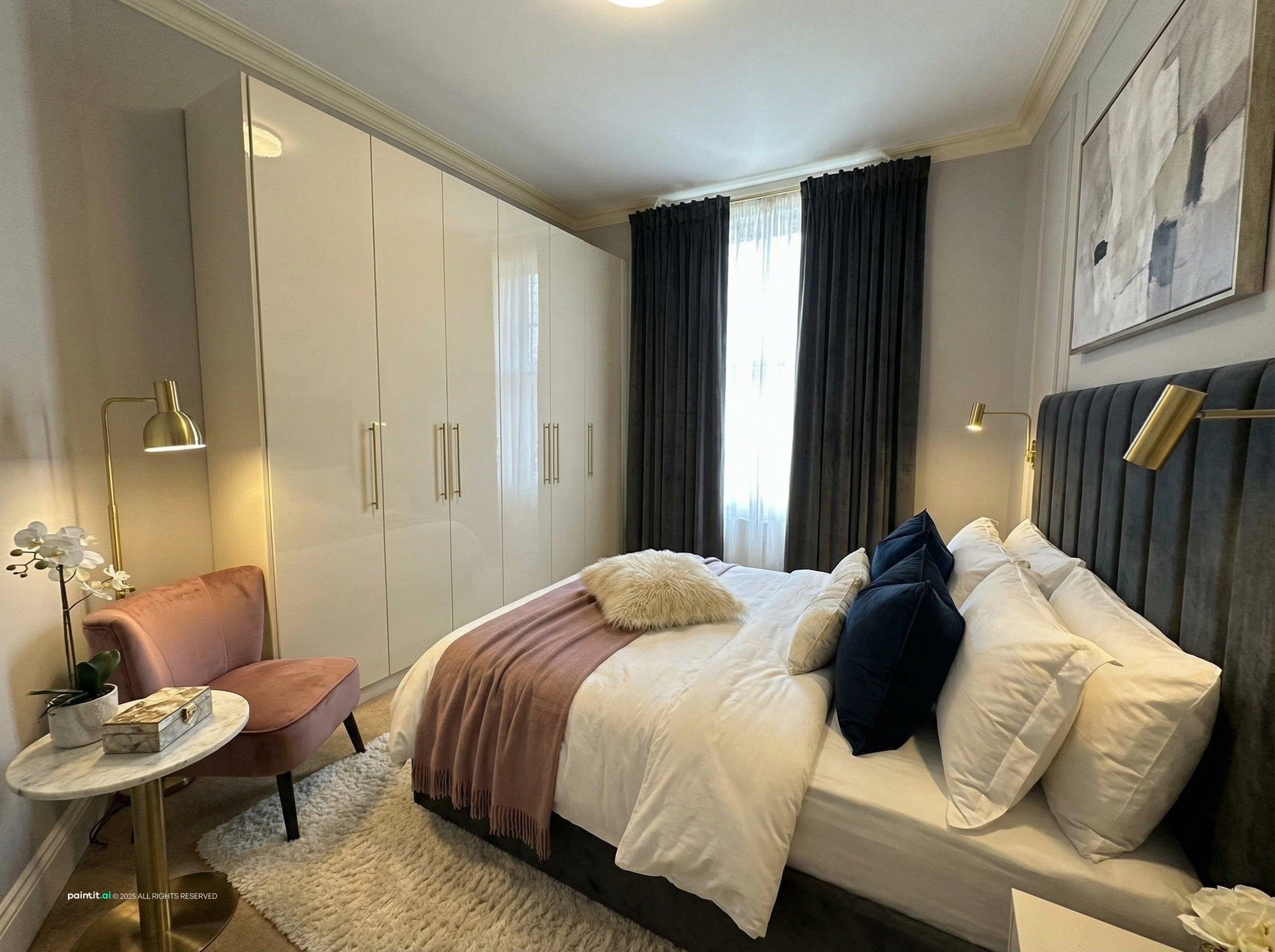
In a small boutique room, a full-height wardrobe wall keeps luggage out of sight and the tall headboard does the styling.
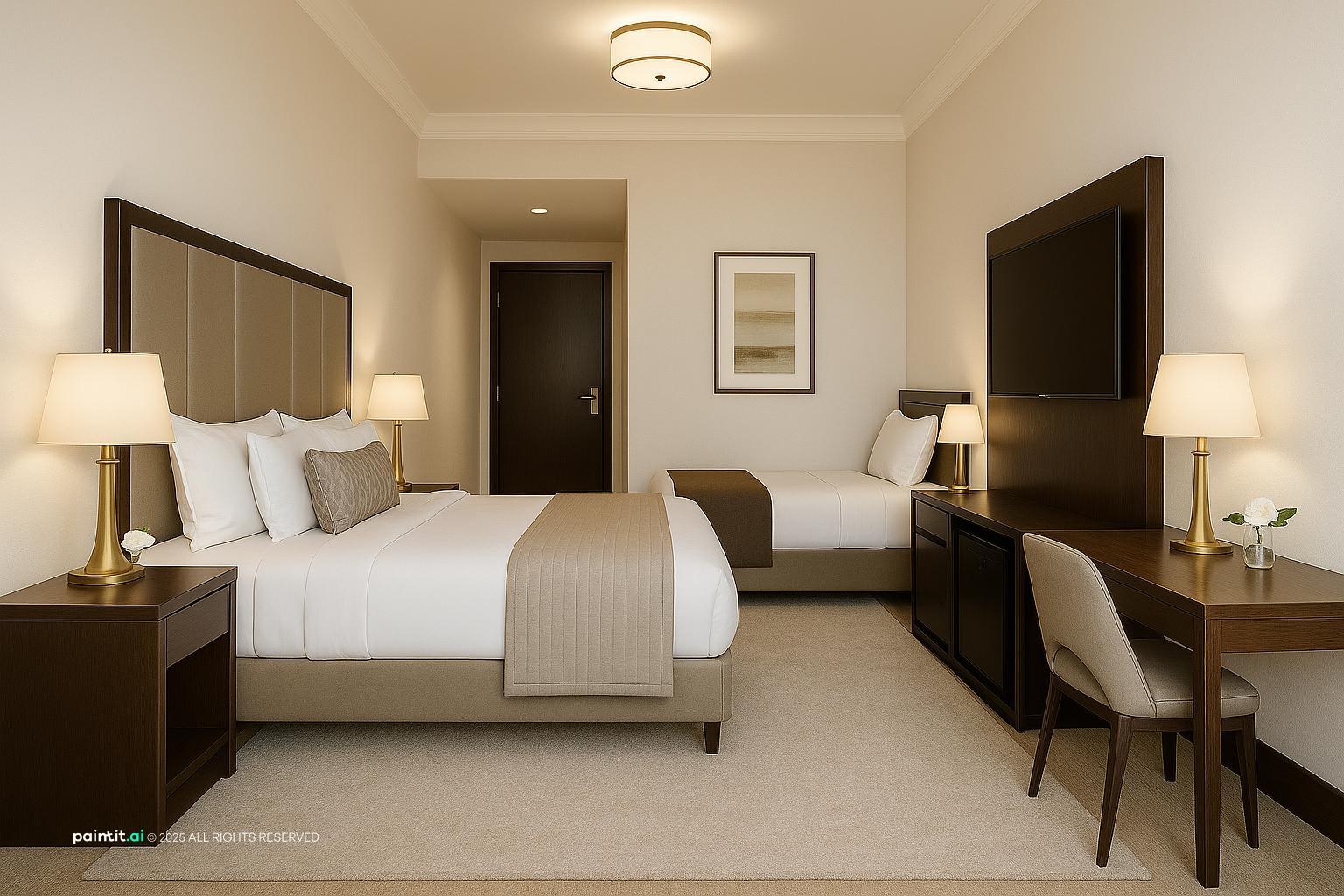
In a narrow room, beds go along one wall and the desk and TV share a slim console on the other.
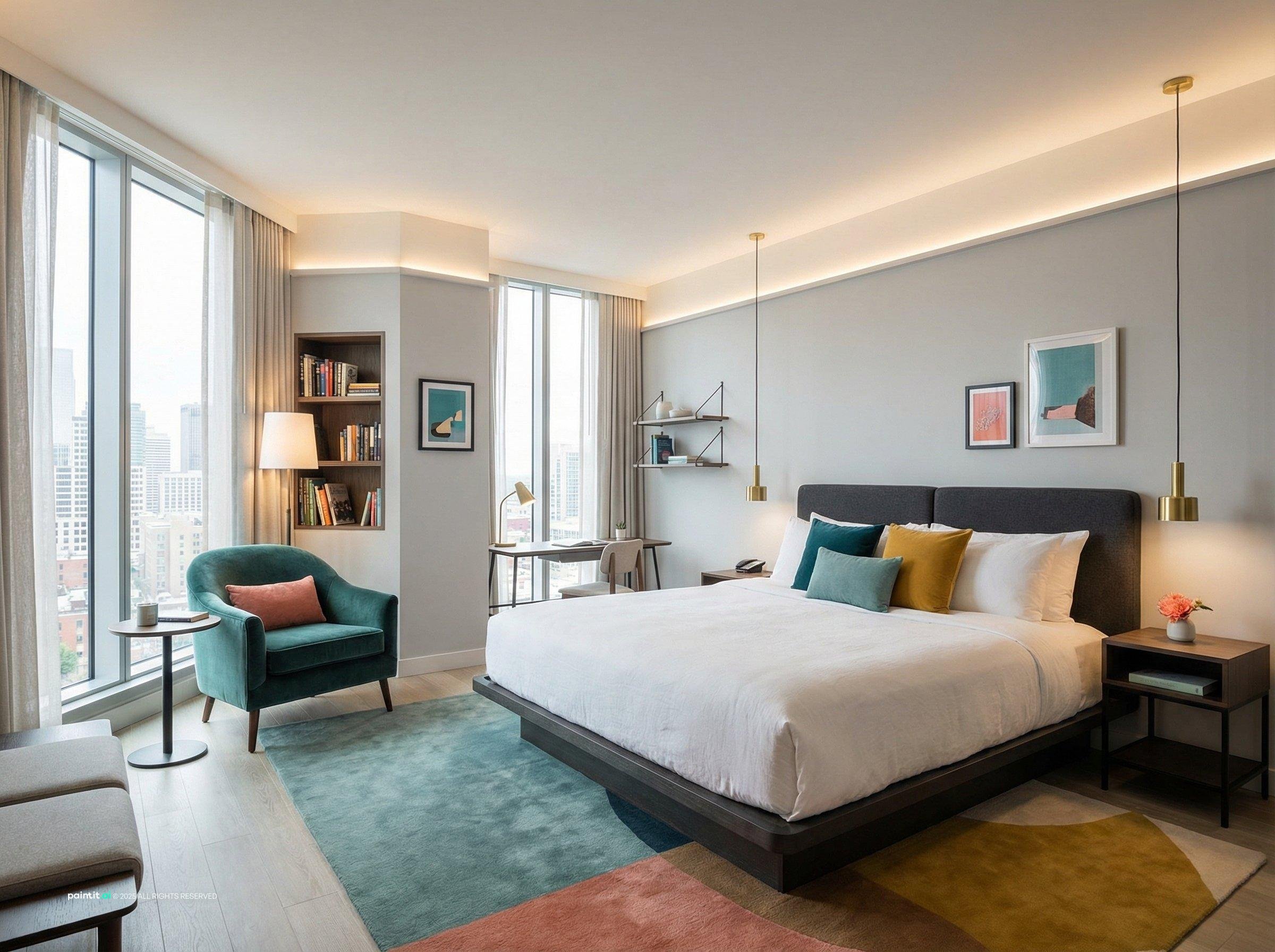
A coloured rug and one bright chair add personality that is cheap to change later.
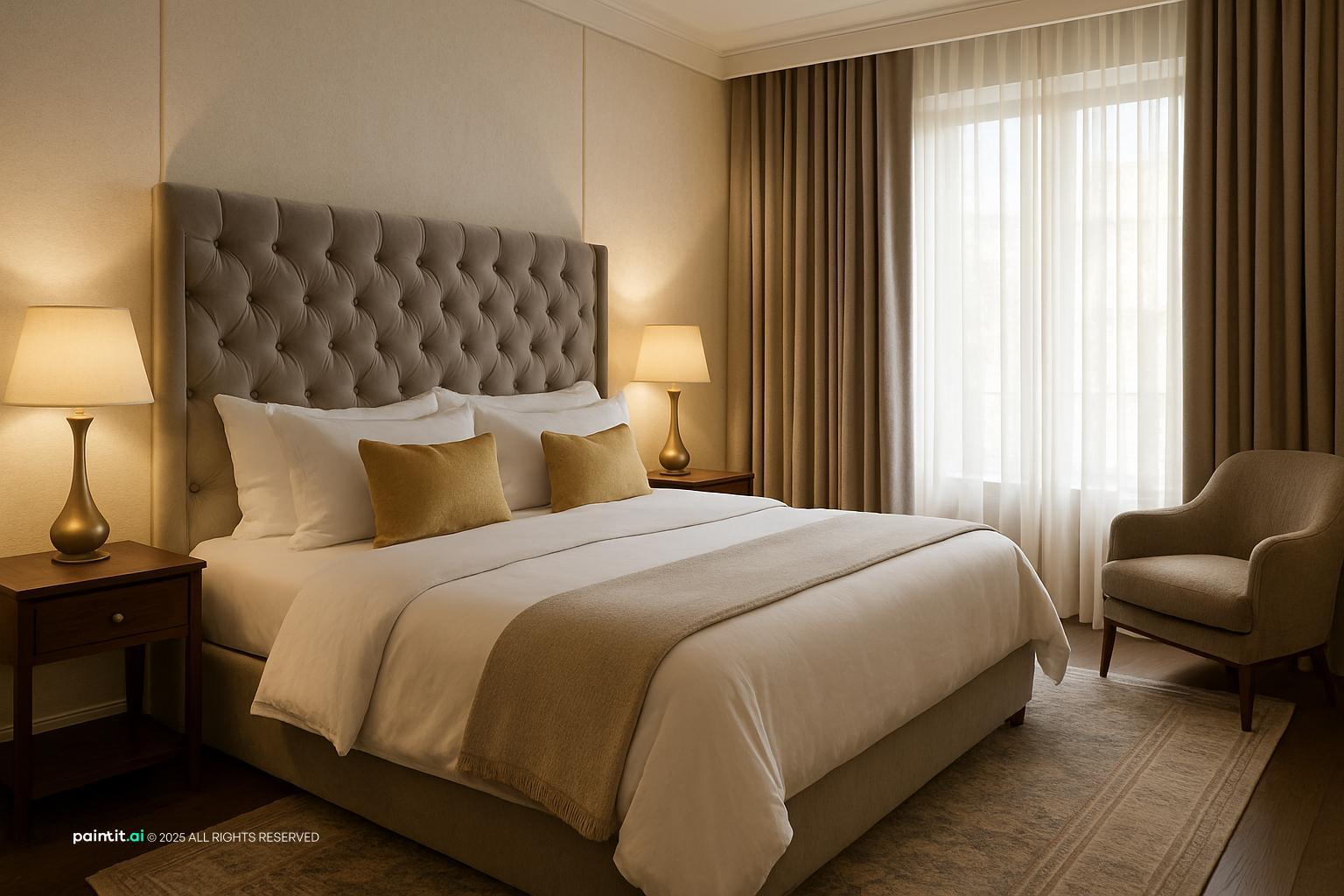
Luxury hotel room design often comes down to a tall upholstered headboard and layered bedding.
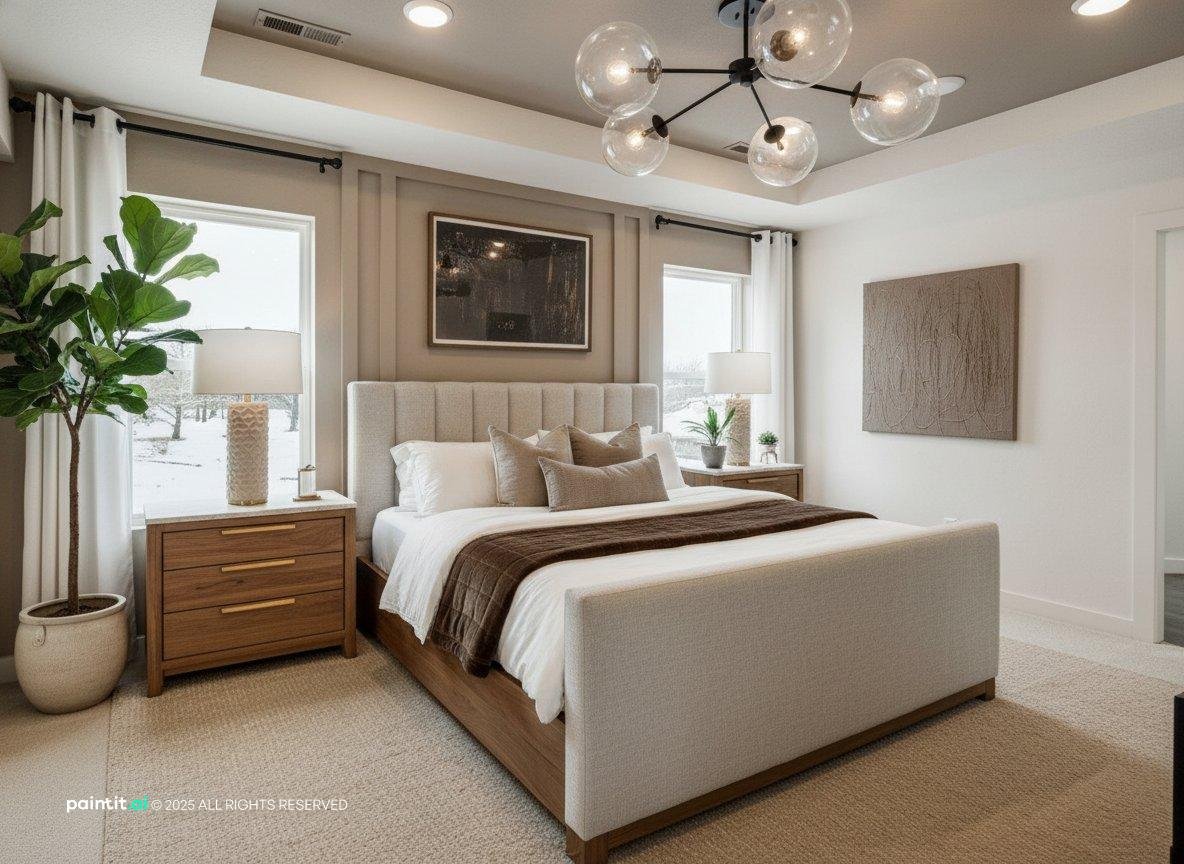
Limewash adds texture to plain walls and hides small marks better than flat paint.
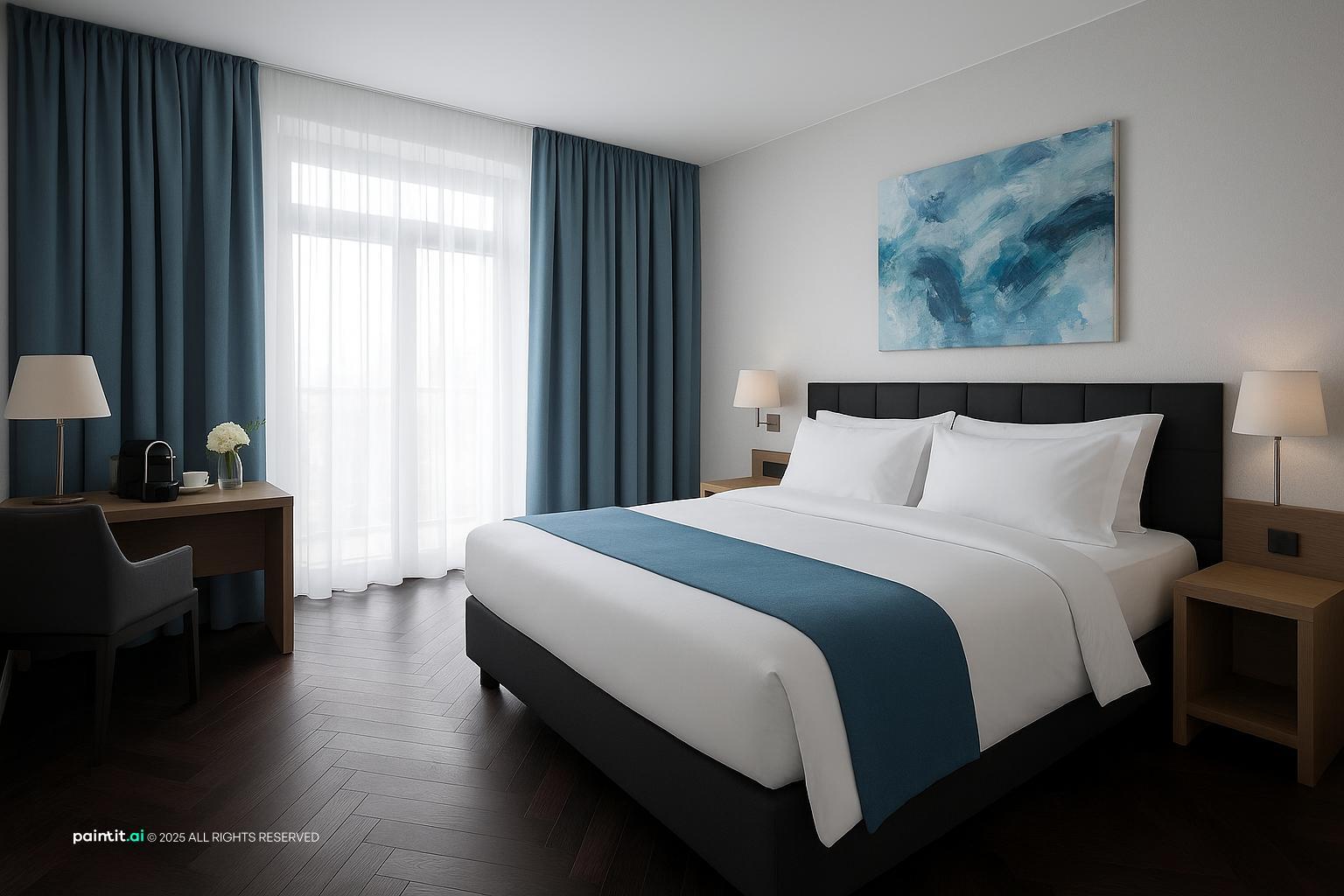
Repeating one accent colour in the curtains and the bed runner is the simplest way to give a standard room a look.
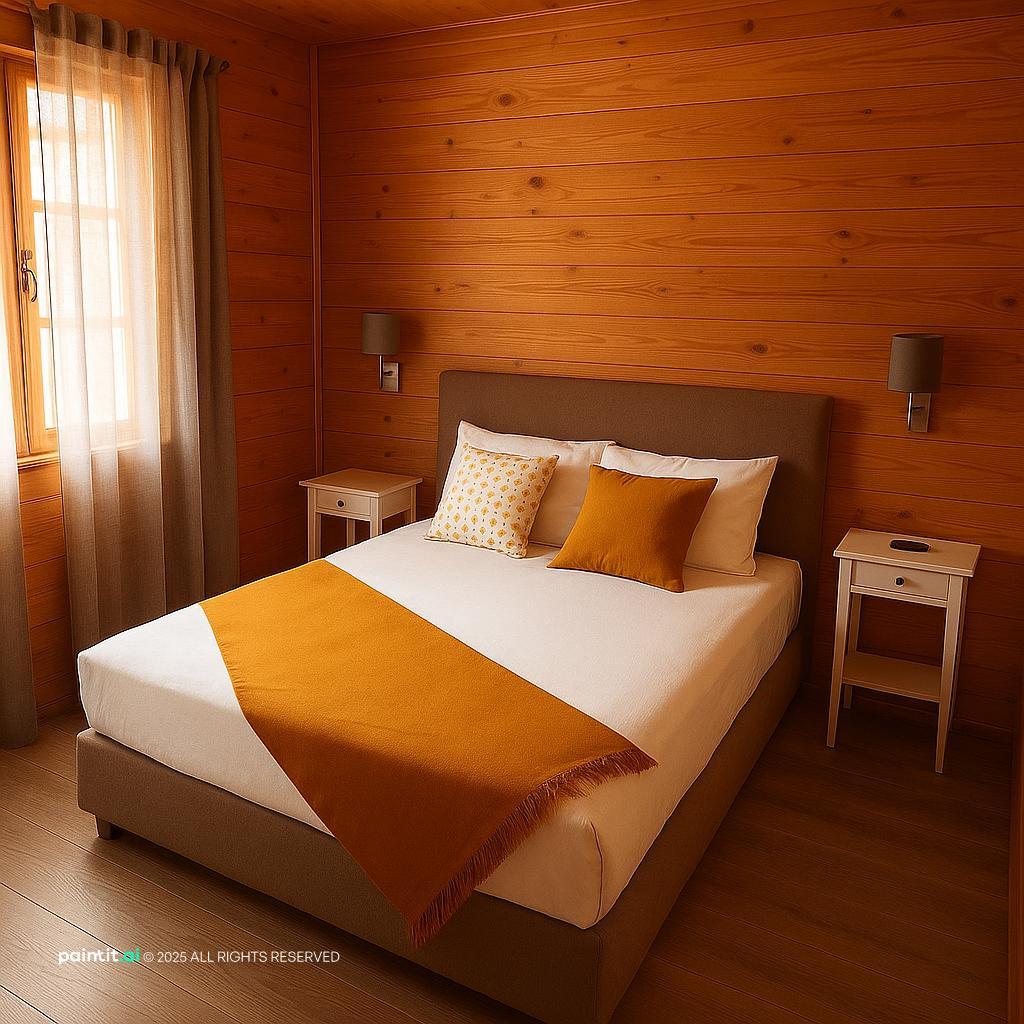
Warm wood-coloured walls make a small, plain room feel finished without new furniture.
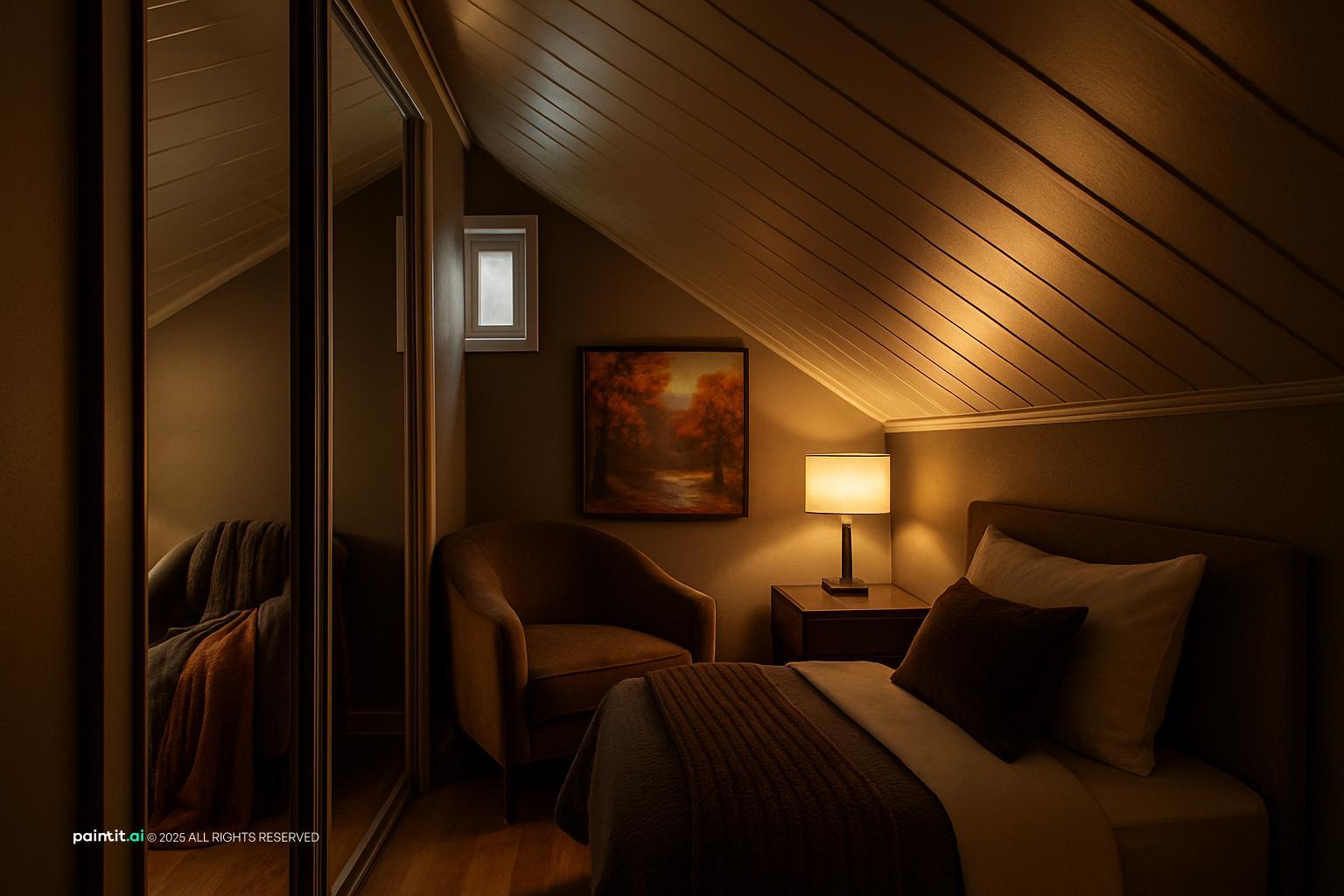
Under a sloped ceiling, put the bed or a reading chair where the ceiling is lowest and keep the walking area under the highest part.
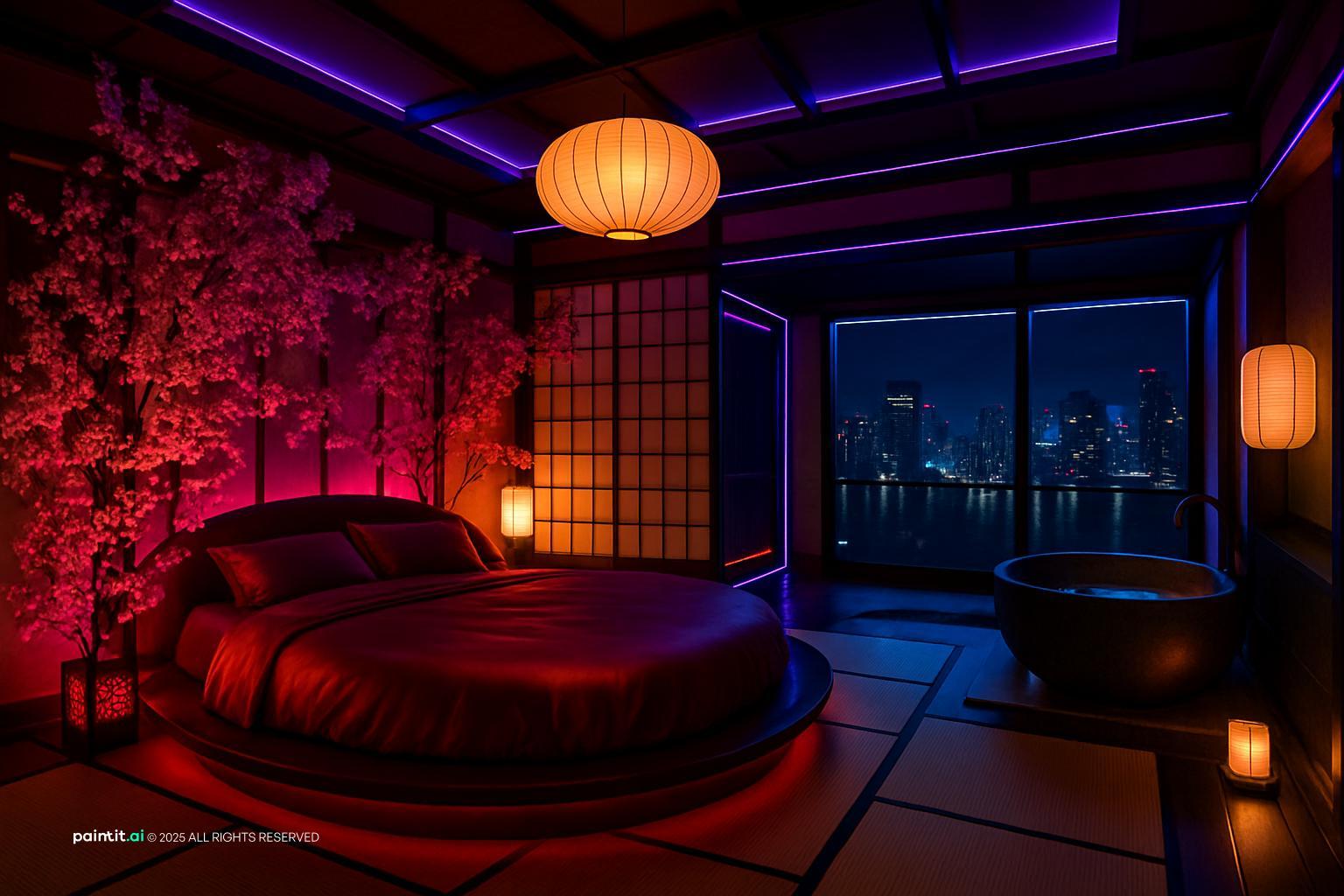
Themed rooms rely on lighting and one large graphic wall; the furniture itself stays simple.
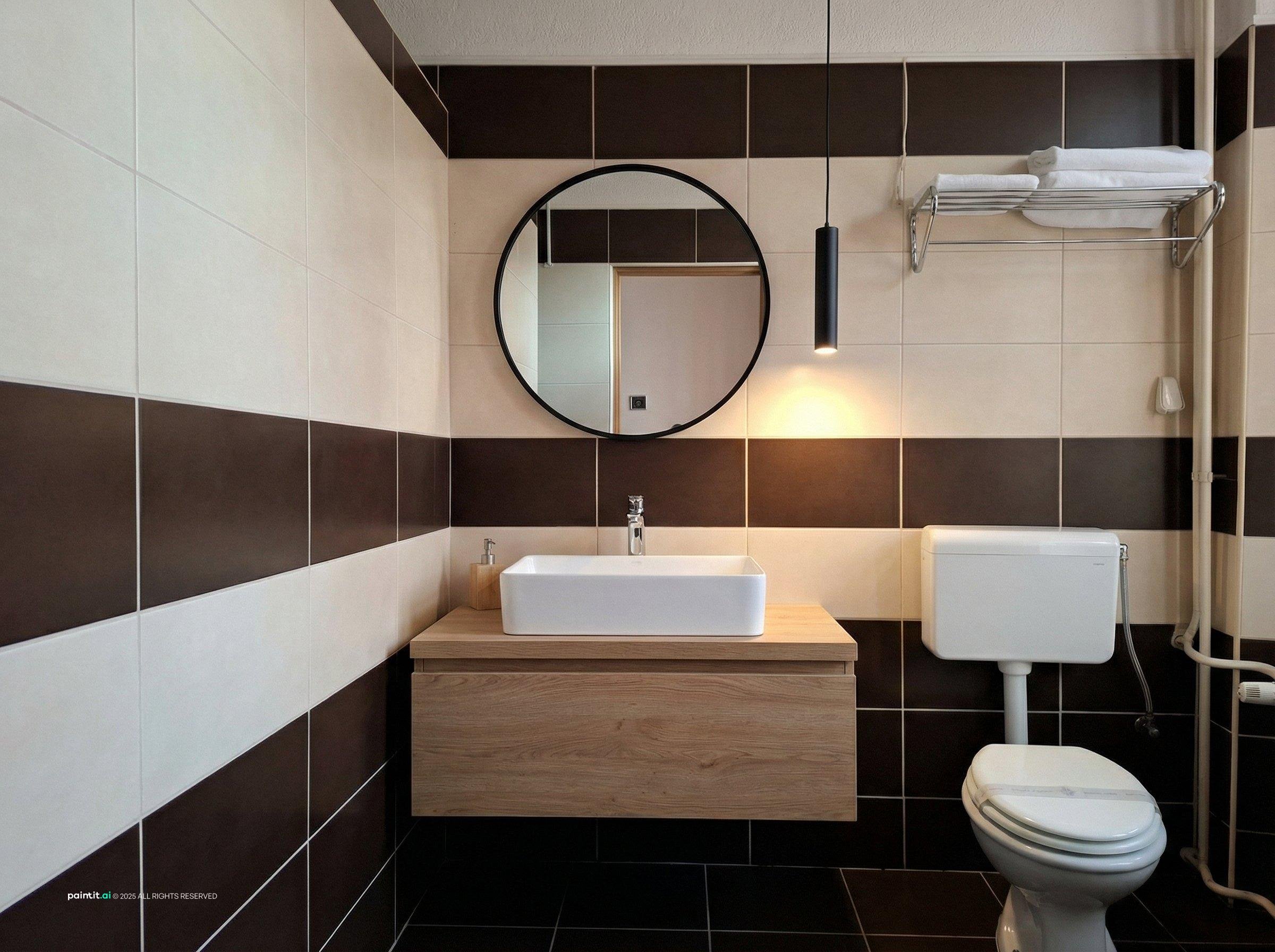
A floating vanity shows more floor, which makes a small hotel bathroom look larger and easier to clean.
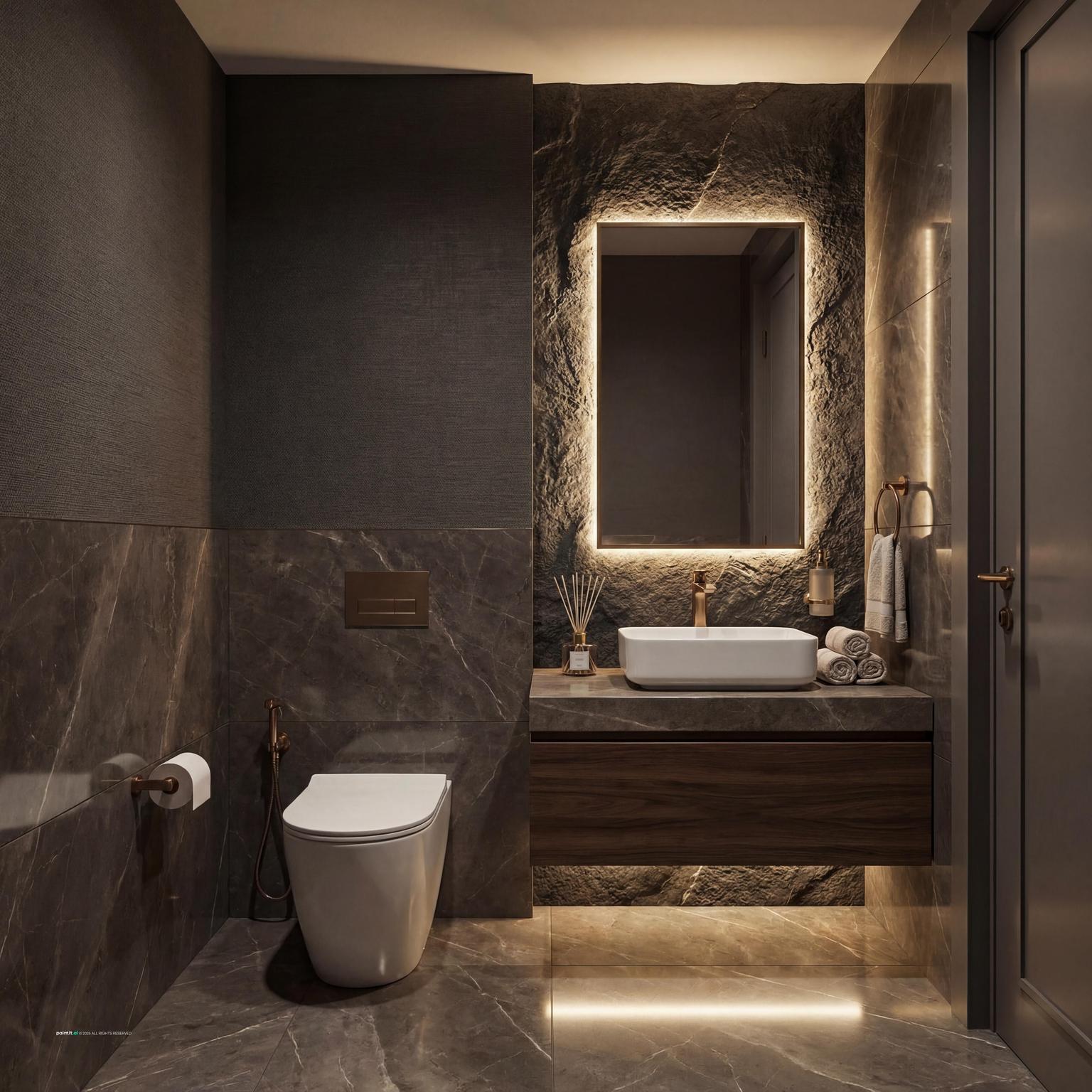
A backlit mirror and a light strip under the vanity give enough light for a dark-stone bathroom at night.
Keep the base neutral, such as cream, taupe, warm grey or pale oak, and put character into one surface: the headboard wall. Choose fabrics and finishes that survive daily cleaning; performance upholstery, limewash or washable paint and hard flooring with a rug are easier to keep looking new than light carpet.
Fix the bed wall first, then the route from the door: luggage space near the entrance, the desk or console opposite the bed, and seating by the window. In small or narrow rooms, combine the desk, TV and luggage shelf into one slim unit along a single wall.
Guests judge a room at night as much as by day. Give each side of the bed its own reading light and switch, add a dimmable ambient layer such as a lit headboard or cove, and make sure the bathroom mirror is evenly lit. A master switch by the bed or door is worth more than a statement chandelier.
Too many decorative objects that housekeeping has to move, a TV that is only comfortable from one spot, no place to open a suitcase, and bedside lights controlled only from the door. Themed rooms also date quickly when the theme goes into the furniture instead of the palette and lighting.
Upload a photo of a guest room or suite to Paintit.ai and try a new headboard wall, palette or lighting plan in the same space. It is a quick way to compare several directions with an owner or contractor before you order furniture for every room.
A clear layout from the door to the bed, easy-to-reach lighting and power on both sides of the bed, a place for luggage, and finishes that stay clean. Style comes after that, usually through the headboard wall, the palette and one or two pieces of furniture.
Put the bed against the longest solid wall, mount the TV on the wall, use one slim console for the desk and luggage, and choose wall lights instead of table lamps. Light colours, a floating vanity in the bathroom and full-height wardrobes with plain doors make the room feel larger.
Usually a tall upholstered headboard, layered bedding, good-quality textiles, warm dimmable light and fewer, better objects. Natural stone or wood in the bathroom and a proper seating area also signal a higher room category.
Boutique hotels give each property, and often each room, a stronger identity: a local theme, a bold colour, vintage pieces or art. The practical rules of a hotel room still apply underneath, so the character usually lives on the walls, textiles and lighting.
Use crisp white or neutral bedding with extra pillows, a tall upholstered headboard, matching bedside lamps on both sides, blackout curtains and as little clutter as possible on surfaces.
Yes. Upload a photo of the room to app.paintit.ai and try different styles, palettes and lighting while keeping the room's layout. It is free to start.