
Mediterranean Interior Design: Greek, Tuscan and Spanish Looks Compared
Mediterranean interior design takes its cues from old coastal homes in Greece, Italy and Spain: lime-washed walls, terracotta floors, rough wood beams, arches and a lot of daylight. The three regional versions share those materials but use color very differently, so it helps to pick one before you buy paint or tiles. Below is a side-by-side of each, 20 room examples, and the choices that keep the style from turning into a theme.
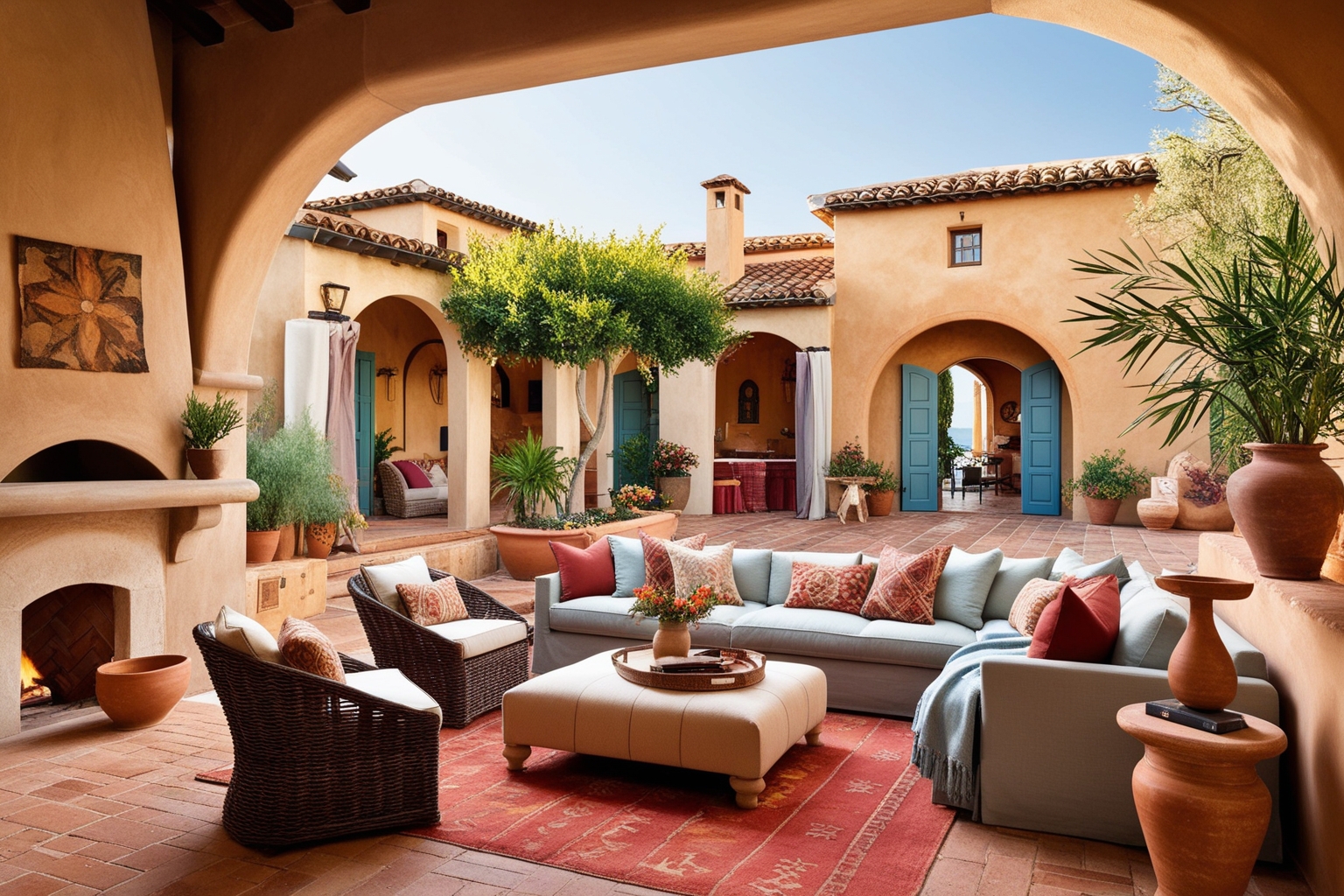
Mediterranean style interior design by region
-
Greek island
White or off-white lime-washed walls with blue as the main accent on doors, shutters and cushions. Built-in plaster benches and wall niches replace a lot of furniture. Floors are pale stone or smooth concrete, and decoration stays sparse: the white and blue contrast does most of the work.
-
Italian and Tuscan
Ochre, sienna and terracotta walls, often in a soft plaster finish, with heavy wood beams, stone or terracotta floors and wrought-iron lights. Furniture is dark wood, and ceramics sit on open shelves. It is the warmest and most furnished of the three.
-
Spanish and Andalusian
White stucco, arches and deep window reveals, terracotta floors and black wrought iron. Color comes from patterned tiles on stairs, splashbacks and fountains, usually cobalt, green and yellow, so walls and furniture stay quiet.
-
Modern Mediterranean
Keeps the arches, plaster texture and natural materials but drops most of the ornament: warm white walls, light oak, rattan, linen and a few terracotta pots. This is the version that works in apartments without beams or old floors.
20 Mediterranean interior design ideas to compare
-
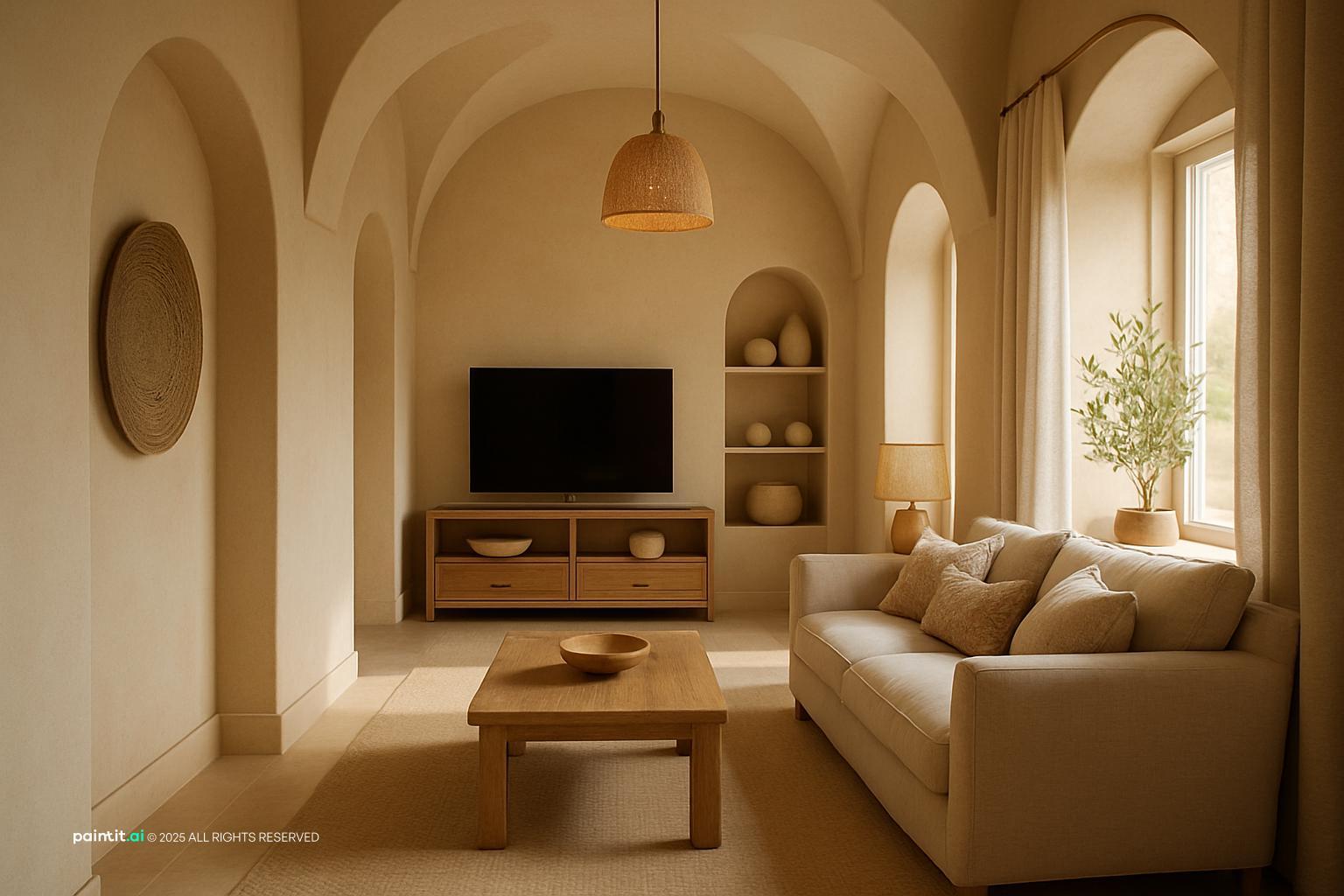
Arches in a neutral living room
Plaster arches and a TV niche bring the style into an otherwise modern room.
-
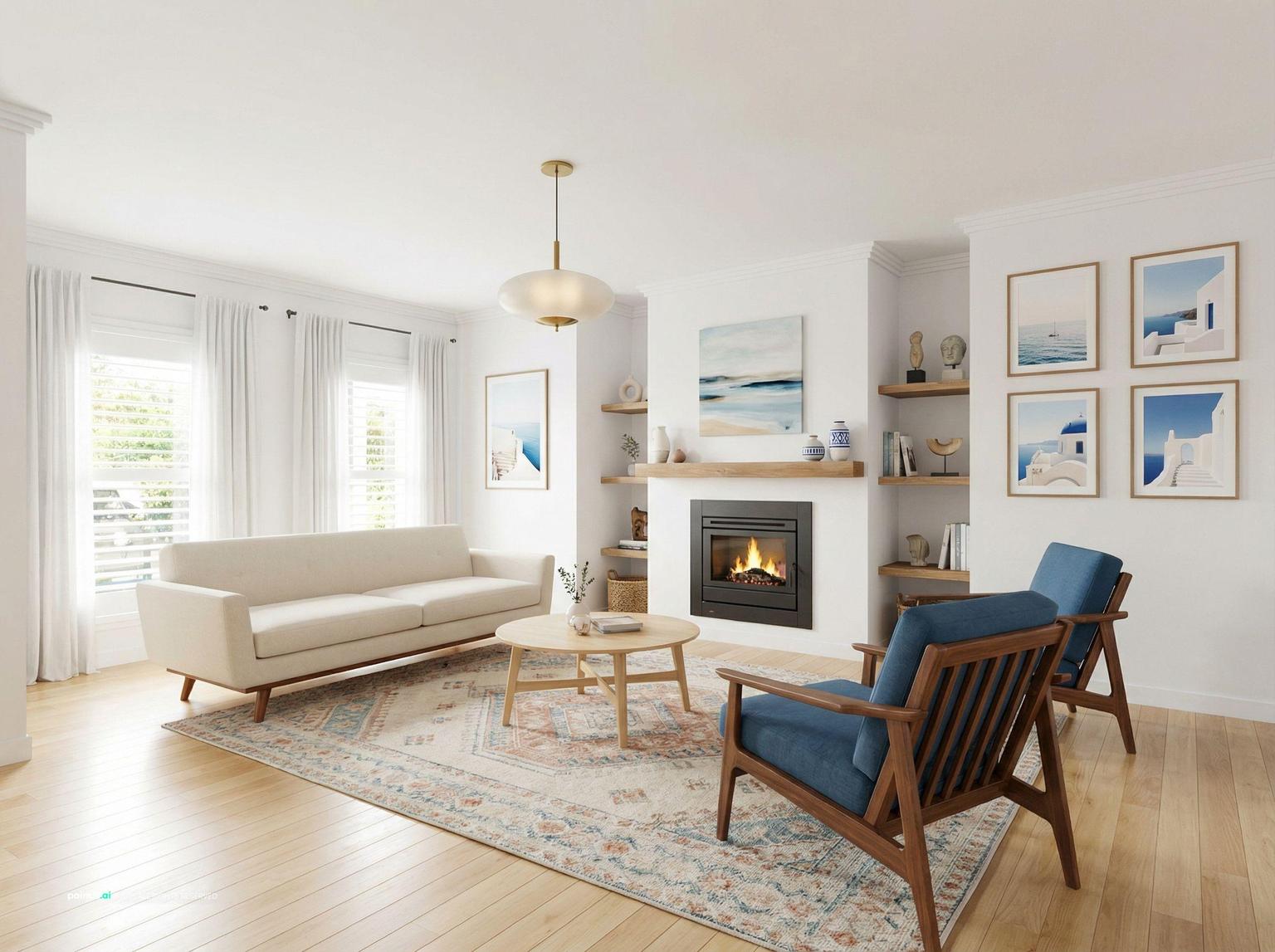
White walls with blue accents
Blue armchairs and cushions against white walls are the simplest Greek-inspired combination.
-
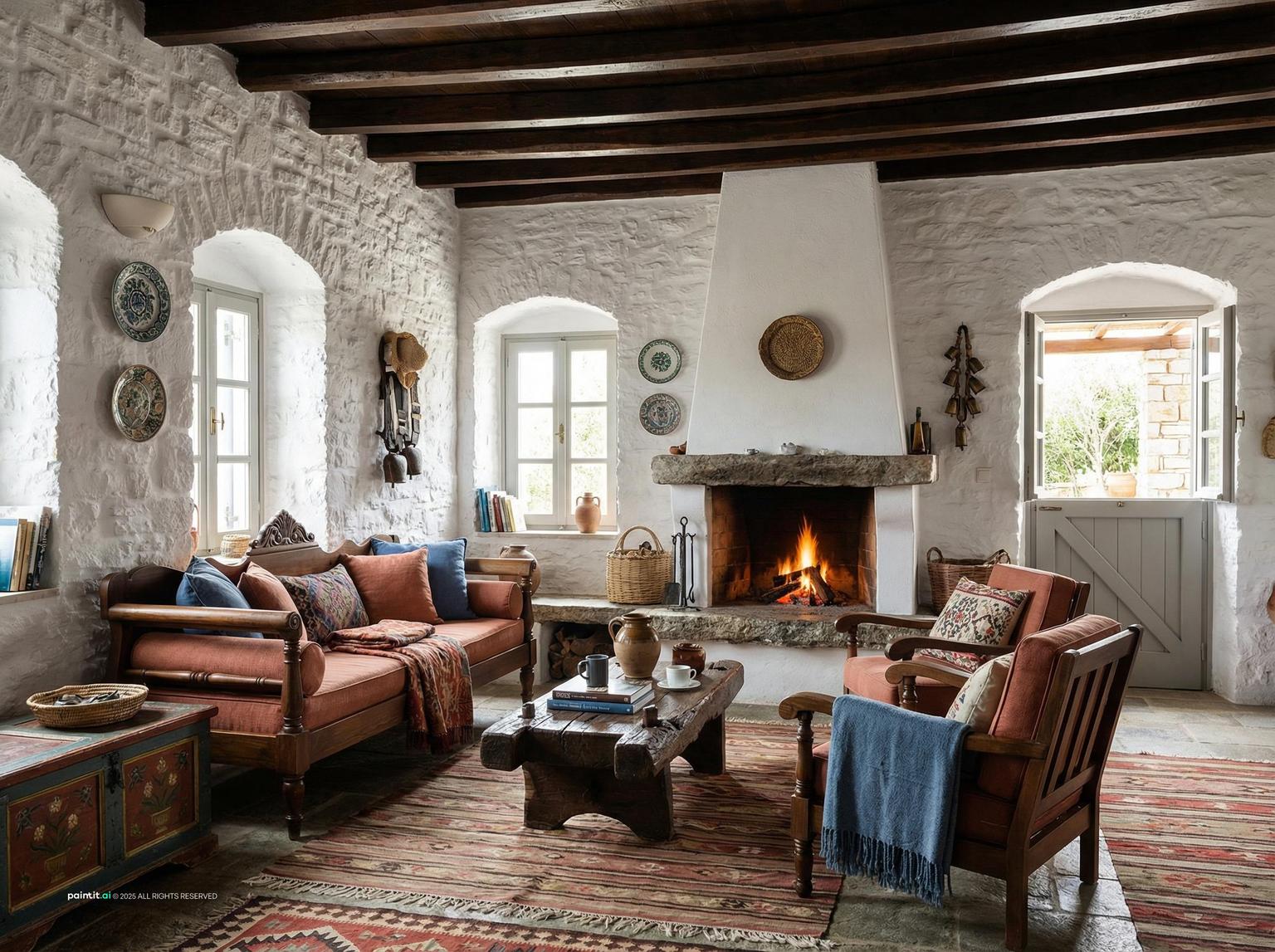
Stone walls and a plaster fireplace
Rough stone next to a smooth white fireplace is the contrast of textures typical of island houses.
-
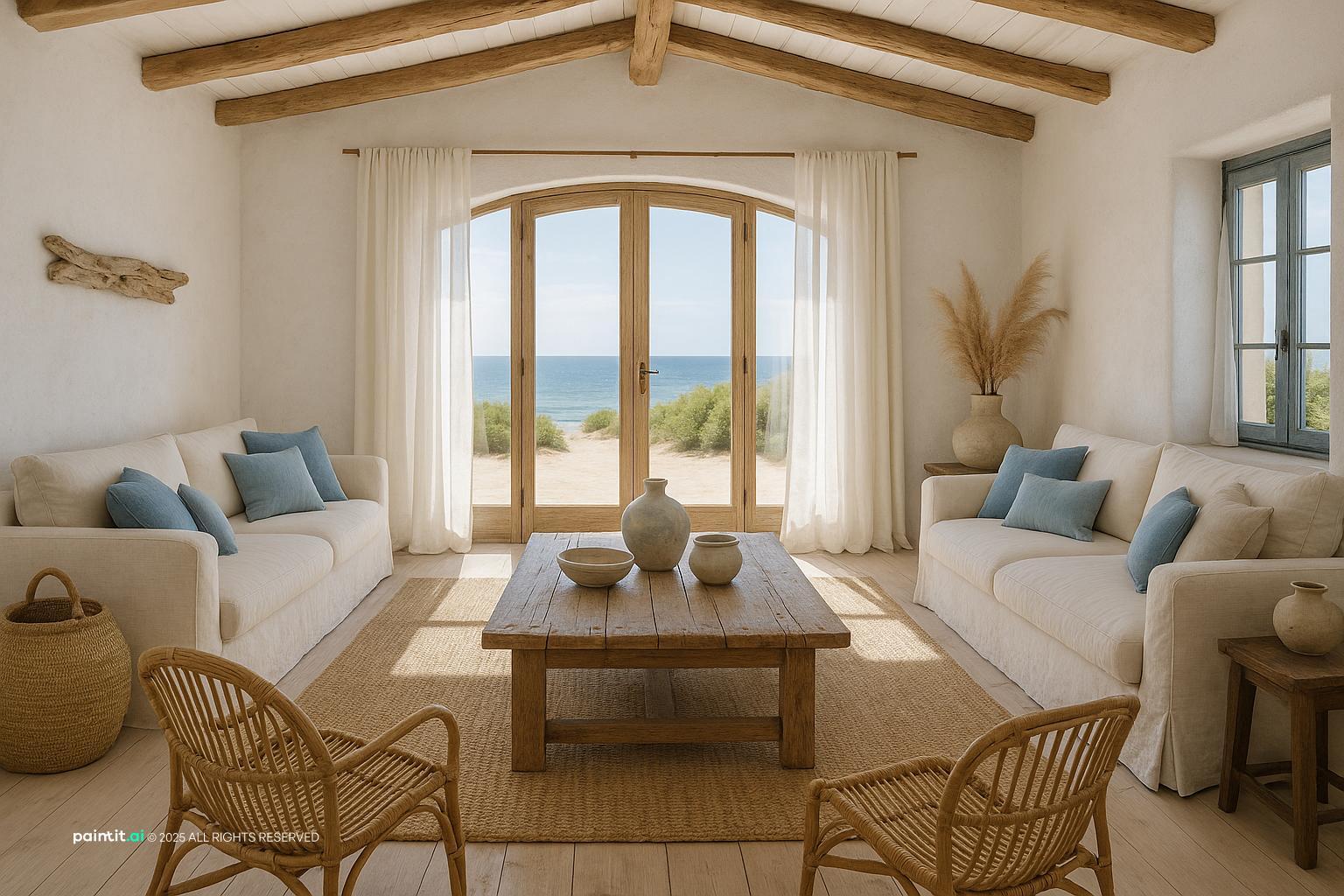
Beams, rattan and linen
Rattan, linen and pale wood keep a beamed room light and relaxed.
-
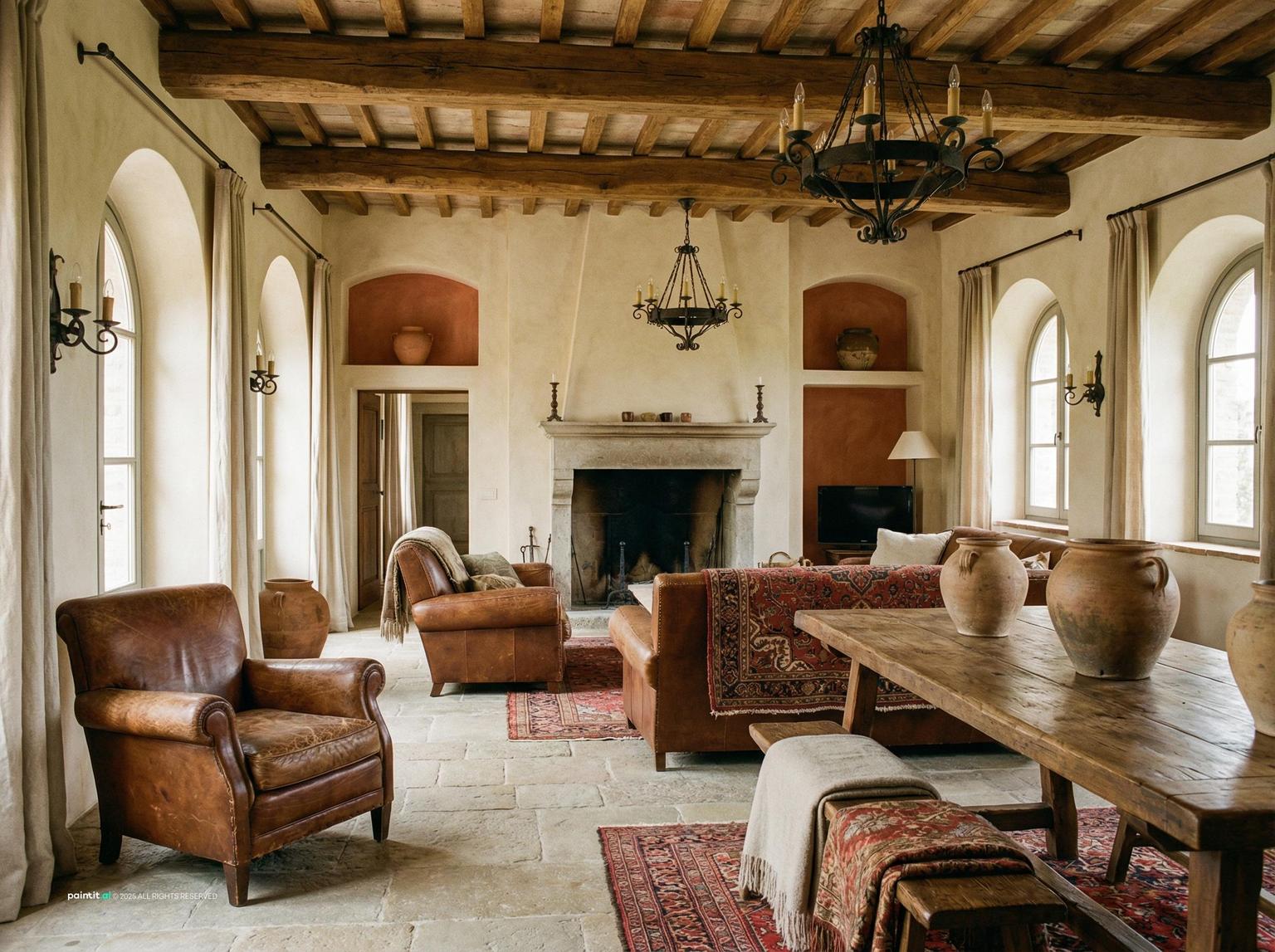
Tuscan living and dining
Stone floors, beams and a long table show why Tuscan rooms feel the most furnished.
-
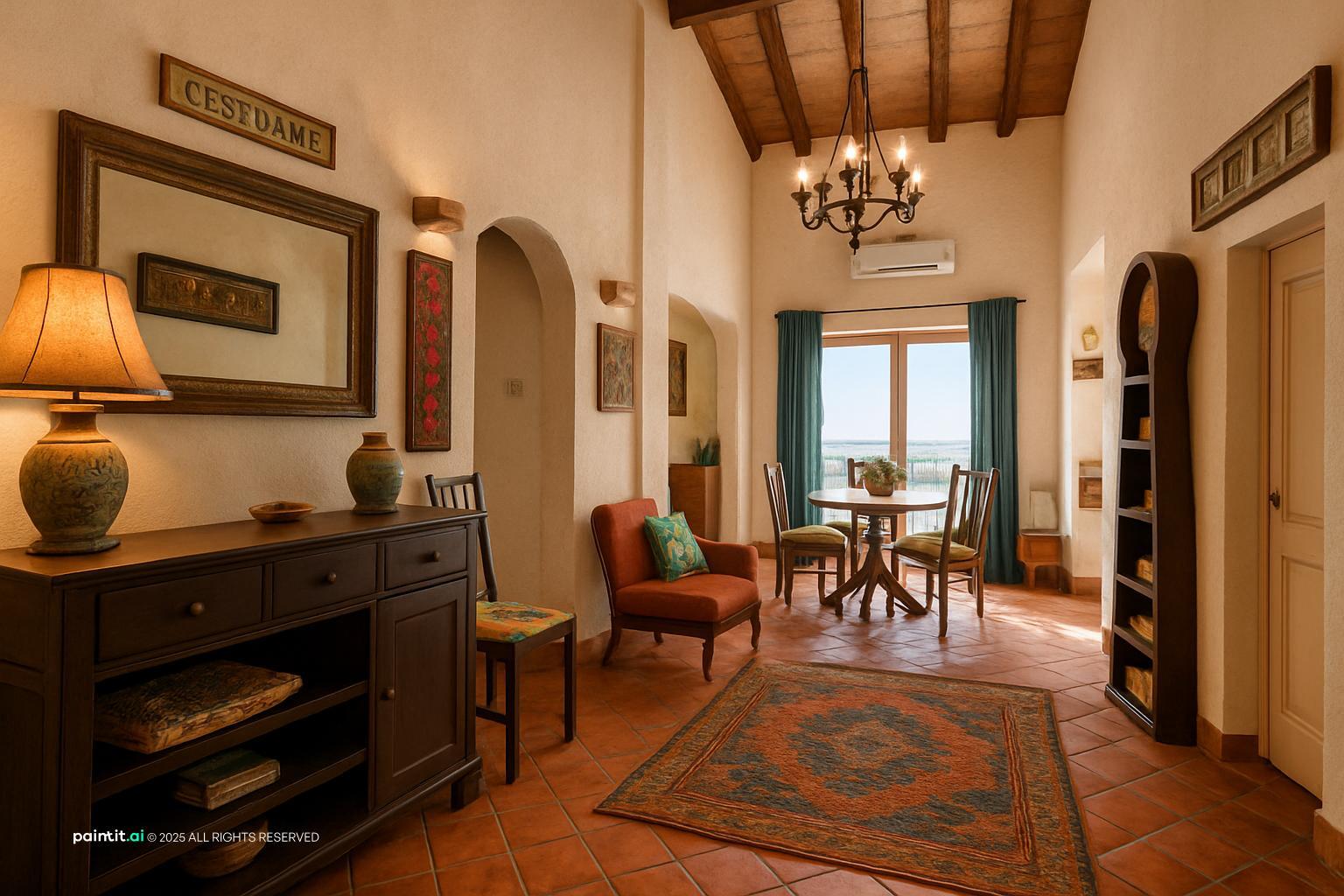
Spanish terracotta and beams
Terracotta tile and a view through an arch are the base of a Spanish room.
-
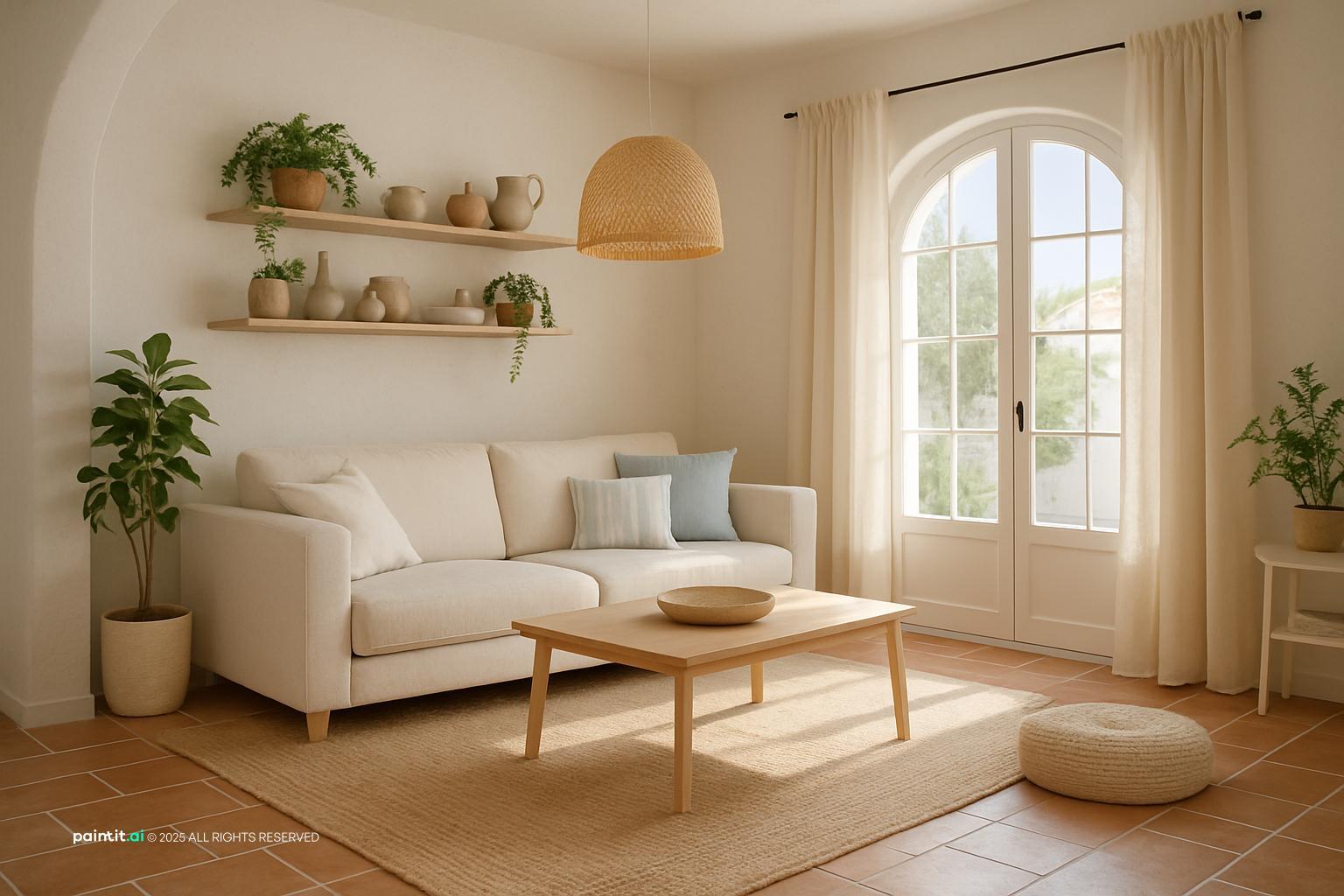
Soft whites and pale blue
Whites, beiges and a little pale blue keep a modern Spanish room calm.
-
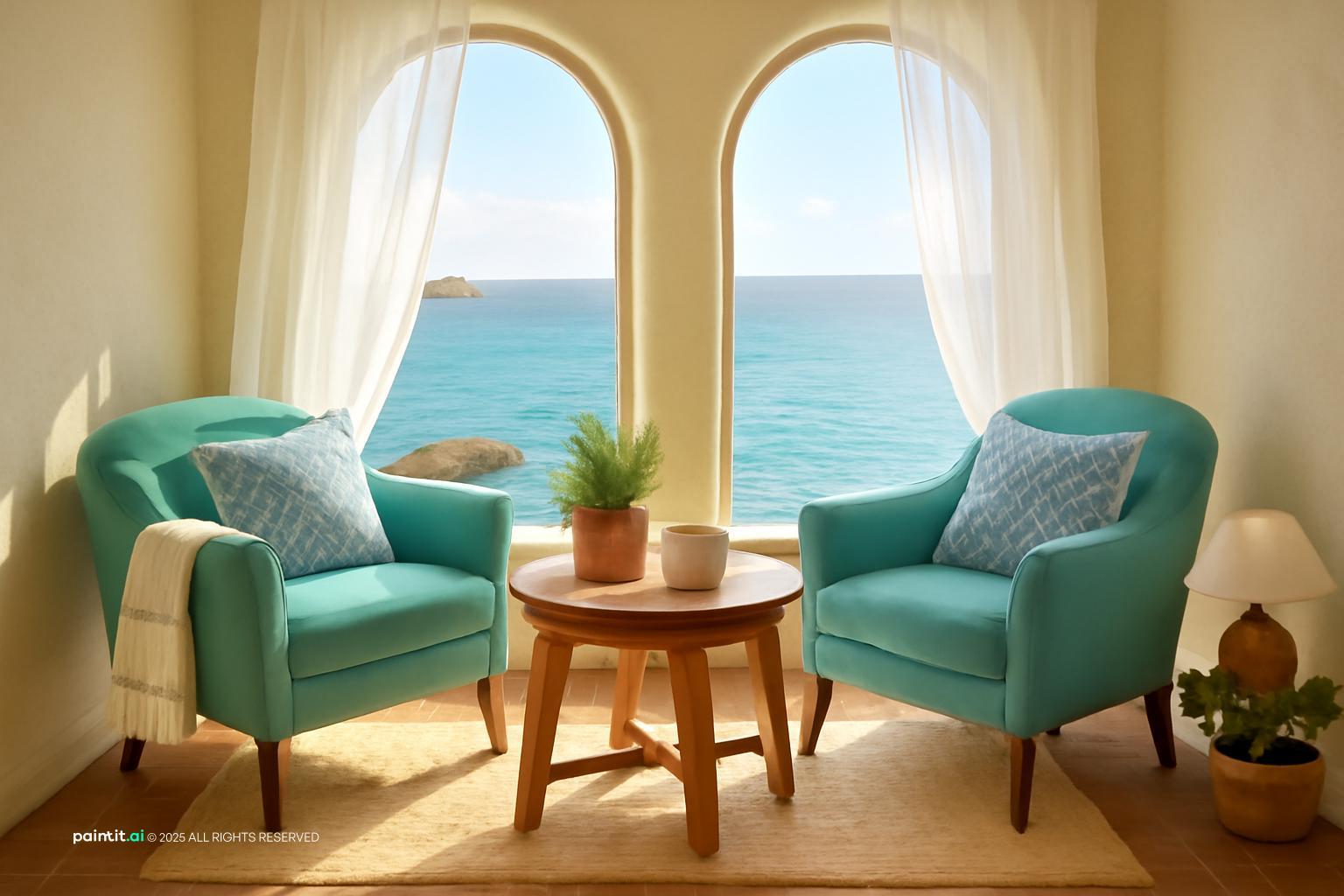
Sea-view reading nook
Two chairs by an arched window make a sunny corner with very little furniture.
-
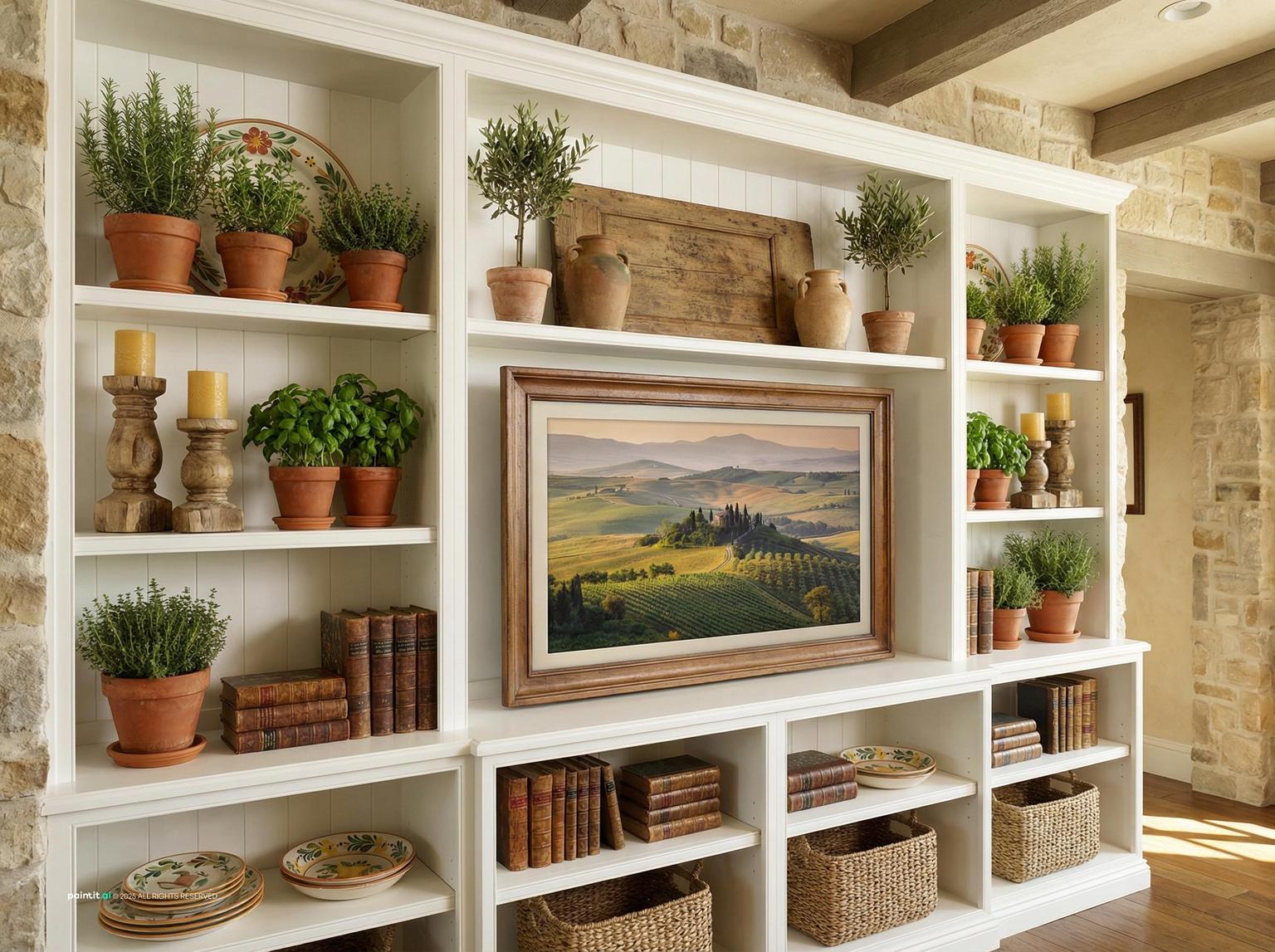
Open shelves with terracotta pots
Terracotta pots and herbs on white shelves bring the style into an ordinary TV wall.
-
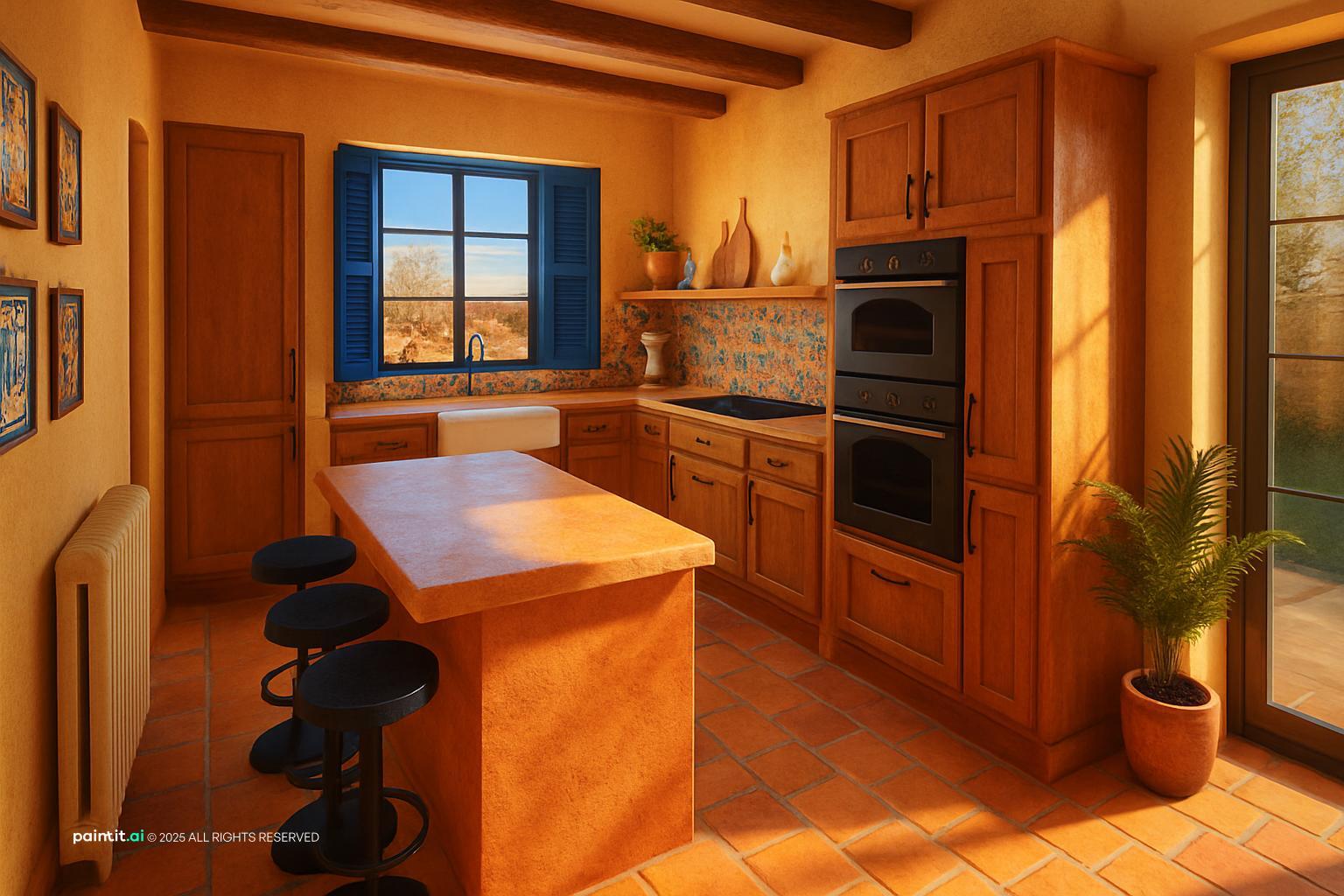
Terracotta kitchen with blue shutters
Warm wood and terracotta with one blue accent at the window.
-
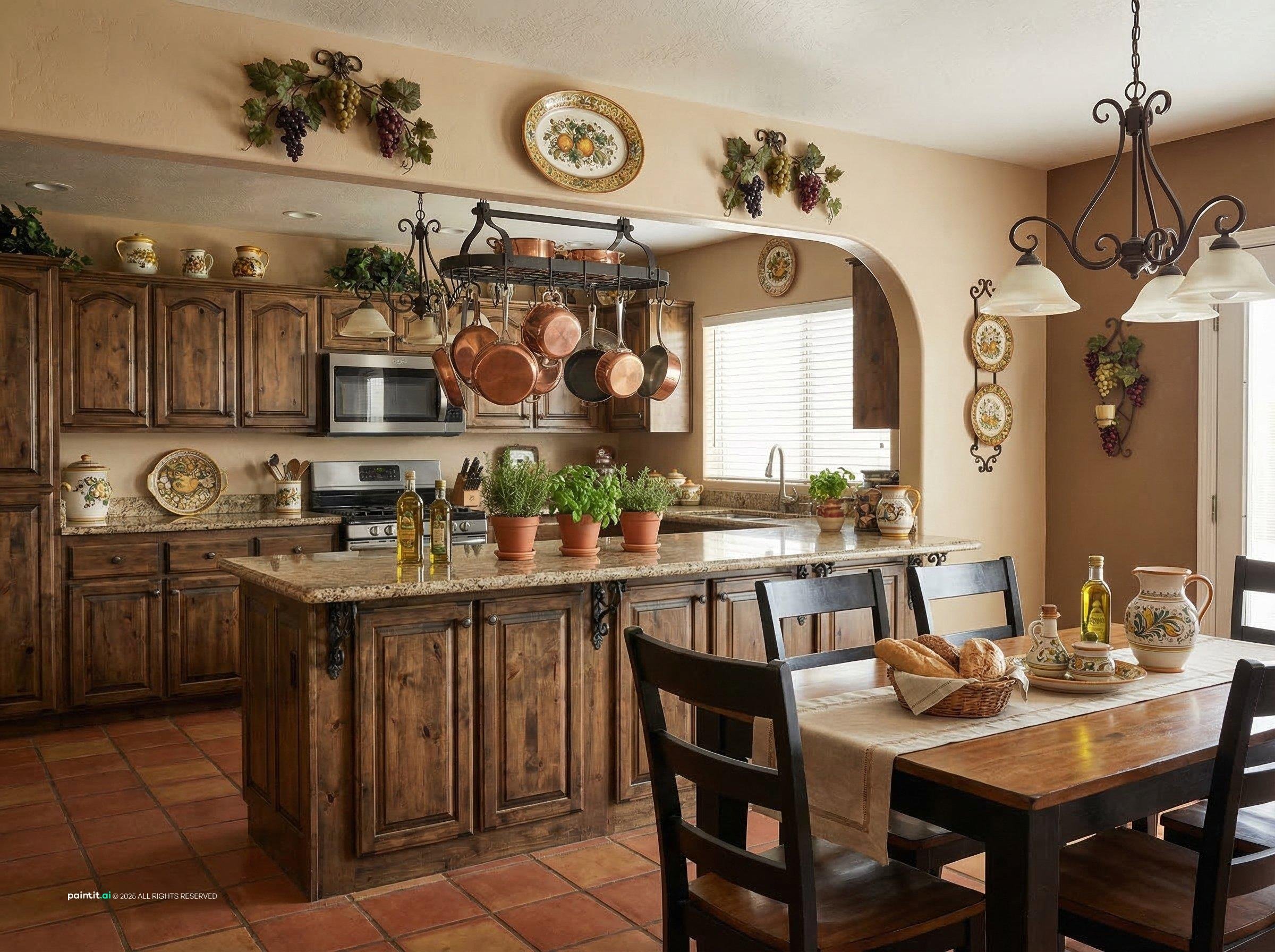
Dark wood Tuscan kitchen
Dark cabinets, terracotta floors and copper are the classic Tuscan kitchen trio.
-
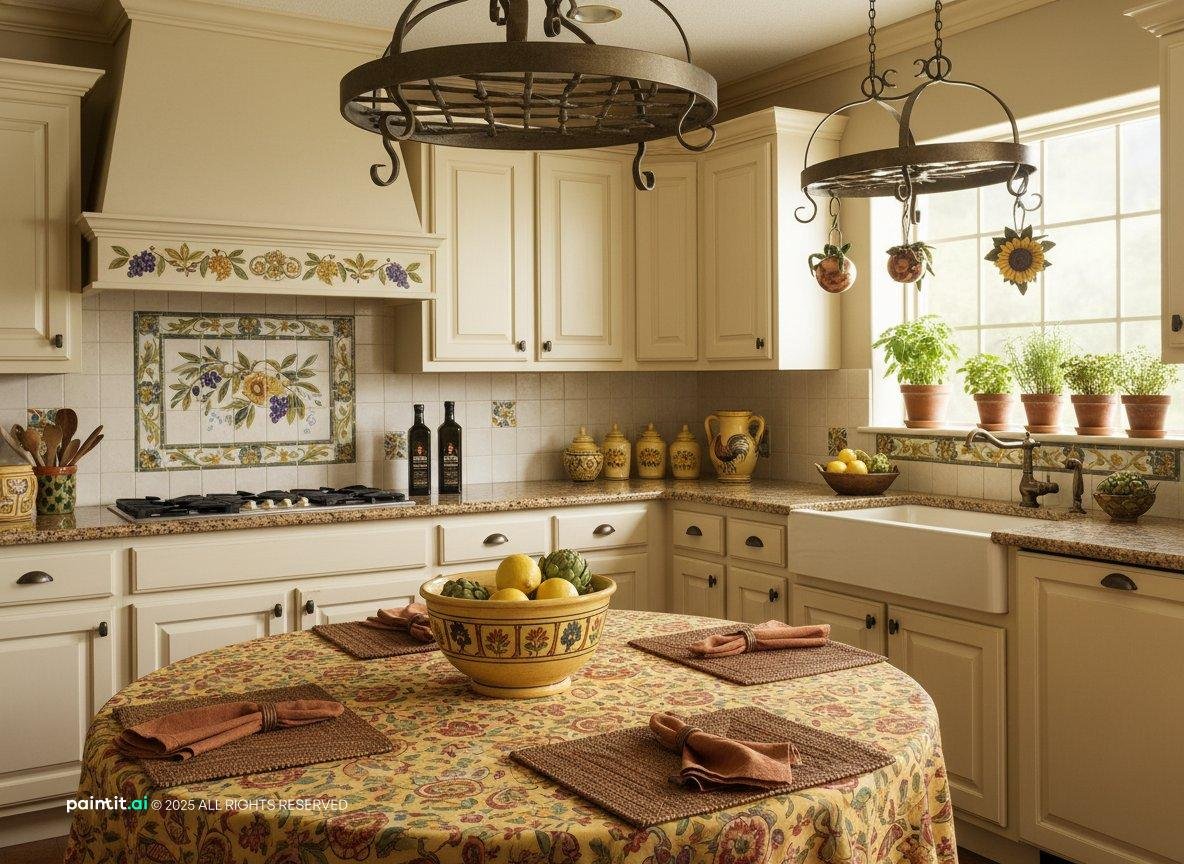
Painted tiles and a pot rack
A painted tile splashback adds color without replacing the cabinets.
-
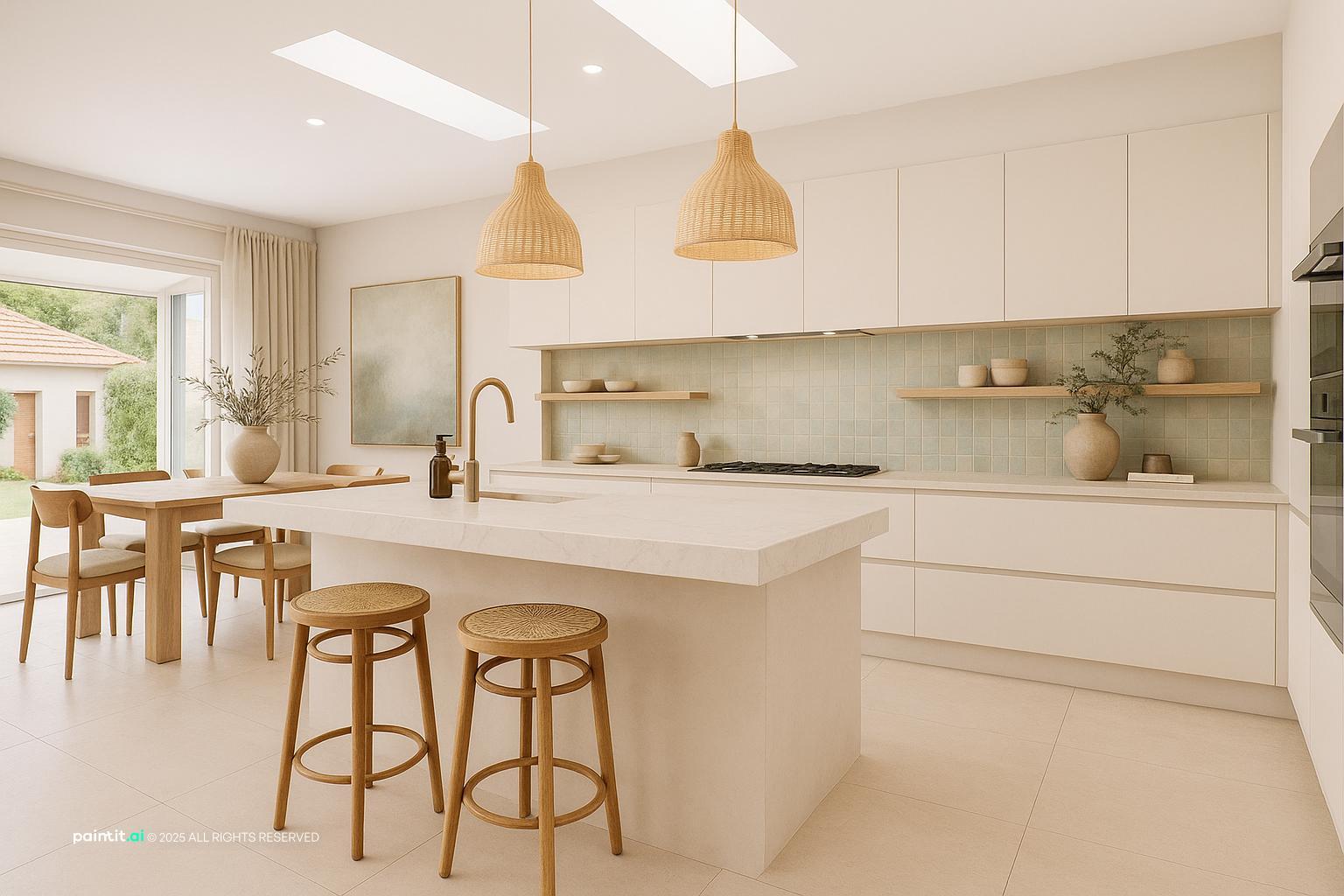
Modern Mediterranean kitchen
White cabinets, light wood and rattan pendants: the modern version with almost no ornament.
-
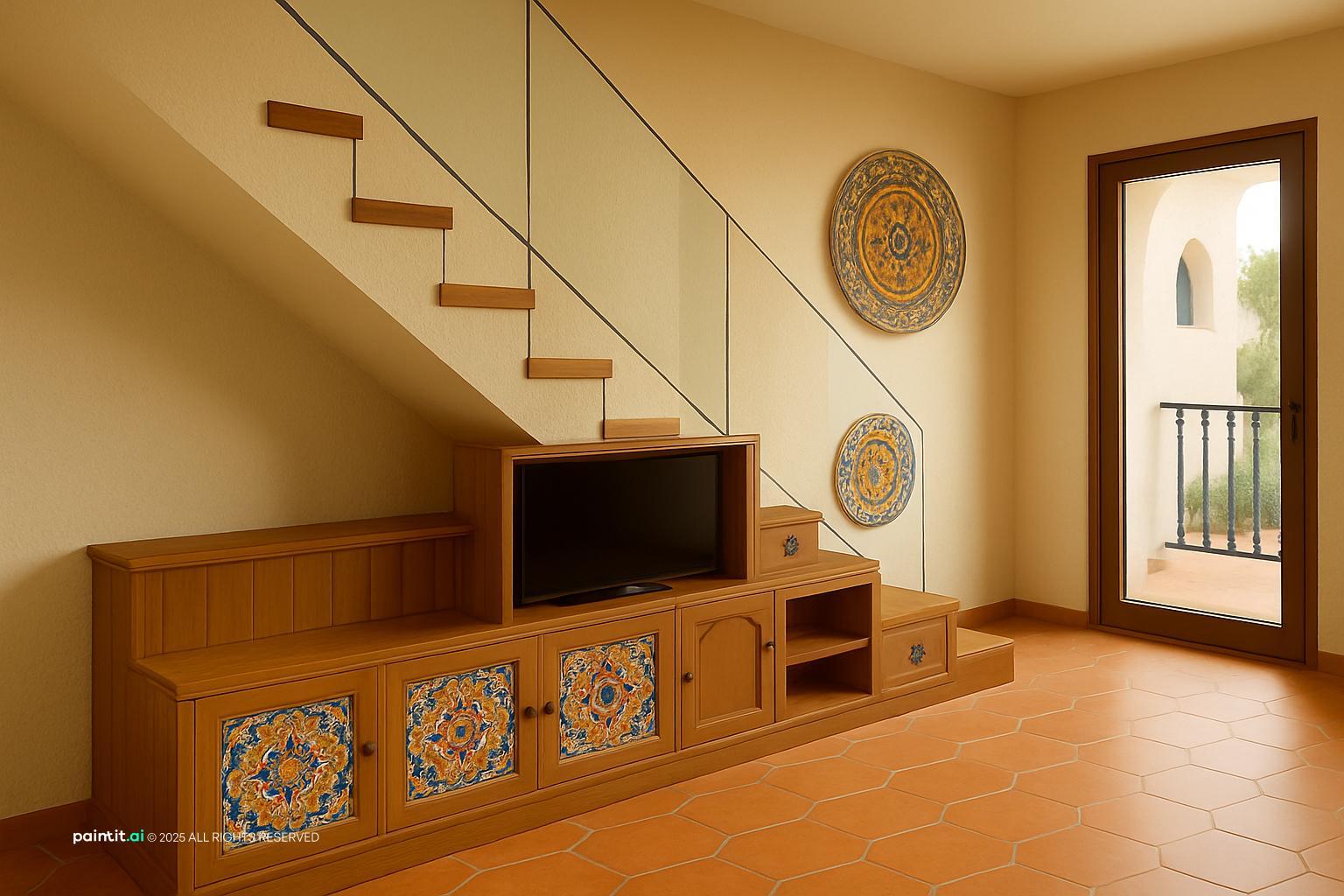
Tiled storage under the stairs
Painted tiles on a built-in unit add Spanish pattern in a small area.
-
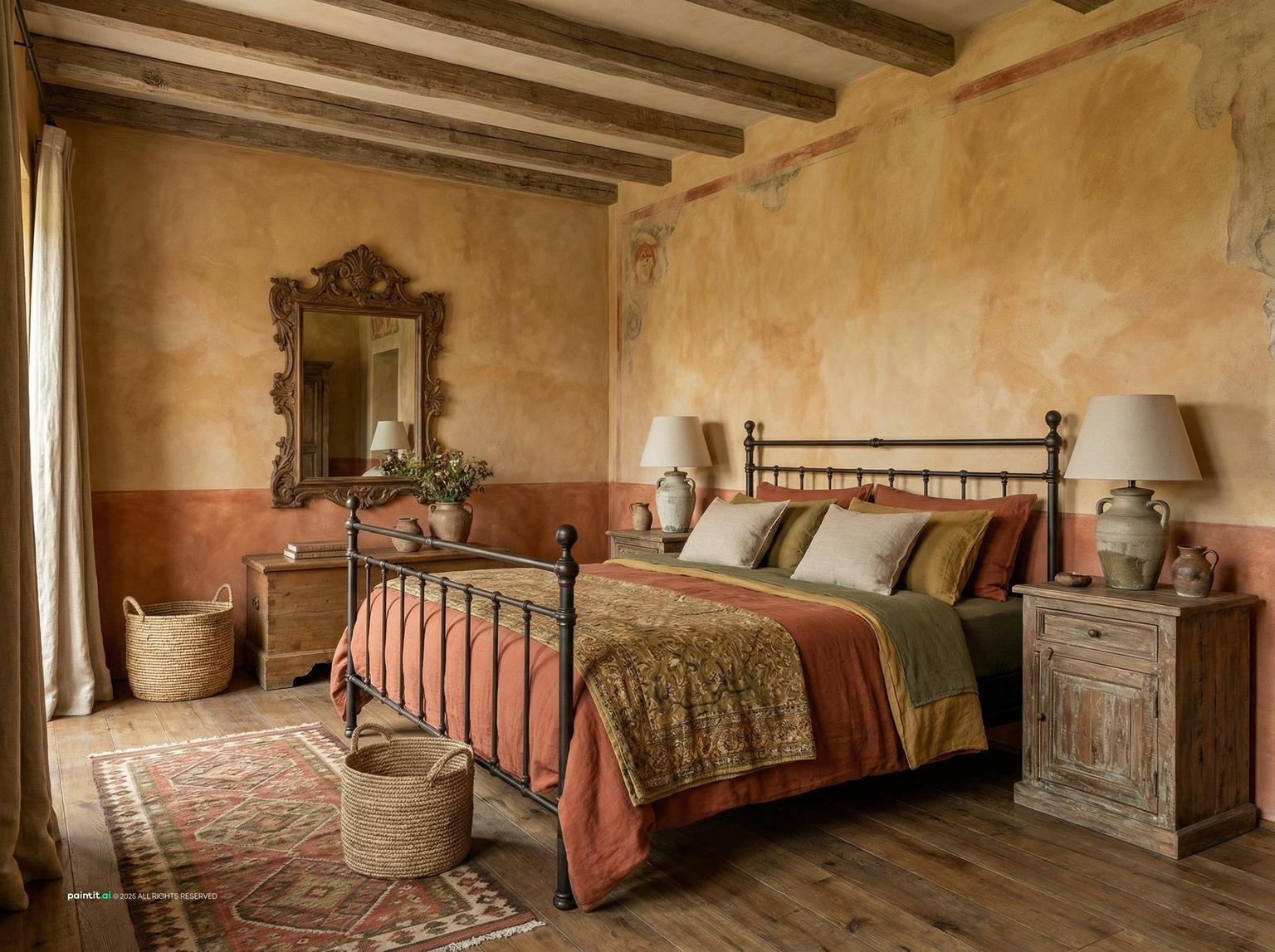
Ochre plaster bedroom
Ochre plaster walls give a bedroom warmth even on a grey day.
-
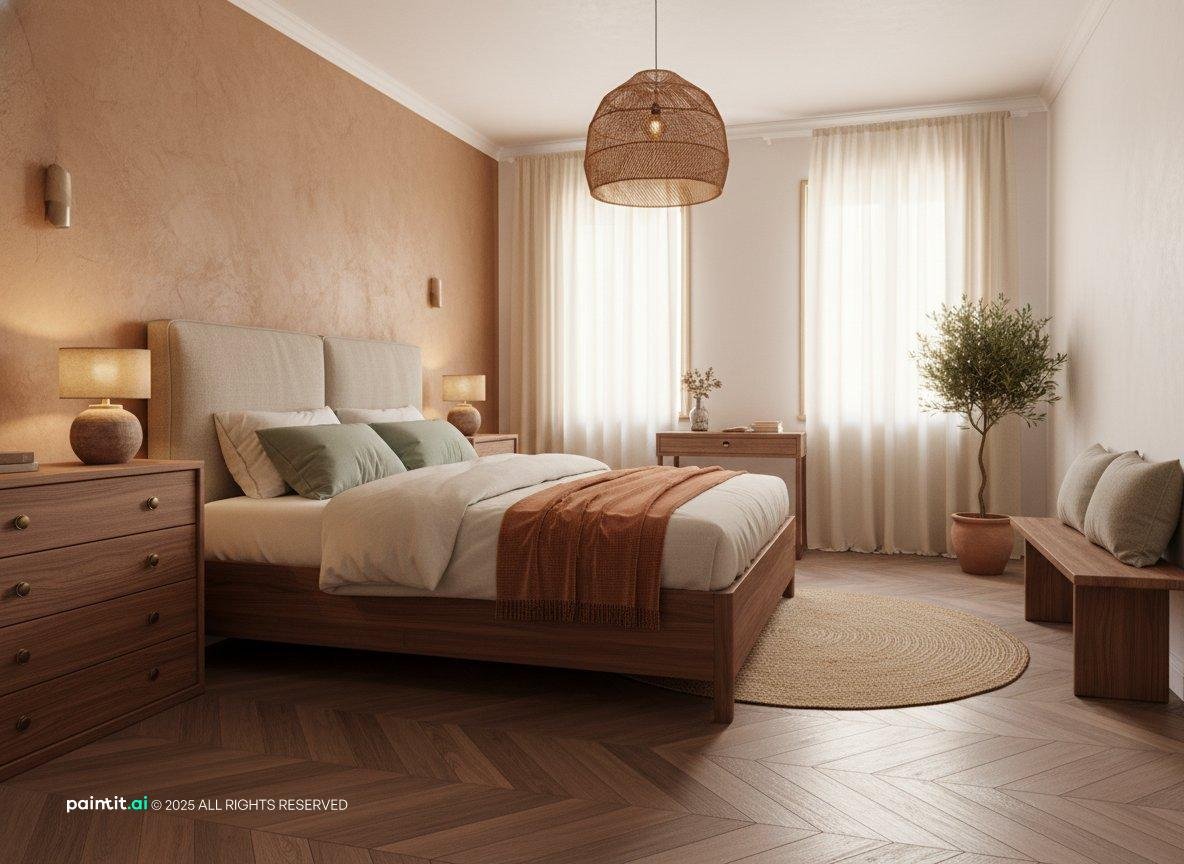
Rustic warm bedroom
A potted olive tree and warm plaster are enough to set the mood.
-
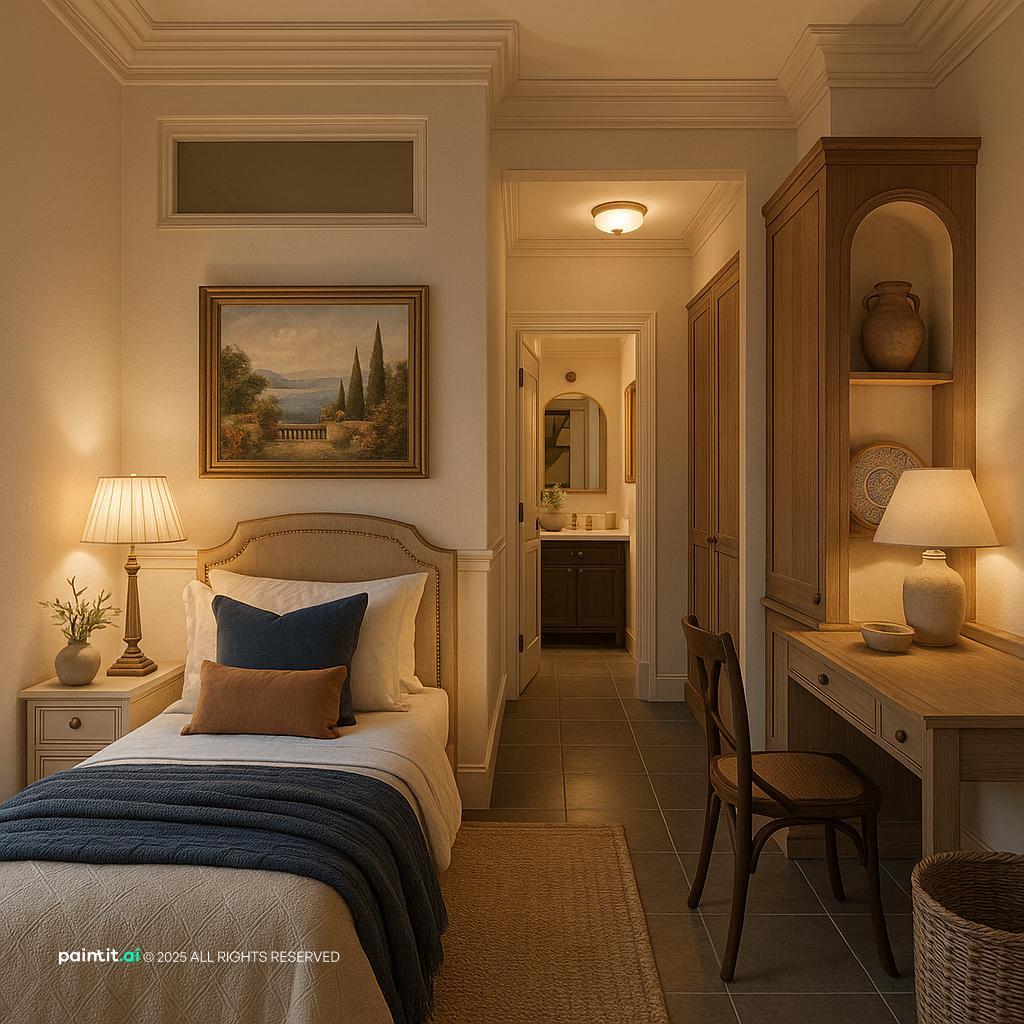
Blue linen in a small bedroom
Arched niches and blue linen fit the style into a compact bedroom.
-
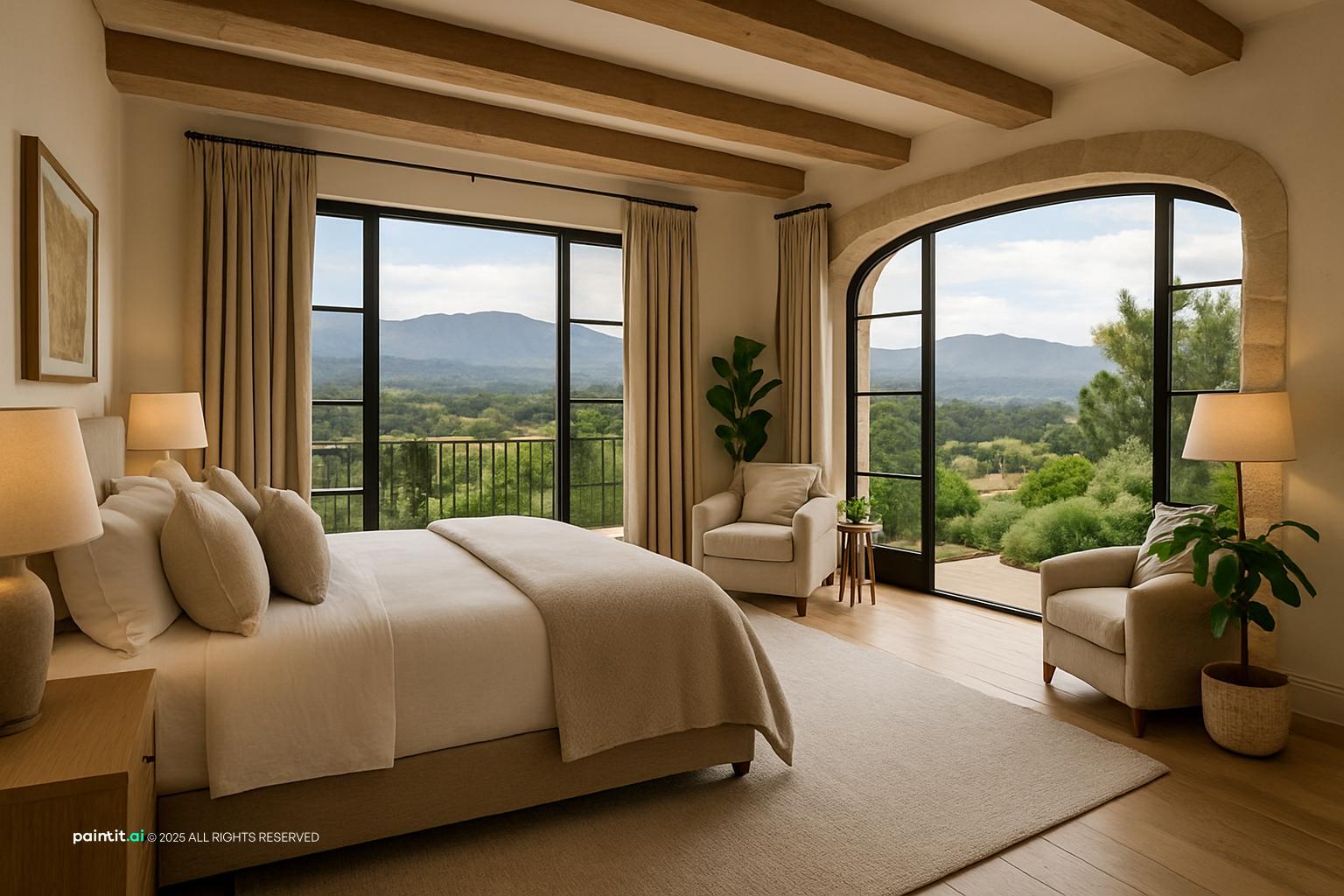
Arched windows and beams
Arched windows and beams give a plain bedroom its Mediterranean architecture.
-
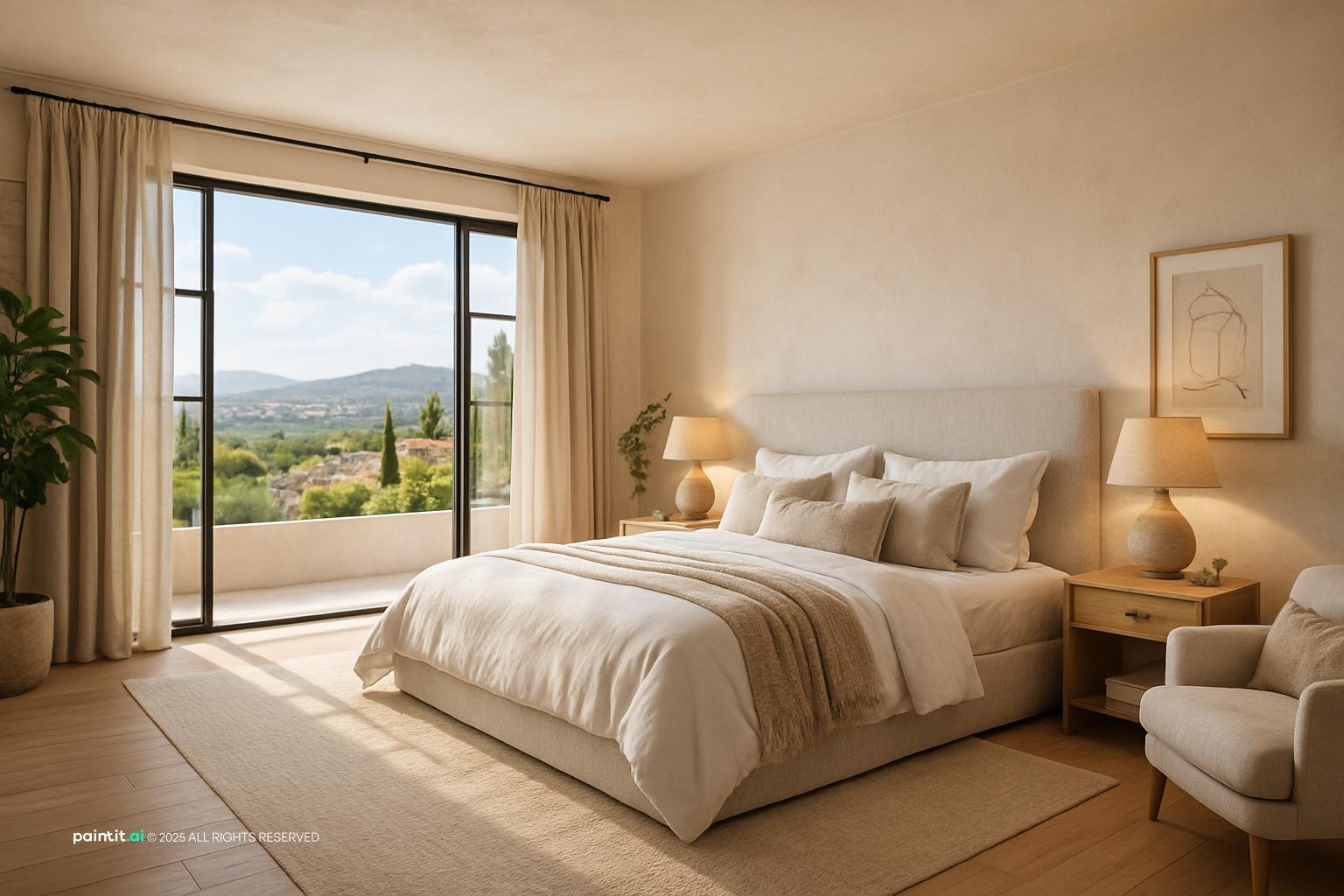
Bedroom opening to the view
Large glass doors and pale linen keep the focus on light and the view.
-
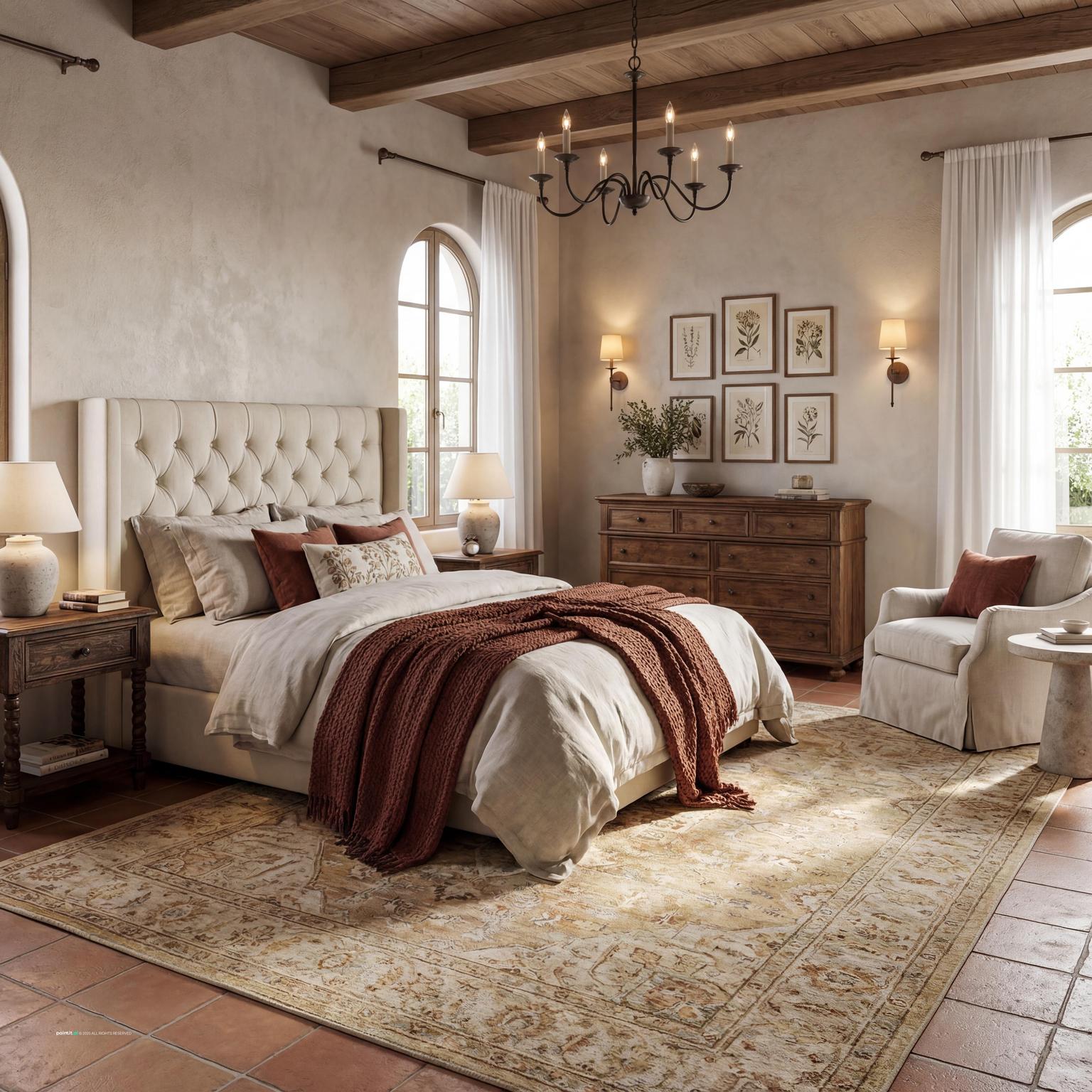
Master suite with beams
Beams and a warm rug balance a more formal bedroom.
How to get the look without a theme-park feel
-
Start with one warm white for the walls. Lime wash or mineral paint gives the soft, slightly uneven finish that flat acrylic can't. Then choose a single regional accent: blue for Greek, terracotta and ochre for Tuscan, tile colors for Spanish. Using all three at full strength is the quickest way to lose the look.
-
Terracotta or stone floors, plaster walls and wood beams carry the style. If the floor has to stay, put down a large jute or flat-weave rug and bring terracotta in through pots, a tiled splashback or clay lamp bases.
-
Furniture should be low and solid: wood, rattan, linen slipcovers. One carved or painted antique is plenty; a room full of them reads as a set. Built-in benches and niches are worth adding during a renovation, because arches and deep walls are the architecture this style depends on.
-
The style assumes strong daylight, so keep windows bare or use sheer linen. For evenings, use warm 2700K bulbs in ceramic, rattan or wrought-iron fittings. Iron pendants suit Tuscan and Spanish rooms; woven shades suit Greek and modern ones.
-
Common mistakes: too many souvenirs (mosaic plates, lemons, anchors), cool white bulbs, glossy paint on plaster walls and heavy curtains that block the light. To check which version suits your room, upload a photo to Paintit.ai and compare Greek, Tuscan and modern Mediterranean on the same space before you buy anything.
FAQ
-
Mediterranean interior design is a style based on traditional homes along the Mediterranean coast, mainly in Greece, Italy and Spain. It uses plaster or lime-washed walls, terracotta and stone floors, wood beams, arches, wrought iron and natural textiles, with rooms arranged to make the most of daylight.
-
A warm white or cream base, earthy terracotta and ochre, and blue or olive green as accents. Greek rooms lean on white and blue, Tuscan rooms on ochre and terracotta, and Spanish rooms take their accent colors from patterned tiles.
-
Tuscan is one regional version of Mediterranean style. It is warmer and heavier: ochre plaster, dark wood furniture, beams and iron. Mediterranean as a whole also covers the lighter Greek and Spanish versions and the pared-back modern look.
-
Use a plaster-effect or lime paint in warm white, add arches or niches if you renovate, and bring in terracotta, light oak, rattan and linen. Plants such as olive trees and herbs help. Keep ornament to a few pieces so the room still reads as modern.
-
Yes. The modern Mediterranean version suits small spaces best: pale walls, low wooden furniture, sheer curtains and a few terracotta or blue accents. Skip heavy beams and dark Tuscan furniture, which make small rooms feel crowded.