
Georgian Interior Design: Proportion, Paneling and Period Colors
Georgian interior design comes from British and colonial American homes built roughly between 1714 and 1830. Its rules are about proportion: symmetrical walls, tall sash windows, paneling split by a dado rail, a cornice at the ceiling and a fireplace as the center of the room. Below is how the look changed across the period, how it differs from Victorian, 13 room examples and practical advice for period homes and new builds alike.

Georgian style interior design across the period
-
Early Georgian (Palladian)
Based on the classical rules of Andrea Palladio: strict symmetry, full-height wood paneling, heavy door cases and marble fireplaces. Colors were muted stone, drab and olive tones, and furniture was solid walnut or early mahogany.
-
Mid Georgian
Rooms stayed symmetrical but decoration loosened, with carved mirror frames and Chippendale-style chairs. Wallpaper and silk started to replace some paneling above the dado rail.
-
Late Georgian and Regency
Robert Adam's neoclassical style brought lighter plasterwork, oval and fan motifs, and paler colors such as pea green, soft pink and pale blue. Regency rooms added stripes, brass details and slimmer furniture.
-
Georgian vs Victorian
Georgian rooms are restrained: light colors, few pieces, symmetry and space between objects. Victorian rooms (from 1837) are darker and busier, with patterned wallpaper, heavy curtains, bay windows and many collected objects. If a room feels calm and ordered, it is closer to Georgian.
13 Georgian-inspired interiors to compare
-
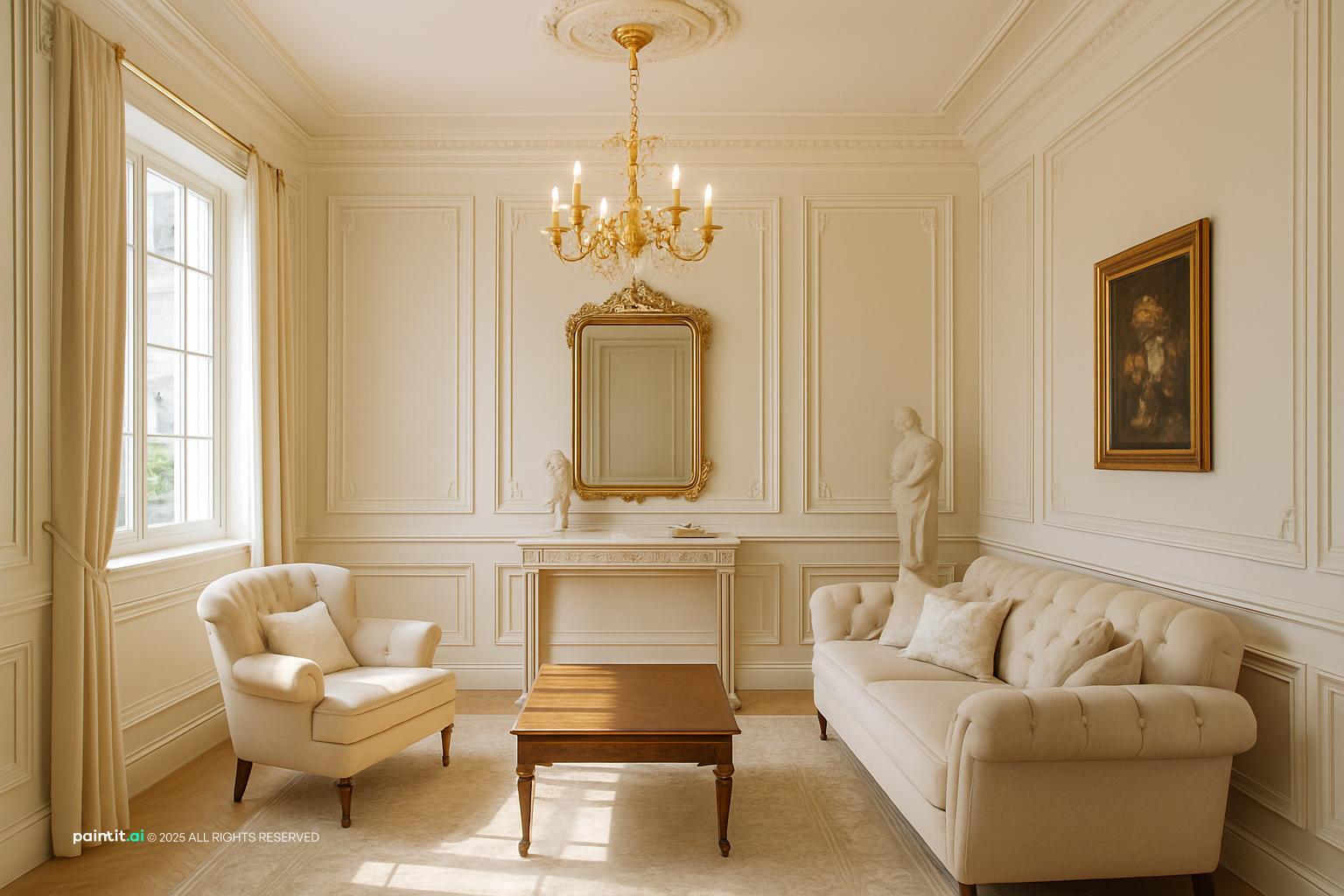
Paneled walls and a pier mirror
A mirror centered between two windows is a classic Georgian way to add light and symmetry.
-
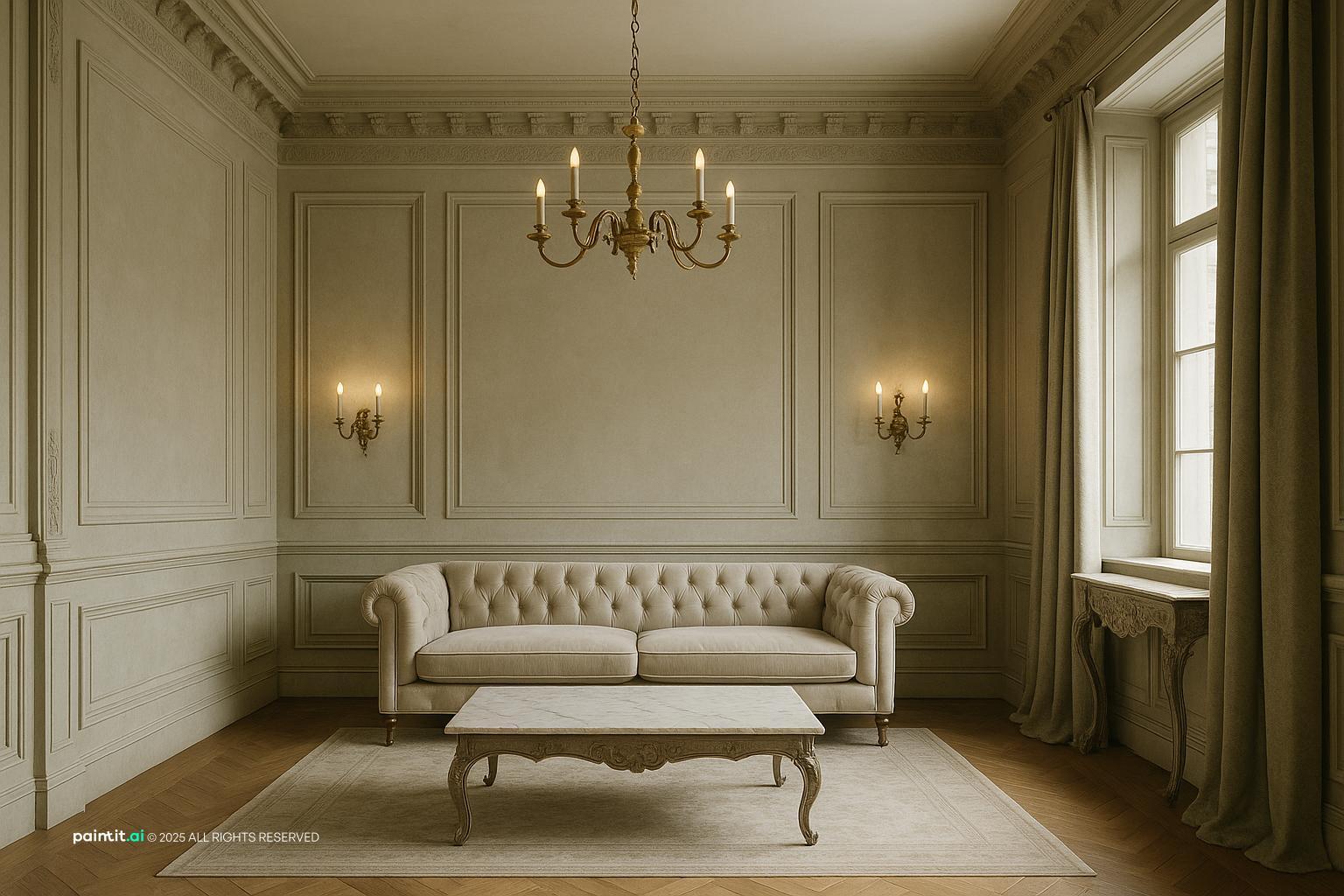
Muted green paneling
Muted green paneling recalls early Georgian colors without looking dark.
-
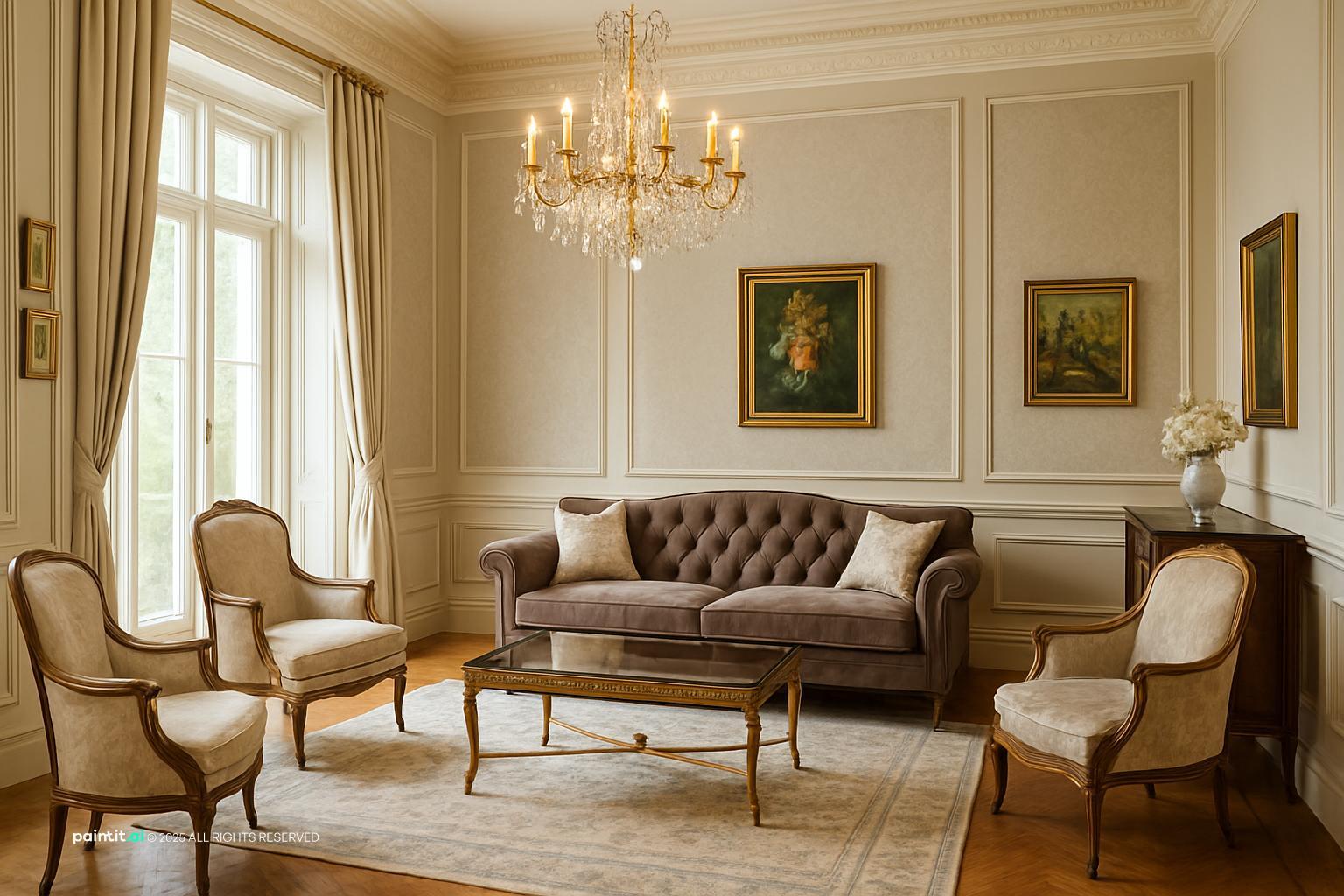
Gilt frames and a chandelier
Paintings hung in line with the panels keep the wall ordered.
-
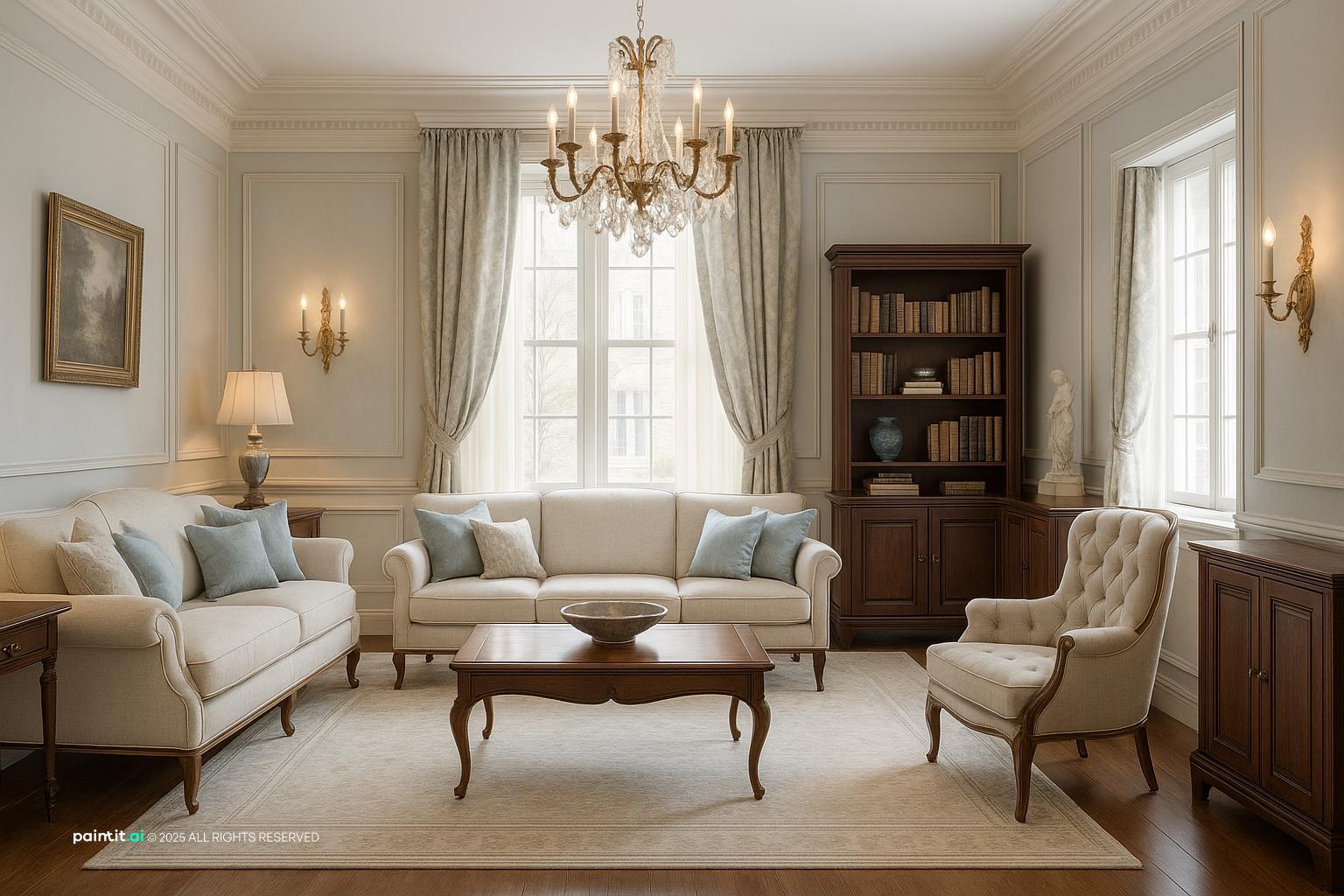
Symmetrical seating
Sofas set symmetrically around a central table follow the Georgian rule of balance.
-
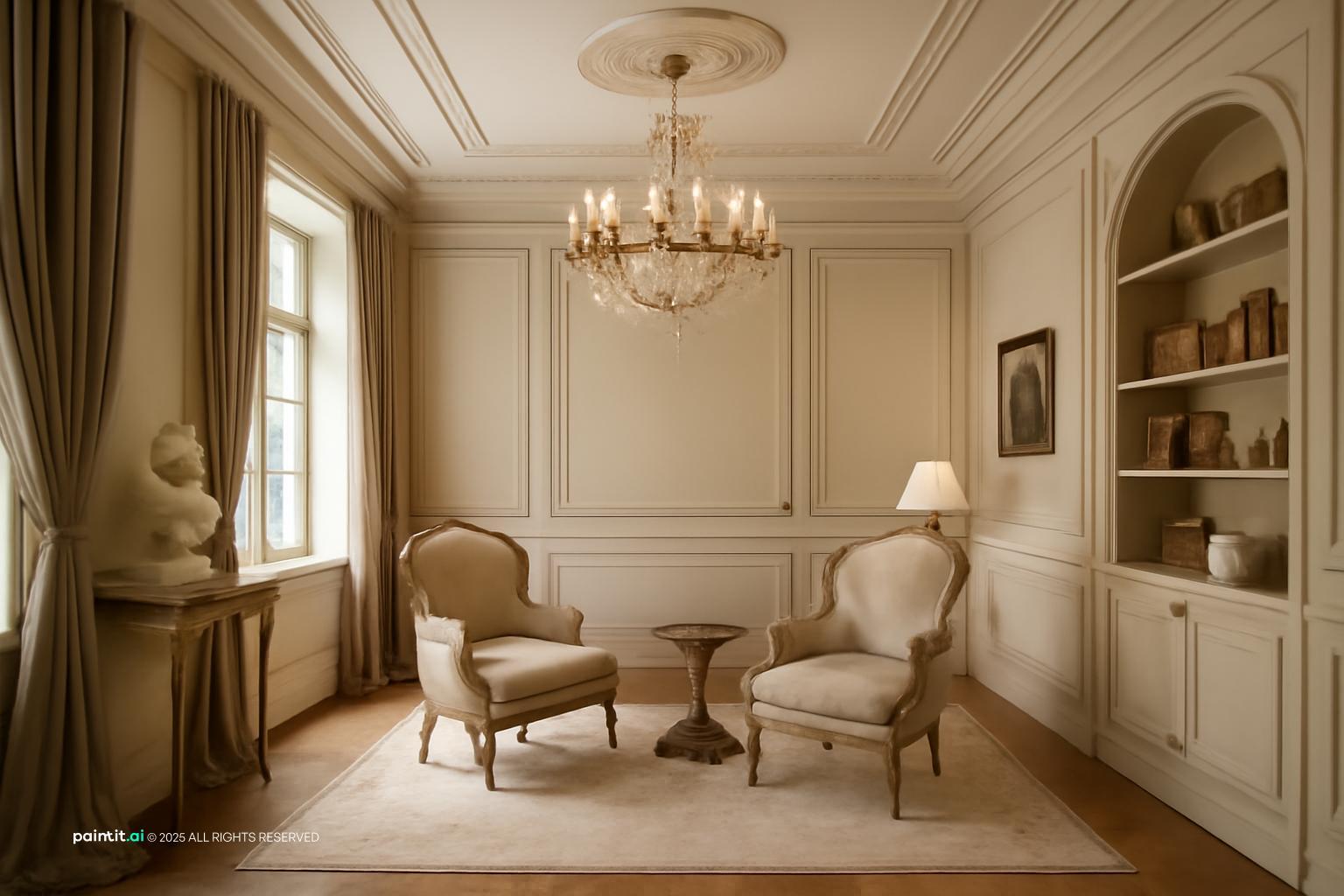
Arched bookcase niche
An arched niche with shelves is an easy classical detail to add to a plain wall.
-
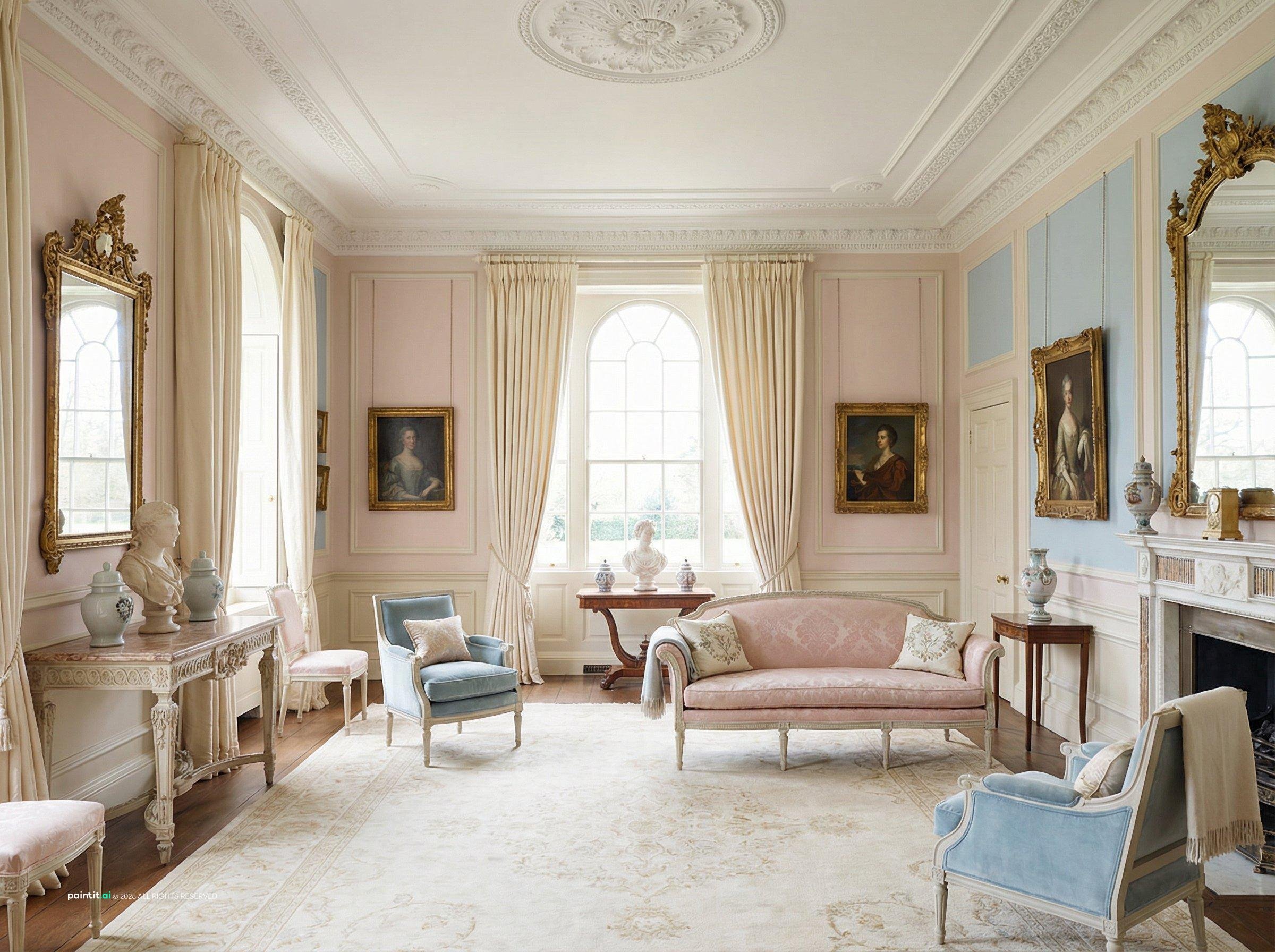
Regency pastels
Soft pink and pale blue show the lighter late-Georgian and Regency palette.
-
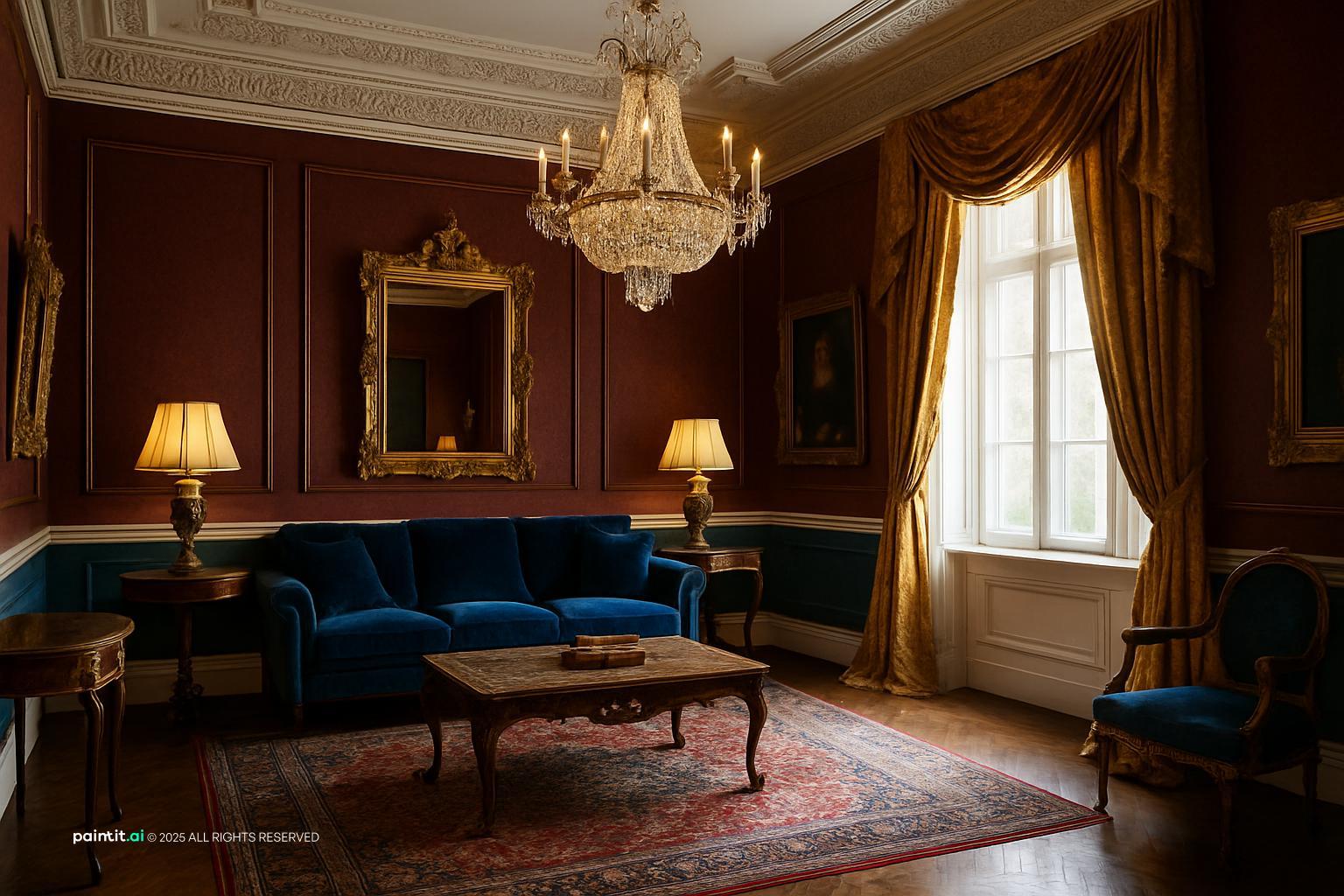
Deep red with navy velvet
Deep reds belong to grander rooms; here navy velvet keeps the scheme formal.
-
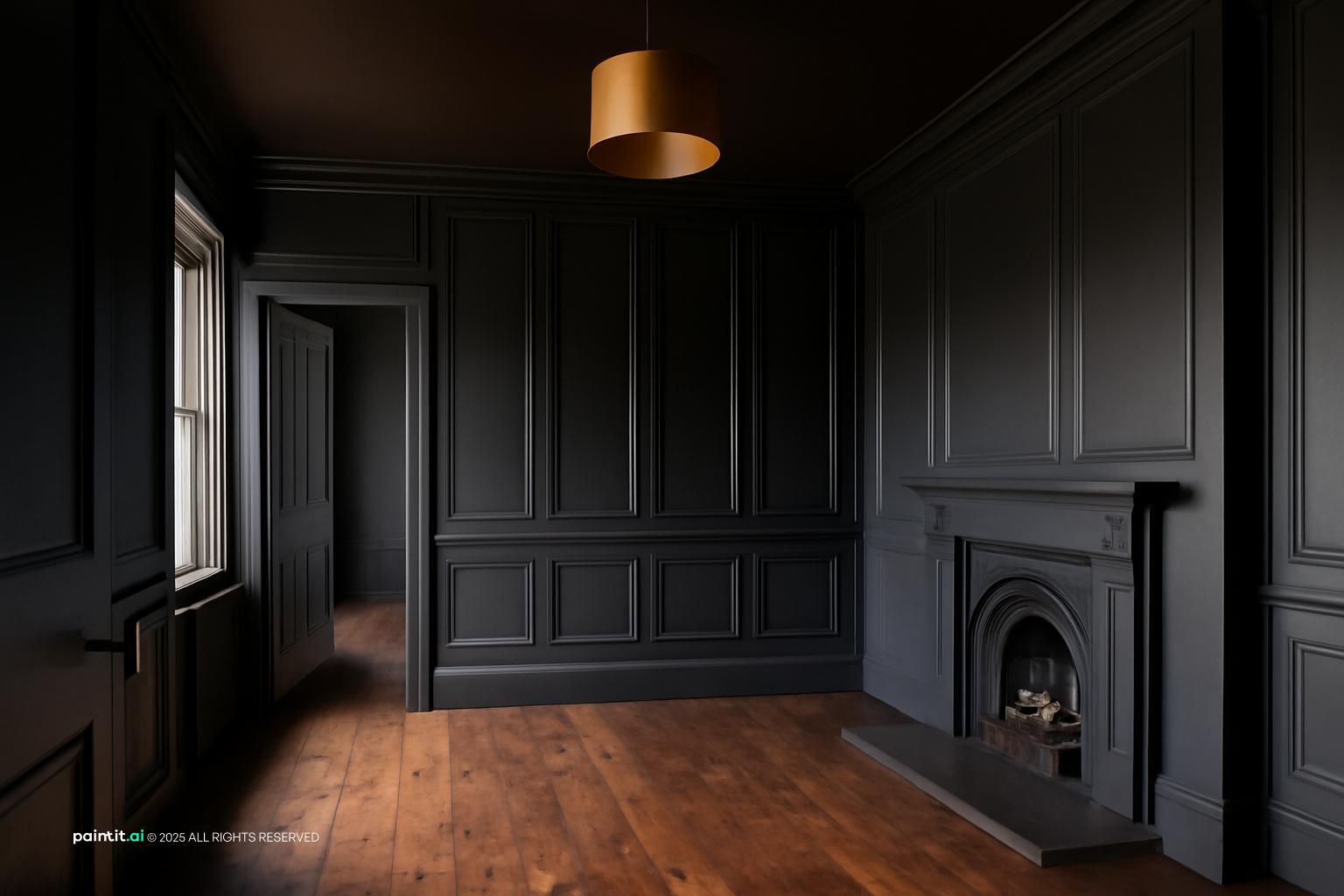
Dark paneled study
Dark paneling suits a study or dining room where drama matters more than light.
-
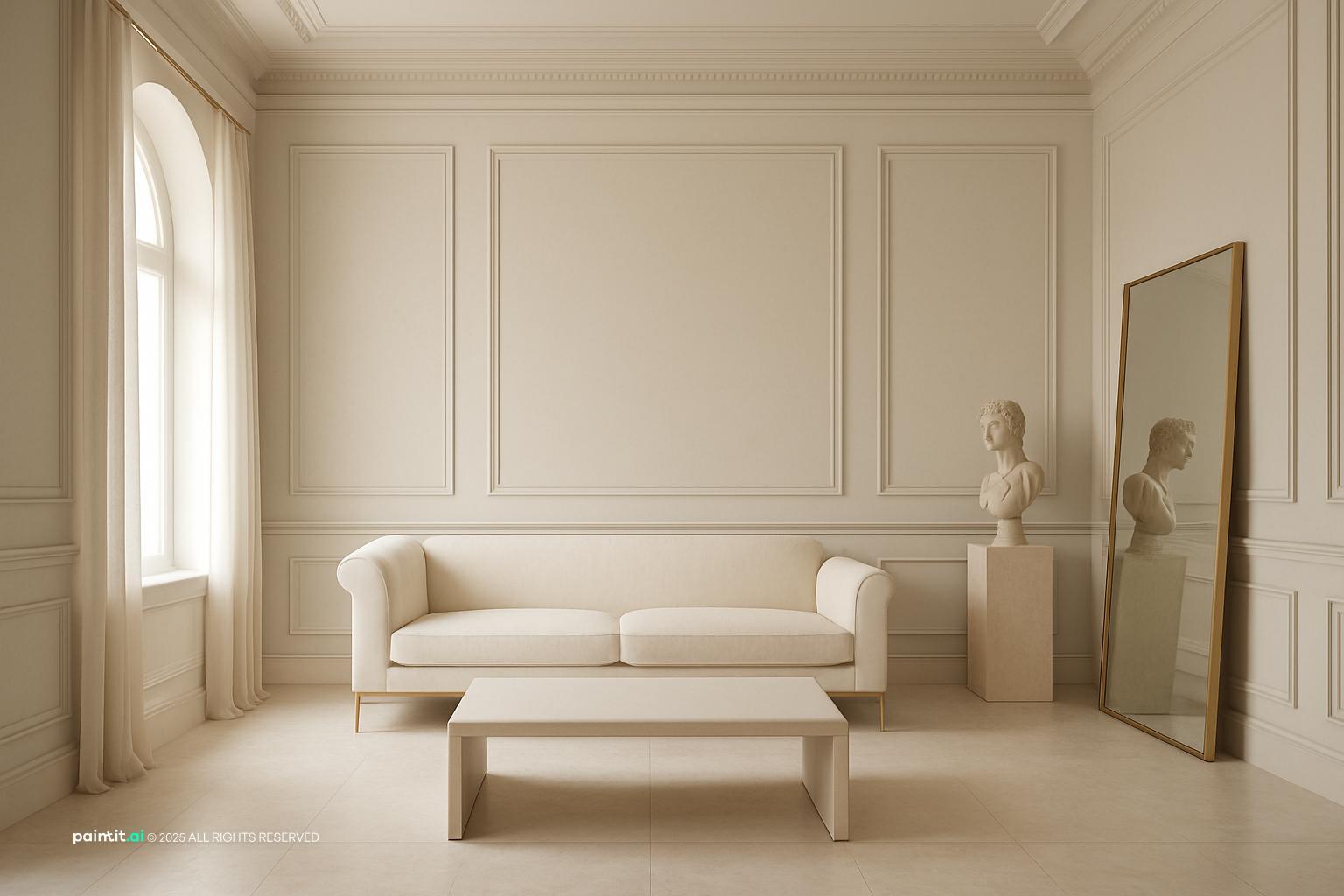
Minimal Georgian
White paneling and very little furniture give a modern take on Georgian order.
-
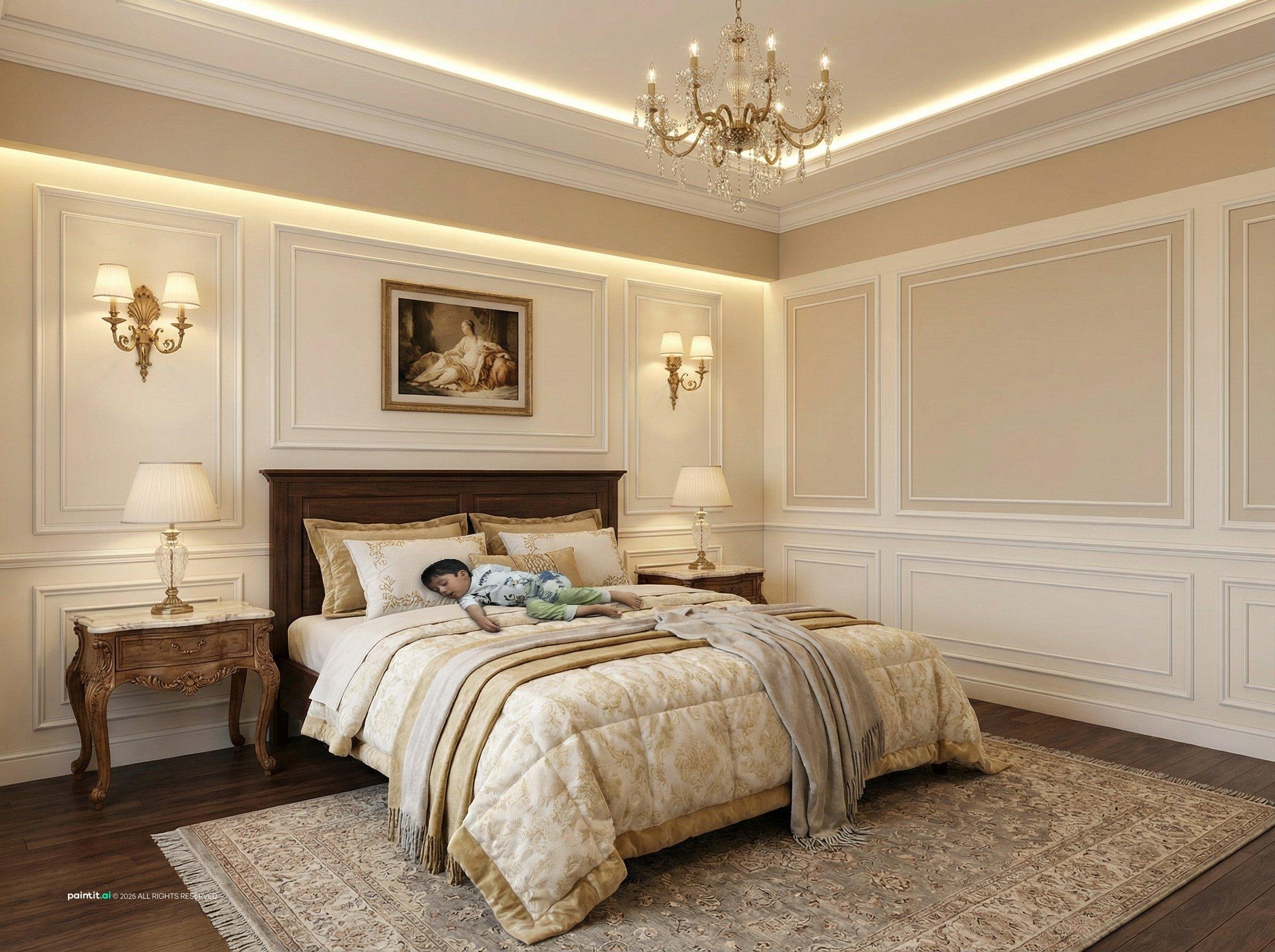
Molded bedroom walls
Wall moldings behind the bed act as a frame, so the headboard can stay simple.
-
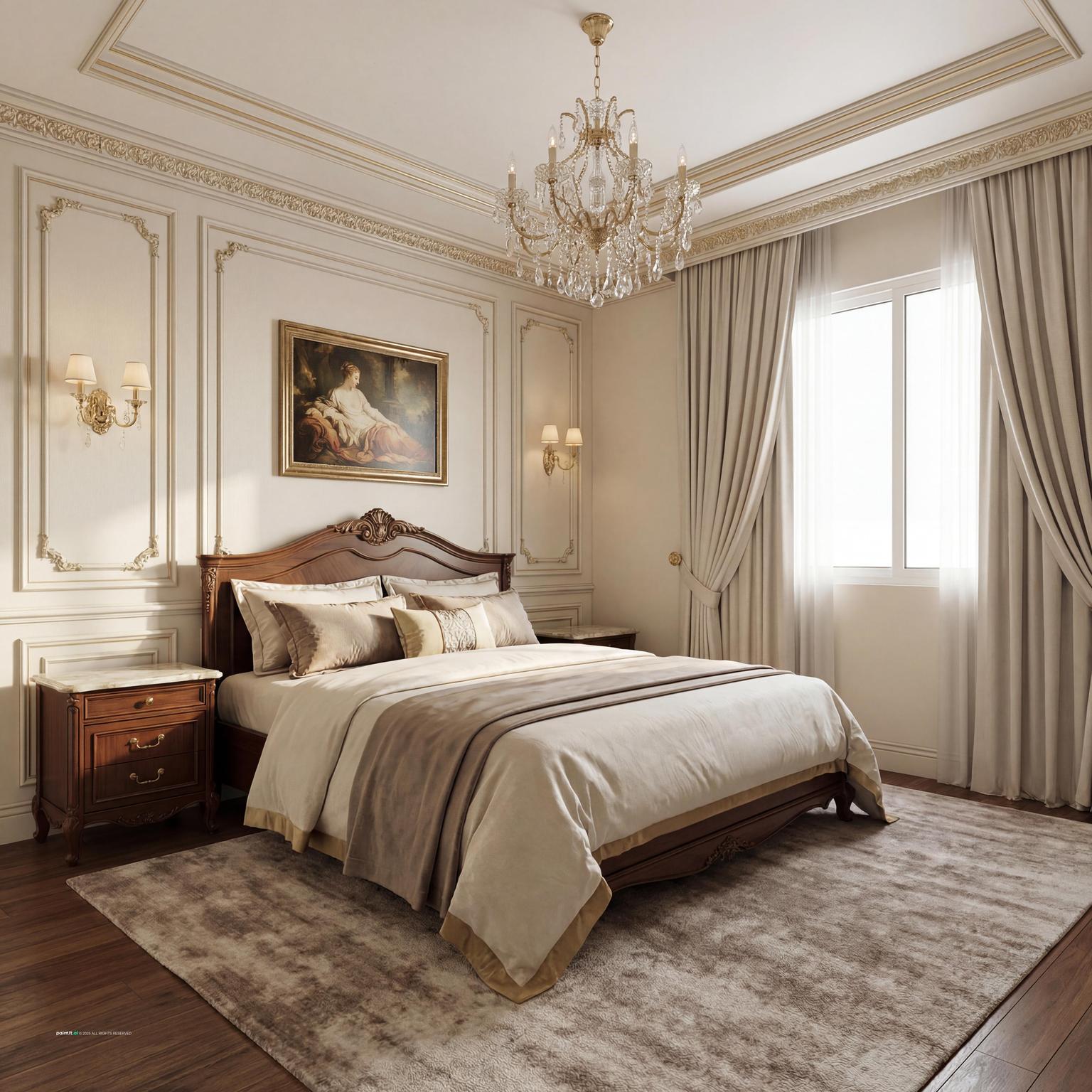
Classical bedroom
Tall windows with simple curtains keep a classical bedroom light.
-
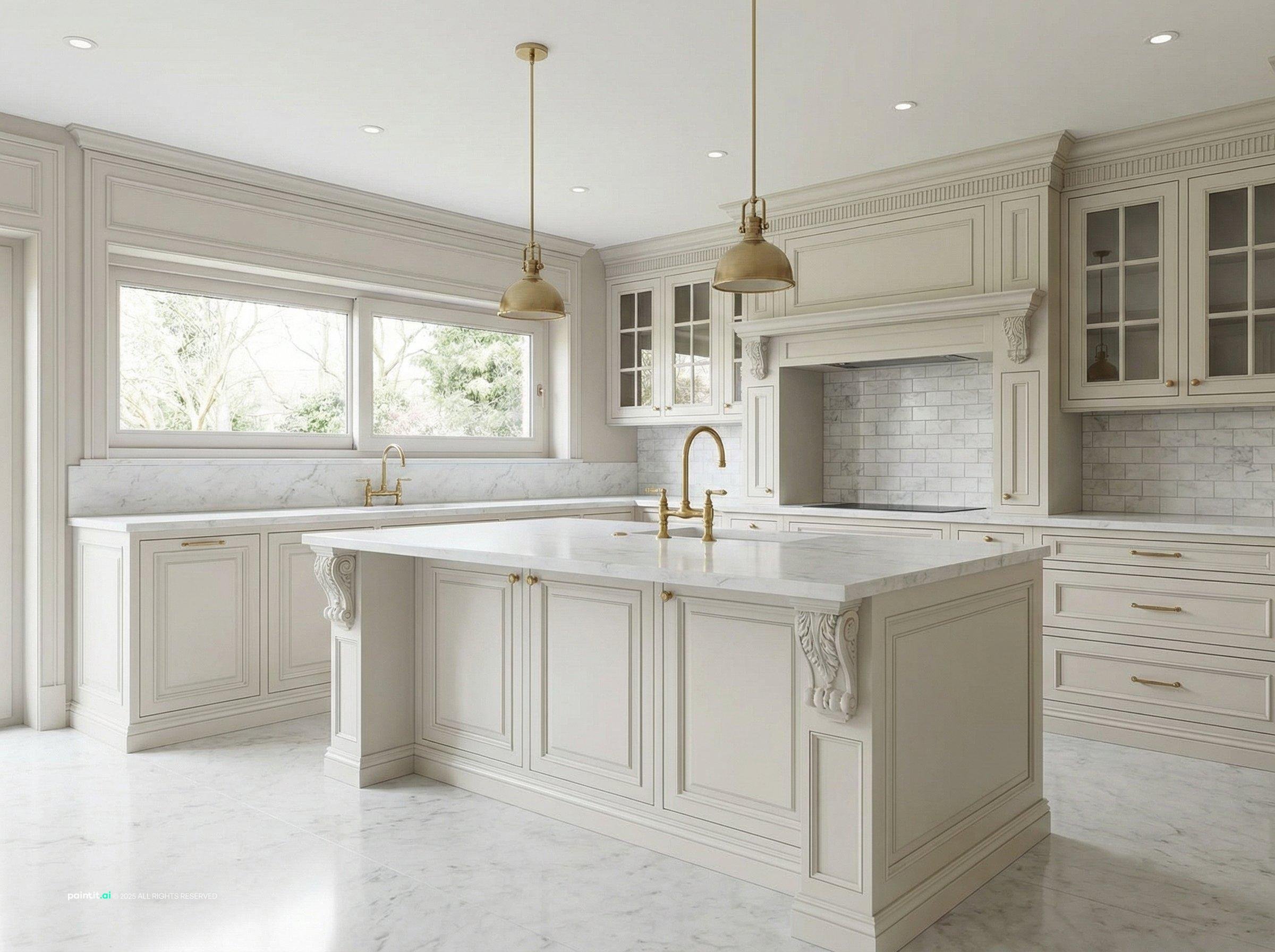
Paneled kitchen
In-frame paneled cabinets echo wall paneling in a kitchen.
-
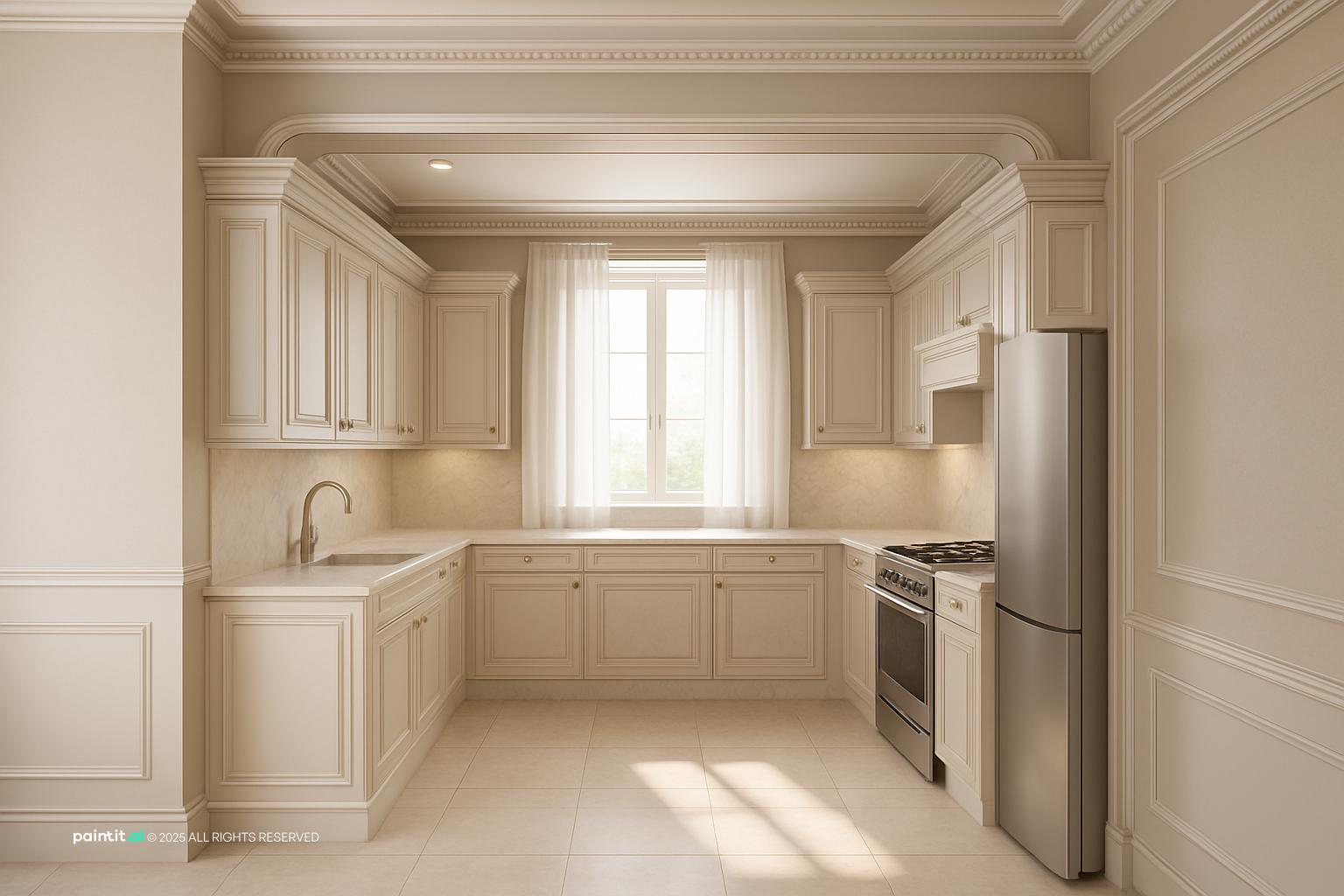
Cream kitchen with a sash window
A sash window over the sink is a period detail worth keeping in a renovation.
How to use Georgian interior design in a real home
-
Colors: choose one soft, slightly greyed color for walls and paneling, such as stone, drab, sage or pale blue, and paint the trim in the same color or a shade lighter. Strong white-on-color contrast looks more Victorian or modern than Georgian.
-
Materials: wood paneling or dado rails, plaster cornices, wide painted or oak floorboards, and stone in hallways. If a room has no paneling, a dado rail at about a third of the wall height and a simple cornice already give the right proportions.
-
Furniture and layout: arrange the room around the fireplace or the central window, and repeat pieces in pairs, such as two chairs, two lamps or two sconces. Mahogany or painted wood with slim legs suits the style better than deep, oversized sofas.
-
Lighting: the rooms were designed for candlelight, so use warm wall sconces, table lamps and one chandelier rather than rows of ceiling downlights that cut through a cornice. Keep curtains simple and hung high so the windows look tall.
-
Common mistakes: filling the room with collected objects (that is Victorian), removing original paneling or shutters, and mixing too many colors. To try a period color on your own walls first, upload a photo of the room to Paintit.ai and compare two or three options side by side.
Related styles and tools
Investigate the sophisticated complexities of Georgian style interior design where classic elements merge with subtle opulence. Investigate exceptional specimens that demonstrate balanced symmetry alongside complex detailing and unified color schemes. Activate the portal to experience this sophisticated visual realm.

FAQ
-
Georgian interior design is the style of British and colonial American homes from about 1714 to 1830. It is based on classical proportion: symmetrical rooms, sash windows, paneled walls with a dado rail, plaster cornices, a central fireplace and restrained, light colors.
-
Outside, a Georgian home is usually a symmetrical box with a central front door, a fanlight and evenly spaced sash windows. Inside, rooms are well proportioned, with high ceilings, paneling or dado rails, cornices and a fireplace on the main wall.
-
Georgian rooms are calmer and more ordered, with light colors, symmetry and fewer objects. Victorian interiors (1837 to 1901) are darker and more decorated, with patterned wallpaper, heavy curtains, bay windows and crowded displays.
-
Look at the windows and the front. Georgian houses tend to have flat fronts, small-paned sash windows and a symmetrical layout, while Victorian houses often have bay windows, larger panes and more decoration. Local records or a building survey give the exact date.
-
Early Georgian rooms used stone, drab and olive shades. Later rooms moved to lighter colors such as pea green, pale blue, soft pink and cream, often with trim in the same tone.