
Modern craftsman interior design ideas: millwork, built-ins, and natural materials
Modern craftsman interior design keeps the Arts & Crafts commitment to visible wood structure and fine millwork, but lightens it: white oak instead of dark mahogany, painted trim instead of stained, open sightlines instead of boxed-in rooms. Five elements make or break the look — structural wood, an earthy palette, substantial millwork, built-ins, and lighting that supports the woodwork rather than competing with it. Below: real examples of each, plus how to tell craftsman apart from farmhouse when the wood tones start to look similar.
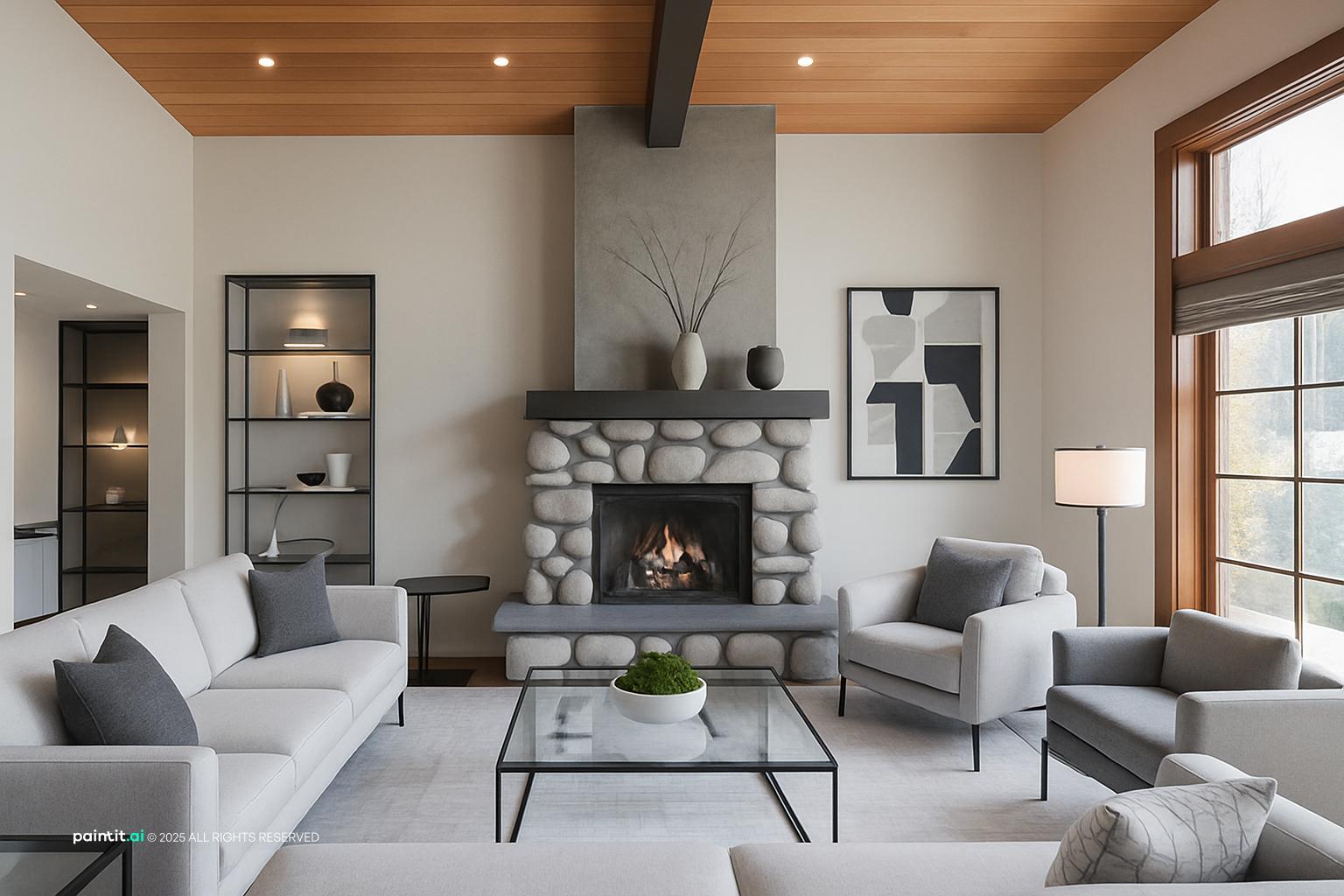
The 5 defining elements of modern Craftsman interior design
Modern craftsman interior design - sometimes called contemporary craftsman - blends traditional joinery and structural wood with a lighter, more contemporary palette. Five elements define whether a room reads as craftsman or just "wood-heavy.”
-
1. Wood as structure, not decoration
In a Craftsman interior, wood is structural - it defines the space. Oak, walnut, and fir are the traditional choices, valued for their grain and character. Exposed beams carry the ceiling visual weight. Built-in cabinetry uses visible joinery.
Modern Craftsman lightens this: white oak and lighter-stained timbers replace the darker mahogany of traditional Craftsman, but the commitment to real wood grain over laminate or painted finishes stays constant.
-
2. Earthy palette that complements wood tones
Craftsman interiors do not aim for high contrast. The palette follows the materials: clay, olive, wheat, warm greige, and muted green complement natural wood tones rather than competing with them.
Modern Craftsman sometimes introduces saturated wall colors - deep navy, forest green, or charcoal - as a backdrop that makes wood grain and millwork stand out.
-
3. Millwork and trim as the defining detail
Millwork - baseboards, door and window casings, wainscoting, panel mouldings, coffered ceilings - is where Craftsman interiors distinguish themselves most visibly. The profiles are simple and bold: square-edged, clean-lined, and substantial.
In modern Craftsman, millwork profiles stay simple but the finish shifts lighter: painted millwork against a colored wall rather than the traditional dark-stained-against-plaster approach. Hardware should be oil-rubbed bronze, matte black, or brushed nickel in simple profiles.
-
4. Built-ins define the rooms
Built-in bookshelves flanking a fireplace, window seats in bays, and floor-to-ceiling cabinetry are signature spaces of a Craftsman interior. They provide storage and seating while communicating that the space was designed as a whole.
Modern Craftsman built-ins often use simple Shaker-style fronts: flat-panel doors, minimal hardware, painted finish. The emphasis is on architectural integration rather than cabinet ornament.
-
5. Lighting that supports the woodwork
Lighting in a Craftsman room works with the millwork, not against it. Wrought iron chandeliers, wooden pendant lights, and simple warm sconces read as period-appropriate. Warm-temperature bulbs keep wood tones from looking cold, and larger windows with light-colored treatments let daylight reach the wood grain directly.
12 examples of modern craftsman interior design ideas
-
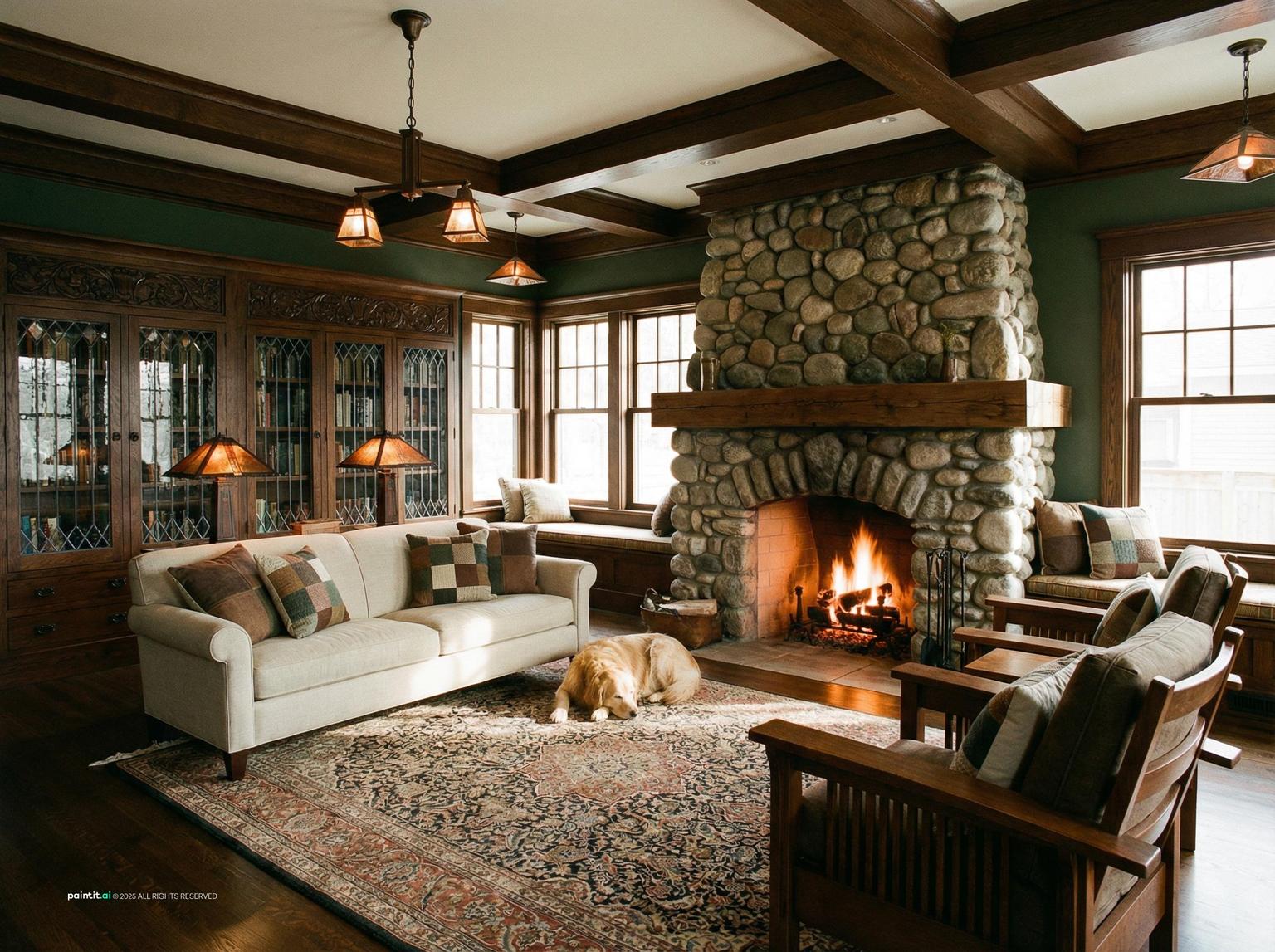
The fireplace sits as the visual anchor, with warm lighting and a textured rug keeping the room grounded.
-
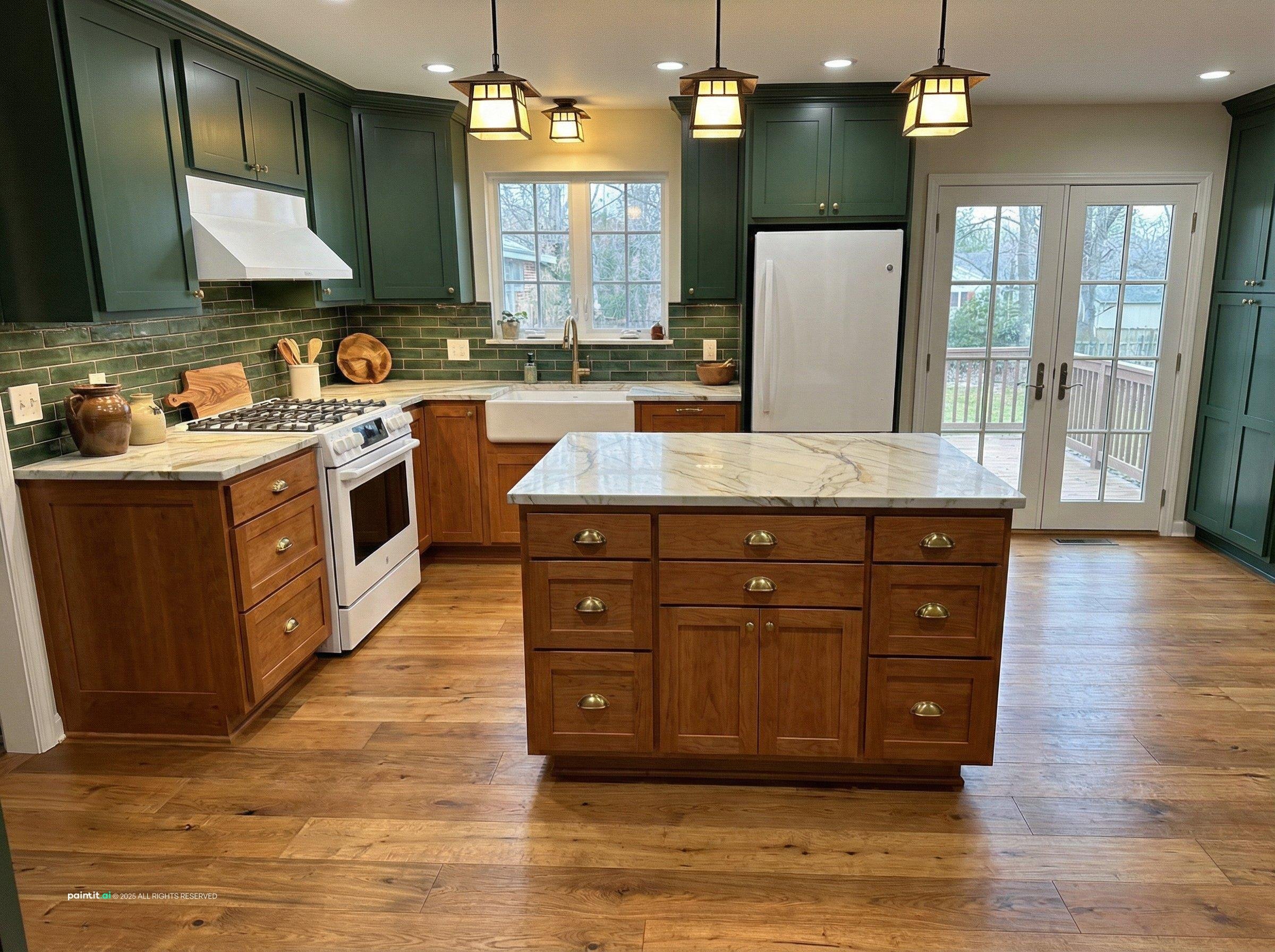
A backsplash in a muted pattern reads as craftsman detail without competing with the wood cabinetry.
-
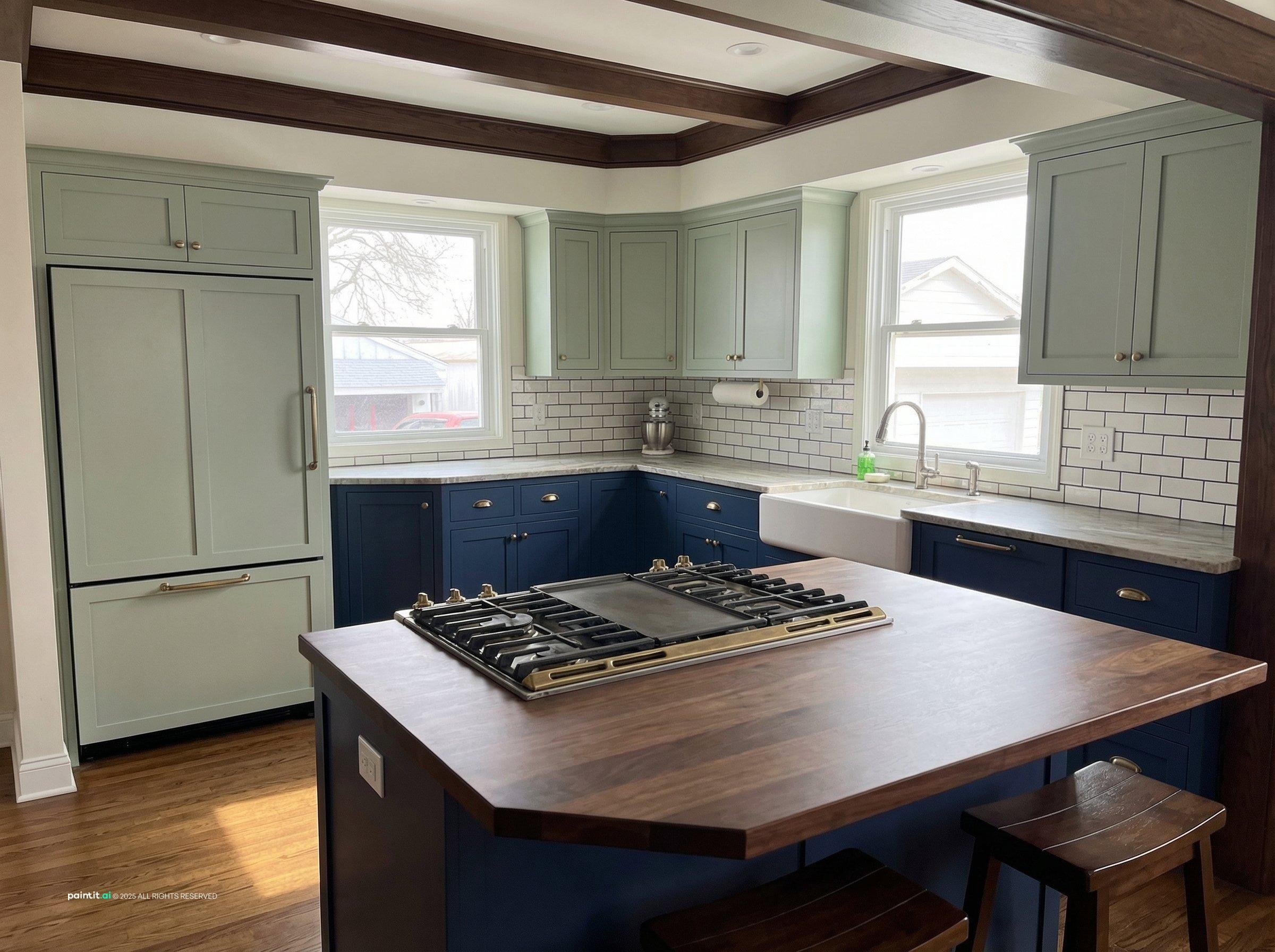
Sage-green perimeter cabinets and a navy island sit under exposed ceiling beams for a structural, wood-forward feel.
-
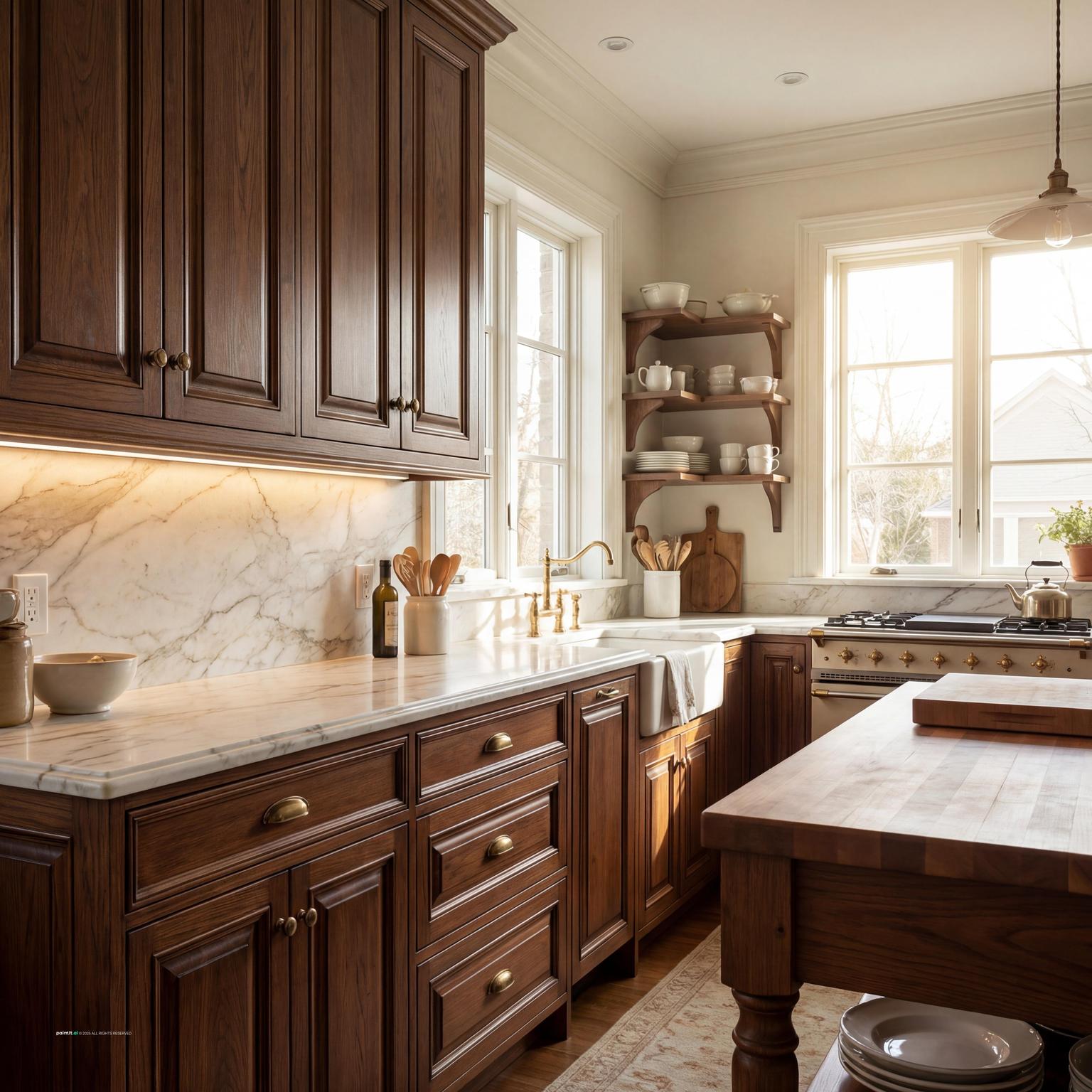
Dark stained cabinetry, brass hardware, and open corner shelving keep the millwork the clear focal point.
-
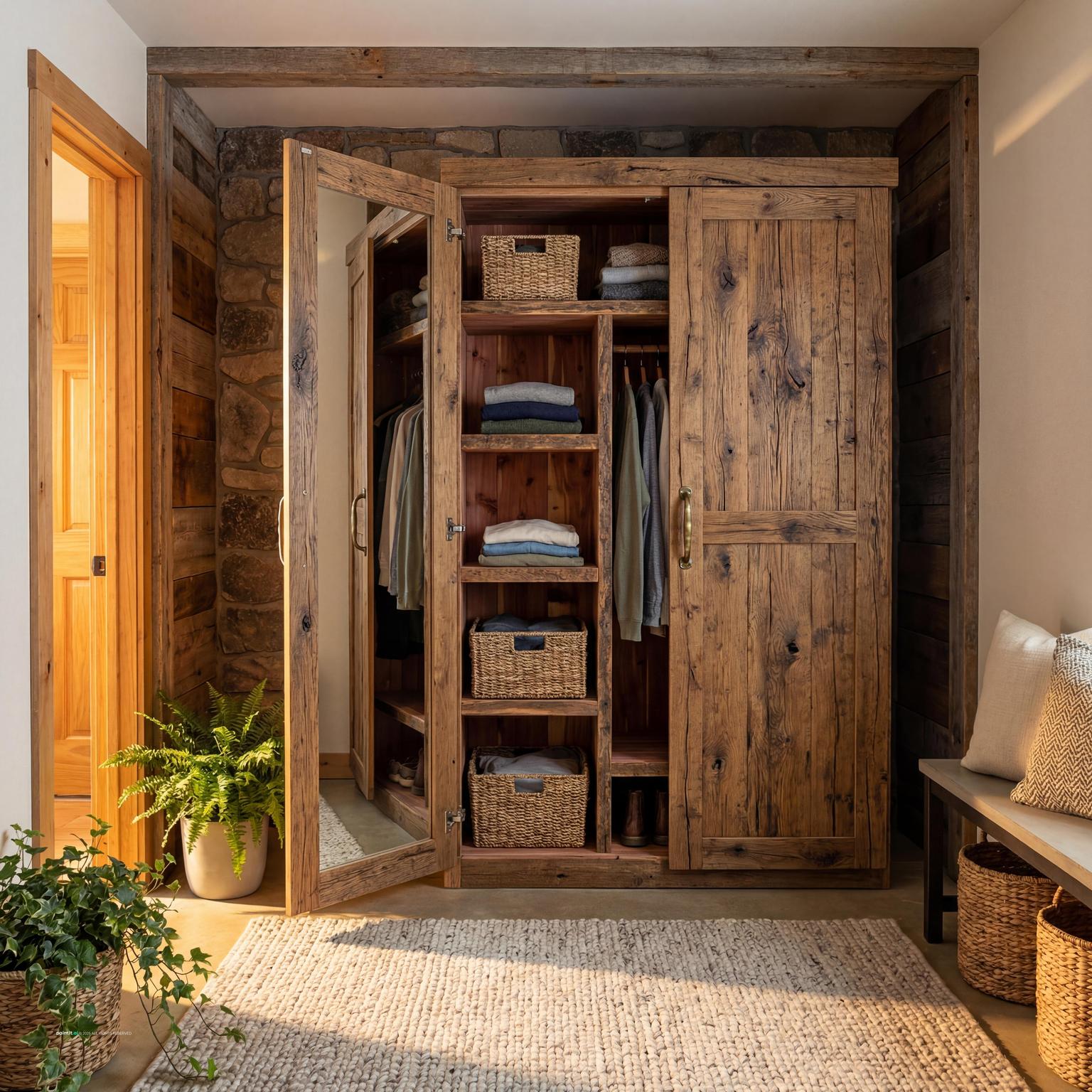
Open shelving and a simple mirror keep the storage functional and the wood grain visible.
-
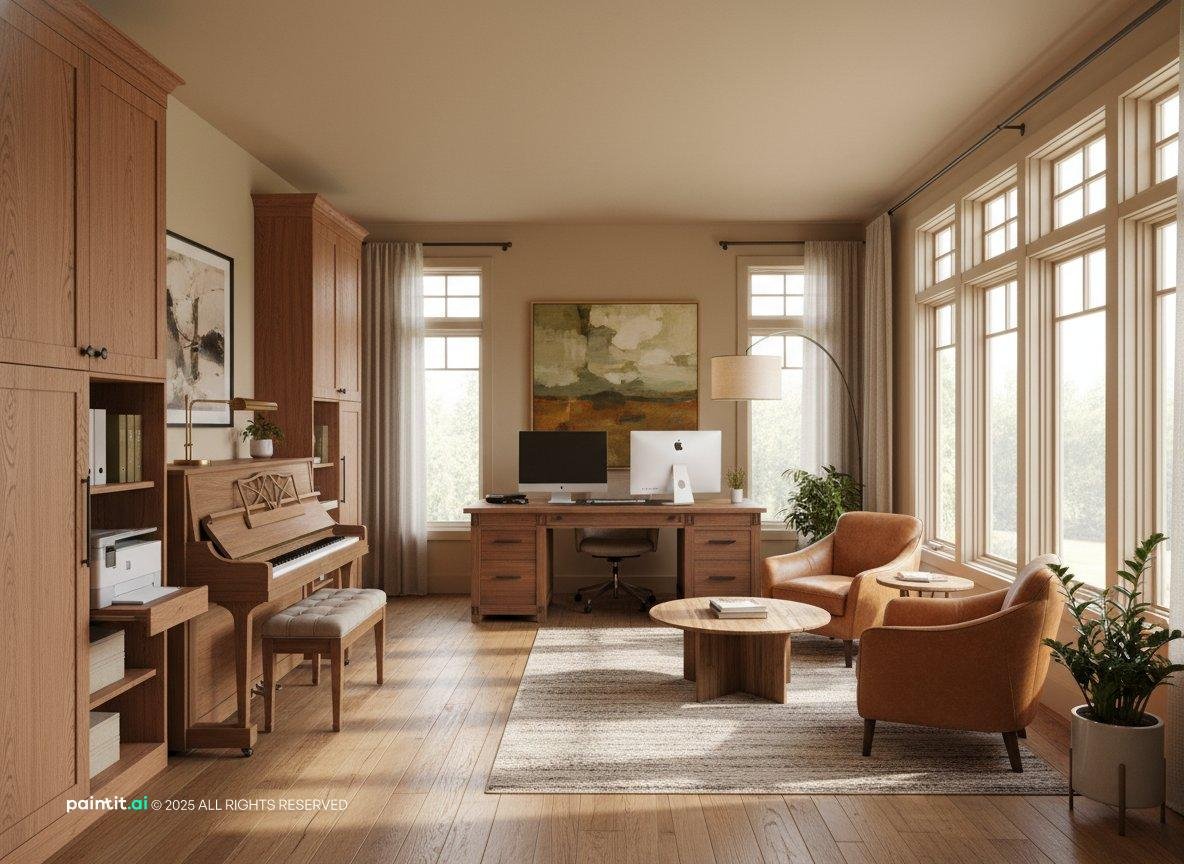
A quieter palette and simple lighting keep a work space in line with the rest of a craftsman home.
-
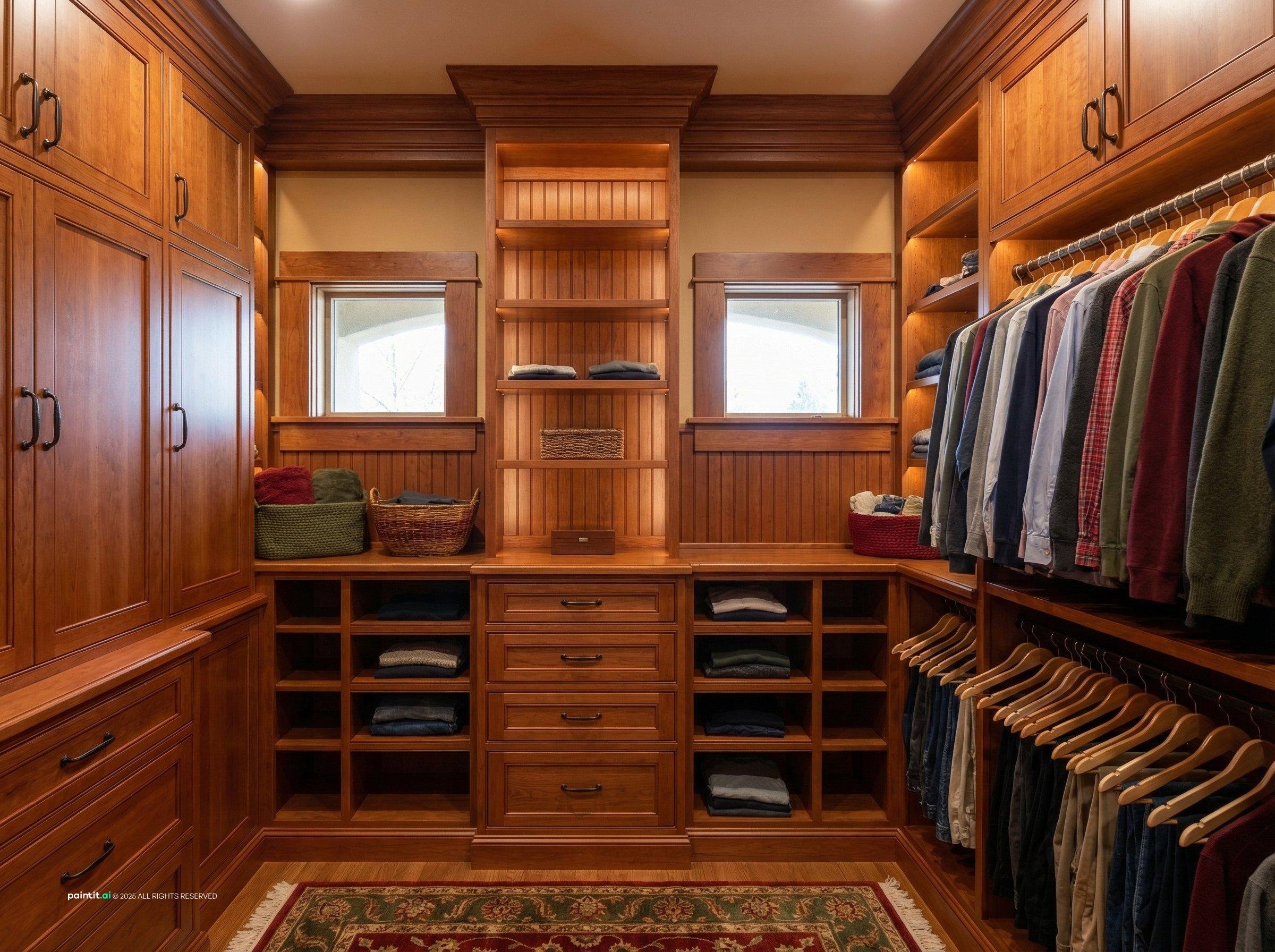
A small walk-in closet shows how craftsman detailing scales down to secondary rooms.
-
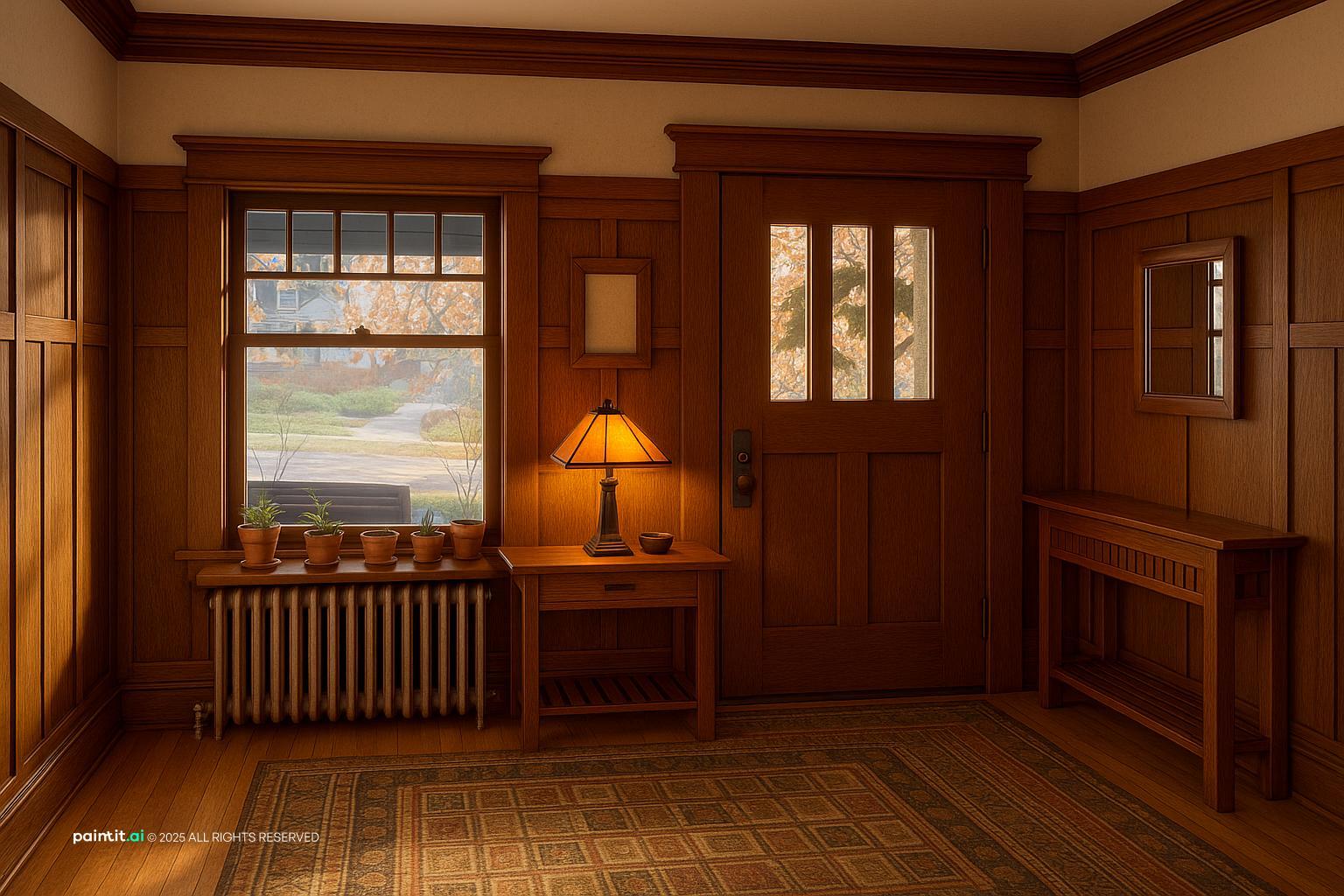
Full wood paneling, a period radiator, and a small console set the tone right at the front door.
-
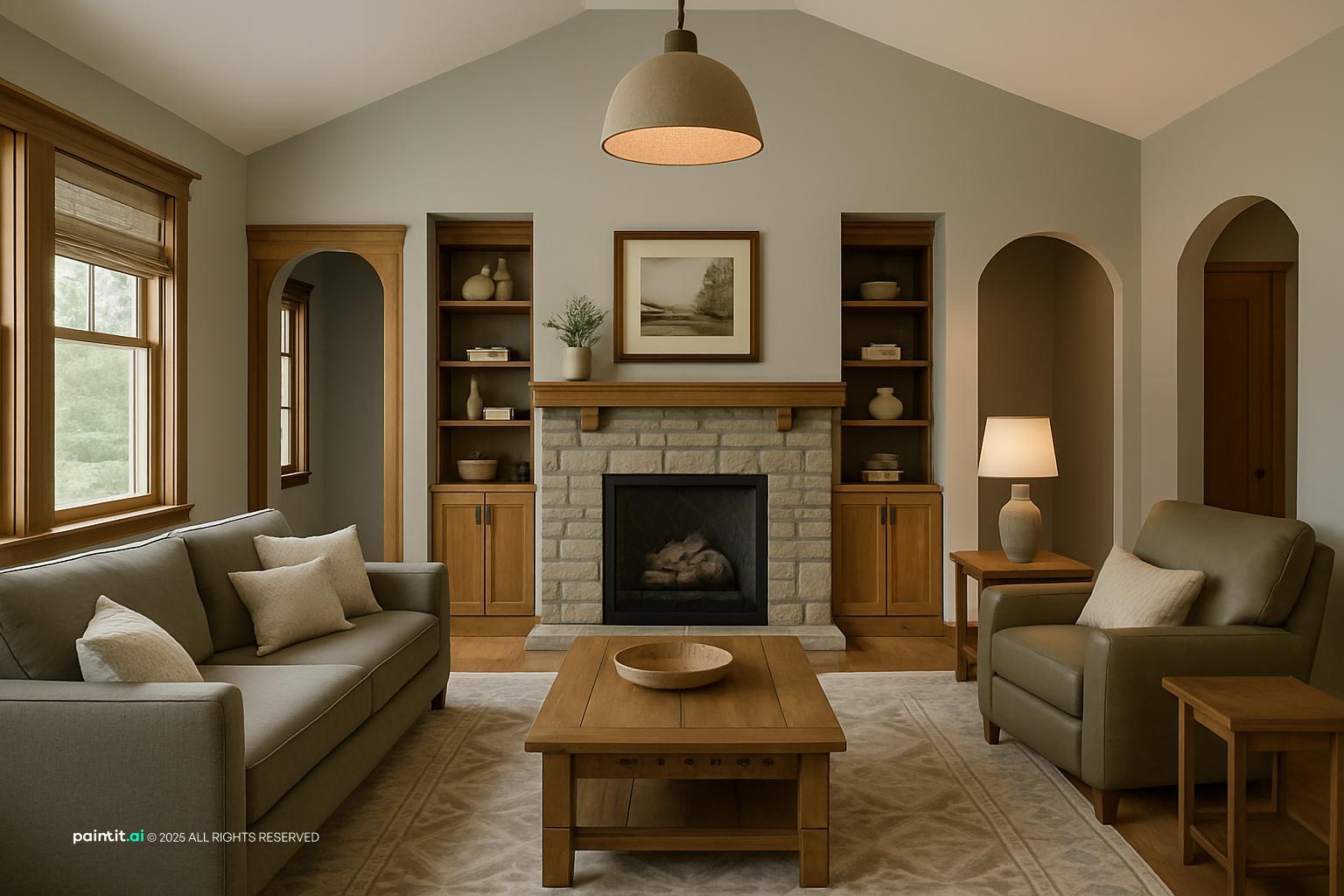
Built-in cabinetry flanks a stone fireplace, with a chunky coffee table keeping the room grounded in wood.
-
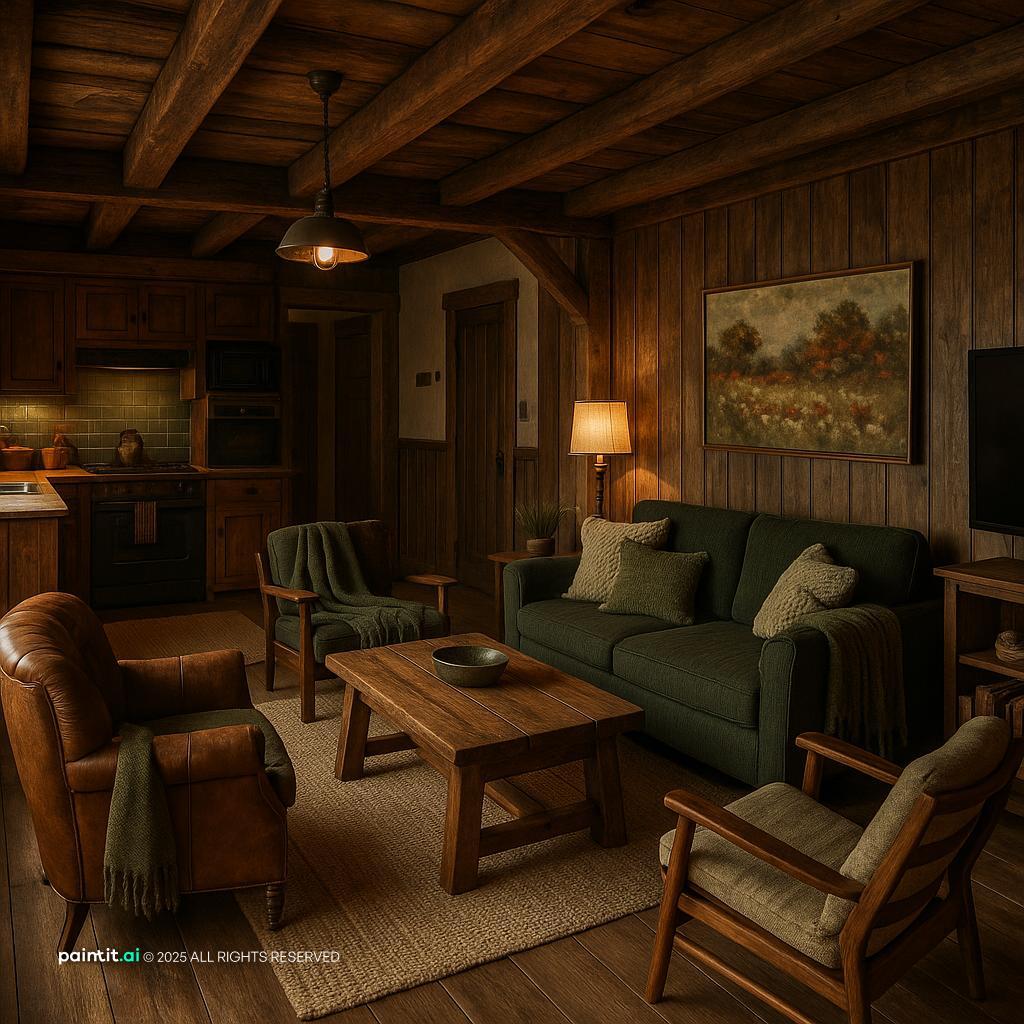
Wood paneling, exposed beams, and leather seating give this living room a cabin-adjacent craftsman warmth.
-
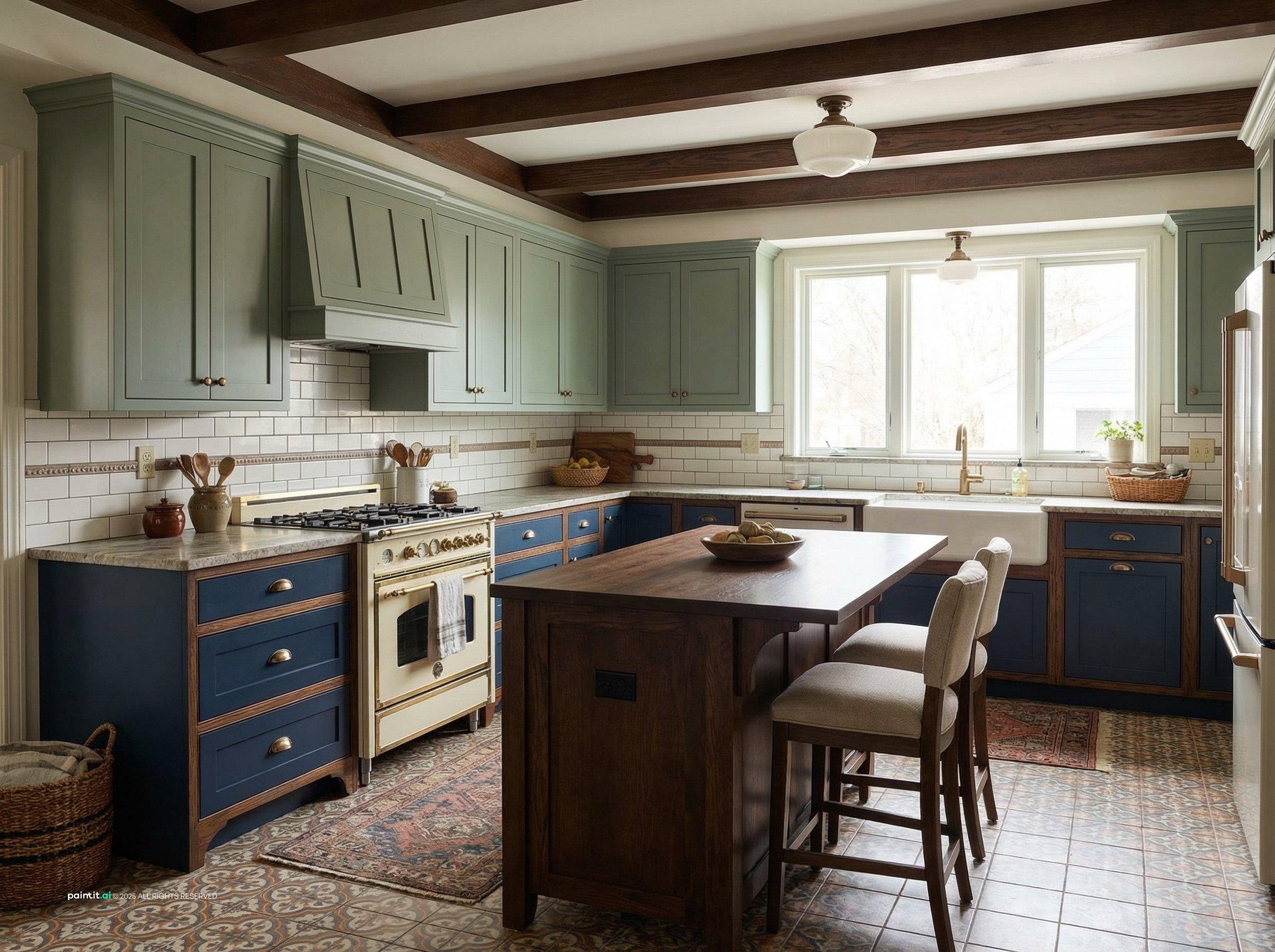
Sage uppers over navy lowers is a two-color cabinet scheme that modernizes a craftsman kitchen without losing warmth.
-
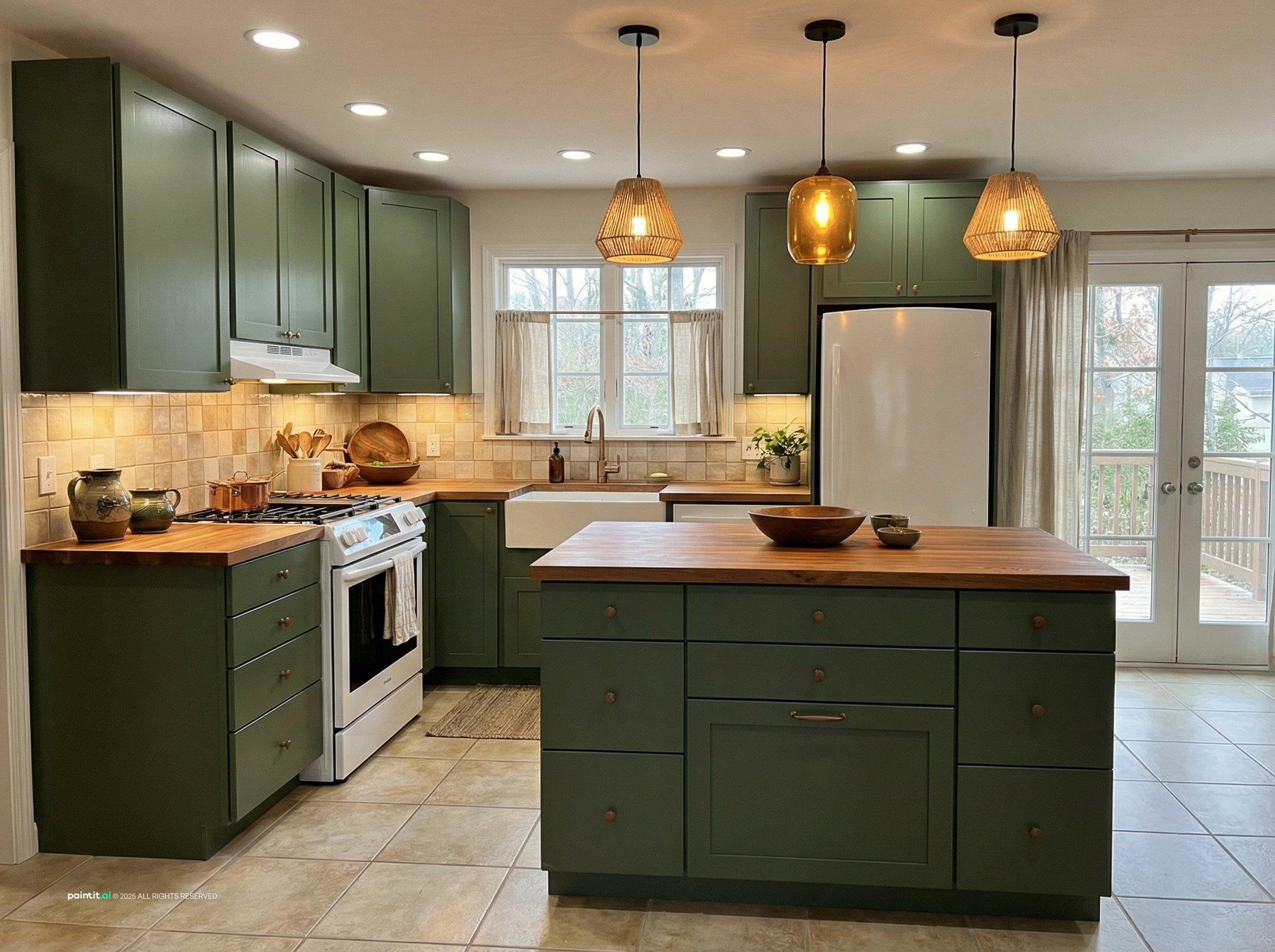
Deep green cabinets and handmade tile show the saturated wall-and-cabinet colors modern craftsman uses to set off wood.
Craftsman vs Farmhouse - the key difference
Craftsman emphasizes fine carpentry and exposed structure. Beams, rafter tails, and joinery details are showcased rather than hidden. The millwork is substantial and architecturally integrated. Wood tones are natural or lightly stained.
Farmhouse is more rustic and utilitarian. Painted white wood, shiplap, and simpler spindle work reference agricultural working buildings rather than Arts & Crafts philosophy.
The test: does the woodwork feel like it is showing you how the house was built, or like decorative elements applied to a neutral background? Modern Craftsman can coexist with contemporary, mid-century, or Scandinavian elements when the structural language remains strong.
Upload a photo of any room to app.paintit.ai and see how Craftsman-adjacent style directions - warm wood tones, exposed beams, earthy palette - read in your actual space. Free to start.
Related design styles
Tools for applying Craftsman details to living rooms, bedrooms, and whole-room concepts.
FAQ
-
Five defining elements: structural wood (beams, built-ins with visible joinery), an earthy palette that supports wood tones, substantial millwork and trim, built-ins that double as architecture, and lighting that works with the woodwork rather than against it.
-
Traditional Craftsman uses darker stained wood with heavier millwork and a rich palette. Modern Craftsman lightens this with white oak, simpler profiles, painted trim, and more open floor plans while keeping natural materials and visible construction.
-
Craftsman emphasizes fine carpentry and exposed structure - joinery and millwork that show how the house was built. Farmhouse is more utilitarian, with painted white wood, shiplap, and simpler spindle work.
-
Yes. Upload a photo of your room to app.paintit.ai and see how Craftsman materials, palette directions, and wood tones read in your actual space in 1-2 minutes. Free to start.