7 min. reading

Yulii Cherevko
CEO paintit.ai
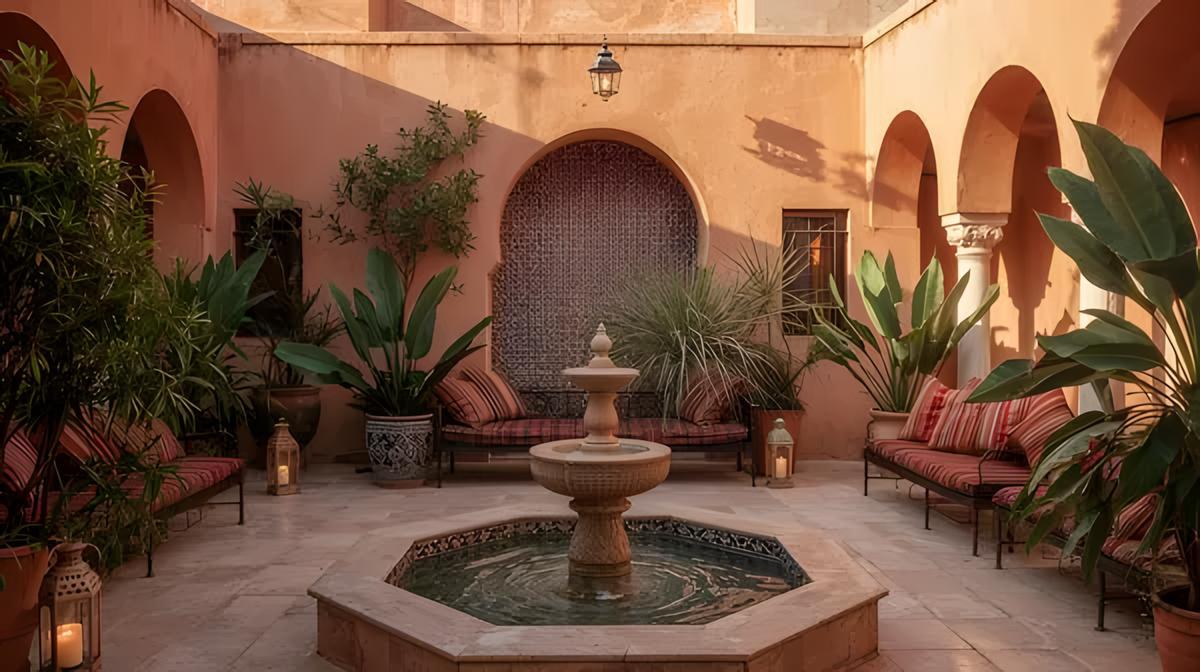
A Moroccan-inspired patio does not require a collection of every object associated with Marrakech. Start with the way the outdoor space works: shade, privacy, comfortable seating, a clear walking route and materials suited to the local weather. Patterned tile, carved wood, metal lighting and textiles can then add a specific visual direction without turning the patio into a theme set.
These Moroccan style patio ideas cover small balconies, terraces, dining areas and backyards. Each idea includes the practical question that a styled photograph may hide, such as rain exposure, seat height, wind, drainage, cleaning or winter storage.
Key takeaways
Historic Moroccan courtyards are architectural spaces, not decor checklists. They use enclosure, shade, proportion, craft and often water to create a protected center for movement and gathering. The Metropolitan Museum of Art documents Moroccan courtyards that combine zellij mosaic tile, carved stucco and cedar woodwork. Those examples provide useful context, but a residential patio should adapt the principles rather than claim to reproduce a traditional riad.
For a contemporary home, the strongest translation is usually simple: define the perimeter, create a shaded seating or dining zone, repeat one geometric pattern and add a small number of tactile materials. A fountain, arch or low table is optional, not a requirement.
To achieve that authentic ambiance without a full renovation, focus on the right accessories. Here are the pillars of Moroccan patio décor.
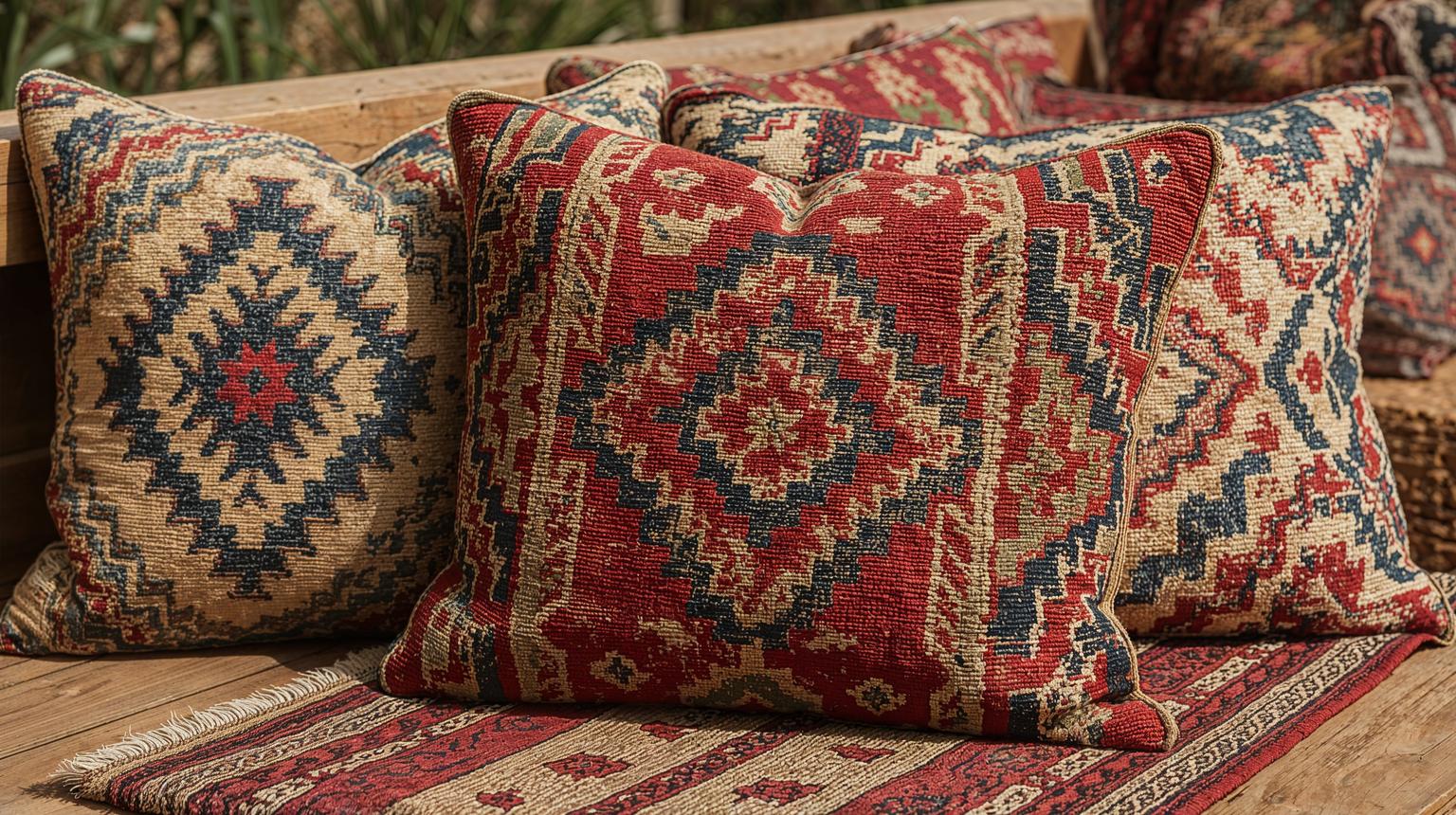
Begin with cushion covers and one outdoor rug if you want a low-commitment change. Choose textiles rated for the patio's exposure and keep a dry storage place for cushions during prolonged rain or winter. Flat-woven geometric patterns can suggest Moroccan craft traditions, but not every rug described as kilim is Moroccan, so check the maker and origin before using cultural labels.
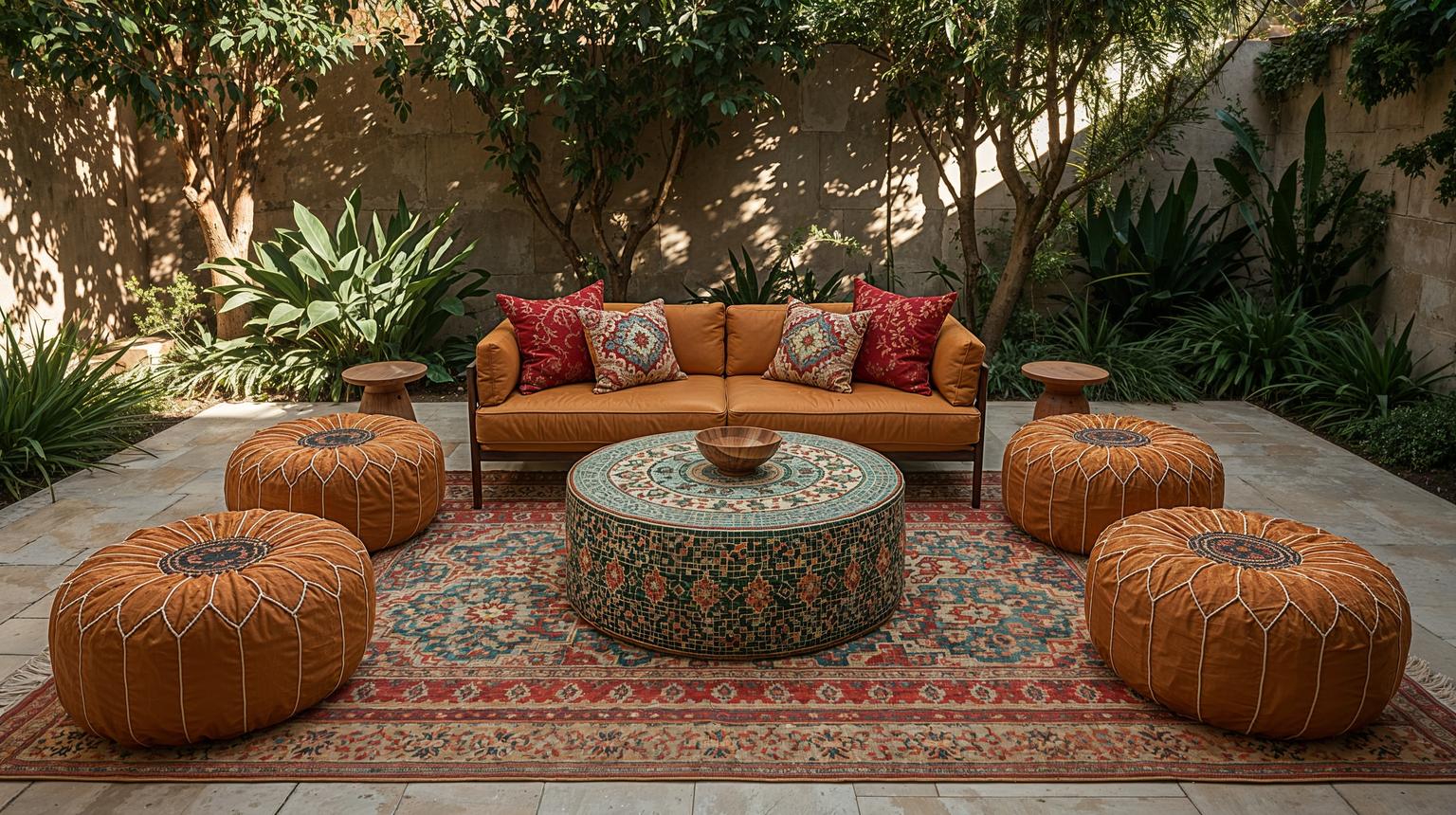
Place seats so people can face one another without blocking the route from the house. Floor cushions and low benches create an informal arrangement, but they are not suitable for every body or household. A standard-height outdoor sofa with deep cushions can deliver the same enclosed feeling while being easier to use.
Keep at least one seat with a supportive back and comfortable height. If the patio includes a step, grill, pool or door swing, preserve a direct and well-lit route rather than filling every edge with poufs.
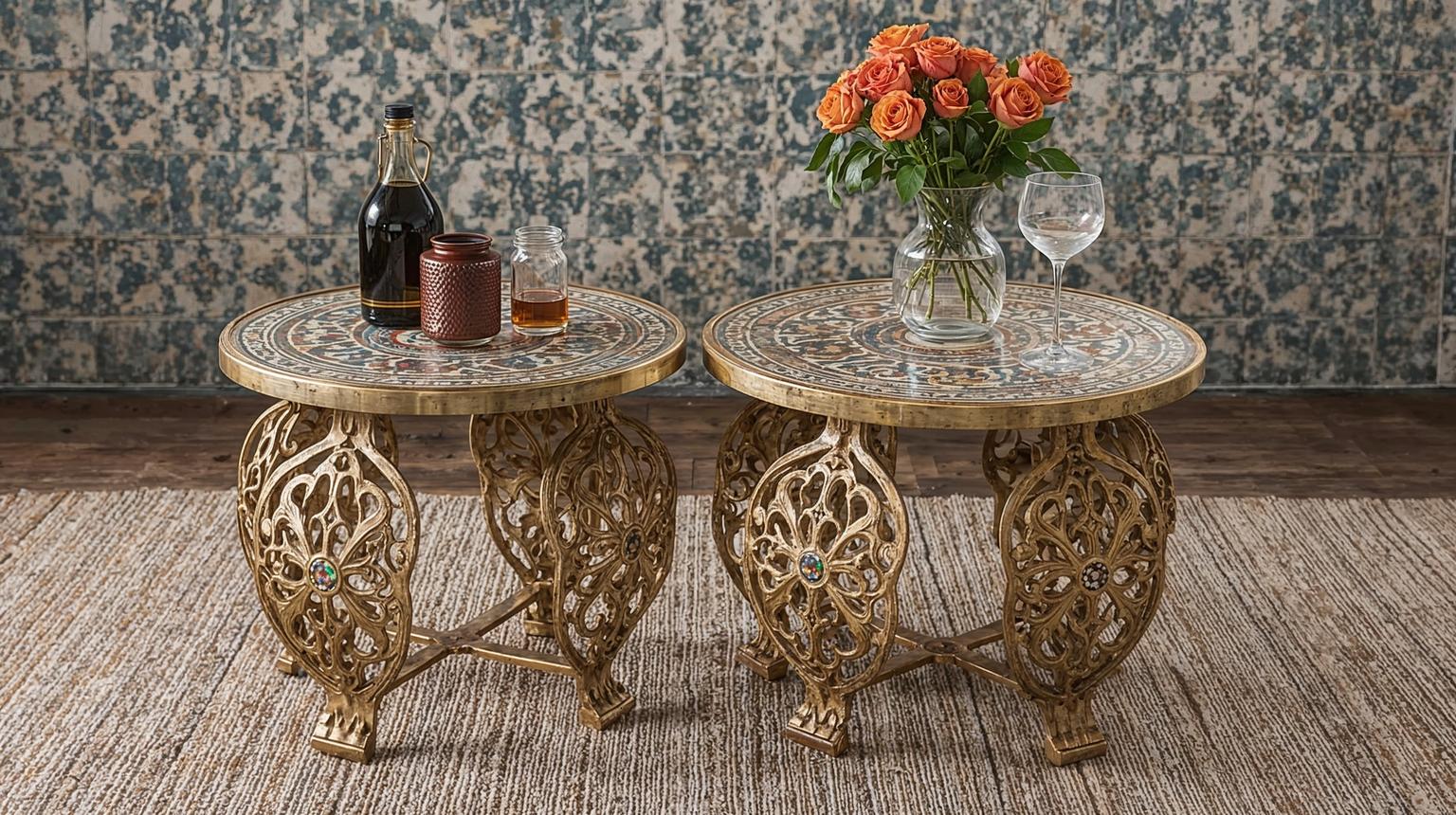
When selecting Moroccan patio furniture, let function determine the height. A round tray table works beside lounge seating because it is easy to approach from several sides. For a Moroccan-style outdoor dining space, use a proper dining-height table and chairs rather than forcing the entire layout to remain low. Confirm stability on uneven paving and choose a finish that can tolerate rain, sun and food spills.
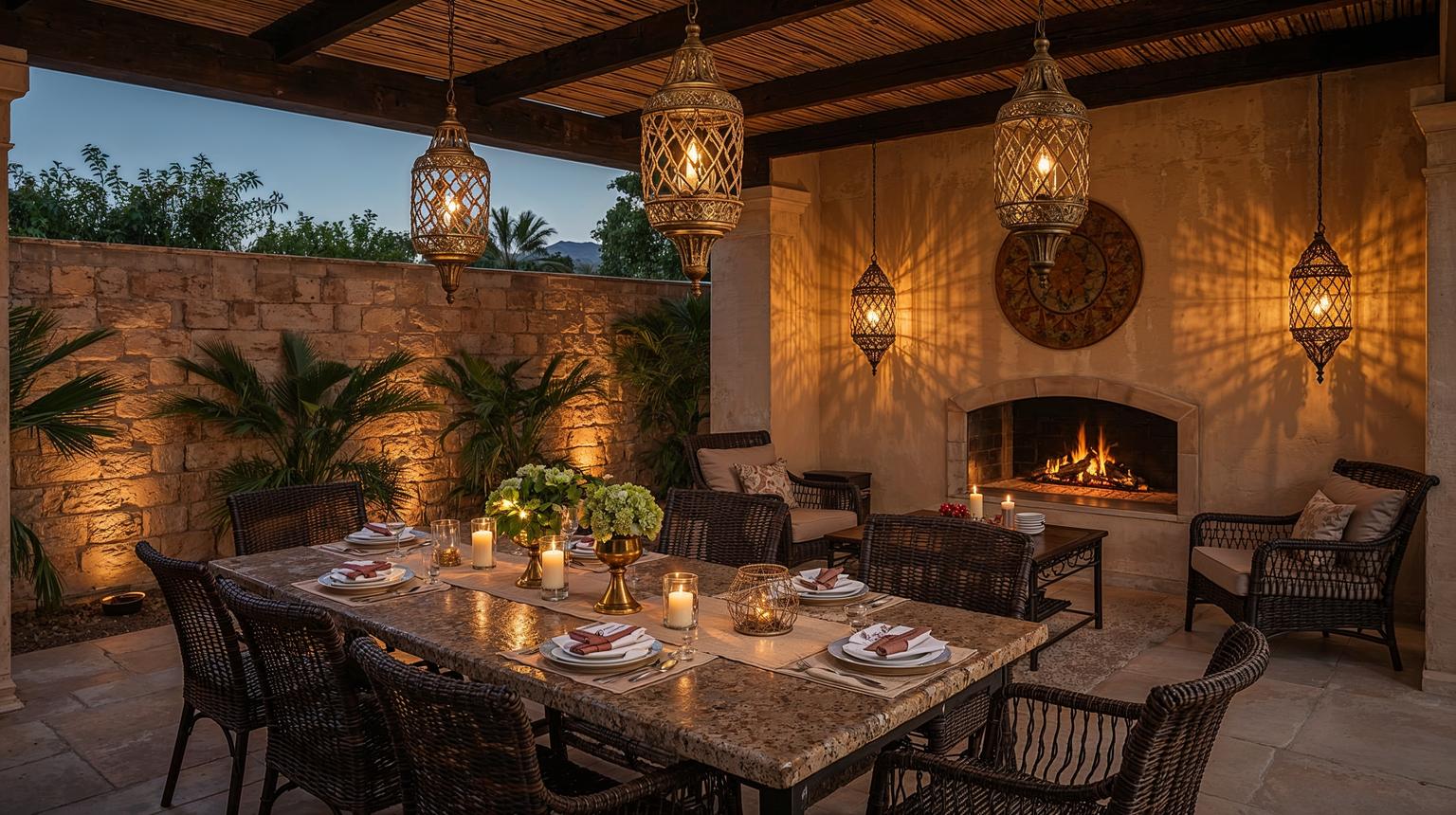
Combine one overhead or wall-mounted light with lower portable lights so steps, table edges and faces remain visible. Decorative pierced metal can cast patterned shadows, but it should not reduce useful light along the walking route.
Use fixtures marked for the actual damp or wet location and secure hanging lights for wind. UL Solutions notes that outdoor luminaires are assessed against applicable wet-location safety requirements. Keep open flames away from fabric, dry plants and traffic paths; flameless LEDs are the easier choice inside decorative lanterns.
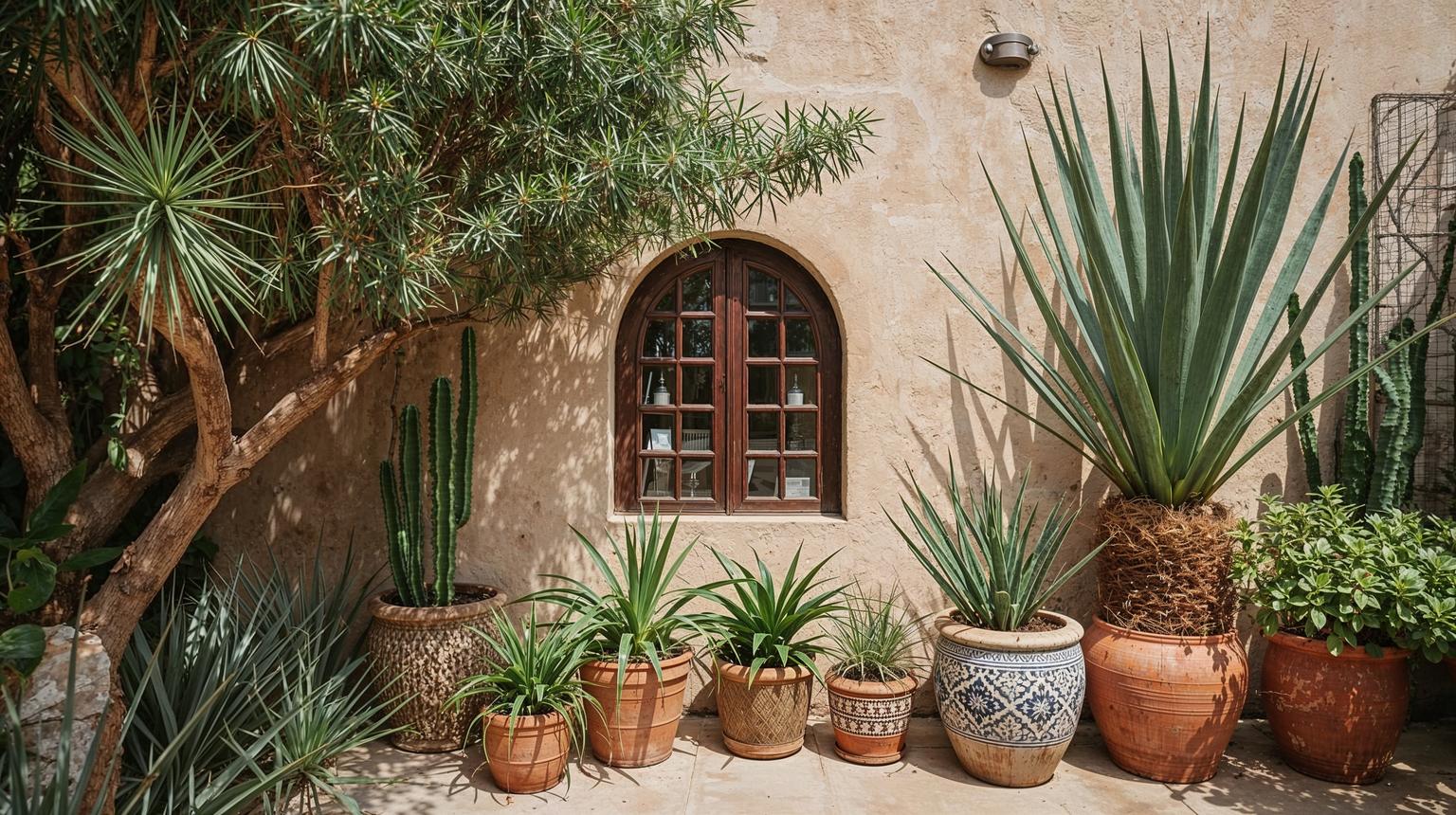
Olive, citrus, palms, jasmine and succulents often appear in Moroccan patio imagery, but they do not share the same climate, frost tolerance or water needs. Select plants for the patio's sun, wind and winter conditions, then use terracotta or glazed planters to connect them visually.
Allow drainage, use saucers where runoff can stain paving and confirm that large containers will not overload a balcony. Group pots in two or three heights rather than lining every edge with unrelated species.
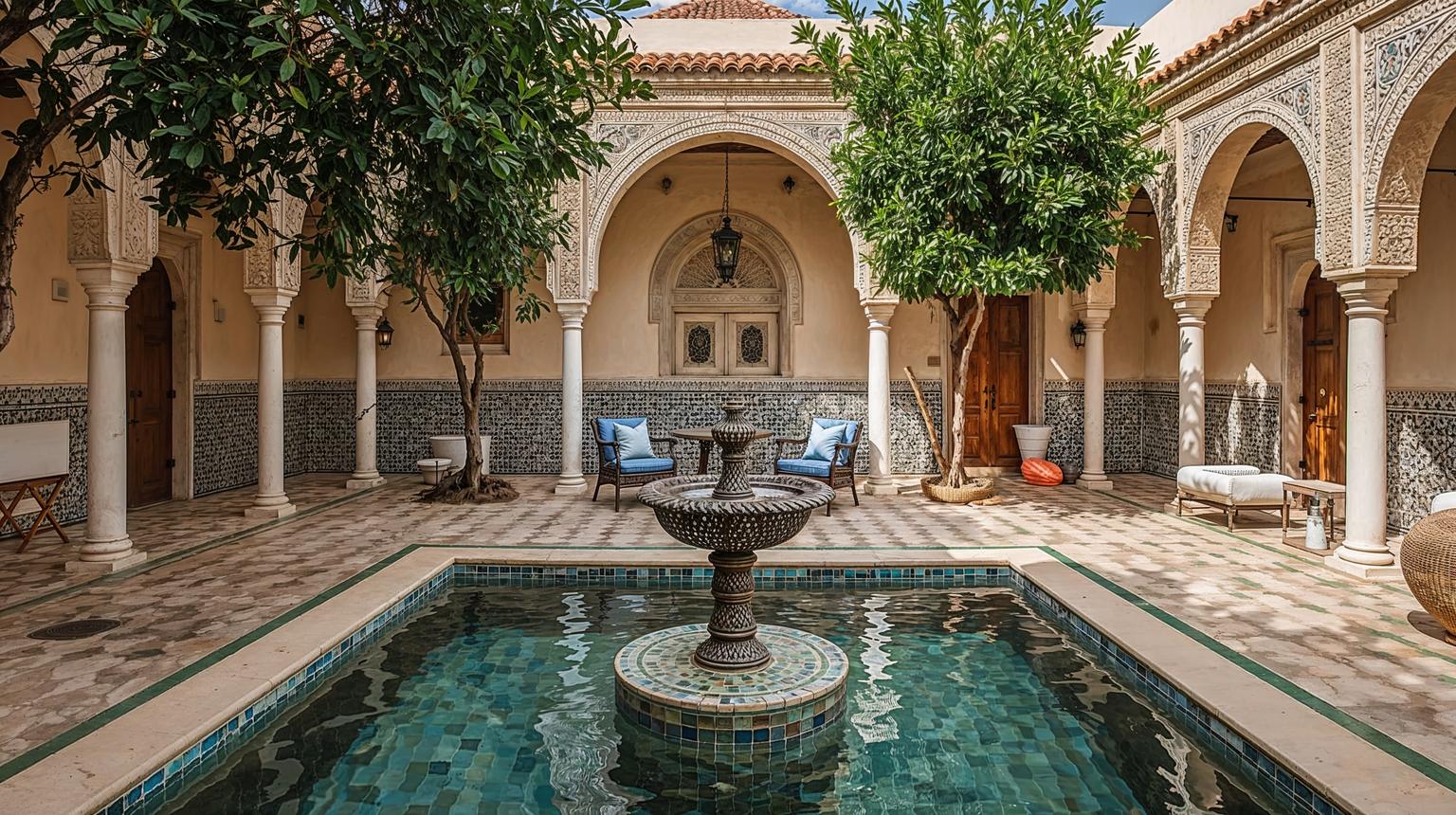
A backyard Moroccan patio can borrow the riad's inward focus by organizing seating around a central feature and screening exposed boundaries. A pergola, trellis, hedge or masonry wall may create the needed enclosure. An arch is unnecessary unless it belongs to the architecture and can be built properly.
The most useful Moroccan backyard ideas begin with enclosure and shade, then add color and craft at a scale the yard can support. This order works for both a compact corner and a larger courtyard layout.
A small recirculating fountain can mask background noise, but it needs a level base, power or solar access, water maintenance and a plan for freezing weather. Structural screens, pergolas, electrical work and water features may also be subject to local approvals.
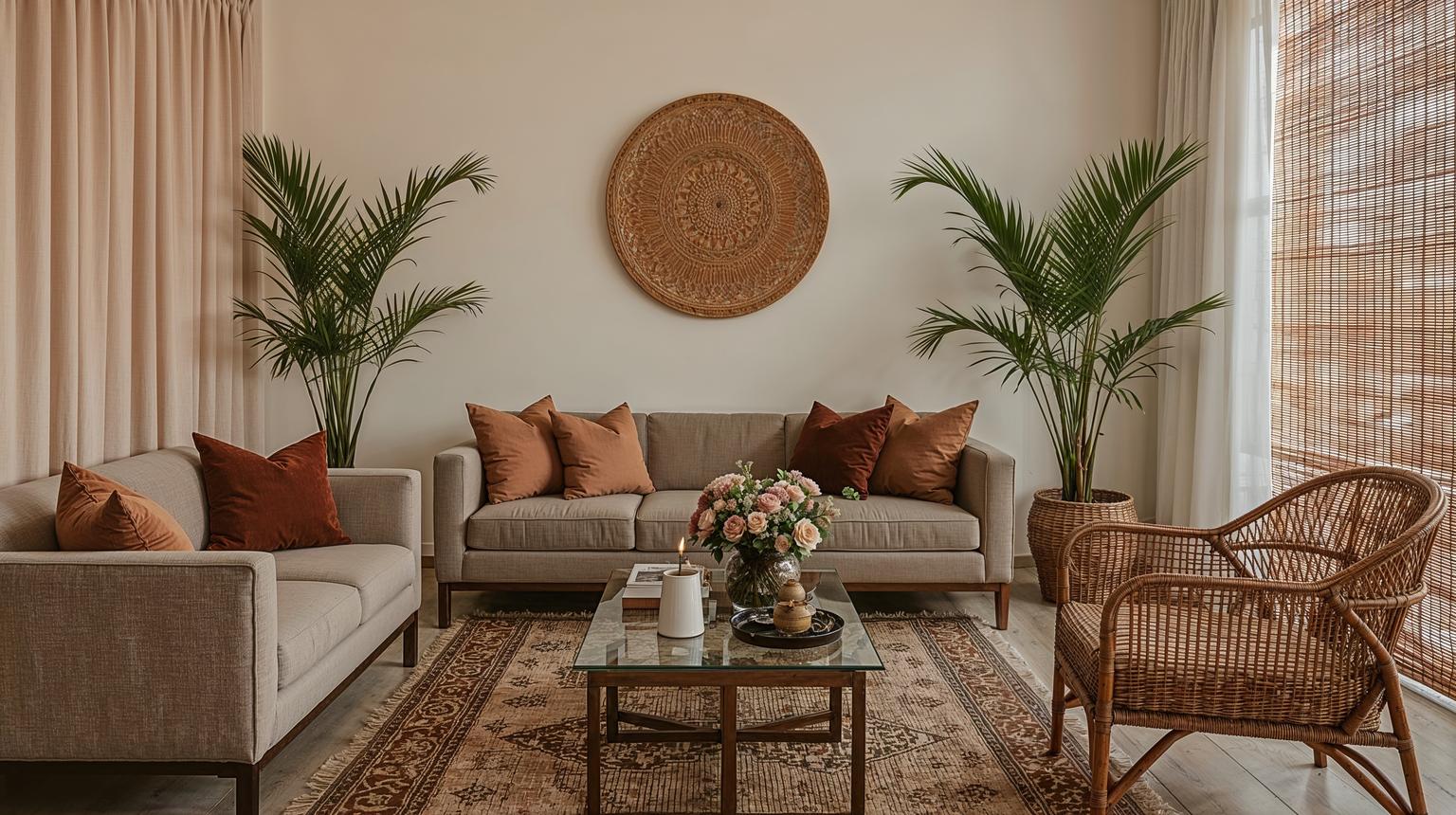
A patio becomes more usable when direct sun, overlooking windows and prevailing wind are addressed first. Fixed pergolas, retractable awnings, slatted screens and outdoor curtains solve different problems. Fabric must be secured for wind and kept clear of heaters, grills and lights.
On a rental balcony, a freestanding screen and umbrella may be enough. In a permanent courtyard, a properly designed overhead structure can establish the room more effectively than another layer of accessories.
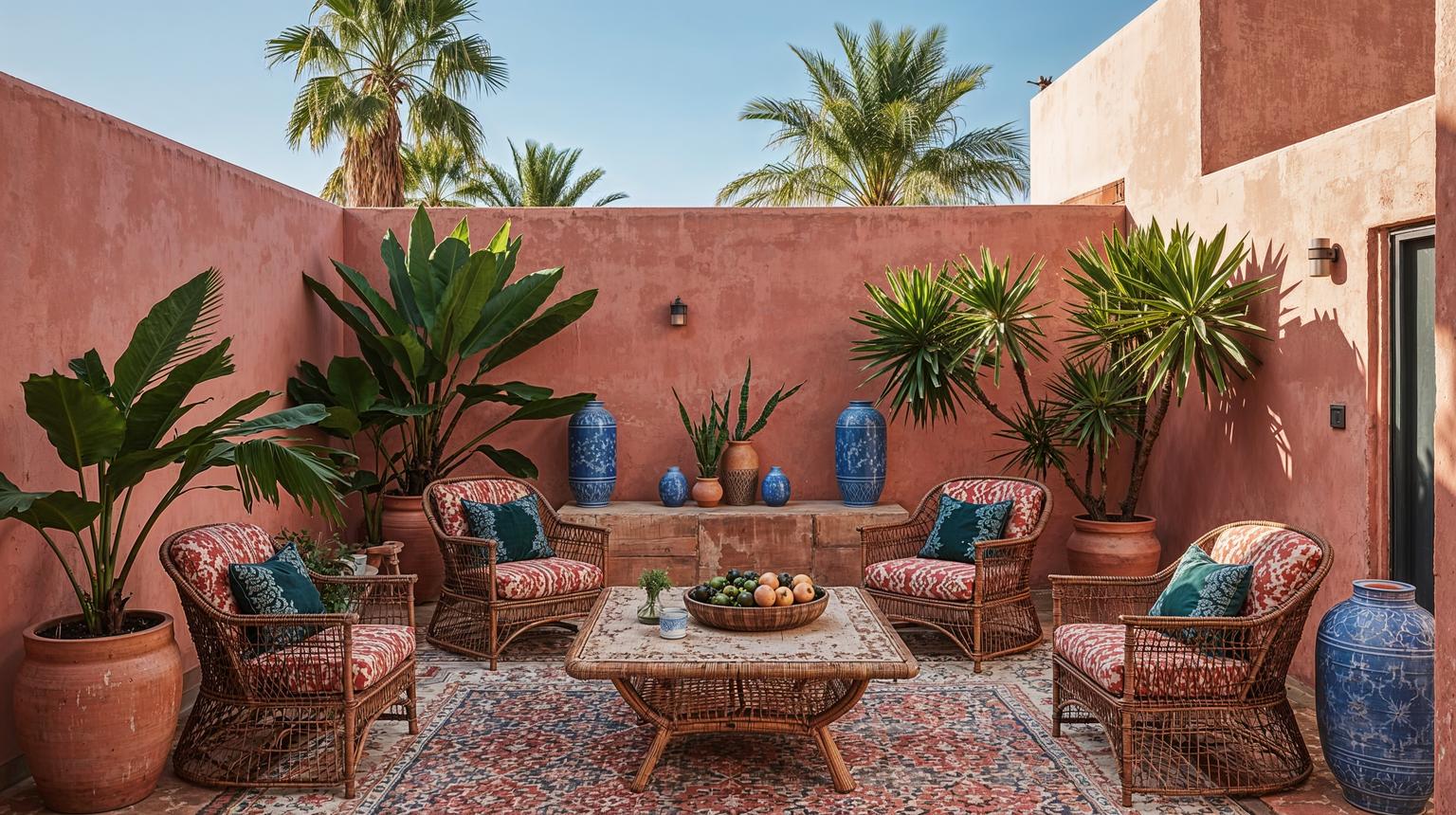
Start with the paving, wall color and furniture material already present. Terracotta with cream and muted blue creates a restrained Mediterranean-Moroccan patio, while cobalt, green and red produce a more saturated scheme. Do not use every jewel tone in equal amounts.
A practical ratio is one base material, one repeated accent color and one smaller contrasting color. Pattern can then appear in tile or textiles, but it does not need to cover both at once.
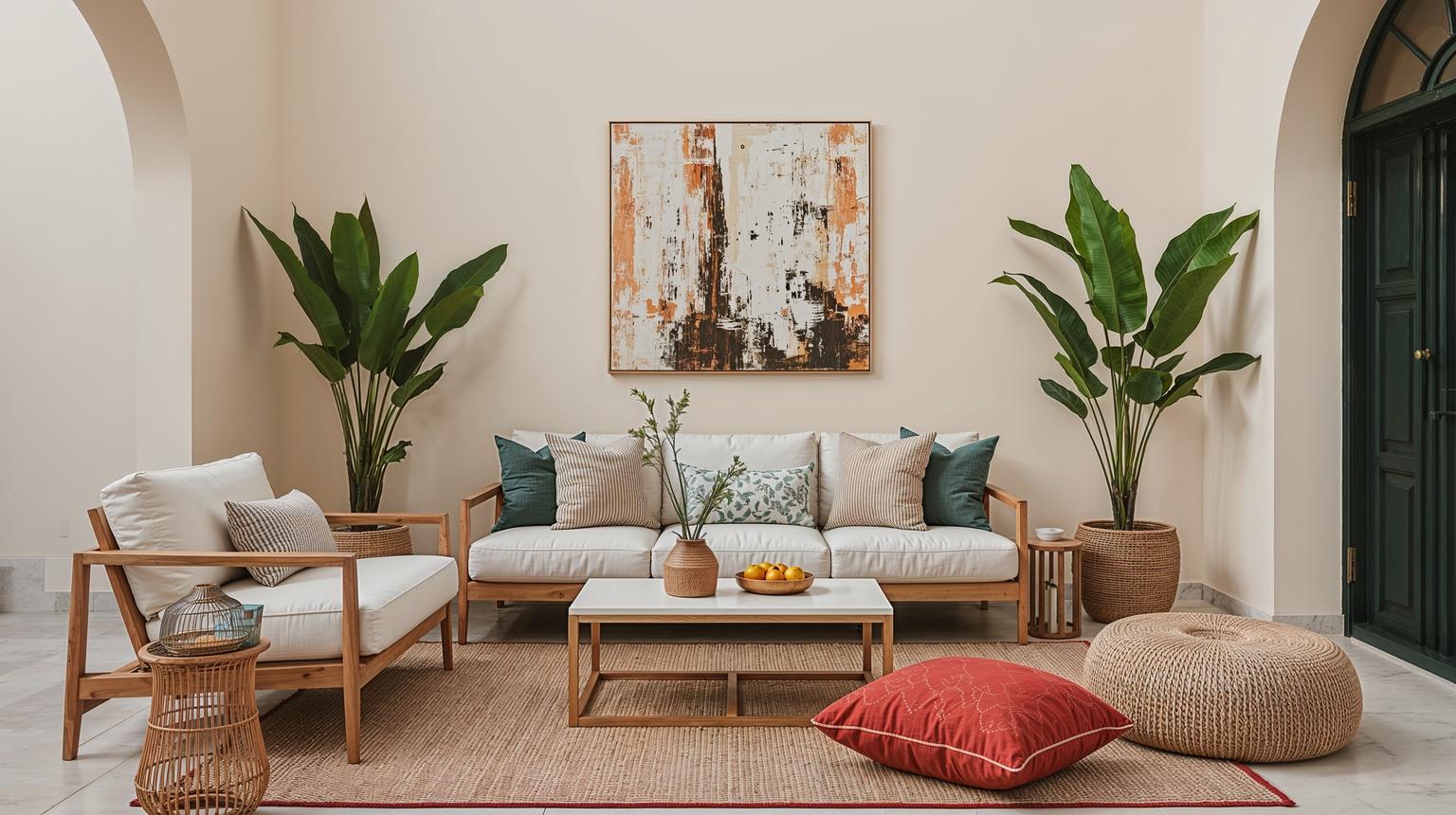
For a modern Moroccan patio, keep the main sofa, dining set or built-in bench simple and introduce detail through one material: patterned tile, a carved table, a woven rug or pierced metal lighting. The contrast gives the crafted element room to be seen and prevents the space from reading as a collection of props.
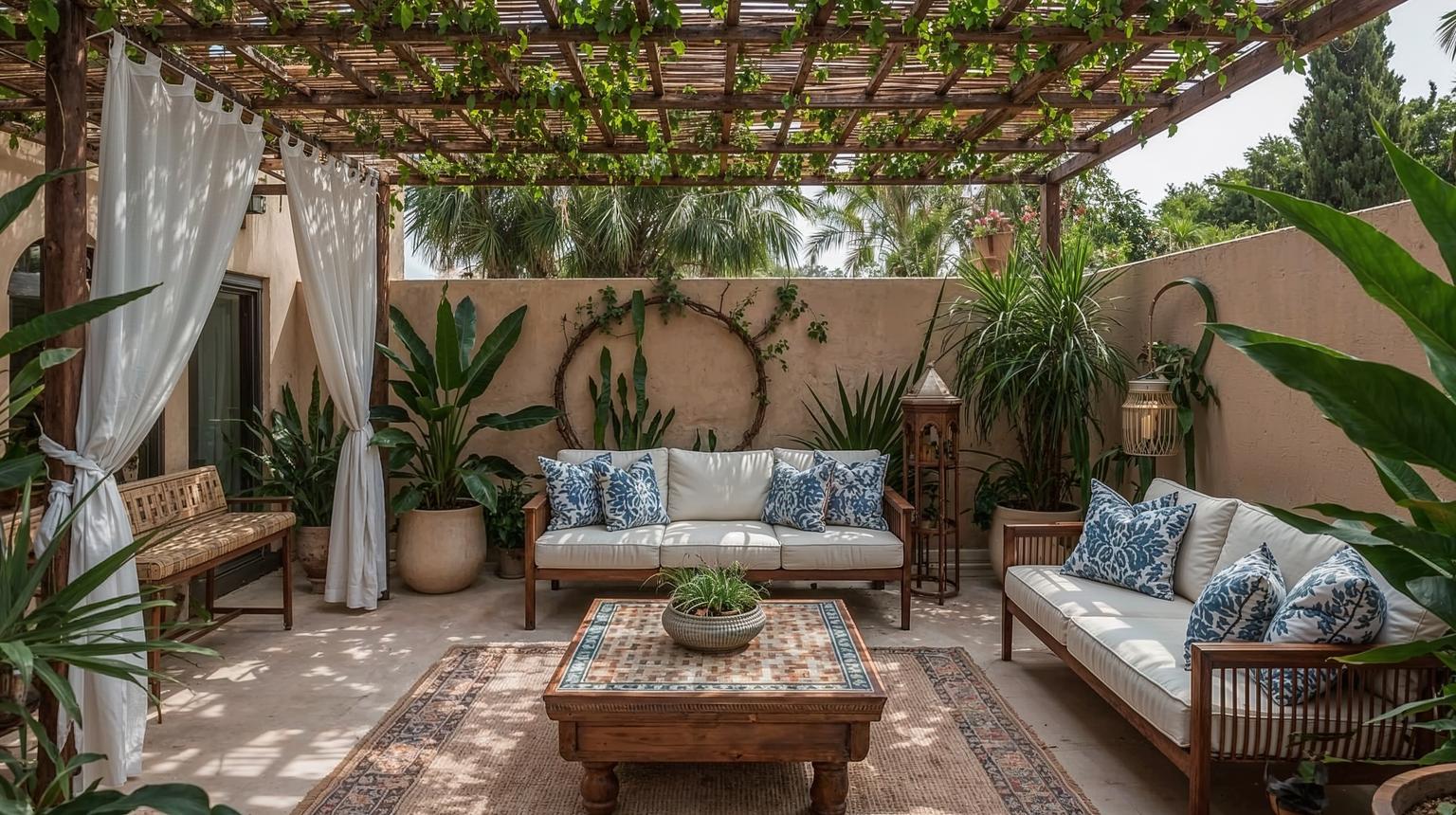
Among the most useful Moroccan terrace ideas is a bench against the long wall with a narrow table opposite. This preserves a walking lane and provides more seats than scattered chairs. Add a trellis or compact umbrella only where it does not block doors or neighbors' light.
Use aromatic herbs only when the site supports them and keep thorny or strongly scented plants away from tight seating. On a small terrace, one large planter usually creates a clearer focal point than many tiny pots.
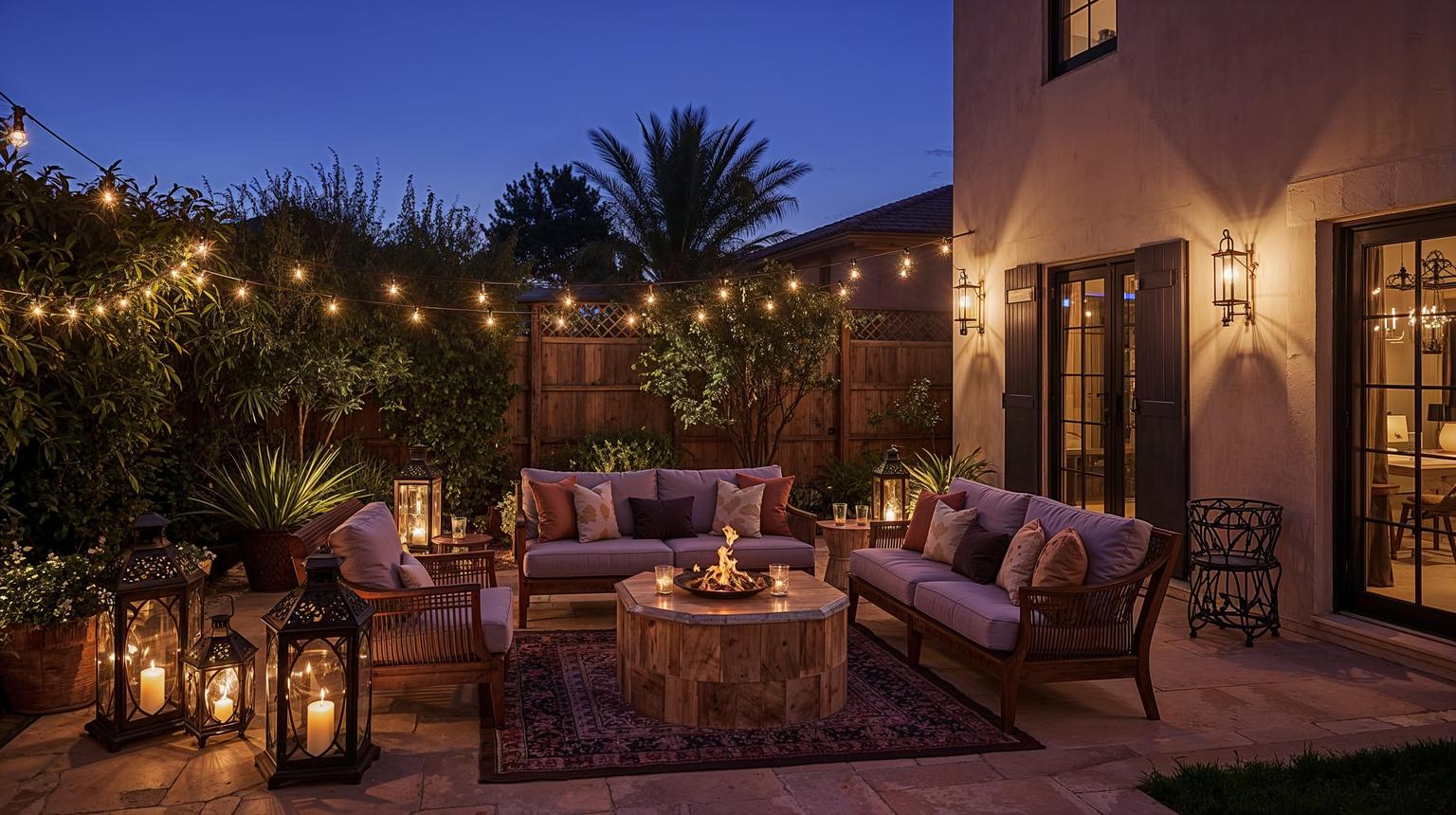
After dark, use a dimmable ambient layer, a light near the table and low-level illumination at steps. Warm light can support the brass, terracotta and wood palette, but visibility still matters. Avoid placing one bright bulb inside an ornate lantern and leaving the rest of the patio in shadow.
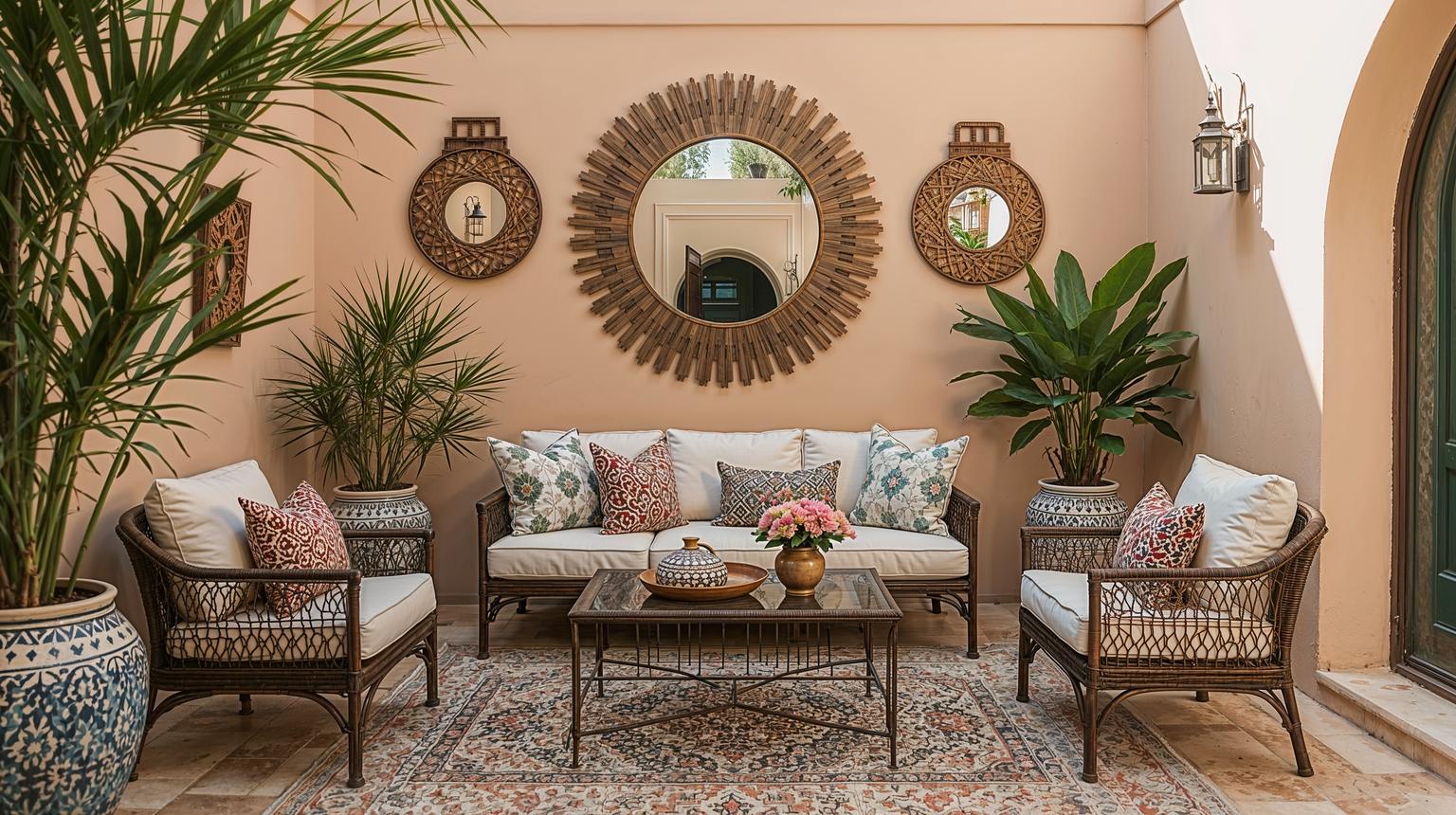
A handmade tile panel, locally sourced metal light or documented Moroccan textile contributes more than several mass-produced objects labeled "exotic." Ask sellers about material, maker, origin and outdoor suitability rather than assuming a geometric motif is Moroccan.
If using zellij or another glazed tile outdoors, confirm that the specific product and installation system suit exterior exposure, local freeze-thaw conditions and the intended wet area. On floors, slip resistance and drainage matter more than the photograph.
Use one outdoor rug, two weather-resistant cushions, a compact table and a portable outdoor-rated light. A freestanding screen or tall planter can add privacy without permanent construction. Keep the exit route and railing clear.
Invest in the seating layout, shade and a coordinated planter group. Add one painted wall or removable tile-style panel only after confirming weather resistance and property rules. This level changes the character of the patio without rebuilding it.
Prioritize drainage, electrical planning, structural shade and durable surfaces before decorative finishes. A built-in bench, exterior tile panel or recirculating fountain should be detailed for the local climate by the appropriate contractor or designer.
Use an AI exterior design tool to compare changes such as an enclosed seating group, a tiled focal wall or a shaded dining zone in a photograph of the existing patio.
For planting, paving and broader backyard changes, AI landscape design can help compare compositions, but it does not verify plant suitability, structure, drainage, measurements or local code. Treat the image as a direction to evaluate, not a construction plan.
Lanterns and cushions cannot compensate for glare, uncomfortable furniture or an obstructed route. Make the patio usable first, then style the surfaces that remain.
Use "Moroccan-inspired" when origin and craftsmanship are unknown. Reserve specific terms such as zellij for products and techniques that genuinely match the description.
Indoor rugs, untreated wood, ordinary extension cords and decorative lights may fail quickly or become unsafe outdoors. Check the manufacturer's location rating and care instructions for every exposed item.
Choose one dominant patterned plane, usually the rug, tile or cushions. Repeating pattern across the floor, walls, furniture and every textile can erase the layout and make a compact patio harder to read.
Designing a Moroccan patio, yard, or garden involves thoughtful color, furniture, and decor selection. By embracing the rich heritage of Moroccan design, you can create an outdoor space that is not only stunning but also inviting—perfect for relaxation and entertaining.
Ready to start? Visualize your oasis today with Paintit.ai.
A Moroccan-inspired patio usually combines enclosure or privacy, shade, a social seating layout, tactile materials and a controlled use of geometric pattern. Tile, carved wood, metal lighting, plants and water can support the design, but none is mandatory. The patio should still respond to its climate, dimensions and primary use.
Arrange seats around a central table and preserve a clear route to the house. Low benches and poufs create an informal layout, but standard-height sofas and chairs are valid and more accessible. Use outdoor-rated cushions and provide dry storage if the seating is exposed to rain.
Look for an outdoor sofa or bench, a stable round or rectangular table and movable side seating. Material and proportion matter more than decorative labeling. Powder-coated metal, suitable exterior timber and weather-resistant upholstery can all work when the shapes and layout support intimate gathering.
Choose one corner, place a compact bench against the boundary and add a small table, a patterned textile and one grouped planter arrangement. A screen or umbrella can establish enclosure. Avoid adding a fountain, multiple lantern groups and several patterns unless enough walking and storage space remains.
Yes, because the styles can share terracotta, plaster-like walls, shaded seating, tile and drought-aware planting. Keep the description accurate: a cream, terracotta and olive palette may read broadly Mediterranean, while documented Moroccan craft, zellij-inspired geometry or a riad-like layout makes the Moroccan reference clearer.
Only when the tile supplier confirms the specific product is suitable for the location and climate. Exterior walls, covered patios, wet areas and freeze-thaw zones place different demands on tile, substrate, adhesive, grout and drainage. For a walking surface, also verify slip resistance.
No. Outdoor-rated electric or solar lights can provide patterned light without an open flame. Select fixtures for damp or wet exposure, secure them against wind and keep cords out of traffic paths. Flameless LED candles are preferable around textiles, plants, children and pets.