12 min. reading

Yulii Cherevko
CEO paintit.ai
Published:
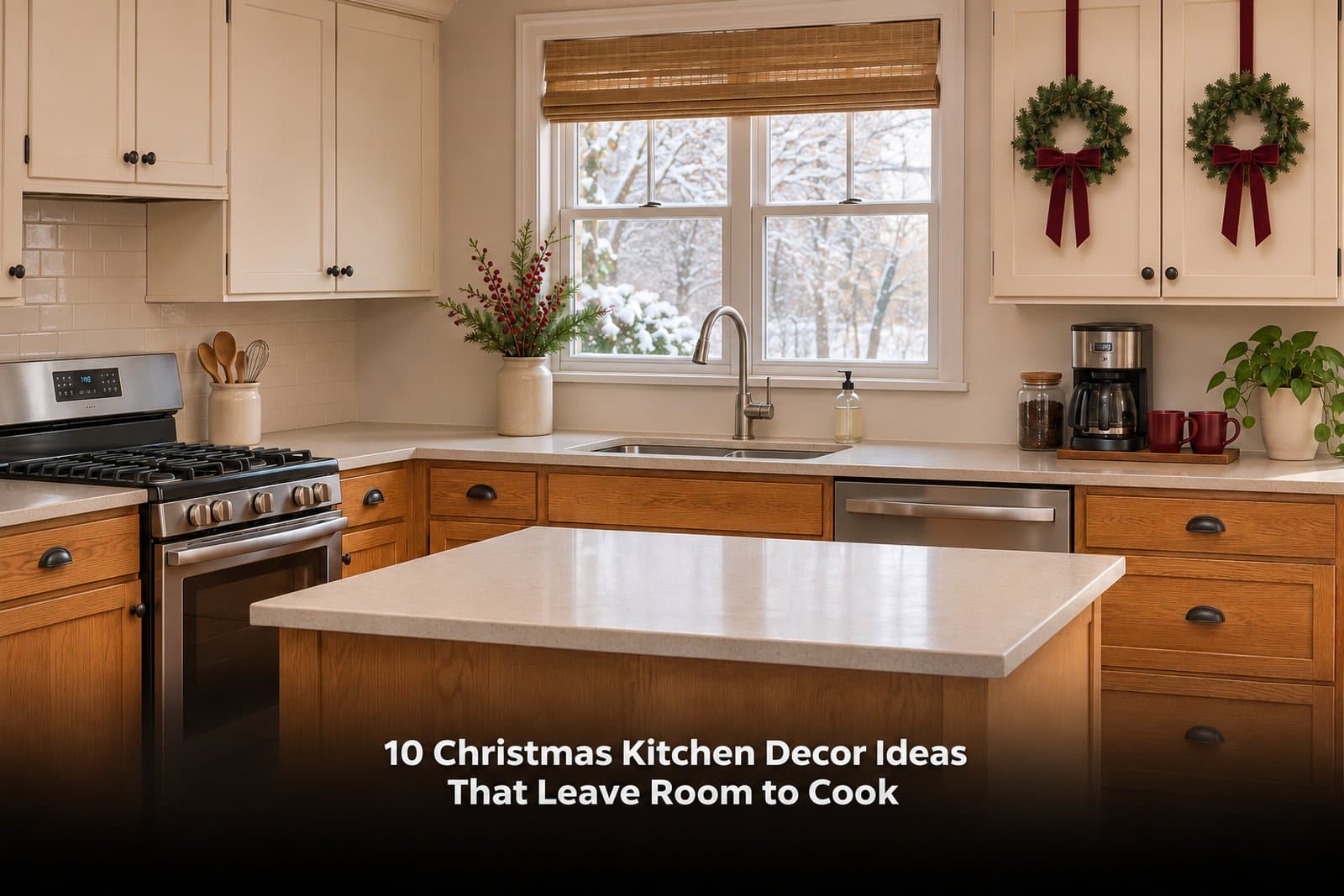
Christmas kitchen decor works best when it changes the parts of the room you look at, not the surfaces you need for dinner. Start with a cupboard door, a window away from the stove, or one shelf. Add a seasonal color through mugs or tea towels, then leave the main preparation area alone.
You do not need an island, matching appliances, or white cabinets. These Christmas kitchen decor ideas work with the kitchen you already have: a pair of small wreaths, a removable display, and a few useful objects can be enough. Choose two or three ideas rather than fitting all ten into one room.
Run through an ordinary meal in your kitchen. Where does the chopping board go? Where do you put a hot tray? Which cupboard holds the plates? Those places already have jobs. A display that makes you move five objects every time you cook will become a nuisance long before Christmas Day.
Keep flammable decorations away from the cooktop. The U.S. Fire Administration's stove-top guidance specifically identifies towels, curtains, paper, and other combustible items as things to keep away. Do not drape ribbon or greenery over a range hood, cooking appliance, or its controls; follow the appliance manufacturer's instructions for clearances.
| Kitchen Zone | Possible Decoration | Keep Available |
|---|---|---|
| Cupboard door away from heat | One small wreath or short bow, with a suitable attachment. | Handle, hinges and the full door swing. |
| Window away from cooking heat | One small accent outside the blind's path. | Handle, daylight and any required window access. |
| Spare counter corner | One shallow ornament bowl or compact tray. | Food preparation, appliances and the hot-tray landing spot. |
| Island used for cooking | A removable tray only when not preparing food. | The working surface and a real place to move the tray. |
| Small galley kitchen | Useful seasonal mugs, a tea towel or an existing wall display. | The floor route and all appliance clearances. |
Take one doorway photo after clearing the usual washing-up. It will show which parts of the kitchen are visible together. If a wreath, a shelf display, and an island arrangement all compete in that view, remove one before adding more.
Choose a counter corner that is genuinely spare, not the spot used for the kettle, toaster, draining dishes, or setting down groceries. A shallow bowl of ornaments can supply color without the height of a miniature tree. Keep decorative objects separate from food and food-preparation tools.
Limit the group to one small base, such as a tray or bowl, so it reads as a deliberate arrangement. If your chopping board no longer fits where you normally use it, move the display. That is a better test of Christmas kitchen counter decor than whether the corner looks full in a photograph.
Two matching wreaths can define Christmas kitchen cabinet decor without covering every cupboard. Choose doors away from cooking heat, ideally ones visible from the room's entrance. Keep the door handles easy to grasp and the wreaths clear of neighboring doors.
Use an attachment method approved for the cabinet finish and the decoration's weight. A ribbon trapped over the top of a door can affect how it closes; adhesive can mark a finish. Test the chosen method on an inconspicuous area where appropriate, then open and close the doors fully. Skip the wreath if you cannot attach it without rubbing, slipping, or restricting the door.

For a lighter alternative to wreaths, tie one short bow to a suitable cabinet handle, away from heat and food preparation. Keep the knot out of the grip and trim loose tails so they cannot catch on nearby drawers. You should still be able to open the cupboard normally with one hand.
Wrapping a door like a present looks appealing in a still image, but paper and crossed ribbons can cover hardware or get caught at the hinges. A single bow gives a similar color accent with less material. Use this idea instead of the wreaths, not automatically alongside them.
Christmas kitchen window decor has to allow for a working window. Before hanging anything, open it, reach the handle, and lower the blind all the way. A wreath occupying the blind's path will need another home. Windows near a cooking appliance are not suitable places for loose fabric or greenery.
If the window is away from heat and has an existing suitable hanging point, one small decoration may be enough. Otherwise, choose a seasonal object for a dry, spare part of the sill, provided it does not obstruct the handle or fall into the sink. Do not fill the sill just because it is empty.

For Christmas kitchen island decor, put a compact arrangement on a tray that you can lift in one trip. A shallow ornament bowl and a short artificial sprig are easier to move than loose objects spread along the island. Keep anything decorative away from food preparation and seating edges.
Decide where the tray will go while you cook. If there is no spare surface outside the working area, leave the island bare and decorate a cupboard instead. Where an island also serves as the dining table, use Christmas table arrangements that leave space for dinner rather than adding a second centerpiece beside the plates.
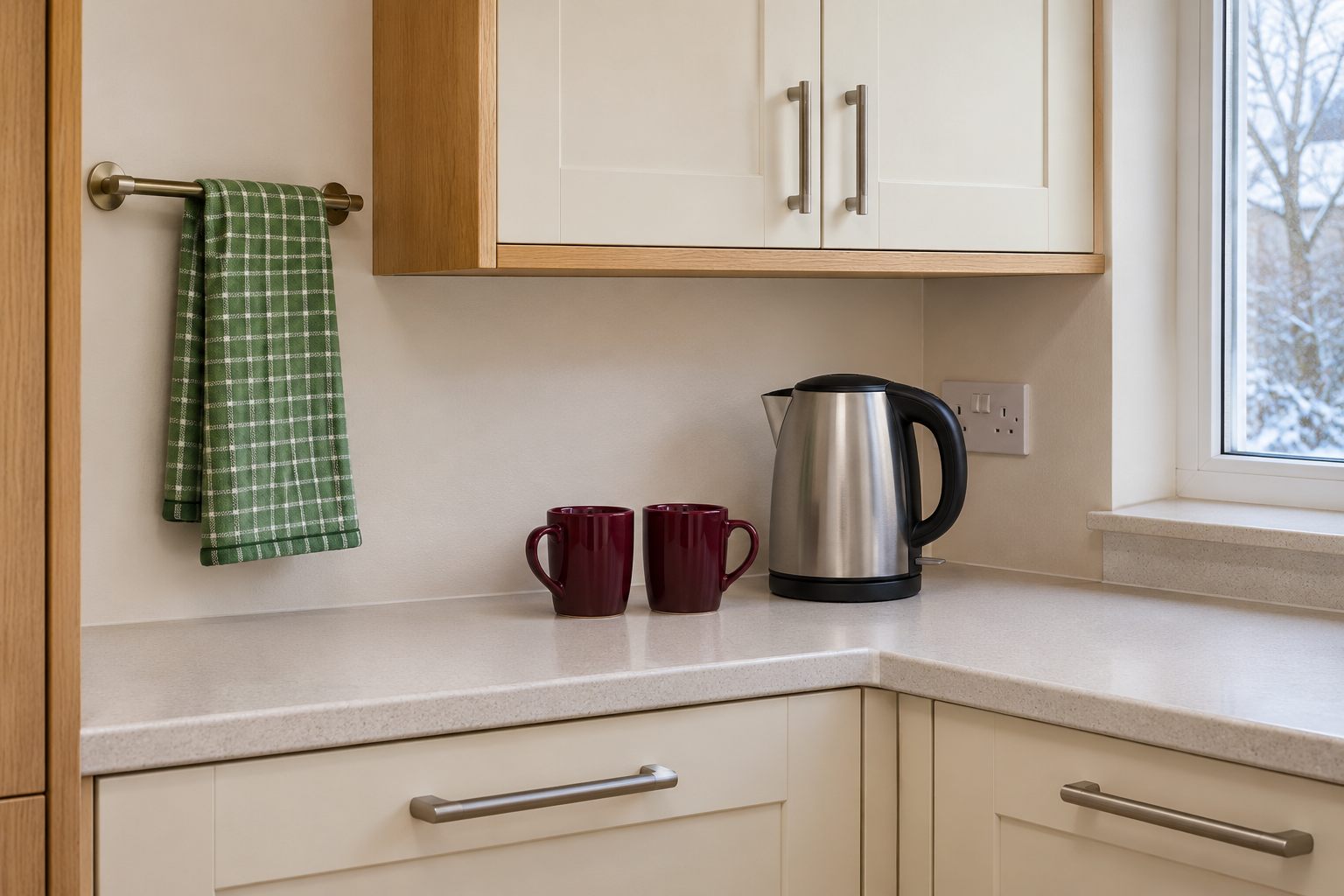
A coffee or hot chocolate corner does not need a new appliance or a row of matching jars. Replace two everyday mugs with seasonal ones, keep the kettle's usual space, and put the extras back in the cupboard. A burgundy mug against pale cabinets can make the corner look festive on its own.
Keep cords, sockets, appliance clearances, and the area where hot drinks are poured unobstructed. If children will use the room, avoid turning a busy passage beside the kettle into a self-service station. The useful version is a normal drinks corner with a seasonal detail, not a countertop shop display.
Striped red cotton, a deep green check, or a plain burgundy towel can carry the palette without adding another object. Choose washable textiles suitable for their everyday job. Keep a clean spare in the drawer so the room does not depend on a permanently pristine decorative towel.
Hang towels on their usual suitable rail away from the stove, not over cooking controls or where loose fabric could reach a burner. Avoid bows on oven handles or fabric trailing beside the cooktop. Repeating the towel color in one mug or cabinet ribbon is enough; every accessory does not have to match.
On an existing open shelf, remove an ordinary decorative object before adding a small Christmas one. A few seasonal mugs beside everyday plates often work better than greenery woven through the whole shelf. Keep frequently used dishes easy to lift without moving decorations.
Check that any object sits securely within the shelf and is suitable for its load. Avoid placing loose ornaments, shedding greenery, or unstable objects above an open food-preparation area. If reaching the display needs a stool every day, choose a lower, accessible location instead.
A short ribbon bow on the outside of a suitable stool back can bring color below the countertop. Try it on one stool first. Sit down, pull the stool out, and push it back under the island. The ribbon should not rub against the sitter, trail on the floor, or catch on the seat mechanism.
Skip this idea for backless stools, chairs used by young children who may pull the decoration, or any seat where an attachment gets in the way. A colored napkin at mealtime can provide the same accent without leaving anything tied to the furniture.
Small kitchen Christmas decor can be one card on an existing notice board, a seasonal print in a frame already on the wall, or a single shelf swap. You do not have to squeeze in a tree. Keeping the countertop usable makes a compact kitchen feel more comfortable than filling its last free patch.
A galley kitchen with no spare sill, shelf, or wall attachment may need only festive mugs and a tea towel. Do not put a floor tree in the passage or hang a garland across a doorway to compensate. Choose something that is easy to clean around and easy to put away.
Start with the room's largest fixed colors: cupboard fronts, countertop, floor, and backsplash. Then try one main festive accent and a small amount of greenery. These kitchen Christmas decor ideas are starting points, not reasons to repaint a cabinet for one month.
| Existing Kitchen | Try for Christmas | What to Keep Simple |
|---|---|---|
| Cream or white cabinets, warm wood | Burgundy ribbon, green wreaths, red-striped cotton. | One small repeat of the accent; no need to fill every door. |
| Oak cabinets and beige counters | Deep green ribbon, cream mugs, muted gold ornaments. | Let the wood remain visible instead of adding more brown props. |
| Navy or dark cabinets | Cream ribbon, evergreen, a small amount of warm metallic detail. | Avoid a dark wreath on every dark door. |
| Sage cabinets or patterned tiles | Burgundy mugs or ribbon with plain cream textiles. | Keep the pattern on the existing surface; choose simpler accessories. |
Use the same accent in two places visible together, such as a ribbon and a mug, then stop and look from the doorway. If the room already has patterned tiles or bright cabinet fronts, a simpler decoration usually leaves those details easier to appreciate.
A photo concept is useful when you cannot decide whether burgundy ribbon will suit oak cabinets, or whether two wreaths will look crowded. Paintit's photo-based kitchen design tool lets you explore a visual direction using your existing room as the starting point. The aim here is seasonal decoration, not new cabinetry or a remodel.

Example prompt:
Use my kitchen photo as the starting point. Create a restrained Christmas decorating concept with two small green wreaths and burgundy ribbon on the far-right cupboard doors, away from the stove. Add two burgundy mugs at the existing coffee corner. Keep the current cabinet finish, countertop, appliances, window, and room layout. Leave the preparation area, cooktop, sink, door handles, and appliance vents clear. Do not add a tree, new furniture, ceiling decorations, or a range-hood garland.
Change the named cupboard location to match your own room before using the prompt. A convincing picture does not prove that a door will close or that an attachment is safe. Use the image to narrow the look, then try the actual decorations in place before committing to the arrangement.
Choose one vertical accent and one useful seasonal swap. For example, put small wreaths on two suitable cupboard doors and use red mugs at the coffee corner. Leave the preparation surface and appliance areas clear. If a decoration has to be moved every time you make lunch, give it a different location or leave it out.
Start with the cabinet manufacturer's care guidance and an attachment suitable for that finish and weight. Do not assume removable adhesive is harmless, or that ribbon over a door will allow it to close. Check an inconspicuous area where appropriate and test the door's full movement. If you cannot find a suitable method, decorate elsewhere rather than taking a risk with the finish.
Use what already has a place: a seasonal mug, a washable tea towel on a suitable rail, or a few ornaments in a small bowl on a spare surface. Pick one accent color and repeat it sparingly. You do not need a second tree, new dinnerware, or a decorated range hood to make the kitchen feel festive.
Only consider it if the surface is suitable, the objects can be secured appropriately, and you can reach them safely for cleaning and removal. Keep appliance vents and required clearances unobstructed. An inaccessible, greasy, or narrow cabinet top is a poor place for a seasonal display; a reachable shelf or cupboard-door accent is usually easier to manage.
AI can illustrate an arrangement and help you compare colors or the amount of decoration. It cannot reliably measure your room from one photograph, validate product dimensions, or confirm installation safety. Check the actual wreath, ribbon, tray, and cabinet movement in the real kitchen. Treat the concept as a decorating reference, not a fit test.