6 min. reading

Yulii Cherevko
CEO paintit.ai
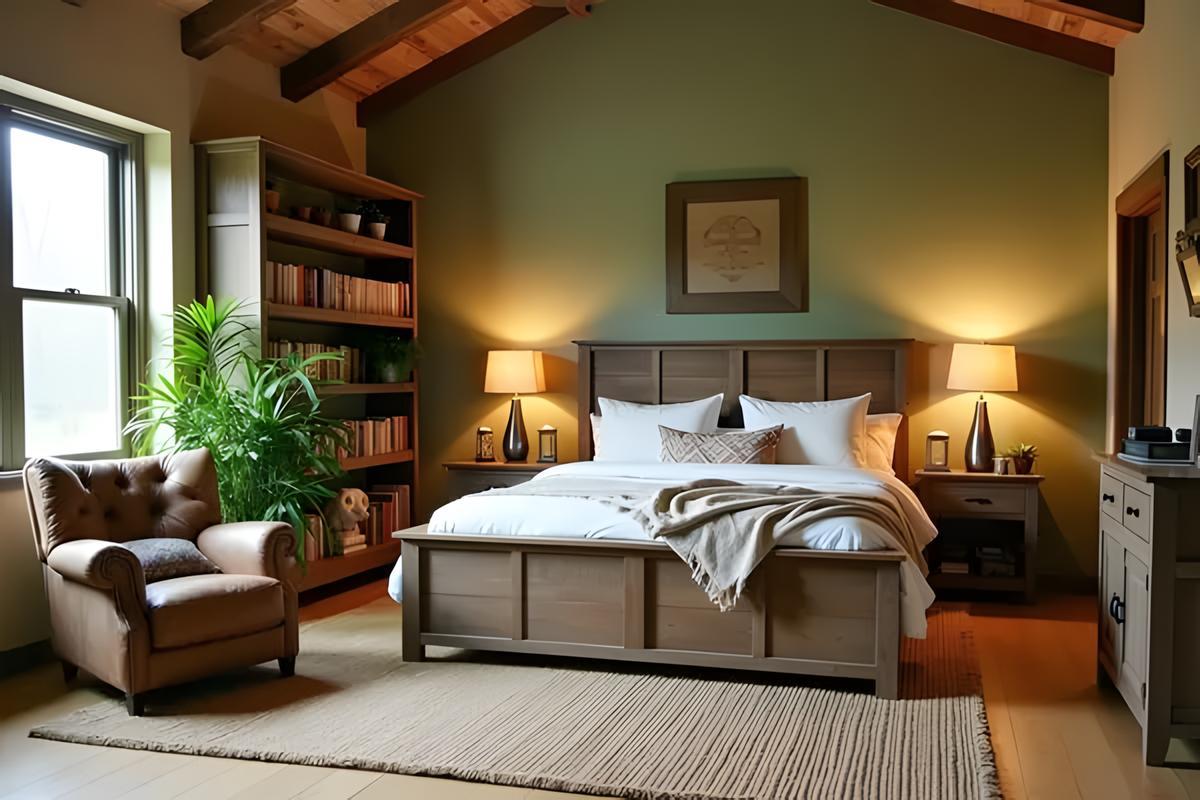
A rustic sage green bedroom works when the muted green supports the room's wood, brick, linen and aged finishes rather than competing with them. The most important decision is not whether sage is fashionable. It is where the color belongs: across every wall, on paneling, on one piece of furniture or only in bedding and decor.
These 25 rustic sage green bedroom ideas include full-room changes and reversible updates. Each example explains how to balance the color with existing light, floor and furniture so the result feels intentional instead of becoming a collection of generic farmhouse accessories.
Key takeaways
Sage is a broad color label. One sample may lean yellow or olive, another blue-gray, and another close to taupe. Warm oak and pine often emphasize yellow undertones, while walnut or dark stained wood can make a pale gray-green appear cooler. Compare the materials together rather than selecting them from separate photographs.
Move a painted board from the window wall to the headboard wall and observe it during the day and after dark. A small color chip cannot show how the shade behaves across a large surface or beside shadows, curtains and flooring.
A full sage room needs less contrast and fewer additional green objects. An accent wall can support stronger bedding and art. If the fixed room is already visually busy, sage on a dresser, headboard or curtains may be enough.
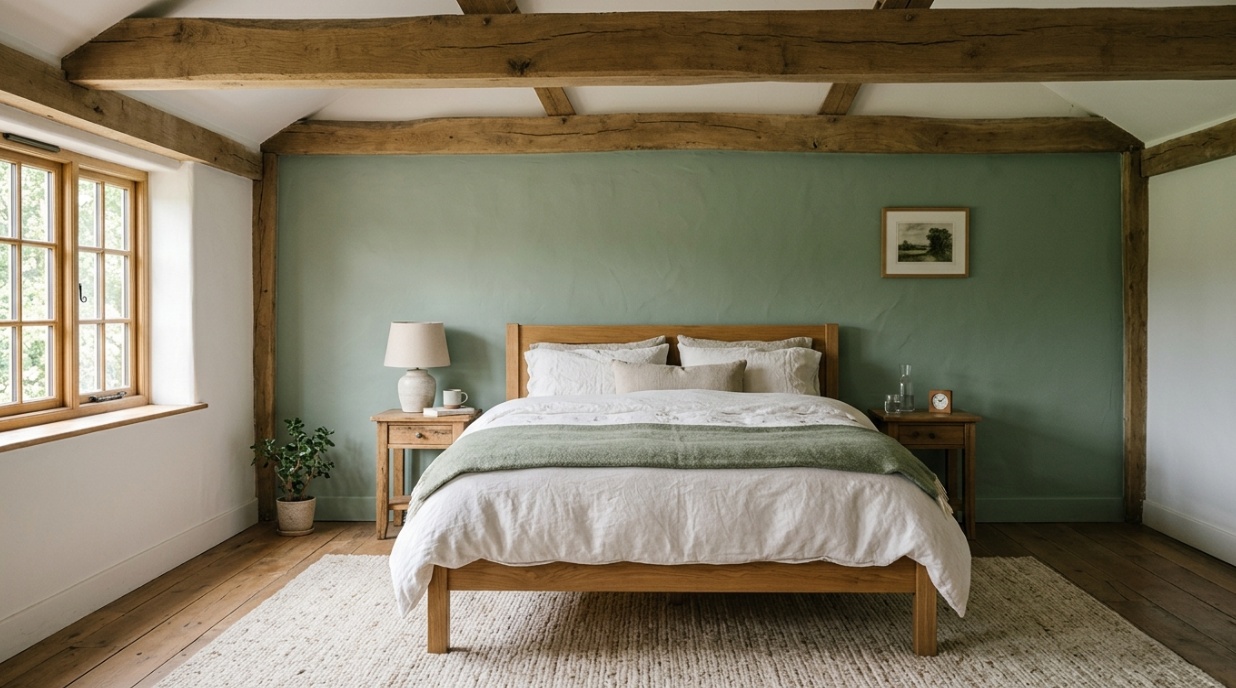
Use sage on the headboard wall and leave timber beams in their existing finish. The contrast works best when the wall is visually simple; heavy paneling, several framed objects and a strong bed frame on the same plane can compete. Repeat the wood once at bedside height to connect the ceiling and furniture.

A dresser with visible age gives the room a genuine point of history. Let scratches, grain and repaired hardware remain visible if the piece is structurally sound. Use sage on the wall or one textile instead of repainting every vintage object the same color.

Warm white bedding, trim or upper walls keeps a sage green bedroom light without creating a sharp blue-white edge. Use the same white family across trim and major textiles. Several different creams can look accidental when they meet in daylight.

Texture provides depth when the palette is quiet. Combine smooth cotton sheets, linen or linen-look bedding, a wool throw and a woven rug, but limit the visible patterns. One small-scale stripe, check or botanical motif is usually enough beside rustic wood grain.

A light sage can still look gray in a shaded room, while a warm sage may become more yellow in strong afternoon light. Do not assume that a pale sample will automatically make a small bedroom feel larger. Contrast, furniture scale and available light matter too.

A light sage green bedroom with dark wood furniture creates a defined silhouette without requiring a dark wall. Walnut, dark oak and stained pine all work, but keep the bedding lighter so the bed does not become one dark block. This pairing suits a farmhouse rustic sage green bedroom without relying on distressed signs or decorative slogans.

A sage green farmhouse bedroom does not require new shiplap, but existing boards can provide useful texture. The grooves create shadow, so the installed color may look darker and more varied than a flat sample board. Avoid adding cosmetic shiplap to every wall merely to label the room farmhouse.

One healthy plant and a small group of botanical prints can reinforce the green palette without turning the bedroom into a greenhouse. Choose plants for the actual light and keep damp soil away from wood furniture and textiles.

Sage bedding is a reversible way to test the color. Use a duvet or quilt as the main green area, then keep sheets and larger pillows cream, white or taupe. The bed will read as a deliberate focal point without requiring green walls.

Warm light can make sage appear more olive, while cooler light may emphasize gray or blue undertones. The US Department of Energy separates color temperature from color fidelity and notes in its LED lighting guidance that CRI 80 is a general minimum for interiors and CRI 90 or above indicates excellent color fidelity.
Use a central ambient light and a bedside task light rather than one decorative fixture. Evaluate paint under the lamps that will remain in the room.

Brick contributes red, brown and orange tones that contrast naturally with muted green. Leave one material quieter: if the brick is highly varied, use a plain sage wall and solid bedding. Do not expose or paint masonry without checking its condition and moisture behavior.

A painted canopy frame adds both height and color. Check ceiling clearance, fan blades, pendants and walking space before choosing a tall frame. Keep draped fabric clear of lights and use it sparingly so the room remains practical to clean.

Warm paper, muted prints and natural wood frames remain visible without becoming harsh against sage. Arrange the group to fit the furniture below it rather than spreading small frames across the entire wall.

Cream, oatmeal and taupe curtains are forgiving beside many sage paints. Matching curtains exactly to the wall is harder because fabric and paint reflect light differently. Prioritize the privacy, blackout and insulation level the bedroom needs, then choose the color.

Aged brass, brown pottery and a wooden tray add warmth in small amounts. Choose objects that serve the room, such as a lamp, water carafe or storage box, instead of covering every surface with vintage-style decor.

A sage green and rust bedroom works because the muted green and red-orange accent create contrast without requiring bright colors. Use rust on one throw, lumbar cushion or artwork group. Cream and wood should occupy more area than the rust accent.

A minimal room still needs visible material variation. Pair a plain sage wall with a wood bed, woven rug and linen-look bedding, then leave some wall and floor area open. Rustic does not require clutter or artificially distressed furniture.

Sage wainscoting grounds the room while a warm white upper wall keeps the perimeter lighter. Align the panel height with windows, headboards and switches so the horizontal line looks architectural rather than arbitrary.

Wood shelves can connect the wall color to the furniture, but they should not replace concealed storage. Display a few books, one vessel and a useful box. Keep heavy items away from the bed and install shelves with fixings appropriate to the wall.

Choose an area rug large enough to extend beyond the bed where feet land, rather than a small mat floating at the foot. A muted solid or low-contrast pattern allows hardwood grain to remain part of the rustic palette. Use a suitable rug pad to reduce movement.

A sage dresser can introduce the color without repainting the room. Before sanding or stripping old furniture, consider the age and unknown coating. The CPSC notes that older housing and furniture may still contain lead-containing paint beneath later layers; use the appropriate local testing and safety guidance rather than dry-sanding an unknown finish.

A pale sage ceiling can connect timber beams or reduce the contrast with white walls. Paint a large movable sample and hold it horizontally because a color viewed overhead receives different light from a wall sample. Deep sage may make a low ceiling feel more prominent.

A mirror frame is small enough for testing sage paint and visible enough to repeat the wall or bedding color. Keep intentional wear subtle; random heavy distressing can look less convincing than a clean satin or matte finish.

Two or three sage pillows can connect neutral bedding to a green wall or rug. Vary texture rather than adding many shapes and patterns. The bed should remain easy to use, not require removing a large decorative stack every night.
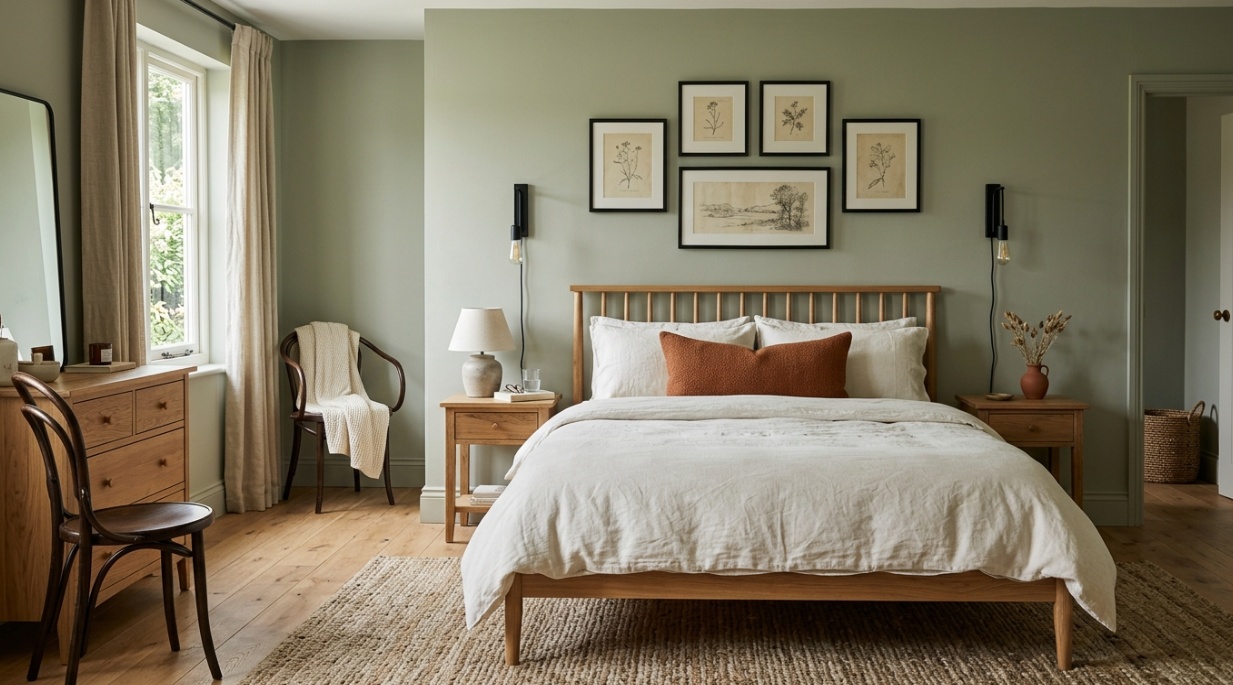
Black can define a soft sage room through a slim metal bed, two sconces or narrow picture frames. Keep it to repeated lines rather than a large black wardrobe or wall, especially in a small room. The result reads as modern farmhouse when the main materials remain wood, warm white and muted green.
Start by painting a single accent wall or the entire room a light sage green. Matt or eggshell finishes will impart a more natural look.
Introduce sage green with bold furniture pieces like dressers, headboards, or benches. Counterbalance with adjacent pieces that are neutral in hue.
Employ sage green bed linens, throws, or drapery to layer color and comfort. Employ natural materials like linen or cotton.
Bring in the sage green through vases, wall art, candle holders, or picture frames. This way, you're having fun with color without being completely committed.
Select warm-toned light fixtures to layer with the relaxing qualities of sage green. Rustic lighting fixtures complete the entire theme.
Use AI bedroom design to compare the scale of sage walls, dark wood furniture, rustic textiles and black accents in a photograph of the existing room.
An AI paint color visualizer can help narrow the direction, but it cannot provide a color-accurate paint specification. Camera processing, screen settings, generated lighting and the model can all shift the result.
When painting indoors, follow the coating manufacturer's instructions and ventilate the room. The EPA's Healthy Painting Guidelines recommend adequate cross-ventilation to reduce unwanted exposure to paint vapors.
Yellow-green sage can intensify honey oak, while blue-gray sage may look detached beside warm pine. Compare actual samples with the fixed wood before painting a full wall.
Shiplap, barn doors, mason-jar lights, distressed signs and galvanized metal do not all need to appear in one room. One architectural texture and a few useful vintage pieces create a more credible rustic result.
Paint, cotton, velvet and wool reflect light differently, so exact matching is rarely necessary. Use related muted greens and separate them with cream, taupe, rust or wood.
Sage may look quiet or comfortable to many people, but it is not a sleep treatment and does not automatically enlarge a bedroom. Light, contrast, furniture scale, circulation, noise and personal preference have a larger practical role.
A sage green bedroom is the perfect combination of nature's soothing power and farm-style elegance. Whether through paint, furniture, or fabric, this color provides a serene foundation for relaxation.
Follow these ideas to transform your space, and remember: the goal is to create a room that feels good to be in, not just to look at.
Warm white, cream, taupe, brown and natural wood create a low-contrast base. Rust and terracotta add a warmer accent, while matte black produces sharper lines. Muted blue can work with a warmer sage, but compare samples so the combination does not become colder than intended.
Light oak and pine keep the room airy, while walnut and dark stained wood create stronger contrast. Reclaimed wood adds variation but may already contain several warm undertones. The best choice is the one that looks balanced beside the exact sage sample and the existing floor.
Not by itself. A dark sage with low contrast can make walls more visually present, while a light sage beside pale trim may feel more open. Furniture size, available daylight, ceiling color and how much floor remains visible also affect perceived space.
Yes, but sample it carefully. In a shaded room, some sage paints appear grayer or duller than expected. Compare a lighter warm sage with a more neutral gray-green and view both under the permanent lamps before deciding.
Warm white, oatmeal, flax, taupe and muted rust are practical options. Choose the blackout, privacy and insulation performance first. A neutral curtain usually gives more flexibility than trying to match sage fabric exactly to painted walls.
Yes. Rust provides a warm red-orange contrast to muted green. Keep rust to a smaller area, such as one cushion, throw or artwork group, and use cream or wood as the larger supporting material.
It depends on the formula. Sage with more yellow or olive reads warmer; sage with stronger gray or blue reads cooler. Product names are not consistent across paint brands, so use the undertone and physical sample rather than the word "sage" as the specification.