10 min. reading

Yulii Cherevko
CEO paintit.ai

Good front porch curb appeal begins at the sidewalk: visitors should be able to spot the door, follow a clear path, and see where to step after dark. On a small stoop, that may mean a clean door, one planter, and readable house numbers. A deep covered porch can also support seating and a rug. The 20 ideas below range from simple updates to construction work; pick the ones that fit your actual space rather than trying to use them all.
It is the visible condition and design of the entrance from the street: the path, steps, door, lighting, planting, and any seating or architectural details. Start by photographing the house from the sidewalk. A porch can look polished up close but disappear behind overgrown shrubs or an awkward approach.
The National Association of REALTORS® outdoor remodeling report says 97% of surveyed members consider curb appeal important for attracting a buyer, and 92% have suggested sellers improve it before listing. That is a survey of professional opinions, not a promise that any single porch change will raise a sale price. The everyday benefit is simpler: an entrance that is easier to find, use, and maintain.
Before choosing a style, look for the first thing that distracts from the door. A worn step matters more than a new wreath; a dark entry matters more than another planter. Use this quick check to prioritize the work.
| Element | What to Choose | Why It Works | Common Mistake | Quick Fix |
|---|---|---|---|---|
| Color | A cohesive 3-color palette (siding, trim, accent). | Creates visual harmony and directs the eye. | Too many competing colors or a dull, flat scheme. | Repaint the front door with a bold, complementary color. |
| Furniture | Pieces scaled to the porch size (e.g., two chairs, not a full sofa). | Provides function without overcrowding the space. | Oversized furniture that blocks pathways. | Opt for a single statement piece, like a slim bench or a swing. |
| Lighting | Layered fixtures: overhead, sconces, pathway. | Ensures safety, creates ambiance, highlights features. | A single, harsh overhead "bug light." | Add solar-powered path lights and update door sconces. |
| Greenery | A mix of planters, hanging baskets, and/or window boxes. | Adds life, color, and texture, softening hard lines. | Neglected or dying plants. | Choose low-maintenance, native plants suited to your climate. |
| Details | Updated house numbers, a clean welcome mat, a stylish doorbell. | Small touches signal care and complete the look. | Worn-out mat, tarnished hardware. | Replace house numbers with a modern font and get a new mat. |
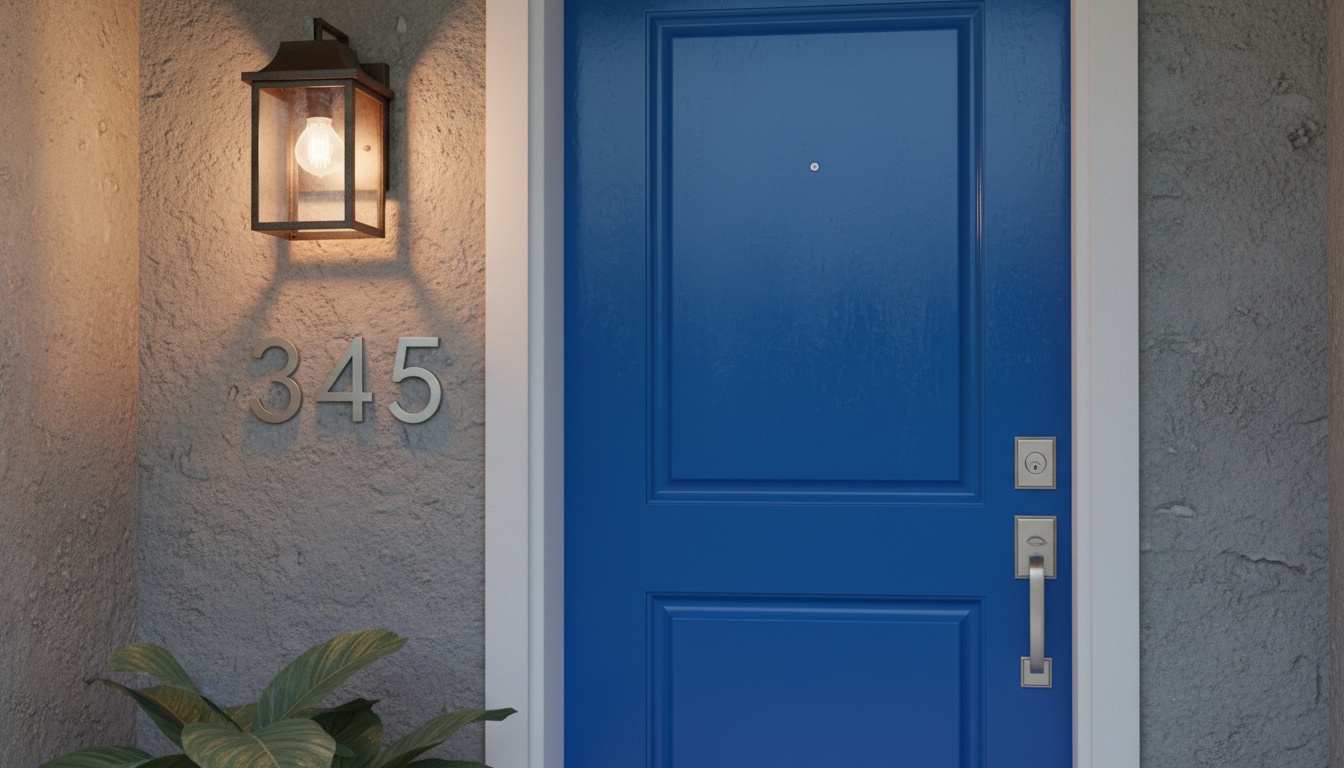
The materials you choose set the underlying tone for your porch. A natural oak door with a matte finish feels very different from one painted in a high-gloss black.
A photo-heavy inspiration list is useful only if the idea fits your footprint. Measure the usable area after accounting for the door swing and steps. Note where rain falls, where sun hits, and whether the porch is a place to sit or only a place to enter.
| Entry Type | Start With | Usually Skip |
|---|---|---|
| Small stoop or shallow porch | Door color, visible numbers, one compact planter, lighting | Deep chairs or layered rugs that crowd the threshold |
| Narrow covered porch | A slim bench or wall-mounted detail, if the walkway remains clear | Matching furniture on both sides just for symmetry |
| Deep covered porch | Seating group, outdoor rug, layered lighting | Indoor-only textiles that will dampen or fade |
| Open, exposed entry | Weather-ready planters, durable doormat, drainage and step maintenance | Delicate decor or fixtures not rated for the location |
Use the photos as examples, not shopping lists. Start with the changes your entrance can support, then check the result from the same street-level viewpoint.
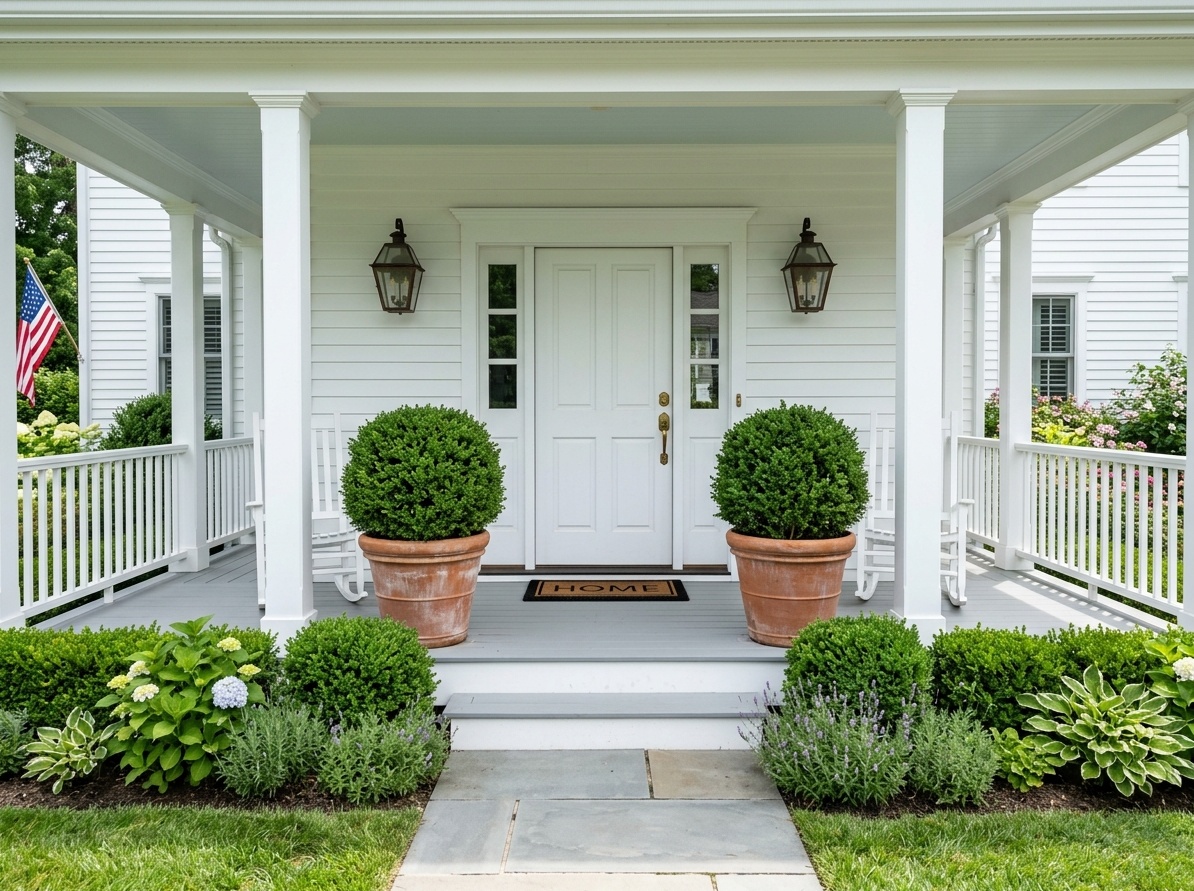
Try matching planters or sconces on either side of the door if the entrance has room for both. On a narrow stoop, one substantial planter can look more intentional than a forced pair that squeezes the walkway.
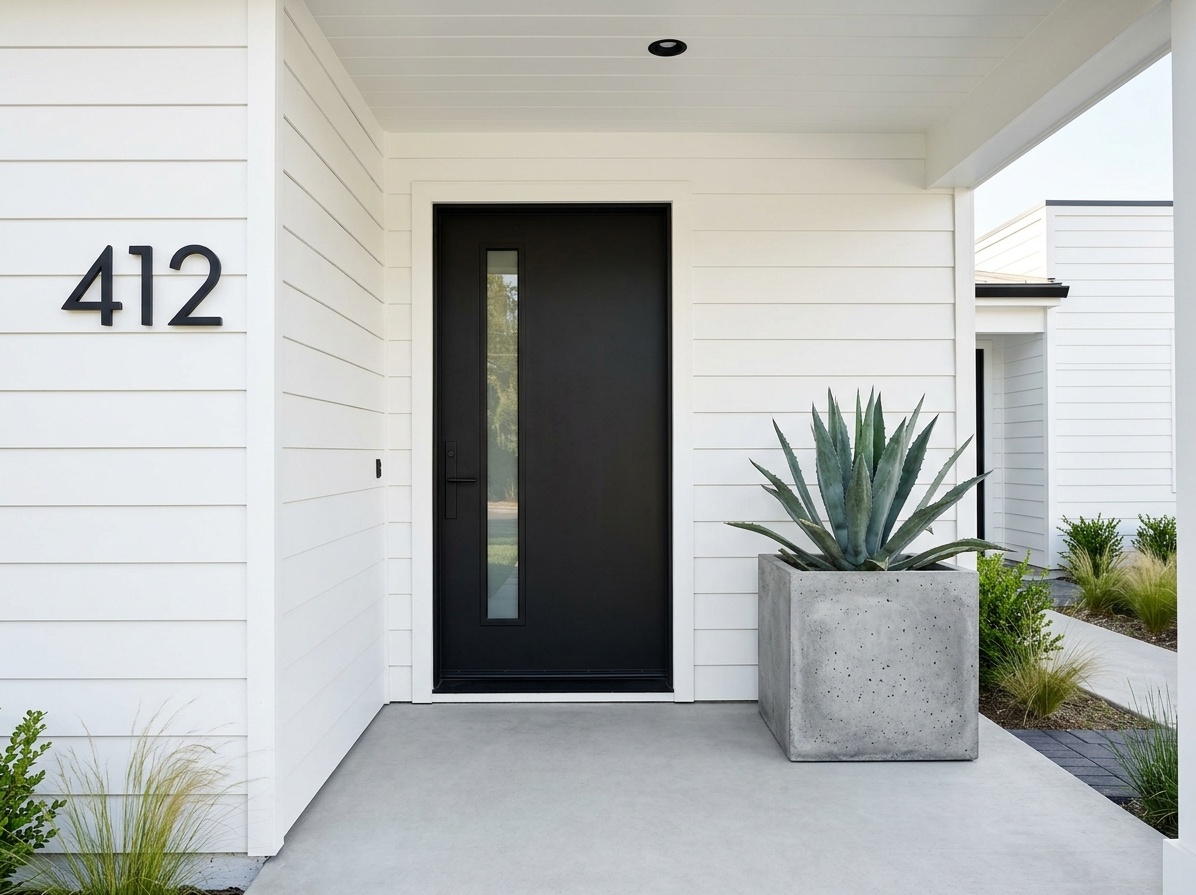
Keep the palette tight and let one large planter or clear set of house numbers carry the entry. Black hardware can work on a pale facade, but it needs enough contrast to be visible from the street. Avoid adding a bench solely to fill an empty corner.
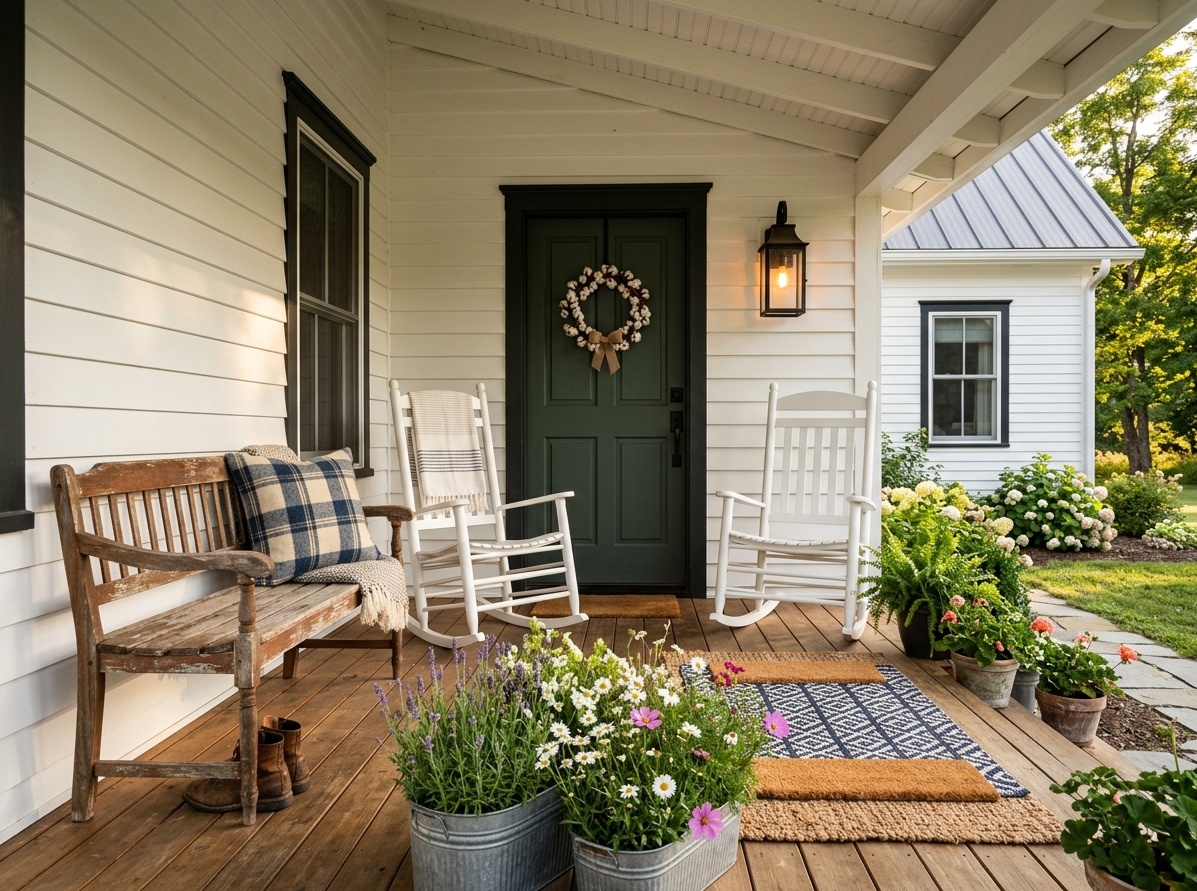
A wood bench, metal planter, and plain coir mat can give a farmhouse porch texture without turning it into a themed display. Use a rocking chair only if it has room to move without crossing the walking route.
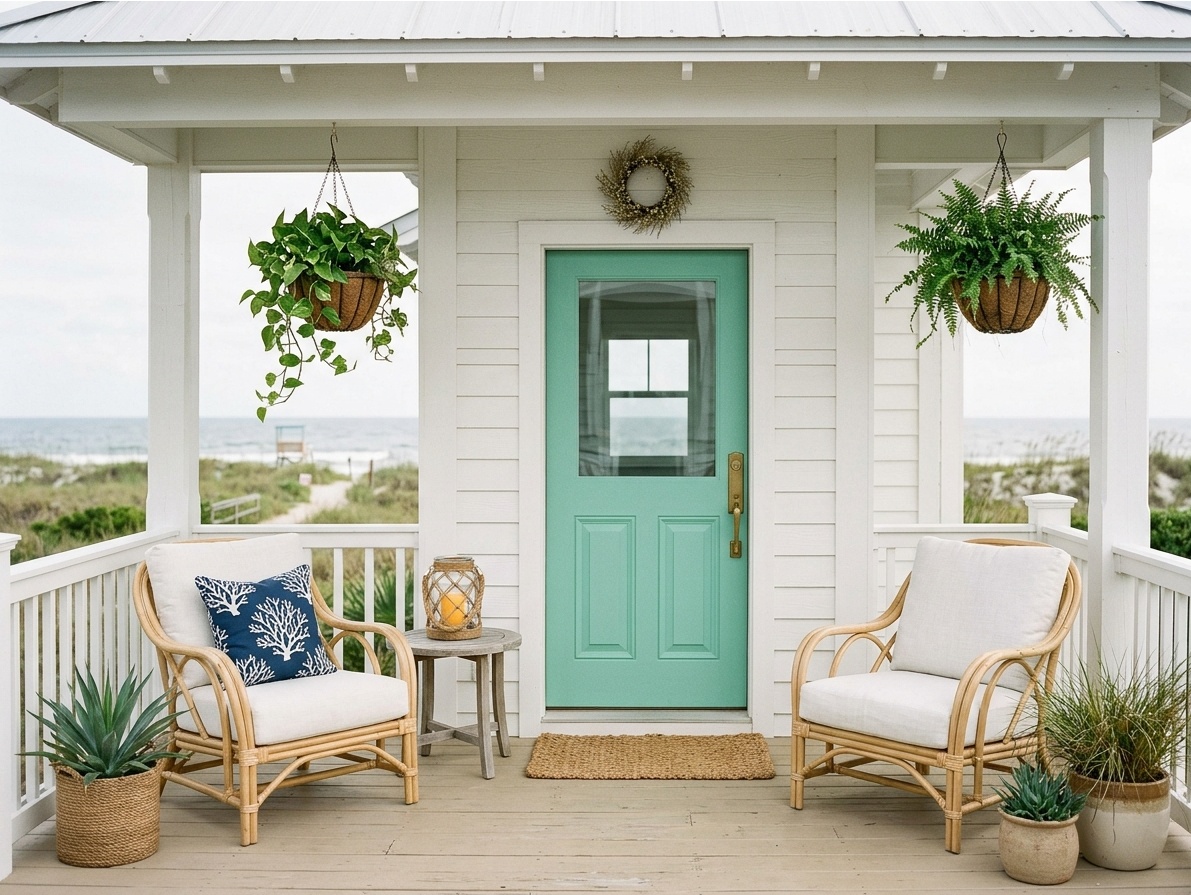
Soft blue or seafoam can work with white siding, but check the color against your actual roof and trim. For an exposed porch, choose furniture and textiles made for outdoor use; indoor rattan and cushions will not hold up just because the palette looks coastal.
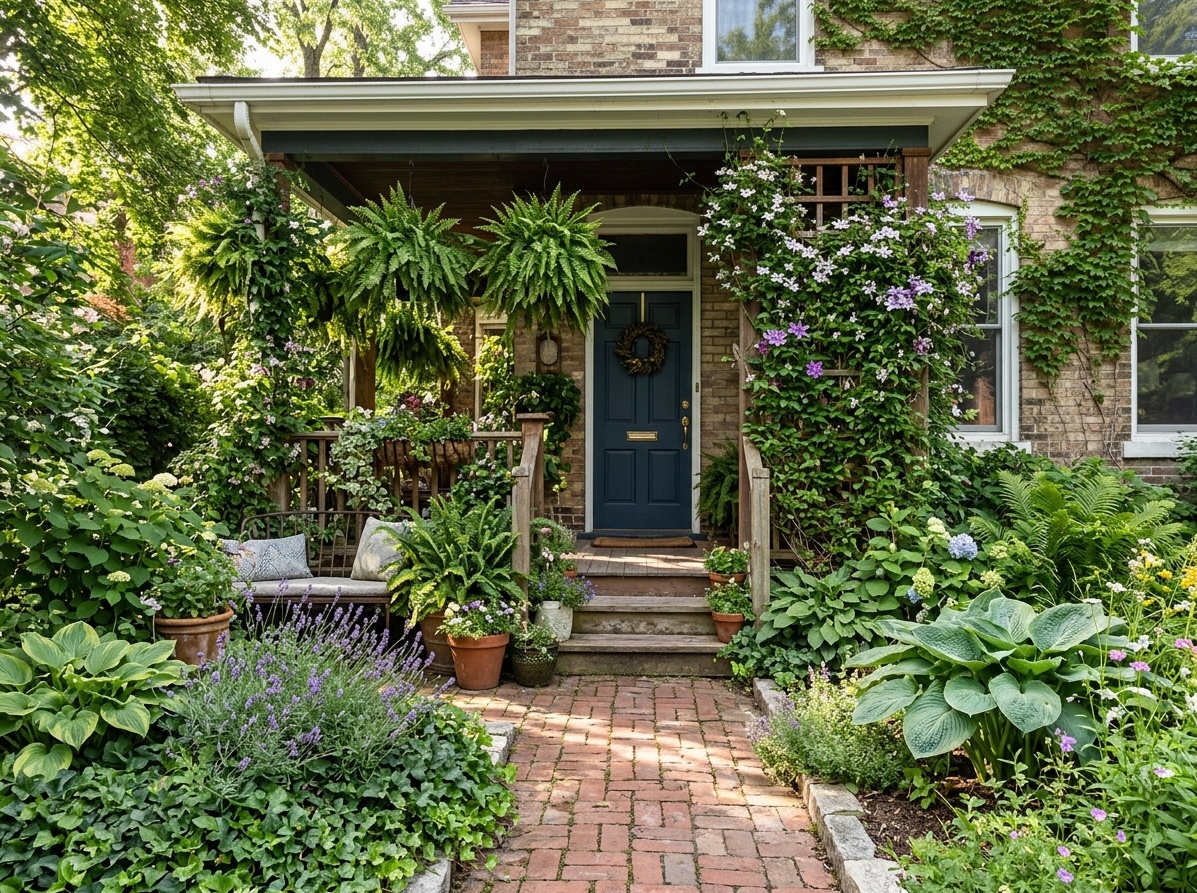
Layer greenery at different heights, but choose plants for the light the porch actually receives. A shaded covered entry and a hot west-facing step need different species and watering routines. Keep foliage clear of the lock, house numbers, and path.
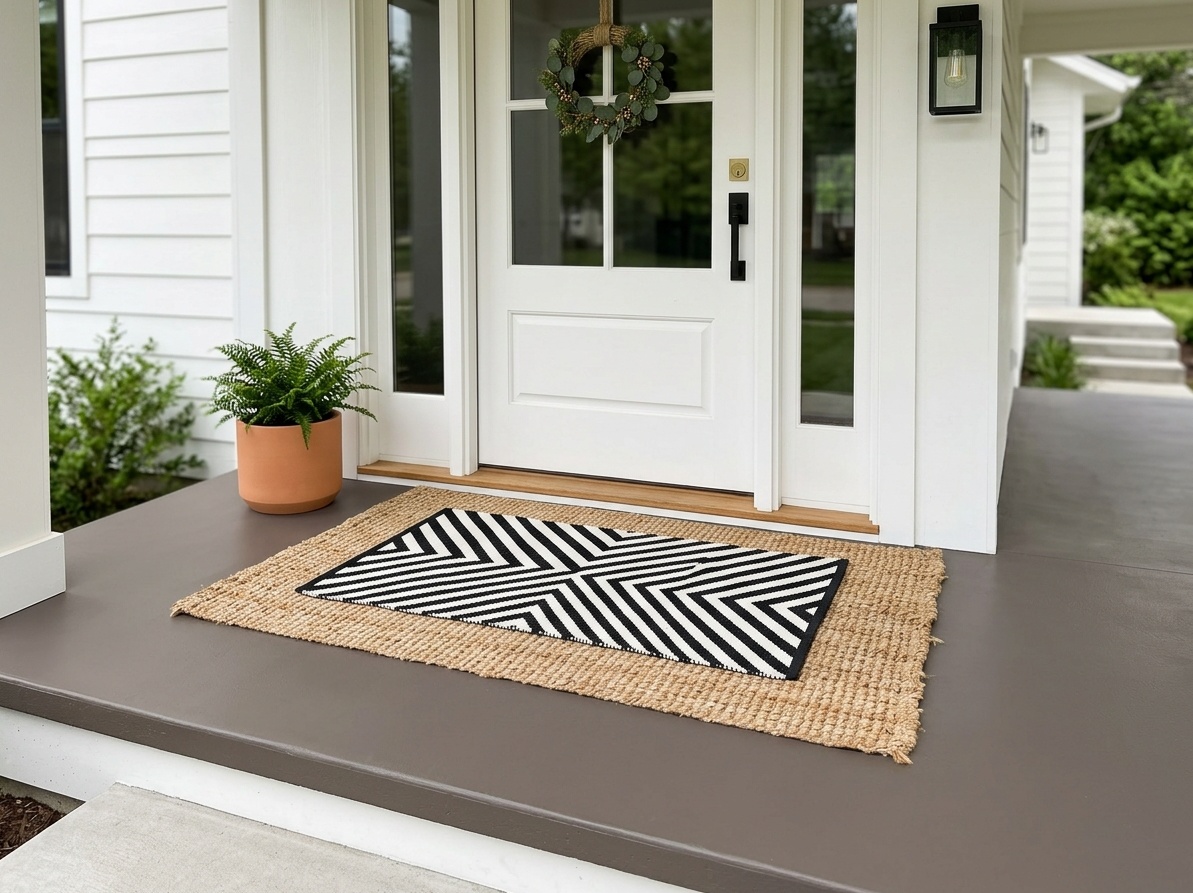
A new doormat is an easy entry update. If you layer one over a larger rug, check that the door still opens freely and that the edges lie flat. A soggy mat on an exposed step is a maintenance problem, however good it looks in a photo.
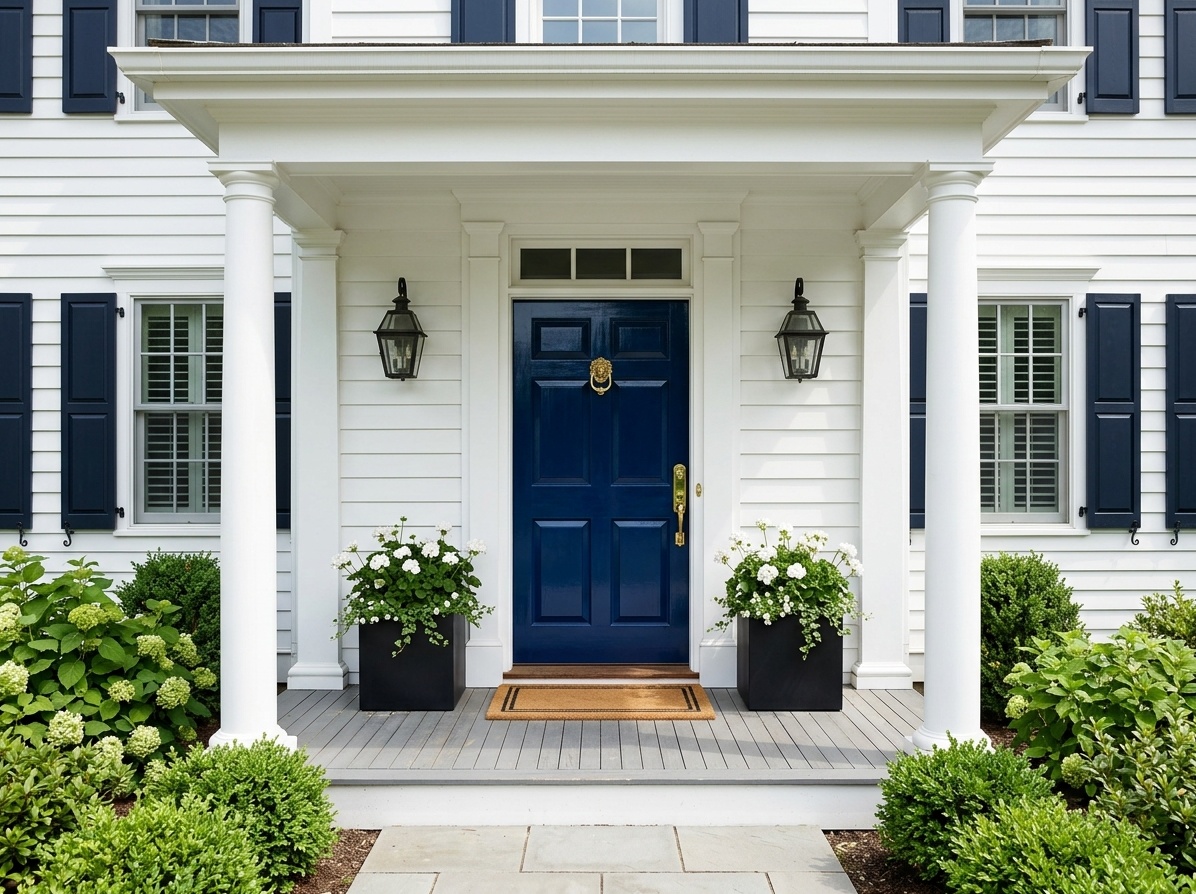
A door color works best when it relates to the roof, trim, or masonry rather than competing with every one of them. Deep navy on white siding, for example, gives the entrance a clear focal point. Try a physical paint sample in daylight and shade before committing to the whole door.
For more combinations by house color, see our guide to choosing a front door color.
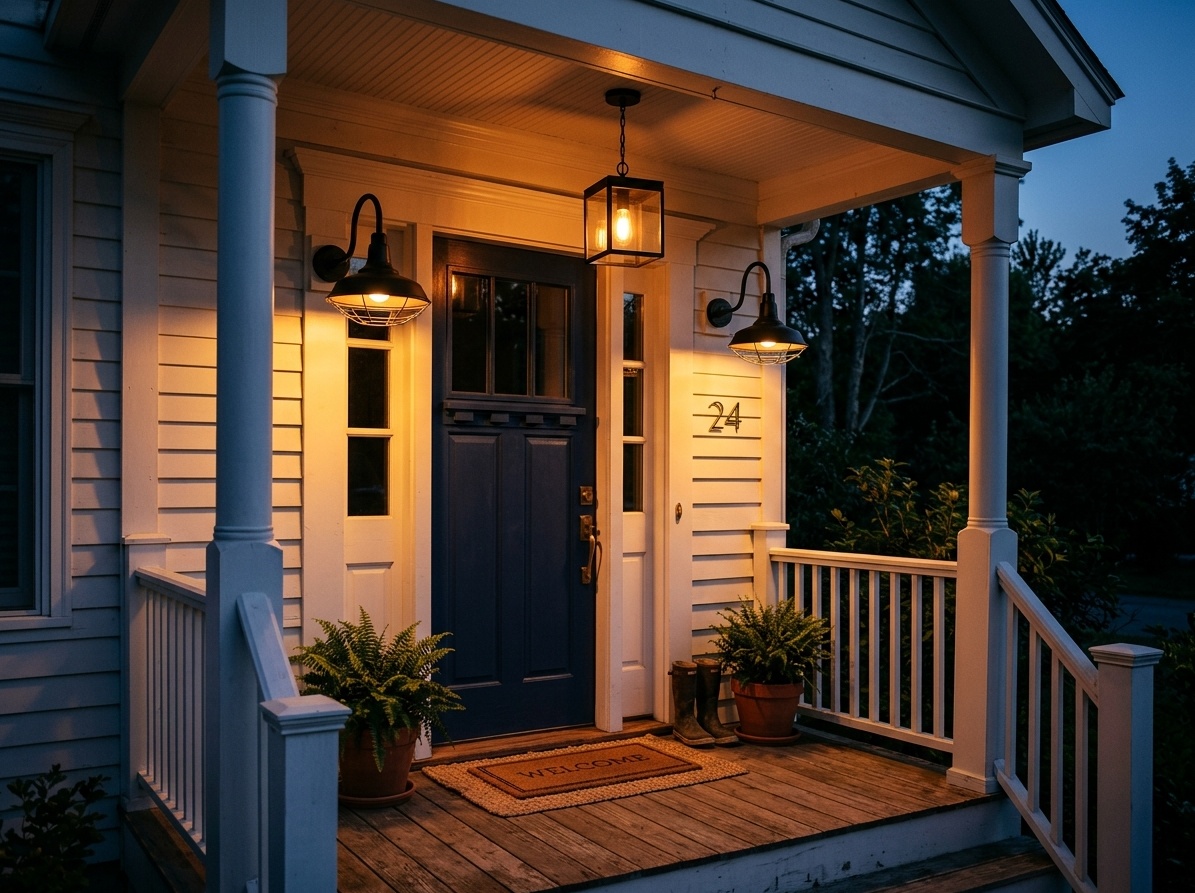
Replace a tired fixture with one that suits the house and the exposure of the entry. Check the fixture's location rating and aim light at the step, lock, and house numbers without shining into visitors' eyes. A porch should read clearly at night, not look like a stage set.
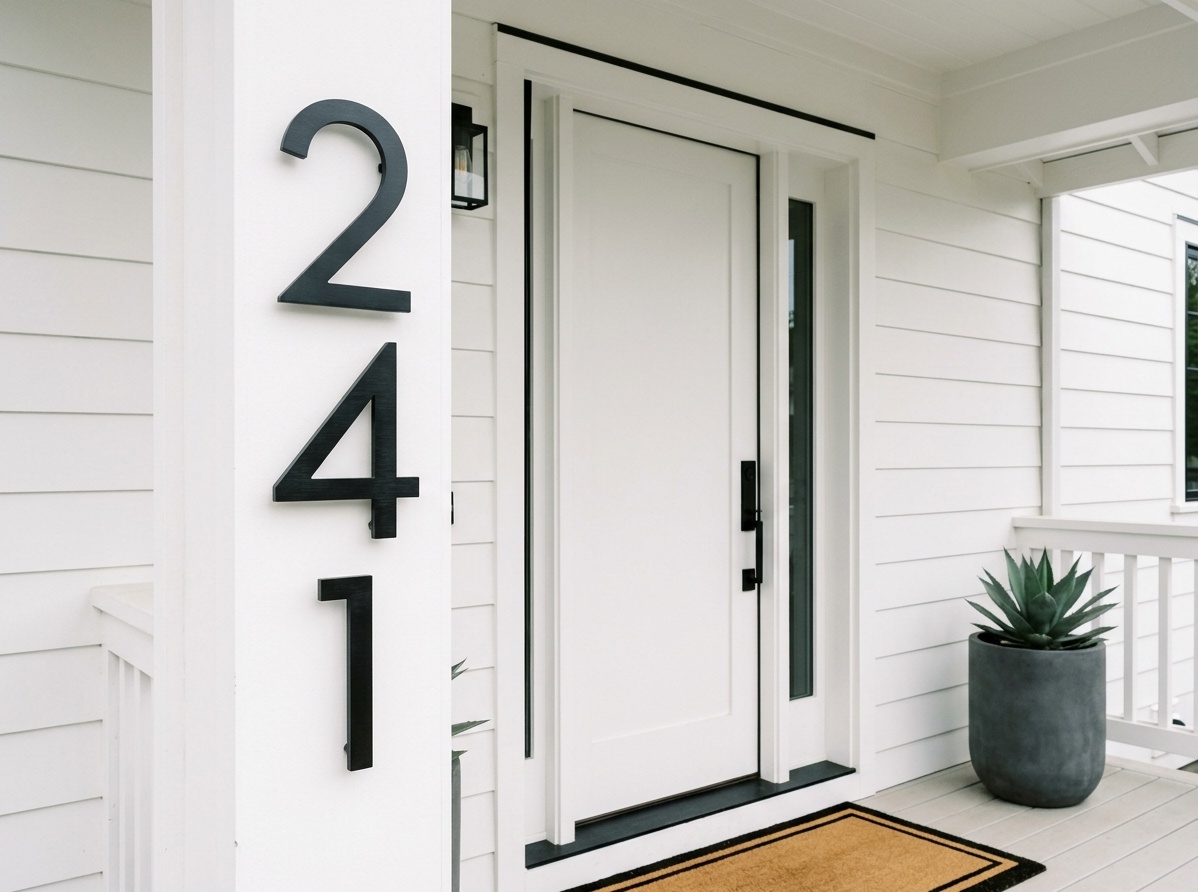
Numbers should be legible from the approach, not just attractive beside the door. Check contrast against the wall and whether a planter or open storm door will hide them. A simple plaque can be easier to read than fashionable thin lettering.
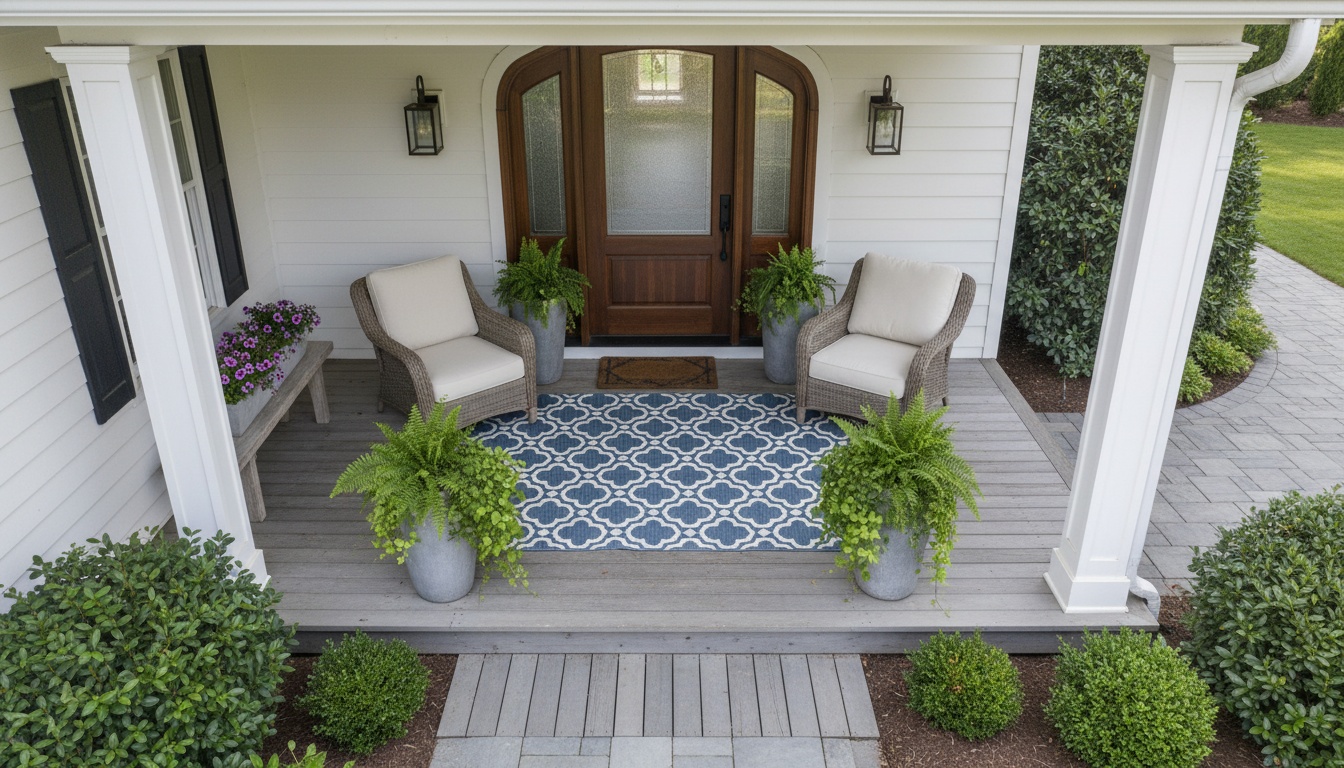
A bench or a pair of chairs suits a deep porch, but only if there is still an easy route to the door. Set out cardboard at the furniture's actual footprint before buying; this catches a cramped layout that a wide-angle inspiration photo can hide.
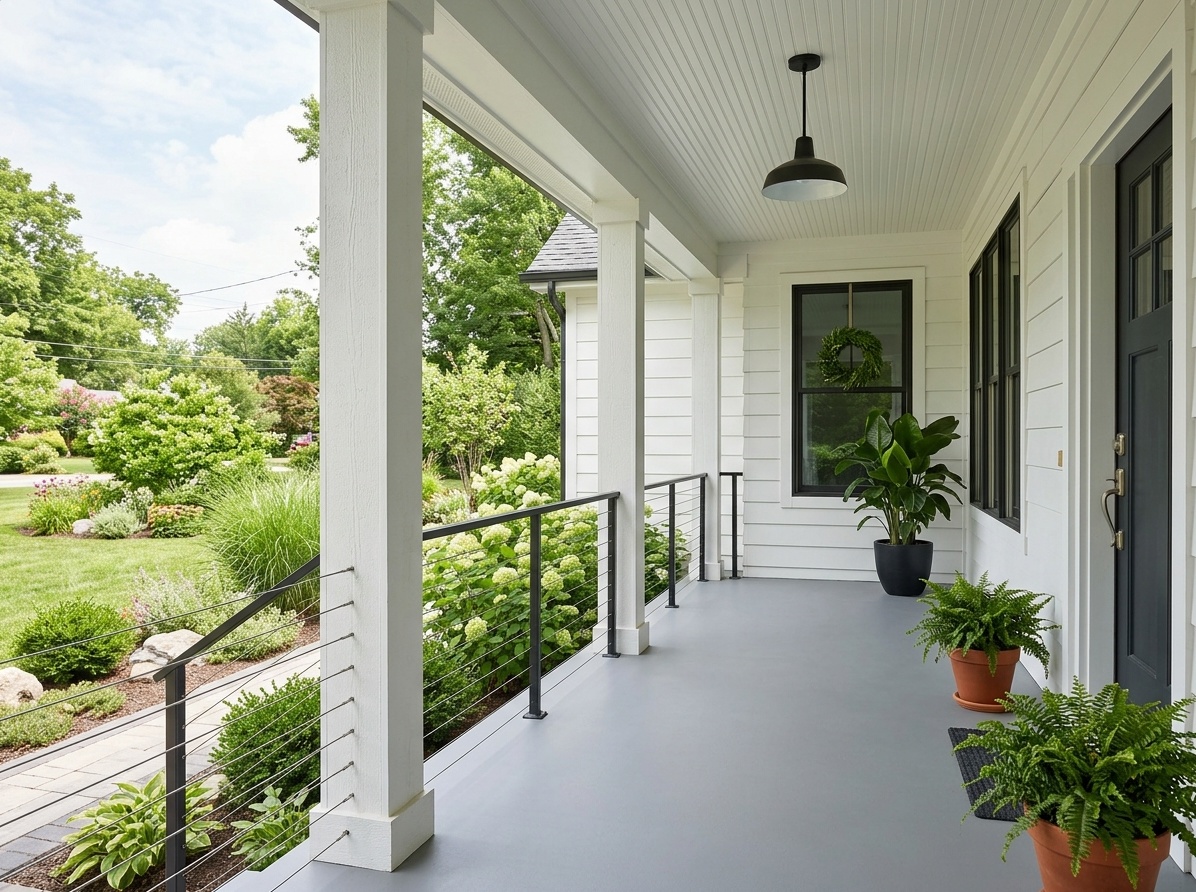
Railings can change the profile of a porch, but a safety rail is not a decorative accessory. Repair loose sections first. If you replace a railing or change its spacing, check local requirements and have the structure assessed before choosing a style.
Our modern front deck ideas offer examples of railing materials and proportions; the structural details still need professional review.
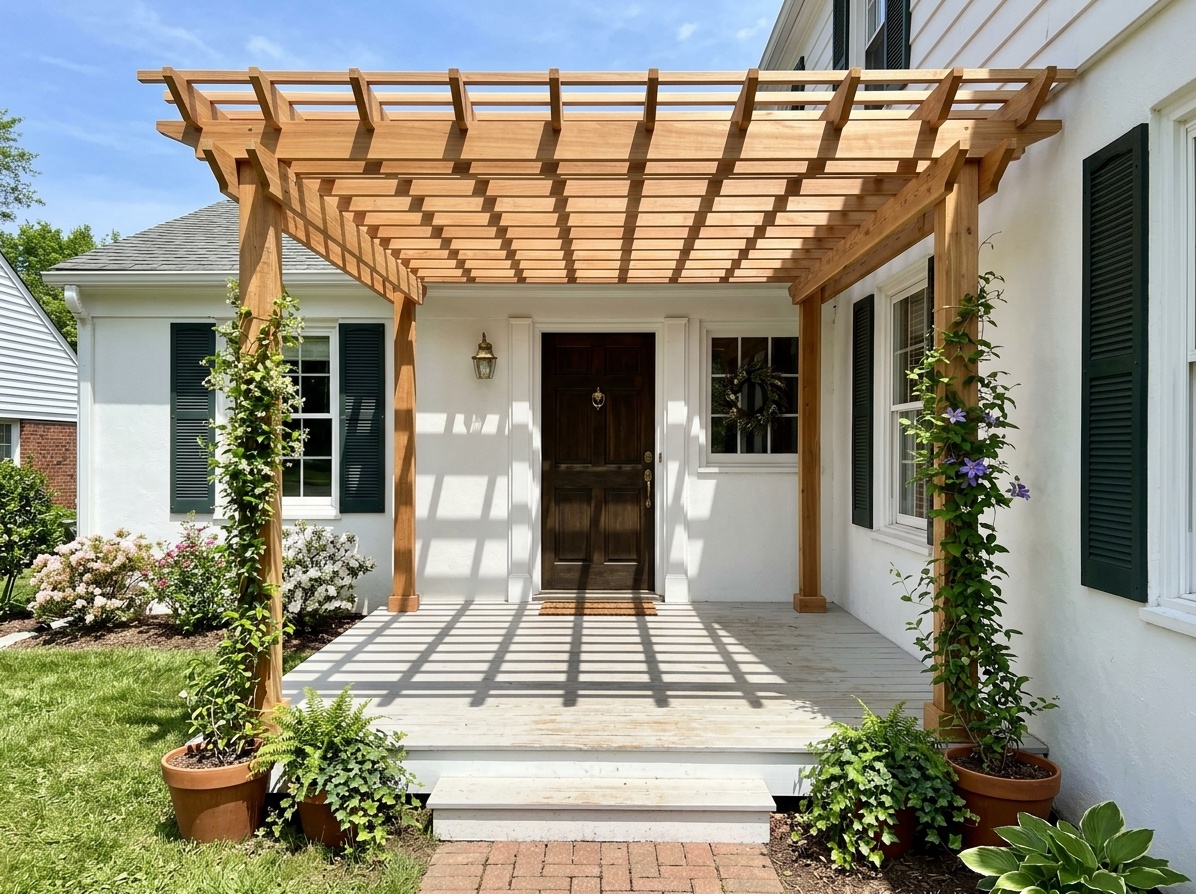
An awning or portico can make a flat entry easier to recognize and more comfortable in rain. A new pergola or roof extension changes loads, drainage, and often permitting. Use the photo as design inspiration, then ask a qualified local professional whether the idea is feasible on your house.
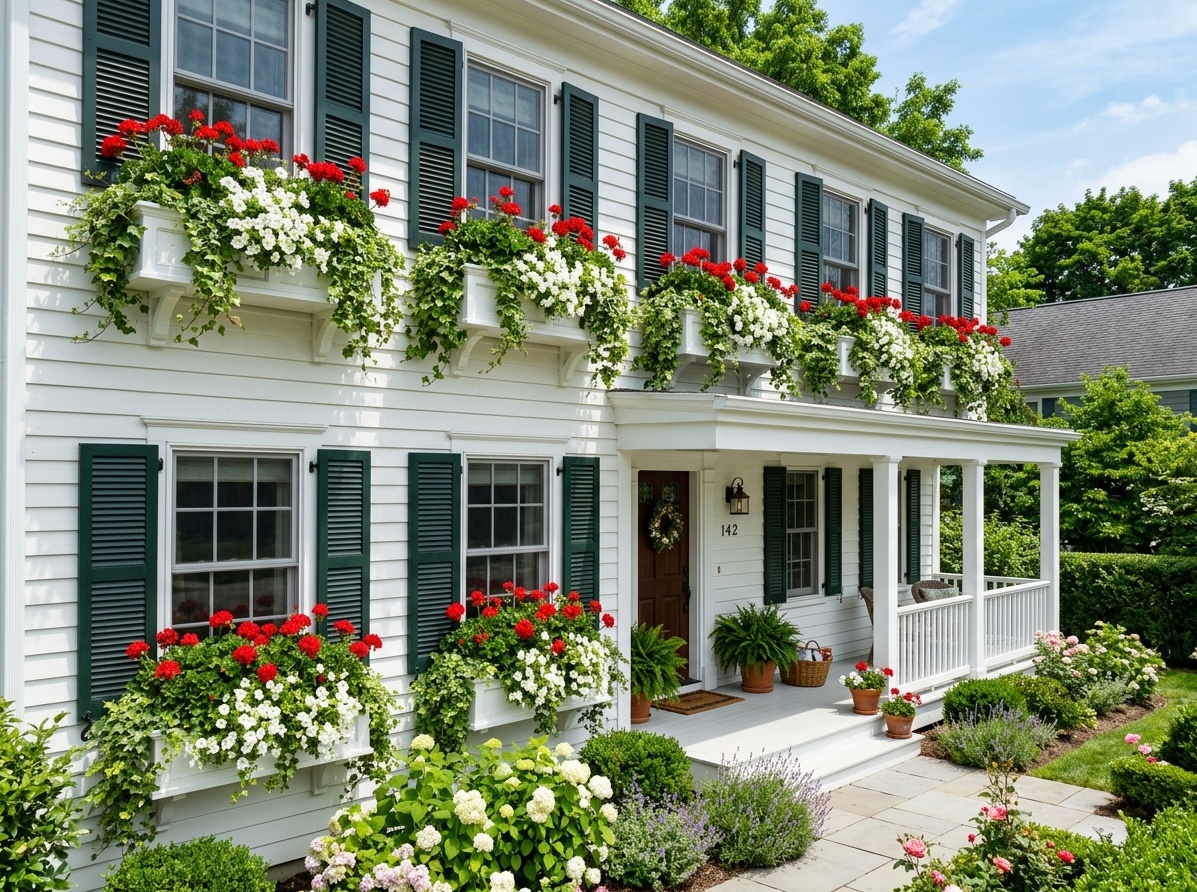
Window boxes can tie the porch to the wider facade, especially when their color repeats the trim. Plan for watering and drainage before mounting them; water staining below a box can undo the visual improvement.
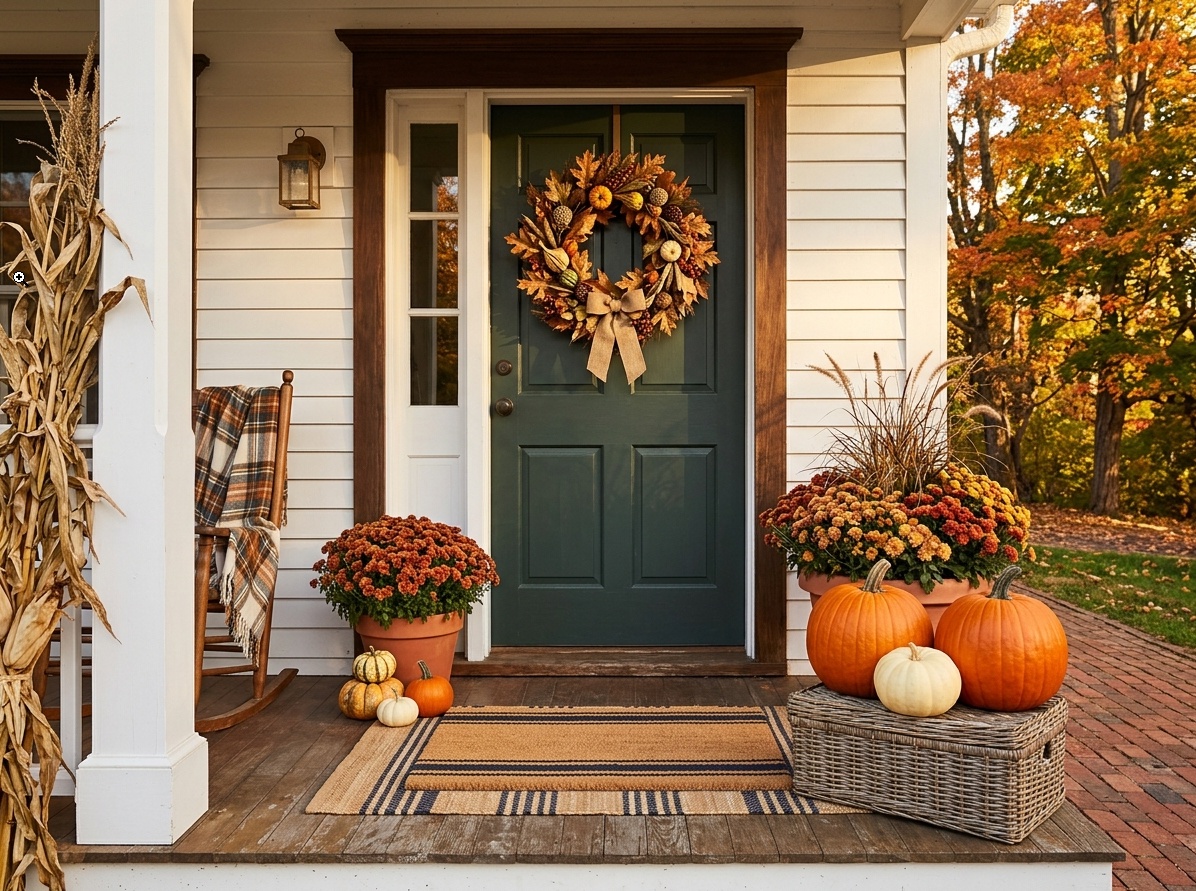
Keep one or two permanent pieces and change only the wreath or planting as seasons shift. This is easier to maintain than storing a full porch display four times a year. Remove spent plants promptly; fresh decor beside dead foliage rarely helps.
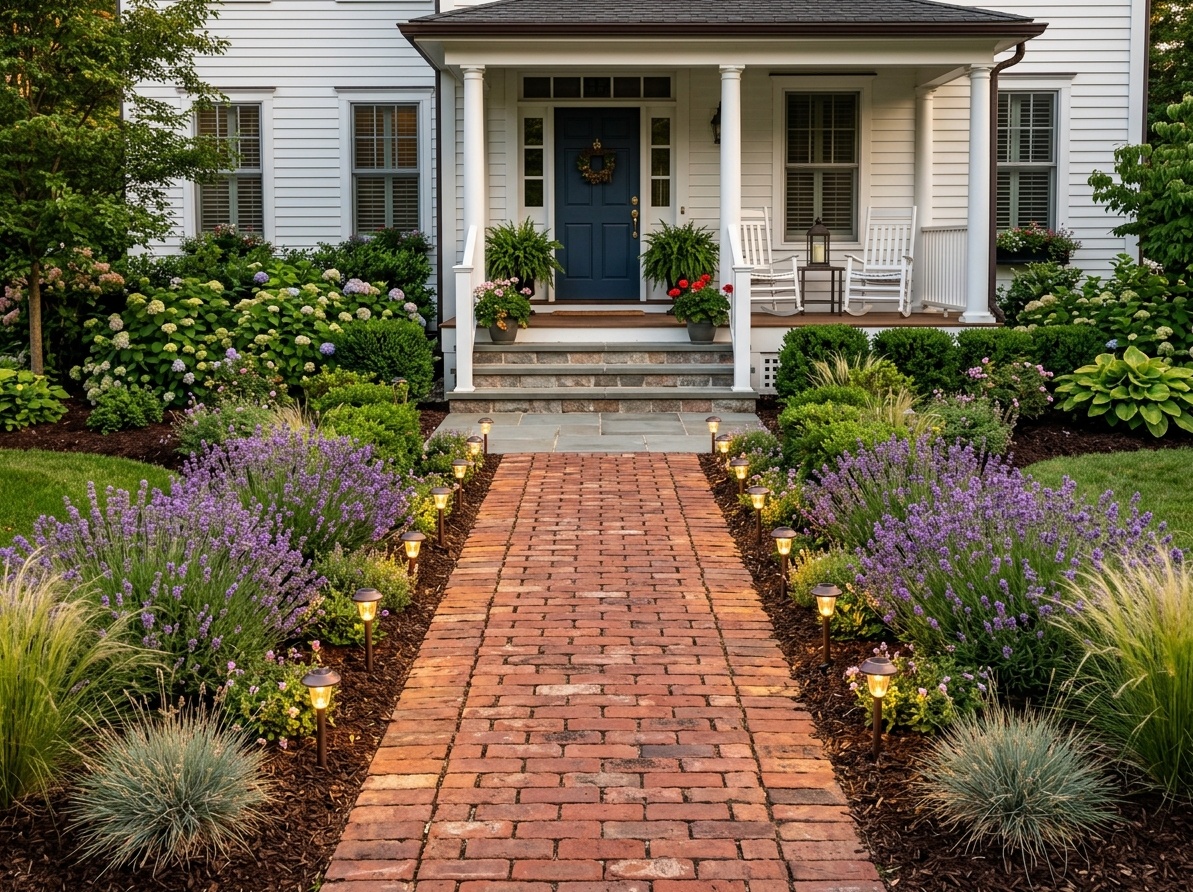
Look from the sidewalk toward the door. If the route disappears into lawn or planting, define its edges and repair uneven walking surfaces first. Keep vegetation from narrowing the path; lighting helps after dark but does not fix a trip hazard.
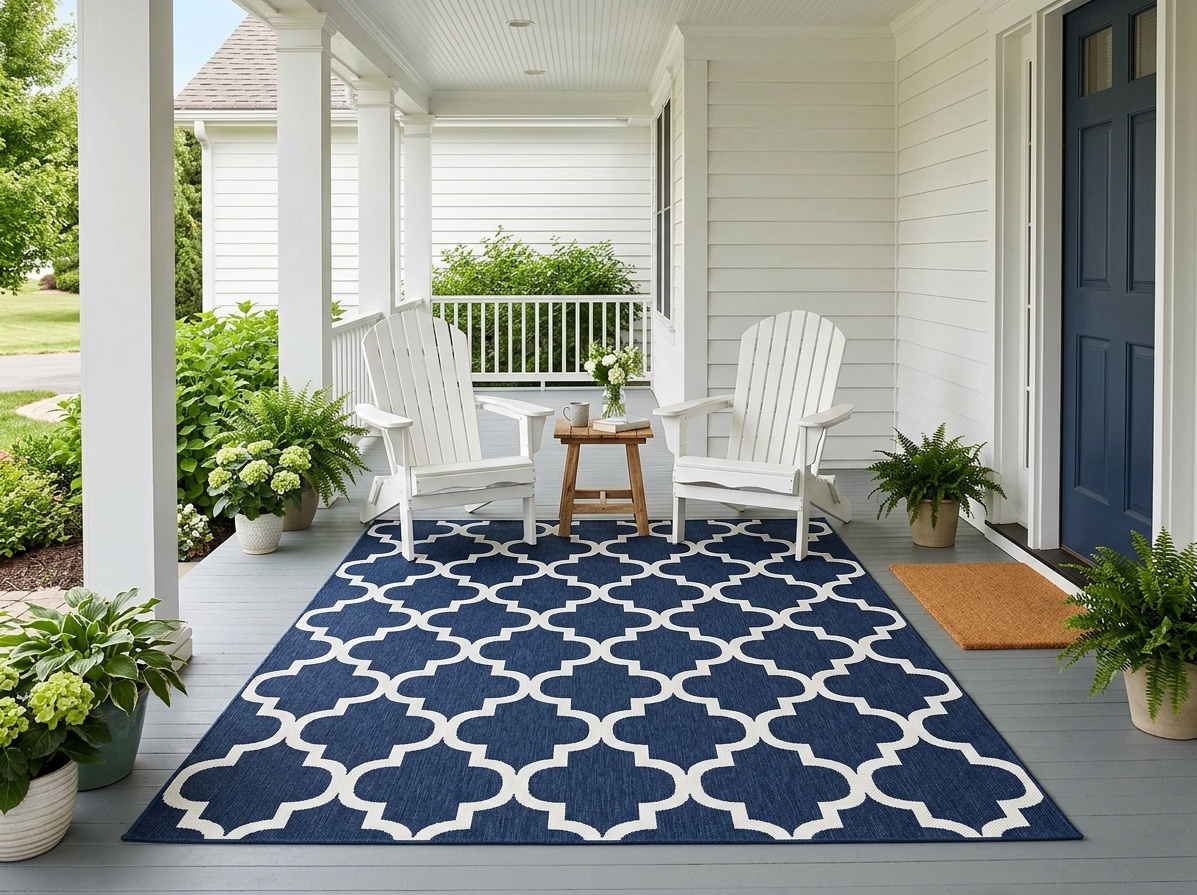
On a deep porch, a weather-rated rug can mark the seating zone. Leave the main path clear and check how the rug dries after rain. On an exposed stoop, a simple mat is usually more practical than a large rug.
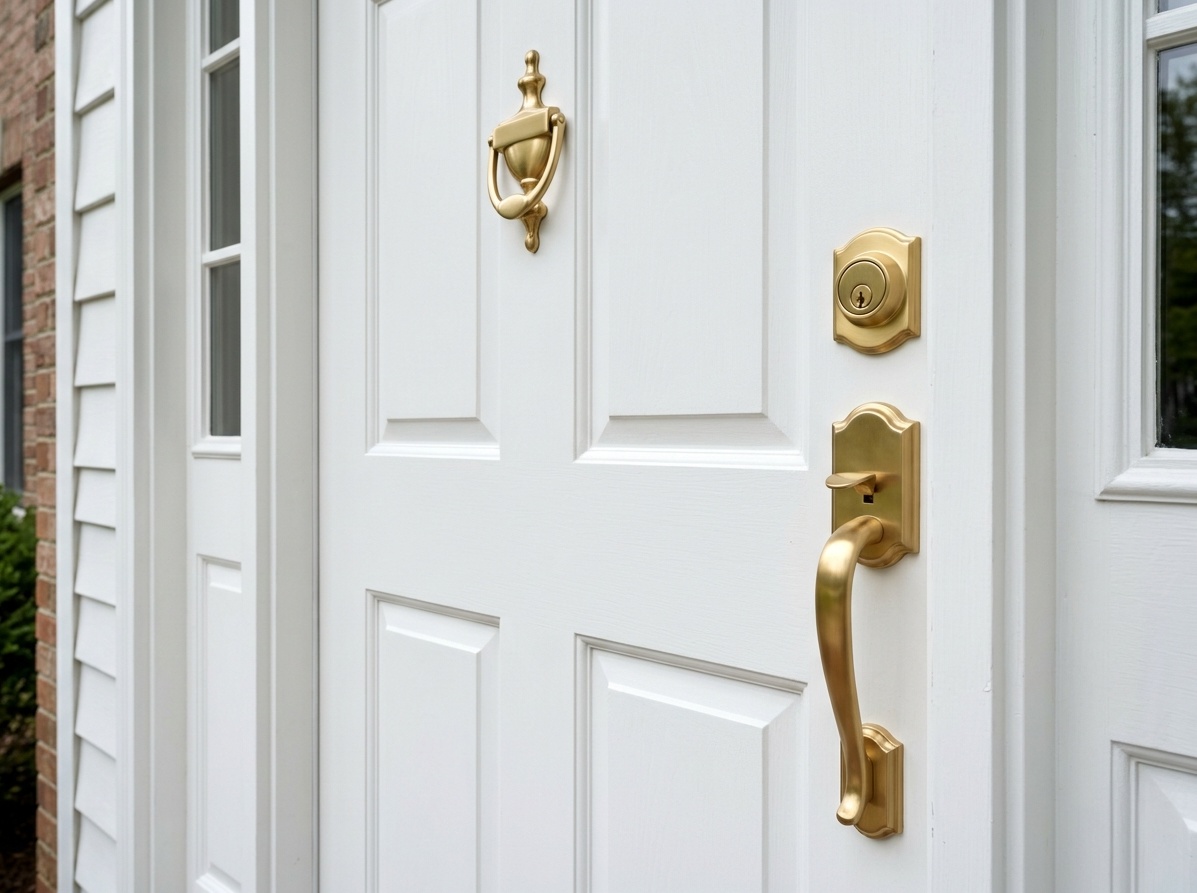
A new handle can sharpen the door's appearance, but verify the existing bore and backset before ordering a replacement. Choose a finish that repeats another metal at the entry rather than introducing a fourth one.
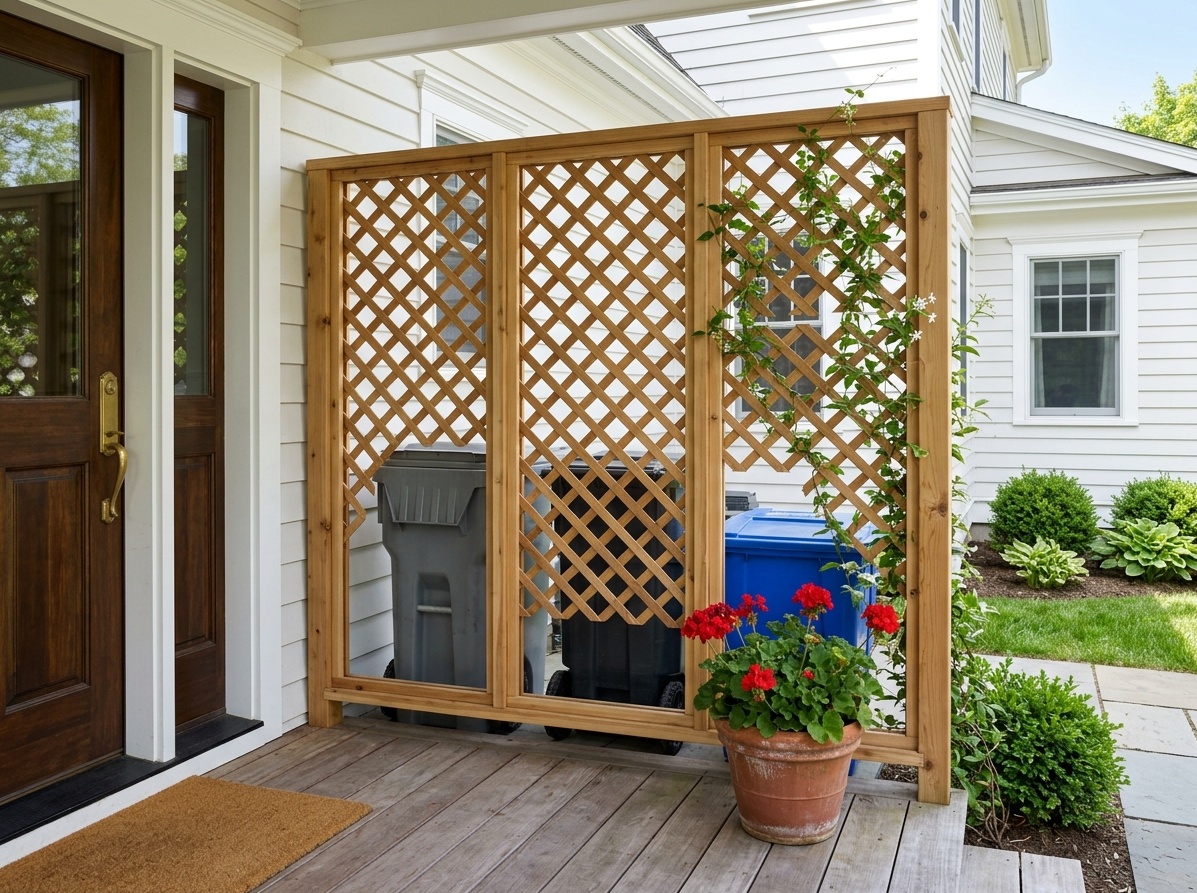
A small screen can hide bins or a hose without adding another object to the entrance. Leave access and required clearance around utility meters, vents, and service equipment; do not hide them behind a fixed panel just for a cleaner photo.
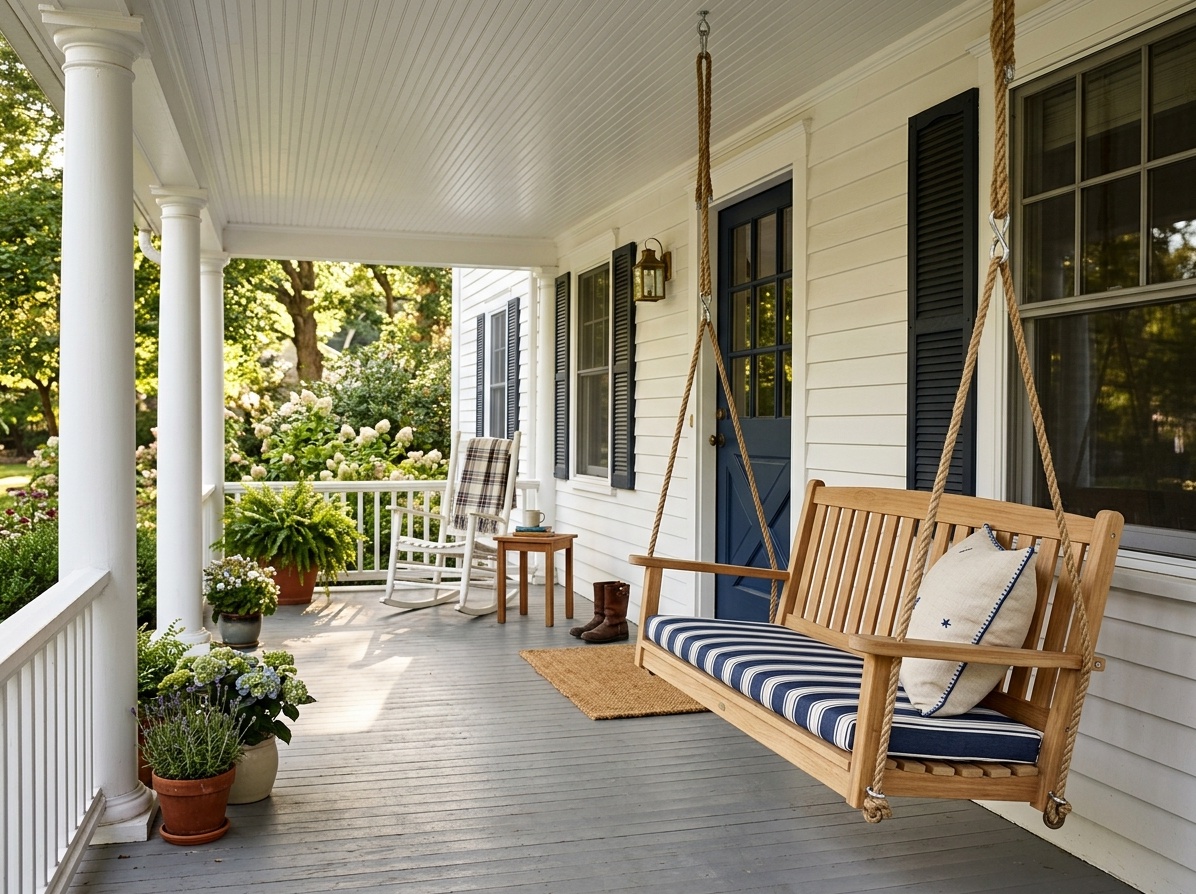
A swing can suit a deep covered porch, but its moving clearance and the support above it matter more than the fabric color. Do not suspend it from trim or an unverified ceiling member. Check the manufacturer's installation instructions and have the mounting structure assessed before use.
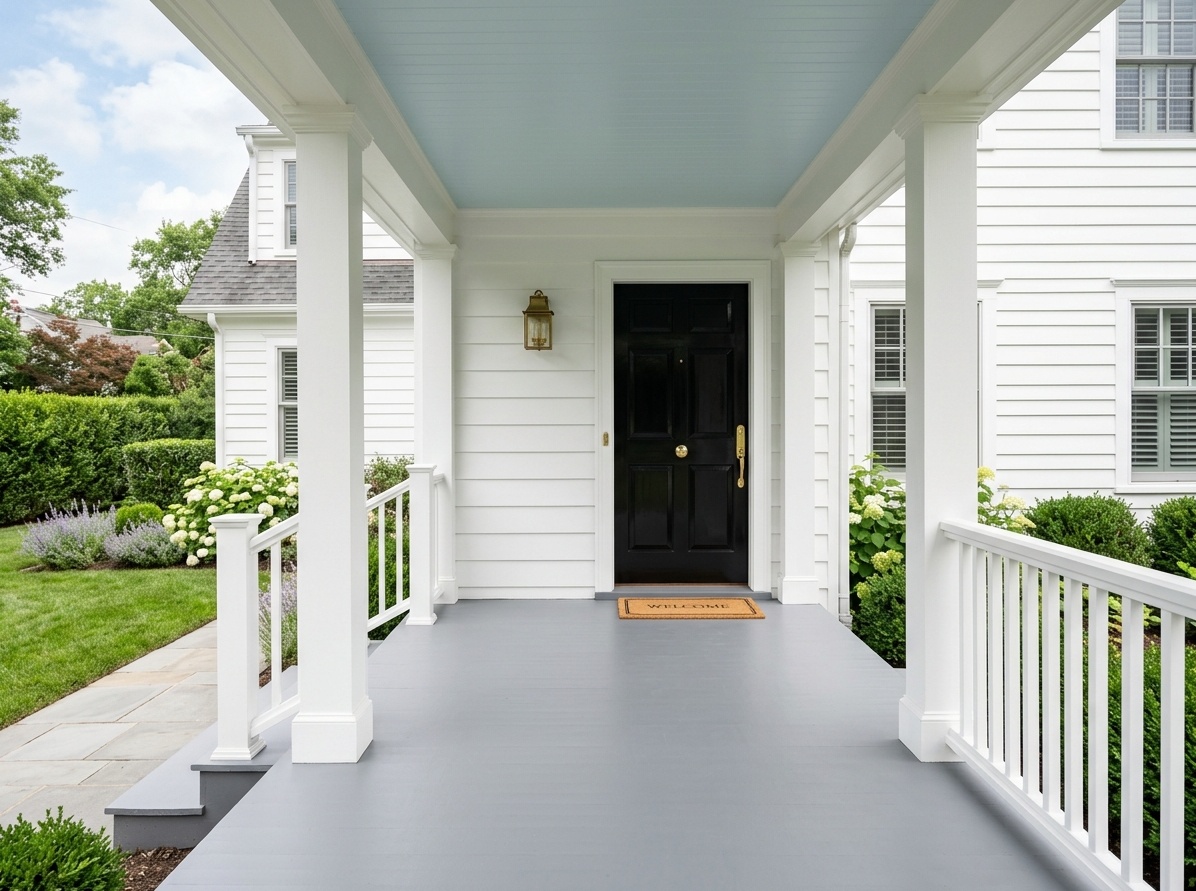
Paint can unify a worn porch, but the coating has to match the surface. A floor needs a finish intended for foot traffic and exposure; a peeling rail needs preparation before a color change. Start with the surface in the worst condition, then coordinate the door and trim rather than repainting everything by default.
You can preview exterior paint colors on your house photo before buying samples. Use the preview to shortlist options, not to judge the final finish in every light.
Most weak entrances have a practical problem underneath the decor. Use this checklist before adding more objects.
| Problem | Check First | Useful Fix |
|---|---|---|
| Cluttered threshold | Does the door clear the mat, planter, and furniture? | Remove the least useful object; choose one larger planter over several small pots. |
| Door gets lost from the street | Do shrubs or competing colors obscure the entrance? | Prune the view, improve the path, or give the door a clearer contrast. |
| Dark steps or lock | Can a visitor see the next step and find the keyhole? | Adjust or replace an appropriately rated fixture; light the route as well as the facade. |
| Finishes fight the house | Do new metal, paint, and furniture repeat any existing exterior detail? | Carry one color or material from the facade into the entry. |
| Worn surfaces | Is paint peeling, decking soft, or a step uneven? | Repair and clean before styling; decoration does not make a failing surface safe. |
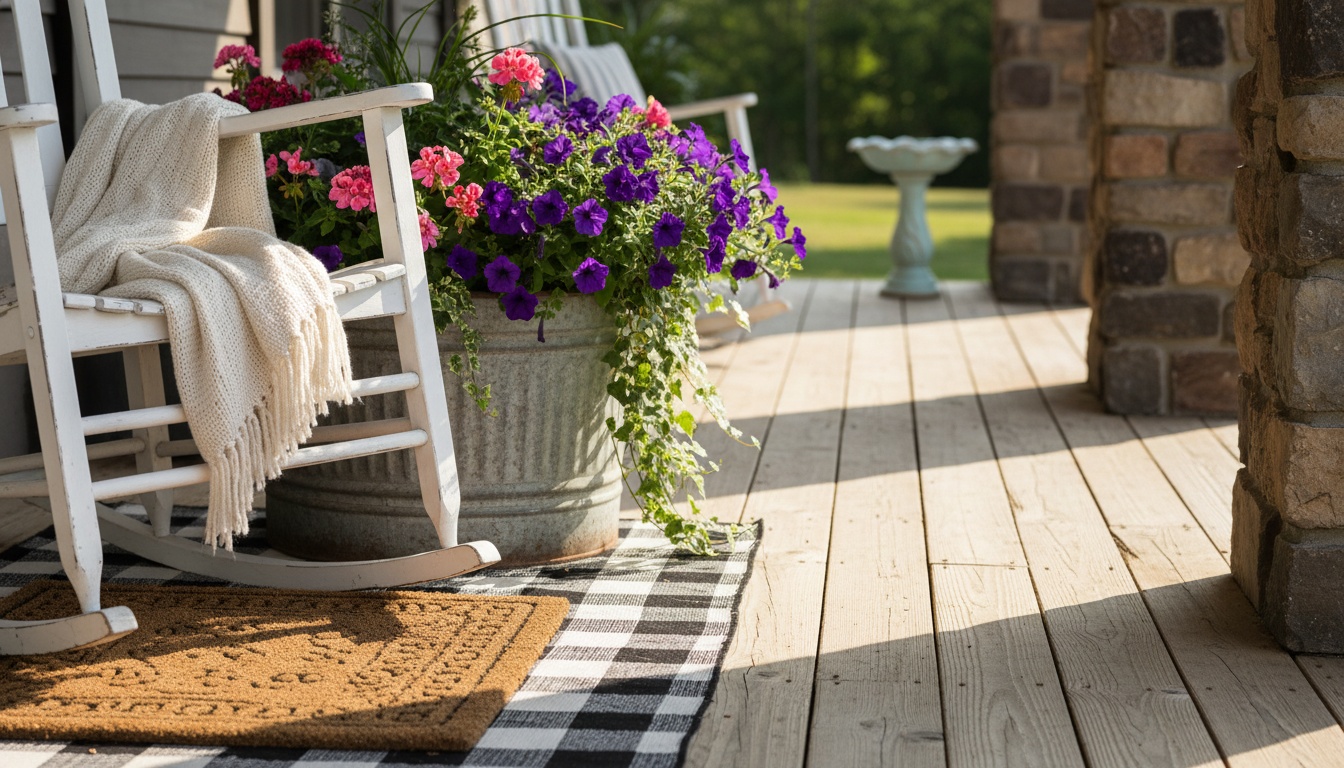
An inspiration image cannot tell you how a door color will look next to your brick or whether a planter will crowd your steps. A photo-based concept can help narrow the visual choices before you buy materials. It cannot verify dimensions, drainage, building rules, or structural support.
Clean the entry, remove dead plants, make the door and house numbers easy to see, and replace a worn mat. If the steps or railings are damaged, repair them before buying decor. These changes address what a visitor notices and uses first.
Use the wall and door rather than the floor: a well-scaled light, clear house numbers, and one planter may be enough. Skip chairs if they obstruct the door or steps. A narrow bench only helps when the remaining route is comfortable to use.
There is no color that suits every house. Compare a candidate with the roof, siding or masonry, trim, and surrounding greenery. Deep blue can look strong on white siding; a warm wood door may suit brick better. Test paint samples outside before deciding.
Yes. Cleaning, repairing worn surfaces, pruning the approach, updating lighting, and changing the door color can improve the entry you already have. A new roof, railing, or swing is a separate construction decision, not a requirement for a welcoming entrance.
Photograph the house from the street, measure the usable porch and door swing, and mark the footprint of large items on the floor. A visualization can help compare color or styling options, but it does not replace an on-site fit check.
Choose one issue visible from the street and one issue you notice while using the porch. Fix those first. The result may be a cleaner path and a better light, not a full makeover. For a larger exterior project, our home exterior redesign guide shows how to compare visual directions before making permanent changes.