We use essential cookies to make our site work. With your consent, we may also use non-essential cookies to improve user experience, personalize content, and analyze website traffic. For these reasons, we may share your site usage data with our social media and analytics partners. By clicking “Accept,“ you agree to our website's cookie use as described in our Cookie Policy. You can change your cookie settings at any time on your browser preferences.
  • About
  • Prices
  • Blog
  • Contacts
  • Affiliate program
AiEi

Products

  • For Interior Designers
  • For E-commerce
  • For Real Estate

Tools

  • AI architecture generator
  • AI concept generator
  • AI exterior design
  • AI house generator
  • AI house painter
  • AI landscape design
  • AI rendering
  • AI room design
  • Home exterior design tool
  • AI Virtual Staging

Use Cases

  • AI Kitchen Design
  • AI Living Room Design
  • AI Bedroom Design
  • AI Bathroom Design
  • AI Closet Design
  • AI Office Design
  • AI Pool Design
  • AI Laundry Room Design
  • AI Restaurant Design
  • AI Classroom Design
  • AI Basement Design
  • Terms of Service
  • Privacy Policy
  • Trust
Logo
Paintit.ai - Free AI Interior Design Tool

© 2026

Stand with Ukraine
PAINTITAI LTD, 52 Leytonstone road, London, E15 1SQ, UK
Paintit.ai - ai home design free
  • Pricing
  • About
  • Blog
  • Contacts
/Blogs/Nursery Layout Ideas
AI interior designIdeas
1 june 2026

5 min. reading

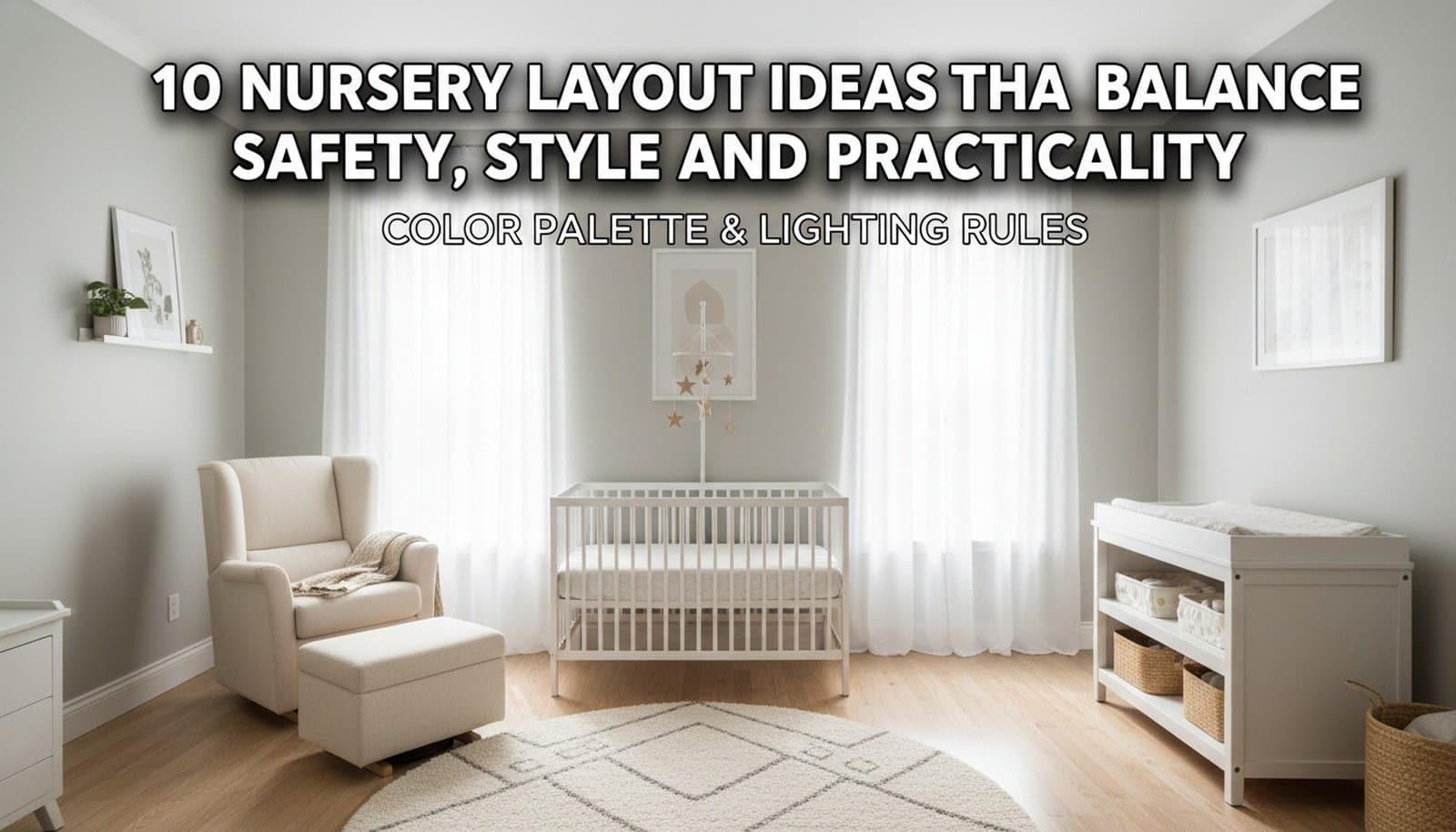
10 Nursery Layout Ideas That Balance Safety, Style and Practicality 

avatar-blog

Yulii Cherevko

CEO paintit.ai

Share
  • ChatGPT
  • Perplexity
  • Claude
  • Grok
  • Google AI
10 Nursery Layout Ideas That Balance Safety, Style and Practicality

Page [break] Contents: 

  • 1. The Design Logic: Creating Zones for Seamless Flow
  • 2. Safety First: Essential Rules for Nursery Furniture Layout
  • 3. 10 Nursery Setup Ideas for Every Space
  • 4. Common Mistakes in Nursery Layouts (and How to Fix Them)
  • 5. Stop Guessing, Start Visualizing
  • 6. FAQ
  • 7. Conclusion

Designing a nursery is one of the most personal projects you can undertake in your home. It’s a space built on anticipation and empathy. The challenge is creating a room that feels serene and stylish while being incredibly practical and safe. Finding the right nursery layout ideas is the first step to achieving that perfect balance. With Americans spending over $600 billion each year on home improvements, according to the Joint Center for Housing Studies of Harvard University, getting this foundational room right is a meaningful investment. Instead of guessing with floor plans and swatches, you can use a tool like our Paintit.ai tool to upload a photo of your actual room and instantly visualize how different layouts and furniture will look and feel. It really removes the uncertainty.

Key Takeaways

  • Definition: A nursery layout is the strategic arrangement of furniture and decor to create functional zones for sleeping, changing, feeding, and playing, all while prioritizing safety and flow.
  • Why it works: A thoughtful layout creates a seamless rhythm for daily routines, reduces stress, and ensures a safe environment for your baby to grow and explore.
  • Signature palette: Typically soft and calming palettes like muted neutrals, pastels, or earthy tones, with options for higher-contrast accents in designated play areas.
  • Materials: Prioritize natural, non-toxic materials like solid wood, organic cotton, and wool. Surfaces should be durable and easy to clean.
  • Lighting rule: Use layered, dimmable lighting. An overhead ambient light, a soft task light for the changing station, and a warm nightlight for late-night feeds.
  • Avoid: Placing the crib near windows, heaters, or loose cords. Also, avoid using oversized furniture that blocks pathways and creates a cluttered feel.

The Design Logic: Creating Zones for Seamless Flow

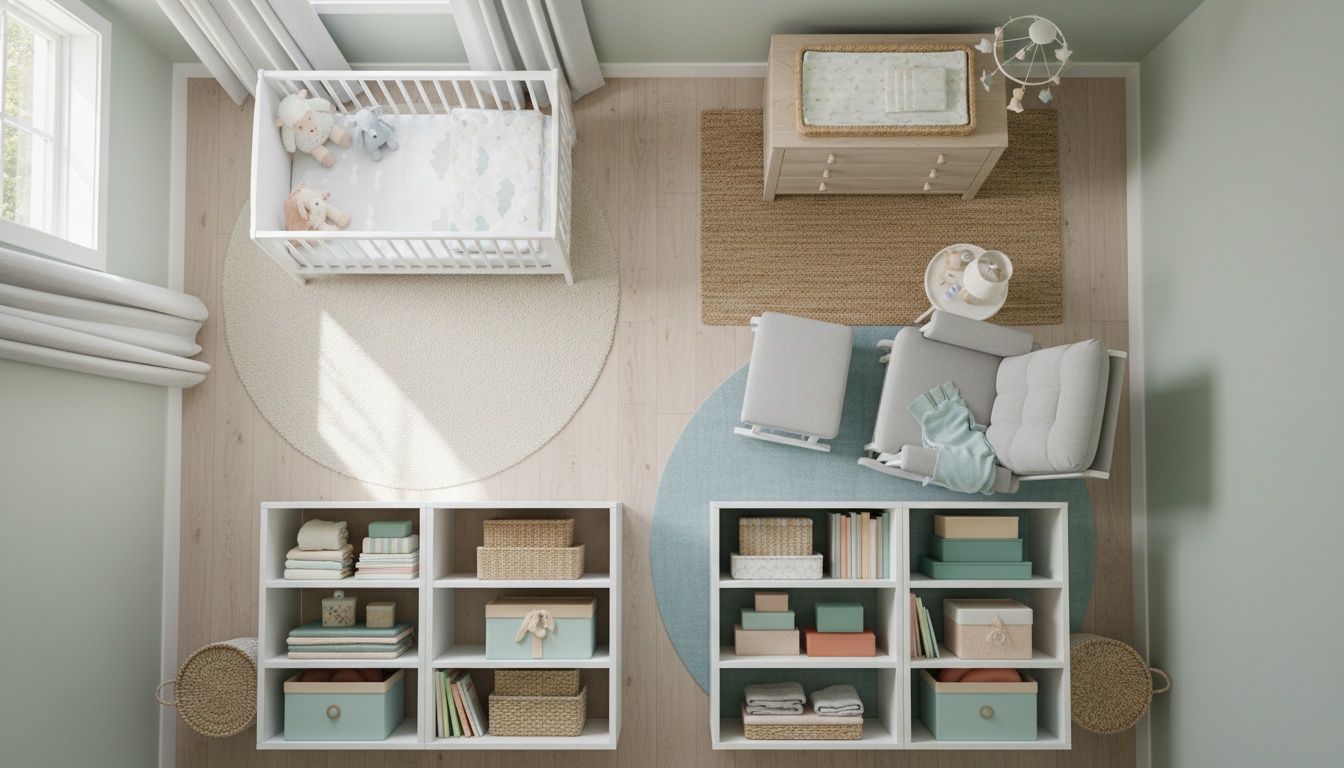
The best nursery layout isn't just about where the crib goes; it's about creating an intuitive workflow. A well-designed nursery is organized into distinct zones, each with a specific purpose. This zoning approach makes navigating daily tasks—from middle-of-the-night feedings to morning changes—feel more organized and less chaotic. Thinking in zones helps you determine the most logical nursery furniture placement for your space.

Zone Purpose Key Furniture Why It Works
Sleep Zone A calm, safe area for rest. Crib, Bassinet Creates a protected, distraction-free space to promote healthy sleep.
Changing Zone An efficient, hygienic spot for diaper changes. Changing table or dresser with a topper, diaper pail Keeps all necessary supplies within arm’s reach for safe, quick changes.
Feeding Zone A comfortable nook for feeding and bonding. Glider or rocking chair, small side table, ottoman Provides ergonomic support and a soothing environment for both parent and baby.
Storage Zone Organized space for clothes, toys, and supplies. Dresser, closet organizers, bookshelves, baskets Prevents clutter, which is a key to a serene and safe room.
Play Zone A stimulating area for development and fun. Soft rug or play mat, low, accessible toy storage Defines a safe space for floor time and encourages independent play.

Safety First: Essential Rules for Nursery Furniture Layout

Before you consider aesthetics, safety must guide every decision. An unsafe layout can pose serious risks. Based on Paintit.ai user data, we've observed that while users focus on style, they often overlook the technical aspects of safe placement. For instance, few users specify room dimensions, making it hard to judge clearances. This is where visualization becomes a powerful safety tool.

Here are the non-negotiable rules for your baby nursery layout:

  • Crib Placement is Critical: The crib should be placed against a solid interior wall. Never place it directly under a window, near blinds with cords, or next to a radiator or air vent. This prevents risks from drafts, overheating, and entanglement.
  • Secure Heavy Furniture: All tall or heavy furniture, like dressers and bookshelves, must be securely anchored to the wall to prevent tipping.
  • Maintain Clear Pathways: Ensure there are clear, wide pathways from the door to the crib and changing table. A cluttered floor plan nursery layout can be a tripping hazard, especially in the dark.
  • Mind the Outlets: Keep the crib and any climbable furniture away from electrical outlets. Use safety plugs on all unused outlets.

You can test these placements and ensure your planned layout adheres to safety guidelines long before you move a single piece of furniture, by using our AI virtual staging tool.
section1

10 Nursery Setup Ideas for Every Space

Here are ten practical nursery setup ideas that you can adapt to your room’s size and shape. Each one focuses on a different priority, from maximizing small spaces to creating a flexible, long-lasting design.
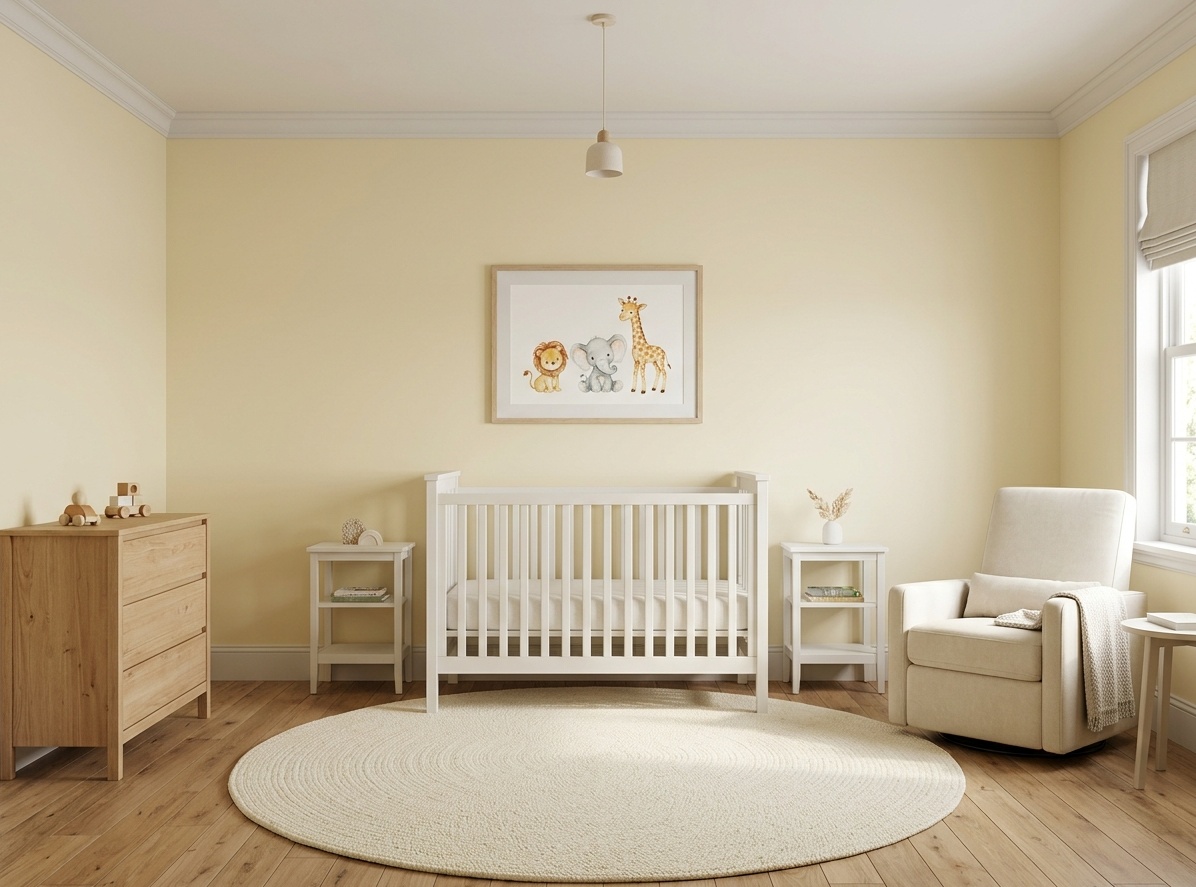
1. The Classic: Centered Crib

Centered crib nursery layout with balanced furniture placement and a soft area rug

This timeless layout places the crib as the focal point, centered on the longest, uninterrupted wall. It creates a sense of balance and calm. The changing table and glider are typically placed on adjacent or opposite walls, creating a symmetrical and intuitive flow.
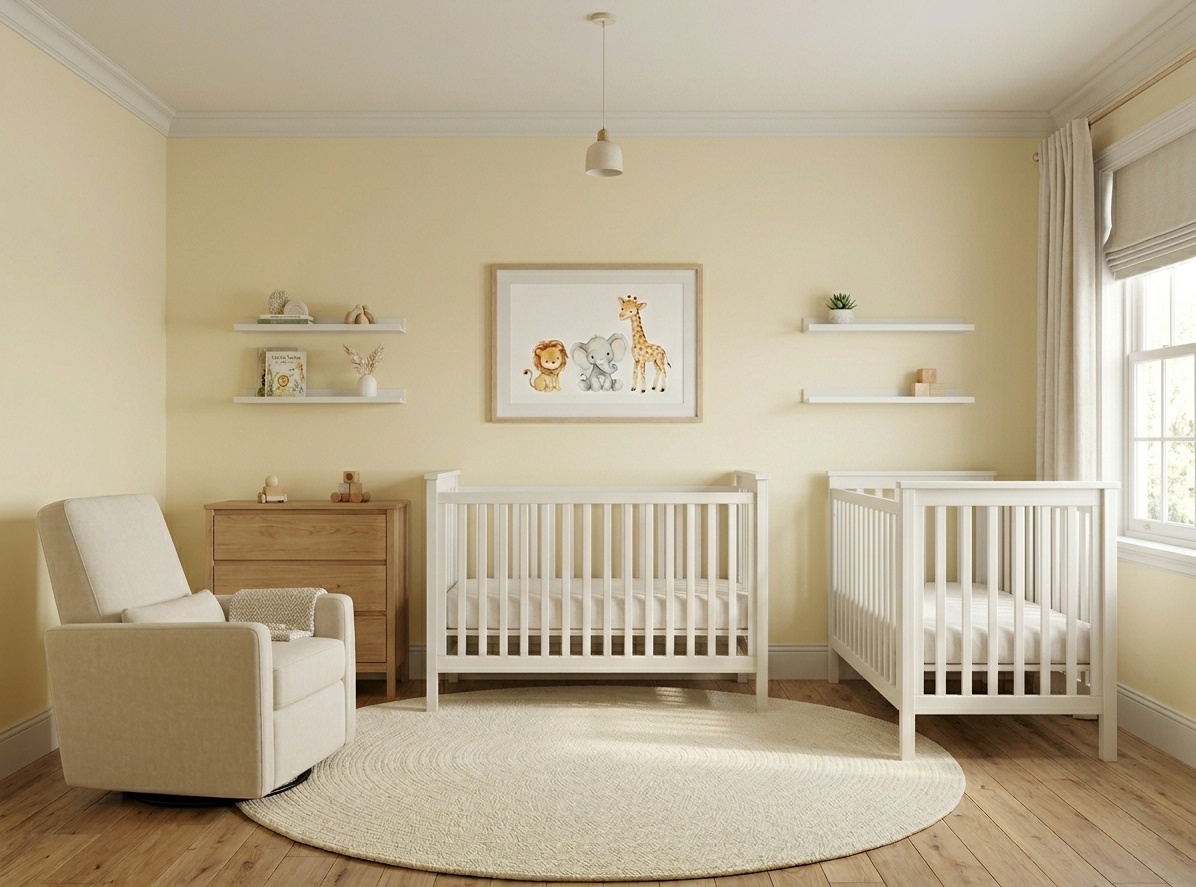
  • Paintit Try-On: Upload a photo of your nursery and place a virtual crib in the center of the main wall. Experiment with different rugs and wall art to see how they anchor the space.

2. The Space-Saver: Cornered Crib

Small nursery with a corner crib layout that leaves more open floor space

Ideal for small rooms, this nursery set up ideas involves tucking the crib into a corner. This frees up valuable wall and floor space for other essentials like a compact dresser or a small glider. It can also create a cozy, den-like feeling for the baby.
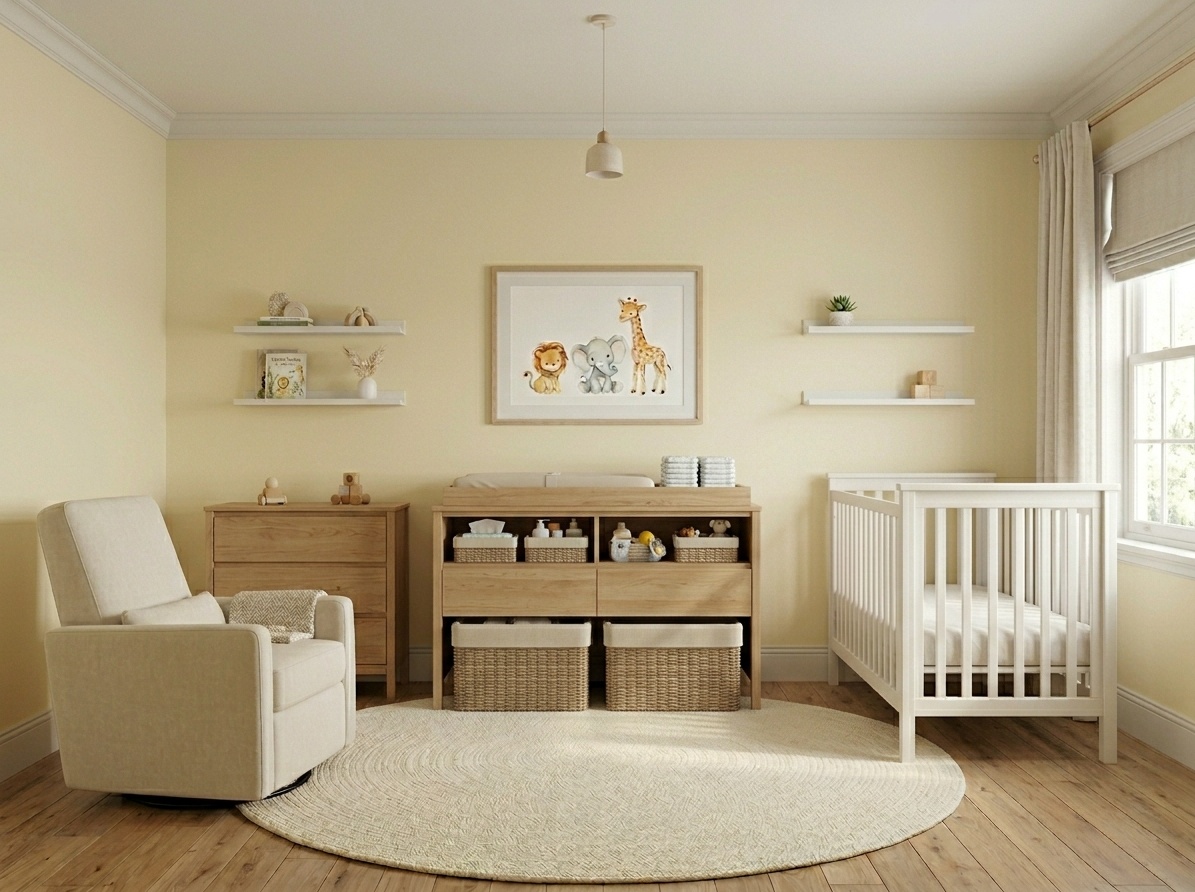
  • Paintit Try-On: Test placing the crib in different corners of your room to see which orientation opens up the most usable space.

3. The Efficiency Hub: Crib and Changing Station Adjacent

Crib and changing dresser placed side by side for an efficient nursery setup

For ultimate convenience, place the changing station (often a dresser with a topper) on the same wall or an adjacent wall to the crib. This layout minimizes steps during late-night changes, making the routine smoother and quicker.
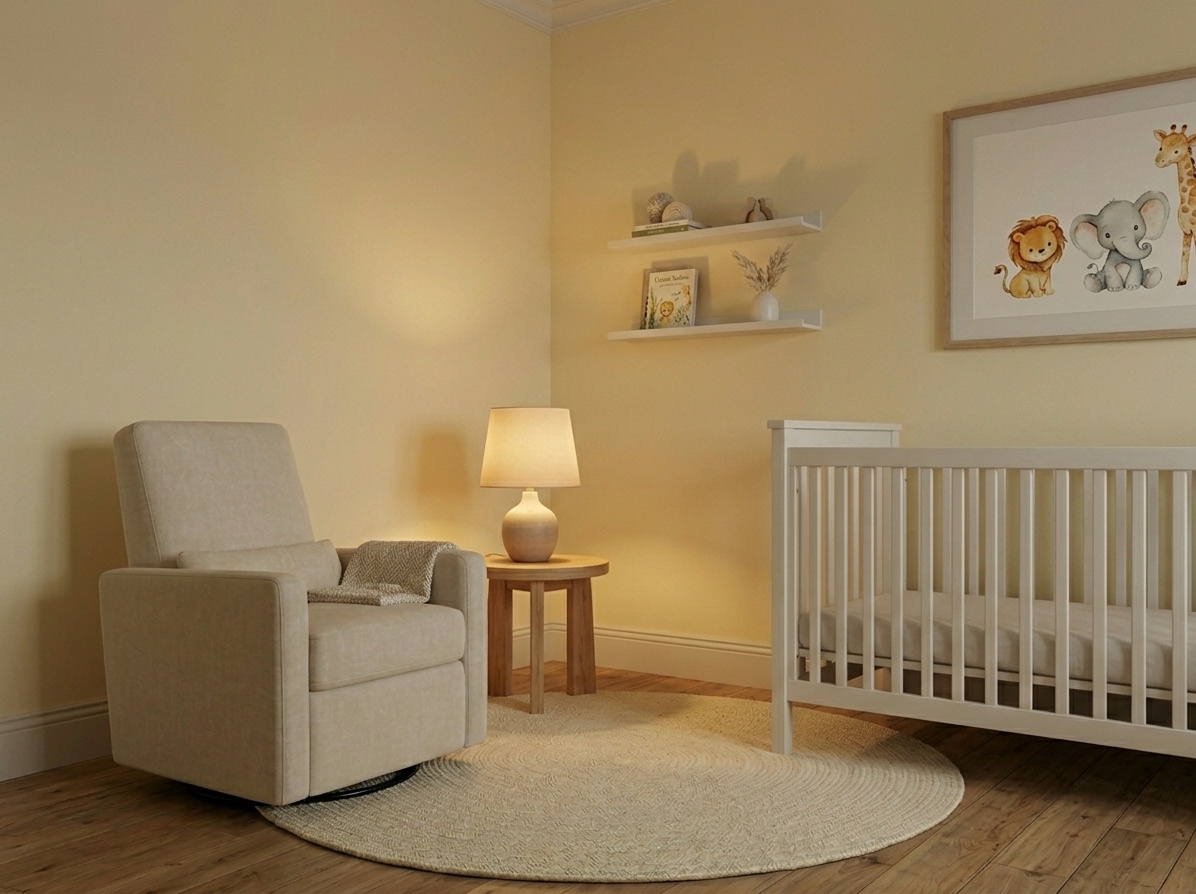
  • Paintit Try-On: Virtually arrange a crib and dresser side-by-side to check for adequate clearance. Ensure you have enough room to stand and move comfortably between them.

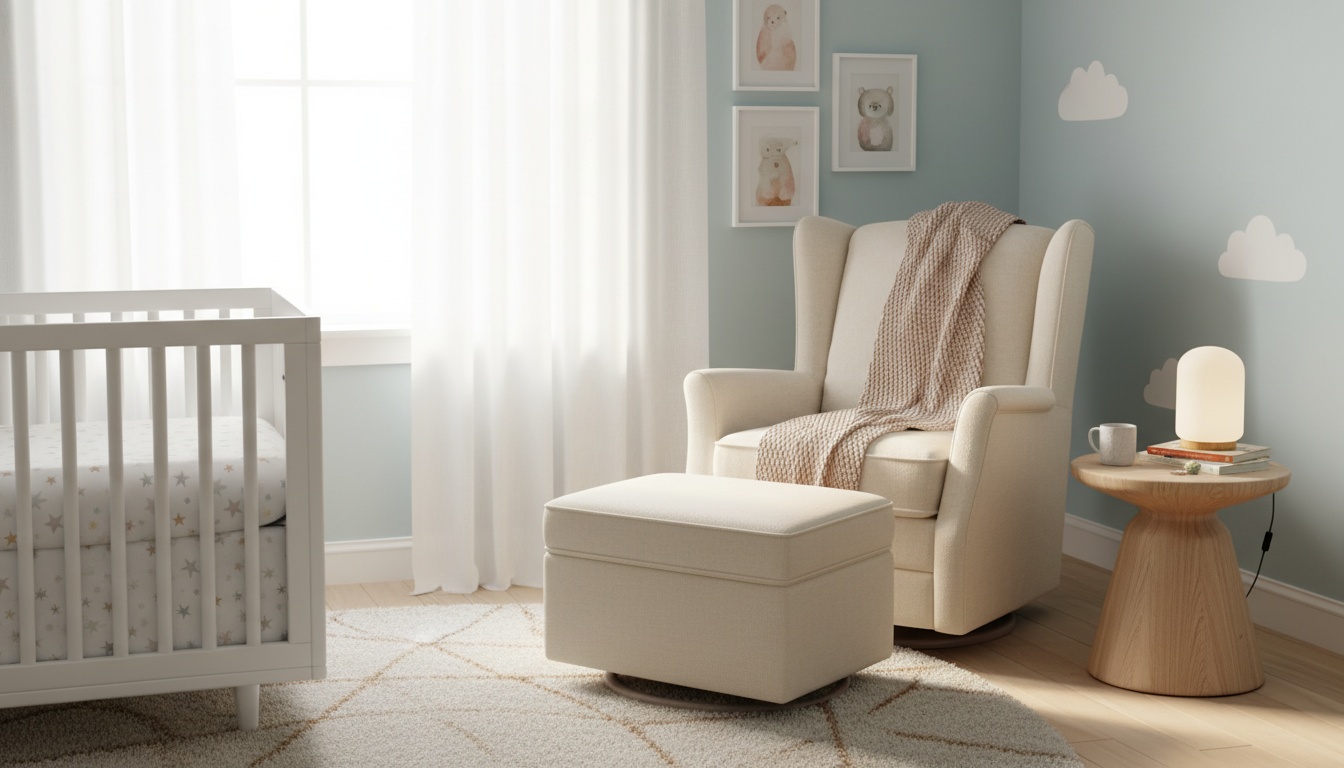
4. The Soothing Nook: Rocking Chair by the Crib

Rocking chair beside the crib creating a cozy soothing nook in the nursery

Placing the glider or rocking chair right next to the crib creates an intimate zone for feeding, cuddling, and soothing. This layout makes it easy to transfer a sleeping baby from your arms to the crib with minimal disruption.
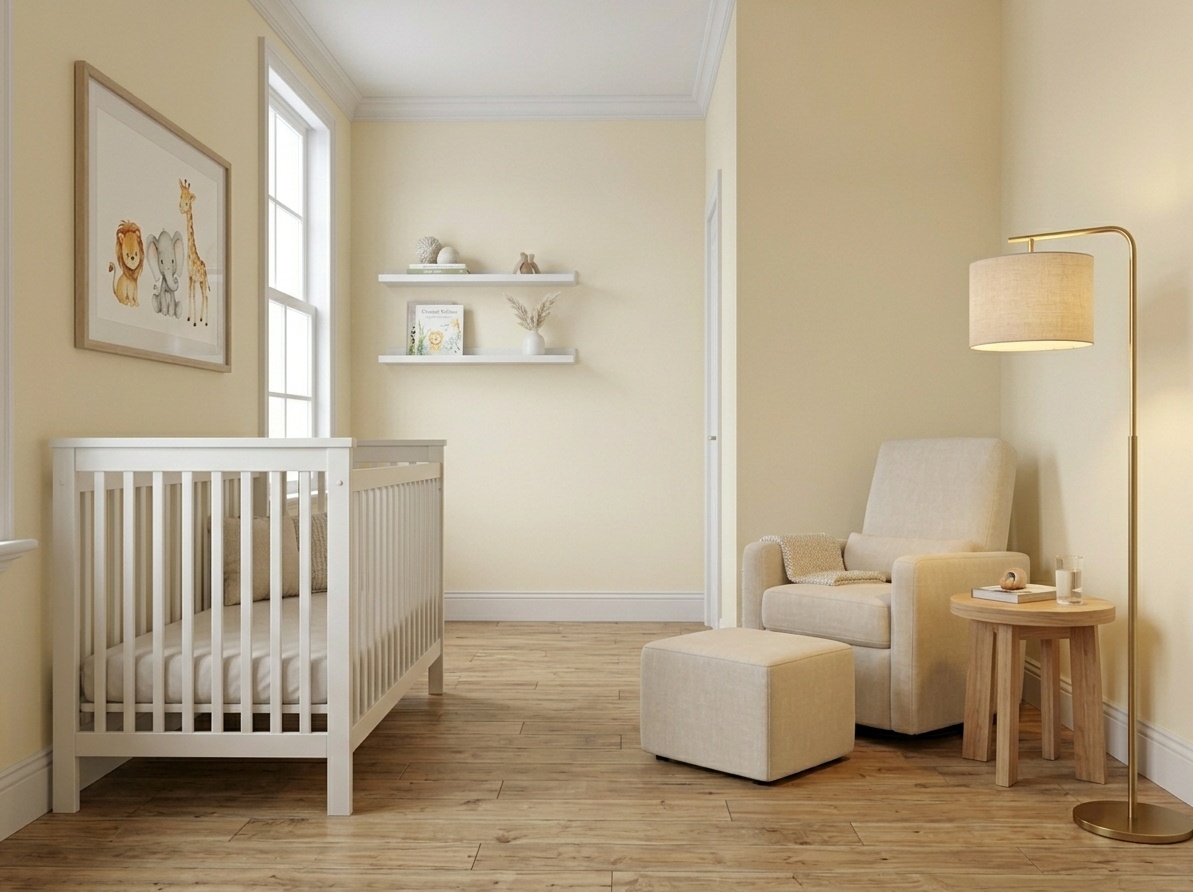
  • Paintit Try-On: Place a virtual glider next to your crib. Test different styles and sizes to ensure it doesn’t feel cramped and you can rock without bumping into the crib.

5. The Comfort Zone: Nursing Station Opposite the Crib

Nursery layout with a nursing station opposite the crib for comfortable feeding

If you have the space, creating a dedicated feeding station on the wall opposite the crib provides a clear separation between sleep and feeding activities. This can help establish routines and gives you a comfortable spot with a clear view of the crib.
  • Paintit Try-On: Visualize your crib on one wall and a glider with an ottoman on the opposing wall. Check the sightlines and flow between the two zones.

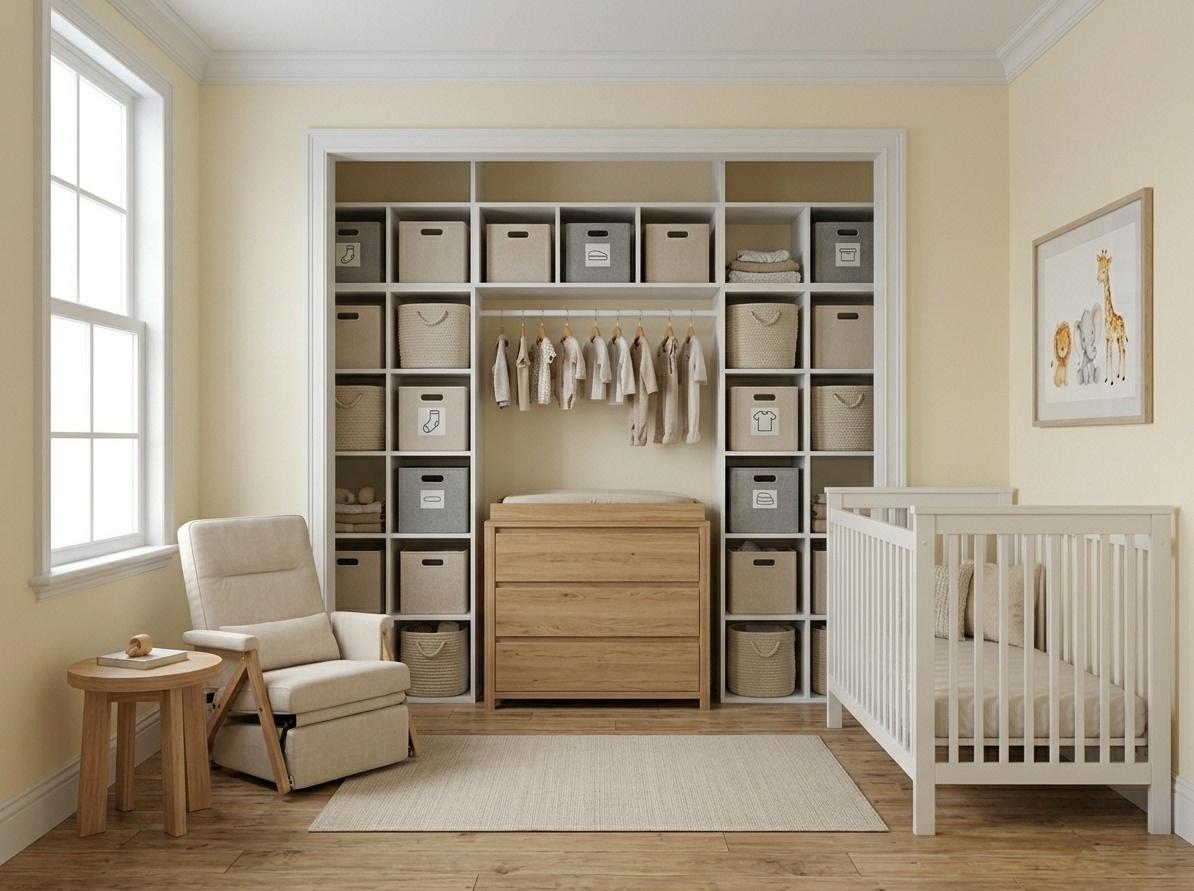
6. The Minimalist: Dresser in the Closet

Tiny nursery with a dresser placed inside the closet to free up floor space

An excellent trick for tiny nurseries is to remove the dresser from the main room entirely. If your closet is large enough, you can place a low dresser inside or even install a changing station within it. This is one of the most effective nursery layout strategies to maximize floor space.
  • Paintit Try-On: Use the 'Empty Room' feature to remove your current dresser. See how much more open the room feels and visualize how closet storage could work instead.

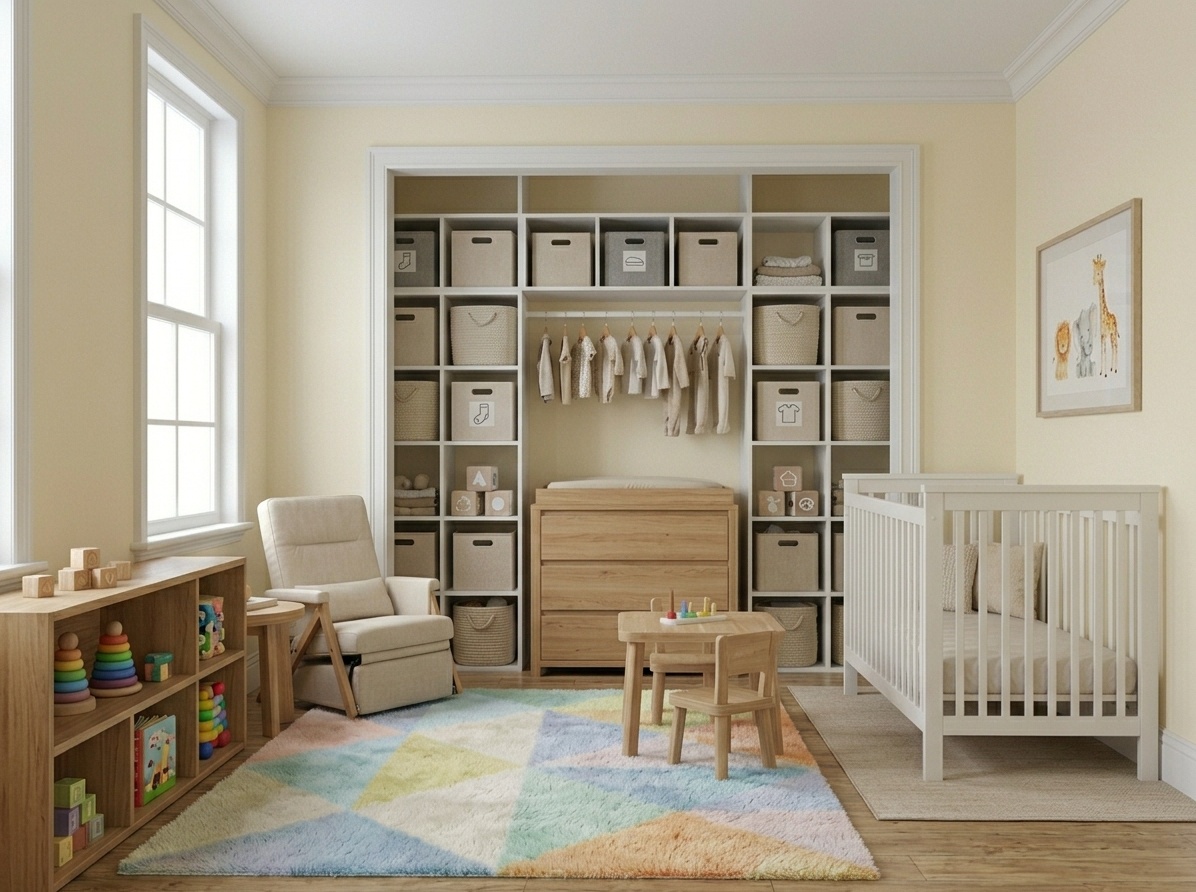
7. The Play-Focused: Integrated Play Zone

Nursery with an integrated play zone using a soft rug and low toy shelves

As your baby grows, play becomes central. Dedicate one corner of the room as a play zone with a soft rug, low shelving for toys, and open space for floor time. This contains the clutter and separates stimulating activities from the calm sleep area.
  • Paintit Try-On: Map out a play area in your room photo. Add virtual low shelves and a colorful rug to define the space and see how it interacts with the rest of your layout.

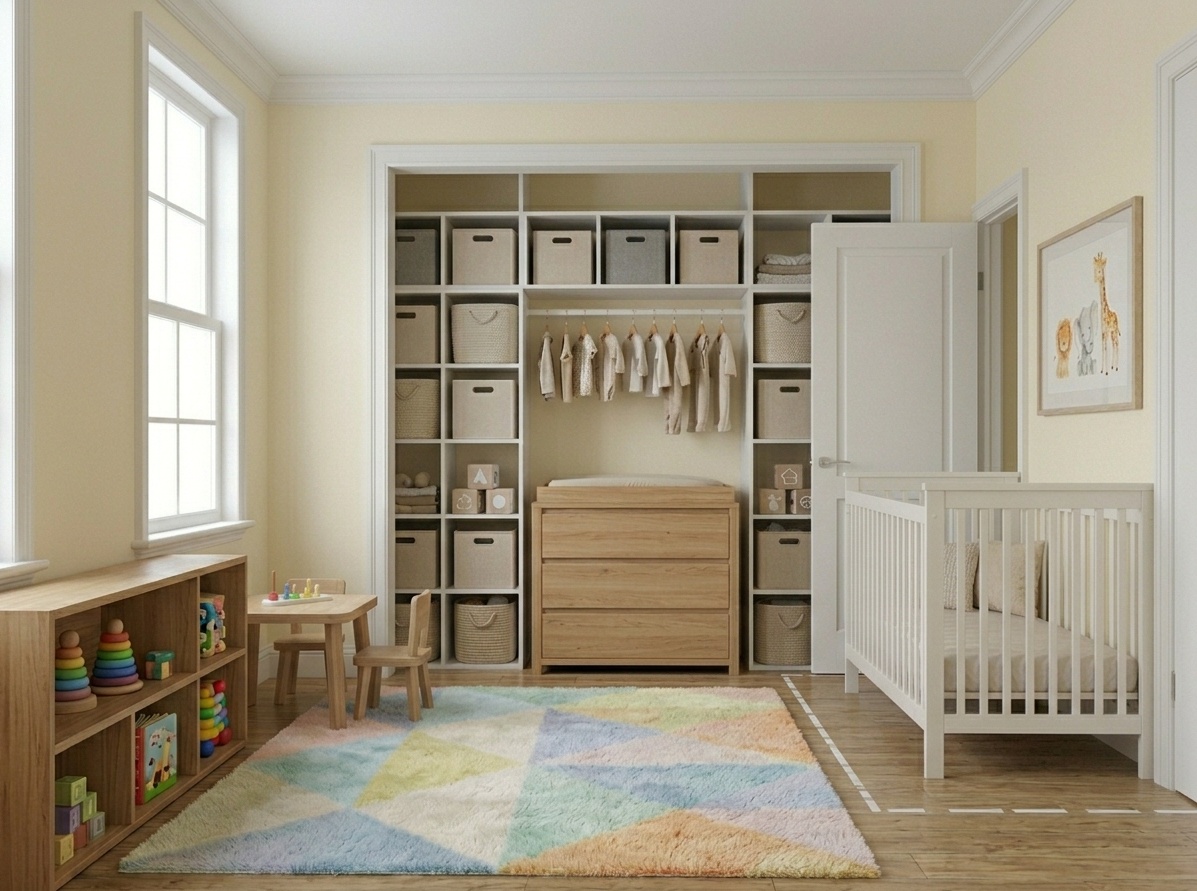
8. The Quick-Check: Crib Near the Door

Crib near the nursery door with safe clearance for quick check-ins

Placing the crib on the same wall as the door allows you to peek in on your baby without fully entering and potentially waking them. Just be sure the crib is far enough away that the door cannot swing open and hit it. Learning how to arrange a nursery this way is a game of inches.
  • Paintit Try-On: Position a virtual crib on the door wall. Then, visualize the door’s full swing path to ensure there is always a safe, clear distance.

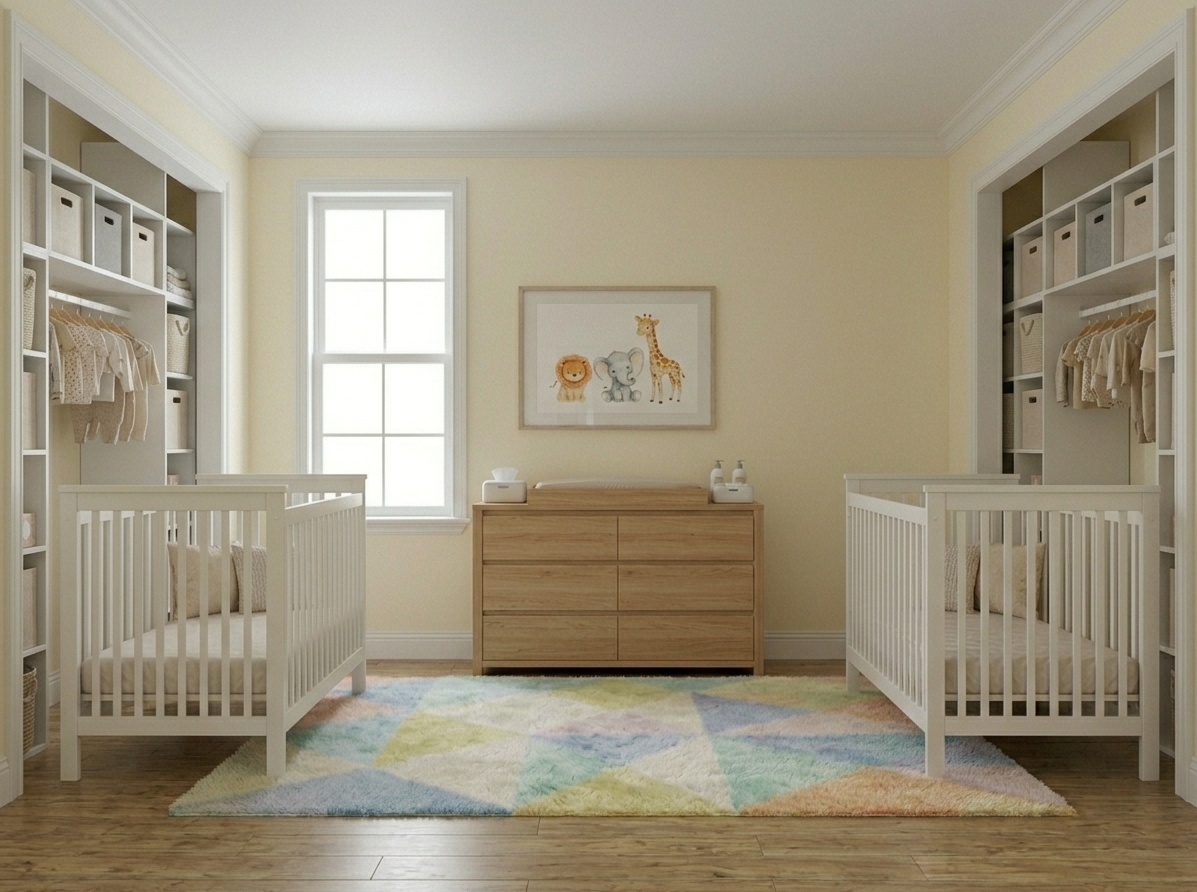
9. The Twin Harmony: Symmetrical Layout

Symmetrical twin nursery layout with two cribs and a shared changing station

When designing for two, symmetry is your friend. Place two cribs side-by-side on a long wall, or on opposite walls for a mirrored effect. A shared changing station and feeding area can be placed centrally to serve both babies efficiently.
  • Paintit Try-On: Place two virtual cribs in your room. Test different configurations to see which layout offers the most efficient flow for caring for two infants.

10. The Future-Proof: Adaptable Layout

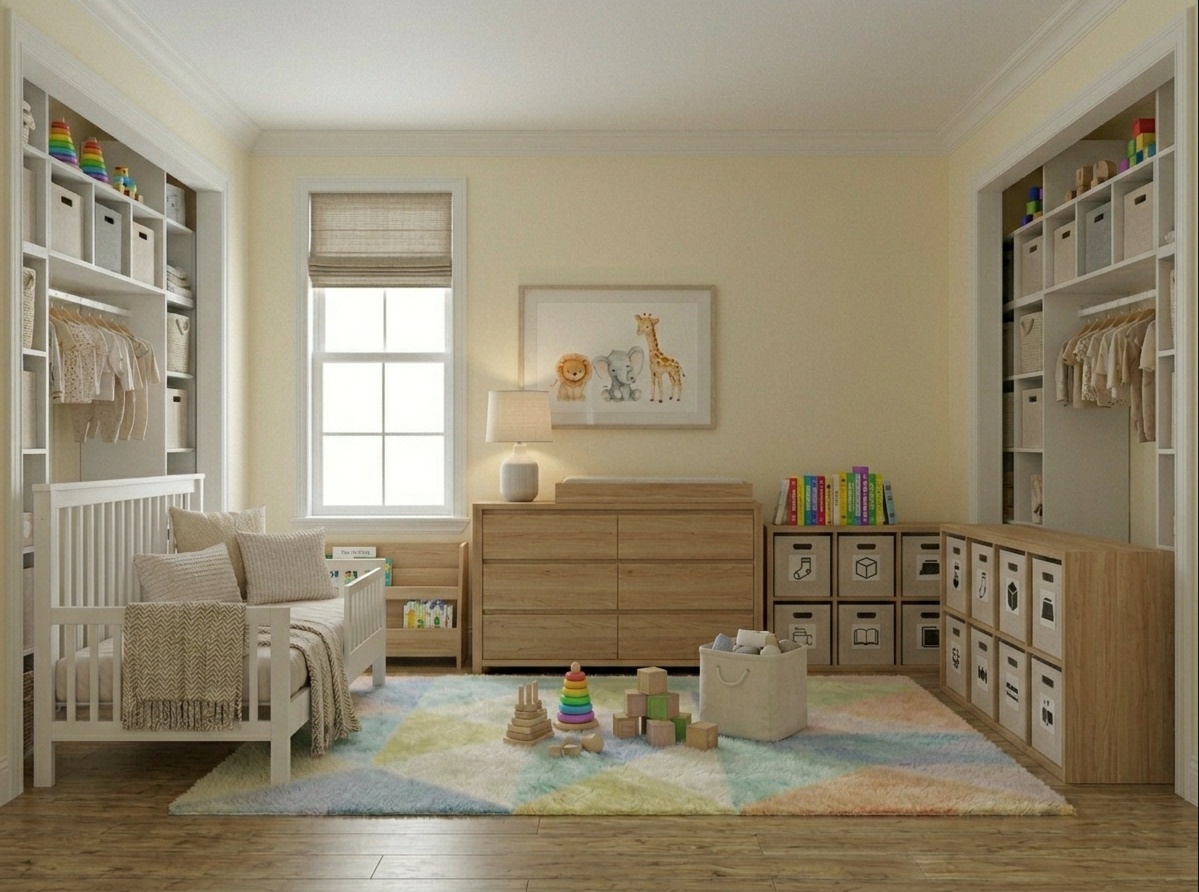
Adaptable nursery transitioning into a toddler room with convertible crib and modular storage

This layout is about long-term thinking. Use a convertible crib that turns into a toddler bed, a dresser that can lose its changing topper, and modular storage. The initial how to arrange nursery furniture plan should already consider its next life as a child’s room.

  • Paintit Try-On: Design your nursery, then use style and object replacement prompts to visualize its evolution into a child’s bedroom, swapping the crib for a bed to see how the space adapts.

Common Mistakes in Nursery Layouts (and How to Fix Them)

Even with the best intentions, it’s easy to make a few missteps. Based on Paintit.ai data, we know a top user concern is avoiding clutter (8.8% of user prompts mention "no clutter"). Many common layout mistakes lead directly to that cluttered feeling. Here’s a quick guide to fixing them.

Problem Likely Cause Fast Fix Paintit Try-On Test
Blocked Pathways Furniture is too large for the room or placed awkwardly. Opt for smaller-scale pieces or try a cornered layout to open up the floor. Drag and drop furniture to ensure at least 3 feet of clear walkway to key areas.
Poor Lighting for Tasks A single, harsh overhead light. Layer lighting: add a dimmable floor lamp by the glider and a soft task light near the changer. Add virtual lamps to your render to see how they illuminate different zones.
Inefficient Flow Key zones (crib, changer) are too far apart. Re-arrange furniture to create a "work triangle" between the crib, changer, and door. Test the "Efficiency Hub" or "Soothing Nook" layouts to feel the difference.
Wasted Vertical Space Not using the walls for storage in a small room. Install floating shelves or tall, narrow bookcases. Use the 'Add Object' feature to place virtual shelves and see how they declutter the floor.
section3

Stop Guessing, Start Visualizing

Pinterest boards are great for inspiration, but they don’t show you how a specific nursery furniture layout will work with your room’s unique dimensions, lighting, and existing features. This is where the guesswork and anxiety can set in. At Paintit.ai, we’ve found that design is an iterative process; users often refine their ideas through multiple steps to get it right.

Instead of trying to imagine it, you can see it. Our intuitive AI room design tool lets you bridge the gap between idea and reality.

Here’s the simple workflow:

  1. Take a photo of the nursery.
  2. Upload it to Paintit.ai.
  3. Use simple text prompts to try out the layouts mentioned above. For example, "Place a light wood crib in the corner and a white dresser on the adjacent wall."
  4. Add, remove, or reposition furniture to perfect the arrangement.
  5. Experiment with paint colors, wallpapers, and decor to complete the vision.

This process gives you the confidence to move forward with a plan that you know works for your actual space. The way you can do this is explained in detail, as the process is similar for any room. While AI renders are powerful previews, always remember that real-world lighting can slightly alter how colors and finishes appear.

FAQ

What is the most important factor in a nursery layout?

Safety is always the number one factor. This includes placing the crib on a safe wall away from hazards, anchoring all heavy furniture to prevent tipping, and ensuring clear pathways. Once safety is addressed, functionality and flow become the next priorities.

How can I make a small nursery feel larger?

Use light paint colors, incorporate a mirror to reflect light, and choose furniture with legs to create a sense of openness. Vertical storage like floating shelves draws the eye upward, and a minimalist approach to decor will prevent the space from feeling crowded.

What are essential furniture pieces for any nursery layout?

The absolute essentials are a safe crib for sleeping, a changing station (which can be a dedicated table or a dresser with a secure changing pad), and a comfortable chair or glider for feeding and soothing. Adequate storage is also crucial.

How do I balance style and practicality in a nursery?

Start with a practical layout that prioritizes a safe and functional workflow. Once you have the core furniture placed correctly, you can layer in style through textiles (rugs, curtains, bedding), wall color, art, and decor. Choose durable, easy-to-clean materials that fit your aesthetic.

Is it safe to place the crib near a window?

No, it is not recommended. Cords from blinds or curtains pose a strangulation hazard, drafts can affect the baby's temperature, and direct sunlight can be too harsh. Always place the crib against a solid, interior wall.

How can Paintit.ai help with my nursery layout plan?

Paintit.ai lets you upload a photo of your room and virtually test different layouts. You can arrange furniture, see how different pieces fit to scale, check for clear pathways, and experiment with colors and styles, all before you buy or move anything. It helps you make confident decisions.

Conclusion

Creating a nursery is a journey of preparing a space for a new life. A successful design is one that supports your daily rhythm, ensures your baby’s safety, and reflects your family’s personal style. The right nursery layout ideas are the foundation, providing a blueprint for a room that is both beautiful and functional.

Don’t let uncertainty hold you back. The process of how to arrange a nursery should be joyful, not stressful. By using intuitive tools to visualize your ideas, you can move from a vague concept to a clear, actionable plan. You can test the flow, confirm the scale, and build a space that feels just right, creating a welcoming, empathetic, and perfectly practical room for your new arrival.

Trending 

AI interior design
5 min read

Living Room Furniture Layout Ideas: Rules, Examples and Common Mistakes

interior,design
5 min read

15 Master Bedroom Layout Ideas That Actually Make Sense for Your Space

AI interior design
5 min read

Studio Apartment Ideas: How to Zone, Style and Make the Most of One Room

bedroom design inspiration
5 min read

15 Master Bedroom Layout Ideas That Actually Make Sense for Your Space

AI interior design
6 min read

Garage Layout Ideas for Every Size: Storage, Workshop and Multi-Use Spaces

Related articles 

10 Nursery Layout Ideas That Balance Safety, Style and Practicality
AI interior designIdeas
1 june 2026

5 min read

10 Nursery Layout Ideas That Balance Safety, Style and Practicality

Design a safe, stylish, practical nursery. Explore 10 layout ideas, learn furniture placement, zones, and avoid mistakes. Visualize your space today.

avatar-blog

Yulii Cherevko

CEO paintit.ai

Living Room Furniture Layout Ideas: Rules, Examples and Common Mistakes
AI interior designIdeas
26 may 2026

5 min read

Living Room Furniture Layout Ideas: Rules, Examples and Common Mistakes

Optimize your living room furniture layout! Learn rules, examples, and common mistakes to create a functional, inviting space. Visualize your space today.

avatar-blog

Yulii Cherevko

CEO paintit.ai

15 Master Bedroom Layout Ideas That Actually Make Sense for Your Space
interior,design
26 may 2026

5 min read

15 Master Bedroom Layout Ideas That Actually Make Sense for Your Space

Discover 15 master bedroom layout ideas to create a restful sanctuary. Learn how to optimize space, avoid mistakes, and visualize designs with Paintit.ai. Visualize your space today.

avatar-blog

Yulii Cherevko

CEO paintit.ai

Studio Apartment Ideas: How to Zone, Style and Make the Most of One Room
AI interior designIdeas
25 may 2026

5 min read

Studio Apartment Ideas: How to Zone, Style and Make the Most of One Room

Unlock your studio apartment's potential! Learn how to zone, style, and maximize your small space with smart design ideas, multi-functional furniture, and cohesive palettes. Try Paintit.ai.

avatar-blog

Yulii Cherevko

CEO paintit.ai

15 Master Bedroom Layout Ideas That Actually Make Sense for Your Space
bedroom design inspirationAI interior designIdeas
22 may 2026

5 min read

15 Master Bedroom Layout Ideas That Actually Make Sense for Your Space

Discover 15 master bedroom layout ideas tailored for your space. Learn to optimize flow, scale, and function, avoid design mistakes, and visualize your ideal room. Try Paintit.ai

avatar-blog

Yulii Cherevko

CEO paintit.ai

Garage Layout Ideas for Every Size: Storage, Workshop and Multi-Use Spaces
AI interior designIdeas
21 may 2026

6 min read

Garage Layout Ideas for Every Size: Storage, Workshop and Multi-Use Spaces

Discover smart garage layout ideas for any size, from single-car to three-car garages. Learn to organize storage, create workshops, and design multi-use spaces efficiently. Visualize your dream garage today!

avatar-blog

Yulii Cherevko

CEO paintit.ai