18 min. reading

Yulii Cherevko
CEO paintit.ai
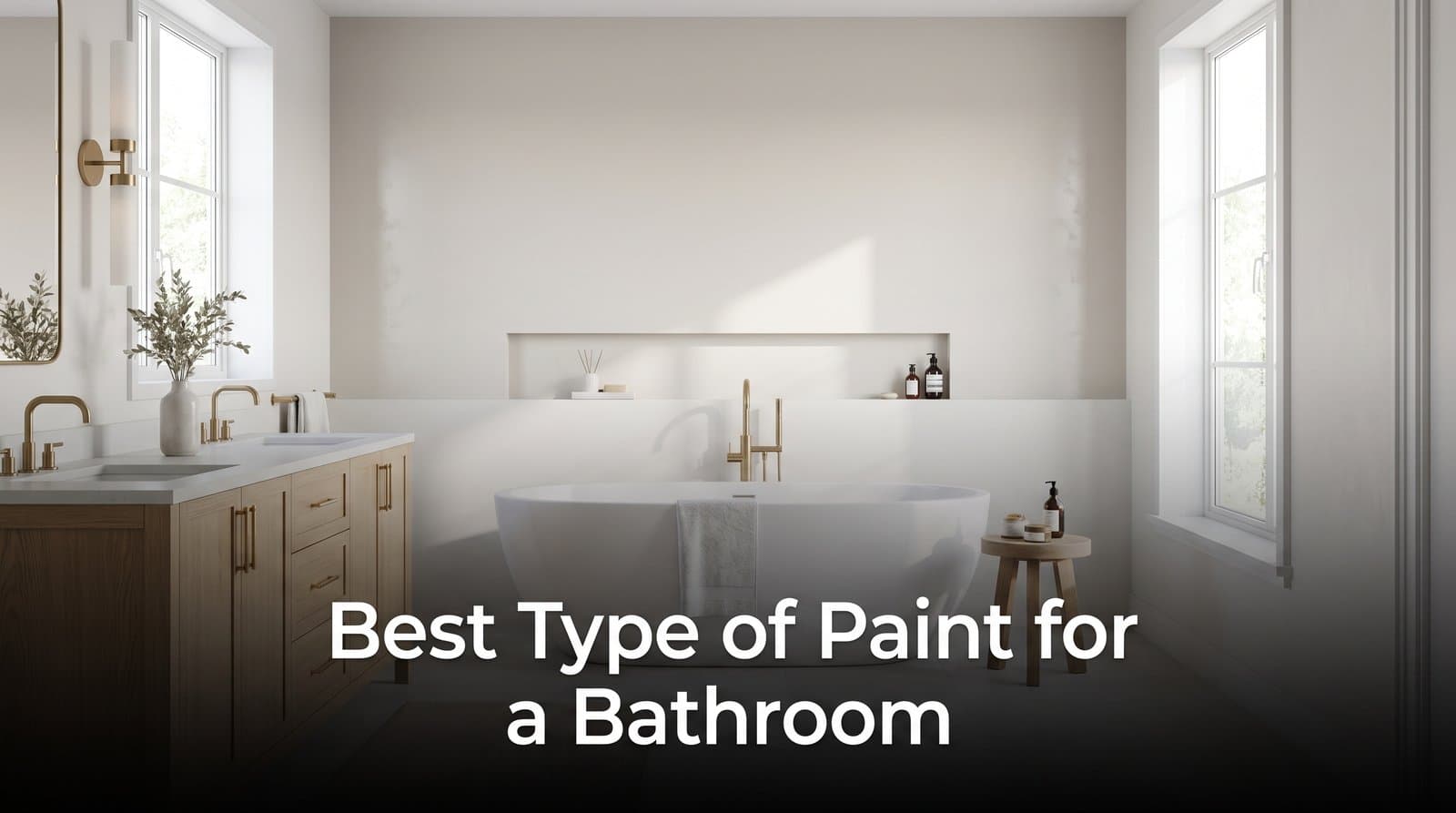
The best type of paint for bathroom projects in 2026 is usually premium acrylic latex paint in a satin finish or semi-gloss paint, paired with a bathroom primer made for moisture. With Paintit.ai, you can upload your real bathroom photo, try wall colors and finishes, and see the result before you stand in the paint aisle holding six nearly identical chips. Satin is often the calmer, more refined choice for walls. Semi-gloss is better for trim, splash-prone zones, and busy family bathrooms that see real life before 8 a.m.
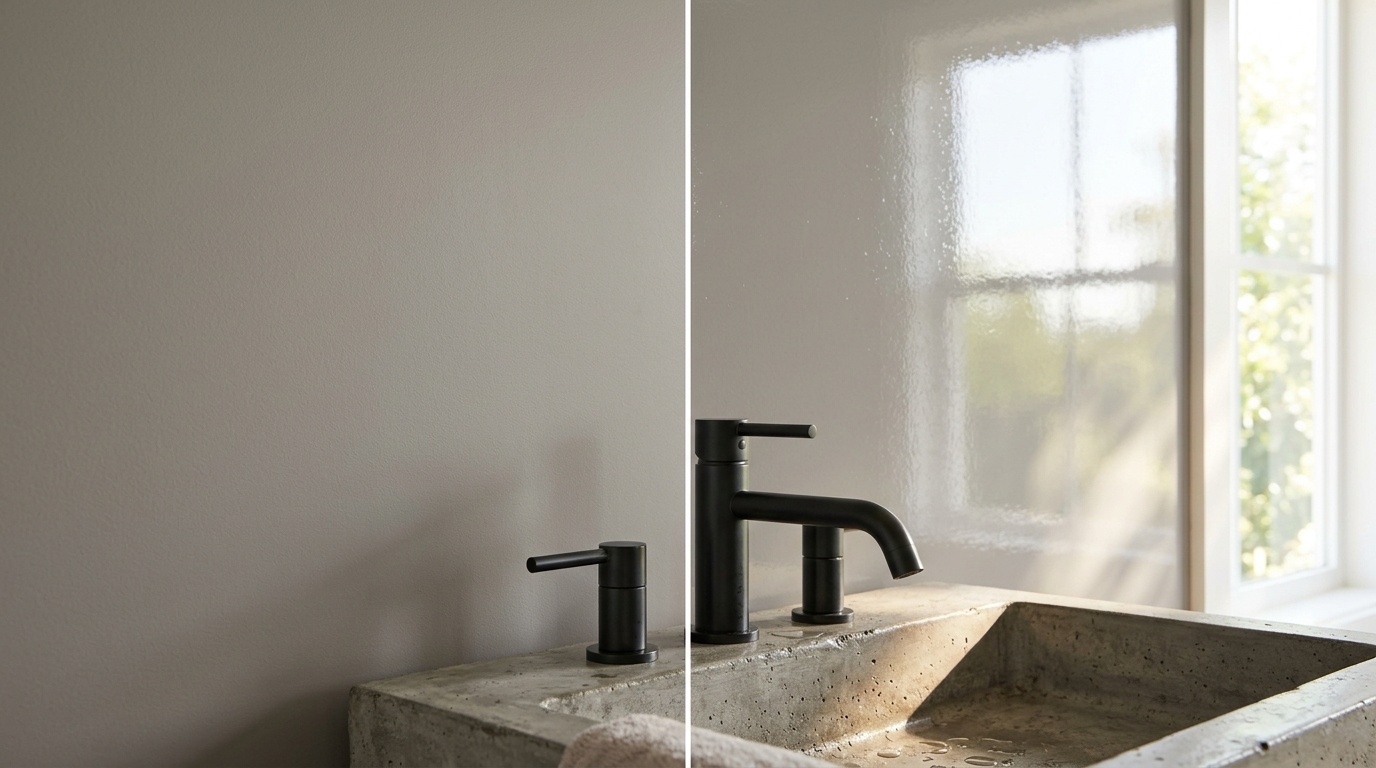
The best type of paint for bathroom walls is usually satin for general walls and semi-gloss for high-contact or splash-heavy areas. If you are asking what is the best type of paint for a bathroom, the practical answer is not one sheen everywhere. It is a zone-by-zone choice based on moisture, light, cleaning, and the state of the wall underneath.
Semi-gloss has been the classic bathroom answer for a reason. It creates a tighter, more water-resistant film. It is easy to clean, scrubbable, and useful near sinks, children’s baths, trim, doors, and baseboards, where hands, towels, and toothpaste marks tend to gather.
Satin has improved a lot. Modern premium acrylic latex paint in a satin finish can handle high humidity much better than older satin formulas, especially when it is made for bathrooms and applied over a mildew-resistant primer. It gives you a softer visual rhythm: less glare, less plastic shine, and a more personal finish alongside tile, oak, stone, linen towels, or brushed brass.
Here’s the thing with reflection. Semi-gloss paint repels moisture well, but under 2 bright LED vanity sconces it can behave like a mirror. Every bump, sanding ridge, drywall wave, and joint tape line gets a little spotlight. Satin spreads that light out, so older walls often look smoother and calmer.
| Element | What to choose | Why it works | Easy mistake | Quick fix |
|---|---|---|---|---|
| Full bathroom walls | Premium satin finish | Balanced moisture resistance and softer light reflection | Choosing flat paint for a shower room | Use bathroom-rated satin acrylic latex paint |
| Sink splash zone | Semi-gloss paint | More water-resistant and easy to wipe | Using matte paint behind the basin | Add semi-gloss or tile backsplash |
| Trim and doors | Semi-gloss or gloss finish | Handles fingerprints and cleaning | Painting trim in wall satin | Use a harder, glossier finish |
| Powder room walls | Eggshell paint or premium matte paint | Low steam means more design freedom | Overusing shine in a small dramatic room | Use low sheen with good ventilation |
| Older uneven walls | Satin finish | Hides small flaws better than shine | Assuming semi-gloss always looks cleaner | Test wall color under vanity light |
A simple rule: the wetter and busier the zone, the glossier you can go. The more visible and design-led the wall, the more satin usually feels right.
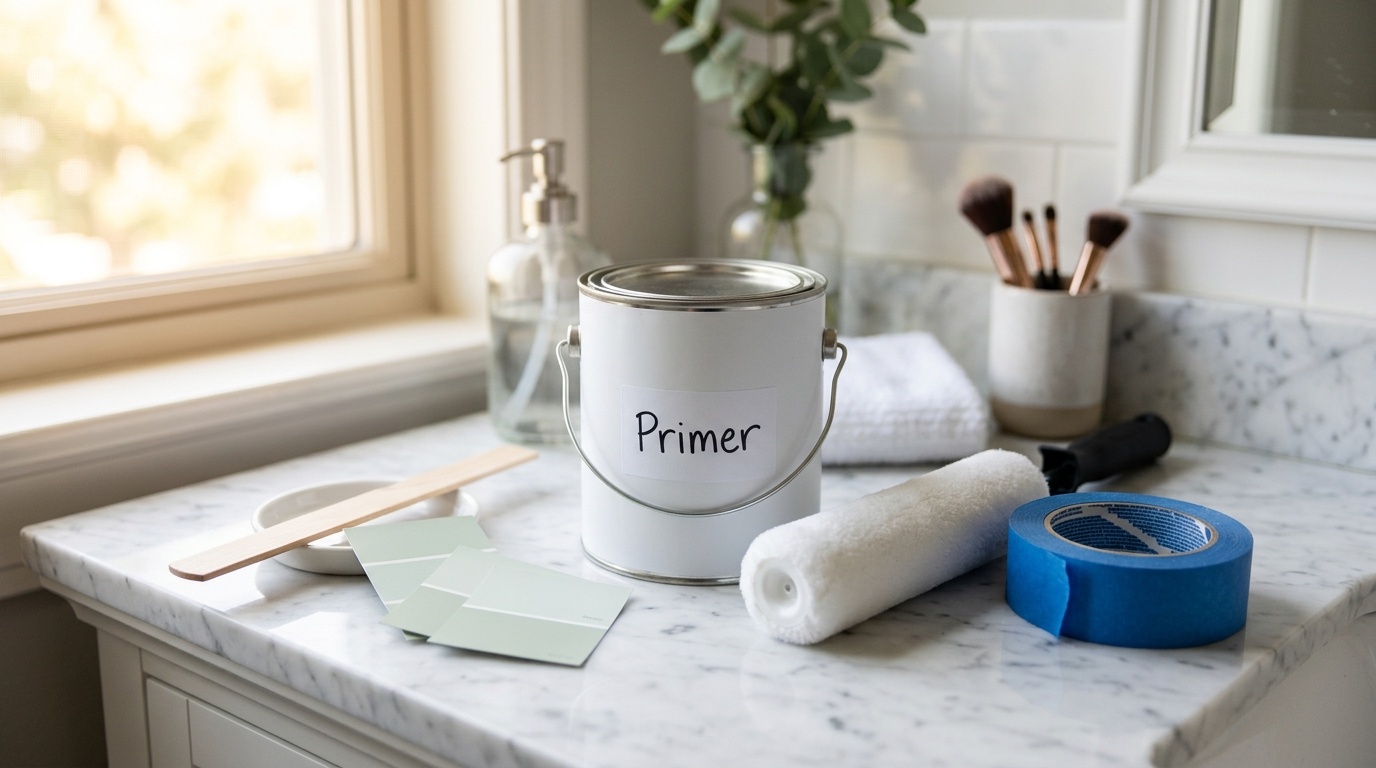
Bathroom paint works because its dried film resists moisture, cleaning, and surface contamination better than ordinary interior paint. In a room with steam, splashes, and daily high humidity, the formula matters as much as the sheen. Choose latex paint with a durable acrylic base, then seal the wall first with bathroom primer.
Acrylic latex paint is the safer default for most DIY bathroom projects because it dries to a flexible, washable film and handles humidity changes better than basic vinyl-heavy wall paint. Look for label language such as bathroom, moisture-resistant, washable, or mold and mildew resistant.
Primer is not a decorative extra. It is part of the system. A mildew-resistant primer helps seal porous drywall, old patches, and areas where previous paint has started peeling or bubbling. Skip it, and moisture can sit under the new paint film and weaken adhesion.
In practical design workflows, our AI paint color visualizer helps homeowners understand the look of a finish, but longevity still depends on preparation. AI can show how a sage satin wall might feel beside a walnut vanity. It cannot fix soap scum, damp drywall, poor sanding, or weak ventilation. Annoying, but true.
A reliable 5-step bathroom paint sequence looks like this:
Do not paint over damp walls. If the surface feels cool, slick, or slightly tacky after cleaning, wait. Paint needs a dry surface and enough time to cure before steam tests the film.
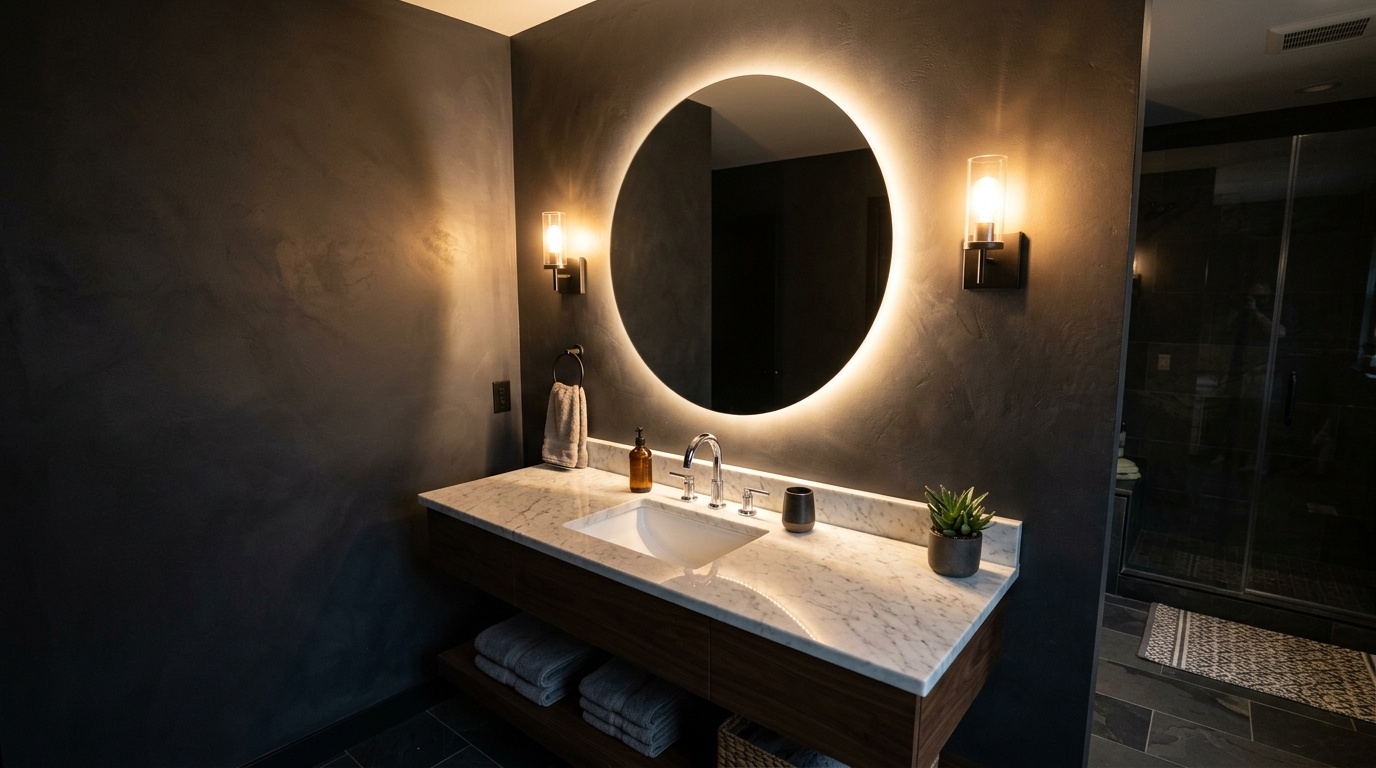
Sheen changes color because it changes how light bounces off the wall. In a small bathroom with 1 mirror, 2 vanity bulbs, and pale tile, semi-gloss can make navy, forest green, or charcoal look darker and shinier. Satin keeps the same palette calmer, softer, and less reflective.
This is the part many bathroom paint guides skip. A gloss finish can make color feel more saturated, especially at night under cool LED bulbs. Soft ivory in semi-gloss may look bright and clean; deep green in semi-gloss may look dramatic, but also slippery or overly polished if the wall surface is uneven.
Satin is more forgiving. It still reflects enough light to feel clean, but it spreads the reflection instead of creating sharp glare. That is why a satin finish often works well with stone-look porcelain tile, oak vanities, linen shower curtains, brushed brass, matte black taps, and warm diffused ceiling lights.
Based on Paintit.ai data from real visualization workflows, users often hesitate between a durable finish and a sophisticated aesthetic, especially when comparing satin and semi-gloss in bathrooms. In our analysis of Paintit.ai user prompts, we see repeated concern around dark paint looking too shiny under LED vanity lights.
Use a visual test before you commit. Upload a straight-on bathroom photo, try a warm white satin wall, then compare it with the same color in a shinier direction using your own bathroom preview. Treat the result as a design dry run, not a laboratory measurement of sheen.
Try-on action: upload one daytime photo and one nighttime photo of the same bathroom. Compare soft white, sage green, and charcoal in satin, then repeat with a more reflective semi-gloss look to check glare near the mirror.
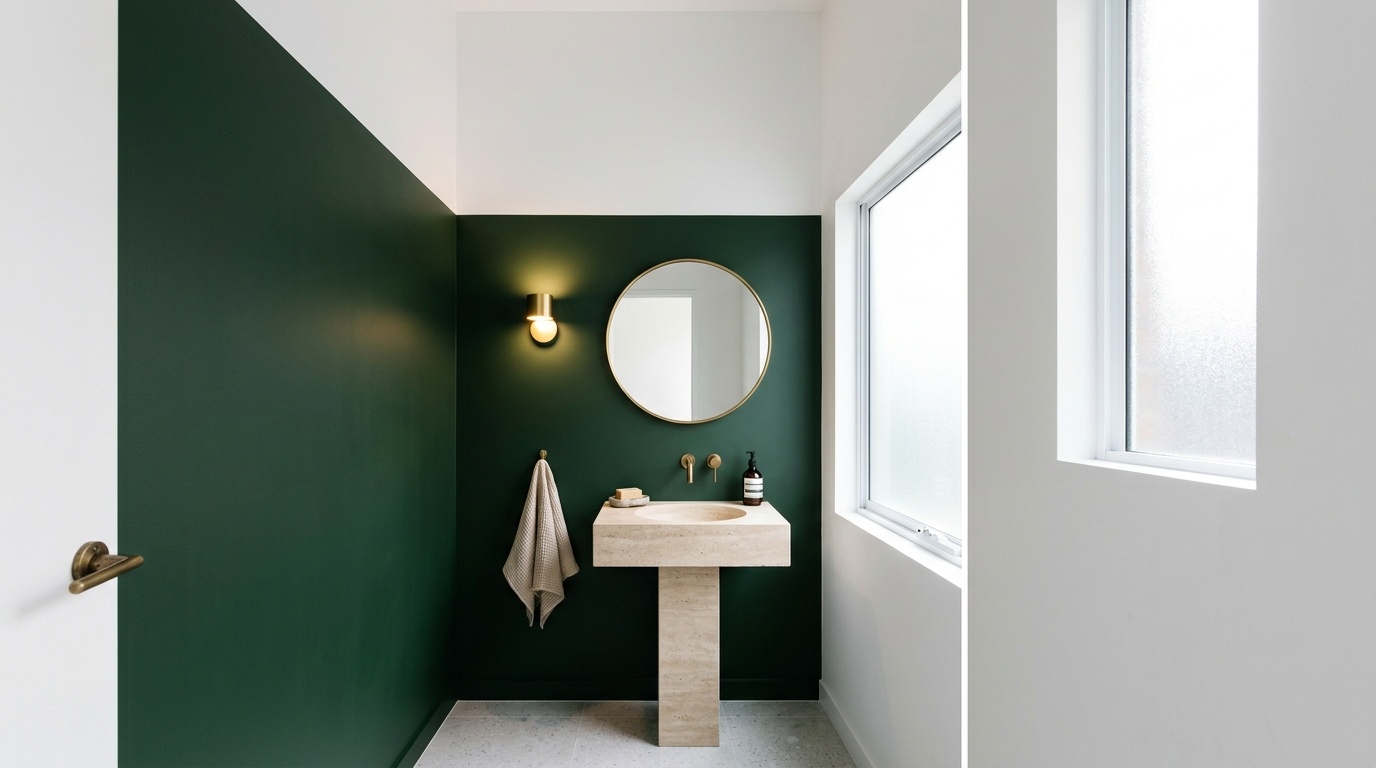
The right type of paint for bathroom spaces depends on how much water the room sees. A shower bathroom needs moisture-resistant paint and stronger prep; a powder room can handle lower sheen; a bathroom ceiling needs special attention because rising steam collects above the shower, mirror, and fan grille.
For a daily shower bathroom, choose premium satin on most walls and semi-gloss around trim, doors, and splash-prone edges. This is often the best type of paint for a bathroom when you want both durability and a calm, current look.
Use satin with warm beige, soft white, eucalyptus, clay, or muted gray if your bathroom has organic finishes such as oak, travertine-look tile, or woven storage baskets. Use semi-gloss more confidently with crisp white, cool gray, or navy in a bright family bath where scrubbing matters.
In a bathroom used by 3 or 4 people every morning, semi-gloss becomes more useful. It handles toothpaste marks, fingerprints, towel rubs, and repeated wiping better than flatter sheens.
The key is surface prep. Semi-gloss will not hide messy drywall. Sand patched spots until the wall feels even under your palm, then prime before applying 2 thin coats.
A powder room gives you more freedom because there is usually no shower creating daily steam. Eggshell paint, premium matte paint, or a washable low-sheen finish can work beautifully here.
This is where dark colors become more personal: charcoal, oxblood, deep olive, plum-brown, or forest green can feel intimate under warm sconces and brass hardware. Avoid automatic semi-gloss here unless the room gets heavy splashes. Too much shine can flatten the mood.
The bathroom ceiling is often the weak point. Standard flat ceiling paint can absorb moisture and show early peeling, bubbling, or mildew because steam rises and lingers above the shower.
Choose a dedicated moisture-resistant flat ceiling paint or a low-sheen satin made for bathrooms. If you use recessed downlights, satin may show more reflection around each light; if the ceiling is uneven, a moisture-resistant low-sheen finish is usually more forgiving.
Try-on action: take a photo from the doorway that shows both wall and ceiling. Test a pure white ceiling, then a 50% tint of the wall color, and compare whether the room feels taller, warmer, or more enclosed.
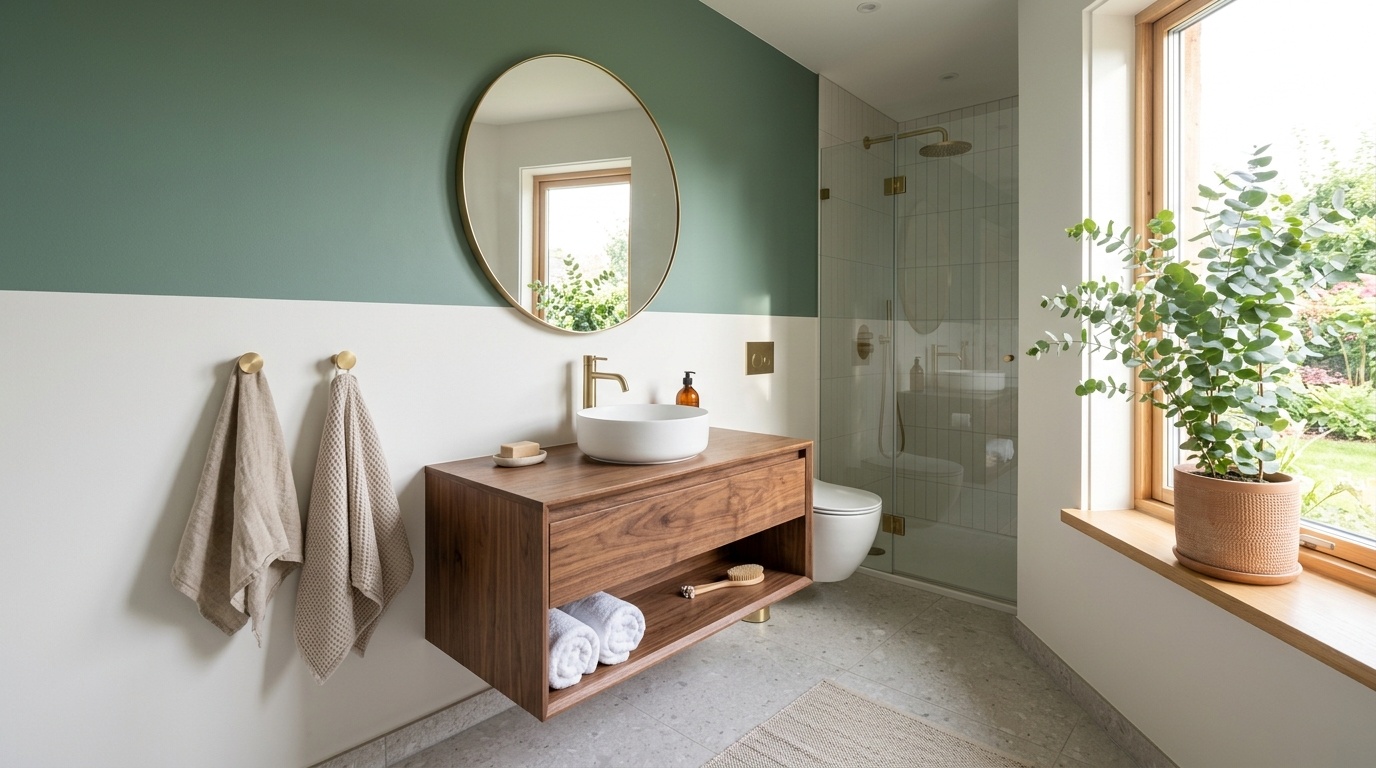
Good bathroom paint design is about assigning the right sheen to the right visual role. Use satin for seamless walls, semi-gloss for hardworking edges, eggshell for low-moisture drama, and moisture-resistant ceiling paint overhead. Then test 2 or 3 palettes before the room’s rhythm is set.
Before choosing final cans, you can try a full bathroom scheme with your existing tiles, mirror, vanity, and lighting. This helps you see whether the paint supports the whole room, not just a swatch.
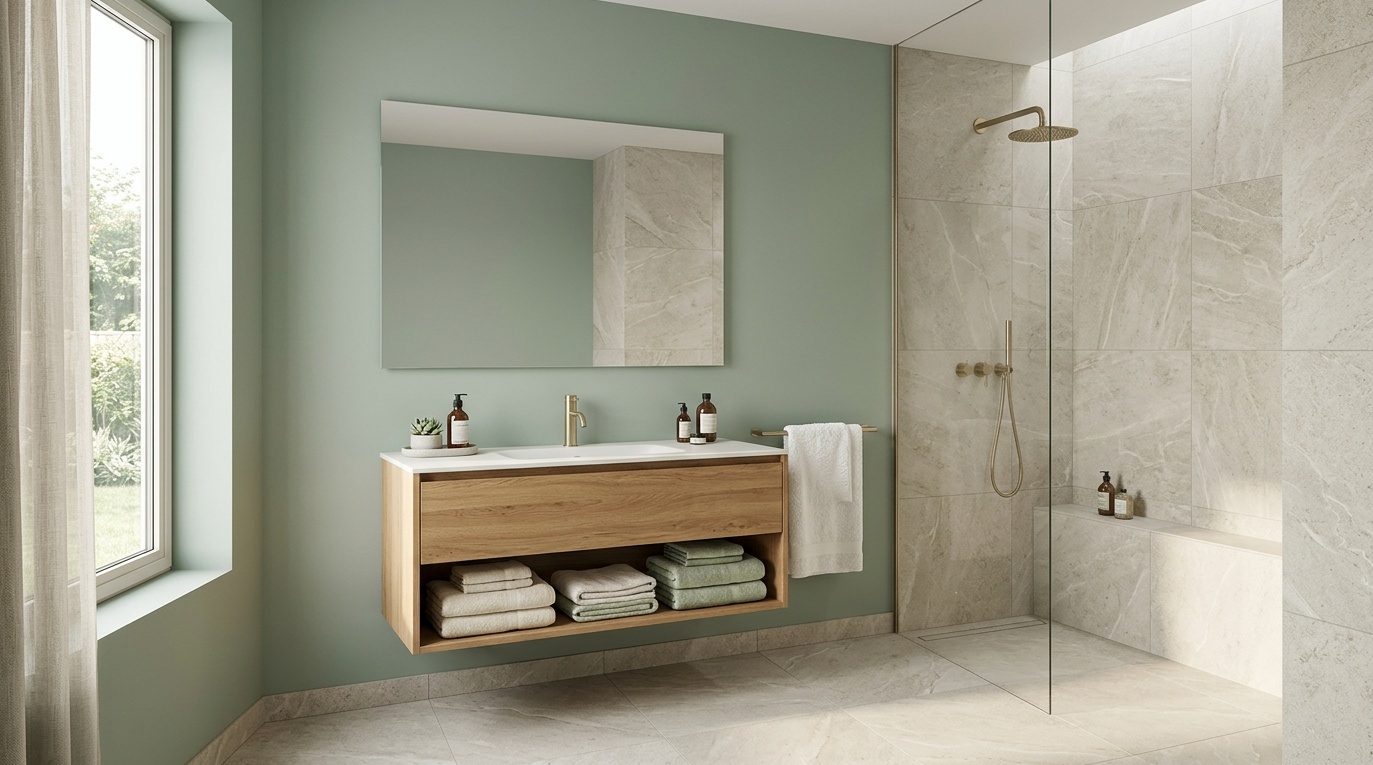
A modern spa bathroom works best with satin walls in warm beige, soft ivory, or eucalyptus green. The finish feels matte-adjacent without the risk of ordinary matte paint in a wet room.
Pair it with floating oak or walnut vanities, stone-look porcelain, brushed brass or matte black fixtures, and warm diffused lighting. Keep contrast low: one wall color, one wood tone, one metal tone, and towels in cotton or linen texture.
Paintit micro-action: upload a photo of your master bath and compare eucalyptus satin against warm ivory satin beside your existing vanity.
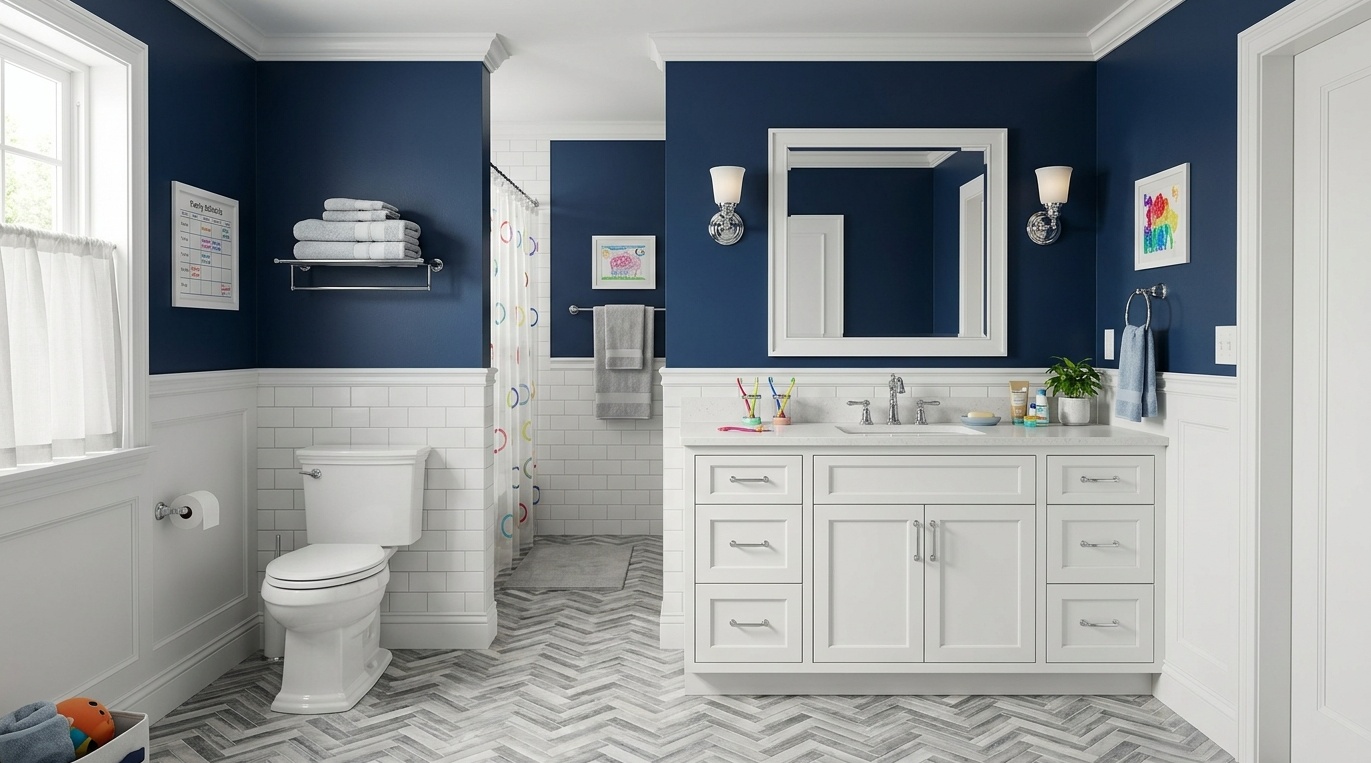
A family bathroom can take semi-gloss paint above subway tile, around the sink, and on trim. The look is bright, practical, and easy to clean after morning routines.
Use crisp white, cool gray, or classic navy with chrome hardware and closed storage to keep visual clutter low. If walls are uneven, keep semi-gloss to trim and splash zones, then use satin on larger wall areas.
Paintit micro-action: test navy walls with white trim, then switch the large wall areas to satin to see which version feels less shiny.
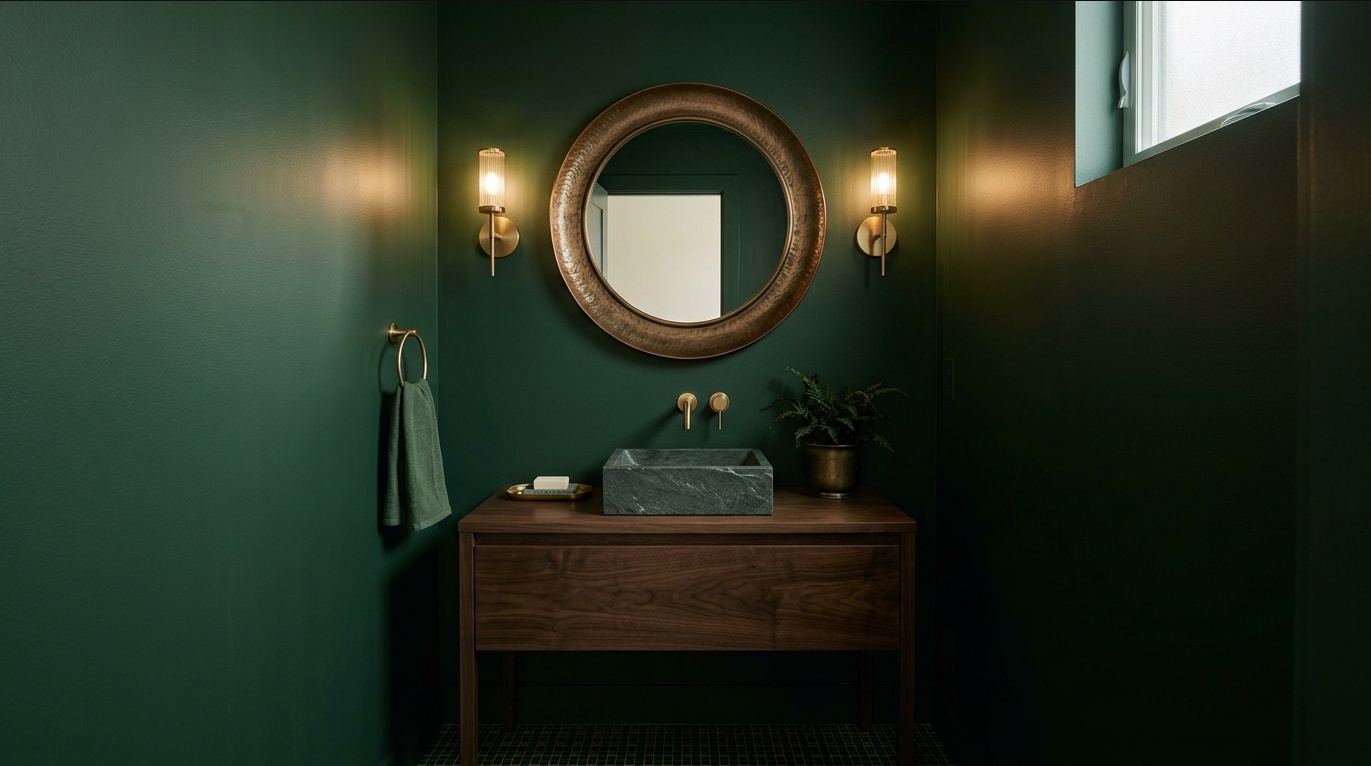
A powder room can carry deeper, softer paint because it is not exposed to shower steam every day. This is where eggshell paint or premium matte paint makes sense.
Try charcoal, deep forest green, burgundy, or espresso brown with brass sconces, a sculptural mirror, and a small stone or ceramic basin. Keep lighting warm and low-glare so the color feels rich rather than flat.
Paintit micro-action: upload a powder room photo and compare deep green eggshell with charcoal matte under warm wall sconces.
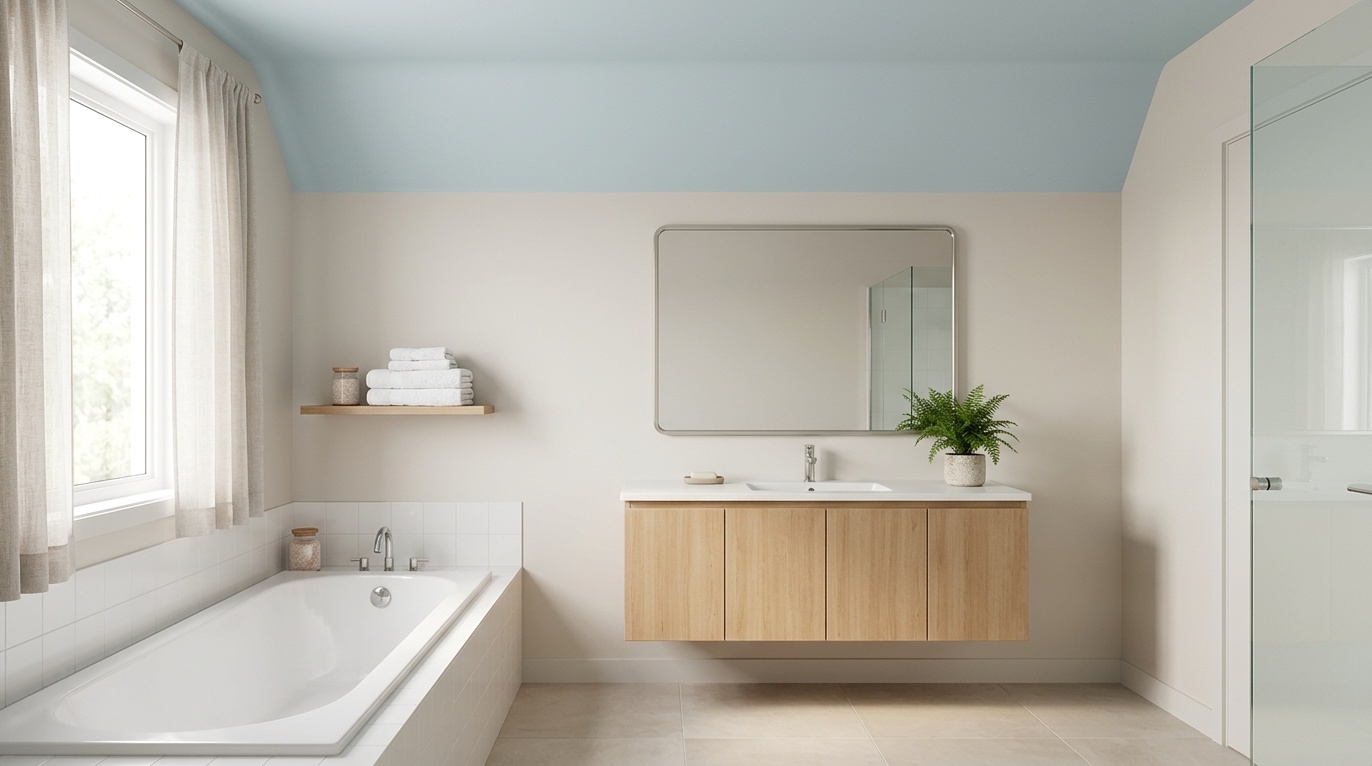
A bathroom ceiling does not have to be stark white. A softer white, pale clay, misty blue, or 50% wall-color tint can make the room feel more seamless.
Use a moisture-resistant paint made for ceilings or a low-sheen satin if the ceiling sees heavy condensation. Avoid standard cheap flat paint in bathrooms with showers, especially above a tub or enclosed shower.
Paintit micro-action: test a pale ceiling tint against your wall color to see if it lowers contrast without making the ceiling feel heavy.
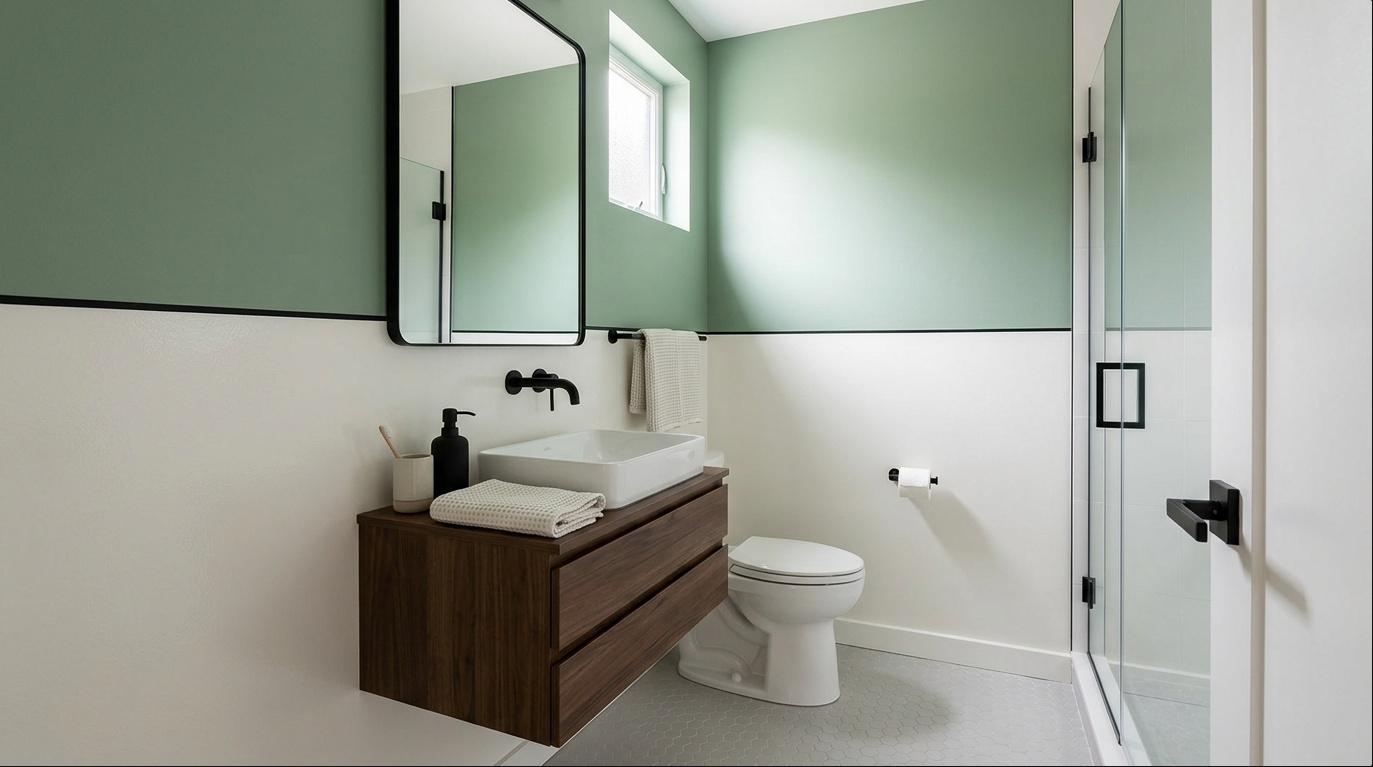
Color-blocking can help a bathroom feel organized: use a more durable semi-gloss on the lower splash-prone portion and satin above. Keep the division aligned with tile height, vanity height, or a clean horizontal trim line.
This works well in compact bathrooms where full-wall dark color feels too heavy. For example, use semi-gloss warm white below and satin sage above, with black hardware for contrast.
Paintit micro-action: mark the lower third of your wall as a separate zone and compare 2 color-block heights before taping.
Most bathroom paint failures come from moisture trapped beneath the coating, weak preparation, or daily steam with poor ventilation. Peeling and bubbling are not just paint-choice problems. They usually come from painting over residue, skipping primer, applying coats too thickly, or using the shower before the finish has properly cured.
A bathroom is a small moisture machine. Even the best paint type for bathroom projects needs clean walls, dry surfaces, airflow, and enough cure time. If the fan is weak or rarely used, water-resistant paint helps, but it cannot do the full job alone.
Run the fan during showers and for about 20 minutes afterward when possible. If condensation pools on walls, wipe it with a soft microfiber cloth rather than letting droplets sit on the paint film.
| Problem | Likely cause | Fast fix | Paintit try-on test |
|---|---|---|---|
| Shiny walls show every flaw | Semi-gloss on uneven drywall | Sand, skim problem areas, or switch to satin | Compare satin and semi-gloss under vanity lighting |
| Peeling near shower | Moisture under old paint | Scrape, dry, prime, repaint | Test a lighter wall color to make future issues more visible |
| Bubbling after painting | Wall was damp or shower used too soon | Let dry, remove bubbles, prime again | Preview color first so repainting is not rushed |
| Mildew spots on ceiling | Standard flat paint and weak airflow | Use moisture-resistant ceiling paint | Test a slightly warmer ceiling white |
| Streaks after cleaning | Harsh scrubber or low-sheen paint | Use soft cloth and mild cleaner | Compare satin in high-touch areas |
Avoid thick coats. Two thinner coats usually create a smoother, more resilient finish than one heavy coat, especially with satin and semi-gloss. Heavy paint can sag near corners, dry unevenly, and leave a tacky surface longer.
Also avoid testing color only on a tiny card. A 2-inch swatch will not show how semi-gloss behaves across a full wall beside a mirror, shower glass, tile grout, and ceiling light.
Swatches help, but they cannot show the full flow of a bathroom with mirror reflections, tile undertones, vanity lighting, and wet-zone sheen. Pinterest images have the same problem: their lighting, camera edits, and wall texture are not your room. A visual preview gives you a more intuitive first read before you buy.
Use Paintit.ai as the digital dry run:
For a step-by-step process, follow this bathroom visualization workflow before committing to paint, primer, and tools.
Real light and real materials can shift color perception versus previews. AI helps you narrow choices and avoid obvious mismatches, but final approval should happen with physical samples on your actual wall after primer.
Bathroom paint questions usually come down to 3 decisions: sheen, formula, and preparation. The safest path is to choose a bathroom-rated acrylic latex paint, match the sheen to the wetness of the zone, and use primer before color. That simple sequence prevents more problems than chasing one perfect can.
Premium acrylic latex paint in satin or semi-gloss is best for a bathroom with a shower. Satin works well for broad walls because it balances moisture resistance with a softer look. Semi-gloss is better for trim, doors, and areas that get frequent splashes or wiping.
The best type of paint for bathroom walls is usually a premium satin bathroom paint over a mildew-resistant primer. It looks less shiny than semi-gloss, especially under direct vanity lighting, but still gives you a washable surface. For very wet edges, use semi-gloss selectively.
Use moisture-resistant paint made for ceilings, or a low-sheen satin acrylic latex paint if the ceiling gets heavy steam. Standard flat paint can absorb moisture and show mildew or peeling sooner. Keep the color simple: soft white, warm white, or a pale tint of the wall color.
Eggshell paint is usually okay in a powder room or low-use guest bath without a shower. It is not the safest choice for a full bathroom with daily steam and splashes. If you love the low-sheen look, choose premium satin instead for better moisture resistance.
Flat paint and matte paint are risky in full bathrooms with showers because they are harder to clean and more likely to absorb moisture. In a powder room, a high-quality washable matte can work if ventilation is good. For a shower bathroom, satin is the more practical low-sheen compromise.
Peeling and bubbling usually happen when moisture gets trapped under the paint film. Common causes include painting over damp walls, skipping bathroom primer, leaving soap residue on the surface, or taking hot showers before the paint has cured. Fix the cause before repainting, not just the visible patch.
If you rent, the best type of paint for a bathroom is usually a washable satin in a light neutral, approved by your landlord. It hides minor wall flaws better than semi-gloss and is easier to live with than dark, high-shine color. Keep changes reversible and save the paint name for touch-ups.
The best bathroom paint choice is not simply the shiniest option. In 2026, modern satin bathroom paints give many homes a better balance of moisture resistance, easy cleaning, and visual softness, while semi-gloss still earns its place on trim, doors, splash zones, and hard-working family bathrooms.
Think of the room like a playlist: satin is the steady main track, semi-gloss is the brighter accent, and primer keeps the whole rhythm clean. Add ventilation, proper drying time, and careful prep, and the finish has a much better chance of staying smooth.
Before buying, preview the color in your real bathroom, then confirm with physical samples. If you want to match paint sheen with a wider layout direction, compare current bathroom direction ideas in the bathroom inspiration guide and choose the version that feels personal, practical, and ready to live with.