13 min. reading

Yulii Cherevko
CEO paintit.ai

The best ceiling paint for most dry rooms is a flat or ultra-flat interior coating that limits glare and suits the existing surface. Benjamin Moore Waterborne Ceiling Paint is a useful starting point for a low-reflection finish; a humid bathroom may need a different formula, such as Aura Bath & Spa, even when you want a matte ceiling.
A good choice also depends on what is already overhead. Clean white paint, bare drywall, a repaired leak and a textured ceiling need different preparation. Choose the coating after checking those conditions, rather than treating a one-coat claim as a promise for every room.
These five options cover different needs rather than form a laboratory-tested ranking. The comparison uses published manufacturer specifications and product information checked on October 9, 2026. Coverage figures are square feet per US gallon for one coat; actual use depends on the surface and application.
Illustrative room image; the cans shown are not the products compared below.
| Paint | Useful For | Finish | Coverage | Before You Buy |
|---|---|---|---|---|
| Benjamin Moore Waterborne Ceiling Paint N508 | Dry rooms, low glare, tinted ceilings | Ultra-flat | 400–450 | Manufacturer recommends one or two coats; prepare and prime as required. |
| Sherwin-Williams Premium Ceiling Paint | A bright white ceiling | Flat; described as ultra-flat in appearance | 350–400 | Its data sheet specifies two coats for bare drywall, including the self-prime method. |
| BEHR ULTRA Stain-Blocking Ceiling Paint No. 5558 | Flat ceilings with minor discoloration | Flat | 250–400 | Severe stains may need a separate primer; test the affected area. |
| Zinsser Ceiling Paint – Paint & Primer in One | Tracking wet coverage while rolling | Flat white | 250–400 practical coverage | Pink application indicator dries white; porous surfaces may need a second coat. |
| Benjamin Moore Aura Bath & Spa 532 | Humid bathrooms with a matte look | Matte | 350–400 | Manufacturer recommends two coats. Ventilation and moisture control still matter. |
This is a sensible option when a large ceiling catches daylight and small variations in sheen become distracting. The ultra-flat finish and wide tint selection are useful if you want a soft white or a ceiling color that relates to the walls.
Benjamin Moore's Waterborne Ceiling Paint specifications list low VOC, not zero VOC. The official US page displayed $60.99 for a one-gallon container when checked; local prices, color choices and availability may differ.
Keep the preparation budget separate. A premium topcoat cannot level a poorly finished joint or stop a leak, and its higher price is not evidence that one coat will always be enough.
Consider this when you want a clean white overhead rather than a broad tinted palette. Its manufacturer describes a non-lapping formula and an extremely flat appearance, useful qualities for a ceiling crossed by window light.
The Premium Ceiling Paint product data sheet gives a four-hour recoat time under its stated test conditions. It also specifies two finish coats for bare drywall. That is an important qualification to the one-coat coverage language on the retail page.
Do not compare an old Eminence quote with the current Premium product as though they are the same purchase. Sherwin-Williams asks shoppers to sign in to confirm current pricing and availability.
BEHR ULTRA No. 5558 combines a ceiling topcoat with stain-blocking properties. It is worth considering for an ordinary repaint where some areas are discolored, provided the source of the discoloration has been addressed.
Behr's ceiling paint preparation instructions distinguish routine coverage from severe stains. Test a stained patch and use a separate primer when necessary instead of adding coat after coat over persistent bleed-through.
The published coverage range is broad. For a rough or absorbent surface, budget using its lower end rather than assuming every gallon will cover the maximum area.
A white-on-white repaint makes skipped areas difficult to spot. Zinsser's temporary pink indicator helps show fresh application before the coating dries white. It is a practical feature for tracking coverage, not proof of how well the finished ceiling will hide defects.
The manufacturer's Zinsser ceiling paint technical sheet says porous surfaces may need another coat and severe stains may need a separate primer. Check the exact product and local stock before buying; similar-looking primer cans are not interchangeable with a ceiling topcoat.
A bathroom does not automatically require satin. Aura Bath & Spa is a matte interior paint formulated for humid environments, which makes it a relevant option for a bathroom ceiling where glare would be unwelcome.
Benjamin Moore's matte bathroom paint product page displayed $108.99 per US gallon and recommends two coats. Its mildew-resistant coating is a property of the paint film, not a treatment for an existing moisture problem.
Those two verified prices are dated examples, not a national price ranking. Obtain local quotes for the other products and compare the complete paint-and-primer system before deciding which is cheaper.
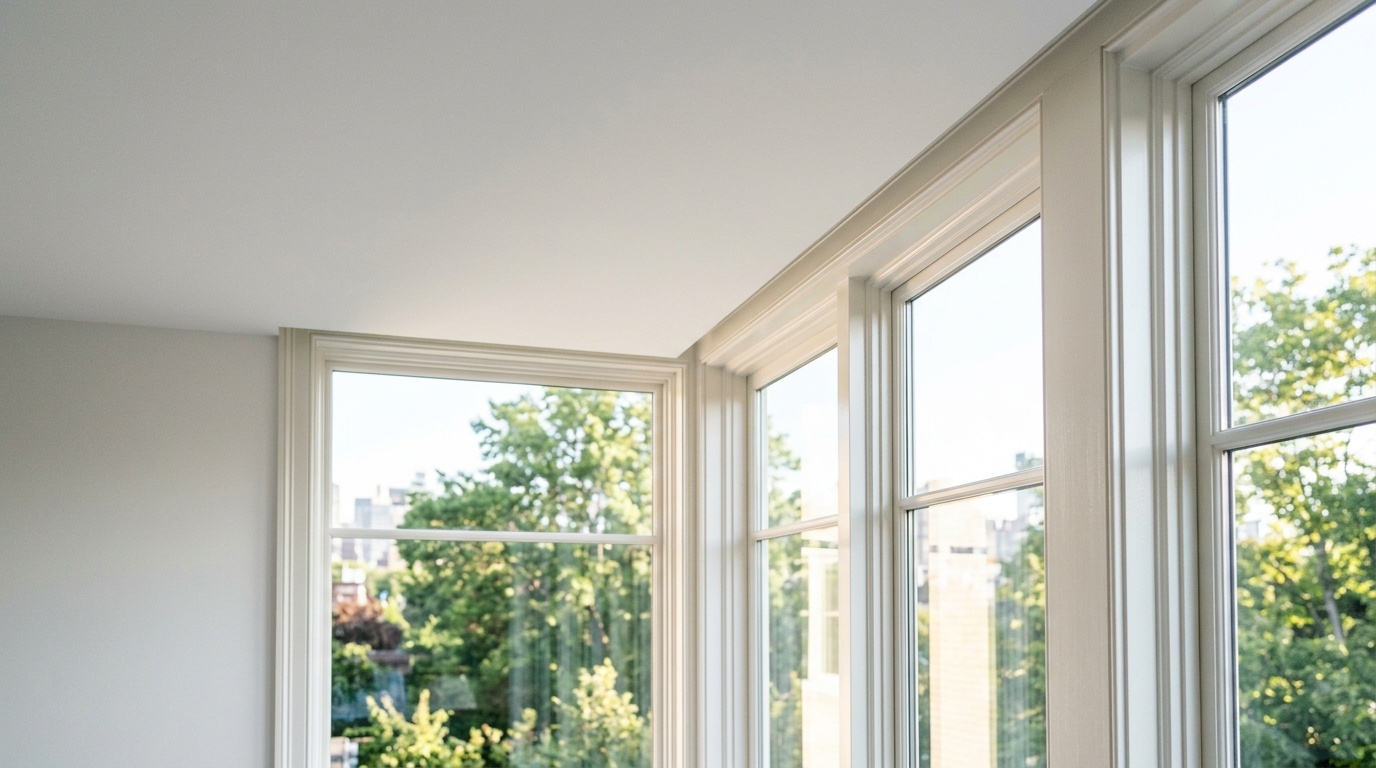
The best ceiling paint to hide imperfections is usually flat or ultra-flat when the defects are small variations in the surface. Less reflection makes minor unevenness less noticeable. Deep cracks, raised seams and loose material need repair; paint will follow their shape.
Check the ceiling from the window side and the opposite corner before choosing a finish. A surface that looks even under a central pendant may show joint ridges when daylight travels across it. This is especially relevant in open-plan rooms with long, uninterrupted ceilings.
Flat is the usual choice for a dry-room ceiling that you rarely touch or clean. Eggshell adds reflection and can draw attention to patchwork. It can still be suitable when the specific product meets the room's cleaning requirements and you accept the more reflective appearance.
Do not assume all finishes with the same name perform identically. Read the actual product instructions, particularly for bathrooms, kitchens and previously glossy surfaces. A humidity-rated matte and a basic flat wall paint serve different jobs even if both look subdued.

The best ceiling paint for bedroom projects usually has a flat appearance and a color that works with the walls, bedding and trim. Choose a tintable formula if a stark white feels out of place. The same reasoning applies to living rooms, with added attention to large windows and grazing light.
If the room already has creamy trim, compare that white with your proposed ceiling paint before committing. Two slightly different whites can make one surface look unexpectedly yellow or gray. Check them together rather than choosing each from a separate photograph.
When choosing the best ceiling paint for bathroom conditions, start with the coating's stated suitability for humidity. Then choose the sheen you prefer. Address condensation, leaks and existing damage before repainting, and keep the room ventilated during use and painting.
A utility room with a sound, dry ceiling may need only an ordinary ceiling coating. A room that repeatedly develops damp patches needs an investigation of the moisture source, not a stronger claim on a paint label.
Check for cooking residue before choosing a kitchen ceiling paint. A surface that needs regular cleaning may justify a more washable product, but its added sheen will make poor preparation easier to see. Follow the chosen coating's cleaning and cure instructions.
Existing grease marks and stains need the appropriate preparation and primer. Treating them as an ordinary white-on-white repaint can leave a new finish discolored, even when the topcoat itself is good.
For a clean, dry rental ceiling, prioritize dependable coverage and a repeatable color that is easy to reorder. In a basement, check moisture and the condition of the substrate first. A flat white topcoat is a finish choice; it does not waterproof the room.
A wall paint can be used overhead when its manufacturer approves the surface and conditions. Dedicated ceiling products commonly emphasize a flat appearance and reduced spatter. Wall products may offer more finish choices or cleaning performance.
The label matters more than the category name. Compare the finish, surface compatibility, stain preparation and recommended coat count for the actual products. Do not assume every ceiling paint contains a stain blocker or that every wall paint is too thin to use overhead.
If you are also repainting the molding, choose its coating separately. Our guide to durable finishes for trim and molding covers the different demands of those frequently touched surfaces.
Measure the ceiling itself, not the walls. For a rectangular flat ceiling, multiply room length by width. Add separate areas for connected rooms; measure sloped sections along the slope rather than treating their floor footprint as the paintable area.
Paint quantity = ceiling area × number of coats ÷ coverage per gallon. Round up to the container sizes you can buy and allow for your surface and application. Primer is a separate quantity unless the specific product instructions support a self-prime system.
Using the lower published coverage figure for Benjamin Moore N508 gives 1,000 ÷ 400 = 2.5 gallons for one coat, or 5 gallons for two coats. In one-gallon containers, that means buying three or five gallons respectively, before any additional allowance for waste or touch-ups.
At the checked $60.99 one-gallon price, those purchases would cost $182.97 or $304.95 before tax and primer. This is a quantity example, not a prediction that your ceiling will cover in one coat. A retailer's five-gallon price may change the comparison.
For a product rated at 250–400 square feet per gallon, planning at 250 gives four gallons per coat for the same area. A lower shelf price can therefore be offset by the amount you need. Compare the local quote, preparation and coat count together rather than declaring a whole brand cheaper.
A brown water ring needs more attention than a tired white ceiling. Repair the leak, let the affected area dry, assess damaged material and choose a compatible stain-blocking primer where required. Painting over an active leak only hides evidence temporarily.
On new drywall, follow the selected system for sealing the paper and joint compound. Their different absorbency can show through a finish coat. Self-priming means a specified application method, not permission to skip the manufacturer's required coats.
For texture, check that the existing finish is sound and choose tools approved for that surface and coating. Do not scrape an old textured ceiling simply to improve paint coverage. Arrange an appropriate assessment before disturbing material of uncertain composition.
In a US home built before 1978, old paint may contain lead. Follow EPA guidance before disturbing older painted surfaces rather than starting with dry sanding. Get qualified help when the material or safe preparation method is uncertain.

The best white ceiling paint is not necessarily the brightest white in the store. Compare a neutral white, a warmer off-white and any existing trim color in the same room. A warmer option may relate better to cream walls and wood; a cooler white may work better with a cleaner gray palette.
Use the room-photo paint palette preview to explore those relationships before narrowing your sample list. Upload a photo that clearly shows the ceiling, walls and trim, and describe which surface should change.
Paintit includes paint catalogs from Behr, Benjamin Moore, Dulux, Nippon Paint and Sherwin-Williams, with brand filters and searches by name, code or HEX. These are color references. A catalog color does not establish that a particular ceiling product is available in that shade or suitable for your surface.
Try a focused request: “Preview a soft neutral-white ceiling in this room. Leave the wall color, molding, windows, furniture and flooring unchanged.” Check the result for unintended changes and then test real paint samples. An AI image cannot verify sheen, stain blocking, adhesion or physical color accuracy.
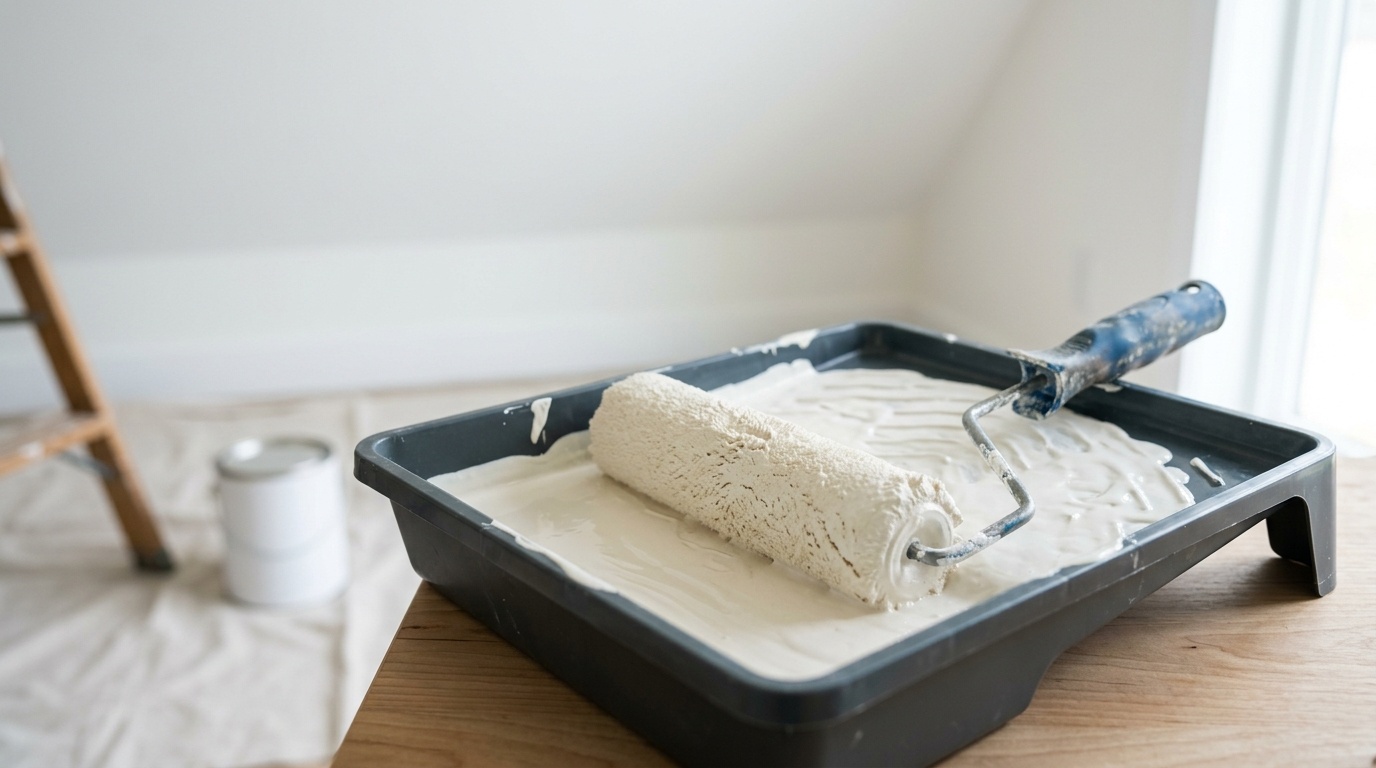
Even the best ceiling paint can look uneven when the surface is dirty, the roller sheds fibers or sections dry before they are blended. Prepare the room and read the product instructions before opening the can.
A patchy result is not always a brand problem. Uneven absorbency, a missed strip and a partially dried overlap can look similar from the floor. Identify the cause before buying another product or painting the same ceiling again.
For a dry bedroom or living room, start with a flat or ultra-flat coating suited to the existing surface. Benjamin Moore N508 and Sherwin-Williams Premium Ceiling Paint are useful options to compare. A humid bathroom, severe stains or bare drywall can change both the product choice and preparation.
Benjamin Moore N508 offers an ultra-flat finish with a broad color selection. Sherwin-Williams Premium focuses on a bright white ceiling and has its own preparation and recoat requirements. Compare the exact products and local total cost; neither manufacturer's name guarantees a flawless one-coat result.
A flat or ultra-flat finish generally makes minor unevenness less noticeable than a reflective finish. Repair raised seams, cracks and loose material first. No paint can turn a visibly damaged ceiling into a level surface.
Not necessarily. A matte coating specifically formulated for humid bathrooms can be suitable. Choose by the product's stated use and preparation requirements, then consider sheen. Paint cannot replace ventilation or repair an active moisture problem.
Sometimes, on a sound, prepared surface with a similar existing color. Follow the product instructions and assess the dried result. New material, drastic color changes and stains can require primer, additional finish coats or both.
A small touch-up may blend, but age, application and lighting can make it visible. Use the same product, color and application method where possible. If the patch remains obvious after drying, repainting the continuous ceiling area may give a more even result.