
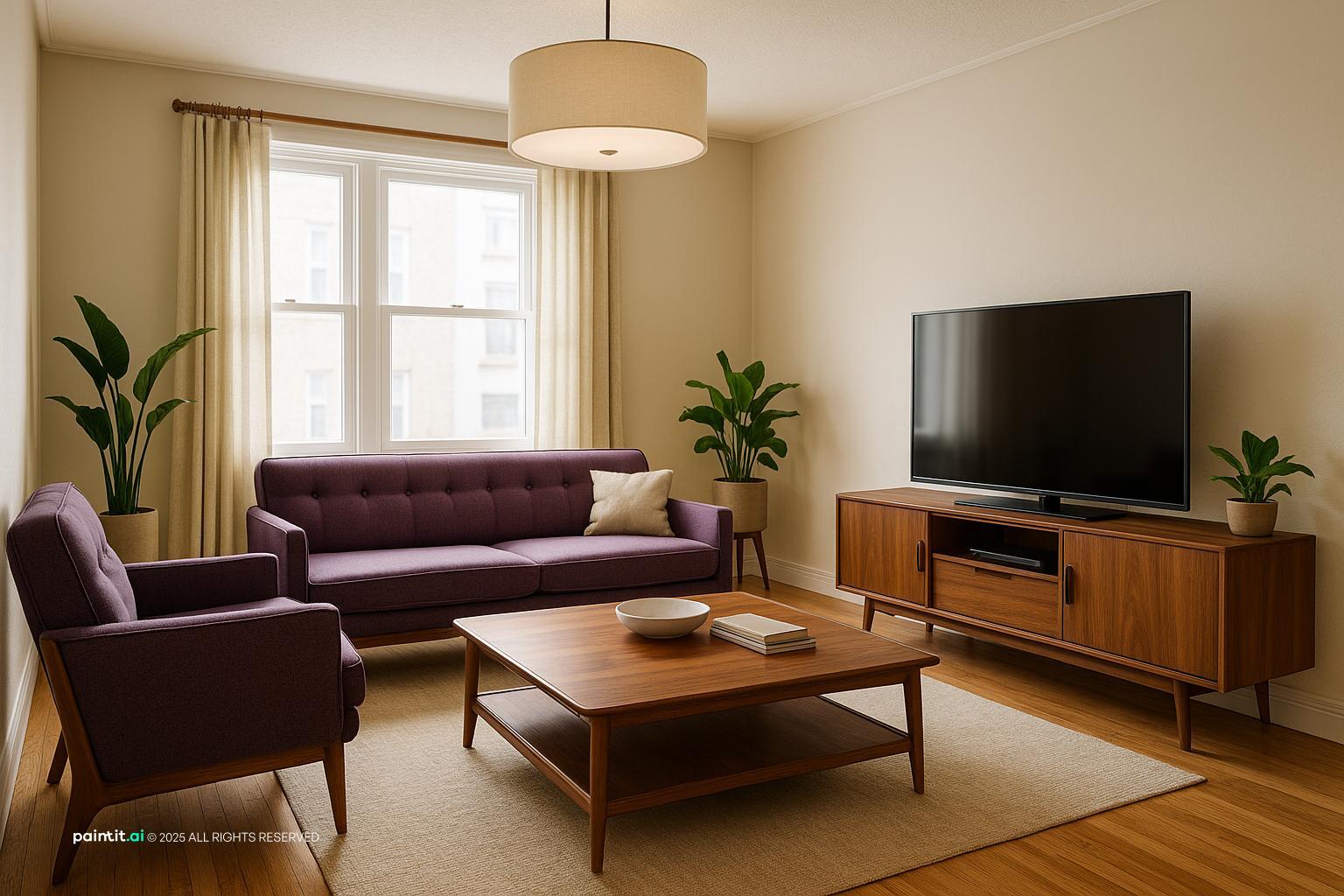
Mid-Century Modern Living Room Design
Mid-Century Modern Living Room Design uses purple accents, warm wood and plants and greenery in a living room setting.
Purple and grey living room ideas usually fail or succeed in the details. It is not enough to put a purple cushion on a grey sofa and call the room finished. The shade of grey, the temperature of the purple, the floor tone, fabric texture, metal finishes, curtains, and evening lighting all change how the palette feels. We see this often in real living room uploads: pale lavender with dove grey can look calm and open, while plum with charcoal can feel rich and cocooning. Both can work. The important choice is where the color carries weight: walls, sofa, rug, curtains, wall art, or smaller purple accents.
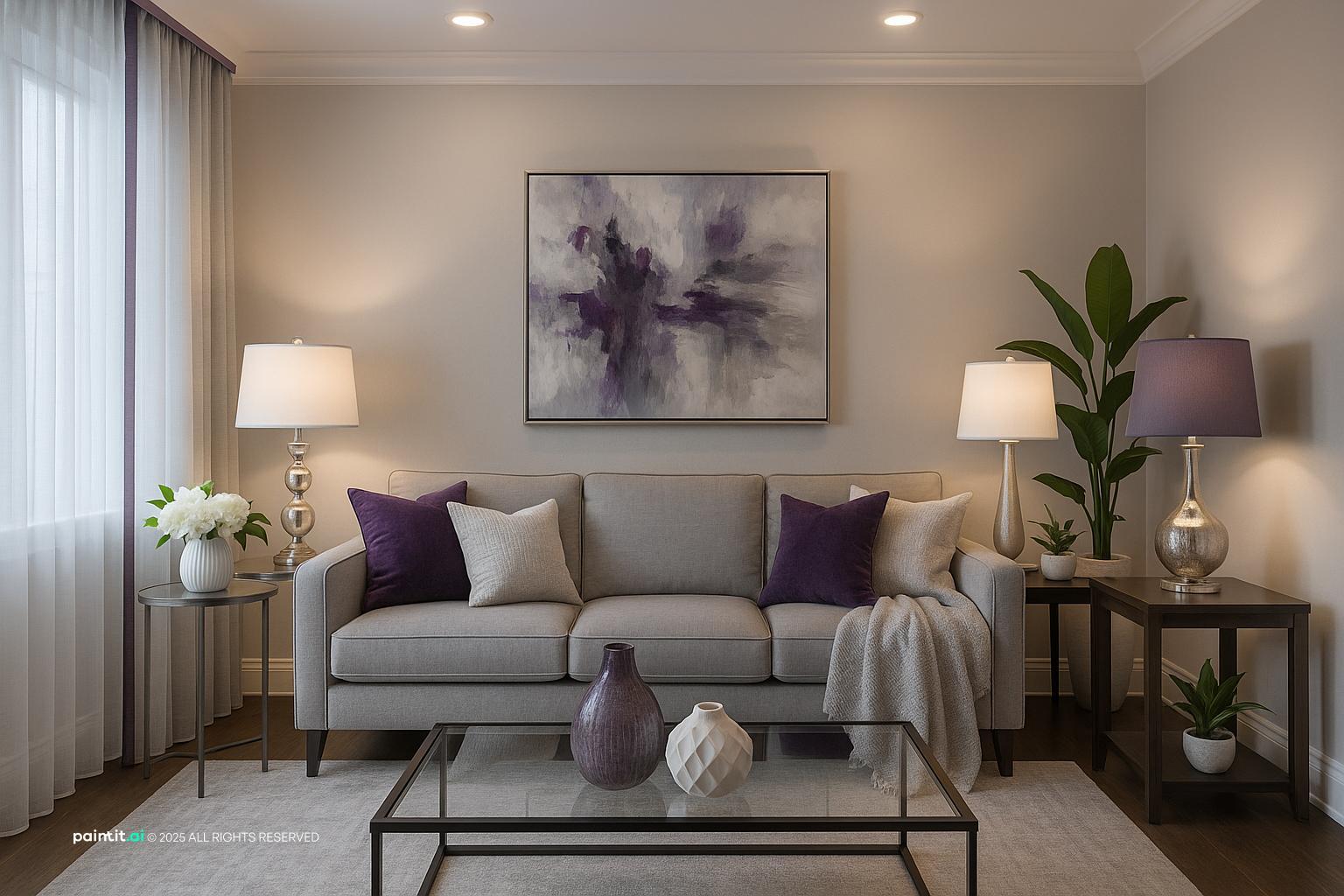
Most living rooms already have one fixed grey element: a grey sofa, grey walls, a stone fireplace, cool flooring, or a large neutral rug. In Paintit.ai prompt patterns, 12.0% of users include constraints such as “KEEP” or “don’t change,” which is exactly how people decorate in real life. They are not starting with an empty showroom. They are trying to make a new color idea work with what is already in the room.
So start by naming the grey base. Is it cool blue-grey, warm greige, charcoal, mushroom, concrete, or silver? Then decide what job purple should do: soften it, warm it, sharpen it, or make the room moodier. If you want to test shade combinations before buying paint or textiles, an AI room design workflow can help you compare lavender, mauve, violet, and plum against your real living room photo.
Use the first gallery to read the range: light lavender with warm greige, cool grey with violet, charcoal with dark plum, and modern schemes where purple appears mostly through art, cushions, and curtains.
Mid-Century Modern Living Room Design uses purple accents, warm wood and plants and greenery in a living room setting.
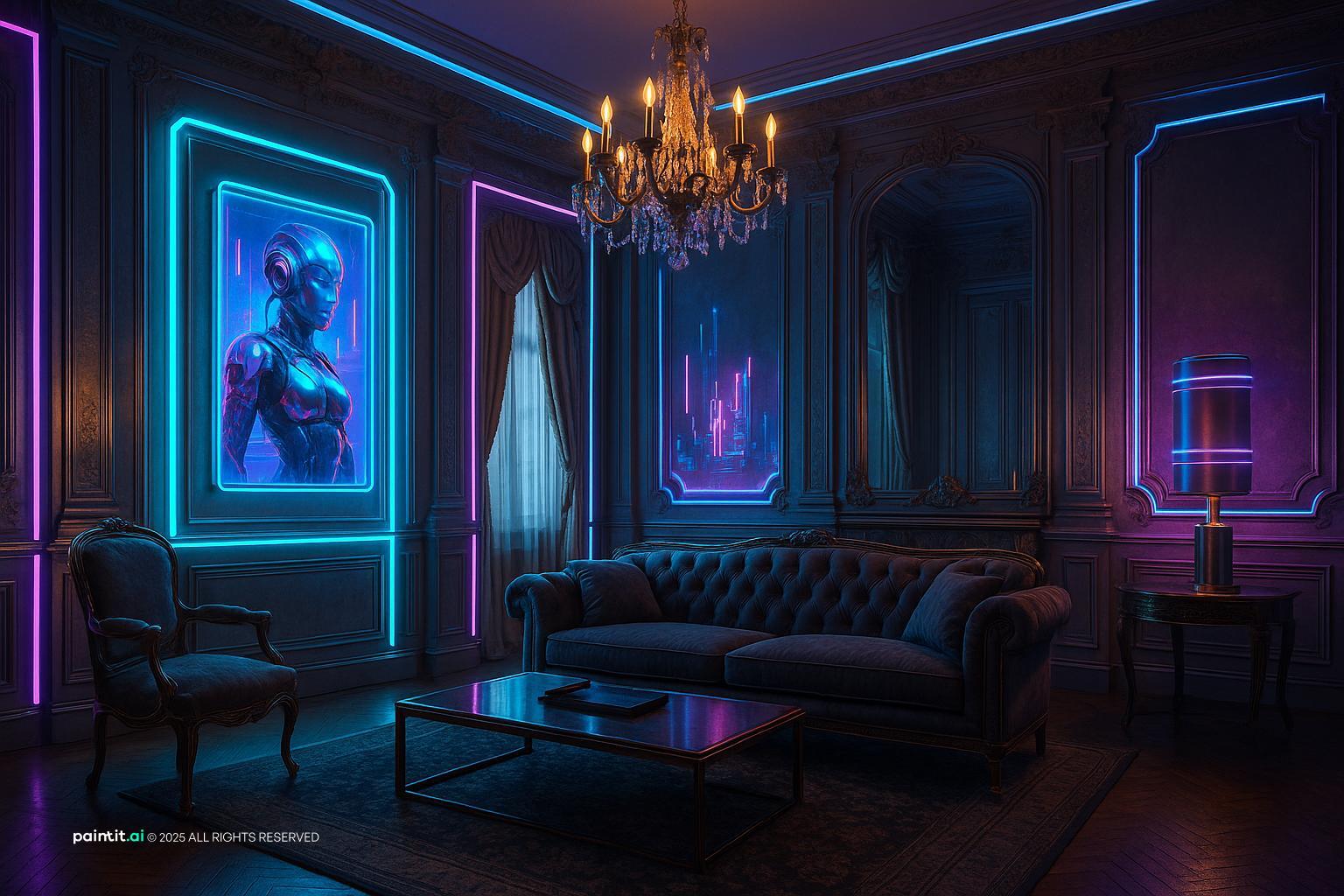
Purple and Grey Living Room Ideas with Purple Accents and Metal Accents balances purple accents and metal accents in a living room setting.
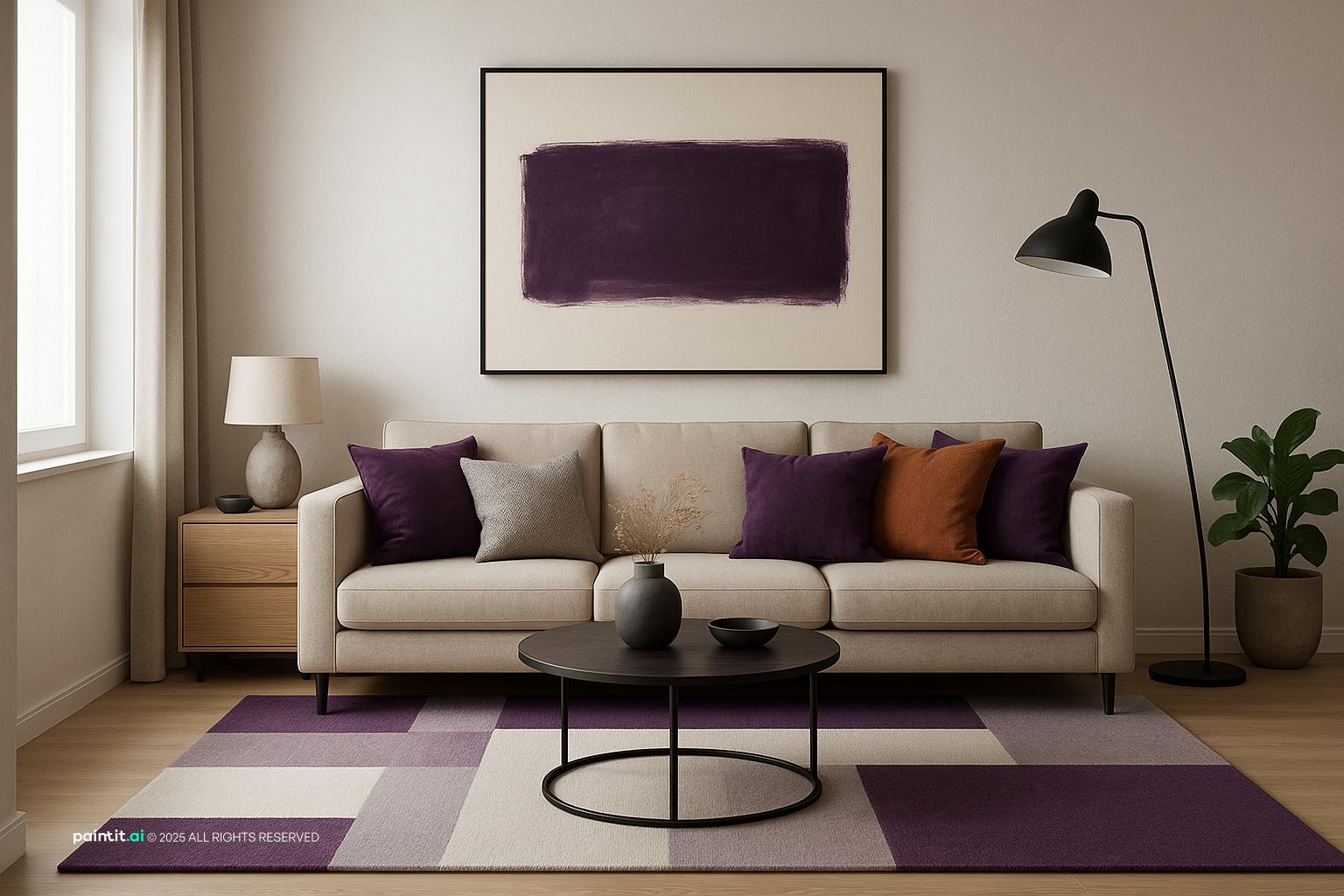
Contemporary Living Room Design with Bold Accents pairs purple accents and soft textiles in a living room setting.
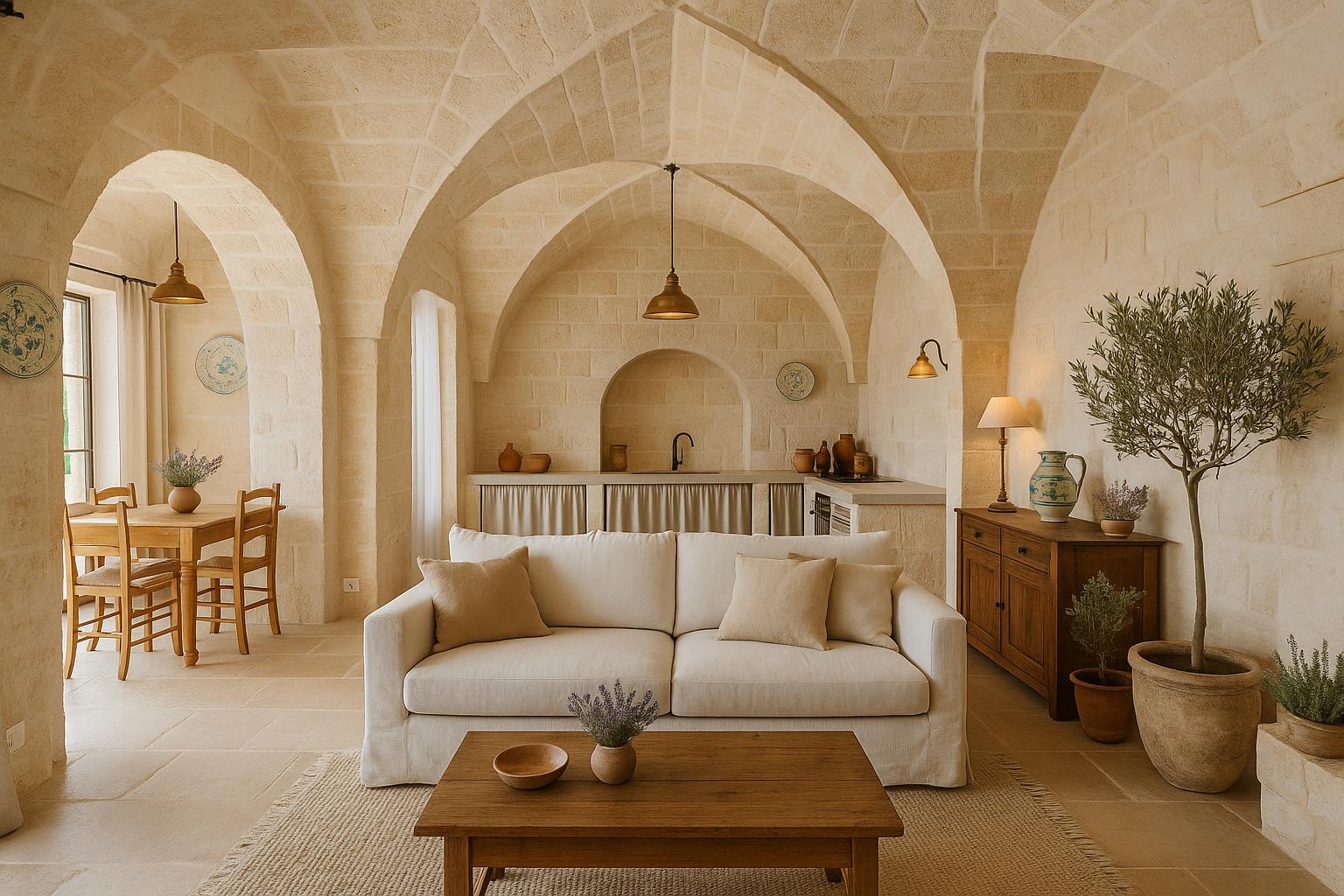
Charming Pugliese Living Area Design layers purple accents, soft textiles and metal accents in a living room setting.
Start by choosing the grey that will visually anchor the living room. It might be a grey sofa, a wall color, a rug, a concrete fireplace surround, or a large sectional. Once that grey is fixed, every purple decision becomes easier because you are not trying to balance two equally loud elements.
If the grey is cool and blue-based, pair it with lavender, violet, or smoky mauve. If the grey is warm, closer to greige or mushroom, use muted plum, heather, or aubergine. What usually goes wrong: mixing several unrelated greys, such as blue-grey walls, green-grey curtains, and beige-grey carpet, then adding purple on top. The room starts to look patched together instead of designed.
A grey sofa is one of the easiest starting points for purple and grey living room decor because it gives you a neutral base with enough visual weight to support color. Keep the sofa if it is comfortable and in good condition. Then change the mood with throw pillows, a patterned rug, wall art, a side chair, and a better lamp shade.
For a light room, use lavender pillows, cream boucle, pale oak, and brushed nickel. For a stronger room, use plum velvet cushions, black metal, walnut, and a textured ivory rug. This is a good “KEEP:” move: the expensive item stays, while smaller layers let you refine the purple intensity a bit darker or a bit softer over time.
A lavender and grey living room works best when both colors have softness. Use pale grey walls, a light grey sofa, sheer or linen curtains, and lavender through pillows, art, ceramics, or one upholstered chair. Keep the contrast low, but do not remove it completely.
Add white trim, light oak, or a warm neutral rug so the room does not drift into a cold pastel effect. What to check first: the direction of the light. In a shaded room, lavender can turn blue and pale grey can look flat. Warm wood, cream fabric, and a warmer bulb can make the same palette feel much more livable.
A dark purple and grey living room can look rich, but it needs light control. Charcoal walls with deep plum curtains or a purple accent chair work better when there are pale breaks: a cream rug, warm wood coffee table, brass lamp, or light artwork matting.
Dark purple absorbs light, so use it where shadow feels intentional, such as behind a media wall, on velvet cushions, or in drapery. Avoid putting deep purple on every major surface unless the room has strong natural light and several lamps. Without that, the corners can disappear and the seating area can feel smaller than it really is.
A purple accent wall should frame something worth looking at: a fireplace, shelving wall, sofa wall, or art grouping. Choose muted plum for a more grown-up look, dusty mauve for softness, or aubergine for drama. Keep the surrounding walls grey or warm white so the accent has a clear job.
The catch: not every wall deserves the color. Avoid painting the shortest or most broken-up wall purple if it is full of doors, switches, vents, and awkward corners. That usually makes the color look chopped and nervous. I would rather put the purple behind the sofa or fireplace where it can hold the room.
If your rug is plain grey, you have more freedom to add purple through pillows, curtains, and wall art. If the rug already has a purple grey living room color scheme, keep the rest more controlled. Pull one grey and one purple from the pattern, then repeat them in small doses.
For sectionals, the rug should be large enough to sit under at least the front legs of the sofa and chairs. A rug that is too small makes the color palette feel like a collection of separate objects instead of one seating zone. This matters even more when the room has strong color, because every floating piece becomes more noticeable.
Purple and grey can feel flat when every surface is cool. Warm wood tones are one of the easiest fixes. Try oak, walnut, teak, or even a cane cabinet to bring in a natural undertone that sits between the two colors.
In Paintit.ai tests, we often see purple and grey rooms improve when users add a third material rather than another color. Color appears in 27.6% of prompts, but materials appear in 19.0%, and that gap matters. A charcoal linen sofa, walnut table, and plum velvet cushion will usually feel more layered than a plain grey sofa with purple objects scattered around it.
Purple is strong even when it is muted. A practical approach is to repeat it two or three times across the living room: pillows on the sofa, a shape in the wall art, and a small vase on the console. This repetition makes the color feel intentional without taking over.
For a modern purple and grey living room, keep the silhouettes cleaner: low-profile sofa, slim black or bronze legs, simple floor lamp, and abstract art. Avoid using purple on every accessory. Too many small purple items can create clutter faster than one confident purple chair.
Curtains can make or break a grey and purple living room. Pale grey curtains keep the room open and allow purple accents to stand out. Plum or mauve curtains add mood and height, especially when hung close to the ceiling and extended past the window frame.
If the room is small or shaded, use textured light grey, greige, or off-white curtains rather than heavy purple panels. If the room gets strong sun, lined purple curtains can prevent fading and stop the color from looking washed out at midday. Always check curtains in daylight and at night; purple fabric changes fast under different bulbs.
A single accent chair is a practical way to introduce purple without repainting. Choose the shade based on the sofa: lavender or lilac with pale grey, mauve with mid-grey, plum or aubergine with charcoal. The chair should relate to the rest of the furniture through leg finish, shape, or fabric texture.
Place it across from the sofa or angled near a window so it feels like part of the conversation area. What to avoid: a purple chair floating alone in a corner with no nearby lamp, table, or repeated color. It will look like a leftover piece, even if the chair itself is beautiful.
Wall art is a low-risk way to merge purple and grey because it can include both colors naturally. Look for abstract prints, nature photography with violet shadow, botanical art, or textile pieces that include grey, plum, white, and a warmer neutral.
Hang art at eye level and size it properly. Over a sofa, the grouping should usually span about two-thirds of the sofa width. Tiny purple prints above a large grey sectional will not carry enough visual weight, and the sofa will still feel disconnected from the wall.
If you have a dark grey sofa and purple accents, a heavy black coffee table may make the center of the room feel dense. Try light oak, glass, pale stone, or a soft grey ottoman to reduce visual weight. This gives the eye somewhere to rest.
The room needs contrast in value, not only contrast in hue. A lighter table also makes books, trays, candles, and small decor easier to see. Avoid filling the table with too many purple accessories; one purple object is usually enough if the color already appears in the pillows or art.
Only 5.9% of Paintit.ai prompts include lighting, but lighting changes how purple reads more than people expect. Cool bulbs can push lavender toward blue. Warm bulbs can make plum feel richer, but too yellow can muddy pale grey.
Use layered lighting: an overhead source for general light, a floor lamp near the sofa, a table lamp for reading, and a small accent light near art or shelving. If your room looks flat at night, add light at different heights before changing the paint. For more palette comparisons, the best living room colors guide is a useful reference point.
Purple and grey look best when the room is not overloaded. Remove unrelated bright colors, extra small decor, and mismatched textiles before judging whether the scheme works. Then reintroduce objects that support the palette: black frames, brass lamp, cream throw, walnut tray, violet glass, or charcoal ceramic.
This is where “without clutter” thinking helps. In Paintit.ai behavior data, 8.8% of prompts include negative instructions such as avoiding unwanted elements. Use the same logic in the real room: keep what supports the design, remove what fights the sightline, and add only the texture or color the room is missing.
The second gallery helps you compare how the same living room changes with shade depth: airy lavender and pale grey, balanced mauve and mid-grey, or dramatic plum with charcoal and warm metallic details.
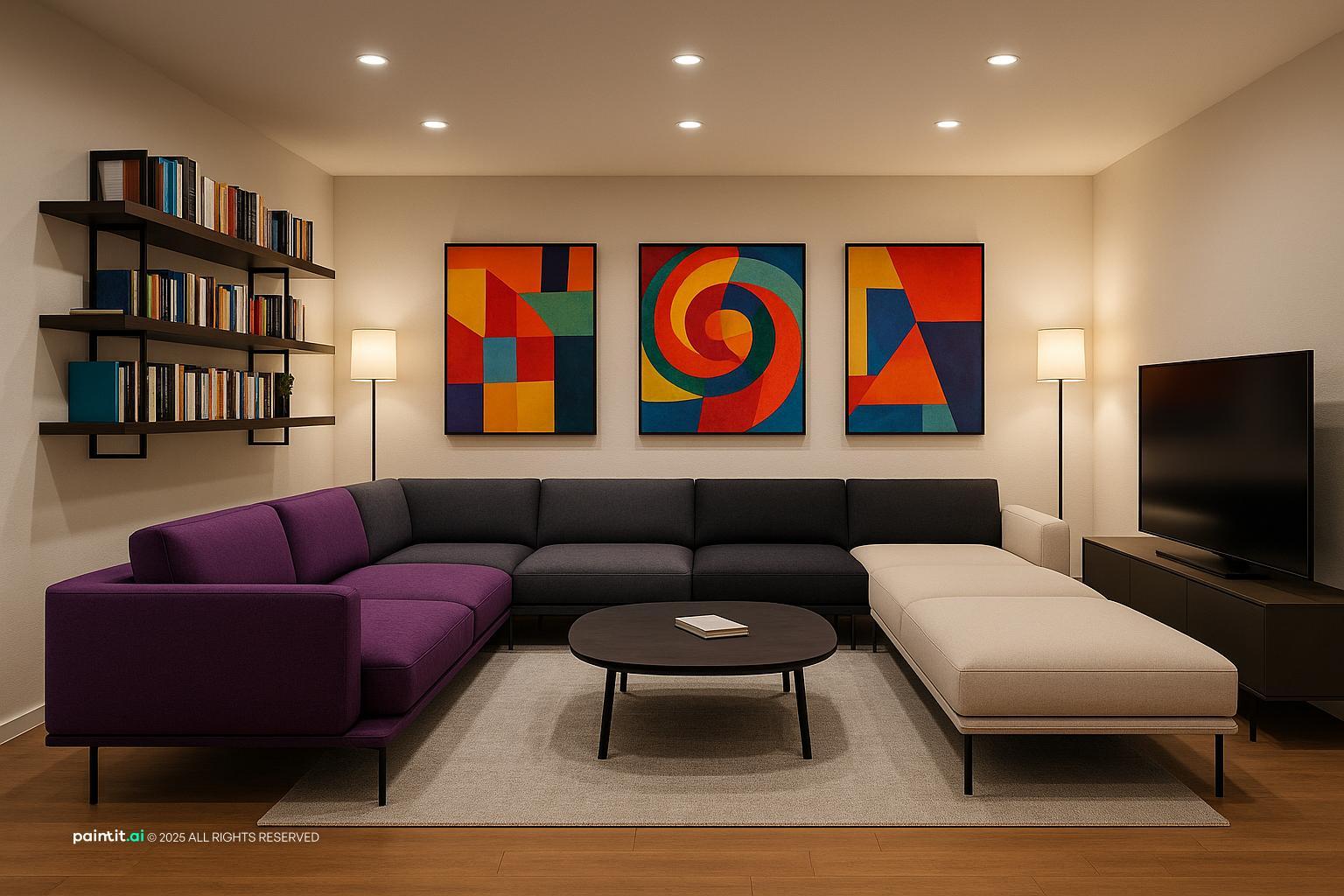
A purple sectional is the boldest way to use purple; neutral walls and a cream chaise keep it in check.
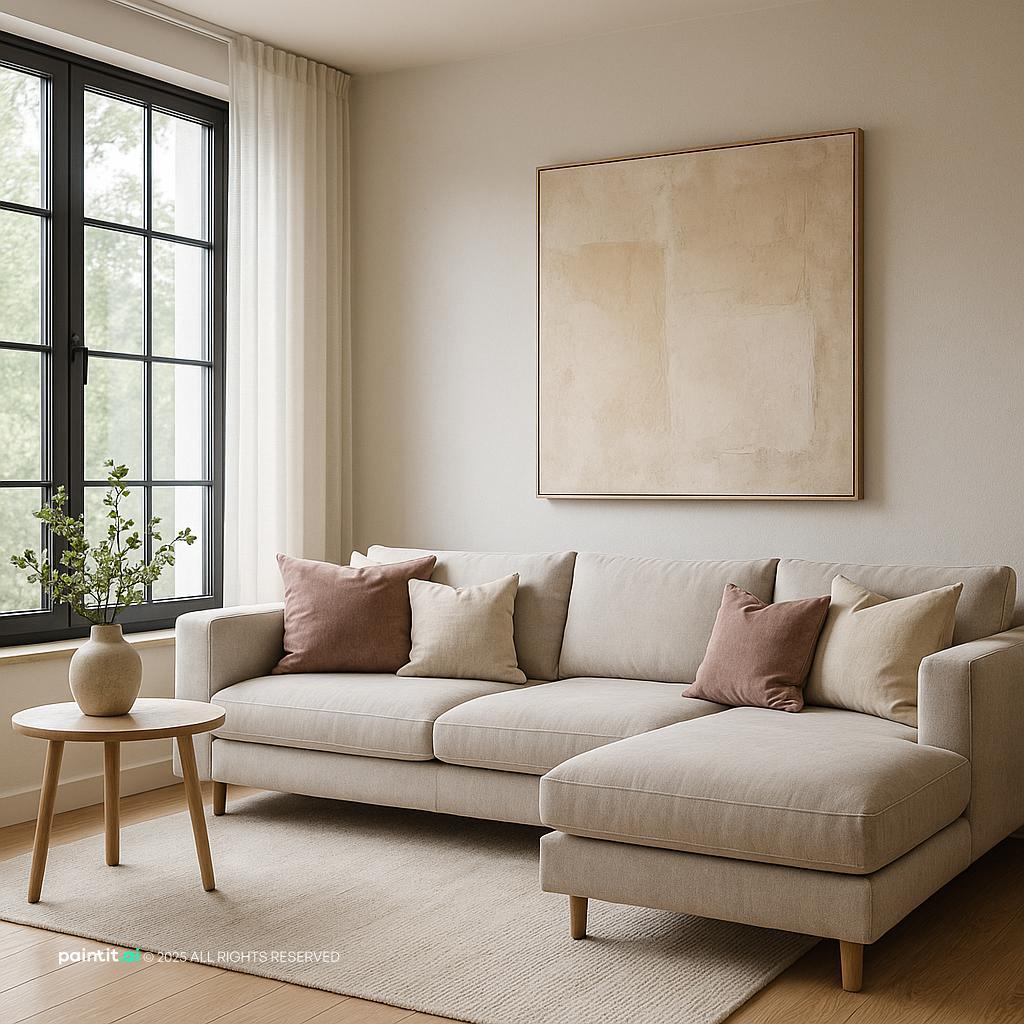
Modern Scandinavian Living Room Design balances purple accents, soft textiles and layered neutrals in a living room setting.
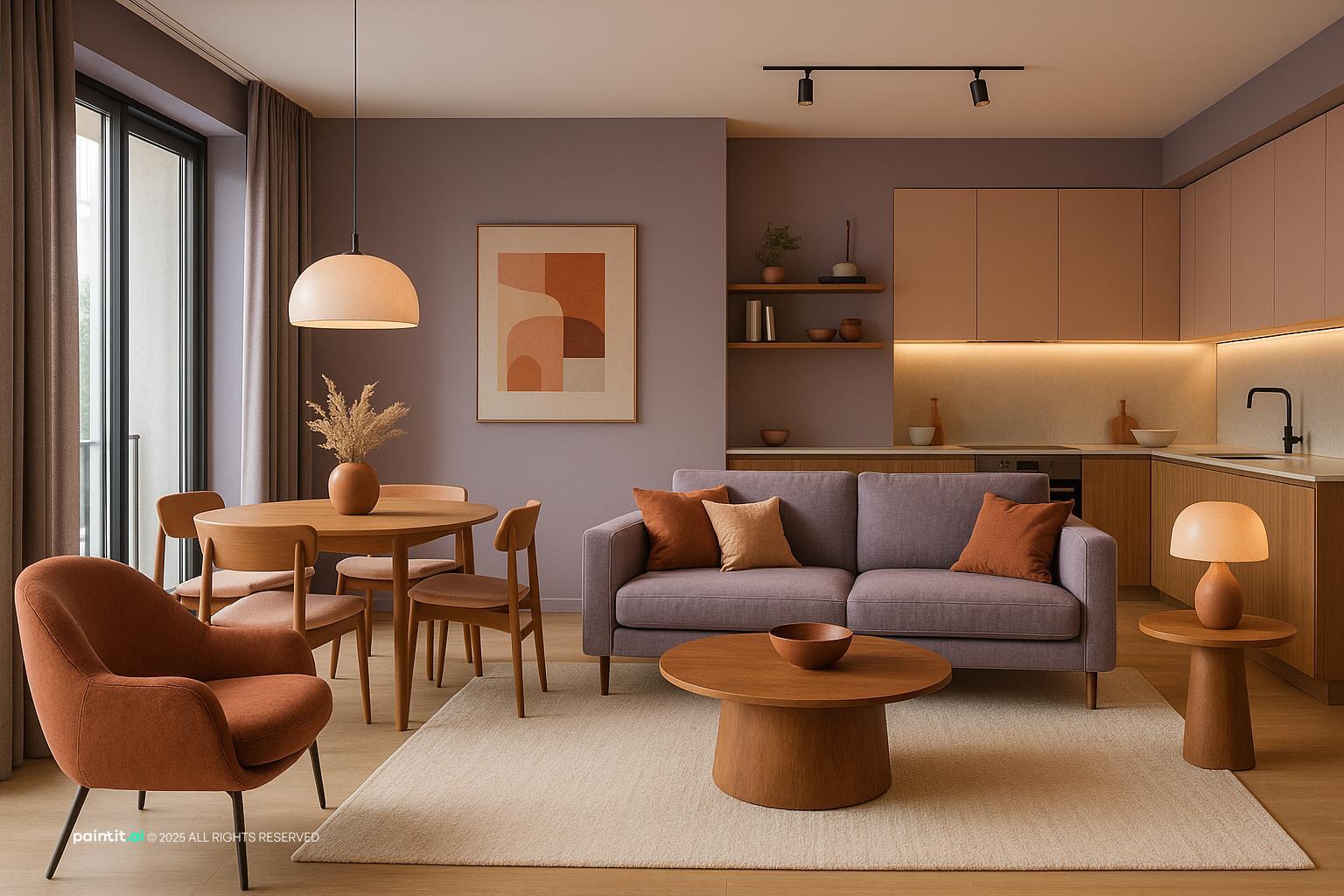
Purple and Grey Living Room Ideas with Purple Accents and Open Layout pairs purple accents, open layout and natural light in a living room setting.
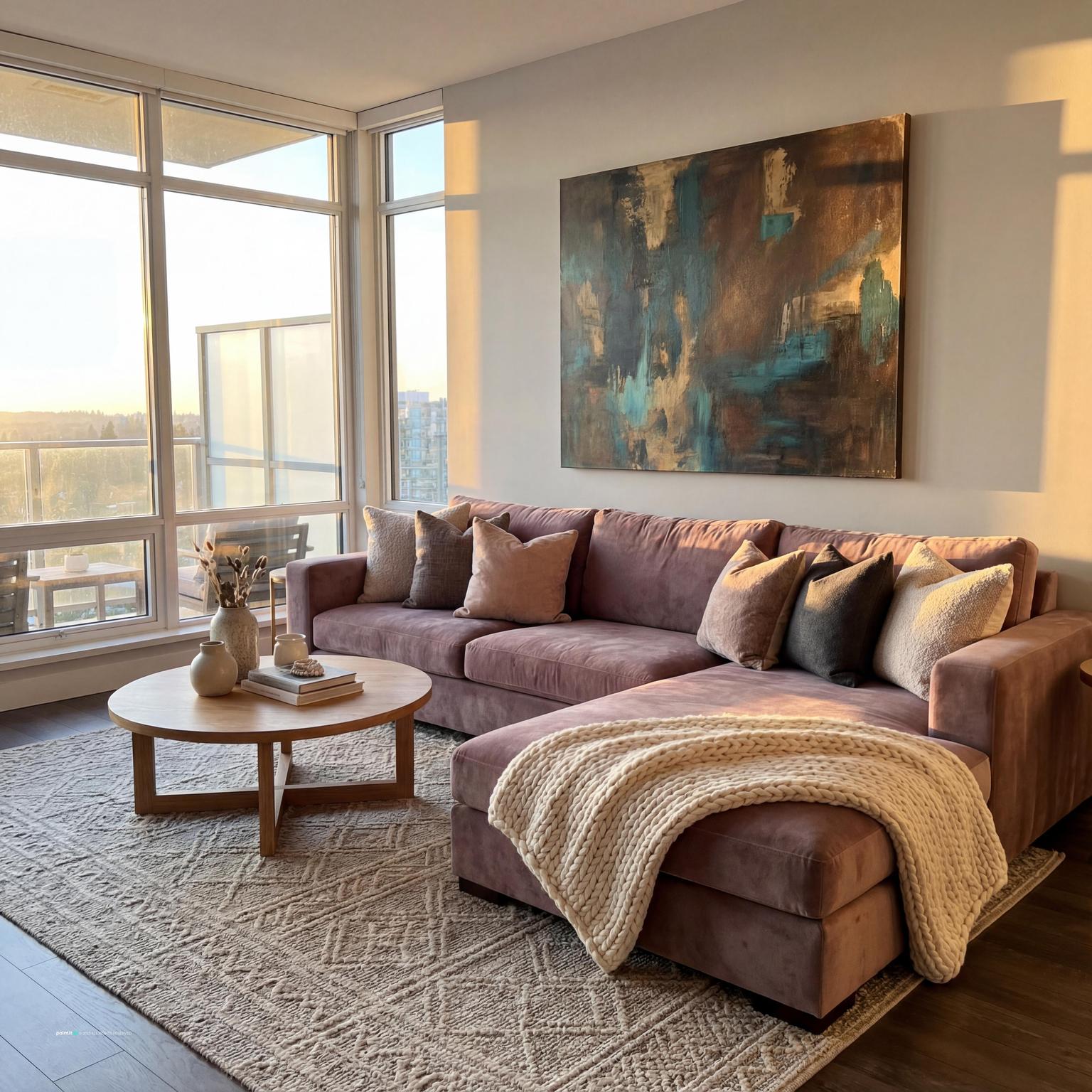
Ultra-Realistic Living Room Design layers purple accents, soft textiles and metal accents in a living room setting.
Purple can lean blue, red, grey, or brown. Blue-violet feels cooler and cleaner, while red-plum feels warmer and more dramatic. In a living room with cool grey walls, a slightly warmer mauve can stop the space from feeling chilly.
Use cooler lavender in bright rooms with good daylight. Use smoky plum or muted aubergine when the room has warm wood floors or brass details. Avoid neon purple unless the whole design is intentionally graphic and high-contrast. In most homes, a dusty or greyed purple is easier to live with.
Grey changes dramatically throughout the day. North-facing living rooms often make grey look cooler, so pair them with warmer purples, cream textiles, and wood. South-facing rooms can handle cooler greys and clearer violet accents because sunlight adds warmth.
Paint large samples or test digital variations before committing. If the grey wall looks blue at night, a lavender pillow may intensify that blue cast. A warmer mauve or plum may be more forgiving. This is where small refinements matter; 15% of all prompts contain refinement language like “instead”, “more”, “a bit”, “now”, and that is usually how a good palette gets better.
Textiles are where a purple and grey color scheme becomes livable. Mix a linen grey sofa, velvet purple pillow, wool rug, cotton throw, and woven curtains. The colors can stay restrained because the surfaces are doing more work.
This is a common material issue. A flat grey sofa, flat grey wall, flat purple cushion, and smooth laminate table can look unfinished even if the colors technically match. Vary texture first; add more purple only if the room still needs it. Structured prompts from Interior Designers often include blocks for “MATERIALS:” and “LIGHTING:” for exactly this reason.
Brushed nickel and chrome suit a cooler, cleaner palette. Brass, bronze, and aged gold warm up plum and charcoal. Matte black works well in modern rooms, especially when used on lamp stems, curtain rods, picture frames, and furniture legs.
Avoid mixing too many metal finishes in a small living room. Two finishes are usually enough: one dominant, one supporting. For example, use black for structure and brass for warmth. If the room already has silver hardware, you do not have to replace everything; repeat silver once or twice, then bring warmth through wood and fabric.
Stone and ceramic help purple and grey feel more grounded. A pale marble tray, charcoal ceramic lamp, travertine side table, or smoky glass vase adds a non-fabric texture. These finishes are especially useful if the room already has a lot of upholstery.
Use stone carefully if the room is already cool. White marble with blue-grey veining can make lavender feel icy. Warmer stone, off-white ceramic, or smoked glass may be easier to balance. The goal is not to add more objects; it is to add a different surface that catches light in a new way.
A good lighting plan includes ceiling light, seated-level lamps, and lower accent lighting. This matters because grey can absorb shadow and purple can shift temperature under different bulbs. Aim for warm-white bulbs in living rooms unless the design is deliberately crisp and cool.
Place a floor lamp near the main reading seat, a table lamp near the sofa arm, and a small light near art or shelving. For staging a listing or testing a rental refresh, AI virtual staging can help compare lighting mood and furniture direction without moving everything first.
Style with fewer, stronger objects: one large artwork, a textured throw, two or three pillows, a tray, a lamp, and one sculptural object. Repeat purple lightly, then let grey, cream, wood, and metal carry the rest.
Avoid filling shelves with every purple item you own. Decor balance comes from rhythm, not quantity. If the room feels unfinished, add scale or texture before adding more accessories. A larger lamp, a better-sized rug, or heavier curtains will often solve more than another small purple vase.
A purple-grey scheme is sensitive to small changes, so it helps to preview the room instead of guessing from swatches. Upload your living room photo and test whether the sofa should stay grey, whether the purple should be lavender or plum, and whether the rug, curtains, lighting, or wall color needs to change.
For a practical workflow, start with the AI living room design tool and use instructions such as “KEEP: grey sofa,” “make the purple a bit darker,” “add warm wood,” or “no clutter.” If you are changing more than color, this step-by-step article on how to redesign a living room with Paintit.ai can help you structure the update.
Yes. Grey gives purple a calm base, while purple adds depth and character. The combination works best when one color leads and the other supports it through accents, textiles, or one clear focal feature.
Start with the largest fixed item, often a grey sofa or grey wall. Then add purple through pillows, curtains, wall art, a chair, or an accent wall. Use wood, metal finishes, woven fabric, velvet, ceramic, and good lighting so the room feels layered rather than color-matched.
Warm white, cream, black, brass, bronze, oak, walnut, blush, and soft green can all work. Match the accent to the purple shade: lavender likes lighter neutrals, while plum usually looks better with warmer woods and metals.
Vary the materials and lighting before adding more color. Combine matte walls, woven fabric, velvet, wood, ceramic, and metal, then add layered lighting at different heights so the colors do not collapse into one dull surface.
Not if you use it with control. Try dark purple on cushions, art, curtains, or one chair rather than every wall. Balance it with a light rug, warm lamp light, pale surfaces, and enough breathing room around the furniture.