
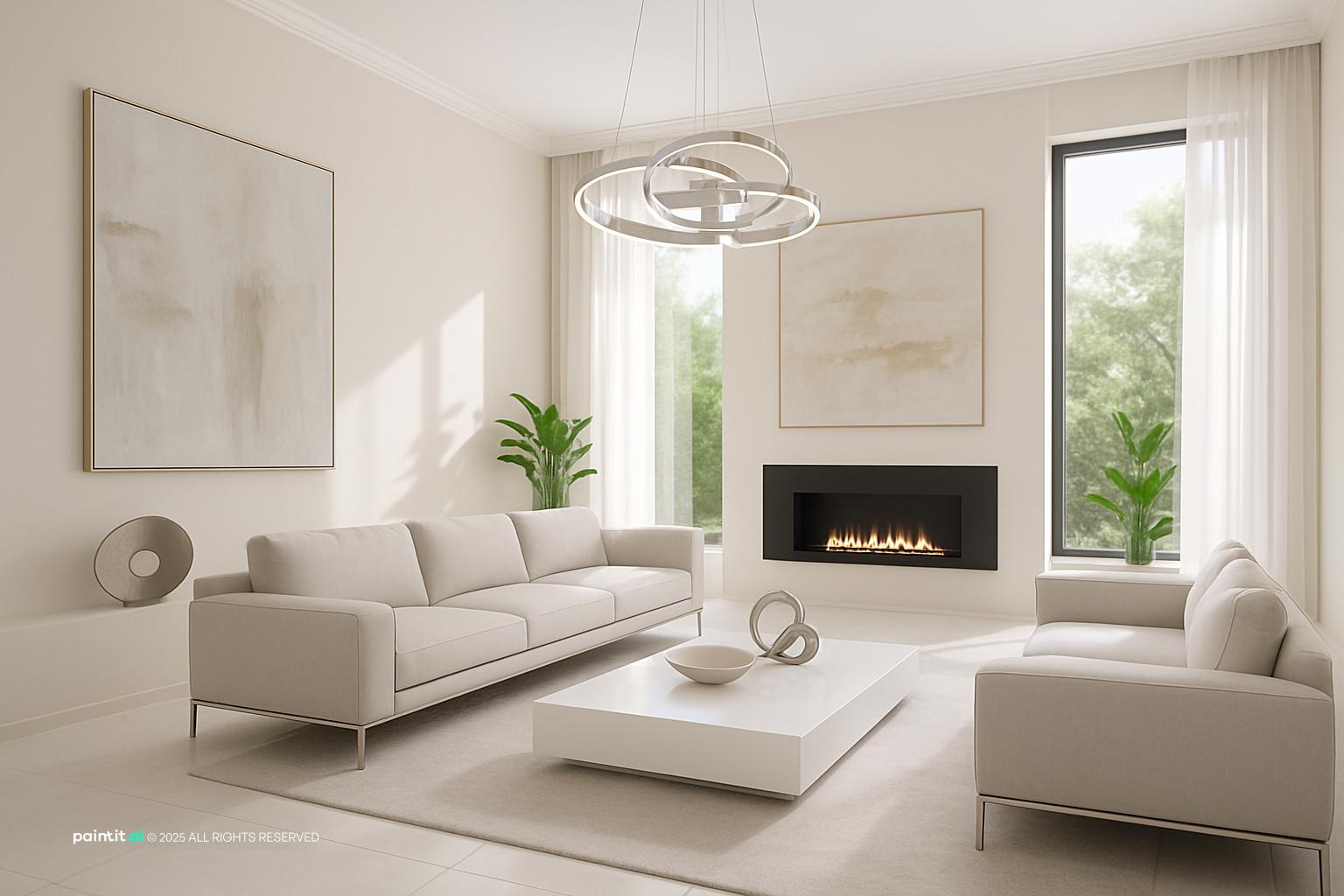
Black Living Room Ideas with Black Contrast and Metal Accents
Black Living Room Ideas with Black Contrast and Metal Accents uses black contrast, metal accents and clean-lined furniture in a living room setting.
The best black living room ideas treat black as a working neutral, not as a shortcut to drama. Black can make a room feel calm, crisp, cozy, or architectural, but only when the contrast, texture, lighting, and layout are doing their jobs. In Paintit.ai data, 27.6% of prompts include a color modifier, so we often see people begin with the palette before anything else. For a living room, that first decision matters: is black going on the walls, the sofa, the trim, the fireplace, the media unit, or just through repeated decor details?
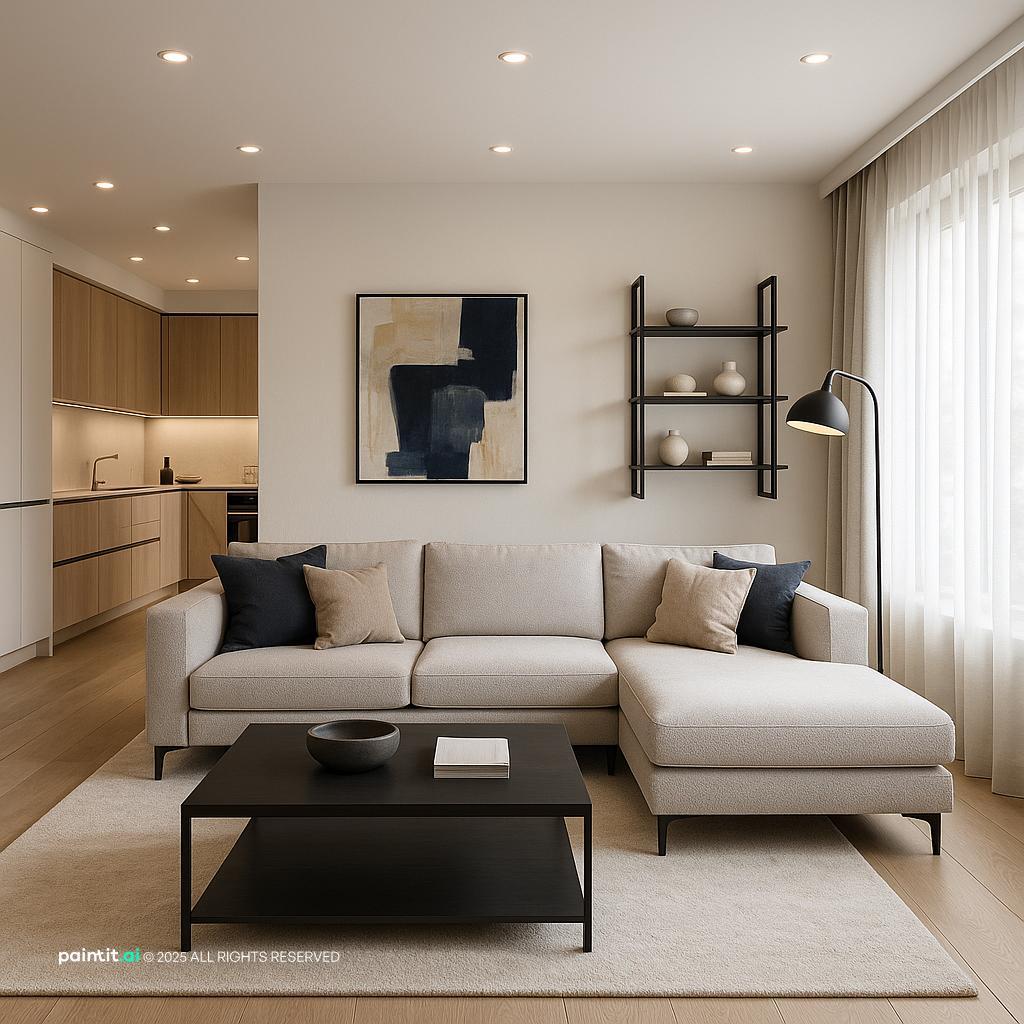
A black living room changes completely depending on where the black sits. Black walls wrap the room. A black sofa adds weight in the center. Black trim, shelving, or a coffee table can sharpen a room you mostly want to keep. Since 22.1% of Paintit.ai prompts include a room modifier, it is worth being specific here: a living room has to handle seating comfort, glare, conversation paths, TV sightlines, and daily clutter in a way a bedroom or kitchen does not.
Before you commit to a dark palette, check how black reacts to your actual windows, ceiling height, flooring, and furniture depth with AI Living Room Design. A black wall that looks rich in one upload can look flat in another if the room lacks natural light, material contrast, or enough pale surfaces to bounce light back.
Use the first visual set to study proportion. Look at where the black is concentrated, how much wall stays light, whether the neutral rug breaks up the floor, and how wood tones, stone, fabric, metal accents, and natural light keep the room from becoming one dark block.
Black Living Room Ideas with Black Contrast and Metal Accents uses black contrast, metal accents and clean-lined furniture in a living room setting.
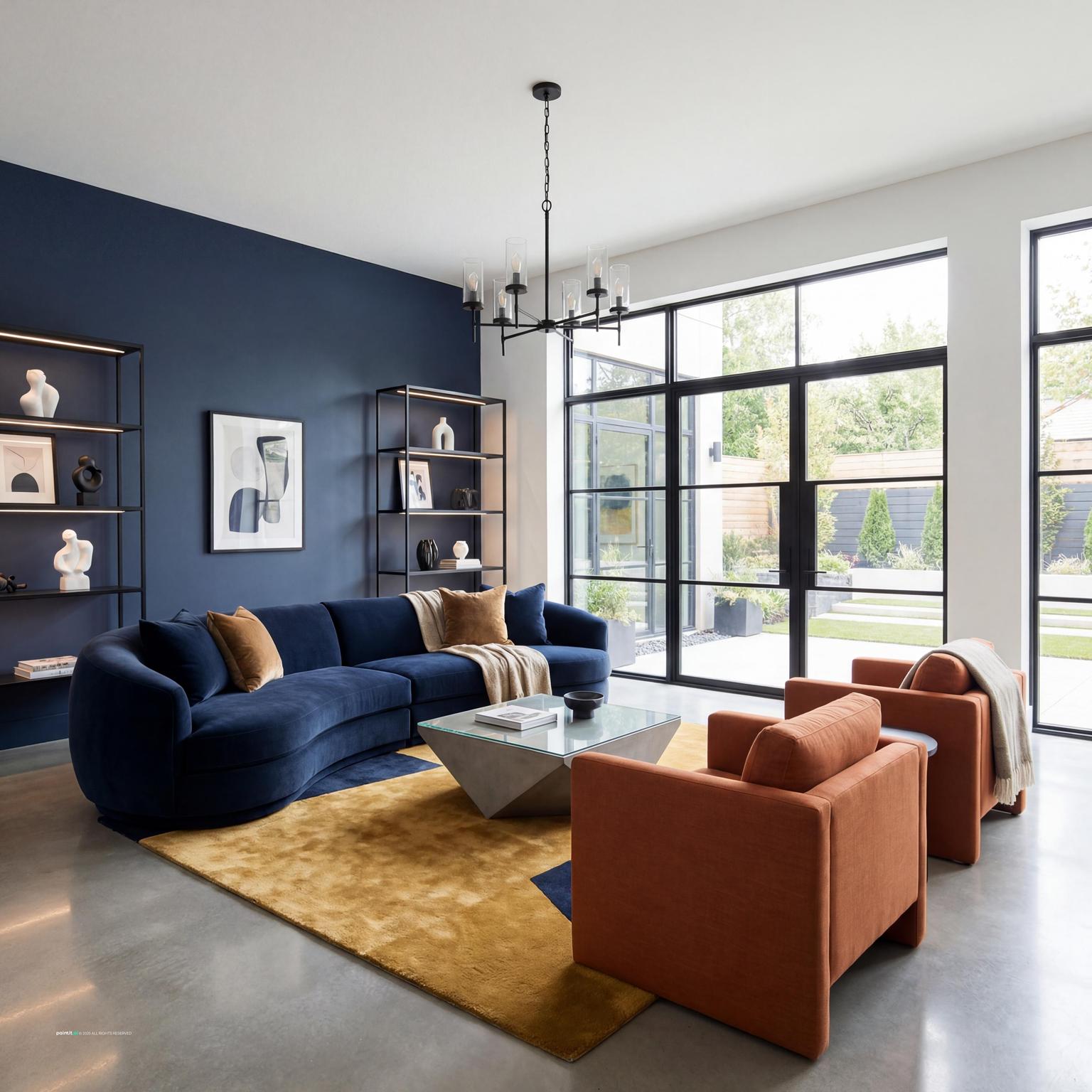
Modern Living Room Design for 2025 balances black contrast, soft textiles and metal accents in a living room setting.
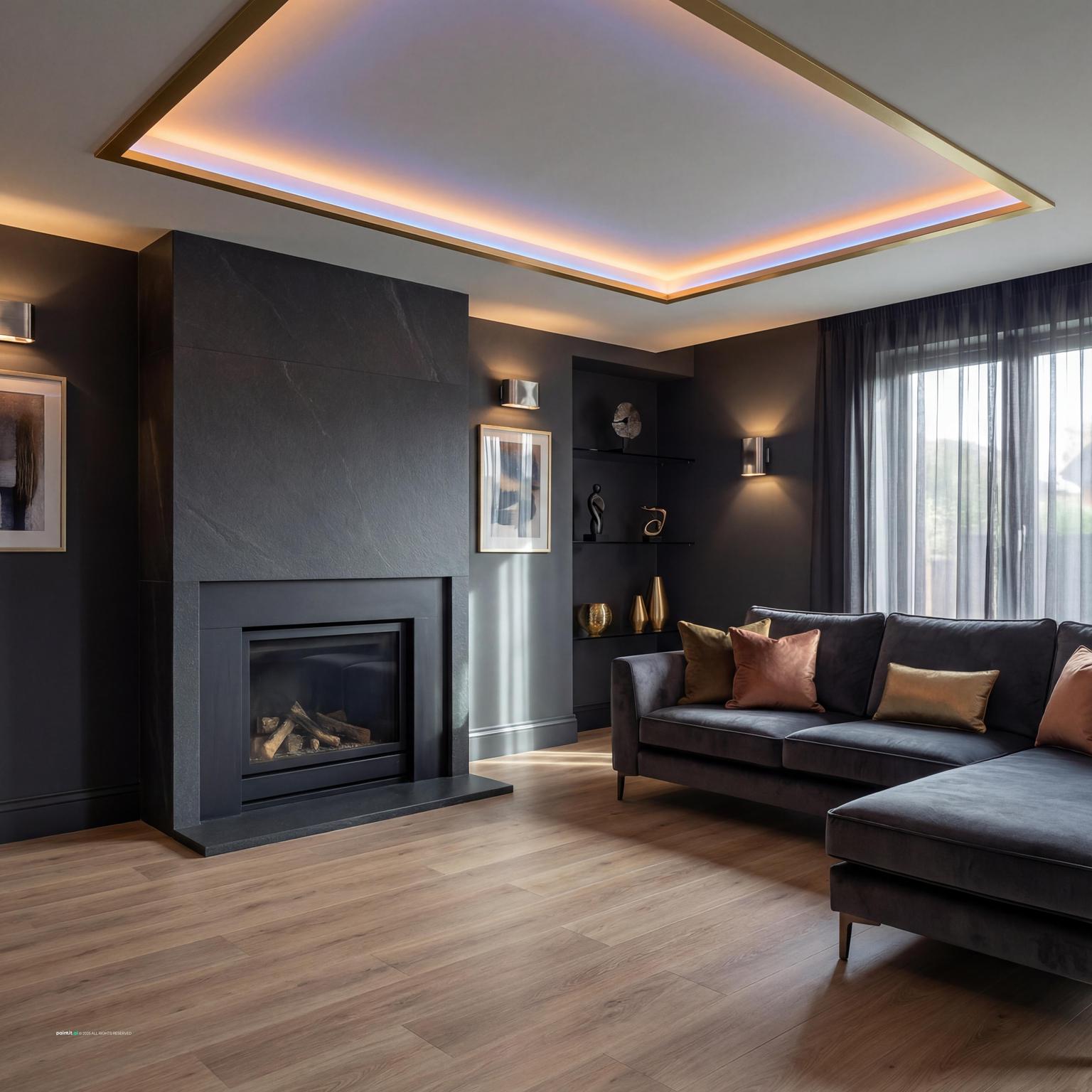
Luxury Modern Living Room Design pairs black contrast, soft textiles and metal accents in a living room setting.
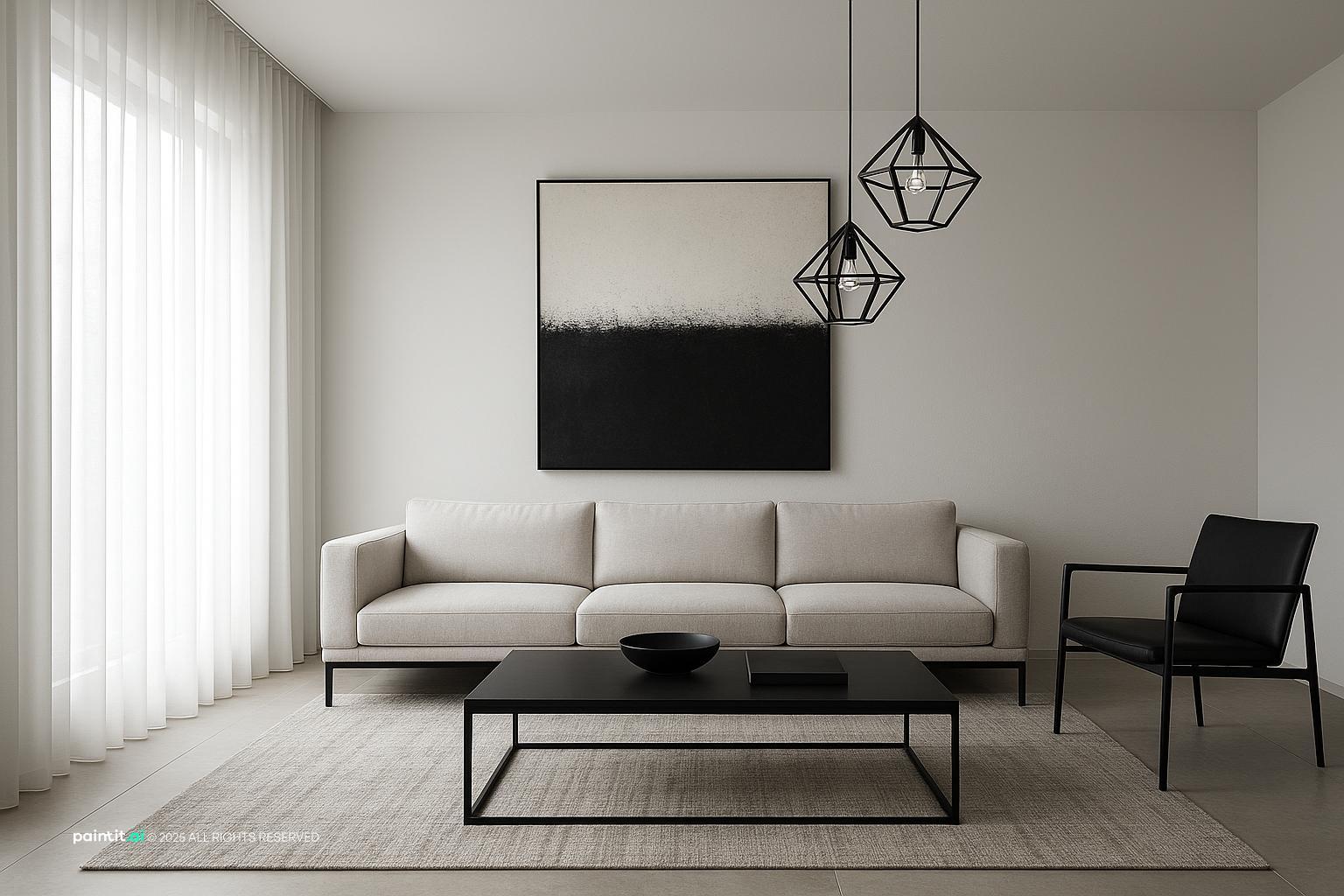
Sleek Modern Living Room Design layers black contrast, clean-lined furniture and layered neutrals in a living room setting.
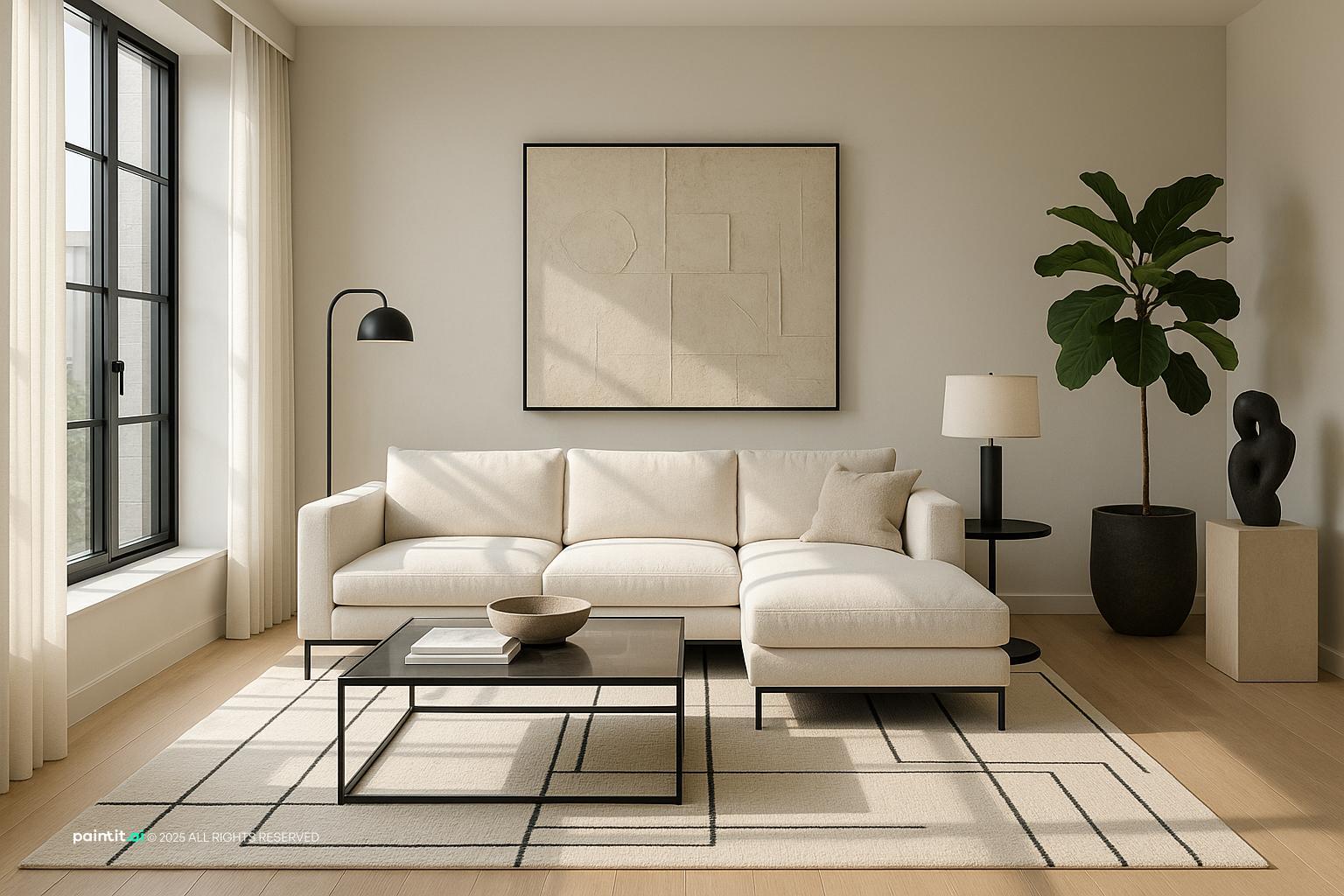
Stylish Contemporary Living Room Design anchors black contrast, metal accents and clean-lined furniture in a living room setting.
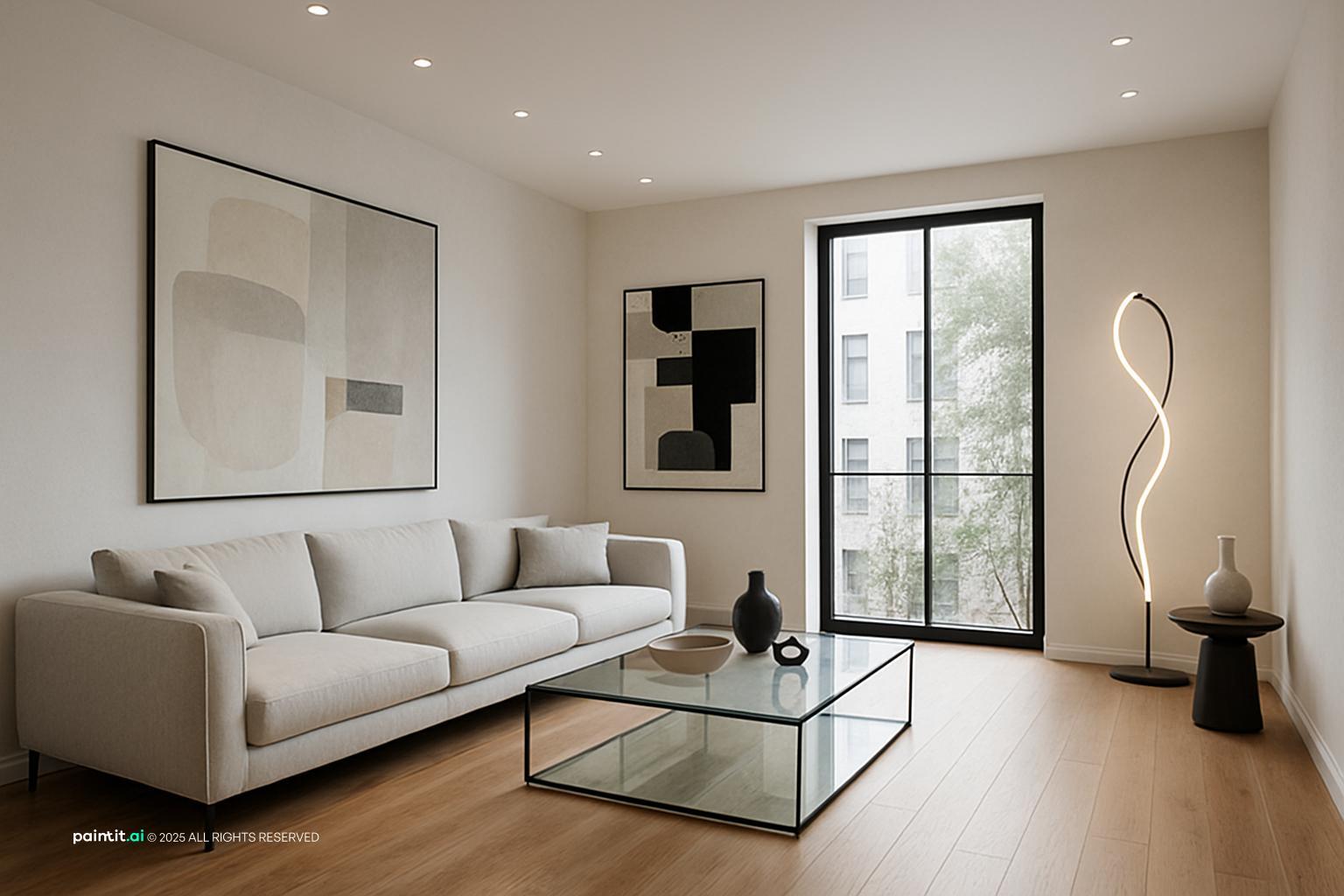
Stunning Contemporary Living Room Design softens black contrast, clean-lined furniture and layered neutrals in a living room setting.
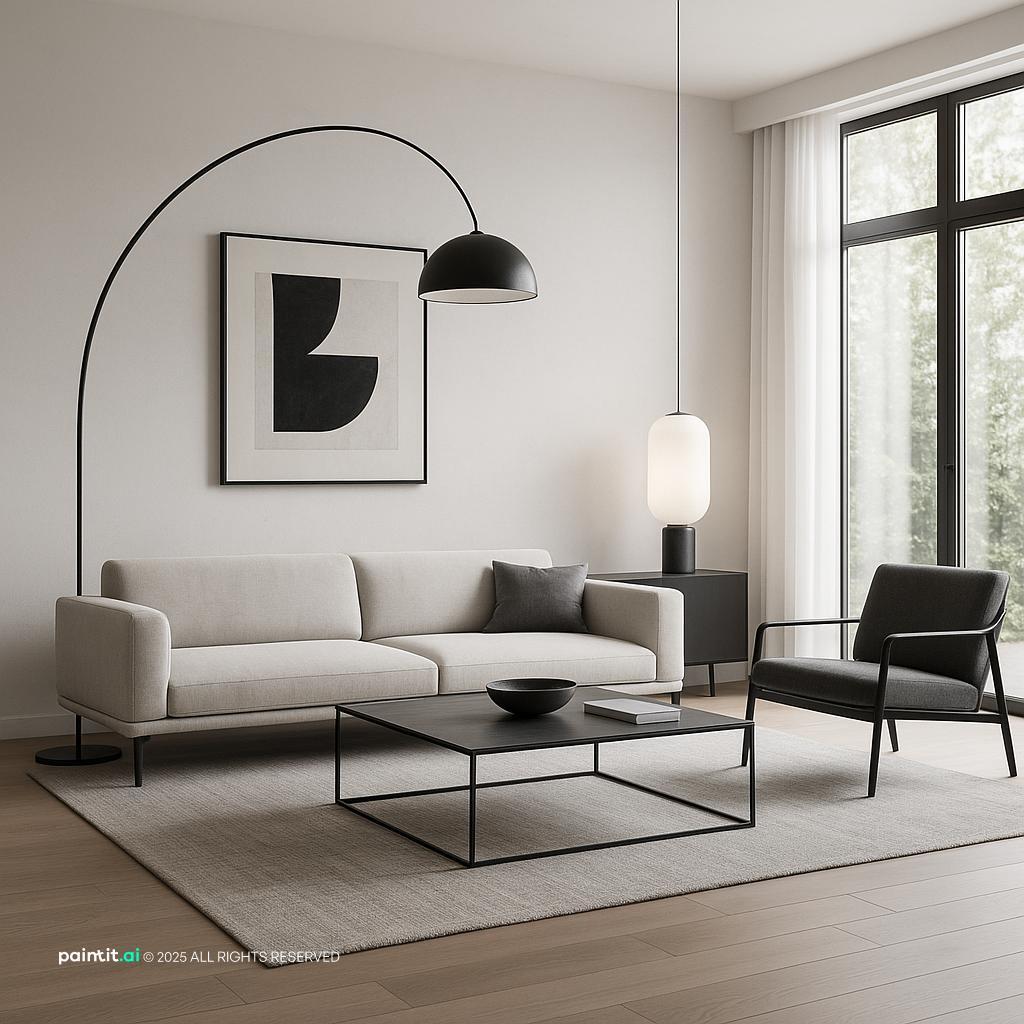
Modern Minimalist Living Room Design uses black contrast, metal accents and clean-lined furniture in a living room setting.
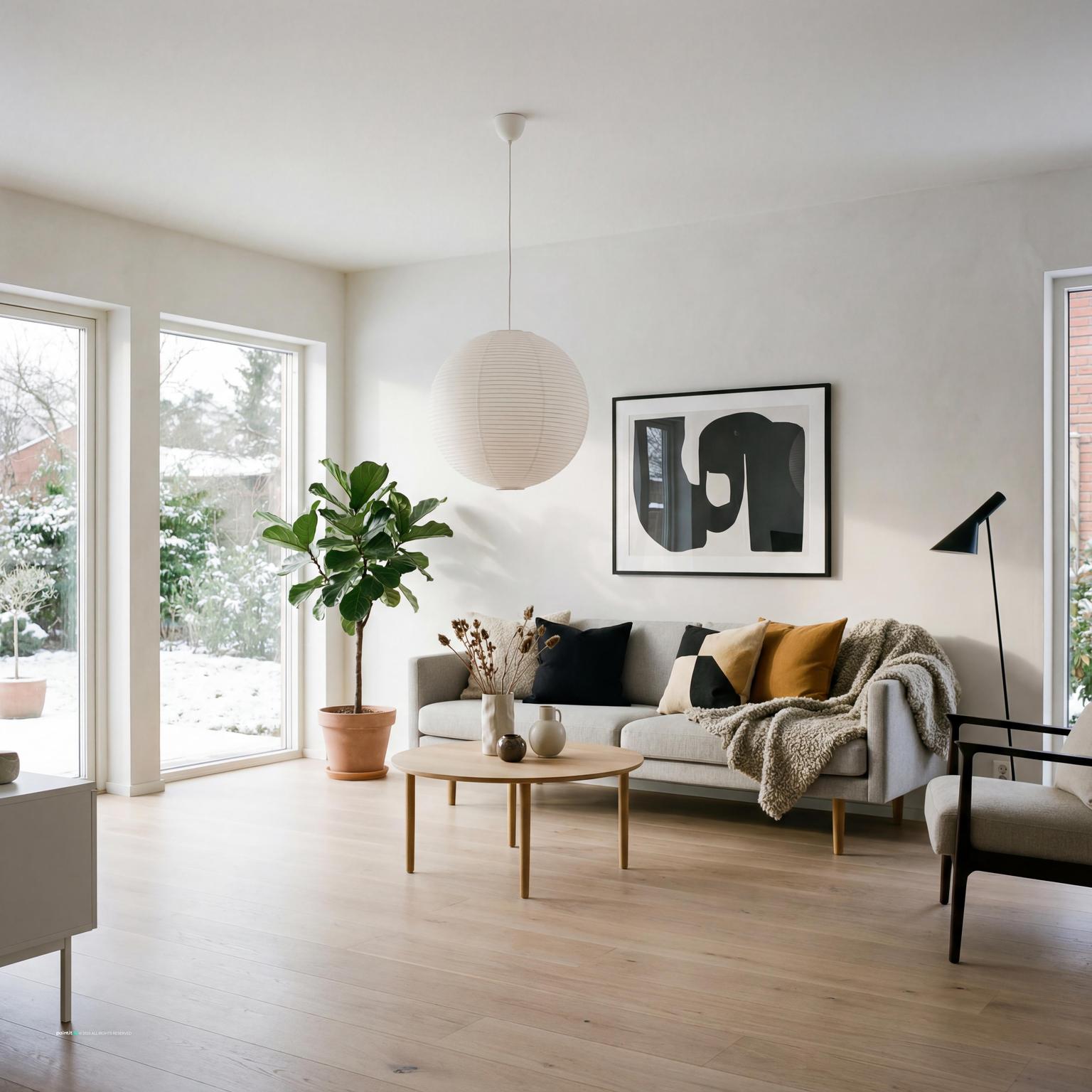
Stunning Scandinavian Living Room Design balances black contrast, warm wood and soft textiles in a living room setting.
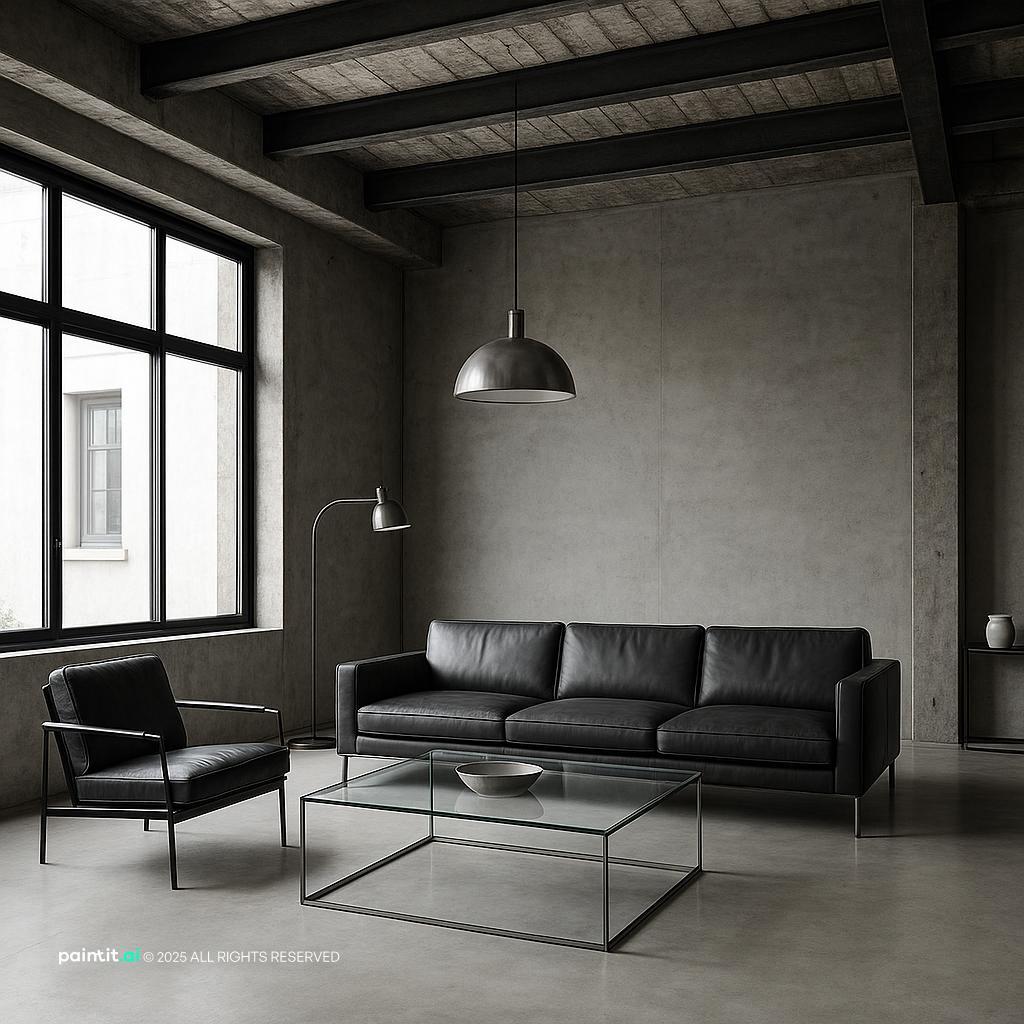
Modern Industrial Living Room Design pairs black contrast, metal accents and layered neutrals in a living room setting.
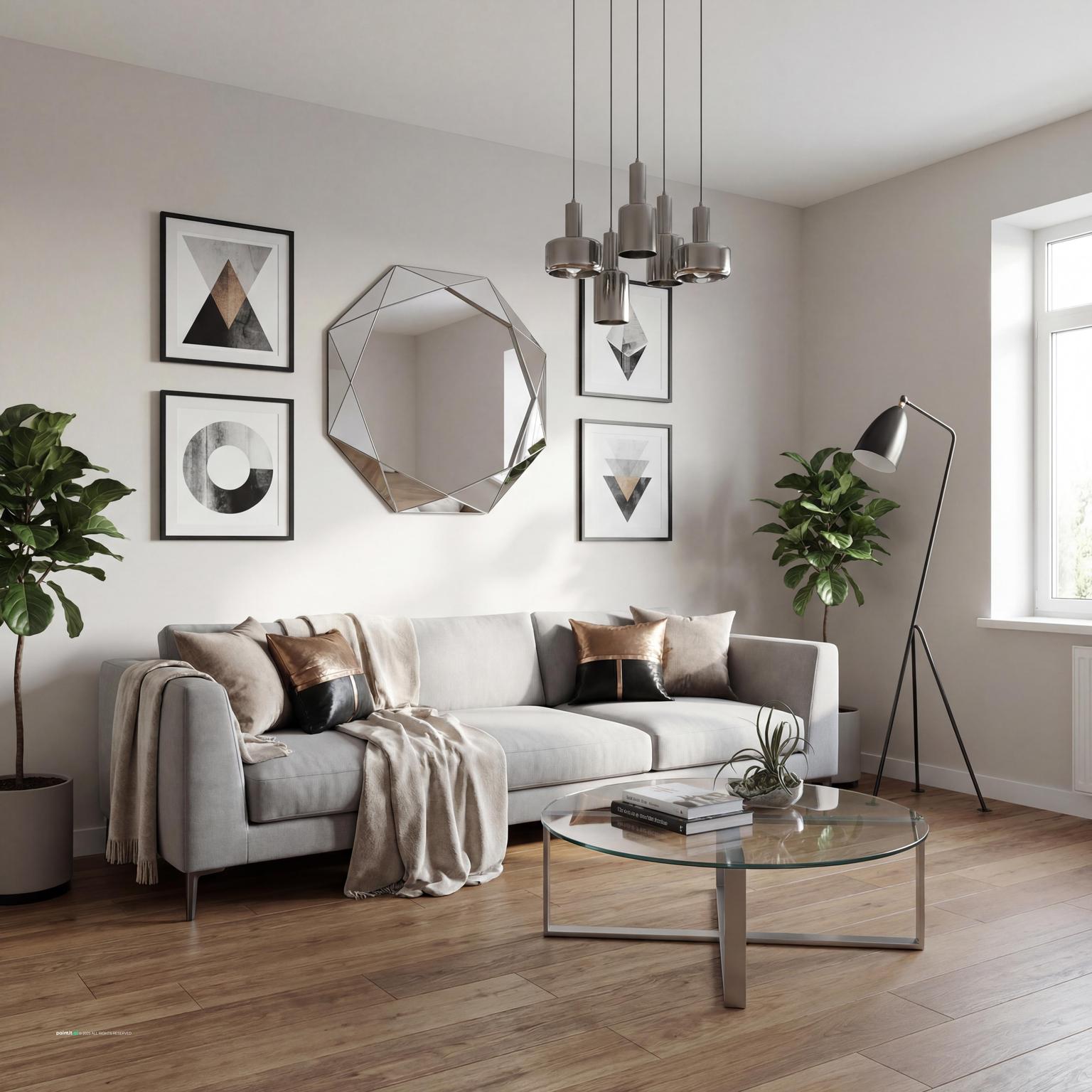
Contemporary Living Room Redesign layers black contrast, soft textiles and metal accents in a living room setting.
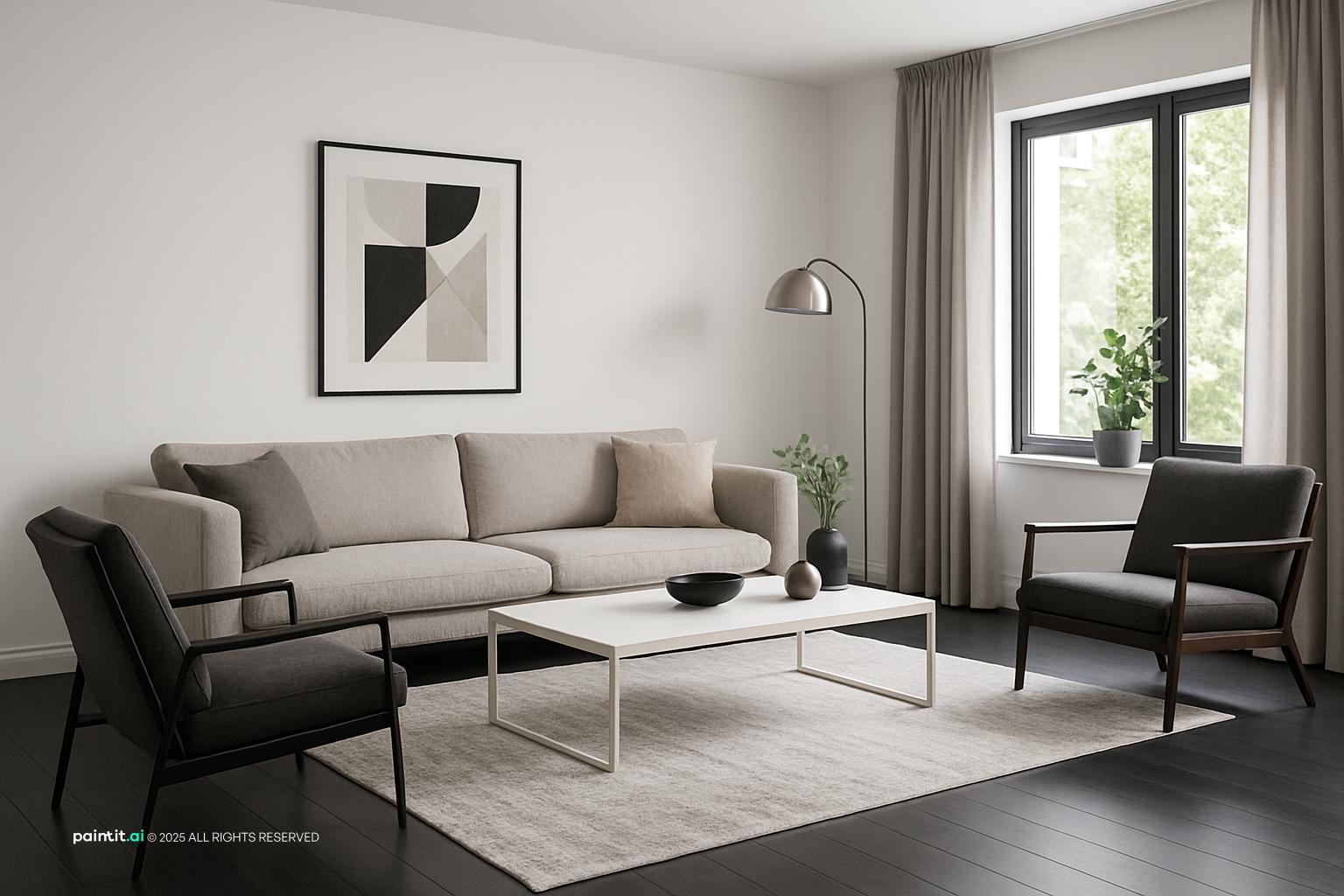
Black Living Room Ideas with Black Contrast and Metal Accents with Plants and Greenery anchors black contrast, metal accents and plants and greenery in a living room setting.
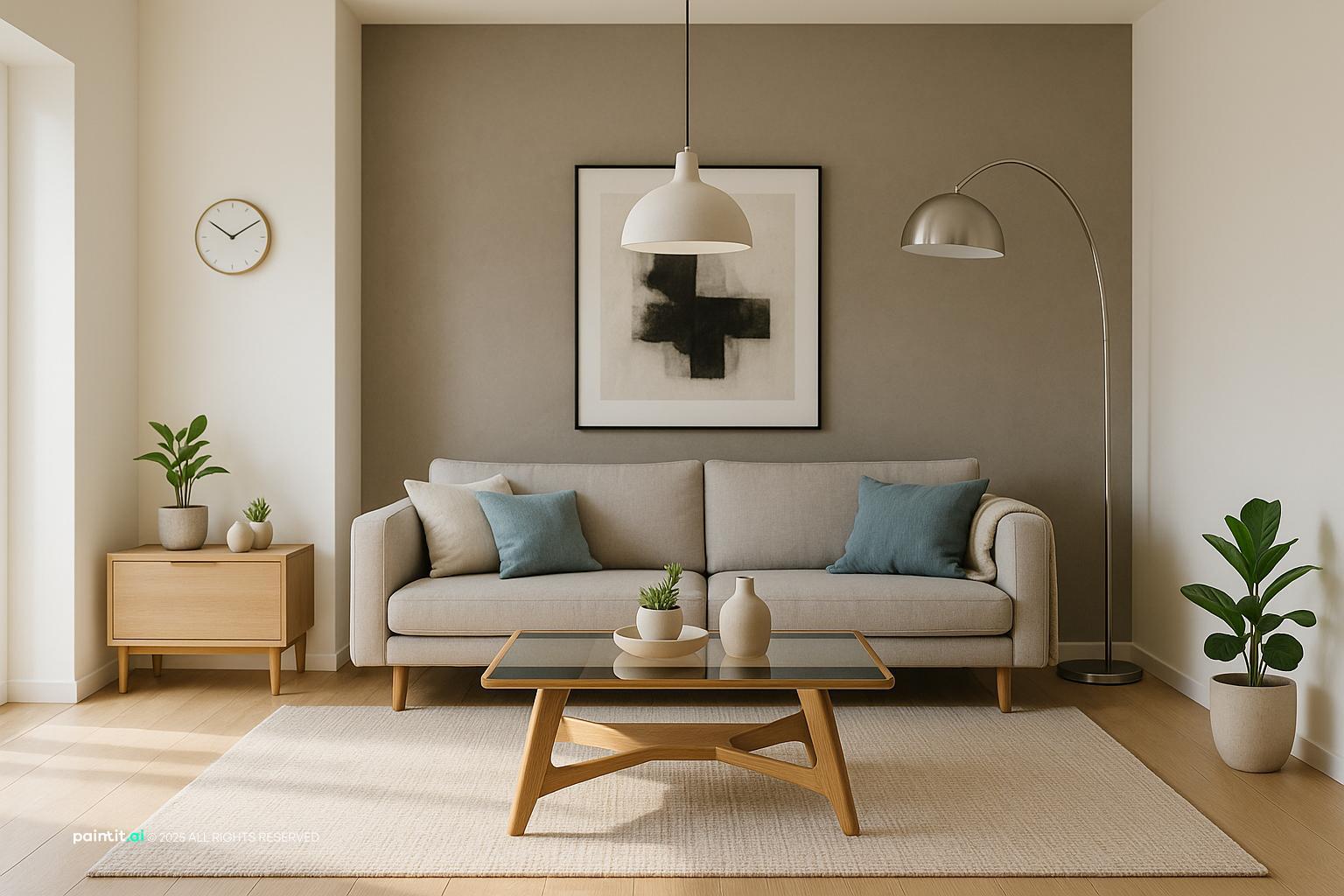
Modern Minimalist Living Room Design with Black Contrast softens black contrast, soft textiles and clean-lined furniture in a living room setting.
Start with one clear anchor: black walls, a black sofa, a black media wall, black built-ins, or black trim. This keeps the room from feeling crowded before you understand how the color behaves in your light. If you already have dark floors, a charcoal sectional, or a large black fireplace, count that as the anchor.
Why it works: black carries more visual weight than most colors. One strong black feature can ground the room. Three unrelated black features can make it feel patched together. Once the anchor is set, repeat black in smaller places like picture frames, lamp bases, curtain rods, or cabinet hardware.
A black accent wall living room works best when the wall has a real job. Good candidates include a fireplace wall, the wall behind a sofa, a built-in shelving wall, or a TV wall where darker paint reduces screen contrast. A random wall with too many doors, vents, or awkward breaks usually looks like an afterthought.
If painting every wall feels risky, test one surface first with AI House Painter. Judge the wall from the main seat in the room, not only from the doorway. The catch: a black accent wall opposite a tiny window can absorb the limited daylight and make the whole room feel flatter unless you add lamps or lighter furniture.
Black sofa living room ideas often go wrong when the sofa sits on a dark floor beside a heavy dark coffee table. A neutral rug in ivory, oatmeal, warm gray, or a muted pattern gives the sofa a visual base without making the seating area feel dense. Size matters too. At least the front legs of the sofa and chairs should sit on the rug.
Choose a coffee table with some lift: wood legs, a glass top, a stone slab on a slim base, or a lighter upholstered ottoman. If the sofa is deep and blocky, avoid bulky side tables on both ends. You want the seating zone to feel grounded, not like a black mass in the middle of the room.
Black paint and black furniture can look cold when every finish is smooth, flat, and synthetic. Wood tones add grain, movement, and warmth. Walnut feels richer, oak feels easier and more relaxed, teak adds depth, and pale ash can push the room toward Scandinavian or Japandi.
In Paintit.ai prompts, 19.0% of users include a material modifier, and that matches what we see in stronger dark-room tests: the materials are named as clearly as the colors. Try a wood coffee table, slatted media cabinet, exposed ceiling beam, woven chair, or timber picture frame. What to avoid: too many unrelated woods. If the floor already leans yellow, red, or gray, keep new wood undertones in the same family.
Painting built-ins black can make shelves, cabinets, and a fireplace surround feel more architectural. This works especially well when the shelves have breathing room. Leave some space around books, ceramics, and wall art so the black background frames the objects instead of swallowing them.
Use satin or eggshell paint on cabinetry if the built-ins will be touched often. Dead-flat black can look beautiful in a photo, but fingerprints, dust, and scuffs show quickly in a busy living room. Why it works: black built-ins can make ordinary storage feel intentional while the rest of the room stays lighter and easier to live with.
Not every black room needs a full renovation. In Paintit.ai behavior, 12.0% of users include a keep or do-not-change constraint, which usually means they want to work around existing floors, windows, brick, curtains, or furniture. If you have a tan sofa, honey oak floor, brick fireplace, beige curtains, or an older sectional, black can still fit.
Use black to sharpen what is already there. A black coffee table can make a beige sofa feel more current. Black window frames can make simple curtains look more deliberate. A black fireplace mantel can give brick better definition. What to avoid: replacing everything at once because one new black element feels different. The room usually feels more natural when some existing materials stay in the story.
Black and white living room ideas can look clean and graphic, but they need softness. Use off-white instead of pure white if the room has warm flooring or limited daylight. Add cream, natural linen, pale oak, or a patterned rug to break the hard contrast.
The best version usually includes at least one middle tone: warm gray, taupe, camel, greige, or stone. Without that middle step, every object becomes high contrast, and the room can feel visually loud. Try black walls with an off-white sofa and taupe curtains, or white walls with a black sofa and warm wood side tables.
A crowded layout feels even more crowded when the walls or main furniture are black. Check the path from the entry to the sofa, the sofa to the window, and the seating area to the media wall. Leave clear walking space around the coffee table. Do not push every piece to the wall just to open an empty center.
I would treat this as a layout problem before treating it as a styling problem. If a chair blocks the fireplace or a sectional cuts off the window, black will make the issue more obvious. What to avoid: using oversized furniture because the room feels bold. Strong color does not fix poor clearance.
Black absorbs light, so one ceiling fixture rarely does enough. Plan at least three layers: overhead lighting for general brightness, table or floor lamps for reading, and accent lighting for shelves, art, plants, or textured walls. Warm bulbs usually work better with black than very cool bulbs, especially at night.
Only 5.9% of Paintit.ai prompts include a lighting modifier, but lighting is often the difference between moody and gloomy. Place a lamp near the darkest corner, use picture lights above art, or add LED strips inside black shelving. If there is a TV, reduce glare by placing light beside or behind the screen rather than directly opposite it.
A black room needs surface variation. Combine matte paint, woven textiles, velvet or bouclé upholstery, grainy wood, ribbed glass, ceramic, stone, or brushed metal. Even when the color palette stays simple, texture gives the eye something to read.
When people upload a room with low natural light, one weak spot we often see is a lack of material contrast. Black paint needs texture around it. What to avoid: black walls with only smooth black leather, glossy black furniture, and plain dark curtains. That can look sharp in a still image but feel cold in a real living room.
Curtains can soften black or reinforce it. For a cozy look, choose linen, cotton, or wool-blend curtains in warm white, oatmeal, mushroom, tobacco, or olive. Hang them high and wide so the window looks larger and the fabric clears the glass when open.
If you use black curtains, make sure the room has enough contrast elsewhere. Black-on-black at the window can work in a media room, but in a smaller living room it may cut too much natural light. A safer compromise is a light curtain with a black curtain rod, black trim, or black banding.
Black walls make art stand out, but they also make every frame and object more noticeable. Use fewer, larger pieces instead of many small ones scattered around the room. Oversized abstract art, black-and-white photography, warm scenic prints, or sculptural wall pieces can all work.
Pay attention to frame color. Black frames blend into black walls for a quieter look, while brass, wood, or white frames create more contrast. What to avoid: hanging small art too high. In a seating area, the center of the artwork should relate to the sofa and eye level, not the ceiling.
Greenery is one of the easiest ways to make a black living room feel alive. Large plants with strong silhouettes, such as fiddle leaf fig, rubber plant, olive tree, or monstera, can hold their own against dark walls. Use planters in clay, stone, black ceramic, or woven baskets depending on the style of the room.
Plants work especially well near windows, in empty corners, or beside low media furniture. They add organic shape where black furniture can feel too linear. Avoid sprinkling tiny plants across every surface. In a dark room, small objects turn into visual clutter quickly.
Black highlights silhouettes. Throw pillows, trays, books, vases, candles, and remotes become more visible against dark backgrounds. Choose fewer pieces with better scale: two larger throw pillows instead of five small ones, one sculptural vase instead of a cluster of small pieces, one tray to organize the coffee table.
This matters for dark living room ideas where the goal is cozy, not busy. Paintit.ai users sometimes include negative modifiers such as without or no clutter, and black rooms benefit from that discipline. Keep the decor layered, but let tables, shelves, and walls have pauses.
Use the second visual group to compare how the same black base changes with cream textiles, sage accents, warm wood tones, white contrast, brass details, stone surfaces, and different lighting temperatures.
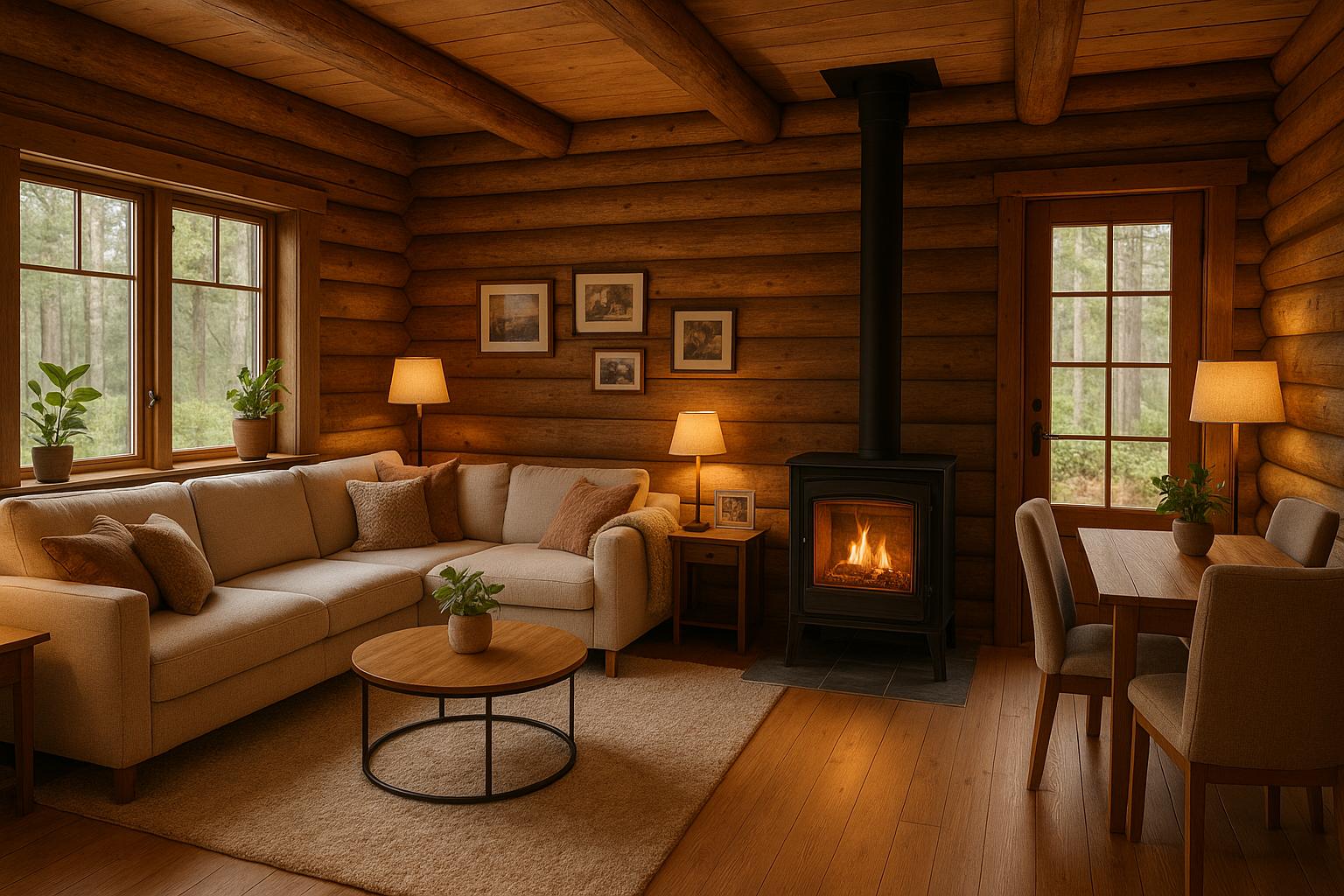
Cozy Cabin Living Room Design uses black contrast, soft textiles and plants and greenery in a living room setting.
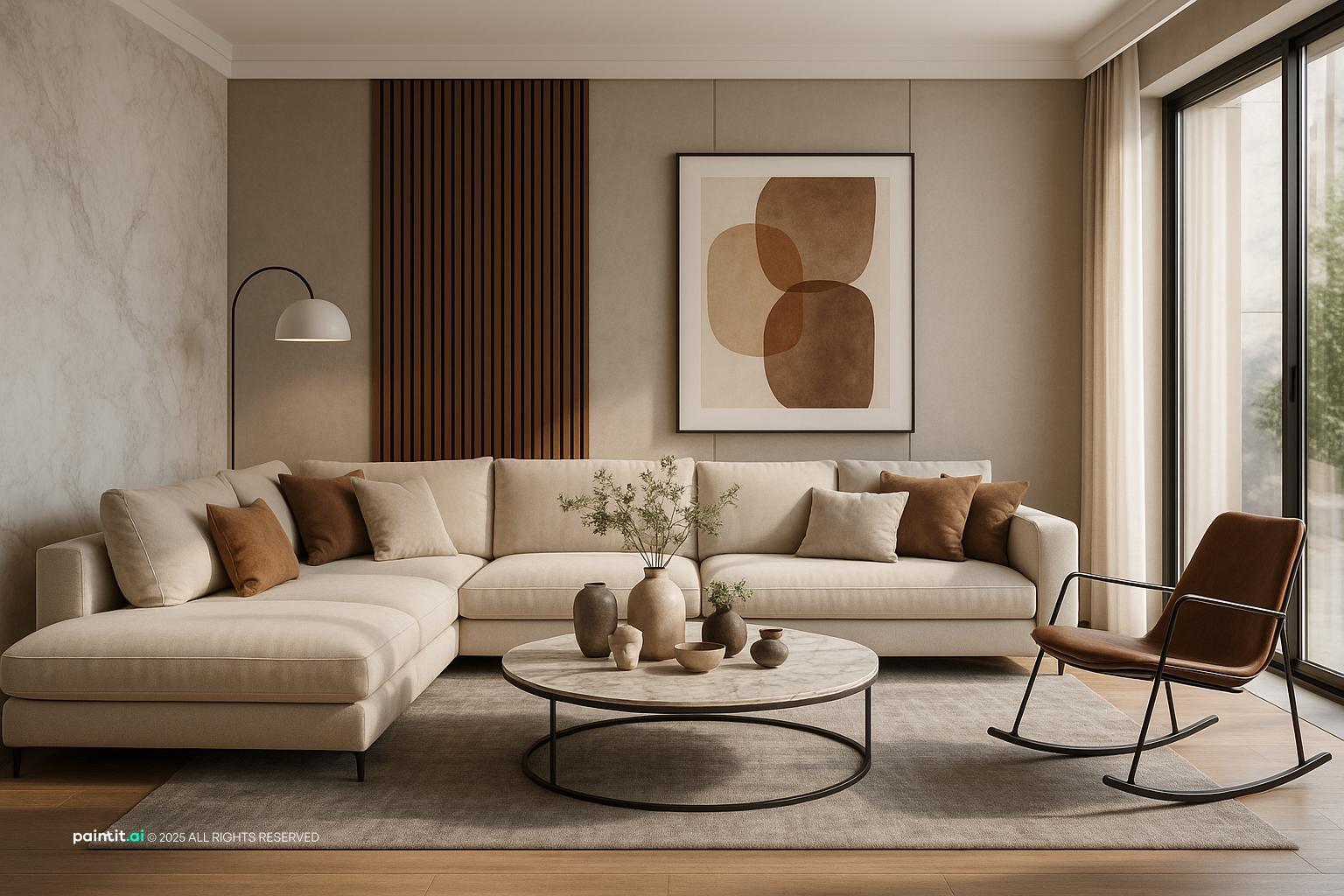
Elegant Modern Living Room Design balances black contrast, soft textiles and metal accents in a living room setting.
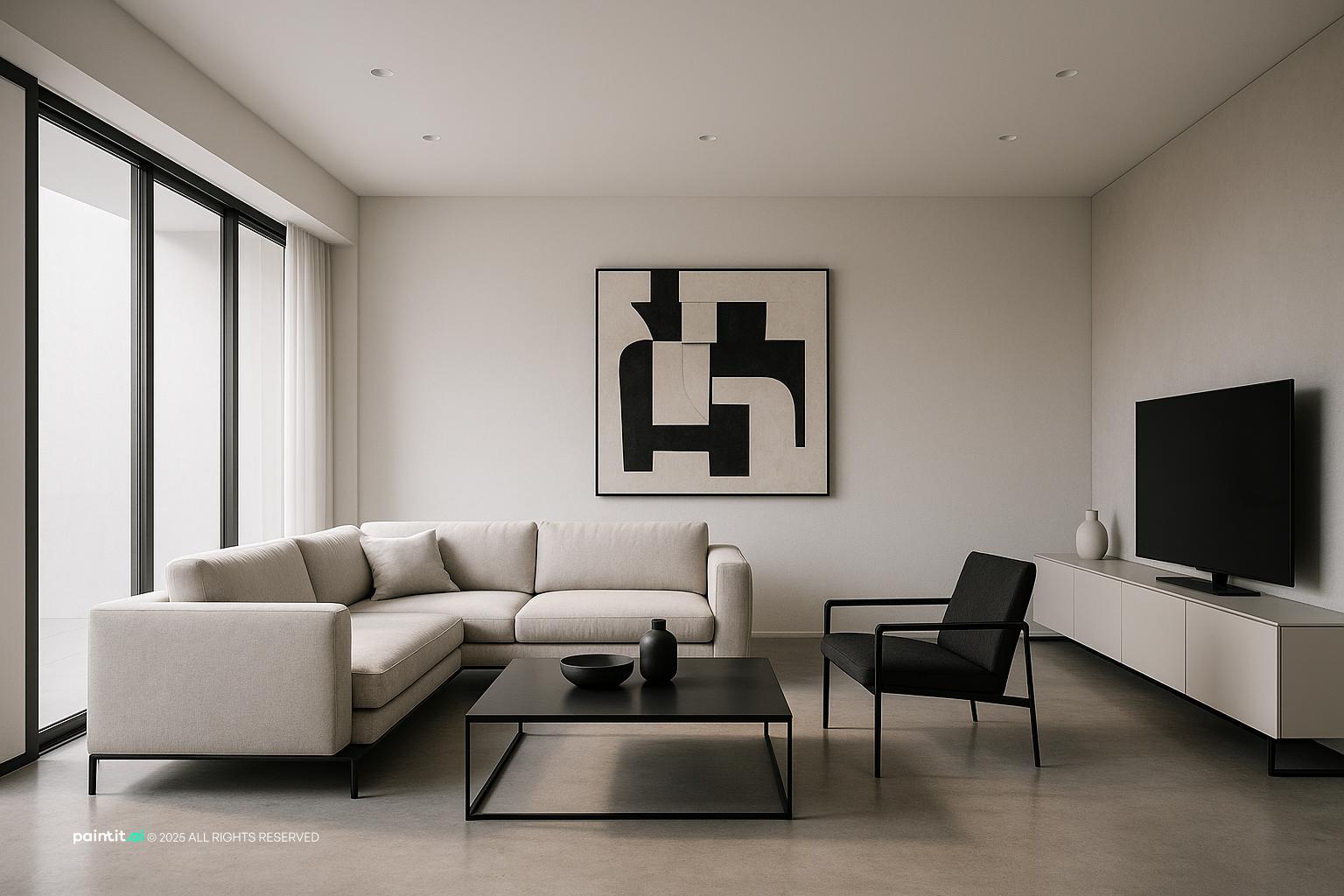
Sleek Modern Living Room Design with Black Contrast pairs black contrast, clean-lined furniture and layered neutrals in a living room setting.
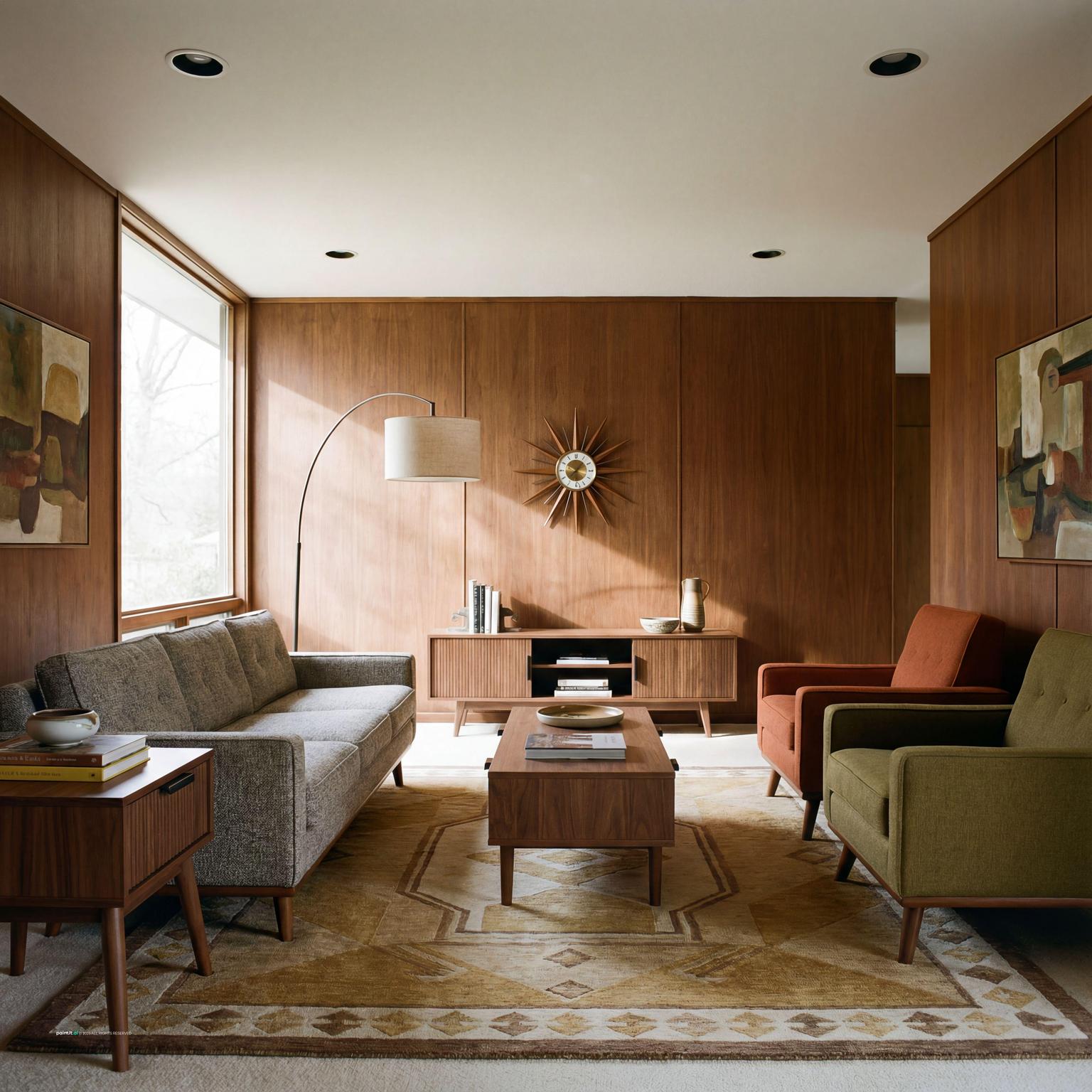
Mid-Century Modern Living Room Design layers black contrast, warm wood and layered neutrals in a living room setting.
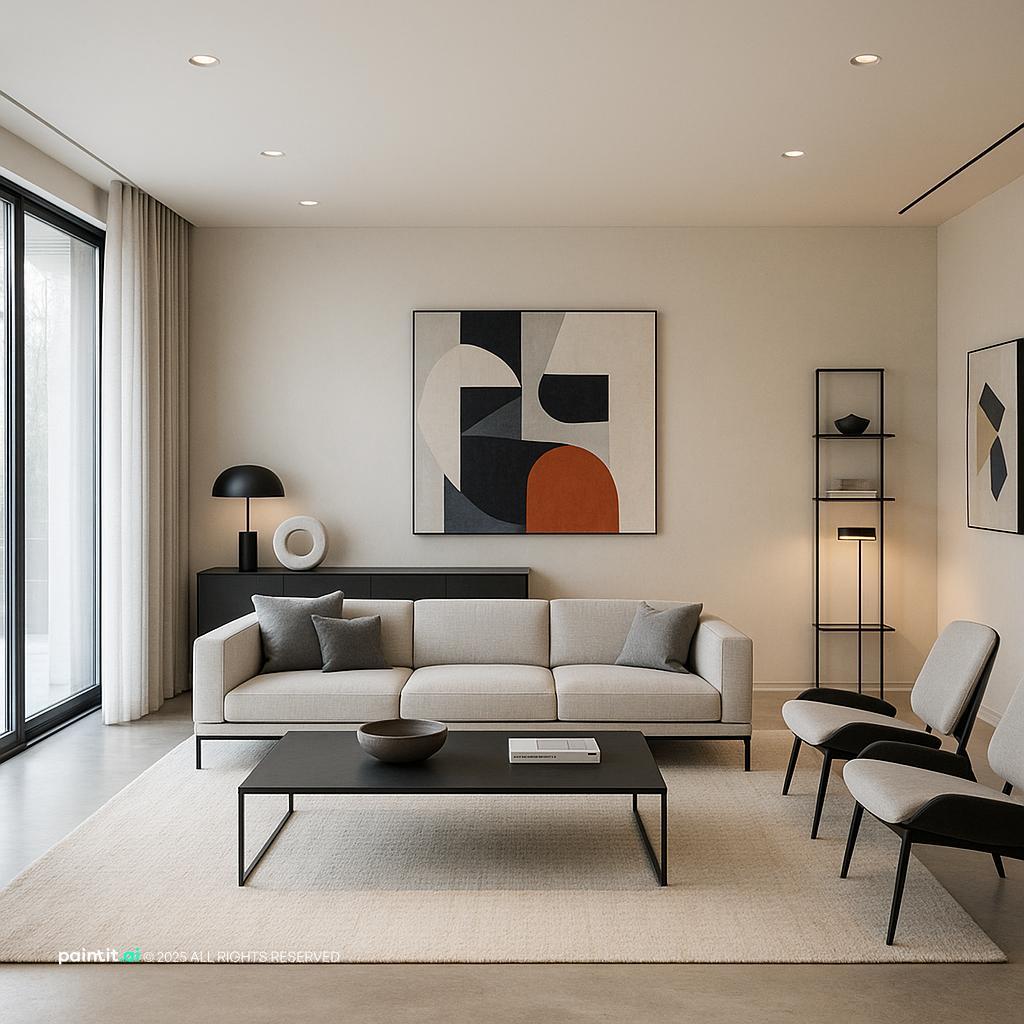
Modern Living Room Design for 2025 with Black Contrast anchors black contrast, clean-lined furniture and layered neutrals in a living room setting.
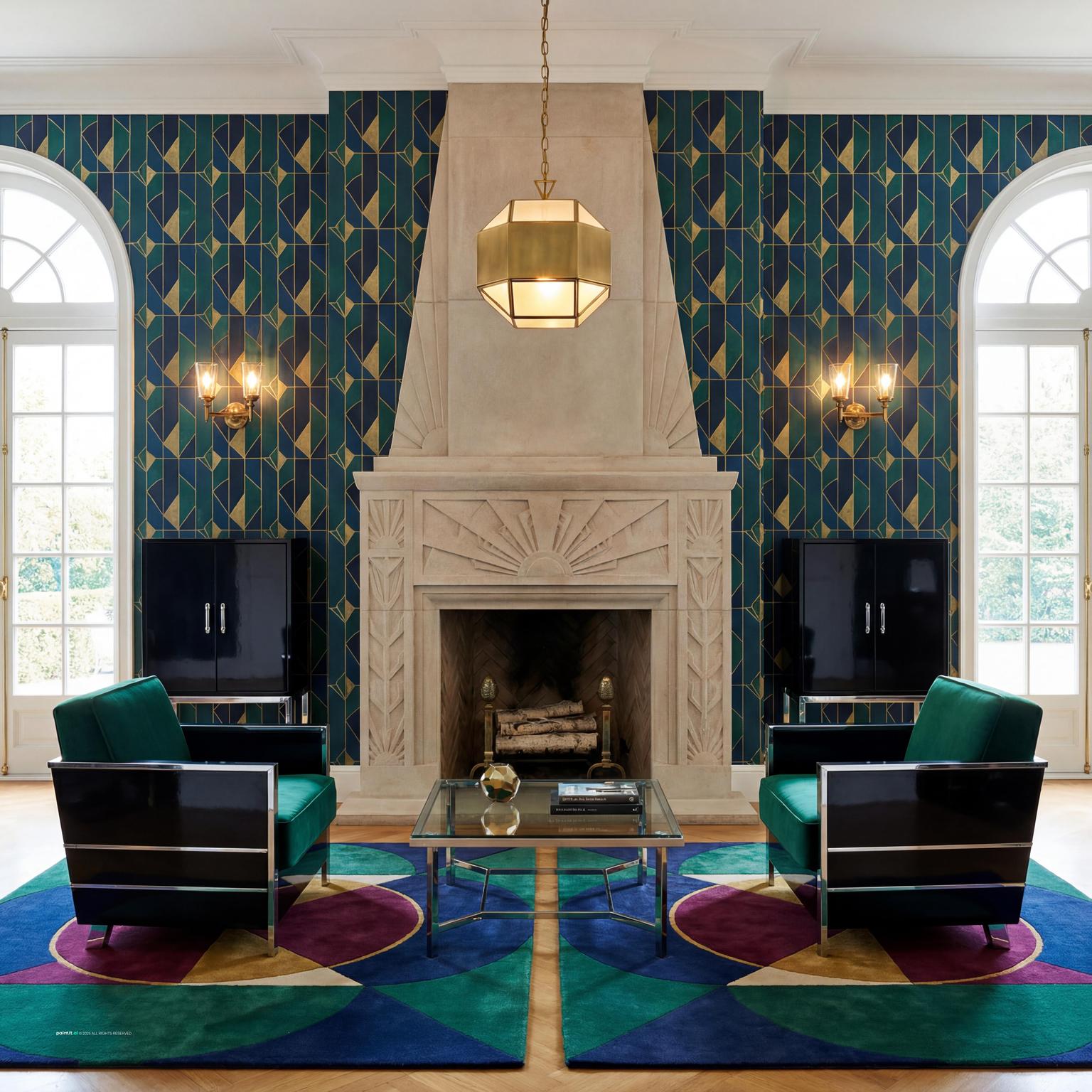
Stunning Art Deco Living Room Design softens black contrast, metal accents and dark contrast in a living room setting.
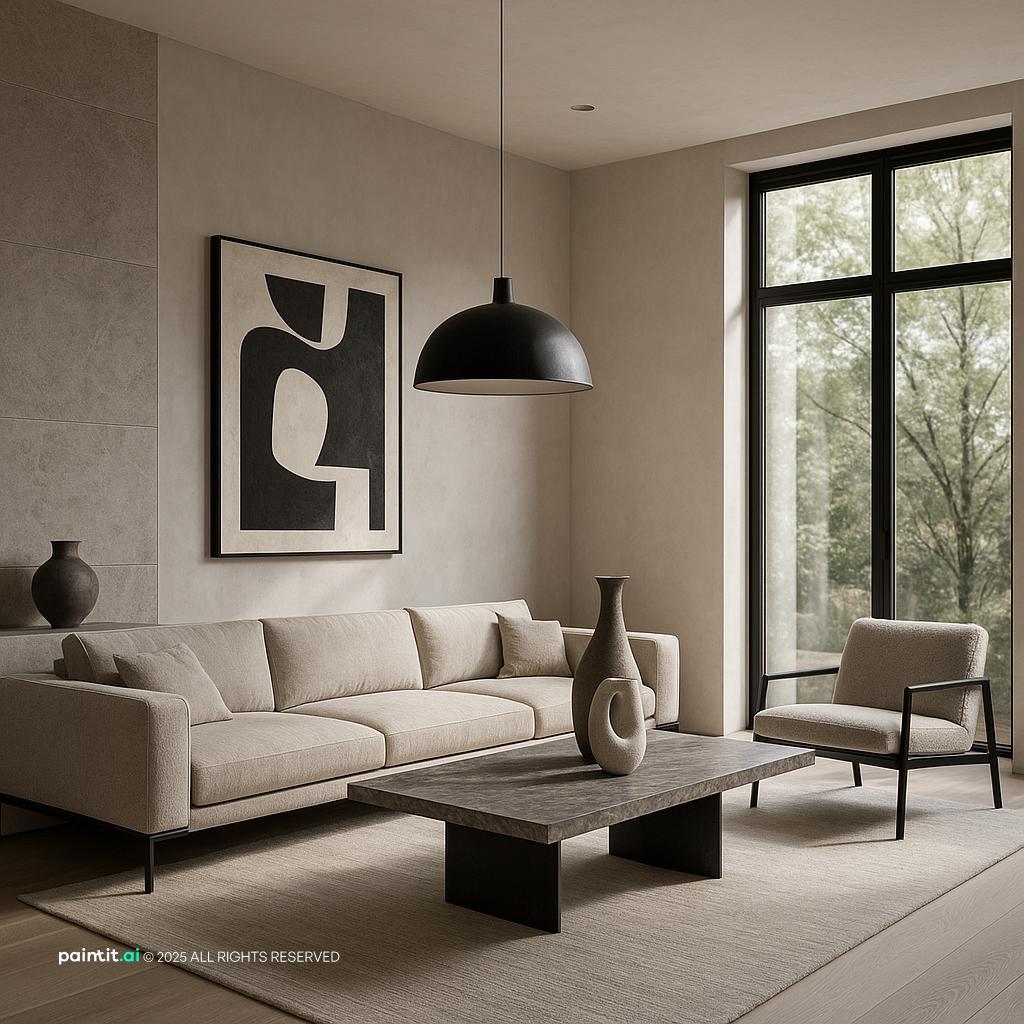
Stylish Modern Living Room Design uses black contrast, metal accents and clean-lined furniture in a living room setting.
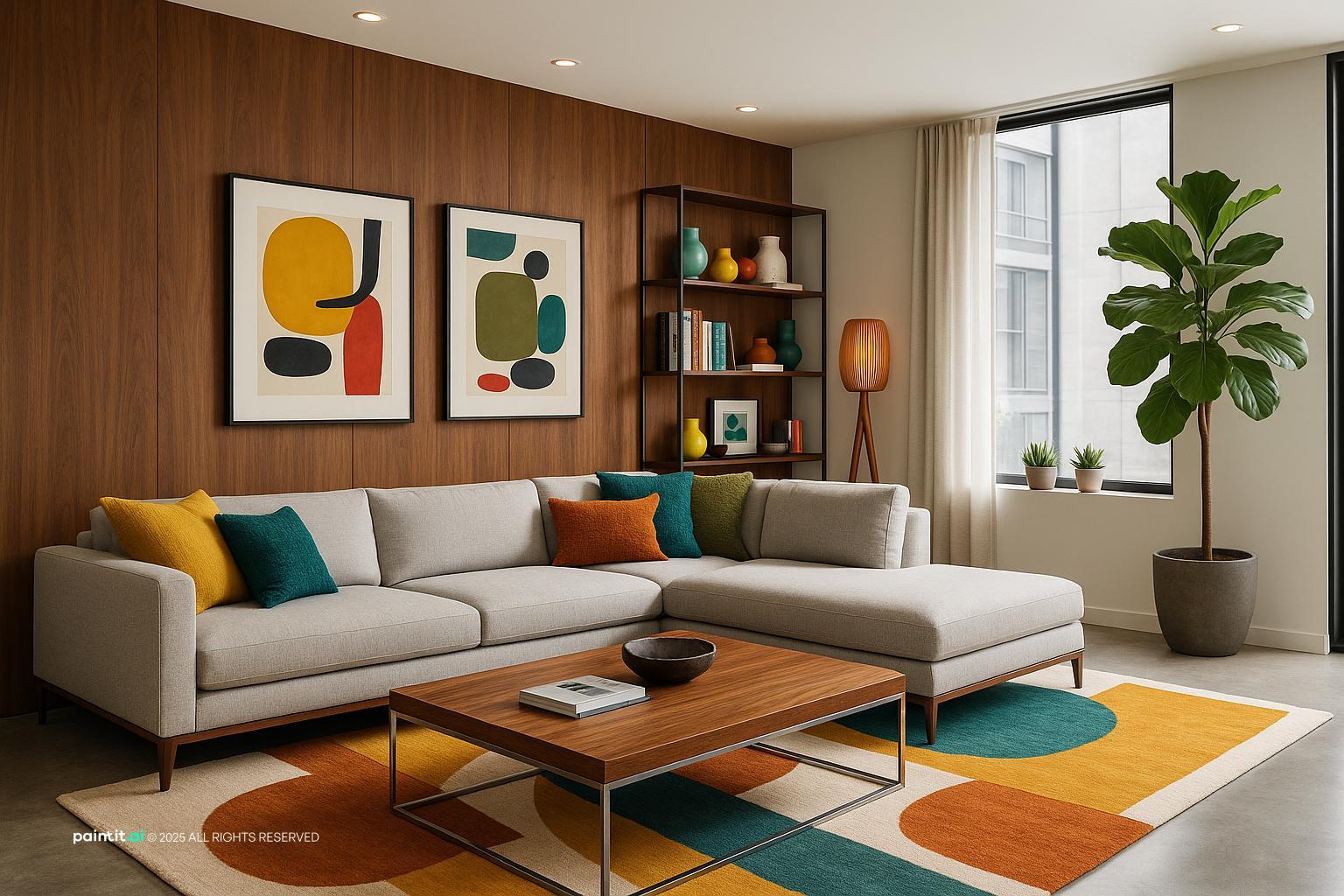
Black Living Room Ideas with Black Contrast and Warm Wood balances black contrast, warm wood and soft textiles in a living room setting.
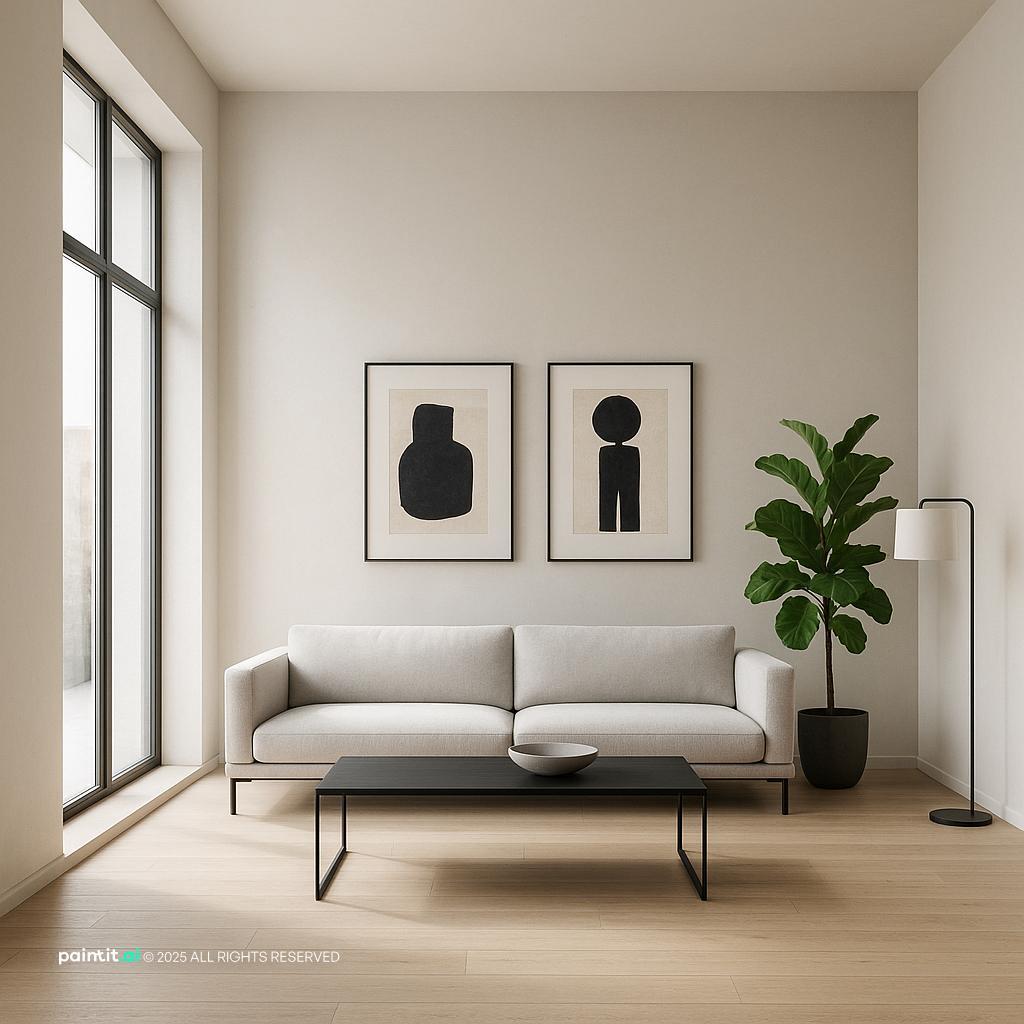
Stunning Minimalist Modern Living Room Design pairs black contrast, layered neutrals and dark contrast in a living room setting.
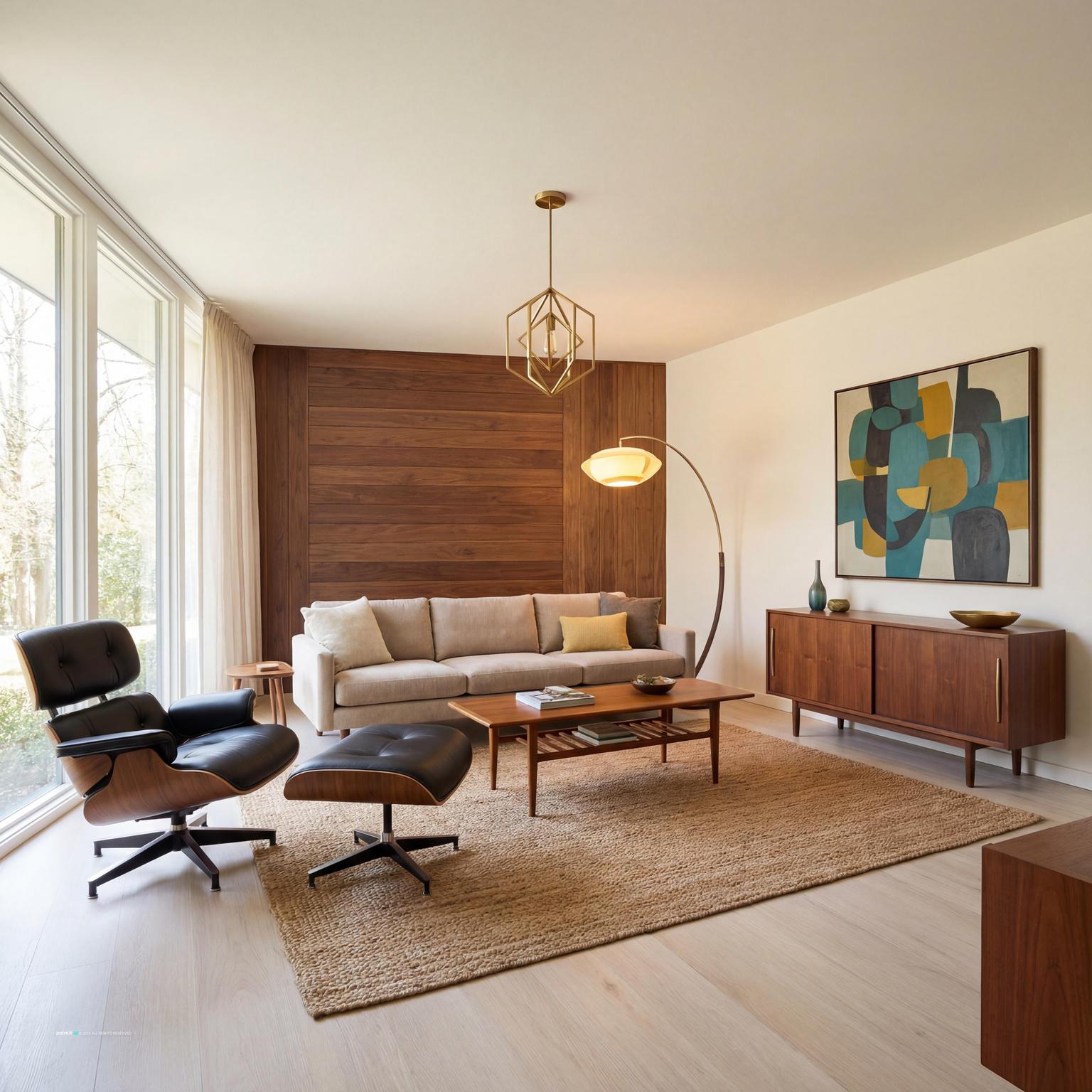
Stylish Mid-Century Modern Living Room layers black contrast, warm wood and soft textiles in a living room setting.
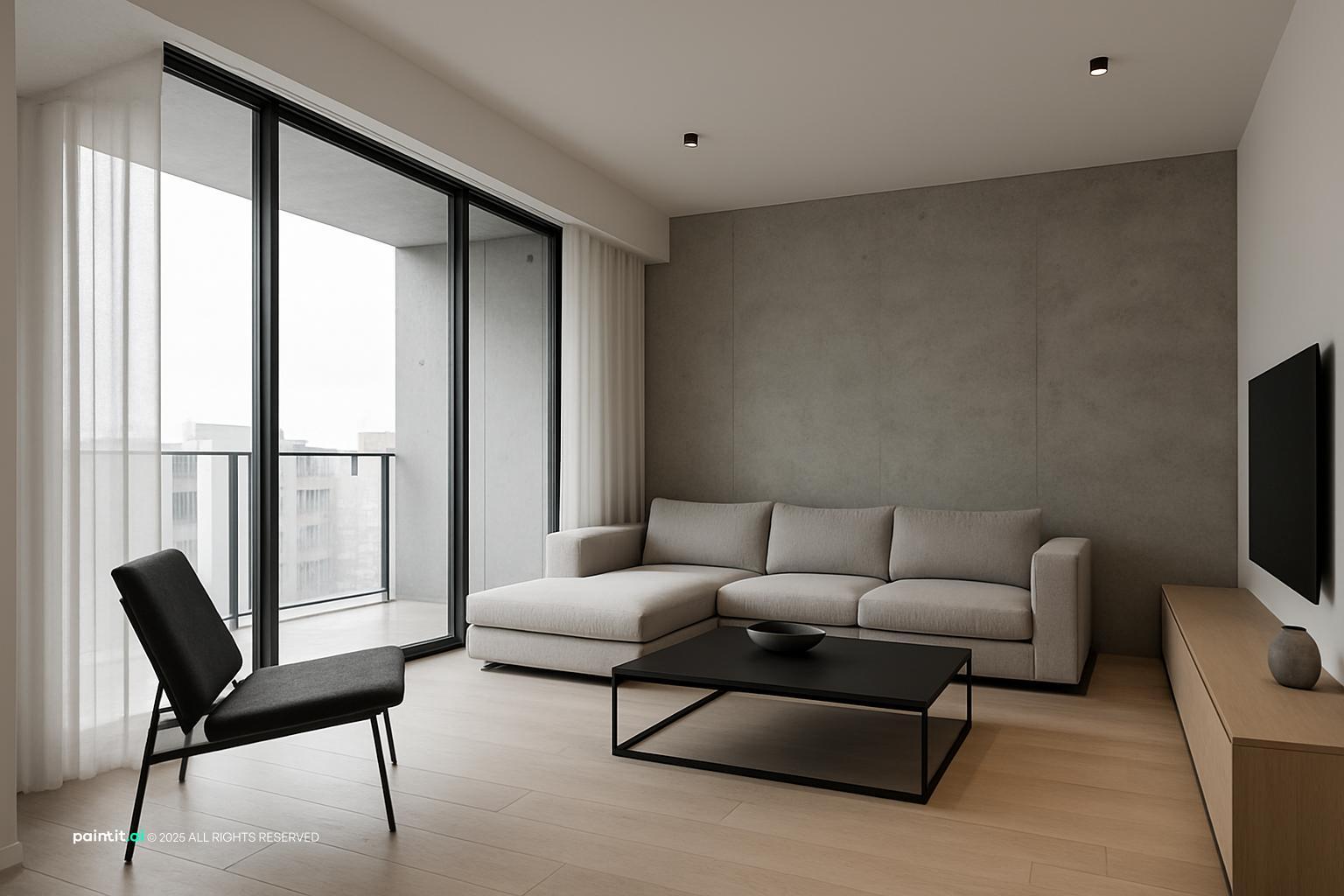
Black Living Room Ideas with Black Contrast and Clean-lined Furniture anchors black contrast, clean-lined furniture and layered neutrals in a living room setting.
Black Living Room Ideas with Black Contrast and Dark Contrast softens black contrast, dark contrast and natural light in a living room setting.
Black is not always neutral. Some black paint color leans blue, some reads charcoal, some has brown warmth, and some can look slightly green in certain light. Test samples beside your flooring, sofa fabric, and trim before choosing. A blue-black can feel crisp with white and chrome, while a brown-black usually works better with beige, camel, rust, and walnut.
For broader palette planning, use best living room colors to compare black with companion shades like sage, ivory, taupe, olive, terracotta, and warm gray. What to avoid: choosing black from a tiny paint chip without checking it in morning, afternoon, and evening light.
Flat black walls can hide some wall imperfections, but they mark easily in a living room that gets daily use. Eggshell is often more practical for family spaces because it wipes better. Satin can work well on trim, doors, and built-ins. Glossy black has impact, but it reflects every bump, brush mark, and uneven patch.
Use finish contrast on purpose. Matte walls with a satin black fireplace surround can feel layered. A matte black metal lamp beside a polished stone table adds another level. Avoid making every black surface the same sheen. Even expensive furniture can look flat when all the finishes behave the same way.
The most convincing black rooms rarely rely on paint alone. Mix a matte wall with a wood coffee table, linen curtains, a wool rug, metal accents, and maybe stone or marble on a side table. The materials create contrast without forcing you to add more colors.
This is where modern black living room ideas become more livable. Clean lines feel warmer when they sit beside tactile finishes. Avoid using only hard surfaces like glass, metal, and lacquer unless the room has generous textiles and soft seating to balance them.
Textiles decide whether the room feels sharp, cozy, formal, or relaxed. Velvet throw pillows catch light beautifully against a black sofa. Linen curtains soften the edge of black walls. A wool or jute-blend neutral rug can make the seating area feel warmer underfoot.
For a calm room, choose throw pillows in cream, clay, olive, ochre, or a muted pattern. For a more graphic room, use black, white, and one controlled accent color. Avoid too many small high-contrast patterns. Against black, they can look busy faster than they would in a pale room.
Black pairs well with brass, bronze, chrome, nickel, iron, and aged steel, but each metal changes the room. Brass and bronze add warmth. Chrome and polished nickel feel cleaner and more contemporary. Blackened steel or iron suits industrial and rustic rooms.
Use metal in repeated but limited places: lamp, curtain rod, picture frame, coffee table base, cabinet pull. Avoid mixing every metal finish in the same sightline unless the room already has a collected, eclectic style. Repetition makes the choices look deliberate.
Black looks best when light has direction. Aim a floor lamp across a textured wall, add a table lamp beside a reading chair, or use a picture light over wall art. Wall washers, sconces, and shelf lighting can make black surfaces feel dimensional instead of blank.
Natural light matters too. In a bright living room, black can feel crisp and architectural. In a north-facing or shaded room, use warmer bulbs, lighter textiles, and reflective accents to keep the room from feeling closed in. Avoid relying only on recessed ceiling lights. They can create harsh pools of light while leaving the corners dull.
A black feature on one side of the room needs an answer somewhere else. If the sofa is black, repeat black in fireplace tools, frames, lamp shades, or console legs. If the walls are black, bring lighter pieces into the center so the room does not become a dark perimeter around heavy furniture.
Balance does not mean symmetry. It means the eye has a reason to move around the room. A black media wall can be balanced by dark-framed artwork opposite it, or a black chair can answer black window trim. Avoid placing all the dark weight on one wall unless the room is meant to focus there.
Paintit.ai lets you upload your living room and test black walls, a black sofa, rugs, lighting mood, materials, and styling before you buy paint or furniture. It is especially useful when you want to keep existing floors, brick, curtains, or a sectional and only change the parts that will make the biggest difference.
A practical workflow is to start with one complete version in AI Room Design, then refine in shorter steps: try black walls, switch to a black accent wall, soften with beige or sage, add wood tones, then compare warmer lighting. That step-by-step process is similar to how to redesign a living room with Paintit.ai, but focused on making black feel right in your specific space.
Black works well with warm white, cream, beige, taupe, camel, sage, olive, rust, walnut, brass, and soft gray. Pick one or two main companion colors first, then repeat them in the rug, curtains, throw pillows, wall art, and metal accents so the room feels edited.
Start with one black anchor, such as black walls, a black sofa, or a black accent wall. Then add contrast with a neutral rug, wood tones, textured textiles, layered lighting, wall art, and a few smaller black details repeated around the room.
Yes, black can be very good for a living room when the room has enough contrast, lighting, and texture. It can make the space feel grounded and architectural, but it needs clear layout choices and softer materials so it does not feel heavy.
Use warm bulbs, table lamps, floor lamps, linen or wool textiles, wood furniture, soft curtains, and a neutral rug. Also edit clutter. Since 8.8% of Paintit.ai prompts include negative modifiers like without or no clutter, we see this concern often with dark rooms.
Use one wall if the room is small, low-light, or already has dark furniture. Paint all walls black when you want an enveloping look and can balance it with light seating, strong art, layered lighting, and enough natural light.