
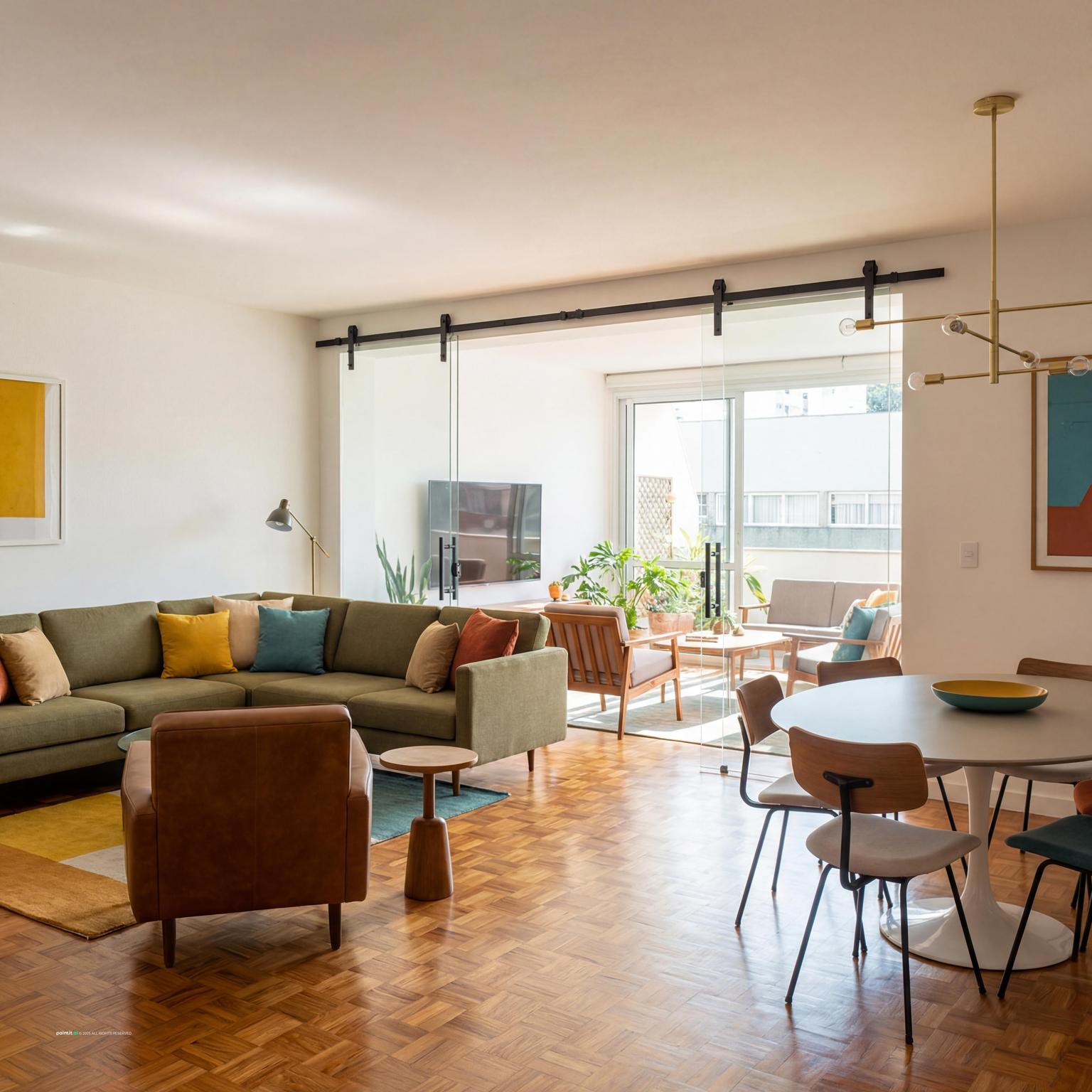
Mid-Century Modern Living Room with Scandinavian Touches
Mid-Century Modern Living Room with Scandinavian Touches uses black contrast, brown warmth and warm wood in a living room setting.
Black and brown living room ideas work when you treat the palette as a set of choices, not just two dark colors sitting in the same room. You need contrast, texture, clean undertones, and enough light so the room feels grounded instead of heavy. In Paintit.ai behavior data, color is the most popular modifier, appearing in 27.6% of prompts. That tracks with what we see in real room uploads: one shade of brown can make a room feel warm and expensive, while another can turn muddy fast. The type of black matters too. Matte black metal, soft charcoal paint, and glossy black furniture do very different jobs.
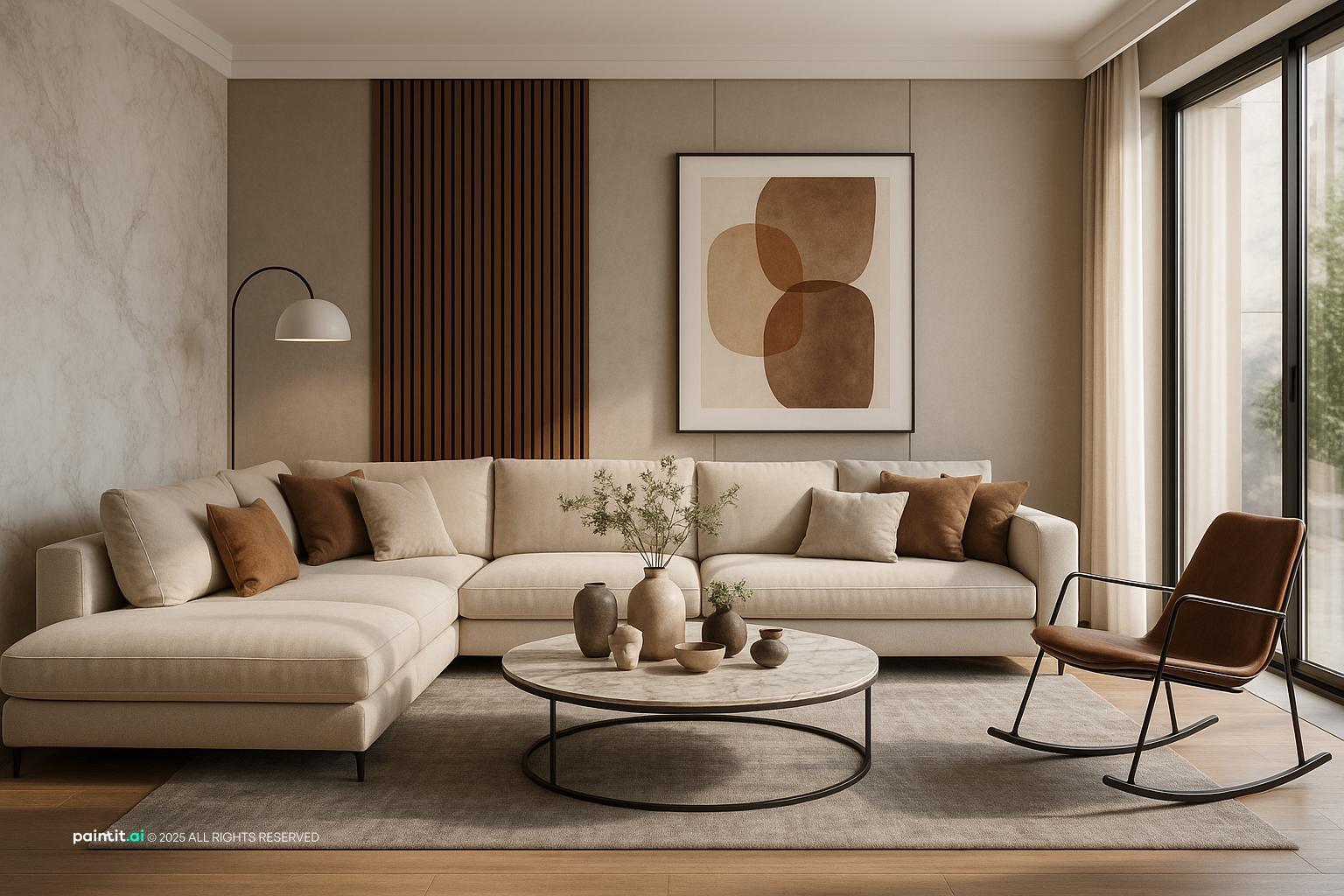
Black gives a living room definition. Think window frames, lamps, coffee tables, shelving, art frames, or a measured accent wall. Brown brings the warmth through leather, walnut, oak, rattan, brick, or wood flooring. The best rooms usually let one color lead while the other tightens the composition.
If you are still deciding whether this palette belongs in your home, compare it with other best living room colors before you commit. Black and brown is more dramatic than beige or greige, but it can still feel relaxed when you add a neutral rug, varied textures, and layered lighting. The mistake is not choosing dark colors. The mistake is letting every surface become the same visual weight.
Use the first gallery to check proportion: how much black appears on walls or metal finishes, where brown shows up in sofas and wood tones, and which lighter surfaces keep the room from closing in.
Mid-Century Modern Living Room with Scandinavian Touches uses black contrast, brown warmth and warm wood in a living room setting.
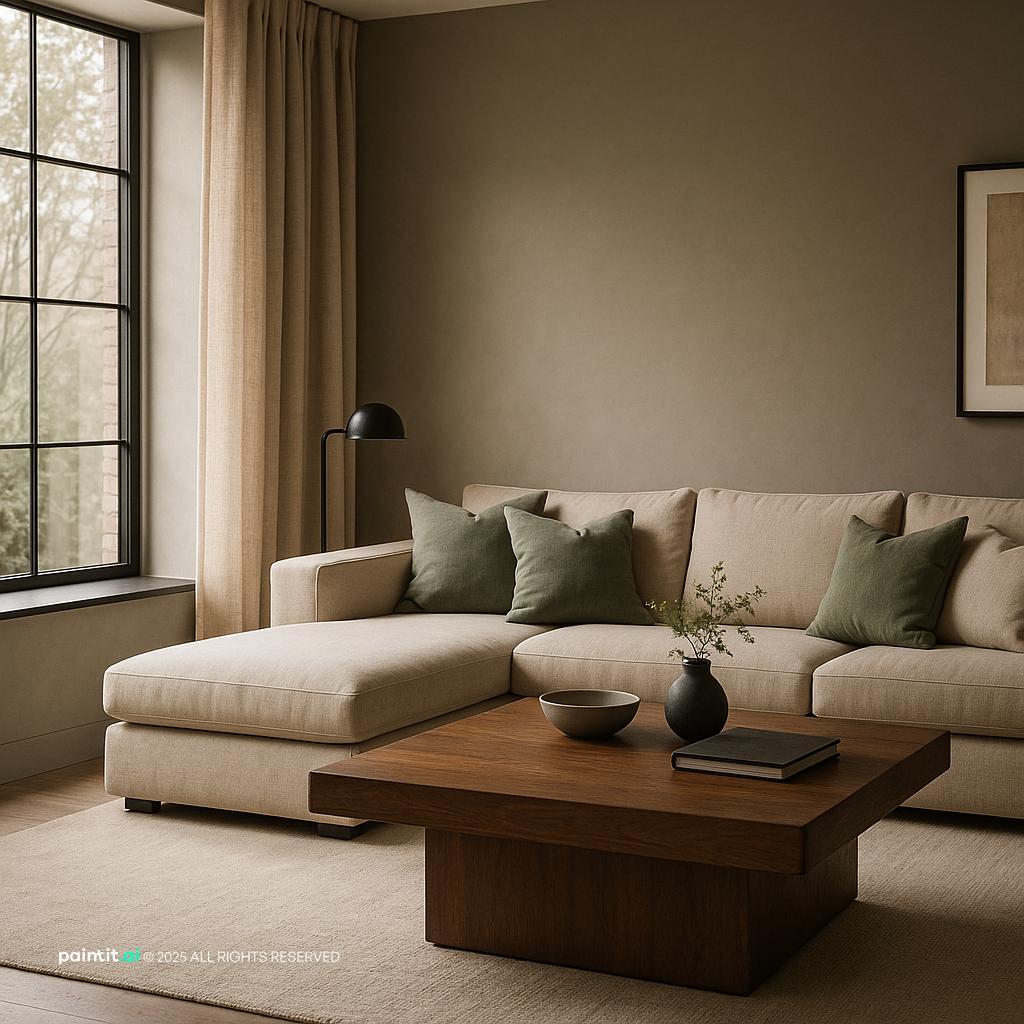
Elegant Contemporary Living Room Design balances black contrast, brown warmth and warm wood in a living room setting.
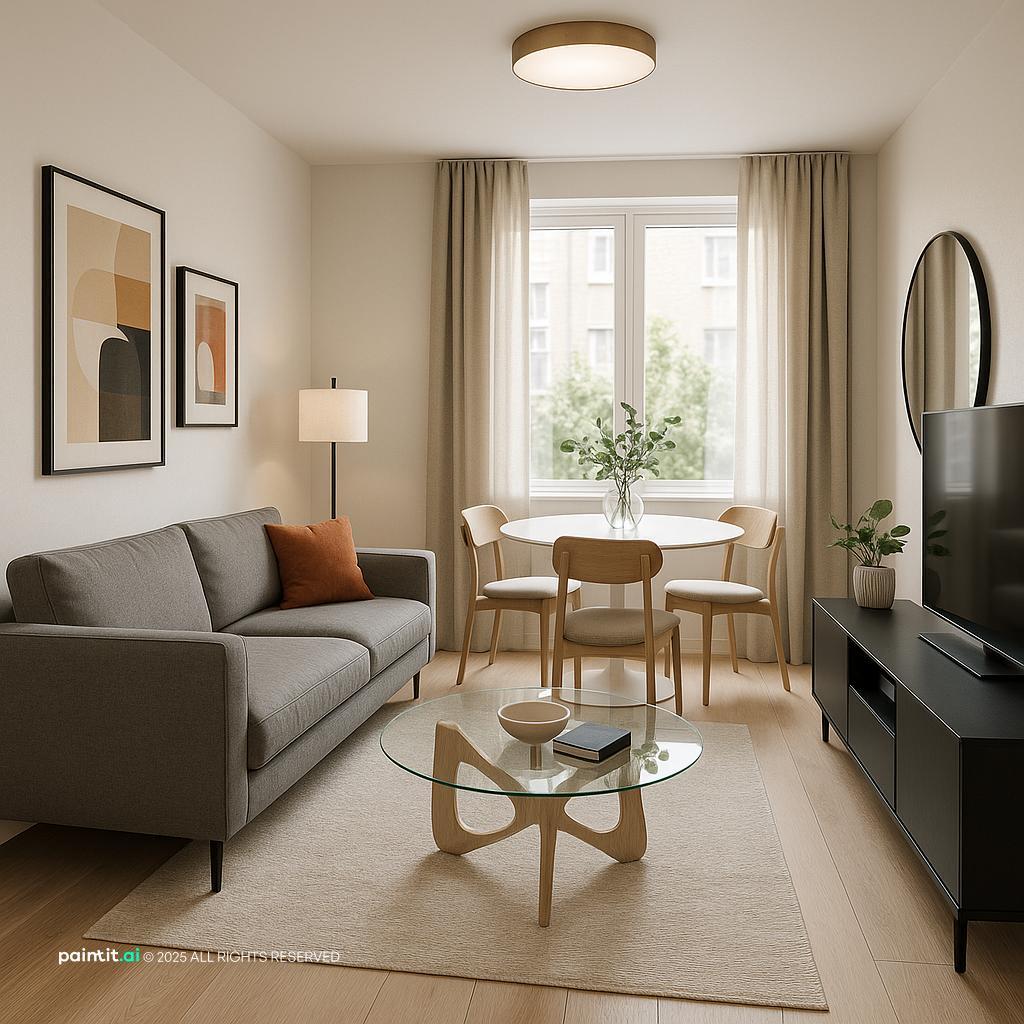
Modern Lively Living Room Design Inspiration pairs black contrast, brown warmth and layered neutrals in a living room setting.
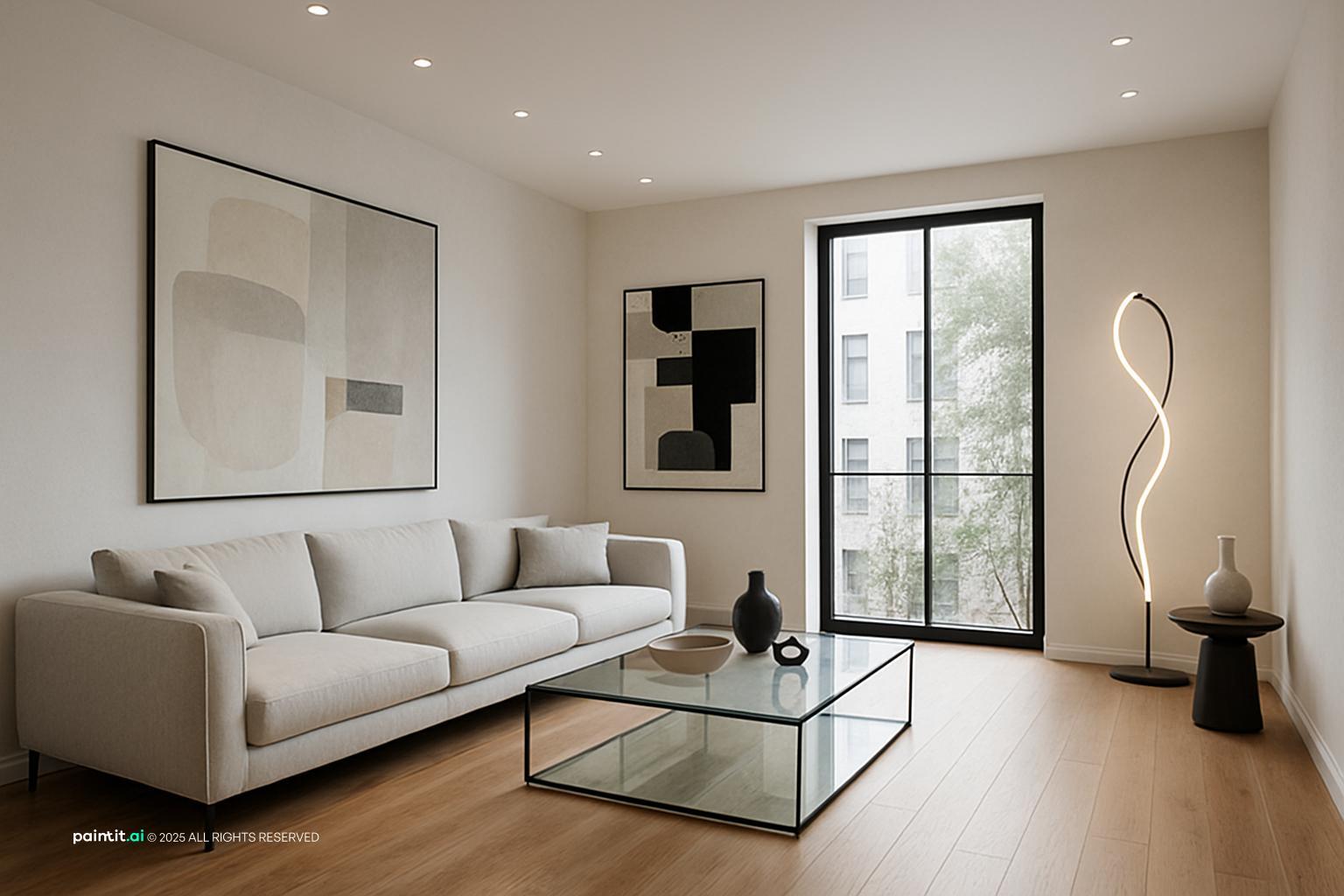
Stunning Contemporary Living Room Design layers black contrast, brown warmth and clean-lined furniture in a living room setting.
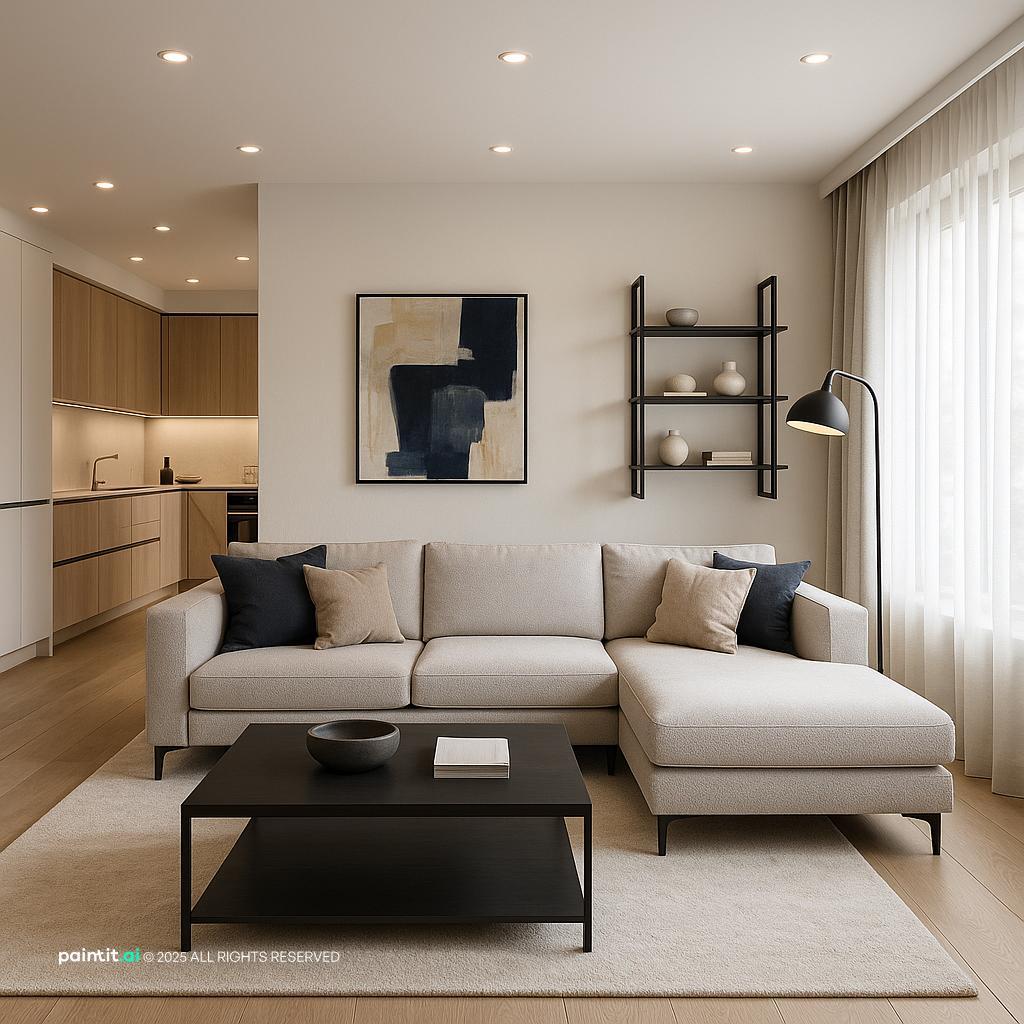
Stylish Modern Living Room Design anchors black contrast, brown warmth and metal accents in a living room setting.
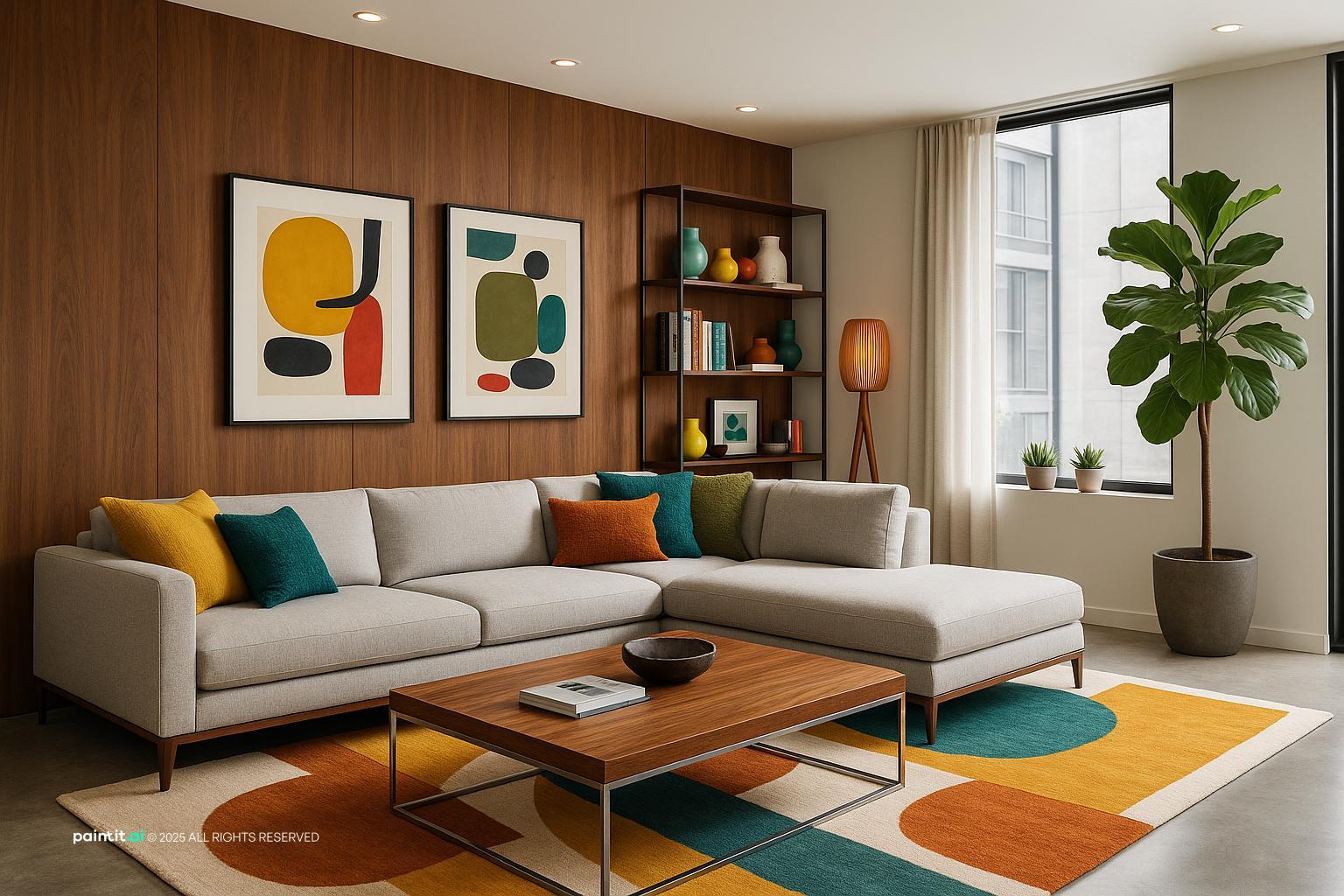
Black and Brown Living Room Ideas with Black Contrast and Brown Warmth softens black contrast, brown warmth and warm wood in a living room setting.
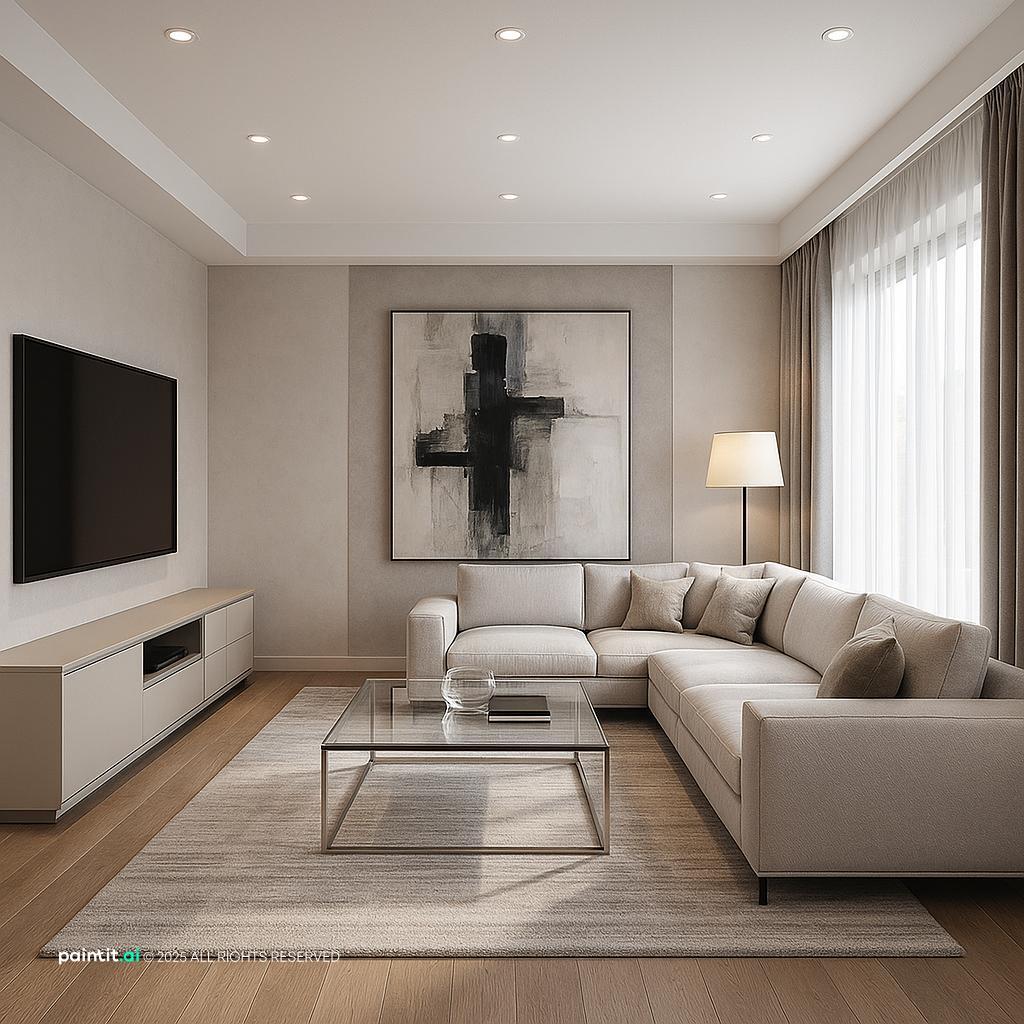
Modern Living Room Design for 2025 uses black contrast, brown warmth and layered neutrals in a living room setting.
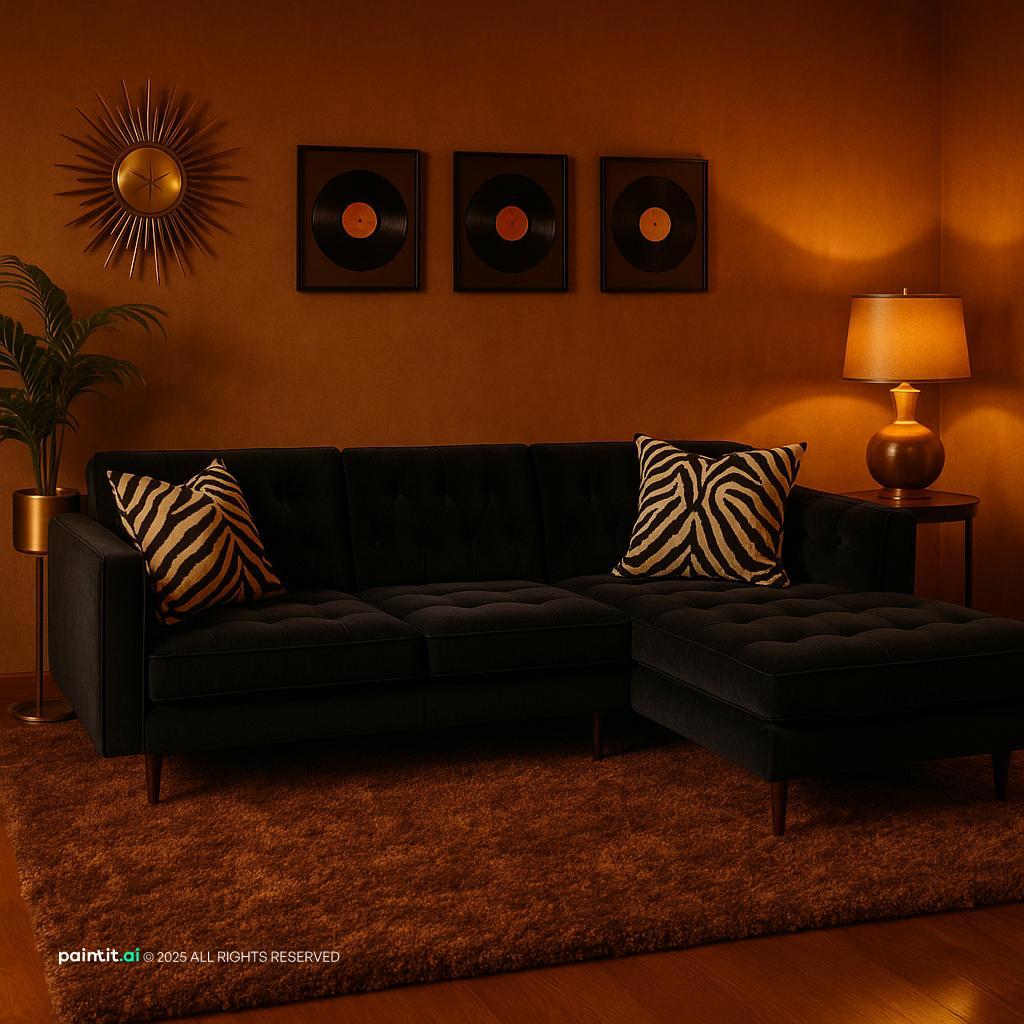
Glam Blaxploitation Living Room Design balances black contrast, brown warmth and soft textiles in a living room setting.
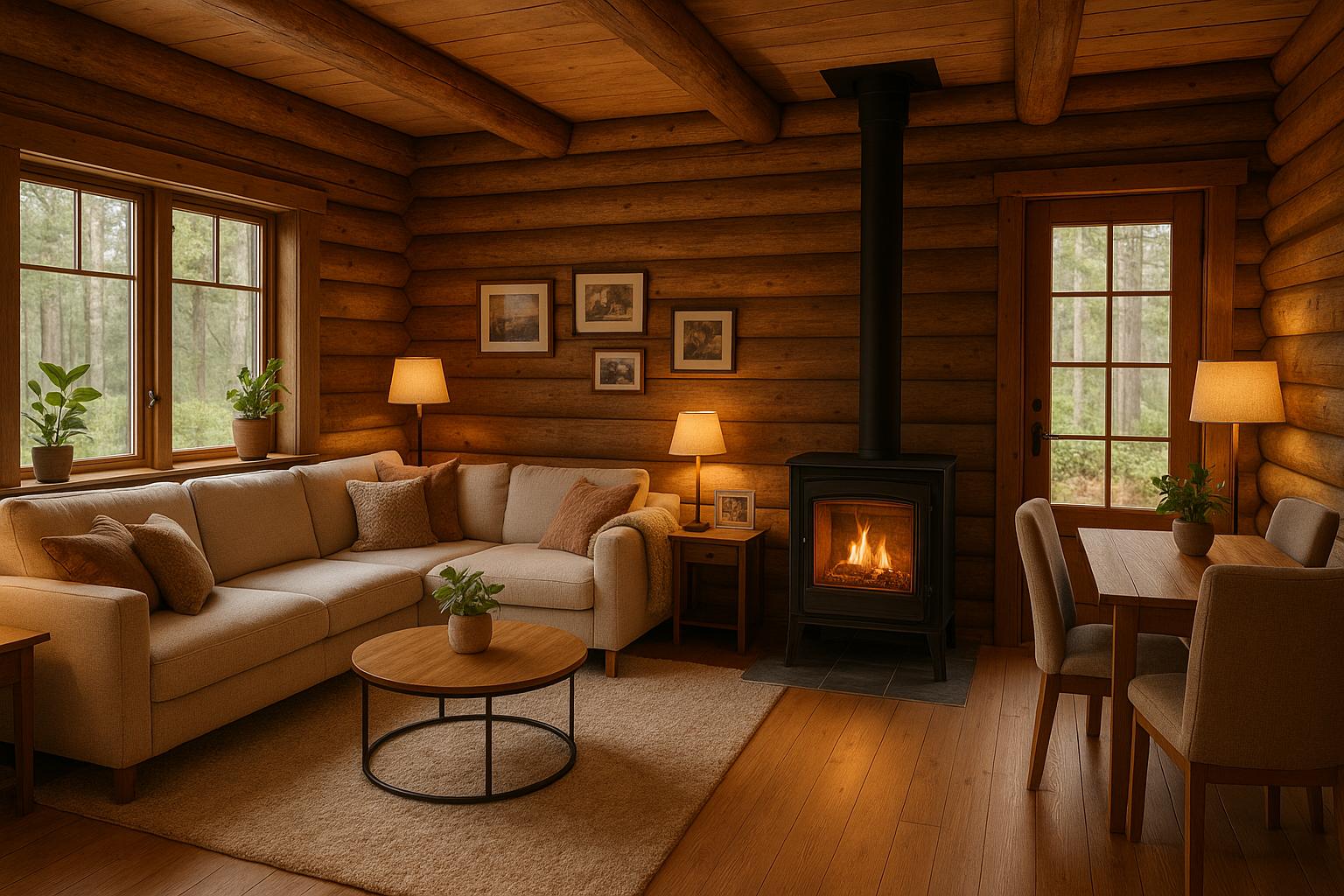
Cozy Cabin Living Room Design pairs black contrast, brown warmth and soft textiles in a living room setting.
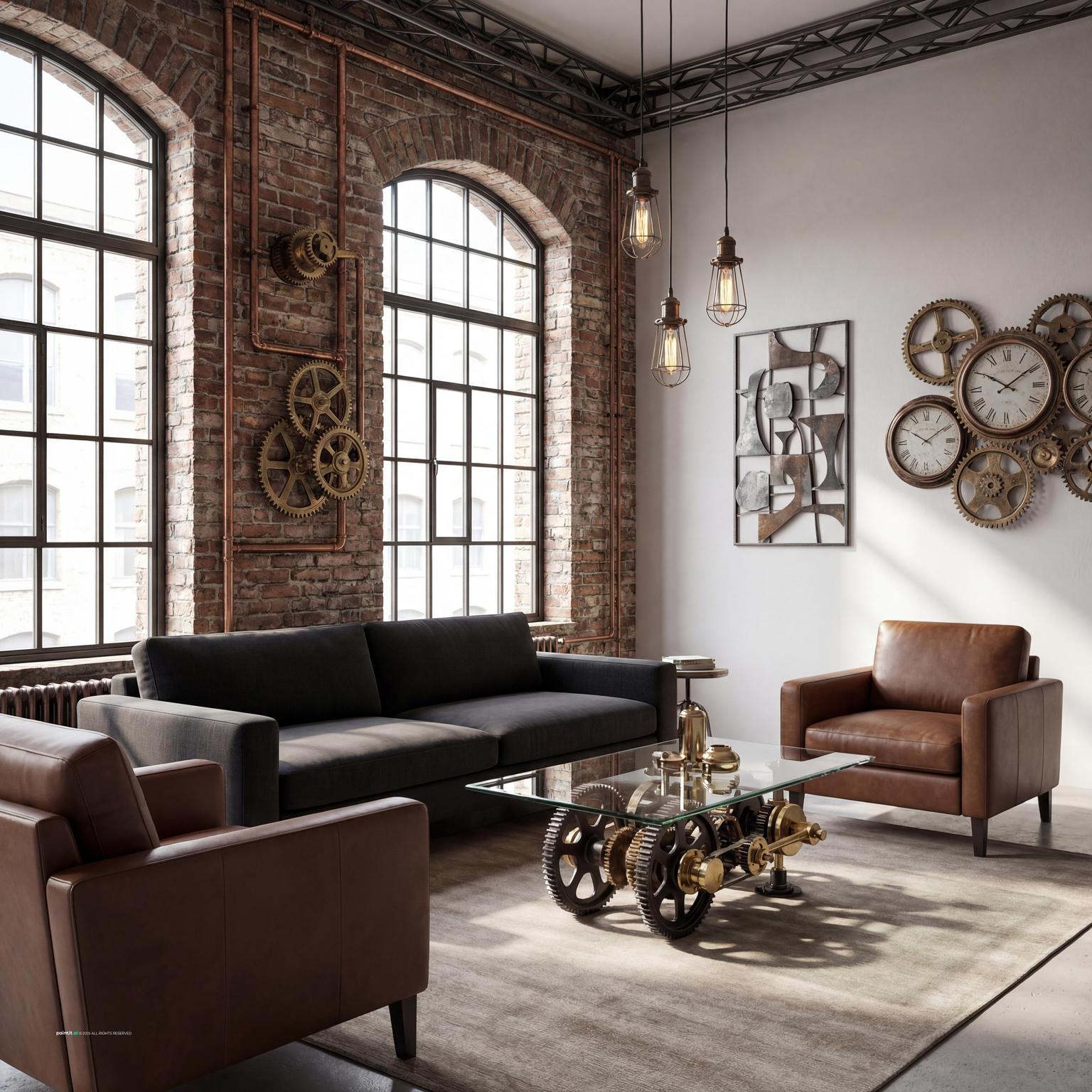
Steampunk Contemporary Living Room Design layers brown warmth, metal accents and layered neutrals in a living room setting.
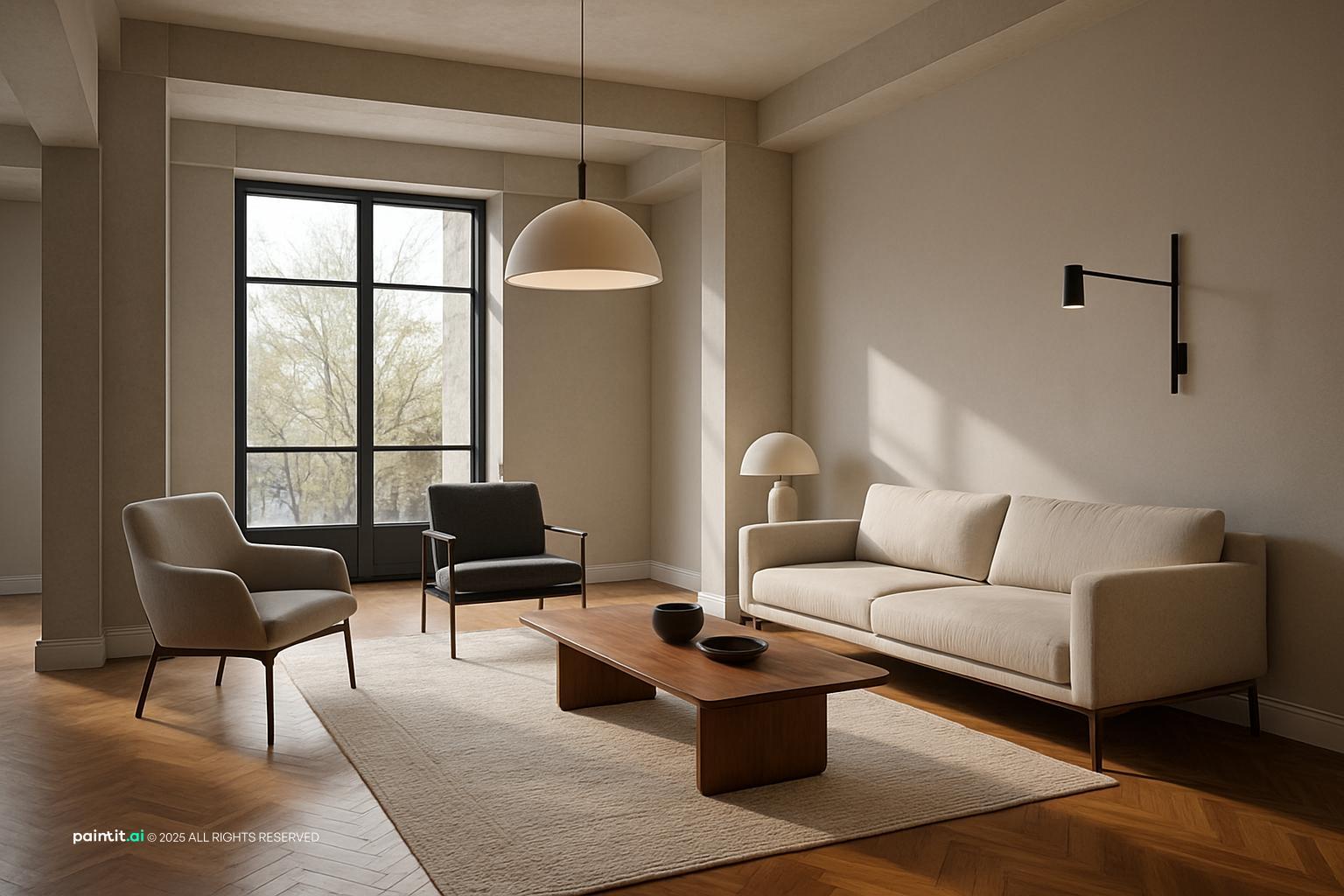
Black and Brown Living Room Ideas with Black Contrast and Brown Warmth with Clean-lined Furniture anchors black contrast, brown warmth and clean-lined furniture in a living room setting.
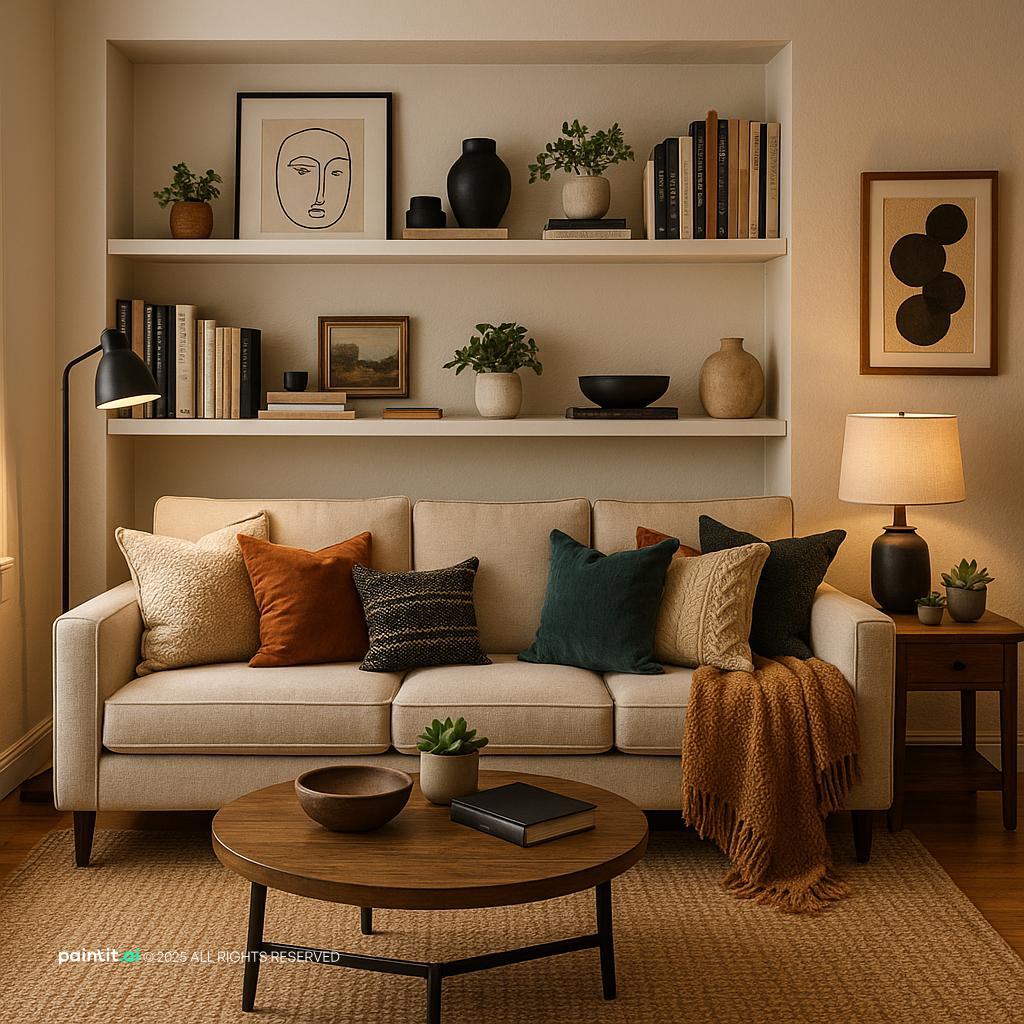
Cozy Living Room Transformation softens black contrast, brown warmth and soft textiles in a living room setting.
Decide whether black or brown will carry the room. A brown sofa, brown wood floor, or walnut media wall can lead, while black appears in slimmer details such as table legs, lamp shades, picture frames, and curtain rods.
Why it works: black and brown get muddy when they fight for the same amount of attention. In Paintit.ai tests, we often see stronger results when one color owns the room and the other sharpens the edges. If the room already has a dark brown floor, I would be careful with a black wall and black sofa unless the space has strong daylight and high ceilings.
A brown leather sofa is often the piece people want to keep, especially when it is large, expensive, or still in good condition. The phrase brown leather sofa black accents is a useful design direction: keep the sofa, then add black through a metal coffee table, black-framed wall art, a slim floor lamp, or dark cabinet hardware.
Paintit.ai data shows that 12.0% of prompts include keep or don’t change constraints, and this is exactly that kind of room. You do not need to replace everything. Keep the heavy brown element and change the supporting pieces, which fits the broader pattern where swapping appears as a top action in 14.1% of prompts.
A rug in oatmeal, warm gray, ivory, taupe, or beige can separate a dark sofa from dark floors. Choose one large enough for at least the front legs of the sofa and chairs to sit on it. In most living rooms, the small floating rug is the first thing that makes the seating area feel accidental.
What to avoid: a black rug under a brown sofa on a brown floor. It can swallow the whole seating zone. If you want a dark rug, look for pattern, carved pile, or a faded vintage design with tan, cream, charcoal, and rust so the floor still has movement.
A practical starting point is 60% light or mid-tone neutral, 30% brown, and 10% black. For example: warm white walls and curtains, a brown sofa and wood furniture, then black in lighting, frames, and side tables.
This ratio is not a law. It is a guardrail. It helps you avoid the cave effect. If your room is bright and open, you can use a bit more black. If it is narrow, shaded, or has low ceilings, keep black as an outline rather than a large surface.
Black is visually heavier than most browns. Use it in slim profiles: a narrow metal console, a black picture rail, a thin-legged coffee table, a sconce, or a fireplace surround. Let brown appear in fuller forms like a sofa, lounge chair, wood cabinet, or chunky side table.
Why it works: this gives the room structure without making it feel boxed in. A black blocky sectional, black curtains, black wall, and dark brown wood floor can work in a loft. In a typical living room, it often looks overbuilt before you even add decor.
Instead of saying you want brown furniture, choose a wood direction. Walnut gives a deeper modern look. Oak feels lighter and more casual. Espresso-stained wood reads more formal. Reclaimed wood adds texture and age.
This is where a black and wood living room becomes easier to control. In Paintit.ai professional-grade prompts, we often see cleaner results when people specify walnut, oak, matte black metal, or distressed leather instead of typing only brown and black. Material language gives the room depth before you add a single accessory.
A black accent wall can be beautiful behind a fireplace, TV, built-in shelving, or a sofa, but it needs a job. It should frame something important, not randomly darken the smallest wall in the room.
What to avoid: placing a black wall opposite a tiny window in a low-light room. If you still want drama, try charcoal limewash, dark brown plaster, smoked wood paneling, or black built-ins with open shelves. Texture and shadow variation matter more than just going darker.
Throw pillows are the easiest way to tie a brown sofa to black accents. Try combinations like cream boucle, black-and-tan stripe, camel velvet, rust linen, and a small-scale geometric print with charcoal.
Do not use five unrelated pillows just to add color. Repeat at least one tone from the sofa and one tone from the black decor. That repetition makes black and brown living room decor look intentional rather than pieced together at the end.
Large wall art with cream, parchment, sand, muted green, tan, or soft gray can interrupt dark surfaces. Black frames are useful, but the art itself should not always be black-heavy.
Best use case: a brown sofa under a light abstract canvas with a thin black frame. The frame connects to the lamps and coffee table, while the pale artwork keeps the upper wall from feeling empty or severe.
Matte black metal works well with cognac leather, walnut, oak, jute, brick, and woven baskets. The contrast makes each surface clearer: smooth against grainy, cool against warm, hard against soft.
Why it works: many flat rooms are not really suffering from the color palette. They are suffering from too many similar surfaces. In our room tests, adding matte black metal finishes to a dark brown sofa room often fixes a dated look faster than replacing the sofa.
Dark furniture has more visual weight, so it needs cleaner traffic paths. Leave enough space between the sofa and coffee table for comfortable movement, and avoid pushing dark side chairs into corners where they visually disappear.
If the room is small, choose a leggy black coffee table, open shelving, or a glass-topped table instead of a solid black block. Shape matters as much as color because light needs places to pass through.
A modern black and brown living room usually looks better with fewer accessories, stronger silhouettes, and cleaner spacing. Use one substantial coffee table, one large piece of art, one sculptural lamp, and a restrained pillow mix instead of many small dark objects.
What to avoid: cluttered shelves filled with black and brown decor pieces. The palette already has intensity. Leave some shelves partly empty, add a pale ceramic object, and vary heights so the eye has a place to rest.
Curtains can make black and brown feel more livable. Choose warm white, flax, mushroom, tobacco linen, or soft taupe. Hang them high and wide so the window looks larger and the wall feels taller.
Black curtains can work, but they need enough daylight and a strong reason, such as a media room or a library-style living room. In most homes, black curtain rods with lighter fabric are easier to live with.
If you are unsure how much black to add, use a staged approach: first try black lamp shades and frames, then a black coffee table, then a darker wall or cabinet only if the room still feels balanced. This matches how many people refine design prompts with a bit more, a bit less, or instead.
For a more controlled process, follow our guide on how to redesign a living room with Paintit.ai and compare versions before buying furniture. The strongest brown and black living room ideas usually come from adjusting proportion, not copying one photo exactly.
Use the second gallery to compare style directions: sleek black metal with walnut, rustic brick with leather, soft neutral walls with black outlines, and darker rooms that rely on lighting to stay dimensional.
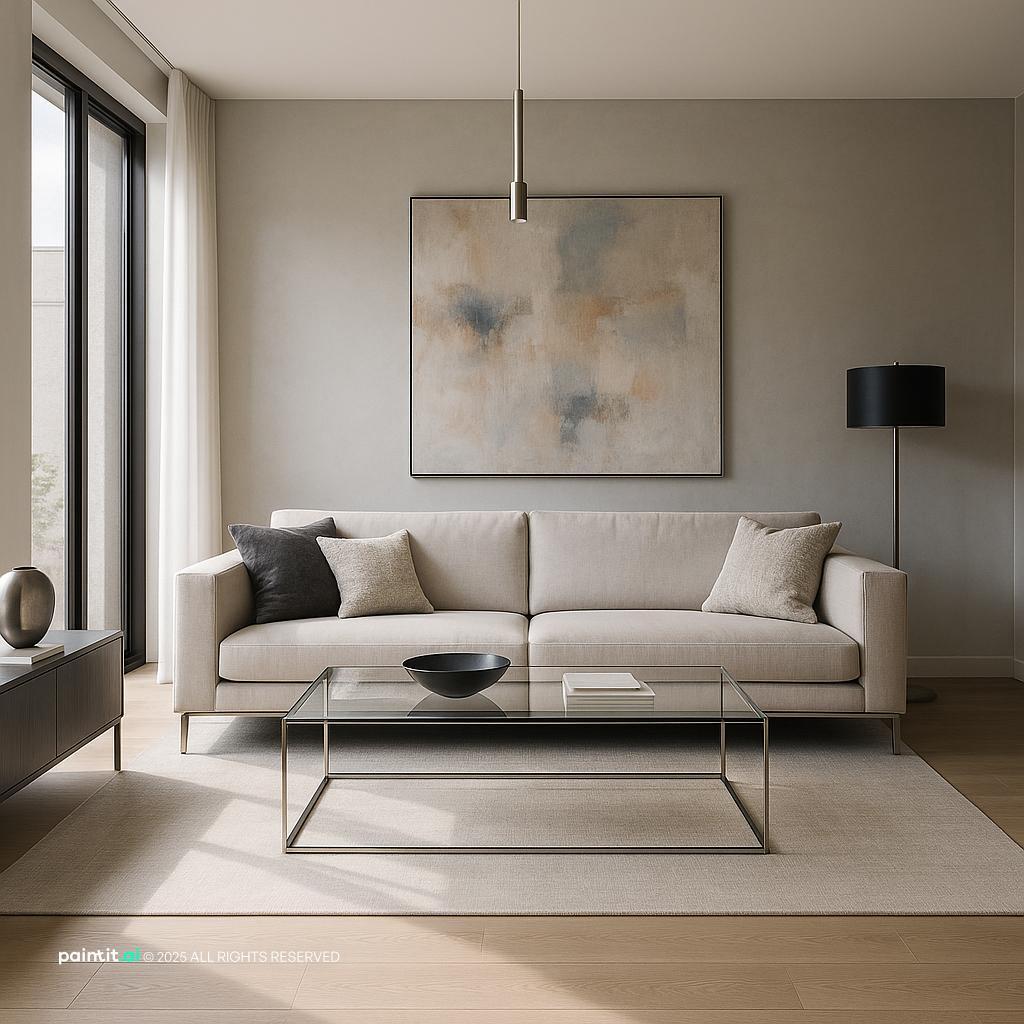
Sleek Modern Living Room Design uses black contrast, brown warmth and soft textiles in a living room setting.
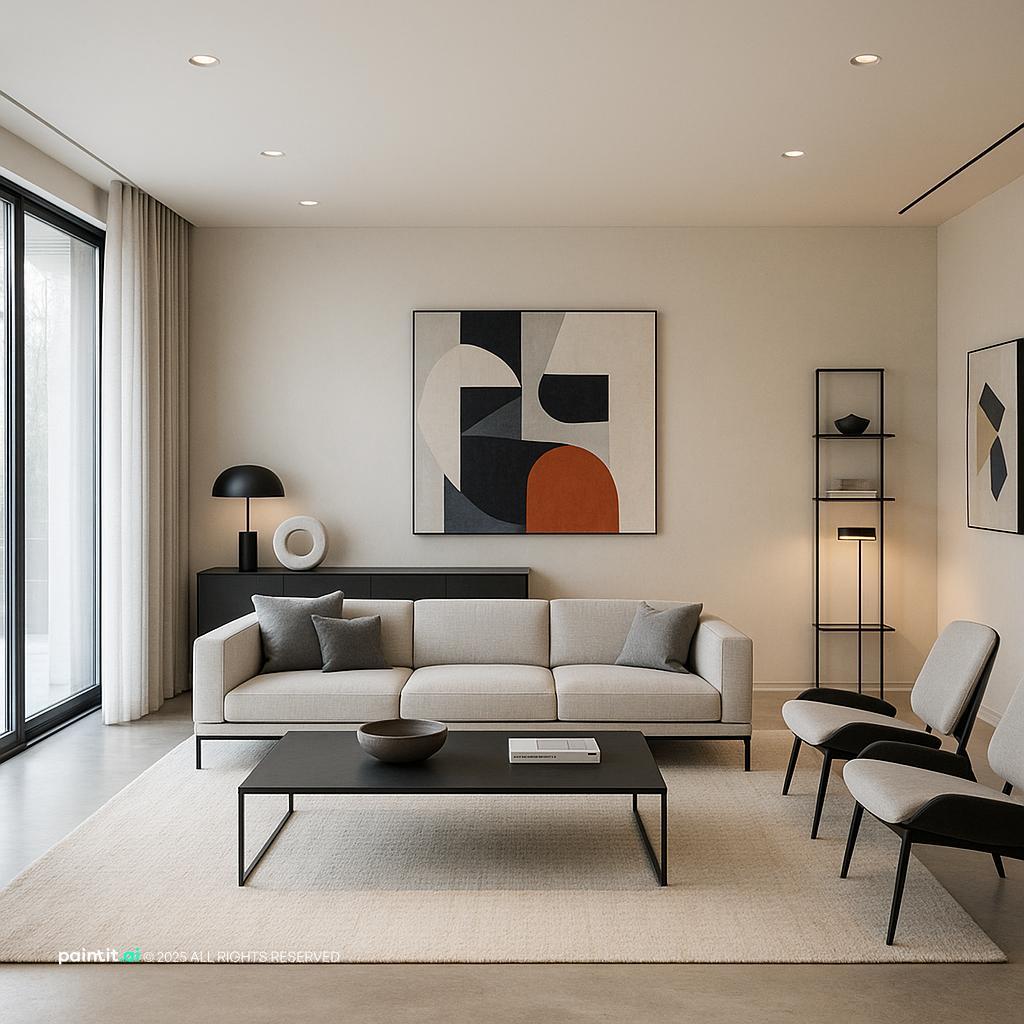
Modern Living Room Design for 2025 with Black Contrast balances black contrast, brown warmth and clean-lined furniture in a living room setting.
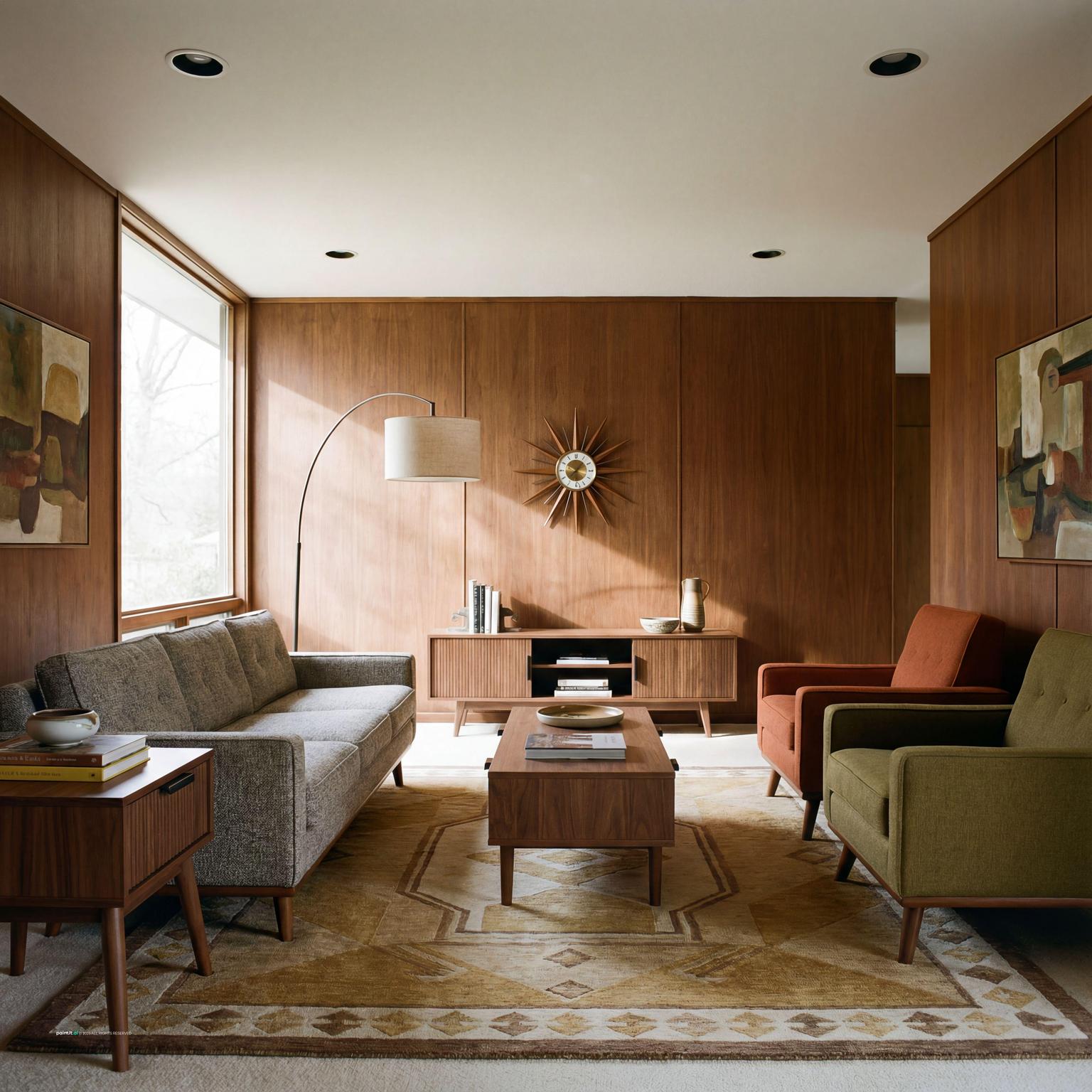
Mid-Century Modern Living Room Design pairs black contrast, brown warmth and warm wood in a living room setting.
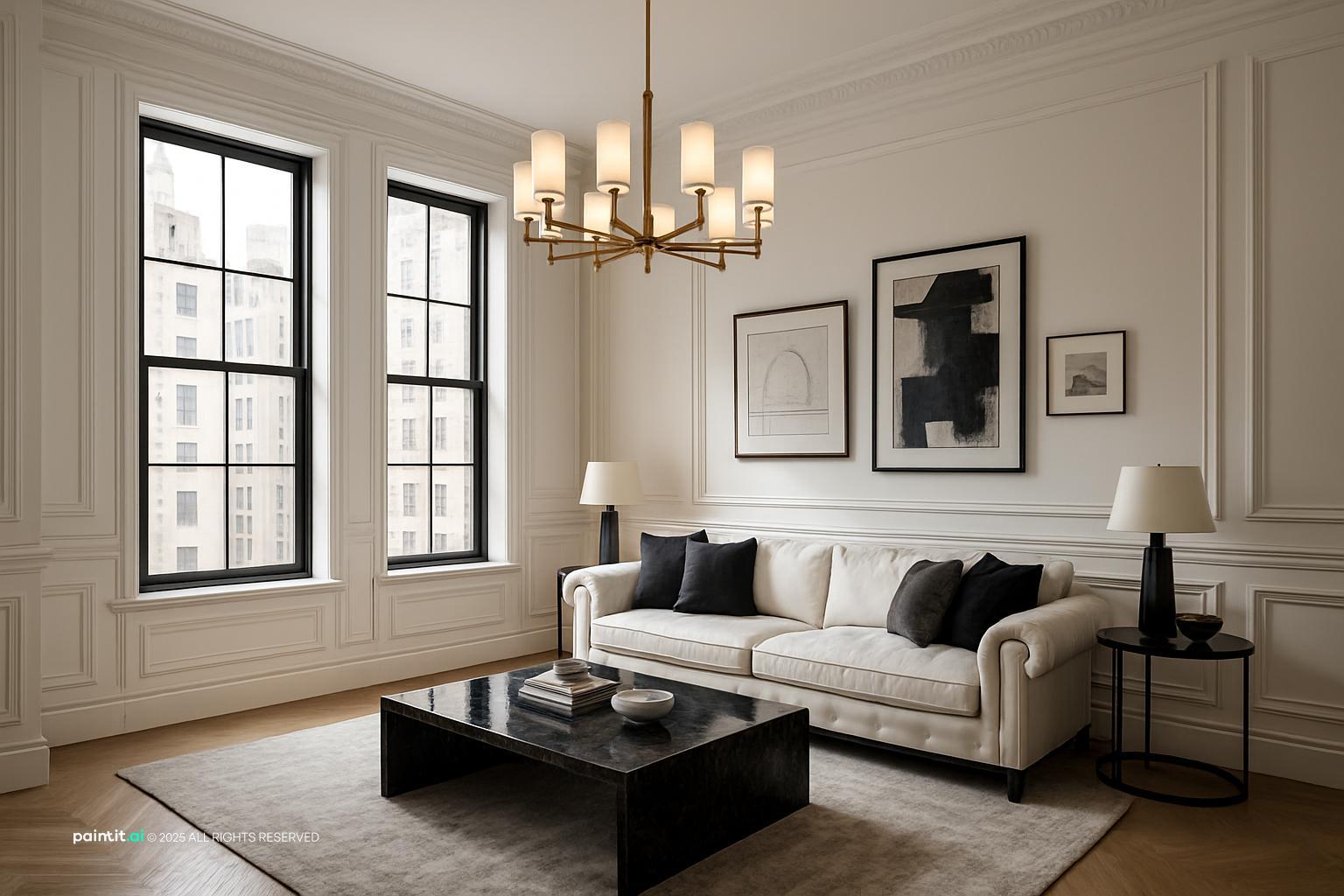
Black and Brown Living Room Ideas with Black Contrast and Brown Warmth with Soft Textiles layers black contrast, brown warmth and soft textiles in a living room setting.
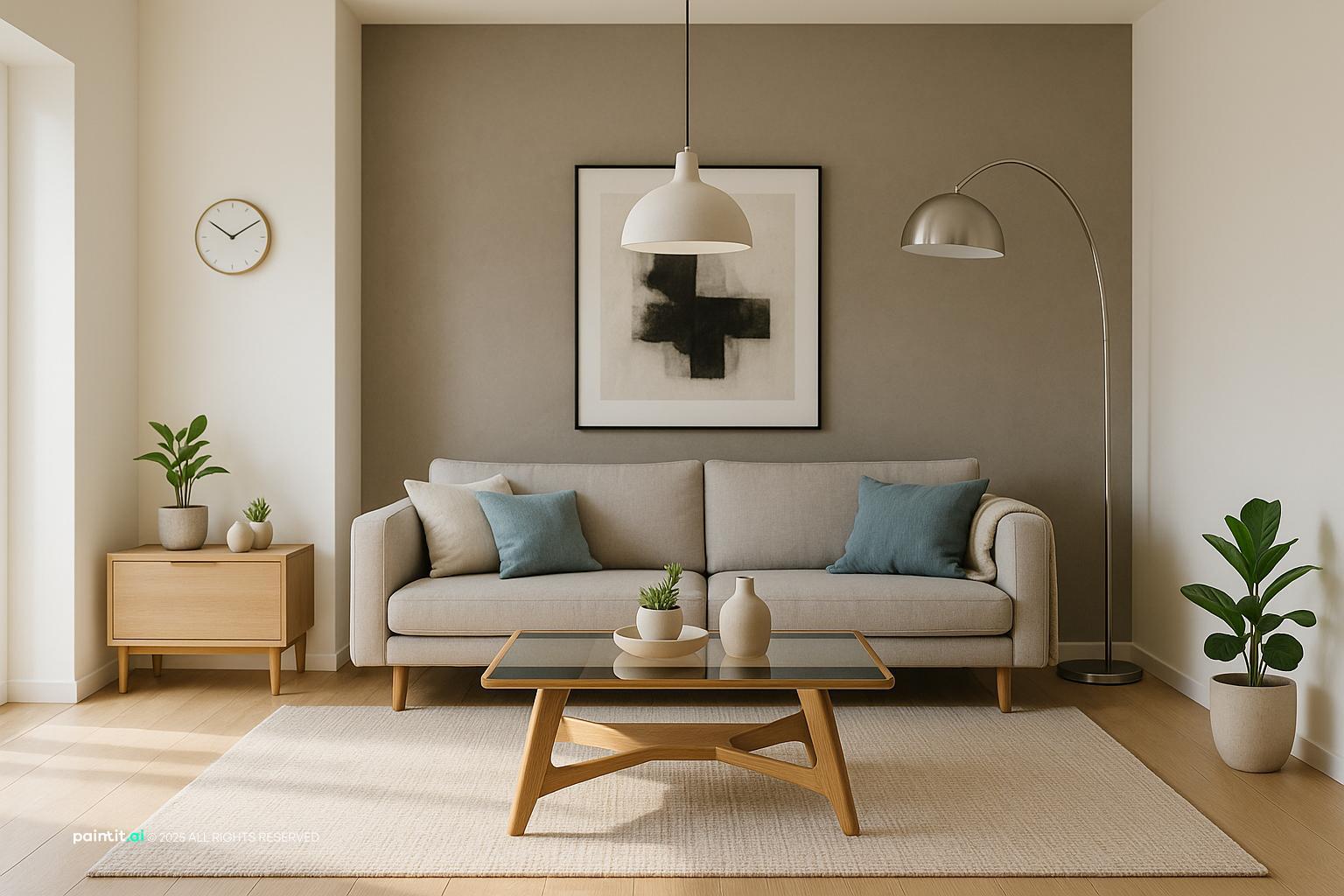
Modern Minimalist Living Room Design anchors black contrast, brown warmth and soft textiles in a living room setting.
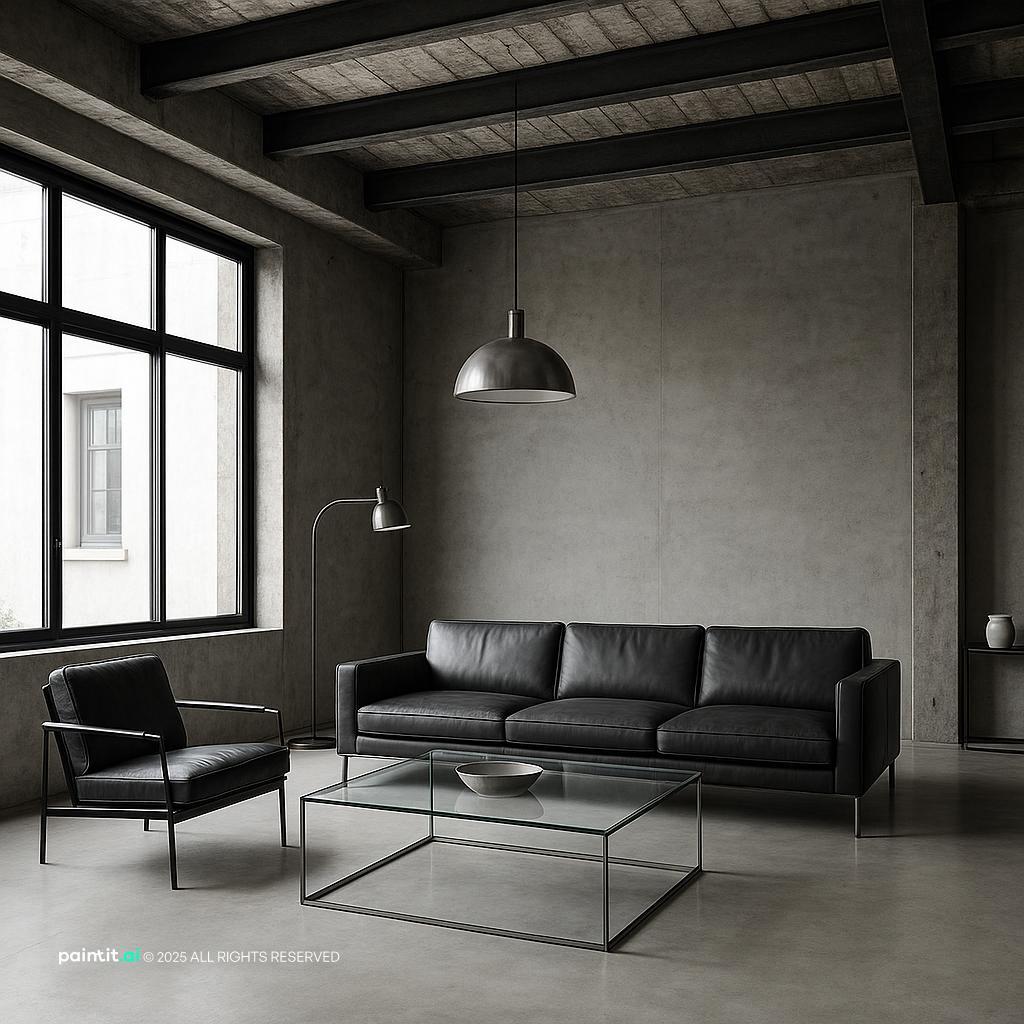
Modern Industrial Living Room Design softens black contrast, brown warmth and metal accents in a living room setting.
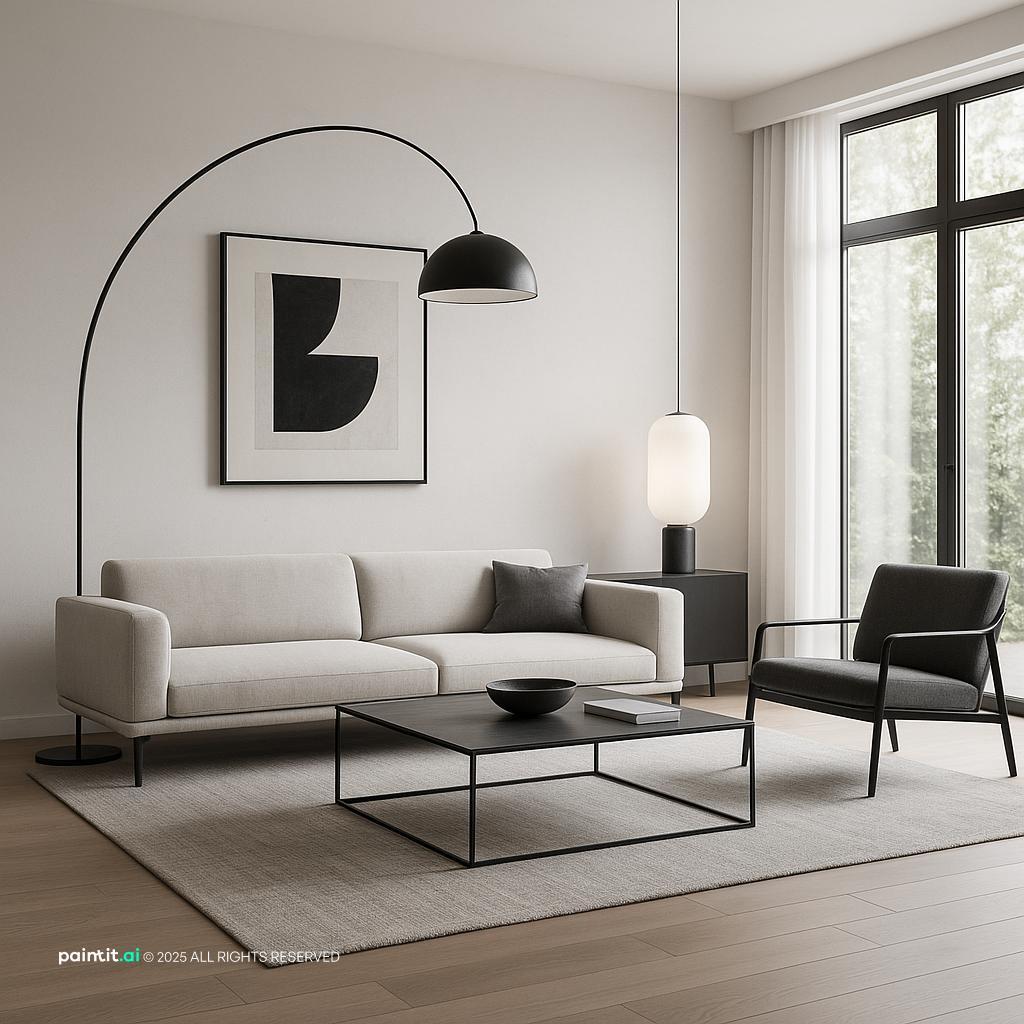
Modern Minimalist Living Room Design with Black Contrast uses black contrast, brown warmth and metal accents in a living room setting.
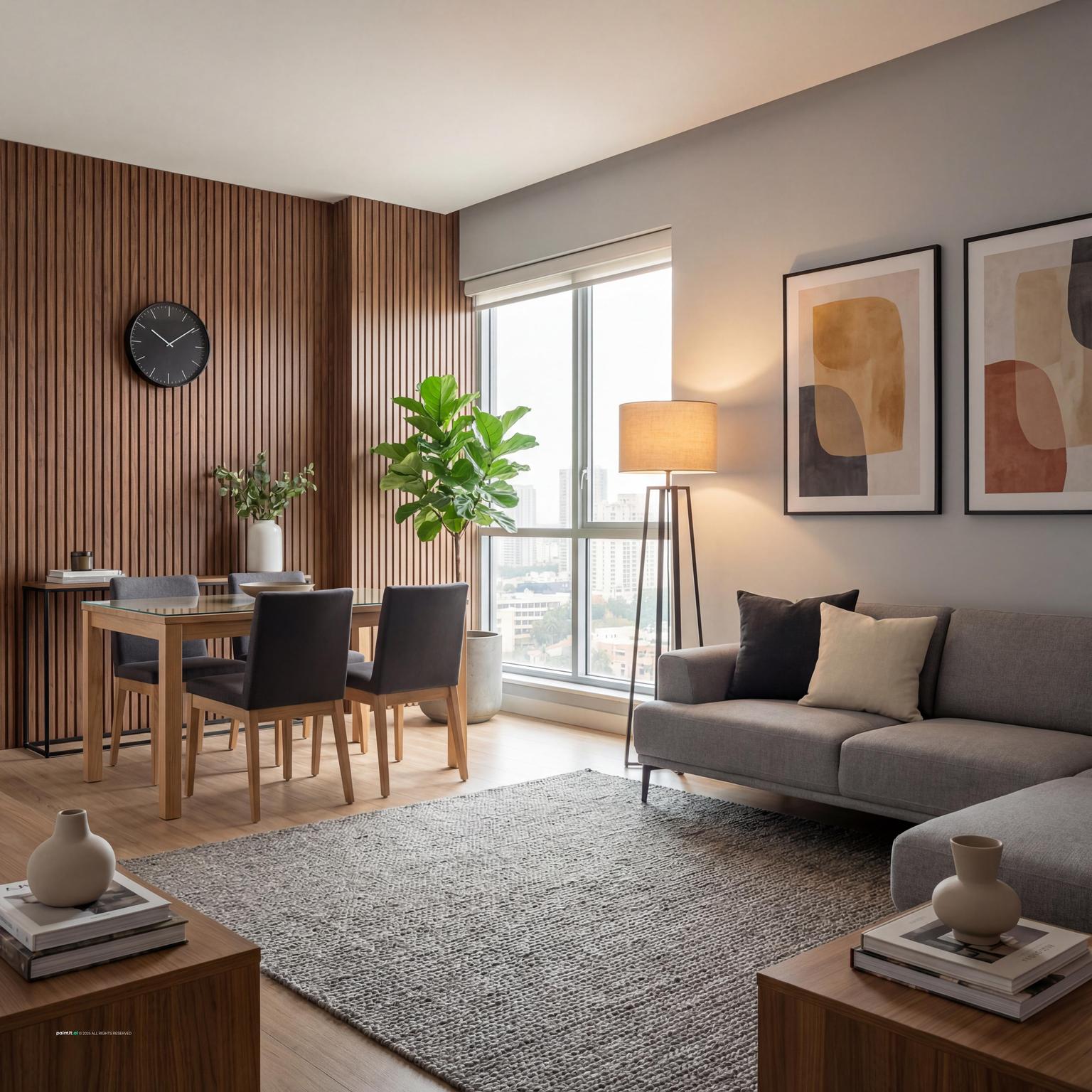
Modern Indian Living Room Design balances black contrast, brown warmth and soft textiles in a living room setting.
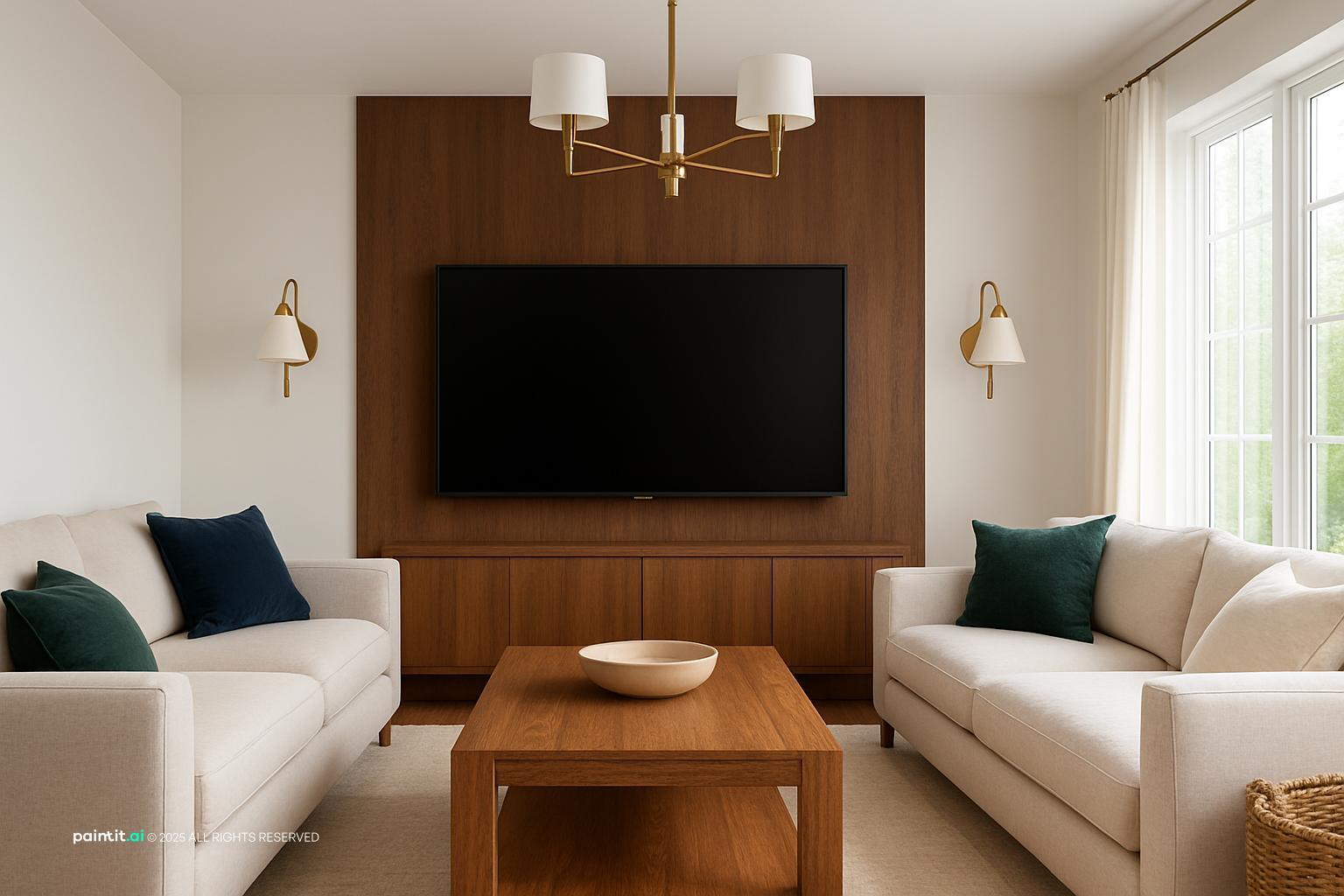
Stylish Modern Living Room Design with Black Contrast pairs black contrast, brown warmth and soft textiles in a living room setting.
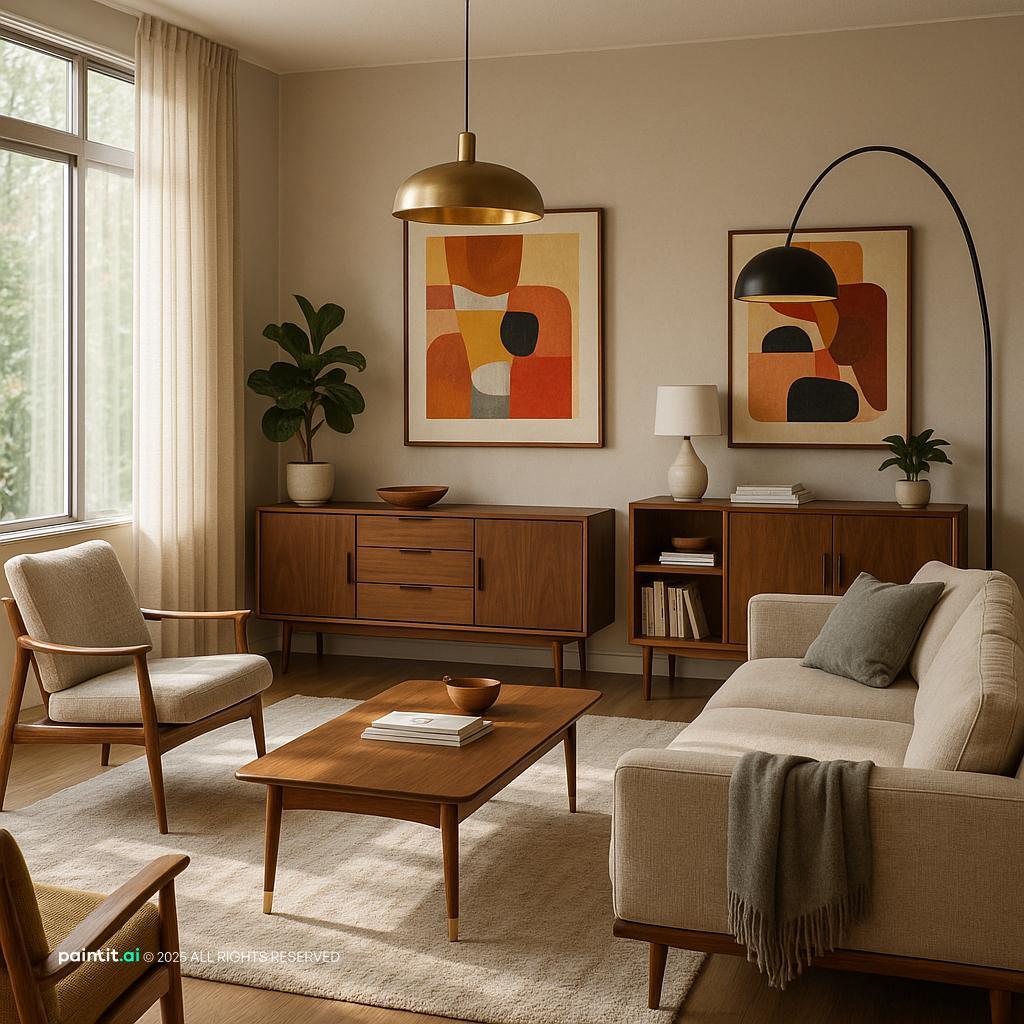
Stylish Mid-Century Modern Living Room layers black contrast, brown warmth and warm wood in a living room setting.
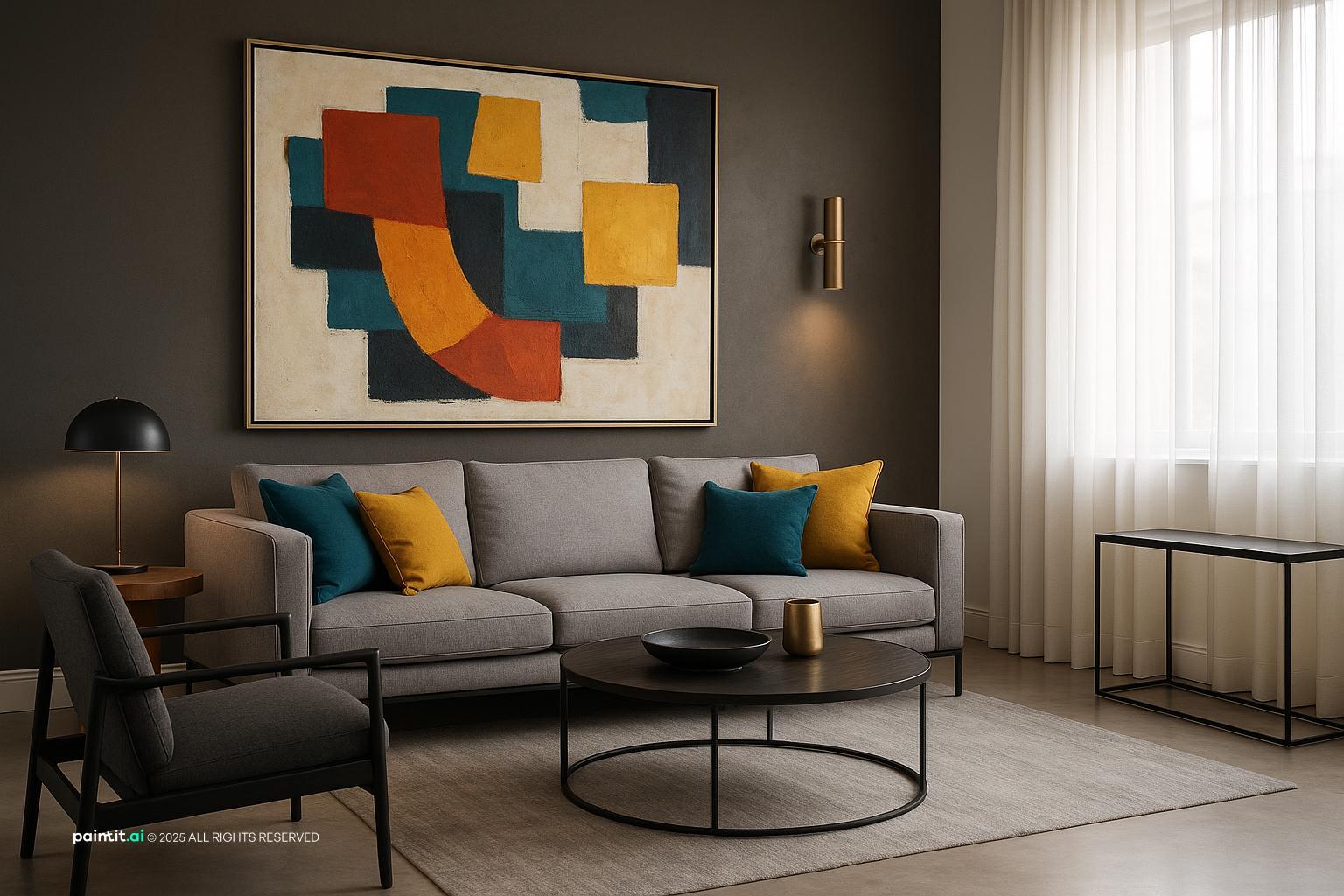
Stylish Modern Living Room Design with Brown Warmth anchors black contrast, brown warmth and soft textiles in a living room setting.
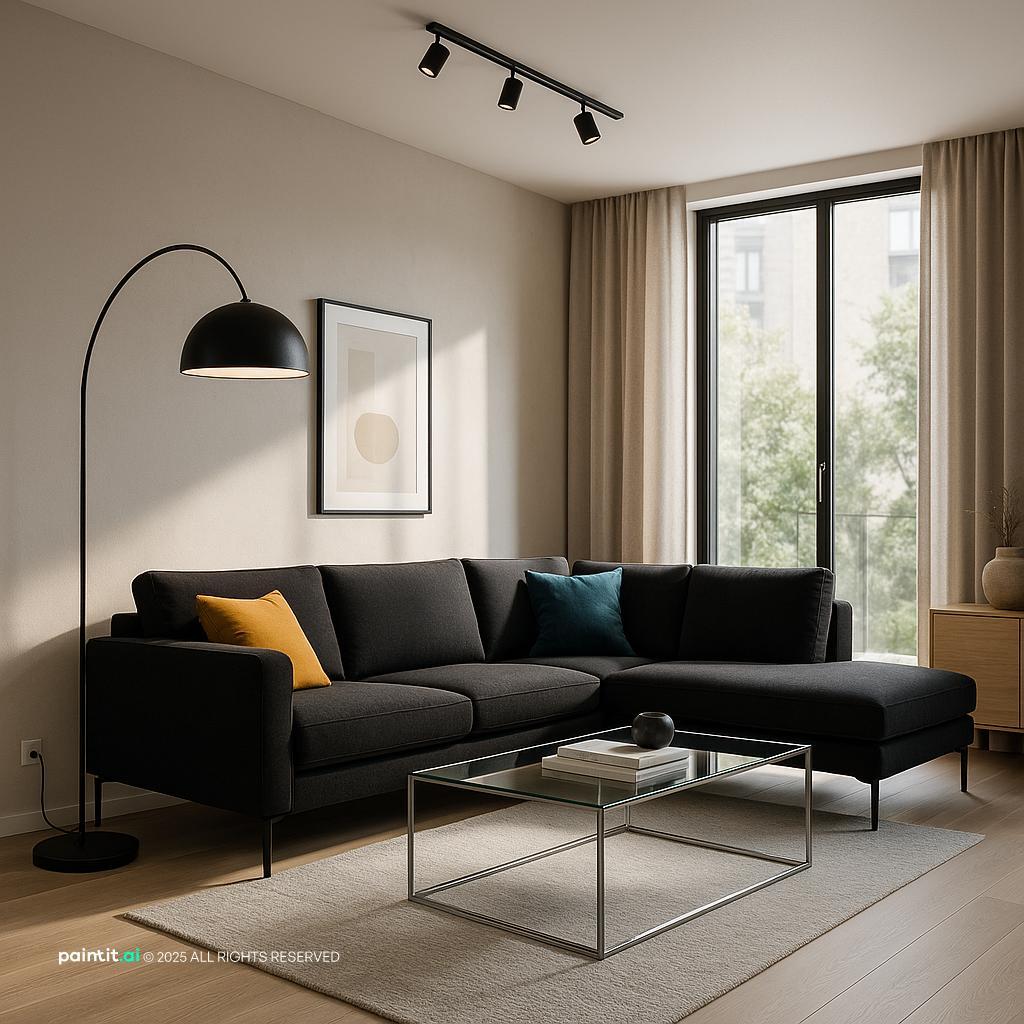
Sleek Modern Living Room Design with Black Contrast softens black contrast, brown warmth and clean-lined furniture in a living room setting.
Check whether your brown is warm, cool, red, orange, gray, or yellow. Cognac leather likes warm whites, brass, cream, olive, and soft black. Cool espresso or ash brown works better with charcoal, stone gray, polished nickel, and cooler neutrals.
Avoid mixing too many unrelated browns. A red-brown floor, orange leather sofa, yellow oak table, and gray-brown curtains can fight each other even if each piece looks good on its own. Put samples next to the sofa and floor in daylight and at night before you buy.
Materials carry texture, reflection, and shadow. Useful pairings include matte black metal with warm oak, walnut with blackened steel, cognac leather with cream boucle, and dark wood with honed marble or travertine.
This matters because Material appears in 19.0% of Paintit.ai prompts, and professional-style briefs often specify MATERIALS and LIGHTING in detail. A room described as brown and black may look flat. A room described as walnut, distressed leather, matte black metal, stone, marble, or brick has more dimension from the start.
Plan at least three light sources: ambient light from a ceiling fixture or recessed lights, task light from a floor or table lamp, and accent light on art, shelves, or a textured wall. Warm bulbs are usually more flattering with brown leather and wood.
Only 5.9% of general Paintit.ai prompts mention lighting, but it is a non-negotiable detail in more structured designer briefs. Without layered lighting, black and brown can look muddy at night, especially around the sofa and TV wall. That sounds small, but it is often the difference between cozy and dull.
Black metal can be the main finish for rods, lamps, frames, and table legs. If you add brass, bronze, chrome, or nickel, keep it secondary and repeat it at least twice so it does not look accidental.
A good formula is black as the architectural outline and brass or bronze as the warm highlight. Avoid mixing every finish in one room unless the furniture style is intentionally eclectic and the palette is otherwise calm.
Use textiles with visible weave: linen curtains, wool rugs, boucle pillows, leather upholstery, velvet cushions, or a chunky knit throw. Texture keeps the eye moving even when the palette is restrained.
Where to use it: soften a black accent chair with a camel throw, place a cream pillow on a brown sofa, or use a nubby neutral rug under a dark coffee table. Avoid shiny dark fabrics everywhere; they can create glare during the day and harsh contrast at night.
Black built-ins, dark sofas, and large brown cabinets need visual relief. Leave wall space around art, use open legs where possible, and avoid lining every wall with dark storage.
Decor balance often comes from subtraction. If a corner already has a dark chair, black lamp, and brown side table, add a light shade, pale ceramic, or small plant instead of another dark accessory. This is where a no clutter mindset is useful: not empty, just edited.
Good accent colors for black and brown include cream, olive, rust, terracotta, muted blue, deep green, tobacco, stone, and soft gold. Choose one or two, then repeat them in small doses through pillows, art, books, or a vase.
Avoid bright white as the only contrast if the room is full of warm browns; it can look stark. A warmer off-white or parchment tone usually blends better and still gives the eye relief.
Paintit.ai is useful for this palette because the line between too heavy and well-balanced can be thin. Upload your living room photo and test whether the sofa should stay brown, whether black belongs on the wall or only in accents, and which wood, marble, brick, leather, or metal finishes make the space feel more dimensional.
If the room is empty, AI virtual staging can show how a brown sofa, black table, neutral rug, and curtains work together before you buy them. For more detailed control, use AI room design or Paintit.ai’s living room design tool to test more black, less brown, warmer lighting, different materials, or a cleaner no-clutter version.
Yes. Black adds structure, while brown adds warmth. Let one color dominate and use the other as support. Equal amounts of heavy black and heavy brown are where rooms often start to feel flat.
Start with the largest fixed pieces: sofa, floor, fireplace, built-ins, or media wall. Then add a neutral rug, black accents, textured throw pillows, wall art, curtains, and layered lighting.
Cream, olive, rust, terracotta, muted blue, deep green, warm gray, tobacco, and soft gold all work well. Pick one or two and repeat them lightly so the room stays calm.
Use material contrast and lighting. Mix leather, wood tones, matte metal finishes, stone, linen, or boucle, then add ambient, task, and accent lighting so dark areas do not collapse together.
Yes. Keep the sofa and clean up what surrounds it: black metal lighting, a simpler coffee table, lighter curtains, a larger neutral rug, better wall art, and fewer small dark accessories.