
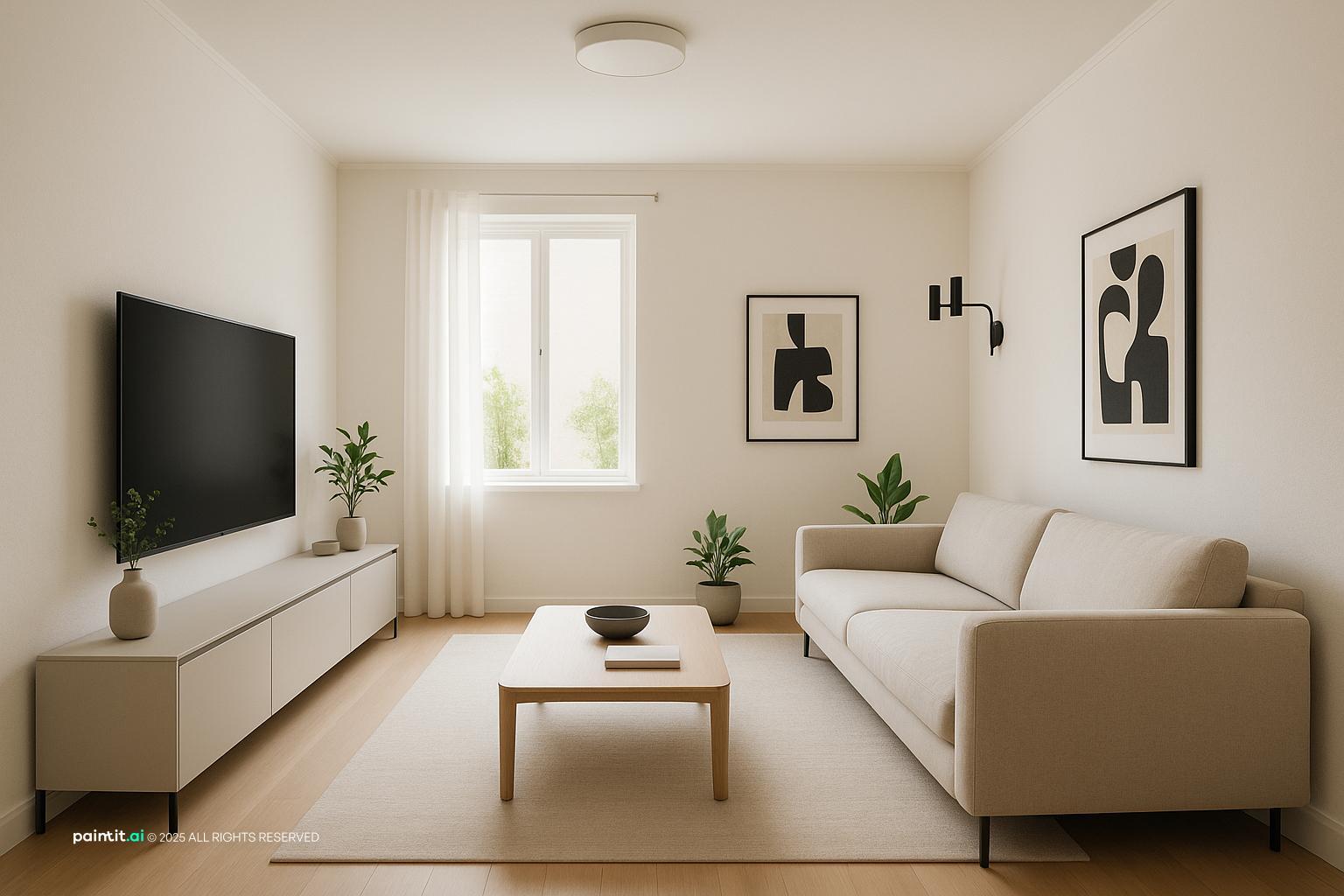
Sleek Modern Living Room Design
Sleek Modern Living Room Design uses TV wall focus, clear furniture layout and compact proportions in a living room setting.
A small living room layout with tv has to do two jobs at the same time: give you a comfortable view of the screen and leave enough space to move through the room without sidestepping furniture. The mistake we often see is starting with the TV size before checking the room itself. Start with what is fixed: doors, windows, radiators, fireplaces, awkward corners, and the wall that can realistically carry a screen. Once those limits are clear, the sofa, rug, table, lighting, and storage can support the layout instead of fighting it.
In Paintit.ai behavior data, 70% of users write short, Google-style prompts, and homeowners use structured prompts in only 0.9% of cases. That tracks with what we see in real room uploads: people start with “small living room tv” or “add TV,” not a full layout brief. But small rooms need constraints. Before choosing the screen wall, write down what must stay: KEEP: window, KEEP: fireplace, KEEP: walkway, REMOVE: bulky cabinet, AVOID: no clutter.
The first weak spot in compact living rooms is usually traffic flow. A sofa pushed too far forward, a media unit that sticks into the walking path, or a coffee table that leaves no knee space can make the room feel smaller than it is. Before moving heavy furniture, you can use AI living room design to test different TV placements against existing windows, doors, and furniture.
Use this first gallery to compare the basics: a clear screen view, a sofa that does not block the room, and enough open floor so the living room still feels like a place to sit, not a narrow aisle.
Sleek Modern Living Room Design uses TV wall focus, clear furniture layout and compact proportions in a living room setting.
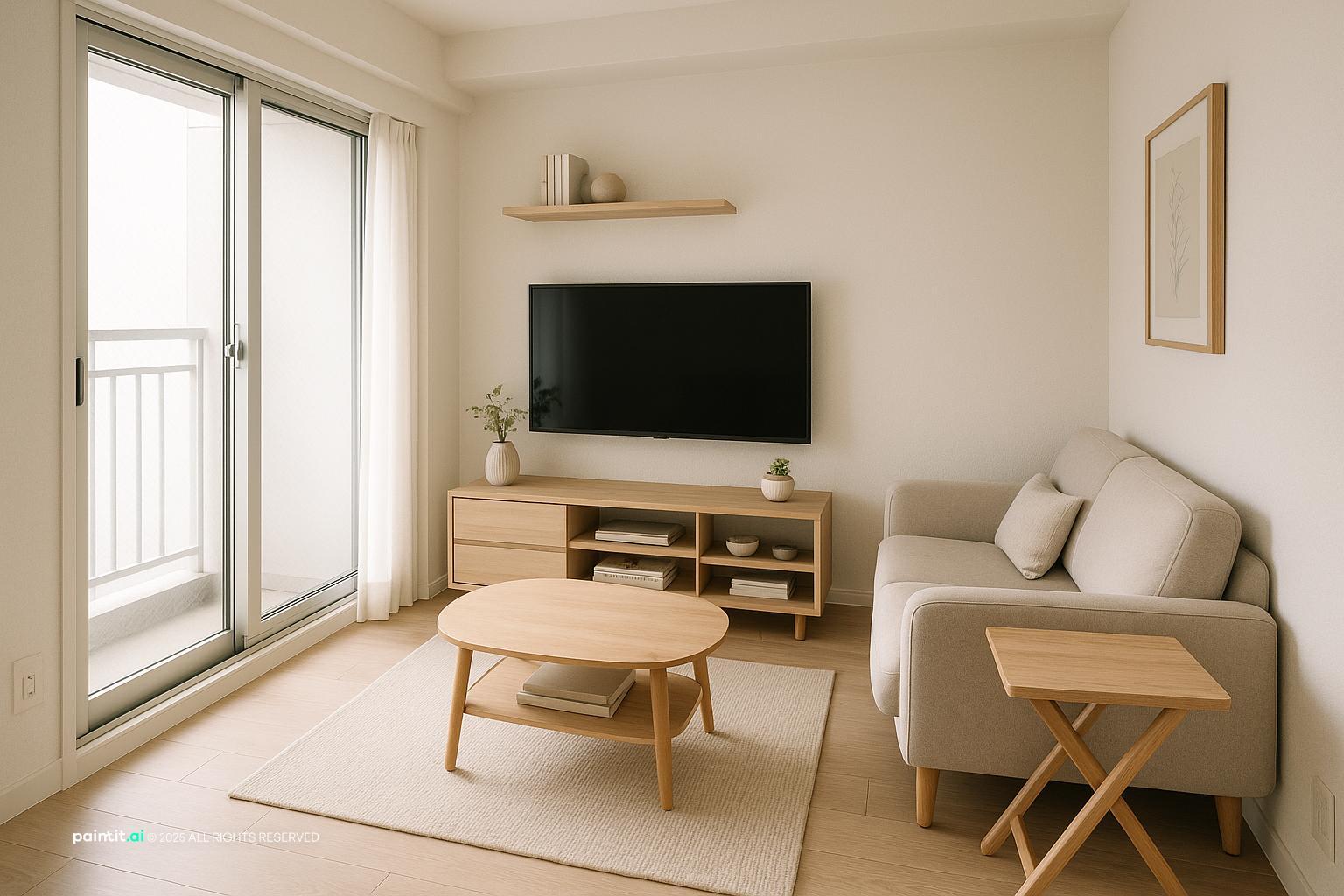
Modern Scandinavian Open-Plan Living Room Design balances seating facing the screen, zoned seating and compact proportions in a living room setting.
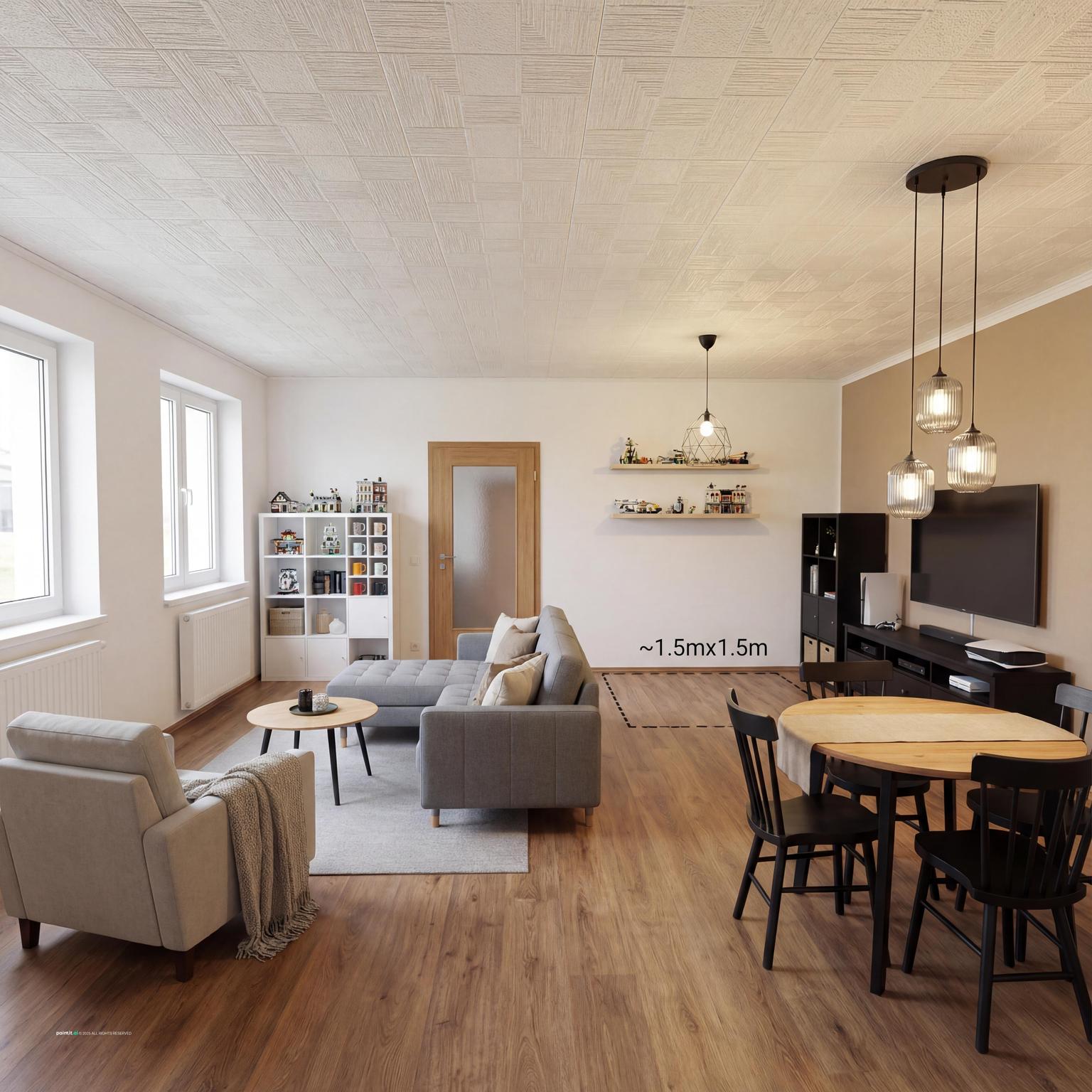
Stylish 60m² Living Room Design pairs seating facing the screen, zoned seating and compact proportions in a living room setting.
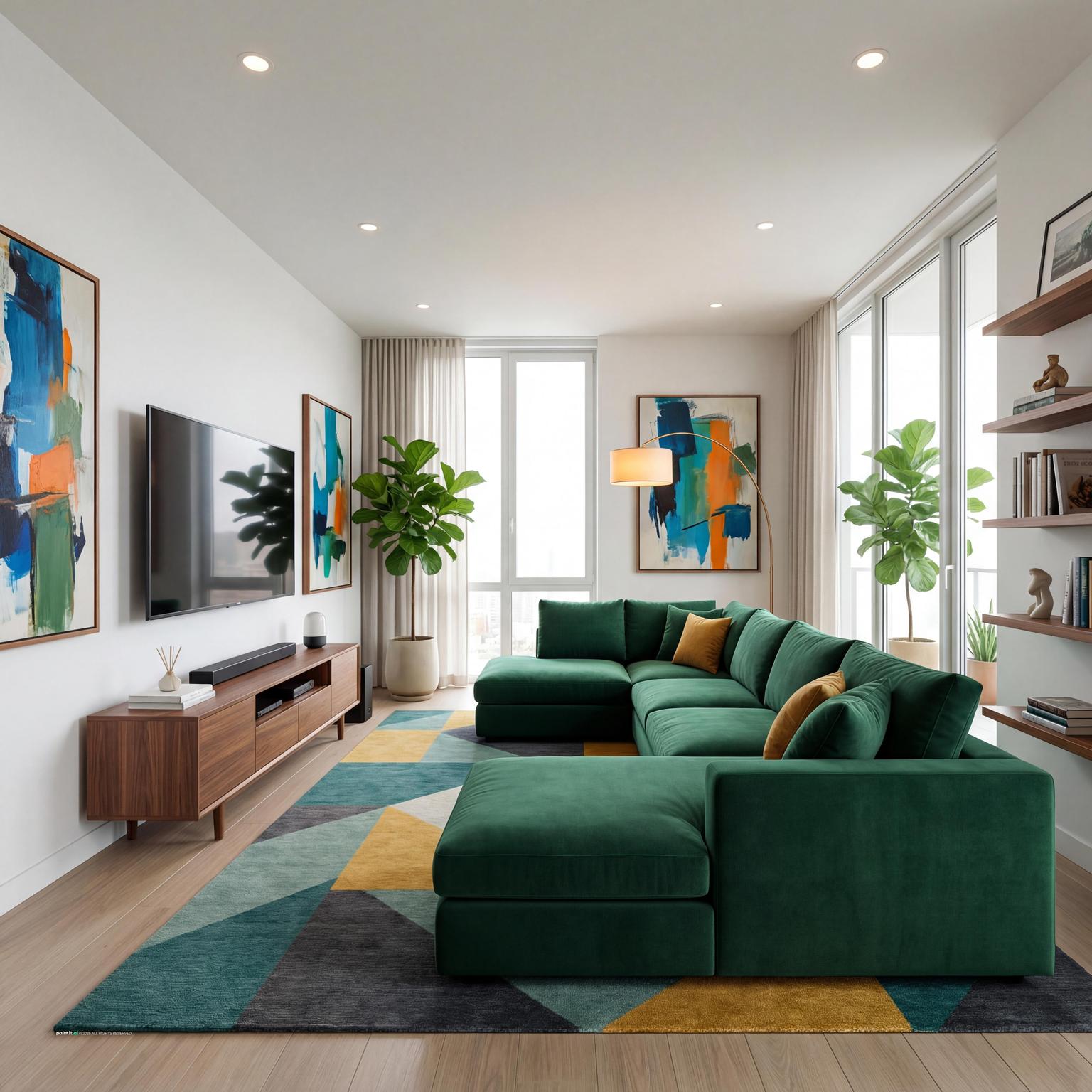
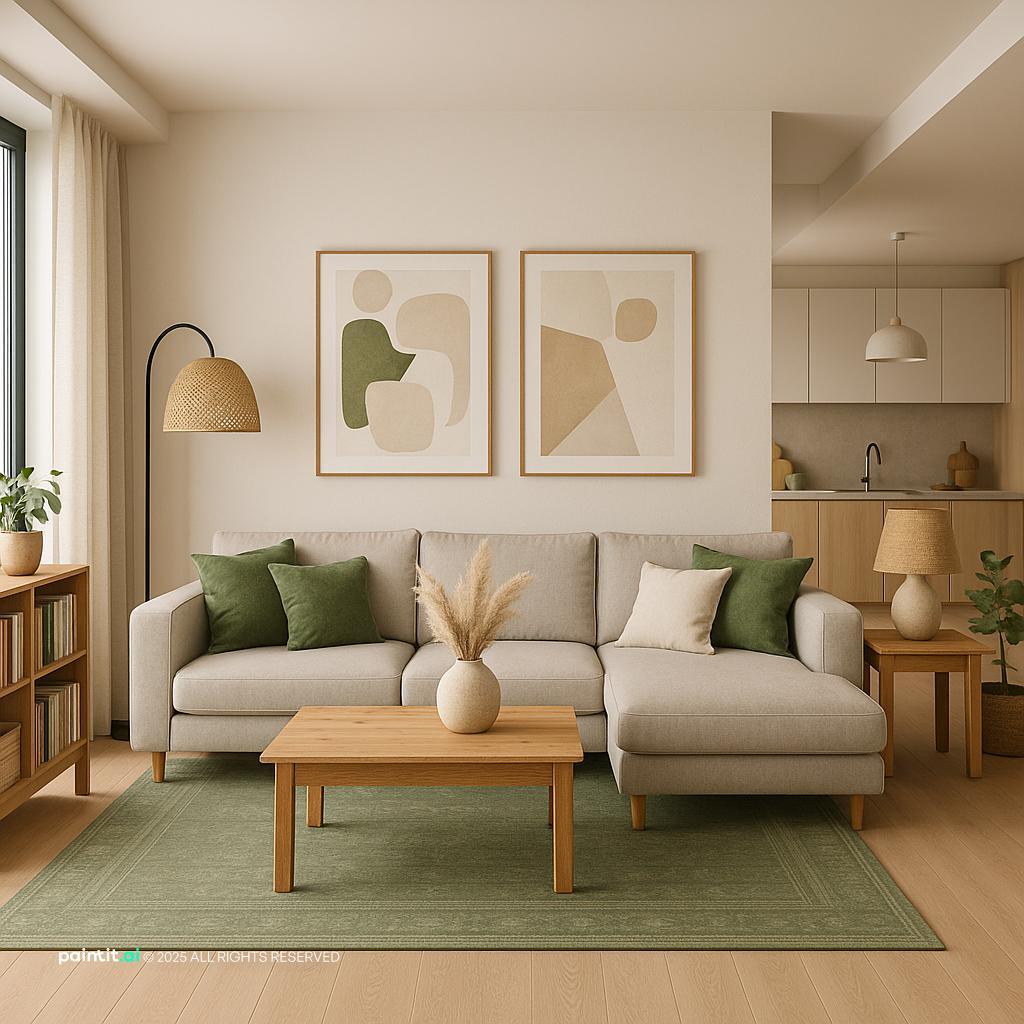
Bright Contemporary Living Room Design layers TV wall focus, seating facing the screen and compact proportions in a living room setting.
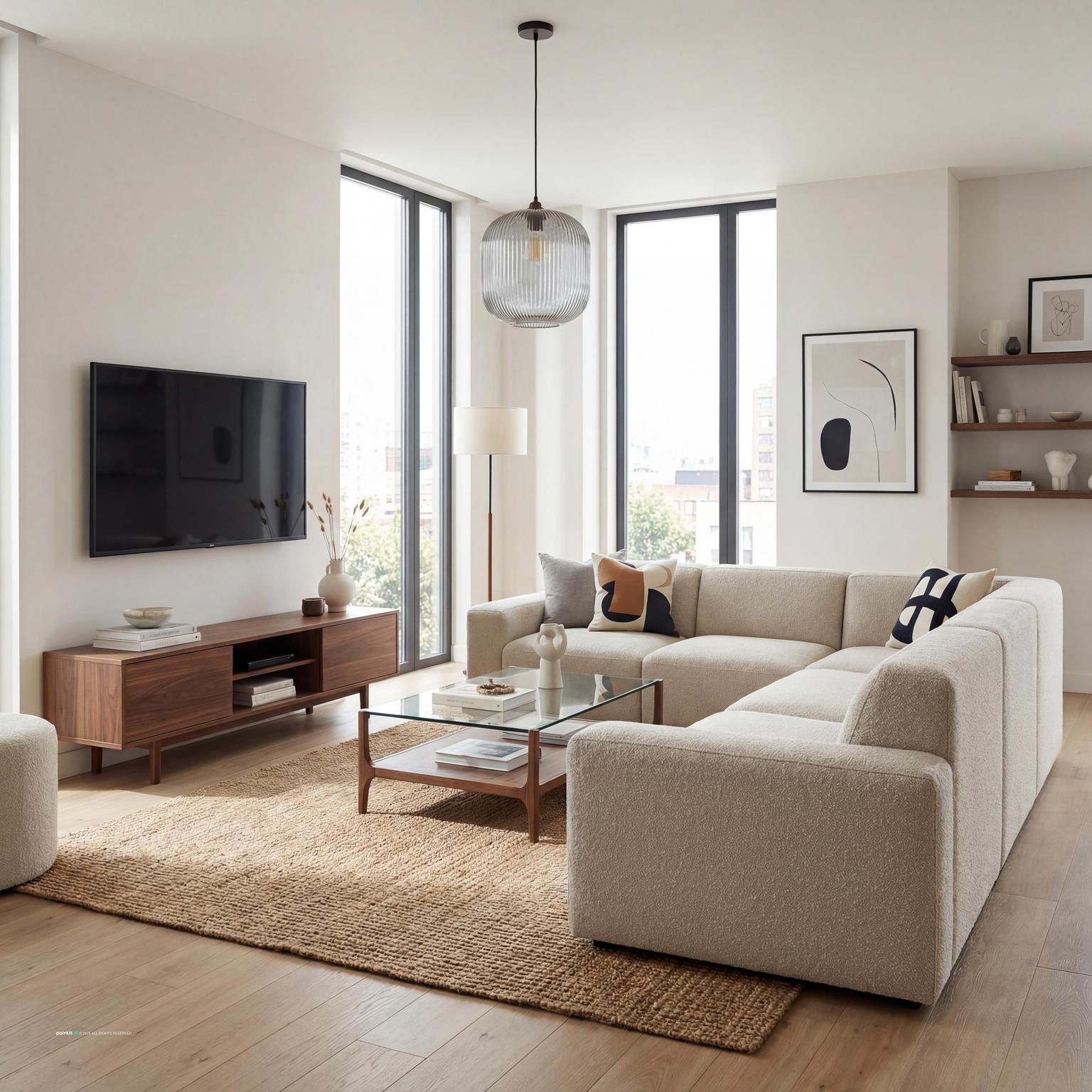
Modern Living Room Design for Cozy Spaces anchors TV wall focus, clear furniture layout and soft textiles in a living room setting.
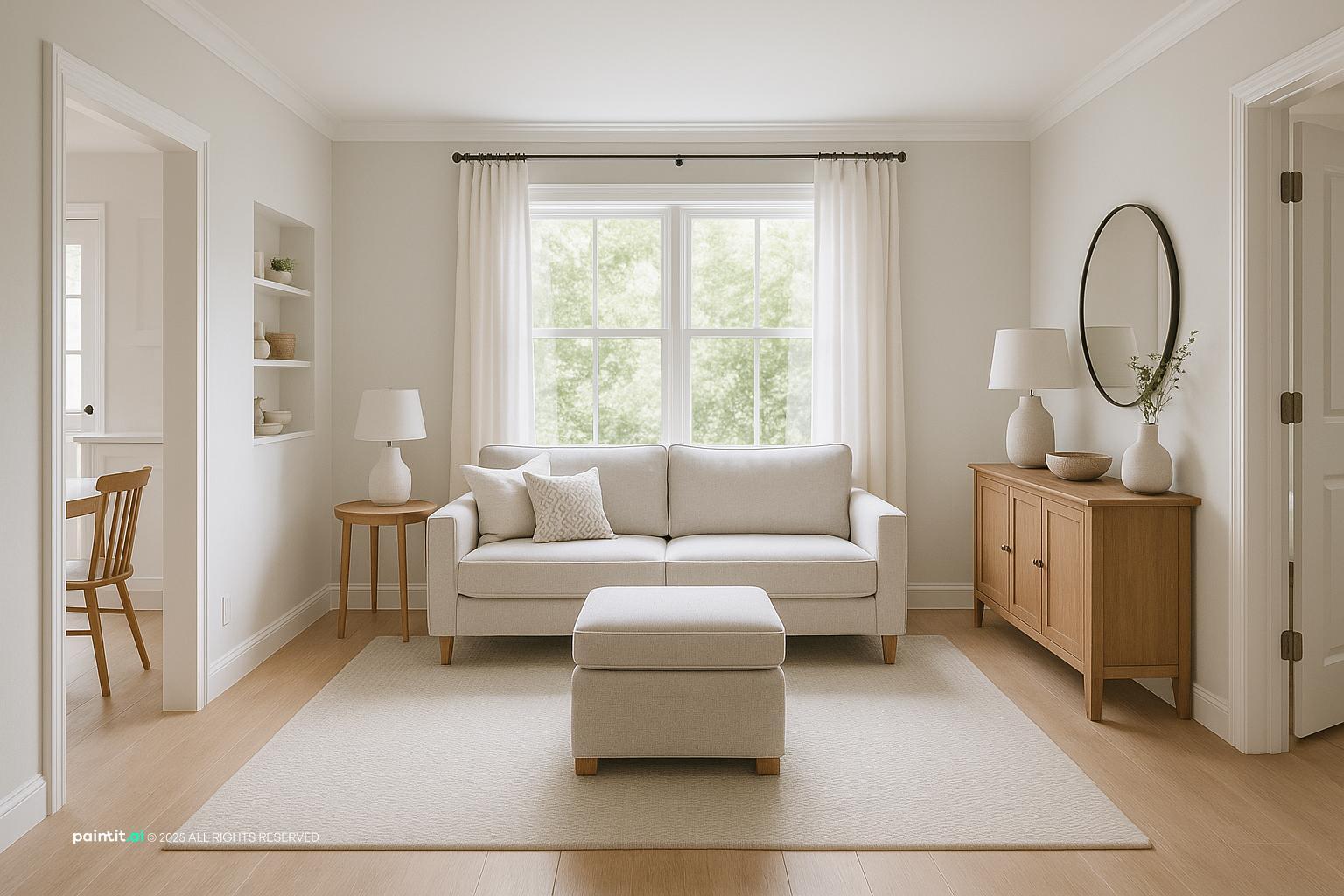
Transitional Compact Living Room Design softens clear furniture layout, zoned seating and compact proportions in a living room setting.
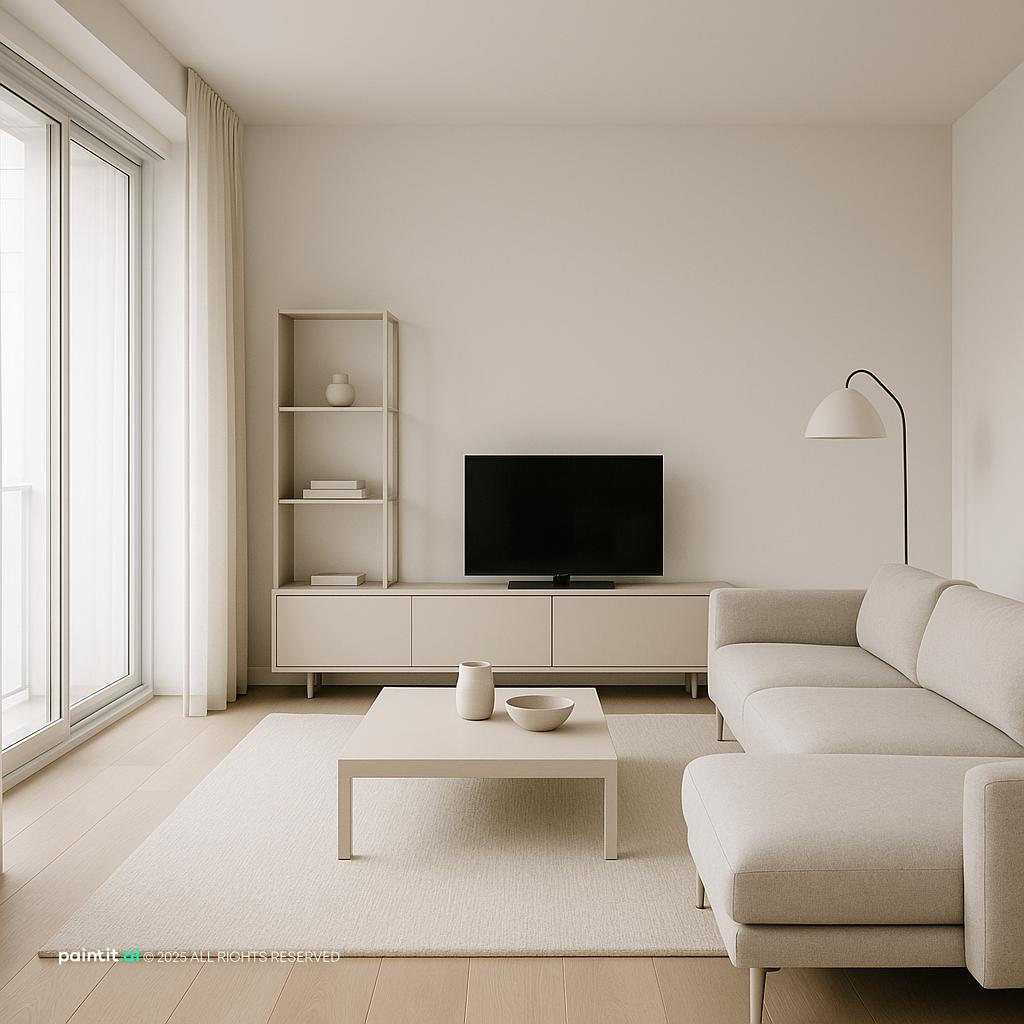
Modern Minimalist Living Room Design uses TV wall focus, seating facing the screen and compact proportions in a living room setting.
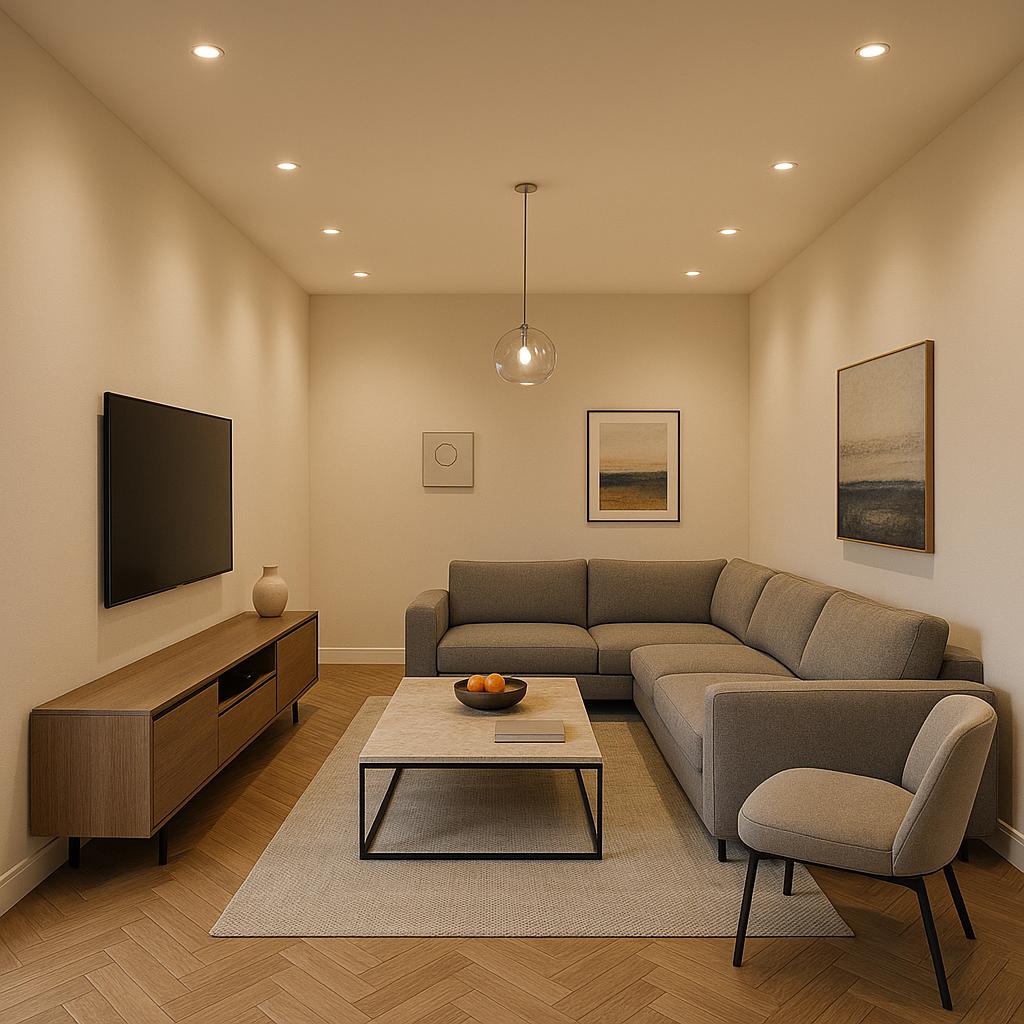
Luxury Modern Hotel Living Room Design balances TV wall focus, clear furniture layout and space-saving storage in a living room setting.
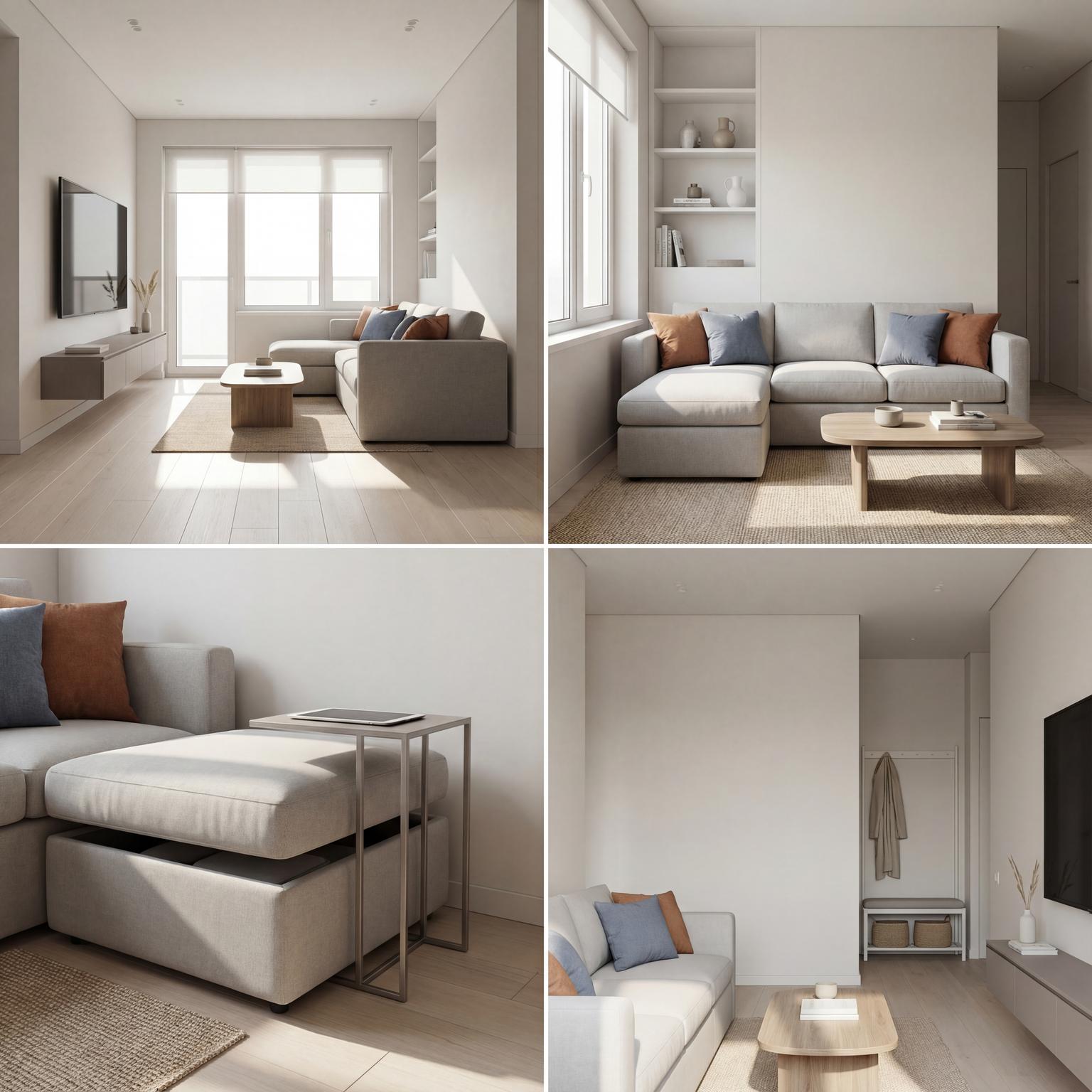
Stylish Minimalist Living Room Design for Small Spaces pairs TV wall focus, seating facing the screen and compact proportions in a living room setting.
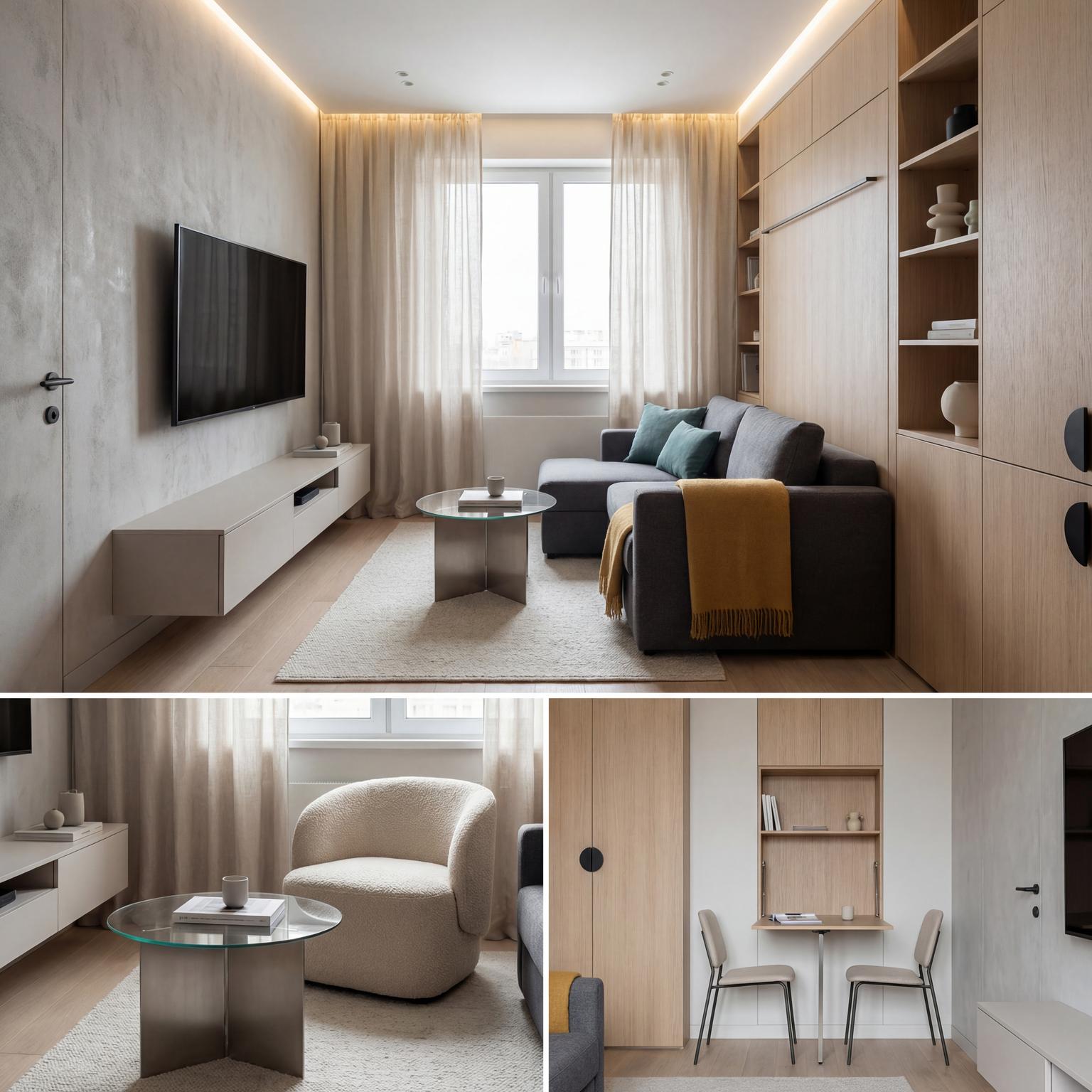
Compact Modern Minimalist Living Room layers TV wall focus, clear furniture layout and compact proportions in a living room setting.
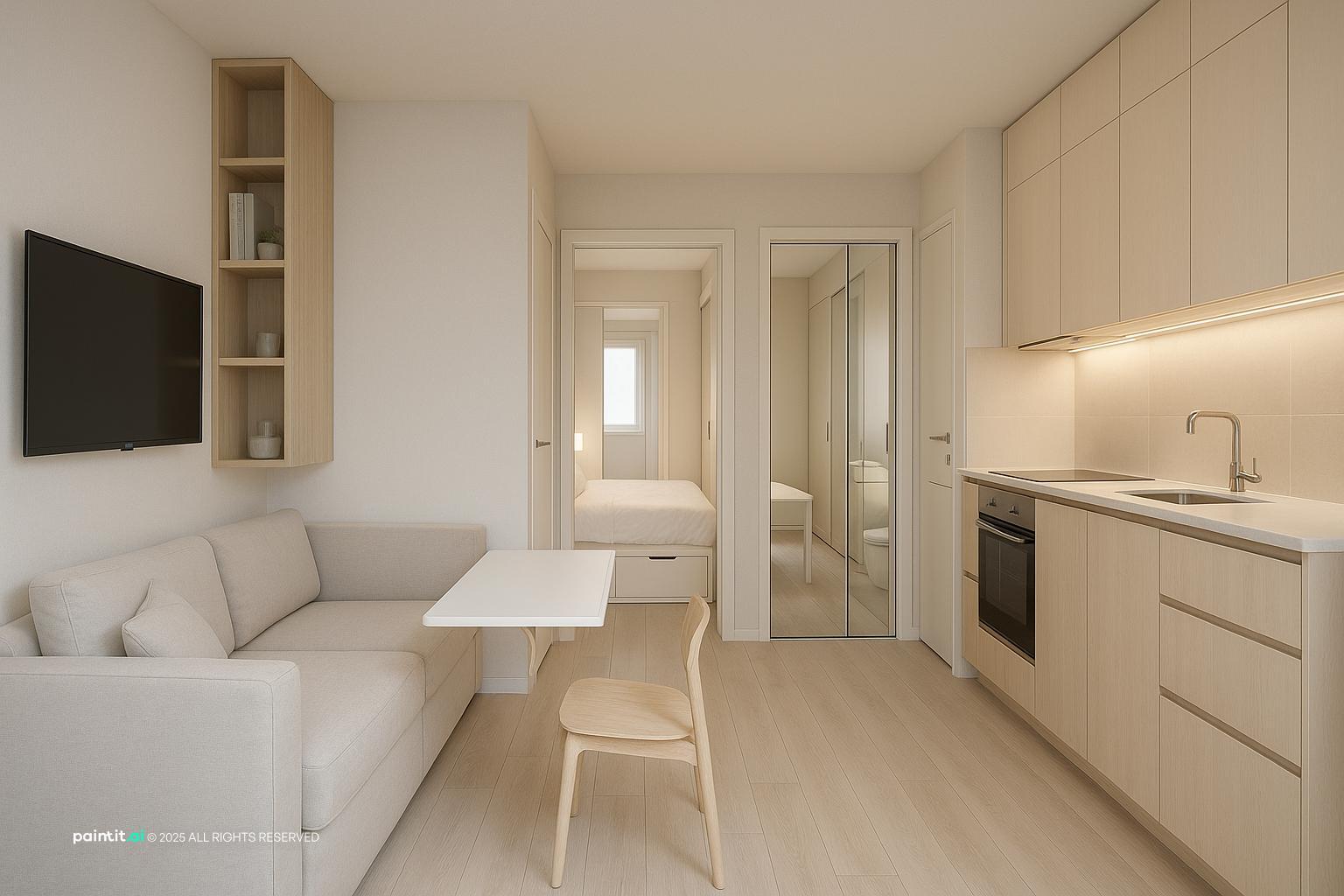
Small Living Room Layout With Tv with Tv Wall Focus and Clear Furniture Layout anchors TV wall focus, clear furniture layout and compact proportions in a living room setting.
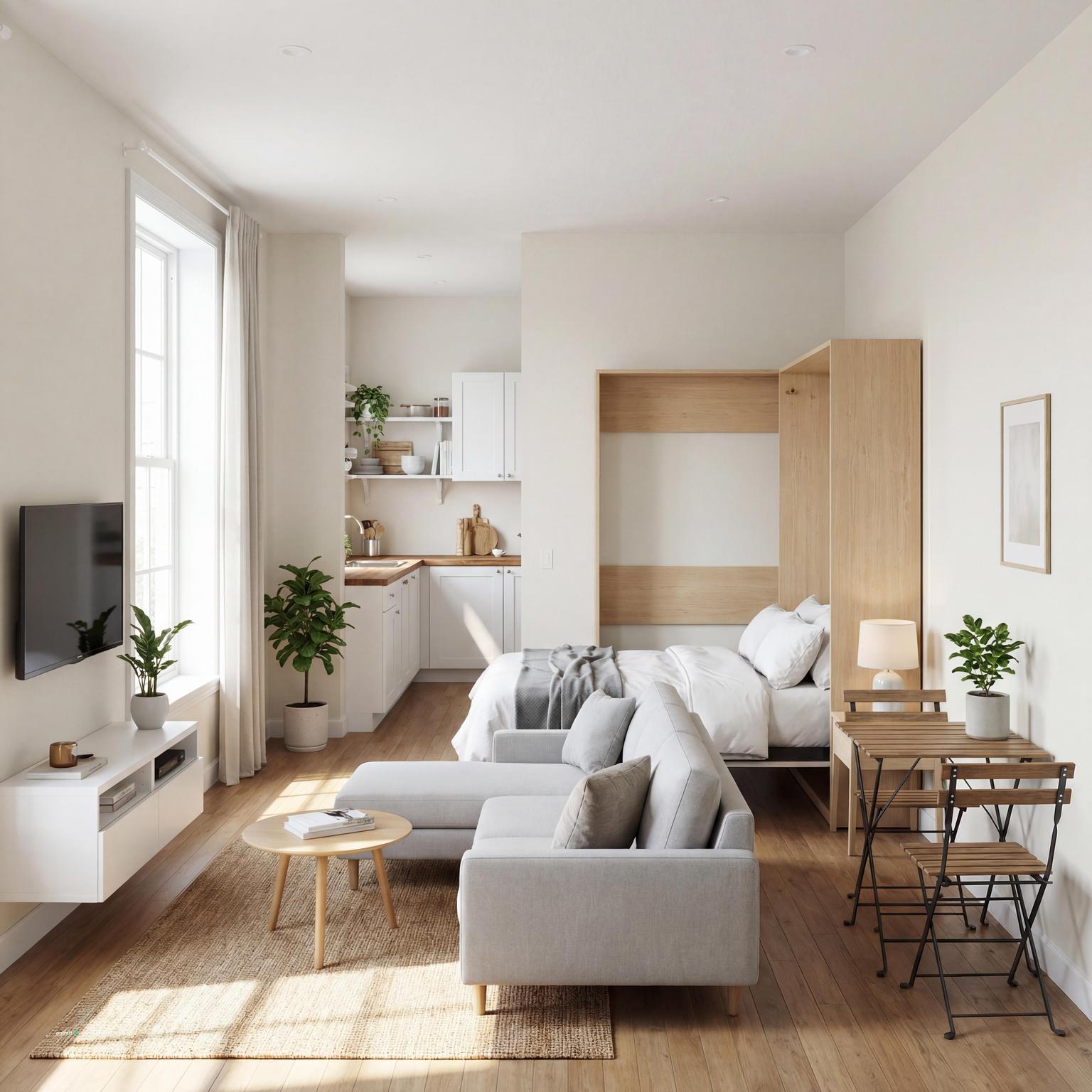
Budget-Friendly Small Apartment Design softens TV wall focus, clear furniture layout and compact proportions in a living room setting.
Choose the wall that does not cut across the main entry path. In many small rooms, that is the longest uninterrupted wall, but not always. A shorter wall can work better if it lets the sofa face the screen without blocking a doorway.
Why it works: a small living room tv layout fails quickly when the TV wall drags furniture into the circulation route. Keep at least 30 to 36 inches of walking space where people pass through the room. Avoid placing the sofa so the back of it becomes a barrier between the door and the seating area.
A small living room with tv and sofa often works better when the sofa sits a few inches off the wall or runs perpendicular to the TV wall. That small gap helps curtains fall properly, gives the seating zone shape, and stops the room from looking like every piece was shoved to the edges.
If the room is extremely tight, even 3 to 6 inches behind the sofa can make the layout feel less jammed. What to avoid: a deep sofa that leaves only a thin strip between the coffee table and media unit. In a small room, sofa depth matters as much as sofa width.
A floating console is one of the most reliable small living room tv wall ideas because it reduces visual weight. Mount it below the screen for remotes, cables, and a few closed-storage items, but keep the floor visible underneath. That shadow line makes the wall feel lighter.
In Paintit.ai tests, the stronger compact TV rooms usually keep as much floor visible as possible. Avoid oversized media cabinets that reach too far into the room or create a heavy block below the screen. If you need storage, choose drawers over deep open shelves.
For comfortable viewing, the center of the TV should usually sit near seated eye level, often around 42 inches from the floor. This can shift depending on sofa height and screen size, but the principle stays the same: do not mount the TV so high that you tilt your neck upward every night.
What to avoid: mounting a screen above a tall cabinet just because the wall looks empty. In a small room, the viewing distance is shorter, so poor mounting height becomes more obvious. Sit on the sofa, look straight ahead, and mark the approximate center before drilling.
Small rooms usually work better with one primary sofa or loveseat instead of a full set of sofa, armchair, and bulky ottoman. If you need extra seats, use a compact slipper chair, a small swivel chair, or upholstered stools that can move when the TV is not in use.
This is a useful small living room furniture arrangement with tv because it gives the main viewer a clear sightline while keeping the room adaptable. Avoid matching furniture sets with thick arms and high backs. They often make the space look crowded before the rug, table, lamps, and storage even arrive.
Rug placement helps a small TV room feel planned instead of improvised. Choose a rug large enough for at least the front legs of the sofa to sit on it, and keep the rug edge from crowding the TV wall. If the room is narrow, a rug that runs lengthwise can visually stretch the seating area.
Why it works: the rug tells the eye where the living zone begins and ends. Without it, the sofa, table, and TV can look like separate pieces floating in a tight box. Avoid tiny rugs that sit only under the coffee table; they make the furniture feel disconnected.
A rectangular coffee table is not always the best choice in a small room. Try a round table, nesting tables, or a narrow oval table if people need to walk around it often. Leave enough space between the sofa and table for knees, and enough space beyond the table for movement toward the TV wall.
What to avoid: a solid, chunky table that visually blocks the center of the room. Glass, slim wood, or open-base designs can help, but only if they fit your life. If you have kids or pets, rounded corners may matter more than making the table look visually light.
A small living room layout with fireplace and tv needs a clear hierarchy. Decide whether the fireplace or the TV is the main focal point, then arrange furniture around that decision. If they compete on different walls, angle the seating slightly or use a swivel chair so the room can support both.
Professional designers often specify instructions like “preserve exact room structure” because architecture is not optional. In a small room, keep geometry first: do not block the hearth, a window, or the only clear walkway just to center the TV. If the TV must sit near the fireplace, keep the surrounding shelves simple so the wall does not become visually noisy.
Centering the TV on the wall feels tidy, but it is not always the best answer. In a small room with a window, radiator, fireplace, or built-in cabinet, an off-center screen can work if the sofa view remains comfortable and the wall composition feels balanced.
Use art, a narrow bookcase, a plant, or a vertical sconce to balance the empty side. Why it works: asymmetry can preserve traffic flow while still making the tv wall look intentional. Avoid forcing symmetry if it pushes furniture into awkward positions.
Open shelves around a TV can look good in a large room, but in a compact living room they often turn into clutter. Use closed drawers for remotes, chargers, gaming devices, blankets, and manuals. Keep display items limited to a few pieces with breathing room.
In our product data, only 8.8% of users use negative prompts such as “no clutter” or “without bulky cabinets.” That mindset is useful here. Before adding more storage, ask what you can remove, hide, or combine. A small room does not forgive extra piles near the screen.
Can a sectional work? Yes, but only if the chaise does not block a door, fireplace, or natural walking line. A compact sectional sofa can be smart in a corner room because it gives you more seating with fewer separate pieces. In a narrow room, however, it can trap the whole layout.
If you are starting with a blank slate, AI virtual staging helps you see how a sectional changes the room’s scale before you buy one. What to avoid: choosing a sectional because it looks comfortable in a showroom. Measure the chaise length, arm width, and distance from the TV wall first.
Floor lamps can be useful, but they need clearance. In a very small living room, wall sconces, picture lights, or a slim plug-in sconce near the sofa may free up corners and reduce cord clutter. Add a table lamp only where there is a real surface to support it.
Why it works: lighting at different heights makes the room feel layered without adding more furniture. Avoid relying only on a ceiling light, especially if it reflects on the TV screen or creates harsh shadows behind the sofa.
An accent wall behind the TV can help the screen feel integrated, but keep it calm. Soft paint contrast, vertical wood slats, limewash texture, or a simple panel detail can work. The goal is to reduce the black rectangle effect, not compete with it.
Small living room ideas with tv are strongest when the wall has depth without distraction. Avoid high-contrast wallpaper behind the screen unless the pattern is very subtle. Strong patterns can cause visual fatigue during viewing and make the wall feel closer.
Start with the layout: screen wall, sofa position, walkway, rug, and table. Then refine with storage, lighting, color, and styling. Many Paintit.ai users begin with a broad prompt and then use shorter refinements like “a bit more modern,” “less clutter,” or “keep the sofa.” That is a good way to think in real life too.
For a deeper step-by-step approach, see how to redesign a living room with Paintit.ai. I would solve function before decorating every time. If the furniture blocks a door or the TV sits at an uncomfortable angle, accessories will not fix the room.
The second gallery is useful for comparing real tradeoffs: centered TV versus off-center screen, floating console versus floor cabinet, loveseat versus sectional, and quiet styling versus heavier built-ins.
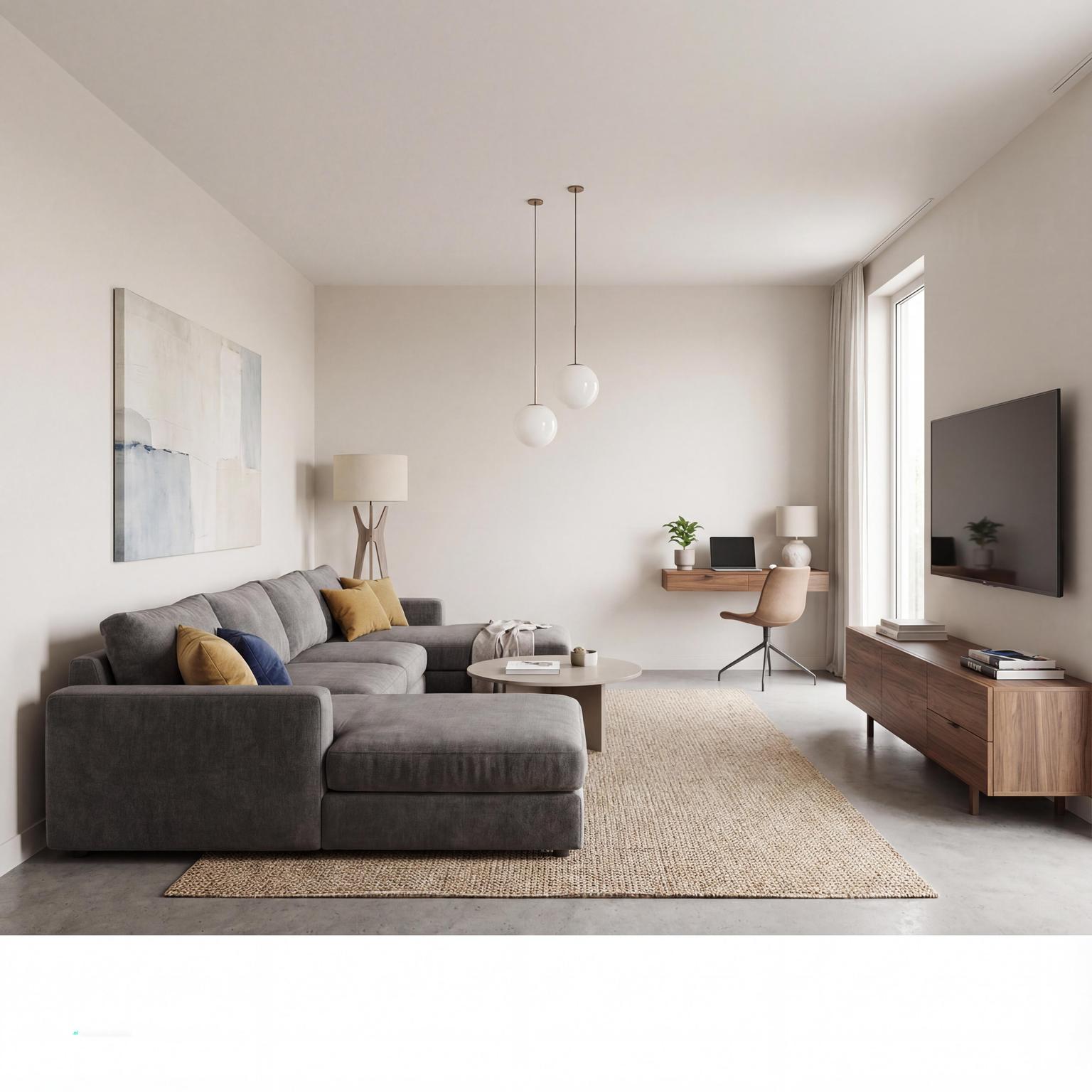
Small Living Room Layout With Tv with Tv Wall Focus and Seating Facing the Screen uses TV wall focus, seating facing the screen and zoned seating in a living room setting.
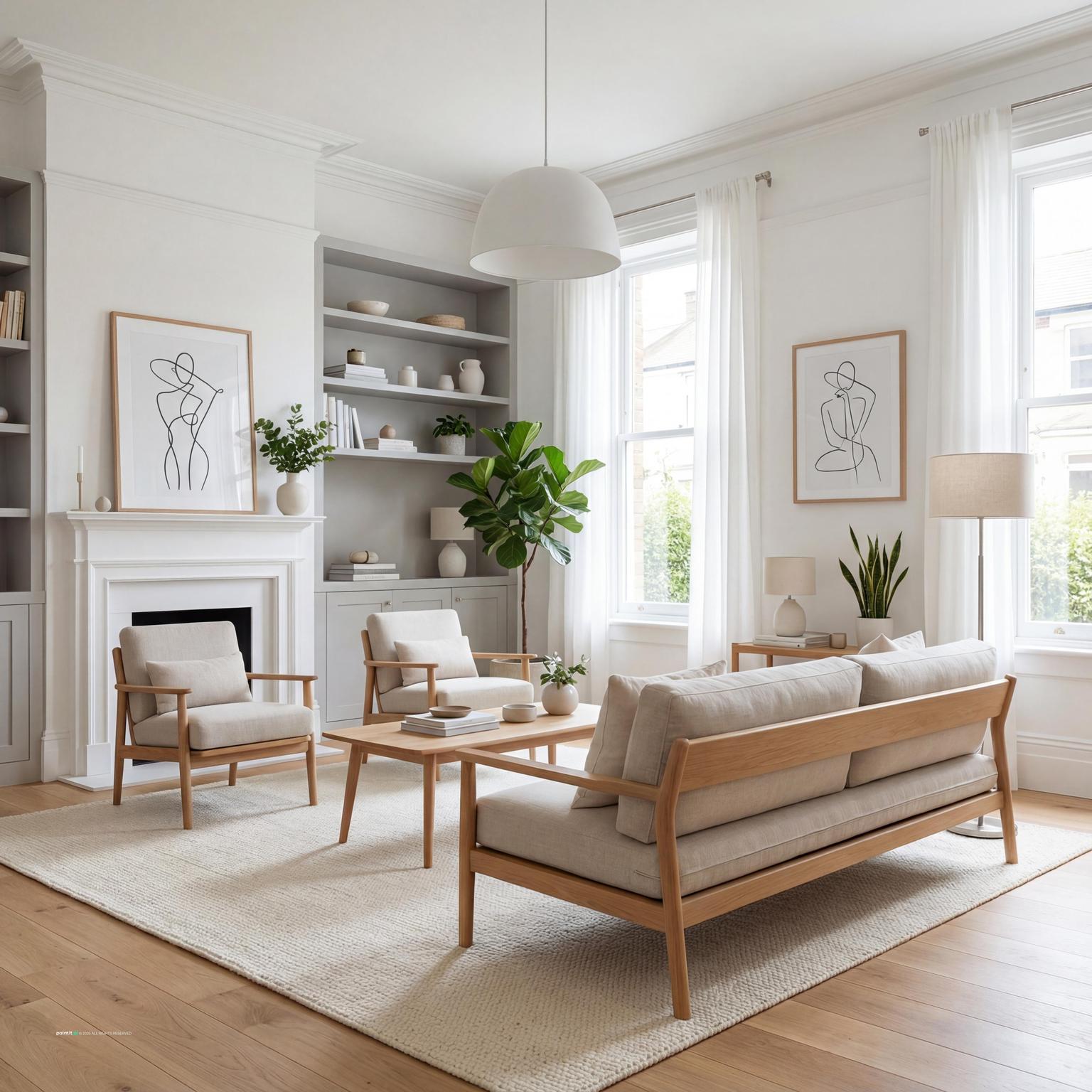
Scandinavian Living Room Redesign balances compact proportions, space-saving storage and warm wood in a living room setting.
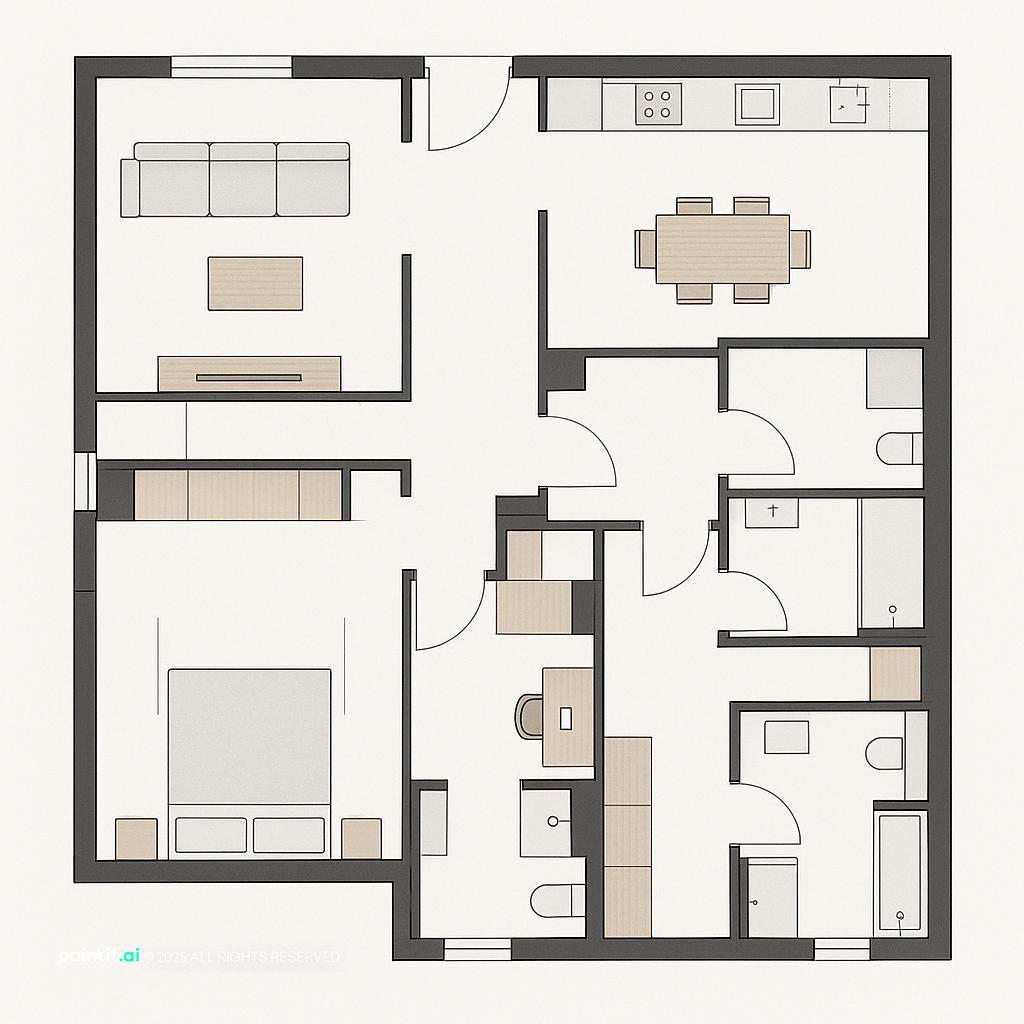
Minimalistic Interior Design pairs clear furniture layout, compact proportions and space-saving storage in a living room setting.
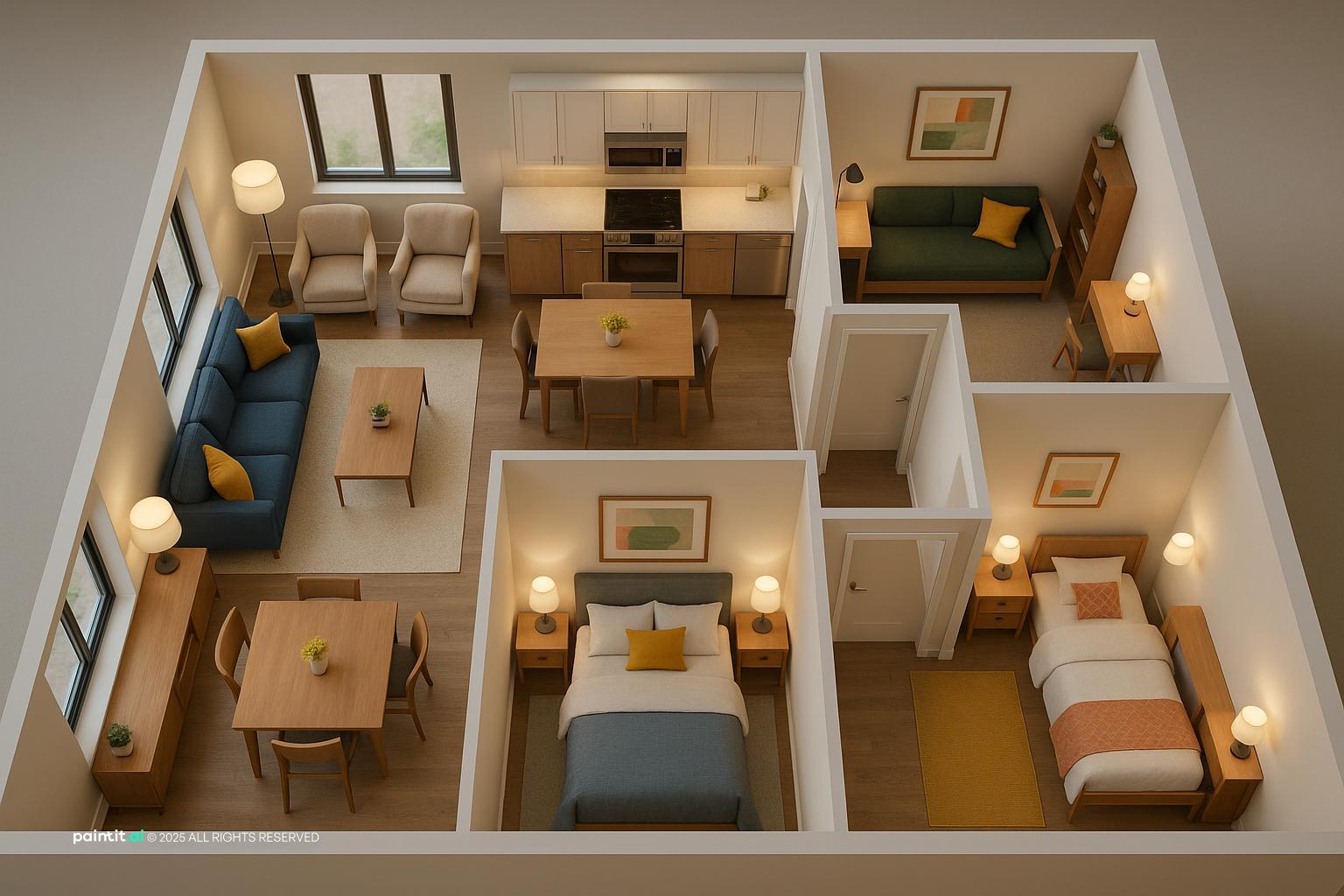
Stylish Apartment Design for Small Families layers TV wall focus, clear furniture layout and compact proportions in a living room setting.
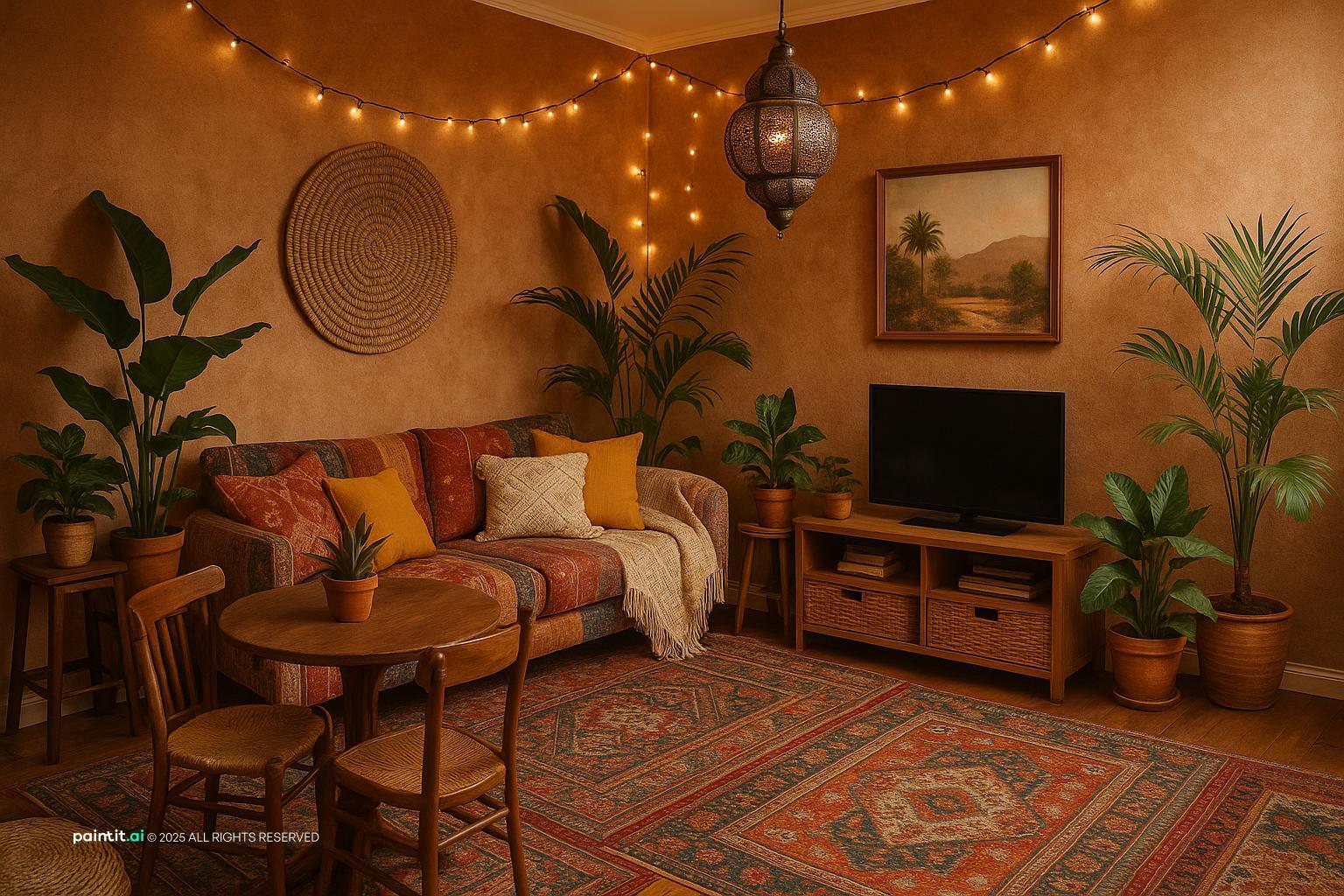
Cozy Bohemian Living Room Transformation anchors compact proportions, soft textiles and plants and greenery in a living room setting.
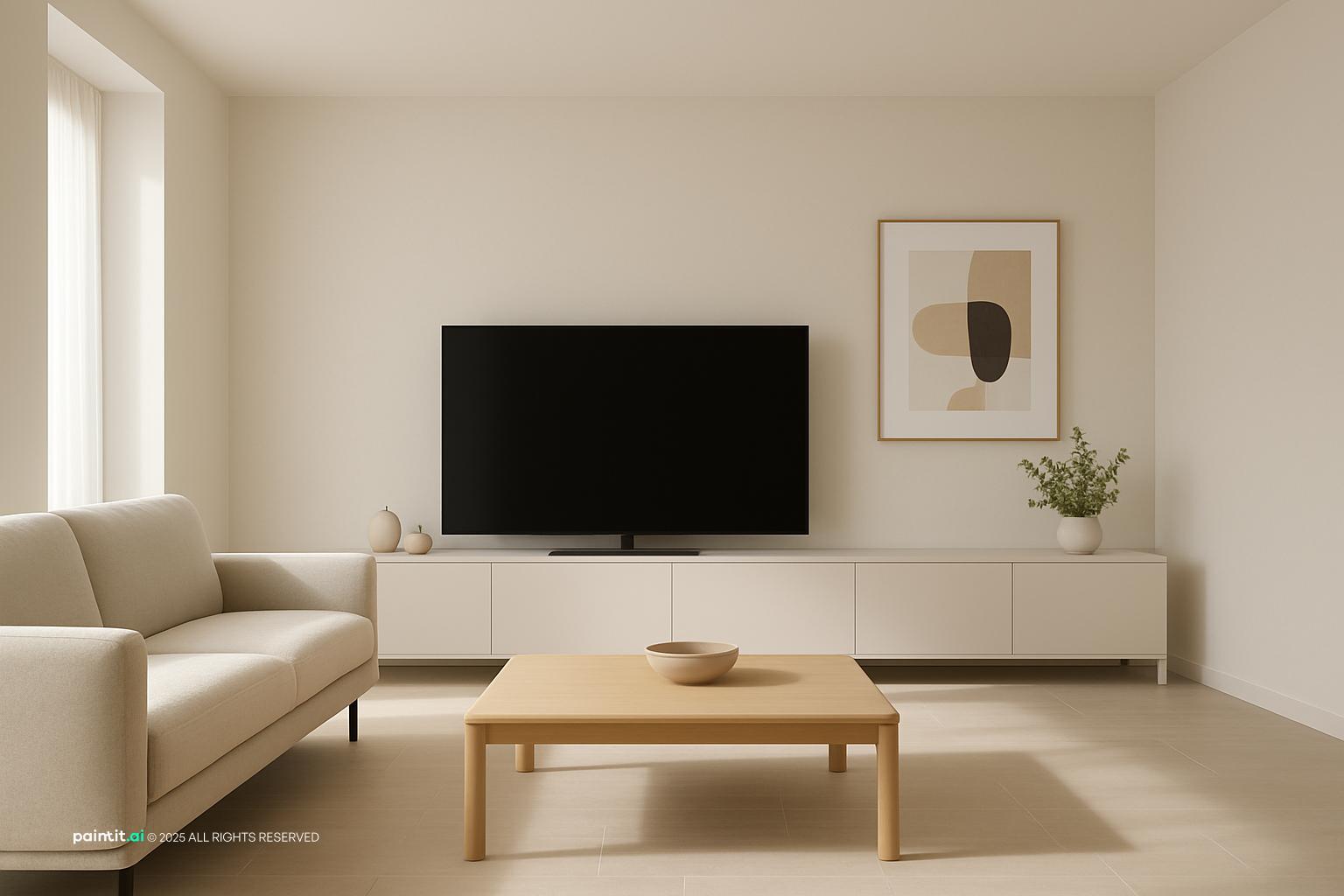
Modern Minimalist Living Room Design with Tv Wall Focus softens TV wall focus, clear furniture layout and space-saving storage in a living room setting.
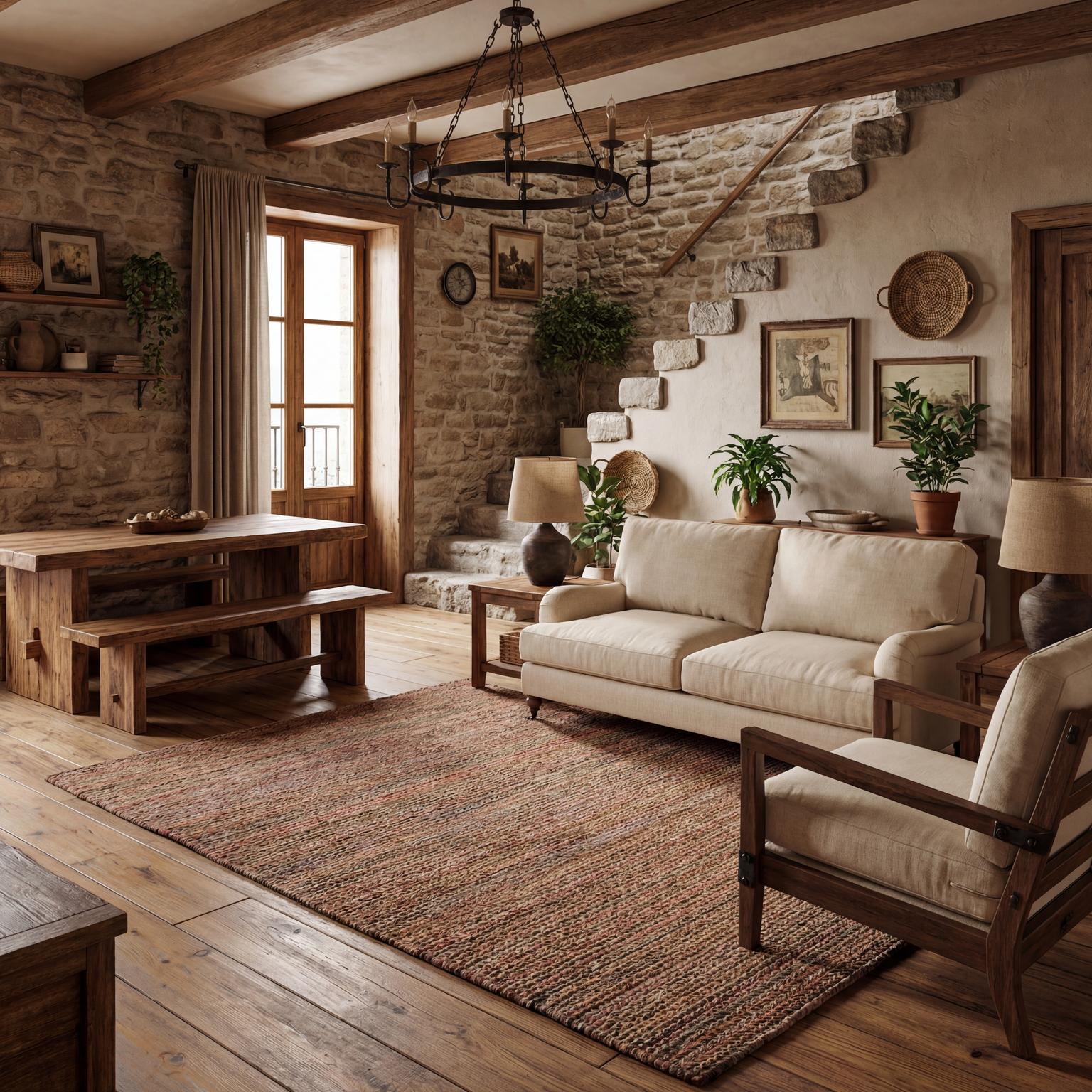
Rustic Living Room Design uses compact proportions and plants and greenery in a living room setting.
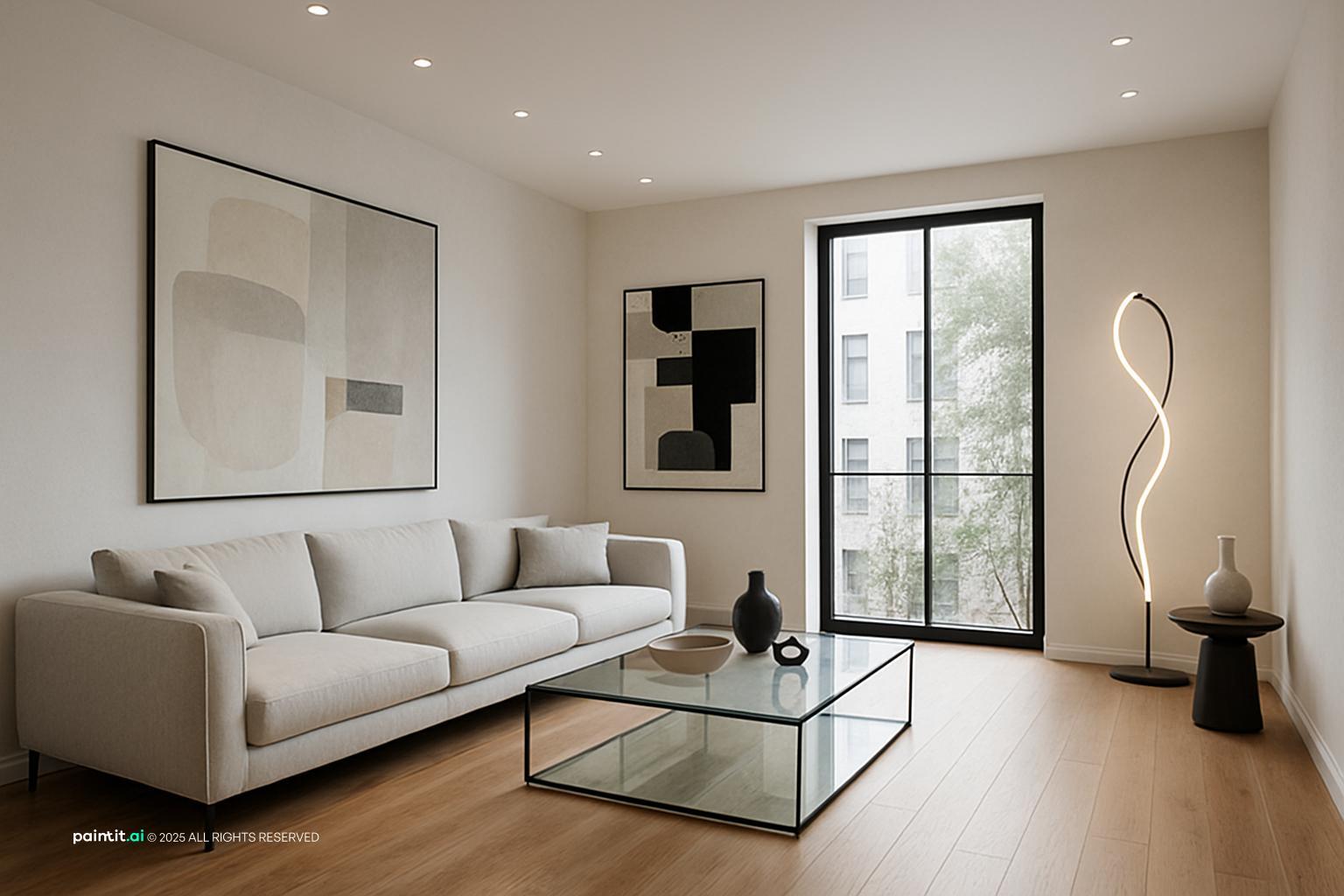
Stunning Contemporary Living Room Design balances seating facing the screen, clear furniture layout and compact proportions in a living room setting.
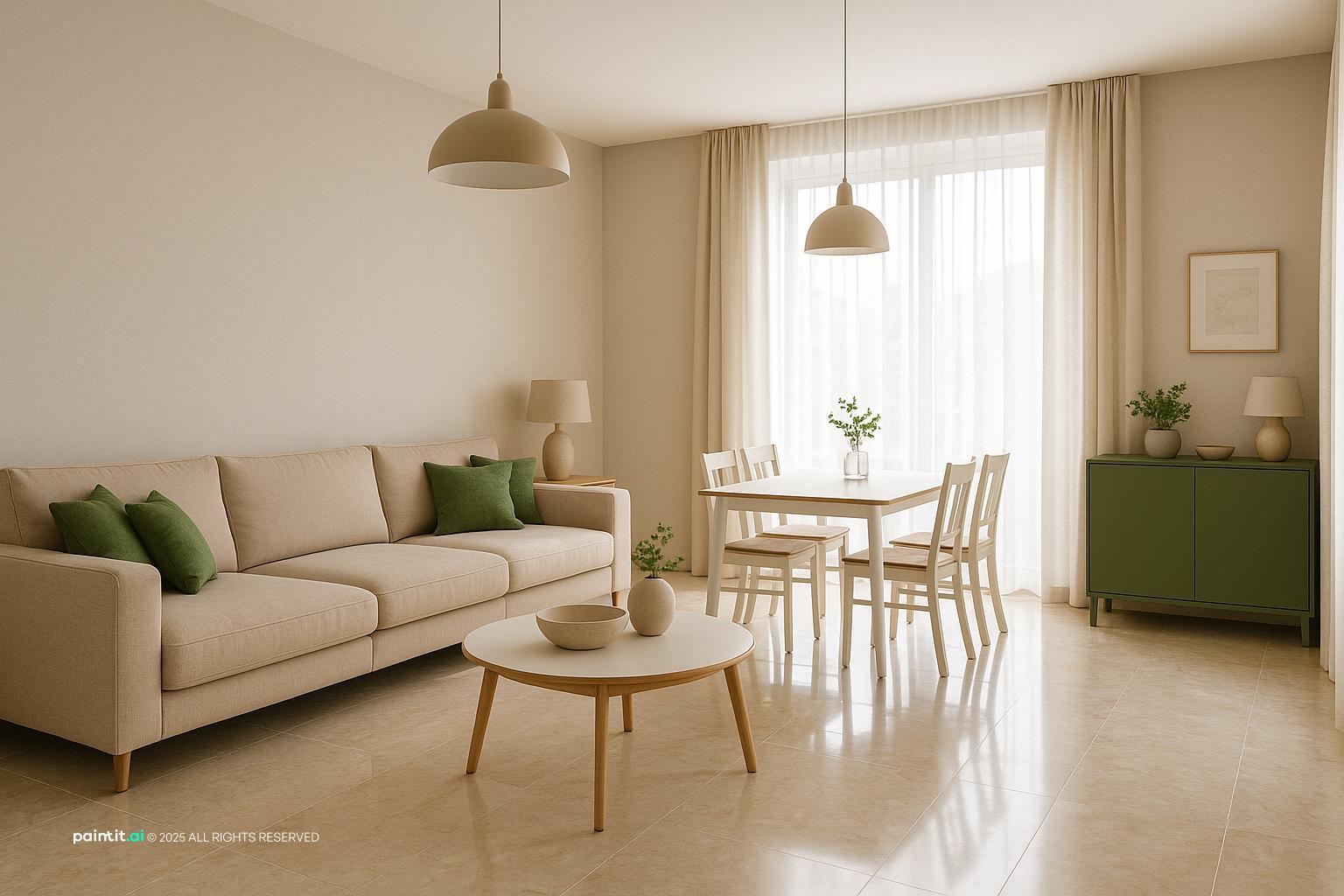
Small Living Room Layout With Tv with Seating Facing the Screen and Clear Furniture Layout pairs seating facing the screen, clear furniture layout and zoned seating in a living room setting.
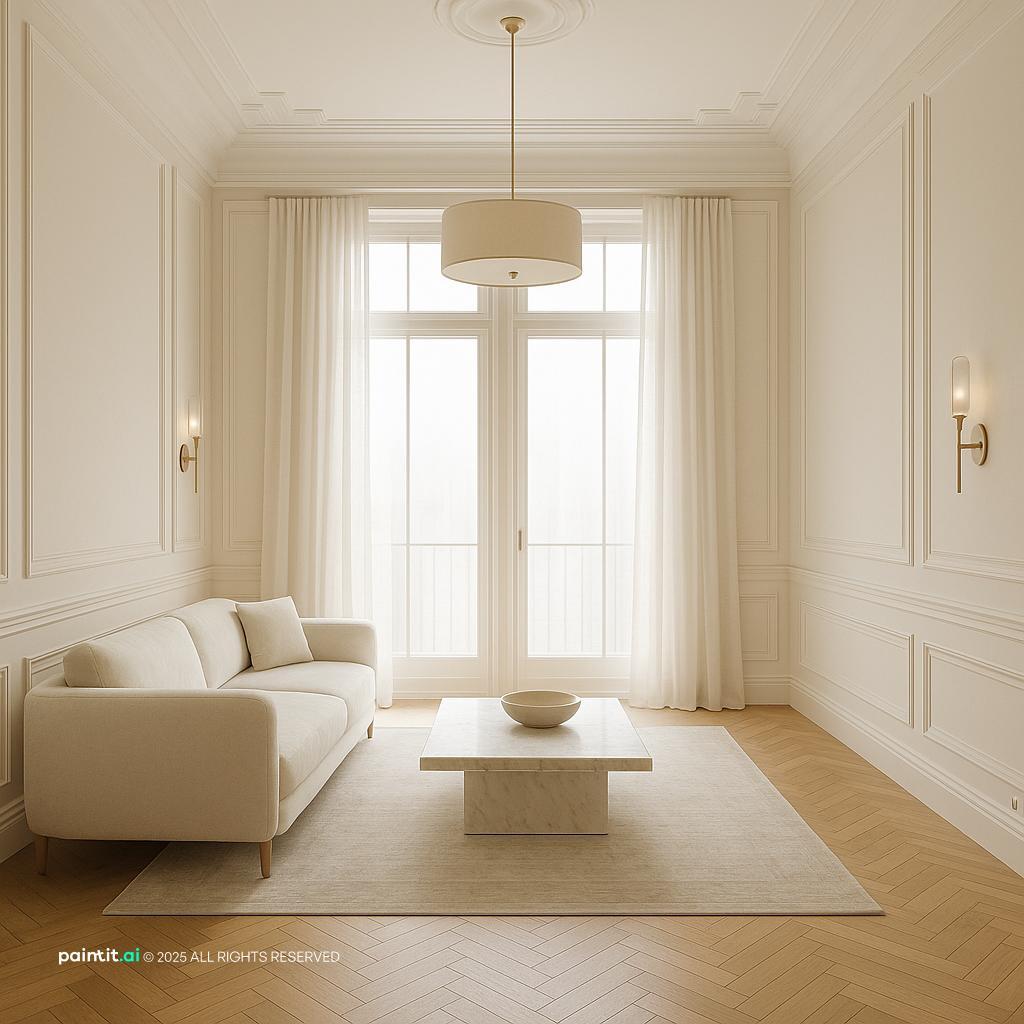
Elegant Neoclassic Minimalist Living Room Design layers clear furniture layout, compact proportions and clean-lined furniture in a living room setting.
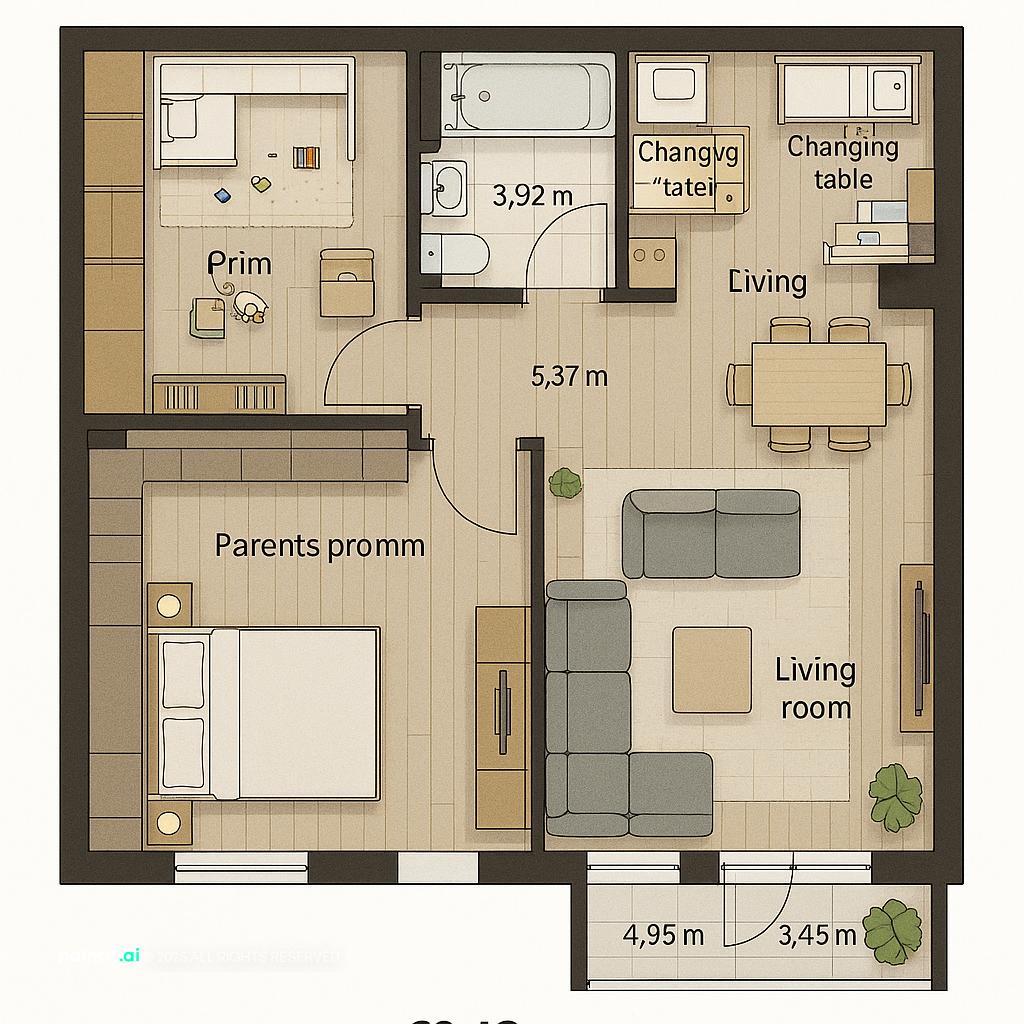
Stylish Apartment Layout for Family Living anchors clear furniture layout, compact proportions and space-saving storage in a living room setting.
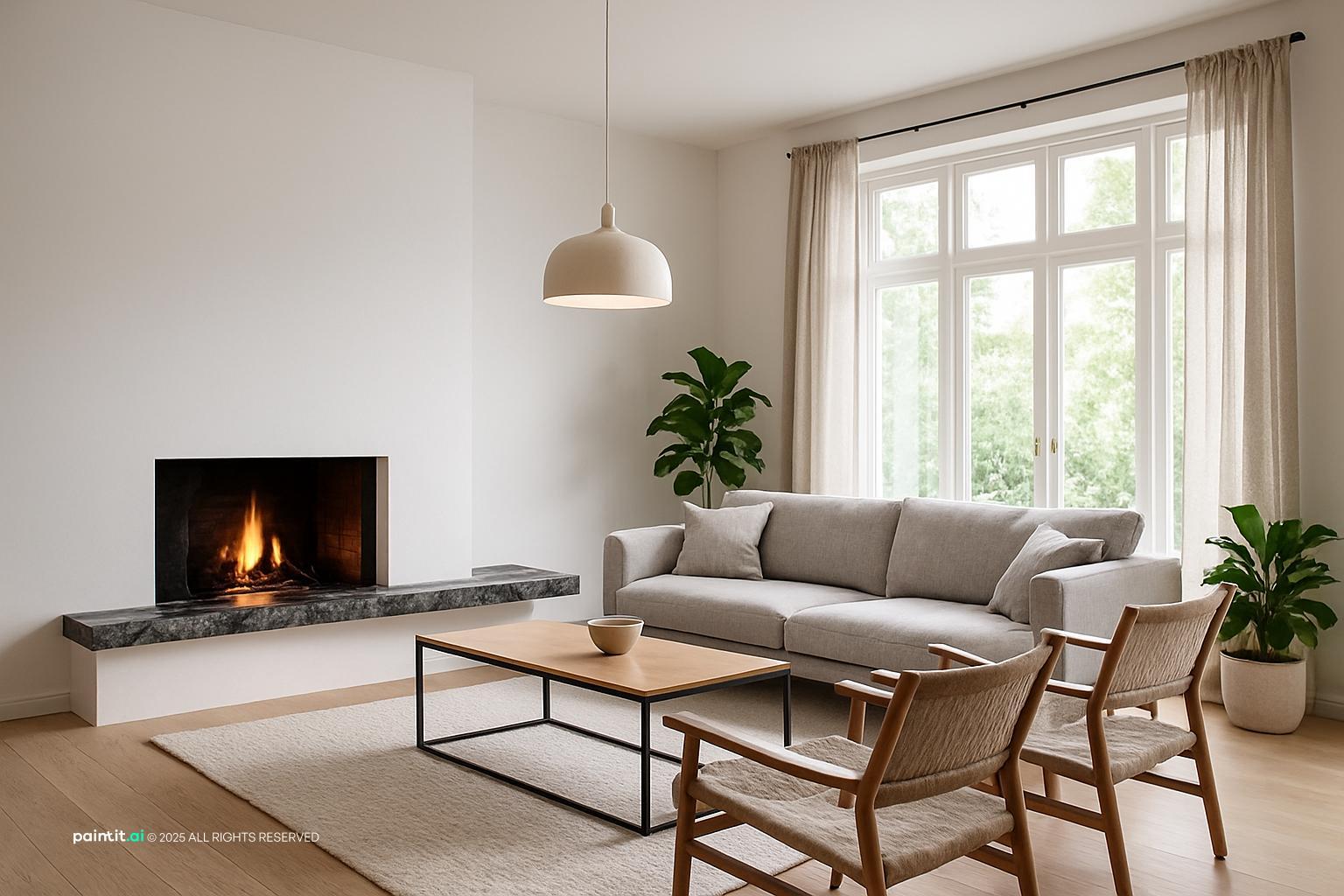
Scandinavian-Style Living Room Design softens clear furniture layout, warm wood and soft textiles in a living room setting.
Use soft contrast around the screen so the TV does not dominate the entire room. Warm white, greige, muted taupe, clay, sage, or smoky blue can work well depending on the light. If the TV is black, a mid-tone wall behind it usually feels calmer than a bright white wall.
Avoid using too many strong colors in a small room where the sofa, rug, curtains, and screen are all close together. One main wall color, one upholstery tone, and one or two accents are usually enough.
Undertones become more obvious when everything is close together. A cool gray wall can make a beige sofa look yellow; a very warm cream can make a black TV feel harsher. Test paint near the TV wall and beside the largest textile in the room, not only in an empty corner.
Why it works: the TV is a strong visual anchor, so the surrounding color needs to support both daytime comfort and evening viewing. Avoid choosing paint from a tiny sample under store lighting. Check it in morning light, evening light, and with the screen on.
Wood helps a compact living room feel less flat, especially when the TV wall has a floating shelf, narrow console, or small side table. Choose slim profiles in oak, walnut, ash, or painted wood rather than thick rustic pieces that eat up floor space.
Use wood where hands touch things: console fronts, table edges, shelving, or a compact frame. Avoid mixing too many wood tones in a small room unless their undertones are clearly related. If one wood reads orange and another reads gray, the room can start to feel patched together.
Black metal can echo the TV frame, while brass or bronze can warm up the room. Use metal in small doses: lamp arms, cabinet pulls, curtain rods, or chair legs. This keeps the room detailed without making it busy.
What to avoid: shiny chrome, bright brass, and black metal all competing in the same tiny seating area. Pick one dominant finish and one supporting finish at most. Small rooms show every mismatch faster than larger rooms do.
Curtains, cushions, and rugs help balance the hard surfaces of the TV, console, and electronics. Linen-look curtains, wool-blend rugs, boucle pillows, or a soft woven throw can make the room feel more comfortable without adding clutter.
Use texture rather than many patterns. A small pattern on one cushion or a subtle rug is fine, but too many graphic textiles can fight with the screen and make the room feel restless. The catch is that patterns often look fun in a single image, then feel loud when you sit near them every day.
Plan at least two light sources besides the TV glow: a soft lamp near the sofa and a wall or ceiling light that does not reflect directly on the screen. If possible, use dimmers. Low, warm light makes evening viewing more comfortable and keeps the room from feeling like a dark box.
Avoid placing a bright lamp directly opposite the TV if it creates glare. Also check windows. If daylight hits the screen, use lined curtains, woven shades, or adjustable blinds to control reflection. In practice, glare is one of the quickest ways a nice-looking layout becomes annoying.
Small objects around a TV quickly become visual noise. Use one plant, one sculptural object, a stack of books, or a simple tray instead of many tiny accessories. Leave empty space on the console so it looks intentional.
This is where “no clutter” matters. A compact room can still have personality, but the display should not compete with the screen, block speakers, or make cleaning around cables difficult. If every surface needs styling, the room probably needs editing first.
If the TV wall is dark and heavy, balance it with a substantial rug, a textured sofa, or curtains that reach the floor. If the TV wall is light and minimal, you may need a darker side table, framed art, or richer upholstery to keep the room from looking unfinished.
Avoid putting all the heavy elements on one side of the room. In small spaces, imbalance is easy to feel: one black screen, one bulky cabinet, one dark chair, and suddenly the whole layout leans visually.
Upload a photo of your living room and test layout changes before committing to mounting hardware, a new sofa, or a media unit. For a compact TV room, useful prompts are simple but specific: “keep window,” “keep fireplace,” “no clutter,” “floating console,” “preserve exact room structure,” or “change sofa to compact sectional.”
Because many homeowners start with one short phrase, Paintit.ai is useful for refining the room in steps. Add the TV placement first, then adjust the sofa, then test rug size, lighting mood, and wall color. If the room is empty or partly furnished, AI room design can help compare furnished options without losing sight of scale and traffic flow.
Place it on the wall that gives a clear sofa view without blocking doors, windows, or the main walkway. The biggest wall is not always the best wall if it damages traffic flow.
Start with the TV wall, place the sofa at a comfortable viewing distance, then add the rug, compact table, and storage. Keep 30 to 36 inches clear where people walk.
Yes, if it is compact and the chaise does not block the room’s entry path. Measure the chaise depth, arm width, and viewing angle before buying.
Aim for the center of the screen near seated eye level, often around 42 inches from the floor. Adjust for sofa height, screen size, and how far you sit from the TV.
Avoid bulky media cabinets, too many open shelves, bright glare opposite the screen, and furniture that narrows the walkway. Keep storage slim, closed, and easy to use.