
Stylish Minimalistic Apartment Design
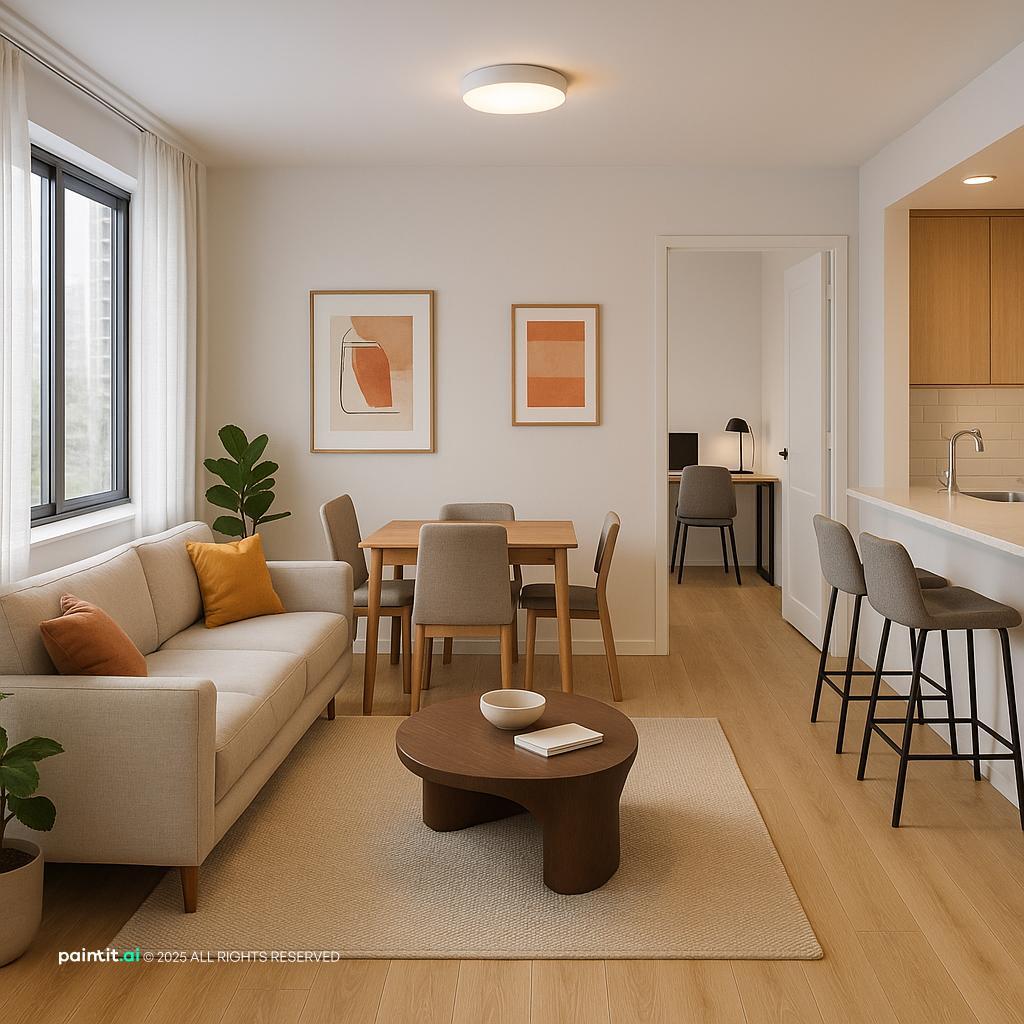
Stylish Minimalistic Apartment Design uses compact proportions, plants and greenery and natural light in a living room setting.
Small apartment living room ideas work only when they respect the room in front of you: the windows, door swings, outlets, radiator, traffic path, and the furniture you use every day. The goal is not to fill every corner. It is to make a compact room feel calm, useful, and easy to move through without losing seating, storage, or personality.
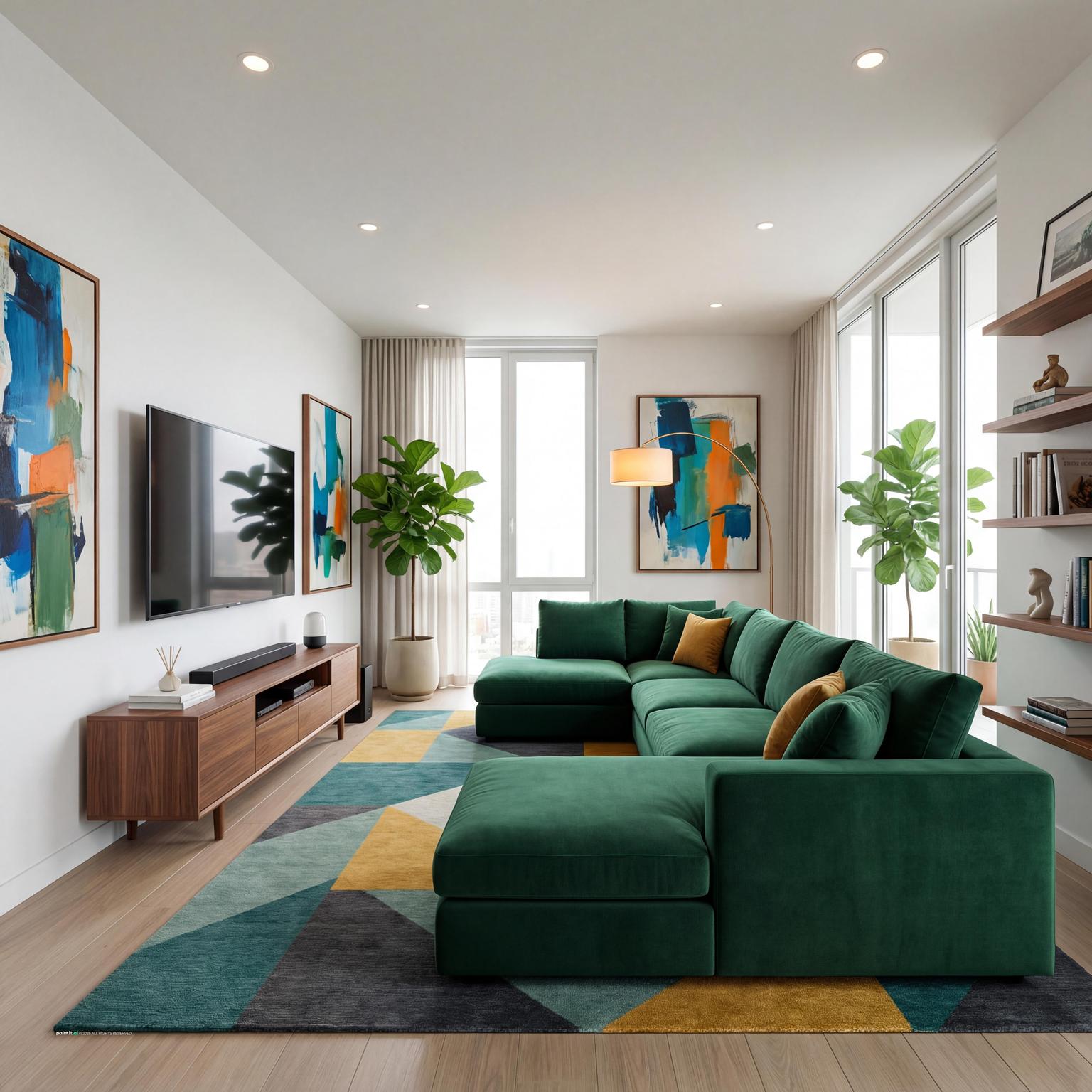
Before you choose a sofa, rug, or paint color, measure the room. In Paintit.ai prompt behavior, only 3.2% of users include dimensions such as sq ft, m², or 10x10, even though size is usually the thing that decides whether a small apartment living room layout will work. A tape measure catches the mistake a product photo will not: furniture that looks fine online but blocks the walkway at home.
I would start with constraints, not style. Make a short KEEP list for things that cannot move, such as windows, radiators, outlets, columns, built-ins, or a landlord-approved wall color. Then make a REMOVE list for pieces that are too bulky, too deep, or not useful enough. If you want to test your own small apartment living room ideas before buying anything, an AI room design tool can help you compare realistic directions using your actual room photo.
Use the first gallery to look at how seating, rugs, storage, and daylight are balanced in tight rooms, especially when the living area shares space with an entry, dining nook, desk, or sleeping zone.
Stylish Minimalistic Apartment Design uses compact proportions, plants and greenery and natural light in a living room setting.
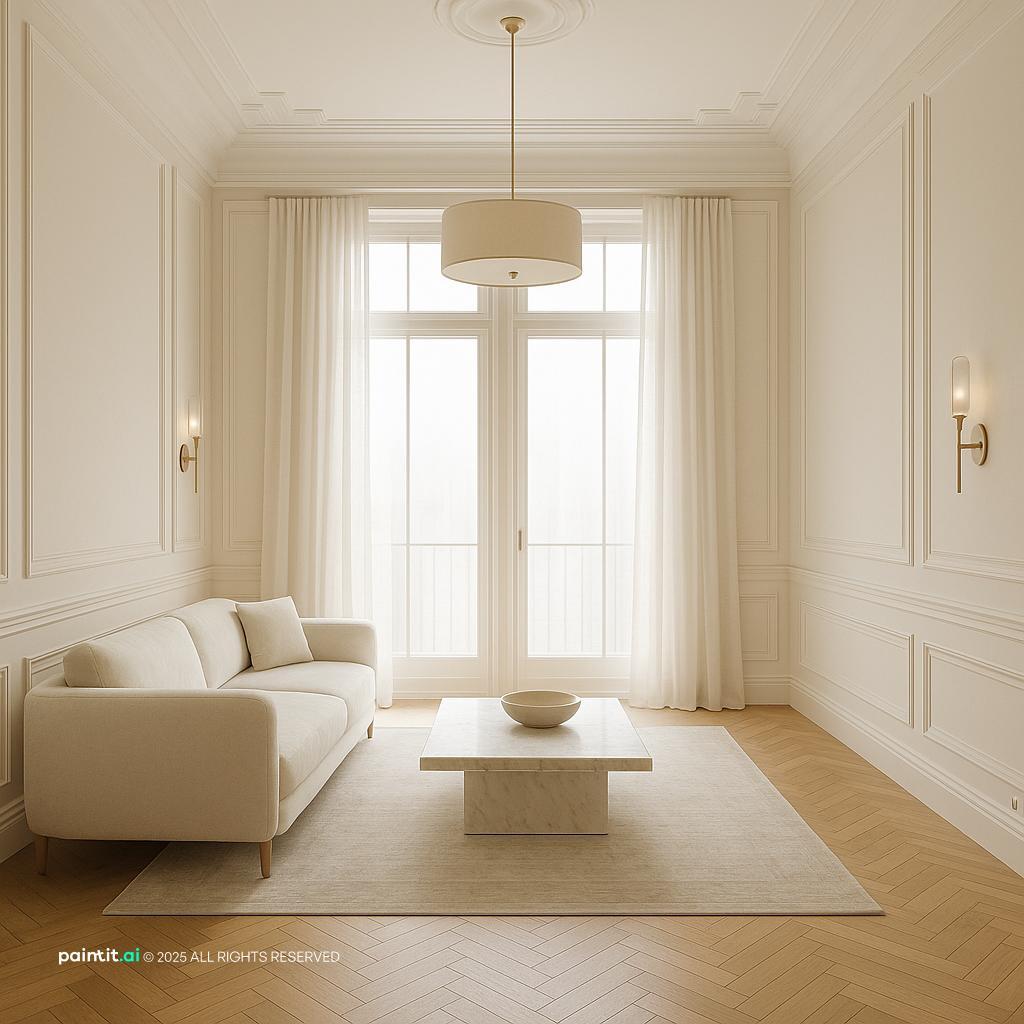
Elegant Neoclassic Minimalist Living Room Design balances compact proportions, clean-lined furniture and layered neutrals in a living room setting.
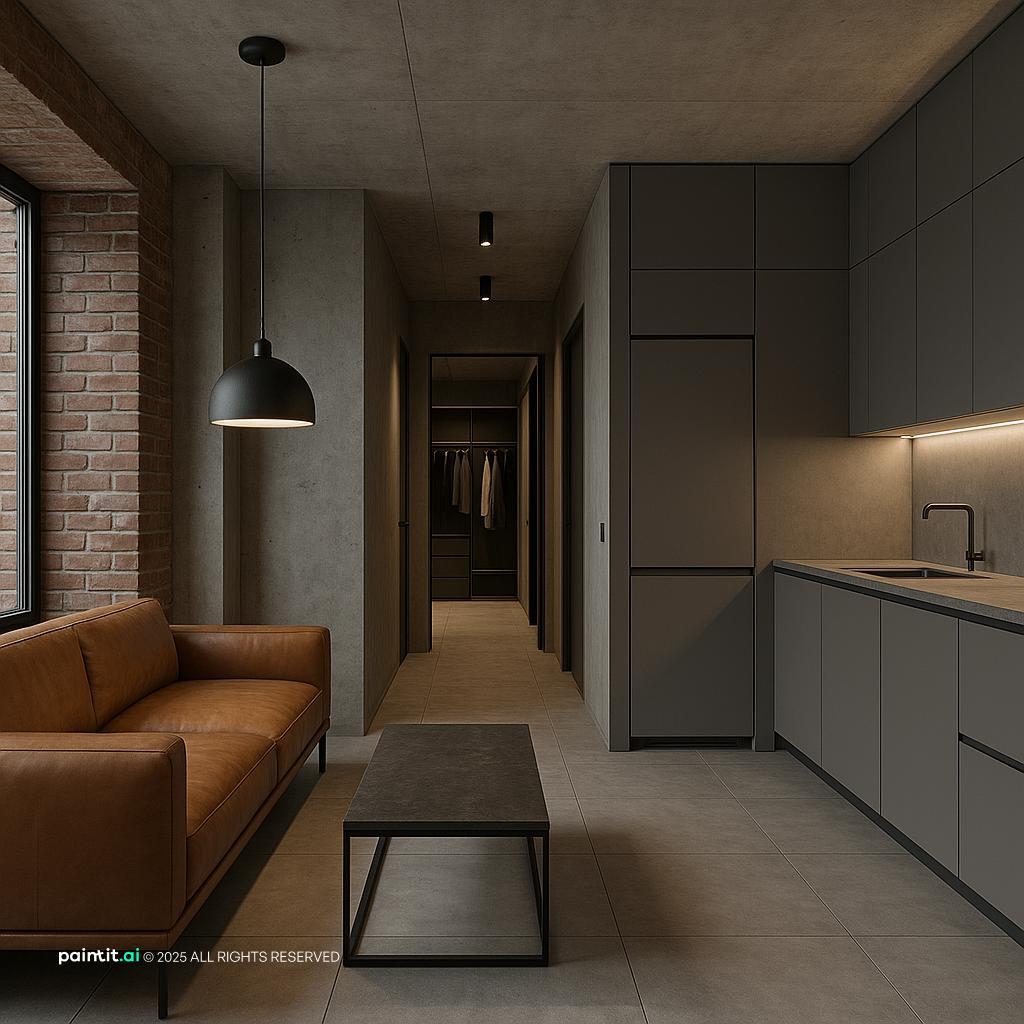
Stunning Minimalist Loft Apartment Design pairs compact proportions, space-saving storage and metal accents in a living room setting.
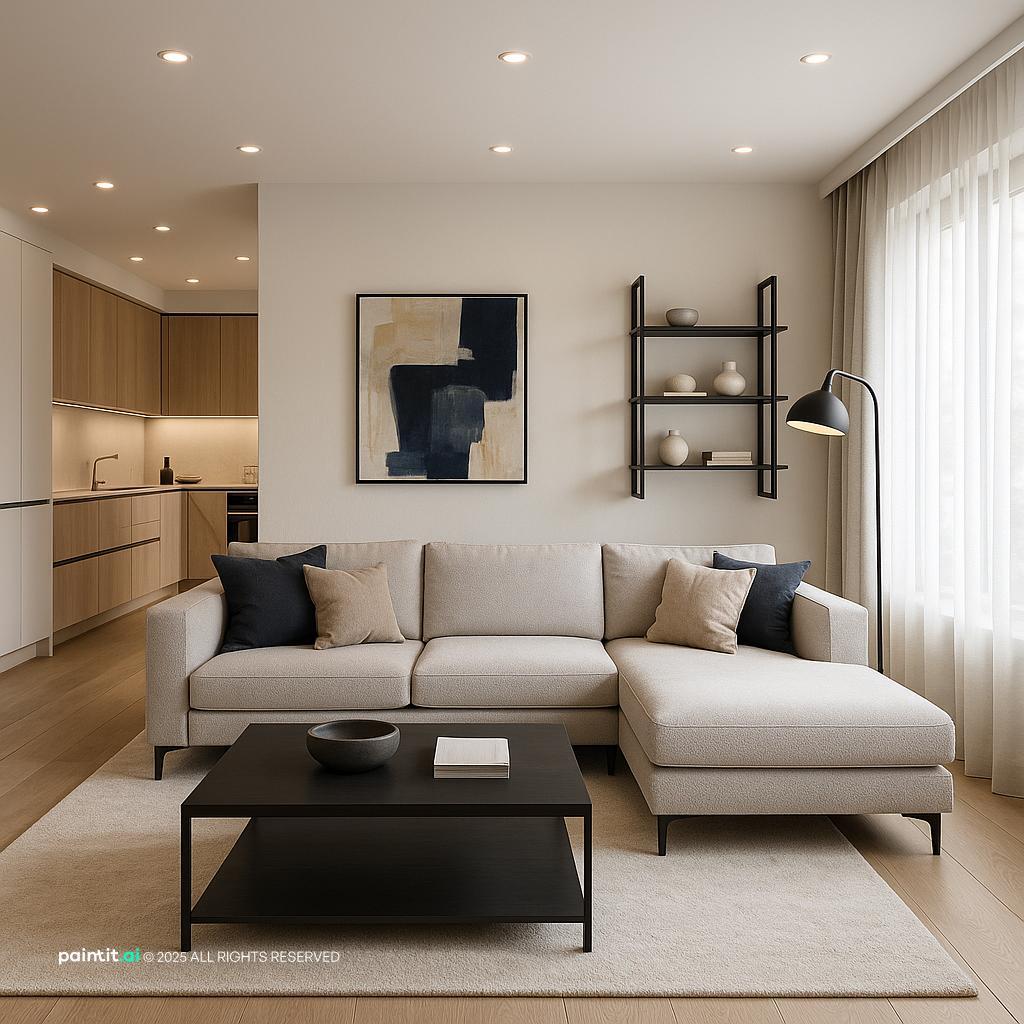
Stylish Modern Living Room Design layers compact proportions, space-saving storage and metal accents in a living room setting.
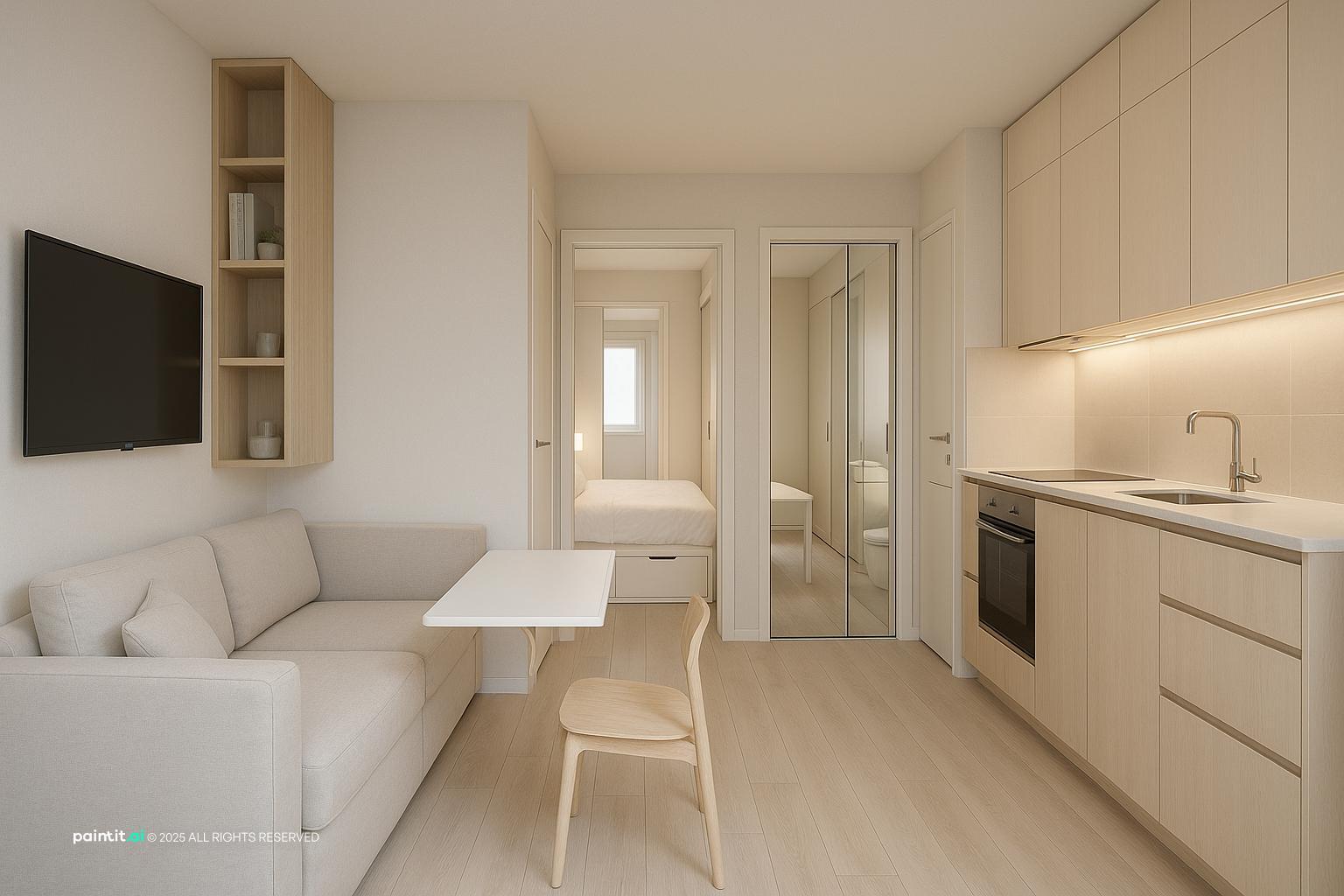
Small Apartment Living Room Ideas with Compact Proportions and Space-saving Storage anchors compact proportions and space-saving storage in a living room setting.
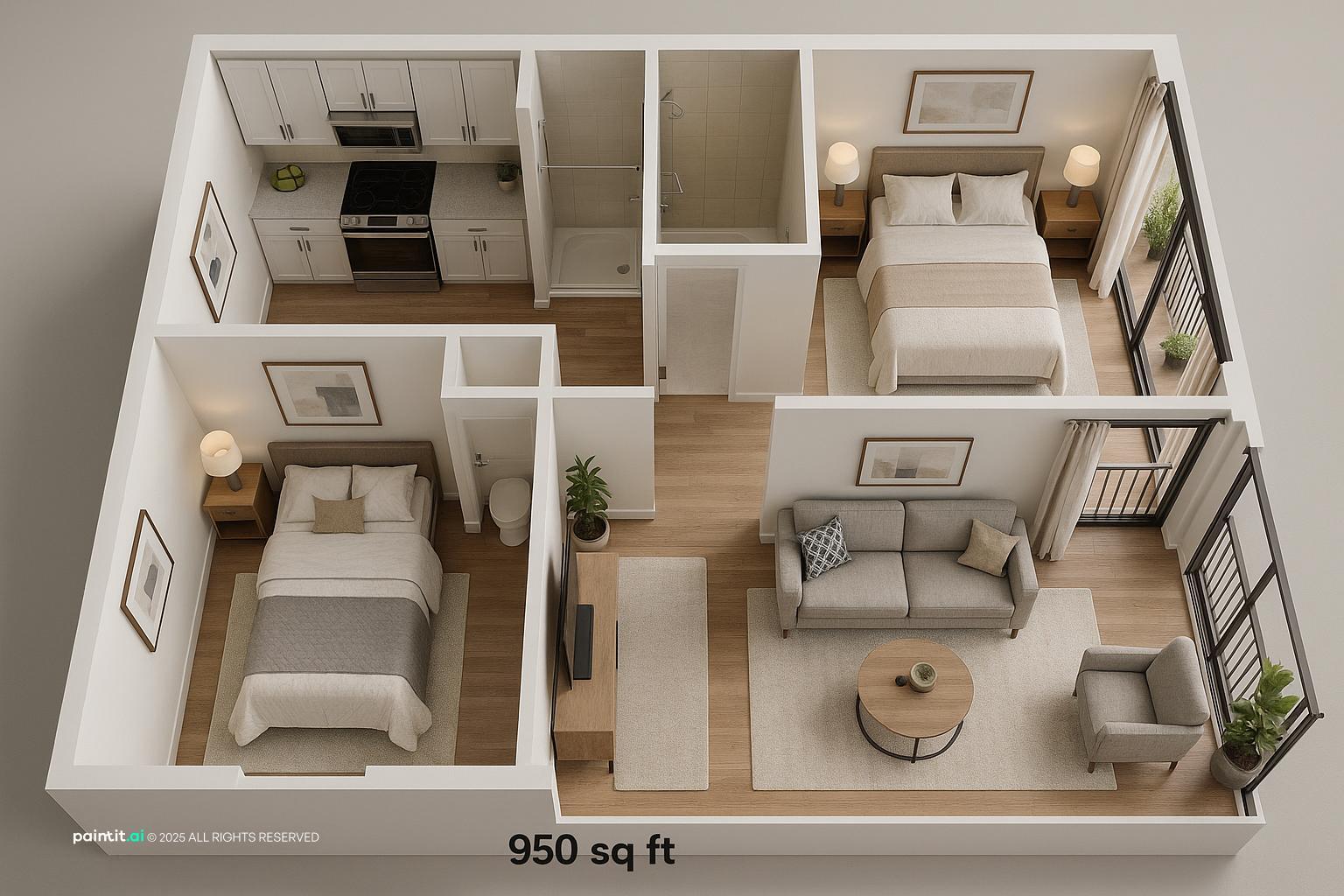
Modern 950 sqft Apartment Interior Design softens compact proportions, layered neutrals and natural light in a living room setting.
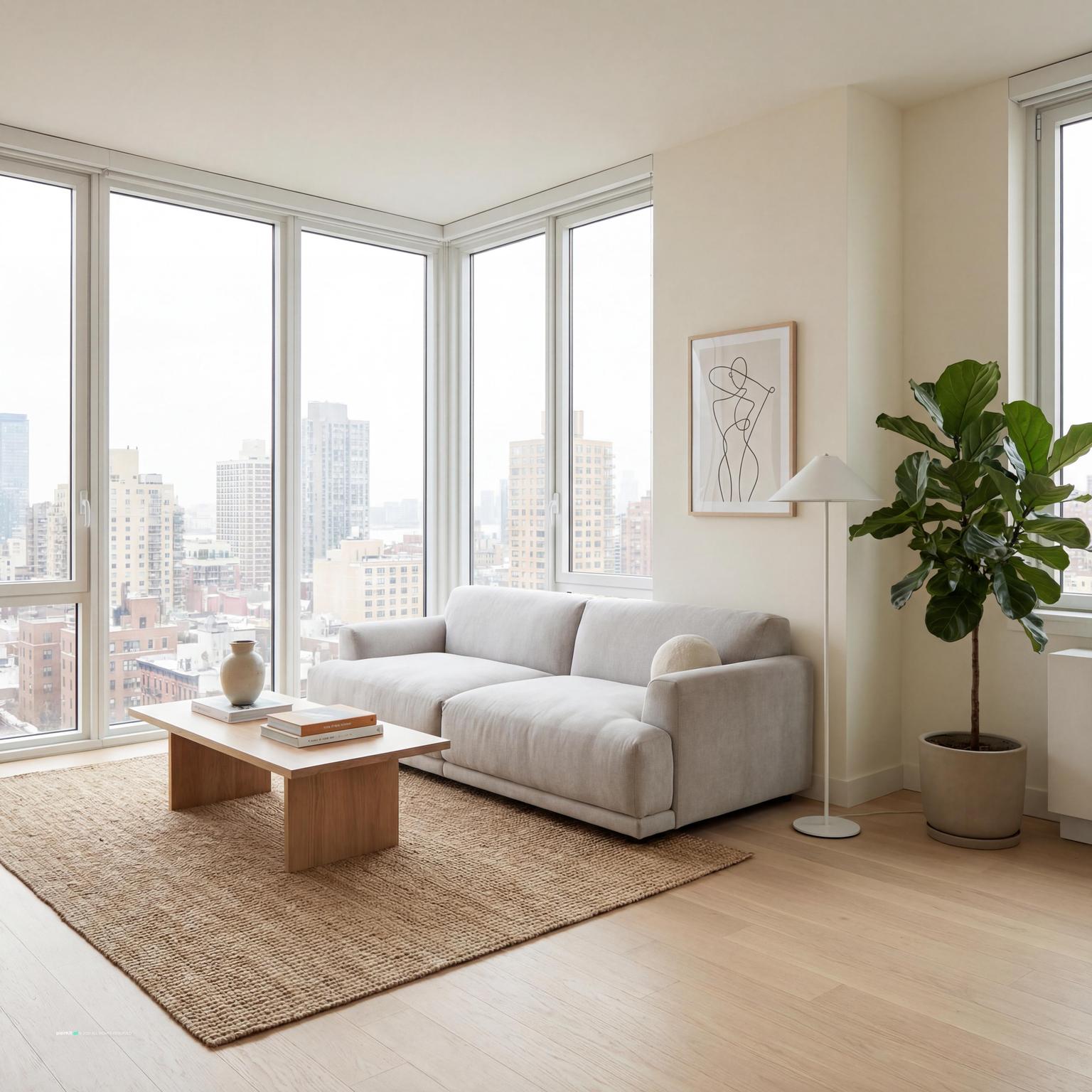
Minimalist Living Room Design for Studio Apartments uses compact proportions, clean-lined furniture and layered neutrals in a living room setting.
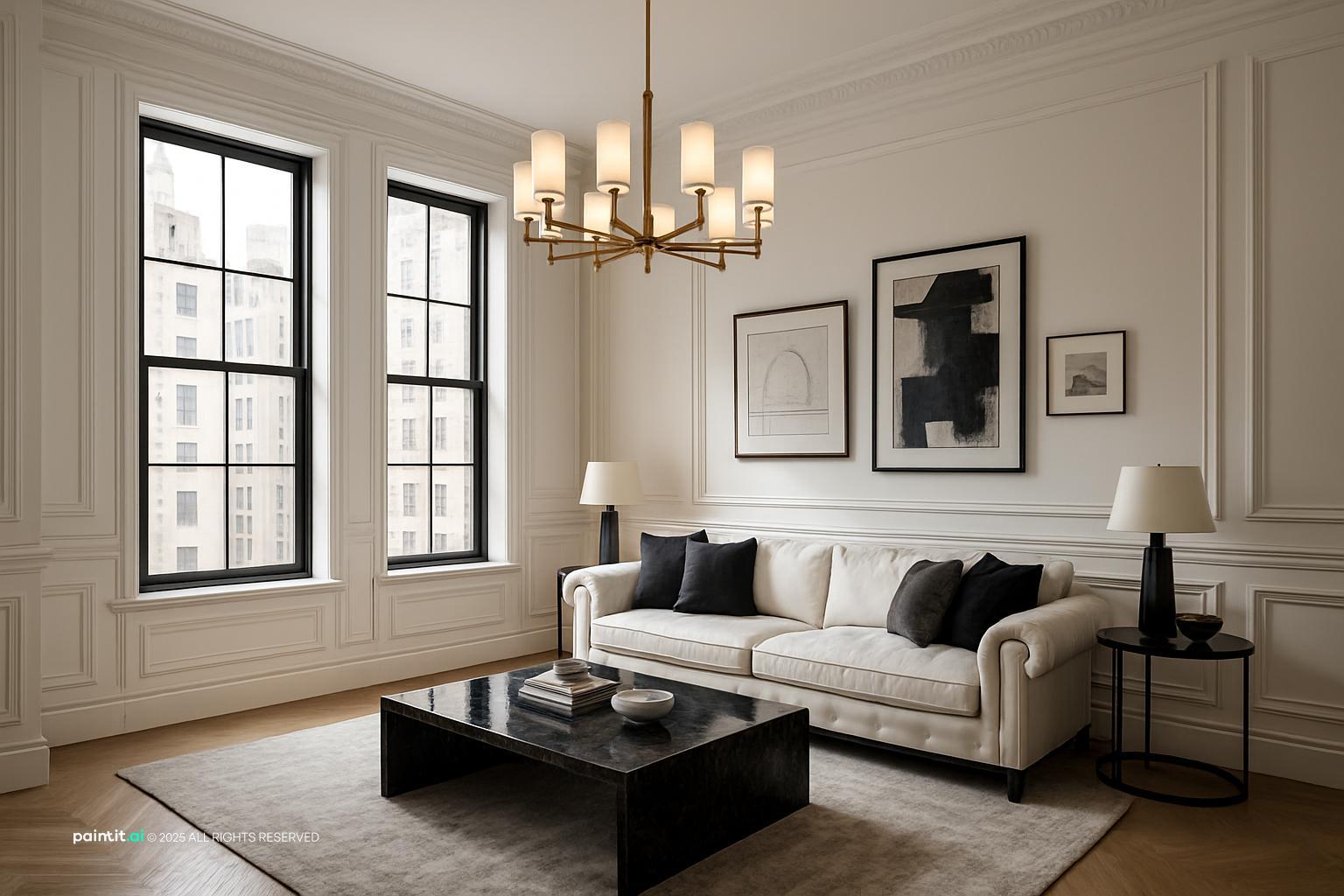
Small Apartment Living Room Ideas with Compact Proportions and Soft Textiles balances compact proportions, soft textiles and dark contrast in a living room setting.
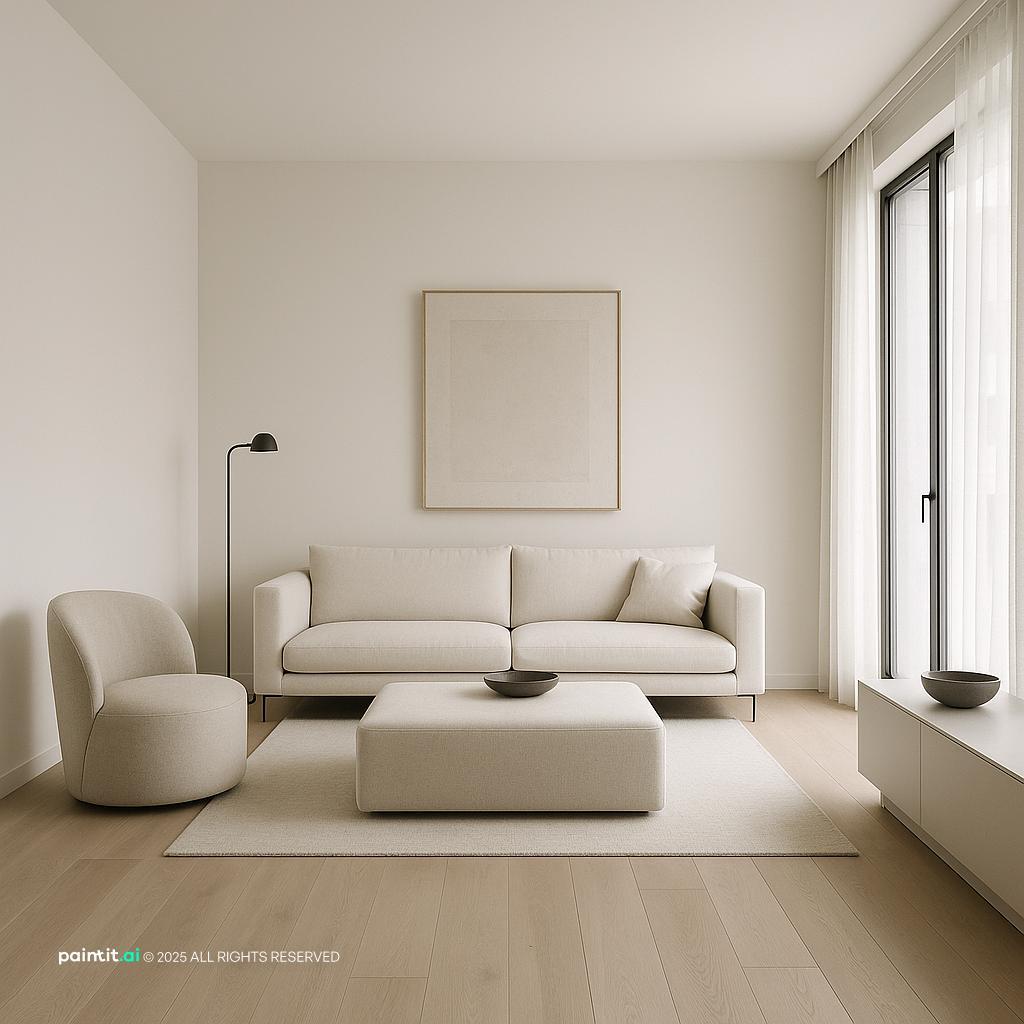
Minimalistic Living Room Design pairs compact proportions, open layout and layered neutrals in a living room setting.
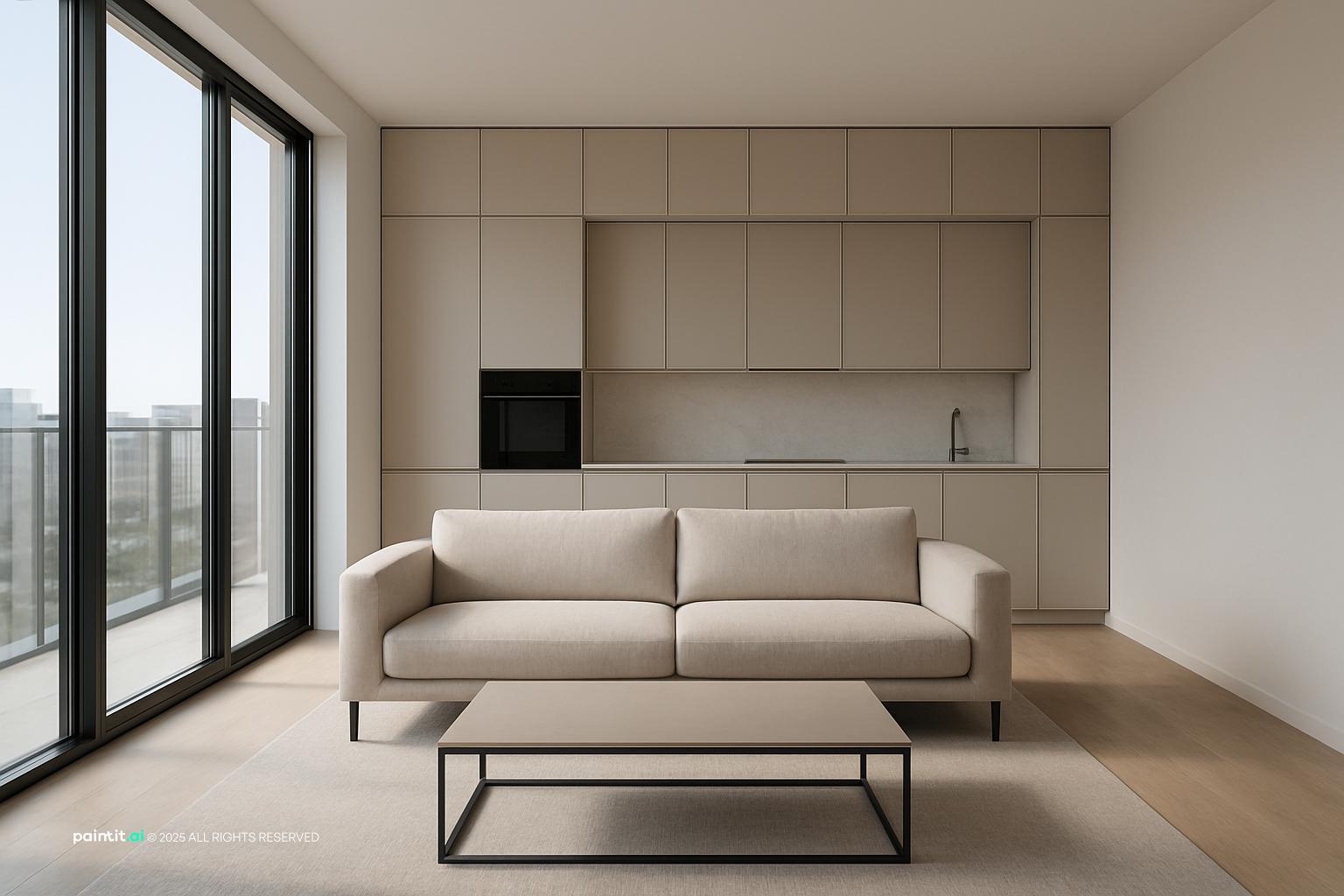
Small Apartment Living Room Ideas with Compact Proportions and Space-saving Storage with Clean-lined Furniture layers compact proportions, space-saving storage and clean-lined furniture in a living room setting.
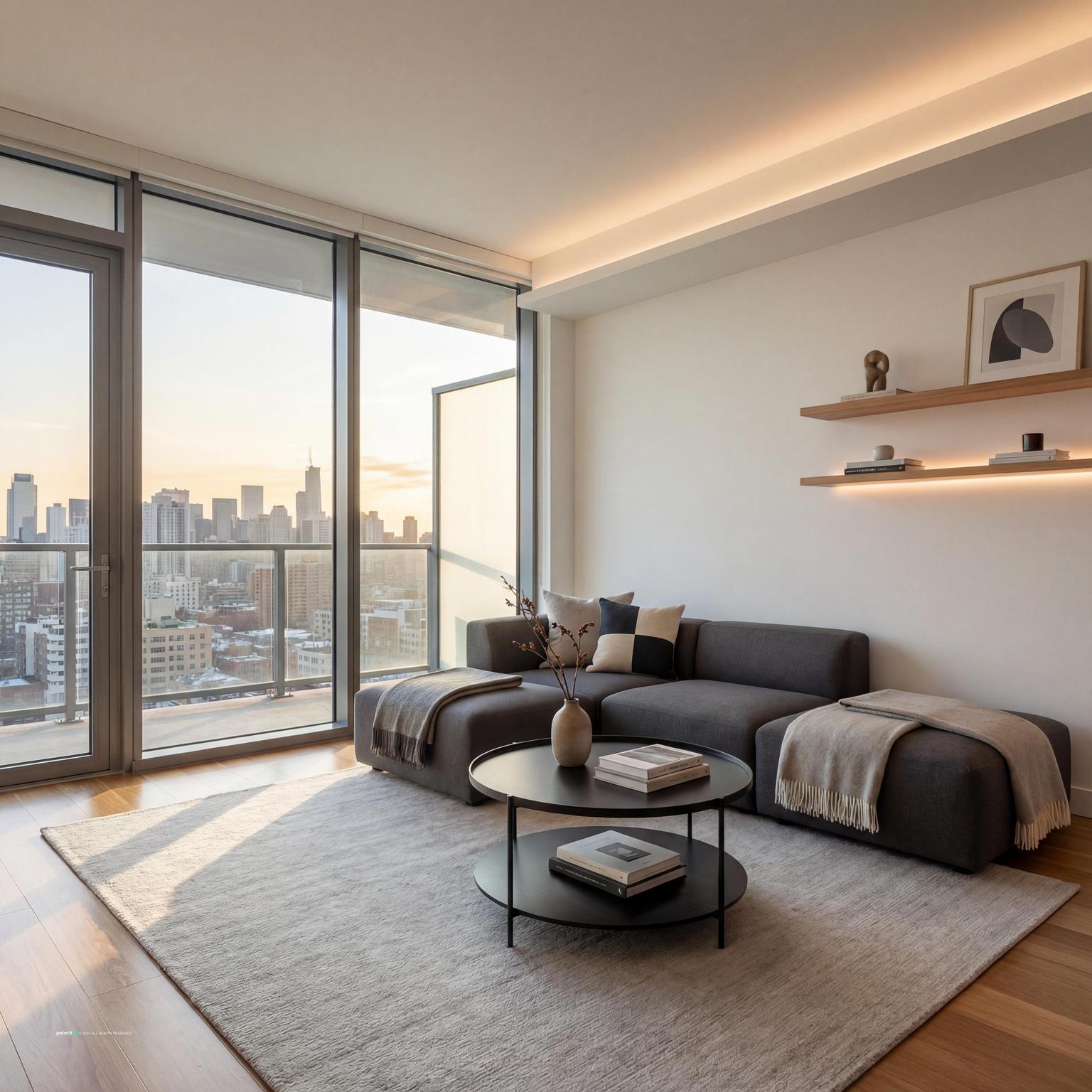
Modern Minimalist Living Room Design anchors compact proportions, clean-lined furniture and layered neutrals in a living room setting.
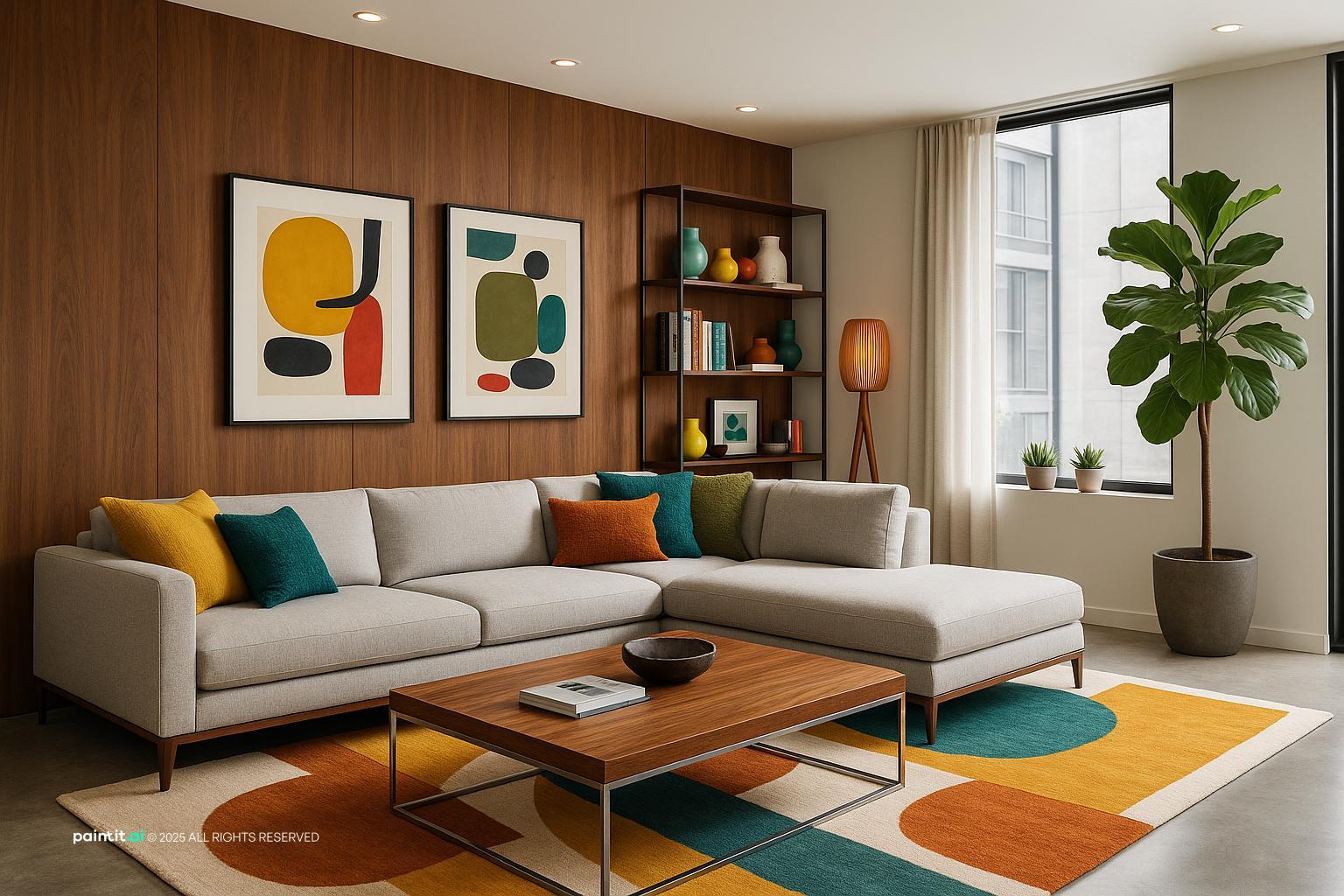
Small Apartment Living Room Ideas with Compact Proportions and Warm Wood softens compact proportions, warm wood and soft textiles in a living room setting.
Start with exact wall lengths, window positions, outlet locations, radiator depth, and door clearances. Do not rely on memory or a listing photo. In a small apartment, two extra inches of sofa depth can be the difference between a comfortable walkway and a room that feels jammed every time you cross it.
Mark the furniture footprint with painter's tape before ordering. Leave a clear path from the entrance to the main seating area, and check that cabinet doors, balcony doors, and closet doors can still open. Why it works: dimensions turn vague inspiration into a plan you can actually live with.
When people upload a small apartment living room, the first weak spot is often furniture scale. We often see a sofa that is not wildly wrong, just a bit too deep, too wide, or too heavy for the apartment layout. Look for a compact sofa with slimmer arms, raised legs, and a depth that suits the room instead of a deep lounge profile designed for a larger house.
Apartment-sized sofas, loveseats, and modular two-seat pieces can still feel comfortable if the seat height and cushion firmness are right. Avoid oversized rolled arms, heavy skirted bases, and sectionals that cut off the room unless the floor plan truly supports them. You can test these small apartment living room layout ideas with an AI living room design workflow before committing.
Floating a sofa can make a room feel more designed, but it is not automatically better in a small apartment. If pulling the sofa away from the wall creates a narrow strip behind it that nobody uses, push it back and spend that space somewhere else. The best layout is the one that makes walking feel natural.
A simple check: stand at the room entrance and follow the path your body wants to take. If you have to turn sideways around a chair, coffee table, or TV console, the layout is too tight. What to avoid: copying large-room layouts where furniture floats beautifully but uses space a compact apartment cannot spare.
Area rug zoning can define the living area without adding walls, which is especially useful for studio apartment living room ideas. Choose a rug large enough for at least the front legs of the sofa and chairs to sit on it. A rug that is too small makes the furniture look scattered, even if each piece is good on its own.
In a studio, align the rug with the sofa rather than the bed or kitchen edge. This tells the eye where the living zone begins and ends. Why it works: zoning gives structure to a shared room while keeping the floor visually open.
A small coffee table should give you a place for a drink, remote, or book without becoming an obstacle. Round or oval shapes are easier to walk around in tight rooms, especially when the sofa faces a media wall or window. Nesting tables are useful if you need extra surface area only sometimes.
If the room is very narrow, use a C-table, slim bench, or pair of lightweight side tables instead. Sit down and stand up a few times before you decide; your knees will tell you if the table is wrong. What to avoid: solid block tables with no visible floor underneath, because they add visual weight and make the center of the room feel heavy.
A common request we see is simply no clutter. In Paintit.ai data, 8.8% of prompts include negative instructions like this, and it usually points to a deeper issue than styling. Clutter often appears because the room has no assigned place for the things people actually use.
Start by deciding where remotes, chargers, blankets, mail, shoes, headphones, and laptop accessories will go. Multi-functional furniture is useful here: a storage ottoman, lift-top table, media cabinet with closed doors, or sofa with hidden storage can absorb everyday mess. Why it works: the room stays cleaner because storage is built into the layout, not added later as a basket in the corner.
Small rooms usually have more available wall height than floor area. Use wall shelves above a desk, sofa, or media unit for books, small art, and closed baskets. Tall, narrow bookcases also work well when they are anchored properly and kept visually edited.
Keep the heaviest-looking items low and the lighter objects higher. This makes the wall feel balanced instead of top-heavy. What to avoid: filling every shelf edge to edge, which can turn vertical storage into visual noise.
A small apartment living room with tv needs careful sightlines. The screen should be comfortable to watch without forcing the sofa into the middle of the traffic path. Wall-mounting can help, but only if cables are handled cleanly and the screen is not hung too high.
If the TV competes with a window, place it on the wall with the least glare or use adjustable window treatments. A low media console with closed storage often works better than a tall unit because it keeps the wall open for art, shelves, or a mirror. Why it works: the TV becomes part of the room plan instead of the object everything awkwardly bends around.
Color is the most common design modifier we see in Paintit.ai prompts: 27.6% include color. That instinct makes sense in small rooms because wall, sofa, rug, and curtain colors strongly affect perceived space. Light colors can bounce daylight and reduce harsh contrast between surfaces.
This does not mean everything must be white. Soft warm gray, pale taupe, muted cream, chalky blue, or gentle sage can feel larger than dark high-contrast combinations. Choosing from the best living room colors is most useful when you also compare the room's natural light and flooring undertone.
Do not block windows with high-backed chairs, bulky plants, or deep storage unless there is no other workable option. In compact rooms, daylight affects how much space the room seems to have. The versions that tend to work better in our tests are the ones that protect natural light, and professional designers often specify daylight for this reason.
Use low furniture near windows, sheer curtains, or curtains hung high and wide so the glass feels larger. If privacy is an issue, layer sheers with simple roller shades. What to avoid: dark, heavy drapes that stop at the window frame and make the wall feel shorter.
A full armchair can be comfortable, but it may be too visually heavy for a small apartment. Consider slipper chairs, armless lounge chairs, small swivel chairs, or upholstered dining chairs that can be borrowed when guests arrive. The chair should support conversation without blocking the main path.
If you entertain rarely, a pair of lightweight stools may be more practical than one large chair. Store them under a console or near a bookcase. Why it works: flexible seating lets the room change without requiring a permanently crowded layout.
Small apartment decorating ideas often fail when every item tries to be the accent. Choose one stronger moment: a patterned rug, a saturated chair, a sculptural floor lamp, a large artwork, or a distinctive coffee table. Then let the surrounding pieces stay calmer.
This keeps the room personal without making it busy. It also helps renters who cannot change flooring, tile, or wall color. What to avoid: many tiny decorative objects spread across every surface, because they create clutter faster than one confident focal point.
A mirror can make a compact room feel brighter, but placement matters. Put it opposite or near a window to reflect daylight, or angle it toward art, greenery, or a clean sightline. A mirror reflecting a pile of shoes, kitchen mess, or blank ceiling will not help much.
Choose a size that feels intentional. One medium or large mirror is often better than a cluster of small ones in a tight room. Why it works: reflection extends the eye, but only if the reflected view supports the room.
Instead of styling the whole room at once, edit each surface separately: coffee table, media unit, shelves, side table, and window ledge. Give each surface one job. For example, a side table can hold a lamp and one tray, while the media unit can hold closed storage and one piece of art.
Use trays, boxes, and baskets to group small items. Leave some empty space around objects so the room can breathe visually. What to avoid: placing decor in every available gap just because the surface is open.
In Paintit.ai usage, 15.0% of prompts show iterative refinement language such as instead, now, a bit, more, or less. That is exactly how small rooms should be designed. Change one variable at a time: sofa size, rug placement, curtain color, lamp position, or storage type.
After each adjustment, check the room from the entrance, the sofa, and the kitchen or hallway if visible. Small apartments are experienced from several angles, not just the best camera view. Why it works: gradual refinement prevents overcorrecting and helps you keep the pieces that already function well.
Use the second gallery to compare how different sofa sizes, rug positions, media walls, shelves, and storage pieces change the same type of compact living room.
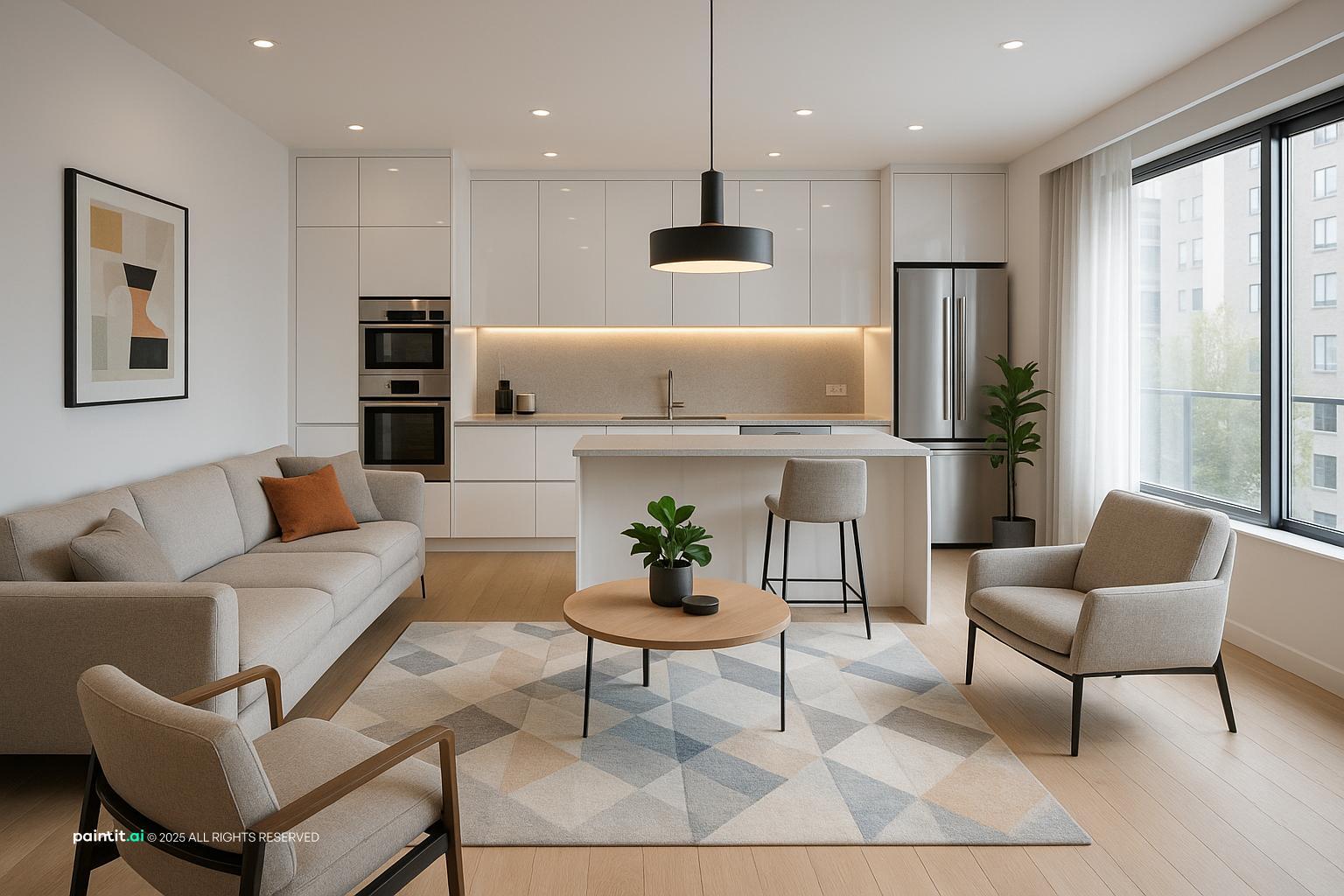
Small Apartment Living Room Ideas with Compact Proportions and Soft Textiles with Plants and Greenery uses compact proportions, soft textiles and plants and greenery in a living room setting.
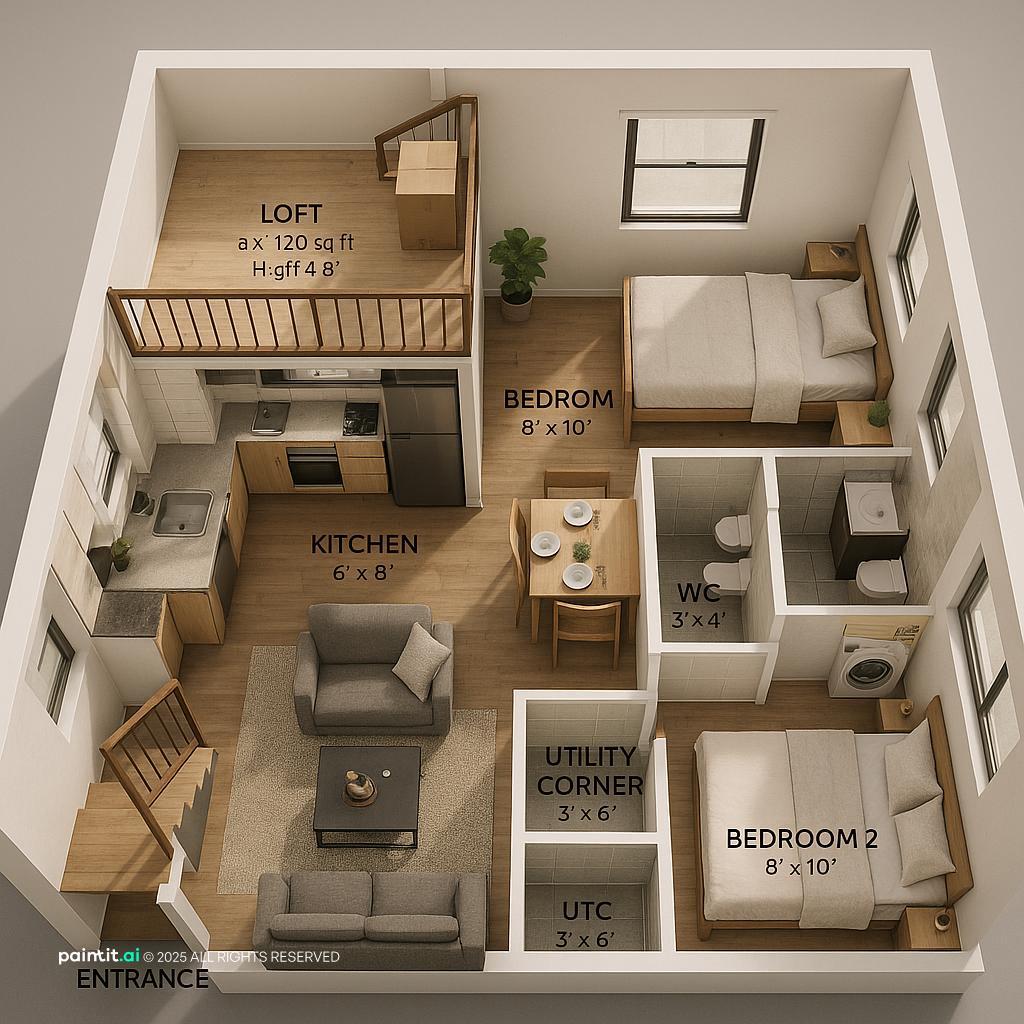
Compact Apartment Design: 375 sq.ft with Loft balances compact proportions, space-saving storage and natural light in a living room setting.
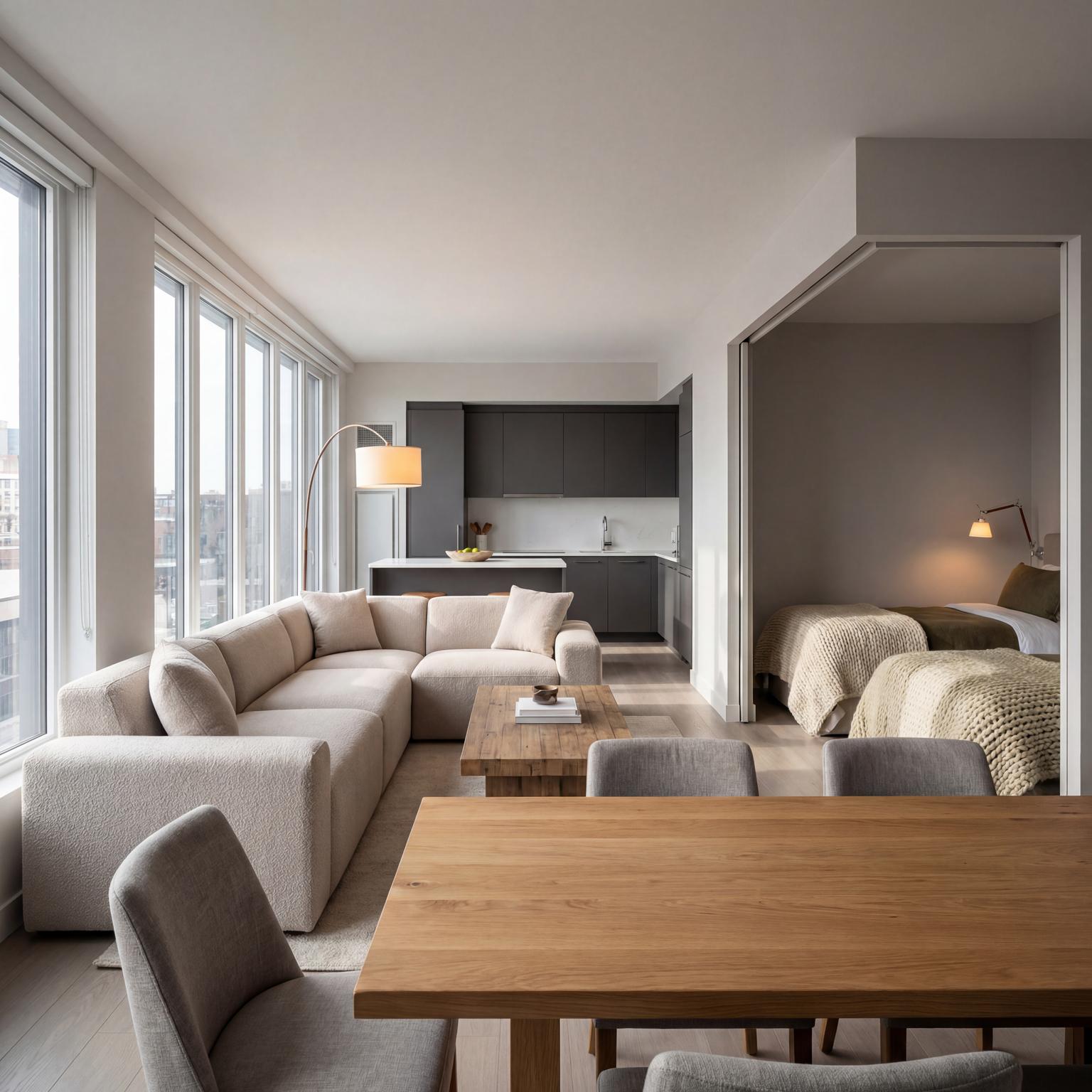
Elegant Modern Open-Plan Apartment Design pairs compact proportions, soft textiles and open layout in a living room setting.
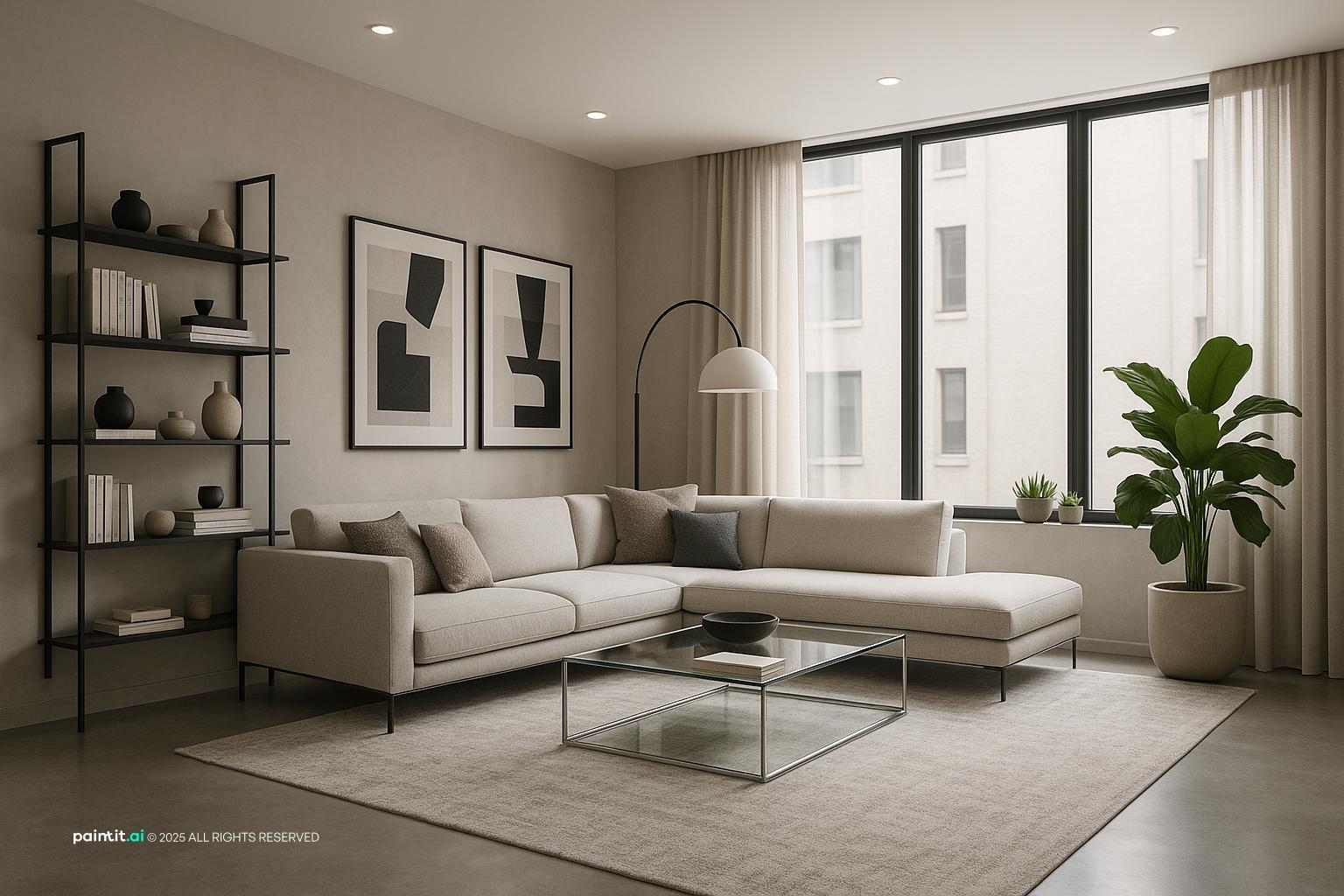
Small Apartment Living Room Ideas with Compact Proportions and Soft Textiles with Metal Accents layers compact proportions, soft textiles and metal accents in a living room setting.
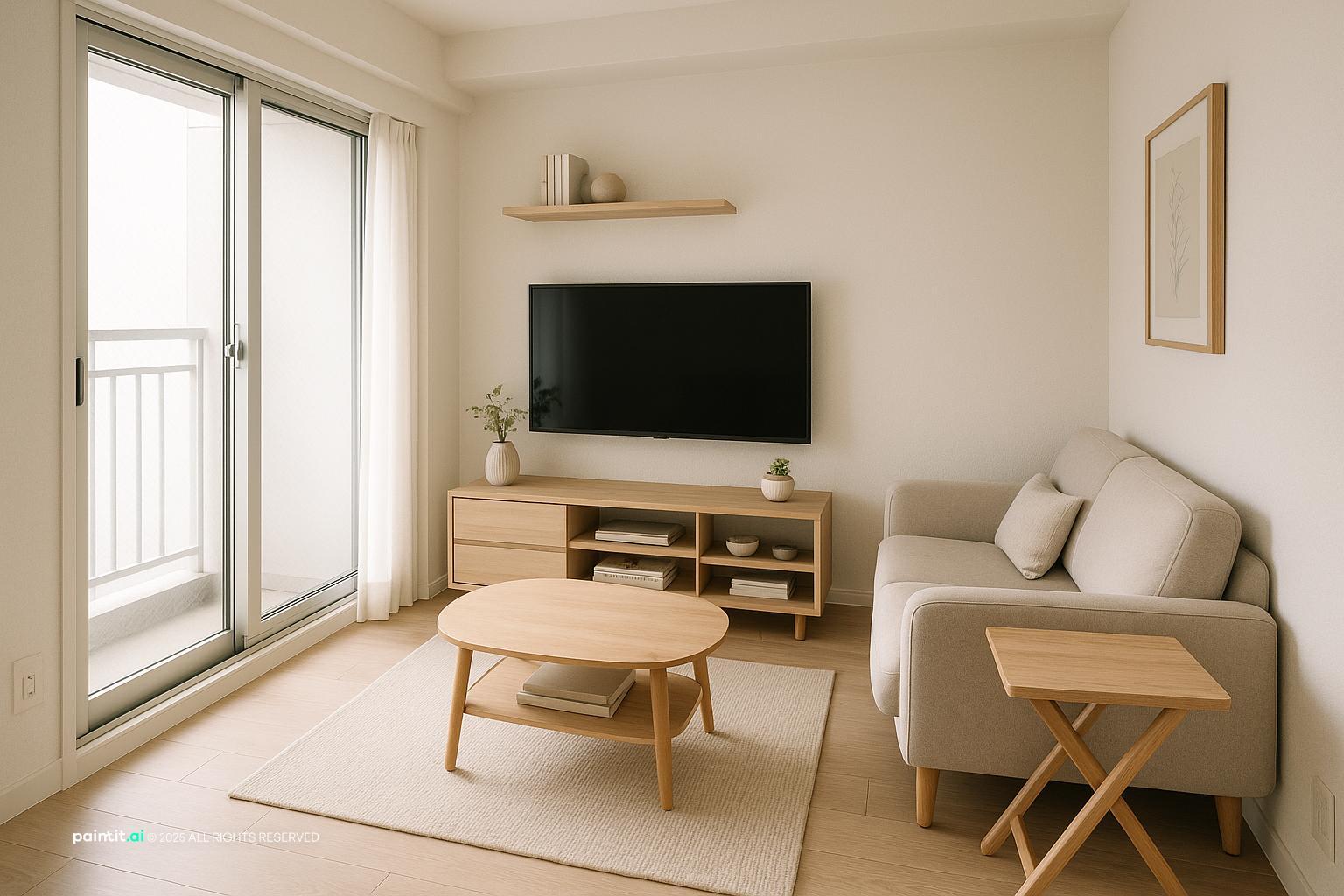
Compact Living Room Design with Space-Saving Solutions anchors compact proportions, space-saving storage and layered neutrals in a living room setting.
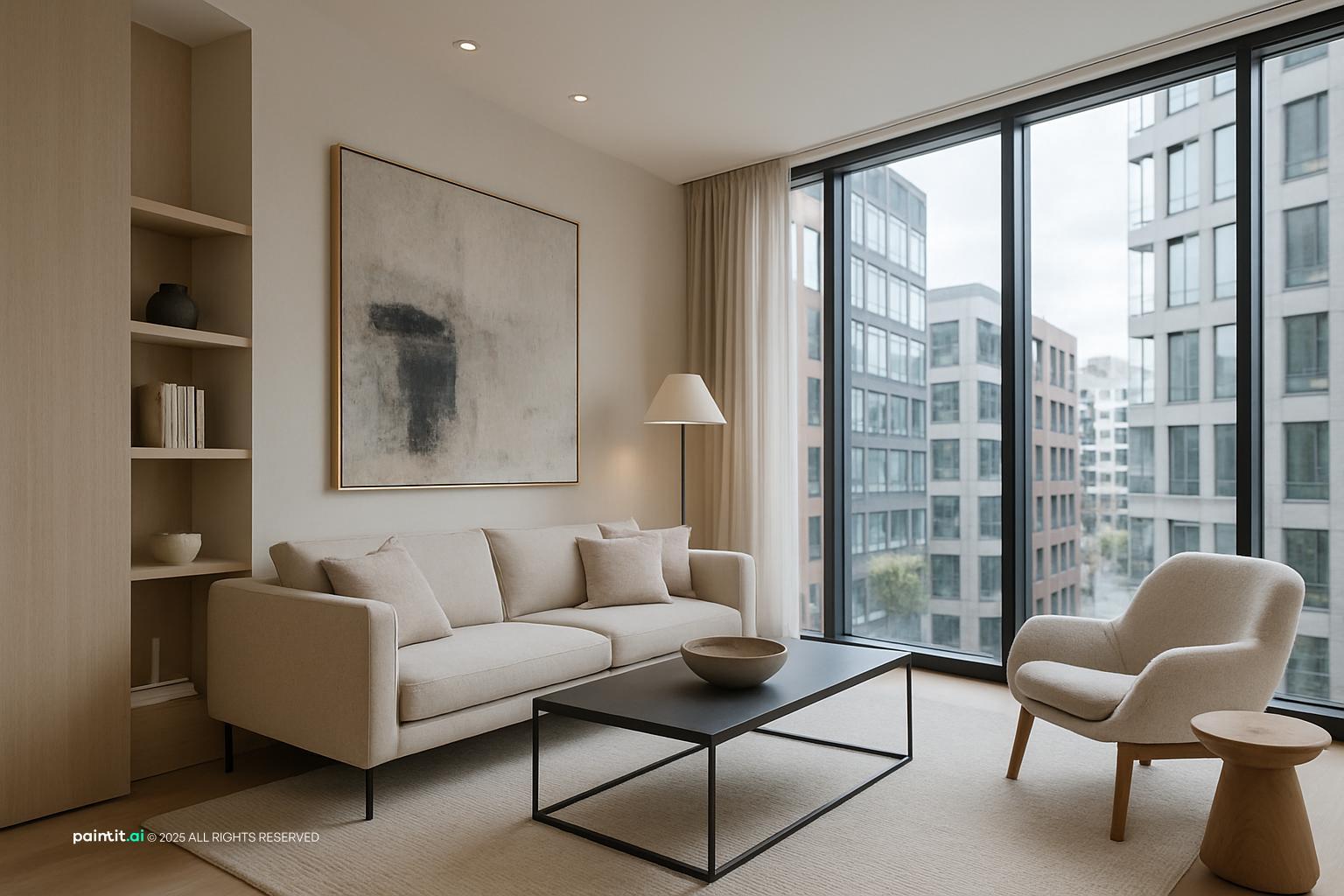
Small Apartment Living Room Ideas with Compact Proportions and Soft Textiles with Clean-lined Furniture softens compact proportions, soft textiles and clean-lined furniture in a living room setting.
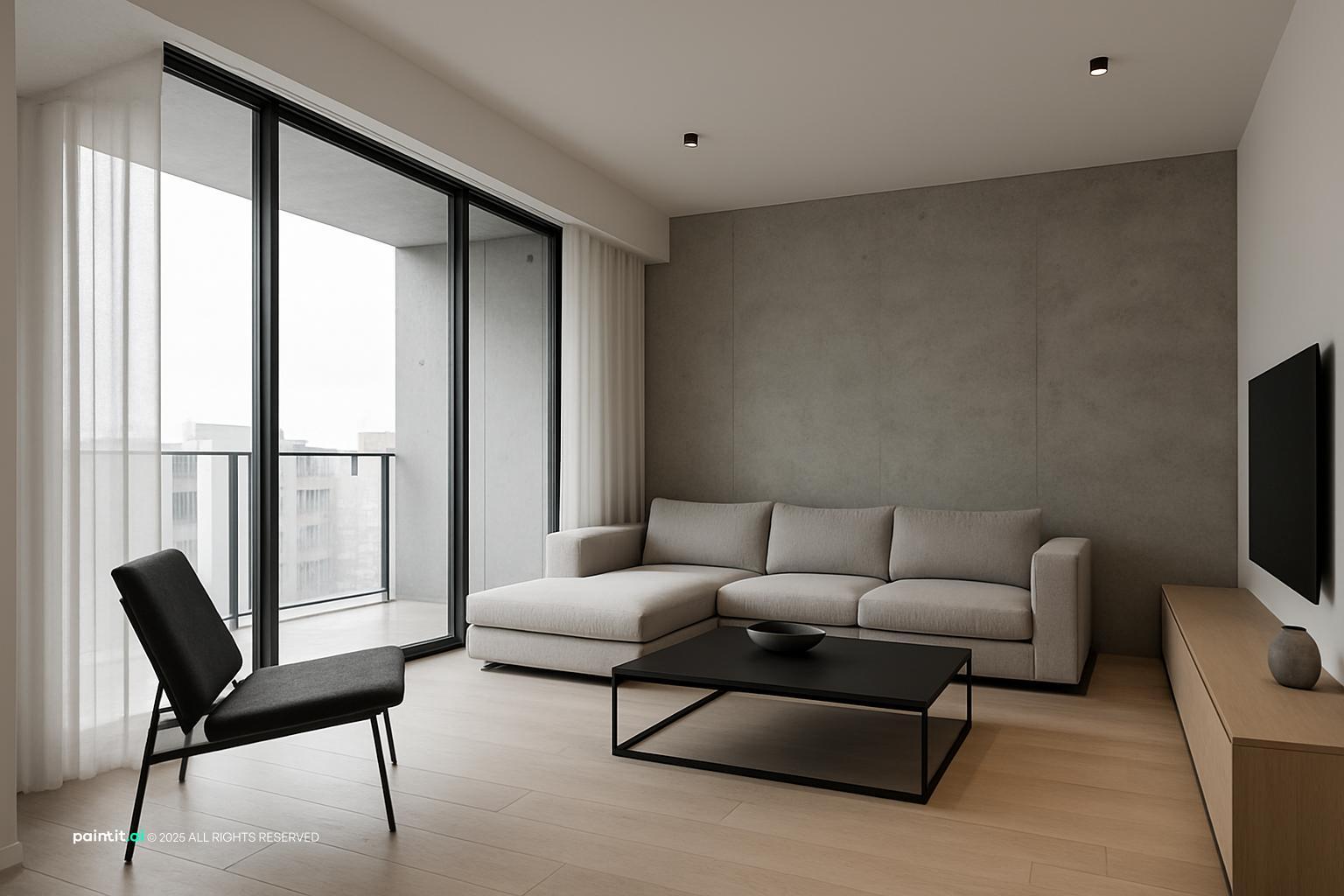
Small Apartment Living Room Ideas with Compact Proportions and Clean-lined Furniture uses compact proportions, clean-lined furniture and layered neutrals in a living room setting.
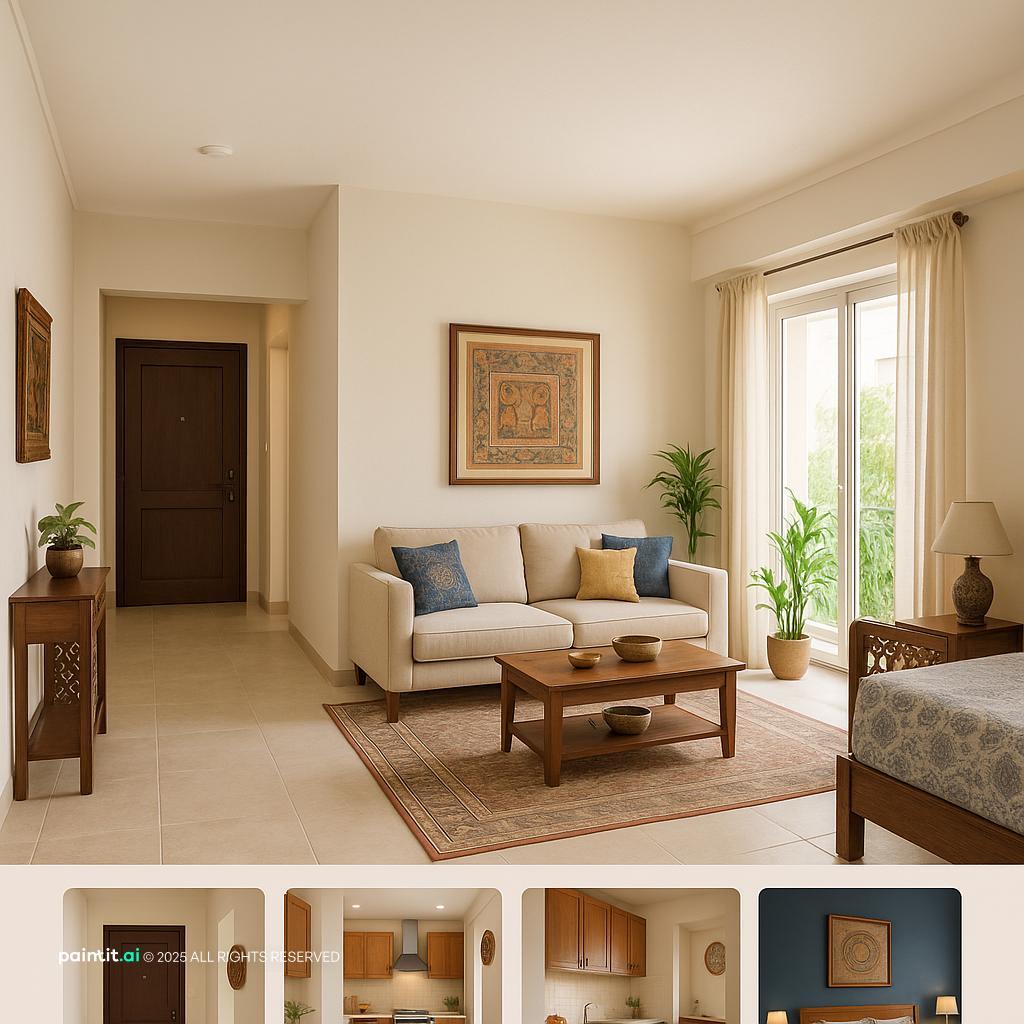
Vastu Shastra Inspired Indian Apartment Design balances compact proportions and plants and greenery in a living room setting.
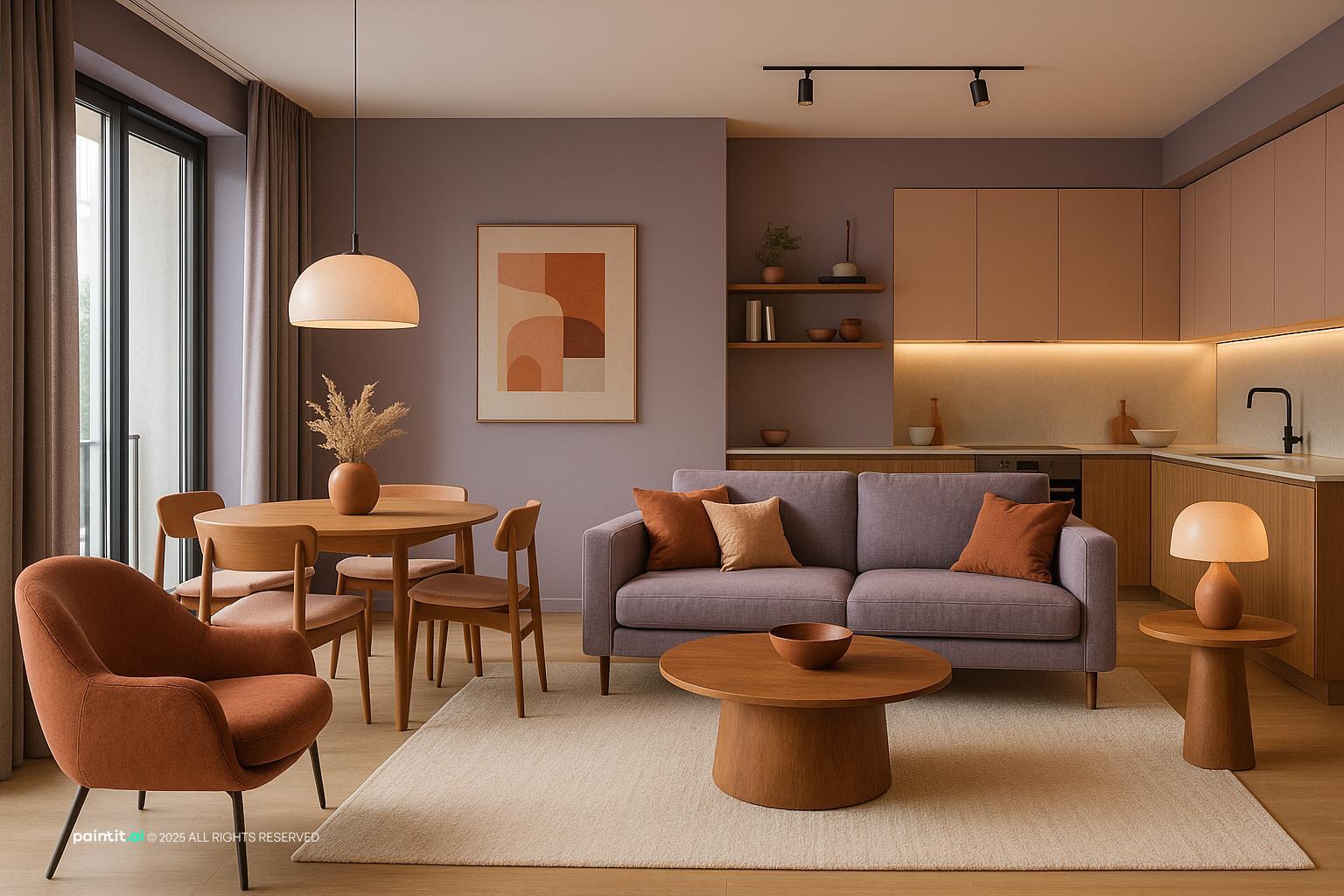
Small Apartment Living Room Ideas with Compact Proportions and Open Layout pairs compact proportions, open layout and natural light in a living room setting.
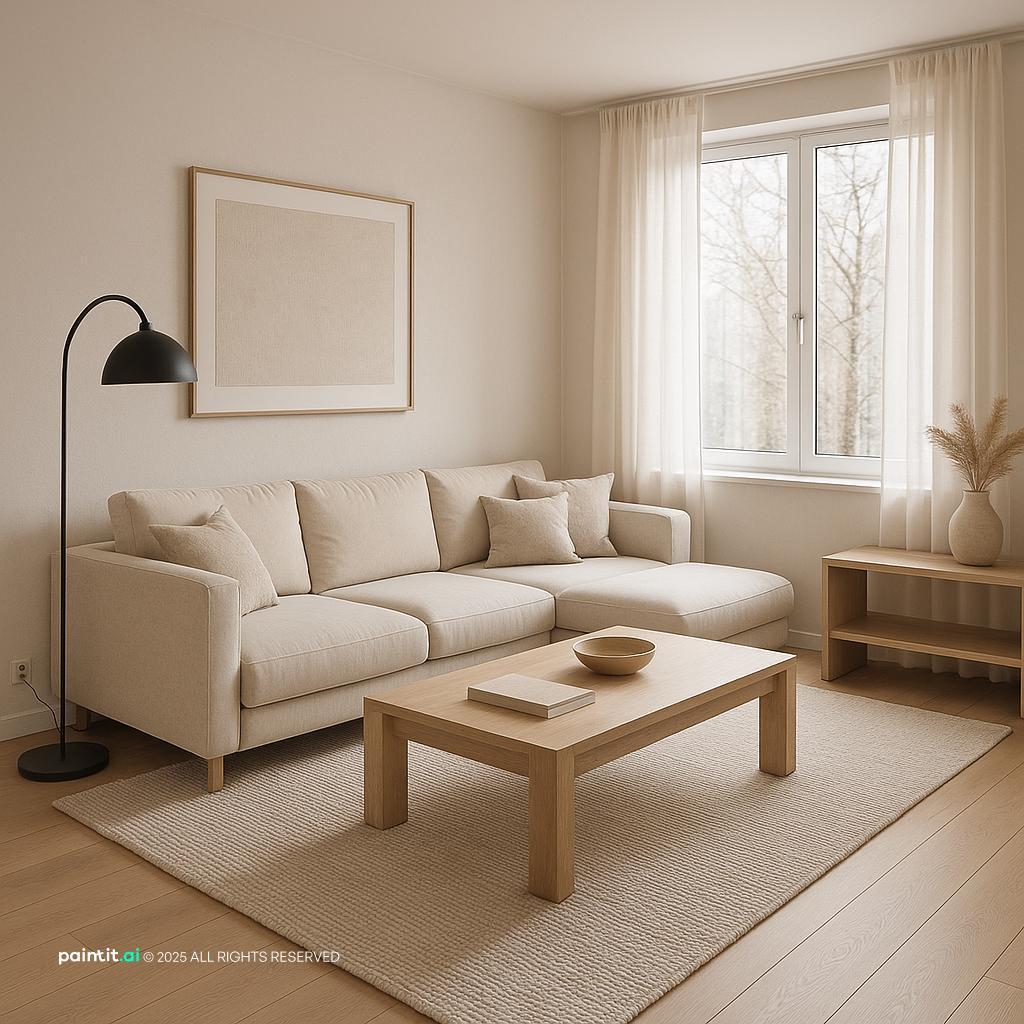
Scandinavian Living Room Design Inspiration layers compact proportions and layered neutrals in a living room setting.
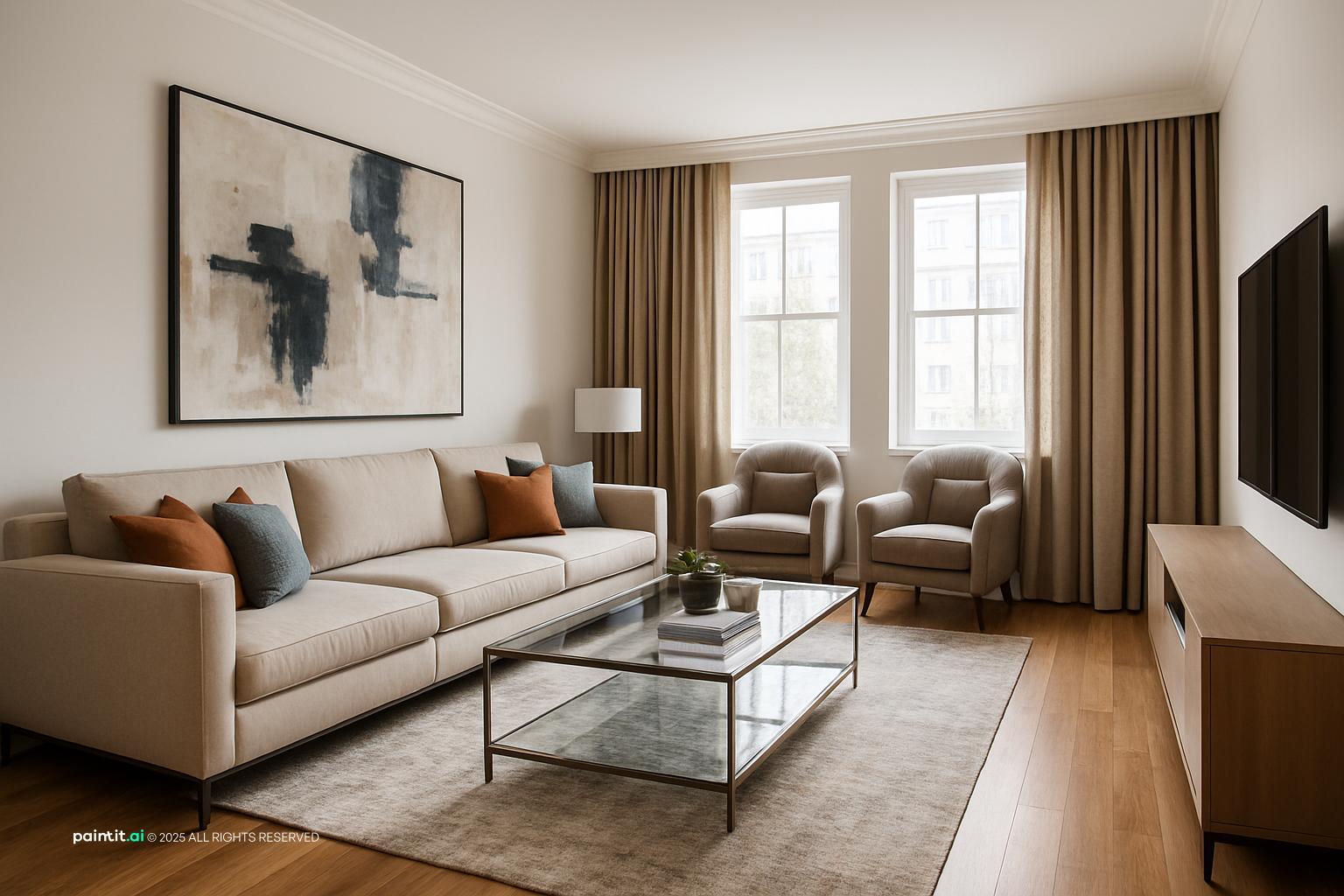
Small Apartment Living Room Ideas with Compact Proportions and Soft Textiles View 5 anchors compact proportions, soft textiles and metal accents in a living room setting.
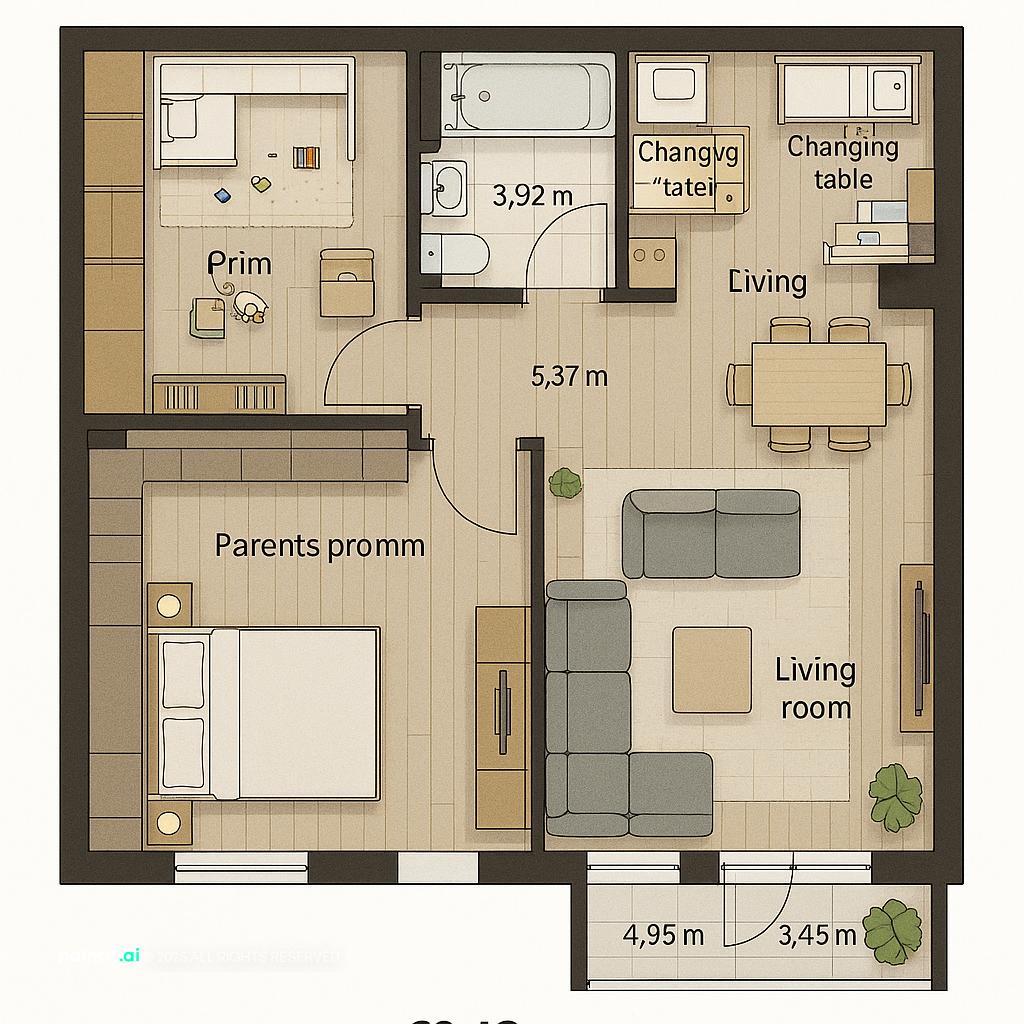
Stylish Apartment Layout for Family Living softens compact proportions and space-saving storage in a living room setting.
A low-contrast palette helps the eye move smoothly around a small room. Use related tones for walls, curtains, large upholstery, and rugs, then add contrast in smaller accents such as frames, lamps, or cushions. This makes the room feel layered without cutting it into blocks.
Warm whites, soft beige, greige, pale olive, muted blue, and light clay tones can all work. Avoid pairing very dark furniture with very pale walls unless the piece is slim and intentional, because the contrast can make it look larger than it is.
Small rooms reveal undertone clashes quickly because every surface is close together. If your flooring is yellow oak, a cool gray sofa may look flat or slightly blue. If your walls are pink-beige, a stark white media unit can feel harsh.
Bring fabric swatches, paint cards, or wood samples into the actual room and check them in morning and evening light. The goal is not a perfect match. It is a family of tones that feels related. Avoid mixing too many competing whites, grays, and woods in one compact view.
Light or medium wood can warm up a compact living room without making it feel heavy. Slim black metal legs can add definition, while brushed brass or nickel can bring a softer highlight. Use metal in small doses: lamp bases, shelf brackets, frames, or table legs.
For larger pieces, choose finishes that do not dominate the room. A huge dark wood media console may provide storage but can visually shrink the wall. A lighter console with legs, ribbed doors, or a simple profile usually feels easier in an apartment.
Textiles are where a small room can feel finished without adding large objects. Use a flatweave or low-pile rug if doors swing near the living area. Choose curtains that hang cleanly from ceiling height to floor, even if the fabric is simple.
Layer pillows in two or three textures rather than many patterns. Linen, boucle, cotton velvet, and soft wool can work, but keep the palette controlled. Avoid too many chunky throws and oversized pillows on a compact sofa, because they steal usable seating depth.
Lighting is easy to underestimate in a small apartment. In Paintit.ai behavior, 5.9% of prompts include lighting, but in practice it changes the room more than many small decor swaps. Ambient lighting gives the room general brightness, task lighting supports reading or work, and accent lighting adds depth to shelves, art, or corners.
This can be as simple as a ceiling fixture, one floor lamp, and one table or plug-in wall lamp. Place lights so they reduce dark corners and glare on the TV. Avoid using one harsh overhead fixture as the only source; it flattens the room and makes shadows feel stronger.
Wall shelves should not look like overflow storage. Mix vertical books, horizontal stacks, one or two sculptural objects, a small plant, and closed boxes for less attractive items. Keep similar colors grouped so the shelves read as one composition.
Leave gaps between objects. Empty space is part of the styling, especially in a small room. Avoid lining up many tiny pieces across a shelf, which creates a dotted, restless look.
A small room can still use dark accents. A charcoal lamp, black frame, walnut side table, or deep green cushion can make the design feel grounded. The trick is to keep the dark element proportionate and surround it with lighter surfaces.
If your sofa is dark, lighten the rug, curtains, and walls around it. If your media wall is dark, keep the console slim and avoid stacking dark objects on top. This balance gives the room depth without making it feel closed in.
Upload a photo of your living room and test layout, palette, storage, lighting mood, TV placement, and furniture scale before spending money. For small apartments, be specific: include dimensions if you know them, list what to keep, note what to remove, and add practical constraints such as no clutter or preserve exact room structure.
In Paintit.ai tests, we often see stronger results when people treat the room like a real apartment rather than a blank box. Keep the windows, outlets, and architectural structure; then try a smaller sofa, lighter palette, wall shelves, or a different rug size. If the room is empty or partly empty, AI virtual staging can also help you judge scale before you buy. For a step-by-step process, see how to redesign a living room with Paintit.ai.
Start with measurements, choose apartment-scale furniture, keep the walkway clear, and build storage into pieces like ottomans, side tables, and media units. Then add color, lighting, and apartment living room decor in controlled layers instead of filling every surface.
Use light colors, keep windows open to daylight, choose furniture with visible legs, add mirrors where they reflect a clean view, and avoid heavy pieces that block sightlines. Good lighting matters too, especially in corners that make the room feel smaller.
A compact sofa, nesting tables, slim media console, storage ottoman, armless chair, and wall shelves usually work best because they save floor area and reduce clutter. Measure first, because even good small apartment decorating ideas fail when the furniture depth is wrong.
Place it where glare is lowest and the sofa can face it without blocking the main traffic path. A wall-mounted TV or low media console often works better than a bulky entertainment unit in a small apartment living room with tv.
Yes, if the size is right. Area rug zoning helps define the living area, especially in studio apartment living room ideas, but the rug should fit under the front legs of the main seating pieces so the layout feels connected.