
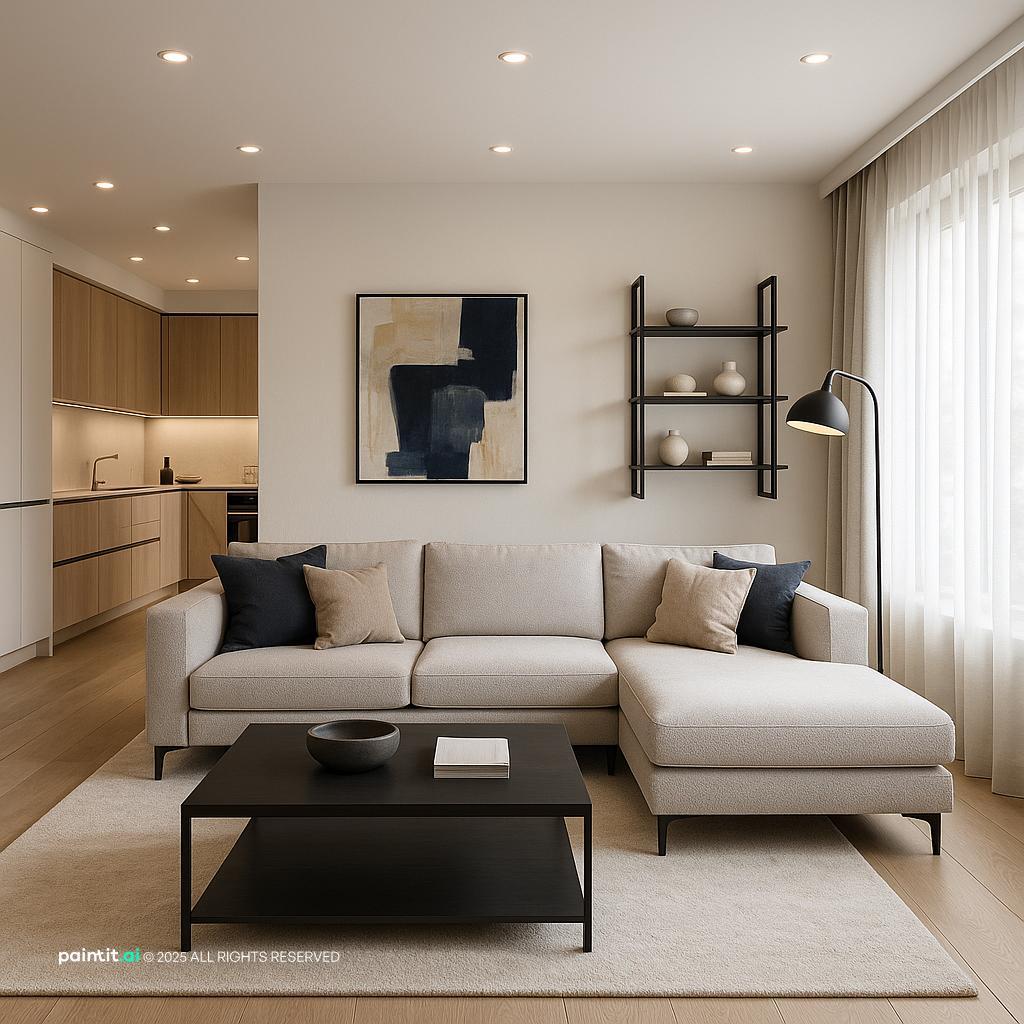
Stylish Modern Living Room Design
Stylish Modern Living Room Design uses clear furniture layout, compact proportions and space-saving storage in a living room setting.
Small living room layout ideas only work when they respect the room in front of you: the door swing, window wall, radiator, TV point, sofa depth, and the route people take without thinking. The aim is not to pack in more furniture. It is to make the room easier to live in, calmer to look at, and balanced enough that movement still feels natural.
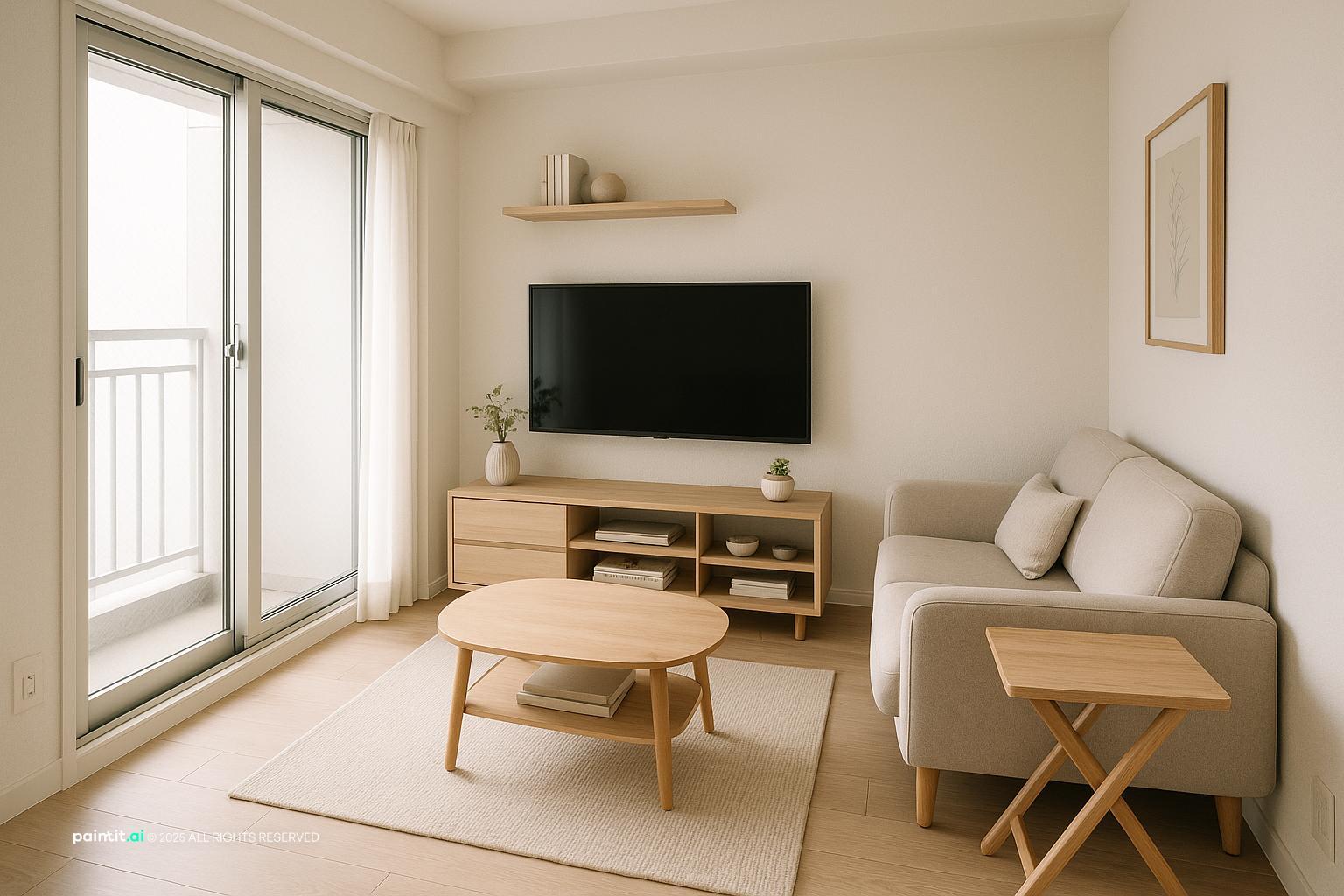
A small living room usually breaks down for practical reasons before it looks bad stylistically. The sofa is too deep. The coffee table sits in the walkway. The TV lands on the only wall that creates glare. The rug is too small, so every piece looks separate. Measure first, then decorate.
In Paintit.ai behavior data, only 3.2% of prompts include dimensions such as square feet, meters, or room size. We see the result often: a layout looks convincing in a generic image, then fails inside a 10-by-10 room, a narrow apartment living area, or a space where the door opens straight into the seating zone. If you are starting from an empty space, how to furnish an empty room with Paintit.ai is a useful way to think through the floor plan before buying anything.
Use the first gallery to compare how sofa placement, chair size, rug edges, and TV position change the room. The best small layouts leave visible floor and protect the walking path instead of filling every gap.
Stylish Modern Living Room Design uses clear furniture layout, compact proportions and space-saving storage in a living room setting.
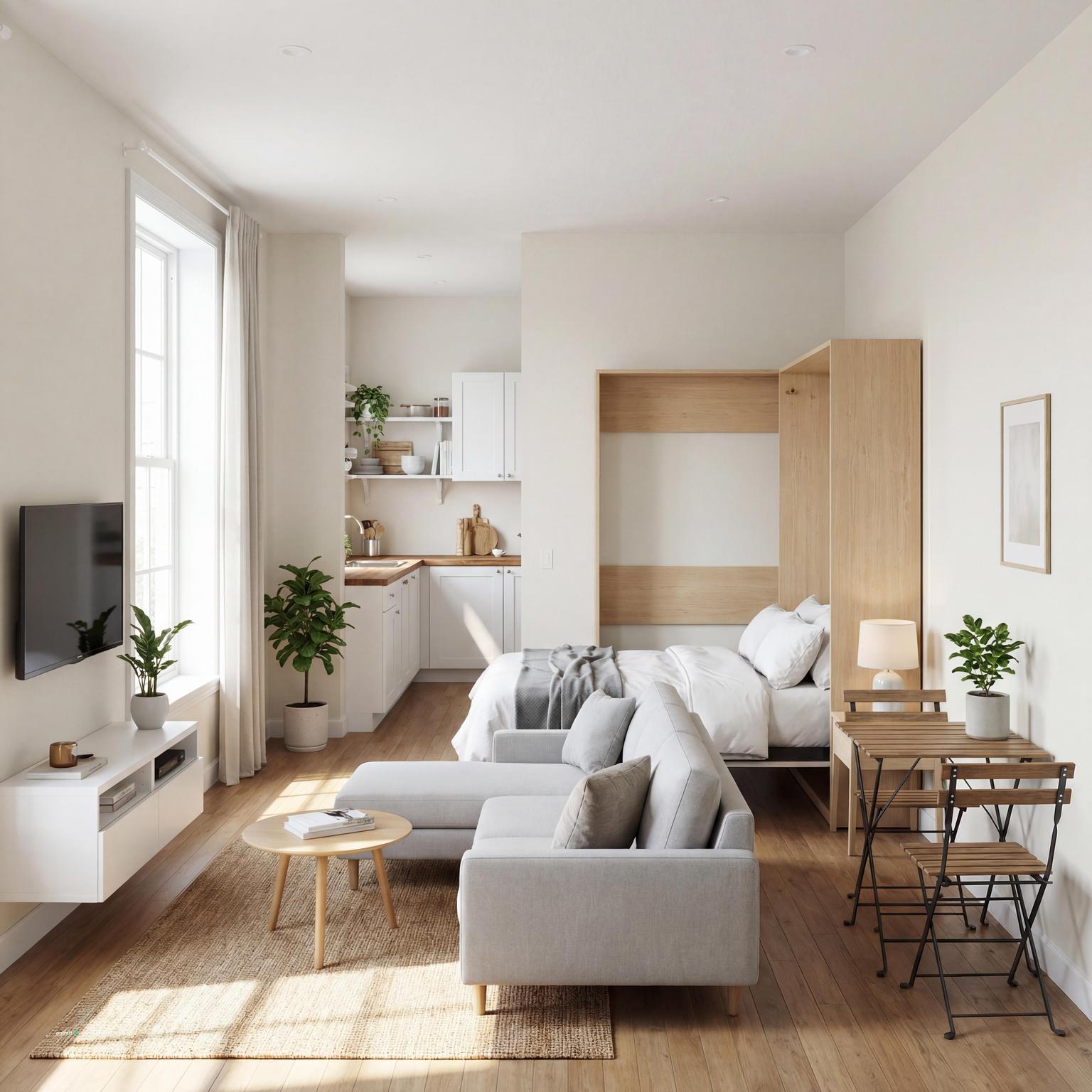
Budget-Friendly Small Apartment Design balances clear furniture layout, compact proportions and space-saving storage in a living room setting.
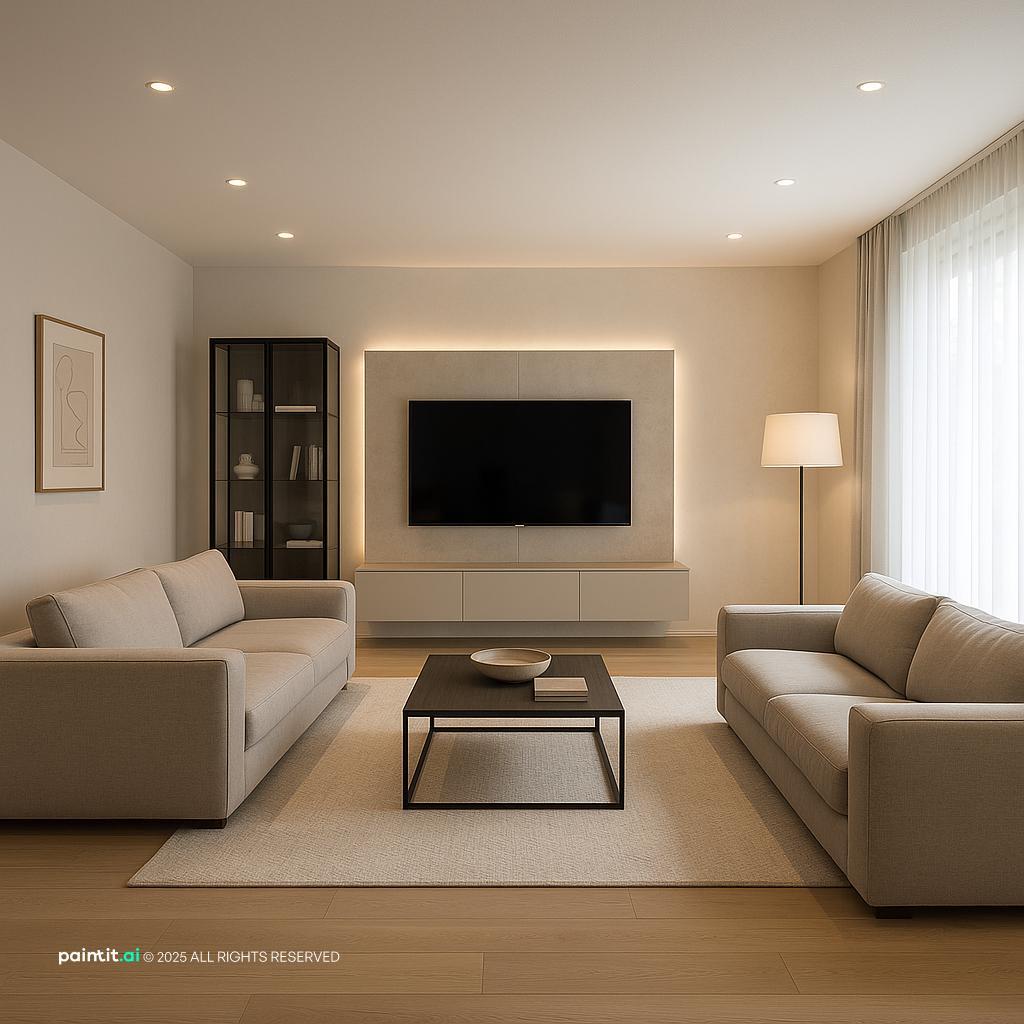
Contemporary 40-Meter Living Room Design pairs clear furniture layout, zoned seating and compact proportions in a living room setting.
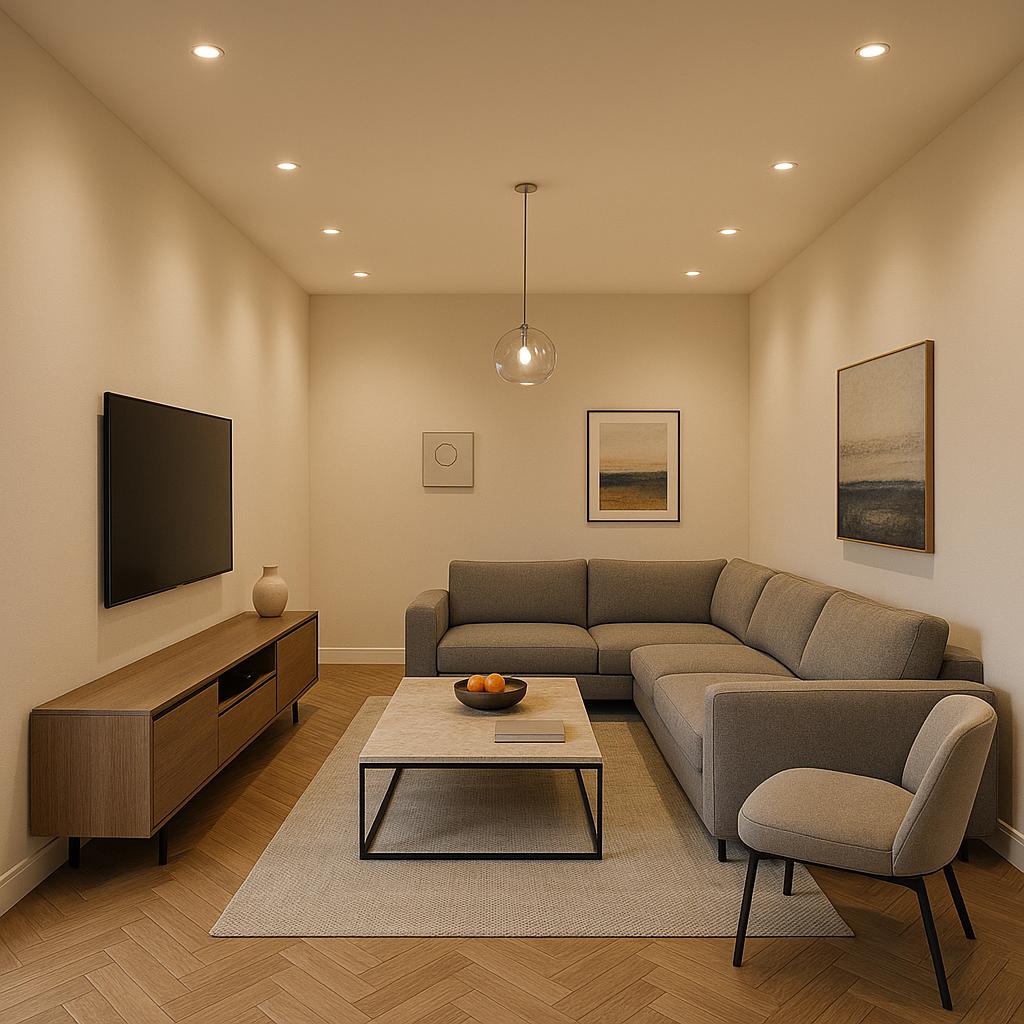
Luxury Modern Hotel Living Room Design layers clear furniture layout, space-saving storage and metal accents in a living room setting.
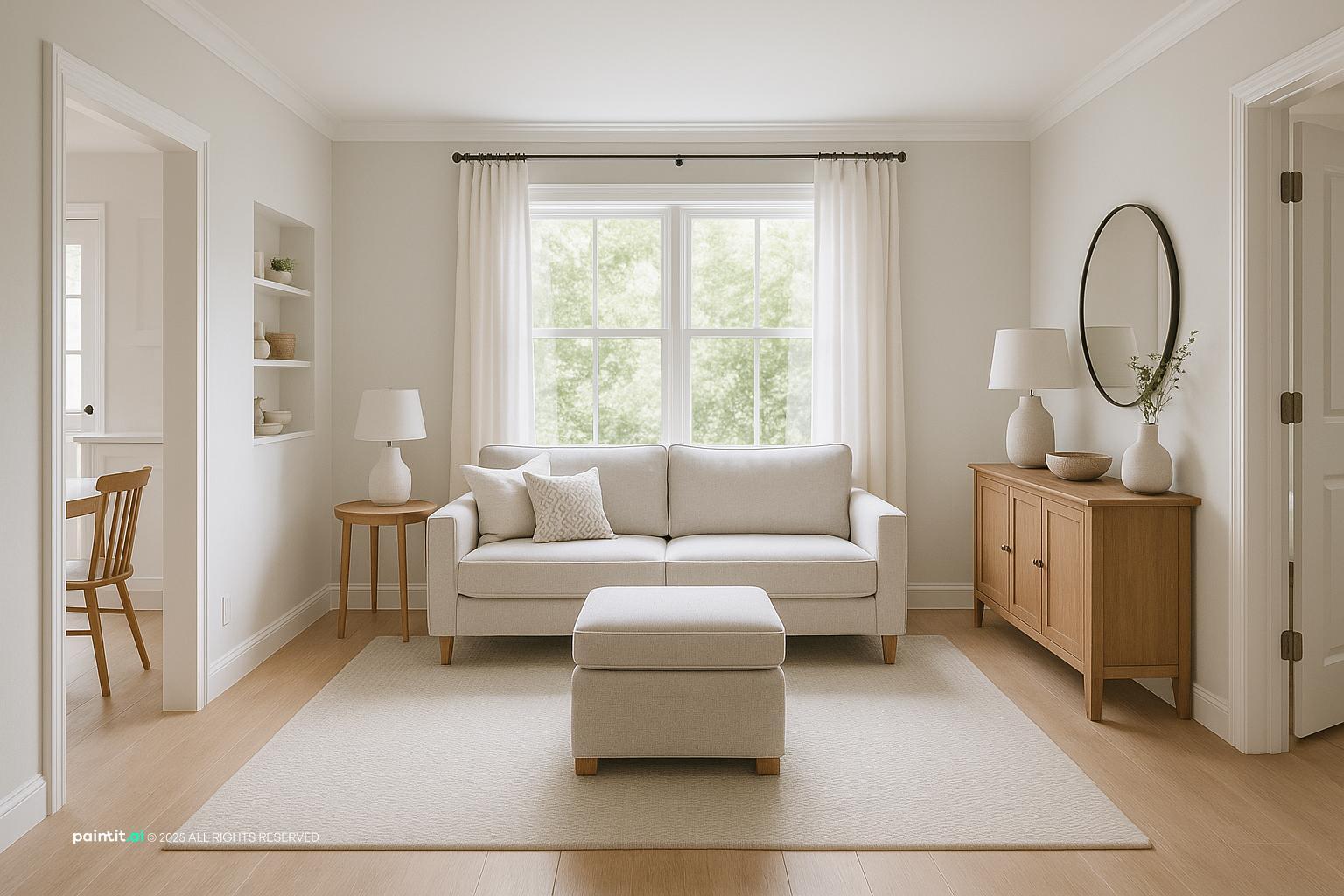
Transitional Compact Living Room Design anchors clear furniture layout, zoned seating and compact proportions in a living room setting.
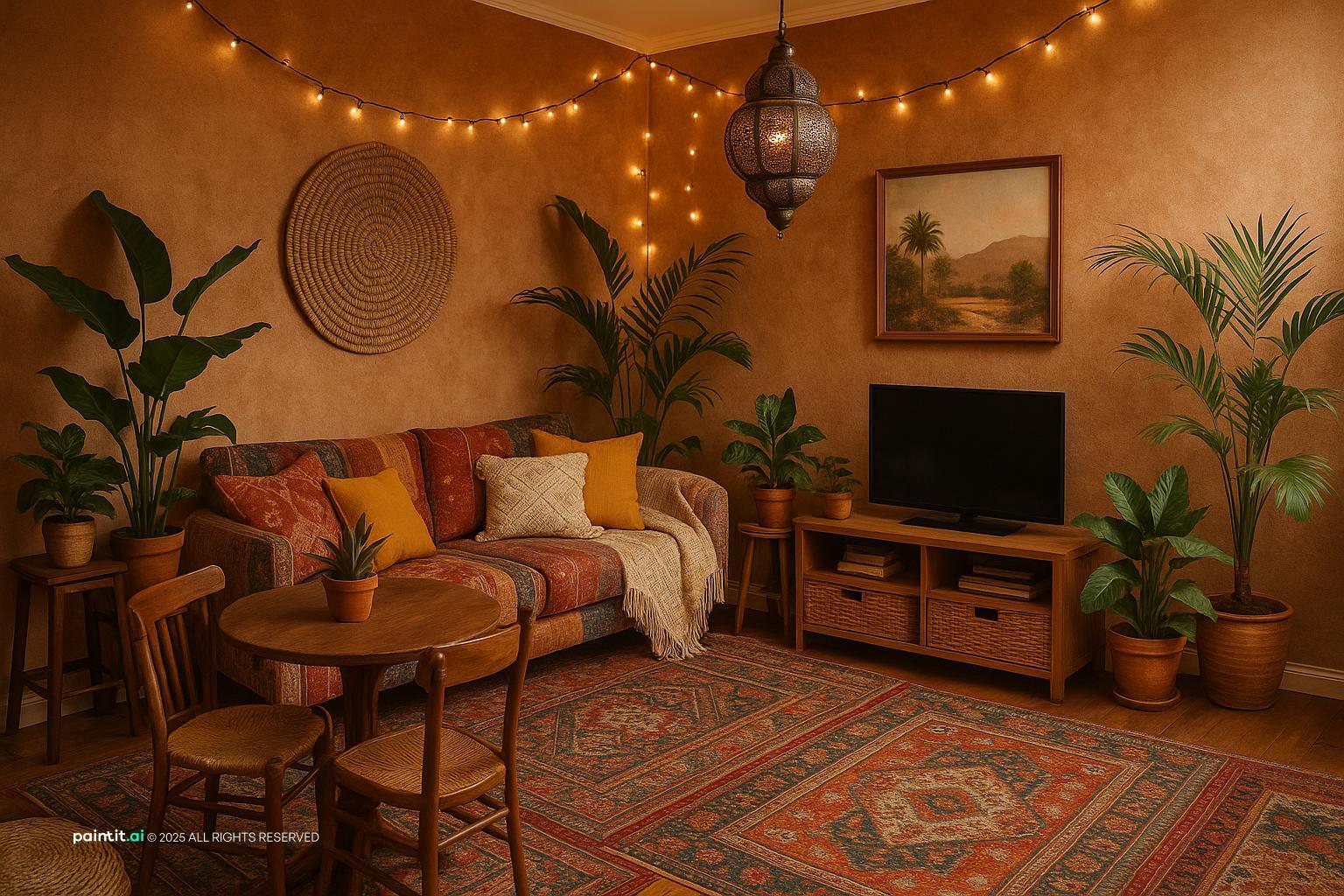
Cozy Bohemian Living Room Transformation softens compact proportions, soft textiles and plants and greenery in a living room setting.
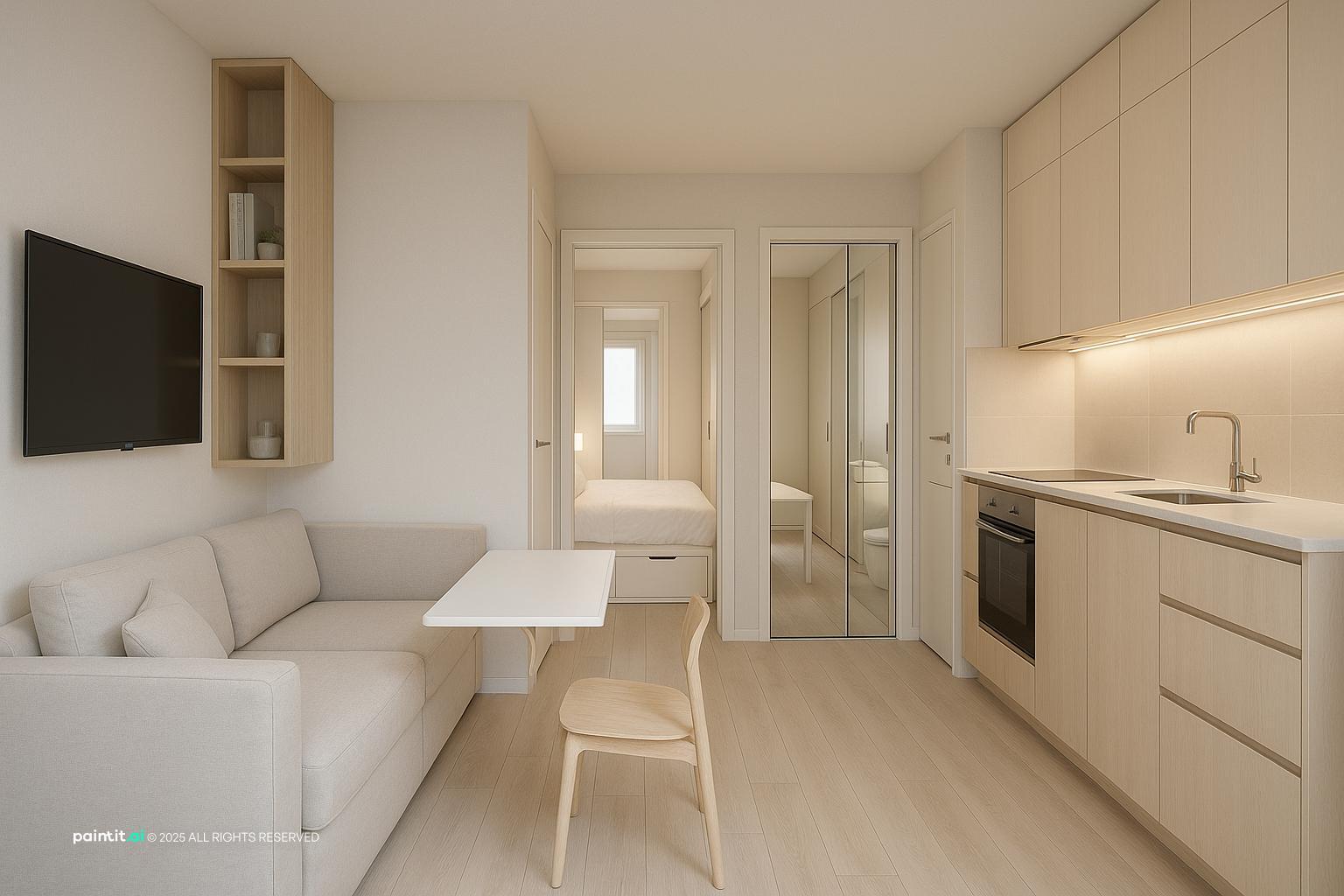
Small Living Room Layout Ideas with Clear Furniture Layout and Compact Proportions uses clear furniture layout, compact proportions and space-saving storage in a living room setting.
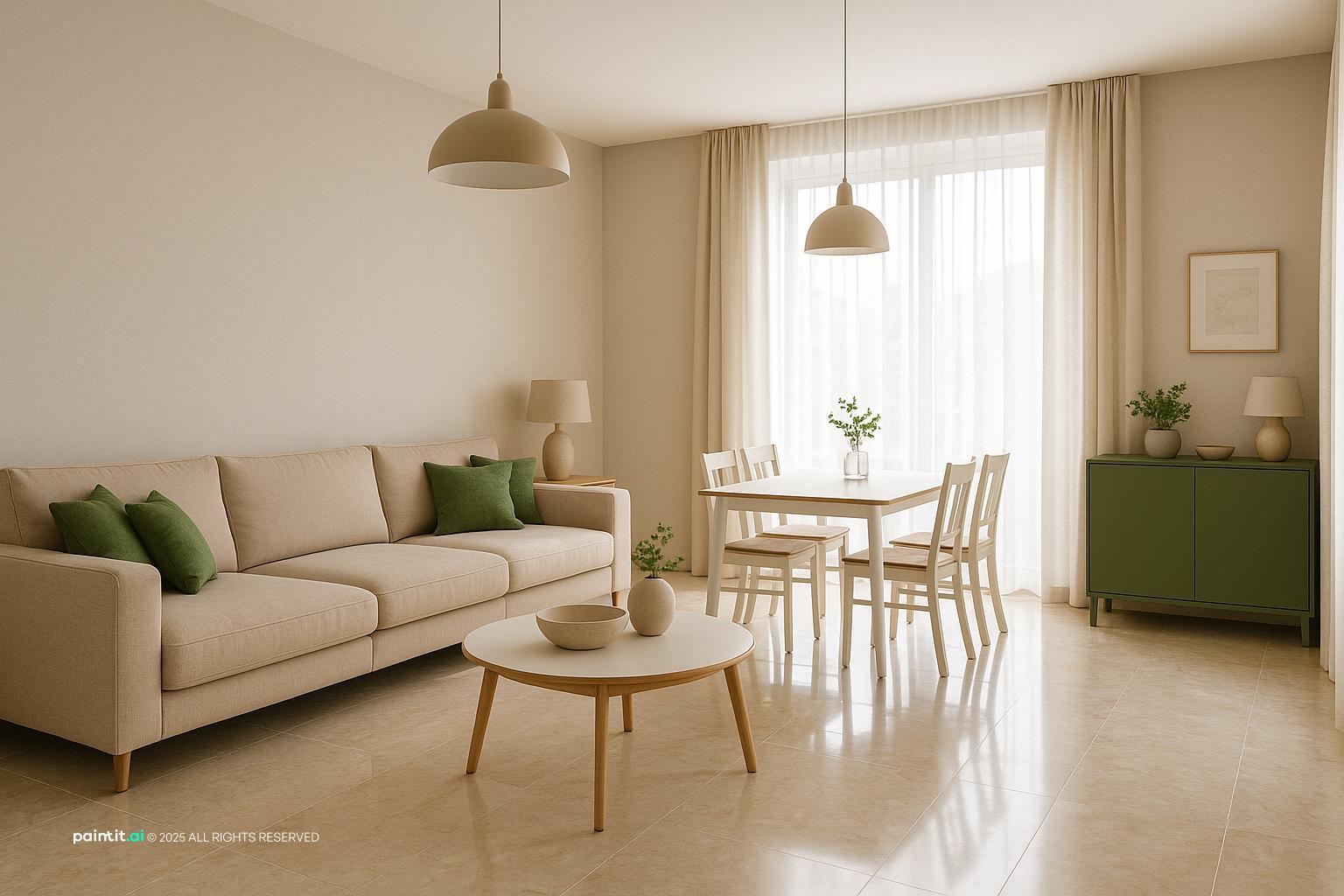
Small Living Room Layout Ideas with Clear Furniture Layout and Zoned Seating balances clear furniture layout, zoned seating and compact proportions in a living room setting.
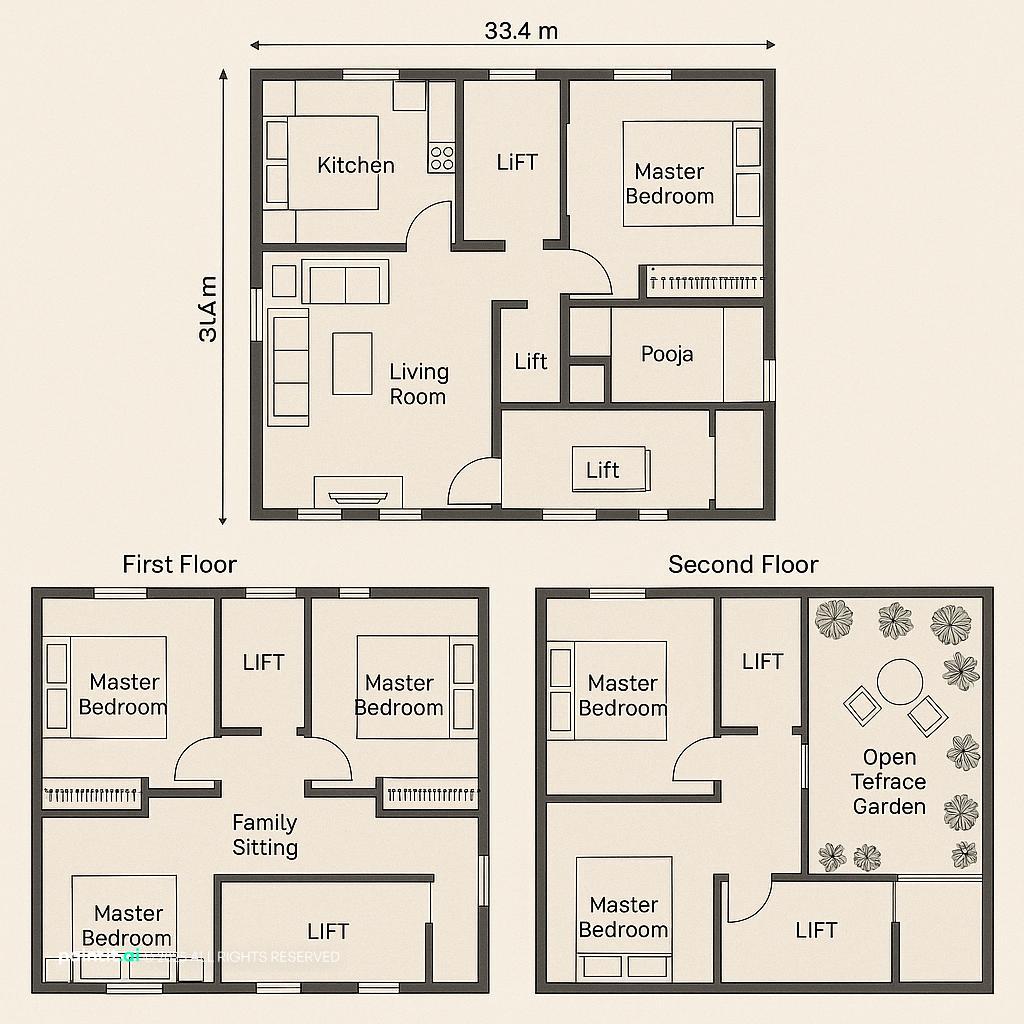
Modern Minimalist Residential Design Plan pairs clear furniture layout and plants and greenery in a living room setting.
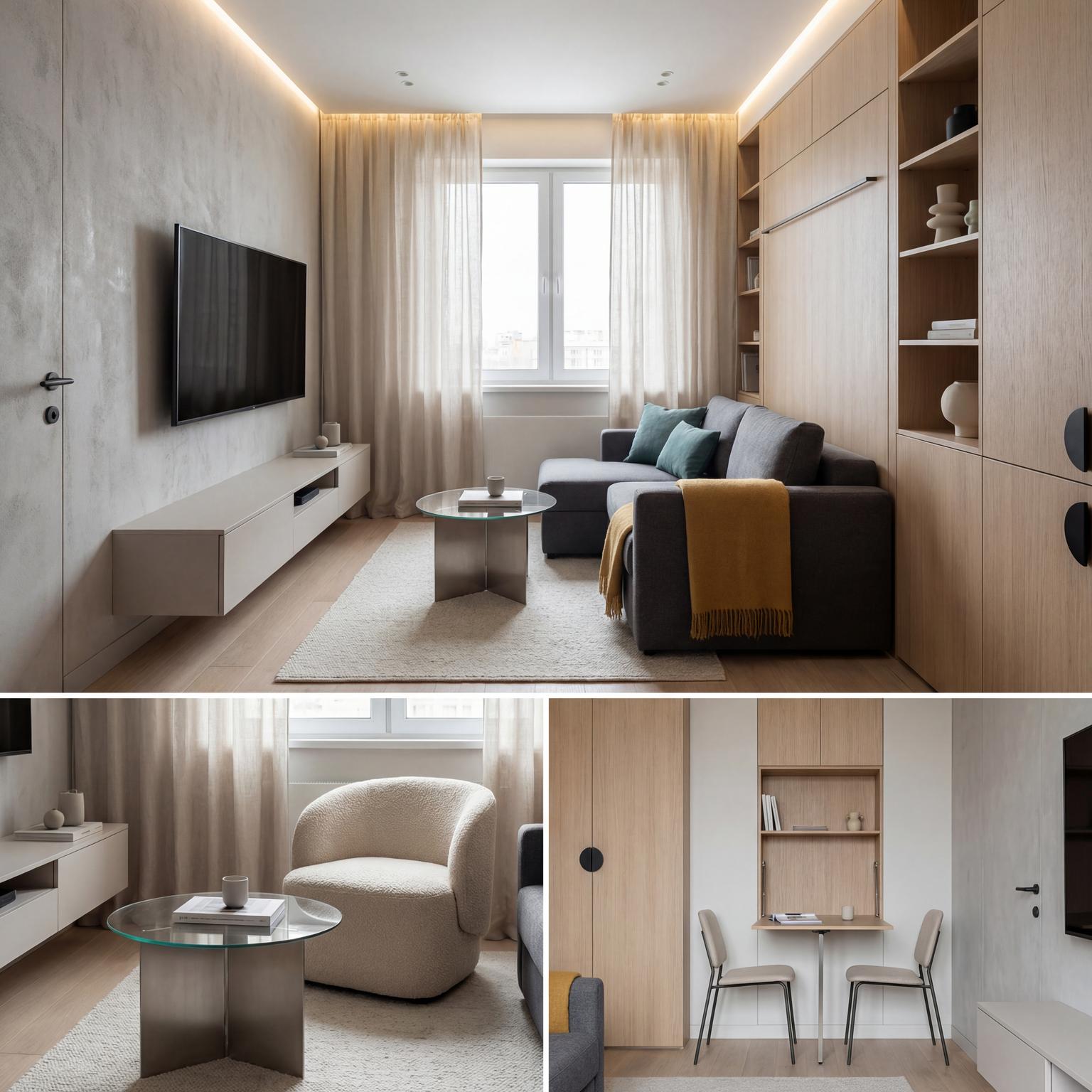
Compact Modern Minimalist Living Room layers clear furniture layout, compact proportions and space-saving storage in a living room setting.
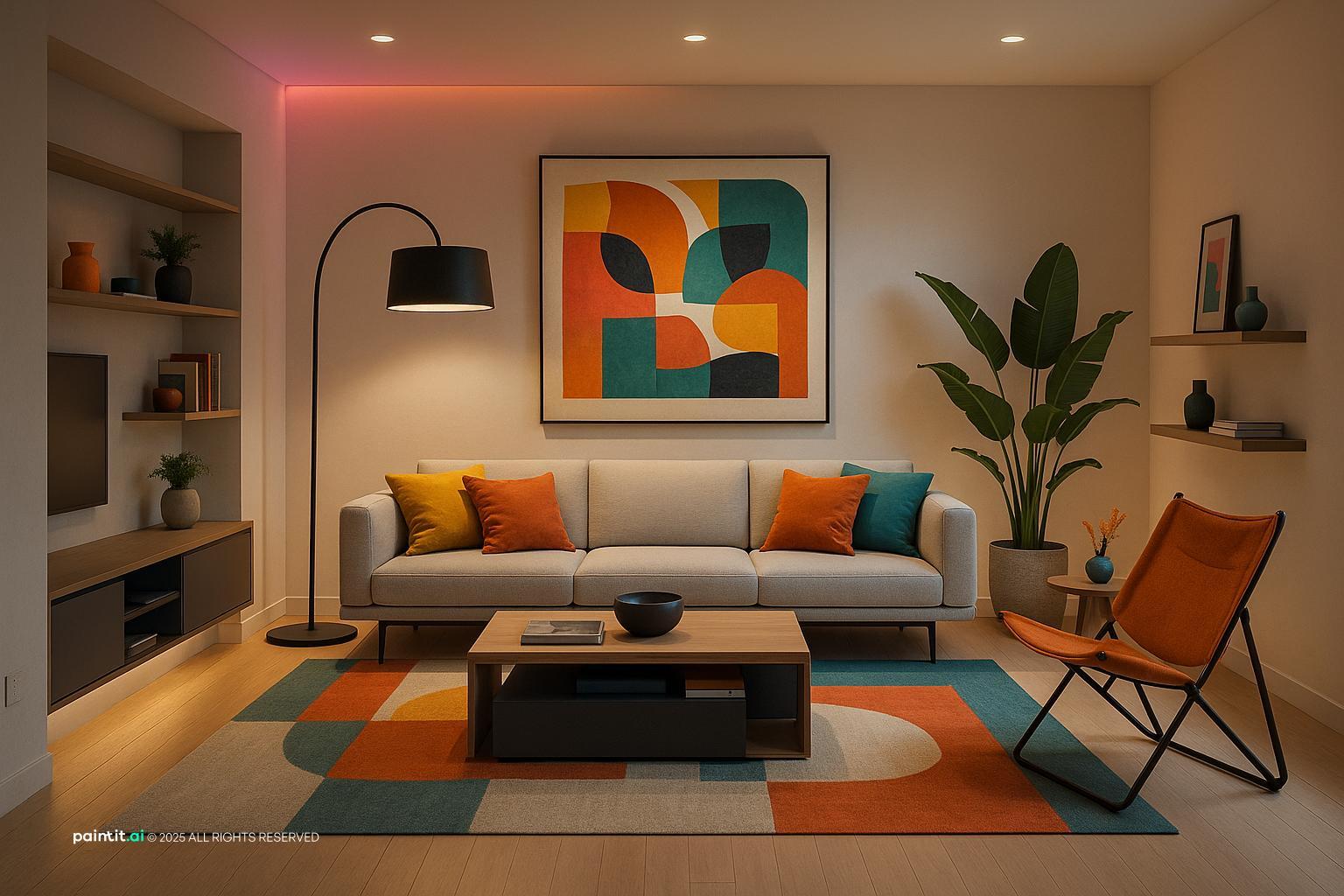
Small Living Room Layout Ideas with Compact Proportions and Space-saving Storage anchors compact proportions, space-saving storage and soft textiles in a living room setting.
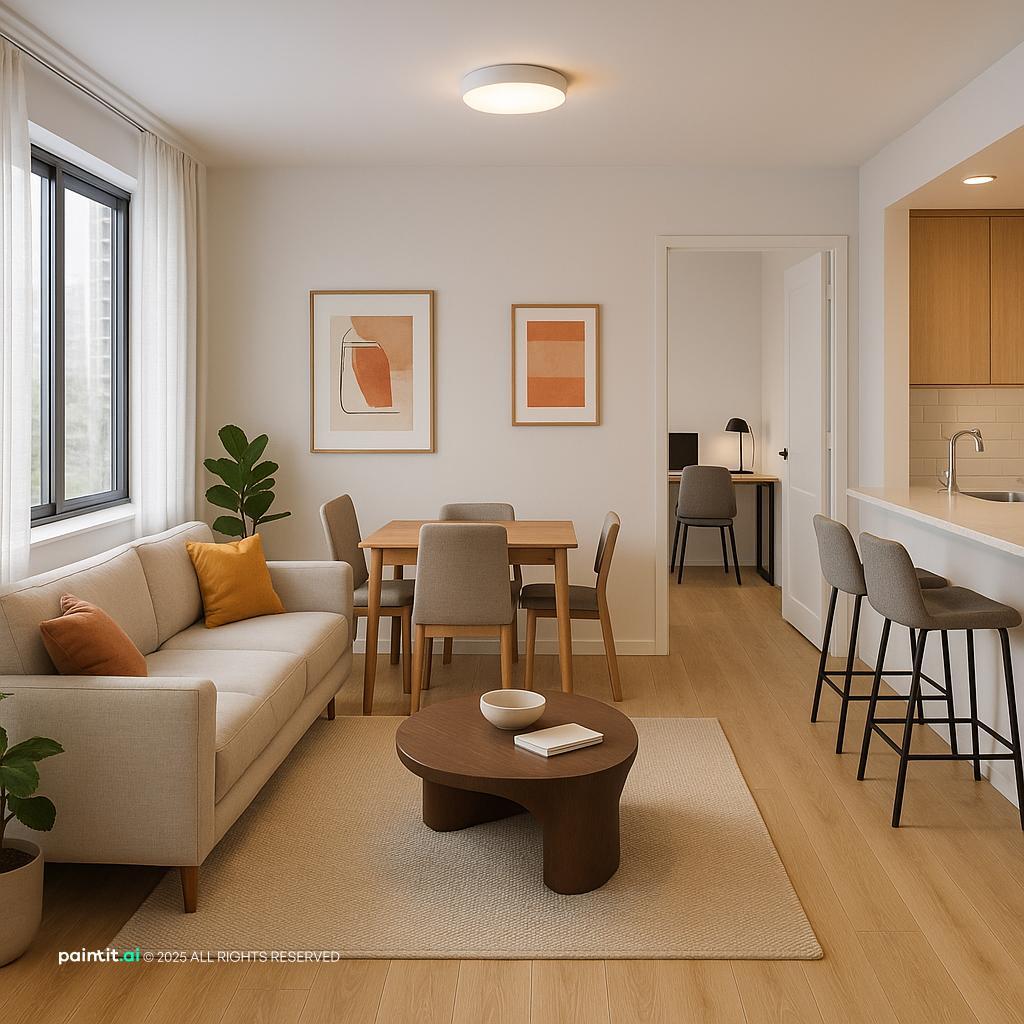
Stylish Minimalistic Apartment Design softens clear furniture layout, compact proportions and plants and greenery in a living room setting.
Start with the exact wall lengths, window width, door swing, radiator position, outlet locations, and any built-in storage. A small living room floor plan should show where people enter, where they sit, and where knees, feet, bags, and side tables actually land. Aim for a main walking path of about 30 to 36 inches where possible, especially between the door and the next room.
Why it works: scale problems show up before you spend money. A sofa that looks neat online can swallow a compact room once you include arm width, recline depth, and the space needed to walk around it. What to avoid: copying a polished inspiration image without checking whether the coffee table, media unit, and chair can all fit at the same time.
In many small rooms, the cleanest move is to place the sofa on the longest uninterrupted wall and build around it. Keep the sofa low-backed if it sits near a window, and choose a width that leaves a few inches of breathing space on both sides instead of wedging it into the corners.
This simple small living room layout gives the eye one clear anchor. Add a narrow side table, wall-mounted sconce, or slim floor lamp instead of bulky end tables. If the sofa must stay because of budget or comfort, make the other pieces lighter: open-leg chairs, a compact coffee table, and a media console that does not compete with the sofa’s visual weight.
Furniture does not always need to touch the walls. Pulling the sofa 4 to 10 inches forward can help curtains hang properly, keep walls from getting scuffed, and create a cleaner line around radiators or awkward trim. In a studio or open-plan apartment, floating furniture can also mark the living zone without adding a divider.
The catch: floating a deep sofa into an already tight room can make the layout worse. Test the path behind and in front of it. If people have to turn sideways to pass, the move is costing more space than it gives back.
A second sofa sounds useful, but in a small room it often closes the layout. One sofa plus an accent chair usually gives better flexibility. Place the chair at an angle near the front corner of the rug, or put it opposite the sofa if there is enough clearance.
In Paintit.ai tests, the better versions often come from simple “instead” thinking: try a chair instead of a loveseat, or a small swivel chair instead of a fixed armchair, then compare how the visual balance changes. This is one of the easiest small living room seating ideas to test because it improves conversation without rebuilding the whole room.
For a small living room layout with tv, the media area should be slim, not dominant. Wall-mount the TV if it improves clearance, or use a low console with closed storage for remotes, chargers, and game equipment. Keep the console narrower than the sofa when possible so the seating side remains the main visual anchor.
Why it works: the room stops feeling like a narrow corridor pointed at a screen. What to avoid: putting the TV on the only wall that forces everyone to walk between the sofa and screen. If that is the only electrical option, consider a swivel mount or a smaller console that protects traffic flow.
A small rectangular living room layout often fails when every piece lines the long walls and leaves a bowling-alley strip in the middle. Instead, create a living zone at one end with the sofa, area rug, and table, then keep the other side as a clear walkway, reading corner, or compact storage wall.
When people upload a small rectangular living room, the first weak spot is usually the path to the window or balcony. Do not block that natural route with a coffee table corner or the back of a chair. A rug can define the seating area while one long edge of floor stays open for movement.
The coffee table is often the piece that makes a small living room furniture arrangement feel cramped. Choose an oval, round, nesting, or narrow rectangular table if people move around it often. Leave roughly 14 to 18 inches between the sofa and table so drinks are reachable but knees are not trapped.
What to avoid: a chunky square table in a room where circulation happens diagonally. If the walkway cuts across the seating area, a pair of small nesting tables or an upholstered ottoman may work better than one heavy table.
An area rug should connect the seating group, not sit like a small island in the center. In a compact living room, at least the front legs of the sofa and chair should usually sit on the rug. If the rug is too small, the furniture looks scattered and the room feels busier.
Why it works: the rug creates one readable zone, which reduces visual clutter. In a narrow room, choose a rug that runs with the length of the seating area but leaves the walking strip uncovered. That exposed floor quietly tells people where to move.
Small rooms are rarely blank slates. In Paintit.ai prompts, 12.0% of users include “keep” or “don’t change” instructions, which usually means they are working around an existing sofa, TV wall, fireplace, storage unit, or rental limitation. Start by naming the non-negotiable, then make every other piece serve it.
For a small living room furniture arrangement with a large existing sofa, do not add equally heavy pieces. Use a glass or slim wood table, a wall shelf instead of a bookcase, and one lighter chair rather than two bulky ones. If you want to see how new pieces fit around something you must keep, AI virtual staging can help compare options before you move the real furniture.
A corner layout can work with an L-shaped sectional, a compact chaise, or a sofa tucked into a difficult angle. It is especially useful when the room has two doors or when the TV must sit opposite one corner. The important test is whether the center of the room stays open enough for movement.
What to avoid: choosing a sectional just because the room is small. Some sectionals eat more usable space than a sofa and chair combination. Check the chaise direction, depth, and whether it blocks windows, storage, or a balcony door.
Small living rooms need storage, but deep furniture shrinks the floor quickly. Use wall-mounted shelves, tall narrow cabinets, or a slim media console with doors. Keep open shelving edited so it does not turn into a wall of visual noise.
Paintit.ai prompts show that 8.8% of users explicitly use negative wording such as “without” or “no clutter.” In layout terms, clutter is not only mess. It is also too many legs, edges, handles, cables, and exposed objects. Choose fewer, better storage zones instead of scattering baskets, small tables, and extra shelves around the room.
A compact room feels larger when the eye can travel from the entrance to a window, artwork, lamp, or clean wall without hitting furniture backs. Keep the tallest pieces away from the room’s main sightline unless they are built in or visually quiet. Low furniture, raised legs, and transparent materials can help keep the view open.
Why it works: visible floor and uninterrupted wall space make the room easier to read. What to avoid: placing a tall bookcase, plant stand, or chair back exactly where the eye lands when someone walks in.
A better small living room layout often comes from a few precise changes: move the chair a bit closer, rotate the rug, reduce the coffee table size, change the lamp position, or remove one side table. In Paintit.ai usage, 15.0% of prompts contain iterative refinement language such as “instead,” “now,” “a bit,” “more,” or “less.” That matches how real rooms improve: not in one dramatic move, but through small corrections.
For comparing specific placements, AI living room design tools can simulate how a sectional, accent chair, or narrower console changes the flow. Use each variation to answer one question at a time: Is the path clearer? Does the TV angle improve? Does the seating feel more social?
Doors, windows, radiators, columns, ceiling beams, fireplaces, and built-ins are not small details in a small room. They decide where furniture can actually go. Only 0.7% of Paintit.ai users use keep_geometry language, even though preserving exact room structure is critical for layout decisions.
I would treat this as a layout problem before treating it as a styling problem. If the geometry does not work, the most expensive rug will not save the room. What to avoid: choosing an arrangement that only succeeds by pretending a door opens the other way, a window is smaller, or a radiator can disappear.
Use the second gallery to compare real tradeoffs: wall-hugging versus floating furniture, chair versus loveseat, round versus rectangular coffee table, and TV-first layouts versus conversation-first rooms.
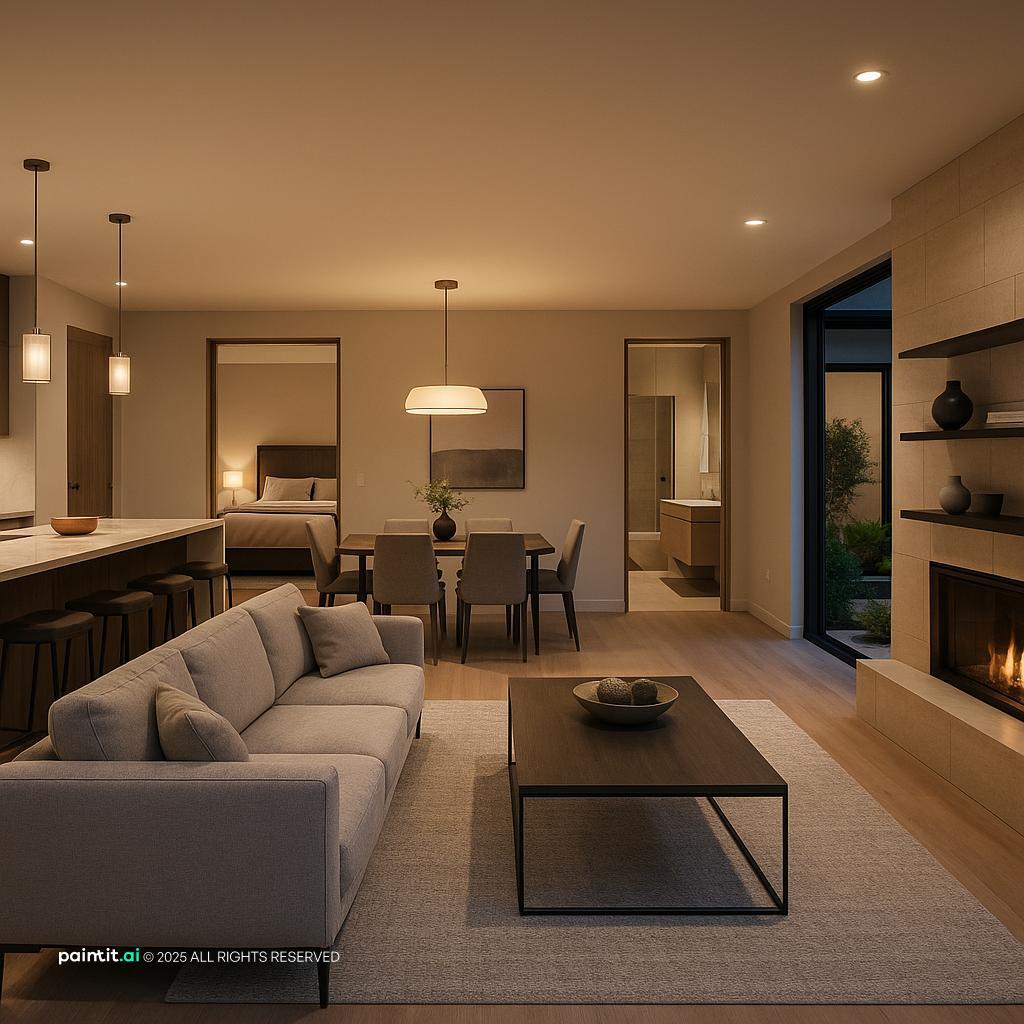
Stunning Open-Concept Interior Design uses compact proportions, space-saving storage and plants and greenery in a living room setting.
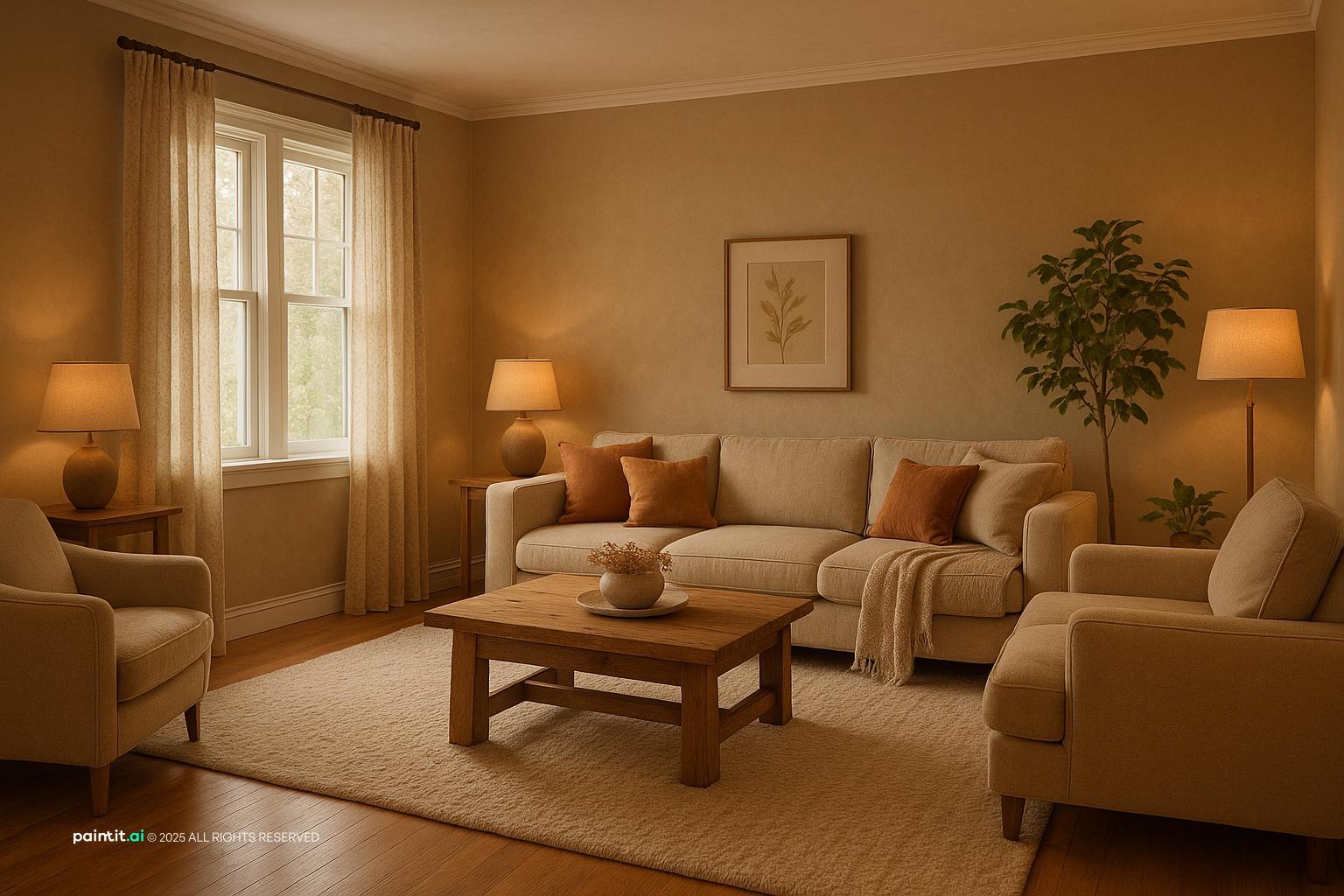
Small Living Room Layout Ideas with Clear Furniture Layout and Zoned Seating with Compact Proportions balances clear furniture layout, zoned seating and compact proportions in a living room setting.
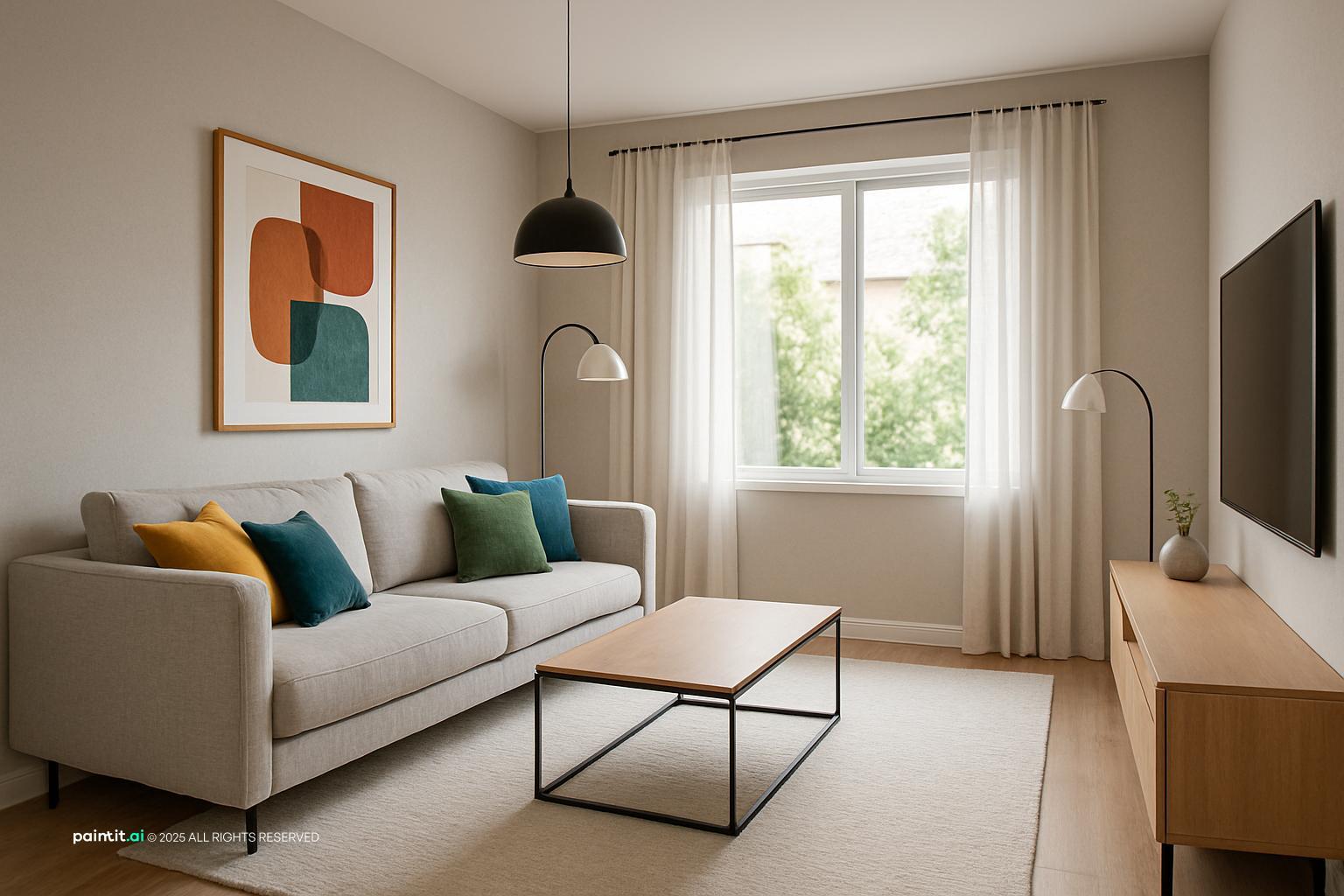
Small Living Room Layout Ideas with Clear Furniture Layout and Zoned Seating View 3 pairs clear furniture layout, zoned seating and compact proportions in a living room setting.
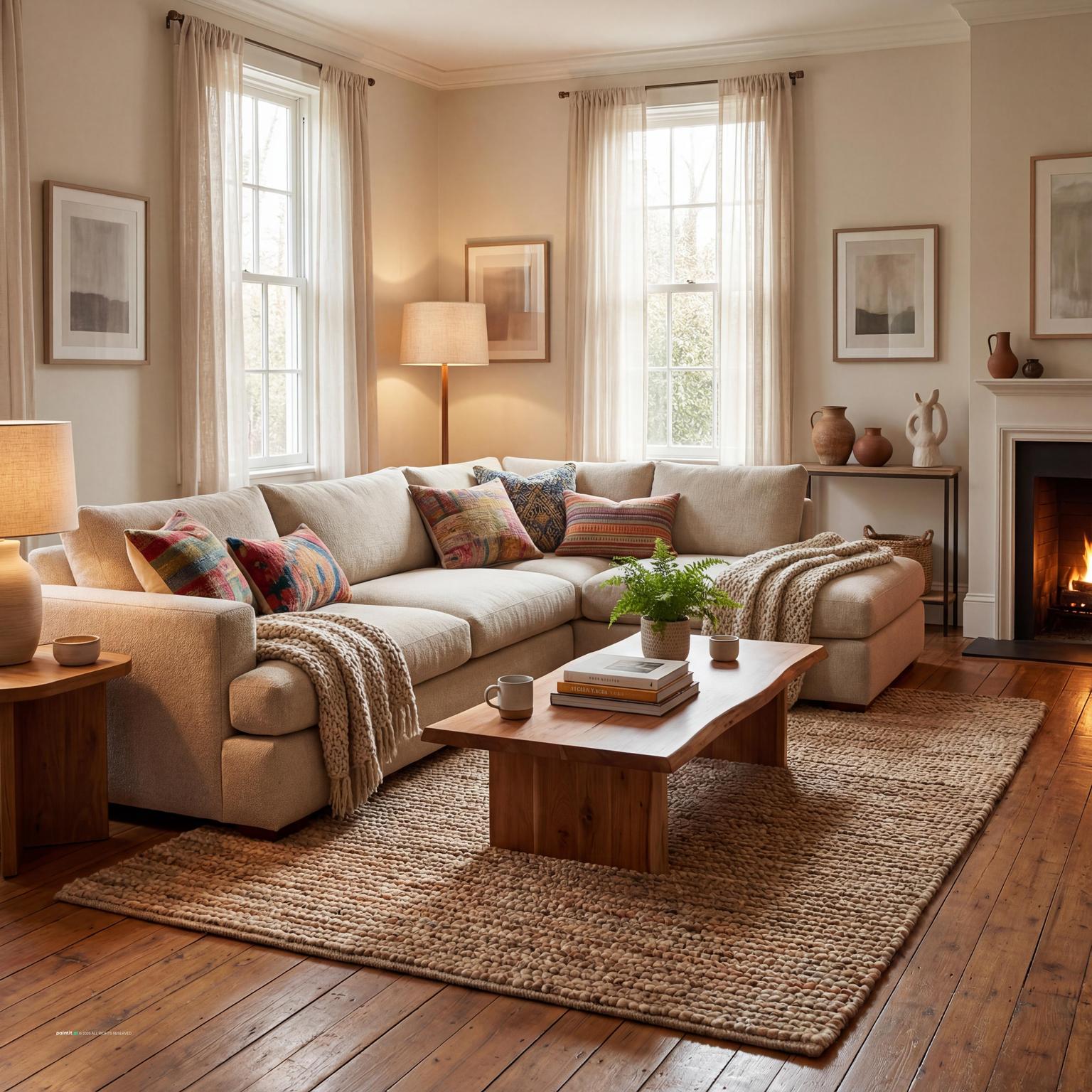
Cozy Ultra-Photorealistic Living Room Design layers zoned seating, compact proportions and soft textiles in a living room setting.
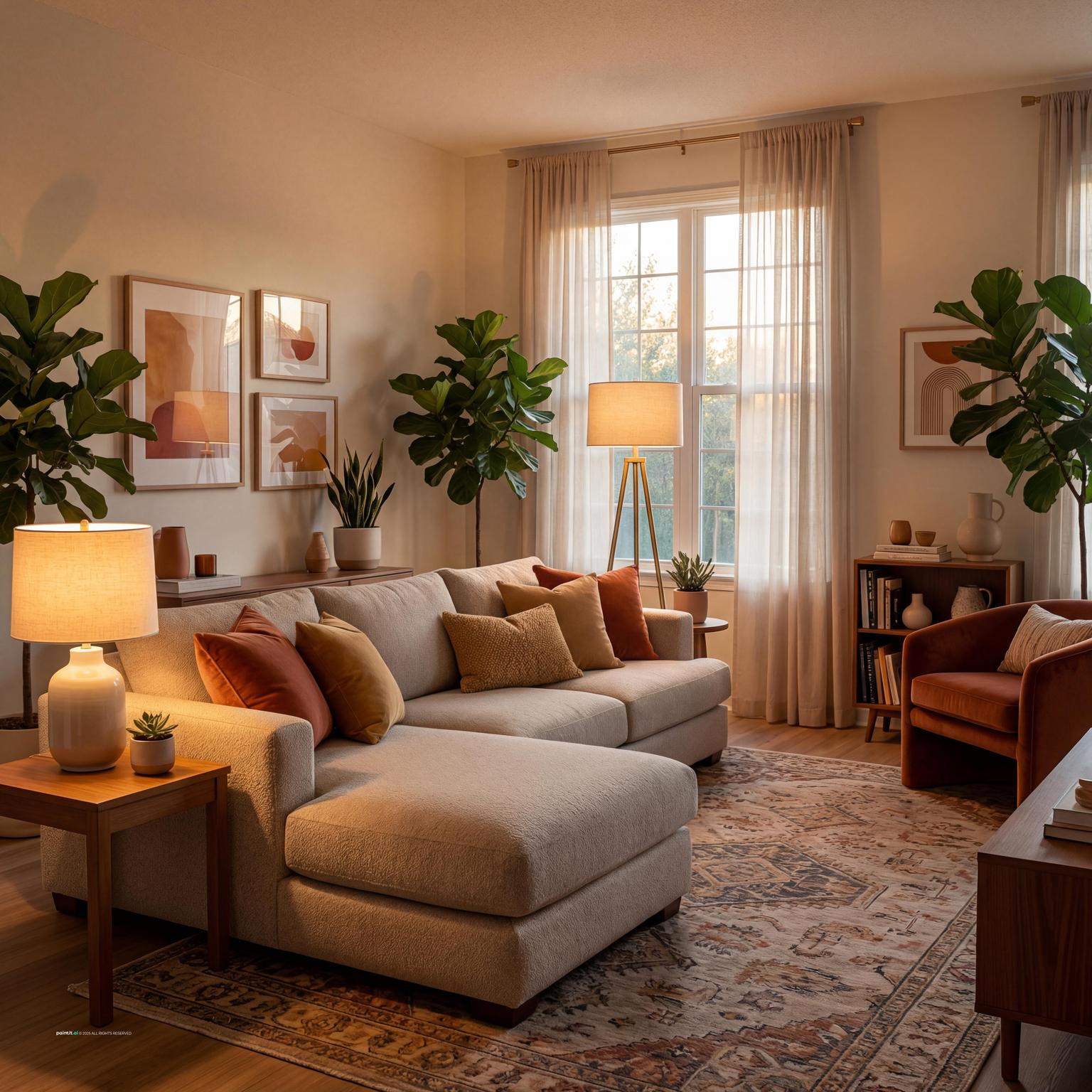
Cozy Modern Living Room Design anchors compact proportions, space-saving storage and soft textiles in a living room setting.
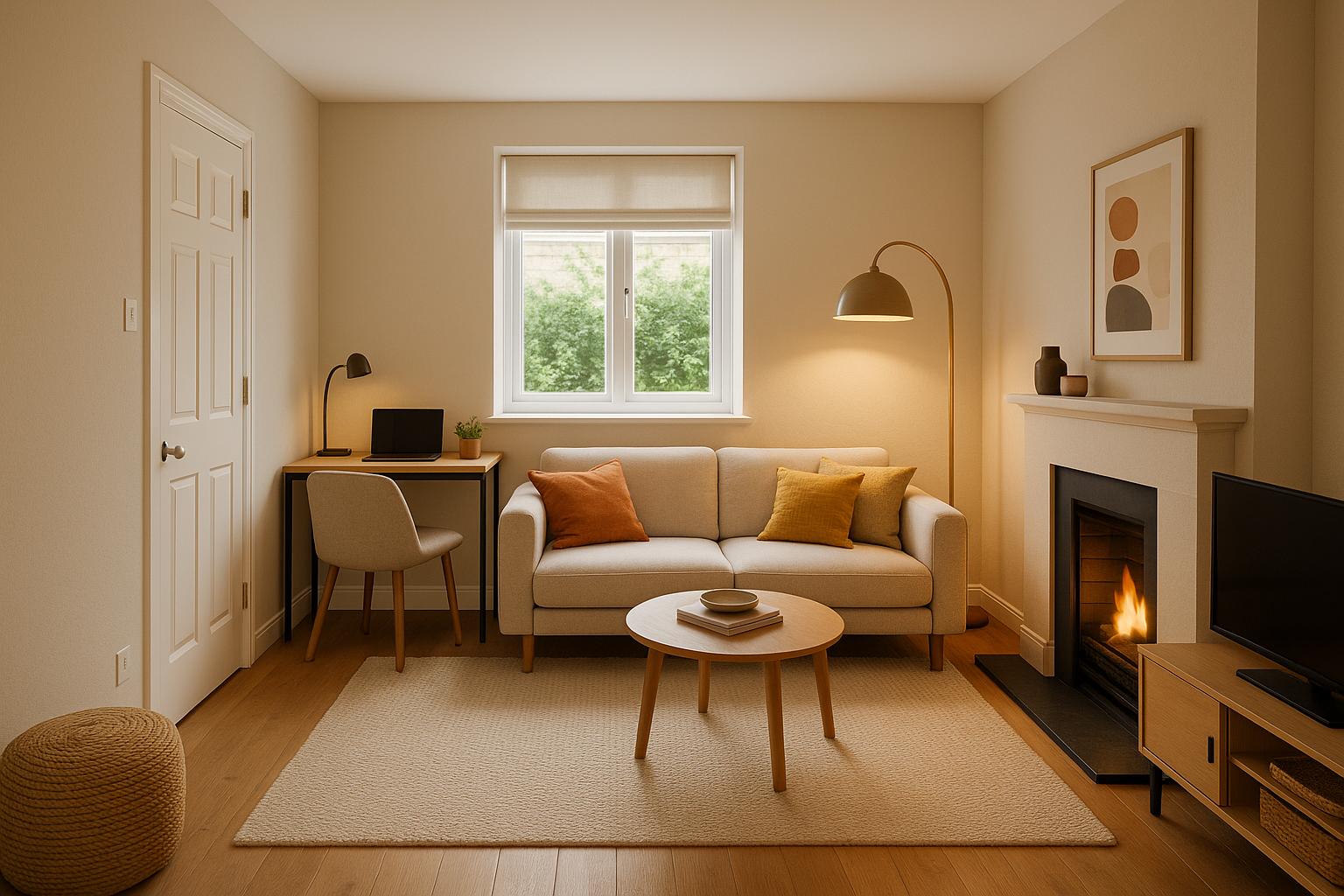
Small Living Room Layout Ideas with Clear Furniture Layout and Compact Proportions with Soft Textiles softens clear furniture layout, compact proportions and soft textiles in a living room setting.
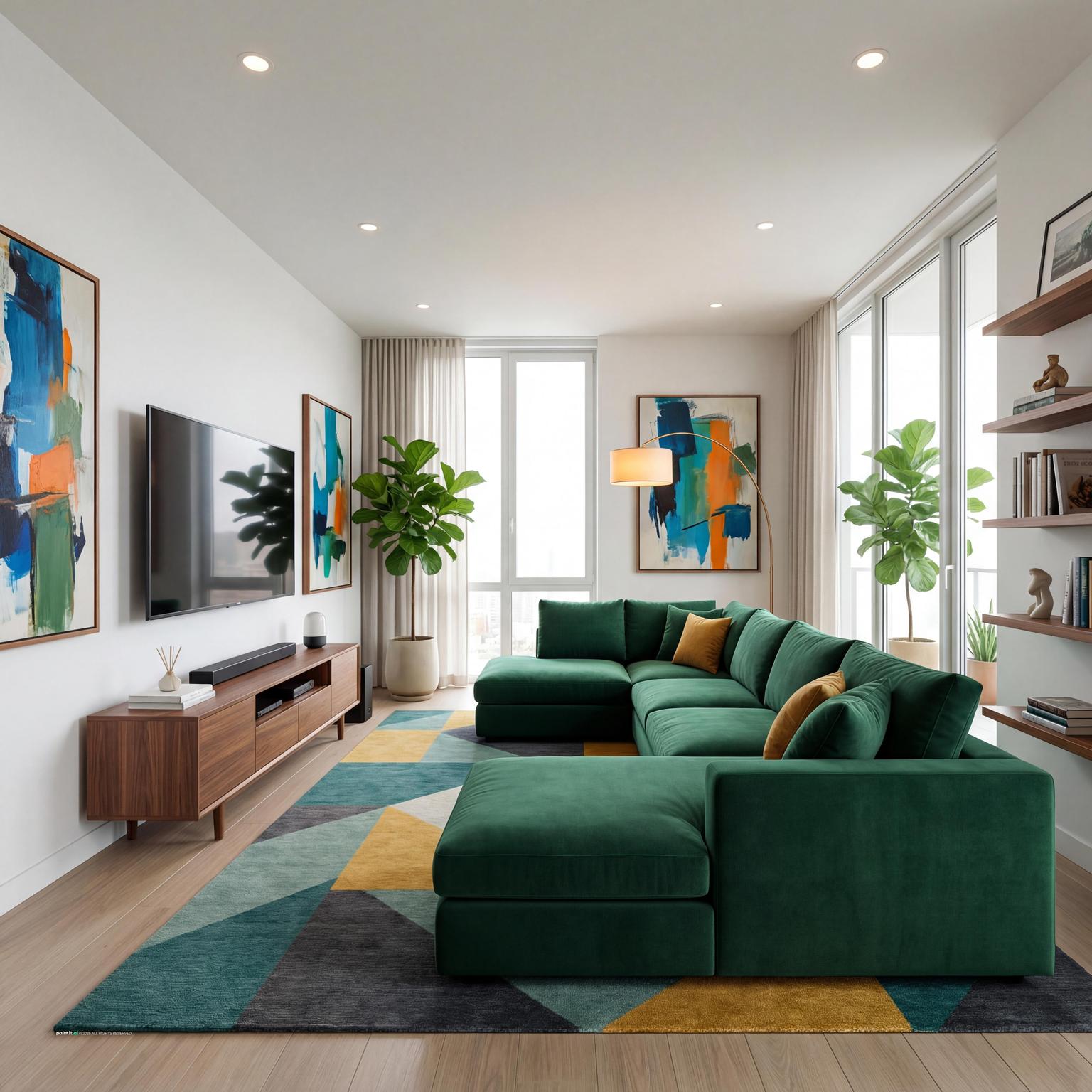
Bright Contemporary Living Room Design uses compact proportions, space-saving storage and clean-lined furniture in a living room setting.
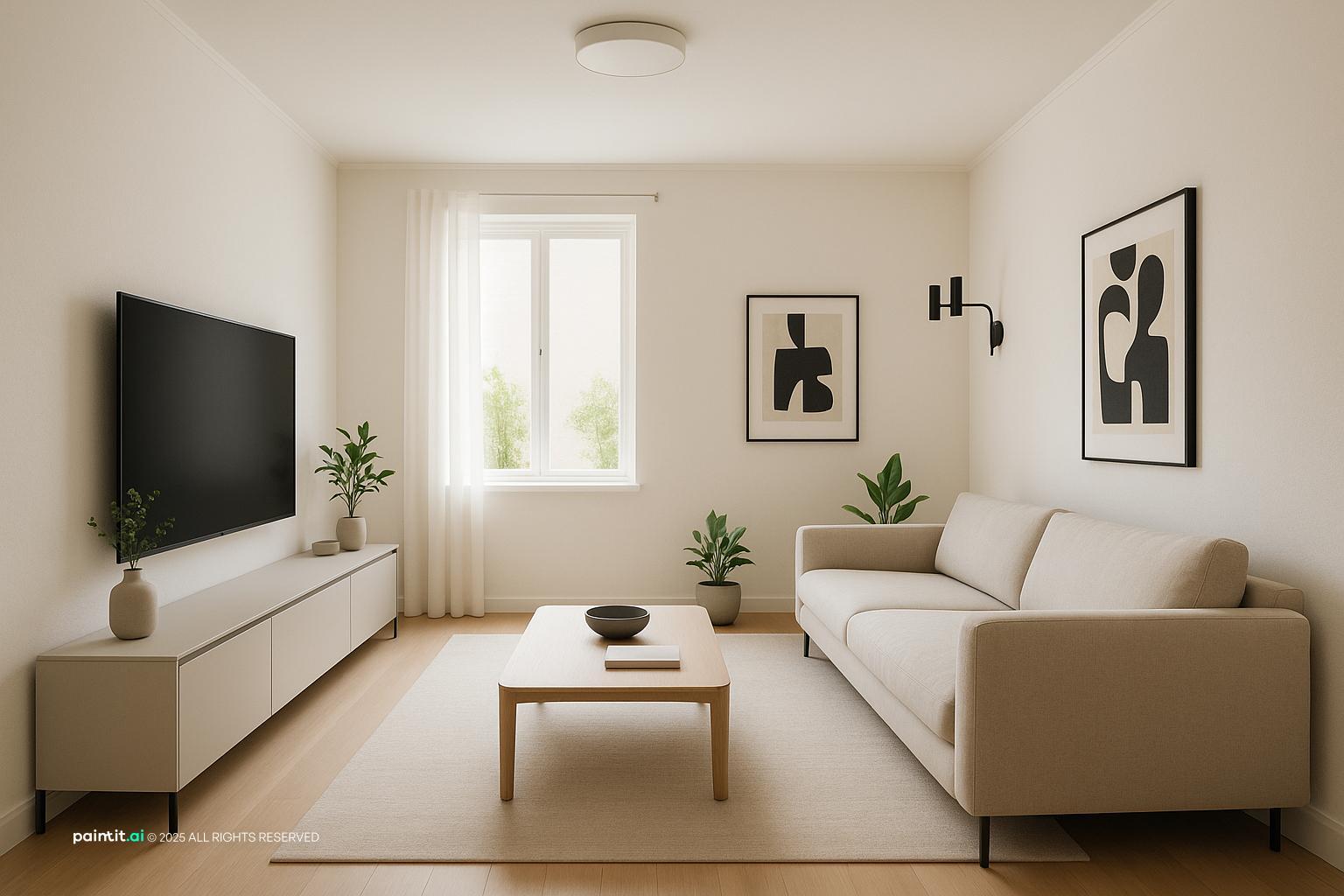
Sleek Modern Living Room Design balances clear furniture layout, compact proportions and space-saving storage in a living room setting.
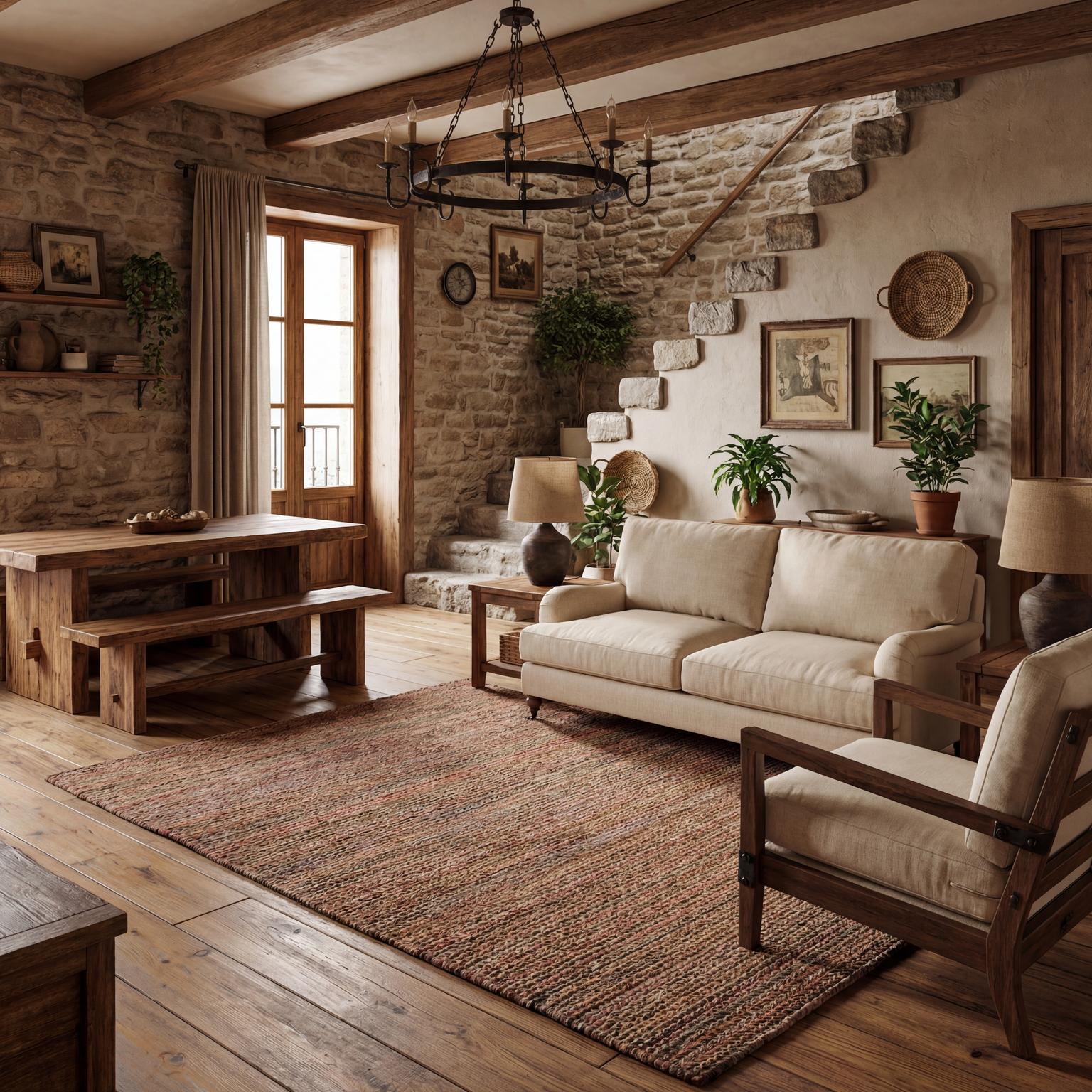
Rustic Living Room Design pairs compact proportions and plants and greenery in a living room setting.
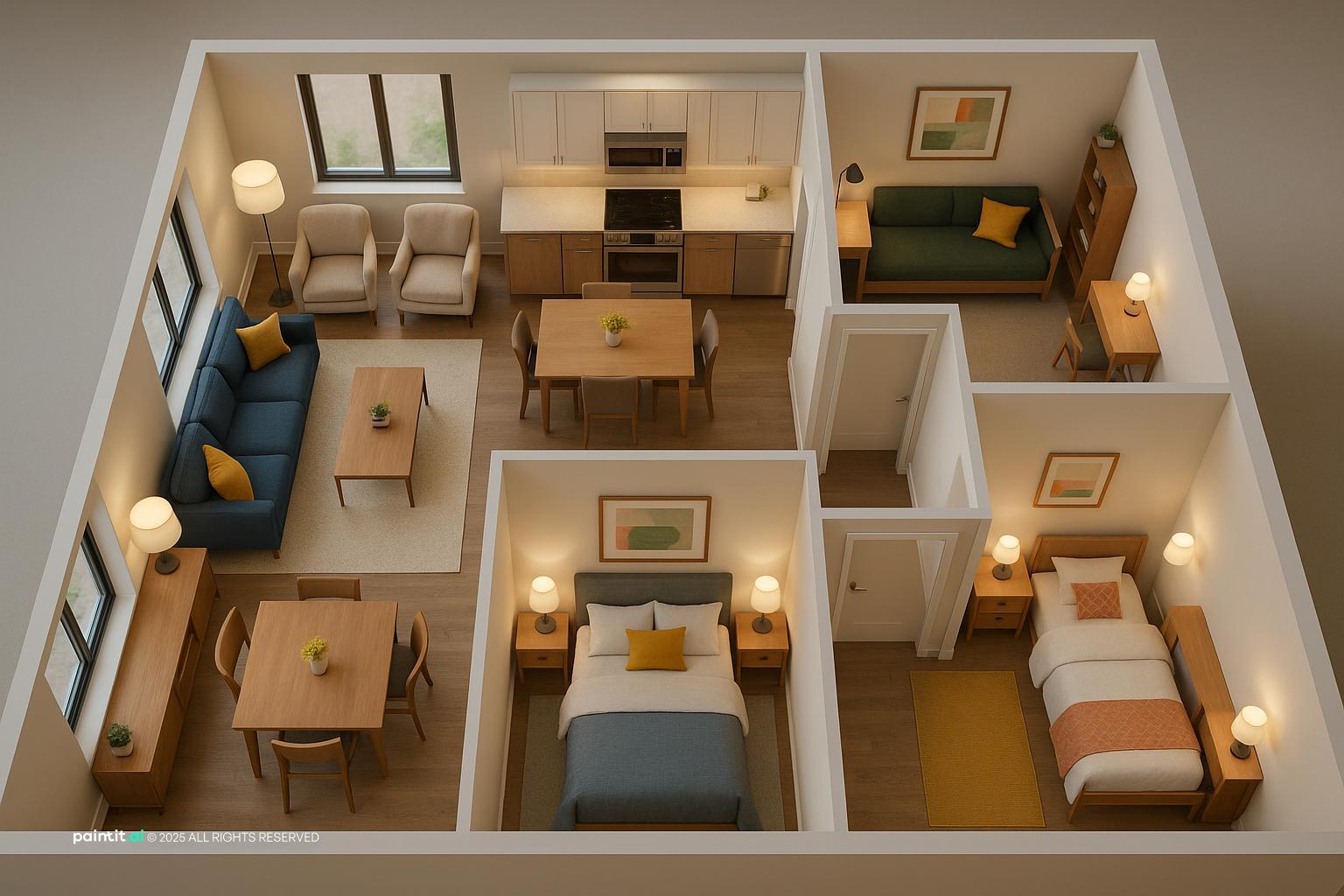
Stylish Apartment Design for Small Families layers clear furniture layout, compact proportions and space-saving storage in a living room setting.
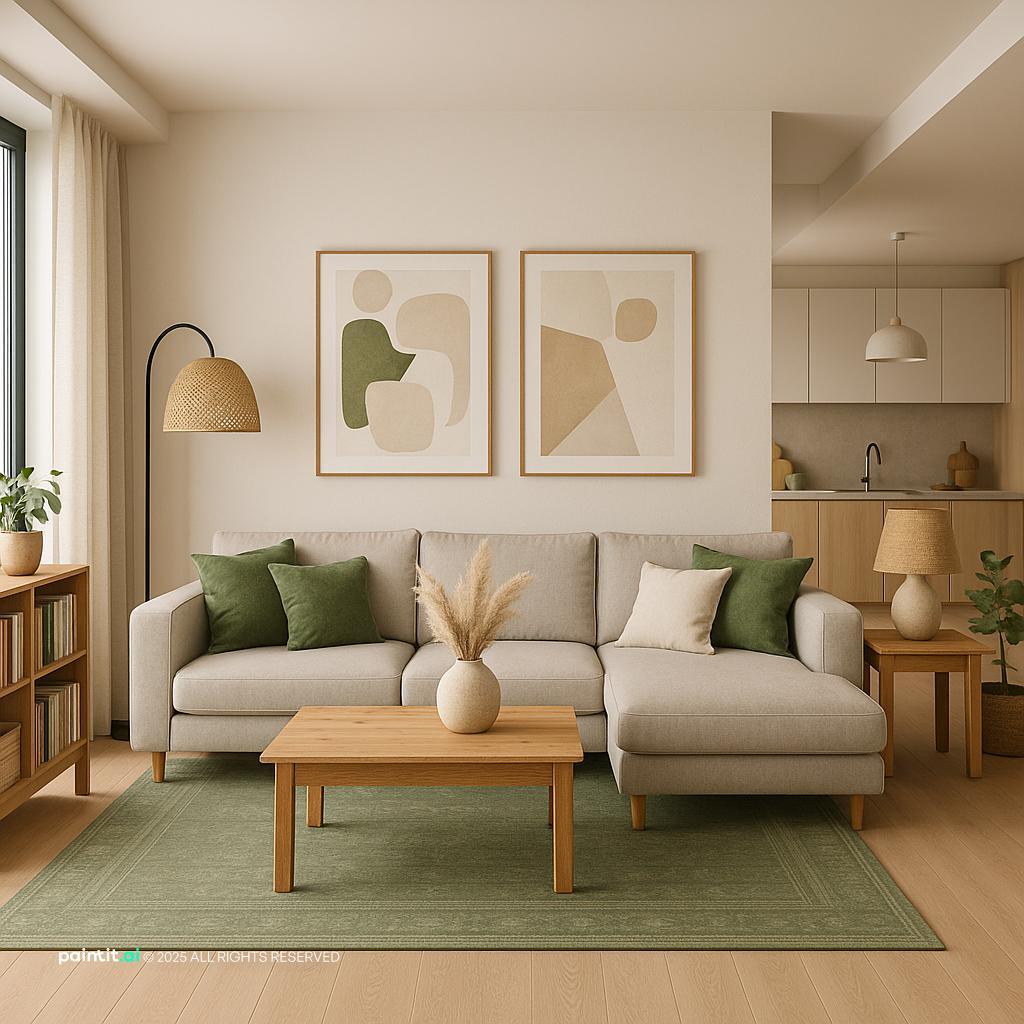
Stylish 60m² Living Room Design anchors zoned seating, compact proportions and warm wood in a living room setting.
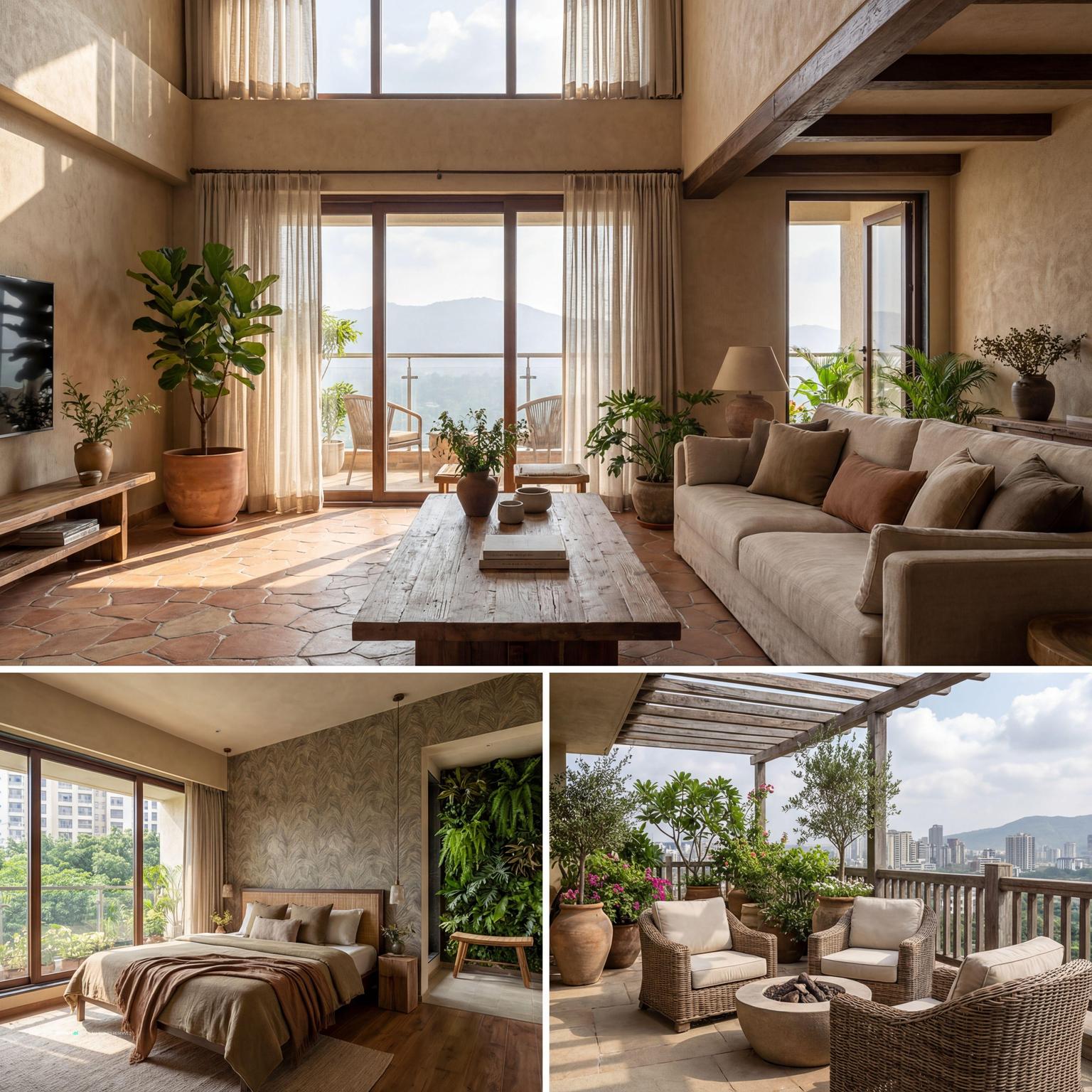
Nature-Inspired Rustic Penthouse in Chembur softens compact proportions, plants and greenery and natural light in a living room setting.
Use two or three main colors across the room: one wall color, one upholstery direction, and one deeper accent. Warm white, soft greige, pale taupe, muted olive, clay, and gentle blue-gray can all work if they suit the room’s light. Repeat the accent in small amounts through pillows, art, or a throw.
Why it works: a connected palette reduces visual interruptions, which helps a small room feel more settled. Avoid using a different strong color on every surface. Contrast is useful, but too many competing blocks make the layout look more crowded than it is.
Small rooms often have fewer windows, so undertones show quickly. A beige with too much yellow can feel heavy under warm bulbs. A gray with blue undertones can turn cold in a north-facing room. Test paint, upholstery, and rug samples near the sofa wall and the TV wall before choosing.
Use warmer neutrals if the room feels shadowy, and cooler neutrals only when the space gets enough warm daylight. Avoid choosing color from a screen alone, especially for walls behind a TV or beside dark furniture.
Sofas, chairs, and consoles with raised legs reveal more floor, which makes the room feel lighter. This is especially helpful when you need to keep a larger sofa or a storage-heavy media unit. Slim wood legs, black metal legs, or tapered upholstered legs can all work depending on the style.
Where to use it: sofas, accent chairs, sideboards, and side tables. What to avoid: too many spindly pieces in one room. Mix lightness with one grounded element, such as a soft rug or simple low console, so the room does not feel nervous.
Light oak, ash, and pale walnut keep a compact room relaxed, while dark walnut or black metal can add definition in small doses. Use heavier finishes low in the room, such as on a media console, and keep upper areas lighter with simple shelves, pale walls, or framed art.
Why it works: finish placement changes how heavy the room feels. Avoid matching every wood exactly; it can look forced. Instead, keep woods in the same temperature family and repeat a metal finish two or three times through lamps, frames, or hardware.
Flatweave rugs, tight boucle, linen blends, cotton velvet, and small-scale woven textures give a small living room softness without adding too much volume. Use pillows in different textures but similar tones so the sofa feels layered, not crowded.
Avoid oversized pillows that reduce seating depth or thick curtains that block light and stack heavily at the window. If privacy is needed, pair a simple Roman shade or sheer curtain with clean side panels rather than pulling heavy fabric across the whole wall.
A small living room needs at least two lighting heights. Use a ceiling light or flush mount for general light, then add a floor lamp, table lamp, wall sconce, or picture light to create softer evening zones. Place task lighting near the reading chair or sofa end, not in the traffic path.
Why it works: layered light makes corners usable and reduces glare from the TV. Avoid one bright overhead bulb, which can flatten the room and make shadows under furniture more obvious.
In compact rooms, every surface is visible. Style the coffee table with one tray, one book stack, or one low object rather than many small pieces. Keep shelves partly empty, group objects by tone, and leave space around art so the wall can breathe.
Once the layout is set, how to redesign a living room with Paintit.ai can help fine-tune color, materials, and styling without losing the practical structure. Avoid decorating before you declutter; accessories cannot fix a room that has too many furniture pieces.
With Paintit.ai, you can upload a real living room photo and test furniture placement, seating direction, TV wall options, rug size, palette, lighting mood, and style changes before spending money. For the most useful result, be direct: keep the sofa, Remove the extra chair, Add a smaller coffee table, Change the TV wall, Make the walkway clearer. That kind of instruction matches how people naturally work with AI; 30.1% of prompts use imperative commands like “Make,” “Create,” “Add,” or “Change.”
For more accurate spatial results, include the room limits too: what to keep, what to remove, where the doors and windows are, and whether the layout should have no clutter. AI room design helps you explore new furniture styles while respecting the existing room structure. Small spaces benefit from this testing because a few inches can decide whether a layout feels open or blocked.
The best layout usually has one main sofa, one flexible accent chair, a clear 30 to 36 inch traffic path, and an area rug that connects the seating. Start by decluttering or planning from an empty room, then add only what the small living room floor plan can handle.
Place the sofa first, then add one accent chair, stool, or small ottoman if there is enough clearance. Try small adjustments before adding more seats; in practice, one good chair often works better than a second sofa.
Not always. Pulling furniture forward by a few inches can improve curtains, radiators, and sightlines, but it should not steal the walkway. Respect the room geometry before deciding whether to float pieces or push them back.
Use fewer furniture pieces, choose raised legs where possible, hide cables, and keep storage shallow and closed. Clutter is often a layout issue, not just a cleaning issue, so remove the extra table or basket before buying more organizers.
Put the TV where it can be viewed comfortably without forcing people to walk between the sofa and screen. A wall-mounted TV or slim console usually works better than a deep media unit in a small living room layout with tv.