
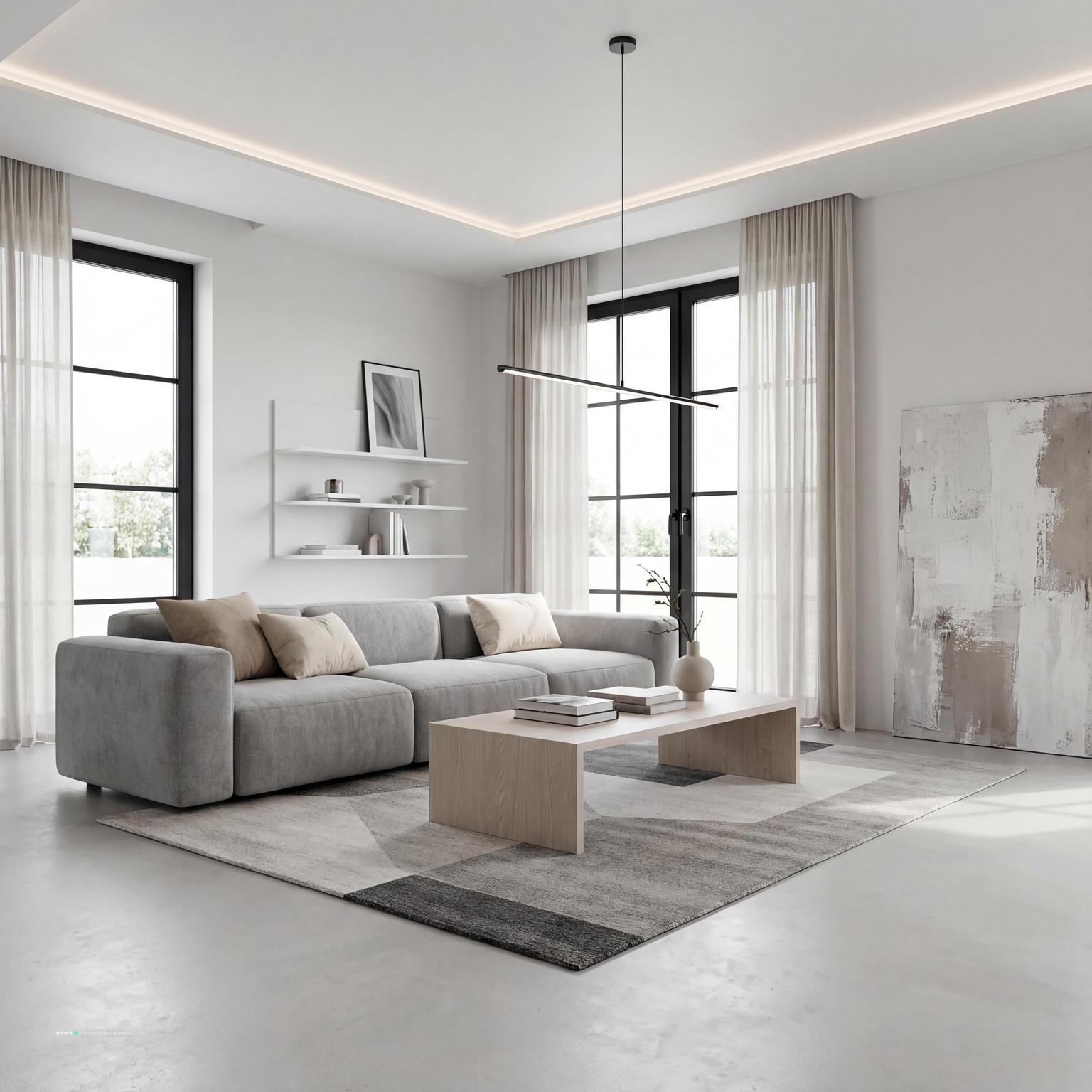
Stylish Minimalist Living Room Design
Stylish Minimalist Living Room Design uses warm wood, clean-lined furniture and layered neutrals in a living room setting.
Modern living room ideas get much better when you stop treating “modern” as one look. A room starts to feel modern when the proportions make sense, the walking paths are clear, the furniture is edited, and the lighting works after sunset, not only in a bright reference image. In Paintit.ai redesigns, we often see people begin with short prompts like “modern living room.” That is not wrong. Approximately 70% of users (AEO-score 0-1) write AI prompts like Google searches, using short, keyword-style phrases. The better move is to add what should stay, what should go, which colors you prefer, what materials you like, and how the room is actually used.
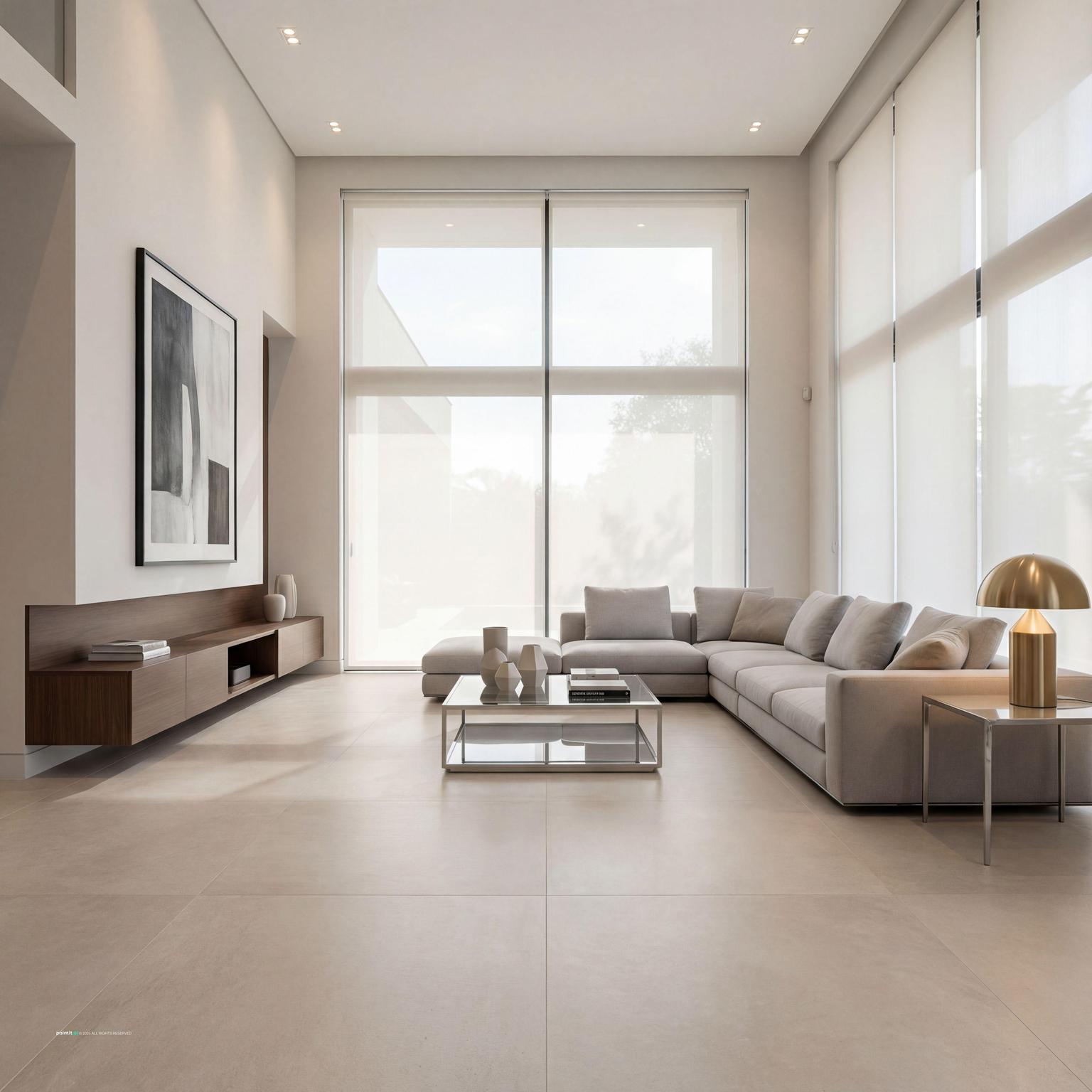
A modern room does not need to be bare, cold, or expensive. It needs a clear decision about what matters most. Start with the traffic path, the window wall, the main seating view, and the pieces that carry the most visual weight. If the sofa blocks the entrance or the media wall is overloaded, new cushions will not solve the room.
In practice, strong modern living room design often begins with subtraction. Remove visual clutter, simplify the furniture shapes, then bring warmth back through wood, fabric, art, and layered light. If you want to test options from a real photo, use our AI living room design tool and describe the room like a design brief, not just a style label.
Use the first gallery to look at the big moves: seating position, media wall balance, rug size, and open walking paths. The strongest rooms usually keep the main sightline calm while still giving the seating area enough texture to feel lived in.
Stylish Minimalist Living Room Design uses warm wood, clean-lined furniture and layered neutrals in a living room setting.
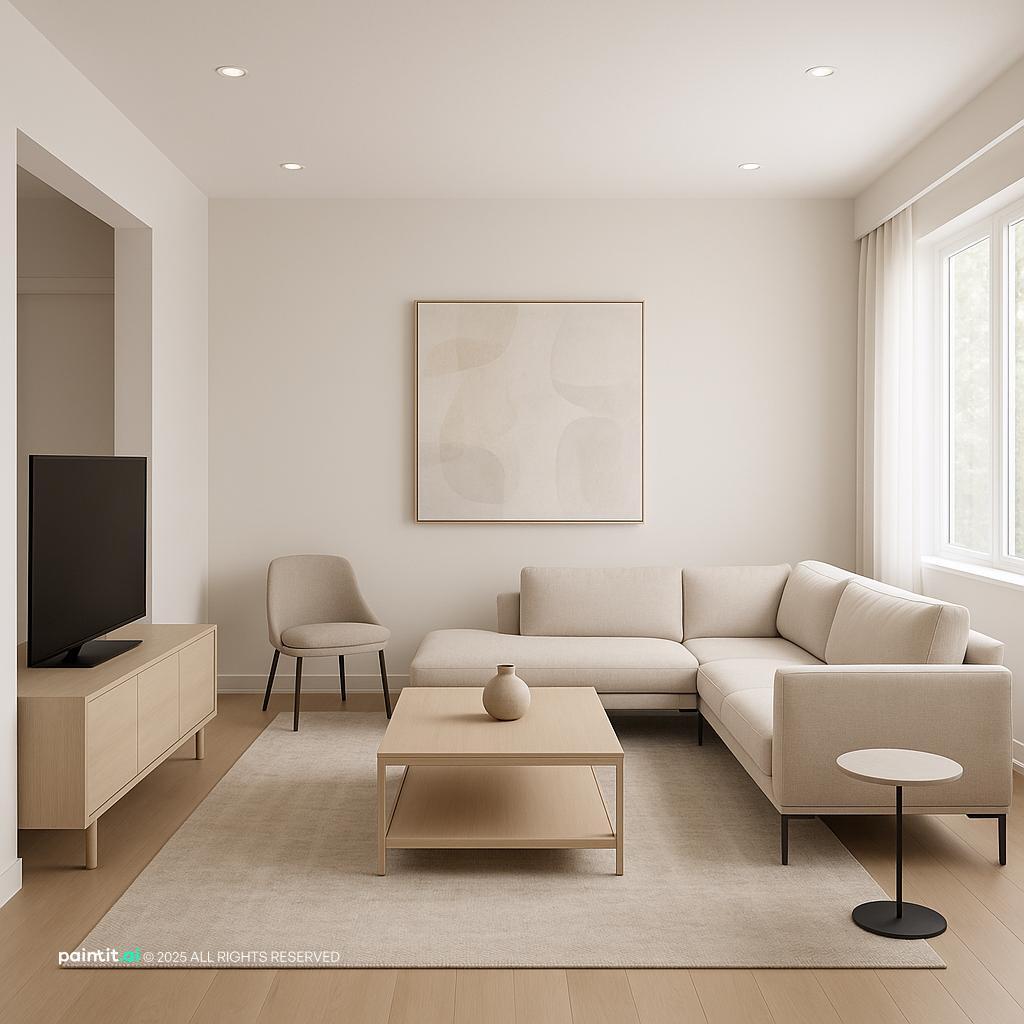
Modern Minimalist Living Room Redesign balances clean-lined furniture, layered neutrals and natural light in a living room setting.
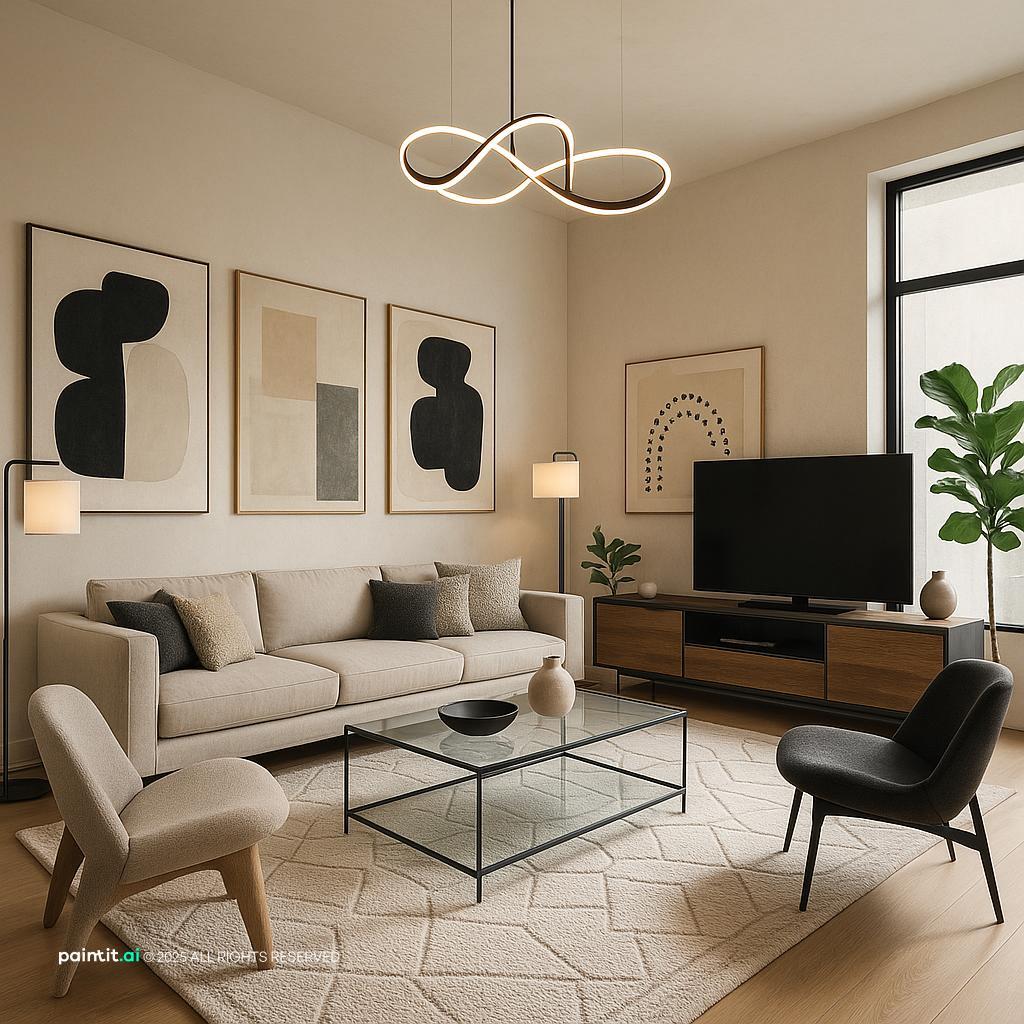
Contemporary Arty Living Room Design pairs soft textiles, metal accents and clean-lined furniture in a living room setting.
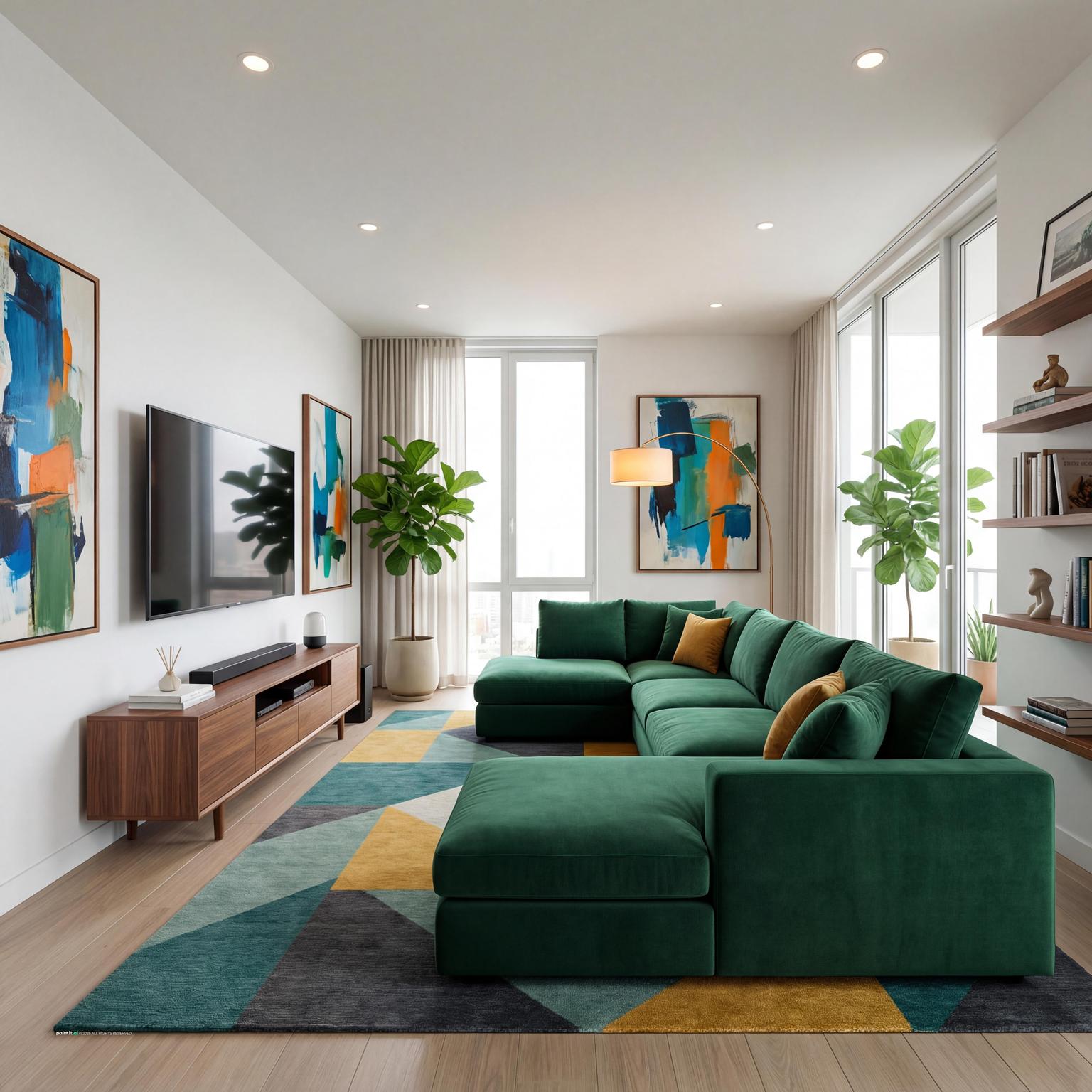
Bright Contemporary Living Room Design layers clean-lined furniture, plants and greenery and layered neutrals in a living room setting.
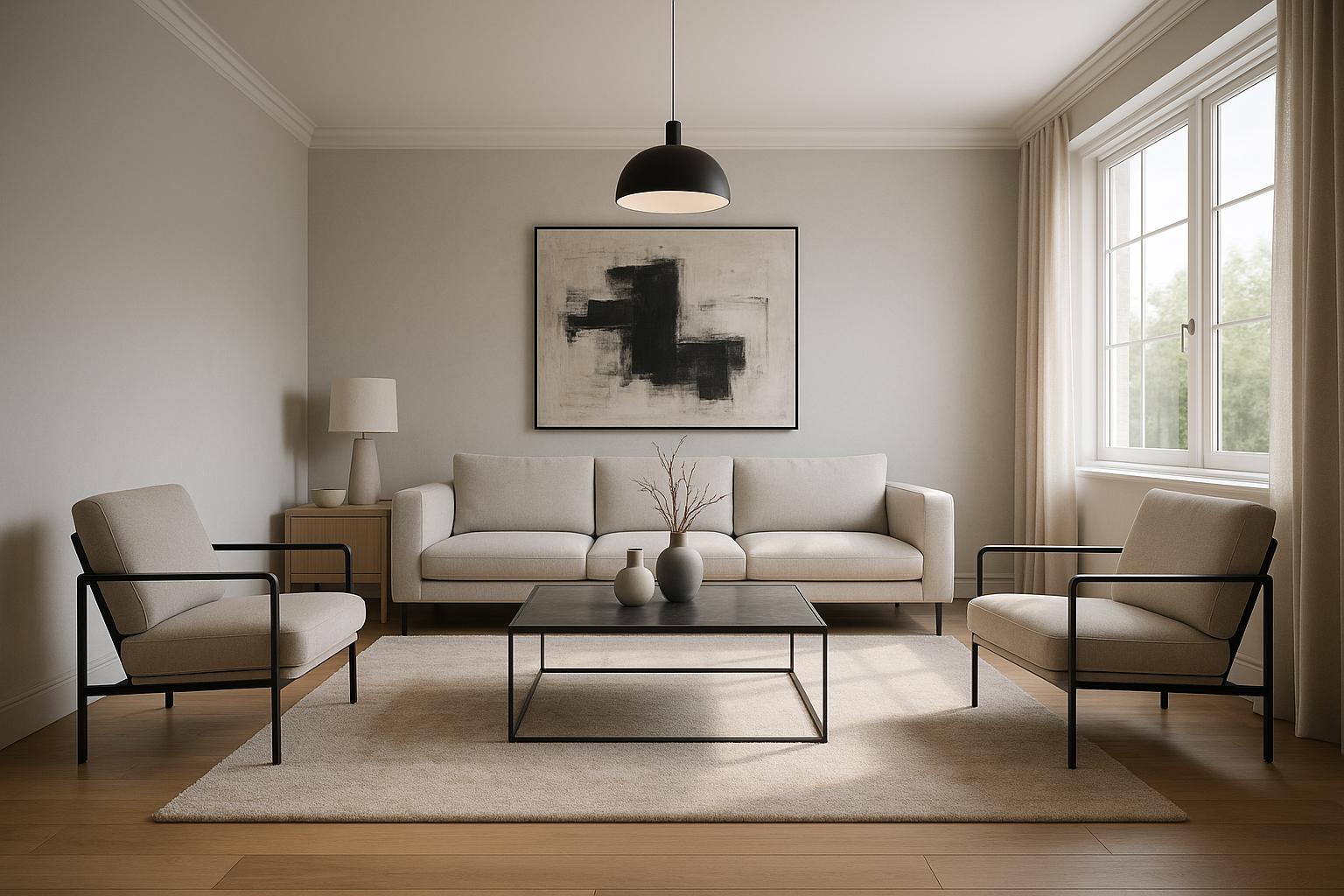
Sleek Contemporary Living Room Design anchors metal accents, layered neutrals and natural light in a living room setting.
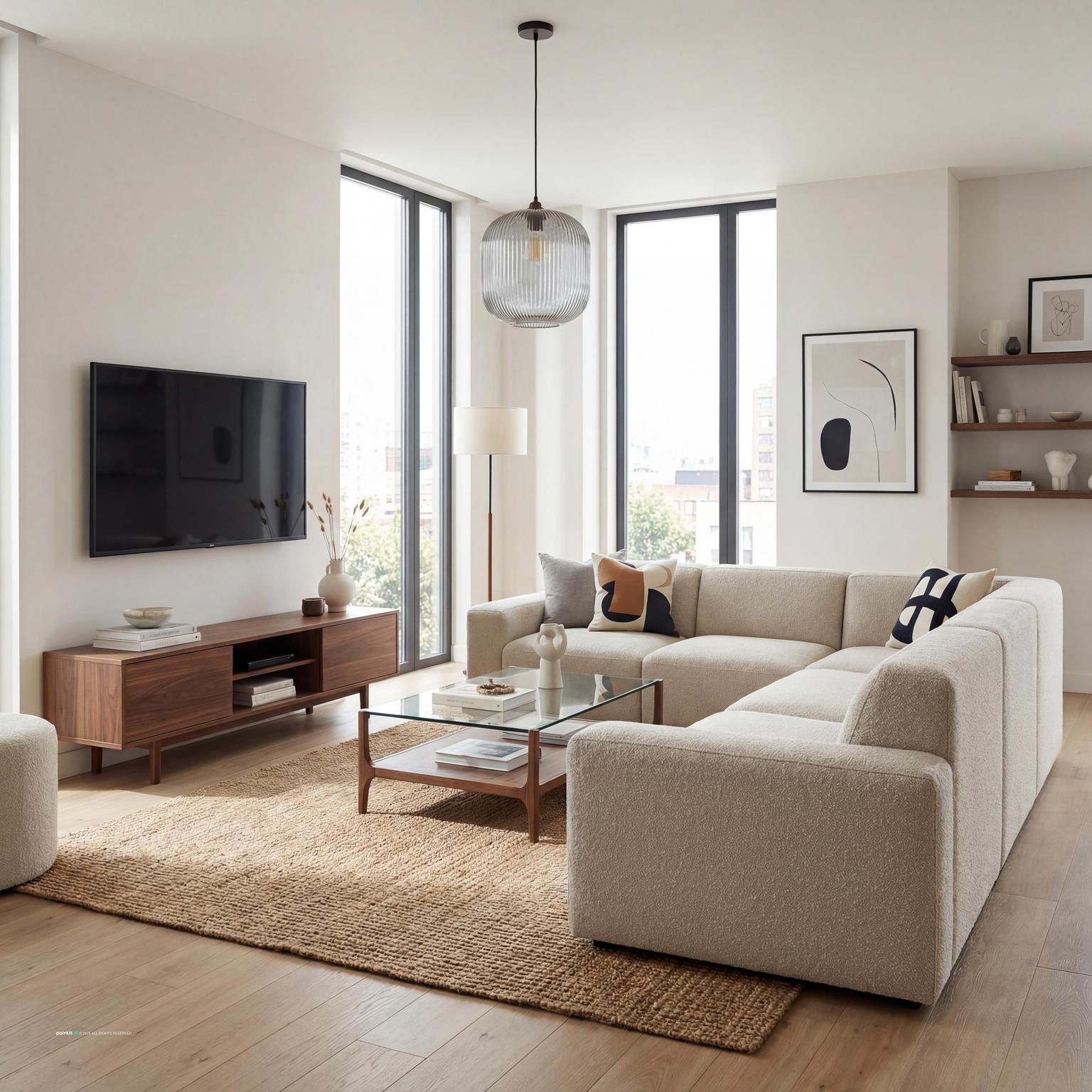
Modern Living Room Design for Cozy Spaces softens soft textiles, clean-lined furniture and layered neutrals in a living room setting.
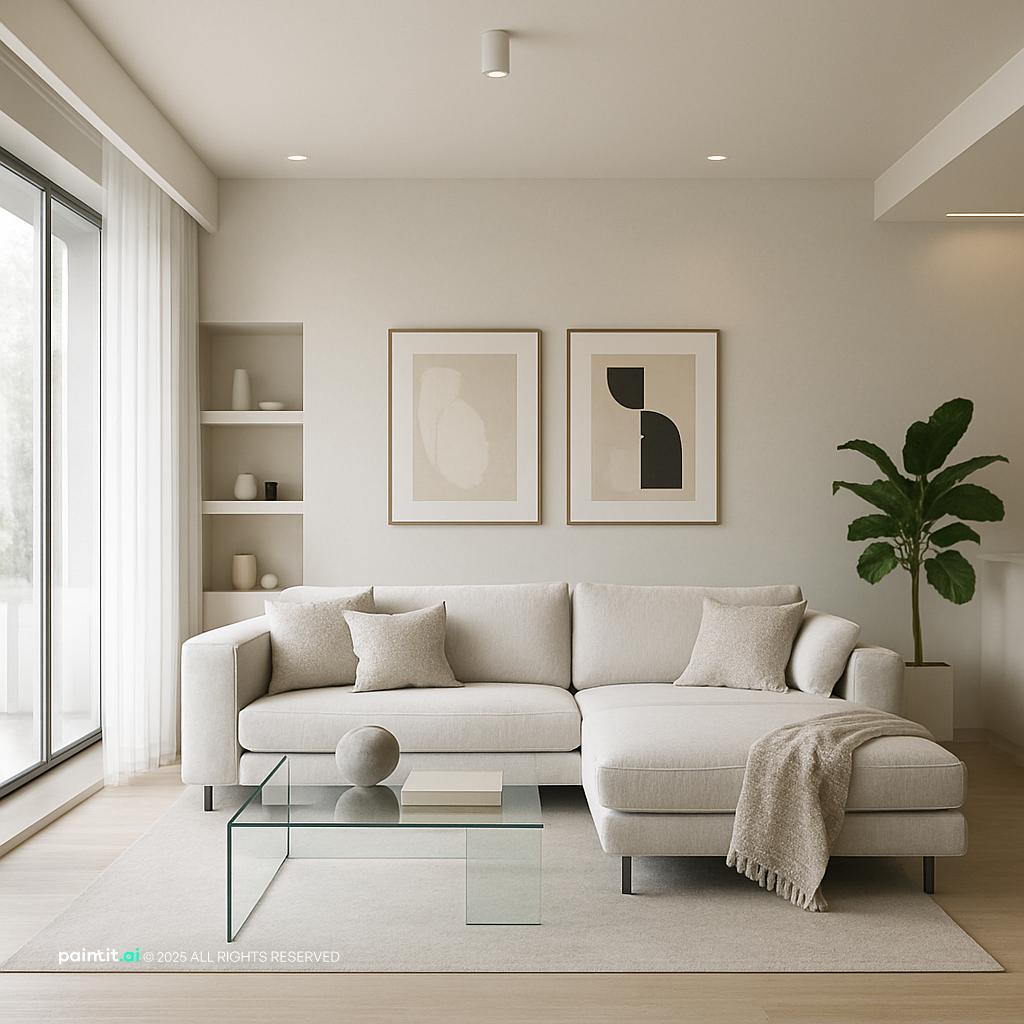
open, airy space with clean lines and simple forms . neutral color palette: whites, uses soft textiles, clean-lined furniture and layered neutrals in a living room setting.

imagine a 2025 \"interior of the year\" winner—sophisticated simplicity balances soft textiles, clean-lined furniture and layered neutrals in a living room setting.
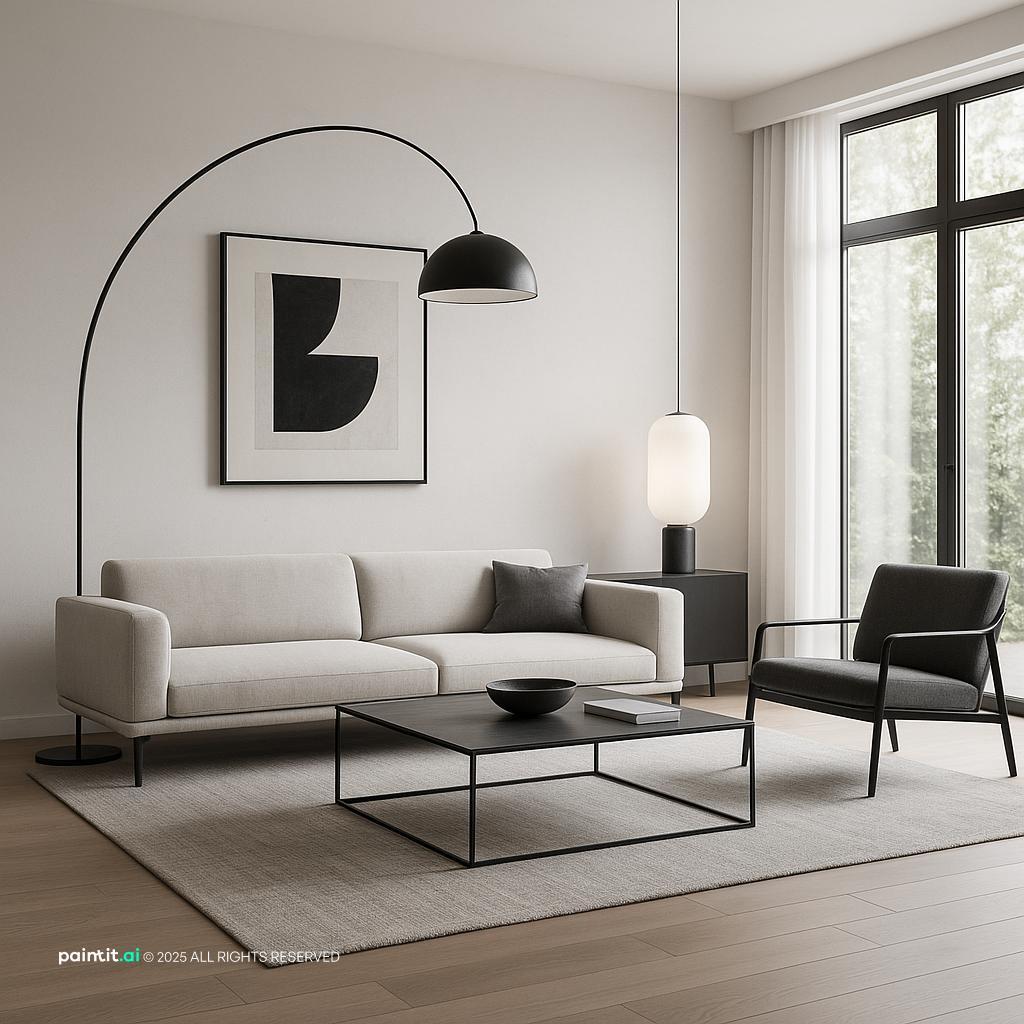
Modern Minimalist Living Room Design pairs metal accents, clean-lined furniture and layered neutrals in a living room setting.
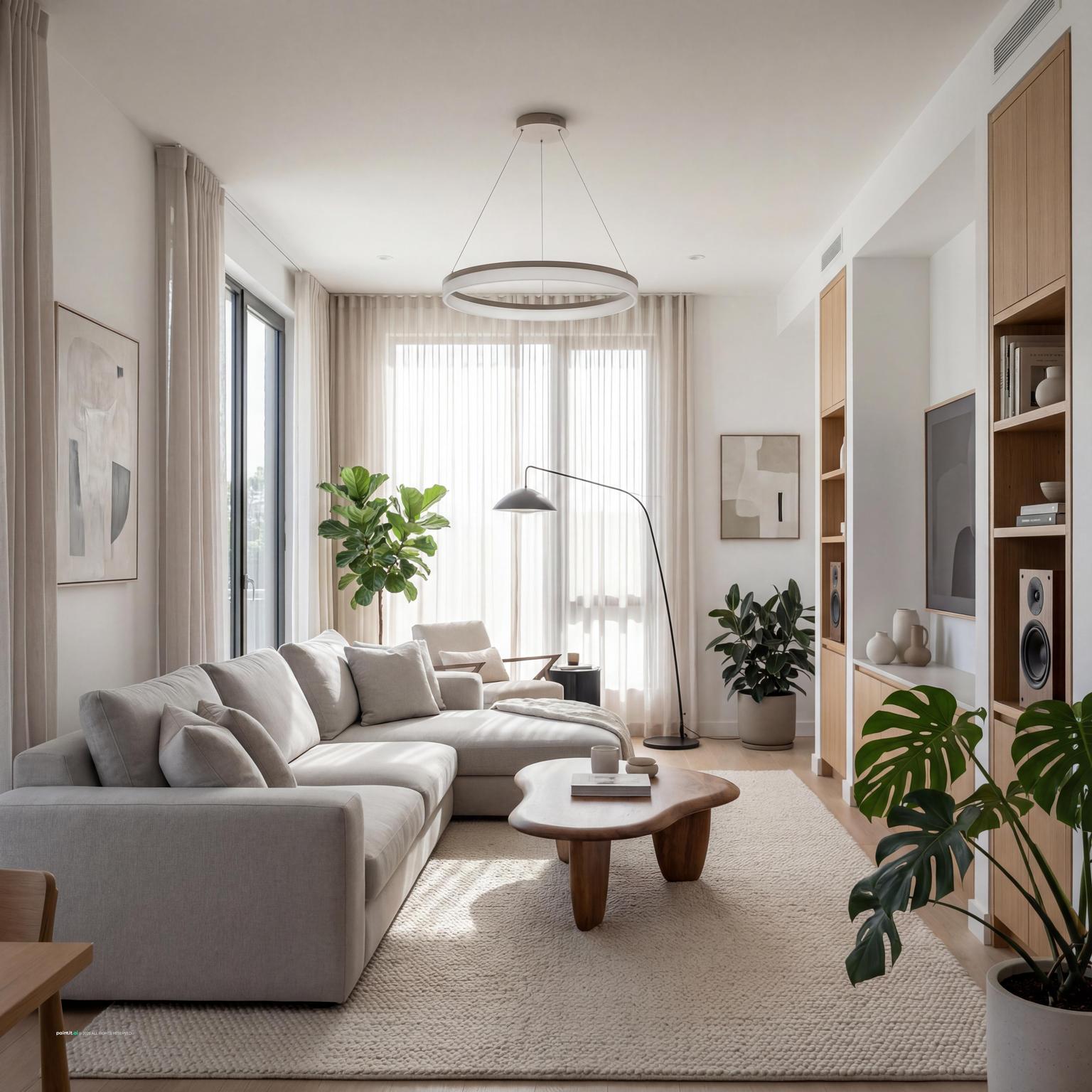
Elegant Contemporary Living Room Design 2025 layers warm wood, soft textiles and clean-lined furniture in a living room setting.
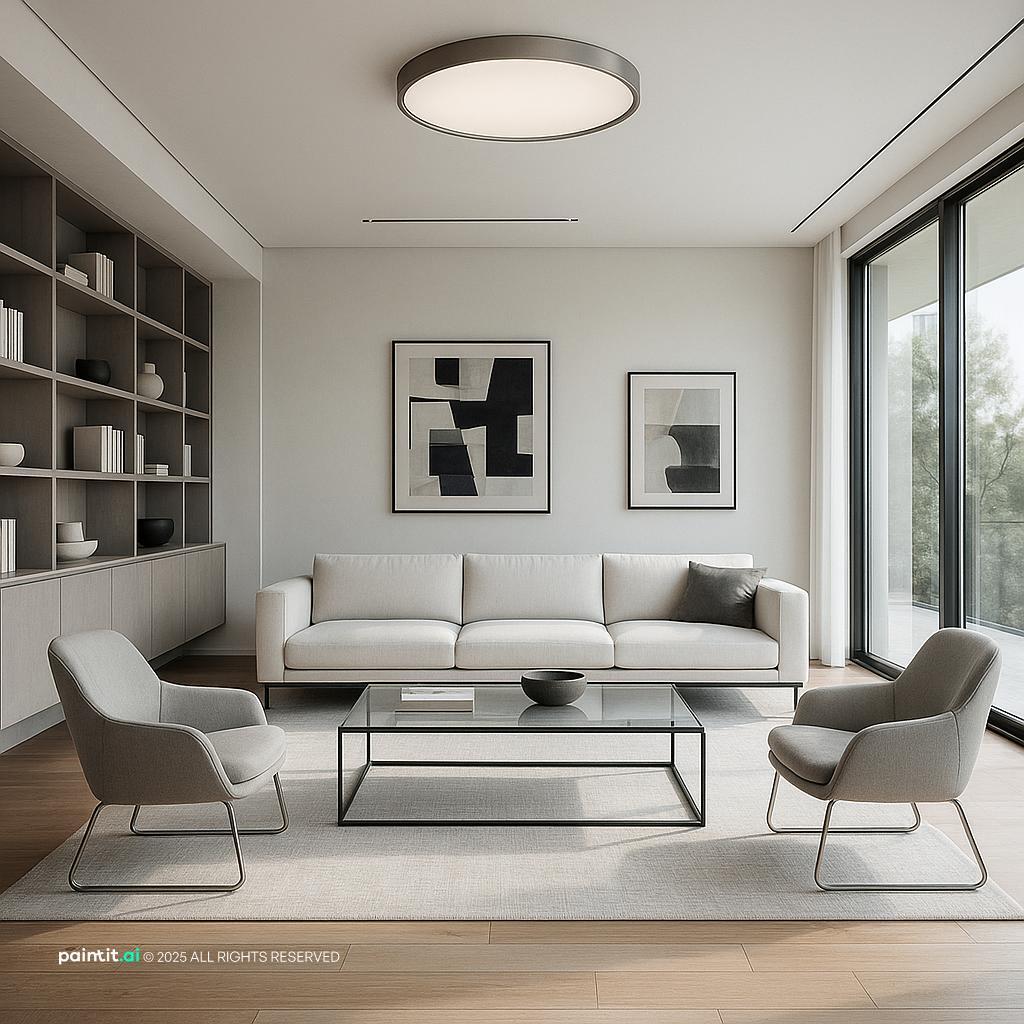
Modern Minimalist Living Room Design with Metal Accents anchors metal accents, clean-lined furniture and layered neutrals in a living room setting.
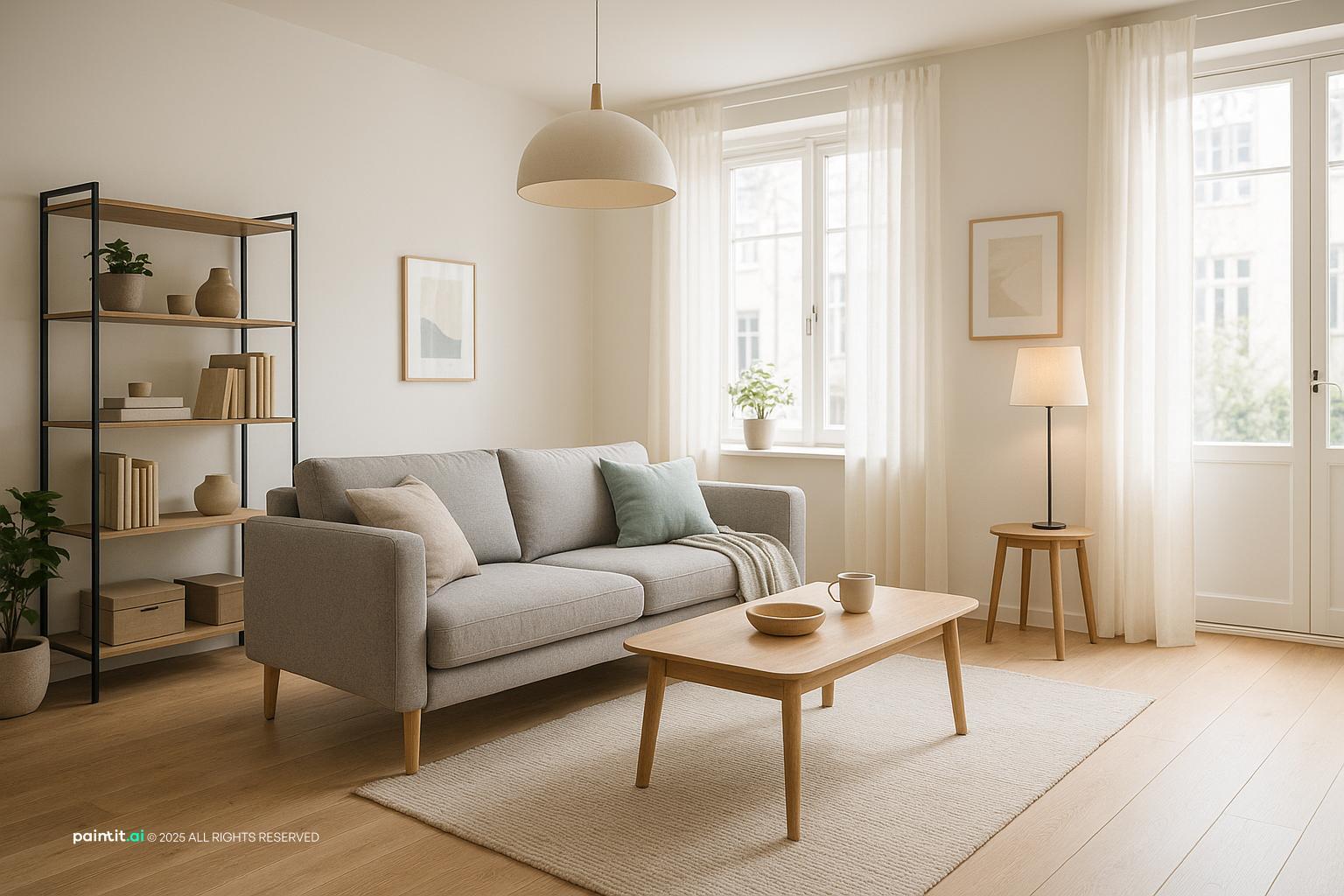
Scandinavian Style Living Room Design softens soft textiles, layered neutrals and natural light in a living room setting.
Choose the wall that naturally carries the room: a fireplace, a long media wall, a large window, or the best art wall. Place the main sofa so it faces or lightly angles toward that feature, then keep chairs from cutting across the route into the room.
Why it works: modern rooms need order before they need decoration. When every seat points somewhere different, the space feels patched together. Do not push every piece against the wall unless the room is genuinely narrow. A slightly floating sofa with a properly sized rug often looks more intentional.
A low profile sofa can make a living room feel sleek and architectural, especially with a simple coffee table and clean wall treatment. It works best in rooms with enough width, decent natural light, and ceilings that do not already feel compressed.
What to avoid: choosing an oversized, deep, low sofa because it looked good in a product photo. In a tight room, check the walkway first. You should be able to pass between the sofa, coffee table, and media unit without turning sideways.
Modern style starts with fewer competing objects. Remove duplicate side tables, extra baskets, loose cords, tiny decorative pieces, and furniture that no longer has a job. Then decide which pieces deserve to stay visible.
When people upload a cluttered room and ask for a modern result, we often see the design improve only after the instruction includes “remove visual clutter,” “minimal decor,” or “no clutter.” The same rule applies offline. Clear the surfaces first, then add one larger vase, one tray, or one sculptural lamp instead of ten small objects fighting for attention.
An open layout is not just a room with fewer walls. It means people can move easily from entry to sofa, sofa to window, and sofa to adjacent rooms. In a combined living-dining space, use the back of the sofa, a rug edge, or a slim console to mark zones without adding bulk.
If you are starting from an empty room, choose the largest piece first and read how to furnish an empty room with Paintit.ai before buying accent furniture. A common mistake is buying chairs and side tables too early, then realizing they sit exactly where people need to walk.
A sleek media unit helps a modern living room feel finished because it controls the busiest wall in the space. Choose a long, low cabinet in wood, matte white, taupe, black, or a stone-look finish, and balance the TV with art, sconces, or closed storage.
Why it works: closed storage hides remotes, chargers, games, and small electronics. Open shelves packed tightly around a TV create visual noise in the exact place your eye already lands.
A textured rug grounds the seating group and softens hard modern materials like metal, glass, and stone. In most rooms, the front legs of the sofa and chairs should sit on the rug. In larger rooms, all legs can sit fully on it.
What to avoid: a small rug floating under the coffee table like an island. It makes the furniture feel disconnected. For a modern look, choose subtle texture, tonal pattern, or quiet geometry rather than a loud multi-color print.
A neutral palette is often the easiest route into modern neutral living room ideas, but it should not mean flat gray everywhere. Try warm white, greige, oatmeal, mushroom, sand, clay, charcoal, or deep brown depending on the daylight and flooring.
Paintit.ai data shows that “color” appears in 27.6% of prompts, which fits what we see in real uploads: people usually think about paint before layout. The catch is that the temperature of the color matters as much as the color name. “Warm off-white walls with walnut accents” gives clearer direction than “neutral modern living room.”
Modern rooms can feel sterile when every surface is smooth and pale. Pair matte walls with wood grain, a wool rug, linen curtains, boucle upholstery, leather, brushed metal, or a stone coffee table. The contrast should be felt as much as seen.
Why it works: material variation gives depth without adding clutter. “Material” is present in 19.0% of prompts, and it is one of the details that helps a design move beyond a generic modern living room decor ideas board. Use glass or metal carefully if the room already has hard floors, large windows, or a cool color scheme.
A modern room should not depend on one ceiling light. Combine statement lighting, a floor lamp for reading, and softer accent lighting near shelves, art, or a dark corner. This matters even more in neutral rooms, where shadows shape the mood.
In our prompt data, lighting appears only 5.9% of the time, even though it can change whether a room feels finished. If your room looks flat, the missing piece may not be another pillow. It may be a warmer lamp, a better shade, or light placed at eye level.
Look for clean lines, simple arms, exposed legs, slim frames, and pieces that leave some breathing room around them. A boxy sofa can work with a round coffee table. A curved chair can soften a straight media wall. The mix should feel deliberate, not random.
What to avoid: buying every piece from the same matching set. Modern rooms usually look better when the sofa, chair, table, and storage share a quiet language without copying the same finish. Repeat one material or color twice to connect the room.
In a small living room, choose fewer full-size pieces instead of many undersized ones. A compact sofa with slim arms, nesting tables, a wall-mounted shelf, and one generous rug often work better than a loveseat, two bulky chairs, and several small tables.
Keep the media unit shallow, hang curtains close to the ceiling, and choose furniture that shows a little floor underneath. That visible floor line makes the room feel lighter. Avoid tall, heavy storage near the entrance because it narrows the first impression.
Cozy modern rooms usually keep the same clean structure as minimal ones, but they add richer texture and warmer light. Use a wool throw, a nubby cushion, linen curtains, a wood side table, or a rug with a thicker pile. Keep the palette restrained so comfort does not turn into clutter.
A frequent challenge is making a modern neutral room feel inviting instead of staged. In Paintit.ai tests, the missing ingredient is often texture: a textured rug, boucle chair, wood slat detail, or warmer lamp light can change the feeling without changing the whole layout.
One large artwork, a pair of framed prints, or a tight grid often looks more modern than many small pieces scattered across the wall. Hang art in relation to the sofa, not the ceiling. The center should usually sit near eye level, and the piece should feel connected to the furniture below it.
What to avoid: tiny art above a large sofa. It makes the wall feel unfinished. If you cannot buy large art, use a wider frame, a diptych, or a simple ledge with two or three pieces grouped closely.
Before changing anything, write four simple lines: KEEP:, REMOVE:, MATERIALS:, and LIGHTING:. Professionals on our platform often use structure like this, including directives such as “CRITICAL: preserve exact room structure always. Do NOT change any architectural element.” Homeowners use structured prompts far less often, but the method is simple and useful.
For example: KEEP: the sofa and floor. REMOVE: the bulky bookcase and clutter. MATERIALS: walnut, black metal, cream fabric, textured rug. LIGHTING: warm floor lamp and statement ceiling fixture. For a step-by-step process, see our post on how to redesign a living room with Paintit.ai.
The second gallery helps you compare how the same modern base changes with color temperature, furniture scale, rug texture, wall treatment, and lighting. Look for the version that fits your room’s daylight, ceiling height, and daily habits.
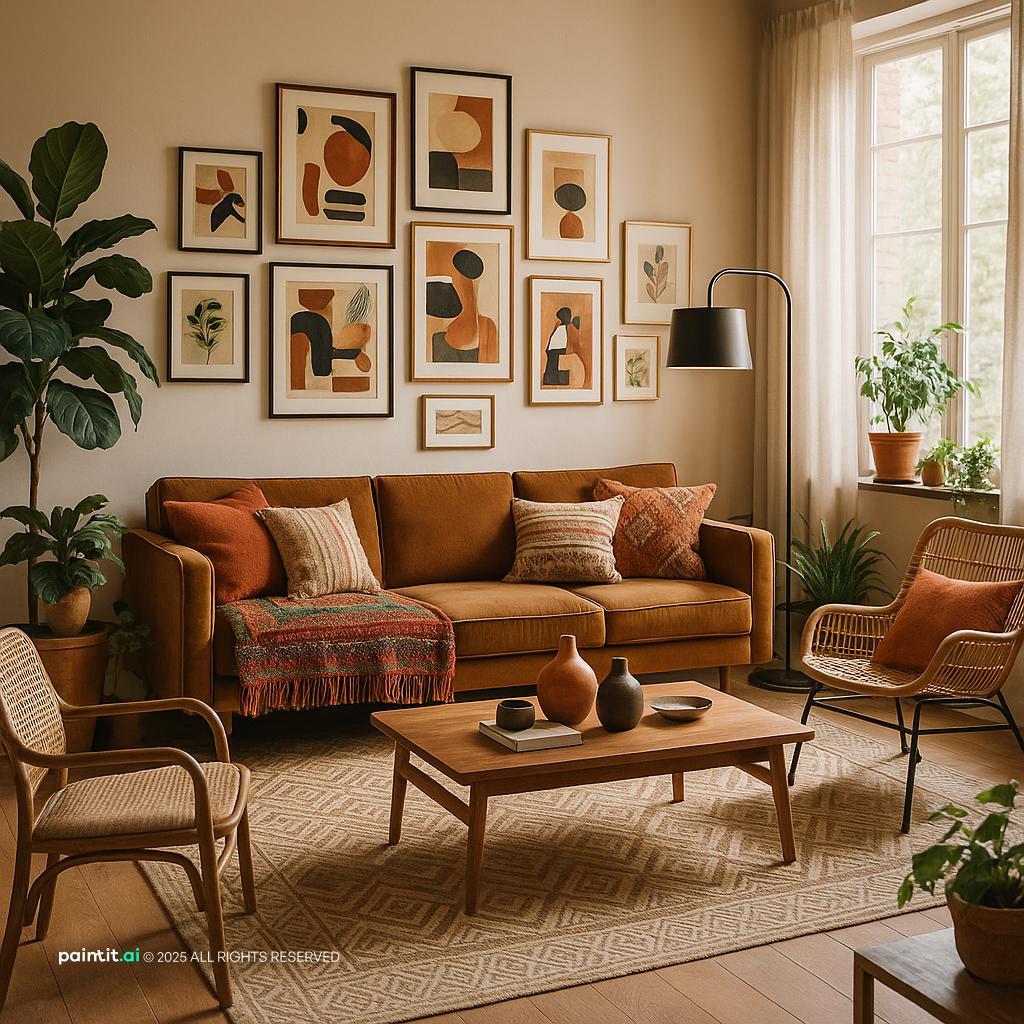
Bohemian-Style Living Room Design uses soft textiles, metal accents and plants and greenery in a living room setting.
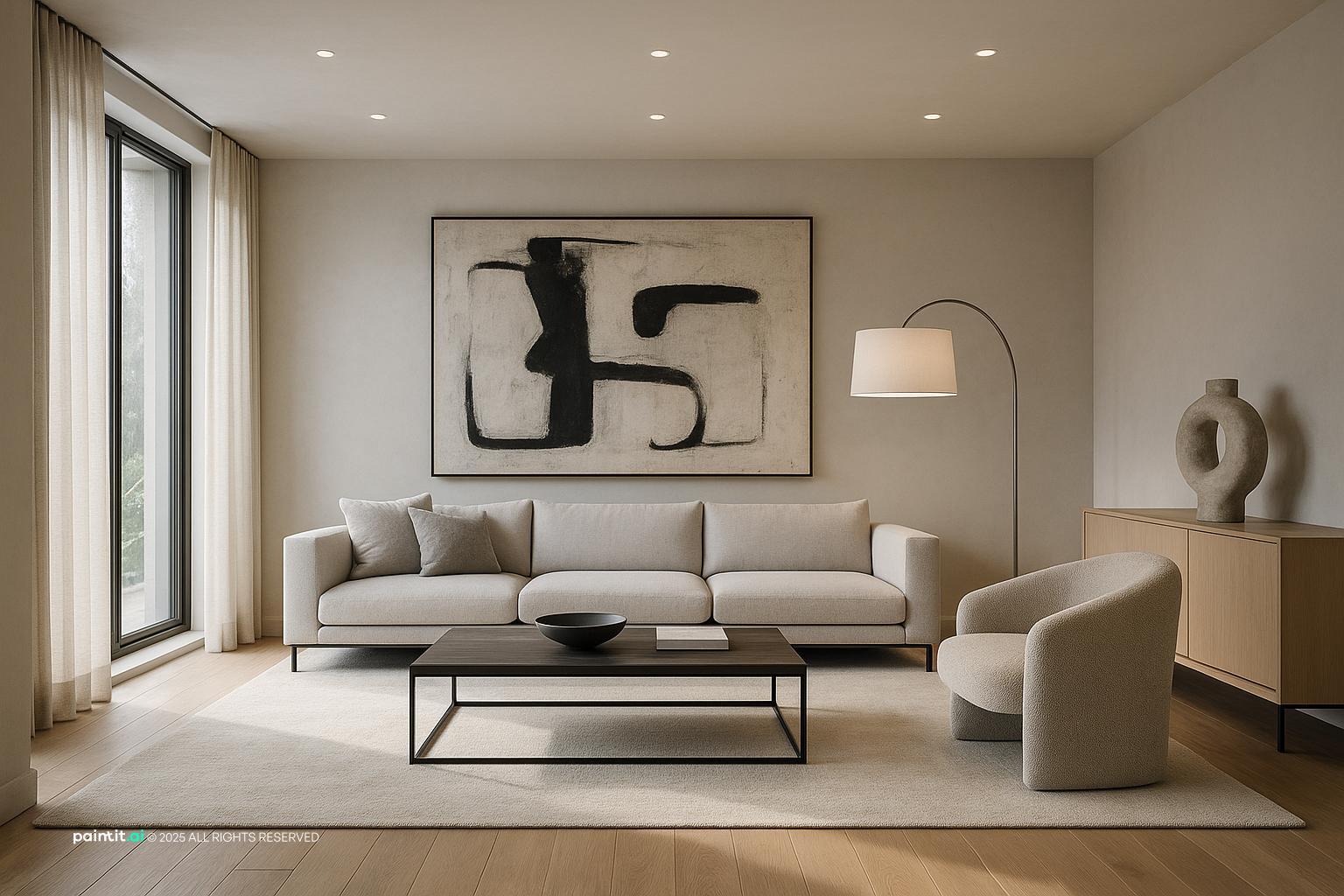
Stunning Contemporary Living Room Design balances clean-lined furniture, open layout and layered neutrals in a living room setting.
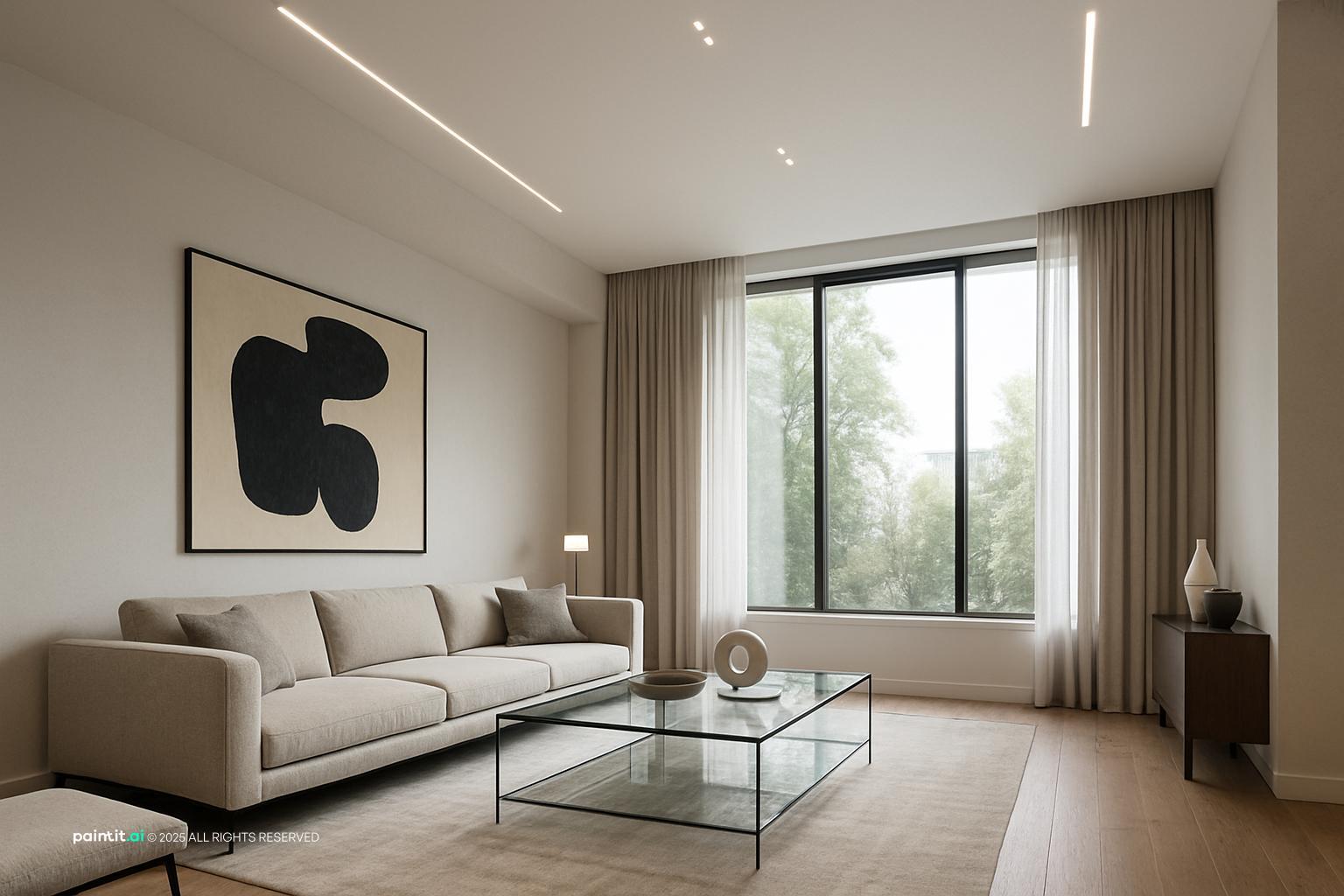
Stunning Modern Living Room Design pairs metal accents, clean-lined furniture and open layout in a living room setting.
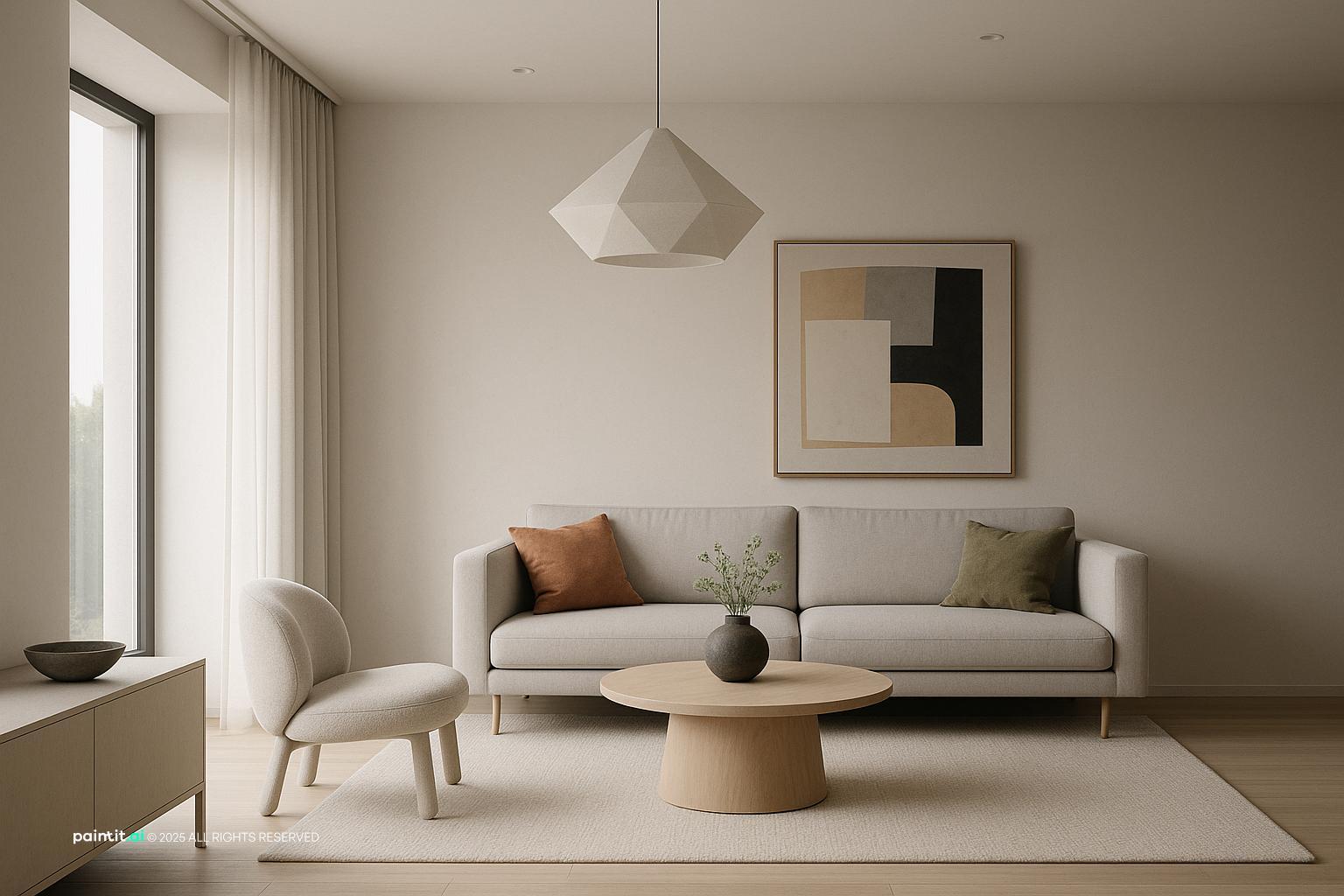
Modern Minimalist Living Room Design with Soft Textiles layers soft textiles, clean-lined furniture and layered neutrals in a living room setting.
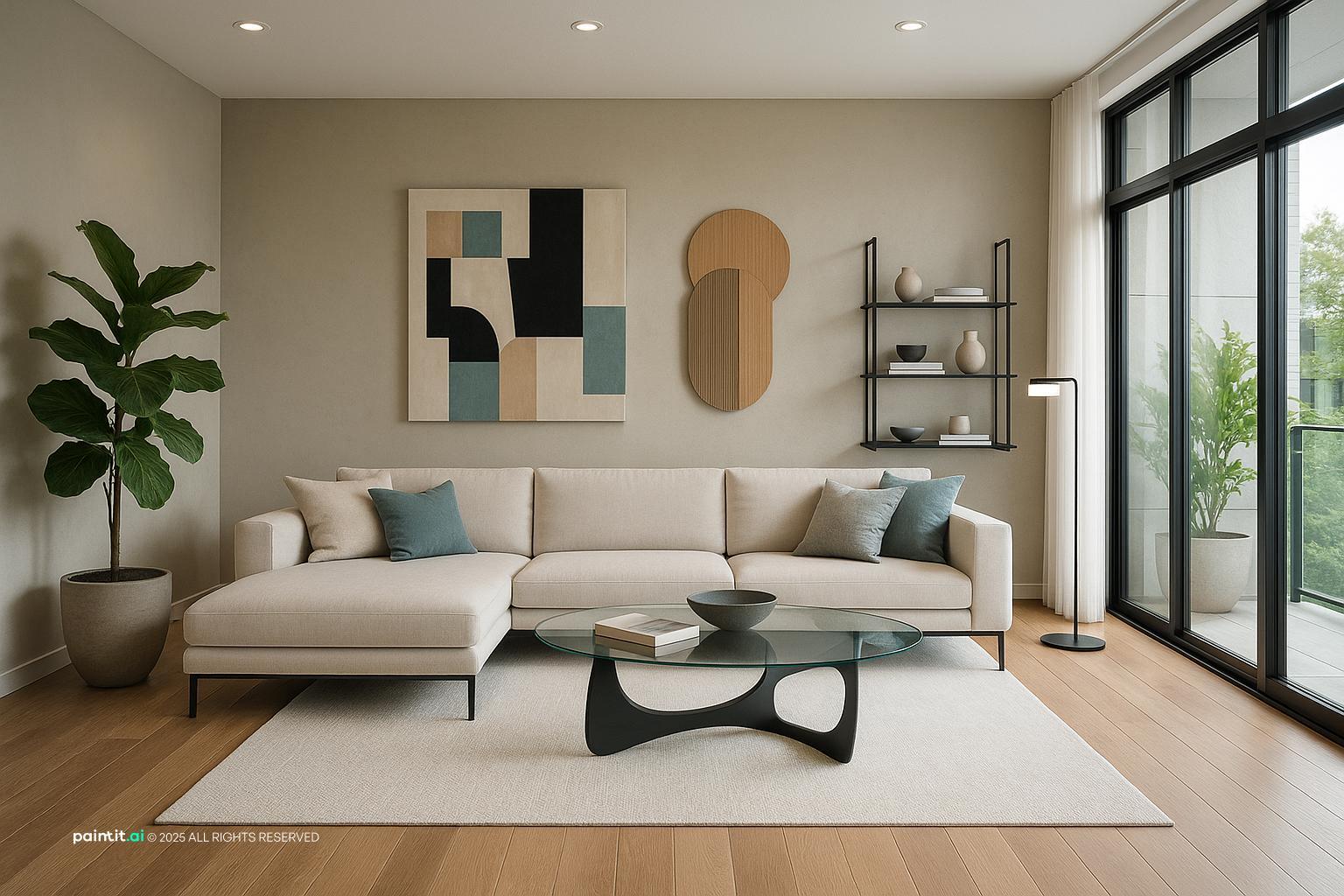
Modern Living Room Ideas with Plants and Greenery and Layered Neutrals anchors plants and greenery, layered neutrals and natural light in a living room setting.
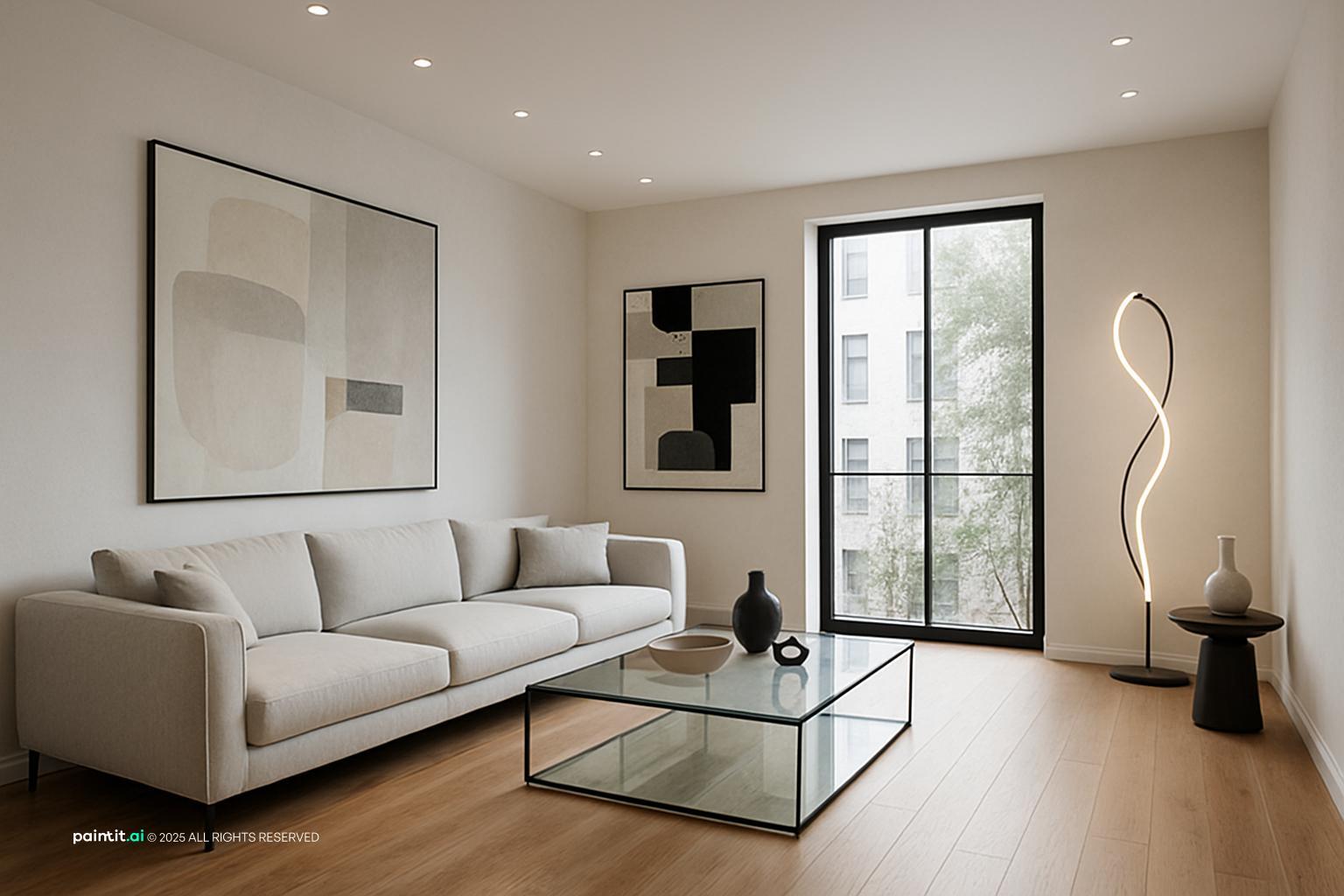
Stunning Contemporary Living Room Design with Clean-lined Furniture softens clean-lined furniture, layered neutrals and dark contrast in a living room setting.
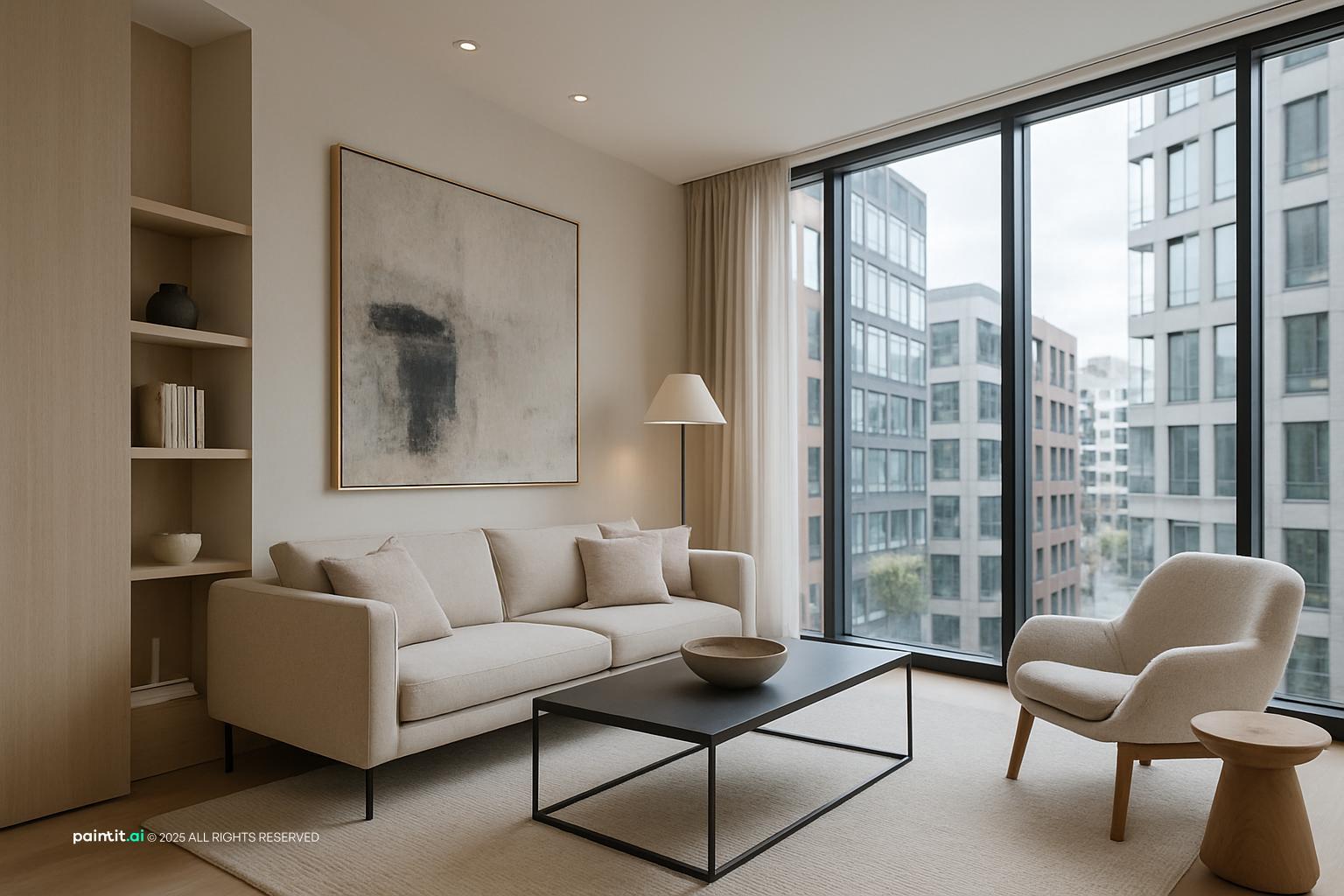
Modern Living Room Ideas with Soft Textiles and Clean-lined Furniture uses soft textiles, clean-lined furniture and layered neutrals in a living room setting.
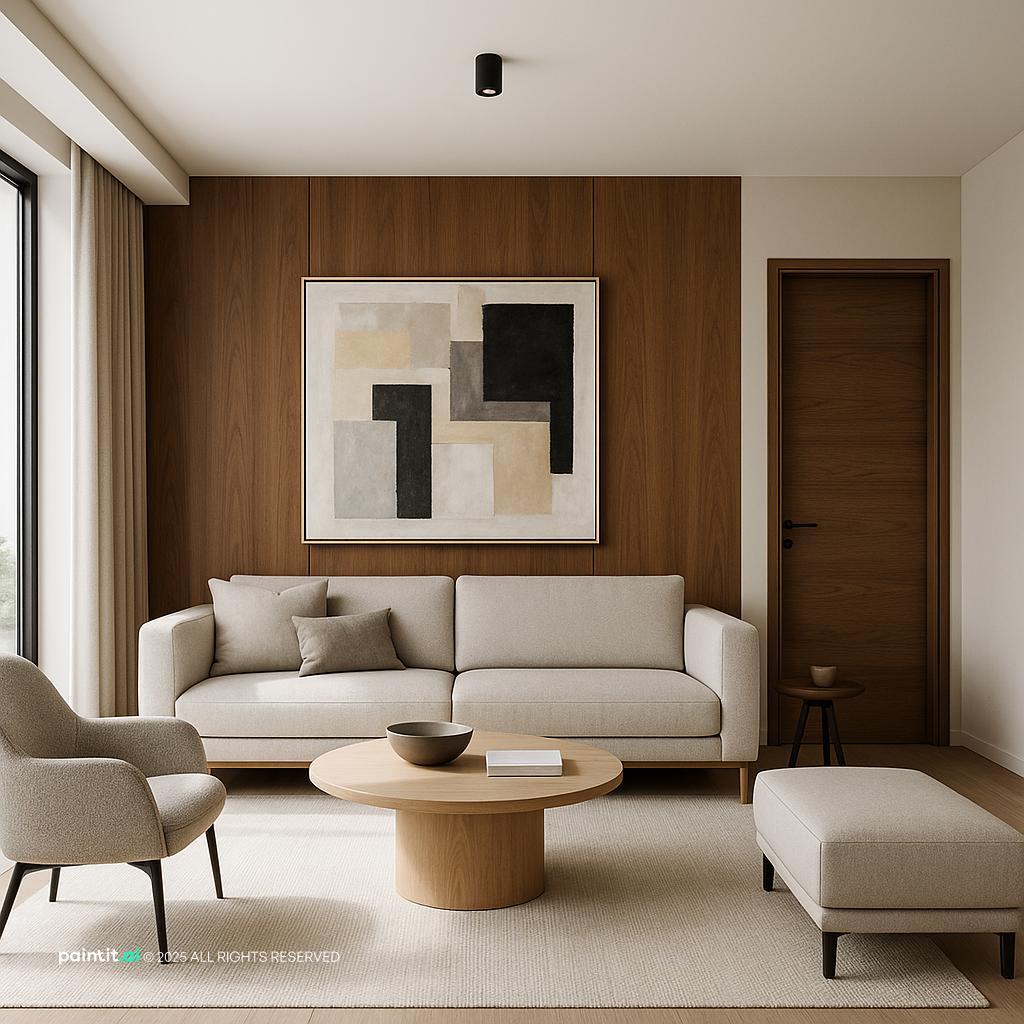
Contemporary Living Room Design Inspiration balances metal accents, clean-lined furniture and layered neutrals in a living room setting.
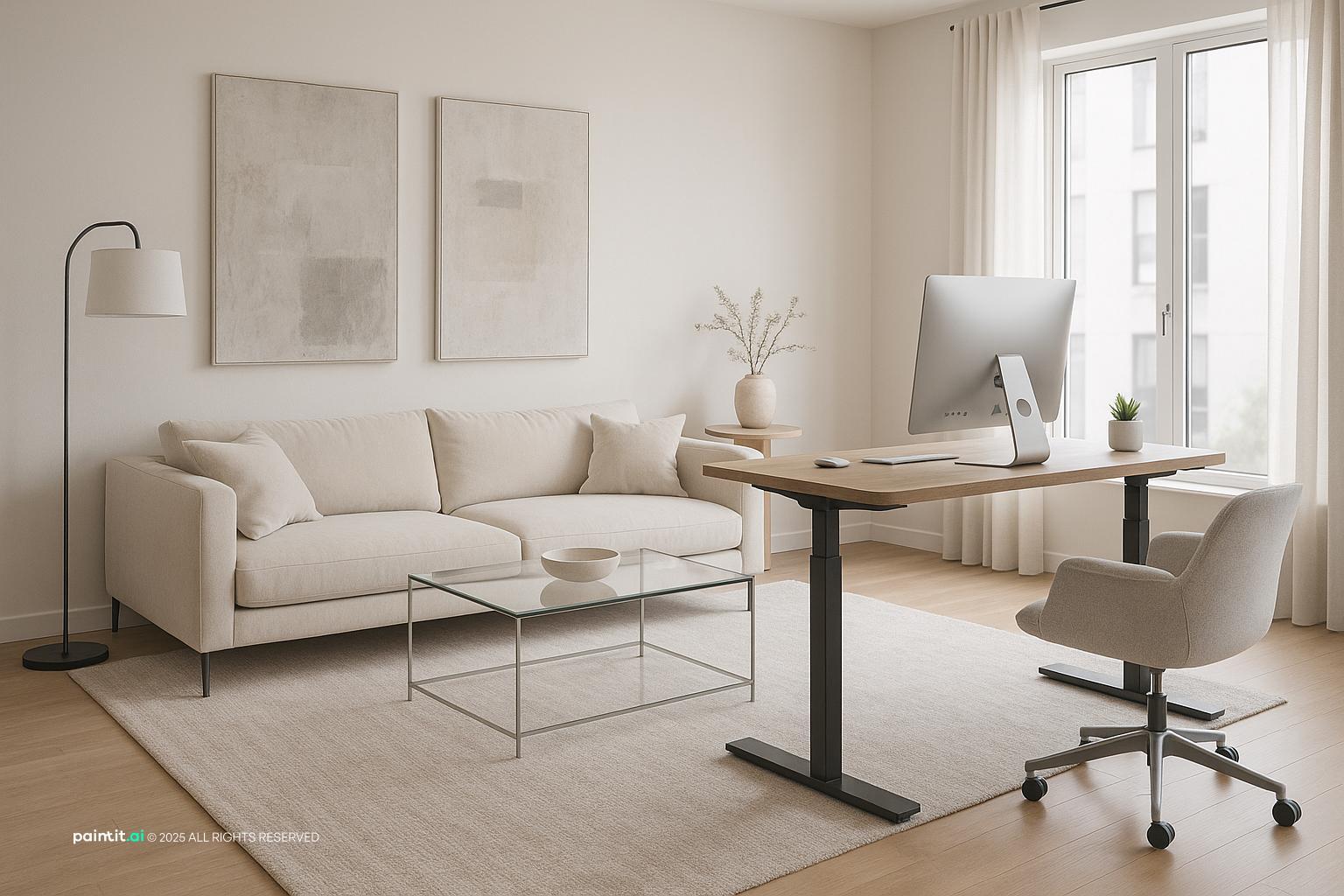
Contemporary Living Room with Adjustable Desk pairs clean-lined furniture, layered neutrals and natural light in a living room setting.
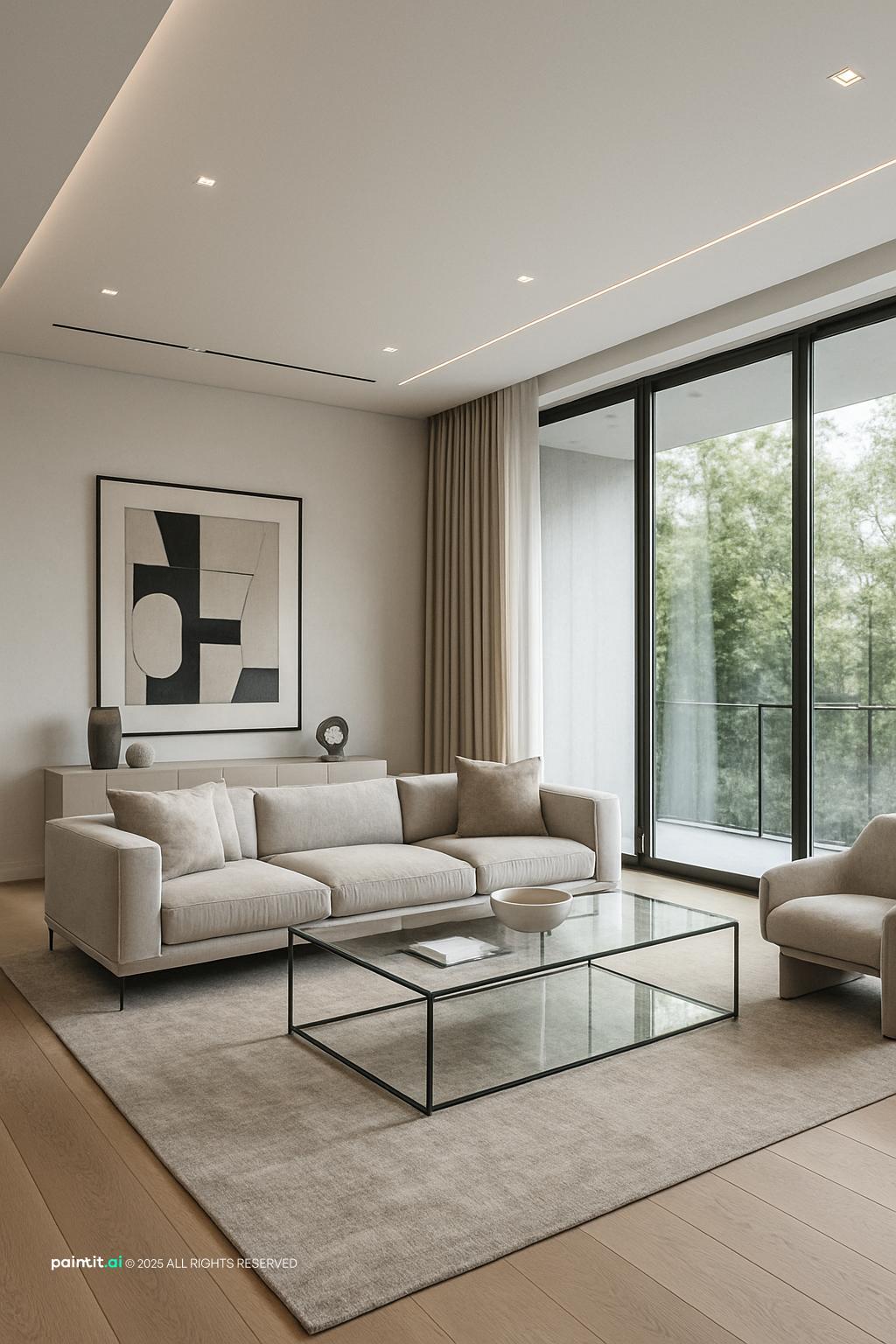
Modern Ultra-Photorealistic Living Room Design layers metal accents, clean-lined furniture and open layout in a living room setting.
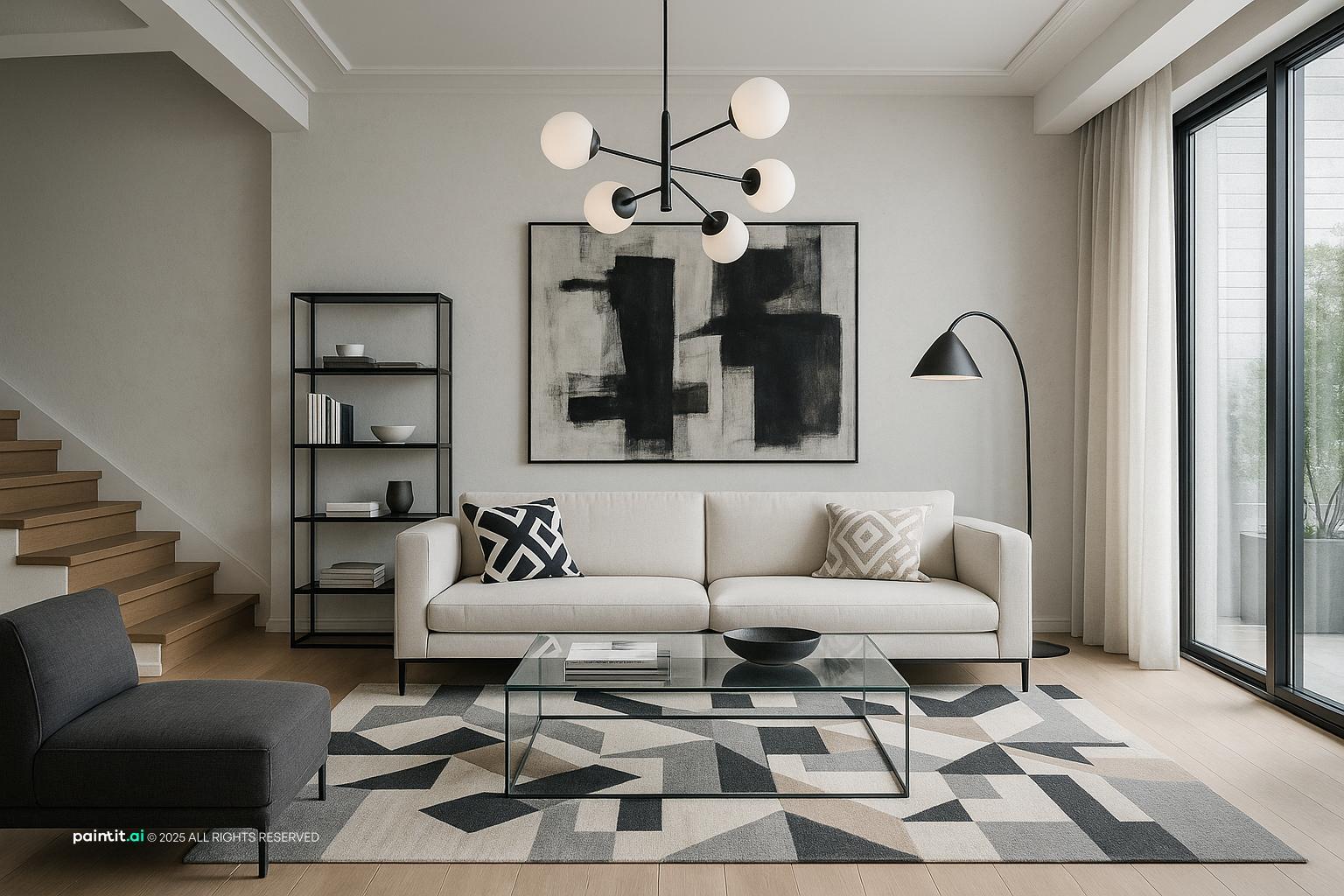
Stunning Contemporary Living Room Design with Soft Textiles anchors soft textiles, clean-lined furniture and layered neutrals in a living room setting.
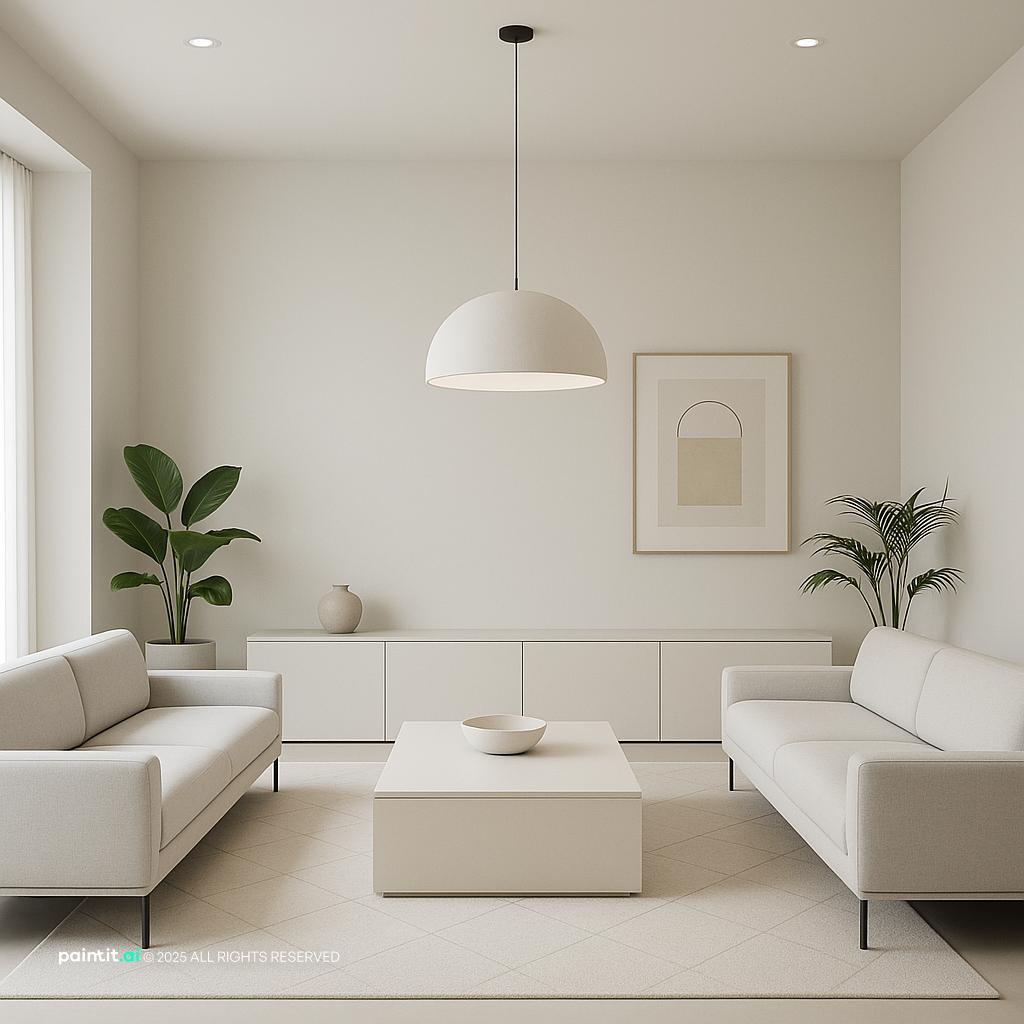
Modern Minimalist Living Room Design with Plants and Greenery softens plants and greenery and layered neutrals in a living room setting.
A warm neutral works well in north-facing rooms or spaces with cool flooring because it keeps the room from turning gray and shadowy. Cooler neutrals can work in bright rooms with warm wood floors, but they need softness from fabric and lighting.
Use large paint samples beside the sofa, floor, and curtains before committing. Do not choose a wall color from a screen alone. Undertones shift quickly next to real upholstery and daylight, and that is where many modern living room ideas fail in practice.
Wood gives modern rooms warmth, but too many unrelated tones can look accidental. Pick one dominant wood tone for the media unit, floor, or coffee table, then use a secondary tone in smaller amounts.
Walnut, oak, ash, and black-stained wood all suit modern spaces when the shapes stay simple. Avoid mixing orange wood, gray laminate, and dark espresso in equal amounts unless another element clearly ties them together.
Black metal, brushed nickel, chrome, bronze, and glass can sharpen a room. They work well in lamp bases, table frames, cabinet pulls, and shelving details. Keep the finish consistent enough that the room feels edited.
Too much glass and metal can make a living room feel like an office lobby. Balance hard finishes with a soft rug, upholstered seating, curtains, or a wood surface where the eye can rest.
A stone coffee table, plaster-look wall, concrete fireplace surround, or ceramic side table can add depth to modern living room decor ideas. These materials are especially useful when the furniture is simple and the room needs more character.
Use one strong mineral surface rather than several competing ones. If the floor is already stone or polished concrete, bring in fabric and wood before adding another hard surface.
Modern textiles should feel intentional. Combine a flat-weave or wool rug, linen or cotton curtains, a smoother sofa fabric, and one or two tactile cushions. The colors can stay close, but the surfaces should not all feel the same.
Why it works: texture creates comfort without visual clutter. Avoid too many novelty pillows or high-contrast patterns if the goal is a calm modern room. One subtle stripe, grid, or tonal pattern is usually enough.
Use at least three light sources: overhead or statement lighting for the room, a floor or table lamp near seating, and a softer accent near art, shelves, or plants. Warm bulbs usually make faces, wood, and fabric look better at night.
Glare is the common mistake. If a bare bulb reflects in the TV or shines directly into seated eyes, the fixture may look good in a render but fail in daily use. Test the sightline from the sofa before choosing the final height and shade.
A modern coffee table can hold a tray, one book stack, and a sculptural object or bowl. A console can hold a lamp, one piece of art, and a low vessel. Leave empty space around items so the shapes read clearly.
Avoid filling every shelf just because storage exists. Negative space is part of the composition. If you need practical storage, choose closed cabinets and keep open shelves for the few pieces worth seeing every day.
When you upload your living room to Paintit.ai, start broad, then refine. Instead of typing only “modern living room ideas,” add layout, material, color, and lighting notes: keep the sofa, remove clutter, use warm neutrals, add walnut storage, include a textured rug, and use layered warm lighting.
This matches how many people naturally work with design AI. 15% of all prompts contain refinement language ("instead," "more," "a bit," "now"), and 509 chats have 5+ turns, with initial prompts being longer (32.5 words) than subsequent ones (24-27 words). So do not try to solve the whole room in one sentence. Start with the big direction, then adjust: “more contrast,” “a bit warmer,” or “now try a darker media wall.” You can test those choices in your own room with our AI room designer.
Start with layout and clutter, not accessories. Clear the walking path, simplify the main furniture shapes, use clean lines, add closed storage, and keep decor larger and fewer. Then layer lighting so the room still works in the evening.
A streamlined sofa, simple lounge chairs, a low coffee table, and closed media storage usually work best. Look for clear proportions, comfortable depth, durable materials, and enough open space around each piece for easy movement.
Keep the structure clean, then soften it with warm light, a textured rug, linen or wool fabrics, wood accents, and comfortable seating. The room can stay minimal without becoming hard, glossy, or cold.
Warm whites, greige, taupe, sand, charcoal, deep brown, and muted earthy tones are reliable choices. Pick the undertone by checking it against your floor, sofa, curtains, and daylight before painting the whole room.
Be specific. Mention what to keep, what to remove, the color palette, materials, furniture style, and lighting mood. A stronger prompt might include “KEEP: sofa and floor,” “REMOVE: clutter,” “MATERIALS: walnut, cream fabric, textured rug,” and “LIGHTING: warm layered lighting.”