
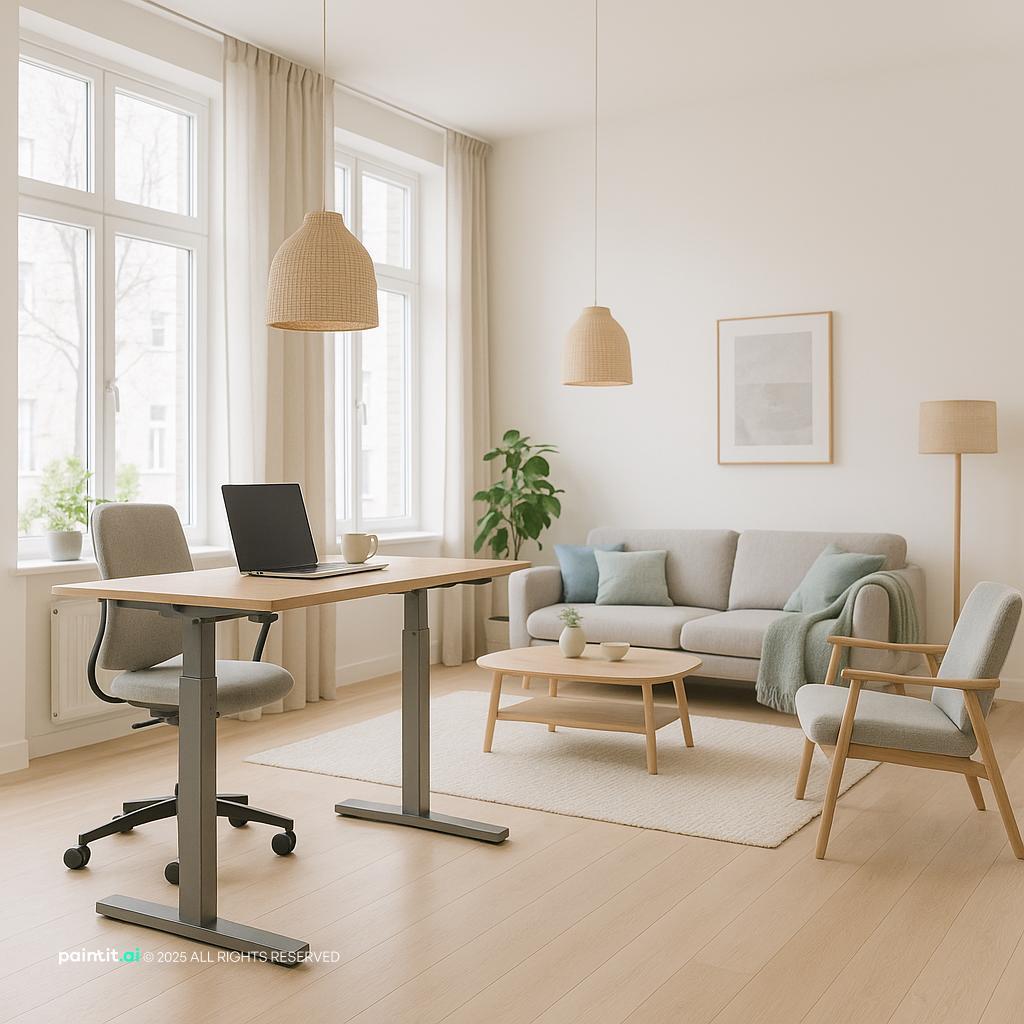
Scandinavian Contemporary Living Room Design
Scandinavian Contemporary Living Room Design uses work-from-home zone, soft textiles and clean-lined furniture in a living room setting.
The best home office in living room ideas rarely start with buying a desk. They start with reading the room you already have: the sofa, windows, traffic path, rug edge, TV wall, radiators, built-ins, outlets, and the corner where mail and chargers always pile up. A living room can handle focused work without turning into a spare office. The catch is that the office zone needs to earn its place. Good desk placement, restrained storage, proper task lighting, and finishes that speak to the rest of the room are what keep the setup from feeling temporary or forced.
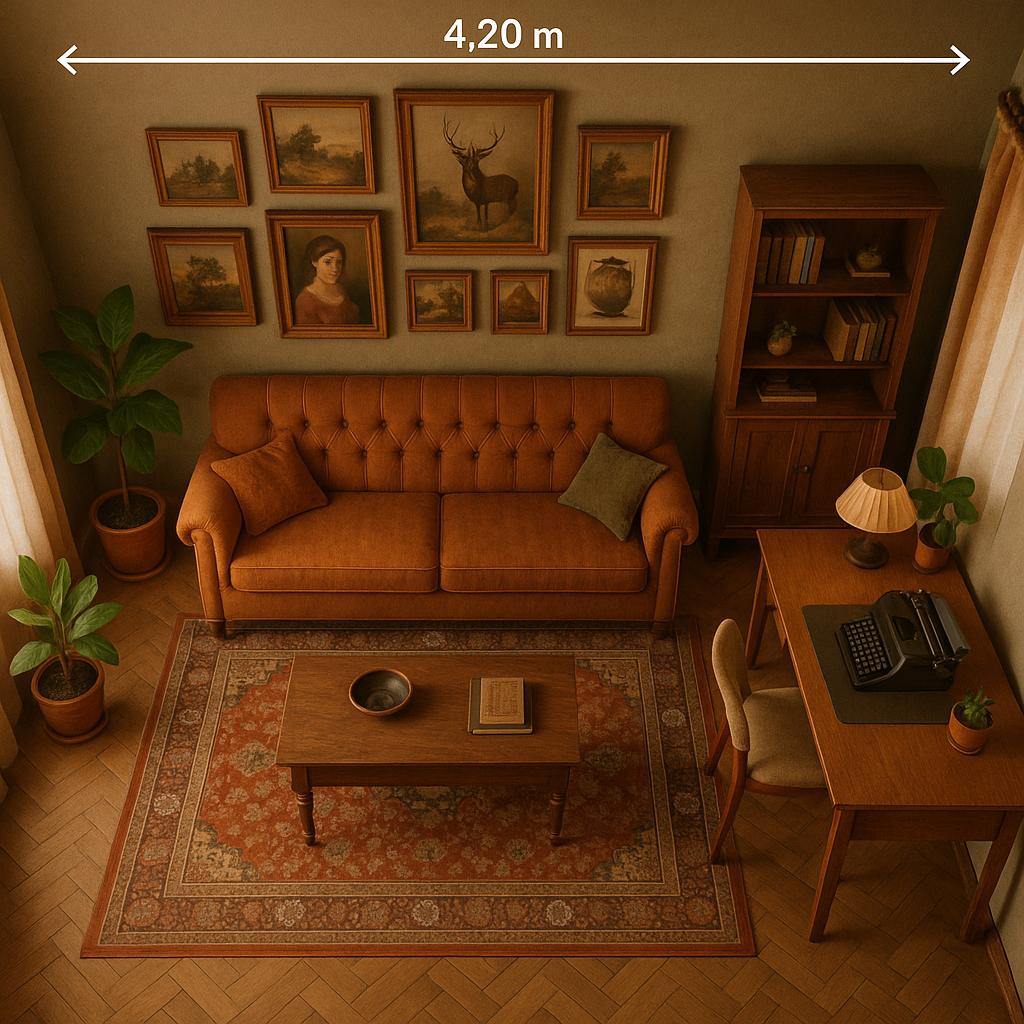
In Paintit.ai tests, we often see the strongest living room office ideas begin with limits, not style. Our data shows that 39.5% of users start with very broad intent and 31.2% give only basic context, so around 70% begin with short phrases rather than a real design brief. That is a normal starting point. But a home office in living room plan needs a few decisions before the furniture moves.
Before choosing a desk, write down what the room must keep: keep the window clear, keep the sofa conversation area intact, keep the walkway open, keep the TV sightline usable, remove visual clutter. These simple constraints prevent most bad layouts. If you want to test the impact before dragging furniture across the floor, AI living room design can help you see how a desk changes balance, circulation, and visual weight in the actual room.
Use the first gallery to compare how different office zones sit inside a living room: behind the sofa, near a window, in an alcove, along a bookcase wall, or tucked into a quiet corner without cutting through the seating area.
Scandinavian Contemporary Living Room Design uses work-from-home zone, soft textiles and clean-lined furniture in a living room setting.
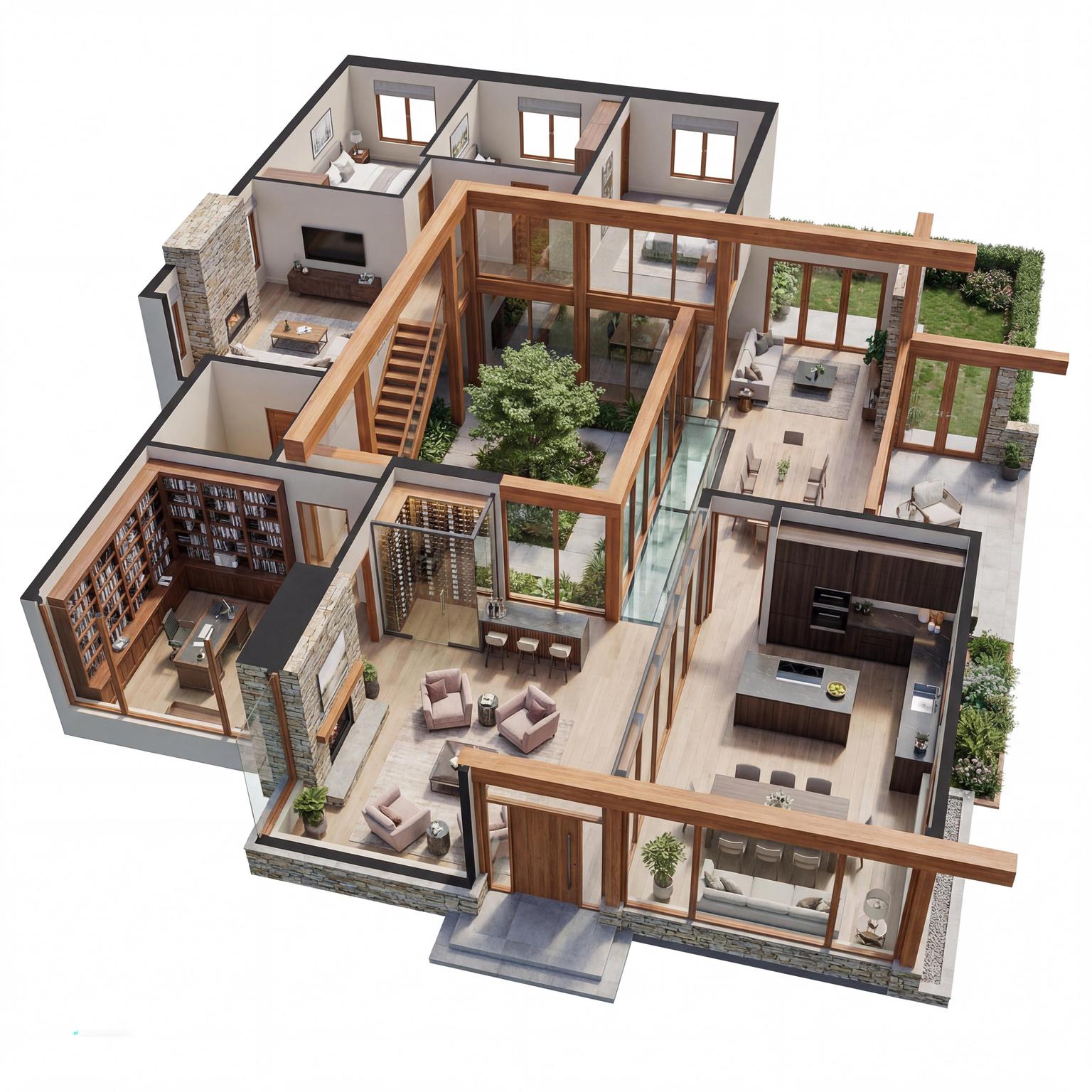
Cozy House Layout with Modern Design Elements balances work-from-home zone and natural light in a living room setting.
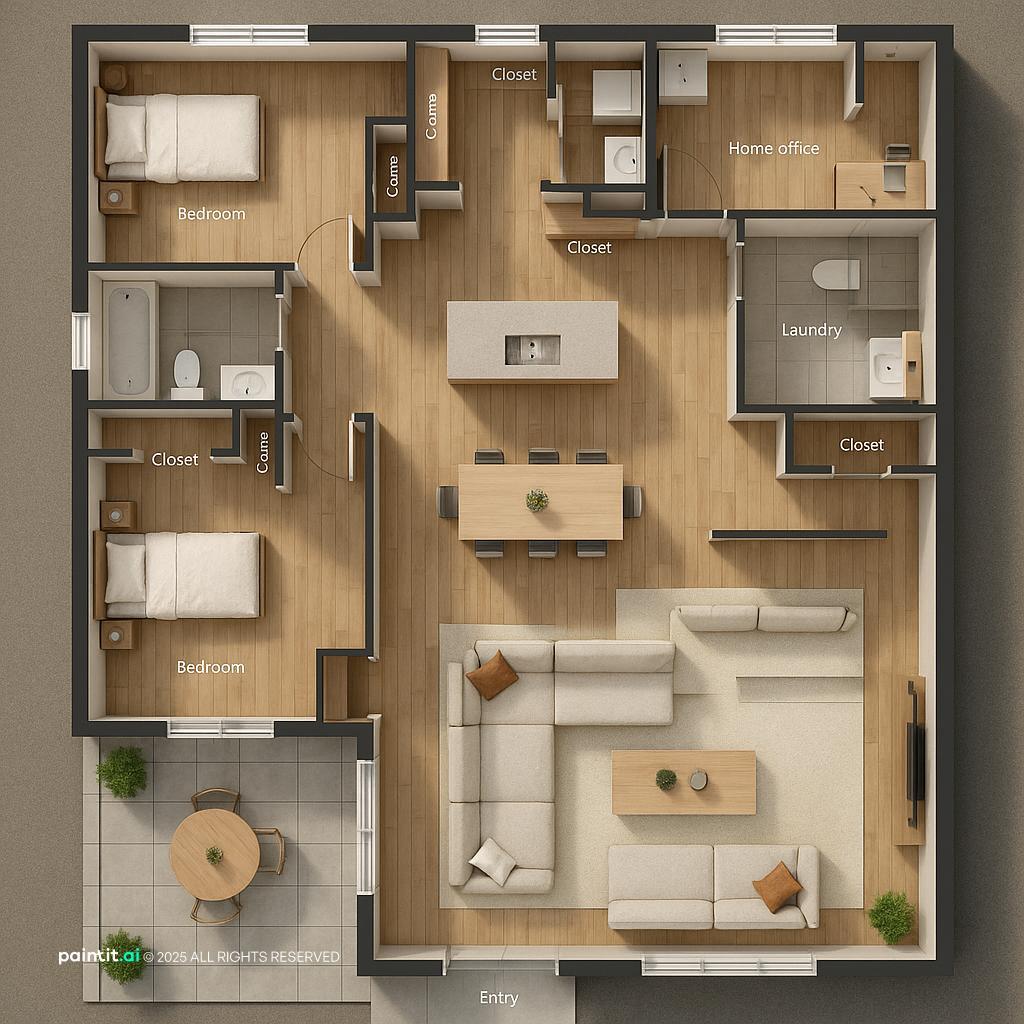
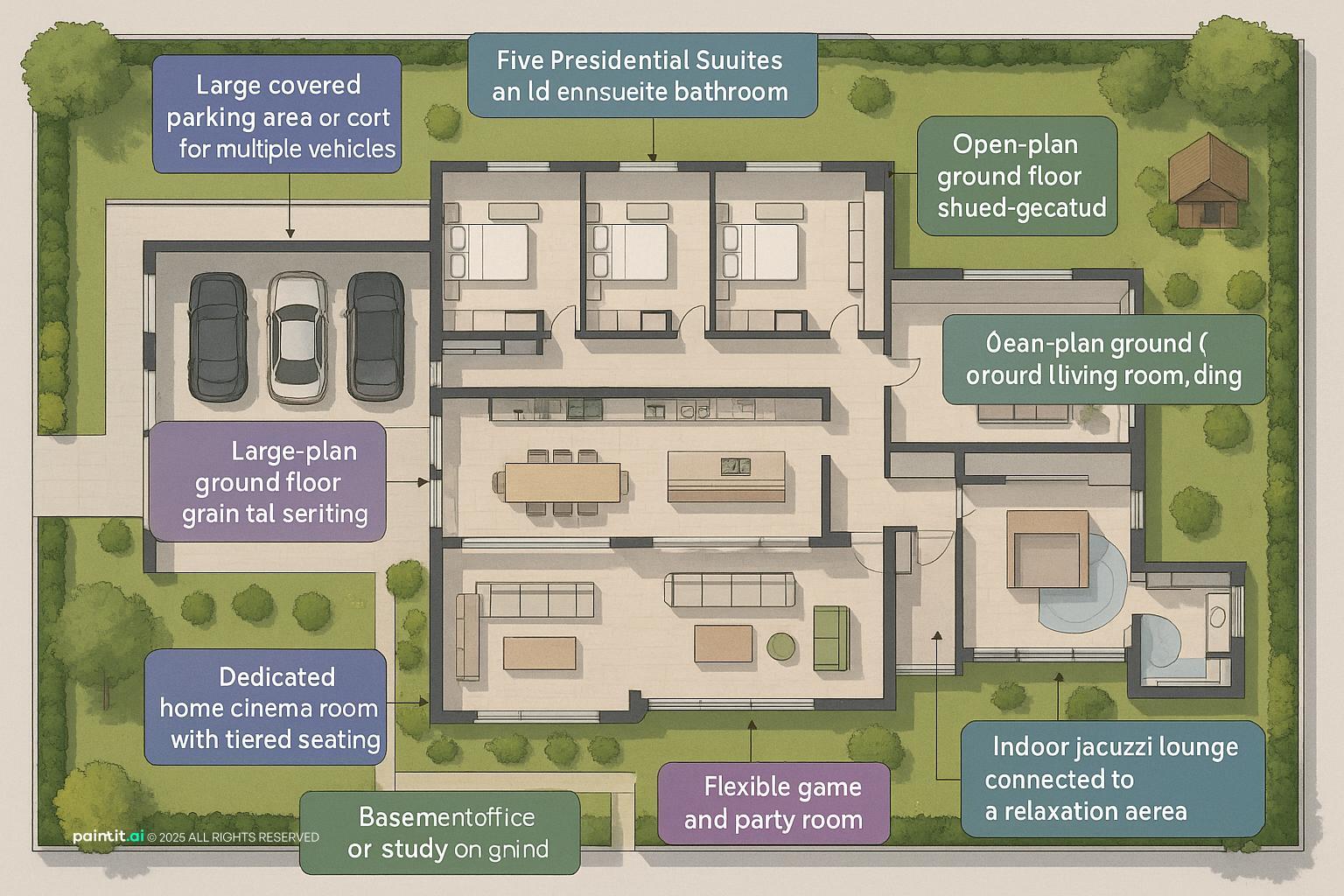
Contemporary Single-Story Home Layout Plan pairs work-from-home zone and natural light in a living room setting.
a modern two-floor single-family house with a basement is designed in a sleek layers work-from-home zone, open layout and layered neutrals in a living room setting.
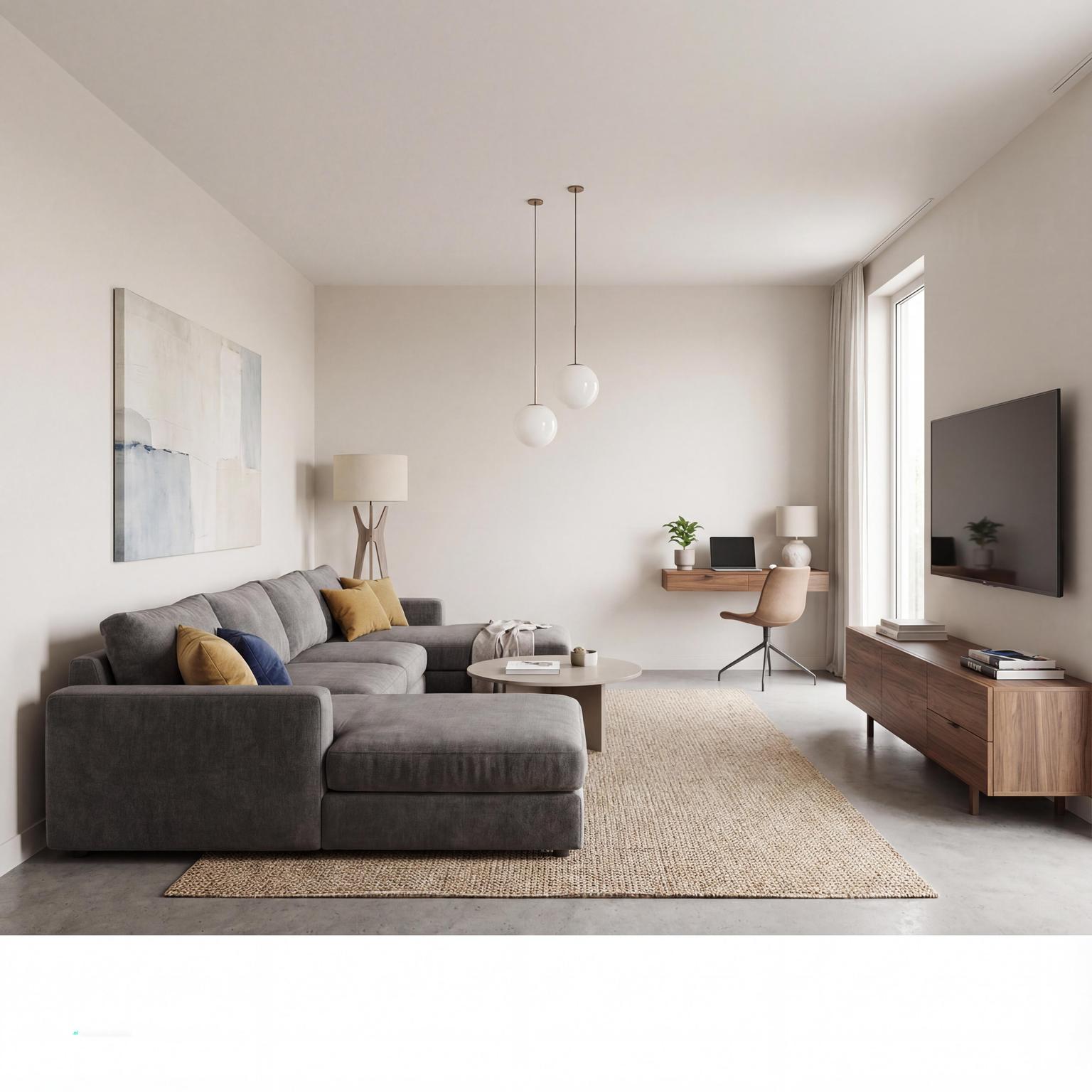
Home Office In Living Room Ideas with Work-from-home Zone and Soft Textiles anchors work-from-home zone, soft textiles and open layout in a living room setting.
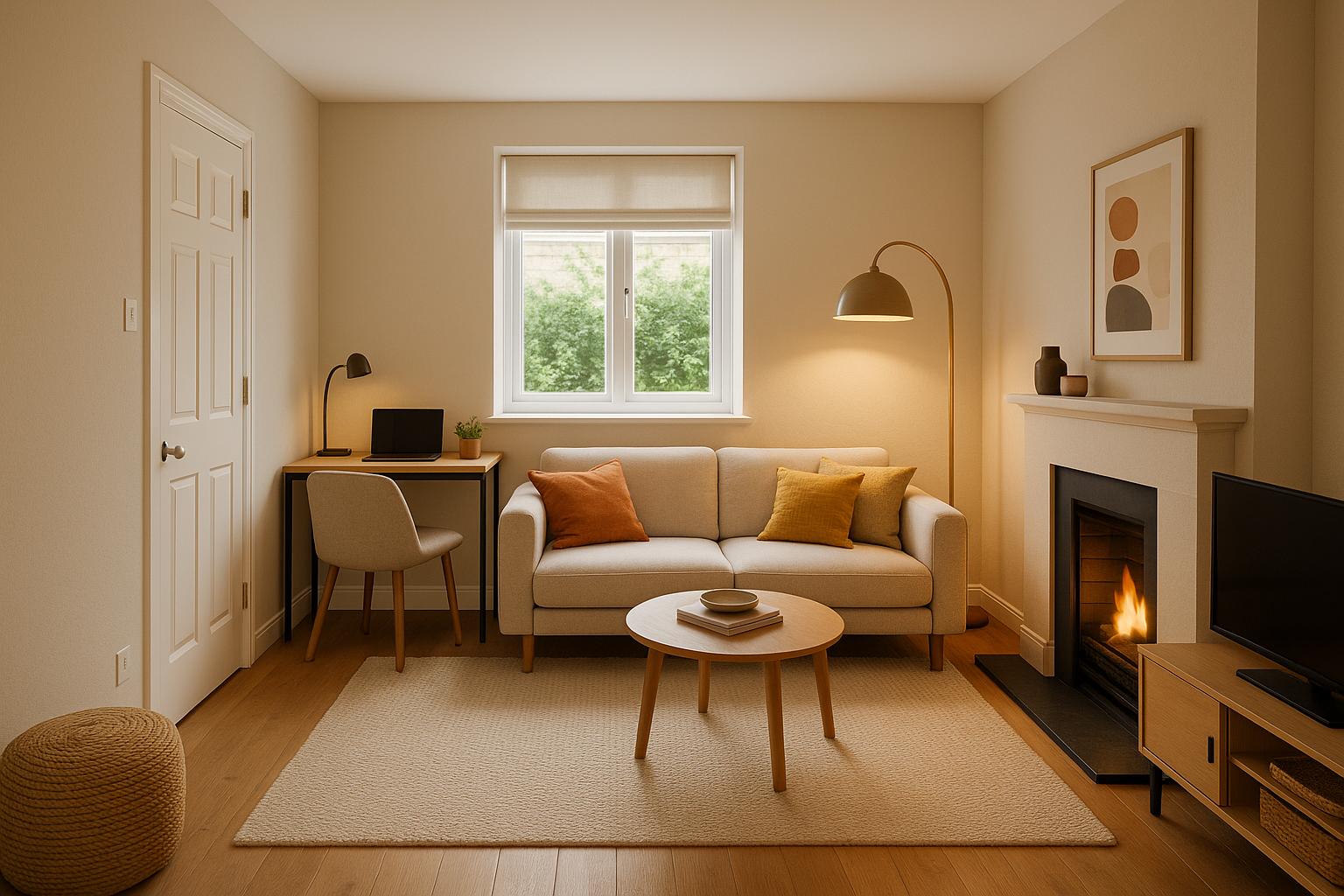
Home Office In Living Room Ideas with Work-from-home Zone and Soft Textiles with Natural Light softens work-from-home zone, soft textiles and natural light in a living room setting.
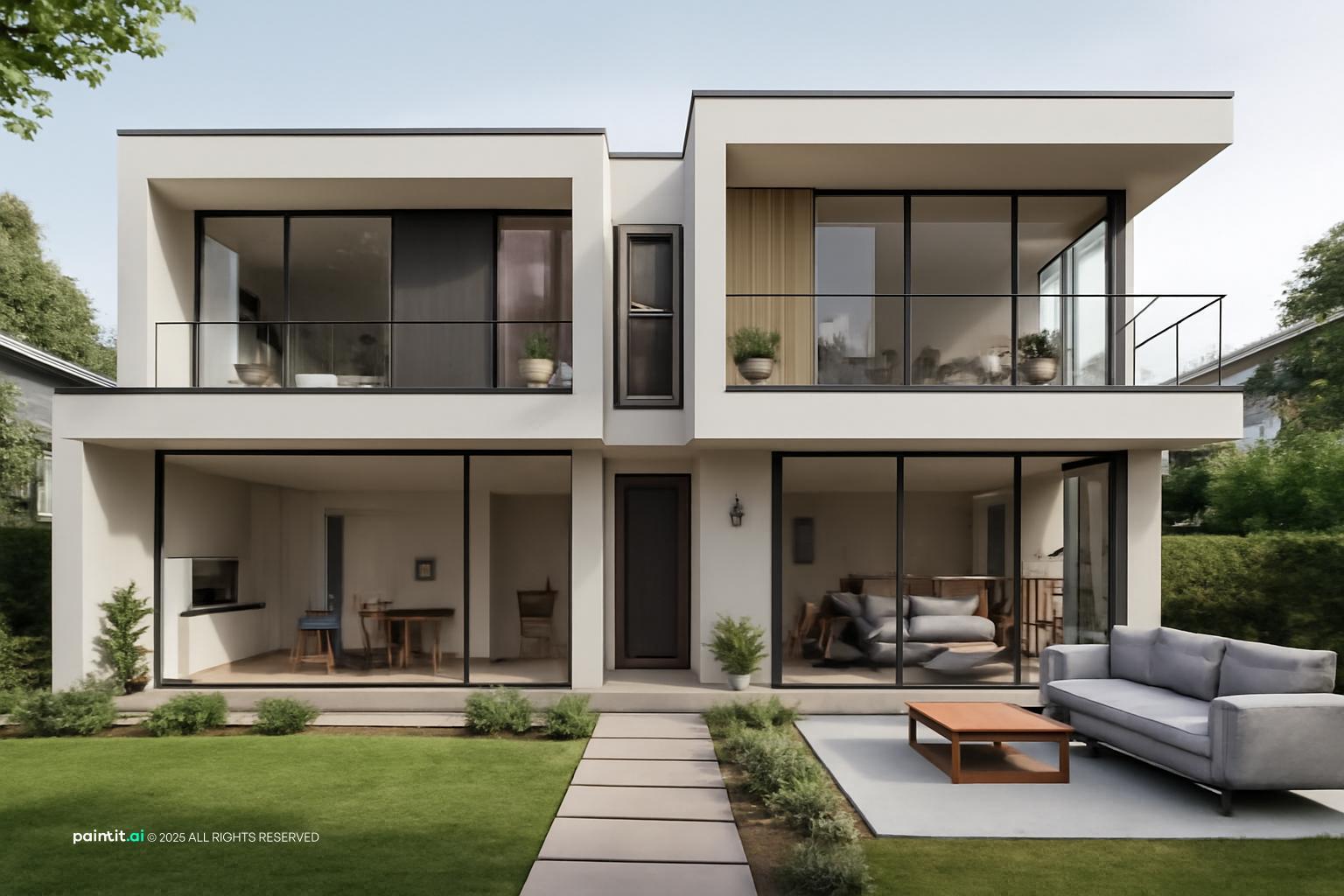
Stunning Duplex Bungalow Design for Modern Living uses work-from-home zone, clean-lined furniture and open layout in a living room setting.
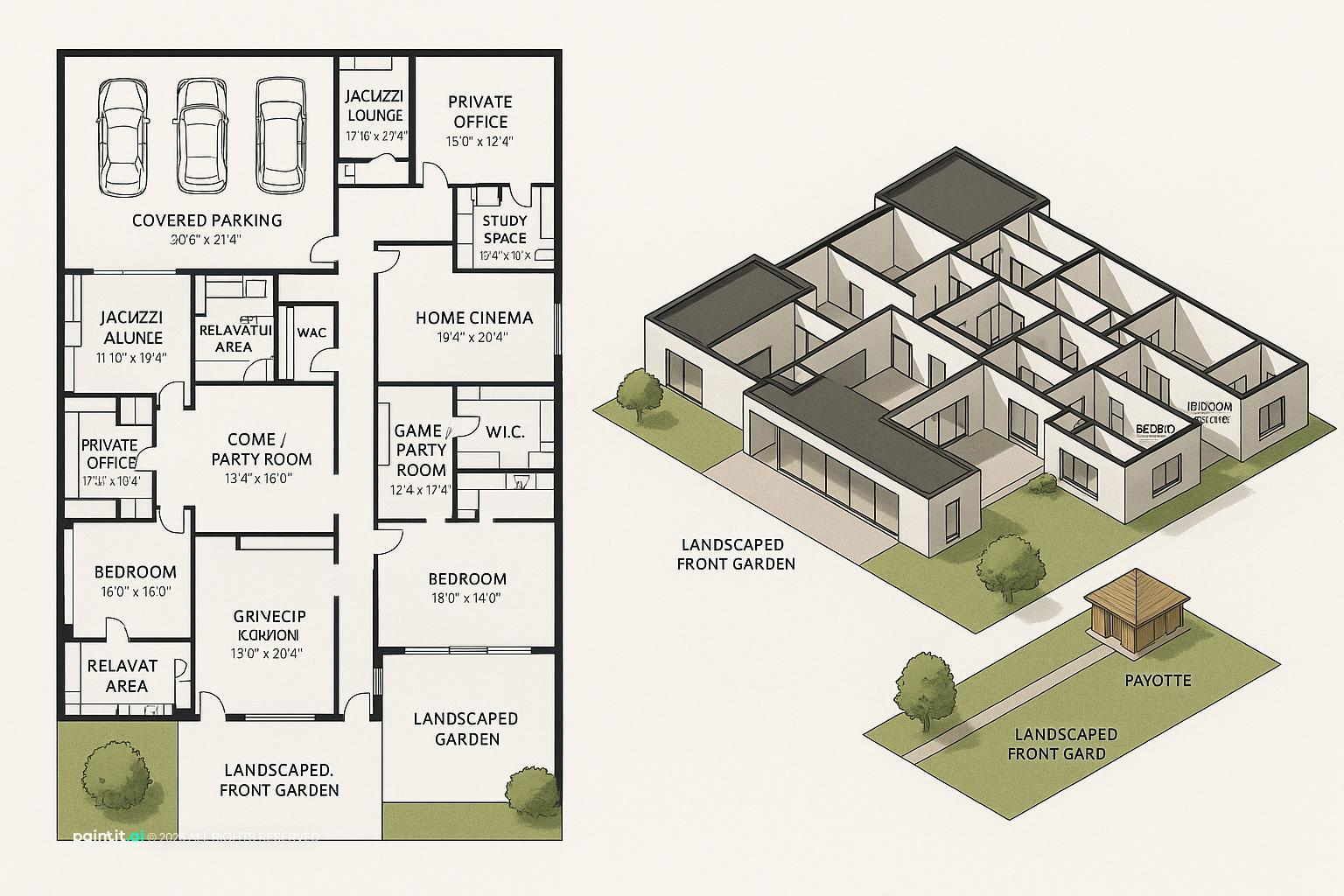
Home Office In Living Room Ideas with Work-from-home Zone and Open Layout balances work-from-home zone, open layout and layered neutrals in a living room setting.
A console-style desk behind the sofa works well in a long or open-plan living room because the sofa already makes a soft boundary. Choose a desk close to console depth, usually around 18 to 24 inches, so the chair does not push too far into the walkway.
Why it works: the sofa gives the desk a natural back edge, so the workstation feels planned instead of dropped into the room. What usually goes wrong is scale. A bulky executive desk with deep drawers will squeeze the seating area and make it harder to walk around the sofa.
A desk near a window can make work feel less boxed in, especially in apartments where the living room gets the best daylight. Place the desk perpendicular to the window if screen glare is a problem, or use lined curtains, woven shades, or a sheer layer to cut strong sun.
This desk placement works best when the view is pleasant and the chair does not block balcony doors, radiator access, or curtain movement. Avoid putting a monitor directly in front of a bright window unless you have shade control. It may look beautiful in a still image, but your eyes will fight the contrast all day.
If the living room has an alcove, niche, or unused recess, it can become the cleanest home office in living room solution. Measure the width carefully and choose a wall-mounted desk, narrow writing table, or built-in surface that leaves enough knee space.
Add a shallow shelf above for books and a closed box or drawer unit below for chargers, paper, and headphones. The architecture is doing some of the zoning for you, so you do not need a heavy divider or a dramatic color change to separate work from rest.
For small living room office ideas, a floating desk can save floor area and keep the room visually lighter. Mount it at a comfortable height, usually close to standard desk height, and pair it with a chair that can tuck fully underneath.
The key is wall strength and cable control. A floating desk only looks clean when cords, adapters, notebooks, and the task lamp all have a planned home. Add a slim cable tray, wall sconce, or nearby outlet cover solution instead of letting wires hang down the wall.
A bookcase can act as both storage and a soft room divider. Place the desk beside or in front of it so work items have a vertical home, then style the shelves with books, boxes, and a few living room objects so the zone does not start to feel like a cubicle.
For an open bookcase, leave negative space on several shelves. This sounds small, but it matters. If every shelf is filled with folders, binders, cables, and office supplies, the whole living room starts reading as a workstation.
In many living rooms, it is better to let the main seating rug define the lounge area and keep the office just outside its edge. This stops the desk from competing with the sofa, coffee table, and armchairs.
If the desk sits partly on the rug, check how the chair moves. Chair wheels or back legs can catch on the rug edge and become annoying fast. A flatweave rug or chair mat can help, but the cleaner choice is often to keep the office chair fully on hard flooring.
A work from home living room setup still needs a real chair. Look for an ergonomic chair with adjustable height and good back support, but choose a finish that belongs in the room: fabric upholstery, warm leather, a pale frame, or a low-back profile.
Leave roughly 3 feet of clearance behind the chair where possible, especially if it backs into a main walkway. The chair is often the object that makes a living room office combo feel too office-like, so its scale, color, wheels, arms, and back height deserve as much attention as the desk.
Closed storage is one of the simplest ways to protect the living room mood. A storage cabinet, sideboard, or media unit with doors can hold paper, printer supplies, notebooks, cables, and spare devices while still looking like living room furniture.
Paintit.ai data shows that 8.8% of prompts include negatives such as without or no clutter, which matches what we see in real uploads: people want the function, but they do not want the work mess visible at night. Avoid using open baskets for everything. They look relaxed for a week, then collect visual noise.
A desk does not need to match every piece, but it should share at least one design language with the room. If the coffee table is oak, try an oak desk or warm wood legs. If the media unit has black metal details, a slim black desk frame can make sense.
This is where AI office design principles help: the office area needs ergonomic logic, but the finishes still need to belong to the living room. Avoid introducing a completely new material palette unless you repeat it elsewhere with a lamp, frame, planter, or small side table.
A room divider can help a living room office combo feel more private, especially for video calls. Choose a slatted wood screen, open shelving, fabric panel, or low divider that filters views without blocking all light.
The mistake is using a divider in a room that is already tight. If the screen creates a narrow corridor, blocks daylight from the sofa, or makes the desk feel boxed in, use zoning through color, lighting, or furniture orientation instead.
If the TV wall is visually busy, place the desk on a calmer side wall. This reduces distraction and helps the office fade back into the room when work is done. A simple framed print above the desk can make the wall feel styled rather than purely functional.
Check outlet access before committing. A beautiful location that needs extension cords across a walking path is not a good location, especially in a shared living room where people move through the space without looking down.
A single ceiling fixture rarely gives enough light for paperwork, laptop use, or evening calls. Add a task lamp with a shaded bulb, adjustable arm, or directional head so the desk has focused light without brightening the whole lounge area.
Lighting appears in 5.9% of Paintit.ai prompts, and we understand why: it is often the missing ingredient. When people upload this kind of room, the weak spot is frequently a flat overhead light that leaves the desk looking unfinished and makes the work zone feel like an afterthought.
Not every living room needs a large workstation. If you mostly answer emails, pay bills, sort documents, or use a laptop for short sessions, create a small command center with a narrow desk, wall pocket, charging drawer, and one comfortable chair.
This works especially well for renters or households where the living room has to switch roles quickly. What to avoid is buying a large desk for occasional work. It will dominate the room, collect things, and make relaxation feel secondary.
In Paintit.ai behavior data, 15% of prompts contain refinement language such as instead, now, a bit, more, or less. That pattern is useful for real decorating too. Start with the layout, then adjust the desk finish, chair color, lamp shape, storage level, and how visible the work setup should be.
If you are unsure how to move from a vague idea to a clearer room plan, how to use AI to design a room explains how to turn a simple request into a more useful brief. For living room desk ideas, the best refinements are usually practical: make the wood warmer, reduce clutter, keep the window open, add softer task lighting, make the chair less bulky, or move the desk away from the main walkway.
The second gallery helps you compare how visible the workspace should be: a hidden desk behind doors, an open writing table beside the sofa, a wall-mounted station, or a built-in office wall that becomes part of the living room architecture.
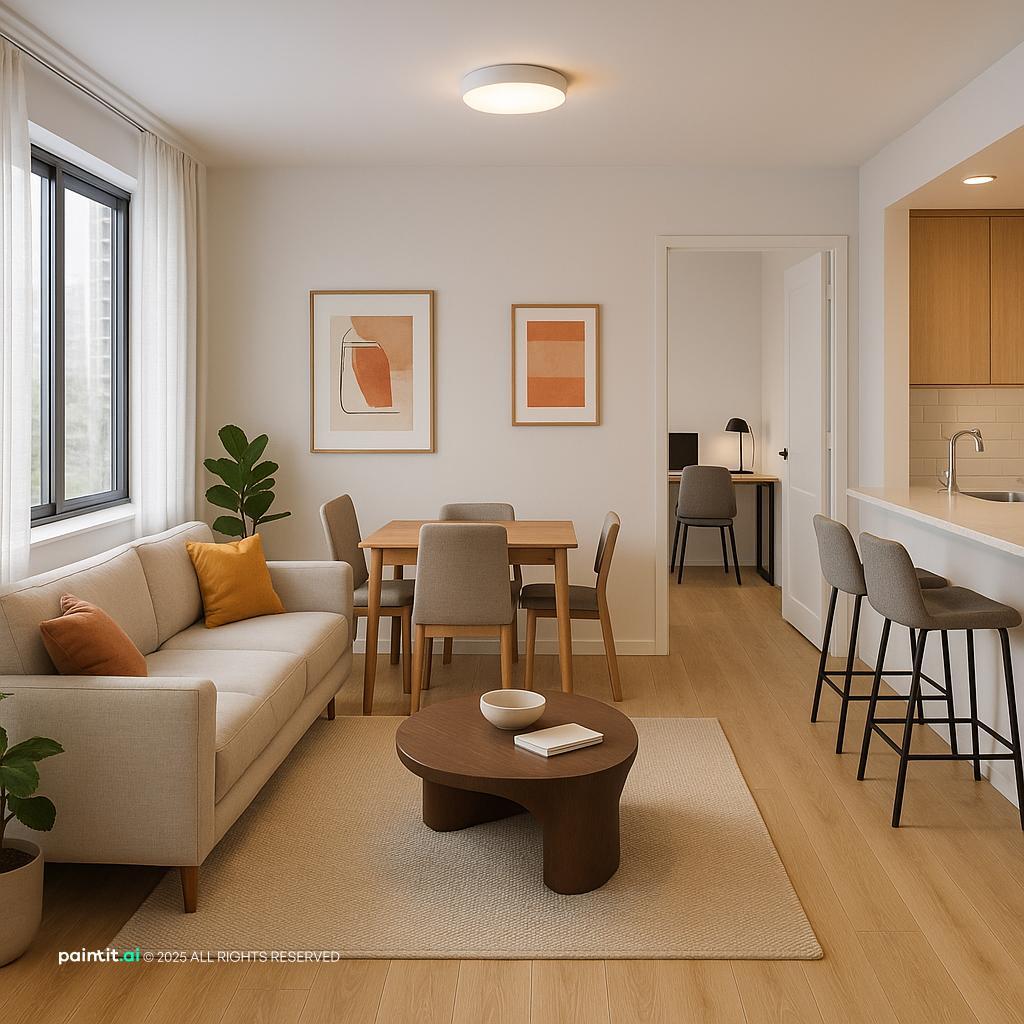
Stylish Minimalistic Apartment Design uses work-from-home zone, plants and greenery and natural light in a living room setting.
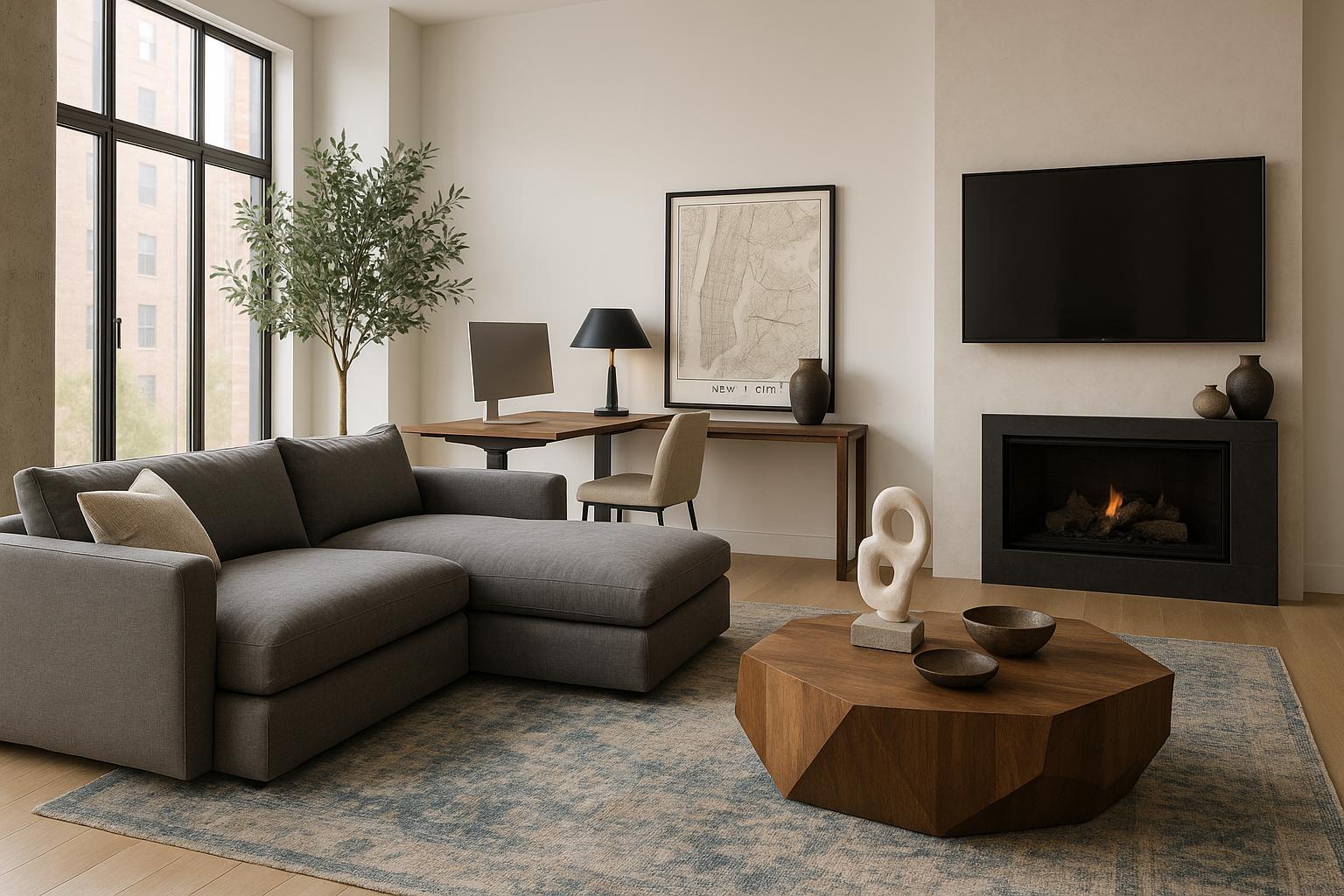
Home Office In Living Room Ideas with Work-from-home Zone and Warm Wood balances work-from-home zone, warm wood and soft textiles in a living room setting.
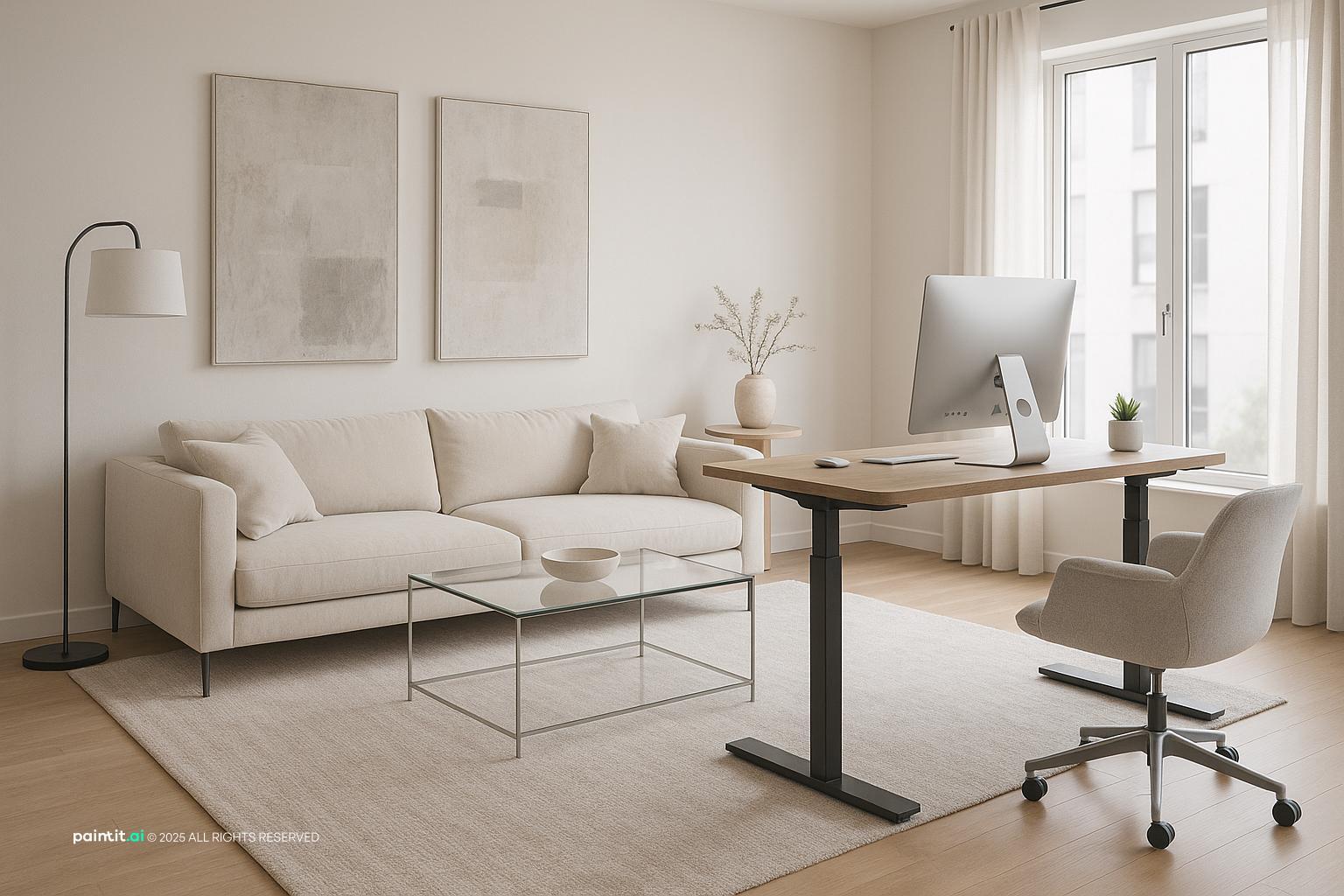
Contemporary Living Room with Adjustable Desk pairs work-from-home zone, clean-lined furniture and layered neutrals in a living room setting.
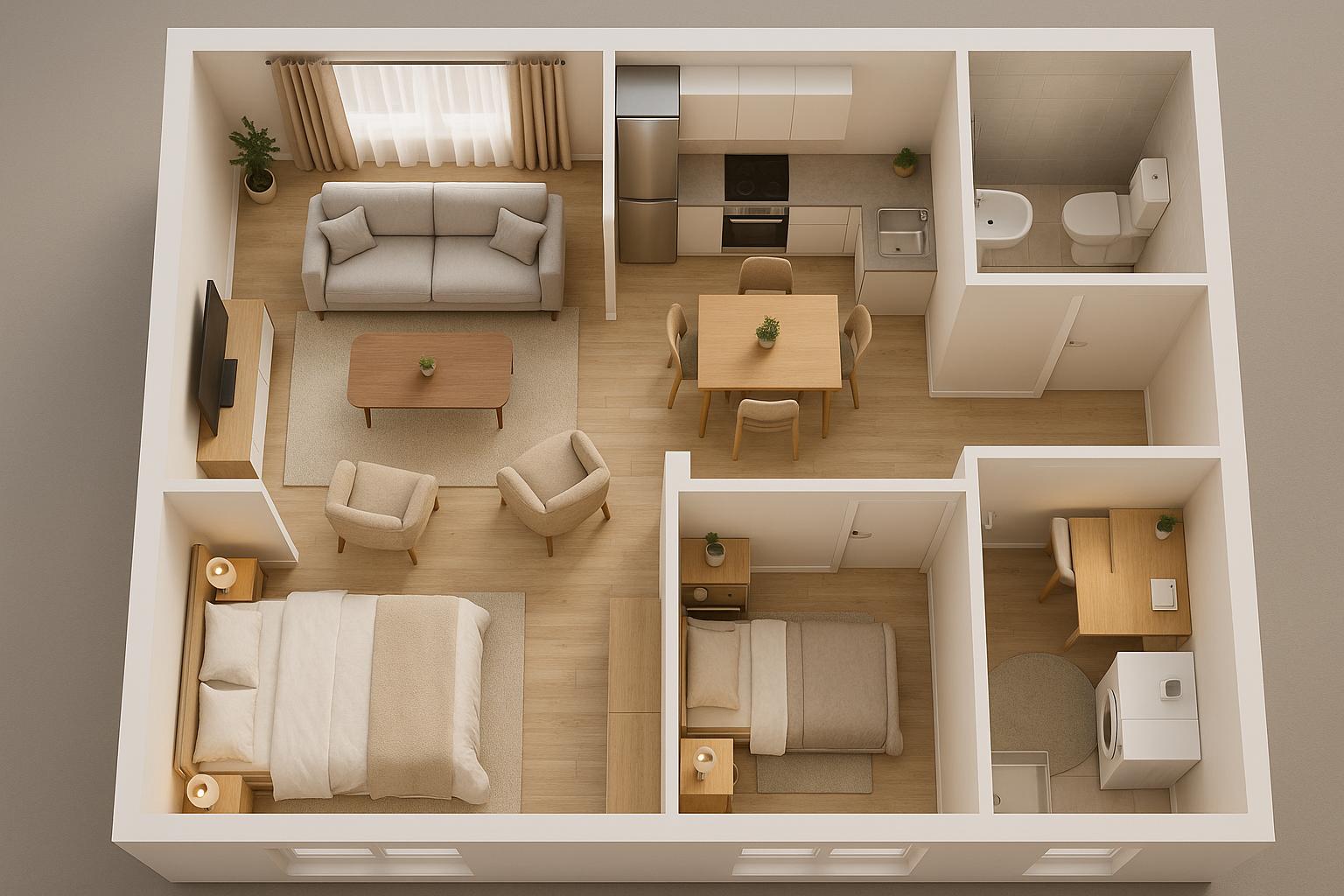
Cozy Modern Apartment Design layers work-from-home zone, warm wood and layered neutrals in a living room setting.
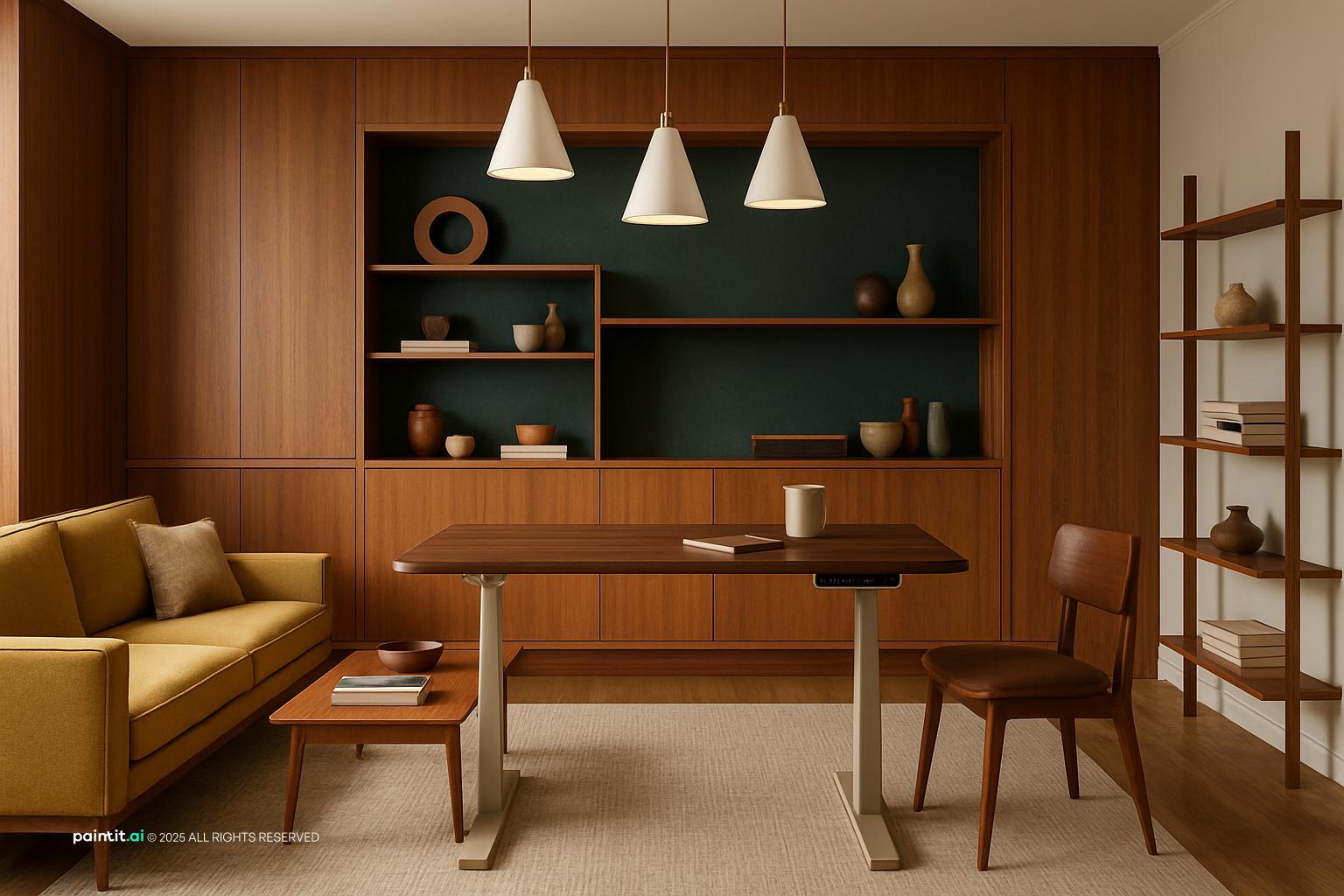
Midcentury Modern Living Room Design anchors work-from-home zone and clean-lined furniture in a living room setting.
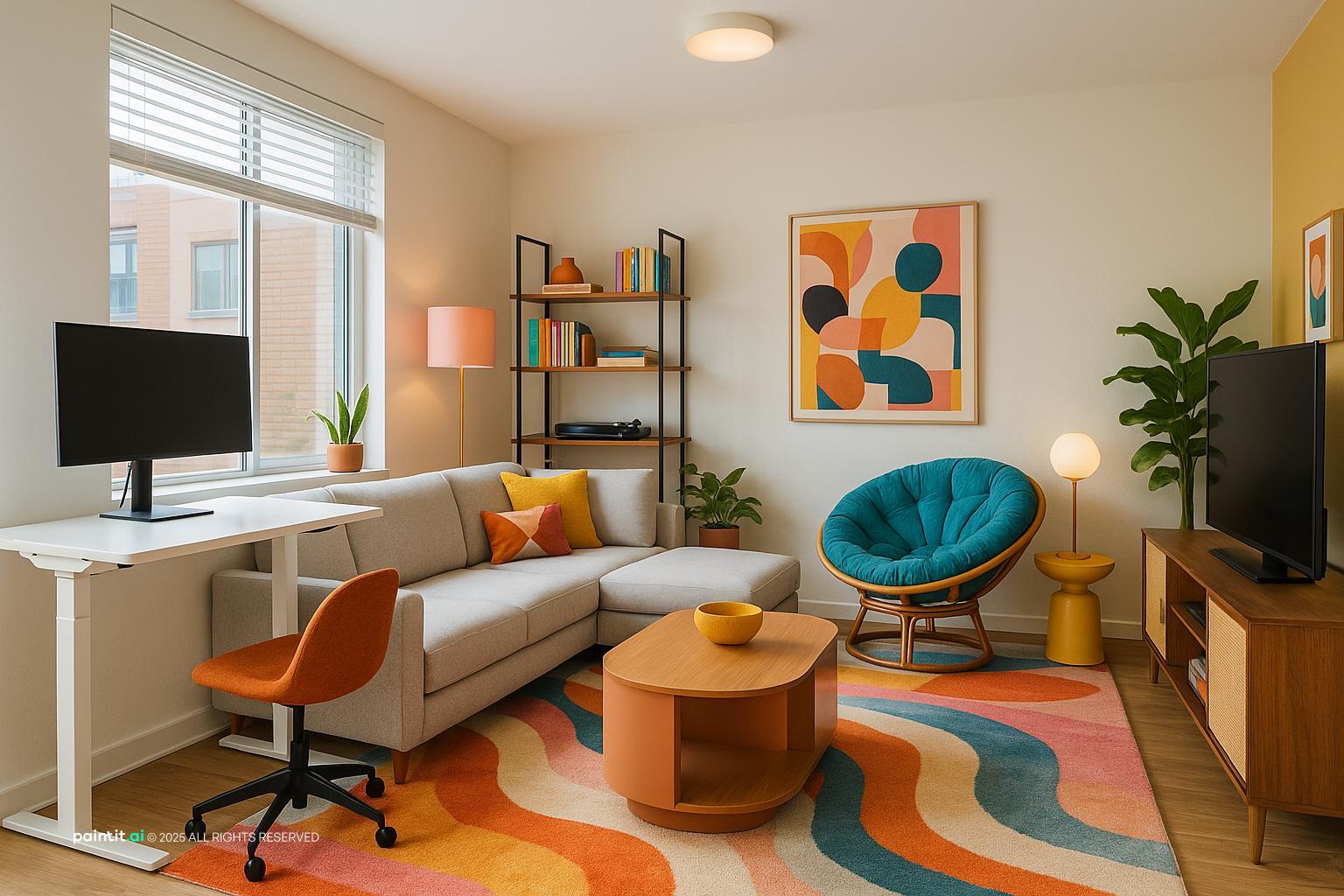
Home Office In Living Room Ideas with Work-from-home Zone and Natural Light softens work-from-home zone and natural light in a living room setting.
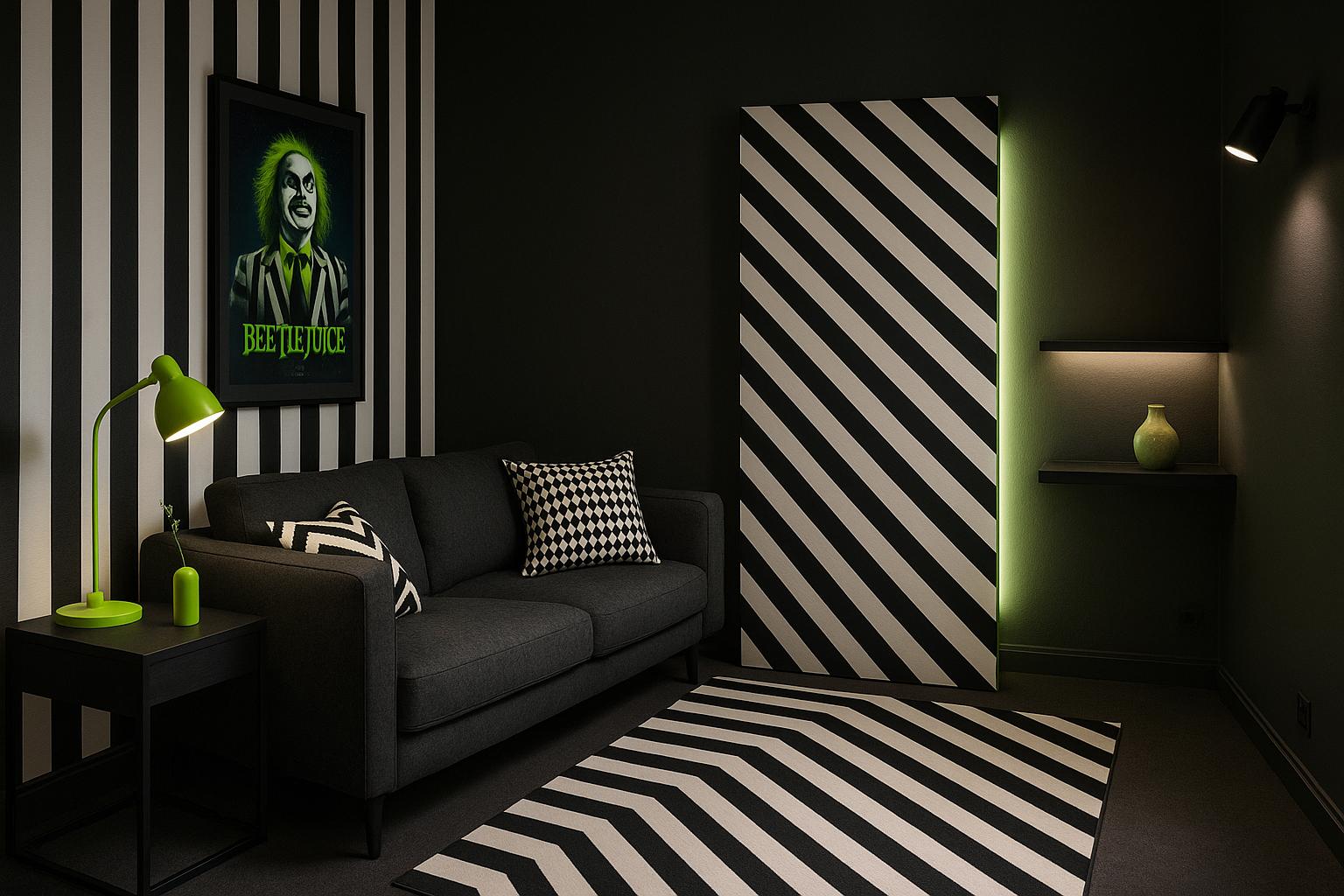
Beetlejuice-Inspired Living Room Design uses work-from-home zone in a living room setting.
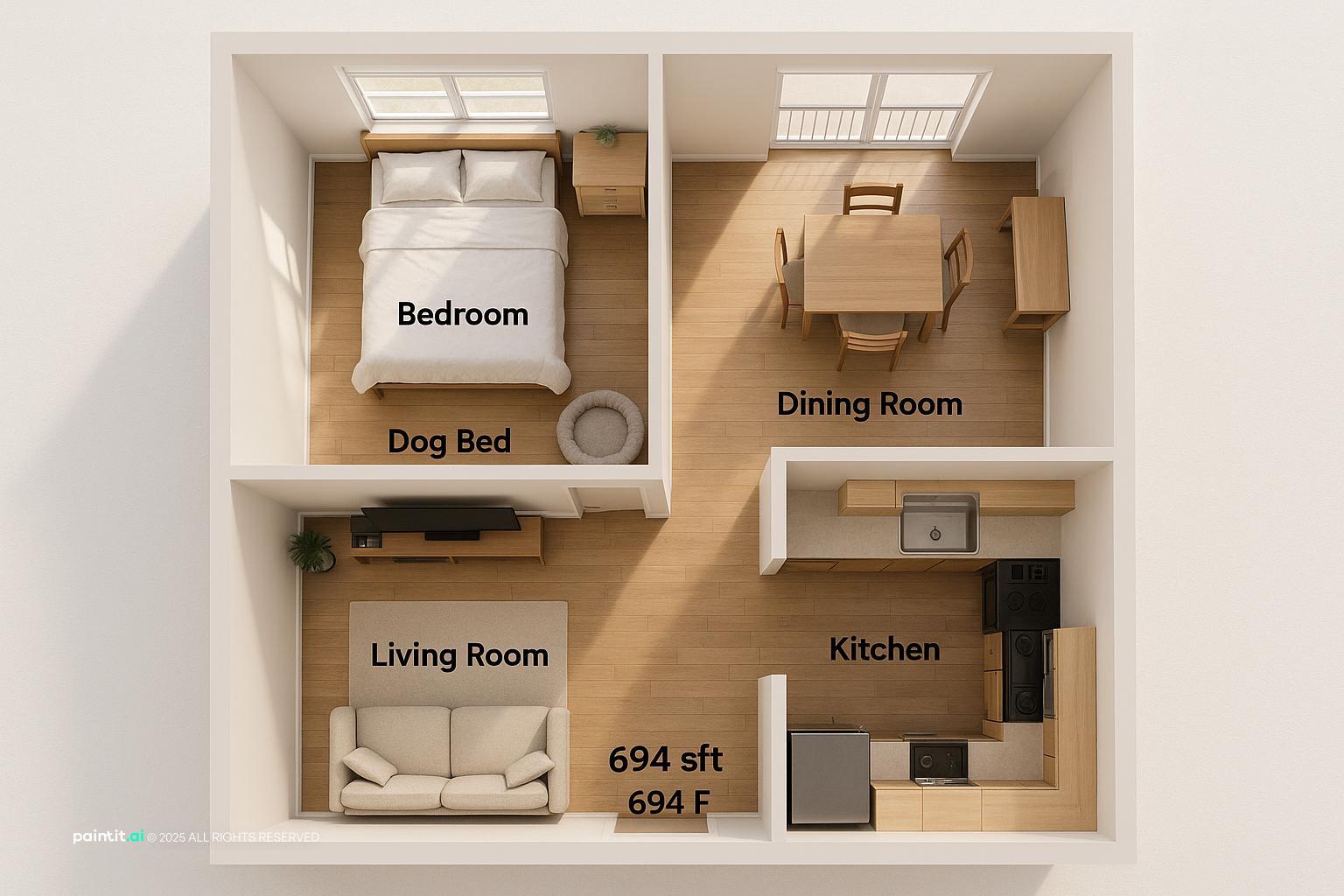
Home Office In Living Room Ideas with Work-from-home Zone and Natural Light View 2 balances work-from-home zone and natural light in a living room setting.
Choose one or two colors already present in the living room and repeat them in the office zone. This might mean a walnut desk near a walnut coffee table, a cream task lamp beside a cream sofa, or a muted green desk chair that echoes artwork.
Why it works: repeated color lowers the contrast between work and rest. Avoid choosing bright office colors unless the living room already has that energy. A neon chair in a soft beige room will usually look accidental, even if it looked fun on a product page.
White desks can look crisp, but only if the room's walls and trim are not too warm or creamy. Cool gray can feel practical, but it may turn flat next to warm wood floors. Black can be useful for a slim frame, yet too much black adds visual weight.
Use samples where possible, and look at them near the sofa, curtains, floor, and wall color. If the room leans warm, choose soft white, greige, taupe, oak, or bronze rather than stark blue-white finishes.
Wood is one of the easiest materials for integrating a desk into a living room because it reads as furniture, not equipment. Oak, walnut, ash, and painted wood can all work, depending on the existing pieces.
Place wood where the eye lands first: desktop, shelf edge, drawer front, or chair legs. Avoid mixing too many unrelated woods in one small area. If the floor is orange-toned oak and the desk is cool gray-brown, bridge them with a rug, lamp, black detail, or repeated fabric tone.
Metal legs, brass knobs, black brackets, or a stone-look desktop can add structure, but they should not overpower the living area. A little contrast helps the workspace feel sharp. Too much contrast makes it feel imported from another room.
Use metal where durability matters, such as desk frames, lamp arms, and handles. Avoid glossy chrome if the room is otherwise matte, soft, and warm, unless you repeat that finish in picture frames, lighting, or cabinet hardware.
A living room office has many hard surfaces: laptop, monitor, desktop, shelving, lamp, and chair base. Balance them with curtains, upholstery, a woven shade, a fabric pinboard, or a textured cushion on a secondary chair.
This is especially helpful if your desk sits in the main sightline from the doorway. What to avoid is adding too many small decorative textiles on the desk itself. They may soften the photo, but they make the work surface less usable.
Plan at least two lighting levels: focused task lighting for work and softer ambient lighting for evening. A task lamp should light the desktop without shining into your eyes or creating screen glare. A nearby floor lamp or wall sconce can help the office zone feel calm after work hours.
Warm bulbs usually suit living rooms better than very cool bulbs, but the desk still needs enough clarity for reading. If the first version feels too yellow or too clinical, adjust gradually. In practice, the strongest lighting result often comes from small refinements, not replacing every fixture.
Use a tray for daily items, one attractive cup for pens, a closed box for chargers, and one piece of art or greenery. Keep the desktop mostly clear so it can return to living room mode after work.
Once the desk is placed, you can use how to redesign a living room with paintit AI to check whether new colors, finishes, and decor still relate to the rest of the room. Avoid over-styling the desk with objects you have to move every morning before you can actually work.
If the desk sits on one side of the room, balance it with art, a floor lamp, a plant, or a low cabinet nearby. This keeps the office from looking like a small island of activity disconnected from the seating area.
The goal is not symmetry at all costs. It is visual balance: a dark desk may need a lighter ergonomic chair, a tall bookcase may need open shelf space, and a monitor may need artwork or a lamp nearby so it does not become the only black rectangle in the room.
Paintit.ai lets you upload a real living room photo and test desk placement, furniture scale, storage, lighting mood, palette, and style direction before buying anything. For this room type, I would start with a simple instruction such as: add a compact desk near the window, keep the sofa and curtains, remove clutter, add a warm task lamp.
Then refine the result the way designers tend to think: KEEP the windows, doors, beams, or favorite furniture; REMOVE visible cables or excess shelving; adjust MATERIALS and LIGHTING until the desk feels related to the living room. You can also use AI room design to compare a floating desk, console desk, built-in wall, or hidden cabinet setup in the same space.
Start by choosing what must stay: sofa layout, windows, walkways, TV sightline, and storage. Then add a desk in a low-conflict spot, use a task lamp for the work zone, and hide supplies in closed storage so the room can still relax after work.
Good spots include behind the sofa, beside a bookcase, in an alcove, near a window with glare control, or on a quiet side wall. Avoid placing it where the chair blocks the main traffic path, balcony door, radiator, or TV viewing line.
Use a secretary desk, cabinet desk, folding screen, curtain, or closed storage cabinet. Keep cables managed, store papers behind doors, and choose a chair that tucks away or looks like living room furniture.
A floating desk, narrow writing desk, wall-mounted drop-leaf desk, or console-depth desk usually works best. Choose shallow storage and avoid heavy drawer pedestals because they steal legroom and make the room feel tighter.
Use closed storage, limit desktop objects, match materials to nearby furniture, and add a dedicated task lamp. Store cables, papers, and tech accessories out of sight when work ends, not later.