
New England Interior Design Style colonial and coastal rooms, colors and details
New England interior design draws on four centuries of American building tradition, from the earliest Colonial structures of Massachusetts Bay Colony to the Shingle Style homes of the late 19th century and the Cape Cod cottages that became the post-war American residential standard. The interior design tradition that grew from this architecture is functional, honest about its materials, and quietly beautiful rather than showy.
This guide covers the defining elements, the architectural sub-types, and how to apply New England style in contemporary homes.
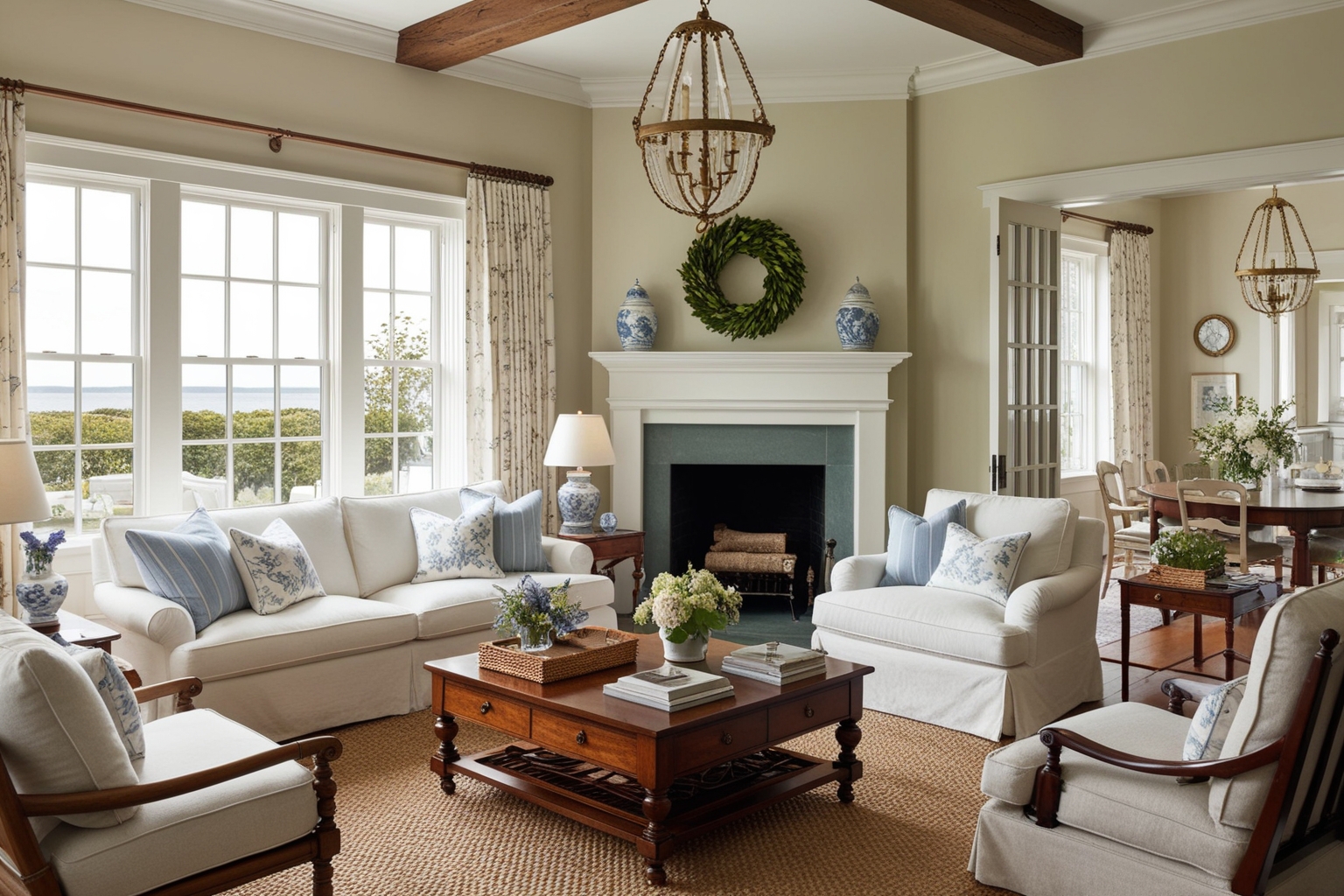
What is New England interior design style?
Color palette
New England's color tradition is specific and has deep historical roots. The authentic early American palette used pigments made from local materials: lamp black, iron oxide red, indigo blue, and the ochres and umbers of native earths. These colors, deep barn red, indigo, forest green, and ochre, appear in authentic Colonial interiors as the primary wood paint colors.
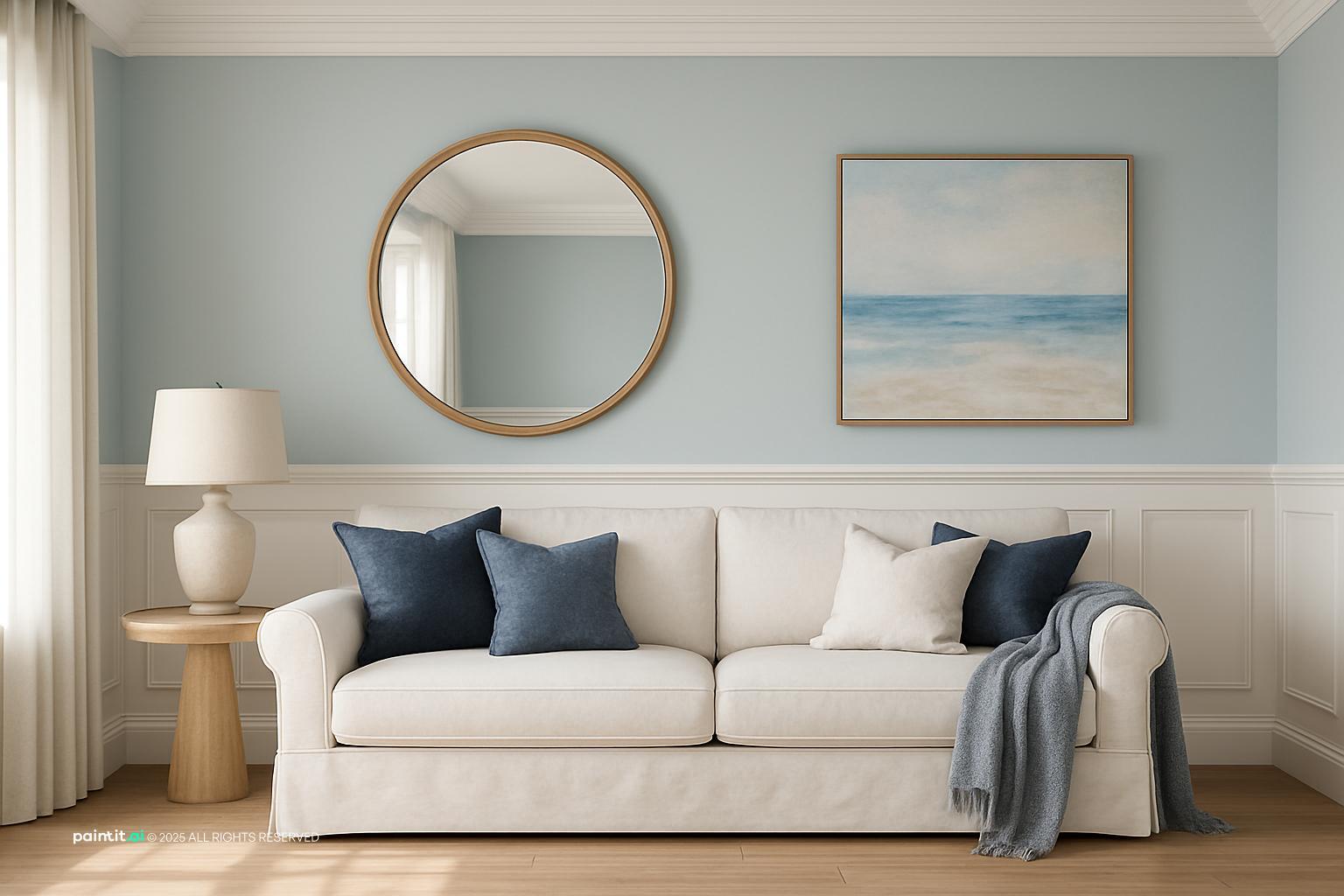
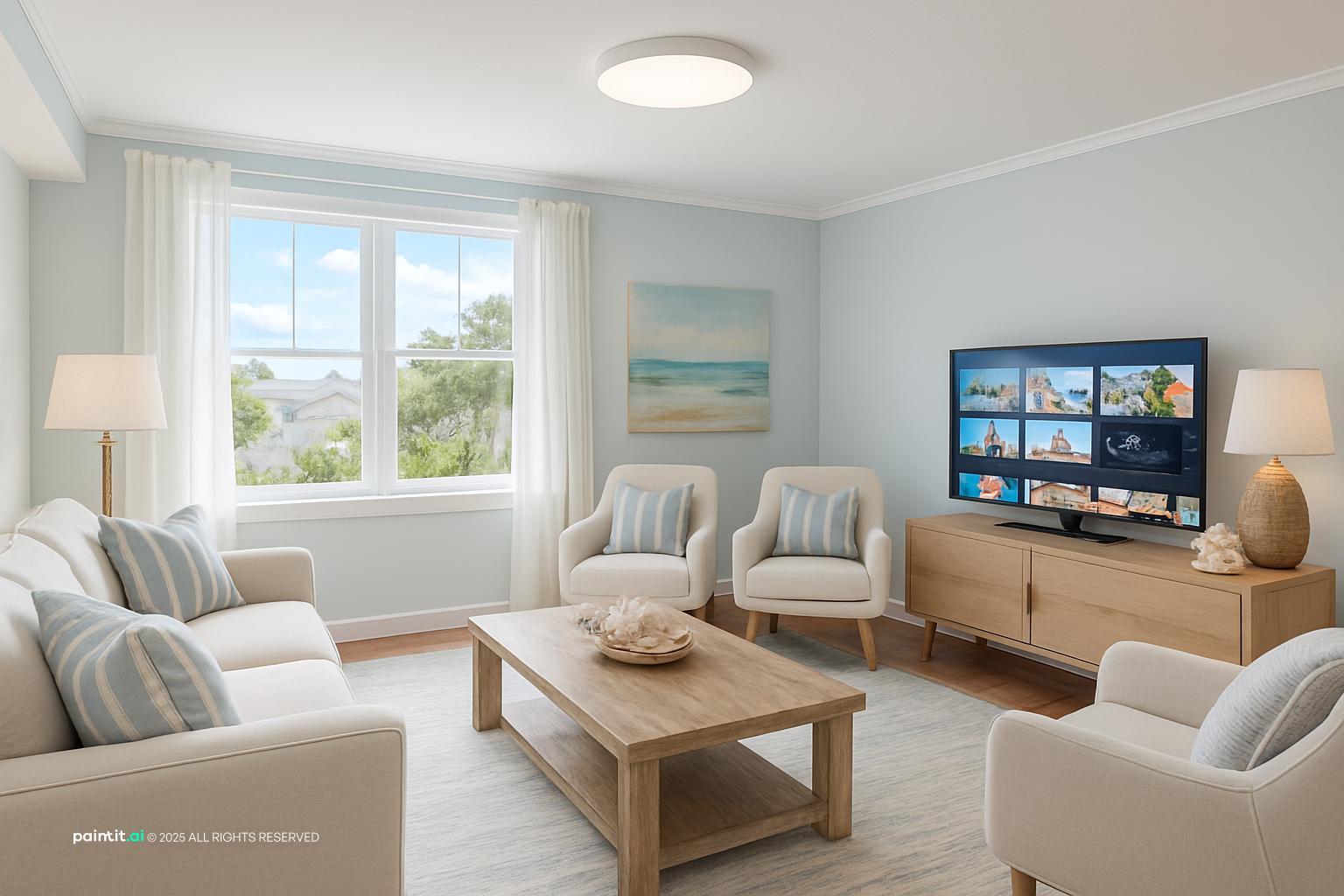
The contemporary New England palette interprets this tradition toward the lighter and more restrained: whites and creams as the dominant wall color, with the historical deep colors appearing in cabinetry, trim, and textiles rather than throughout. The coastal variant (Cape Cod, Nantucket, Martha's Vineyard) introduces soft blues, sea green, sandy beige, and weathered grey as the primary palette, colors drawn from the Atlantic landscape rather than forest and farmland.
Materials and textures
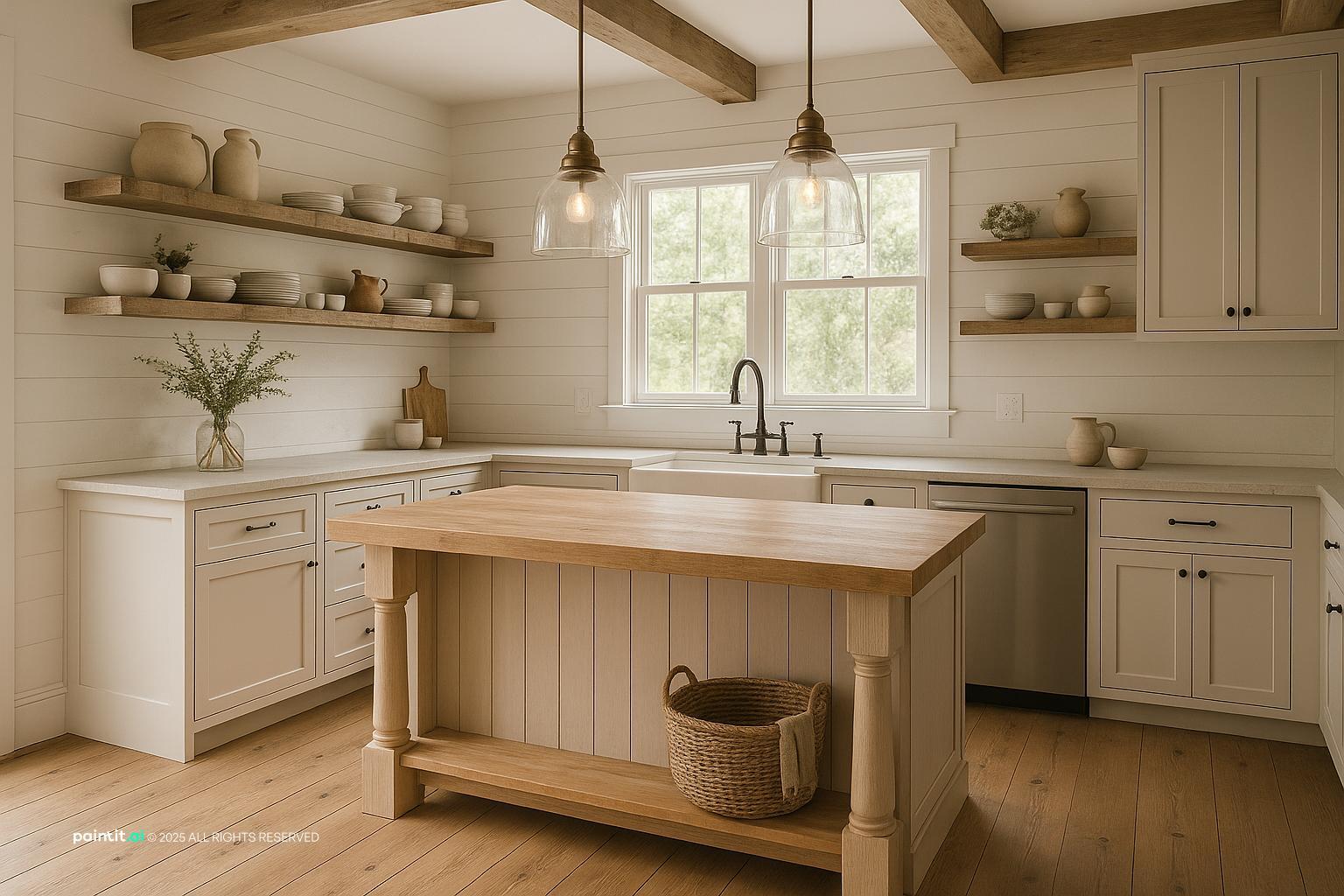
Wood defines New England interiors at every scale. Wide-plank floors (historically pine, now oak or reclaimed softwood) in natural or medium stain. Exposed structural beams in living spaces and kitchens, in the oldest homes, these are hand-hewn rather than sawn. Shaker-style woodwork (cabinetry, wainscoting, built-in benches and window seats) in the New England tradition of skilled but unornamented craft.
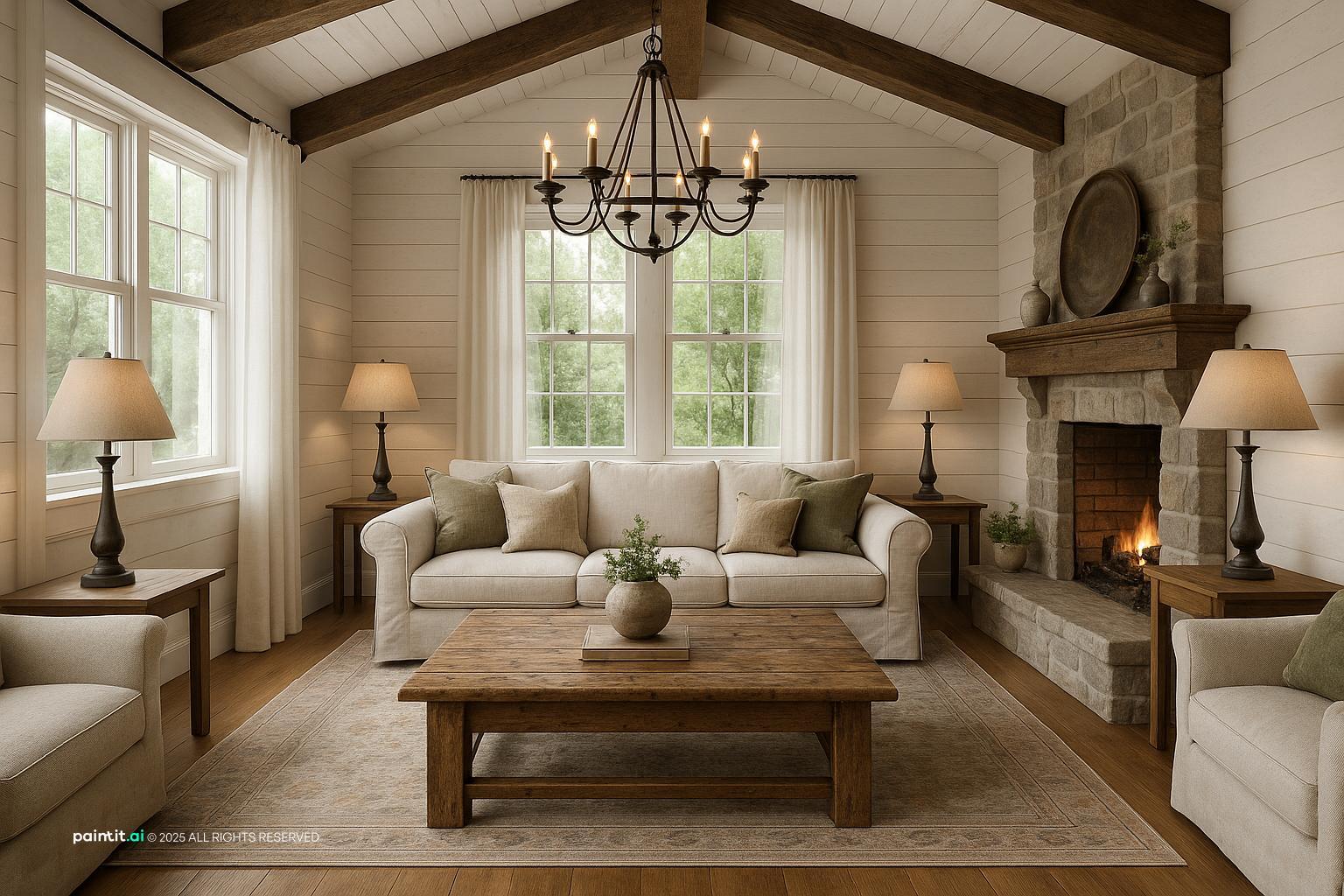
Stone, granite, fieldstone, and limestone, in fireplace surrounds, kitchen countertops, and foundation elements. Natural textiles (cotton, wool, linen) for upholstery and soft furnishings. Braided and hooked rugs in traditional patterns as floor coverings.
Furniture and silhouettes
New England furniture has a clear lineage: the Pilgrim-era joiner tradition (simple, mortise-and-tenon construction, minimal decoration), the Queen Anne period (the cabriole leg, the shell motif, the Windsor chair), the Federal period (the influence of Robert Adam's refined neoclassicism), and the Shaker movement (the most radical simplification, the peg rail, the ladder-back chair).
In contemporary New England interiors, Windsor chairs (in original or updated forms), Shaker-style built-in cabinetry, four-poster beds, and spindle-back pieces all reference this specific tradition. The common thread: construction quality and material honesty over ornament.
Decor and accessories
Maritime elements from New England's seafaring history: ship models, navigational instruments, coastal maps, scrimshaw, and model lighthouses. These are genuine regional references rather than generic nautical decor, there is a difference between New England's seafaring heritage and a generic "coastal" theme.
Quilts and hand-woven textiles reflect the New England domestic tradition. Locally made ceramics in simple glazes, pewter hardware, and wrought iron light fixtures all maintain the style's connection to craft tradition.
Architectural features
Cape Cod, the most widespread American house type: one-and-a-half-story with steep pitched roof and central chimney, symmetrical five-bay facade, clapboard exterior. Simple and practical, designed for the northeastern climate.
Colonial, two-story with central hall, symmetrical facade, formal parlor and dining room flanking the entry, four fireplaces (one in each corner room). The style that most influenced American residential architecture from 1620 to 1830.
Shingle Style, late 19th century, irregular massing with wraparound porches, shingle exterior, large open interior spaces. Associated with Newport, the Hamptons, and the Maine coast. More relaxed and expansive than earlier Colonial forms.
Greek Revival, 1820–1860, applied classical details (columns, pediments, temple-front facades) to residential buildings throughout New England. Very common in Maine and western Massachusetts.
Distinguishing features of New England interior design style
Four things show up in almost every New England room: white or off-white walls, natural wood floors and beams left unpainted, one or two historic accent colors (navy, hunter green or barn red), and simple, well-made furniture such as Windsor chairs and Shaker cabinets. Layered textiles such as throws, cushions, quilts and braided rugs add warmth without competing with the architecture.
The New England color palette
Whites and off-whites as the foundation
Nearly every New England color palette starts with a soft white or off-white wall, historically limewash or milk paint rather than a bright modern white. Warm white, oyster, or a pale putty tone reads as more authentic than a stark, cool white and works with the natural wood tones common to colonial-era homes.
Navy, hunter green, and barn red as accents
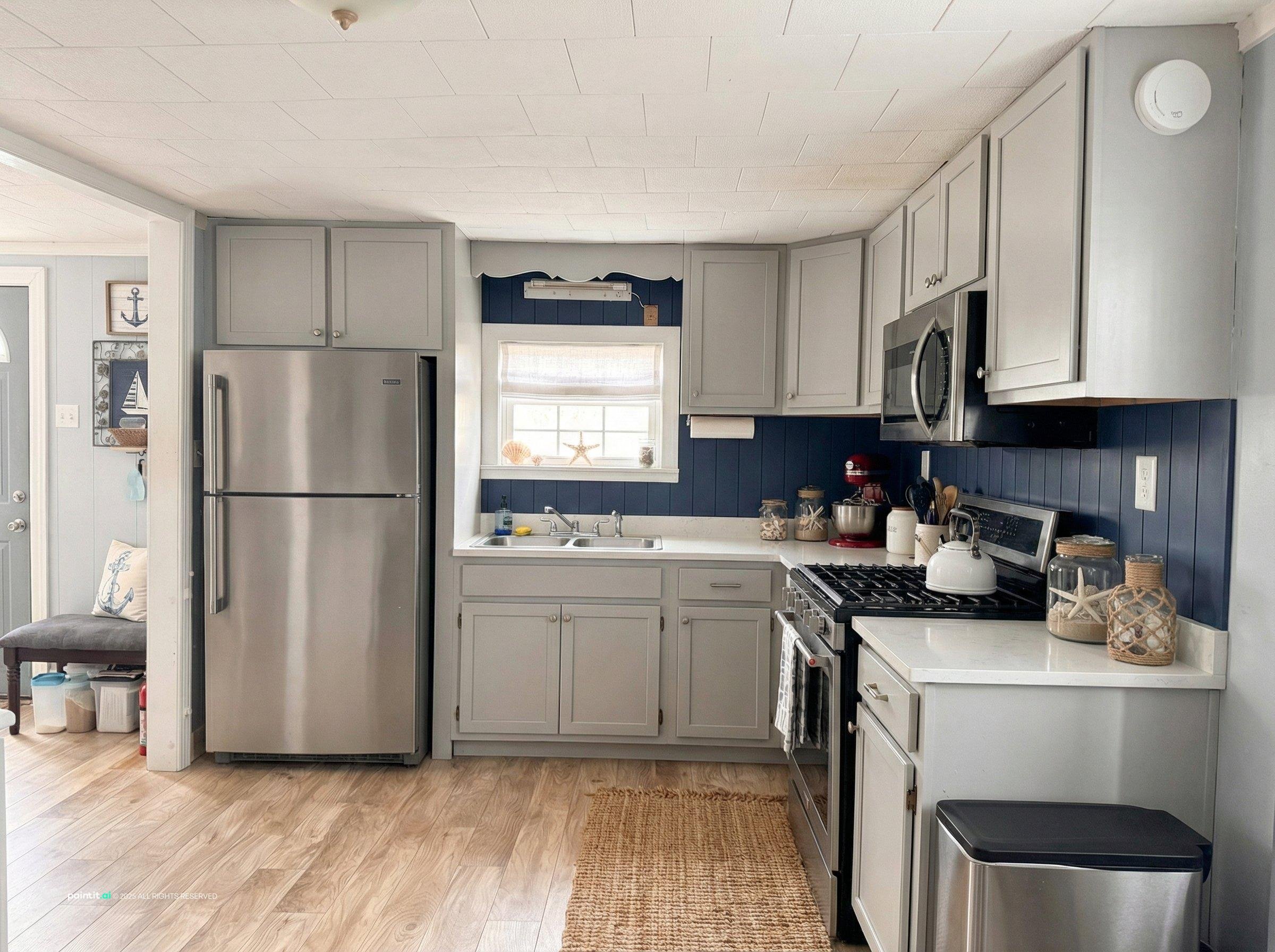
The classic New England accent trio comes directly from the region’s maritime and agricultural history: navy blue (sailcloth and harbor towns), hunter or bottle green (window shutters and front doors), and barn red (agricultural buildings). One of these, rather than all three, usually anchors a room, on a single accent wall, front door, or upholstered piece.
Natural wood as a color, not just a material
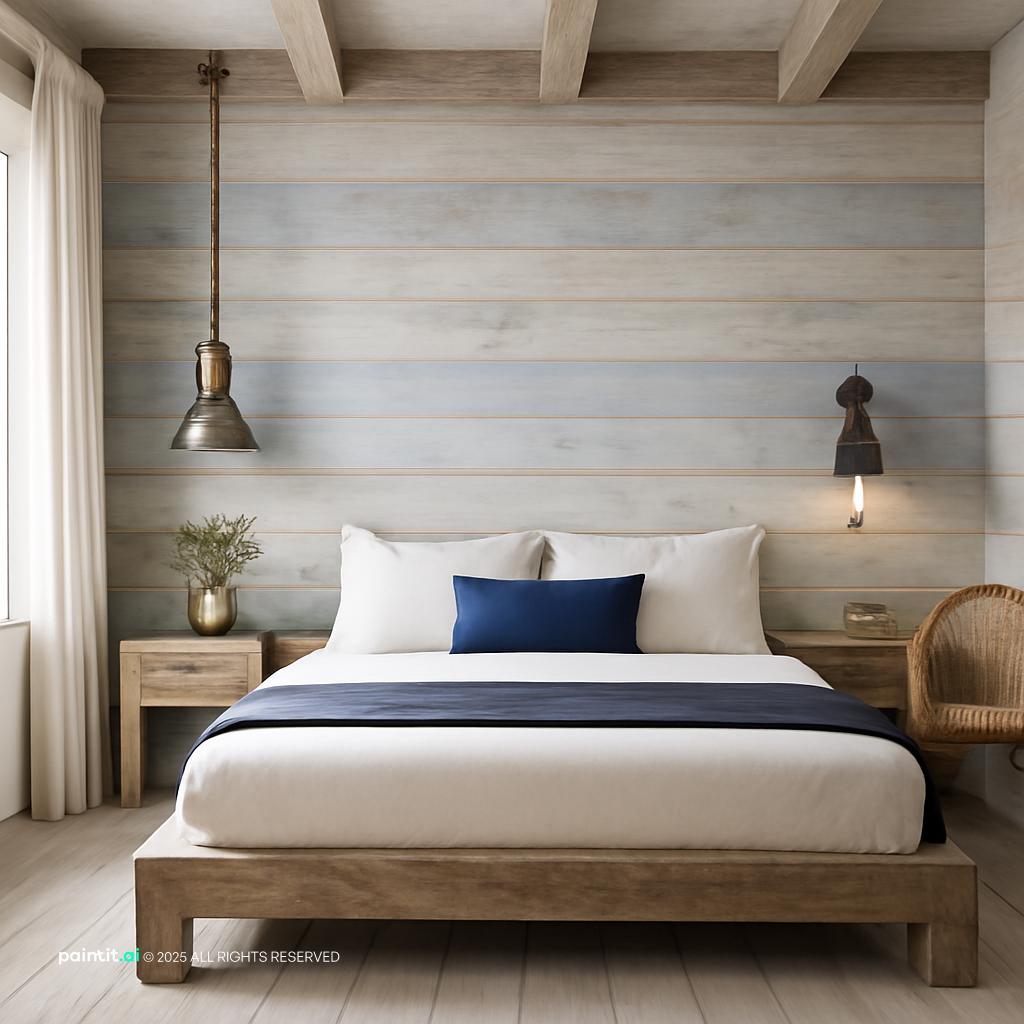
Unpainted or lightly stained wide-plank pine and oak floors, exposed beams, and wainscoting function as a color value in their own right, a warm mid-brown that grounds the whites and accent colors around it. Painting over this wood is one of the most common ways a renovation loses the New England character.
Visualize New England style with Paintit.ai
Upload a photo of any room to app.paintit.ai and test how New England palettes, crisp whites, natural wood tones, maritime blue accents, read in your actual space in 1–2 minutes. Useful for comparing a Cape Cod coastal direction against a more formal Colonial approach. Free to start.
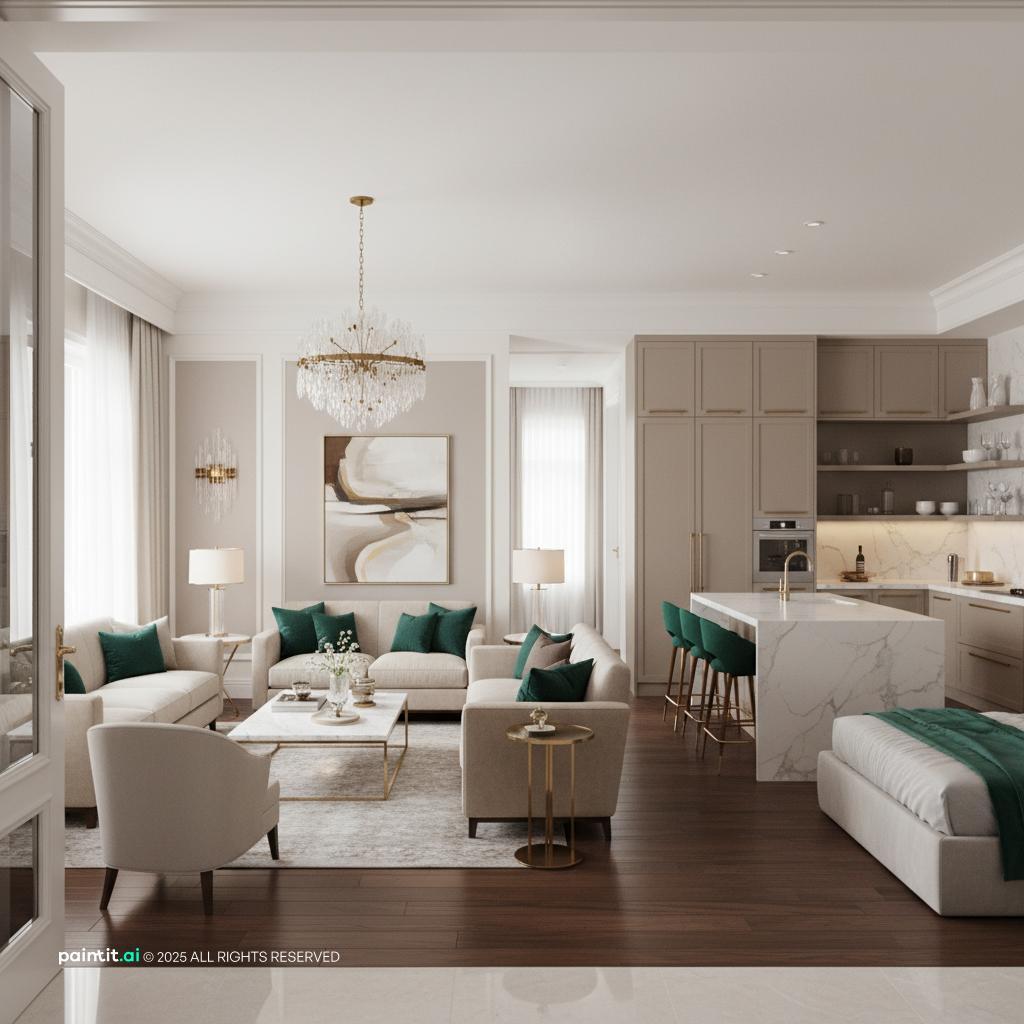
12 New England rooms and what to copy
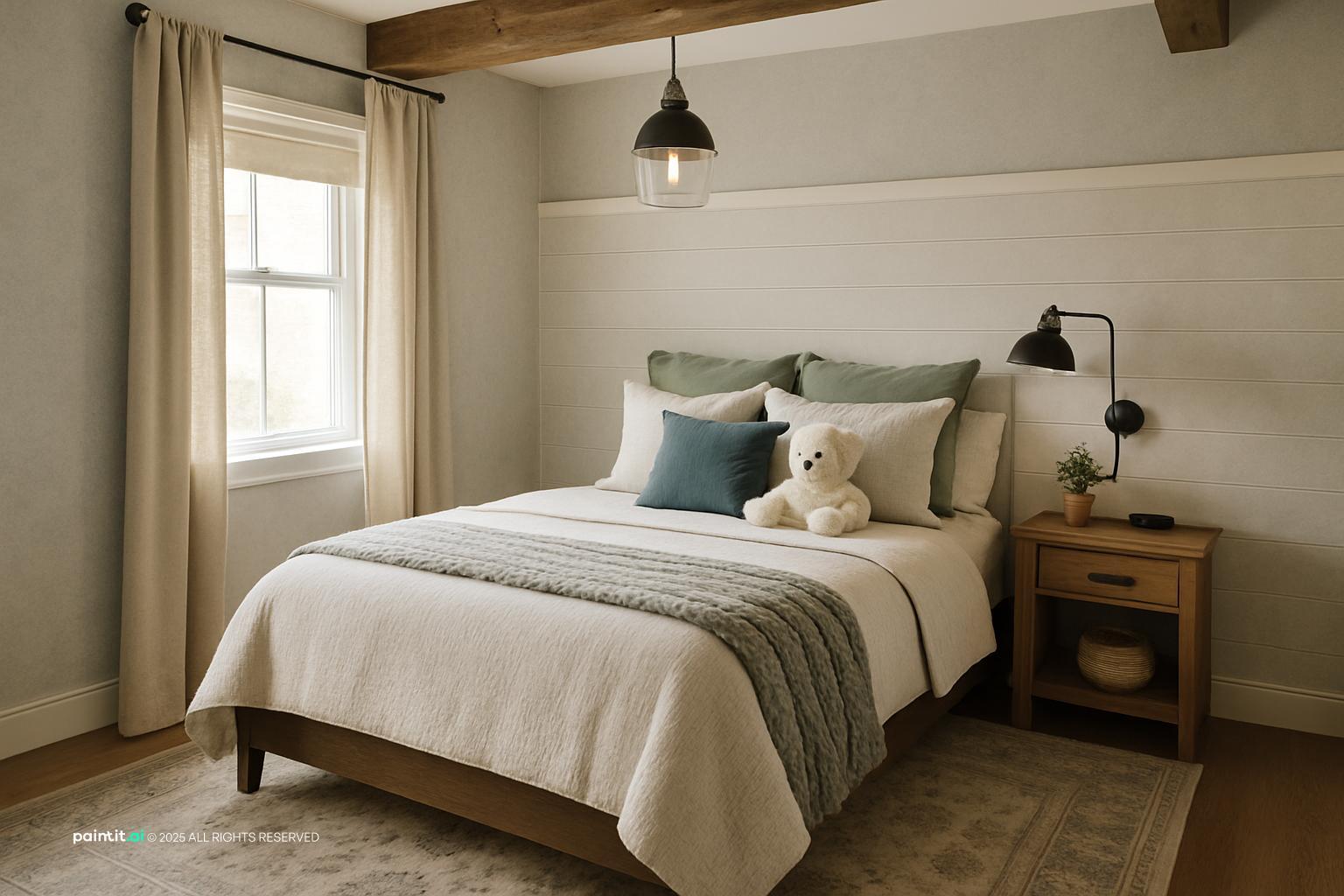
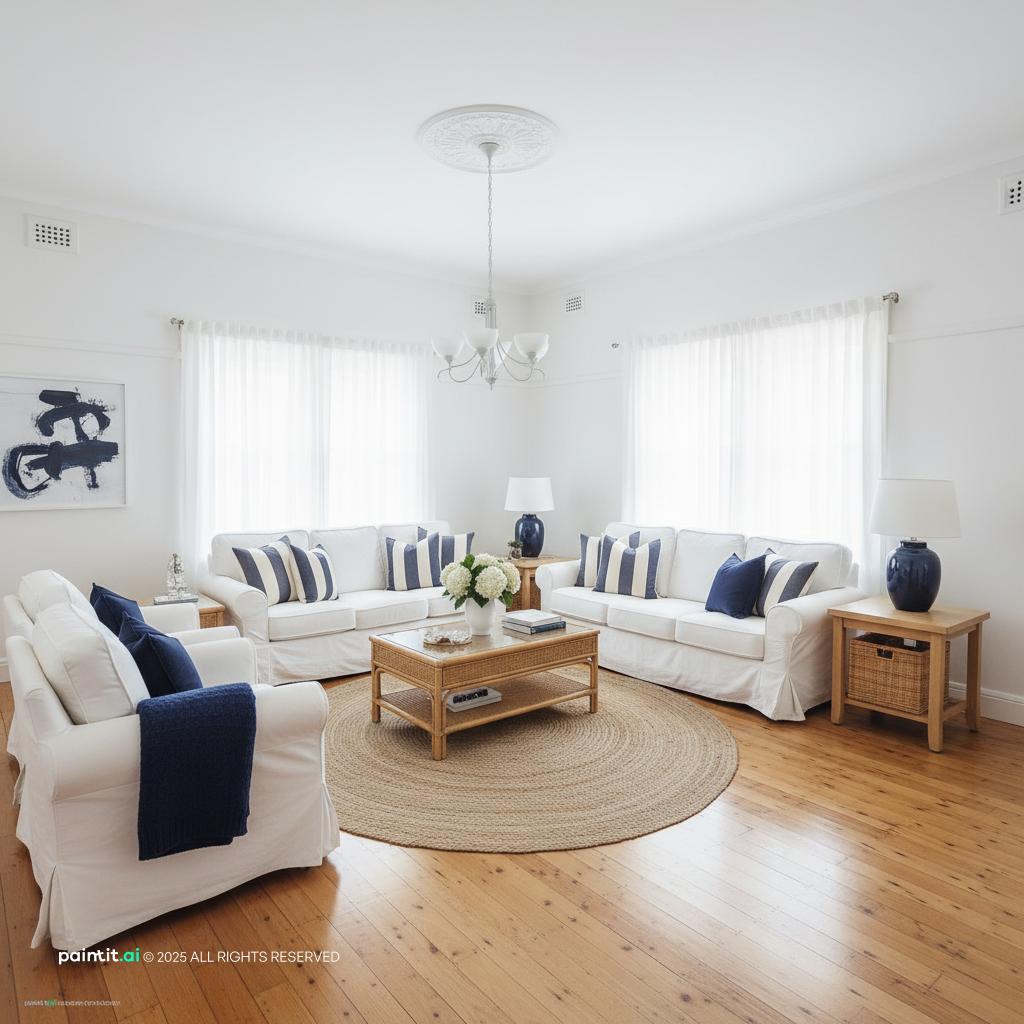
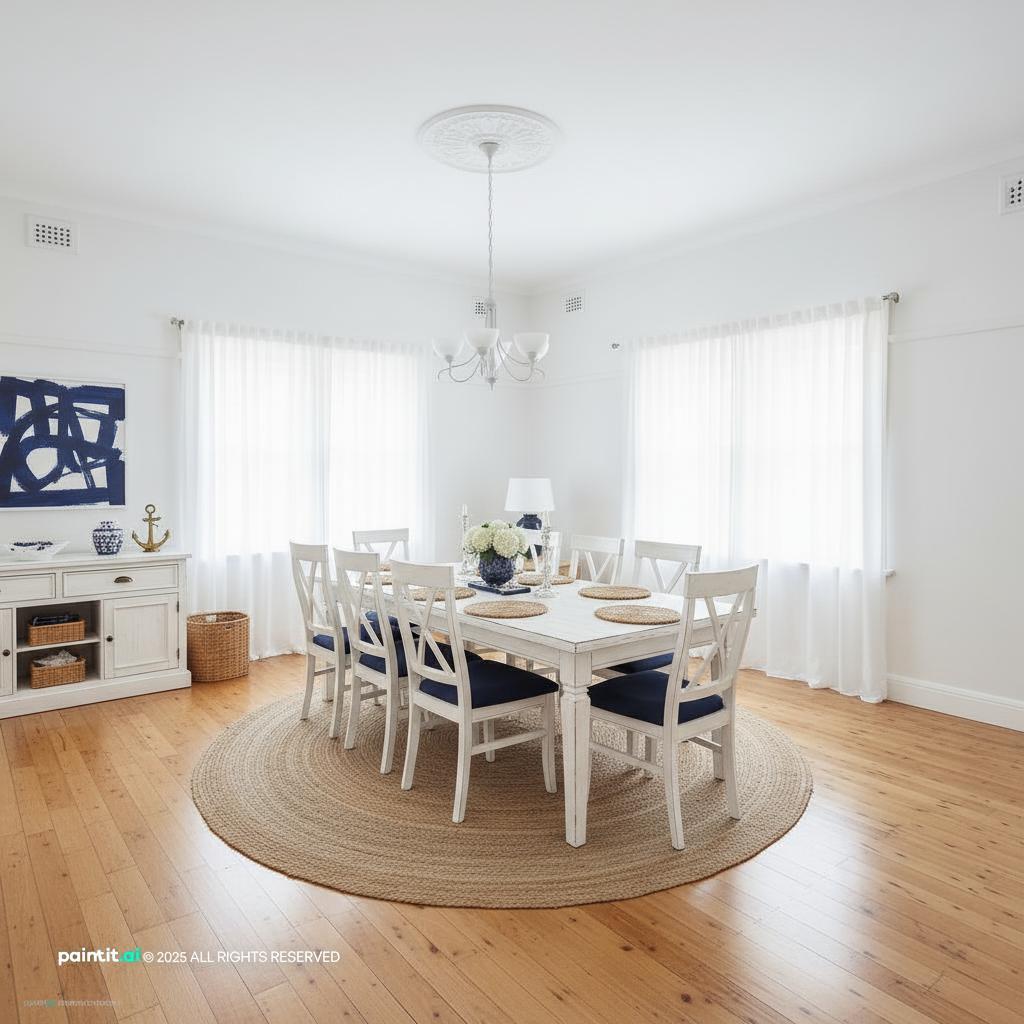
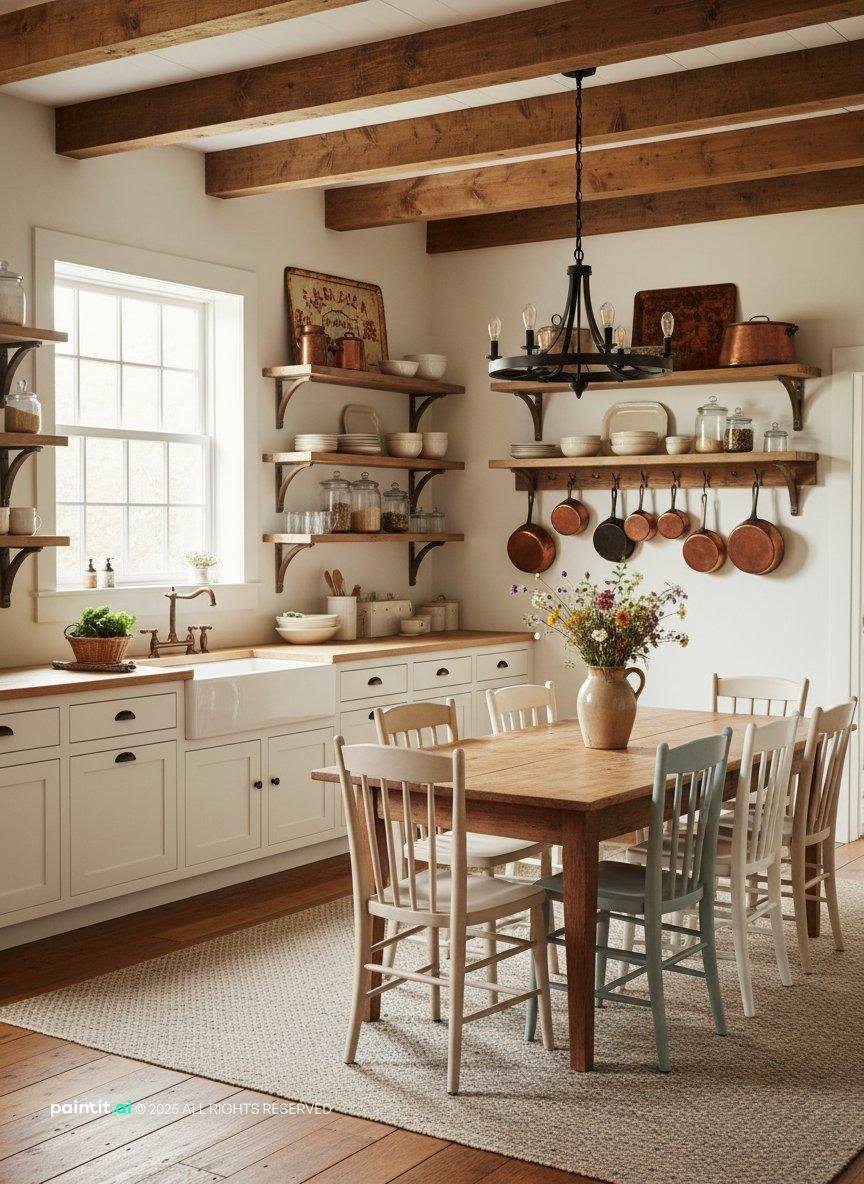
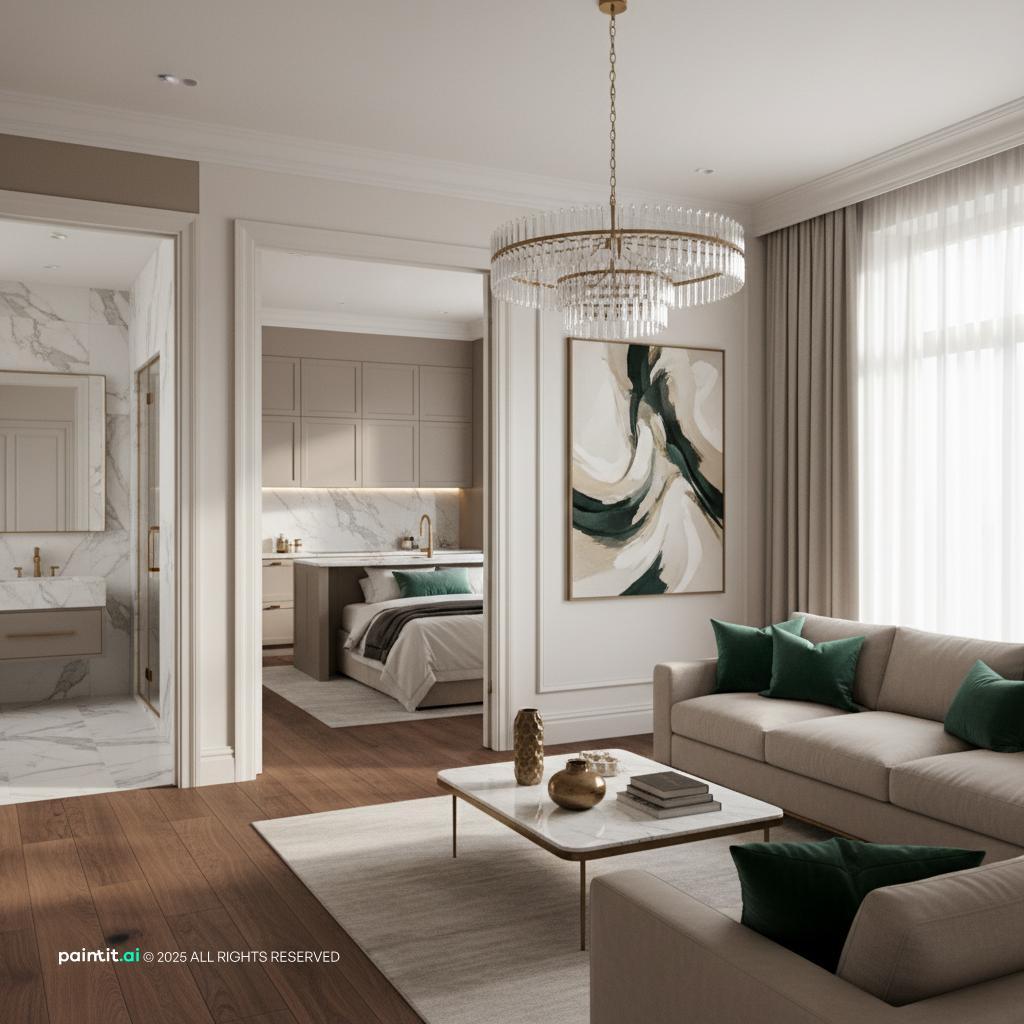
FAQ
New England interior design draws from the residential building traditions of the northeastern United States, primarily Massachusetts, Connecticut, Rhode Island, Vermont, New Hampshire, and Maine. The style encompasses several distinct architectural sub-types (Cape Cod, Colonial, Shingle Style, Federal, Greek Revival) unified by common values: functional construction, natural materials, honest craft, and a muted palette referencing either the inland forest-and-farmland landscape or the Atlantic coast. The interior tradition emphasizes quality of construction over ornament.
Cape Cod: one-and-a-half story with steep pitched roof, central chimney, symmetrical facade. The most widely replicated American house type. Colonial: two-story with central hall, formal rooms, four fireplaces. Shingle Style: late 19th century, irregular massing, wraparound porch, open interior plan. Federal: refined neoclassical following the Revolution, Adam-influenced. Greek Revival: temple-front facades and classical columns applied to residential buildings from 1820–1860.
Two distinct palette traditions exist. The colonial inland tradition: deep historical colors used as wood paint, barn red, indigo blue, forest green, ochre, and black, against white walls and natural wood. The coastal tradition (Cape Cod, Nantucket, Maine coast): whites, creams, and soft blues and greens referencing the sea and sky, with weathered grey from driftwood and cedar shingle. In contemporary New England interiors, the coastal palette dominates, with the deeper colonial colors appearing in cabinetry, trim, and textiles.
Yes. Upload a photo of any room to app.paintit.ai and test New England palette and material directions in 1–2 minutes. Free to start.