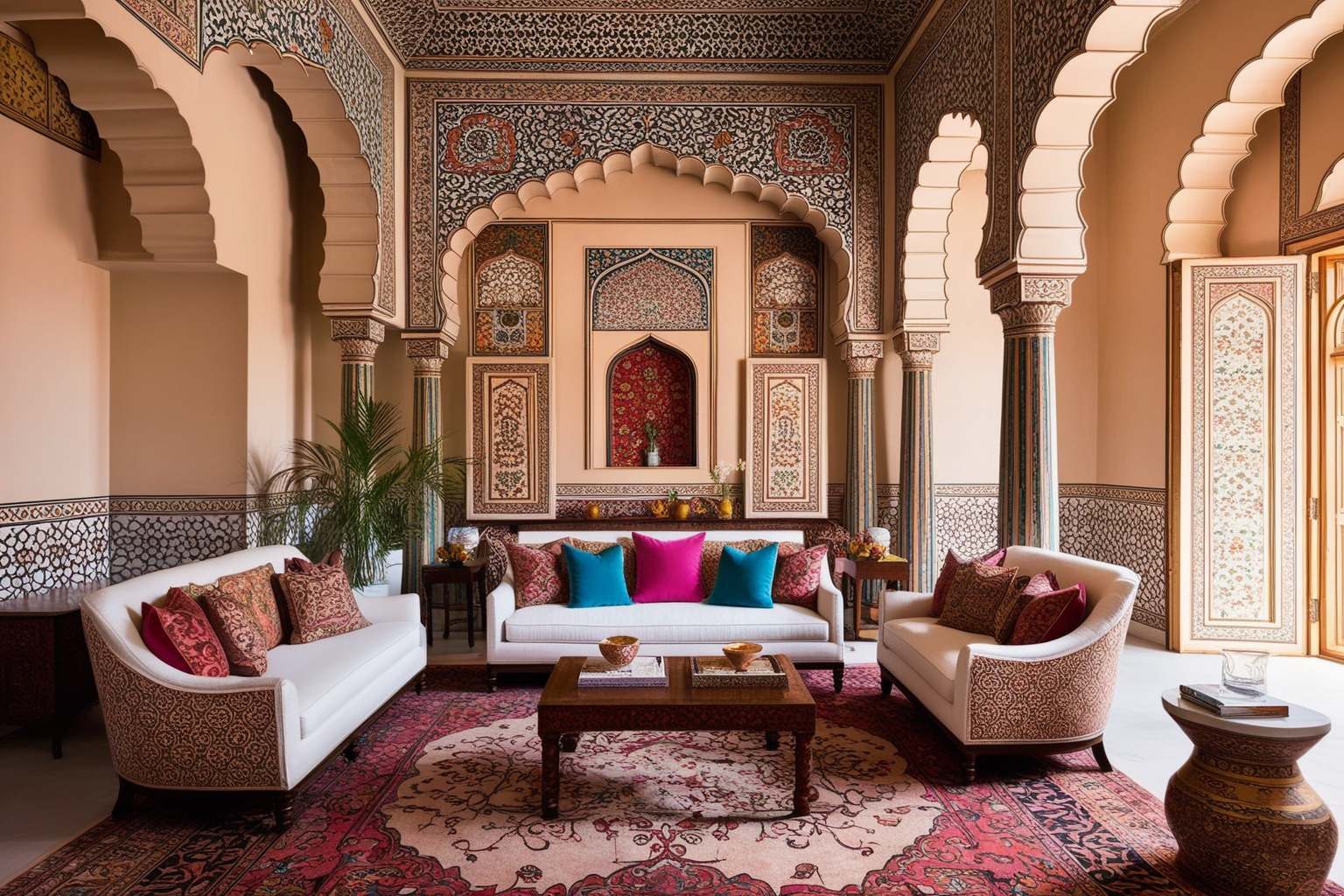
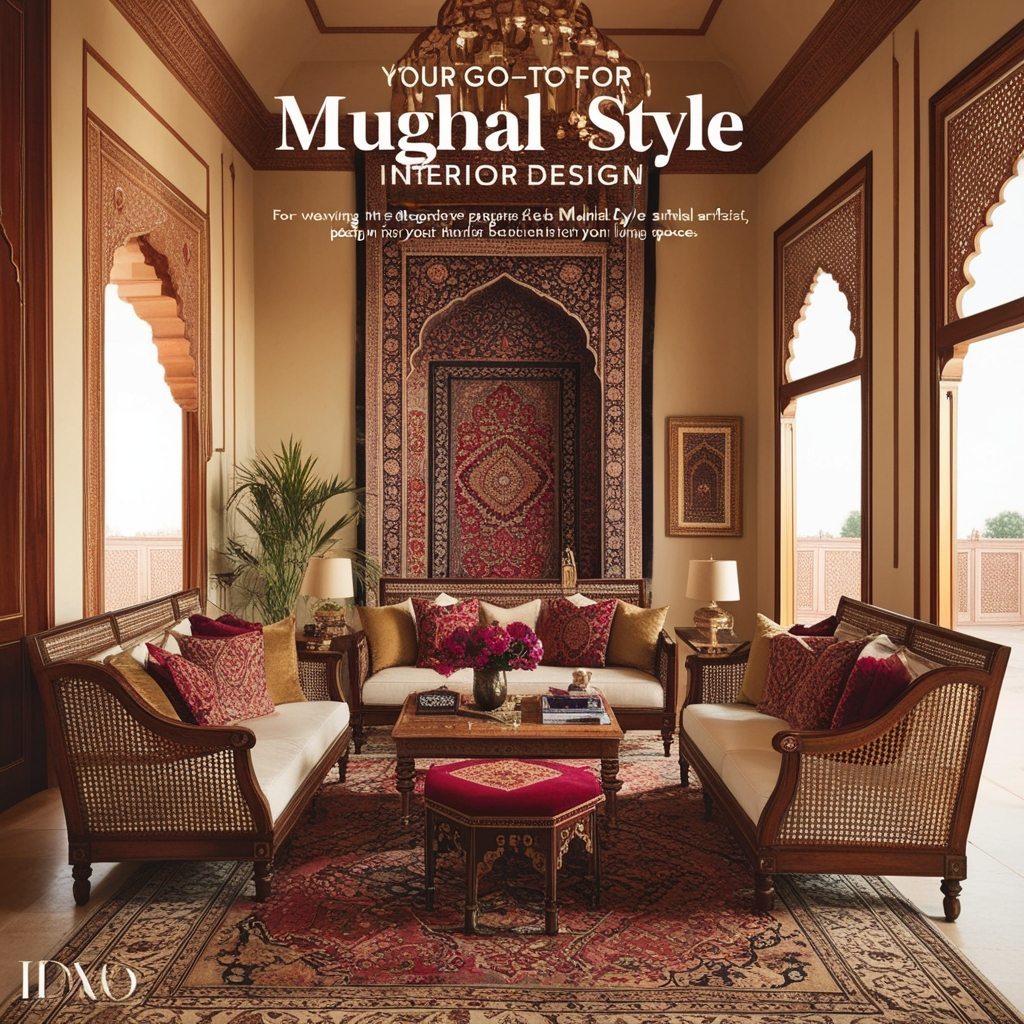
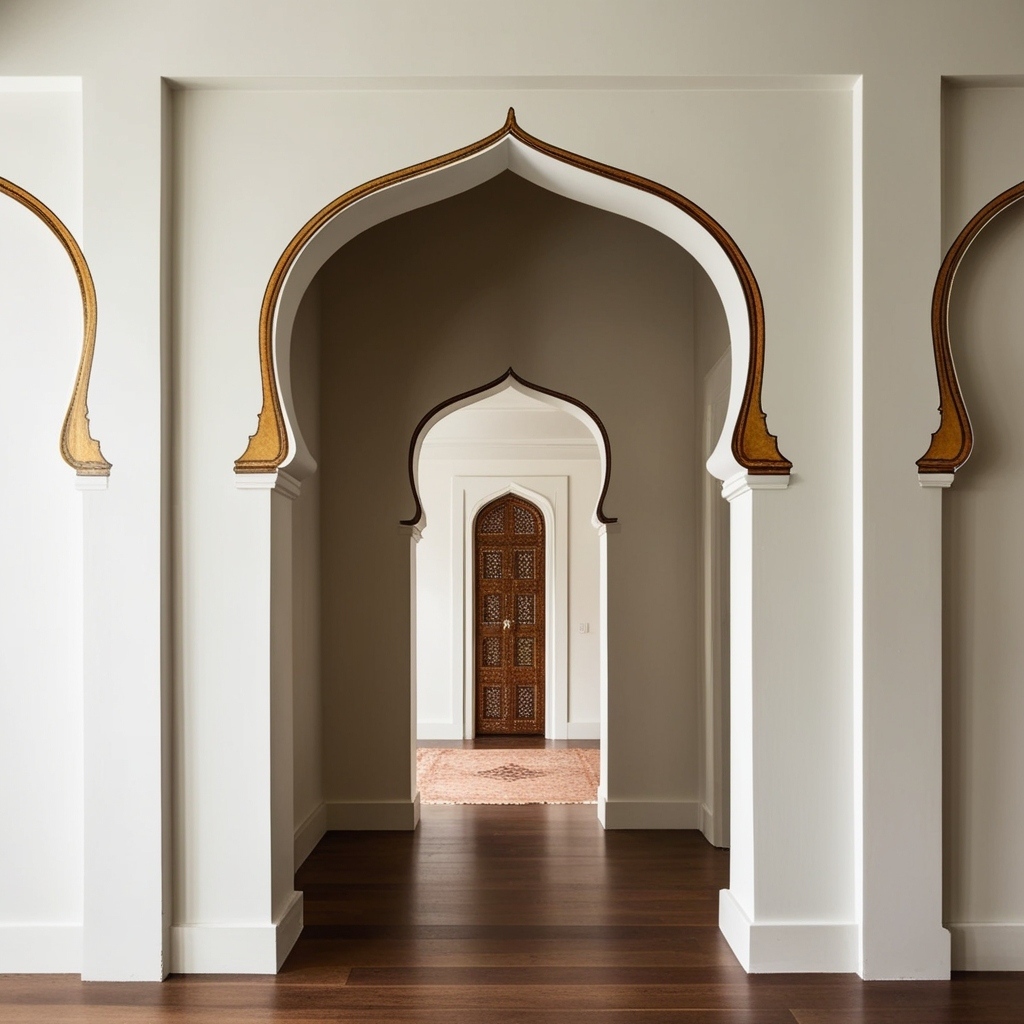
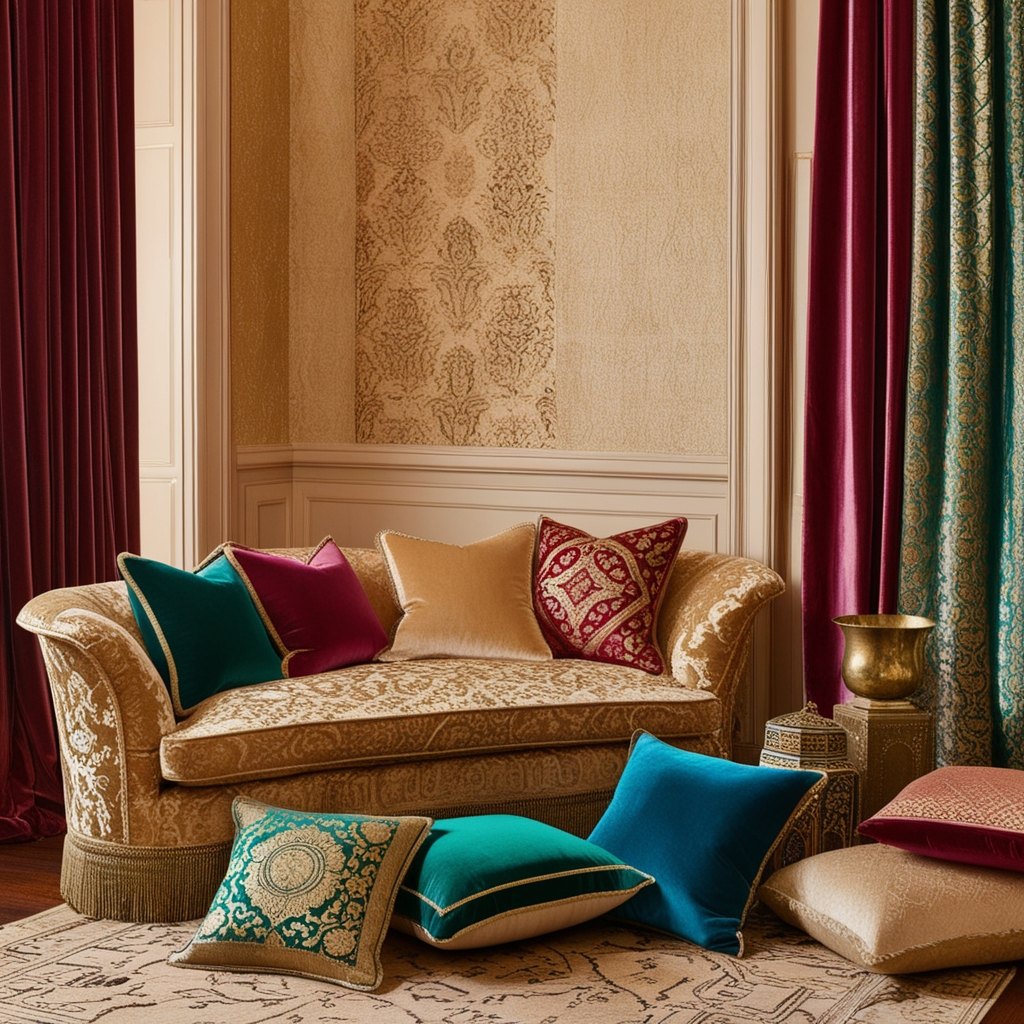
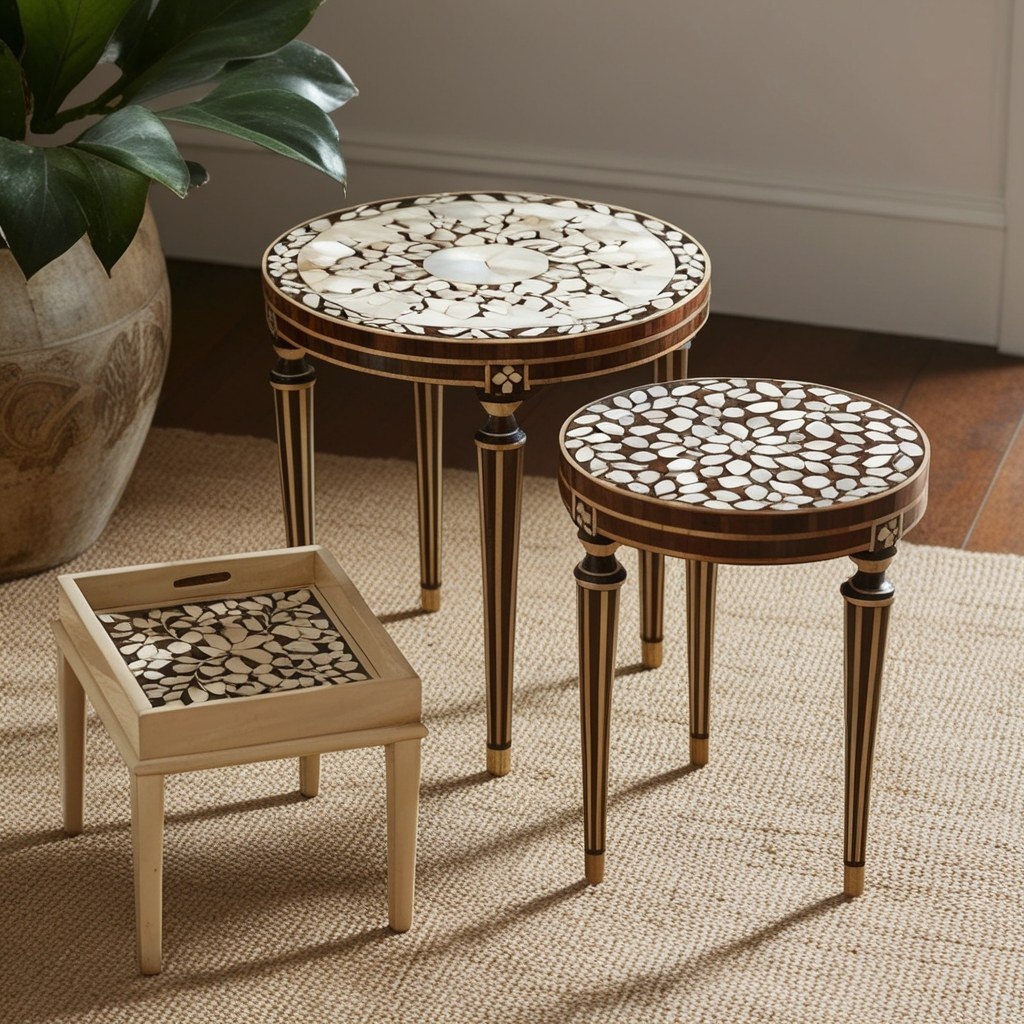
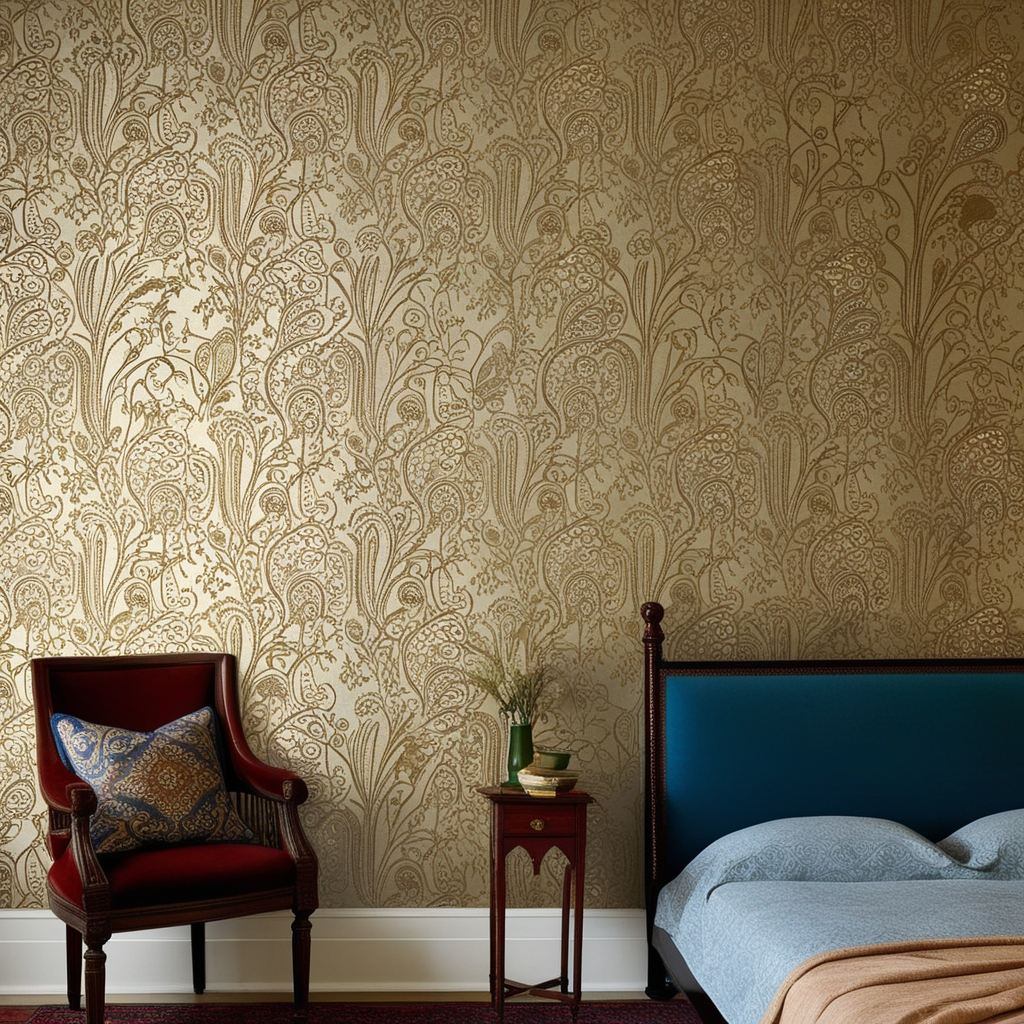
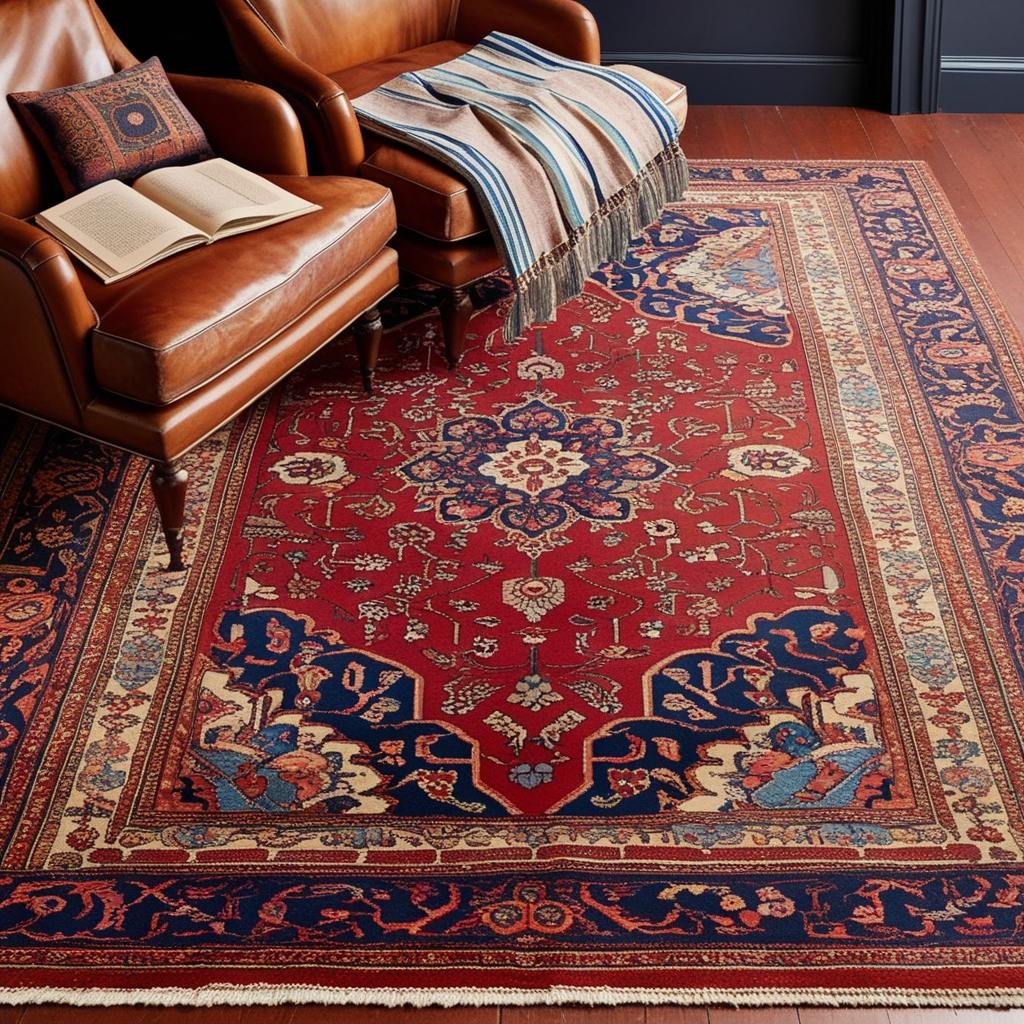
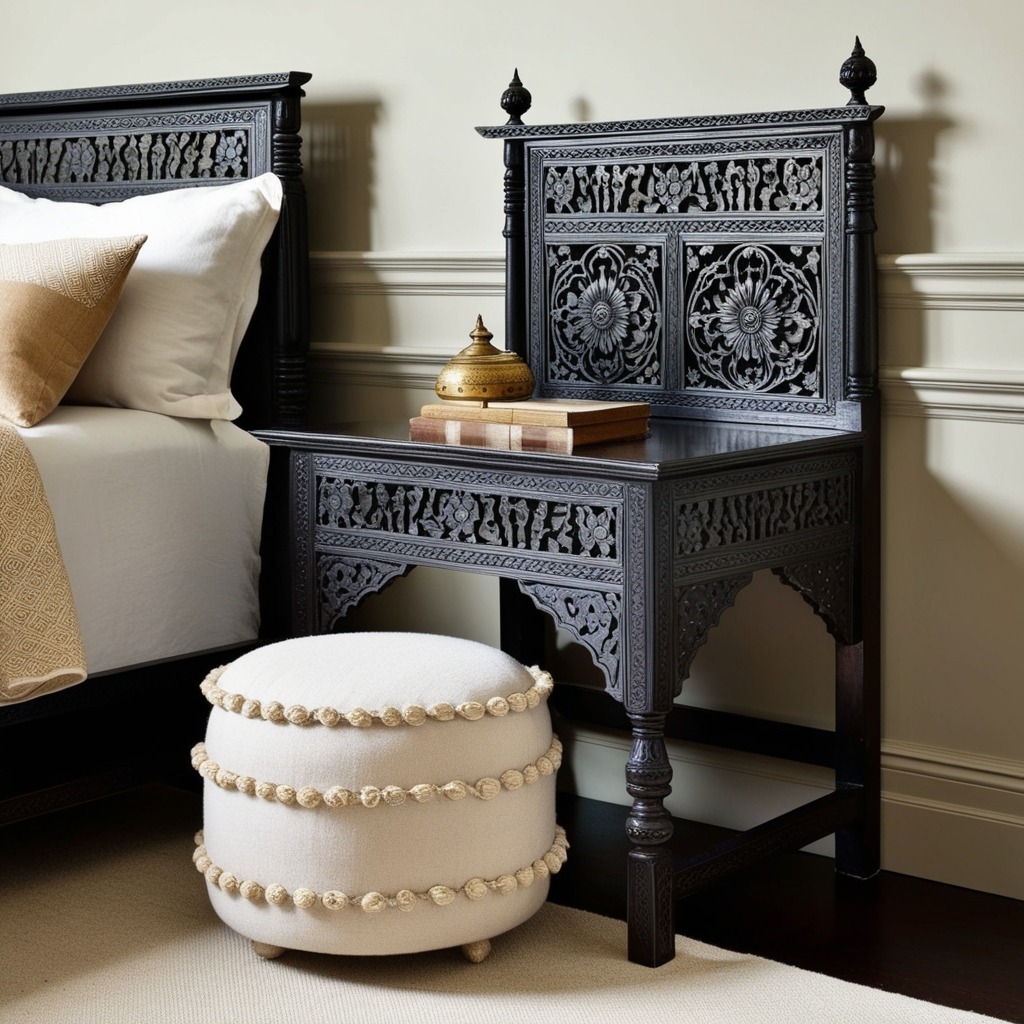
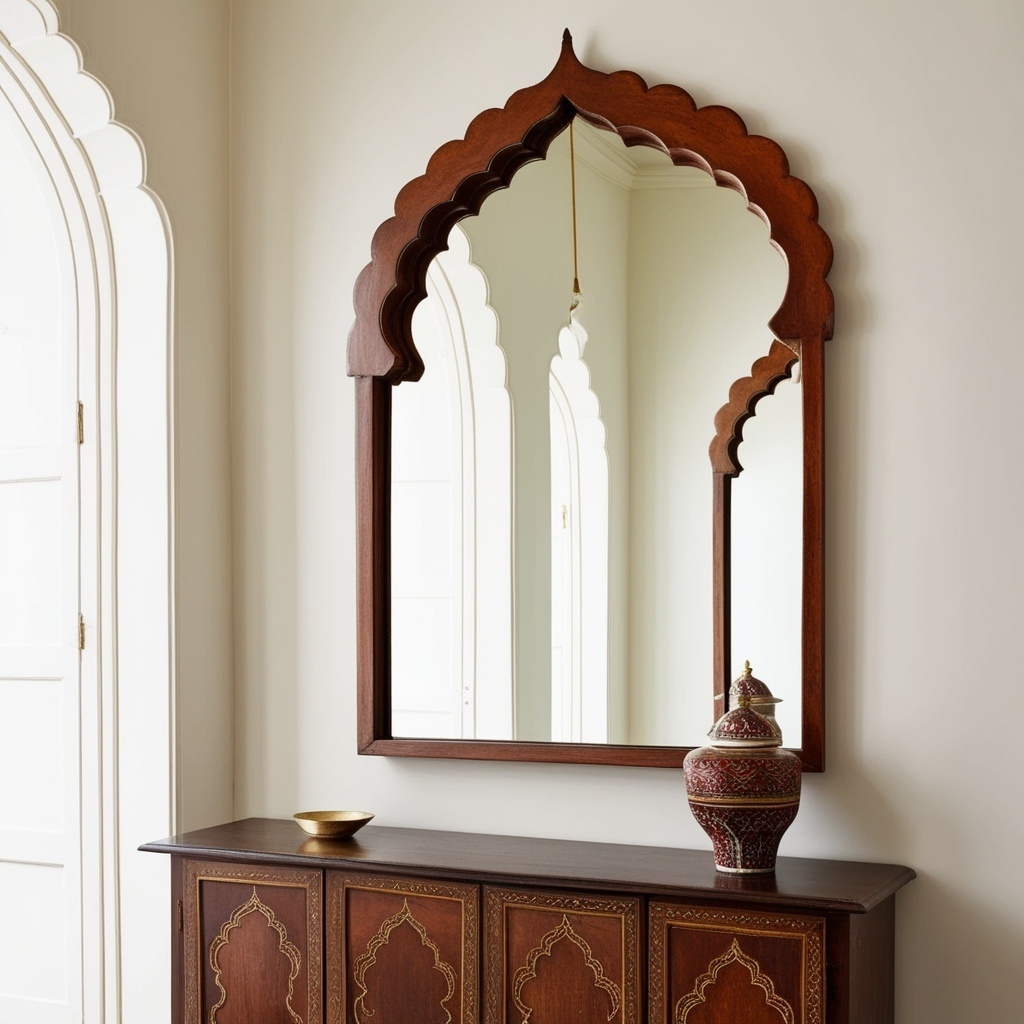
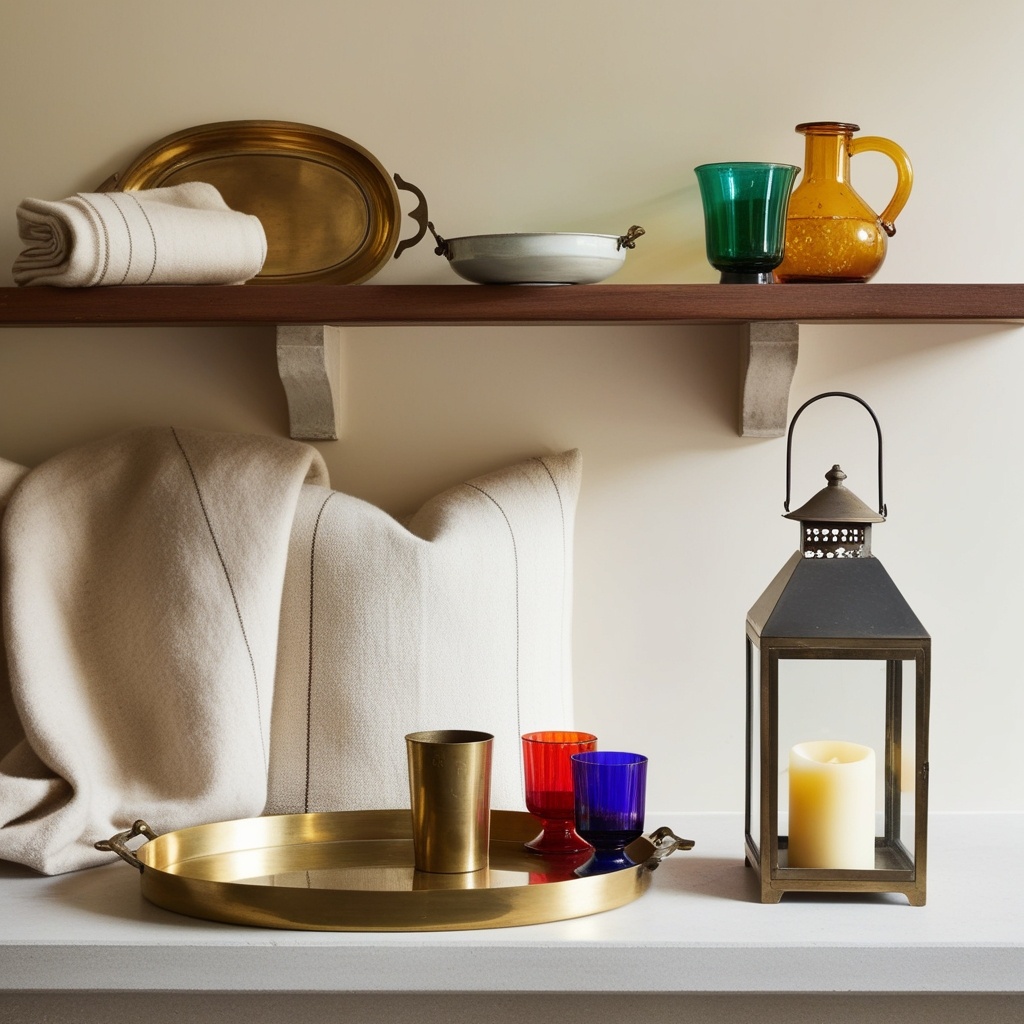
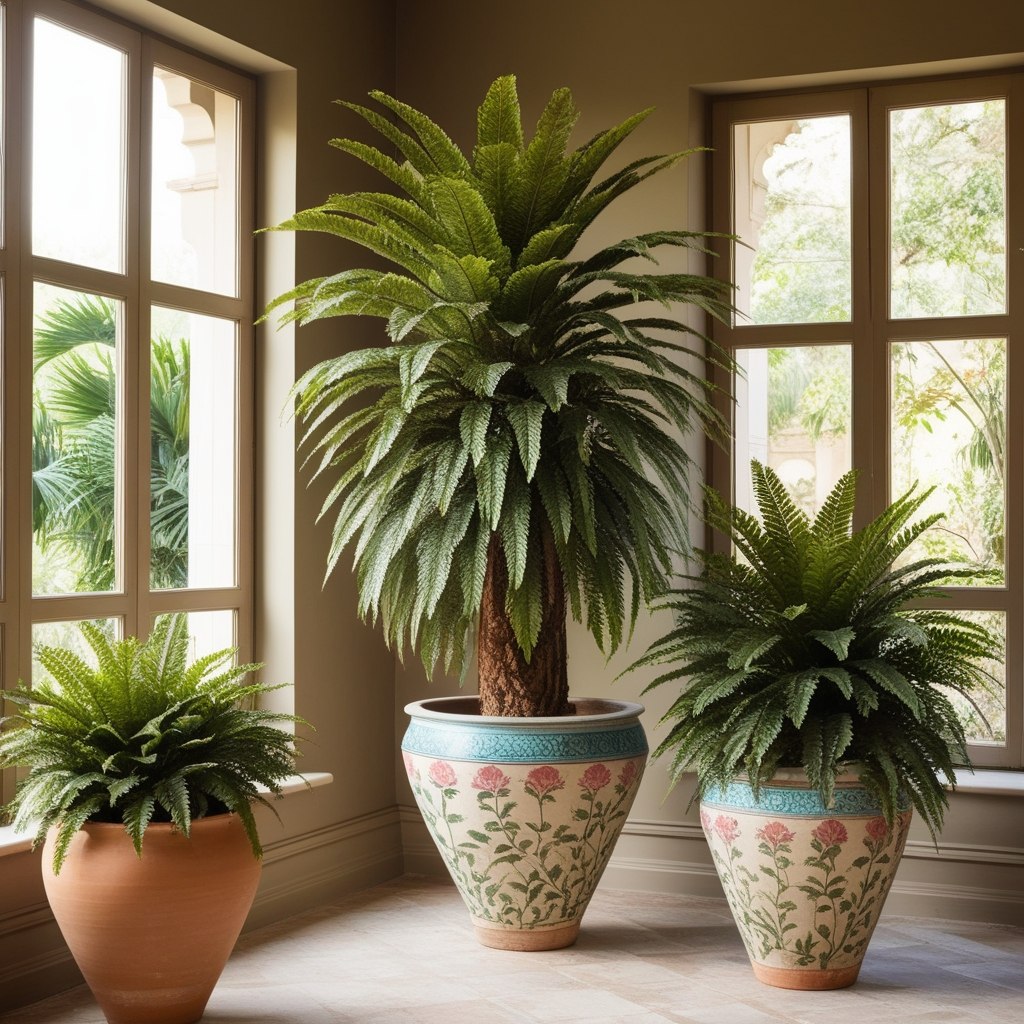
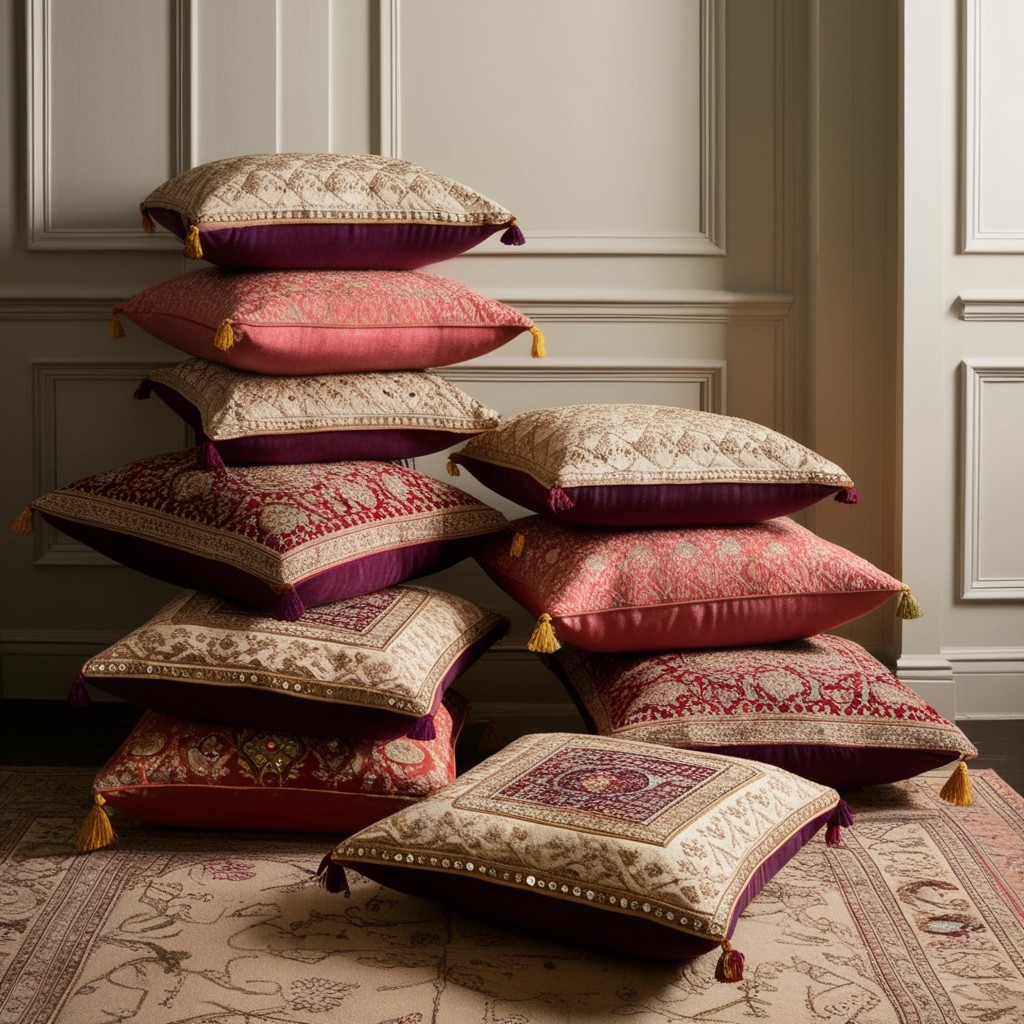
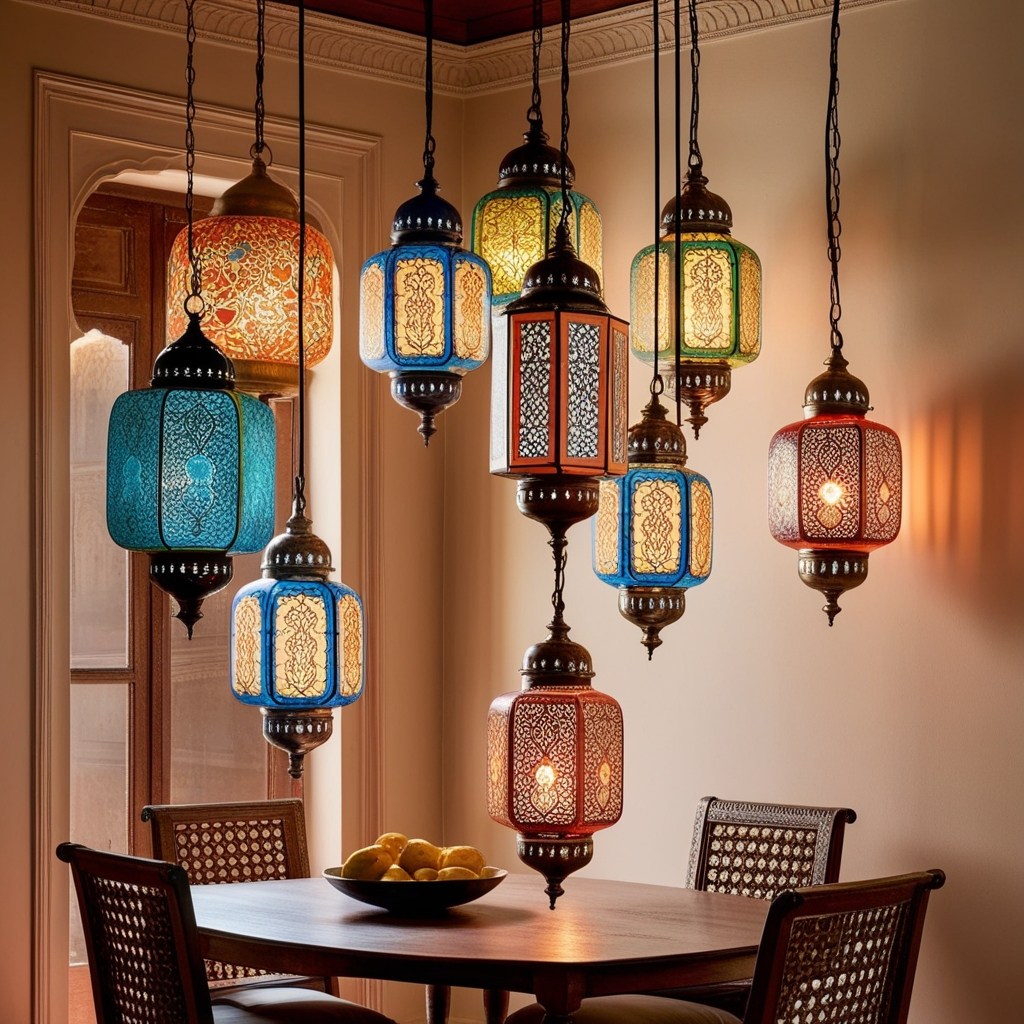
Mughal interiors operate through symmetry and layering. The Mughal architectural tradition is rigorously symmetrical - the Taj Mahal, Fatehpur Sikri, Agra Fort all demonstrate bilateral symmetry as the organizing principle. In interior applications, this means furniture arranged in mirrored pairs, arched niches balanced on both sides of a focal wall, and decorative elements that have a clear center and equal flanking elements. Layering is the second principle. Mughal spaces accumulate textural richness through the overlay of materials: marble inlaid with pietra dura, silk curtains falling in front of carved jali screens, embroidered cushions on carved daybeds. Each layer adds without competing with the others because each operates at a different scale and in a different material register. In contemporary applications, Mughal elements can be applied as individual focal interventions rather than requiring comprehensive commitment. A single jali screen as a room divider, one archway as a doorway treatment, or a pietra dura-inspired tile pattern in a bathroom floor introduces the style's character without requiring a palatial budget or a fully themed room. The key is applying the element with the same symmetrical intention and material quality that the original tradition demanded.