
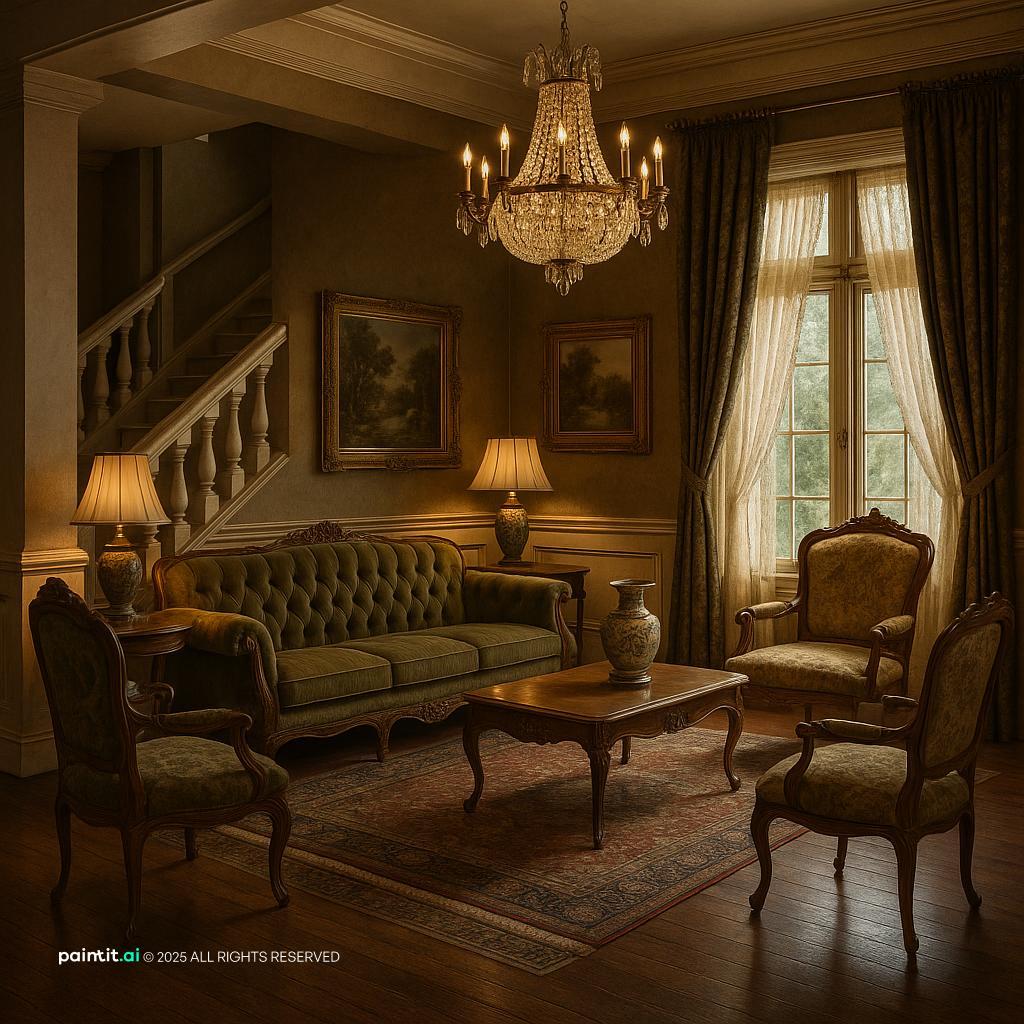
Elegant Vintage Living Room Design
Elegant Vintage Living Room Design uses vintage character in a living room setting.
The best vintage living room ideas are not about filling the room with old things. They come from sharper decisions: what to keep, what to remove, what to update, and where an older piece can actually do useful work. A vintage living room can be quiet, playful, formal, relaxed, or a little eccentric. The room only starts to feel convincing when the layout, furniture scale, color palette, lighting, and collected decor all have a reason to be there.
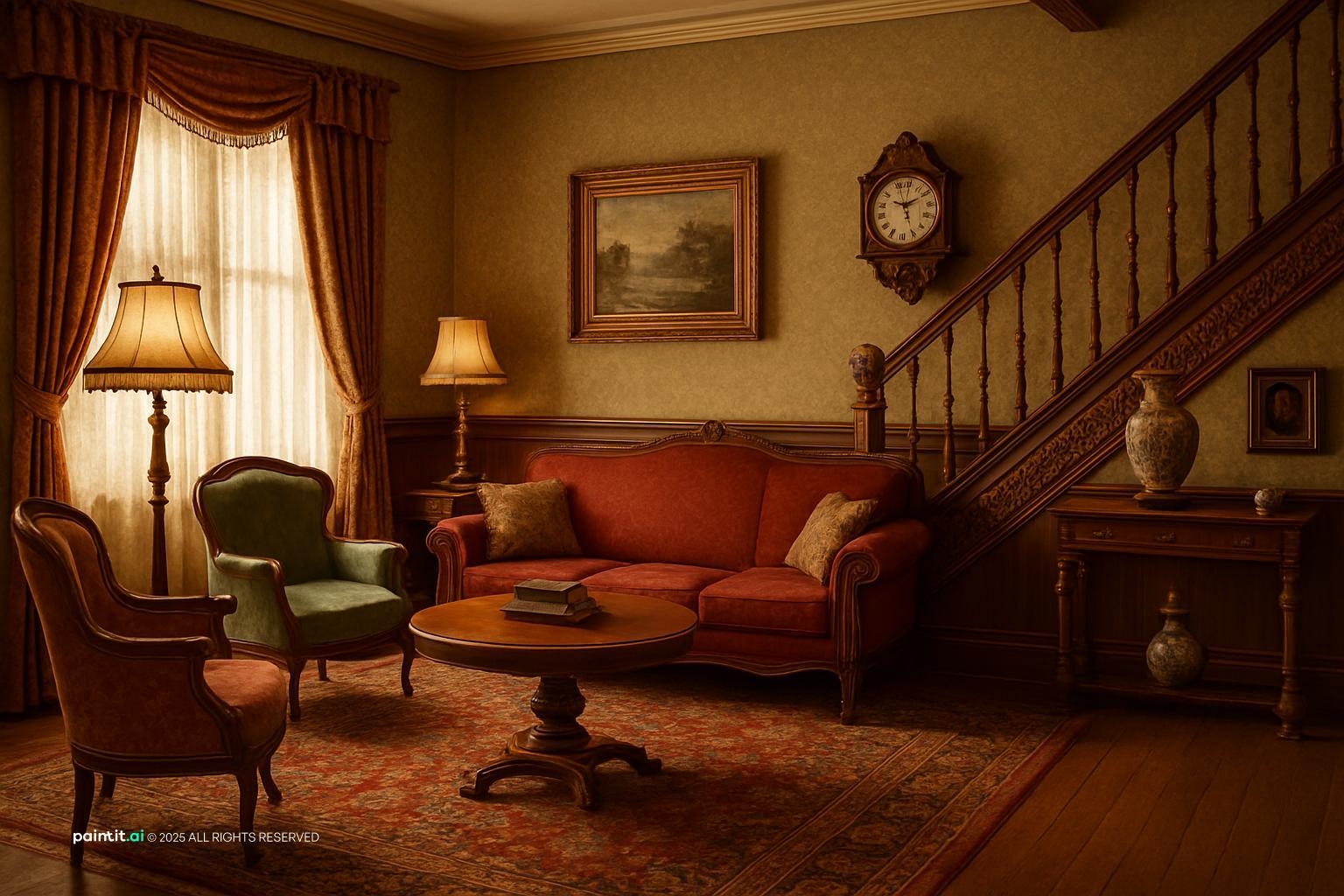
A strong vintage room begins with the shell you already own: windows, flooring, trim, fireplace, ceiling height, door swings, and the main walking path. Before you buy antique furniture or drag home a patterned rug, check what the room can physically handle. Heavy pieces need breathing room. Delicate pieces need contrast. A beautiful cabinet in the wrong spot is still a problem.
In Paintit.ai usage, we often see people start with short phrases like vintage living room ideas, then refine with color, material, lighting, or keep instructions. That is close to how real decorating works. Start broad, then decide whether the room needs sage walls, dark wood, brass accents, a cleaner sofa, a vintage rug, or a more disciplined gallery wall.
Use the first gallery to look past the pretty objects. Study where the sofa faces, how the rug holds the seating area together, which wall carries the art, where the lamps sit, and how much open floor is left for people to move through the room.
Elegant Vintage Living Room Design uses vintage character in a living room setting.
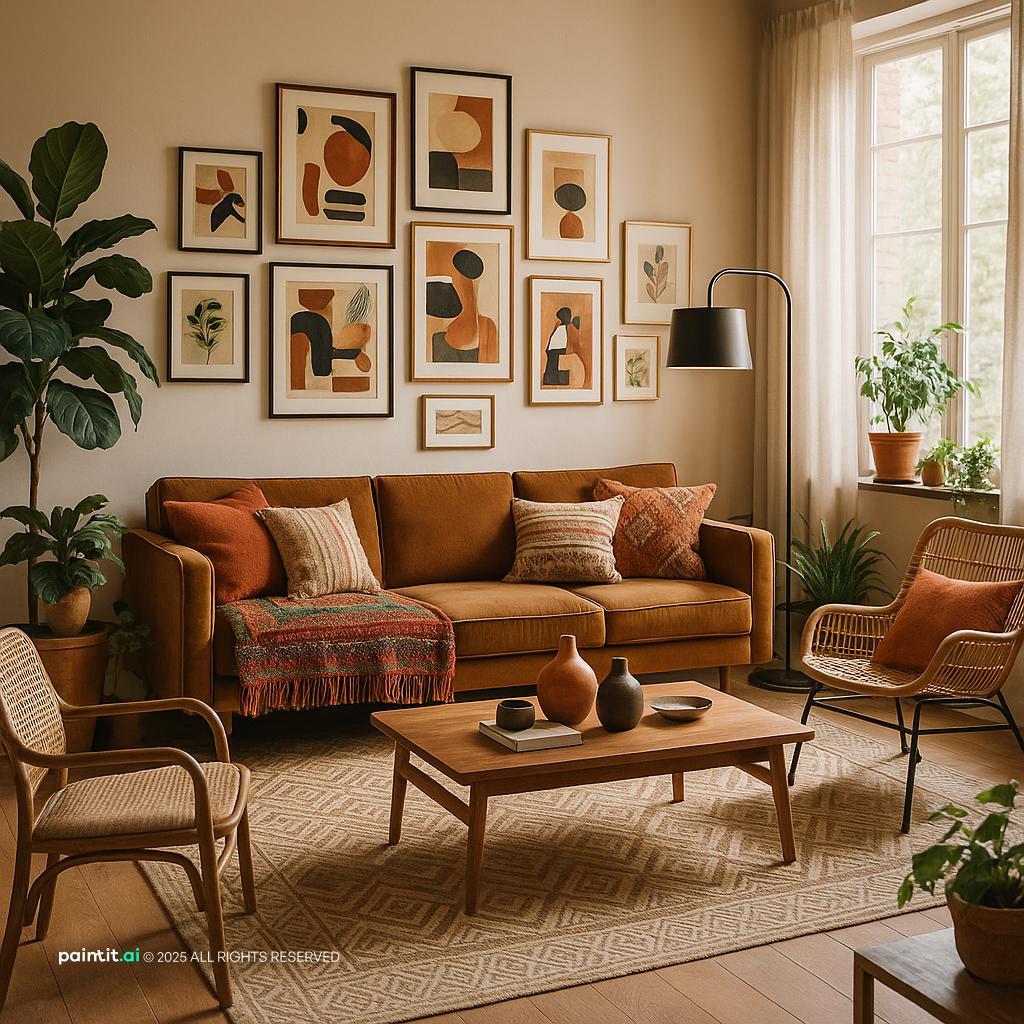
Bohemian-Style Living Room Design balances vintage character, soft textiles and metal accents in a living room setting.
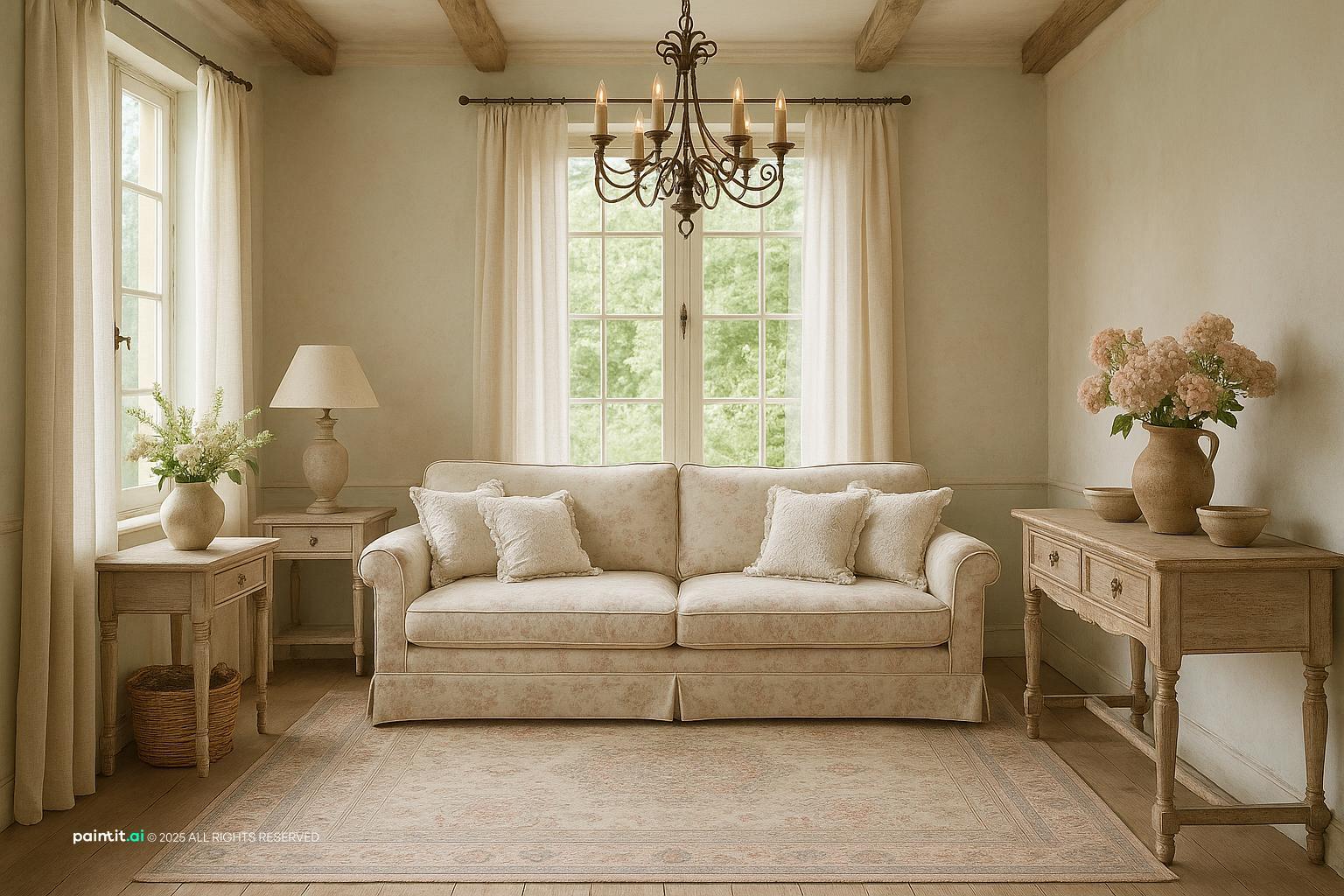
Charming French Country Living Room Design pairs vintage character, soft textiles and natural light in a living room setting.
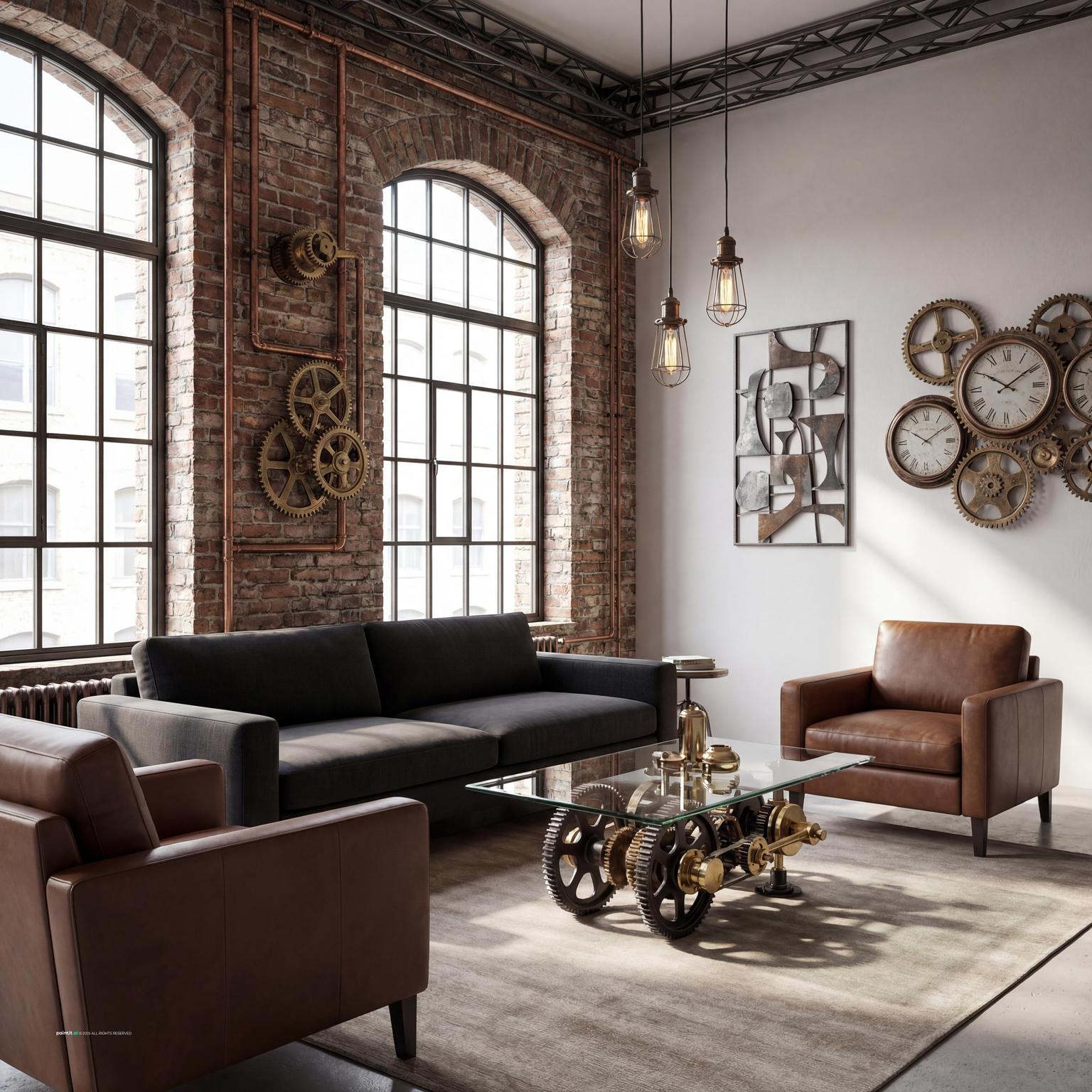
Steampunk Contemporary Living Room Design layers vintage character, metal accents and layered neutrals in a living room setting.
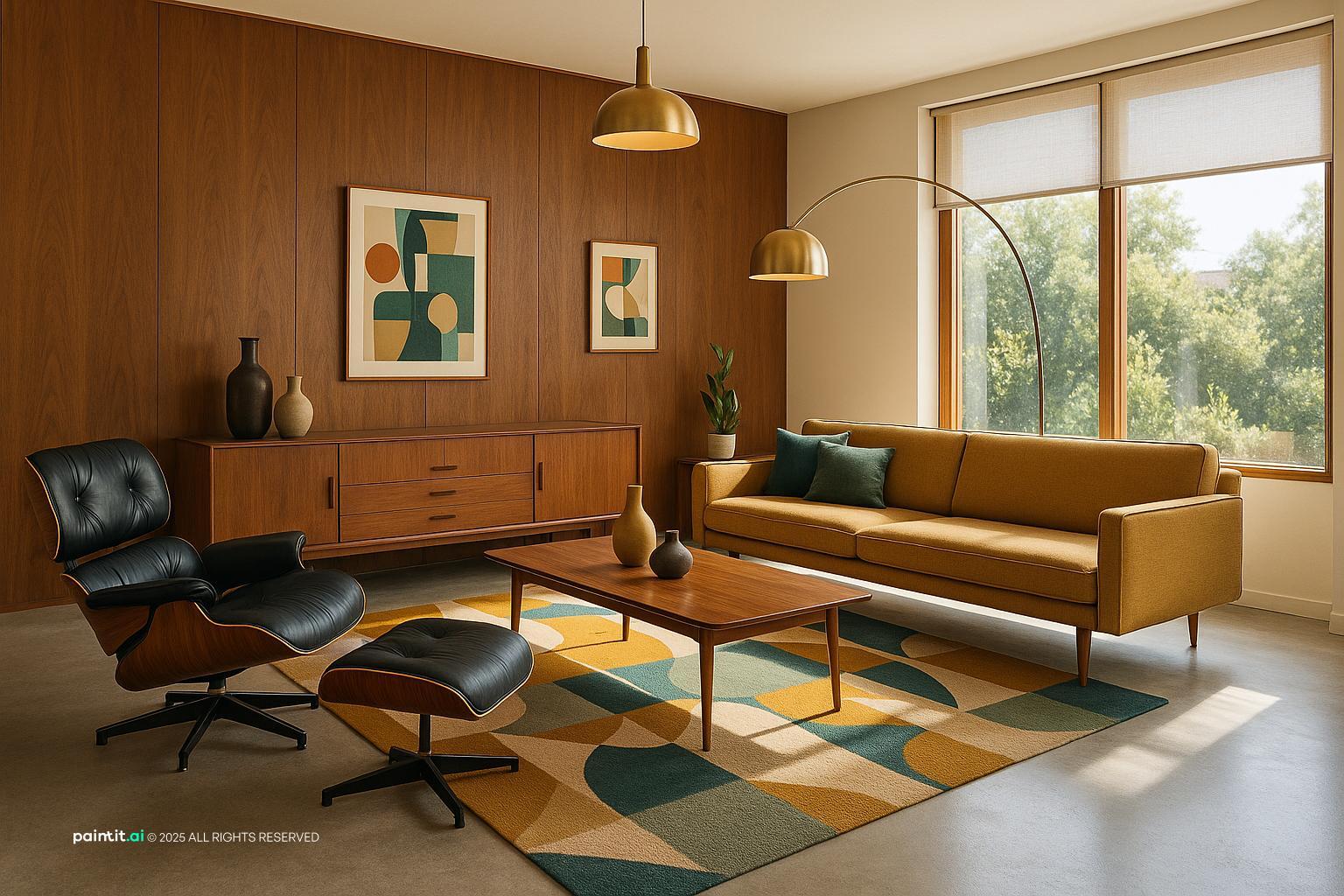
Vintage Living Room Ideas with Vintage Character and Warm Wood anchors vintage character, warm wood and metal accents in a living room setting.
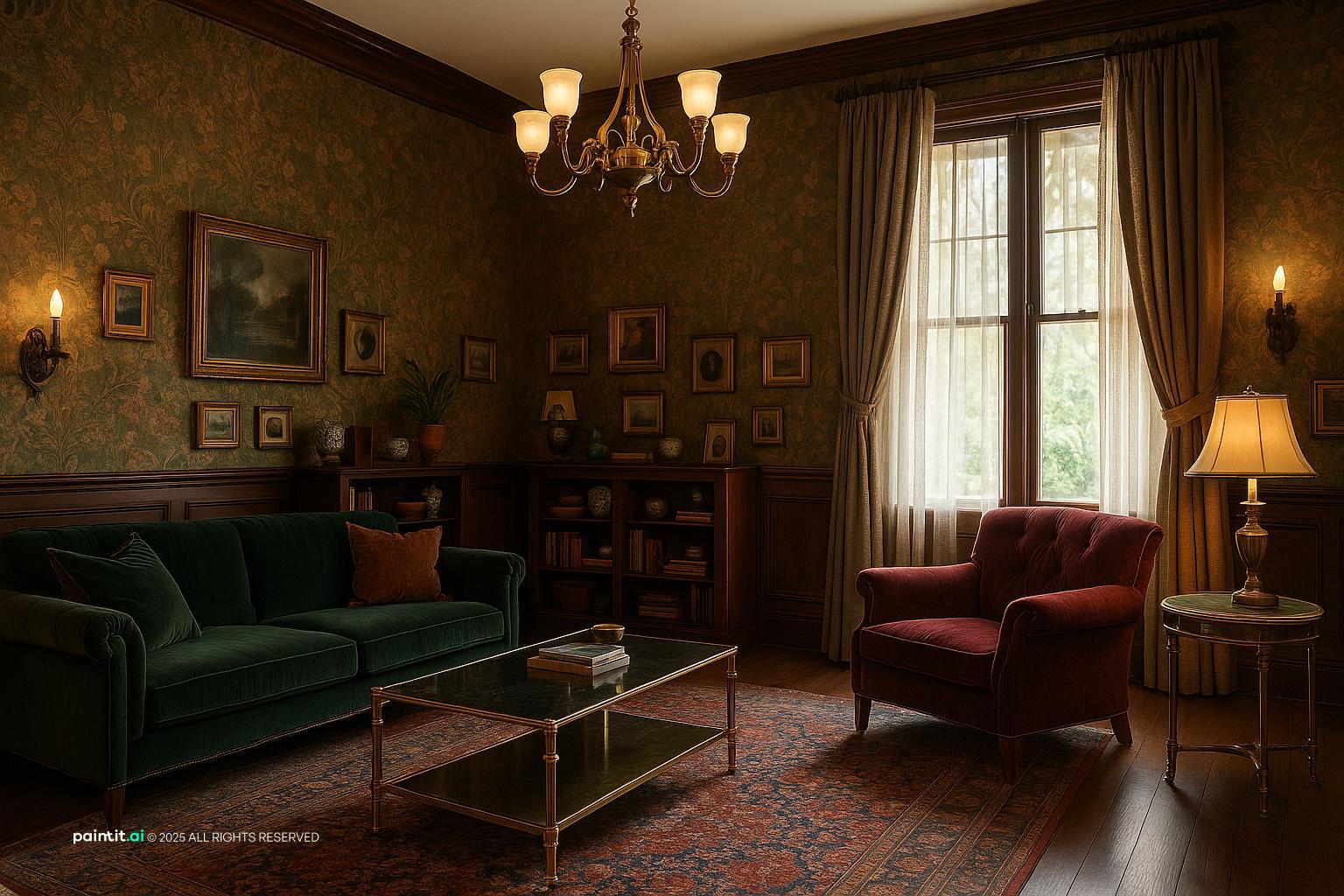
Vintage Living Room Ideas with Vintage Character and Metal Accents softens vintage character, metal accents and natural light in a living room setting.
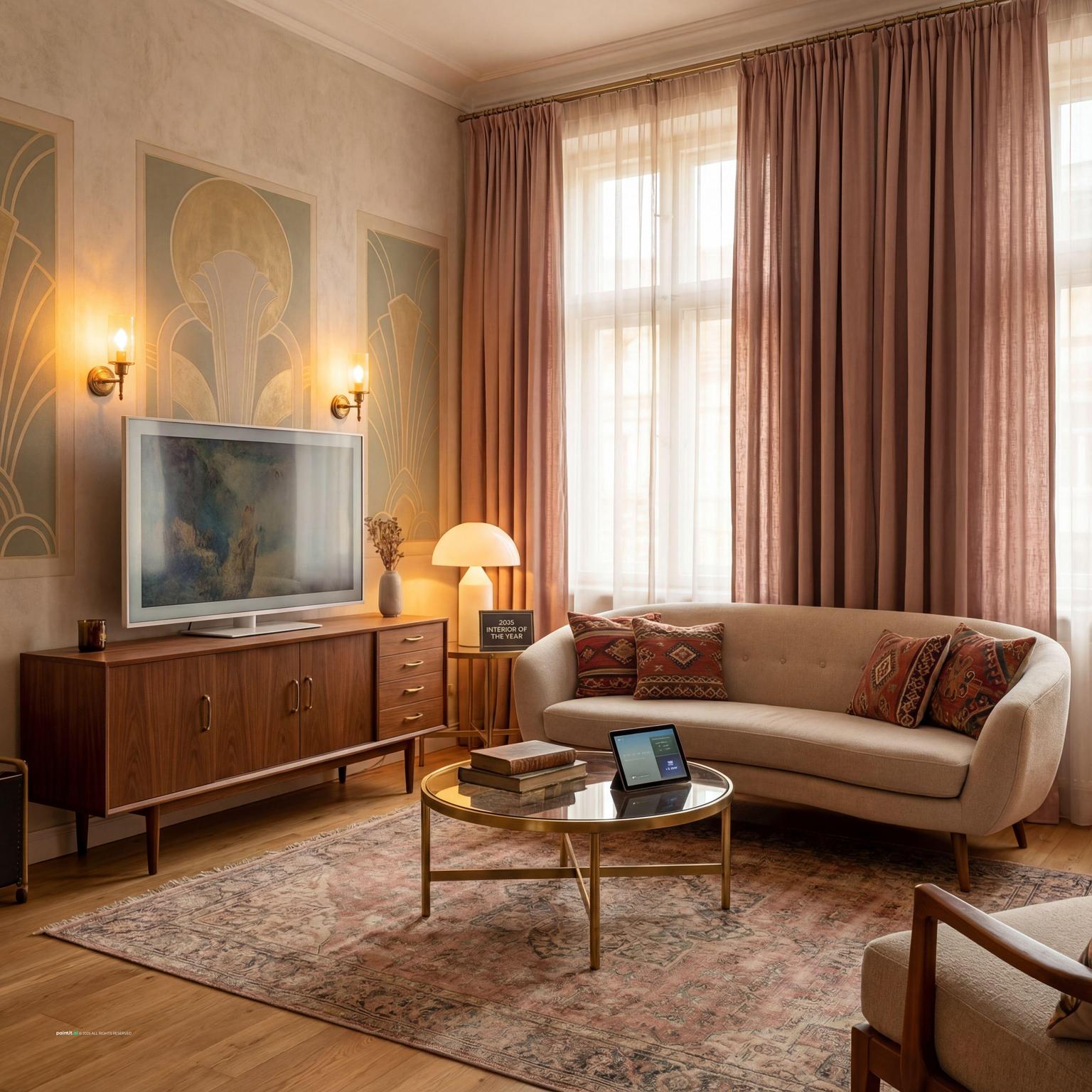
Vintage-Style Living Room Design for 2025 uses vintage character, warm wood and soft textiles in a living room setting.
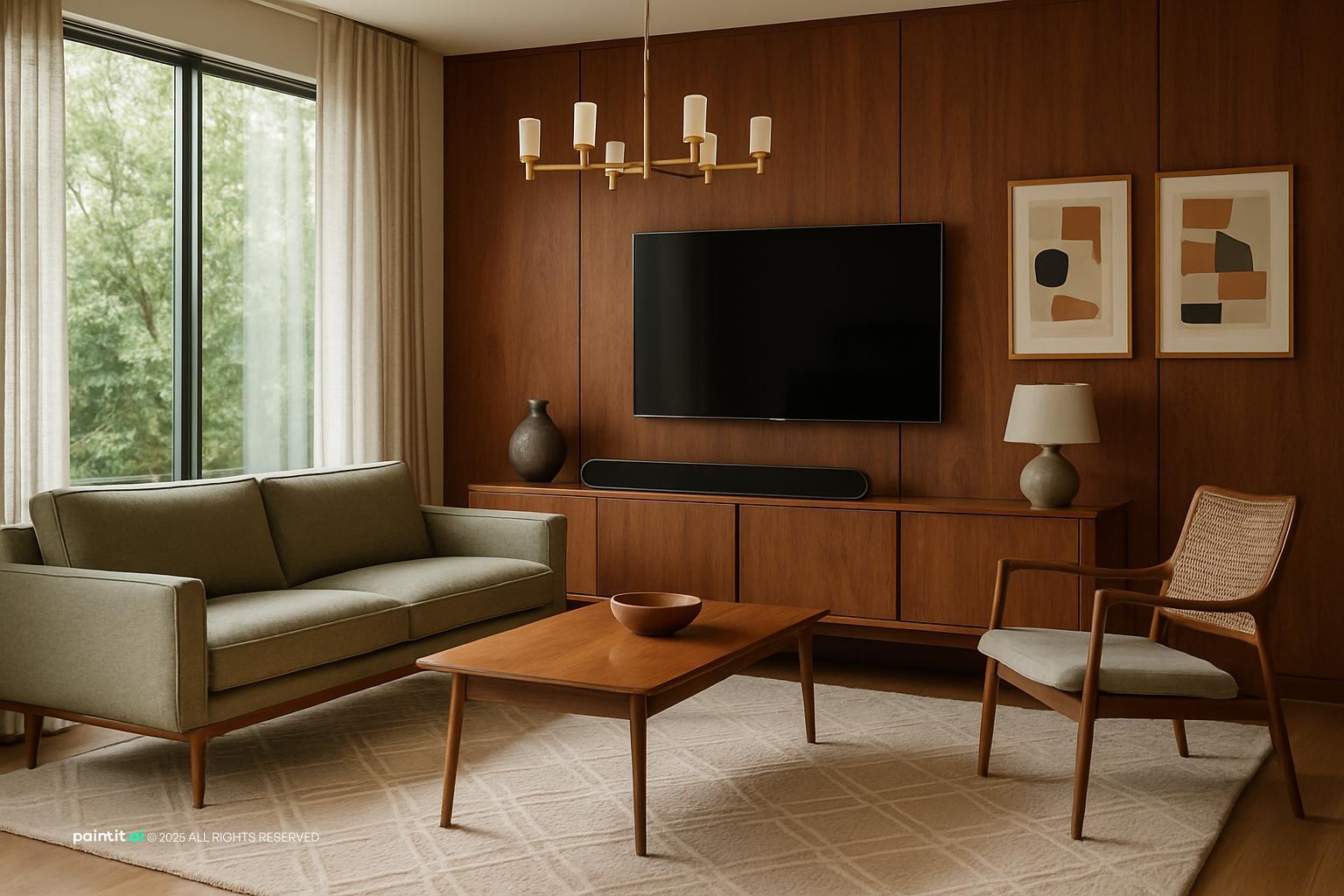
Vintage Living Room Ideas with Vintage Character and Warm Wood with Soft Textiles balances vintage character, warm wood and soft textiles in a living room setting.
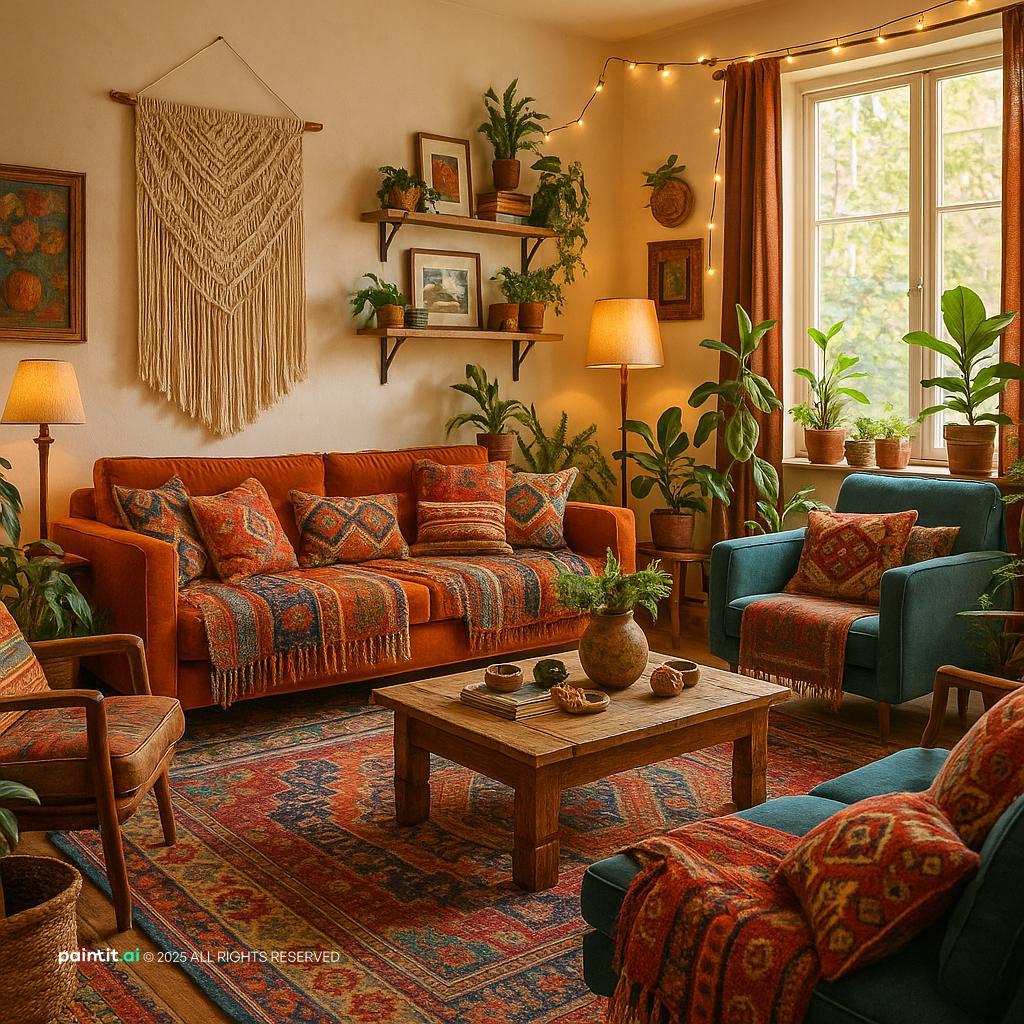
Vibrant Bohemian Living Room Design pairs vintage character, soft textiles and plants and greenery in a living room setting.
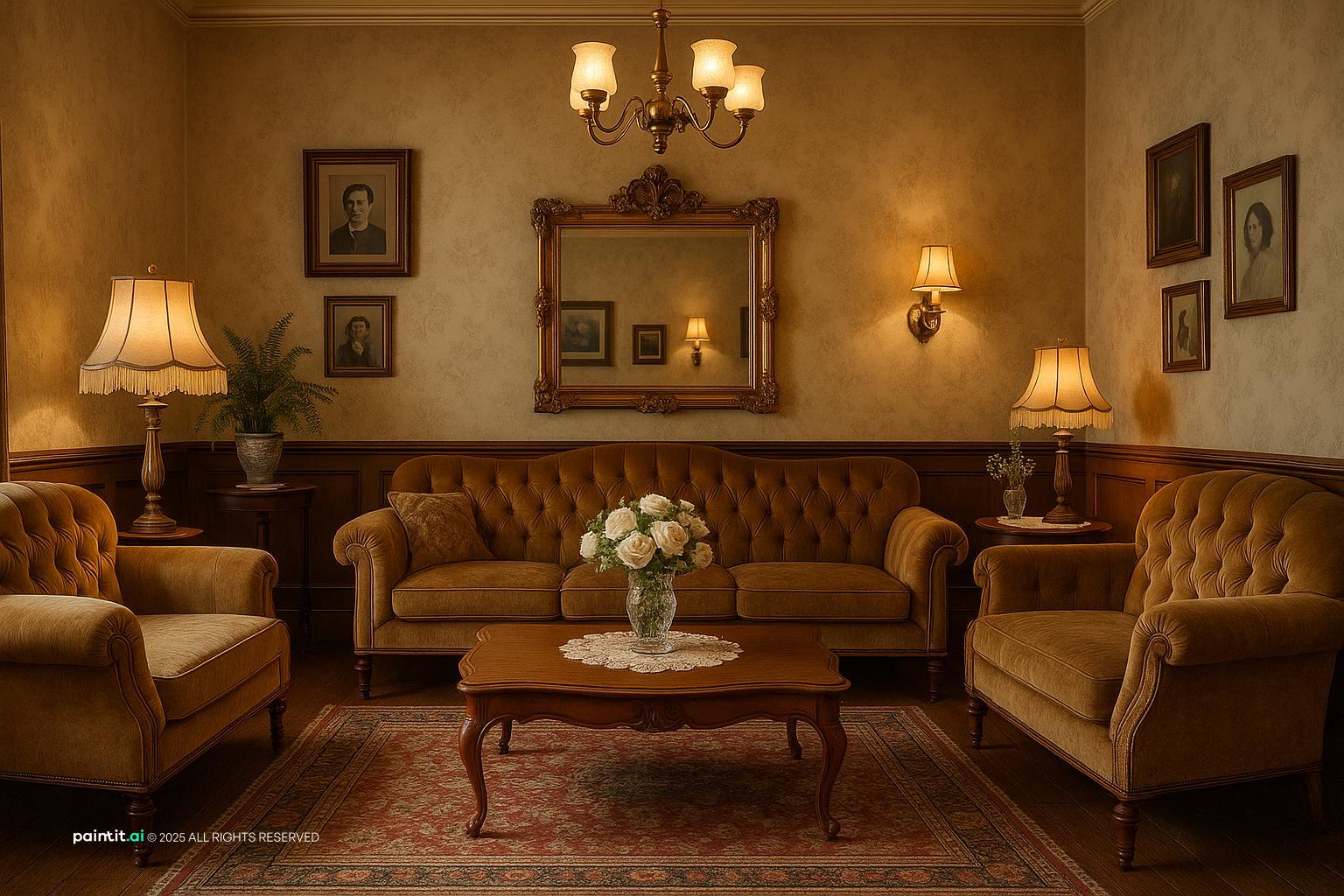
Elegant Vintage Living Room Design with Vintage Character layers vintage character in a living room setting.
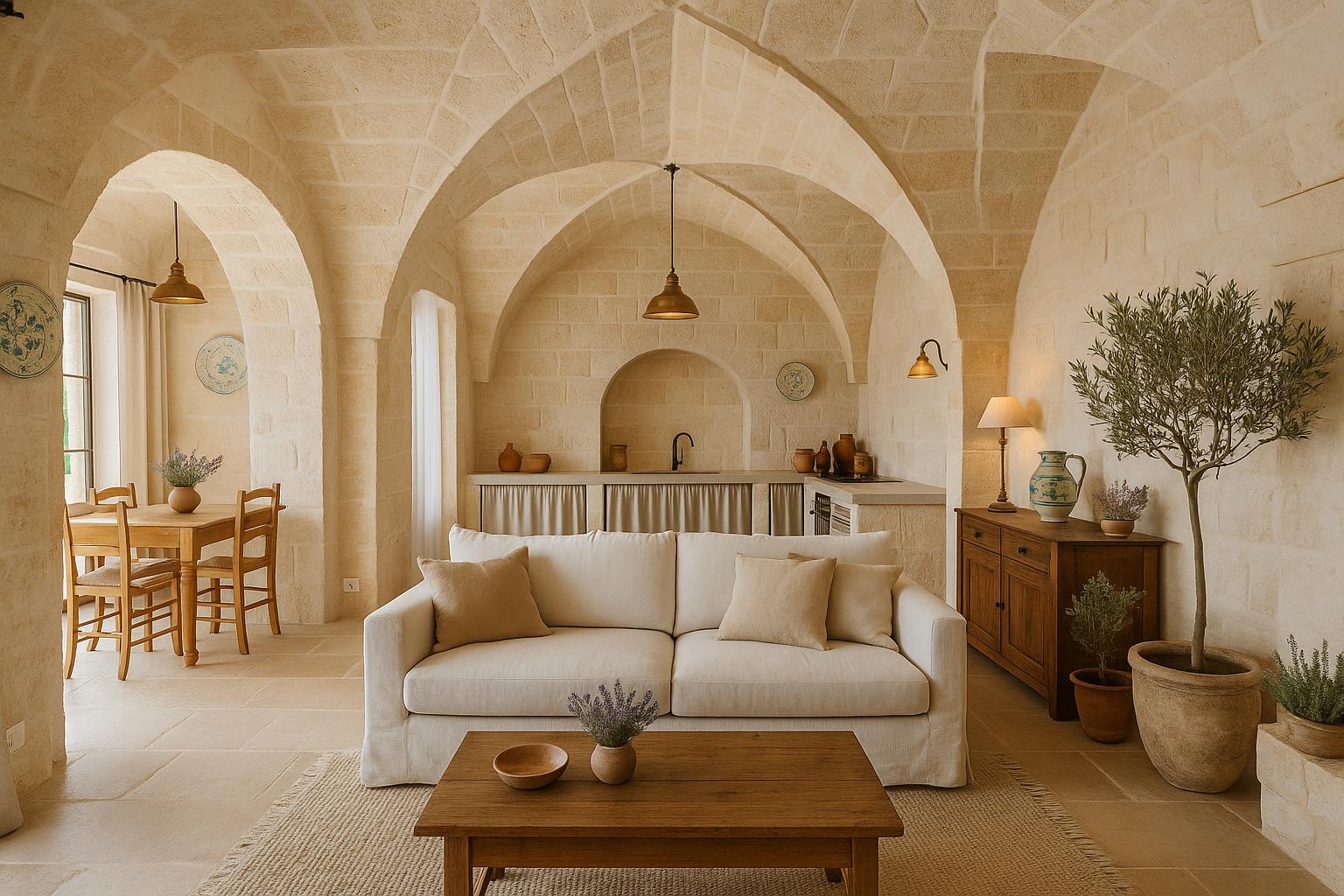
Charming Pugliese Living Area Design anchors vintage character, soft textiles and metal accents in a living room setting.
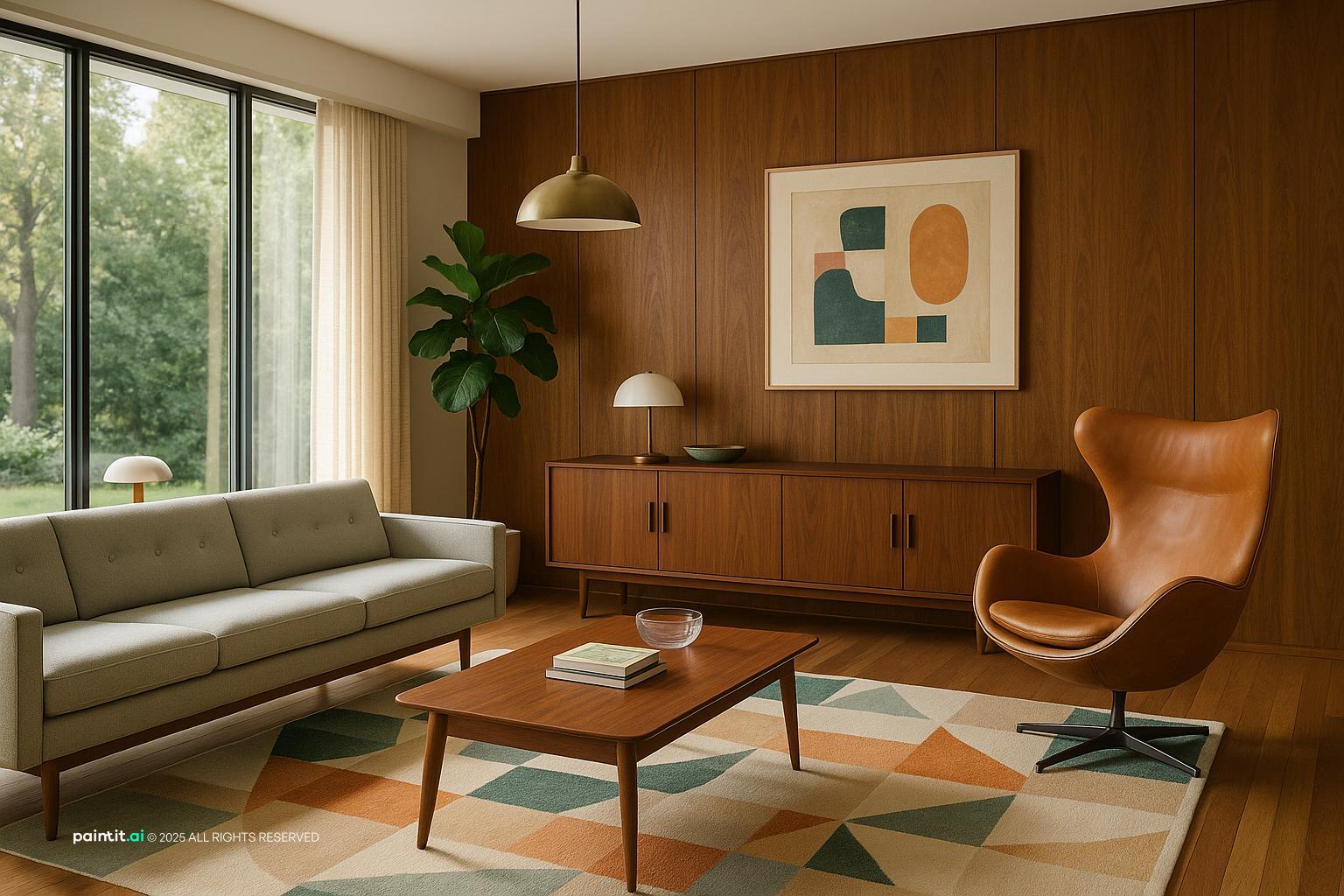
Mid-Century Modern Living Room Design softens vintage character, warm wood and clean-lined furniture in a living room setting.
A vintage modern living room usually works better when one large piece stays simple. Keep a clean-lined sofa, plain sectional, or modern media cabinet, then build the older character around it with a vintage rug, wood side tables, framed art, and warmer lighting. This stops the room from feeling like a staged theme instead of a place where people read, talk, watch TV, and put down a cup.
Why it works: the modern anchor gives your eye somewhere quiet to rest. In Paintit.ai behavior, 12.0% of users include keep or don't change instructions, and that instinct is useful here. Decide what to preserve first. Then add vintage layers around it instead of replacing every surface at once.
A rug is often the fastest way to make vintage living room decor feel intentional. Choose one large enough for at least the front legs of the sofa and chairs to sit on it. A small rug floating in the middle of the room almost always makes the seating feel unfinished. Persian-style, Turkish, faded floral, flatweave, and worn geometric rugs can all work if their colors connect to the sofa, curtains, artwork, or wood tone.
What to avoid: do not choose a rug only because it looks old in a photo. Check scale, traffic flow, and pile height. A thick rug can catch on a door. A tiny rug can make even beautiful antique furniture look scattered and temporary.
A wood coffee table can bridge different eras without trying too hard. Dark stained wood feels moodier and more traditional, oak feels easier and more relaxed, and walnut or burl can make the room feel more edited. If the sofa is modern, choose a table with turned legs, carved detail, visible grain, or an older finish to create contrast.
In Paintit.ai tests, rooms labeled only as vintage can drift into clutter. When the prompt adds a specific material such as dark wood or brass, the design usually gains a clearer direction. That matches user behavior too: 19.0% of prompts include material modifiers. Be specific about the finish, not just the age.
A gallery wall is a natural home for collected decor, but it still needs control. Mix portraits, small sketches, black-and-white photos, mirrors, and textile art if you like, but keep the spacing between frames fairly consistent. Start with the largest piece slightly off center above the sofa, console, or cabinet, then work outward.
Why it works: vintage rooms can handle variety when the edges feel organized. Use two or three frame finishes, such as aged gold, dark wood, and thin black metal. Avoid hanging every piece at a different height unless you want the wall to feel restless.
Antique furniture often carries more visual weight than contemporary pieces. A carved cabinet, roll-arm chair, skirted settee, or heavy sideboard can be beautiful, but too many dense pieces will shrink the room fast. Balance them with open-leg chairs, a slim floor lamp, a glass-top table, or a cleaner sofa.
I would treat this as a layout problem before treating it as a styling problem. If a heavy cabinet blocks the route from the doorway to the sofa, accessories will not save it. Leave comfortable walking space where people naturally enter, sit, turn, and move around the seating area.
Retro lighting can change the mood faster than a new chair. Look for milk-glass sconces, pleated lampshades, brass floor lamps, ceramic table lamps, globe pendants, or a simple mid-century arc lamp. Place light at different heights: one floor lamp, one table lamp, and, if possible, a wall or ceiling source.
This matters even more in a small vintage living room. When people upload compact rooms, the weak spot is often not the furniture. It is the flat overhead light. Since 5.9% of Paintit.ai prompts include lighting modifiers, it is worth testing the atmosphere early instead of treating lamps as the final accessory.
Patterned curtains can make a vintage living room feel finished, but they need a relationship to the rest of the palette. Try muted florals, small stripes, block prints, or woven checks if the furniture is mostly solid. If the rug is already busy, choose curtains with a quieter repeat or a tactile fabric instead of another loud print.
What to avoid: short curtains that stop awkwardly above the floor. Hang the rod wider than the window frame and higher if the ceiling allows it. The window will feel larger, and the fabric will look like a planned design choice rather than an afterthought.
Brass works well in vintage rooms because it catches light without feeling too polished when the finish is aged or brushed. Use it on lamp bases, picture frames, cabinet hardware, candleholders, or a small tray. The key is repetition, not quantity.
Why it works: a few brass accents can connect unrelated pieces across the room. Avoid using only shiny new brass if the rest of the room has patina. A mix of aged brass, darker metal, and warm wood usually feels more believable.
The TV is often the least vintage object in the room, so the wall around it needs a job. Place the screen above a wood console, flank it with bookshelves, or hang framed art nearby so the black rectangle is not the only focal point. A darker wall color or deeper cabinet finish can also reduce the contrast.
For a practical test, use an AI living room design workflow to compare the TV wall with a console, cabinet, gallery arrangement, or shelves before buying anything large. Check glare from windows, the viewing angle from the main sofa, and whether the wall still gives you enough storage.
Vintage color does not have to mean brown. Muted cream, warm beige, olive, sage, dusty blue, tobacco, ochre, oxblood, clay, and mushroom can all feel period-friendly without making the room heavy. Pick one main wall or upholstery color, one wood tone, and one accent color for art or textiles.
Paintit.ai data shows that 27.6% of prompts include color modifiers, which makes sense because small color shifts change vintage rooms dramatically. Instead of asking for a vintage palette in a vague way, try a specific direction such as sage walls with dark wood and cream upholstery. For more palette direction, compare options from best living room colors before committing to paint.
Vintage styling often fails when every surface gets covered. Style shelves and tables with fewer, stronger groupings: a stack of books, one ceramic vessel, a small framed piece, and a lamp. Leave some open space so the eye can still read the shape of the furniture.
Why it works: negative space makes collected objects look chosen. Avoid lining up dozens of small items across a mantel or console. Group in odd numbers, vary height, and repeat one material such as wood, ceramic, or brass.
Retro living room ideas can be fun, but they need editing. A low-slung sofa, tulip table, mushroom lamp, checkerboard pillow, or 1970s color can be enough. If you add all of them together, the room may start to feel like a costume.
Choose the decade you want to reference most clearly. Mid-century pieces like tapered-leg chairs behave differently from Victorian, Art Deco, or 1970s pieces. One clear reference is stronger than five weak ones competing for attention.
A good vintage furniture living room plan can start with three decisions: what to keep, what to remove, and what to add. Keep the piece with the best scale, comfort, or sentimental value. Remove the item that blocks the path, feels too bulky, or fights the palette. Add one vintage piece that solves a real need, such as storage, seating, or lighting.
This is also a useful way to learn how to redesign a living room with Paintit.ai because you can test different keep and remove choices visually. The best results rarely come from changing everything. They come from preserving the right anchor and refining around it.
The most convincing eclectic vintage living room ideas usually come from iteration. Add a rug, then change the lamp. Make the curtains a bit quieter. Try more brass, then remove one shiny piece. Update the wall color, then see whether the sofa still works. The room should improve with each layer, not become busier.
Paintit.ai prompt behavior reflects this: 15% of users use refinement language such as instead, now, a bit, more, or less. Treat that as a decorating method. Vintage style rewards patience because the best pieces are often found over time, not bought as a matching set.
Use the second gallery to compare how the same vintage direction changes with deeper wall color, warmer wood, a quieter rug, a different lamp shape, heavier curtains, or fewer collected details.
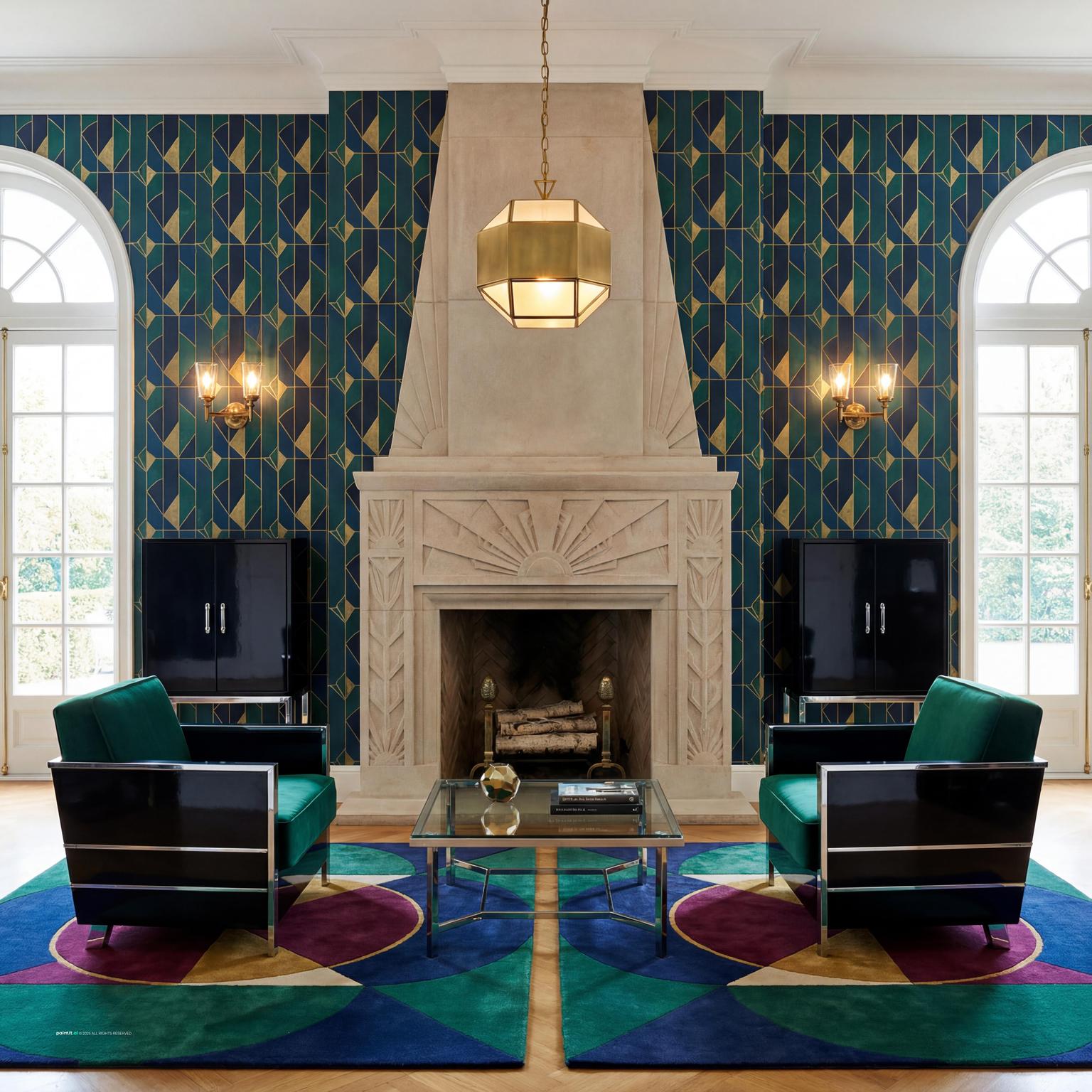
Stunning Art Deco Living Room Design uses vintage character, metal accents and dark contrast in a living room setting.
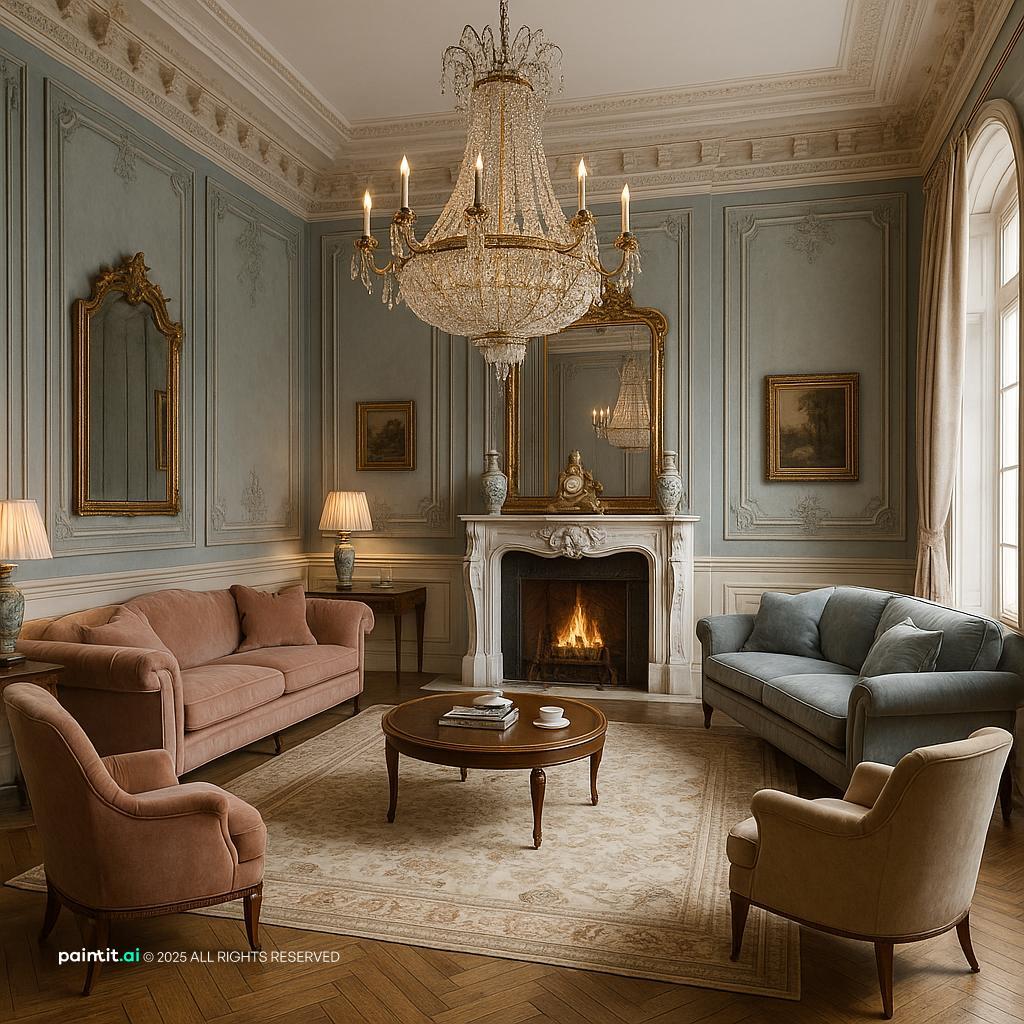
Elegant Neoclassical Living Room Design balances vintage character, metal accents and layered neutrals in a living room setting.
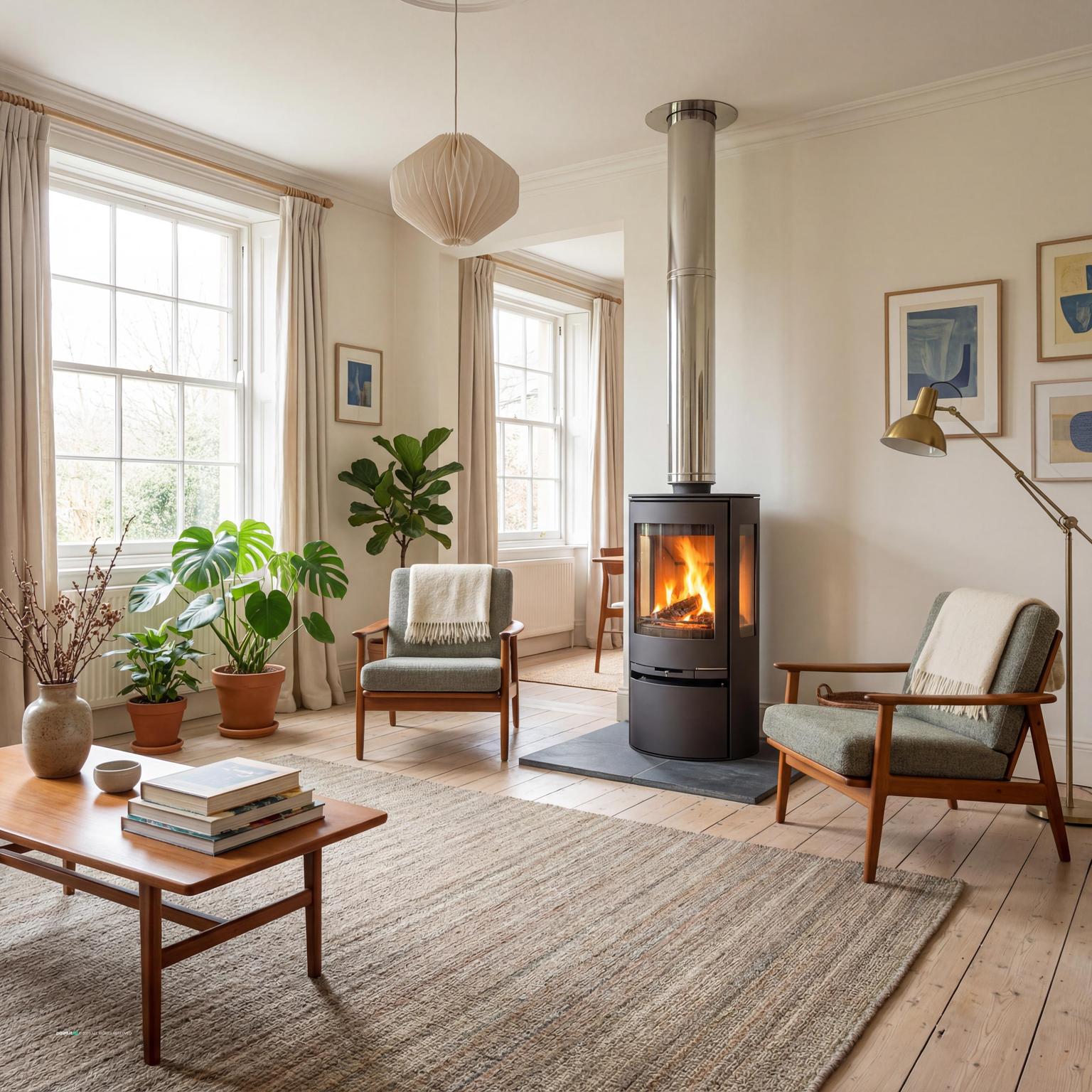
Vintage Scandinavian Living Room Design pairs vintage character, warm wood and soft textiles in a living room setting.
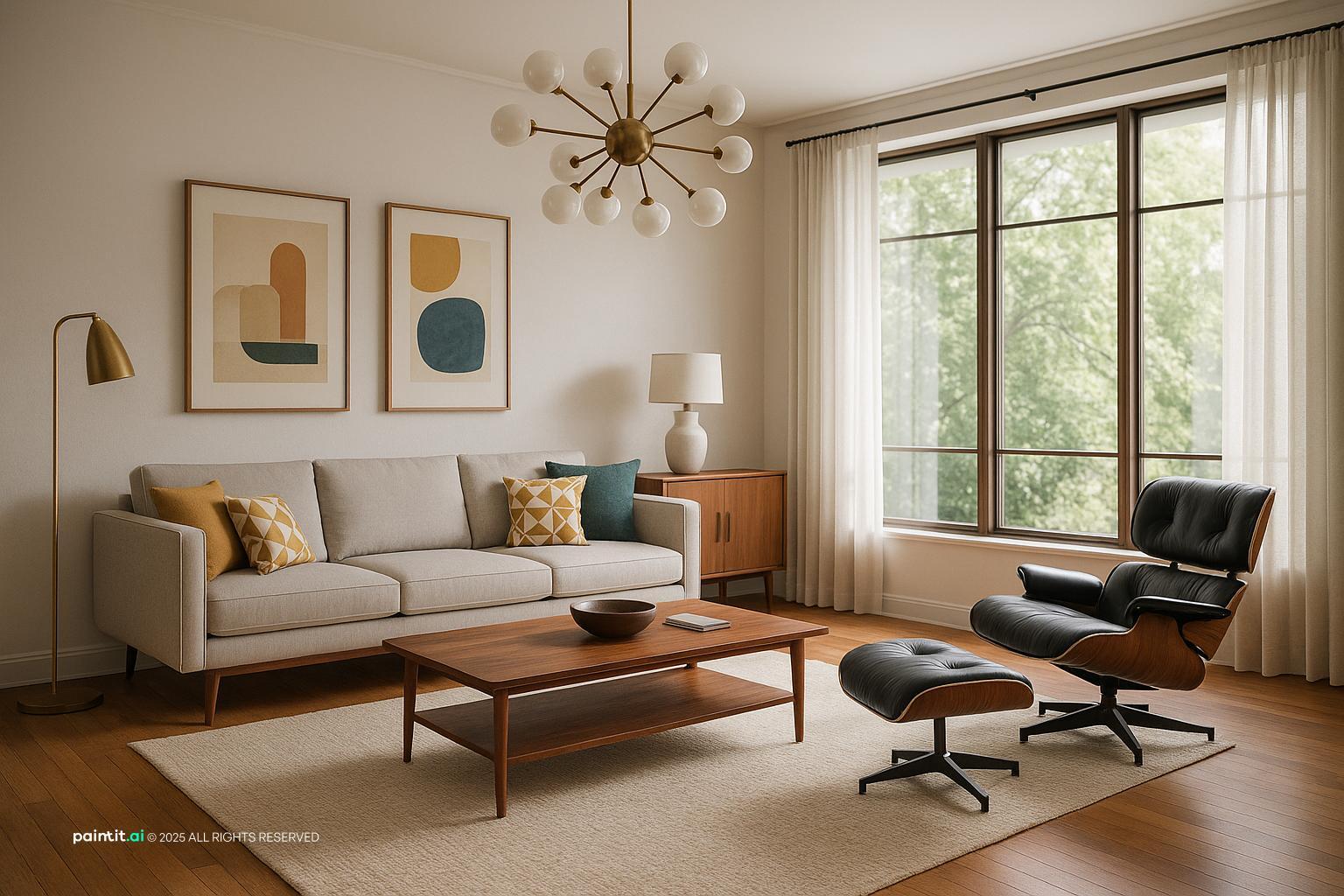
Mid-Century Modern Living Room Design with Vintage Character layers vintage character, warm wood and soft textiles in a living room setting.
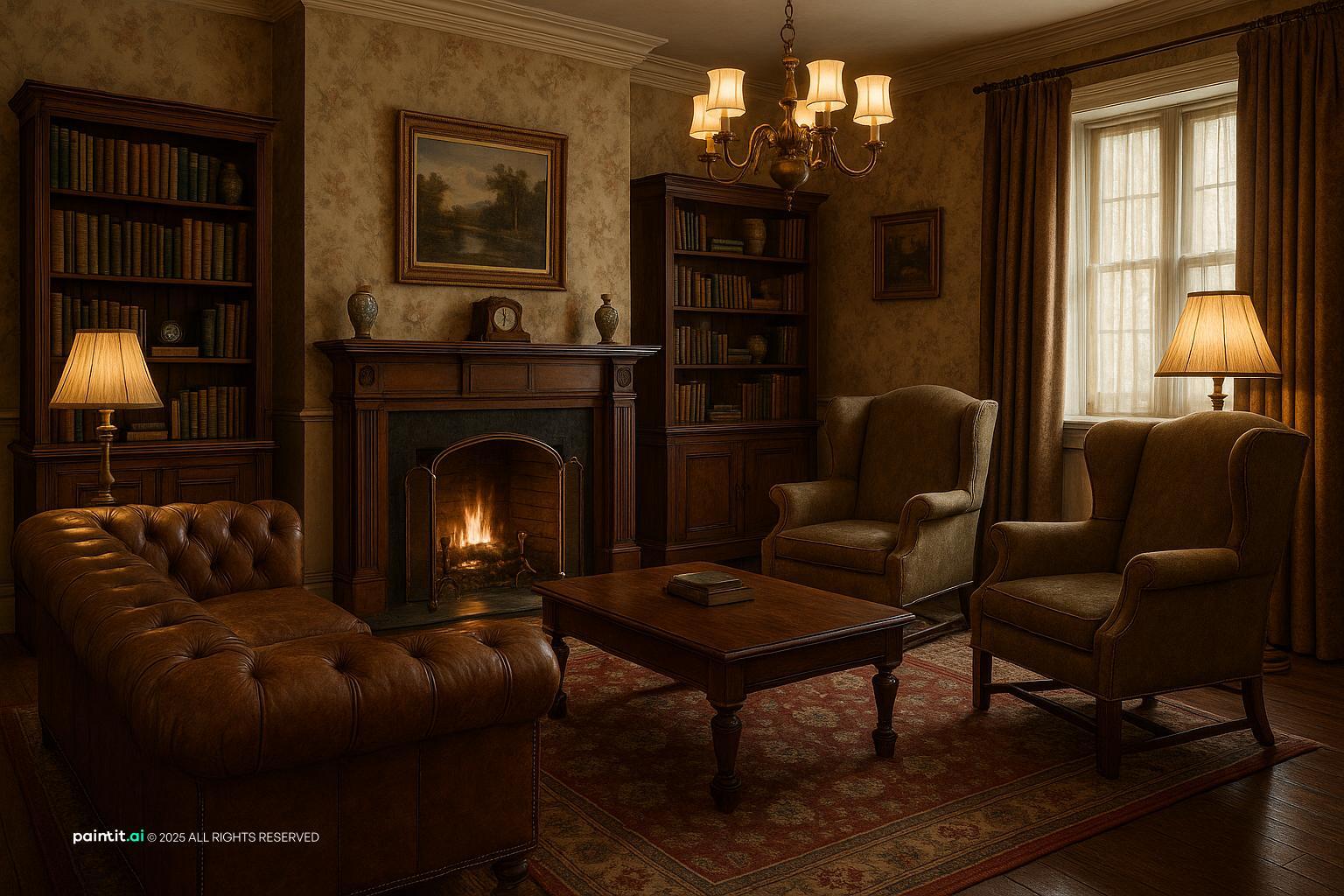
Elegant Vintage Living Room Design with Metal Accents anchors vintage character, metal accents and natural light in a living room setting.
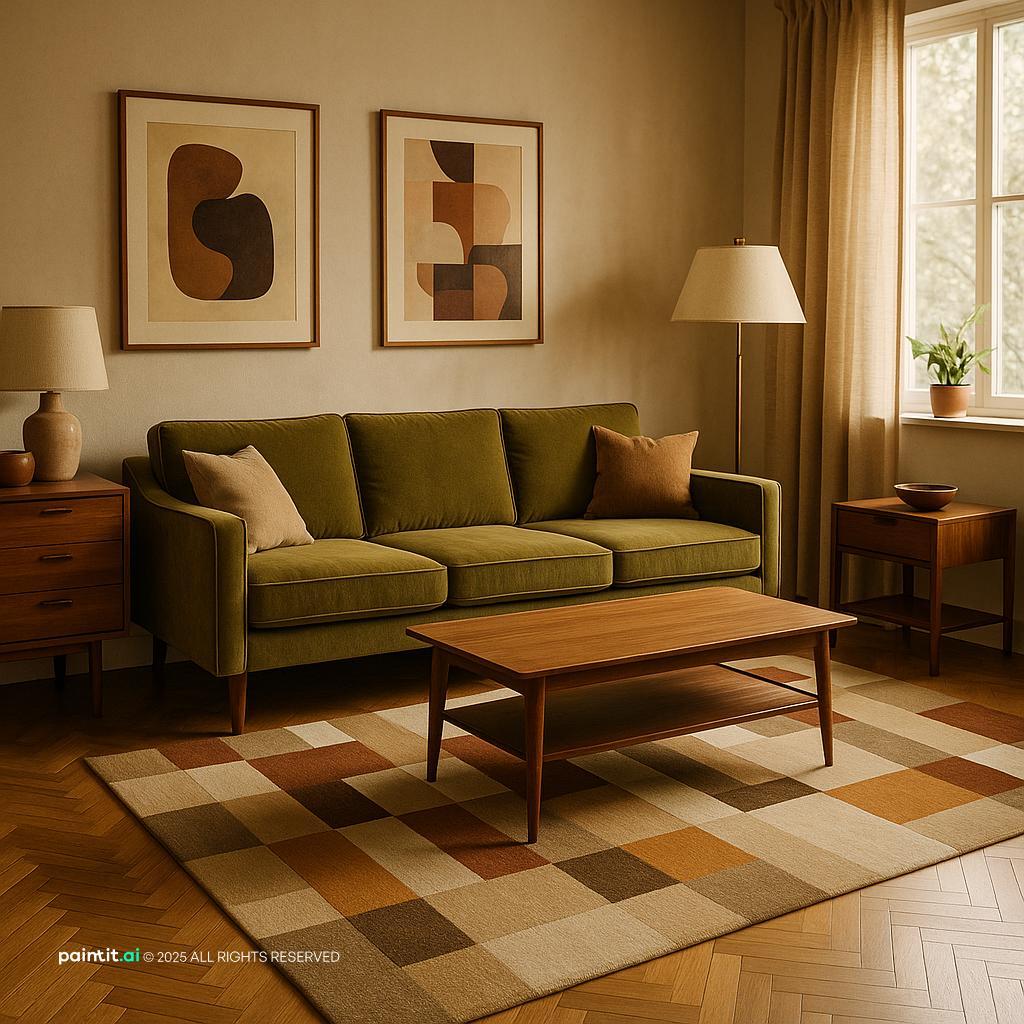
Mid-Century Modern Living Room Design with Soft Textiles softens vintage character and soft textiles in a living room setting.
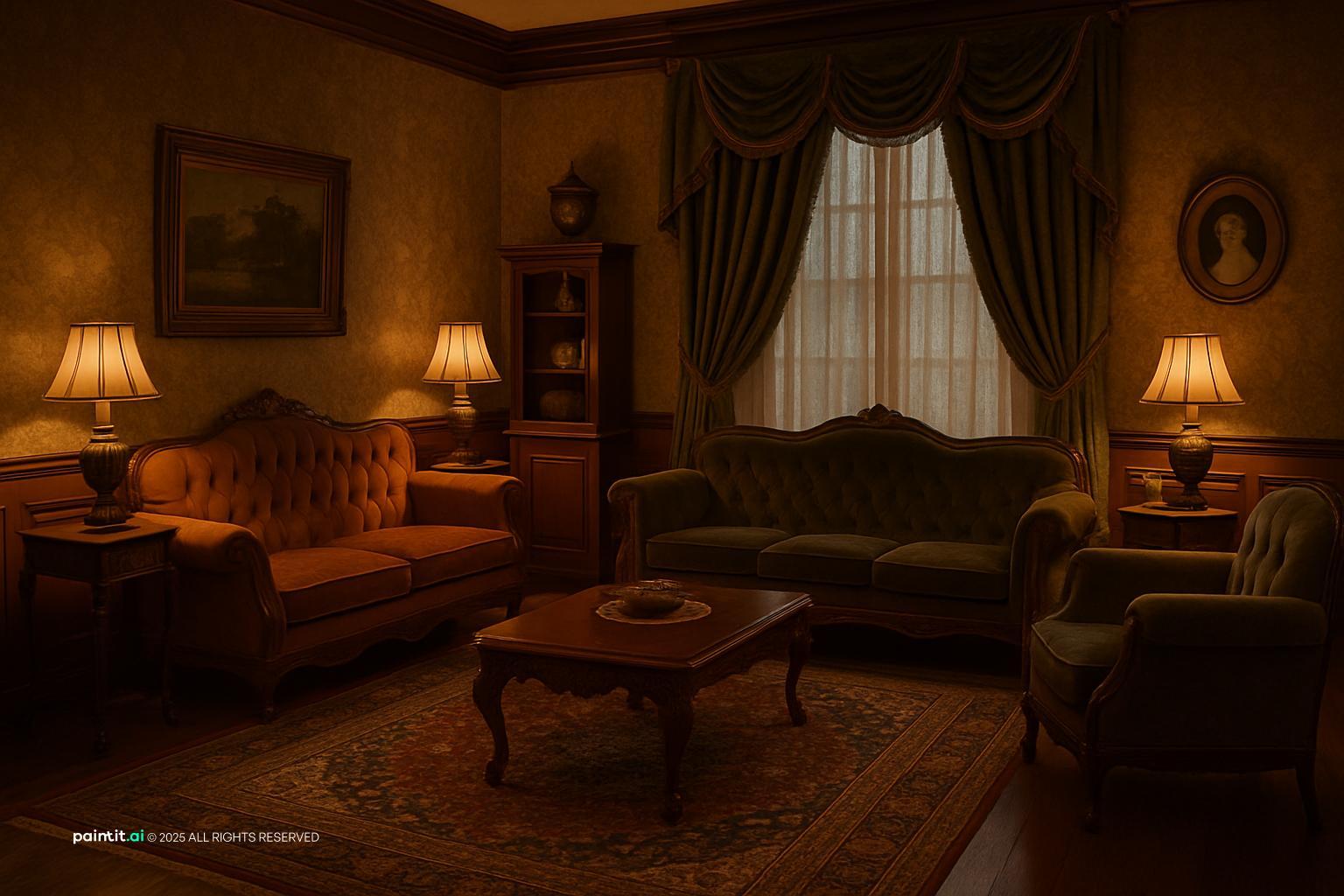
Vintage Living Room Ideas with Vintage Character uses vintage character in a living room setting.
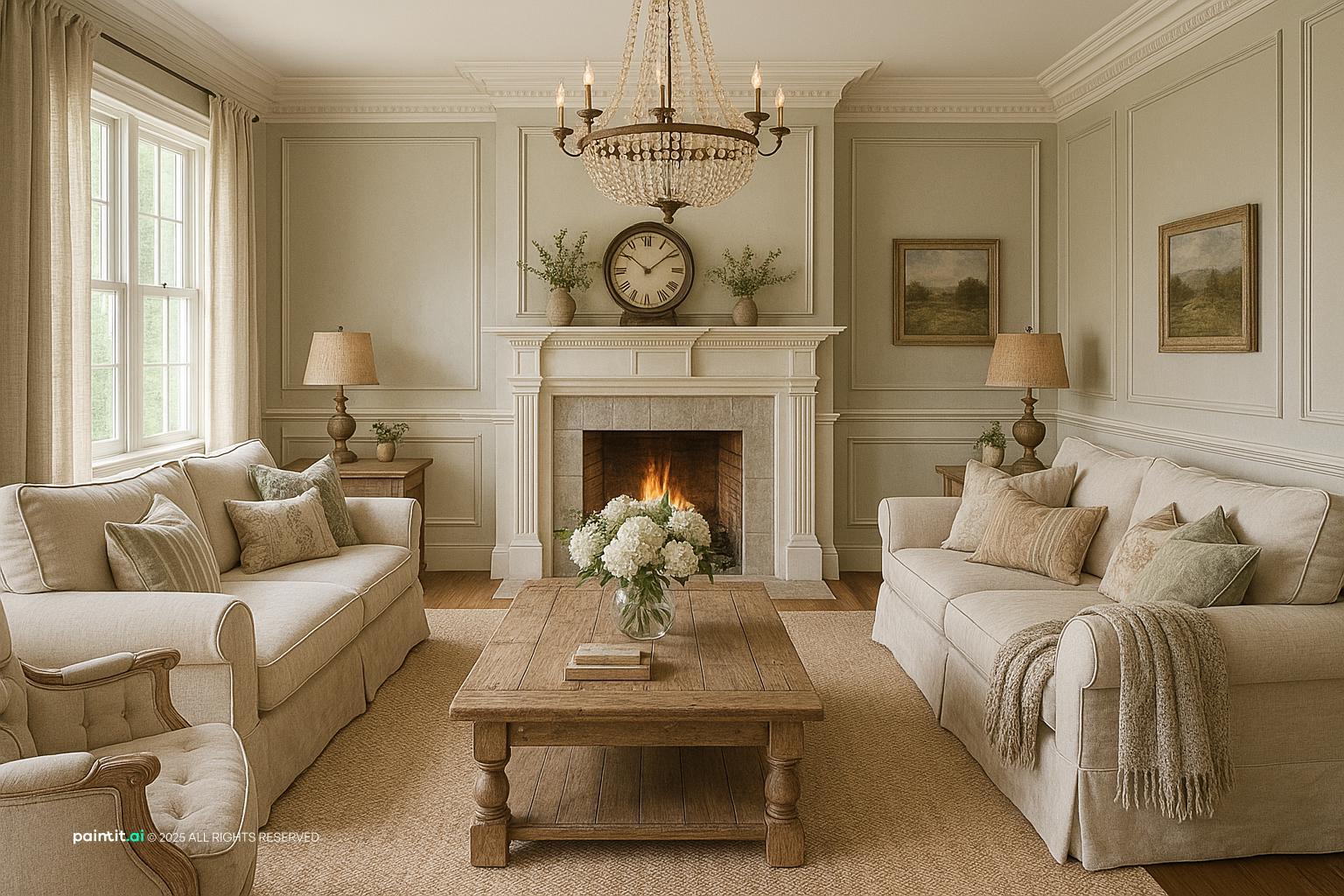
Vintage Living Room Ideas with Vintage Character and Soft Textiles balances vintage character, soft textiles and layered neutrals in a living room setting.
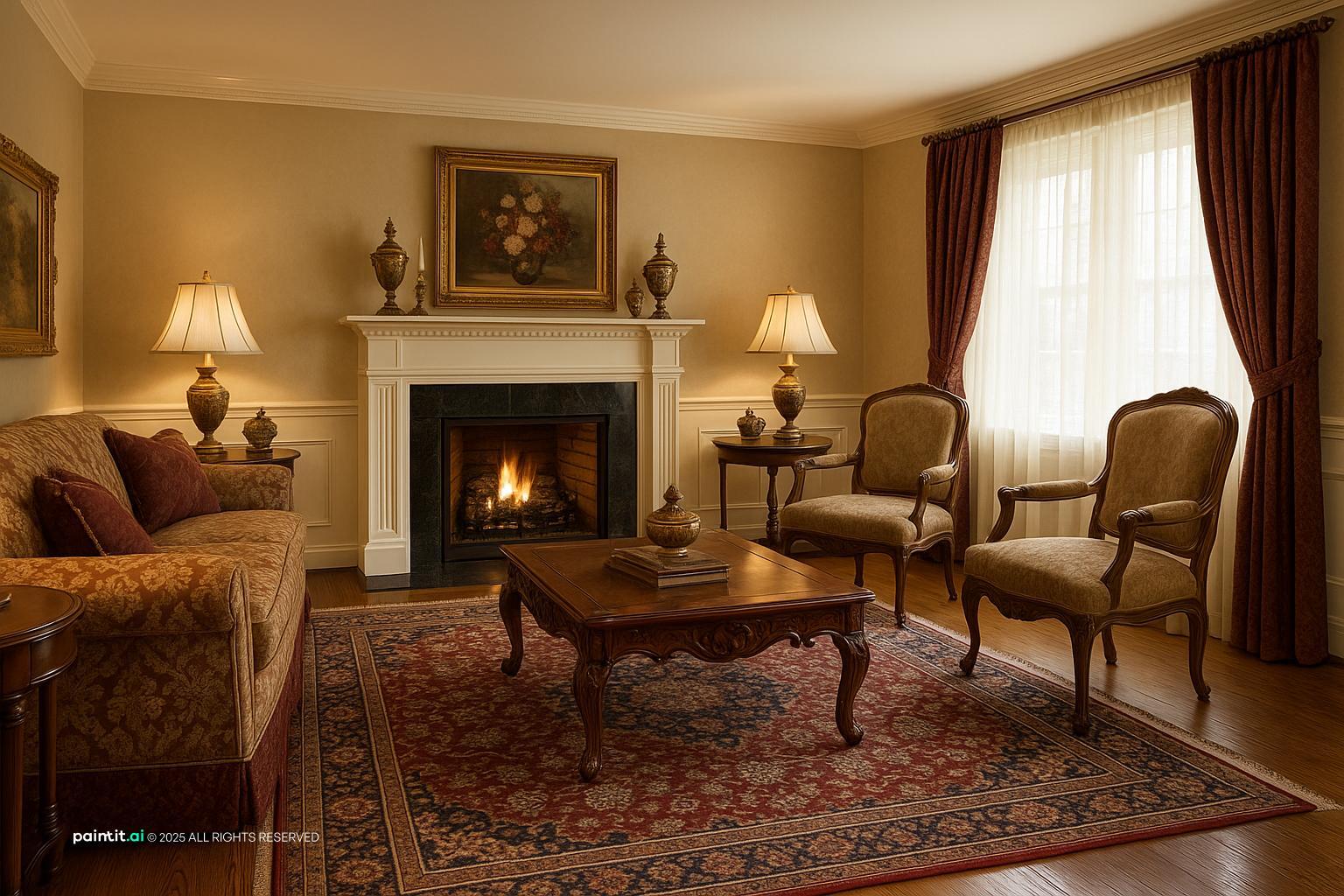
Vintage Living Room Ideas with Vintage Character and Layered Neutrals pairs vintage character, layered neutrals and natural light in a living room setting.
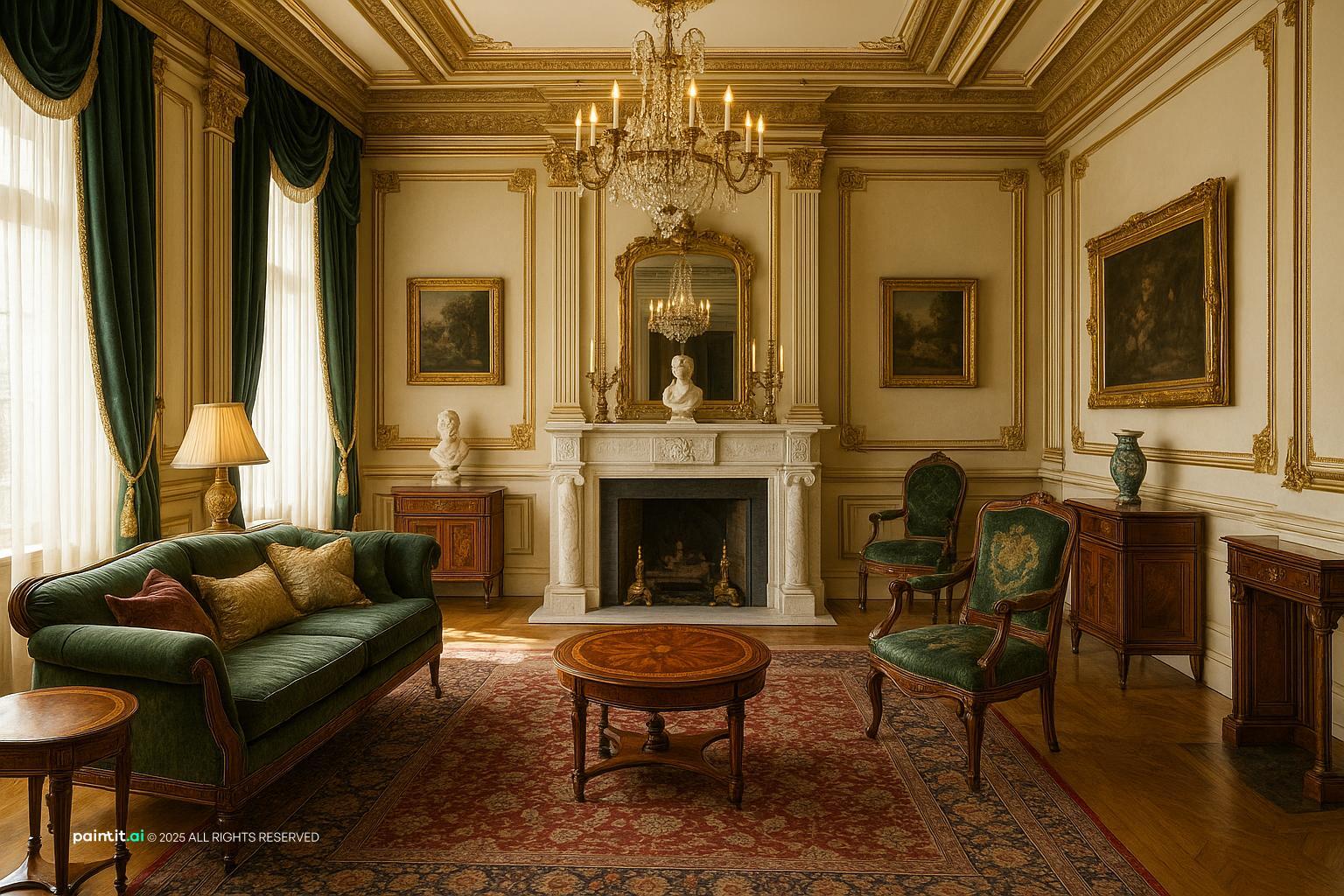
Elegant Neoclassical Living Room Design with Vintage Character layers vintage character, warm wood and soft textiles in a living room setting.
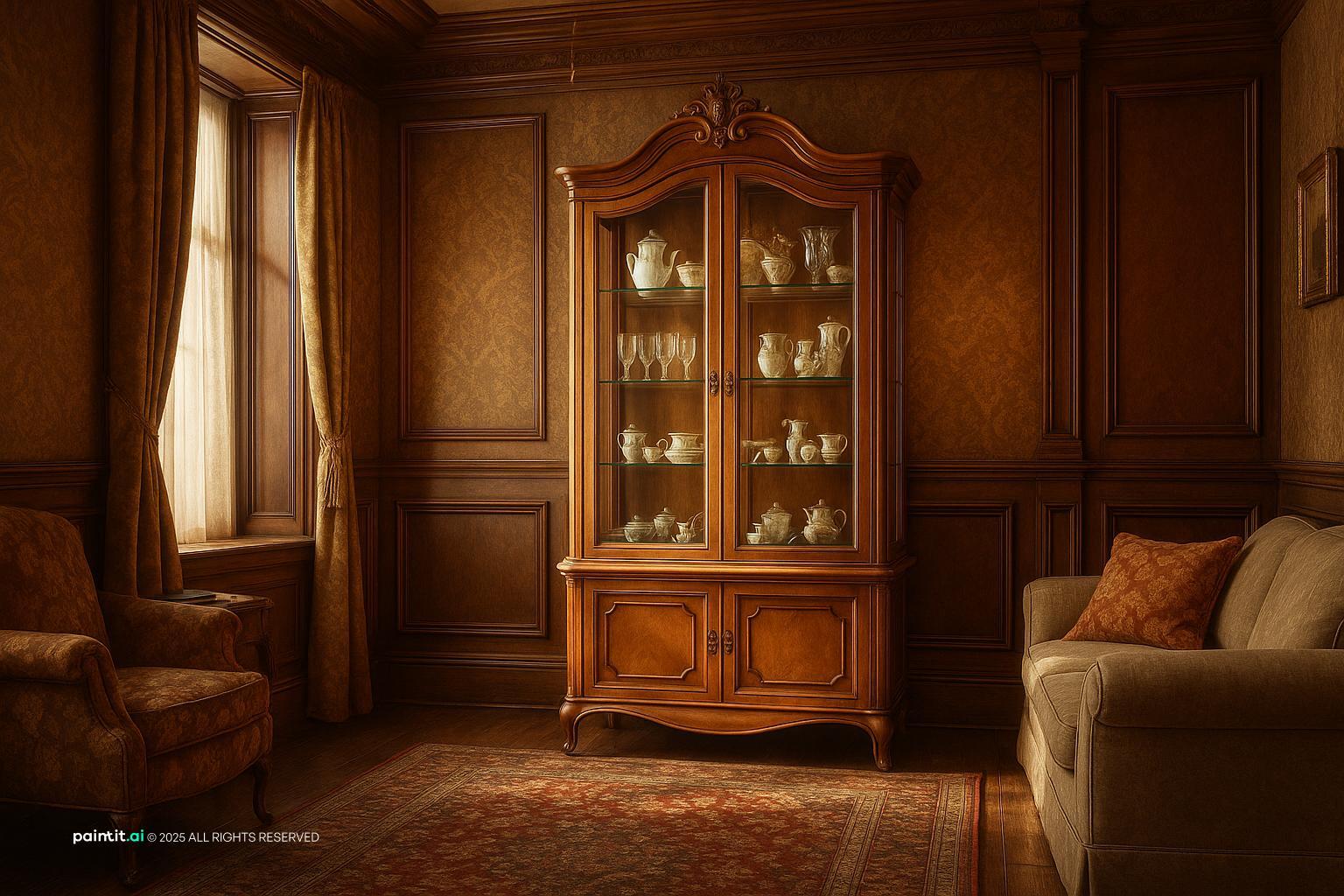
Elegant Vintage Living Room Design with Natural Light anchors vintage character and natural light in a living room setting.
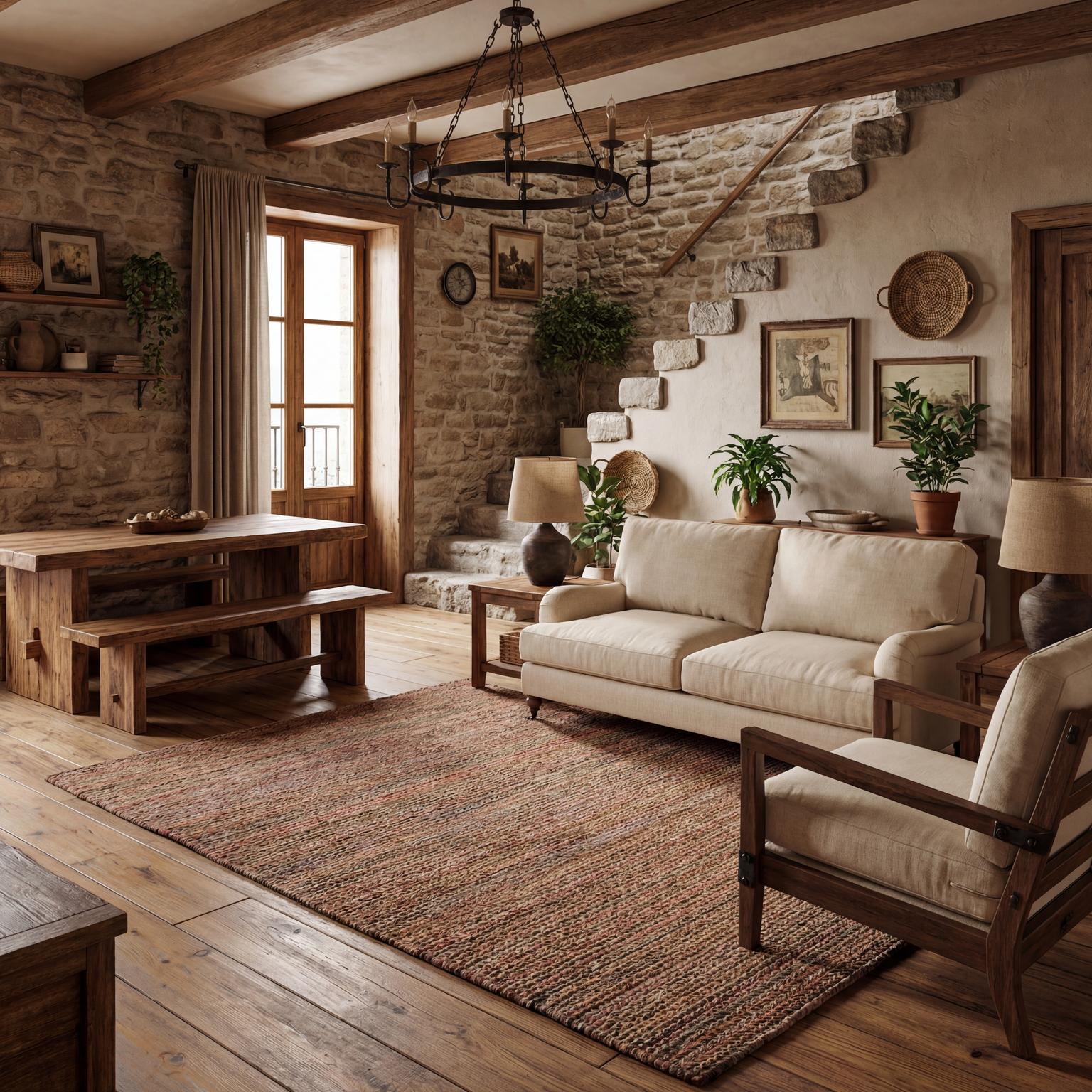
Rustic Living Room Design softens vintage character and plants and greenery in a living room setting.
Start with the undertone already in the room. Honey floors usually like warm creams, olive, rust, and tobacco. Gray floors often need softer taupe, dusty blue, burgundy, or charcoal so the room does not feel flat. If the fireplace stone or brick has red, yellow, or pink in it, repeat that warmth somewhere in textiles, art, or wood.
What to avoid: pairing a cool white wall with very warm antique wood unless you bridge the gap with fabric, artwork, or a rug. Vintage rooms usually look better with softened whites, aged neutrals, and colors that feel slightly muted rather than freshly bright.
Wood is the backbone of many vintage rooms. Use visible grain, turned legs, carved doors, old shelving, or a substantial coffee table to add depth. If you already have wood floors, choose furniture wood that either clearly matches the warmth or clearly contrasts it. Almost-matching tones can look accidental.
Where to use it: coffee tables, side tables, console cabinets, picture frames, and shelving. Avoid loading all the dark wood pieces onto one side of the room, or the visual weight will feel lopsided.
Aged brass, bronze, blackened metal, and nickel can all work, but pick one dominant metal and one supporting metal. Brass is useful around lamps and frames because it warms the room, while black metal can sharpen chair legs, curtain rods, or picture lights. That mix keeps the room from feeling too sweet.
What to avoid: matching every metal finish exactly. A vintage room should feel collected, but not random. Repeat each metal at least twice so it looks intentional.
Older wood pieces, leather chairs, and stone fireplaces need softness nearby. Add linen curtains, velvet pillows, wool throws, or a worn rug to reduce the hardness. Pattern is welcome, but scale matters. Pair a large rug pattern with smaller pillow motifs, or keep pillows solid if the curtains already have detail.
Why it works: textiles absorb sound and make the seating area feel more comfortable. Avoid synthetic-looking shine if the goal is a lived-in vintage effect. Matte, tactile fabrics usually look more convincing in the room and in photos.
A vintage room should not depend on one overhead fixture. Use a ceiling light for general brightness, table lamps for conversation areas, floor lamps for reading, and small accent lights for shelves or artwork. Warm bulbs are usually more flattering with wood, brass, and aged textiles.
When people focus only on furniture, the room can still feel cold at night. A pleated shade beside the sofa, a picture light over art, or a ceramic lamp on a side table can solve both mood and function. Avoid placing every lamp at the same height; the room will look flatter than it should.
Vintage styling works when objects differ in height and shape. On a mantel, try one tall frame, one rounded vessel, a low stack of books, and a small object with patina. On a coffee table, keep enough open area for real use. People still need space for a mug, a book, or the remote.
What to avoid: covering every surface with small collectibles. Collected decor looks stronger when it has pauses. If a surface feels crowded, remove the two smallest items first and see whether the arrangement improves.
Stand at the entrance and check where your eye goes first. If one side has a dark cabinet, heavy curtains, and a large lamp, the opposite side needs some weight too, maybe through art, a chair, or a darker table. Balance does not mean symmetry. It means no corner feels forgotten or overloaded.
If your room is empty or only half-furnished, AI virtual staging can help you test whether a cabinet, rug, or seating pair gives the space enough structure before you search for actual vintage pieces.
Paintit.ai lets you upload your actual living room and test vintage changes against the real architecture, windows, flooring, and furniture scale. You can try sage walls, a darker wood coffee table, brass lamps, patterned curtains, a new rug, or a different seating layout without guessing from a showroom photo.
For the best results, start with a simple prompt, then refine it: keep the sofa, add antique furniture, make the rug softer, change the lighting to retro, remove the bulky cabinet. In our data, ~70% of users write AI "like in Google" – short keyword-style phrases (AEO-score 0-1). That is fine as a first step, but the room improves when you add constraints and specifics.
If you want to test several versions quickly, an AI room design workflow is useful for comparing color, material, lighting, and layout before you buy. Vintage design is rarely one clean jump. It is a series of careful edits until the room feels collected and usable.
Start with one anchor piece, such as a sofa, vintage rug, cabinet, or wood coffee table. Add aged wood, softer textiles, warm lighting, and collected art, then edit anything that blocks traffic or makes the room feel crowded.
Keep one or two modern pieces simple and let vintage items add character around them. A clean sofa with an antique table, vintage rug, and brass lamp usually feels more balanced than replacing every piece.
Warm cream, beige, sage, olive, dusty blue, rust, ochre, burgundy, and tobacco tones work well. Choose muted colors with soft undertones rather than bright, fresh shades.
Yes, but scale matters. Choose fewer heavy pieces, use open-leg furniture where possible, keep walkways clear, and rely on lighting, art, and textiles for vintage character.
Repeat materials, limit the number of small objects, and leave empty space on shelves and tables. If the room feels busy, remove the smallest items first and keep the strongest pieces.