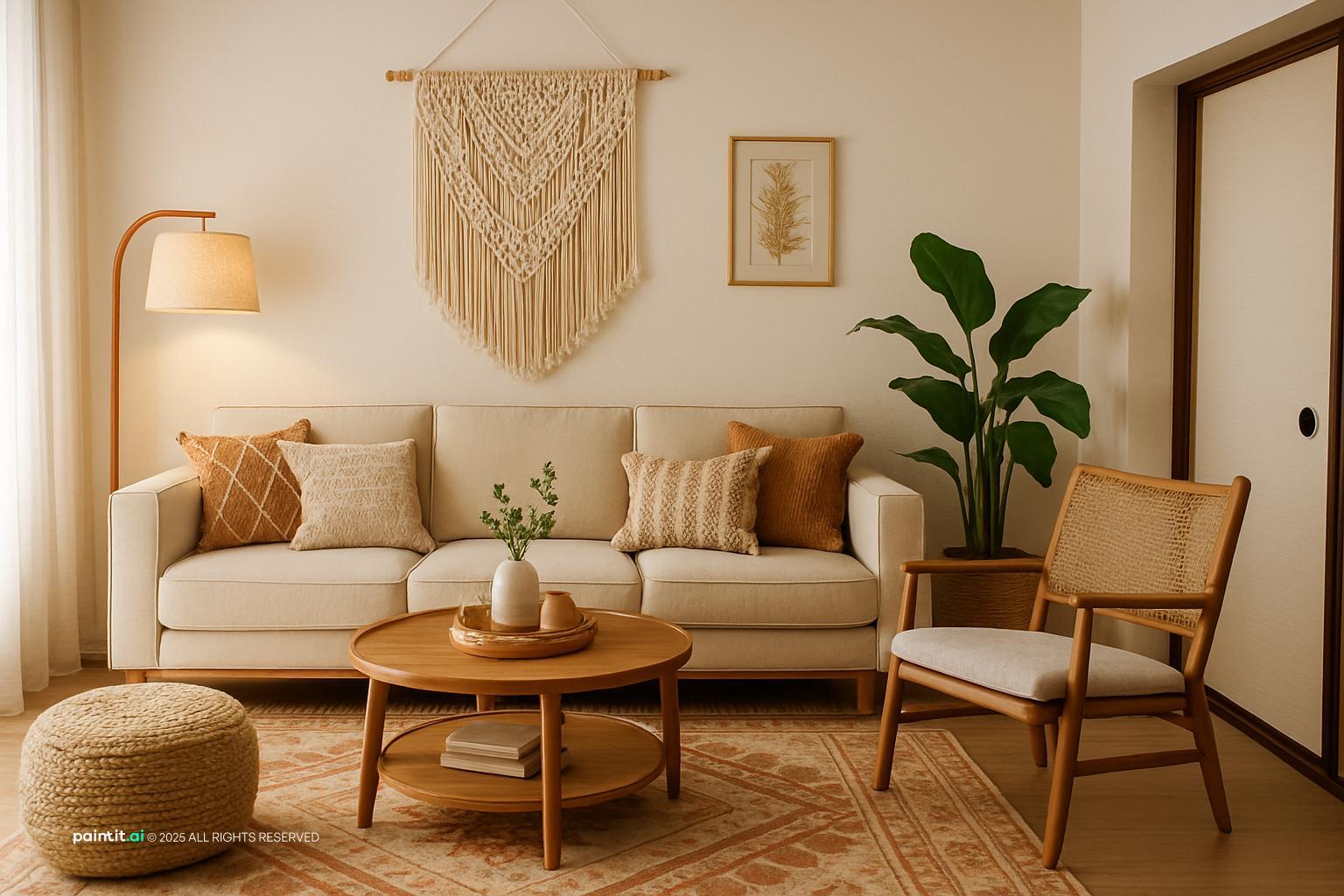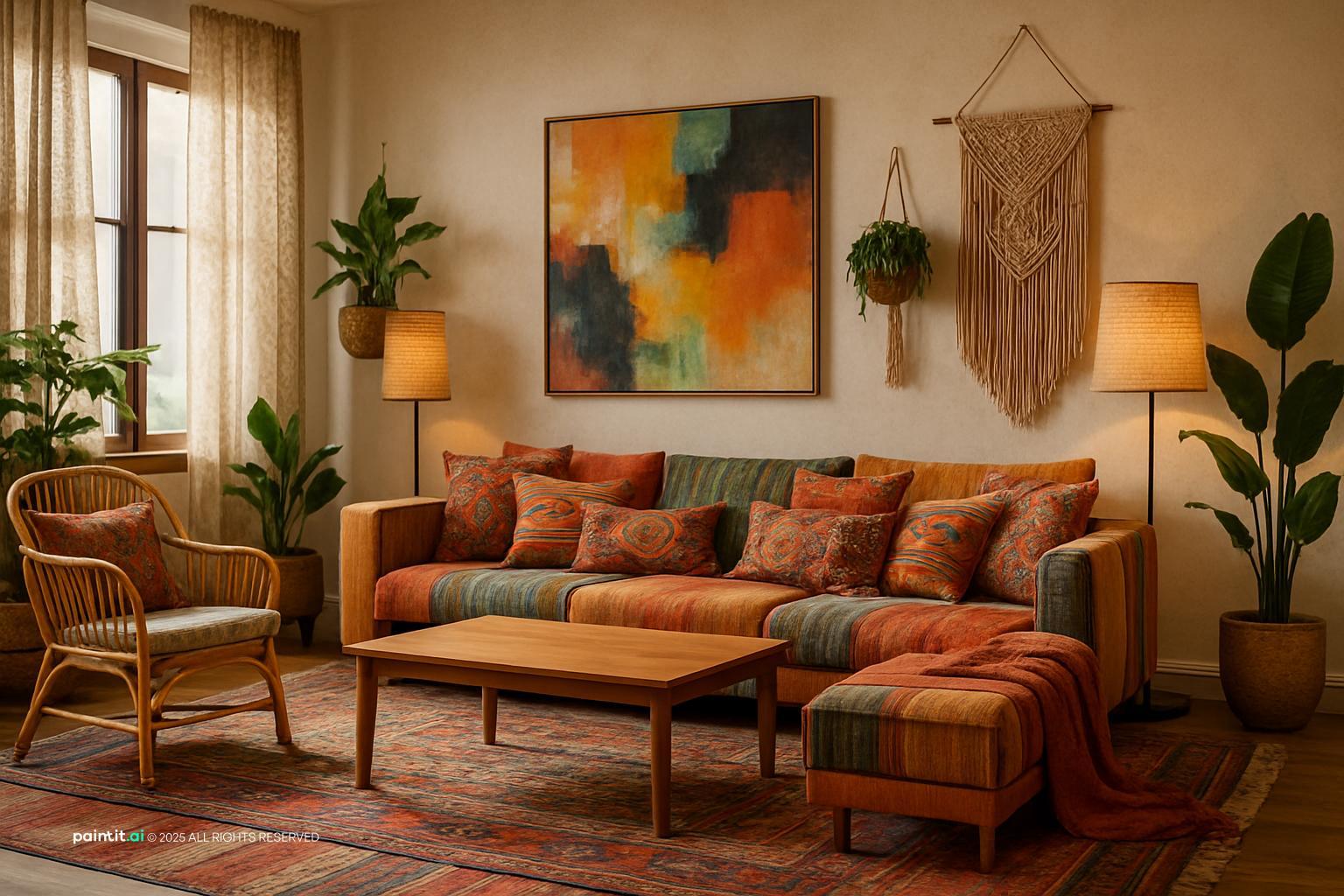
Cozy Modern Living Room Design
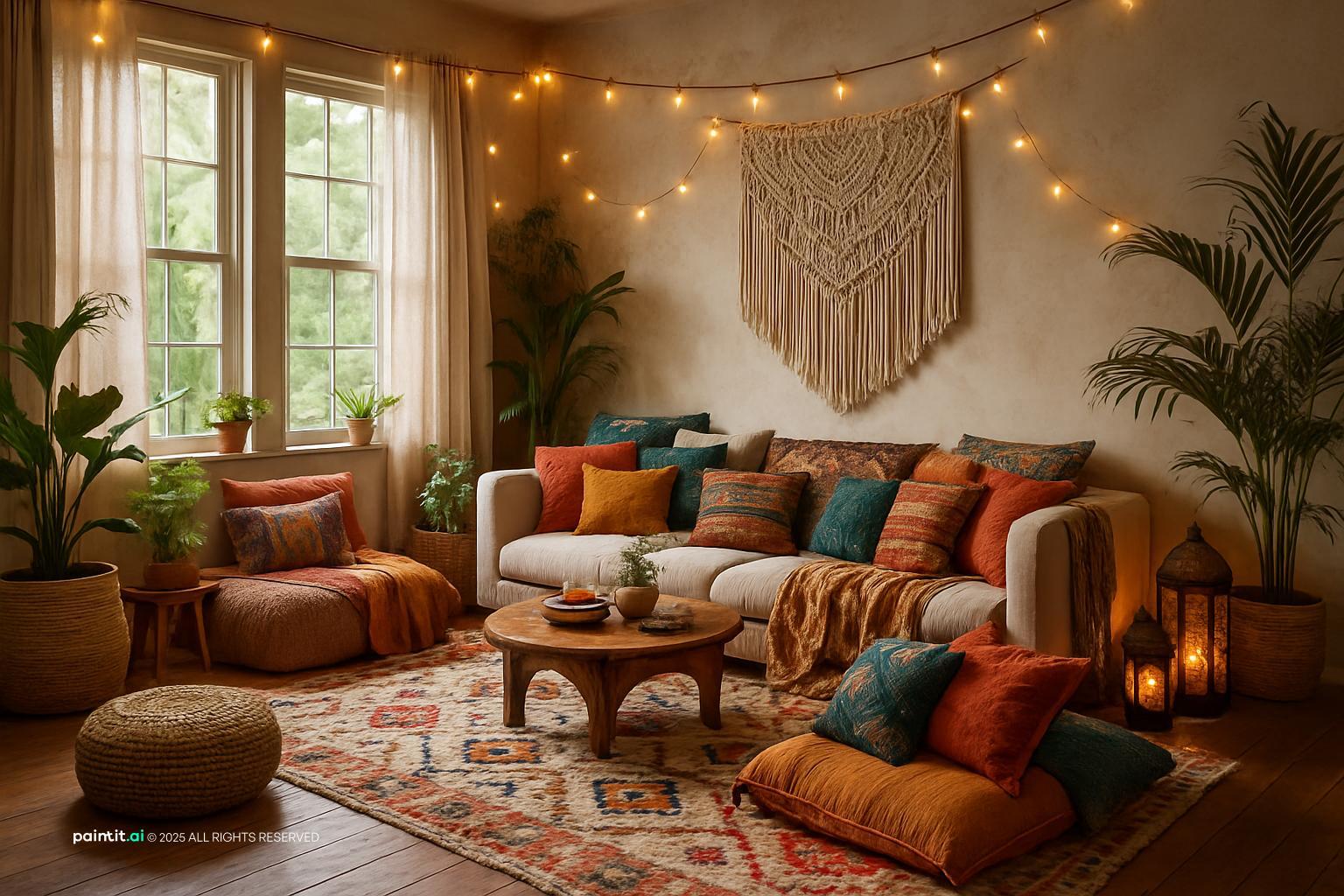
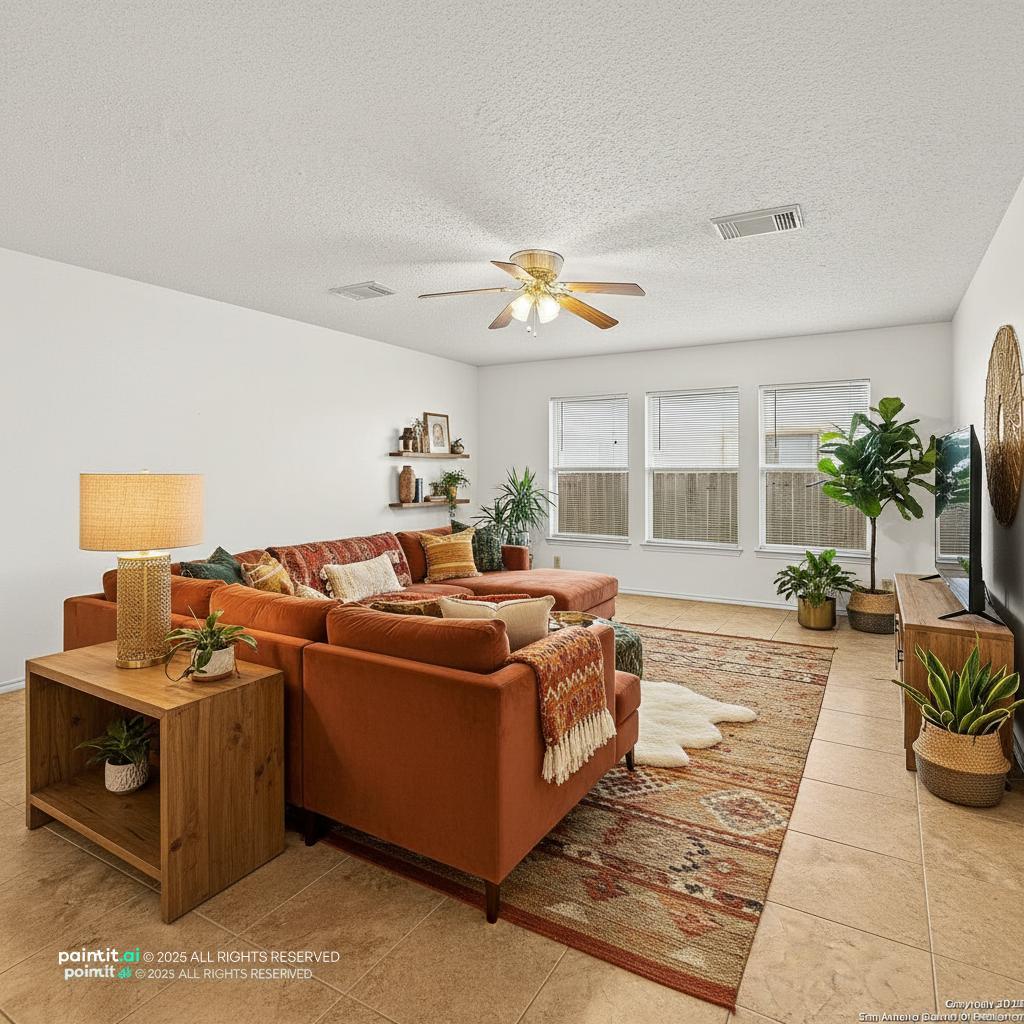
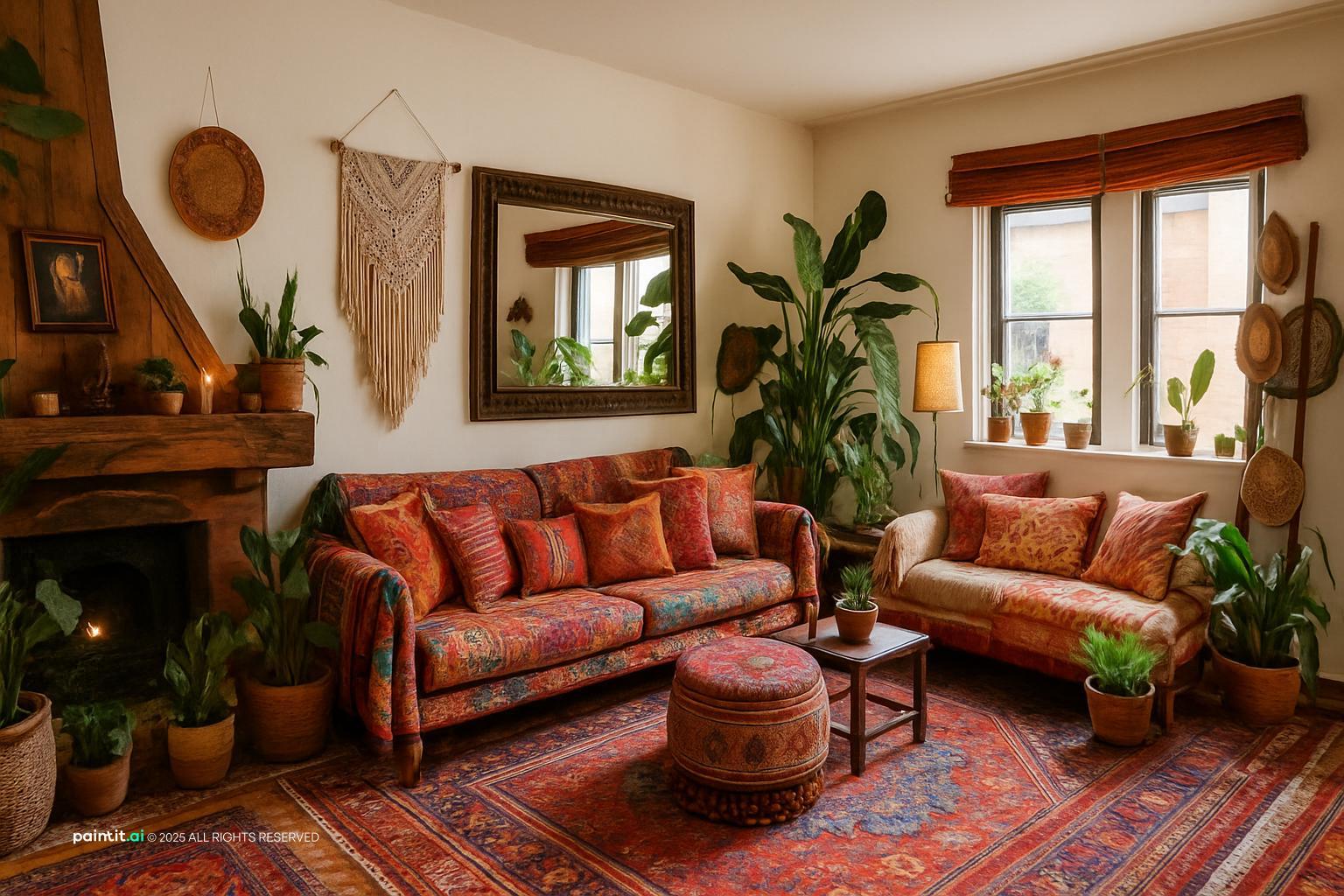
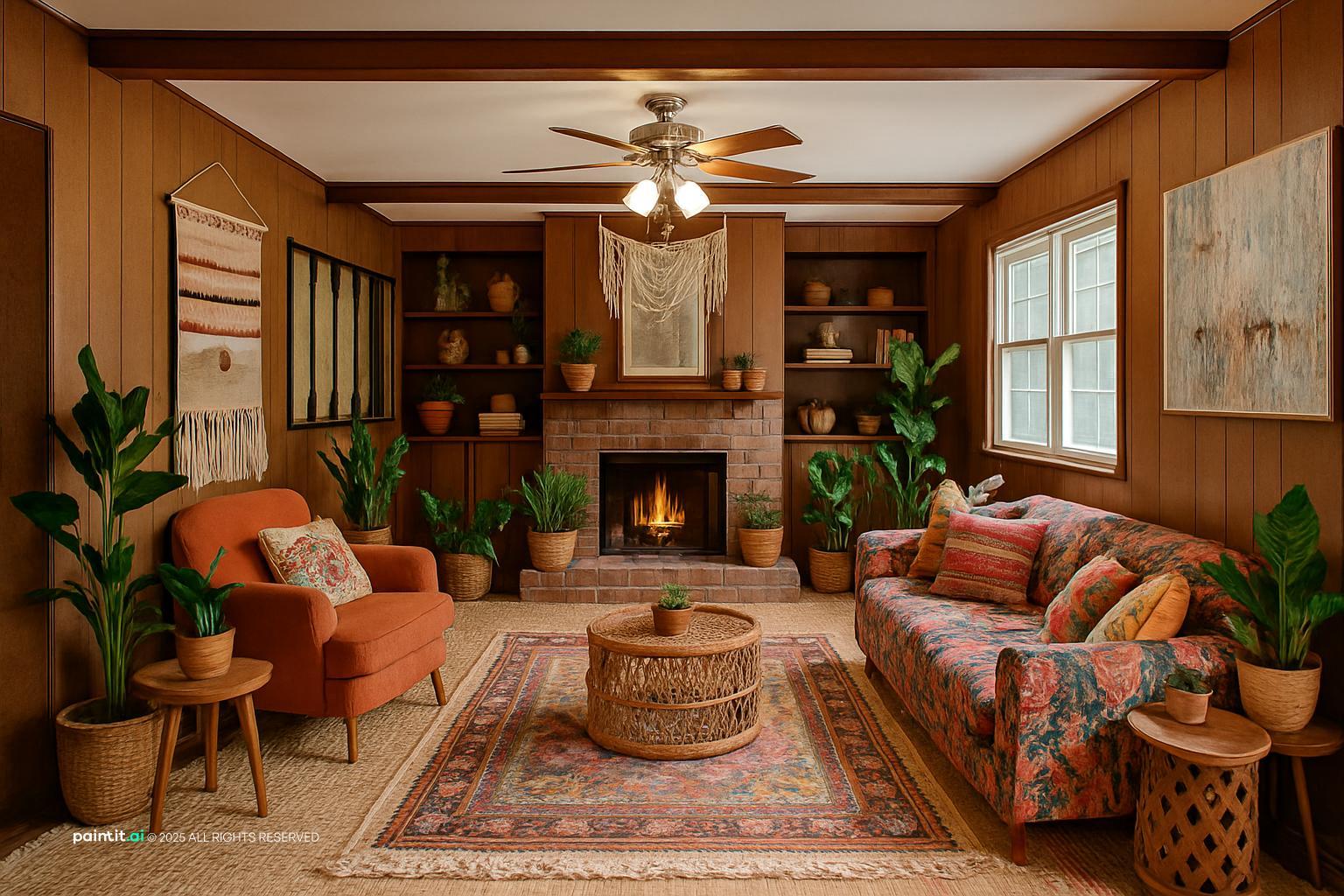
Cozy Modern Living Room Design uses boho texture, layered textiles and soft textiles in a living room setting.
The best boho living room ideas are rarely about adding one more patterned pillow. They work because the room has a clear base: comfortable seating, natural textures, enough light, and enough empty space for each object to feel chosen. A good boho room can be earthy, colorful, minimal, vintage, modern, or softly layered. The real difference is the edit. What stays? What goes? What actually helps the living room work on a normal evening, not just in a saved image?
Boho style works best when it responds to the existing living room instead of hiding it. Before you buy cushions, macrame, or a rattan chair, look at the room structure: windows, flooring, ceiling height, fireplace, built-ins, door swings, and the path people use to cross the room. In Paintit.ai tests, professional prompts often use “KEEP:” and “REMOVE:” blocks, plus directions like “CRITICAL: preserve exact room structure always. Do NOT change any architectural element.” That is a useful mindset even if you are just restyling your own sofa wall.
When exploring boho living room ideas, start by deciding what should not change. A clean wall, wood floor, large window, simple sofa, or good built-in can become the calm base. Then rattan, plants, woven baskets, patterned pillows, and natural textures have something to work with instead of fighting every other thing in the room.
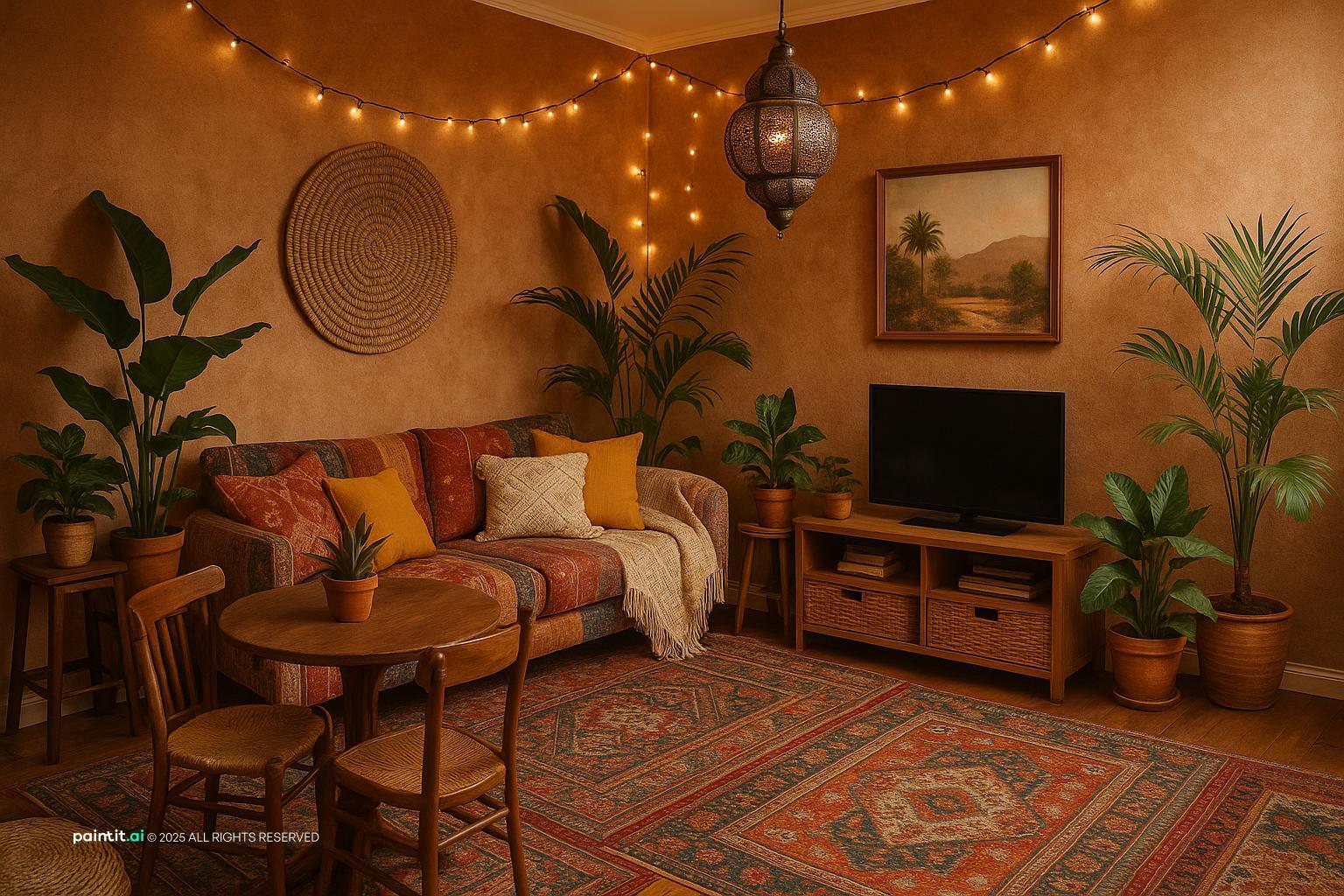
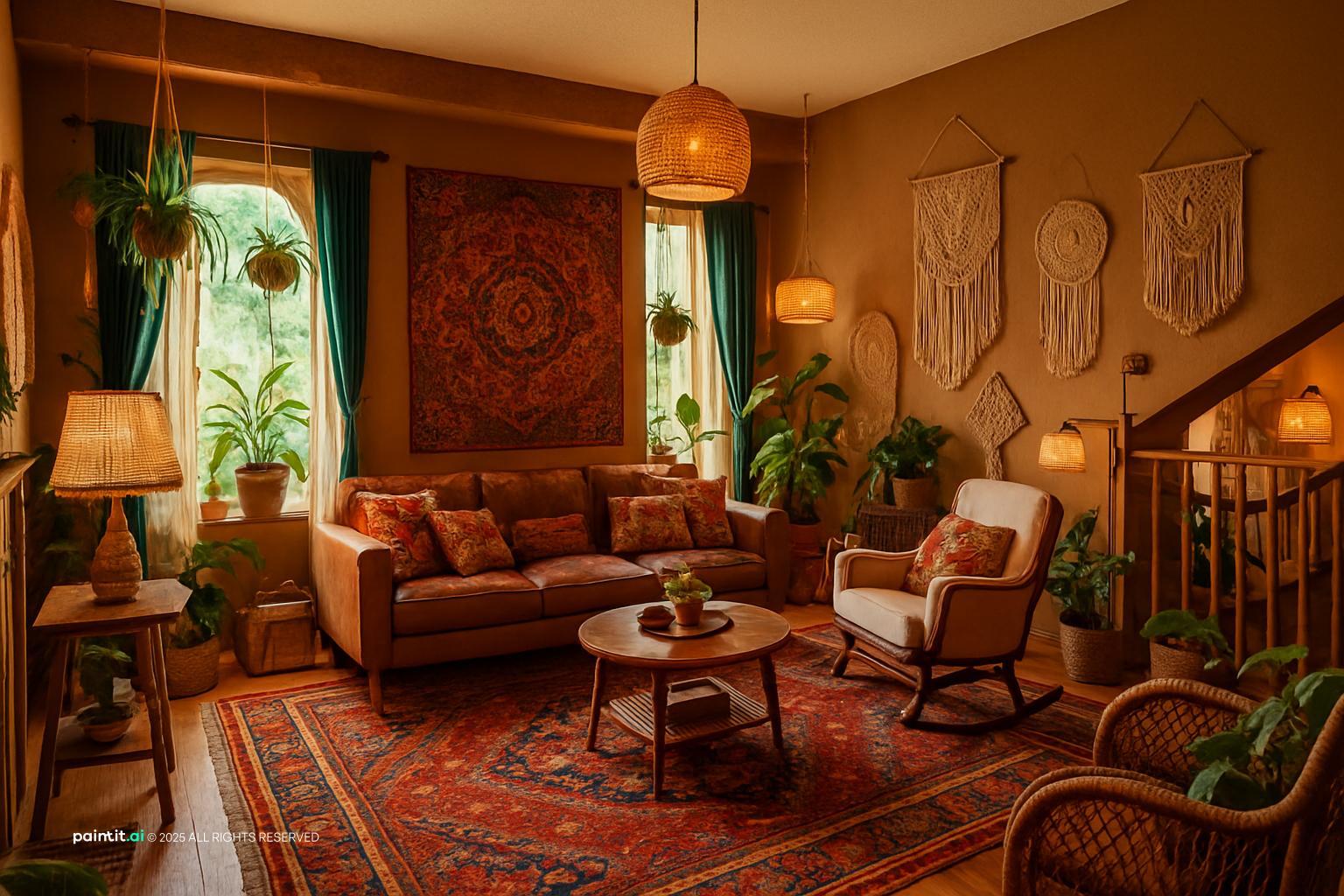
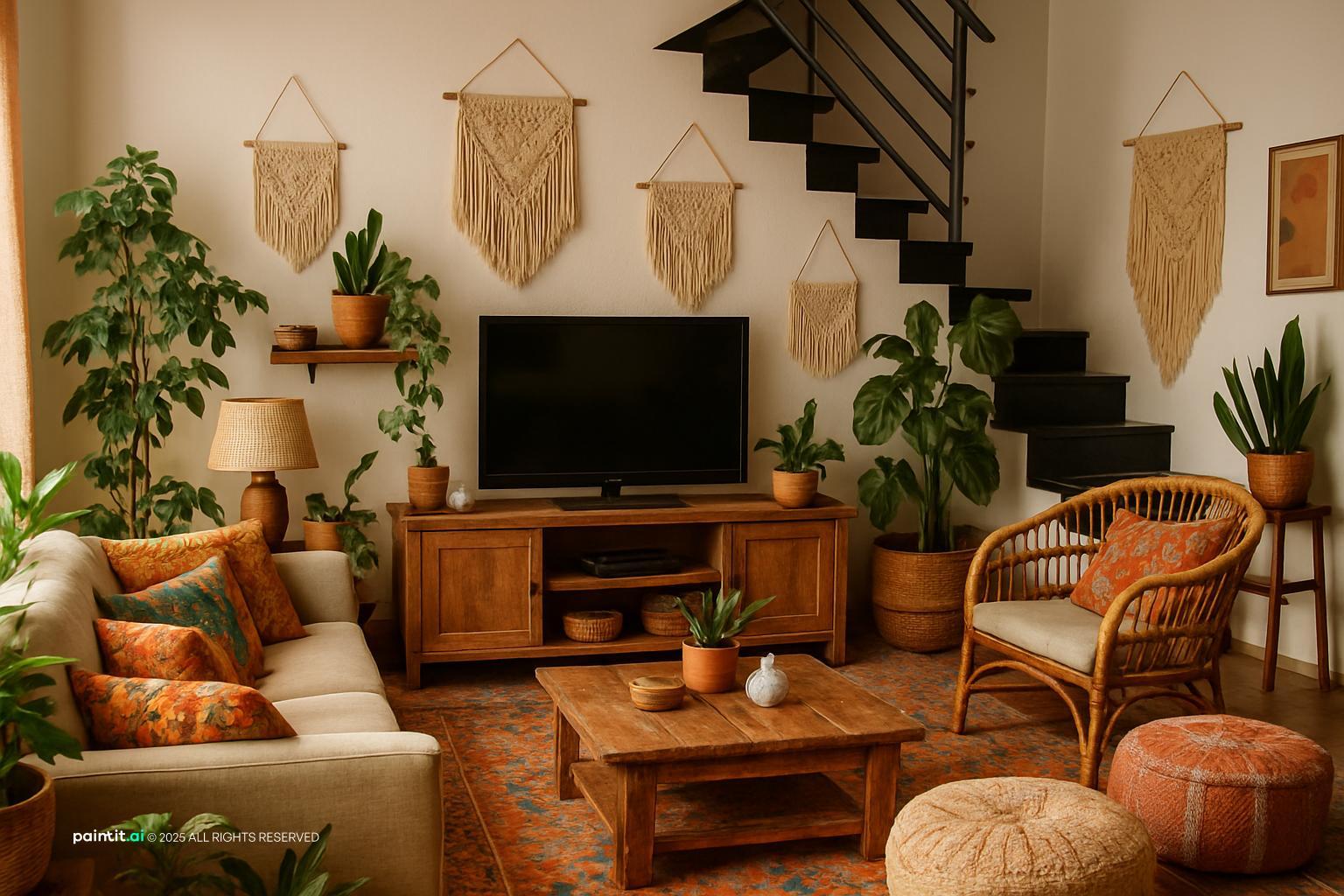
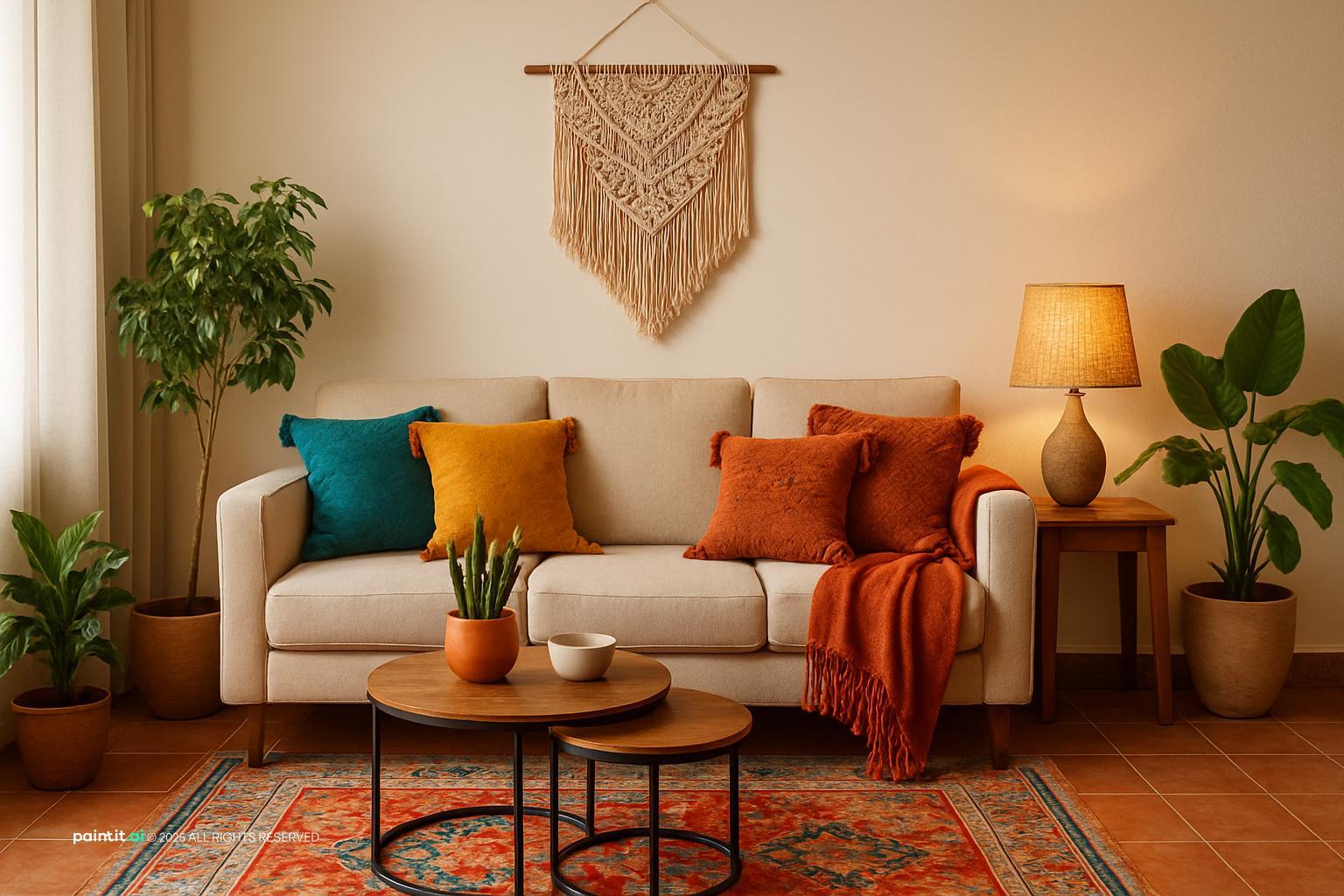
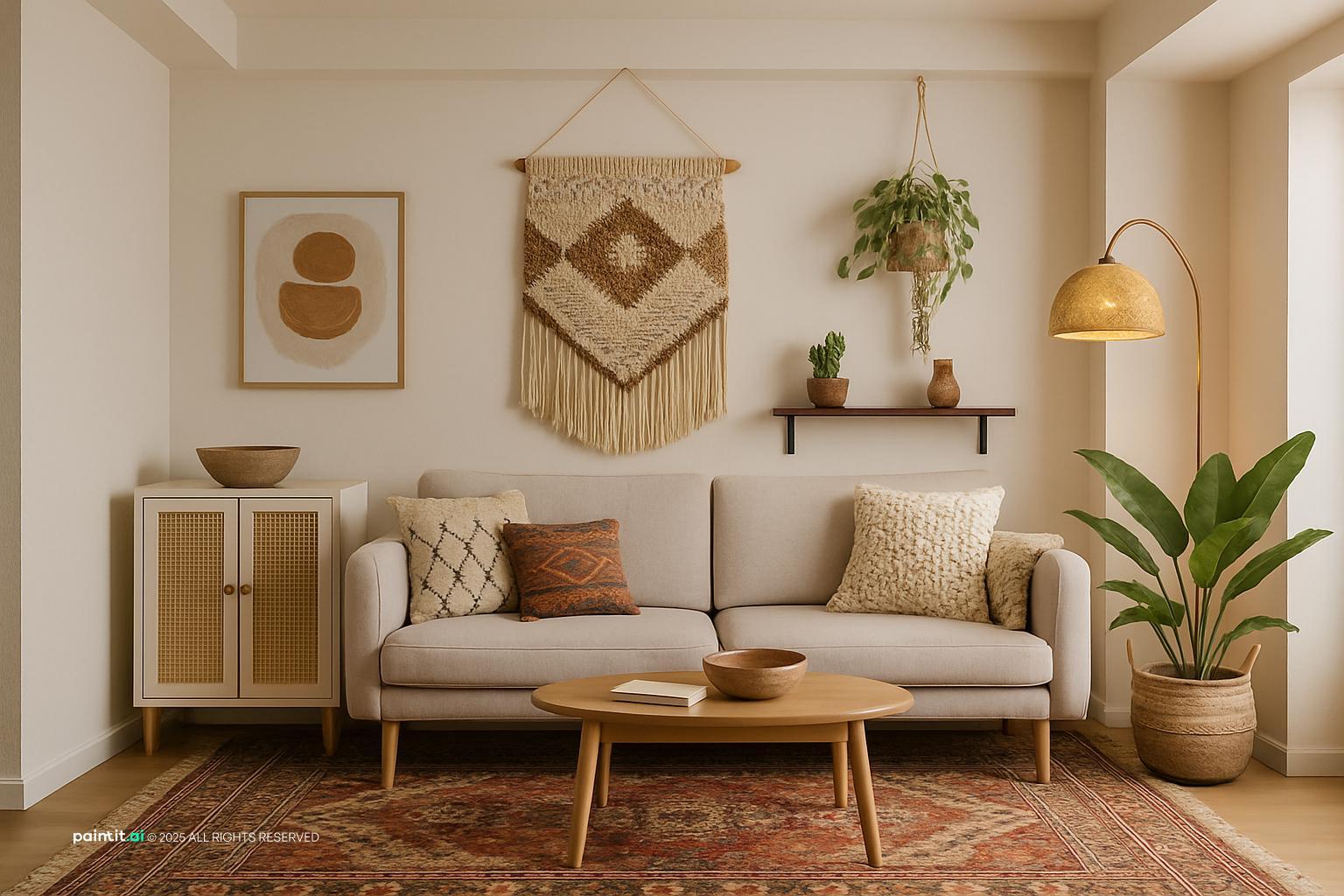
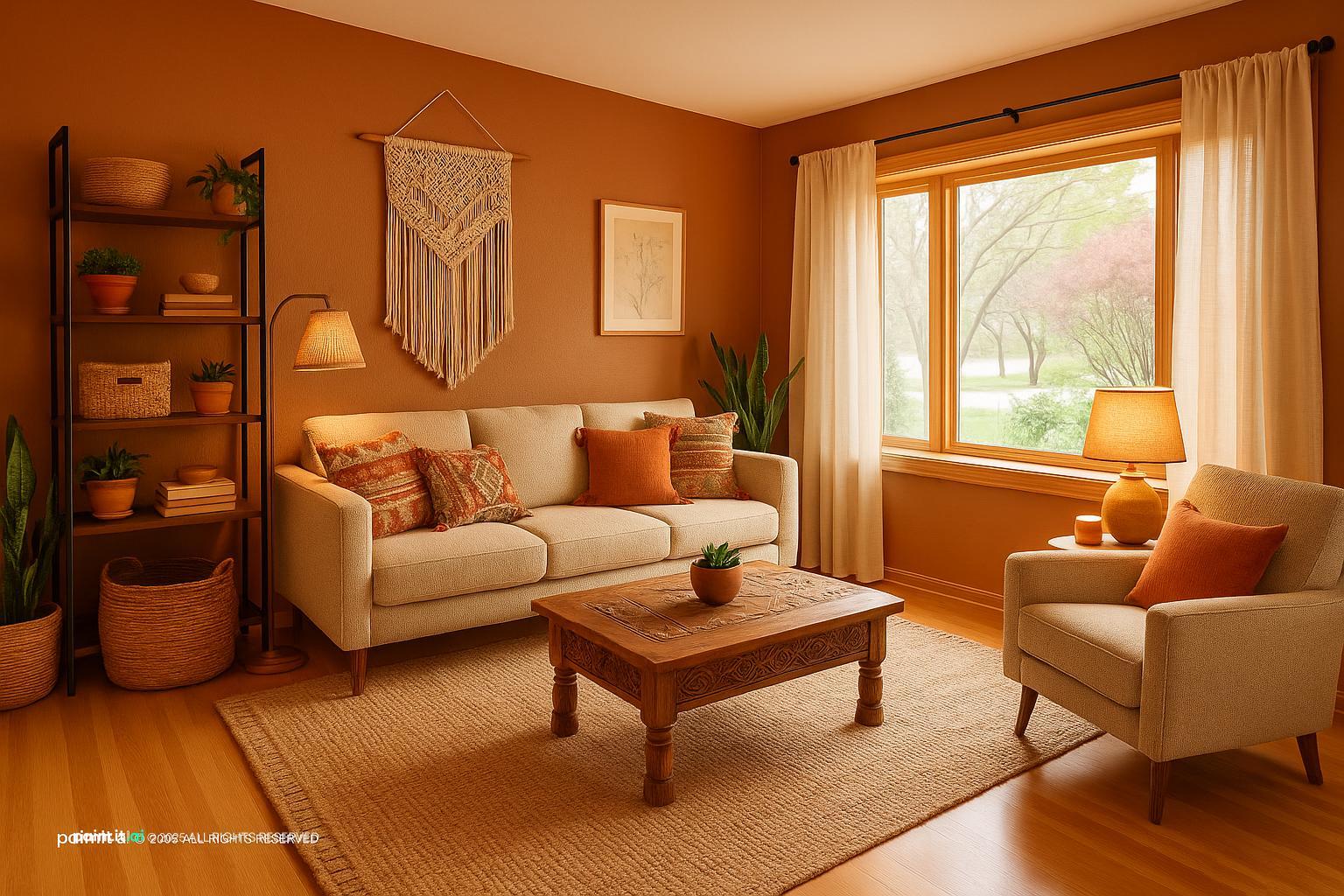
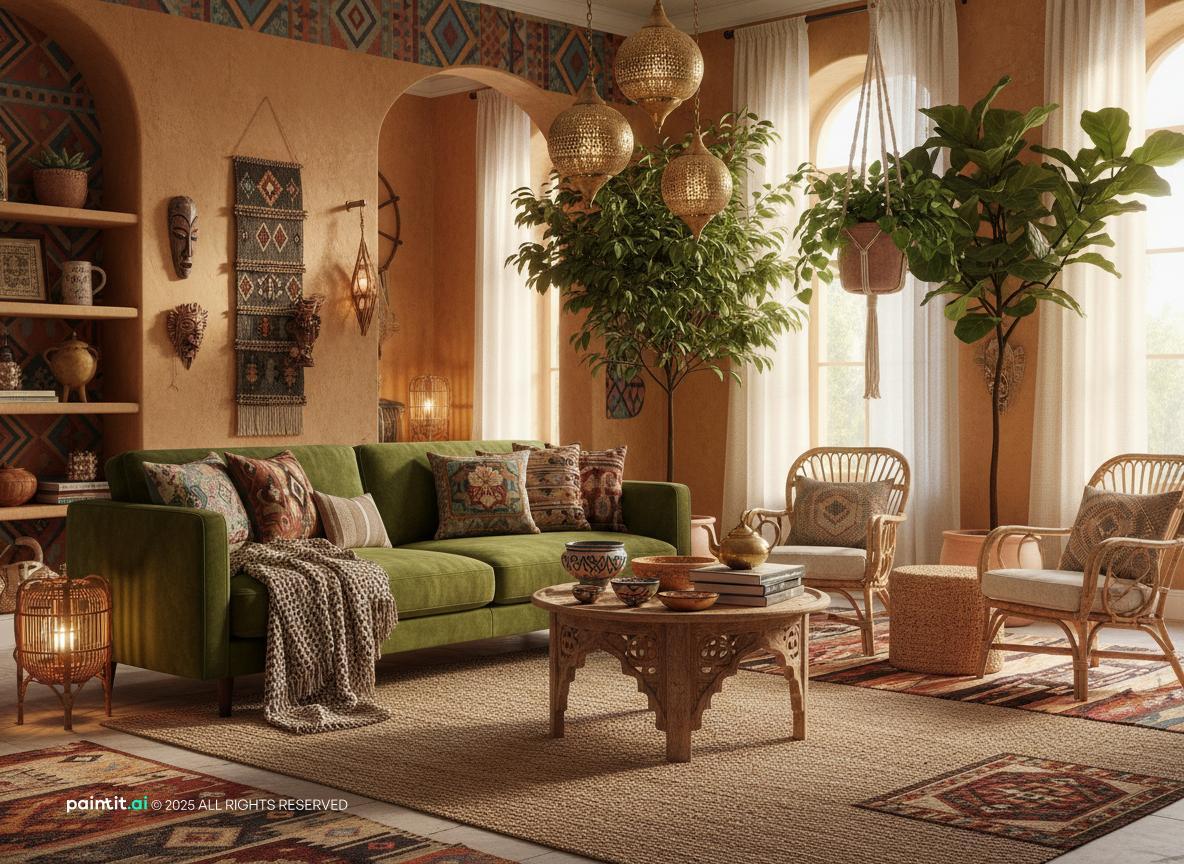
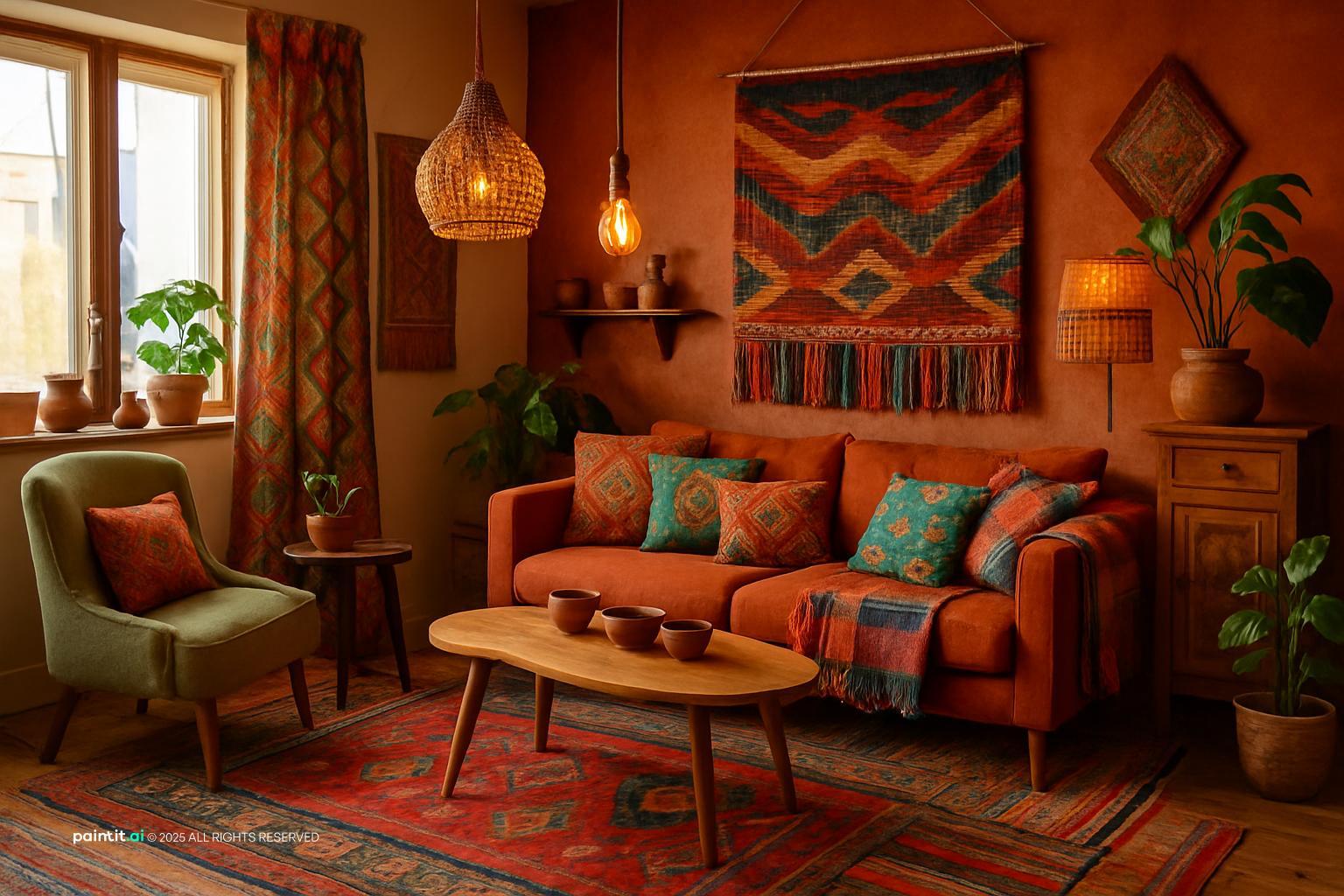
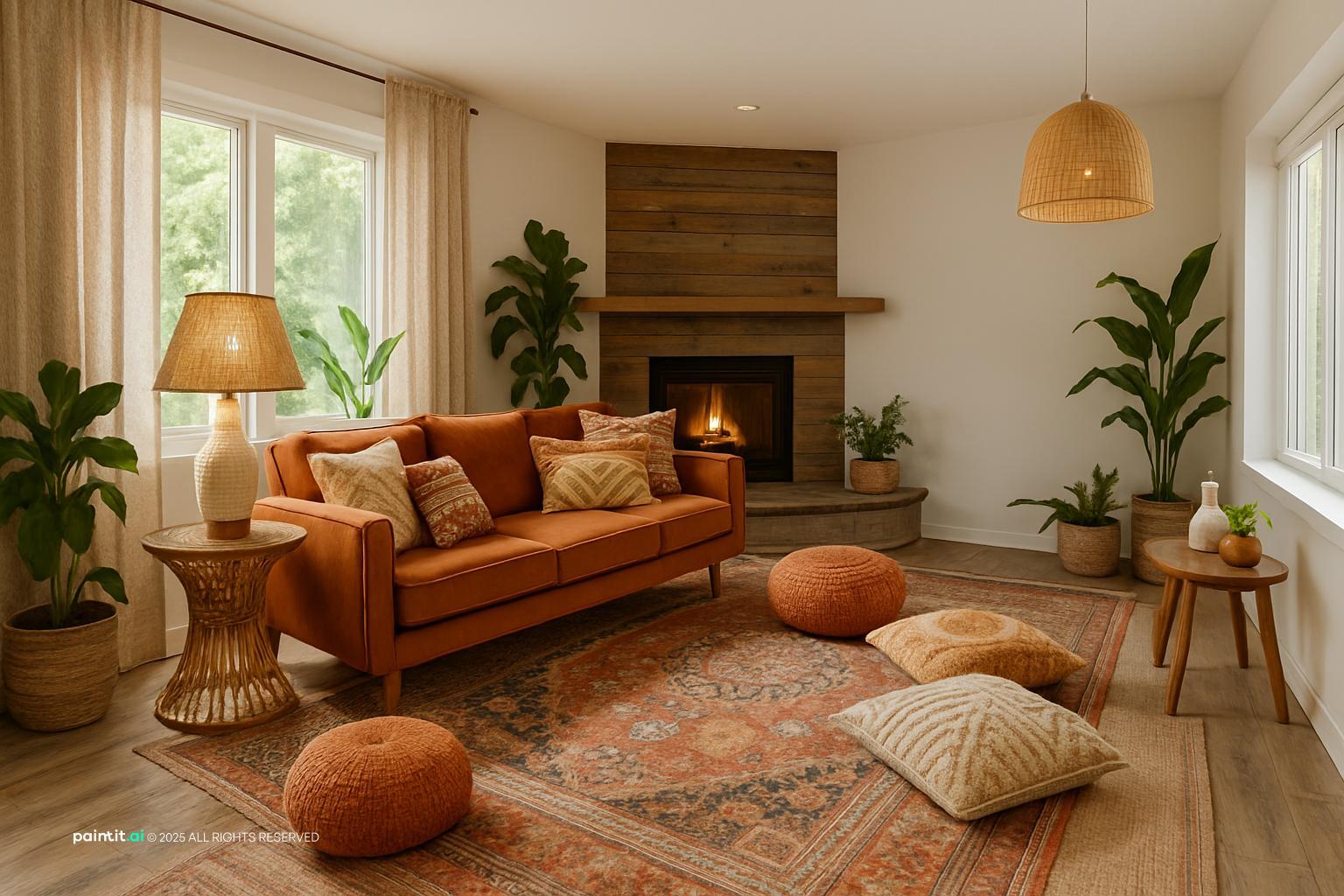
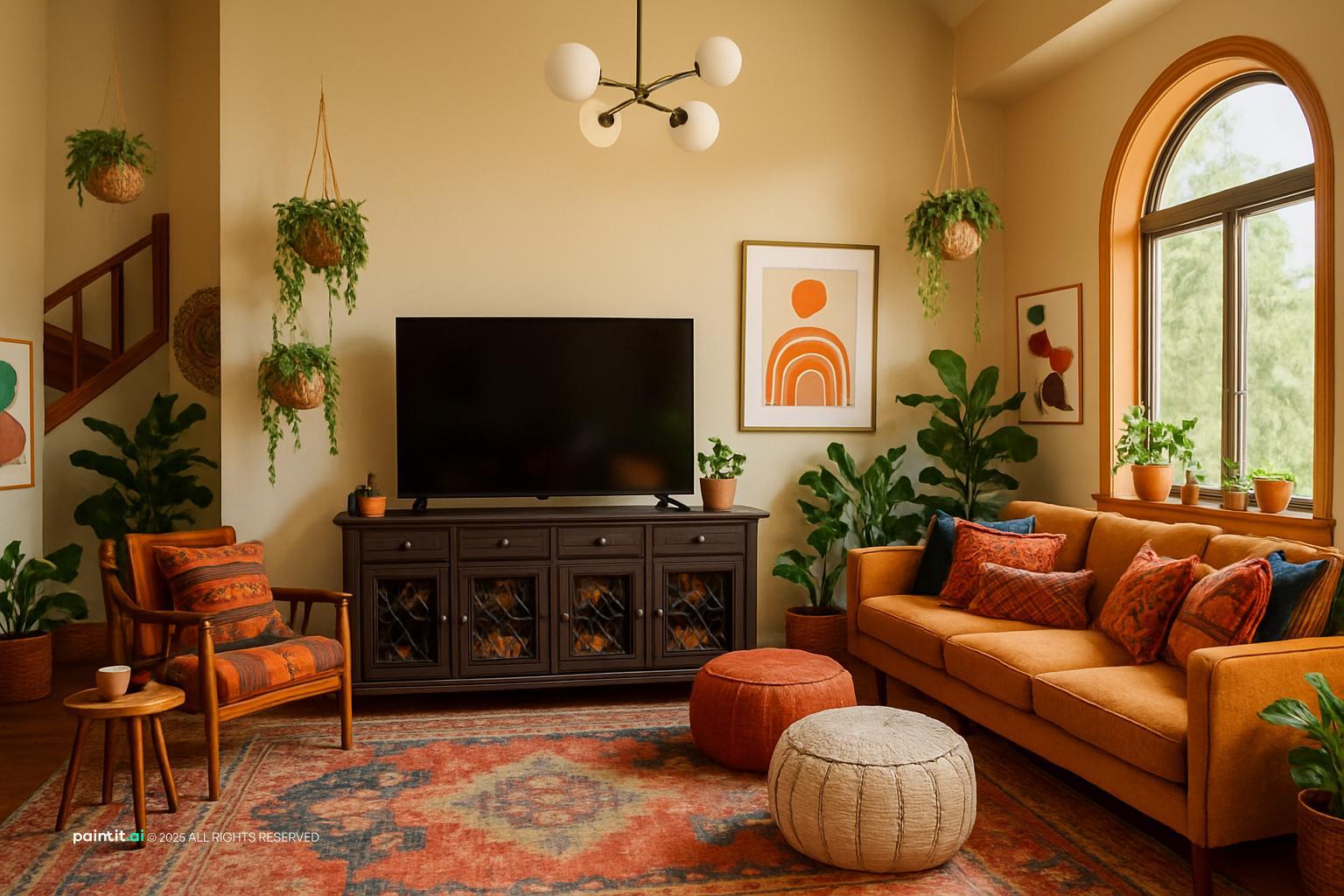
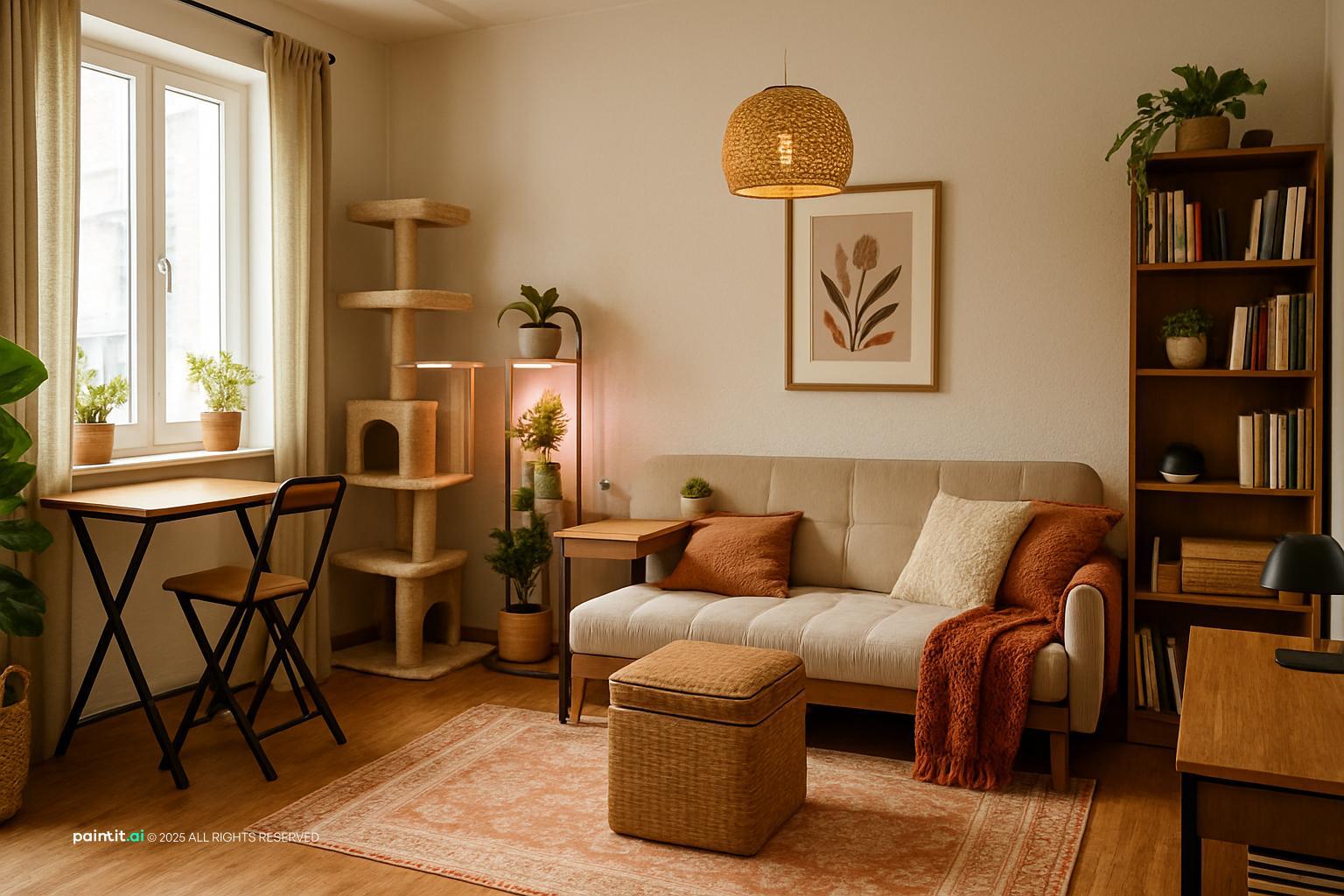
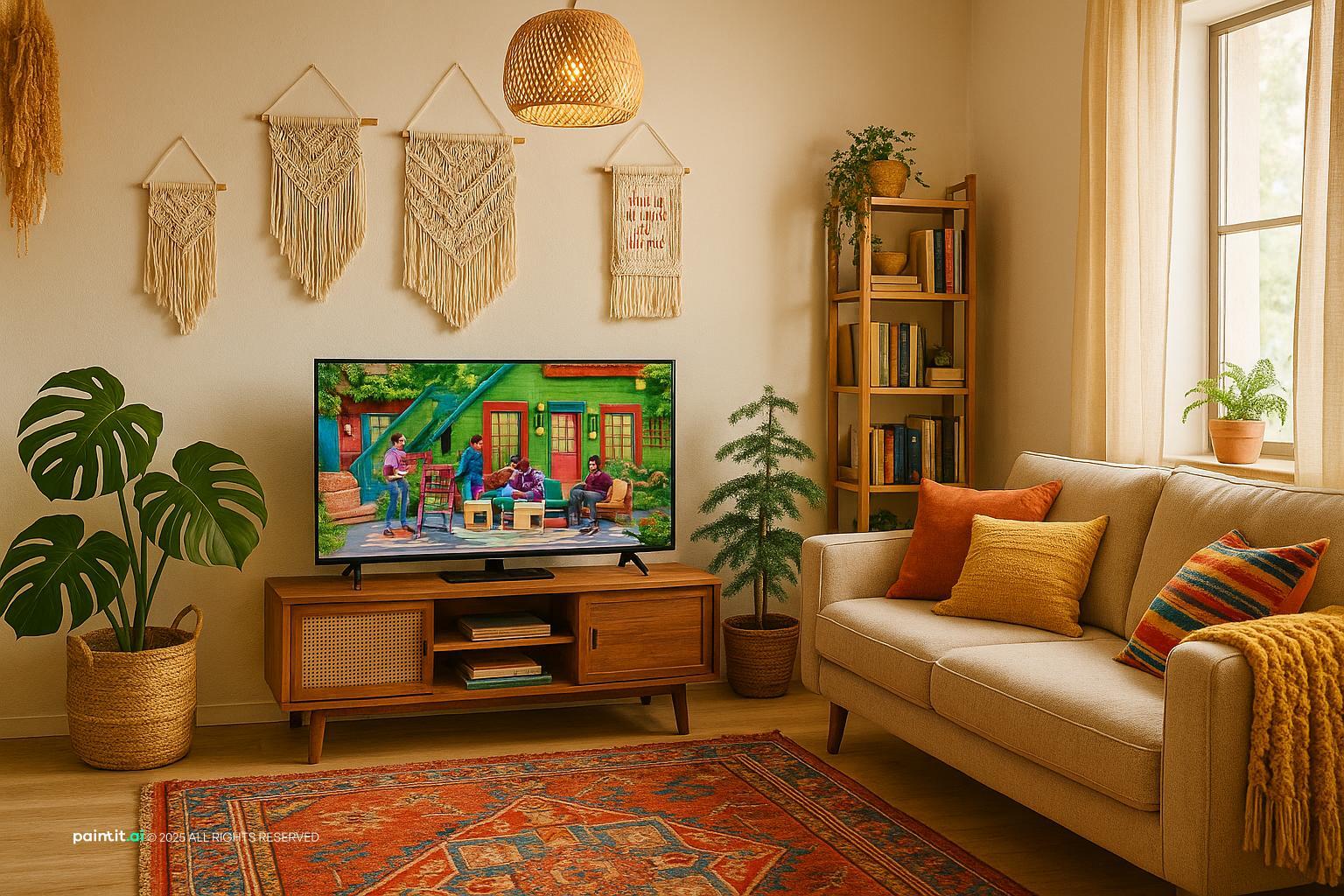
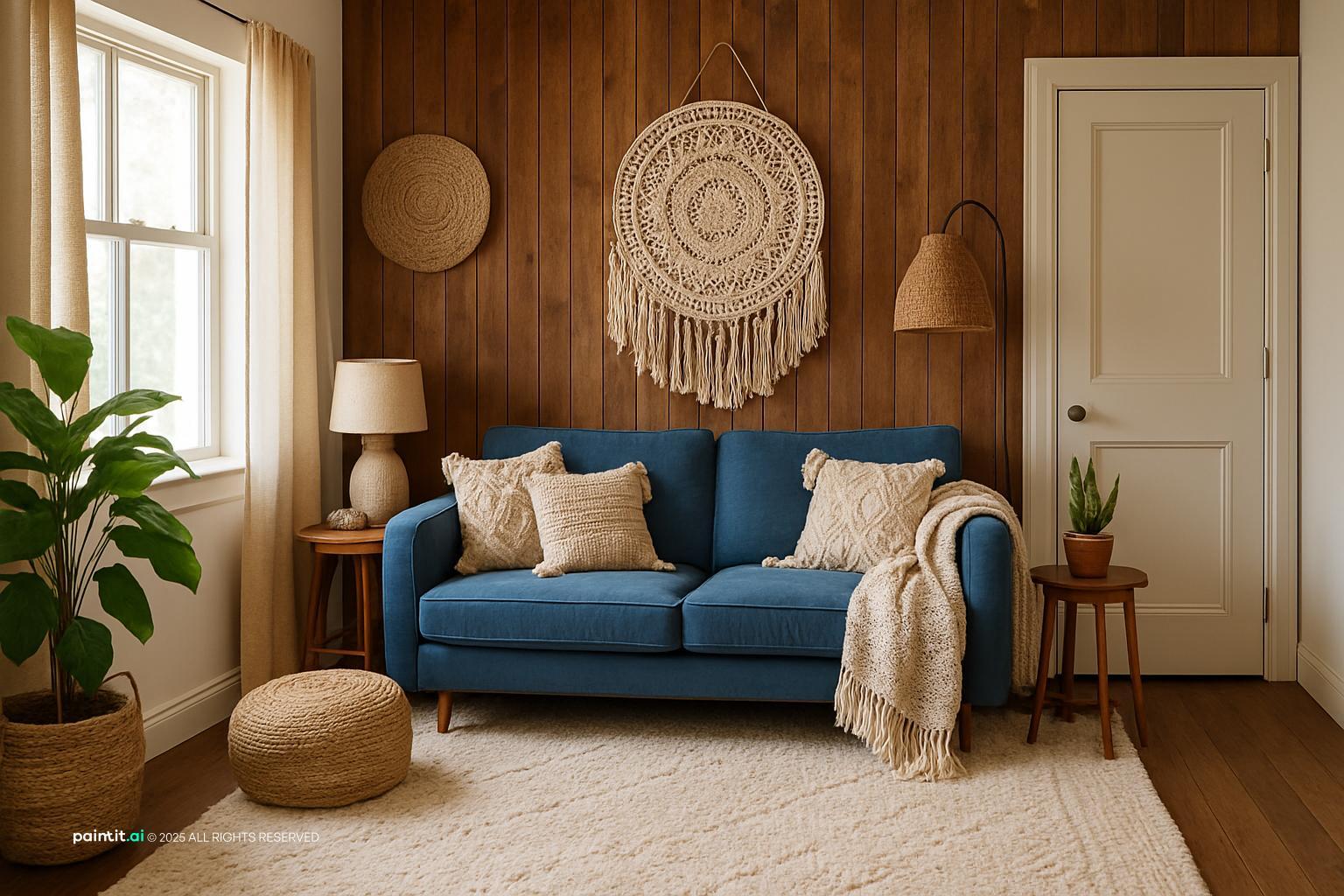
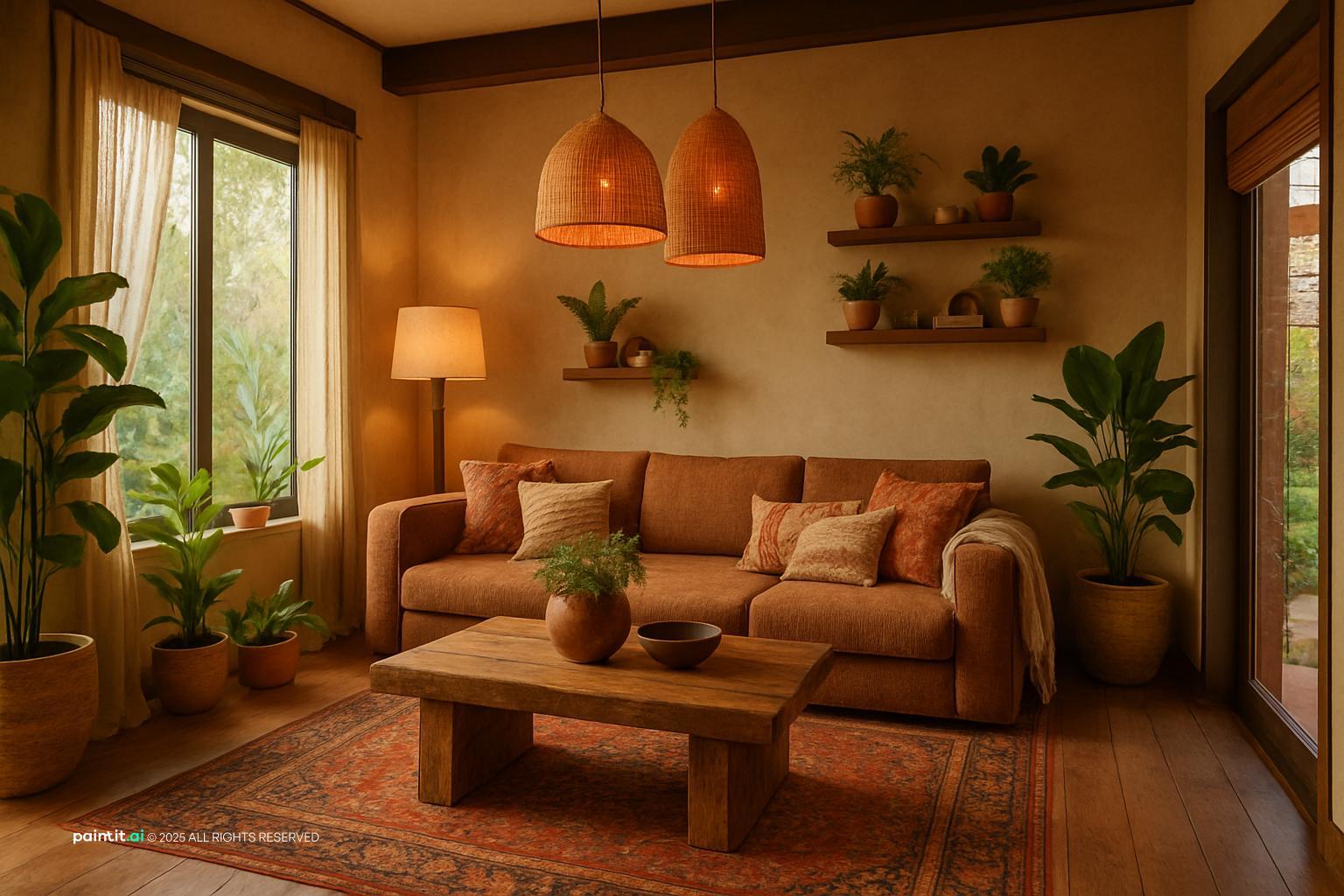
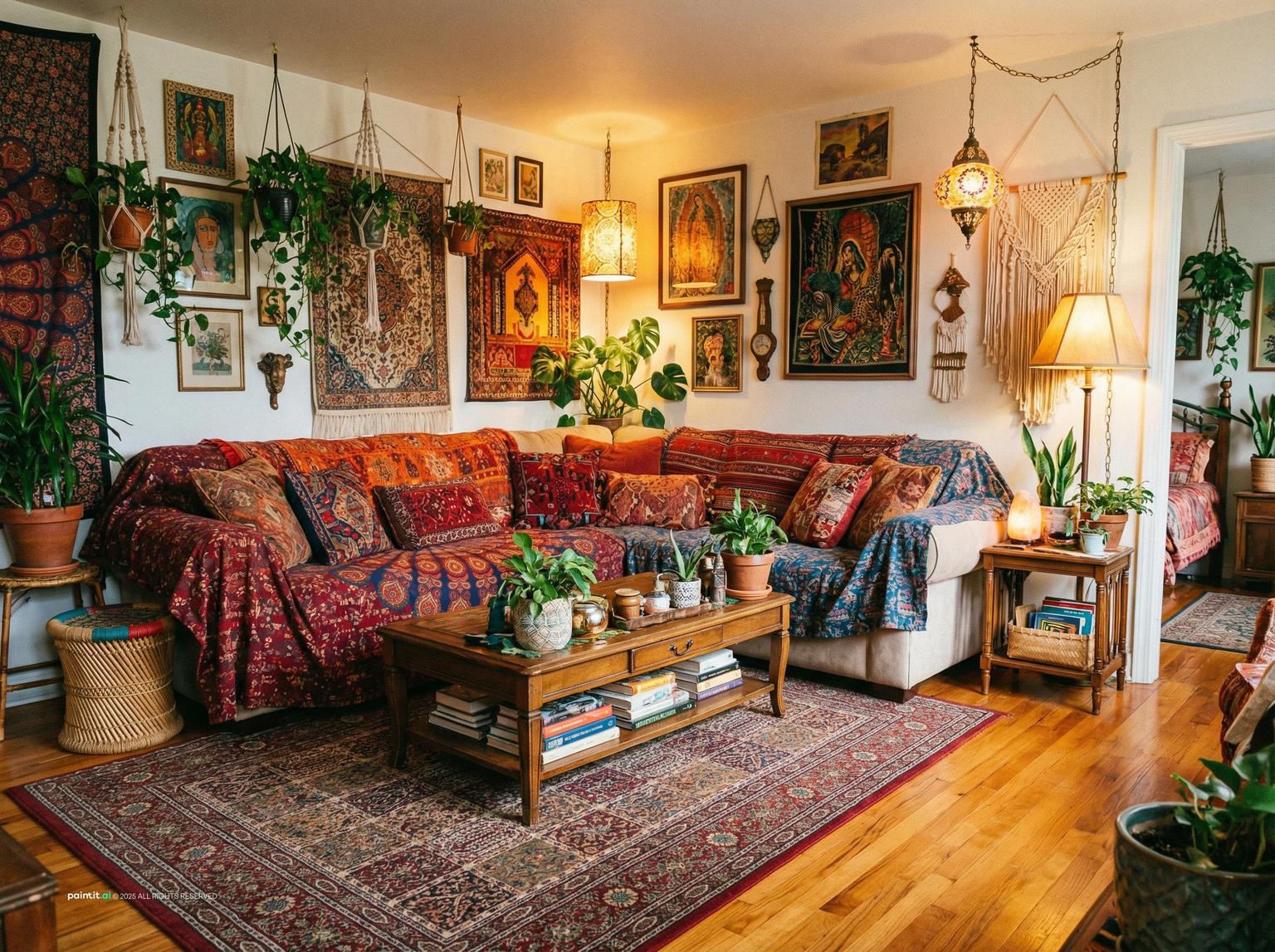
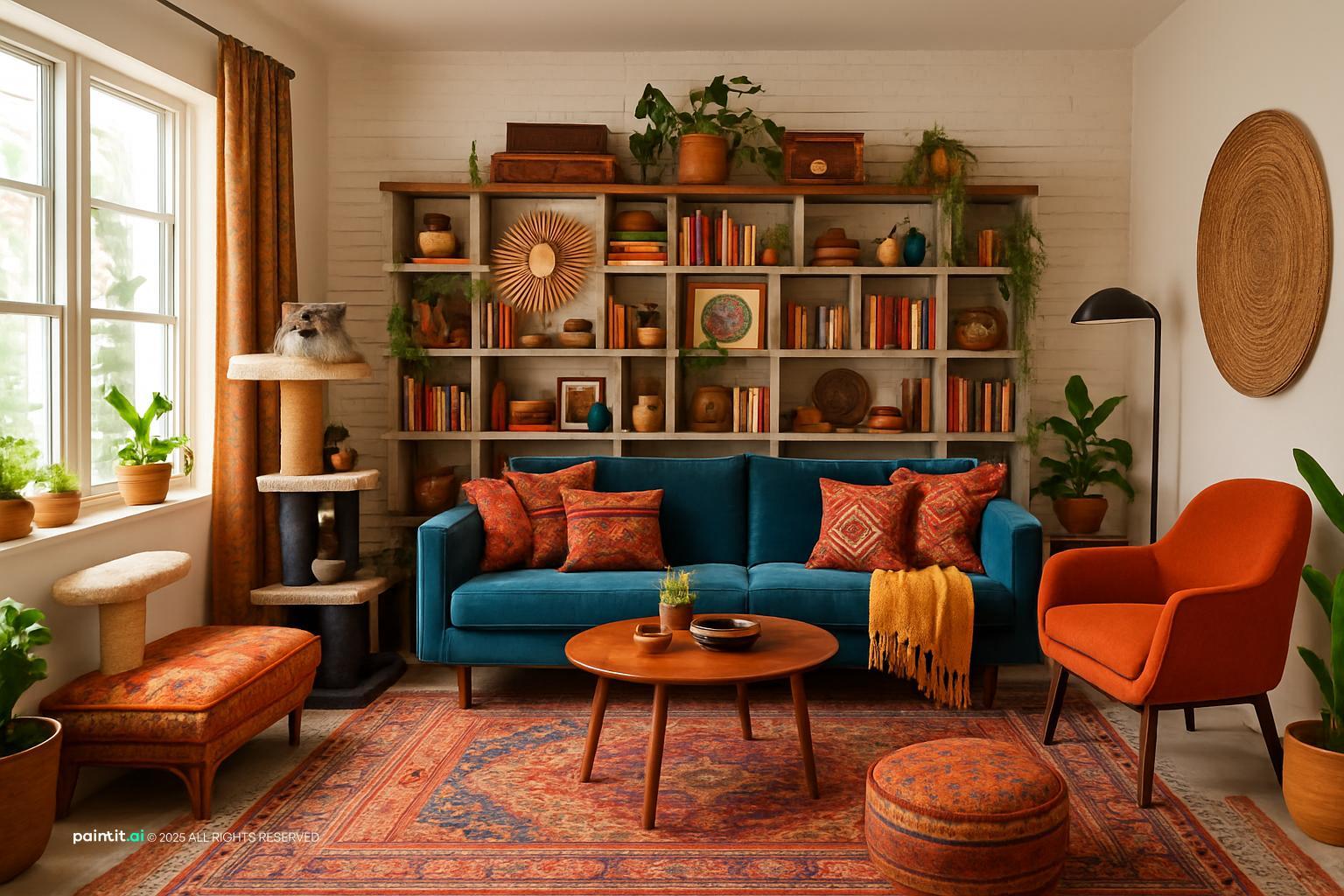
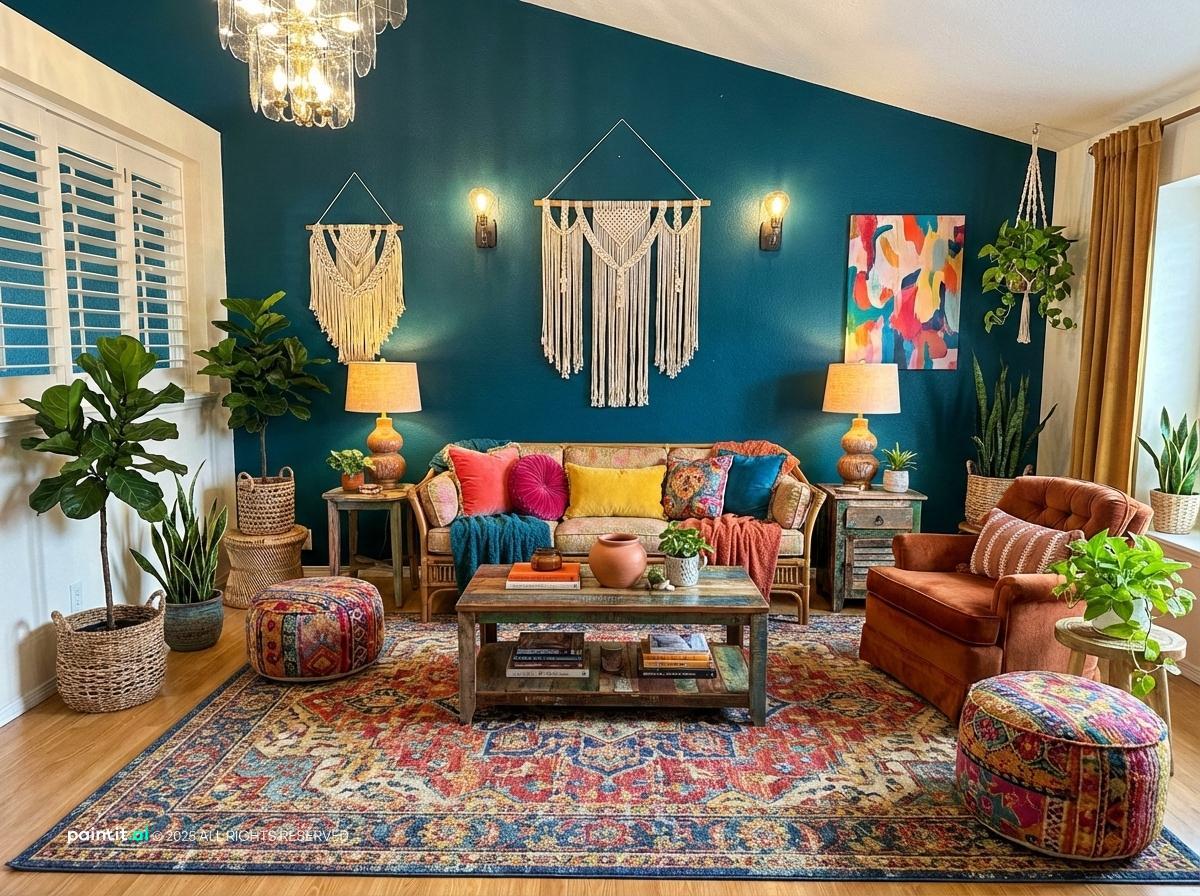
Use the first gallery to check proportion, not just style: how much pattern is on the rug, how low the seating feels, where plants sit, and how empty wall space keeps woven materials from taking over.
Cozy Modern Living Room Design uses boho texture, layered textiles and soft textiles in a living room setting.
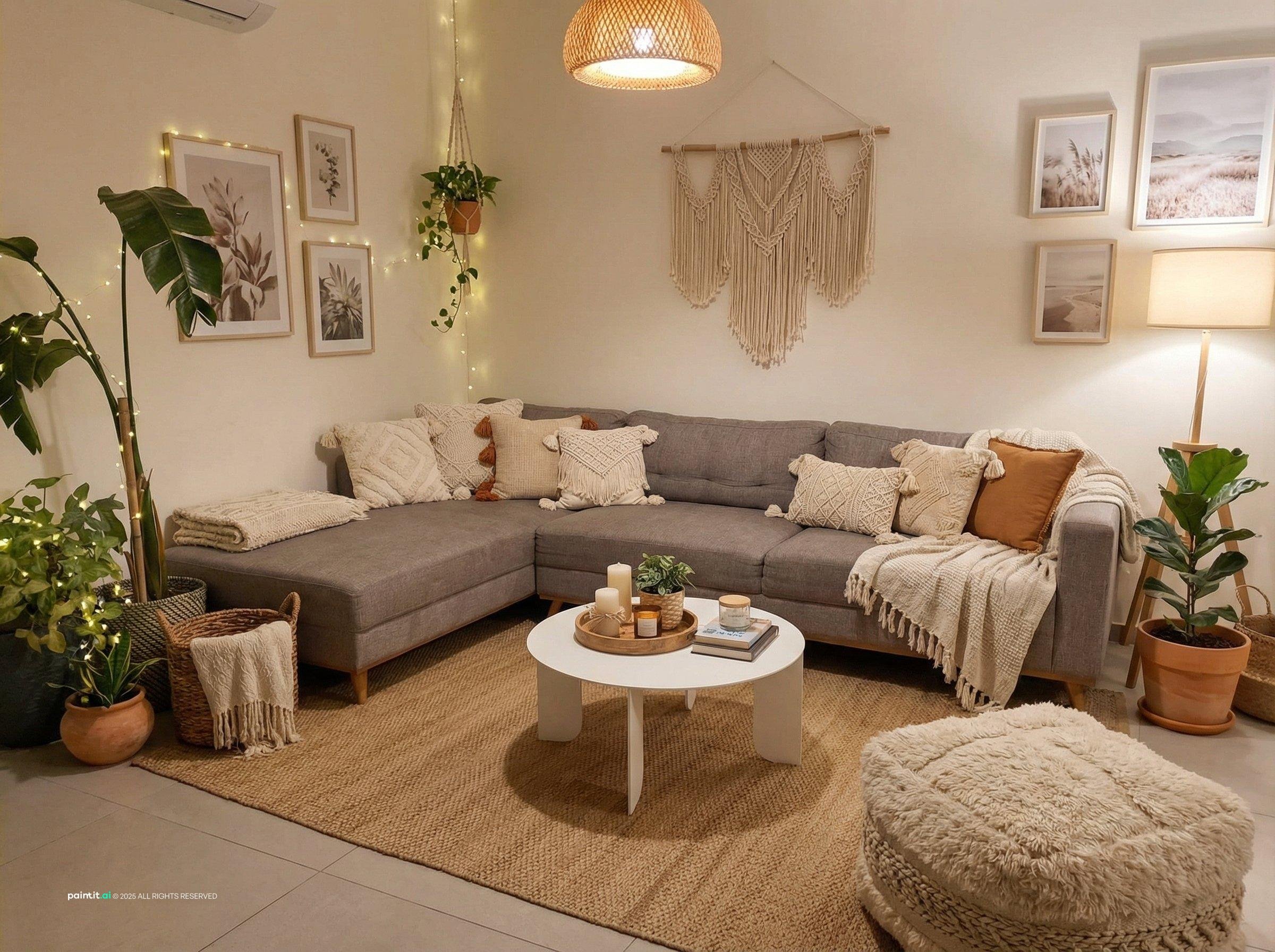
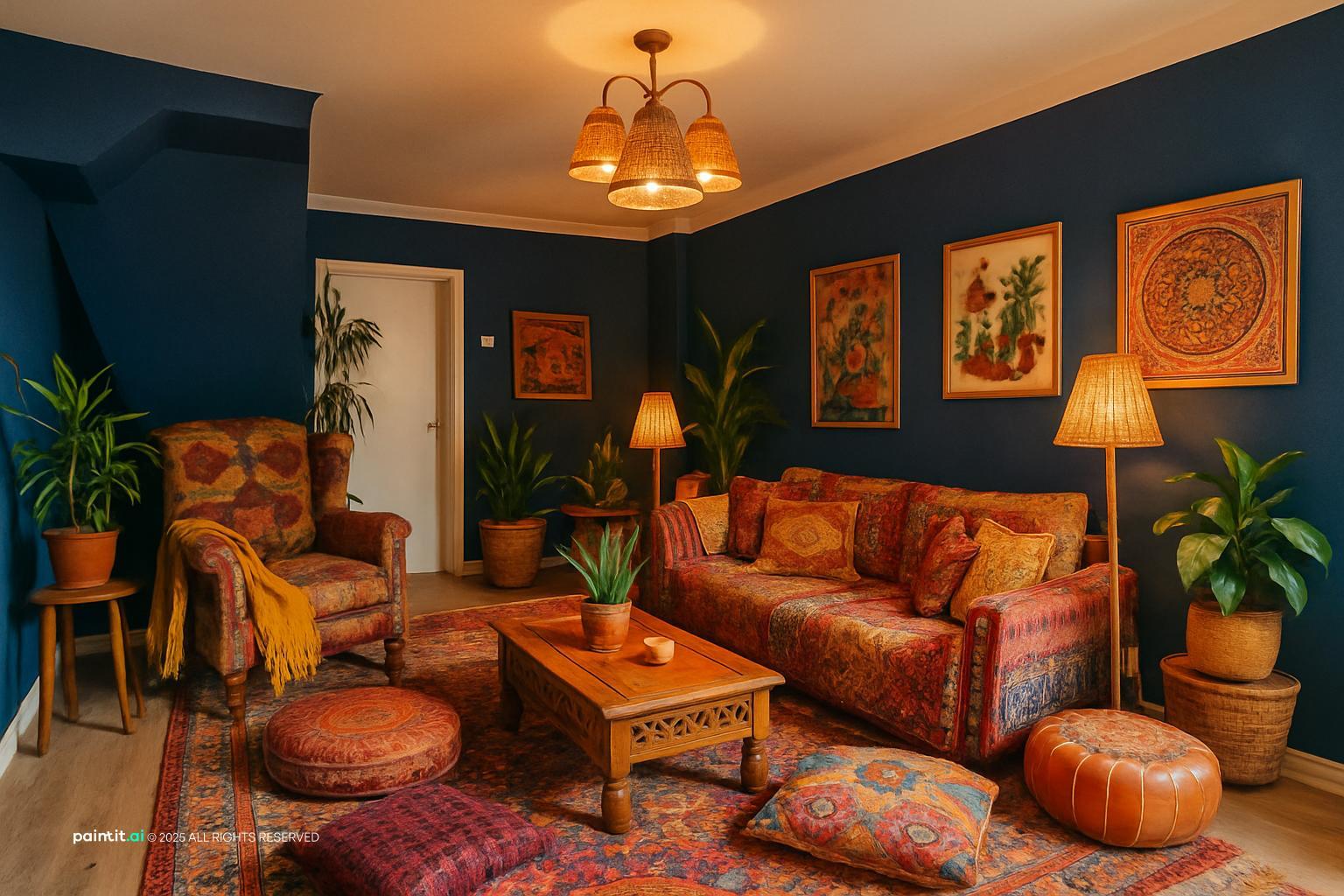
Boho Living Room Ideas with Boho Texture and Layered Textiles balances boho texture, layered textiles and soft textiles in a living room setting.
Cozy Boho Living Room Design pairs boho texture, layered textiles and soft textiles in a living room setting.
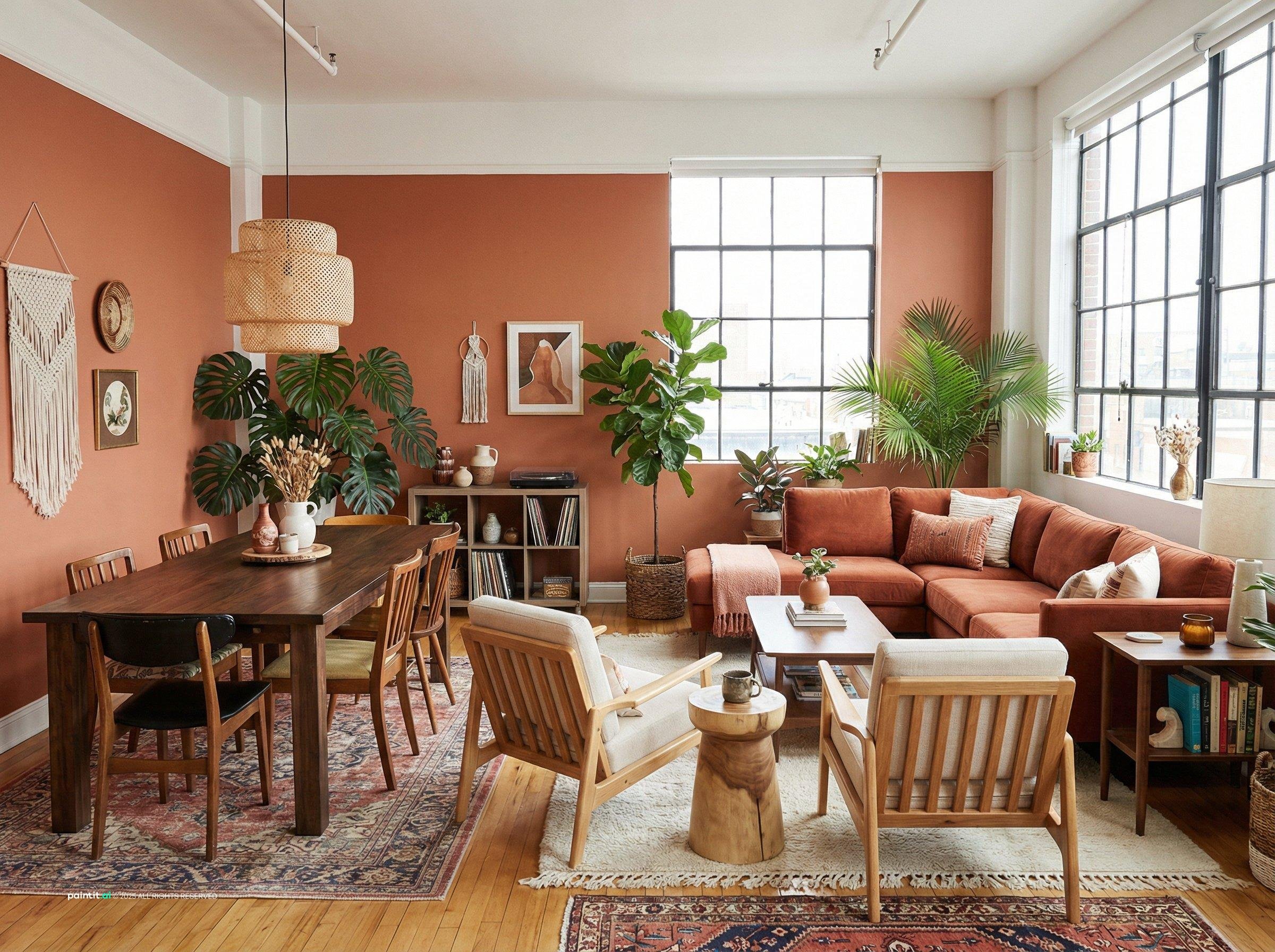
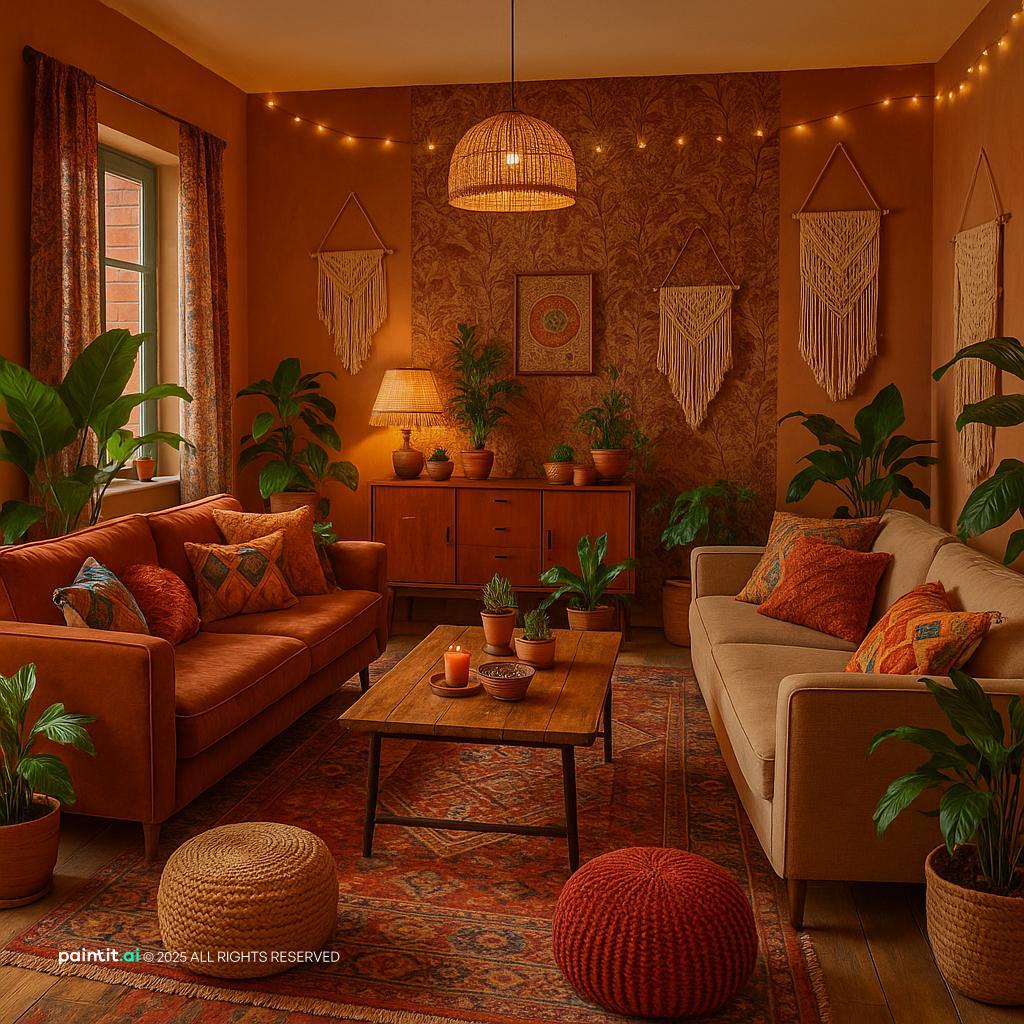
Stylish Boho Chic Living Room Design layers boho texture, layered textiles and warm wood in a living room setting.
Vibrant Bohemian Living Room Design anchors boho texture, layered textiles and soft textiles in a living room setting.
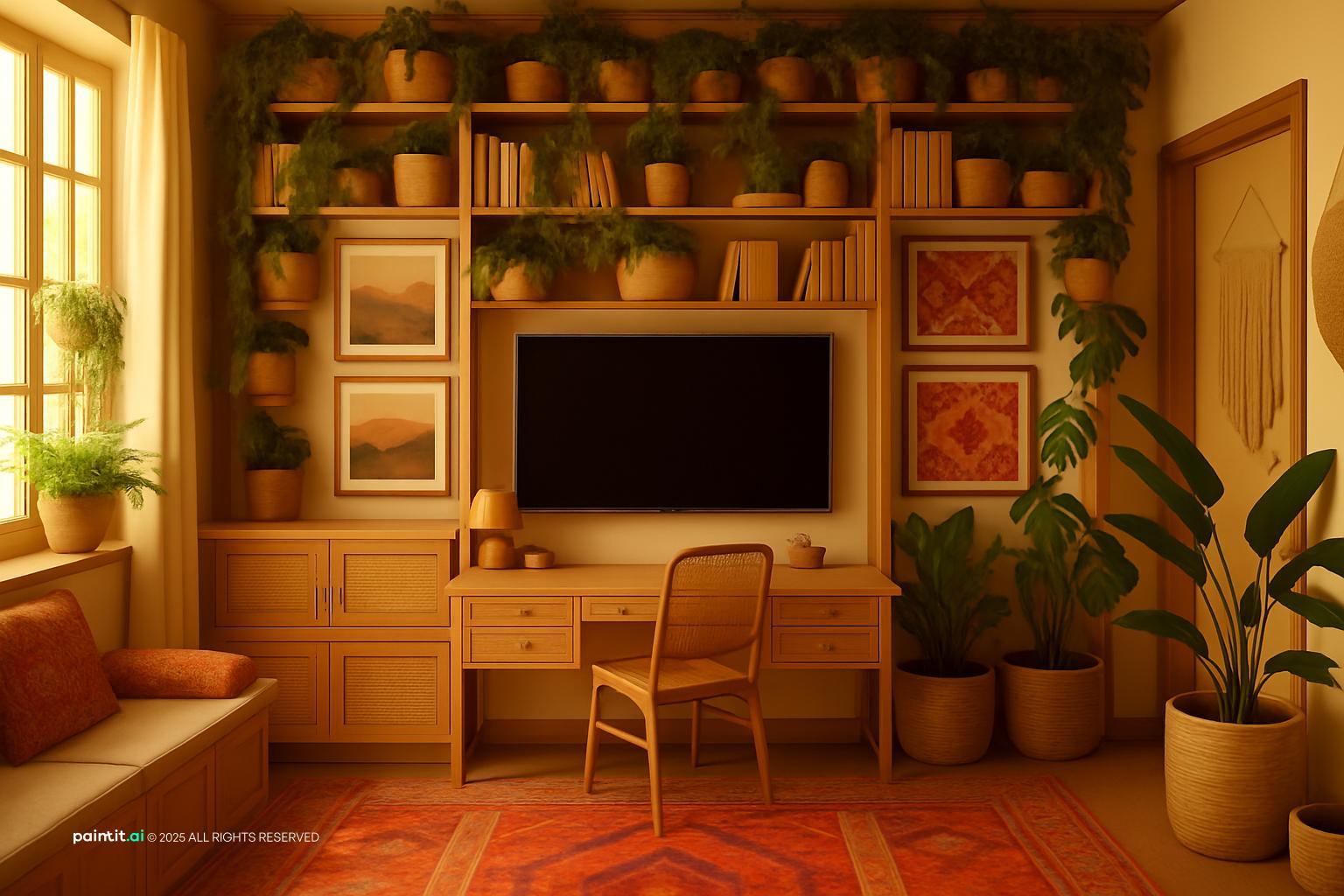
Stylish 60m² Living Room Design softens boho texture, layered textiles and warm wood in a living room setting.
Boho Living Room Ideas with Boho Texture and Layered Textiles with Soft Textiles uses boho texture, layered textiles and soft textiles in a living room setting.
Boho Living Room Ideas with Boho Texture and Layered Textiles View 3 balances boho texture, layered textiles and soft textiles in a living room setting.
Boho Scandinavian Living Room Design pairs boho texture, plants and greenery and layered neutrals in a living room setting.
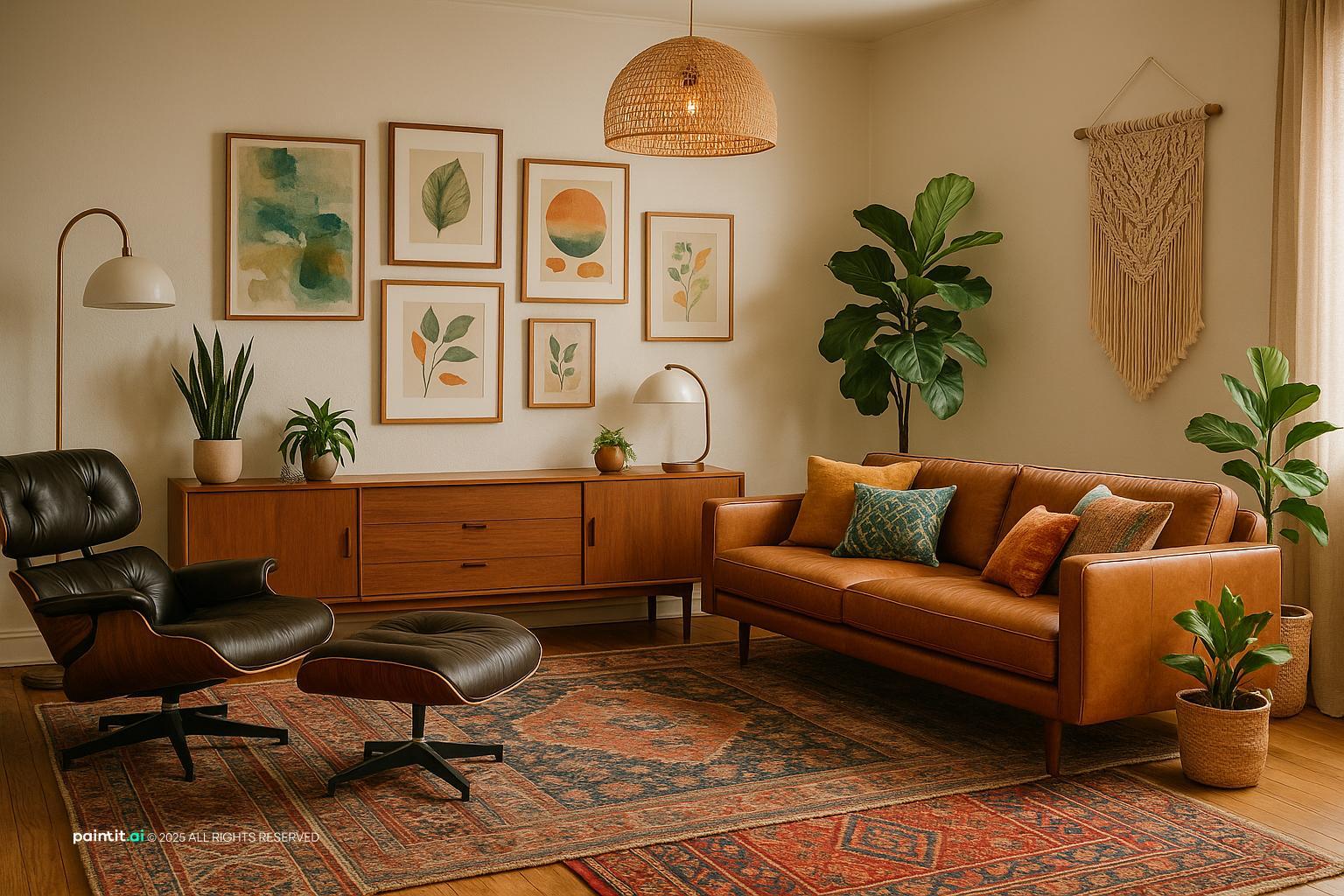
Mid-Century Modern Living Room Design layers boho texture, layered textiles and warm wood in a living room setting.
Bohemian-Style Living Room Design anchors boho texture, layered textiles and soft textiles in a living room setting.
Stunning Bohemian Living Room Design softens boho texture, layered textiles and soft textiles in a living room setting.
A boho room can feel scattered fast if the furniture has no anchor. Start with the sofa and chairs, then choose a rug large enough for at least the front legs of the main seating pieces to sit on it. In a larger living room, leave 14 to 18 inches between the coffee table and sofa so people can move, reach a drink, and still feel relaxed.
Why it works: boho style usually has many small visual moments. The layout needs one strong center. If the rug is too small or only sits under the coffee table, every pillow, basket, and plant starts asking for attention at once.
A calm foundation makes boho living room decor much easier to control. Warm white walls, beige upholstery, light oak, camel leather, or soft taupe curtains give the room a steady background. Then bring in rust, ochre, terracotta, olive, sage, indigo, or muted pink through pillows, art, lampshades, and small stools.
In Paintit.ai color-related prompts, users often specify shades such as white, beige, and sage; color appears in 27.6% of prompts. That matches what we often see in room uploads: lighter bases make layered boho details feel airy instead of heavy. Choosing the best living room colors matters most when the room is small, north-facing, or short on daylight.
Pick one material direction first: rattan, cane, raw wood, jute, linen, wool, or ceramic. Use it in two or three places, not on every surface. A cane cabinet, a jute rug, and a woven tray can connect the room without making it look like a showroom set.
What to avoid: buying matching rattan furniture in a bundle. A rattan chair, rattan side table, rattan pendant, and rattan storage unit can look flat because the eye reads repetition, not depth. Mix smooth, rough, matte, and soft surfaces instead.
Layered rugs help when the room needs softness, zoning, or a larger visual footprint than one rug can give. Start with a flat natural-fiber base rug, then place a smaller patterned rug on top, centered under the coffee table or angled slightly if the room is informal. Keep the top rug colors connected to at least one other element, such as pillows or art.
Why it works: the lower rug defines the seating zone, while the upper rug adds character. The catch is thickness. Two heavy rugs near a walkway can curl, trip people, and make the coffee table wobble.
A clean-lined sofa gives boho styling somewhere to rest. Choose linen, cotton, boucle, or worn leather in a plain fabric instead of a busy print. Low arms and deep seats support the casual mood, but check the room depth before choosing an oversized silhouette.
For a modern boho living room, pair a simple sofa with sculptural wood tables, one vintage textile, and a few generous plants. The room feels current because the big furniture stays controlled while the accessories bring warmth.
Boho does not mean every shelf needs objects. In Paintit.ai behavior data, negative prompts such as “without” and “no clutter” appear in 8.8% of prompts, which says a lot about what people worry about with this style. A practical rule: if an item does not add texture, height, function, color balance, or personal meaning, remove it.
What to avoid: filling every surface with small items of similar size. Three useful or meaningful objects on a console usually look better than twelve tiny pieces. Use closed storage for remotes, cables, game controllers, and everyday mess so the visible styling can stay relaxed.
Plants are a natural fit for bohemian living room ideas, but they should solve a visual problem. A tall tree can soften an empty corner. Trailing greenery can break up a high shelf. A broad-leaf plant can balance a heavy sofa arm. Use woven baskets or ceramic planters to connect them to the palette.
Why it works: plants add height, organic shape, and shadow. Avoid scattering many small pots across the floor, especially near a traffic path. One large plant often looks calmer than five small ones fighting for space.
Patterned pillows are one of the easiest ways to bring boho energy into a living room. Combine one large-scale motif, one smaller geometric or stripe, and one solid textured pillow. Keep the palette tight: three main colors are usually enough.
The common mistake is choosing every pillow because it looks “boho” by itself. On the sofa, they need to work as a group. If the rug already has a strong pattern, use quieter pillows with texture instead of adding another loud print.
Small boho living room ideas need sharper editing, not tiny versions of every trend. Keep at least one clear path from the entry to the seating area, choose a round or oval coffee table where corners feel tight, and use wall-mounted shelves instead of bulky bookcases when floor space is limited.
If you are working with small boho living room ideas, test what happens when you remove one heavy piece before adding new decor. When people upload compact rooms, the weak spot is often furniture depth, rug scale, or pattern size, not a lack of accessories.
A vintage trunk, carved wood table, kilim rug, arched mirror, or old ceramic lamp can give the room depth. Let that piece be visible and give it space. If everything in the room is distressed or collected-looking, the effect can turn muddy.
Why it works: one strong older piece creates contrast against clean upholstery or simple walls. Avoid buying faux-aged items in bulk. A mixed room feels more believable than a room that looks themed.
Macrame, woven wall art, textile hangings, framed prints, and mirrors can all work in a boho living room, but they need air around them. Hang one large piece above the sofa with enough width to relate to the furniture, or group smaller pieces with consistent spacing. If the wall is narrow, one vertical textile may work better than a crowded gallery wall.
What to avoid: placing wall decor too high. A piece above the sofa usually feels better when the bottom edge sits roughly 6 to 10 inches above the sofa back, depending on scale. The goal is connection, not decoration floating near the ceiling.
A cozy boho living room usually depends on layered light. Use a warm floor lamp near the sofa, a table lamp on a side table, and a soft accent light near plants, shelving, or art. Linen, paper, bamboo, or woven shades can work well, but check the light they cast. Some look beautiful in photos and throw harsh stripes or glare in real life.
Why it works: texture looks better in low, warm pools of light. One bright overhead fixture flattens woven materials and creates hard shadows. If you need overhead light, put it on a dimmer and let lamps handle the evening mood.
Boho rooms often use baskets, trunks, low cabinets, and open shelving, but storage still needs a system. Use woven baskets for blankets, lidded boxes for small items, and a media cabinet with closed doors for electronics. Keep open shelves partly empty so the eye can see shape and shadow.
This is where boho chic living room ideas can feel more polished: the room still has texture, but the daily clutter is hidden. Avoid using baskets as a catch-all for everything. They look better when each one has a clear job.
Boho styling benefits from iteration. Paintit.ai prompt data shows that 15% of users use refinement language such as “instead,” “more,” “a bit,” and “now.” That is a useful decorating rhythm: start with the layout, add a base palette, introduce one material layer, then review before adding more.
Learn how to redesign a living room with Paintit.ai by making small changes and comparing versions. In a real room, the same principle applies. Add a rug, live with it for a few days, then decide whether the wall needs art or whether the room already has enough movement.
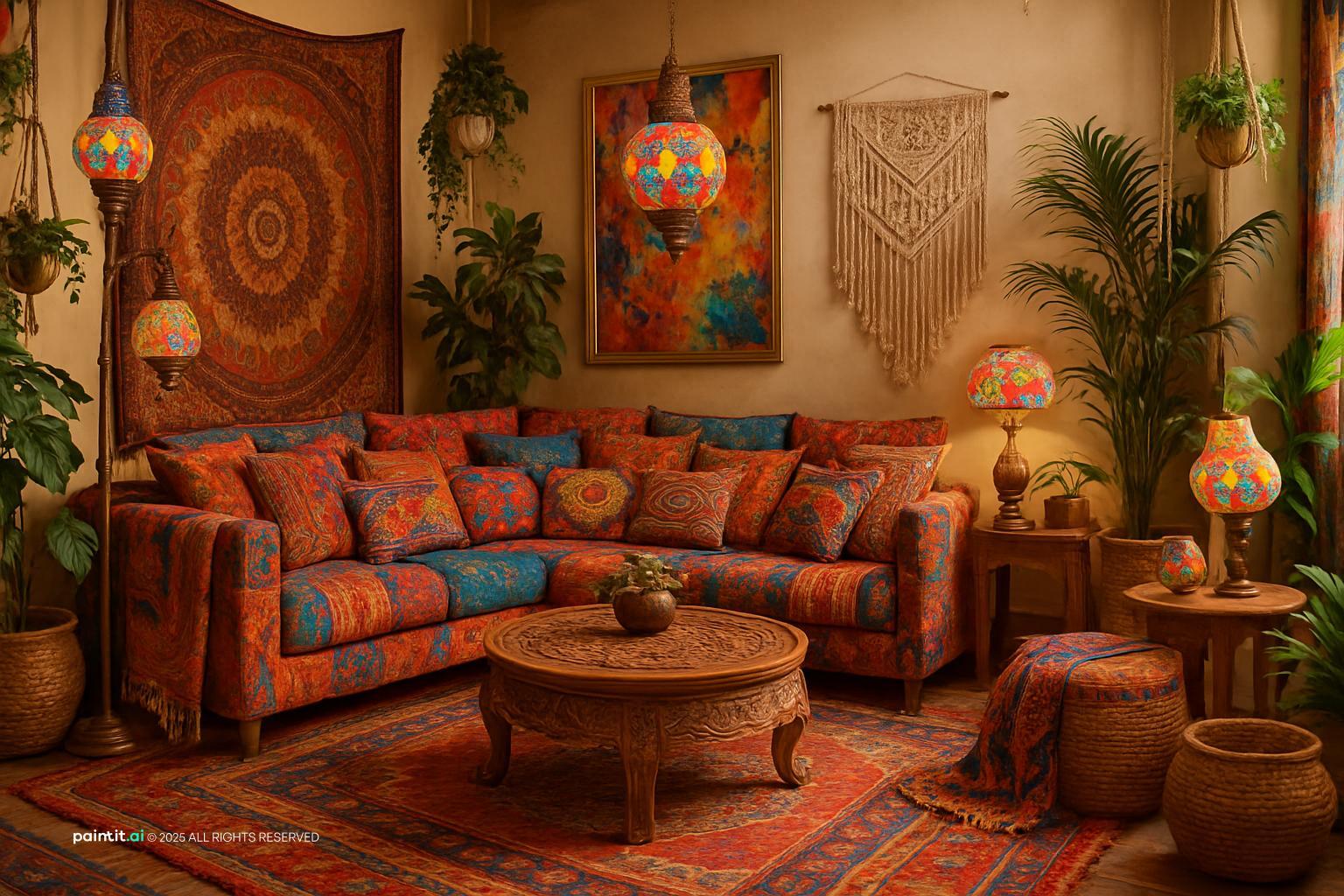
The second gallery helps compare different levels of boho intensity, from pale and minimal to richly patterned, so you can see how palette, furniture scale, and styling density change the mood.
Tropical Modern Living Room Design uses boho texture, layered textiles and warm wood in a living room setting.
Modern Scandinavian Warm Living Room Design balances boho texture, layered textiles and soft textiles in a living room setting.
Rustic Living Room Transformation pairs boho texture, layered textiles and soft textiles in a living room setting.
Vibrant Bohemian Living Room Design with Boho Texture layers boho texture, layered textiles and soft textiles in a living room setting.
Scandinavian Living Room Redesign anchors boho texture, layered textiles and warm wood in a living room setting.
Rustic Living Room Design softens boho texture, layered textiles and plants and greenery in a living room setting.
Cozy Bohemian Living Room Design uses boho texture, layered textiles and soft textiles in a living room setting.
Vibrant Bohemian Living Room Design with Layered Textiles balances boho texture, layered textiles and soft textiles in a living room setting.
Eclectic Beata Heuman Living Room Design pairs boho texture, layered textiles and soft textiles in a living room setting.
Rustic Scandinavian Living Room Design layers boho texture, layered textiles and warm wood in a living room setting.
Contemporary Living Room Inspiration anchors boho texture, layered textiles and soft textiles in a living room setting.
Boho Living Room Ideas with Boho Texture and Layered Textiles View 4 softens boho texture, layered textiles and soft textiles in a living room setting.
Bohemian living room ideas often use earth tones, but undertone control is what keeps them from clashing. Warm beige, cream, clay, caramel, olive, and tobacco brown work well together because they share a dry, sun-warmed quality. If your flooring is cool gray, bring in warmer textiles gradually instead of forcing every element into orange or rust.
Use stronger color where it is easy to change: pillows, throws, art, and small ceramics. Avoid painting every wall a saturated shade unless the room has enough light and simple furniture to balance it.
Wood is one of the most important boho materials, and Paintit.ai data shows material preferences appear in 19.0% of prompts. A room feels more natural when woods vary slightly: pale oak, medium walnut, reclaimed pine, or dark carved accents. The key is to repeat each tone at least once so nothing looks accidental.
Use lighter woods for larger pieces if the room is small, and keep darker wood for side tables, frames, or a statement chair. Avoid five different wood tones with no connection. The room will feel busy before you even add textiles.
Rattan and cane are useful because they add pattern without solid visual weight. Try them on an accent chair, cabinet doors, lampshade, or tray. They are especially helpful near windows or in corners where a solid piece would feel too blocky.
Balance these woven finishes with something smoother, such as plaster, glass, leather, or a matte ceramic lamp. Too much open weave can make the room feel fragile or overly themed.
Boho rooms rely on tactile contrast: slubby linen, nubby wool, cotton fringe, velvet, jute, and handwoven throws. Use texture to create depth even when the colors are quiet. A plain cream pillow with a raised weave can do more for the room than another printed cushion.
Place the softest textiles where the body actually touches the room: sofa cushions, throws, poufs, and rugs. Avoid scratchy materials on seating just because they photograph well.
Metal finishes should support the warmth rather than dominate it. Aged brass, blackened steel, oil-rubbed bronze, or antique copper usually work better than high-shine chrome in a boho setting. Use metal in lamp bases, picture frames, curtain rods, or small tables.
The safest approach is one main metal and one minor accent. Avoid scattering shiny finishes across the room; they can fight with natural textures and make the space feel less grounded.
Ceramic vases, clay pots, travertine tables, stone bowls, and handmade tiles can give the living room weight. Use them on shelves, coffee tables, mantels, or beside the sofa. Their matte surfaces pair well with woven materials because they add density and calm.
Avoid filling every surface with small pottery. One oversized vase with branches or one heavy bowl on a coffee table often looks more intentional than a cluster of unrelated pieces.
Boho texture needs shadow to be visible. Use warm bulbs, dimmable lamps, and shades that soften the light. A floor lamp can create height, a table lamp can make the sofa area usable, and a low accent lamp can bring depth to a shelf or plant corner.
Avoid cool white bulbs unless the room is used mainly for tasks. They can make beige walls look gray and woven materials look harsh.
A coffee table, shelf, or console should have variation in height, shape, and material. Try a stack of books, a ceramic bowl, and a small plant, leaving part of the surface open. On shelves, alternate books, baskets, art, and negative space so the whole wall does not become a grid of objects.
This is the difference between collected and cluttered. Every styled area needs a pause. I would start by removing one small item from each surface before buying anything new; it is the quickest way to see whether the room needs more decor or just more breathing room.
Paintit.ai can help you preview boho changes on your actual living room photo: a lighter wall color, a lower sofa, rattan storage, layered rugs, warmer lamps, or a more edited shelf arrangement. This is useful when you want the room to feel relaxed but still controlled.
For the clearest result, describe what to keep and what to remove. For example: keep the windows and floor, remove visual clutter, add warm beige walls, a jute rug, plants, and natural textures. That kind of specific prompt protects the room structure while letting the style change.
Start with the layout, then add a neutral base, one or two natural materials, plants, patterned textiles, and warm lighting. Edit after each layer so the room stays comfortable, not crowded.
Warm white, beige, cream, terracotta, rust, camel, olive, sage, and muted brown work well. Use stronger colors in accents if the room is small or does not get much natural light.
Give every item a role: texture, storage, height, color balance, or personal meaning. Use a simple KEEP: and REMOVE: pass, leave empty space on walls and surfaces, and cut anything that only adds noise.
Yes. Use fewer large gestures: one proper rug, one tall plant, slim storage, and compact seating. Avoid too many small patterns or floor baskets in the traffic path.
Choose comfortable, simple seating and add character through wood tables, woven chairs, vintage pieces, poufs, and textured storage. Keep the biggest furniture visually calm so the layers around it can do the work.