
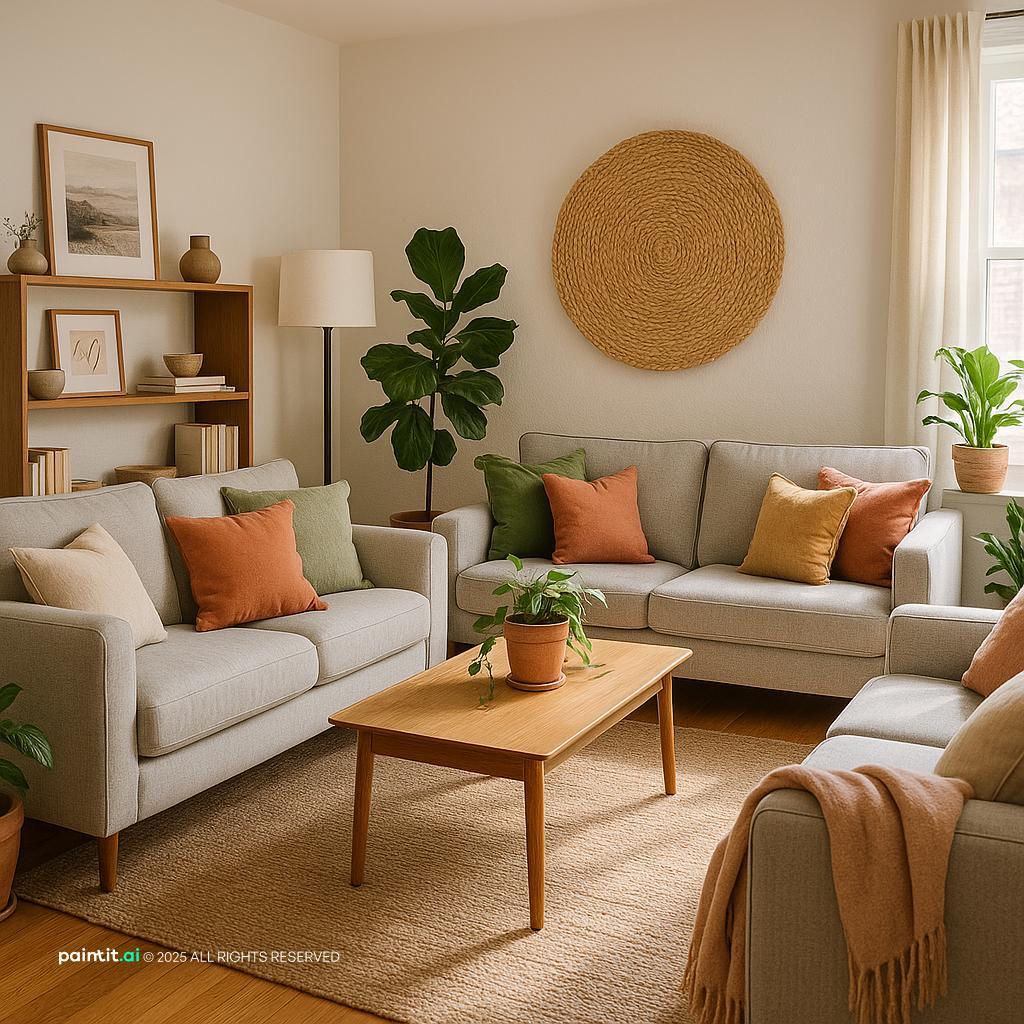
Cozy Living Room Redesign
Cozy Living Room Redesign uses soft textiles, plants and greenery and natural light in a living room setting.
Big living room ideas work when they start with scale. Not pillows. Not a tray on the coffee table. Scale first. A large living room can take generous furniture, layered lighting, tall curtains and stronger materials, but it also exposes weak choices fast. The goal is not to fill every quiet corner. The goal is to create zones that make sense, leave clear walking paths, and use color, texture and lighting so the whole room feels intentional instead of just large.
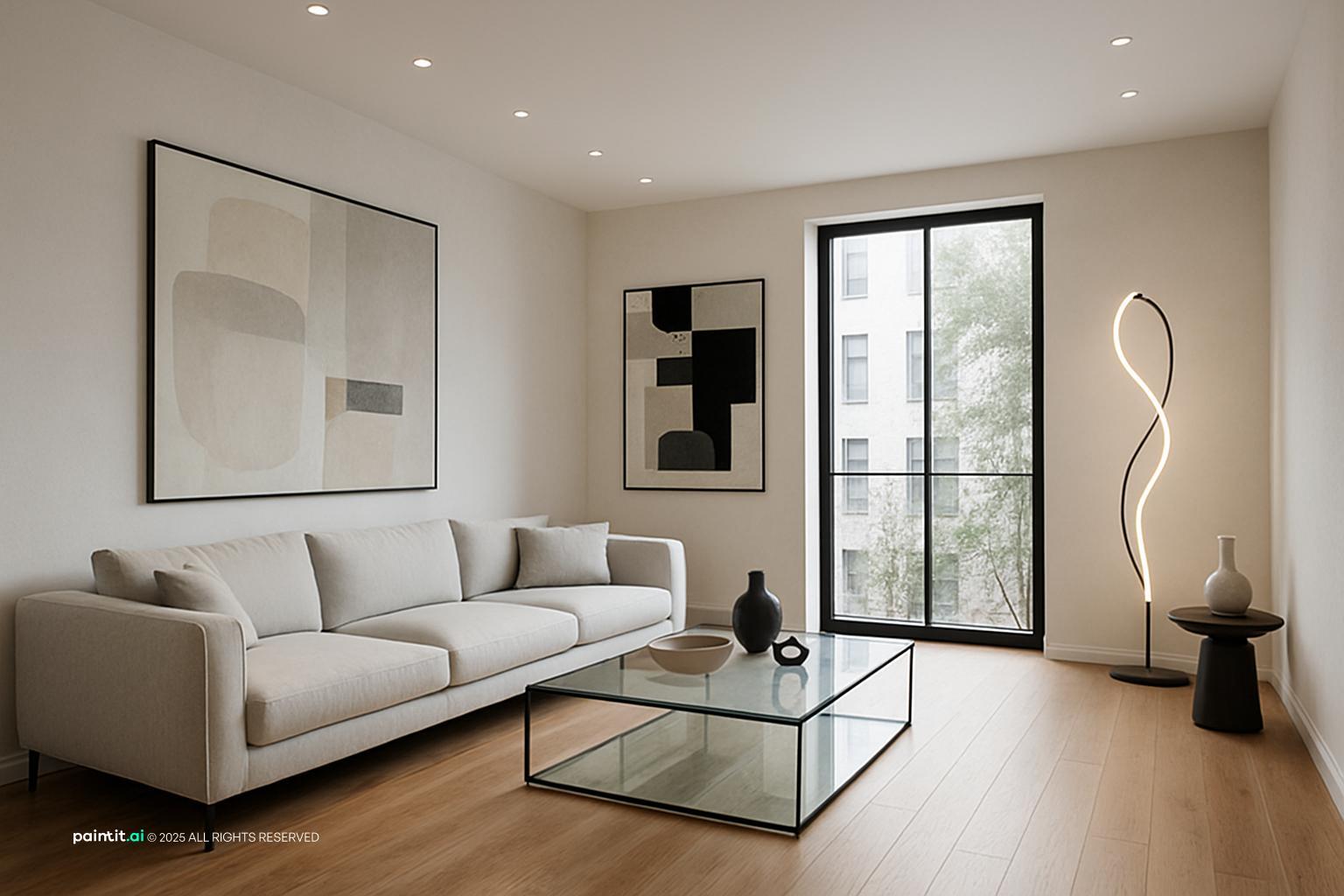
A big living room usually goes wrong in one of two ways. Either the furniture is too small and the room feels unfinished, or every blank patch gets filled and the room starts to feel cluttered. In Paintit.ai behavior data, 39.5% of prompts are broad, low-context requests such as changing wall color. That is a normal starting point, but a large room needs a sharper brief: what stays, what changes, where people walk, and where they actually sit.
Before choosing a sofa or paint color, mark the main focal point, window direction, traffic path and anything you want to keep. Professional-style constraints like KEEP: fireplace, windows and ceiling beams are not just for designers. They stop the room from drifting into random choices. If you want to test these decisions visually, an AI living room design tool can show how zones, furniture size and color changes behave before you commit.
Use the first gallery to study how big rooms split into conversation areas, reading corners, media walls and open circulation paths while still feeling like one room.
Cozy Living Room Redesign uses soft textiles, plants and greenery and natural light in a living room setting.
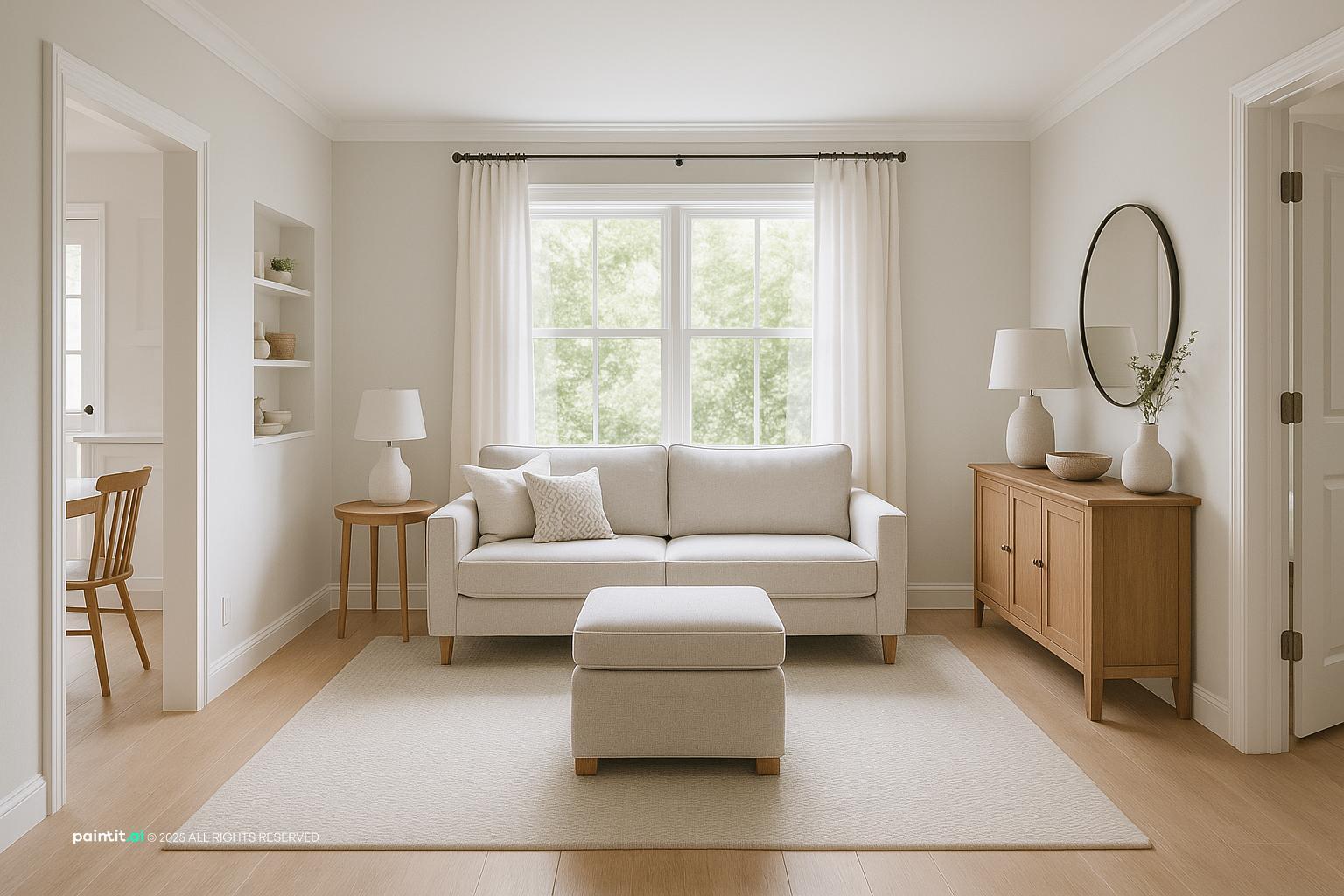
Transitional Compact Living Room Design balances warm wood, layered neutrals and natural light in a living room setting.
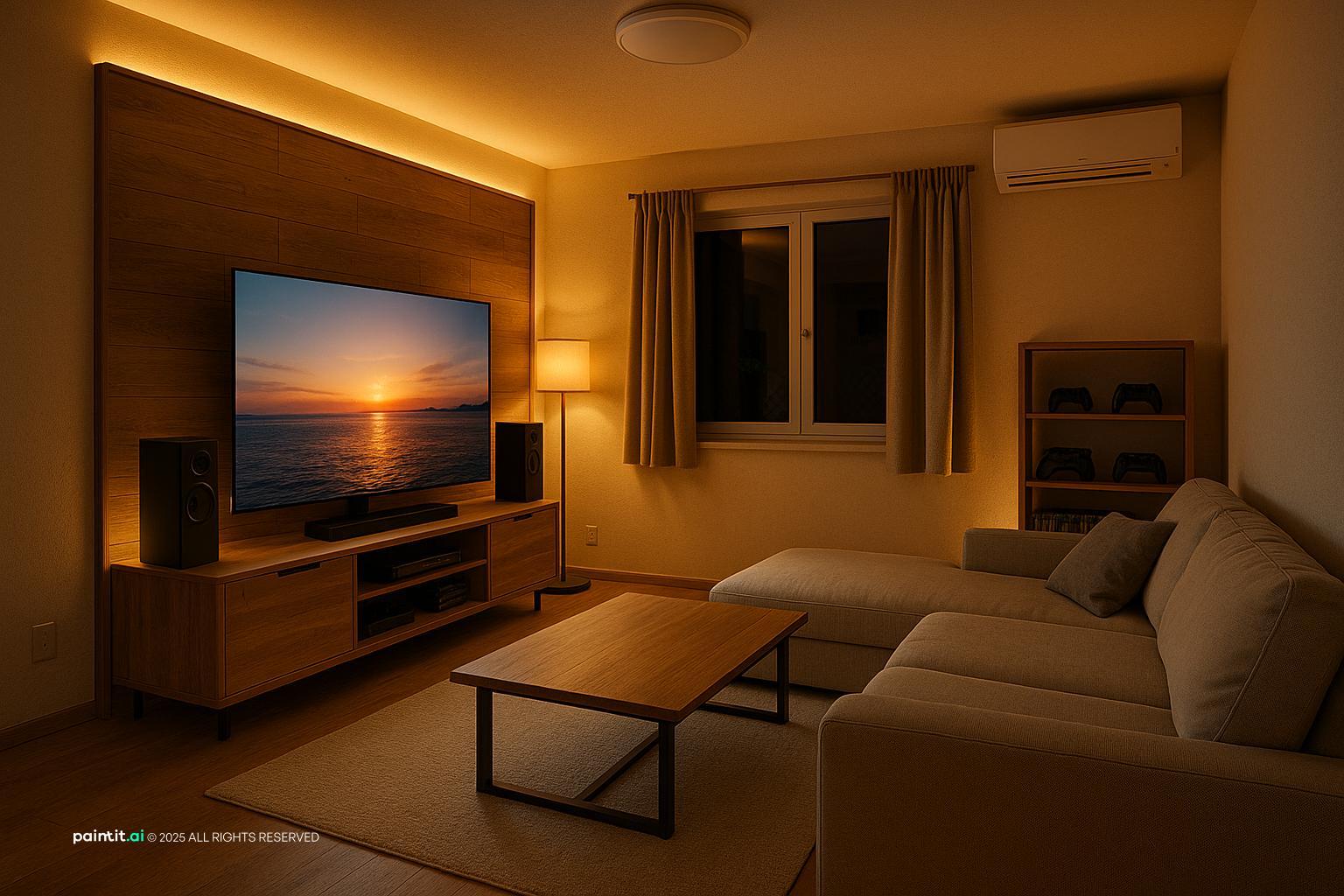
Cozy Family Living Room Design pairs natural light in a living room setting.
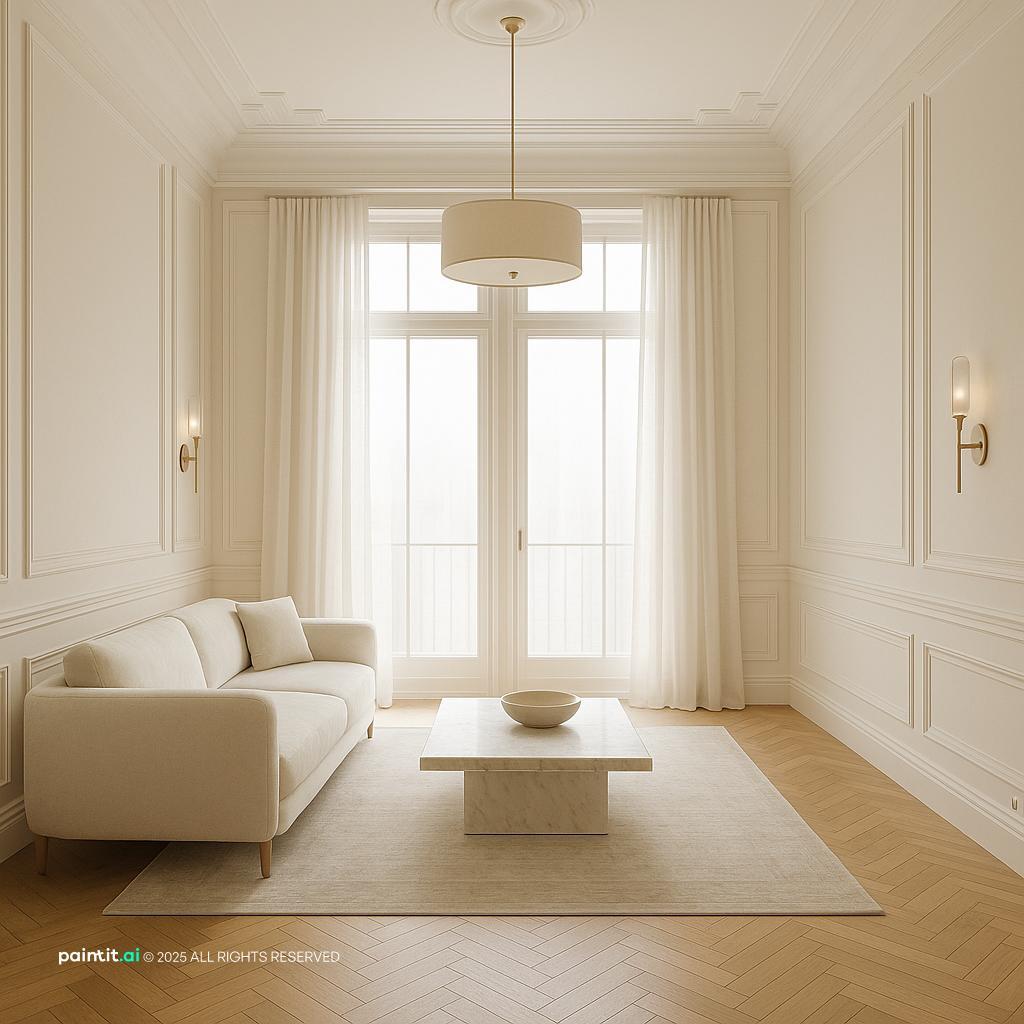
Elegant Neoclassic Minimalist Living Room Design layers clean-lined furniture, layered neutrals and natural light in a living room setting.
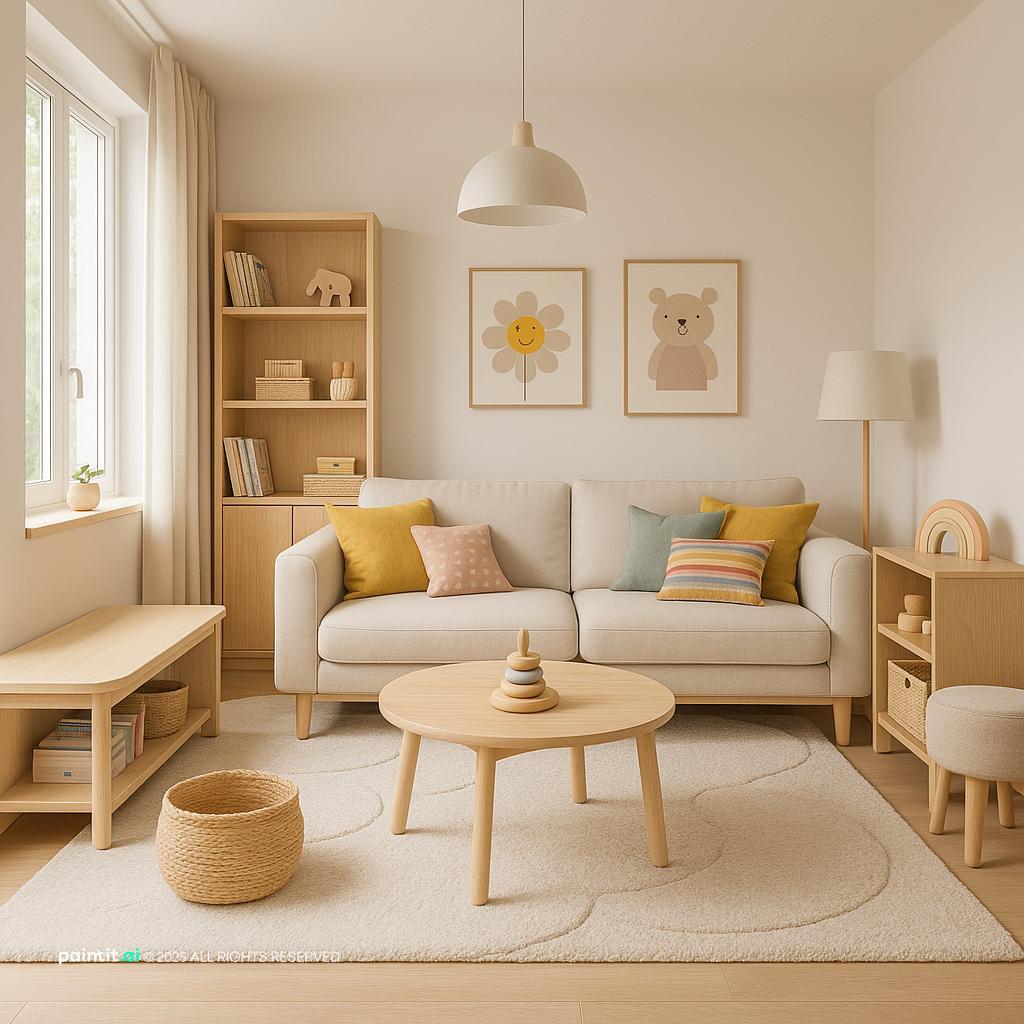
Cozy Scandinavian Living Room for Families anchors warm wood, soft textiles and layered neutrals in a living room setting.
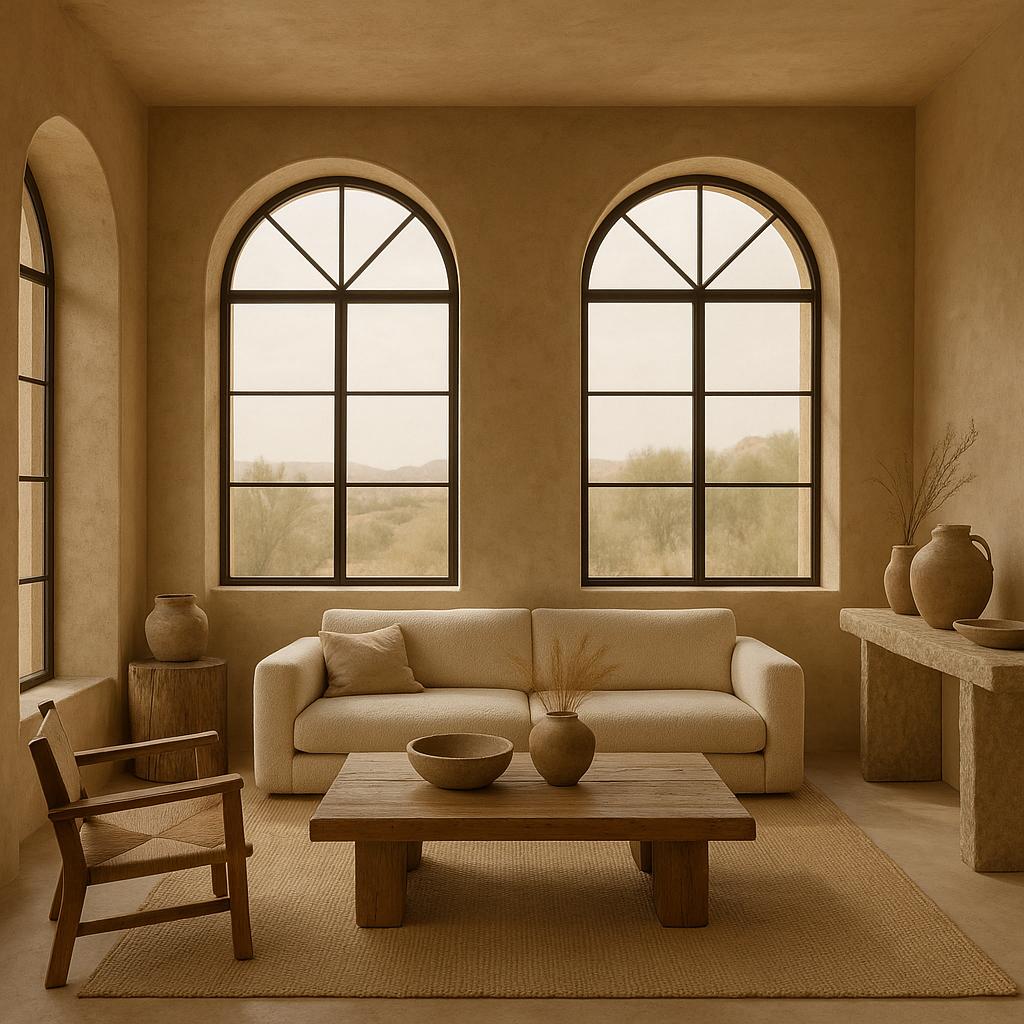
Desert-Inspired Villa Living Room Design softens natural light in a living room setting.
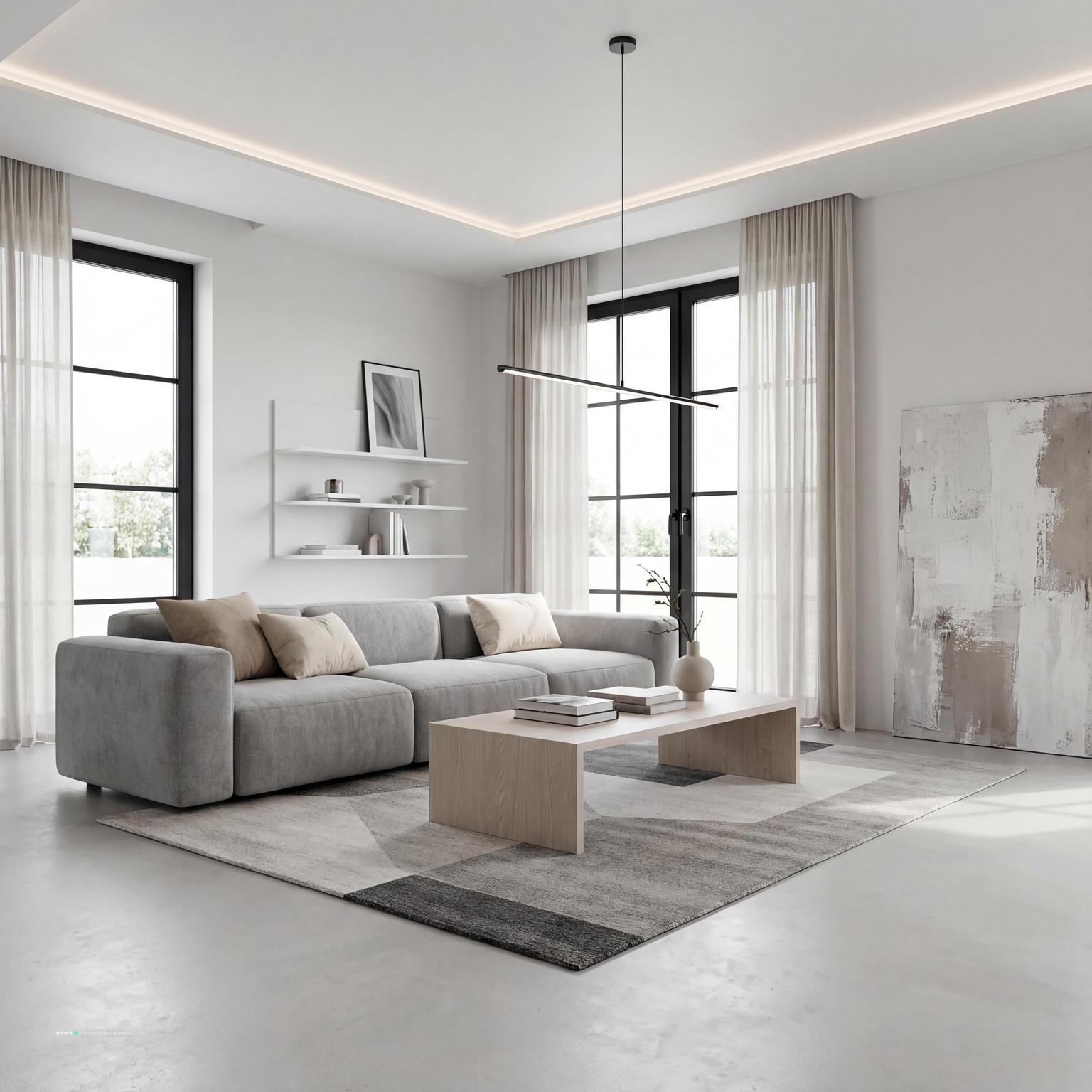
Stylish Minimalist Living Room Design uses warm wood, clean-lined furniture and layered neutrals in a living room setting.
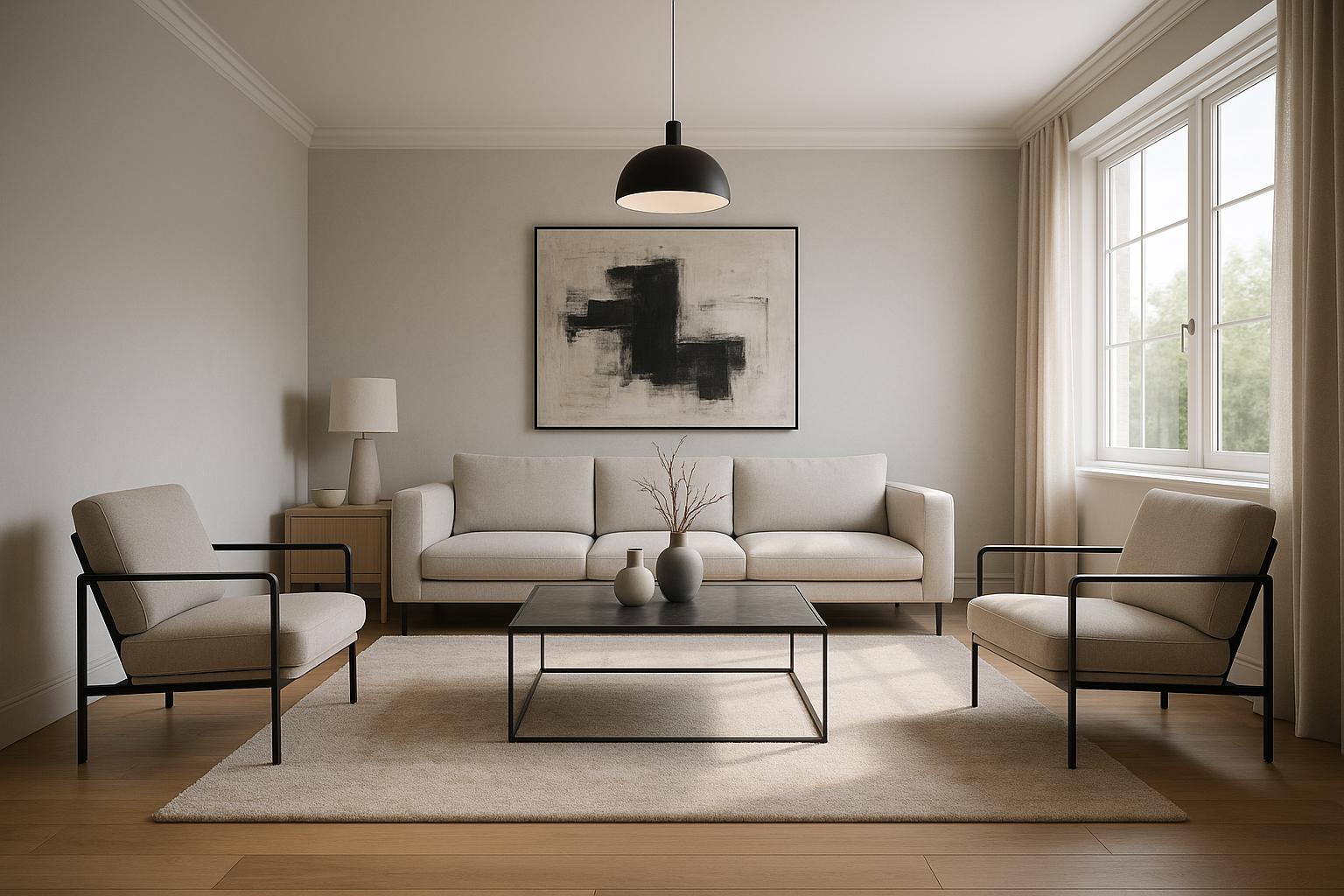
Sleek Contemporary Living Room Design balances metal accents, layered neutrals and natural light in a living room setting.
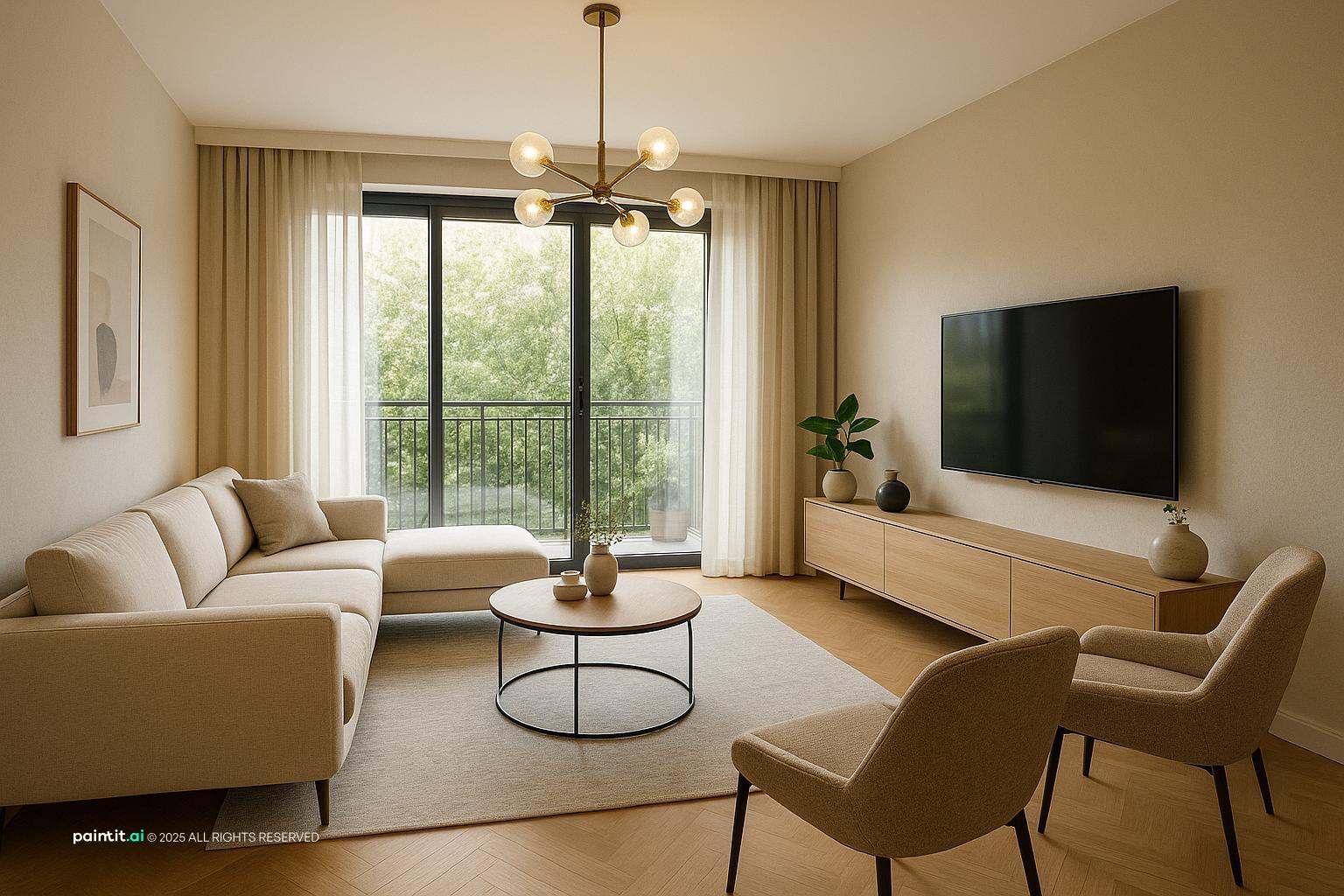
Big Living Room Ideas with Plants and Greenery and Natural Light pairs plants and greenery and natural light in a living room setting.
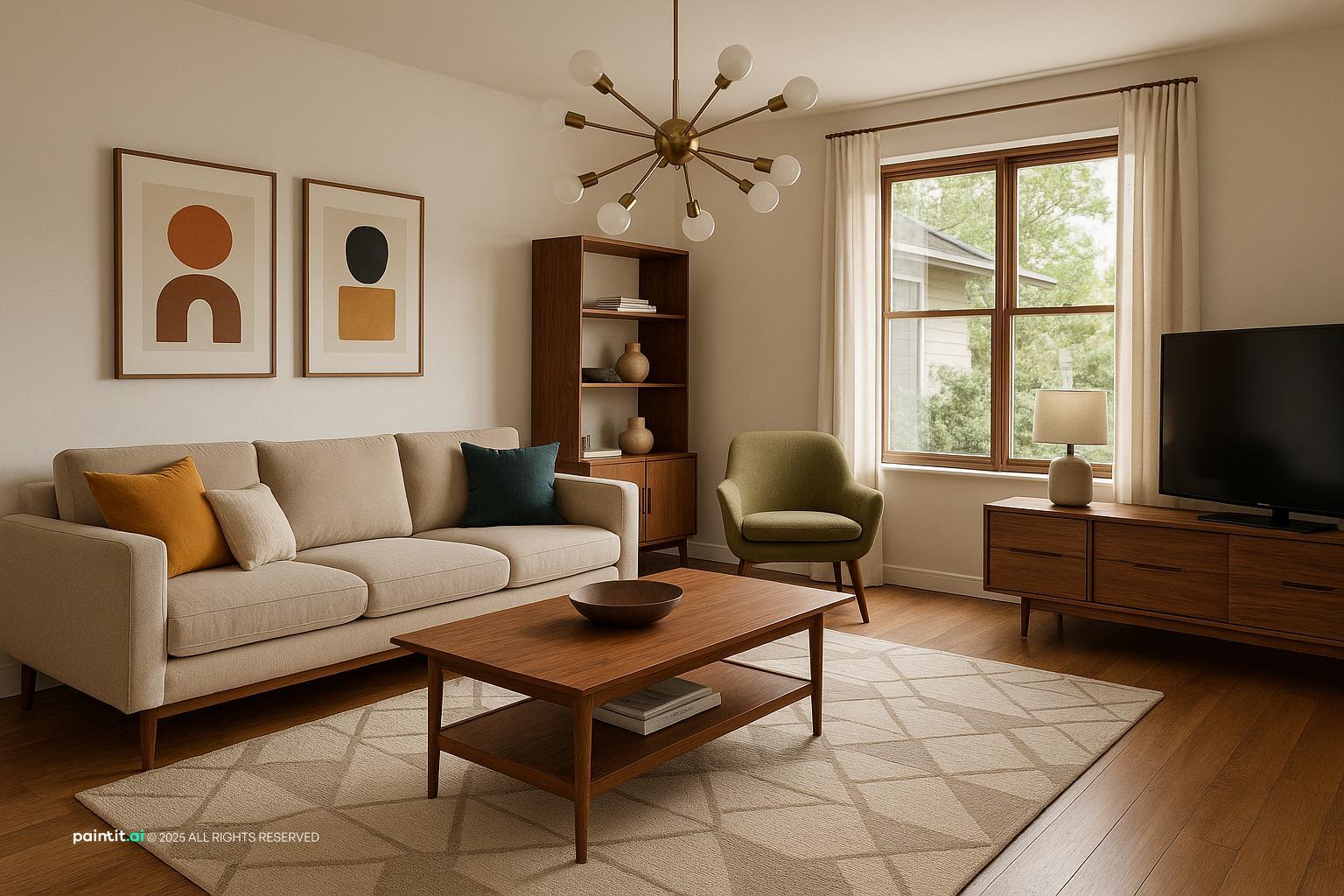
Stylish Mid-Century Modern Living Room Design layers warm wood, clean-lined furniture and layered neutrals in a living room setting.
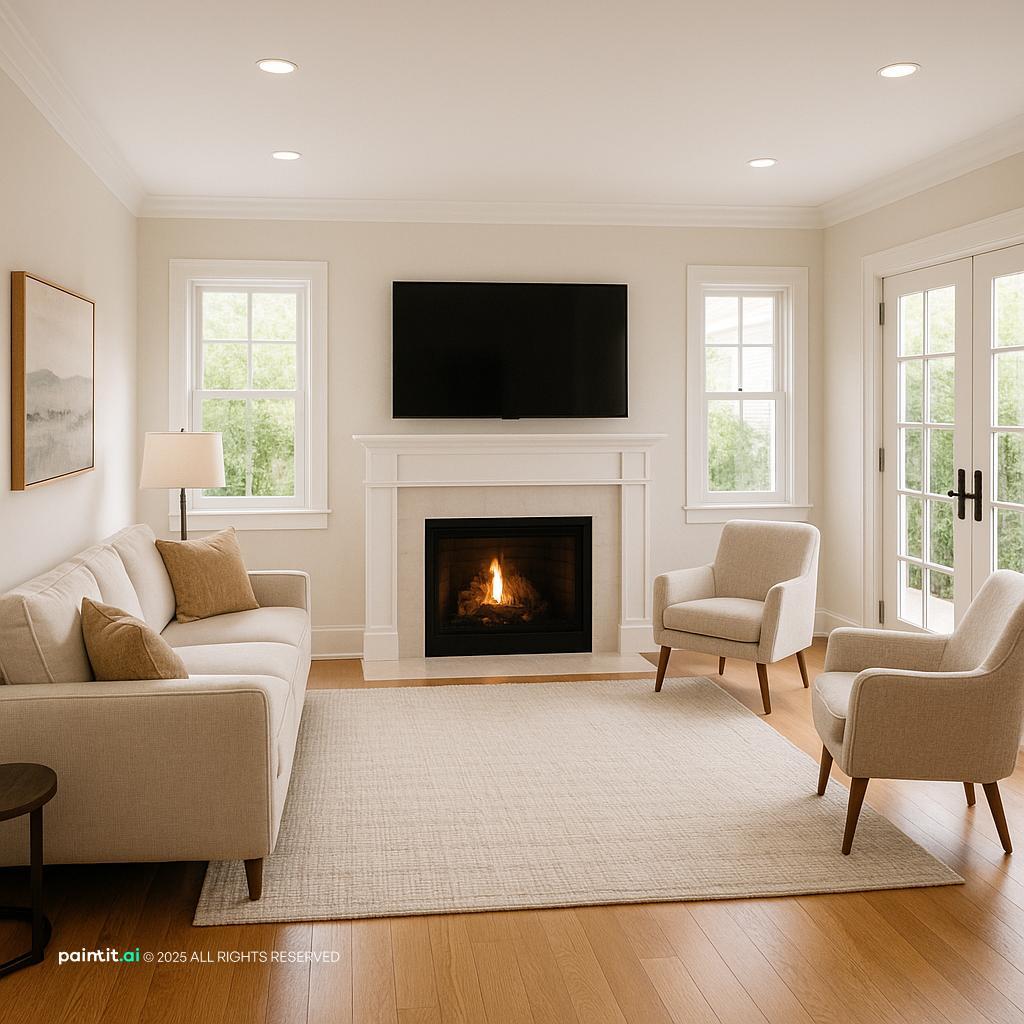
Stylish Living Room Layout with Fireplace Focal Point anchors natural light in a living room setting.
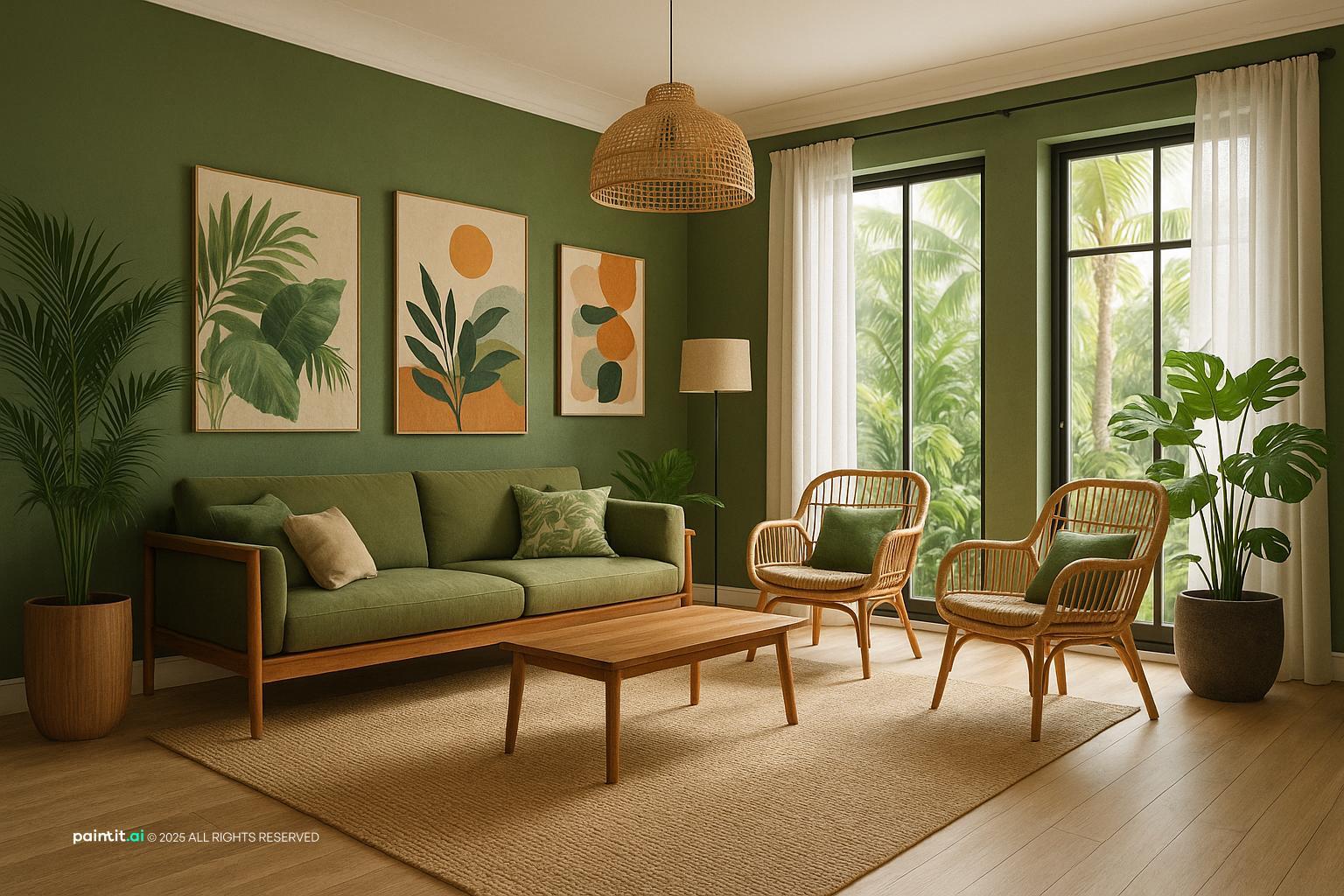
Tropical Modern Living Room Design softens warm wood, plants and greenery and natural light in a living room setting.
A large living room should rarely be treated as one giant seating area. Start with the main conversation zone, then add a second purpose: a reading chair by the window, a game table, piano area, desk wall, bar cabinet or quiet bench. Keep at least 2 to 3 feet of clear walking space between groupings so the room feels open, not like a furniture maze.
Why it works: zoning gives empty square footage a job. In Paintit.ai tests, we often see people try to fix empty space by adding more furniture. The real issue is usually simpler: the room has no clear activity areas.
In a big room, the area rug should fit the seating arrangement, not just the coffee table. Ideally, the front legs of the sofa and chairs sit on the rug. In very large rooms, all legs can sit fully on it. A tiny rug floating in the middle makes even good furniture look disconnected.
What to avoid: do not buy a rug only because it fits under the coffee table. When people upload a big living room, rug scale is one of the first weak spots I check. If the rug edge stops too far from the sofa, the room reads as broken into pieces.
A slim apartment sofa can disappear in a big living room. Look at a deep sectional, two facing sofas, a long modular sofa or a sofa paired with substantial accent chair pieces. The right sofa should relate to the wall length, ceiling height and viewing distance from the focal point.
For big living room layout ideas, check the relationship between sofa depth and traffic flow. A deep sectional can anchor the center of the room beautifully, but it becomes a problem if it blocks the main path from the entry to the windows.
A fireplace, media wall, large artwork, window wall or built-in shelving can become the focal point. In a large space, the focal point needs enough size and contrast to hold the room. A small TV on a bare wall or one narrow print above a long sofa usually feels underpowered.
Why it works: the eye needs somewhere to land. Once the focal point is clear, the sofa, coffee table, lighting and wall decor can line up around it instead of scattering across the room.
Big rooms often look stiff when every piece hugs the perimeter. Pull the main sofa group into the room and leave a walkway behind it if space allows. A console table behind the sofa can define the zone and add a useful place for lamps, books, storage baskets or a pair of stools.
What to avoid: do not assume a large room needs furniture on every wall. One strong floating group can feel more comfortable and resolved than a perimeter full of unrelated chairs, cabinets and side tables.
Use a recurring material such as warm oak, black metal, woven cane, brass, marble or brick to connect separate areas. A wood coffee table, wood picture frames and a wood sideboard can make a media zone and reading nook feel related. The repetition should be visible, but not copied everywhere.
This matters because 19.0% of Paintit.ai prompts include material language. Materials do more than decorate. In a big room, wood adds warmth, marble adds polish, brick adds texture and metal helps sharpen the outline of large furniture.
A big sectional can work, but it should not be the only seating idea. Pair it with swivel chairs, a bench near the window, a pair of accent chairs by the fireplace or a low ottoman that can move between zones. Different seat types make the room easier to use for conversation, reading, guests and everyday lounging.
Why it works: varied seating breaks up visual bulk. It also keeps the room from looking like a showroom set where every piece came from the same page.
Tall ceilings make low furniture look even lower. Balance height with floor-to-ceiling curtains, vertical shelving, tall plants, oversized art or a large pendant. Hang curtains close to the ceiling rather than just above the window frame to stretch the wall visually.
What to avoid: leaving the upper half of the room empty. In a big living room, blank vertical space can make good furniture look temporary, as if the room is still waiting for the real design to arrive.
A small coffee table in front of a large sectional looks like an afterthought. Choose one large table, two square tables, a cluster of nesting tables or an oversized upholstered ottoman. Leave enough room to pass around it, usually about 16 to 20 inches from the sofa edge for comfortable reach.
Best use case: a round coffee table softens rooms with many straight lines, while a long rectangular table works well with a long sofa. If children use the room, rounded corners may be more practical than sharp stone edges.
Large living rooms collect books, throws, toys, remotes and seasonal decor quickly. Built-ins, low cabinets, closed sideboards and storage ottomans keep the room calm without making it feel empty. Choose storage pieces that align with architectural features, such as the fireplace width, window wall or media wall.
What to avoid: too many small baskets and little cabinets. In a big room, several small storage pieces create visual noise. One or two larger pieces usually look cleaner and feel more deliberate.
Color can define zones without adding walls. A deep accent wall behind the media unit, a warmer neutral around the conversation area or a slightly darker ceiling in a very tall room can make the space feel grounded. Paintit.ai data shows color is the most popular modifier, appearing in 27.6% of prompts, so it is often the first thing people want to change.
For a practical starting point, look at how natural light hits the largest walls. White can feel crisp in a bright room, beige can soften a wide space, and sage can add calm without becoming heavy. For more palette direction, compare ideas in our best living room colors guide.
Do not rely on one overhead fixture. A big living room needs ambient light, task light and accent light. Use a chandelier or recessed lighting for general brightness, floor lamps for reading, table lamps for softness and wall washers or picture lights for art and shelving.
Why it works: lighting creates invisible boundaries. Even though lighting appears in only 5.9% of Paintit.ai prompts, it often decides whether a large room feels cozy at night or flat and shadowy.
Before buying anything, decide what should not change. It might be exposed beams, a stone fireplace, arched windows, original floors or a brick wall. Only 12.0% of users specify keep or do not change constraints, but the strongest large-room results often protect the best existing features first.
A simple design brief can help: KEEP ceiling beams and windows; REMOVE cluttered shelving; MATERIALS warm wood, linen, black metal; LIGHTING softer and warmer. This keeps big living room design ideas from becoming a random mix of trends.
If the room is unfurnished or you are replacing most pieces, test several furniture scales first. For an empty large space, AI virtual staging can help compare a sectional, two-sofa layout, oversized rug or reading area before you buy. Pay attention to sightlines from the entry and whether the main seating group feels connected to the focal point.
This is especially useful for modern big living room ideas, where clean lines can accidentally make a space feel sparse. If you came here after searching small big living room ideas, the same lesson still applies: do not confuse open space with empty space. Add texture, larger art and layered lighting in the test stage so the final room does not depend on furniture alone.
The second gallery is useful for comparing how sofa size, rug proportion, wall treatment, curtain height and lighting change the same large living room.
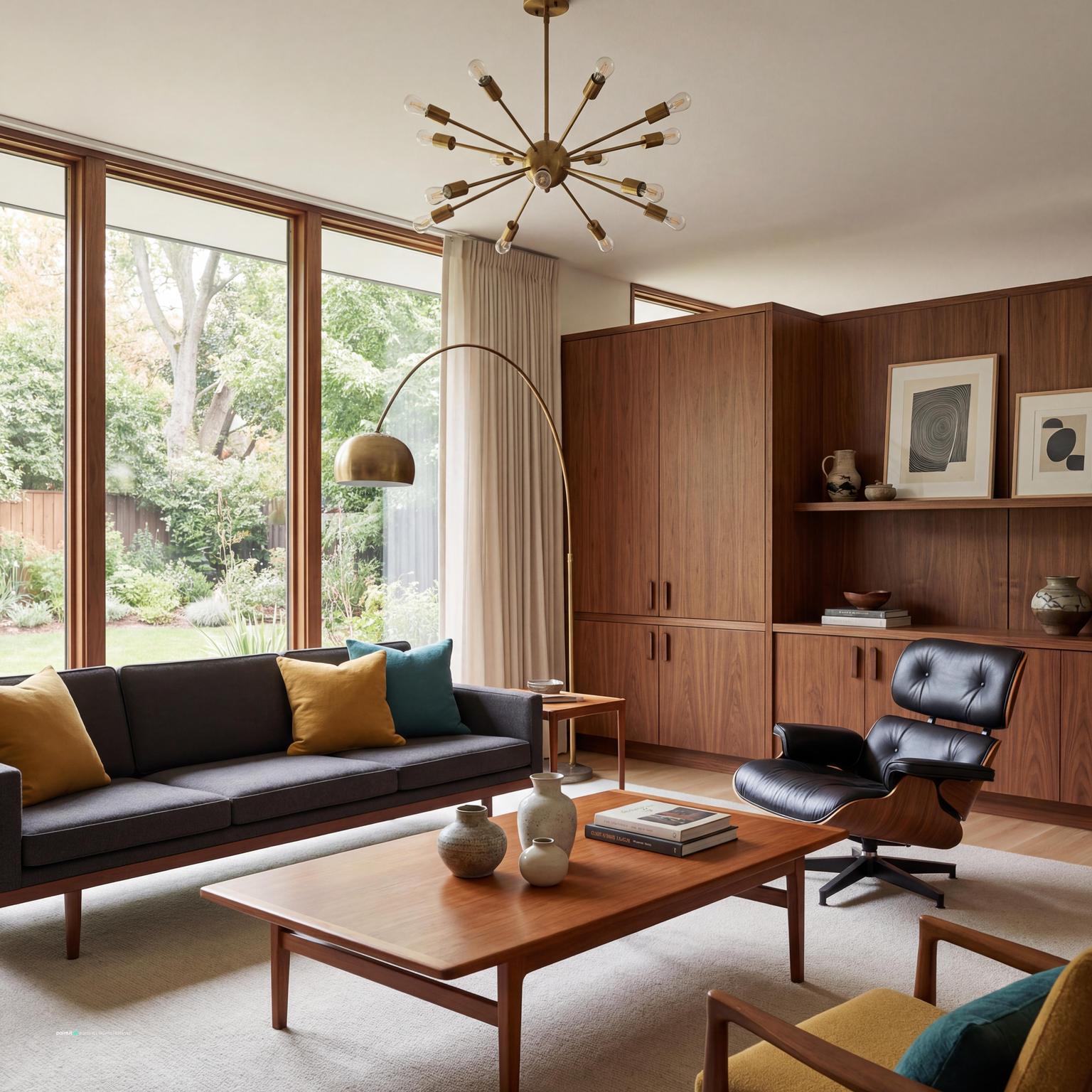
Mid-Century Modern Living Room Design uses warm wood, metal accents and clean-lined furniture in a living room setting.
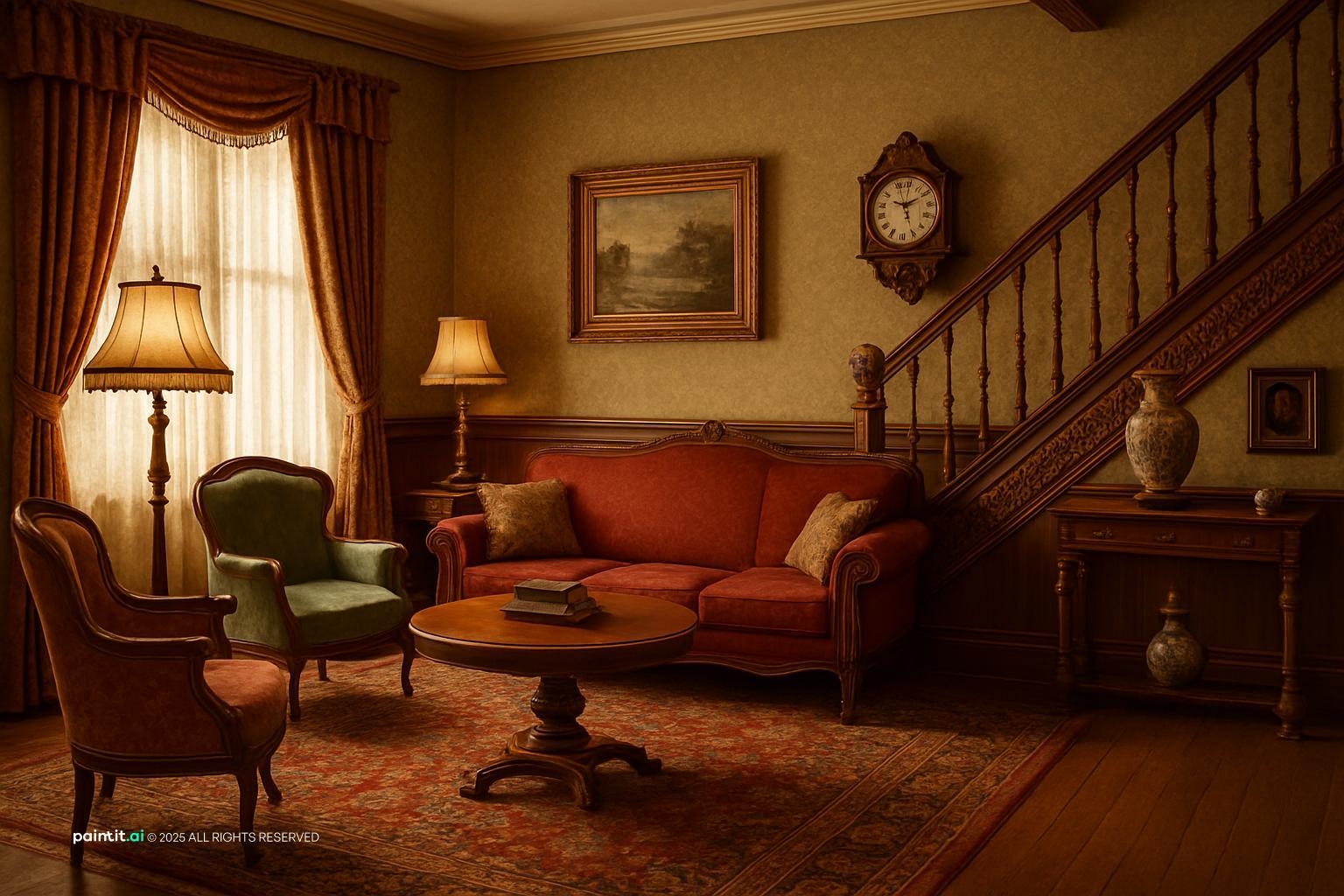
Vintage-Style Living Room Design Inspiration balances natural light in a living room setting.
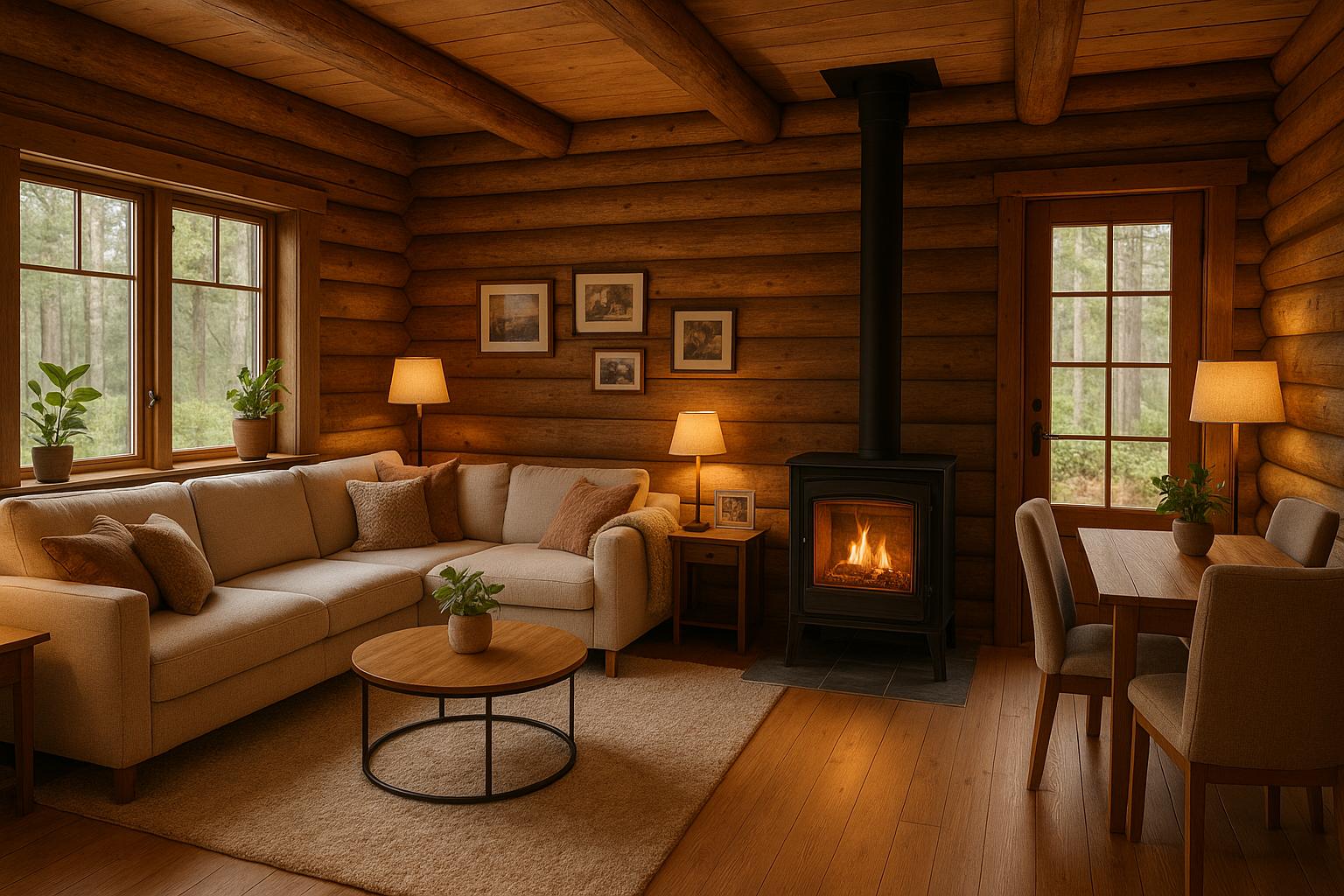
Cozy Cabin Living Room Design pairs soft textiles, plants and greenery and layered neutrals in a living room setting.
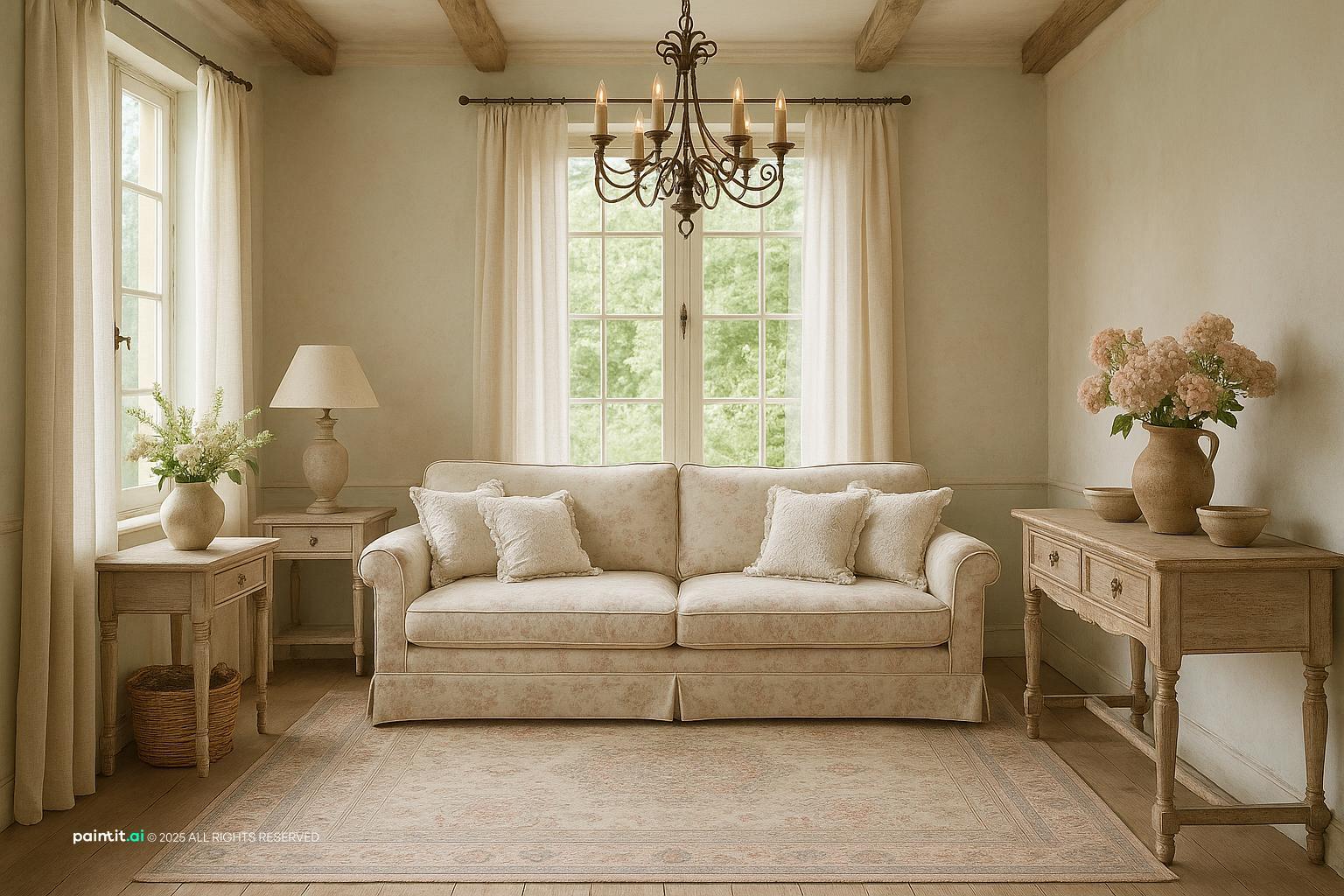
Charming French Country Living Room Design layers soft textiles and natural light in a living room setting.
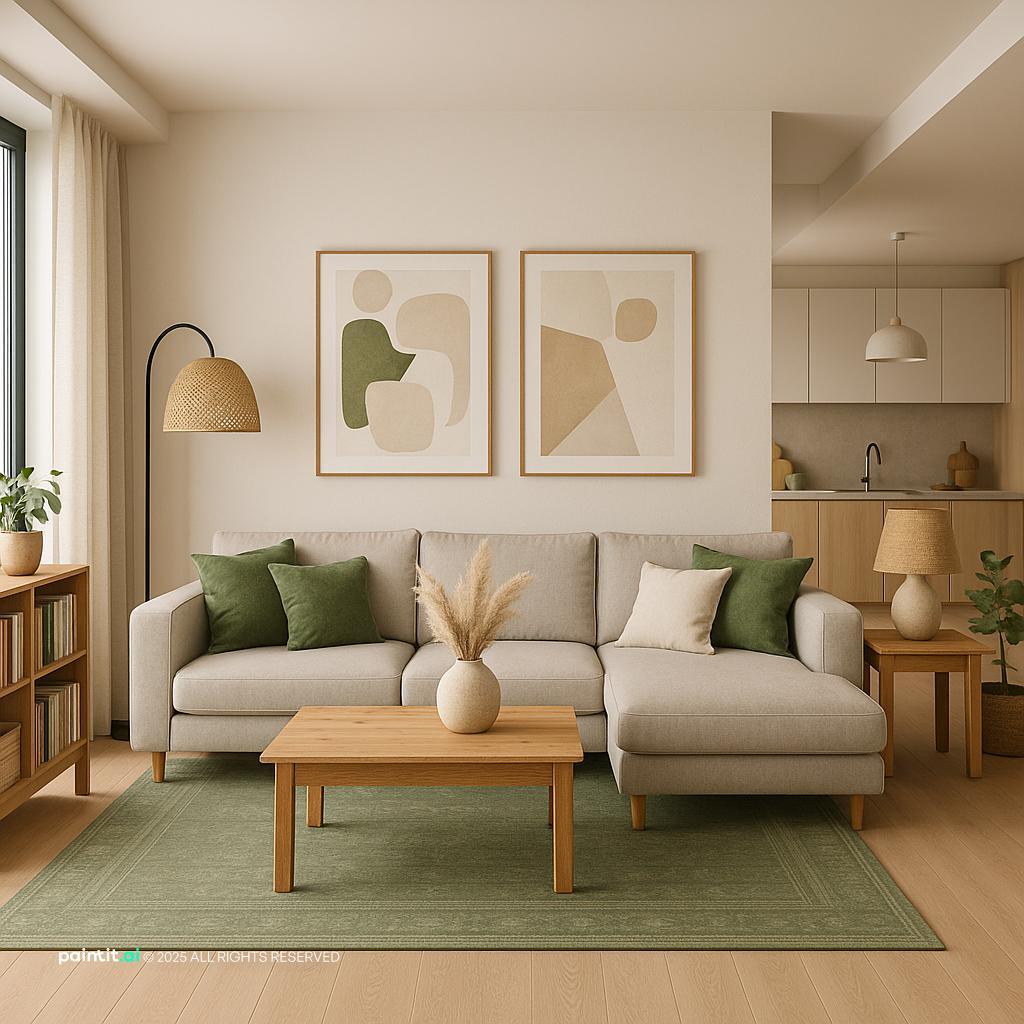
Stylish 60m² Living Room Design anchors warm wood, soft textiles and layered neutrals in a living room setting.
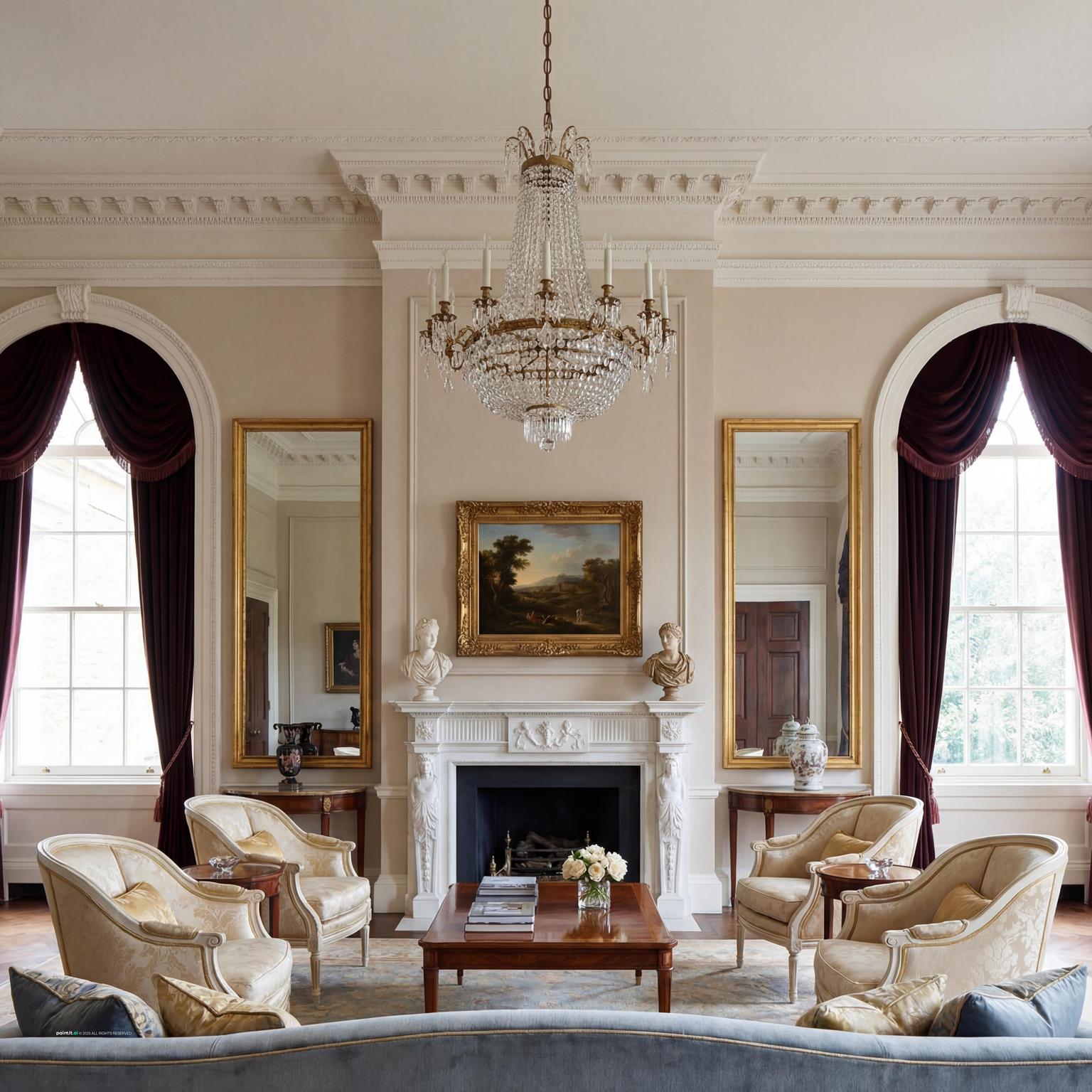
Elegant Neoclassic Living Room Design softens layered neutrals and natural light in a living room setting.
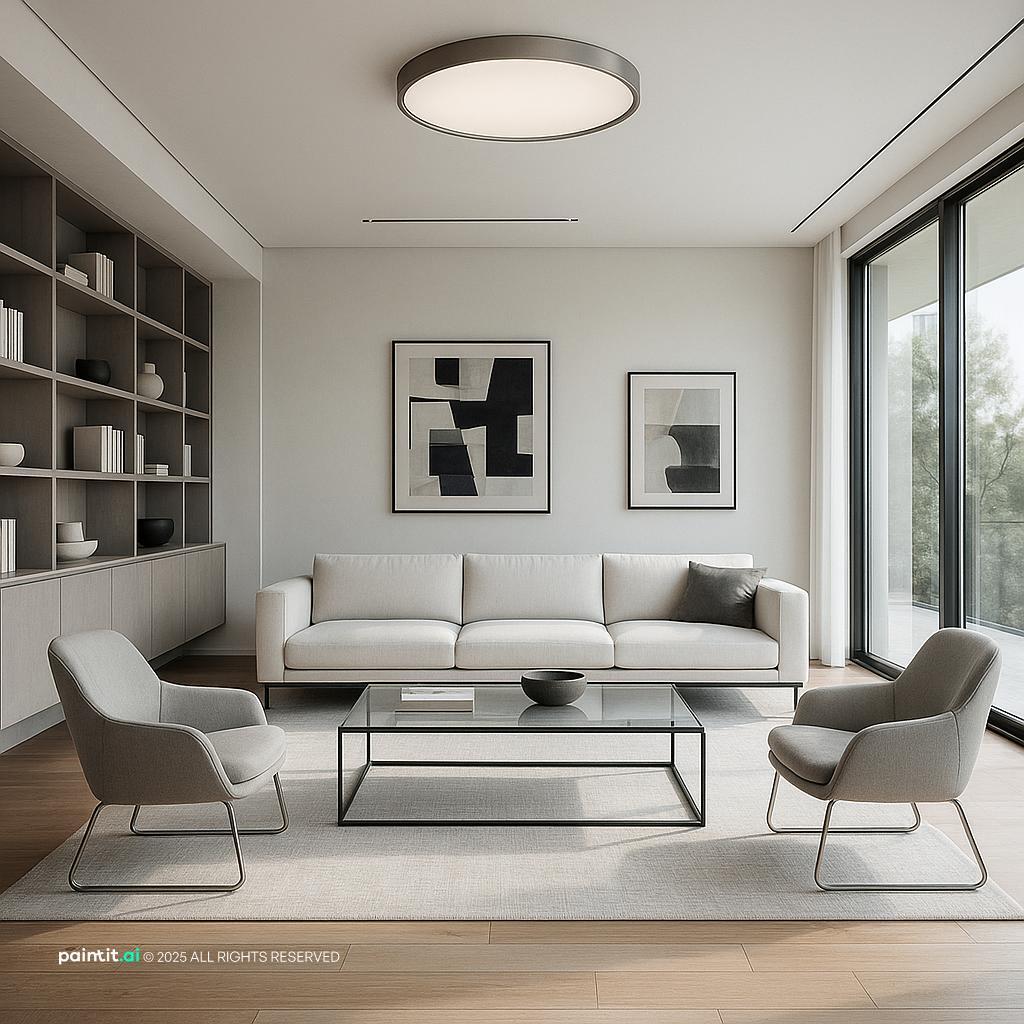
Modern Minimalist Living Room Design uses metal accents, clean-lined furniture and layered neutrals in a living room setting.
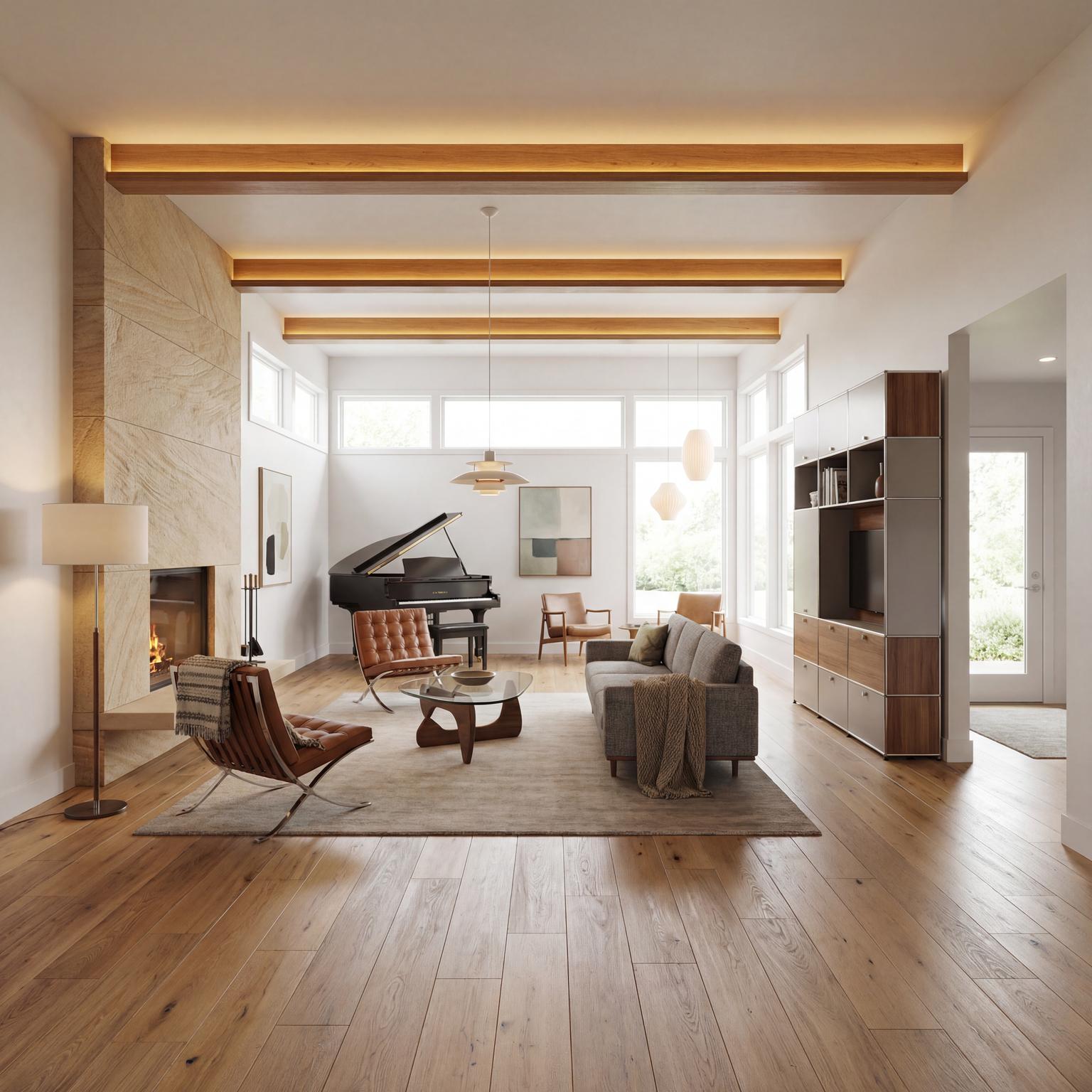
Bright MCM Contemporary Living Room Redesign balances warm wood, metal accents and clean-lined furniture in a living room setting.
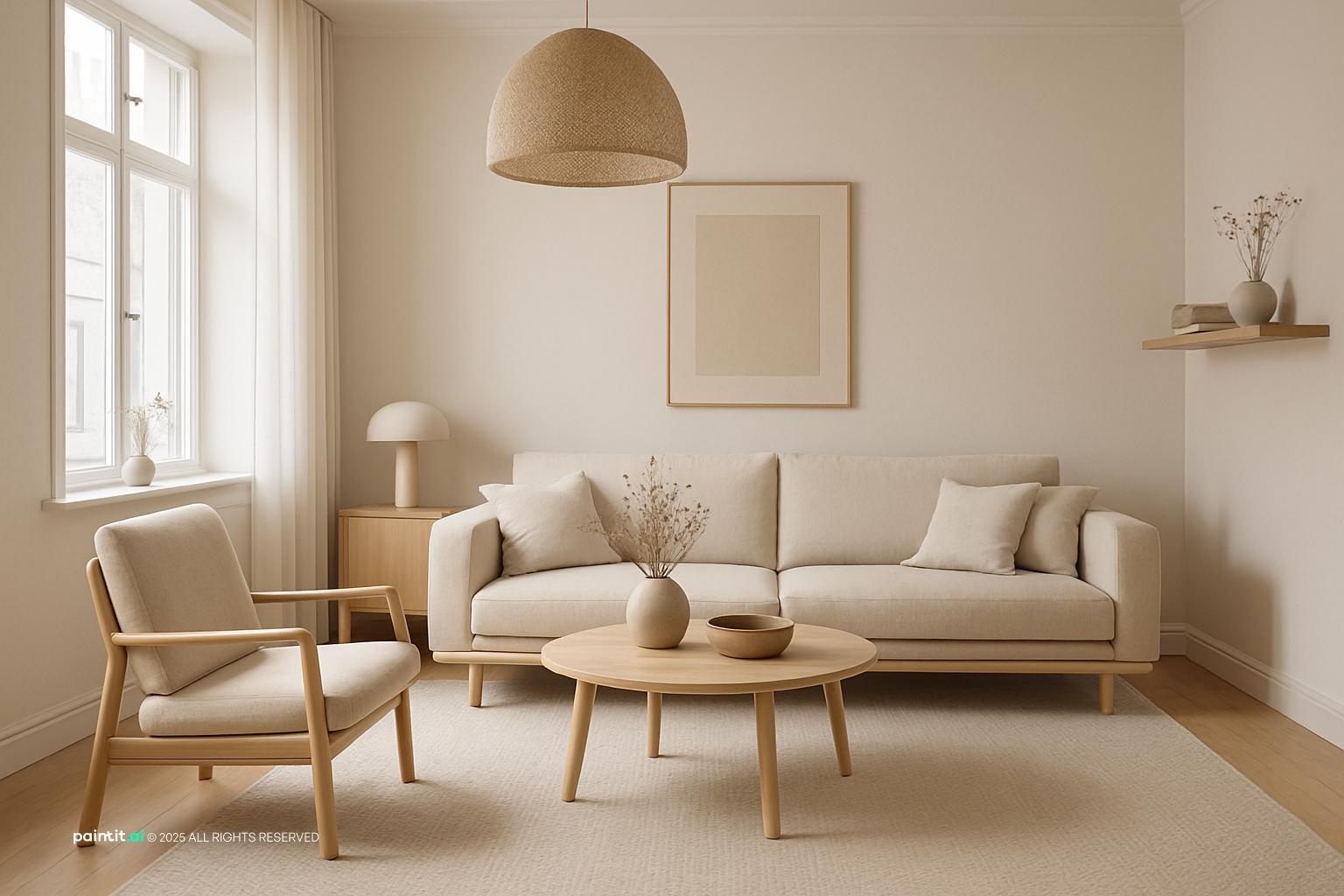
Big Living Room Ideas with Clean-lined Furniture and Layered Neutrals pairs clean-lined furniture, layered neutrals and natural light in a living room setting.
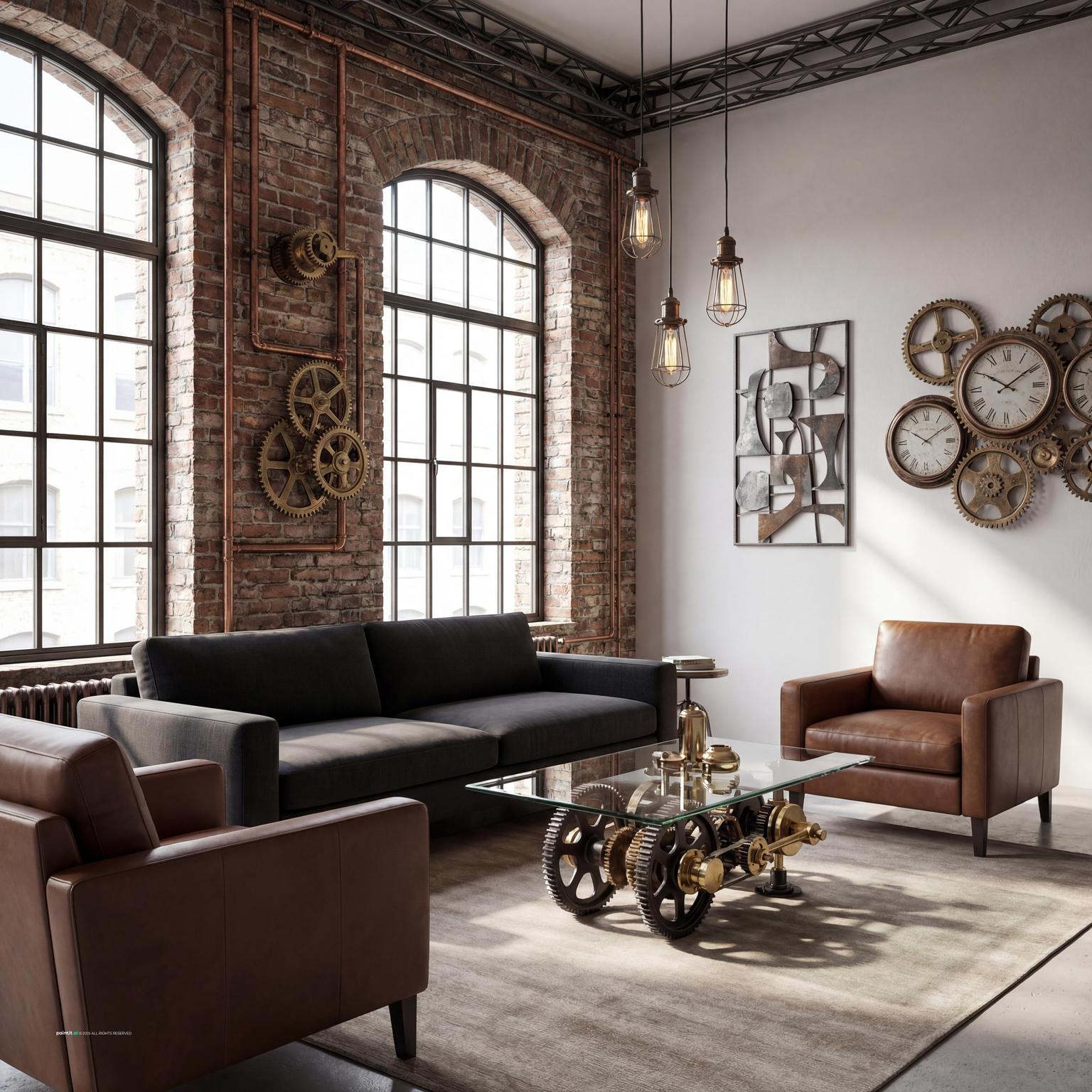
Steampunk Contemporary Living Room Design layers metal accents, layered neutrals and natural light in a living room setting.
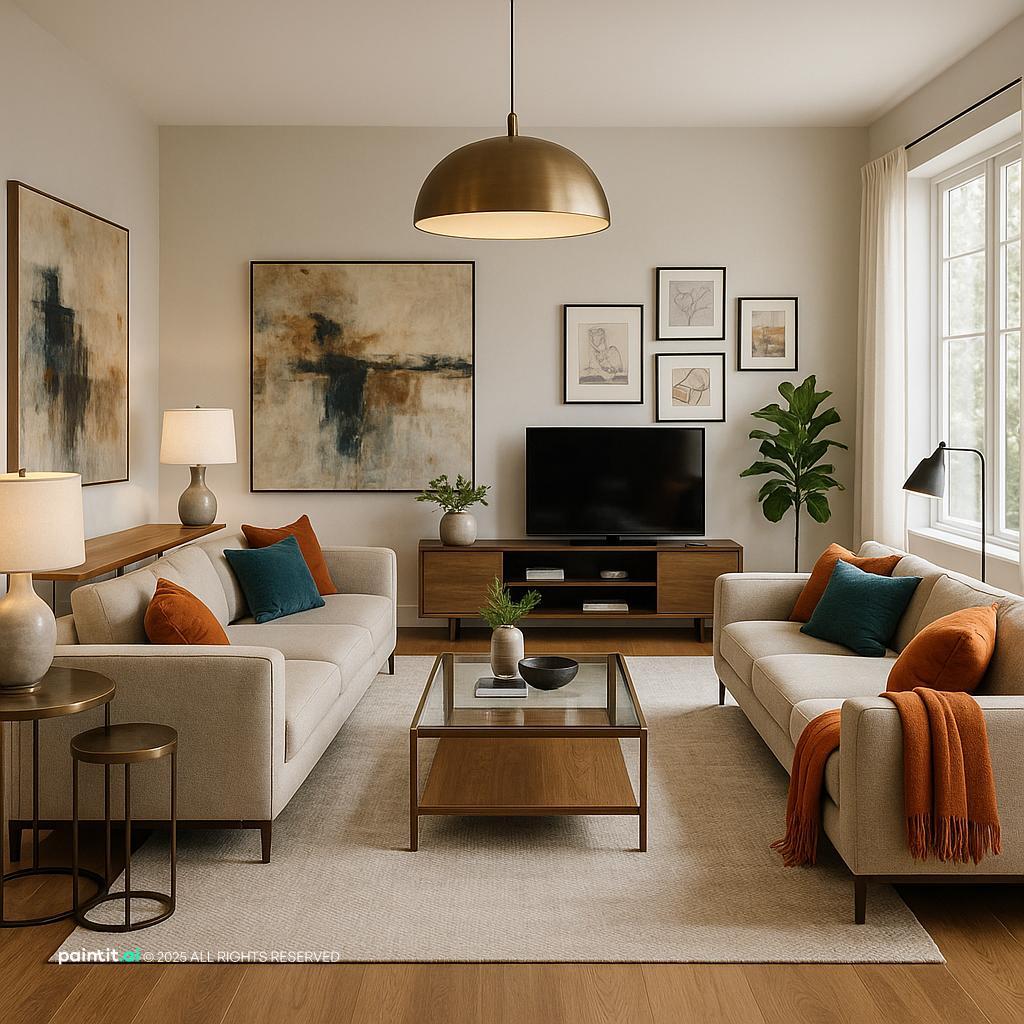
Modern Living Room Design Inspiration anchors soft textiles, metal accents and plants and greenery in a living room setting.
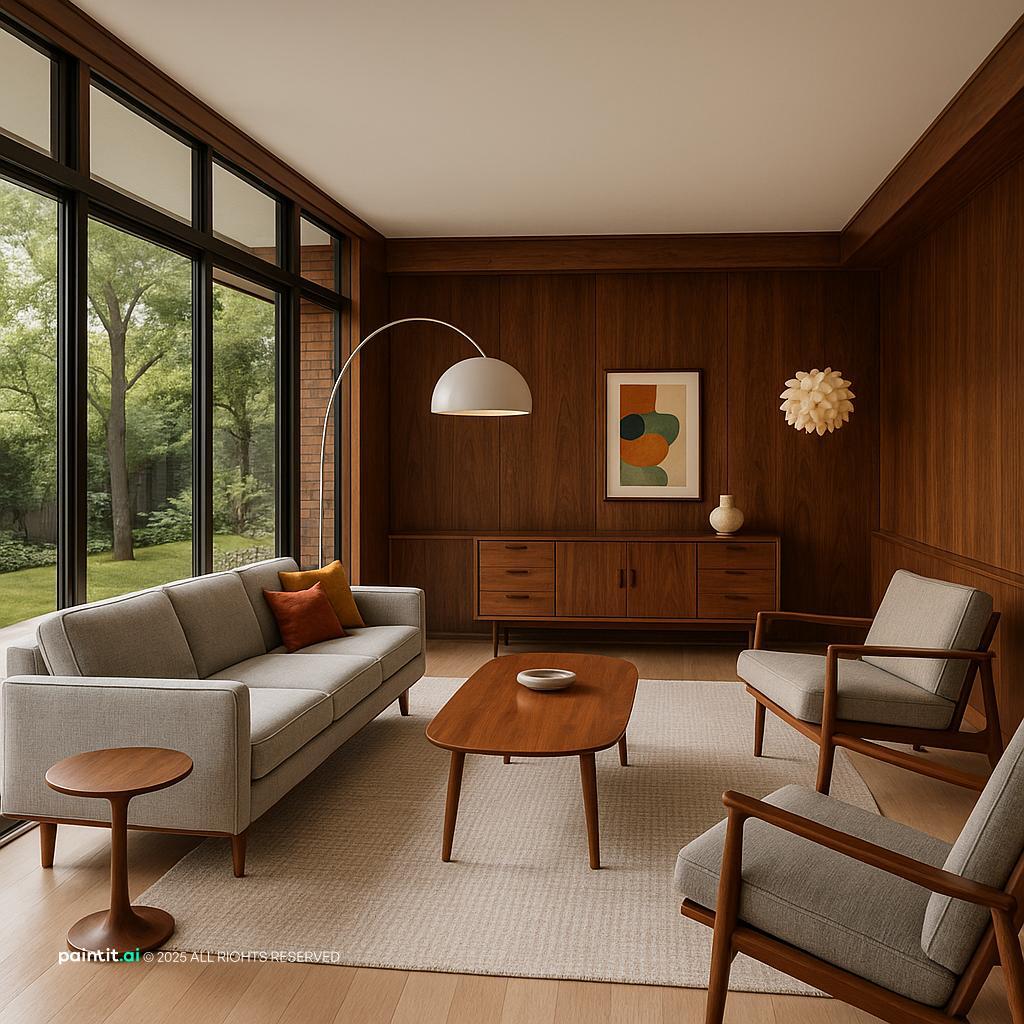
Elegant Mid-Century Living Room Design softens warm wood, soft textiles and clean-lined furniture in a living room setting.
Large walls amplify color. Soft white, warm beige, greige, taupe, sage and muted blue can all work, but undertone matters more in a big room because the color spreads across more surface. Test warm and cool versions before painting the whole space.
Avoid using only one pale shade everywhere if the room has little texture. A big white room can feel fresh in strong daylight, but at night it may go flat unless you add wood, fabric, artwork and warm lighting.
A strong material mix gives a large room dimension. Try wood for warmth, linen or bouclé for softness, metal for definition and stone or marble for a durable surface. Brick, plaster or fluted wood can break up a long blank wall without adding clutter.
Why it works: big rooms need tactile contrast. Cozy big living room ideas usually succeed because they layer texture, not because they add more pillows.
Light oak supports scandinavian and japandi rooms, walnut adds richness, and darker stained wood can ground a room with tall ceilings. Use the same general wood family across major pieces so the room does not feel patched together.
Avoid mixing too many unrelated wood tones at once. If the floor is orange-toned, for example, a gray washed table can look accidental unless another element bridges the undertones.
Black metal outlines modern furniture well and can make a large room feel more structured. Brass or bronze warms up neutral palettes, while chrome works best when the room already has crisp lines and cooler tones. Repeat the chosen metal in lighting, table legs, frames or cabinet hardware.
Do not overdo high-shine finishes. In a room with many windows, polished metal and glossy stone can create glare and make the space feel busier than intended.
Curtains, rugs, upholstery and throws carry real visual weight in a big living room. Choose curtains with enough fullness, use rugs that match the seating zones, and select upholstery that can handle the room’s scale. A large sofa in thin fabric may look flimsy, while a textured weave feels more grounded.
Where to use it: floor-to-ceiling curtains are especially useful around tall windows. They soften echo, reduce glare and make the walls feel finished. This is one of the simplest big living room decor ideas that changes both the look and the comfort of the room.
Use several light sources at different heights. Combine overhead fixtures, floor lamps, table lamps, sconces and low accent lights. Warm bulbs usually make large evening spaces feel more comfortable than cool white bulbs.
Avoid placing every lamp around the room perimeter. Bring lighting into the seating zones so people can read, talk and relax without sitting in shadow.
Large walls need either large artwork, a strong gallery composition, sculptural wall decor or built-in shelving. Above a long sofa, art should feel wide enough to relate to the furniture below. On a very tall wall, a vertical piece or stacked arrangement can balance the height.
What to avoid: scattering small frames too far apart. It makes the wall look unfinished and can make the room feel larger in the wrong way.
A large room does not need more objects. It needs larger, better-placed objects. Use bigger vases, substantial lamps, oversized trays and fewer small decorative pieces. Leave some surfaces quiet so the eye can rest.
If you are refining a design, try the no clutter test: remove one-third of the small items and see whether the room feels calmer. In practice, this is where without and no clutter instructions are useful because they force you to name what should disappear. For more step-by-step help, our article on how to redesign a living room with Paintit.ai shows how to move from a broad idea to specific changes.
With Paintit.ai, you can upload a real photo of your living room and test layout, color palette, furniture scale, materials, lighting mood and style direction. For a large room, that means you can compare a sectional against two sofas, try a larger area rug, change the wall color, add curtains or preserve architectural features before spending money.
We see many users start with short, search-like prompts; 70% write in that style. Better results usually come from iterating: now make the rug larger, a bit warmer, less clutter, keep the fireplace, add wood and softer lighting. If you want broader room experiments beyond one living room setup, try the AI room design tool and refine the strongest version step by step.
Start with zones, not accessories. Define the main seating area, add a second function, choose furniture at the right scale, then connect the room with repeated materials, lighting and color.
Large sectionals, two facing sofas, substantial accent chairs, oversized coffee tables, wide media units and large rugs usually work best. Avoid small pieces that float without a clear grouping.
Repeat a few elements across the room, such as wood tone, metal finish, fabric texture or accent color. Also decide what to keep, such as windows, beams or a fireplace, before adding new decor.
Warm whites, beige, greige, sage, taupe, muted blue and deep accent colors can all work. The best choice depends on natural light, ceiling height, floor tone and whether you want the room to feel cozy, modern or more formal.
Use a large rug, layered lighting, textured textiles, wood tones and grouped seating. Choose fewer large accessories instead of many small objects, and keep walking paths clear between zones.