
Small stationery shop interior design ideas: make the most of limited space
Small Stationery Shop Interior Design Ideas

16 small stationery shop interior design ideas
Setting up a compact stationery boutique is a chance to make every inch count, where the product range is inherently colourful and varied, so the display system needs to be organized without being sterile. These 16 ideas cover the fixtures, lighting, and layout decisions that work in small stationery spaces.
-

Designing a compact stationery shop is all about balancing charm, efficiency, and creativity. Whether your goal is to entice browsing or maximize shelf space, these approachable ideas will help your shop feel welcoming and memorable, no matter the square footage.
-

Maximize your vertical real estate by installing shelves that reach up toward the ceiling. Use varying shelf heights to accommodate everything from notepads to wall calendars, and reserve lower levels for items that benefit from hands-on sampling.
-

Adjustable brackets enable you to reposition your shelving according to different collections or seasonal displays.
-

Pegboards are a small-shop favorite because they’re flexible and let you display lightweight, colorful goods like pens, washi tapes, or keychains. Use different peg lengths and hooks to create a visually dynamic, constantly changing wall.
-

Color-code pegs or background sections to group by brand, category, or theme for easy customer navigation.
-

Place a small display table in the center of the store for seasonal or weekly promotions. This setup naturally draws customers into the heart of your store and encourages them to touch and interact with the products. Rotate the selection regularly to keep things fresh and encourage repeat visits.
-

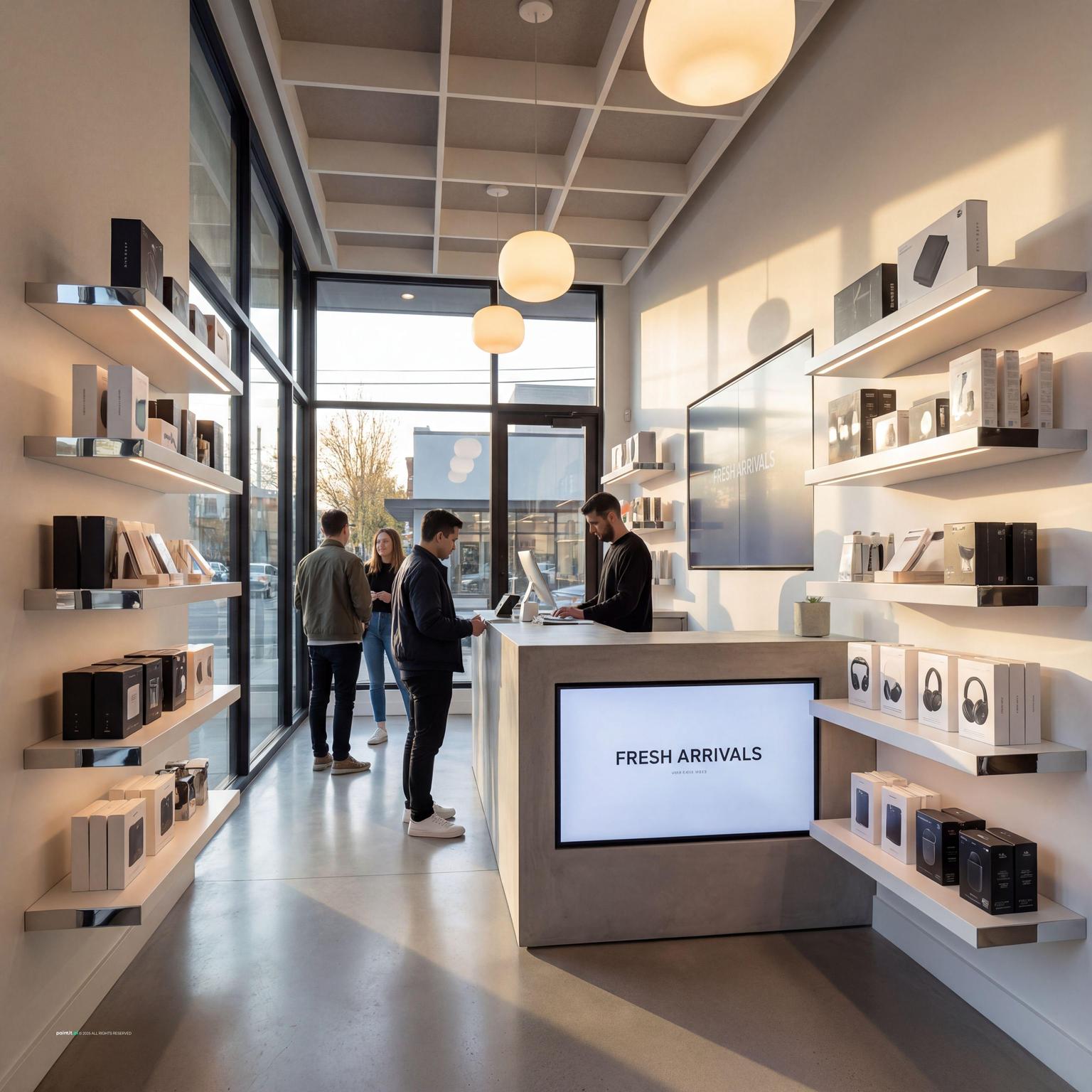
Consider playful lighting sources such as pendant lamps or fairy lights to add a touch of personality and warmth. Good lighting makes products “sparkle” and “lifts” space.
-

Install a row of hooks beneath your shelving unit to hang scissors, tote bags, or bundles of ribbon. The “secret” real estate allows displaying shapeless goods without overcrowding the store and helps keep the place inviting.
-

Cubed shelving units keep items organized without feeling claustrophobic. Arrange a mixture of open and closed cubbies for paper stacks, notebooks, and sketchpads. The compartmentalized look is tidy and allows for easy merchandising resets.
-

A wall-mounted, fold-down counter gives staff a dedicated sales area that can be tucked away during quieter hours or when you need more floor space. Choose a finish that blends with your shop’s décor so it doesn’t stand out when folded away.
-

Mount slender mirrors behind high shelves or near windows to reflect light and create a greater sense of depth. Even small mirrors can amplify natural light and help customers glimpse how items might look at home.
-

Dot your shop with little, low-maintenance plants on shelves or counters. It brings vibrance to the paper palette of the store and creates a calm environment for customer browsing.
-

Compact rolling carts can be loaded with backstock, clearance items, or themed kits. Easily reposition them during busy times or for events, and tuck away when you need more walking room.
-

Look for models with stacked baskets to maximize vertical storage even further.
-

To avoid visual clutter, select two or three colors for walls, shelves and signage and stick to them. The product packaging is already colorful, so a simple white interior will help it pop and make the small shop feel organized instead of cluttered.
-

Consider a small area dedicated to DIY demonstrations or mini classes, using a pull-down table and stools. The store sacrifices a bit of floor space to draw in the creative, artsy types and boost local community involvement.
-

Clear acrylic or glass bins keep tiny items, like erasers, clips, or sticker sheets, neat and visible. Customers can glance at options without digging, making for a more pleasant shopping experience.
-

Install angled racks on empty walls to present inspiration books, greeting cards, or zines face-forward. This not only makes browsing easier but also turns design-forward covers into rotating mini art exhibits.
-

Look for display tables and shelving units with drawers. Store excess stock and fragile items or wrapping supplies somewhere out of sight.
-

For instance, hand-lettered chalkboards or painted wooden signs can highlight prices and sales or display fun prompts.
Fixture dimensions that actually fit a small stationery shop
Most advice on shelving stops at "use vertical space." These are the working numbers retail fitters use, scaled for a compact footprint.
| Fixture | Recommended size | Why |
|---|---|---|
| Eye-level shelf height | 137-168 cm (54-66 in) | Standard adult sightline; highest-margin items go here |
| Shelf depth, paper goods | 25-30 cm (10-12 in) | Fits notebooks and folders without wasted air behind |
| Checkout counter height | 91-96 cm (36-38 in) | Standard transaction-counter height, comfortable for standing service |
| Aisle width, main path | 107-122 cm (42-48 in) | Lets two shoppers pass; below 91 cm (36 in) reads as cramped |
| Pegboard hole spacing | 2.5 cm (1 in) centers | Standard hook spacing, keeps peg accessories interchangeable |
Visualize your stationery shop with Paintit.ai
Upload a photo of your shop space to app.paintit.ai. Test different shelving configurations, colour schemes, and lighting approaches in 1–2 minutes. Particularly useful for comparing how a neutral white wall reads against a coloured accent wall when the shelving is full of product, the product itself provides the colour interest. Free to start.
Related design tools and ideas
Useful next steps for compact retail planning and display testing.
FAQ
-
Keep walls and shelving in 2–3 neutral tones, white, cream, or very light grey. The product packaging is already colourful; a neutral backdrop lets the stationery itself create visual interest without competing with the walls. If you want a branded accent colour, use it on signage, price tags, and small decorative details rather than entire walls. The goal is a display environment, not a coloured room.
-
Group by category first (notebooks, pens, paper, cards, craft supplies), then by brand or collection within each category. A consistent category system is more important than any aesthetic decision. Use clear labels at eye level, large enough to read from 2–3 metres away. Rotating a small central display table with seasonal or promotional items keeps the layout fresh without restructuring the whole shop.
-
Floor-to-ceiling shelving on the main walls uses vertical space without consuming floor area. A fold-down or wall-mounted counter reduces floor footprint when not in use. Mirrors behind high shelves or near windows reflect light and add visual depth. A cohesive colour palette (limited to 2–3 tones across walls, shelves, and signage) creates a sense of order that makes the space feel intentional rather than crowded.
-
Yes. Upload a photo of your shop to app.paintit.ai and test different layout and colour directions in 1–2 minutes. Free to start.
-
Keep the billing counter near the entrance, school and office basics on the wall shelves at eye level, gifts and impulse items near the counter, and a low central unit or table for new arrivals. Pegboards work well for pens, scissors and small packs.
-
Adjustable wall shelving, a pegboard or slatwall section, a counter with drawers for small items, a glass case for pens and higher-value products, and one low table or gondola in the middle. Choose light colors so the many small products do not look cluttered.
-
Most small stationery shops in India work with a narrow frontage, so keep the counter near the entrance, run adjustable shelving along both walls and use the counter front and a low glass case for pens and higher-value items. School supplies should sit at child height near the door; office stationery and gifts can go higher and deeper in the shop. A modern stationery shop design keeps one colour for all fixtures so the products provide the colour.